
QSA Members Forum
For Masonic Research
The William Watson manuscript 1535 - Rukopisni Svitak, Viljem Votson
Serbian Translation
of the
 William Watson manuscript - 1535 - Rukopisni Svitak, Viljem Votson
Translated by
Karlo Hameder

Imajte na umu: ova stranica je optimizovana za prikaz u Google Chrome (faktor zumiranja 150%).
Please note: this page is best viewed with Google Chrome (Zoomed at 150%)
|
MANUSCRIPT SCROLL WILLIAM WATSON
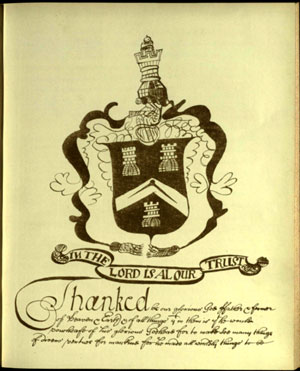
Facsimile of page 1 - Faksimil 1. stranice This hitherto unknown copy of the "Manuscript Constitutions" was first mentioned by Mr. Walter Hamilton of London in his article in the Notes and Inquiries of December 6, 1890, in which he asked readers for information on the rarity and value of the document, since he was not a member of Science and, therefore, he knew nothing about him. Many Freemasonry scholars immediately contacted Mr. Hamilton but, while some sought to discover the nature of the text and others hesitated, Brother William Watson, a West Yorkshire librarian, intervened and negotiated the price, presumably predicting that Br∴ Thomas W. Tew, Conciliator, District Grand Master of West York may wish to seize this treasure for the District Grand Library. With his usual and well-known liberalism, Br∴ Tju, without delay, did just that, adding another pearl to many previous ones that he had donated to the said library. According to Br∴ Tew, the manuscript is called "William Watson", but it should not be replaced with "Watson Manuscript" (Watson MS) owned by Br∴ T.M. Watson of Sunderland. What was previously known about the scroll is very little. Mr. Hamilton received it as a gift three years ago from his cousin from Newcastle-on-Tyne, who also found it in an old iron safe, which, due to the loss of the key, was not opened for a long time, and therefore its origin does not indicate that. that he was in possession of the Lodge. However, there is no doubt that it was originally used for Masonic purposes and that it was simply a copy made for an antiquarian. The scroll is 12 feet long and 73 inches wide (one of the longest known), and is written on six strips of parchment, which are sewn one behind the other at the ends. Publication of the text in the journal Freemasons on January 24 and 31, 1890 by Br∴ Hagana (Hughan), immediately attracted a lot of interest, as it is the only known manuscript that relates to the Matthew Cooke Manuscript and was published in that no. II of this series of reprinted texts. I myself took the opportunity to inform readers that this manuscript disputes some of the objections in my comments regarding the Matthew Cook Manuscript, and Dr. Begemann, in letters to the Freemasons magazine and in an article in that no. IV of our Transactions, showed that, with the exception of one fragment, the manuscript is the only representative known for now, of some eight or nine manuscripts, which must have belonged to the same family. Therefore, he added a new group to his classification, which he calls the Plot Family to which this manuscript would belong, then the manuscript Crane no. 2, and one used by Anderson and three other unknown manuscripts. In antipodes, the text, as given in the Freemasons Magazine, attracted the attention of Br∴ C.C. Howard of Picton, of New Zealand, who provided me with a number of notes on the subject, written at various times, which were not for publication, but only for my eyes and to deceive my opinion. However, there is so of value in them that I will be indiscreet and publish them here and believe that this explanation of their origin will be a sufficient excuse for their fragmentation. If time allowed, I would ask Br∴. Howard to transcribe his notes in a more connected form. Br∴. Begemann will see that some of his suggestions are supported and no doubt in Br∴. Howard will recognize a like-minded person, who dedicates the same boundless patience to microscopically small things, but is not as lucky as him to be in possession of transcripts of almost all versions of the Old Duties. As mentioned above, this manuscript was already published in Freemason Magazine on January 24 and 31, 1891, and was reprinted in the form of a pamphlet with a valuable introduction Br∴ Haganah and a reduced photographic facsimile of the title and the first six lines. |
RUKOPISNI SVITAK VILJEM VOTSON (WILLIAM WATSON)
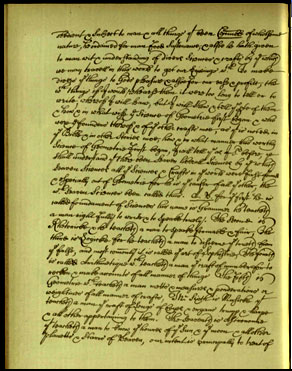
Facsimile of page 2 - Faksimil 2. stranice Ovu, do sada nepoznatu kopiju "Rukopisnih konstitucija", prvi je spomenuo gosp. Volter Hamilton (Walter Hamilton) iz Londona u svom članku u "Beleškama i upitima" od 6. decembra 1890. godine, u kojem je od čitalaca zatražio informacije u vezi retkosti i vrednosti tog dokumenta, s obzirom da nije bio član Nauka te, stoga nije o njemu znao ništa. Mnogi izučavaoci masonstva odmah su stupili u vezu sa gospodinom Hamiltonom ali, dok su neki nastojali da otkriju prirodu ovog teksta a drugi oklevali, Brat Viljem Votson (William Watson), bibliotekar oblasti Zapadni Jorkšir, umešao se i dogovorio cenu, verovatno predviđajući da će Uvaženi Br:. Tomas V. Tju (Thomas W. Tew), Miritelj, Oblasni Veliki Majstor Zapadnog Jorka možda želeti da se dočepa ovog blaga za Oblasnu Veliku Biblioteku. Sa svojom uobičajenom i dobro poznatom liberalnošću, Br:. Tju je, bez odlaganja, učinio baš to, dodajući još jedan biser mnogim dotadašnjim koje je darovao spomenutoj biblioteci. Po želji Br:. Tjua, rukopis je nazvan "Viljem Votson", ali se ne on sme zameniti sa "Rukopisom Votson" (Watson MS) u vlasništvu Br:. T.M. Votsona iz Sanderlanda (Sunderland). Ono što se o svitku prethodno znalo, veoma je malo. Gosp. Hamilton ga je dobio na poklon pre tri godine od svog rođaka iz Njukasla na Tajnu (Newcastle-on-Tyne) koji ga je našao i jednom starom gvozdenom sefu koji, zbog gubitka ključa, dugo nije otvaran, te stoga njegovo poreklo ne ukazuje na to da je bio u posedu Lože. Međutim, ne sumnja se da je prvobitno korišćen za masonske svrhe i da je bila prosto kopija urađena za nekog antikvara. Svitak je dužine 12 stopa i širine 73 inča (jedan od najdužih poznatih), a pisan je na šest traka pergamenta, koje su prišivene jedna za drugu na krajevima. Publikacija teksta u časopisu Freemason (Slobodni zidar) 24. i 31. januara 1890. godine od strane Br:. Hagana (Hughan), odmah je privukla veliko zanimanje, pošto je to jedini poznati rukopis koji se nastavlja na Rukopis Matju Kuk (Matthew Cooke) i objavljen je u tomu br. II ove serije preštampanih tekstova. I sam sam iskoristio priliku da obavestim čitaoce da ovaj rukopis osporava neke od primedbi u mojim komentarima u vezi Rukopisa Matju Kuk, a Dr. Begemann je, u pismima upućenim časopisu Freemason i članku u tomu br. IV naših Transakcija, pokazao da je, sa izuzetkom jednog fragmenta, rukopis jedini predstavnik, za koji se za sada zna, od nekih osam ili devet rukopisa, koji mora da su pripadali istoj porodici. Stoga je svojoj klasifikaciji dodao jednu novu grupu, koju naziva Porodicom Plot kojoj bi pripadao ovaj rukopis, zatim rukopis Krejn (Crane) br. 2, te jedan koji je koristio Anderson i još tri nepoznata rukopisa. U antipodima, tekst, kako je dat u Freemasonu, privukao je pažnju Br:. C.C. Hauarda (Howard) iz Piktona (Picton), Novi Zeland, koji mi je dostavio veći broj beleški o tom predmetu, pisanih u različitim vremenima, koje nisu bile za objavljivanje, već samo za moje oči i da izmame moje mišljenje. Međutim, u njima je toliko vrednog da ću biti indiskretan i objaviti ih ovde i verovati da će ovo objašnjenje njihovog porekla biti dovoljan izgovor za njihovu fragmentarnost. Da je vreme dozvolilo, zamolio bih Br:. Hauarda da prepiše svoje beleškke u povezanijem obliku. Br:. Begemann će videti da su neke njegove sugestije podržane i bez sumnje će u Br:. Hauardu prepoznati istomišljenika, koji posvećuje isto bezgranično strpljenje mikrskopski malim stvarima, ali nema toliko sreće kao on da bude u posedu transkripata skoro svih verzija Starih dužnosti. Kako je gore rečeno, ovaj rukopis je već objavljen u Freemasonu 24. i 31. januara 1891. godine i preštampan je u obliku pamfleta sa dragocenim uvodom Br∴ Hagana i redukovanim fotografskim faksimilom naslova i prvih šest redova. |
|
William Watson Manuscript of 1535 These modern Charges, of which there are about 70 copies, of which no two are exactly alike, are an abridgement of the "Watson MS." series, which had become too lengthy for use in Lodge work. The version given is a fair representative of all the others and is a York MS. circa 1600. The portion in brackets [ ], and Charges 19-25 are found in the "Tew MS.," West Riding of Yorkshire. (ABBREVIATED, "circa" 1535). The might of the Father of heaven, with the wisdom of the blessed Son, through the grace of God, and the goodness of the Holy Ghost, that be three persons in one Godhead, be with us at our beginning, and give us grace so to govern us here in this life, that we may come to His blessing, that never shall have ending. GOOD BRETHREN and Fellows, our purpose is to tell you how and in what manner this worthy science of Masonry was first founded and afterwards how it was maintained and upholden by worthy kings and princes, and many other worshipful men. And also, to them that be here, we will declare the Charges that it belongs to every Free-Mason to keep sure in good faith; and therefore take good heed hereunto, for it is a science that is worthy of being kept, for it is a worthy Craft; and is one of the seven liberal sciences. The names of the seven liberal sciences are these: The first is "Grammar" that teacheth a man to speak and write truly; the second is "Rhetoric" that teacheth a man to speak well, in subtle terms; the third is "Dialectic," or Logic, that teacheth a man to discern truth from falsehood. The fourth is "Arithmetic," that teacheth a man to reckon and count all kinds of numbers; the fifth is "Geometry" that teacheth a man to mete and measure the earth and all other things, on which science Masonry is grounded. The sixth is "Music" that teacheth the craft of song and voice, of tongue, organ, and harp. The seventh is "Astronomy" that teacheth a man to know the course of the sun, moon, and stars. THESE be the seven liberal Sciences, the which are all grounded upon one, that is to say Geometry. And this may a man prove that the science of all work is grounded upon Geometry, for it teacheth mete, measure, ponderation, and weight of all manner of things on earth; for there are none that work any science, but he worketh by some measure or weight, and all this is Geometry. Merchants and all Craftsmen, and others who use the Sciences, and especially the plowmen and tillers of all manner of grains and seeds, planters of vineyards and setters of fruit, none can till without Geometry; for neither in Grammar, Rhetoric, or Astronomy can any man find mete or measure without geometry. Wherefore this science may well be called the most worthy science, for it foundeth all others. HOW this science was first begun I will now tell you. Before Noah's flood there was a man called Lamech, as it is written in the Bible in the 4th chapter of Genesis. And this Lamech had two wives, the one called Adah by whom he had two sons, one called Jabal and the other Jubal. And his other wife was called Zillah, by whom he had one son Tubal-Cain, and one daughter named Naamah; and these four children founded the beginning of all the sciences in the world. Jabal, the eldest son, found out the science of Geometry; he kept flocks of sheep and lambs in the fields, as it is noted in the chapter aforesaid. His brother Jubal founded the science of Music, in song of tongue, harp, and organ, and trumpet. And the third brother Tubal Cain found the science of smith's craft, in gold, silver, copper, and iron. And their sister Naamah found the craft of weaving. And these persons knowing right well that God would take vengeance for sin, either by fire or water, therefore they writ their several sciences that they had found in ii. pillars of stone, that they might be found after Noah's flood. The one stone was marble that would not burn with fire, and the other called "latres" (latens, laterns, lacerus, &c.) because it would not drown with water. Our intent is now to tell you, how and in what manner these stones were found in which were written these sciences. After the destruction of the world by Noah's flood, as histories affirm, a great clerk called Pythagoras found the one, and Hermes the philosopher (who was Cush's son, who was Shem's son, who was Noah's son) found the other, and was called the Father of wise men. These two found the two pillars in which the sciences were written, and taught them to other men. AND at the making of the Tower of Babylon masonry was much esteemed. And the king of Babylon that was named Nimrod was a Mason himself, and he loved well Masons and their science, as it is said by Masters of histories. And when the cities of Nineveh, and other cities of eastern Asia, were to be built this Nimrod sent thither three score masons «Other MSS. have it, sixty, forty, thirty hundred, see also No. 3 MS.» at the request of the King of Nineveh, his cousin, and when he sent them forth he gave them a Charge in this manner. That they should each one be true to the other; that they should love well one another; that they should serve their lord truly for their pay, that the Master may have worship and all that belong to him. And other more Charges he gave them, and this was the first time that a Mason had any Charges of his Craft. MOREOVER Abraham and Sarah his wife went into Egypt, and there he taught the seven sciences to the Egyptians; and ("he had") a worthy scholar named Euclid ("and he") learned right well and was Master of all the vii. sciences; and in his days it befell that the lords and states of the land had so many sons, some by their wives and some by their concubines, for that land is hot and plenteous of generation; and they had not a competent proportion of estates wherewith to maintain their said children, which caused them much care; and the King of that land summoned a great Council to consult how they might provide for their children to live honestly as gentlemen; and they could find no good way. And then they made proclamation throughout all the realm, that if there were any that could inform them therein he should come to them and would be well rewarded for his labours. After this proclamation was made the worthy Clerk Euclid came and said unto the King and the nobles … "If you will accept of me to teach, instruct, and govern your children, I will teach them the vii. liberal sciences whereby they may live honestly as gentlemen. I will do it upon condition that you will grant me and them a commission, that I may have power to rule them, after the manner the science ought to be ruled." The King and all the Council granted him this and sealed the Commission; and then this worthy doctor took to himself these lords' sons and taught them the science of Geometry, and to practise work in stones, of all manner of work that belongeth to building churches, temples, castles, towers, manors, and all other sorts of buildings, and gave them a Charge in this manner: First, that they should be true to the lord that they serve; that they should love well one another; that they should call each other Fellow or Brother, and not servant, knave, or other foul name; that they should truly deserve their pay of their lord, or the master that they served; and that they should ordain the wisest of them to be masters of the work, and neither to chose for love, nor affection, nor greatness, nor richness, to set any in the work that hath not sufficient knowledge or cunning to be master of the work, whereby the Master should be evilly served and they dishonoured; and also that they should call the governor of the work Master, during the time that they work with him, and other more Charges which is too long to tell here. And to all these Charges he made them swear a great Oath, that men used at that time; and he ordained for them reasonable pay that they might live honestly thereby; also that they should assemble themselves together once every year, and consult how they might best work for their lord's profit and their own credit; and correct within themselves him that had trespassed against the science. And thus was the science grounded in Egypt, and that worthy Master Euclid was the first that gave it the name of Geometry the which is now called Masonry. AND, AFTER that, when the children of Israel were come into the land of Behest which is now called with us the country of Jerusalem (Jewry), King David began the temple that is now called Templum Dei, as is called with us the Temple of Jerusalem, and the said King David loved well Masons and {554} cherished them much, and he gave them good wages, and also Charges and manners, as they had learned in Egypt ("from Euclid"), and other more Charges that you shall hear afterwards. After the decease of King David, Solomon his son finished the said temple that his father had begun, and he sent for Masons out of divers countries and divers lands, and gathered them together so that he had four score thousand workers of stone who were Masons, and he chose out of them three thousand that were ordained to be Masters and governors of the work. And furthermore, there was a king of another region that men called Hiram, and he loved King Solomon well, and he gave him timber for his work. And he had a son named Aman (Aymon, Hymon, Anon, Adon, &c.) and he was a Master of Geometry, and chief Master of all his gravings, carvings, and all his masons and masonry, as appears in Scripture, in libro primo Regum and chapter 5th. And this Solomon confirmed both the Charges and manners that his father had given to Masons, and thus was the worthy science of Masonry confirmed in the country of Jewry, and city of Jerusalem, and in many other kingdoms. CURIOUS Craftsmen walked about full wide into other countries, some to learn more craft, and some to teach others that had little skill and cunning. And it befell that there was one curious Mason named Namas Graecas (Namus Graecus, Manus Graecus, Memon Grecus, Mammungretus, Mamus Graecus, Minus Goventis, Marcus Graecus, Namus Grenaeus, etc.) that had been at the building «Building's (query of Bro. Schnitger) -- he had a Solomon's temple ritual.» of Solomon's temple and he came into France and there he taught the science of Masonry to men of that land. And there was one of the royal line of France called Charles Martel, and he was a man that loved well such a craft, and he drew to this … abovesaid, and learned of him the craft, and took upon him Charges and manners, and afterwards by the providence of God, he was elected King of France, and when he was in his estate he took and helped to make men Masons which before were not; and he gave them both their Charge and manners, and good pay as he had learned of other Masons, and also confirmed a Charter from year to year to hold their Assembly where they would, and cherished them right well, and thus came this famous Craft into France. ENGLAND in all this time stood void of any Charge of Masonry until St. Alban's time, and in his days the King of England «Carausius» then a pagan did wall the town (that is now called) St. Albans about. And St. Alban was a worthy Knight and Steward of the King's household, and had the government of the realm, and had also the ordering of the walls of the said town, and he loved and cherished Masons right well, and made their pay right good, for he gave them (3s. a week -- 2s. 6d. and 3d. for noon, 3s. 6d. and 3d., etc.), and before that time, throughout all the land, a Mason took but a penny a day, until St. Alban amended it; and he procured them a Charter from the King and his Council, for to hold counsel together, and gave it the name of Assembly, and thereat he was himself, and helped to make men Masons, and gave them a Charge, as ye shall after hear. BUT it happened soon after the death of St. Alban that there arose great wars in England, which came out of divers nations, so that the goodly rule of Masonry was well nigh destroyed until the days of King Athelstan, «Query, Edwd., and Athelstan (suggested by Bro. W. H. Upton, P.G.M., of Washington). May admit of interpretation as Edwd. the elder, and his sons Athelstan and Edwin (see IV. and V.)» who was a worthy King of England, and he brought the land into good rest and peace, and builded many great works, as abbeys, castles, towns, and other buildings, and loved well Masons; and he had a son named Edwin, that loved Masons, much more than his father, and he was a great practitioner in geometry, and delighted much to talk and commune with Masons and to learn of them skill and cunning, and afterwards for the love he bore to Masons and to their science, he was made a Mason, and he procured for them of the King his father a Charter and Commission to hold every year an Assembly, wheresoever they would within the realm of England, and to correct within themselves all defaults and trespasses that were done within the Craft, and he himself held an Assembly at York, and there he made Masons and gave them the Charges and taught them the manners and commanded that rule to be kept ever after, and also gave them the Charter to keep, and also gave orders that it should be renewed from king to king. And when the Assembly was gathered together he made proclamation, that all Masons who had any writings or understanding of the Charges and manners concerning the said science, that was made before in this land or any other, that they should bring them forth, and when they were viewed and examined, there were found some in French, some in Greek, some in English, and other languages, and the intent and meaning was found all one. [«Added from "Tew MS." W. R. Co. York; also clauses 19 to 25.» And these Charges have been gathered and drawn out of divers antient books and writings, as they were made and confirmed in Egypt by the King and the great Clerk Euclid; and by David and Solomon his son; and in France by Charles Martel who was King of France; and in England by St. Alban; and afterwards by Athelstan and Edward his son, that was king after him.] And he had made a Book thereof, how the Craft was founded, and he himself counselled that it should be read when any Masons should be made, and the Charge given to them. And from that day to this the manners of Masons have been kept and observed in that form, as well as men might observe and govern it. ADD furthermore at divers Assemblies there hath been added certain Charges more by the best advice of Masters and Fellows. Tunc unus ex senioribus teneat librum ut ille vel illi potiat vel potiant manus sup librum et tunc precepta deberent Legi. EVERY man that is a Mason, take right good heed to these Charges, and if any man find himself guilty of any of them, let him amend himself before God. And in particular, ye that are to be charged, take good heed to keep them right well, for it is perilous and great danger for a man to forswear himself upon "a book" (the Holy Scriptures). |
Rukopis Viljem Votson 1535 Ovih rukopisa o suvremenim Dužnostima ima oko 70, a ne postoje dva potpuno identična i skraćene su verzije serije "Rukopisa Votson", koji je postao predugačak za upotrebu u radu loža. Data verzija je lep predstavnik svih ostalih i Rukopis je Jorka iz oko 1600. godine. Deo u zagradama [] i Dužnosti 19-25 nalaze se u "Rukopisu Tju", Vest Rajding (West Riding) Jorkšir. (SKRACENO, "oko" 1535. godine). Moć Oca nebeskog, sa mudrošću Sina blagoslovljenog, milošću Božjom i dobrotom Svetoga Duha, koji su tri lika u jednom božanstvu, budi sa nama na našem početku i daj nam milost da upravlja nama ovde u ovom životu, kako bismo došli do Njegovog blagoslova, koji nikada neće imati kraj. DOBRA BRACO i Pomoćnici, namera nam je da vam kažemo kako je i na koji način ta dostojna nauka Masonstva prvi put osnovana, a potom kako su je održavali i podržavali vrli kraljevi i prinčevi i mnogi drugi uvaženi ljudi. A takođe, i onima koji su ovde, saopštićemo Dužnosti koje se odnose na svakog Slobodnog Zidara da ih održavaju u dobroj veri; i zato ih dobro pazite, jer to je nauka koja je vredna čuvanja, jer je to dostojan Nauk; i jedna je od sedam liberalnih nauka. Imena sedam liberalnih nauka su ova: Prva je "Gramatika" koja čoveka uči da govori i piše istinito; druga je "Retorika" koja čoveka podučava da govori dobro, suptilnim rečima; treća je "Dijalektika", ili Logika, koja čoveka uči da razlikuje istinu od laži. Cetvrta je "Aritmetika", koja čoveka uči da računa i zbraja sve vrste brojeva; peta je "Geometrija" koja uči čoveka merama i merenju zemlje i svih drugih stvari, na čemu se temelji nauka Zidarstva. Šesta je "Muzika" koja poduučava nauku pesme i glasa, orgulja i harfe. Sedma je "Astronomija" koja čoveka uči da poznaje kretanje sunca, meseca i zvezda. OVO je sedam liberalnih nauka, koje se sve temelje na jednoj, odnosno Geometriji. A ovim čovek može dokazati da je nauka svega rada utemeljena na Geometriji, jer ona uči meri, merenju, ponderaciji i težini svih stvari na zemlji; jer nema nikoga ko se bavi bilo kojom naukom a da ne koristi neku meru ili težinu, a sve to je Geometrija. Trgovci i sve zanatlije, i drugi koji se koriste naukama, a posebno orači i uzgajivači svih vrsta žitarica i semena, i uzgajivači vinograda i voća, niko ne može bez Geometrije; jer ni u Gramatici, Retorici ili Astronomiji niko ne može da pronađe meru ili merenje bez Geometrije. Stoga se ova nauka može nazvati najdostojnijom naukom, jer je temeljem svih drugih. KAKO je ova nauka prvi put započela, sada ću vam reći. Pre Nojevog potopa beše čovek po imenu Lameh, kako je zapisano u Bibliji u 4. poglavlju Postanka. A taj Lamek imaše dve žene, onu zvanu Ada, od koje je imao dva sina, jednog koji se zvao Džabal, i drugog Džubal. A njegova druga žena zvala se Zila, od koje je imao jednog sina Tubal-Kaina i jednu kćer Naamu; i ovo četvoro dece beše zasnovalo početak svih nauka na svetu. Džabal, najstariji sin, beše otkrio nauku Geometrije. Na poljima je držao stada ovaca i jagnjadi, kako je zabeleženo u prethodnom poglavlju. Njegov brat Džubal osnovao je nauku Muzike, kroz pesmu, harfu, orgulje i trubu. A treći brat Tubal Kain pronašao je nauku kovačkog zanata, obradu zlata, srebra, bakra i gvožđa. A njihova sestra Naama pronašla je tkački zanat. I te osobe dobro su znale da će se Bog osvetiti za greh (čovekov), bilo vatrom ili vodom, te su stoga zapisale nauke koje su pronašle na dva kamena stuba, koji bi se mogli naći nakon Nojevog potopa. Jedan kamen bio je od mermera da ga vatra ne bi mogla uništiti, a drugi je nazvan "latres" (lateni, lateri, lacerusi itd.) jer ga voda nije mogla potopiti. Namera nam je sada da vam kažemo kako i na koji način su ovi kamenovi, u kojima su napisane ove nauke, pronađeni. Nakon uništenja sveta Nojevim potopom, kako potvrđuju storije, veliki službenik zvan Pitagora pronašao je jedan od dva stuba, a Hermes, filozof koji je bio Kušov sin, koji beše Šemov sin, a ovaj Noin sin) pronašao je drugi stub, pa je prozvan Ocem mudraca. Njih su dvojica pronašla dva stuba na kojima su zapisane nauke i podučavala ih drugim ljudima. A pri izgradnji Kule vavilonske, zidarstvo je bilo veoma cenjeno. A kralj Vavilona, koji se zvao Nimrod, i sam beše zidar i voleo je zidare i njihov Nauk, kako kažu Majstori istorije. A kad je trebao da se gradi grad Niniva i drugi gradovi istočne Azije, taj Nimrod posla tamo tri zidara na zahtev kralja Ninive, svog rođaka, a kada ih je poslao dao im je odgovarajuće Dužnosti: da treba da budu verni jedni drugima; da treba da se vole; da treba istinski da služe svog gospodara za svoju nadnicu, da uvažavaju svog Majstora i ukazuju poštovanje za sve što mu pripada. I dao im je još i druge Dužnosti, i beše to prvi put da je zidar dobio bilo kakve dužnosti svog Nauka. ŠTAVIŠE, Avram i njegova žena Sara otiđoše u Egipat i tamo predavaše Egipćanima sedam nauka; a ("imao je") dostojnog učenjaka po imenu Euklid ("i taj") beše dobro učio i postade Majstor svih sedam nauka; i u njegovo doba se dogodilo da su gospodari i oblasti u zemlji imali toliko sinova, neke od svojih supruga, a neke od priležnica, jer je ta zemlja vruća i obilna; a nisu imali dovoljno poseda da bi izdržavali svoju decu, što im je stvaralo veliku brigu; i kralj te zemlje sazva Veliko Veće da se posavetuje kako mogu svojoj deci osigurati pošten život kao gospodi; i nisu mogli naći dobar način. A onda su razaslali proglas po celoj zemlji, da se traži onaj ko bi za to mogao naći rešenje, te bi taj došao k njima i bio bi dobro nagrađen za svoj trud. Nakon što je ovo objavljeno, došao je dostojni službenik Euklid i rekao kralju i plemićima - "Ako prihvatite da podučavam, upućujem i upravljam vašom djecom, naučiću ih svim liberalnim naukama, po kojima onda mogu živeti istinski kao gospoda. Učiniću to pod uslovom da vi i meni i njima date odobrenje da vladam njima, na način na koji bi nauka trebala da se primenjuje. " Kralj i celo Veće odobriše mu to i zaključiše Nalog; a onda je ovaj dostojni doktor uzeo sebi sinove ovih gospodara i naučio ih nauci Geometrije i obradi kamena, svim vrstama radova koji se primenjuju u izgradnji crkava, hramova, dvoraca, kula, kurija i svih ostalih vrsta zgrada i dao im dužnosti u tom smislu: Prvo, da budu verni gospodaru kojem služe; da bi se trebali voleti; da bi jedan drugog trebali zvati Drugom ili Bratom, a ne slugom, kmetom ili nekim drugim ružnim imenom; da bi istinski trebali da zasluže svoju nadnicu koju dobijaju od svog gospodara ili gospodara kojem služe; i da bi trebali odrediti najmudrijeg među sobom da bude upravnik radova, a ne ga biraju po tome što ga vole, niti na osnovu naklonosti, ni veličine, ni bogatstva, da ne bi postavili nekoga koji nema dovoljno znanja ili veštine da bude upravnik radova, čime bi Majstor bio loše služen a oni izgubili čast; a takođe da bi trebali zvati upravnika radova Majstorom, za vreme dok rade sa njim, kao i druge dužnosti koje bi bilo predugo navesti ovde. A naterao ih je da na sve ove dužnosti polože veliku zakletvu, koja se u to vreme koristila; i odredio im je razumnu nadnicu da bi mogli pošteno da žive od nje; a takođe da bi se trebali okupljati jednom godišnje i savetovati se o tome kako bi najbolje mogli da rade u korist svoga gospodara i za svoj kredibilitet; i da poprave među sobom onoga koji je učinio prestup prema Nauku. I tako je nauka utemeljena u Egiptu, a taj dostojni Učitelj Euklid prvi ju je nazvao Geometrijom, koja se danas zove zidarstvo. I, NAKON toga, kada su sinovi Izraelovi ušli u zemlju obećanu, koja se danas kod nas naziva zemljom Jerusalim (Jevrejstvo), kralj David započe hram koji se danas zove Templum Dei, a kod nas se naziva Hram jerusalimski. Kralj David voleše zidare i {554} mnogo ih je pazio i davao im dobre nadnice, a takođe i Dužnosti i manire, kako su naučili u Egiptu ("od Euklida"), i druge Dužnosti o kojima ćete čuti kasnije. Nakon smrti kralja Davida, njegov sin Solomon završio je spomenuti hram koji je započeo njegov otac i poslao je po zidare iz različitih zemalja i različitih krajeva i okupi ih tako da je imao ukupno osamdeset hiljada radnika kameno-zidara , a od njih je izabrao tri hiljade koji su bili određeni da budu Majstori i upravitelji radova. Osim toga, postojao je kralj jedne druge oblasti koga su ljudi zvali Hiram, i on je mnogo voleo kralja Solomona i davao mu je drvo za njegove radove. Imao je sina po imenu Aman (Aymon, Hymon, Anon, Adon, itd.) koji beše Majstor Geometrije i glavni Majstor svih svojih gravura, rezbarija i svih svojih zidara i zidarstva, kao što se pojavljuje u Sv. Pismu, u libro primo Regum i petom poglavlju. I taj je Solomon potvrdio i Dužnosti i manire koje je njegov otac dao zidarima, i time je bila potvrđena ta vrla nauka Zidarstva u zemlji jevrejskoj, u gradu Jerusalimu i mnogim drugim kraljevstvima. RADOZNALE zanatlije razišle su se širom drugih zemalja, neki da bi usavršili nauk, a neki da podučavaju druge koji nisu imali mnogo veštine i znanja. I dogodilo se da beše jedan znatiželjni zidar po imenu Namas Graecas (Namus Graecus, Manus Graecus, Memon Grecus, Mammungretus, Mamus Graecus, Minus Goventis, Marcus Graecus, Namus Grenaeus, itd.) koji beše na izgradnji «hrama (upitnik Br∴ Šnitgera (Schnitger) … posedovao je ritual Solomonovog hramağ i bejaše došao u Francusku, gde je podučavao nauk Zidarstva stanovnicima te zemlje. A beše tamo jedan iz francuske kraljevske loze imenom Šarl Martel (Charles Martel) koji je mnogo voleo takav nauk, pa se privukao tom … gorespomenutom, I naučio od njega nauk, I uzeo od njega Dužnosti I manire I kasnije, Božijom voljom, izabran za kralja Francuske, a kada je bio na svom posedu on je proizveo Zidare, kojih ranije nije bilo, a takođe im je dao Dužnosti I manire, kao I dobre nadnice, kako je čuo od od drugih Zidara, a takođe je potvrđivao Povelju iz godine u godinu da bi držali Skupštinu gdegod bi hteli, I pazio ih je dobro, te je tako ovaj slavni nauk došao u Francusku. ENGLESKA je u to vreme bila bez ikakvih Dužnosti, sve do vremena Sv. Albana, a u njegovo vreme Kralj Engleske «Carausius.», tada paganin, ogradio je grad (koji se sada naziva Sv. Alban). A Sv. Alban beše vrli vitez I Upravnik kraljevog domaćinstva I u svojim rukama imao upravu kraljevine i takođe je naredio podizanje zidova oko tog grada, a voleo je i pazio Zidare i davao im dobre nadnice jer im je davao (3 šilinga nedeljno — 2 šilinga 6 penija i 3 penija za podne, 6 penija I 3 penija, itd.) a pre toga, u celoj zemlji, Zidar je uzimao jedan peni dnevno, sve dok Sv. Alban nije to promenio, i pribavio im je Povelju od Kralja i njegovog Saveta, da oodržavaju savetovanje koje je nazvao Skupštinom, kojoj je i sam prisustvovao, gde je pomagao da se proizvedu Zidari, kojima je davao Dužnosti o kojima ćete čuti kasnije. ALI, ubrzo nakon smrti Sv. Albana, Engleska je zahvaćena ratovima, koji su dolazili od različitih naroda, tako da je božanska vladavina Zidarstva potpuno uništena sve do vremena Kralja Atelstana «Upitnik, Edvard., i Athelstan (sugestija Br∴ W. H. Aptona, Bivšeg V.M., Vašingtona). Može da se predstavi kao Edvard stariji I njegovi sinovi Atelstan I Edvin (vidi IV i V)» koji je bio dostojan engleski kralj, i on je uveo zemlju u dobar počinak i mir, i sagradio mnoga velika dela, kao opatije, zamkovi, gradovi i druge zgrade, i voleo je masone; i imao je sina po imenu Edvin, koji je voleo Zidare mnogo više od svoga oca, i beše veliki praktičar Geometrije. Mnogo je voleo da se druži sa Zidarima i uči od njih veštinu i umešnost nauka i kasnije, zbog ljubavi koju je gajio prema Zidarima i njihovom nauku, proizveden je u Zidara, a od Kralja, svoga oca, pribaviko im je Povelju i zadatak da održavaju Skupštinu svake godine gde će, u okviru Kraljevine Engleske, da ispravljaju, među sobom, sve greške i prekršaje učinjene prema Nauku. On sam je održao Skupštinu u Jorku i tamo proizveo Zidare i dao im Dužnosti i naučio ih manirima i naredio da se ta pravila održavaju i ubuduće, a dao im je i Povelju, kao i nalog da se obnavljaju od kralja do kralja. Kad se Skupština sastala, dao je objavu da svi Zidari koji su posedovali bilo kakva pisanija ili razumevanje Dužnosti i manira u vezi predmetnog nauka, koja su bila ispostavljena u ovoj ili bilo kojoj drugoj zemlji, da treba da ih donesu, a kada su su pregledana i ispitana, otkriveno je da su neka bila na francuskom, i na grčkom, neka i na engleskom, a i drugim jezicima, a ispostavilo se da je njihov cilj i njihovo značenje bilo isto. [«Dodato iz Rukopisa Tju ("Tew MS.") W. R. Co. York; takođe i članovi 19 do 25.» A te Dužnosti su sakupljene i izvučene iz različitih drevnih knjiga i zapisa po ugledu na one koje su izrađene i potvrđene od strane Kralja i velikog Službenika Euklida; te Davida i Solomona, sina njegovog; te u Francuskoj od strane Šarla Martela, koji beše Kralj Francuske; te u Engleskoj od strane Sv. Albana; a potom Edvarda i njegovih sinova Atelstana i Edvina. I izradio je Knjigu o tome kako je Nauk osnovan, a sam je naložio da se čita kada treba da se proizvedu Zidari i dao im je Dužnosti. I od toga dana do dana današnjeg, maniri zidara čuvaju se i poštuju u tom obliku, da bi ljudi mogli da ih primenjuju i upravljaju se prema njima. DODAJTE nadalje da su na raznim Skupštinama dodavane određene Dužnosti na osnovu najboljih saveta Majstora i Pomoćnika. Tunc unus senioribus teneat librum ut ille vel illi potiat vel potiant manus sup librum et tunc precepta deberent Legi. SVAKI čovek koji je zidar, treba dobro da se pridržava ovih Dužnosti, i ako se bilo koji čovek proglašen krivim za kršenje bilo koje od njih, neka se promeni pred Bogom. A naročito vi koji treba da budete optuženi, dobro pazite da ih se dobro držite, jer velika je opasnost da se čovek odrekne "knjige" (Svetog pisma). |
|
THESE be the Charges in general that belongeth to every Mason to keep both Masters and Fellows. NOW come I to rehearse certain other Charges singularly, for Masters and Fellows:
THESE Charges that we have now rehearsed to you, and to all others here present, which belongeth to Masons, ye shall well and truly keep to your power. So help you God, and by ye contents of that book. Amen. (by your Haly-dome, Hali-dame, etc.) |
OVO su Opšte dužnosti koje se tiču svakog Zidara, i Majstora i Pomoćnika. SADA iznosim, pojedinačno, neke druge Dužnosti Majstora i Pomoćnika.
OVIH Dužnosti koje smo naveli ovde, za vas i za sve ostale prisutne, koji pripadaju zidarima, dobro i istinski ćete se držati. Tako vam Bog i sadržaj ove knjige pomogli. Amen. (od vaše Haly-dome, Hali-dame, itd.). |
|
IV. V.
The William Watson manuscript was transcribed in York about 1687 and is one of a number of similar manuscripts dating from as early as the sixteenth century. This manuscript is now in the Library and Museum of Freemasonry in London. A facsimile, transcript and description of the manuscript by G. W. Speth and C. C.Howard is Quatuor Coronatorum Antigrapha 3 part 4 (1891). |
IV. V.
Rukopis Viljem Votson prepisan je u Jorku oko 1687. godine i jedan je od niza sličnih rukopisa koji datiraju još iz šesnaestog veka. Ovaj se rukopis sada nalazi u biblioteci i Muzeju Slobodnog Zidarstva u Londonu. Faksimil, transkript i opis rukopisa G. V. Speta (G. W. Speth) i C. C. Hauarda (Howard) dat je u Quatuor Coronatorum Antigrapha 3, deo 4 (1891). |

