
QSA Members Forum
For Masonic Research
The Cama Manuscript — Rukopis Cama; (early 18th century)
Serbian Translation
of the
 Cama Manuscript (early 18th century)
Rukopis Cama (početak 18. vekae)
Translated from English into Serbian by Karlo Hameder

Imajte na umu: ova stranica je optimizovana za prikaz u Google Chrome (faktor zumiranja 150%).
Please note: this page is best viewed with Google Chrome (Zoomed at 150%)
|
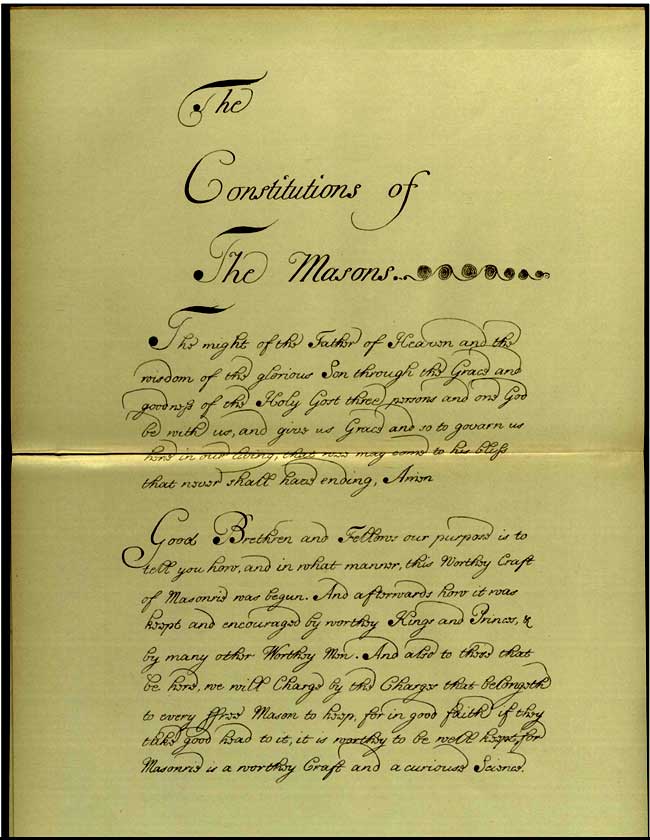
The Cama Manuscript At the time when Bro. Dr. Begemann was publishing his classification of the "Old Charges" (vide A.Q.C., I., 152), he ventured the opinion that the Spencer family was derived from the Grand Lodge family through a lost intermediate version which combined the characteristics of both. Hardly were his words in type, and not yet printed, before the discovery of the Cama MS. proved how true was his judgment, as it turned out to be a fair example of the missing link, a sister document, fulfilling all the conditions, but not the actual link itself. That is to say, Dr. Begemann does not think it the actual MS, which the writer of the Spencer Version must have had before him, but practically identical in form with it. The Cama MS consisted originally of four sheets of paper (sixteen pages), stitched together book-wise, but at the time it first came under my notice the first outside leaf had been torn off and disappeared, leaving seven leaves only. Fortunately, this leaf had not been written on (perhaps it contained a title), the MS proper beginning on the second leaf, so that nothing of value has been lost. The last page also is blank, the text, therefore, covers thirteen pages, eight inches wide by twelve-and-a-half high, with a good inch margin on the left. It had been kept folded in four, twice doubled, and the paper is consequently broken cross-wise, but luckily so that very little is absolutely undecipherable. The document has since been marvelously repaired and mounted on guards. Like most of these old manuscripts, its history cannot be carried back very far and its origin is unknown. It was found on the premises of Bro. W. J. Clarke, stationer and printer, 37, High Street, Margate. The business had formerly belonged to Bro. Brasier, a member of the Margate Lodge, and the supposition is that it had belonged to the latter's uncle, Bro. Osborne, who, after leaving the printing business, kept the King's Head Hotel, Margate. The Brasier's seem to have been quite unaware of its existence. At the time of its discovery (March 1888), the Margate Lodge was interested in a case for the Masonic Charities and resolved to turn the MS to account. It was offered to me for seventy-five votes, and on applying for aid to Bro. D. P. Cama, Past Grand Treasurer, our brother, immediately supplied me with the necessary number of votes, and thus secured the manuscript for our Lodge. Hence the name, "Cama Manuscript." As regards the date, it is impossible to fix it with any degree of precision, "early 18th century" being the nearest approach obtainable. Its place in Begemann's Classification is "Grand Lodge Family, Grand Lodge Branch." As we only give the first page in facsimile, the Transcript has been printed line for line and page for page. It has never before been reproduced in any form.
|
Rukopis Cama U vreme kada je Br∴ dr. Begemann objavljivao je svoju klasifikaciju "Starih dužnosti" (vidi A.Q.C., I., 152), odvažio se na mišljenje da je the porodica rukopisa i dokumenata Spencer izvedena iz porodice Velike Lože preko jedne izgubljene srednje verzije koja je povezivala karakteristike obe. Tek što su njegove reči prispele u slovoslagačnicu, te još nisu bile štampane, kada se otkrićem rukopisa Cama dokazalo koliko je istine bilo u njegovoj prosudbi, jer se pokazalo da je to lep primer nedostajuće veze, sestrinski dokument, koji ispunjava sve uslove, ali sam ne predstavlja spomenutu vezu. To će reći da dr. Begemann ne misli da je to stvarni rukopis koju je pisac Spencerove verzije verovatno imao pred sobom, ali je po obliku praktično identičan s njim. Rukopis Cama se originalno sastojao od četiri lista hartije (šesnaest stranica), spojenih kao knjiga, ali u vreme kada sam saznao za njega, prvi vanjski list već beše otcepljen i nestao, a ostalo je samo sedam listova. Srećom, na tom listu nije ništa pisalo (možda je sadržavao naslov), a sam rukopis je počinjao na drugom listu, tako da ništa vredno nije izgubljeno. Poslednja stranica je takođe prazna, stoga tekst pokriva trinaest stranica širine osam inča i visine dvanaest i po, sa marginom od barem jednog inča na levoj strani. Čuvao se presavijen u četiri dela, dva puta udvostručen, pa je stoga hartija poprečno prelomljena ali, srećom, tako da je vrlo malo toga nečitljivo. U međuvremenu, dokument je sjajno restauriran i postavljen na zaštitnu osnovu. Kao i većina ovih starih rukopisa, njegova se istorija ne može pratiti suviše daleko u prošlost, a poreklo mu je nepoznato. Pronađen je u prostorijama Br:. W. J. Klarka (Clarke), knjižara i štampara iz Haj Strita br. 37, Margejt (37, High Street, Margate). Firma je ranije pripadala Br:. Brejzieru (Brasier), članu Lože Margejt, a pretpostavlja se da je pre toga pripadala ujaku potonjeg, Br:. Osbornu, koji je nakon napuštanja štamparskog posla zadržao hotel King's Head, Margate. Čini se da Brejzierovi o rukopisu nisu znali ništa. U vreme njegovog otkrića (marta 1888.), Loža Margate bila je zainteresovana za jedan slučaj u prilog masonskih dobrotvornih organizacija i odlučila je da rukopis proda. Ponuđen mi je za sedamdeset i pet glasova i podnošenjem zahteva za pomoć Bro. D. P. Cama, bivši Veliki Rizničar, naš Brat, odmah mi je dostavio potreban broj glasova i tako obezbedio rukopis za našu Ložu. Otuda i naziv, "Rukopis Cama." Što se tiče datuma, nemoguće ga je precizno utvrditi, a najbliže moguće određenje je "početak 18. veka". Njegovo mesto u Begemanovoj klasifikaciji je "Porodica Velike Lože, ogranak Velike Lože." Kako samo prvu stranicu dajemo faksimilom, transkript je is pisan po sistemu red za red. Do sada nije nikad prikazan ni u kakvom obliku.
|

|
Cama The Constitutions of the Masons The might of the Father of Heaven and the wisdom of the glorious Son through the Grace and goodness of the Holy Gost three persons and one God he with us, and give us Grace and so to govern us here in our living, that we may come to his bliss that never shall have ending. Amen. Good Brethren and Fellows our purpose is to tell you how, and in what manner, this Worthy Craft of Masonry was begun and afterwards how it was kept and encouraged by worthy Kings and Princes, & by many other Worthy Men. And also to these that be here, we will Charge by the Charges that belong to every Freemason to keep, for in good faith if they take good head to it, it is worthy to be well kept, for Masonry is a worthy Craft and a curious Science, and one of the seven Liberal Sciences. The names of the seven Liberal Sciences be these: the first is Grammar, and it teaches a man to speak and write truly. The second is Rhetoric and it teaches a man to speak fair and in soft terms. The Third is Dialectics or Logic and it teaches a man to discern or know truth from falsehood and the fourth is Arithmetics which teaches a man to reckon and count all manners of numbers. The fifth is Geometry and it teaches a man the measure and measurement of the Earth and of all other things of the science called Masonry. And the sixth science is Music and it teaches a man the craft of song and voice of tongue and organ, harp etc. The seventh science is Astronomy, which teaches a man to know the course of the sun, the Moon and the stars. These are the seven Liberal Sciences, which have all been founded on this Science of Geometry, for it teaches a man measure, ponderation and weight of all sorts of things on Earth for there is no man that works in any Craft that he does not work by some Measure or Measurement and there is no man that buys or sells but by some measure, Measurement or weight, so that merchants, craftsmen and all of the seven Sciences likewise, the ploughmen and tillers of all sorts of seeds and grains, vine planters and setters of all sorts of fruits and trees are hereby directed by Grammar, Arithmetics, Astronomy or any of the other Sciences. No man finds Measure or Measurement without Geometry therefore this science of Geometry is the most worthy and is the foundation of all the others. HOW this worthy science was first began I shall tell you. Before Noah's flood there was a man who was called Lameth, as it is written in the Bible in the fourth Chapter of Genesis. And this Lameth had two wives; the name of one was Adah and the name of the other Zillah. By his first wife Adah he had two sons; the name of one was Jabal, and the other Jubal. And by the other wife, Zillah, he had a son and a Daughter; the son's name was Tubal Cain and the Daughter's was Naomah. These four children founded the beginning of all the crafts in the world for Jabal founded the Craft of Geometry and he had flocks of sheep and land in the field and first wrought a house of stone and wood, and his brother Jubal founded the craft of Music; he was the father of all such instruments as the harpe and the organ. And Tubal Cain was the instructor of every artificer in brass and iron, and the daughter found out the craft of weaving. These children knew well that God would do vengeance for the Sin either by fire or Water, wherefore they wrote their sciences that they had founded in two pillars that they might find after Noah's flood: one of the pillars was of marble for it will not burn in any fire, and the other stone was called Laternes for it would not drown in any water. Our intent is to tell you truly how and in what manner these stones were found wherein these sciences were written. Hermerines, who was Cub's son; this Cub was Sem's son and Sem was Noah's son. This same Hermerines was afterword called Hermes, the father of wisdom. He found one of the pillars of stone wherein the sciences where written. And he taught them to other men. And at the Building of the Tower of Babylon, Masonry was made much of and the King of Babilon, the Mighty Nimrod, was a Mason himself as it is reported by ancient histories and when the city of Ninive and other cities of the east were to be built, Nimrod the King of Babilon, sent there Masons, at the request of the King of Ninive, his Cousin, and when he sent them forth he gave them a charge in this manner: that they should be true to one another and love truly to each other and that they should serve their lord truly for their pay so that their master might have honour and all that belongs to him. Several other charges he gave them & this was the first time that any Mason had ever had any charge of his craft. Moreover, when Abraham and Sara, his Wife, went into Egypt and there taught the Seven Sciences to the Egyptians, he had a worthy scholar whose name was Euclid, who learned right well and became a great master of the seven sciences, and in his days it befell that the lords and the Estates of the Realm had so many sons that they had gotten by their wives and some other ladies of the Realm, for that land is a hot land and had plenteous generations and they had no competent livelihood to support their children wherefore they took counsel together with the King of the Land how they might find their children honestly as gentlemen, but could find no manner of good way and then they proclaimed through all the land that if there were any man that could inform them, that he should be well rewarded for his travel, and he would be held well pleased, After that this cry was made, there came this worthy clerk Euclid, and said to the King and the Lords: 'If you give me your children to govern, I will teach them one of the seven sciences whereby they may live honestly as gentelmen, under the condition that you will grant them, and that I may have power to rule them after the manner that the science ought to be ruled', and the King and his council granted this anon and sealed his comision and then this worthy clerk Euclid took to him those lords' sons and taught them the Science of Geometry in practice to work in stone all manners of worthy works that belong to the building of churches, temples, towers, castles and all other kinds of buildings and he gave them a charge in this manner. The first is that they should be true to the King,
and to the lord that they serve, and to the Fellowship
whereof they are admitted, and that they should love one
another and be true to one another and that they should
call each other his fellow or else his Brother, and not his
servant, or knave nor any other foul name, and that they
should truly deserve their pay from their lord or the
Master of the work that they serve and that they should
ordain the wisest of them to be the Master of the works,
and neither for love nor lineage, riches, or favor, to set
another that has little cunning to be Master of the
lord's works whereby the lord should be evil served and
they ashamed, and also that they should call the governor
of the works Master in the time when they work with
him. And he gave them other charges that are too long
to tell, and to all these charges he made them swear a great
Oath that men used in that time, and he ordained
for them a reasonable pay whereby they might live
honestly, and also that they should come and assemble
together once every year to consult how they might
work best to serve the lord for his profit and to
their credit and correct within themselves
the one that had trespassed against the Craft and that was
how the Craft was grounded their life. Since long after, when the children of Israel came into the land of the Jebusits, which is now called Jarusalem, King David began the Temple that is called, Templnm Domini, with us the Temple of Jerusalem. The same King David loved Masons and cherished them and gave them good pay, and he gave them the charges in the manner as they were given in Egypt by Euclid and more other charges as you shall hear afterwards, and after the decease of King David Solomon, King David's son finished the Temple that his father had begun and he sent for Masons into divers countries and gathered them together so that he had fourscore thousand workmen that were workers in stone and all were Masons and he chose three thousand of them to be Masters and Governors of his works. And Hiram, King of Tyre, sent his servants unto Solomon for he was ever a lover of David and he sent Solomon timber and workmen to help forwards the building of the Temple and he sent them one that was named Hiram, a widow's son of the tribe of Naptaly. He, as a master of Geometry, and of all his Masons carvers, engravers, and workers and casters of brass and all other metals that were used about the Temple. And King Solomon confirmed both the charges and manners that his father had given to Masons and thus was that worthy Craft of Masonry confirmed in Jerusalem and many other Kingdoms. Curious Craftsmen walked about full wide in divers Countries, some to learn more craft and cunning, and others to teach them to those that had but little, and so it befell that there was a curious Mason that was named Greens that had been at the building of Solomons Temple, and he came into France and there he taught the science of Masonry to the men of France and there was one of the regular line of French royals named Charles Mertell, and he was a man that loved well such a craft and drew to this Greens and learnt of him the Craft and took upon him the charges and manners, and afterwards, by the grace of God, he was made King of France and when he was King he took Masons, and did help to make men Masons and set them to works and gave them what he had learned of other Masons and confirmed them a charter to hold their assembly, year after year, wherever they would like and he cherished them right much and thus came the Craft into France. England in all this season stood void of any charge of Masonry until St. Albans's time, and in his days the King of England, who was a pagan, built a wall around the Town that was called St. Albans, and St. Albans was a worthy Knight and steward of the Kings houshold and had got the government of the Realm and also the Town walls and loved Masons well and cherished them much, and he made thei pay right good as was the Realm for he gave them 2 a week and 3 to their cheer for before that time, through all the land, a Mason had but a peny a day and his meat until St. Alban amended it and he gave them a Charter of the King and his counsel and gave it the name of assembly and was there himself and helped to make Masons and gave them charges as you shall hear afterwards. After the death of St. Alban there came into England divers Nations so that the good rule of Masonry was destroyed untill the time of King Athestone that was a worthy King of England and brought all the land into rest and peace and built many great abbies and other hildings. And he loved Masons and had a son named Edwin that loved Masons and was a great practicer of Geometry and drew himself to the Commune and talked with Masons to learned the Craft from them and afterward, for the love he had of Masons and the Craft, he got from the King his father a Charter and Commison to hold an Assemhly where they would, within the Realm, once a year, correct within themselves any faults and trespasses that were done within the Craft. And he held one assembly himself at York and there he made Masons and gave them charges and taught them and commanded that rule to be keept for everafter and gave them the Charter and Commison to keep and made one ordinance that it should be renewed from King to King. And when the assembly was gathered together he made a cite that all old m any writings or understanding of the charges and manners, which were made before in this land or in any other, that they should bring and show them and it was proved there were found some in French some in Greek and some in English and some in other languages and they were all to one intent and purpose and he made a book thereof how the Craft was founded and he himself commanded that it should be read or told when any Mason should be made and given him his charges and from that day until this time manners of Masons have been kept in that form as well as men might govern it. Furthermore, at divers assemblies certain charges had been made and ordained by the best advice of Masters and Fellows. Every man that is a Mason, ought to take right good head to their charges, and if any man finds himself guilty of any of these charges that he amend himself against God and especially you that are to be Charged take good head that you may keep these Charges right well for it is a great perril for a man to forswear himself upon a book. The first charge is that you shall be a true men to God and the holy Church and that you make no error nor heresy by your understanding or descretion but be wise men and descreet in everything and also that you should be true liegemen to the King without treason or any other falsehood. And that you know no treason nor treachery but you amend it if you may or else warn the King or his council thereof and also that you be true each one to another, that is to say to every Mason of the Craft of Masonry that the Masons allowed and you shall do unto Them as you would like them to do unto you. And also that you keep all the counscels of your fellows truly, be it in Lodge or in Chamber, and all other counsels that ought to be kept by the way of Brotherhood and also that a wowed Mason shall not be a thief as far as he may write or know, and that you shall be true to the Lord or Master that you serve and truly see to his profit and his advantage. And also you shall call Masons your Fellows or Bretheren and no other foul names, and also you shall not take your Fellow's wife in villainy nor desire ungodly his daughter nor his servant nor put him to any disworship and also that you shall pay truly for your meat, and drink whereever you board whereby the Craft may not be slandered. These be the charges in general that belong to every true Mason to be kept both by Masters and Fellows. Rehearse I will other charges in singular for Masters and Fellows. First, that no Master or Fellow shall take upon him any lord's work nor any other man's work unless he knows himself able and sufficient to perform the same so that the Craft has no slander nor disworship thereby, but that the lord may be well and truly served. Also that no Master shall take no work but that he has taken shall be reasonable so that the lord may be well served with his one good and the Master to live honestly and to pay his Fellows truly their pay as the manner is. Also that no Master nor Fellows shall supplant any other of their work that is to say if he has taken any work in hand or else stand Master of any lord's work he shall not put him out except he be unable of cunning to perform the work. And also no Masters nor Fellow shall take any Apprentice but for the term of seven years, and that the Apprentice be able of birth, that is to say, freeborn and whole of his limbs as a man ought to be. Also that no Master nor Fellow take no alowance of any that is to be made a Mason without the consent and counsel of his Fellows, and that he that is to be made a Mason be able in all manner of degrees. That is to say, freeborn, come of good kindred true and no bondman, and that he have his right limbs as a man ought to have. Also that no Mason take an Apprentice unless he has sufficient occupation for to set him one, or to set three of his Fellows or two at least, on work. And also that no Master or Fellow shall take no man's work to task that used to be or was a journey work. Also that every Master shall give pay to his Fellows as they deserve it so that he be not deceived by false workmen. Also that no Mason slander one another behind his back to make him lose his good name or his worldly goods and also that no Fellow within the lodge shall be treated with misanswer or reproachfully or ungodly without some reasonable cause. Also that every Mason shall reverence his elder and put him to worship and also that no Mason shall be a common player at hazard or at dice or at cards or any other unlawful game whereby the craft might be slandered; and also no Mason shall use any lechery nor be bald whereby the craft might be slandred, and also that no Fellow shall go into the city or town at night without having someone or more of his companions with him to bear him witness that he was in honest places Also that every Master and Fellow shall come to the assembly if it is within fifty miles about him if he had any warning, and if any would trespass against the Craft. Then, to abide the order of the Masters and Fellows, to make them accord if they can and if they cannot then to go to Common Law. Also that no Master nor Fellow shall neither make mould nor square nor rule to any layer, nor set any layer that is within the lodge or without the lodge to hew moulded stones. And also that every Mason shall receive and cherish strange Fellows when they come over to the Country and set them awork if they will, as the manner is, that is to say, if he has moulded stones in his place, or else he shall refresh him with money unto the next lodging. And also that every Mason shall truly serve the lord for his pay and every Master shall truly make an end of his work, be it a task or journey if he has his demands and all he ought to have. These charges that we have now rehearsed unto you, and all the others that belong to Masons you shall keep, so help you God and your Hallidom (Godliness). |
Cama Masonske konstitucije O, moći Oca Nebeskog sa mudrošću Sina slavnoga i milošću i dobrotom Duha Svetoga, tri lica i jednog Boga koji je sa nama, daj nam milost i vodi nas tako ovde u životu našem, kako bismo stekli večno blaženstvo njegovo. Amen. Dobra Braćo i prijatelji, namera nam je
da vam objasnimo kako i na koji način ovaj vrli Nauk
započet beše, a nakon toga kako su ga dostojni kraljevi
i prinčevi i mnogi drugi vrli ljudi podržavali a takođe i
one koji su ovde, obavezaćemo dužnostima koje pripadaju
svakom slobodnom zidaru, da ih čuva, jer u dobroj veri, ako
pažnju na nj usmere, vredeće da se čuva, jer
Zidarstvo dostojan je Nauk i jedinstvena nauka,
i jedna od sedam liberalnih nauka. Imena
sedam liberalnih nauka sledeća su: prva je Gramatika,
koja uči čoveka da govori i piše istinito.
Druga je Retorika i ona uči čoveka
da govori korektno i blago. Treća je Dijalektika
ili Logika i ona uči čoveka da poznaje i razlučuje
istinu od laži, a četvrta je Aritmetika
koja uči čoveka da računa i prebrojava sve vrste
brojeva. Peta je Geometrija i ona uči
čoveka merama i merenju Zemlje i svih
drugih stvari nauke zvane Zidarstvo.
A šesta nauka je Muzika i ona podučava
čoveka nauku pesme i glasa i sviranju
orgulja, harfe i dr. Sedma nauka je Astronomija,
koja uči čoveka da poznaje kretanje
sunca, meseca i zvezda. Ovo je sedam liberalnih
nauka, koje su sve utemeljene na ovoj nauci
Geometrije, jer ona čoveka uči meri, ponderaciji
i težini svih vrsta stvari na Zemlji, jer
nema čoveka koji se bavi bilo kojim naukom a da ne koristi
nekakvu meru ili neko merenje i nema čoveka koji
kupuje ili prodaje, koristeći neku meru, merenje ili težinu,
tako da trgovce, zanatlije, a i svih sedam
nauka, a isto tako i orače i one koji seju sve vrste
semenja i žitarica, vinogradare i uzgajivače svakovrsnog
voća i drveća usmeravaju gramatika,
aritmetika, astronomija ili bilo koja druga
nauka. Nijedan čovek ne može da odredi meru ili merenje bez
Geometrije, te stoga ova nauka Geometrije
najdostojnija je i temeljom je svih ostalih. KAKO je ova vrla Nauka započeta reći ću vam. Pre Nojevog potopa beše čovek koji se zvao Lamet, kako zapisano je u Bibliji u četvrtom poglavlju Postanka. A taj Lamet imaše dve žene; jedna se zvala Ada, a ime druge beše Zila. Od prve žene Ade imaše dva sina; jedan se zvao Džabal, a drugi Džubal. A od druge supruge Zile imaše sina i kćer; sin se zvao Tubal Kain, a kćer se zvala Naoma. Ovo četvoro dece je započelo sve zanate na svetu, jer Džabal beše osnovao nauk Geometrije a imaše stada ovaca i zemlje u polju i prvo je načinio kuću od kamena i drveta, a njegov brat Džubal beše osnovao nauk muzike; on je bio otac svih takvih instrumenata kao što su harfa i orgulje. A Tubal Kain je bio učitelj svih umetnika livaca mesinga i gvožđa, a kći je to pronašla nauk tkanja.Ta su deca dobro znala da će Bog da se osveti za počinjeni Greh bilo vatrom ili vodom; stoga su zapisali nauke koje su osnovali na dva stuba koja bi mogli pronaći nakon Nojinov potopa: jedan stub beše od mermera jer ga vatra neće oštetiti, a drugi od kamena zvanog Laternes jer tog neće nikakva voda potopiti. Namera nam je da vam kažemo iskreno kako i na koji način ti kamenovi behu nađeni na kojima su te nauke zapisane. Hermerines, koji beše Kubov sin; taj Kub beše Semov sin, a Sem beše Nojev sin. Tog istog Hermerinesa su kasnije prozvali Hermesom, ocem mudrosti. On je našao jedan od kamenih stubova na kojem nauke behu zapisane. I podučavao ih je drugim muškarcima. A kod gradnje Vavilonske kule, Zidarstvo je bilo veoma značajno, te kralj Vavilona, moćni Nimrod, i sam zidar, kako stoji u drevnim storijama i kada je grad Niniva, kao i drugi gradovi na istoku, trebao da se gradi, Nimrod, kralj vavilonski posla zidare, na molbu kralja Ninive, njegovog rođaka, a kada ih je poslao, dao im je odgovarajuće dužnosti: da bi trebali da budu iskreni jedan prema drugom i da se iskreno vole i da treba istinski da služe svoga gospodara za svoju platu, što bi njihovom majstoru služilo na čast i imao sve što mu pripada. Dao im je i nekoliko drugih dužnosti i beše to prvi put da je neki zidar primio ikakvu dužnost u vezi svoga nauka. Štaviše, kada su Avram i Sara, njegova žena, otišli je u Egipat i tamo podučavali Egipćanima sedam nauka, imaše on jednog dostojnog učenjaka koji se zvao Euklid, koji je dobro učio i postao veliki majstor sedam nauka, a u njegovo vreme desilo se da su gospodari na imanjima carstva imali mnogo sinova, koje su dobili od svojih supruga i nekih drugih žena carstva, jer ta je zemlja vruća zemlja i imala je mnogo generacija i nisu imali dovoljno sredstava za izdržavaje svoje čeljadi, zbog čega su se posavetovali sa kraljem te zemlje kako bi mogli svoju decu časno odgojiti kao gospodu, ali nisu mogli naći dobar način, te su potom razaslali proglas po čitavoj zemlji da se traži neko ko bi ih mogao obavestiti, a on bi bio dobro nagrađen za svoj dolazak, te bi bio veoma zadovoljan. Nakon toga poziva, došao je taj vrli službenik Euklid, i rekao kralju i gospodarima: "Ako mi date vašu decu da upravljam njima, naučiću ih jednoj od sedam nauka čime mogu časno kao gospoda da žive, pod uslovom da odobrite da ja imam moć nad njima, da vladam njima na način na koji bi naukom trebalo vladati", a Kralj i njegov Savet odmah to odobre i potvrde njegov angažman, a zatim taj vrli službenik Euklid okupi te sinove gospodara i poduči ih praksi Nauke Geometrije da obavljaju sve vrste radova u kamenu potrebnim kod izgradnje crkava, hramova, kula, dvoraca i svih drugih vrsta građevina i dao im je dužnosti u tom smislu. Prva je da bi trebali da budu verni Kralju, i gospodaru kojeg služe, kao i Društvu u koje su primljeni i da bi trebali da vole jedan drugog i budu iskreni jedan prema drugom i da bi trebali da jedni druge nazivaju kolegom ili Bratom, a ne slugom, ili kmetom, niti bilo kojim drugim ružnim imenom i da bi istinski trebali da zasluže svoju nadnicu od gospodara ili od Majstora rukovodioca radova kojem služe i kojeg bi trebali odrediti za Rukovodioca radova, kao najmudrijeg među njima, a ne da iz ljubavi, zbog porekla, bogatstva ili usluge postave nekoga koji nije dovoljno vešt da bude Rukovodilac gospodarevog projekta čime bi gospodar bio loše služen a oni sami se stideli, a Rukovodioca bi trebali da zovu Majstorom, u vreme dok rade sa njim. I dao im je i druge dužnosti, što bi bilo dugo da se navede, a na sve te dužnosti naterao ih je da polože Zakletvu, kako je tada bio običaj, i odredio im je razumnu nadnicu kako bi mogli da žive časno; a takođe da trebaju da dođu i okupe se jednom godišnje kako bi se posavetovali kako da rade najbolje da bi služili gospodaru i obezbedili njegovu zaradu, a poverenje za sebe, te da, među sobom, reše problem onoga koji je zgrešio prema Nauku i tako je bilo da im je Nauk utemeljio život. A taj dostojni službenik Euklid mu je dao ime Geometrija, a sada se širom ove zemlje zove Zidarstvo. Dugo nakon toga, kad su deca Izraelova došla u zemlju Jevusej, koja se sada zove Jarusalim, kralj David započe hram koji se zove, Templum Domini, kod nas Hram jerusalimski. Isti kralj David voleo je zidare i pazio ih i davao im dobre nadnice, i dao im je dužnosti na način kako im je u Egiptu davao Euklid i više drugih dužnosti kao što ćete kasnije čuti, a nakon smrti Kralja Davida, Solomon, kralja Davida sin, dovršio je hram koji je njegov otac započeo i poslao po zidare iz raznih zemalja i i sakupio ih, tako da je imao osamdeset hiljada radnika koji su gradili u kamenu i svi bili zidari i izabrao ih je tri hiljade i postavio za majstore i rukovodioce njegovih radova. I Hiram, kralj Tira, pošalje svoje sluge Solomonu, jer je uvek voleo Davida, te je Solomonu poslao drvnu građu i radnike da pomažu izgradnju Hrama i poslao im je onog koji se zvao Hiram, sin udovice iz plemena Naftali, njega kao majstora geometrije, i sve njegove Zidare, klesare, gravere i radnike i livce mesinga i svih drugih metala koji su korišćeni oko Hrama. I kralj Solomon potvrdi i dužnosti i manire koje je njegov otac dao zidarima i tako je potvrđen taj dostojni zidarski nauk u Jerusalimu i mnogim drugim kraljevstvima. Znatiželjne zanatlije su putovale širom sveta po raznim zemljama, neki da steknu više znanja i veština, a drugi da podučavaju one koji ih nisu imali dovoljno, te se tako desilo da je bio jedan znatiželjni Zidar imenom Grinz (Greens), koji bejaše na izgradnji Solomonovog hrama, pa je došao u Francusku i tamo podučavao nauku zidarstva Francuzima. Beše tamo jedan iz regularne kraljevske loze po imenu Šarl Martel (Charles Mertell), a beše to čovek koji je mnogo vole takav nauk, pa se privukao tom Grinu i od njega učio zanat i prihvatio dužnosti i manire, a nakon toga, milošću Božijom, ustoličen je za kralja Francuske i kada je postao kralj, uzeo je zidare i pomagao je da se muškarci proizvedu u zidare i dao im posla i dao im ono što je saznao o drugim zidarima i potvrdio im povelju da bi održavali skupštine, godinu za godinom, gdegod bi želeli i mnogo ih je pazio, te je tako nauk prispeo u Francusku. Engleska, u celo to vreme nije imala nijednu dužnost za zidarstvo sve do vremena Sv. Albana; a u to doba kralj Engleske, koji je bio paganin, sagradio je zid oko grada, koji se zvao Sv. Alban, a Sv. Alban beše dostojan vitez i upravitelj kraljevog domaćinstva, i dobio je da upravlja Kraljevinom, a takođe i gradskim zidinama, i voleo je zidare mnogo i dobro ih je pazio, i davao im dobre nadnice kao što je Kraljevina bila dobra jer je davao 2 sedmično i 3 na zadovoljstvo njihovo jer pre toga, u celoj zemlji, zidar je dobijao samo jedan peni dnevno i hranu sve dok to Sv. Alban nije to izmenio i dao im Povelju od Kralja i njegovog Saveta i nazvao ju je skupštinom i beše tamo i sam i pomagao da se proizvode zidari i dao im je dužnosti, kao što ćete čuti kasnije. Nakon smrti Sv. Albana došlo je u Englesku raznih nacija, tako da je dobra vladavina Zidarstva uništena, do vremena kralja Atelstona Koji beše dostojan engleski kralj i obezbedio celoj Zemlji red i mir i izgradio mnoge velike opatije i druge građevine. I voleo je zidare, a imaše sina imenom Edwin koji je voleo zidare i bio sjajan praktičar Geometrije i privukao se Komuni i razgovarao sa zidarima da bi od njih naučio nauk, a kasnije, iz ljubavi prema zidarima i nauku koju je stekao, dobio je od Kralja, svoga oca, Povelju i dozvolu da održi Skupštinu gde bi, unutar Kraljevstva, jednom godišnje ispravljali, među sobom, sve nedostatke i prestupe koji se učine u okviru Nauka. I održao je jednu skupštinu u Jorku i tamo proizveo zidare i dao im dužnosti i podučio ih i naredio im da se to pravilo zadrži zauvek i dao im Povelju i dozvolu da je zadrže i sačinio beše jednu uredbu koja bi trebala da se obnavlja od kralja do kralja. A kad se skupština sastala, uputio je poziv svim starim i mladim zidarima koji su imali bilo kakva pisanija ili se razumeli u dužnosti i manire, koji su potvrđeni u ovoj zemlji ili bilo kojoj drugoj, da ih donesu i pokažu te se pokazalo da ih je bilo, nekih na francuskom, nekih na grčkom, a i na engleskom i nekim drugim jezicima i sva su sačinjena sa istom namerom i svrhom, te ih je on povezao u knjigu o tome kako je Nauk osnovan, a on sam je naložio da bi to trebalo pročitati ili reći kadgod bi se koji zidar primao i dobijao dužnosti i od toga dana do danas maniri zidara se održavaju u tom obliku u meri u kojoj se mogu sprovesti. Nadalje, na raznim skupštinama utvrđivane su izvesne dužnosti i određivane po najboljim savetima Majstora i Pomoćnika. Svaki čovek koji je zidar, trebao bi dobro da pazi na dužnosti i ako ustanovi da je zgrešio protiv bilo koje od tih dužnosti, treba da se popravi prema Bogu, a posebno vi koji treba da se optužite dobro pazite da se držite ovih dužnosti jer veliku opasnost nosi zakletva na knjigu. Prva dužnost je da se istinski postane čovek u odnosu na Boga i svetu crkvu i da se svojim tumačenjem ne napravi nikakva greška ni hereza u prosuđivanju, već treba da se bude mudar i oprezan u svemu. A takođe bi se trebao biti pravi podanik Kraljev, ne znati za izdaju ili bilo koju drugu laž. I ne znati za izdaju ili prevaru, već je ispraviti ako je moguće ili upozoriti Kralja ili njegov Savet o tome, kako da svako bude iskren prema drugom, što će reći svakom zidaru Nauka Zidarstva kojeg su zidari primili i prikloniti im se onako kako bi svako želeo da se prema njemu odnose. I takođe da se svako drži saveta svojih drugova, bilo da je u pitanju Loža ili Komora, te svih ostalih saveta koji bi trebali da se čuvaju putem Bratstva, a takođe svaki zidar koji je dao zakletvu ne sme da bude lopov, po pisanoj reči ili znanju, i treba da se bude veran Gospodaru ili Majstoru kojeg se služi i istinski brine o njegovoj zaradi i koristi. A takođe ćete zvati zidare svojim Drugovima ili Braćom, a ne nekim lošim imenima, a takođe se ne sme uzimati supruga svog Kolege i žudeti bezbožno za njegovom kćeri niti njegovom slugi, ili ga osramotiti. A takođe treba da se pošteno plati hrana i piće gdegod se odsedne da bi Nauk sačuvao dobar glas. To su opšte dužnosti koje se tiču svakog pravog zidara i treba da ih se drže i Majstori i Pomoćnici. Primenjivaću i druge dužnosti pojedinačno za Majstore i Pomoćnike. Prvo, da se nijedan Majstor ili Pomoćnik neće prihvatati bilo kakvog gospodarevog posla ili bilo kog drugog posla ako zna da nije sposoban i vešt da isti obavi tako da bi Nauk time sačuvao dobar glas i čast, a da se gospodar dobro i iskreno služio. Takođe da se nijedan Majstor ne prihvata posla, već onaj kojeg je uzeo mora da bude razuman tako da se gospodaru valjano služiti za njegovo dobro i kako bi Majstor živeo pošteno i mogao da daje svojim Pomoćnicima pravu nadnicu, kako je red. Takođe da nijedan Majstor, ni Pomoćnik, ne treba da zameni drugog u njegovom poslu, tj. ako se već latio kakvog posla ili postao rukovodilac gospodarevog posla, ne sme ga iz istog izbaciti, osim ako ovaj nije sposoban da obavi taj posao. I takođe, nijedan Majstor ili Pomoćnik ne treba da uzme Učenika na rok kraći od sedam godina, a Učenik treba da je dobroga roda, slobodan čovek i da su mu svi udovi čitavi, kako je normalno. Takođe, da nijedan Majstor ni Pomoćnik ne treba da prihvati onog koji treba da postane zidar bez pristanka i saveta svojih kolega, a da onaj koji treba da bude zidar treba da zadovolji sve zahteve. To će reći, da bude slobodnorođen, da je dobroga roda i nije kmet, te da su mu svi udovi na broju, kako je u čoveka normalno. Takođe, da nijedan Zidar ne uzme Učenika ako nema dovoljno posla za njega, ili dovoljno za tri Pomoćnika, ili barem za dva. I takođe da nijedan Majstor ili Pomoćnik ne treba da uzme ničiji posao koji je nekad bio ili jeste putnički posao. Takođe da će svaki Majstor svojim Pomoćnicima davati nadnice kako zaslužuju, da ga lažni radnici ne bi prevarili. Takođe, da nijedan Zidar ne kleveće drugog iza njegovih leđa da bi ovaj izgubio dobar glas ili svoju svetovnu imovinu, a takođe da nijedan član Lože ne bude tretiran sa nipodaštavanjem ili prekorno ili bezbožno bez nekog razumnog razloga. Takođe, da će svaki zidar poštovati svog starijeg i klanjati mu se, a takođe se nijedan zidar neće baviti radovno igrama na sreću, kockanjem, igrati karte ili bilo koje druge nezakonite igre čime bi se nauk klevetao; a takođe, nijedan Zidar se neće odati razvratu, ni biti prost jer bi time nauk mogao biti oklevetan, a takođe i da nijedan Pomoćnik ne treba da ide u grad noću a da sa sobom nema nekoga, ili više njih koji bi posvedočili da je bio na poštenim mestima. A svaki Majstor i Pomoćnik treba da dođu na skupštinu ako se održava u krugu od pedeset milja od njega, ako je dobio poziv, ili ako je neko zgrešio protiv Nauka. Tada, treba da se pridržavate naredbe Majstora i Pomoćnika, kako bi ih naveli da se slože, ako mogu, a ako ne mogu, onda da se primeni običajno pravo. Takođe nijedan Majstor ni Pomoćnik ne treba da pravi model, ni kvadratni niti uzdužni, bilo kojem polagaču, niti da postavi bilo kog polagača, iz lože ili van lože, da kleše model. A takođe svaki zidar treba da prima i brine se o Pomoćnicima strancima kad ovi dođu u zemlju i da im posla, ako hoće da rade, kako dolikuje, to jest, ako ima već oblikovanih kamenova, a ako nema daće mu novaca i otpraviti do sledeće lože. A takođe svaki zidar treba iskreno da služi gospodara za svoju nadnicu i svaki Majstor treba da dovrši svoj posao, bio to zadatak ili putujući posao ako ovaj ima svoje zahteve i sve što treba da ima. Ove dužnosti koje smo sada postavili pred vas i svima drugima koji pripadaju zidarima treba da čuvate, da vam Bog i vaša pobožnost u tome pomognu. |
