English Translation
of

The Book of the True Freemason


(Il libro del Vero Massone)

By Ulisse Bacci
(Translated by Bro. Vincent Lombardo)
Divider

Please note: this page is best viewed with Google Chrome (Zoomed at 150%)
Nota: questa pagina è ottimizzata per Google Chrome (ingrandita al 150%).


This book was first published in two volumes by Ulisse Bacci in 1908 with the title Il Libro del Massone Italiano (The Book of the Italian Freemason), and there have been several reprints to this day.

Sommario


Premessa
Prefazione
PARTE PRIMA - ORIGINI
Considerazioni preliminari
I Magi
Il Culto Mitriaco
Bramini e Ginnosofisti
Misteri Isiaci
L'iniziazione di Salomone
il Tempio di Salomone
Significato astronomico della leggenda isiaca
Misteri Eleusini
Pitagora
I Druidi
I Saturnali
Le Sette Giudaiche
 Farisei
 Sadducei
 Terapeuti
 Esseni
I Cristiani
I Cabalisti
Gli Gnostici
Trovatori e Cavalleria
Dante massone?
I Templari
Gli Alchimisti
I Rosa-Croce
La Croce e la Rosa
I Massoni accettati
Corporazioni costruttrici
I Maestri Comacini
Continuano le Corporazioni Costruttrici
Le Corporazioni Muratorie Scozzesi
Il documento di Anderson
Spirito sarcastico dei Costruttori
La Carta di Colonia
Decadenza dello stile gotico
Trasformazioni delle Sociatà costruttrici
PARTE SECONDA - RITI
Antiche costumanze rituali
Landmarks - Principi fondamentali
La Leggenda del Tempio di Salomone
Antichi dialoghi rituali
Il segreto
La Loggia
L'Iniziazione
La camera di riflessione - I metalli
I viaggi simbolici
I due San Giovanni - Il culto solare
 — Feste pagane nel Cristianesimo
Gli alti gradi
Iniziazione di un Apprendista
Istruzione del primo grado
Altri Rituali
Rituali di addozione dei Fanciulli
 Adornamento del Tempio
 Invocazione
 Ricevimento
 Esortazione
 Consacrazione
 Chiusura
Rituale di Riconiscimento Coniugale
 Ordine coniugale
 Preparazione
 Apertura dei lavori
 Invocazione
Rituale per i funerali massonici
Catechismo della solidarietà
Rituale dei banchetti massonici
Alla Massoneria Italiana
Notizie sui Numeri
 Notizie sul Numero 3
 Notizie sul Numero 5
 Notizie sul Numero 7
Riassunto delle significazioni dei Numeri
Date, età, Segni, Passi, Parole
 Apertura e chiusura dei lavori massonici
 Età o Era massonica
 Età simbolica dei Massoni
 Posizione all'Ordine
 Segni o saluti
 Toccamenti
 Passi
 Parole sacre
 Parole di passo
Alfabeto Massonico
Conclusione


Summary


Introduction
Foreword
PART ONE - ORIGINS
Preliminary considerations
The Magi
The Mithraic Cult
Brahmins and Gymnosophists
Mysteries of Isis
Solomon's initiation
Solomon's Temple
Astronomical significance of the Isiac legend
Eleusinian Mysteries
Pythagoras
The Druids
The Saturnalia
The Judaic Sects
 Pharisees
 Sadducees
 Therapeutae
 Essenes
The Christians
The Cabalists
The Gnostics
Troubadours and Chivalry
Dante a Freemason?
The Templars
The Alchemists
The Rosicrucians
The Cross and the Rose
The accepted Freemasons
Building corporations
The Comacine masters
The Building Corporations continue
The Scottish Masonry Guilds
The Anderson document
Sarcastic spirit of the Builders
The Cologne Charter
Decadence of the Gothic style
Transformations of the Building Corporations
PART TWO - RITES
Ancient ritual customs
Landmarks - Fundamental principles
The Legend of Solomon's Temple
Ancient ritual dialogues
The secret
The lodge
The Initiation
The chamber of reflection - Metals
The symbolic journeys
The two Saint Johns - The solar cult
 — Pagan celebrations in Christianity
The high degrees
Initiation of an Apprentice
Catechism of the first degree
Other Rituals
Rituals for the initiation of children
 Ornament of the lodge
 Invocation
 Reception
 Exhortation
 Consecration
 Closing
Marriage Recognition Ritual
 Marital order
 Preparation
 Opening of the works
 Invocation
Ritual for Masonic funerals
Catechism of solidarity
Ritual of Masonic banquets
To Italian Freemasonry
Information on the numbers
 Information on Number 3
 Information on Number 5
 Information on Number 7
Summary of the meanings of Numbers
Dates, age, signs, steps, words
 Opening and closing of the Masonic works
 Masonic Age or Era
 Symbolic Age of Freemasons
 Standing to Order
 Signs or greetings
 Grips
 Steps
 Sacred words
 Passwords
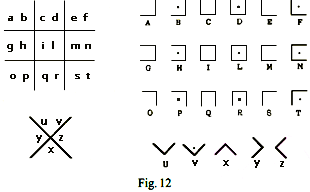
Masonic alphabet
Conclusion

*

Premessa


Presentare un manuale di massoneria nel 2011 non è compito semplice. Occorre confrontarsi sempre con chi conosce in maniera approfondita gli argomenti e con chi, con il passare del tempo, propone nuove considerazioni e nuove interpretazioni sui temi in questione. Non solo, ma chi si vuole documentare sulla Massoneria, ha solamente l'imbarazzo della scelta fra un nutrito elenco di titoli.
 Ciò nonostante quando il testo presentato è più che un manuale, poiché scritto con attenzione e senza confondere il lettore, vista la difficoltà dell'argomento, è sempre opportuno ripresentarlo al pubblico, affinché ne comprenda l'utilità quasi enciclopedica.
 Il libro di Ulisse Bacci risponde alle esigenze di massoni e non, come — forse — solamente pochi sanno fare. Pur consapevole del fatto che è pressoché impossibile racchiudere in un unico volume le numerose e differenti tappe della storia della Massoneria, Ulisse Bacci riesce a fornire, attraverso il suo libro, attente e cospicue indicazioni per conoscere la storia dell'Istituzione massonica.
 Sfortunatamente, di tale libro se n'era persa traccia. Se non fosse stato per un'edizione dell'82, l'opera di Bacci sarebbe stata destinata alla biblioteca privata di qualche anziano cultore della materia e nulla più. Ma perché privare i massoni e il pubblico interessato di un testo di tale caratura?
 Così, nel 2011 è nata l'idea di una ristampa, per molti aspetti necessaria; in primo luogo per diffondere nuovamente un libro così semplice e allo stesso tempo importante che altrimenti avrebbe svernato in scaffali polverosi di qualche biblioteca; in secondo luogo per sottolineare, per l'ennesima volta, il compito svolto con molta serietà da questa collana: fornire a tutti coloro che desiderano addentrarsi nel mondo della Massoneria e della sua storia, una cospicua e sfaccettata bibliografia. Motivazioni sufficienti? Certo che no. A queste si potrebbe aggiungere il fatto che il libro di Bacci è un testo che resiste alle mode, perché non vacilla mai, oppure che numerosi autori lo citano nella propria bibliografia. Per le altre motivazioni, sarà il lettore a scoprirle.
 Ciò che qui importa nuovamente sottolineare è che se anche alcuni di questi libri possono sembrare in contrasto l'uno con l'altro, non ci si deve stupire. Proprio perché non ancorata a dogmi, nella Massoneria coesistono più voci, in apparente contrasto, ma che in realtà sono soltanto percorsi diversi con un unico obiettivo: il miglioramento spirituale dell'uomo.
 L'opera di Ulisse Bacci è una di queste numerose voci, da rileggere in questo periodo, proprio per la larghissima diffusione di articoli e libri che parlano in maniera fin troppo sommaria della Massoneria, sviando il lettore da quelli che sono i veri intenti dell'Istituzione e dalla sua tradizione effettiva. Non è quindi la ripresa di un testo apparentemente datato, ma in realtà la riproposizione di un libro più attuale di molti altri, dove sia il massone che il "profano" possono trovare in modo sintetico ma esaustivo tutto ciò di cui necessitano per conoscere l'argomento.


Introduction


To present a manual on Freemasonry in 2011 is not an easy task. It is always necessary to discuss with those who know the topics in depth and with those who, over time, propose new considerations and new interpretations on the issues in question. Not only that, but those who want to document on Freemasonry are spoiled for choice among a large list of titles.

 Nevertheless, when the text presented is more than a manual, since it is written with care and without confusing the reader, given the difficulty of the subject, it is always advisable to present it to the public, so that they understand its almost encyclopedic usefulness.
 Ulisses Baccis book responds to the needs of Freemasons and not, as - perhaps - only a few know how to do. Although aware of the fact that it is almost impossible to enclose in a single volume the numerous and different stages of the history of Freemasonry, Ulisse Bacci manages to provide, through his book, careful and conspicuous information to know the history of the Masonic Institution.
 Unfortunately, any trace of that book was lost. Had it not been for a 1982 edition, Baccis work would have been destined for the private library of some elderly connoisseur of the subject and no one else. But why deprive Freemasons and the interested public of a text of such caliber?
 Thus, in 2011 was born the idea of a reprint, in many respects necessary; in the first place to re-distribute a book so simple and at the same time important that it would otherwise have wintered in the dusty shelves of some library; secondly to underline, for the umpteenth time, the task carried out with great seriousness by this series: to provide all those who wish to delve into the world of Freemasonry and its history a conspicuous and multifaceted bibliography. Sufficient reasons? Of course not. To these we could add the fact that Baccis book is a text that resists fashions, because it never falters, or that numerous authors cite it in their bibliography. As for the other reasons, the reader will discover them.

 What is important to emphasize here again is that while some of these books may seem at odds with each other, it is not surprising. Precisely because it is not anchored to dogmas, in Freemasonry several voices coexist, in apparent contrast, but which in reality are only different paths with a single goal: the spiritual improvement of man.

 Ulisse Bacci's work is one of these numerous voices, to be re-read in our times, precisely due to the very wide diffusion of articles and books that speak in a too summary way of Freemasonry, diverting the reader from those who are the true intentions of the Institution and its actual tradition. It is therefore not the revival of an apparently dated text, but in reality the re-proposal of a book more current than many others, where both the Freemason and the "profane" can find in a synthetic but exhaustive way everything they need to know of the topic.

*

Prefazione


Non posso pretendere e non pretendo che questo mio libro risponda alle aspettative e forse alle speranze dei Massoni Italiani. Il desiderio di conoscere tutto ciò che gli eruditi nelle cose massoniche pensarono e scrissero intorno alla controversa questione delle origini del nostro Istituto, intorno ai Riti od Ordinamenti o Sistemi coi quali, nelle varie parti del mondo, preferì di svolgere la sua opera di educazione, di redenzione e di civiltà, intorno ai grandi avvenimenti storici che da esso furono preparati, o nei quali si mescolò per svilupparli, per contenerli, per volgerli alle sue altissime umane e patriottiche finalità, è nutrito, accarezzato da troppo tempo, specialmente in Italia, e reso troppo intenso dalla necessità e dall'attesa, perché al primo tentativo di soddisfarlo possa arridere felice e pieno il successo. Le forze di un uomo solo, per quanto animato dalla fede più ardente, dalla più decisa volontà di far bene, per quanto consapevole delle enormi difficoltà di un lavoro di questa natura, per quanto pieno di coraggio e di ardire dinanzi all'arduo compito di superarle, non possono bastare all'impresa. Il mio Libro del Massone Italiano non sarà quindi, anzi non è, senza molte imperfezioni e senza molte lacune: pur non mi abbandona la speranza che esso valga a dirozzare, come diciamo noi nel nostro linguaggio simbolico, la pietra grezza, a porre in mano ad altri il gomitolo di Arianna per avventurarsi, senza tema di perdervisi, negli intricati meandri del Labirinto, a dare ai Massoni quel tanto di luce per cui possano scorgere e prendere la via maestra che faccia capo a più profonde e più complete investigazioni, a più sicure e più precise notizie intorno alle origini, ai sistemi e alla storia dell'Ordine.
 Che io sappia, da quando, nel 1860, col Risorgimento Nazionale, si fondarono o si ricostituirono, in Italia, le prime Logge, nulla fu scritto, tranne alcuni opuscoli, poverissimi di contenuto e di forma, che intendesse esclusivamente a determinare l'epoca e il modo della formazione del nostro Istituto, così come oggi noi lo intendiamo; che si proponesse di rintracciare e delineare le sue propaggini nell'antiche Istituzioni iniziatorie, nelle Società costruttrici, del pari antichissime; che si volgesse a scoprire gli anelli di congiunzione tra quelle e queste, e come, per opera di pensatori più vicini ai tempi nostri, quegli anelli effettivamente si riunissero e si rinsaldassero, così che, da un felice connubio delle dottrine e dei riti iniziatori nelle età arcaiche, coi simboli delle antiche Società costruttrici, derivasse e si diffondesse rapidamente nel mondo la moderna Massoneria. Che io sappia, nessuno da noi prese a investigare le ragioni storiche, filosofiche ed etiche dei Riti o Sistemi che, dopo la formazione, nel 1717, della prima Gran Loggia Massonica in Inghilterra, comparvero e prevalsero nei diversi paesi; nessuno si curò di indagare se quei Riti o Sistemi uscissero dalla ferace fantasia di spiriti allucinati e cupidi di predominio, o avessero loro ragion d'essere, fondamento e sostanza nelle dottrine stesse del Sodalizio, nella necessità di conservarle incontaminate, di diffonderle, nel loro intero e genuino carattere, nella loro originaria efficace semplicità, per il magistero, per l'apostolato e per l'opera di uomini più a lungo versati nelle cose massoniche, più esperimentati, più illuminati, più fidi. Che io sappia, meno qualche parziale tentativo, che, a ragione o a torto, rimase sterile e quasi ignorato, in Italia non apparve alcun libro che narrasse le vicende storiche della universale Massoneria, sia pur dopo che essa si riformò in Inghilterra e assunse quel contenuto e quella veste che ancora conserva, carattere distintivo, titolo di onore e di nobiltà; che specialmente si studiasse di delinearne l'opera nella patria nostra per determinare se, come e fino a qual segno, la Massoneria, chiuso il periodo Napoleonico, animasse e quasi empisse del suo spirito e con l'azione degli uomini suoi agitasse e rinfiammasse le sette politiche, le quali, con quasi un mezzo secolo di cospirazioni, di martiri, di lotte accanite e fierissime, prepararono e resero inevitabile il Risorgimento italiano, e sospinsero e condussero le nuove sorti italiche e l'idea redentrice che racchiudevano, dall'onta dei patiboli, come disse il nostro Carducci, alla luce ed ai trionfi del Campidoglio.
 Incoraggiato da molti ed autorevoli amici e Fratelli, sospinto dal desiderio di offrir qualche pascolo alla bramosia di sapere che ogni giorno di più si veniva manifestando e si intensificava nelle Logge italiane e specialmente nei nuovi iniziati, convinto che non avrei fatto cosa del tutto inutile per l'istruzione ed educazione massonica, dopo lunghe titubanze e non senza profonda trepidazione, mi accinsi io, perché i migliori di me o non ci pensavano o non potevano, all'arduo lavoro. In Italia, come ho già detto, mancavano gli strumenti, le fonti per uno studio di siffatta natura; raccolsi quel poco che esisteva fra noi: molto potei procurarmi dall'estero, e dopo tre anni di ricerche, di studi e di critica, raccolte le vele, dettai questo mio povero libro che offro ai Fratelli, ai compagni di lotta e di fede, come testimonianza e pegno del mio grandissimo amore per essi e per l'Ordine.

 Quando intravidi nella mia mente lo scheletro del lavoro, pensai che un mezzo migliaio di pagine potesse bastare a vestirlo di nervi e di carne, così da poter correre sano, forte, agile, le vie difficili della vita; ma la materia cresceva di continuo accumulandosi; le cinquecento pagine non potevano contenerla, e uno sforzo di condensazione avrebbe deturpato le linee, sciupato e ingoffito il disegno: era imprescindibile raddoppiare; dopo lunghi ondeggiamenti mi fermai nel concetto di dividere il lavoro in due volumi, trattando nel primo delle Origini e dei Riti, nel secondo della Storia del nostro Istituto. Sarà bene, sarà male, per i lettori e per me? Non lo so: so che era necessario e l'ho fatto.
 Per quella parte che si riferisce alla dottrina, agli ordinamenti, alle cerimonie delle antichissime istituzioni sacerdotali, largamente attinsi al Mondo Segreto, opera un po' fantasiosa, ma erudita e profonda di Giovanni De Castro: per le ricerche intorno alle origini, alle decomposizioni e trasformazioni dei numerosi Riti o Sistemi massonici, mi giovai specialmente degli scritti storici critici e filosofici del Ragon, del Clavel, del Daruty, del Mackey, dell'Oliver, del Couchois, del Cassard, che lasciarono tesori di studi, di critica di erudizione e di documenti: per la storia nei paesi esteri ebbi ricorso ai due grossi volumi del Findel, diligentissimo e coscienzioso, come quasi tutti gli scrittori della Germania, benché non di rado soverchiamente invaghito della sua tesi e qualche volta perciò partigiano: per la storia in Italia dai tempi Napoleonici all'alba del Risorgimento, mi dette lume ed aiuto, con le recenti pubblicazioni dello Spadoni e del Luzio, il libro magistrale del Dito sulla Setta dei Carbonari; per quella dal 1860 alla elezione di Ernesto Nathan a Gran Maestro, mi valsi dei documenti che si conservano negli archivi del Grande Oriente d'Italia, ma assai più dei ricordi miei personali che ancora mi stanno vivi e lucidi nella mente, richiamando tempi e fatti dei quali, fin dalla prima mia gioventù, io ebbi la fortuna di essere testimone oculare, partecipe assiduo, non ultimo attore.
 Con l'anno nel quale Adriano Lemmi discese dal Seggio di Gran Maestro, si chiude il mio libro; dei due Preclari Uomini che gli succedettero nel governo dell'Ordine, altri scriverà: allora potrà esser messa in luce l'energica opera che, giovandosi dell'impulso disciplinato già impresso all'Istituzione, ne estese e ne consolidò la compagine; che dette alla Massoneria, derivandola dalle sue stesse concezioni filosofiche ed etiche, nuova e più gagliarda ragion d'essere, assegnandole, nel mondo dei vivi, quel posto di combattimento che dovrà mantenere e che manterrà, contro la reazione e il privilegio, per la libertà, la civiltà e la giustizia.

 Ispirato da intenso e sincero desiderio di bene, concepito per un connubio ardentissimo d'amore e di speranza, scritto ininterrottamente, a sbalzi, corretto, ampliato, in mezzo alla febbre di altri urgenti e gravi lavori, forse più utili all'Istituzione, rubando, come e quando potessi, brevi ore al riposo e al sonno, che cosa sarà per essere questo mio libro? Come lo accoglieranno i Fratelli? Qual giudizio porteranno di esso e di me?
 Questa domanda, che il pensiero non sa contenere, empie l'animo mio, trepidante, nell'attesa della risposta, d'inquietudine e di paura: mi affida però la coscienza, «la buona compagnia che l'uomfrancheggia», di aver fatto quel più e quel meglio che le mie sole e deboli forze mi consentivano; i Fratelli perdonino se quel più e quel meglio che ho potuto farlo è troppo povera cosa per meritarsi la loro indulgenza.
 Ed ora va, libro mio, e corri per le Logge che ti aspettano per leggerti e giudicarti. È lecito a me accompagnarti con l'augurio di quella vitalità che forse non seppi trasfondere nelle tue pagine, supplicarti propizia quella fortuna che non sempre sorride, quel che ne pensasse il Poeta, all'audacia, scusabile per la bontà dell'intento, per la nobiltà dell'impresa. Non è a disperare che i molti tuoi difetti scompaiano, che i pochi tuoi pregi attingano risalto e luce per la benevolenza e la cortesia dei Massoni Italiani.
ULISSE BACCI


Foreword


I cannot and do not expect this book of mine to respond to the expectations and perhaps the hopes of the Italian Freemasons. The desire to know everything that scholars in Masonic things thought and wrote about the controversial question of the origins of our Institution, about the Rites or Regulations or Systems with which, in the various parts of the world, it preferred to carry out its work of education, redemption, and civility; about the great historical events that were prepared by it, or in which it took part to develop them, to contain them, to turn them to its highest human and patriotic purposes, it is nurtured, caressed for too long, especially in Italy, and made too intense by need and waiting, so that at the first attempt to satisfy it, may he smile happily and full of success. The strengths of a single man, however animated by the most ardent faith, by the most determined will to do well, however aware of the enormous difficulties of a task of this nature, however full of courage and daring before the arduous task of overcoming them, cannot suffice for the undertaking. My Book of the Italian Freemason will therefore not be, indeed it is not, without many imperfections and without many gaps: although it does not abandon me the hope that it is worth to rough-hewing the rough stone, as we say in our symbolic language, to place Ariadne's clew in the hands of others to venture, without fear of getting lost in it, in the intricate meanders of the Labyrinth, to give the Freemasons just that much light so that they can see and take the main road that leads to deeper and more complete investigations, to safer and more precise information about the origins, systems and history of the Order.
 As far as I know, since the first Lodges were founded or reconstituted in Italy in 1860, following the National Risorgimento, nothing has been written, except for some pamphlets, very poor in content and form, which were intended exclusively to determine the time and the manner of the formation of our Institution, as we understand it today; that it would propose to trace and outline its offshoots in the ancient initiatory Institutions, in the building corporations, equally very ancient; that it would aim at discovering the links between them and these, and how, through the work of thinkers closer to our times, those links actually reunited and strengthened, so that, from a happy union of doctrines and initiatory rites in the archaic age, with the symbols of the ancient building corporations, modern Freemasonry would derive and spread rapidly throughout the world. As far as I know, no one among us began to investigate the historical, philosophical and ethical reasons of the Rites or Systems which, after the formation, in 1717, of the first Masonic Grand Lodge in England, appeared and prevailed in different countries; no one bothered to investigate whether those Rites or Systems came out of the fertile fantasy and greed for dominance of hallucinated minds, or had they a raison d'être, foundation and substance in the very doctrines of the Sodality, in the need to keep them uncontaminated, to spread them, in the their whole and genuine character, in their original effective simplicity, for the magisterium, for the apostolate and for the work of men who are more versed in Masonic things, more experienced, more enlightened, more trustworthy. As far as I know, except for some partial attempts, which, rightly or wrongly, remained sterile and almost ignored, in Italy, no book appeared that narrated the historical events of universal Freemasonry, even after it was reformed in England and adopted that content and that garment which still retains a distinctive character, a title of honor and nobility; which would especially try to outline its work in our homeland to determine if, how, and to what extent, Freemasonry, the Napoleonic period having ended, would animate and almost fill its spirit and with the action of its men would agitate and rekindle the political sects, which, with almost half a century of conspiracies, martyrs, bitter and fierce struggles, prepared and made the Italian Risorgimento inevitable, and pushed and led the new Italic fortunes and the redemptive idea they contained, from shame of the gallows, as our Carducci said, to the light and triumphs of the Campidoglio .
 Encouraged by many and authoritative friends and Brothers, driven by the desire to offer some pasture to the desire to know that evermore was manifesting and intensifying in the Italian Lodges and especially in the new initiates, convinced that I would not do something completely useless for the Masonic instruction and education, after long hesitations and not without profound trepidation, I set about the arduous work, because those better than me either didn't think about it, or couldn't do the hard work. In Italy, as I have already said, there was a lack of tools and sources for a study of this nature; I collected what little that existed among us: I was able to procure much from abroad, and after three years of research, studies and critique, putting an end to the labor, I dictated this poor book of mine which I offer to the Brothers, fellow fighters and of faith, as a testimony and pledge of my great love for them and for the Order.
 When I glimpsed the skeleton of work in my mind, I thought that half a thousand pages might be enough to dress him with nerves and flesh, so that he could run healthy, strong, agile, the difficult ways of life; but the matter grew continuously and accumulated; the five hundred pages could not contain it, and an effort of condensation would have marred the lines, wasted and engulfed the design: doubling the space was essential; after long sways I stopped at the concept of dividing the work into two volumes, dealing with the Origins and Rites in the first, and the History of our Institution in the second. Will it be good, will it be bad, for the readers and for me? I don't know: I know it was necessary, and I did it.
 For that part that refers to the doctrine, the systems, the ceremonies of the very ancient priestly institutions, I drew extensively from The Secret World, a somewhat imaginative but erudite and profound work by Giovanni De Castro; for research on the origins, decompositions and transformations of the numerous Masonic Rites or Systems, I availed myself especially of the critical and philosophical historical writings of Ragon, Clavel, Daruty, Mackey, Oliver, Couchois, Cassard, which left behind a treasure trove of studies, scholarly criticism and documents; for history in foreign countries I had recourse to the two large volumes of Findel, very diligent and conscientious, like almost all German writers, although not infrequently overwhelmingly in love with his thesis and sometimes, therefore, partisan; for the history in Italy from Napoleonic times to the dawn of the Risorgimento, gave me light and help, with the recent publications of Spadoni and Luzio, Dito's masterful book On the Carbonari Sect; for the one from 1860 to the election of Ernesto Nathan as Grand Master, I made use of the documents that are preserved in the archives of the Grand Orient of Italy, but much more of my personal memories that are still alive and clear in my mind, recalling times and facts of which, from my earliest youth, I had the good fortune to be an eyewitness, an assiduous participant, not last actor.
 My book closes with the year in which Adriano Lemmi descended from the seat of Grand Master; others will write of the two most Learned Men who succeeded him in the government of the Order: then it will be possible to highlight the energetic work which, taking advantage of the disciplined impulse already given to the Institution, it extended and consolidated its structure; which gave Freemasonry, deriving it from its own philosophical and ethical conceptions, a new and more vigorous reason for being, assigning to it, in the world of the living, that fighting position which it will have to maintain and which will maintain, against reaction and privilege, [that fighting] for freedom, civilization and justice.
 Inspired by an intense and sincere desire for good, conceived for a most ardent union of love and hope, written continuously, in jerks, corrected, expanded, in the midst of the fever of other urgent and serious works, perhaps more useful to the Institution, stealing , how and when I could, short hours of rest and sleep, what will this book of mine be? How will the Brothers welcome it? What judgment will they bring of it and of me?
 This question, which thought cannot contain, fills my soul, anxiously awaiting the answer, with anxiety and fear: however, it entrusts me conscience, "the good company that makes man free," of having done that more and that best that my only and weak strengths allowed me; the Brothers forgive if the more and the best that I have been able to do is too poor to deserve their indulgence.
 And now go, my book, and run through the Lodges that are waiting for you to read and judge you. It is permissible for me to accompany you with the wish of that vitality that perhaps I did not know how to instill in your pages, to beg propitiously for that fortune that does not always smile, whatever the Poet thought of it, to the audacity, excusable for the goodness of the intent, for the nobility of the company. It is not to despair that your many flaws disappear, that your few qualities may draw prominence and light for the benevolence and courtesy of the Italian Freemasons.
ULISSE BACCI

*

PARTE PRIMA - ORIGINI*


Considerazioni preliminari


Chi si studiasse di ricercare nei tempi antichissimi le origini della Massoneria, e volesse discuterle con ampiezza di analisi, di raffronti e di critica, dovrebbe scrivere, non già un libro, ma parecchi volumi. L'erudizione e la fantasia dei molti scrittori di cose massoniche si emulano e quasi vicendevolmente si soccorrono e si integrano nell'investigare e contorcere le tradizioni, nel dare, alle carte ed ai monumenti, importanza e significato che mai non ebbero. I più fantasiosi apologisti del nostro Ordine non si peritano di collocarne le origini nella stessa culla del genere umano: per essi il Padre Eterno è il primo dei Grandi Maestri e l'uomo che esso creò il primo degli apprendisti. Poi interviene la lotta classica fra Abele e Caino e da essa si inizia il contrasto eterno, comune a tutte le religioni, fra i due principi del bene e del male, che apre il campo all'opera massonica intesa a difendere i buoni e a colpire i malvagi, a edificare, come anche oggi si dice nei nostri catechismi, templi luminosi alla virtù, a scavare profonde e oscure carceri al vizio.
 E poi succedono gli antichi Patriarchi e le loro innumerevoli figliolanze che rapidamente popolano il mondo orientale, e ogni loro tribù non è che un Loggia Massonica, governata dai primogeniti, che si trasmettono l'autorità nella famiglia e nell'Ordine, finché, poco per volta, esso si ricollega con le istituzioni iniziatorie della Persia, dell'India, dell'Egitto, della Grecia e di Roma, e anello aggiungendo ad anello, costituisce quella immensa catena che, attraverso la storia dell'umanità, mette capo ai tempi moderni.
 I più dotti e i più prudenti non si abbandonano a così meravigliose immaginazioni e studiando profondamente, al lume della critica e della ragione, quel tanto che noi sappiamo dei primitivi istituti religiosi, del loro carattere, disciplina e insegnamento, si affaticano a trovarne e indicarne le nascoste propaggini nelle più vicine istituzioni egiziache, greche e romane e a prolungarle, attraverso le sette filosofiche e speculative del Medio Evo, fino all'Ordine più prossimo a noi dei Rosa-Croce, i quali, alle Corporazioni Muratorie dettero, quasi due secoli or sono, l'impronta delle loro dottrine e, riformando l'antica, costituirono la moderna Massoneria.
 Questi arditi e profondi pensatori muovono dai Magi Persiani e con sottili, ma logiche deduzioni, analizzano il Culto Mitriaco, le teorie e le pratiche dei Bramini e dei Ginnosofisti, i misteri di Iside e gli Eleusini, la Scuola pitagorica, il Druidismo, le Sette degli Esseni e dei Terapeuti, il Cristianesimo, l'Emanatismo, la Cabala, lo Gnosticismo, la Cavalleria, l'Ordine del Tempio, la Grande Opera degli Alchimisti.
 E con questo processo segnano come un gran fiume attraverso i secoli, ora nascosto e sotterraneo, ora scorrente maestoso all'aperto, che da fonti quasi inaccessibili giunge, sempre ingrossandosi di nuovi affluenti, fino all'Istituzione dei Rosa-Croce. E, sempre con meraviglioso lavorio di erudizione e di critica, aprono il corso a un'altra fiumana convergente verso la prima, costituita dalle Società dei Costruttori, che muove da quelle età lontanissime, nelle quali cominciò a esercitarsi l'architettura e si costruirono muraglie a difesa delle città, e templi agli Dei, ponti, strade, acquedotti: che dagli architetti della Persia, dell'India, dell'Egitto, della Caldea sbocca ad Hiram architetto del tempio di Sion, e poi, dai collegi dei Pontefici greci e romani viene alle Corporazioni Muratorie del Medio Evo, ai Maestri di Como, ai Latomisti della Germania e giunge alle Società dei Costruttori o alle Logge Massoniche, che ultime fiorirono in Inghilterra.
 Queste — è notissimo — vuoi perché l'arte loro non avesse più segreti, e quindi fosse spezzato il vincolo che le aveva rese potentissime nel Medio Evo, vuoi perché l'architettura ogivale o lombarda o gotica fosse passata di moda, erano ridotte agli estremi: furono quindi costrette, per sostenersi, ad accogliere dei patroni i quali, per nascondere dottrine innovatrici audacissime all'ombra di una Associazione non sospettata, ad esse accorrevano dalle classi più colte e più ricche e furono distinti col titolo di Massoni Accettati. Ma fra quegli operai presto i patroni acquistarono autorità e prevalenza, tanto che da ultimo ottennero ciò che da principio era loro interdetto, perfetta uguaglianza di diritti nel governo delle Logge, le quali da quell'epoca si intitolarono Logge degli Antichi e Accettati Massoni. Così le antiche Società costruttrici caddero nelle mani dei Rosa-Croce, i quali vi portarono il loro pensiero riformatore; le due grandi fiumane, che si distaccavano, nella remotissima antichità, l'una dalle Istituzioni iniziatorie, l'altra dalle Società costruttrici, si congiunsero; la Massoneria operativa o di mestiere fu assorbita dalla Massoneria speculativa o di pensiero: l'una dette le forme e i simboli, l'altra la sostanza e la vita, e la moderna Massoneria si formò sul tronco venerando delle antichissime Istituzioni.

 Quegli scrittori, i quali non accettano che i fatti indiscutibilmente accertati e ripudiano, non pur' i sogni della fantasia per quanto coloriti e simpatici, ma anche le deduzioni d'una ipotesi storica per quanto fondata e geniale, non ammettono, per l'Ordine Massonico, altro che questa ultima origine e relegano tutte le altre nel campo delle favole o dei romanzi.
 Riassumendo, le origini della Massoneria, quali possono dedursi dalle opere molteplici degli storici e degli eruditi, si distinguono in fantastiche, ipotetiche e storiche. Come non è possibile accettare le fantastiche, non è ragionevole respingere del tutto le ipotetiche: anzi gli scrittori più autorevoli di cose massoniche non possono dissimularsi come l'ipotesi che la Massoneria moderna rappresenti un felice e ingegnoso accoppiamento delle antiche dottrine iniziatorie con le forme e le tradizioni, antiche del pari, delle Società dei Liberi Muratori, sia del tutto attendibile e la sola che spieghi e giustifichi l'opera indubbia e storicamente inoppugnabile dei Rosa-Croce, la trasformazione cioè dei vecchi Istituti e gli atteggiamenti nuovi della moderna Massoneria.
 E giova addentrarci, per quanto lo consentano la proporzione e l'indole del nostro lavoro, nell'esame dei fatti e degli argomenti, che giustificano l'ipotesi e la rendono storicamente e criticamente accettabile. Innanzitutto sono consigliabili alcune considerazioni preliminari. Come sarebbe ammissibile che d'un tratto si formasse un'istituzione intesa a disciplinare i movimenti dello spirito umano per rivolgerli alla ricerca e alla conquista del vero, senza che essa si riallacciasse, con vincoli più o meno continuativi e visibili, alle istituzioni congeneri, le quali, nel passato più remoto e più oscuro, intesero al medesimo oggetto e furono strumento di evoluzione intellettuale e morale, e quindi di ogni progresso nel campo del pensiero e della civiltà?
 Certe idee e certe aspirazioni possono esercitare sugli individui una forza attrattiva, la quale, conquistando a poco a poco le intelligenze, li raggruppa e forma come il nocciolo e il fulcro di una società, che esercita un'azione atta a diffondere, a illuminare e a crescere continuamente forza espansiva a quelle idee e a quelle aspirazioni. Ma queste associazioni o raggruppamenti di individui, che professano identici princìpi e tendono a identiche finalità, non possono, non pur estendersi, ma perdurare, dove non siano fornite di una legge organica, fondamento e vincolo della loro vita collettiva. Quindi in ogni associazione deve esistere l'Idea e la forma. Perciò lo storico illuminato non può disinteressarsi di questi due fattori essenziali; per esso gli annali della nostra Istituzione vanno, nei tempi, molto al di là dell'epoca, relativamente recentissima, nella quale l'Ordine Massonico uscì in Inghilterra perfettamente armato di sostanza e di forma dalla mente dei RosaCroce. Le idee che allora presero corpo e trovarono adatto organismo, dovevano aver ispirato, in epoche molto anteriori, numerosi tentativi di associazioni congeneri. Una collettività o una istituzione non potrebbe, fondandosi, improvvisare il proprio organismo: ogni essere si costituisce in conformità della specie e si avvantaggia così dell'antica esperienza: in tal modo esso diventa l'erede di una razza anteriore, che rivive in lui, come esso stesso ha vissuto in tutta la catena dei suoi predecessori. Da questo punto di vista si può, dunque, si deve anzi assegnare alla Massoneria un'antichissima origine, ricollegandola a tutte le istituzioni iniziatorie dei tempi passati.
 E giova, per rendersi conto di questi vincoli di colleganza e di parentela, dare uno sguardo rapidissimo a quelle remote istituzioni, alle loro dottrine, alle forme con le quali gradatamente le comunicavano agli iniziati, ai simboli e ai misteri che le nascondevano al volgo profano.


PART ONE - ORIGINS


Preliminary Considerations


Anyone trying to study and research the origins of Freemasonry in ancient times and would like to discuss them with breadth of analysis, comparison and criticism, should write, not just a book, but several volumes. The erudition and imagination of many Masonic writers emulate each other and almost reciprocally help and integrate each other in investigating and twisting traditions, in giving importance and meaning to papers and monuments that they never had. The most imaginative apologists of our Order do not hesitate to place its origins in the very cradle of mankind: for them the Eternal Father is the first of the Great Masters and the man he created the first of the apprentices. Then the classic struggle between Abel and Cain intervenes and from it begins the eternal contrast, common to all religions, between the two principles of good and evil, which opens the field to the Masonic work intended to defend the good and to strike the wicked, to build, as even today we say in our catechisms, luminous temples to virtue, to dig deep and dark prisons to vice.
 And then there are the ancient Patriarchs and their innumerable sonships that rapidly populate the eastern world, and each of their tribes is nothing but a Masonic Lodge, governed by the firstborn, who transmit authority in the family and in the Order, until, little by little, it reconnects with the initiatory institutions of Persia, India, Egypt, Greece and Rome, and, adding ring to ring, constitutes that immense chain which, through the history of humanity, leads to modern times.

 The most learned and the most prudent writers do not indulge in such marvelous imaginations and by studying deeply, in the light of criticism and reason, as much as we know of primitive religious institutions, of their character, discipline and teaching, they struggle to find and indicate their hidden offshoots in the nearest Egyptian, Greek and Roman institutions and to prolong them, through the philosophical and speculative sects of the Middle Ages, up to the Order closest to us of the Rosicrucians, which, almost two centuries ago, gave the Building Corporations the imprint of their doctrines and, reforming the ancient one, constituted modern Freemasonry.
 These bold and profound thinkers start from the Persian Magi and with subtle, but logical deductions, analyze the Mithraic Cult, the theories and practices of the Brahmins and the Gymnosophists, the Mysteries of Isis and of the Eleusinians, the Pythagorean School, Druidism, the Sects of the Essenes and of the Therapeutae , Christianity, Emanationism, the Kabbalah, Gnosticism, Chivalry, the Order of the Temple, the Great Work of the Alchemists.
 And with this process they mark as a great river through the centuries, now hidden and underground, now flowing majestically in the open, which from almost inaccessible sources reaches, always swelling with new tributaries, up to the Institution of the Rosicrucians. And, always with a marvelous work of erudition and critique, they open the way to another stream converging towards the first, constituted by the Builders' Societies, which moves from those very distant ages, in which architecture began to be practiced and built walls to defend the cities, and temples to the Gods, bridges, roads, aqueducts: which from the architects of Persia, India, Egypt, Chaldea leads to Hiram, architect of the temple of Zion, and then, from the colleges of the Greek Pontiffs and Romans come to the Builders Corporations of the Middle Ages, to the Masters of Como, to the Latomists of Germany and to the Builders' Societies or to the Masonic Lodges, which last flourished in England.

 These [societies] - it is very well known - either because their art had no more secrets, and therefore the bond that had made them very powerful in the Middle Ages was broken, or because the ogival or Lombard or Gothic architecture had gone out of fashion, they were extremely reduced: they were therefore forced, to sustain themselves, to welcome patrons who, to hide very audacious innovative doctrines in the shadow of an unsuspected Association, flocked to them from the more educated and richer classes and were distinguished with the title of Accepted Freemasons. But among those workers the patrons soon acquired authority and prevalence, so much so that they finally obtained what was forbidden to them at the beginning, perfect equality of rights in the government of the Lodges, which from that time on were called Lodges of the Ancient and Accepted Freemasons. Thus the ancient building societies fell into the hands of the Rosicrucians, who brought into it their reforming thought; the two great rivers, which in the very remote antiquity were set apart, one from the initiatory Institutions, the other from the building corporations, joined; the operative or professional Freemasonry was absorbed by the speculative or thought Freemasonry: the one gave it forms and the symbols, the other substance and the life, and the modern Freemasonry was formed on the venerable trunk of the very ancient Institutions.
 Those writers, who do not accept but the facts indisputably ascertained and repudiate, not even the dreams of the imagination, however colorful and pleasant, but also the deductions of a historical hypothesis, however founded and ingenious, do not admit, for the Order Masonic, other than this last origin and relegate all the others to the field of fairy tales or novels.
 In summary, the origins of Freemasonry, as can be deduced from the manifold works of historians and scholars, are divided into fantastic, hypothetical, and historical. Just as it is not possible to accept the fantastic ones, it is not reasonable to reject the hypothetical ones altogether: indeed, the most authoritative writers of Masonic matters cannot conceal how the hypothesis that modern Freemasonry represents a happy and ingenious amalgamation of the ancient initiatory doctrines with the forms and traditions, equally ancient, of the Societies of Freemasons, is entirely reliable, and the only one that explains and justifies the undoubted and historically incontrovertible work of the Rosicrucians, that is, the transformation of the ancient Institutions and the new attitudes of modern Freemasonry.
 And it is good to delve into it, as far as the scope and nature of our work allow, in the examination of the facts and arguments, which justify the hypothesis and make it historically and critically acceptable. First of all, some preliminary considerations are advisable. How would it be admissible that suddenly an institution was formed intended to discipline the movements of the human spirit in order to direct them to the search for and the conquest of truth, without it being linked, with more or less continuous and visible ties, to congeneric institutions, which, in the most remote and obscure past, intended the same object and were instruments of intellectual and moral evolution, and therefore of all progress in the field of thought and civilization?
 Certain ideas and certain aspirations can exert an attractive force on individuals, which, gradually conquering the minds, groups them and forms them as the core and fulcrum of a society, which exercises an action capable of spreading, enlightening and continually grow the expansive force of those ideas and aspirations. But these associations or groupings of individuals, who profess identical principles and tend to identical purposes, cannot, not only spread, but continue to exist, where they are not provided with an organic law, foundation, and bond of their collective life. Therefore, in every association must exist the Idea and the form. Therefore, the enlightened historian cannot ignore these two essential factors; for it the annals of our Institution go, trough the times, far beyond the era, relatively very recent, in which the Masonic Order came out in England from the mind of the Rosicrucians perfectly armed with substance and form. The ideas which then took shape and found a suitable organism must have inspired, in much earlier times, numerous attempts by congeneric associations. A collectivity or an institution could not, by founding itself, improvise its own organism: every being constitutes itself in conformity with the species and thus takes advantage of the ancient experience: in this way it becomes the heir of an earlier race, which lives on in it, as it itself lived in the whole chain of its predecessors. From this point of view, therefore, one must indeed assign a very ancient origin to Freemasonry, reconnecting it to all the initiatory institutions of past times.

 And it is useful, in order to realize these bonds of connection and kinship, to take a very quick look at those remote institutions, at their doctrines, at the forms with which they gradually communicated them to the initiates, at the symbols and mysteries that hid them from the profane common people.

*

I Magi


I Magi furono una religione e una monarchia: il loro regno pontificale precedette quello degli Assiri, dei Medi e dei Persi. Aristotele li crede più antichi dei medesimi Egizi, che pure, come risulta dai monumenti geroglifici, ebbero un regno sacerdotale che durò sin quasi a 6000 anni avanti la nostra era. I Magi ebbero lettere e scienze: lo Zend-Avesta è anteriore di 5000 anni all'Iliade. Non adorarono il fuoco, ma lo considerarono come sorgente di calore e di moto: scorsero nella fiamma l'occhio di Dio: fra le forze della natura scelsero così quella che tutte le domina, che si manifesta con gli effetti più salutari e più formidabili.
 Per quanto abbiano dato nome a scienza occulta — magia — non operarono sortilegi e non credettero nei prodigi. Ebbero il concetto dell'unità di Dio di cui il nome Dao, che significa luce e sapienza. Nel loro ordinamento gerarchico, le classi e i gradi non furono antagonistici, anzi formarono tutta una compagine salda e omogenea. Il neofita si teneva all'oscuro di molte cose; le dottrine e le cognizioni riposte si svelavano unicamente ai più sperimentati e più saggi. Il novizio, prima d'essere ricevuto nell'Ordine, doveva purificarsi con l'acqua e col fuoco: per far conoscere la sua indole e forza d'animo, doveva appressarsi solo alle porte del tempio, dove dal Mago introduttore era privato dei metalli preziosi, costretto a deporre i suoi abiti e poi coperto di vesti adatte alla cerimonia. Veniva così introdotto nell'atrio, nel cui mezzo era il mare di bronzo — il battistero cristiano — che serviva alle purificazioni di rito: dopo era condotto e lasciato solo in profondi e oscuri sotterranei: là doveva meditare impaurito da strani rumori, da misteriose voci e da ogni altro argomento che valesse a terrorizzarlo. Durando egli saldo e imperterrito, era chiamato nel tempio per ricevervi l'abbraccio fraterno. Avvenuta l'iniziazione, le prove non cessavano: il neofita diventava apprendista; doveva scavar terra finché trovasse acqua, passare attraverso il fuoco, digiunare in solitudine. Se tutto ciò gli riusciva felicemente, era proclamato degno di professare e promulgare la morale di Zoroastro. L'iniziato così diventava Erbedi, o discepolo, poi passava Mogbedi, o maestro, in ultimo Doftur-Mogbedi, maestro supremo.
 Zoroastro — astro d'oro — fu filosofo e uomo di Stato, come Confucio; figura colossale, che i secoli non hanno potuto oscurare, personalità più che umana che folgoreggia, nella remotissima antichità, come fosse di natura celeste. La sede di lui fu la Batria, che giace al di là del Caspio, presso i monti dell'India, così che i Bramini poterono essere chiamati i suoi posteri. Visse 70 secoli avanti Cristo, e vive imperituro nella sua dottrina la più compiuta e razionale di quante furono oggetto di iniziazione. Essa sopravvisse, più o meno, nelle teosofie successive e riappare in germe nei misteri di Samotracia e di Eleusi, nel silenzio dei Pitagorici, nell'antro di Egeria, nelle querce incavate dei Celti e dei Lituani. La dottrina di Zoroastro non poggia sui due principi coevi e contraddittori continuamente ed eternamente in lotta fra loro: Arimane, principio del male, non è, come Oromaze, principio del bene, increato ed eterno, perché soltanto il bene ha natura immortale: il male, degenerazione di quello, ha limiti segnati di forza e di tempo. Plutarco riferì l'opinione che Arimane e le sue creazioni dovevano, col tempo, essere annichilite. La creazione avvenne per emanazioni: la prima fu la luce dalla quale uscì Oromaze, che con la parola — logos, verbum — creò il mondo puro, cominciando da sei geni «amshaspaud» che stanno intorno al suo trono, mandatari presso gli spiriti inferiori, presso gli uomini, tipi a questi di purezza e di perfezione. Poi creò ventotto spiriti, Igek, che vegliano alla felicità e alla conservazione del mondo, prototipi di virtù, interpreti delle preghiere degli uomini, capitanati da Mitra. La terza emanazione, senza confronto più numerosa, è quella dei Ferver, pensieri o idee di Oromaze, spiriti aleggianti intorno a ogni vivente, i quali ricordano i geni tutelari dei popoli antichissimi, quello familiare di Socrate, quello infausto di Bruto, e anche gli angeli custodi delle credenze cristiane. Questa triplice emanazione di spiriti buoni era necessaria per fronteggiare il contemporaneo svilupparsi dei principi del male. Il secondo genito del «Tempo senza limiti» dell'eterno, fratello perciò di Oromaze emanato dalla luce primitiva e puro come essa, ma gonfio di ambizione e di orgoglio, ingelosì: l'essere supremo per punirlo lo condannò ad abitare per dodici mila anni gli spazi senza luce, tempo che doveva essere sufficiente per risolvere la lotta fra il bene e il male; ma Arimane volle combattere l'avversario con ogni argomento di sua potenza e creò innumerevoli Daevi che empirono il mondo di colpe, di miserie, di malattie. Il più perverso di questi Daevi è «Peetesh», il demonio della calunnia. Oromaze si lamenta di questa guerra del male ed esclama «Io che sono il giusto giudice e puro, dopo aver creato questo luogo di purità, di cui la luce si mostrava da lungi, procedeva nella mia gloria: ed ecco che il serpe mi vide: ed ecco che questo Arimane, pieno di morte, produsse largamente contro di me, nove, nove volte nove, novecento, novemila, novantamila appetiti: rendi il primiero stato, santa parola, tu che sei tutta luce. Io sono il nemico dei Daevi; io tolgo i Daevi, che oscurano l'intelletto dell'uomo e della donna, che scemano il numero dei pargoletti, che pensano e operano contro la verità».
 La lotta infierì sui confini del mondo Oromaze, dopo un regno di tremila anni, in sei periodi, creò successivamente la luce terrestre, l'acqua, la terra, le piante, gli animali, l'uomo. Arimane si mescolò nella formazione della terra e dell'acqua, le invase con le sue tenebre, né Oromaze poté scacciarlo: guastò anche l'uomo, perché Oromaze aveva prodotto con la sua volontà e la sua parola un essere tipo della vita universale e che si chiamava appunto la vita; ma Arimane uccise la vita e non potendo uccidere la prima coppia degli uomini che Oromaze aveva tratto dalla semenza vitale, con latte e frutta la sedusse, e la rese colpevole: non solo degenerò la natura dell'uomo, ma alterò anche quella degli animali opponendo ai buoni i maligni, agli utili i perniciosi, e spargendo la corruzione sulla faccia del mondo. Oromaze, come è scritto nel libro degli Inni, si lamenta così: «Venite, o santi, siate propizi alle nostre preghiere, date abbondanza alle città; vengano con voi la santità e la potenza, la ricchezza e il giubilo; moltiplicate nei secoli le generazioni, conservate i buoni, disperdete i malvagi. E te, Arimane, che non sai se non il male, te cacceremo da ogni luogo, dal fuoco, dall'acqua, dalla terra, dagli armenti, dagli alberi, dall'uomo, dalla donna, dalle stelle, dalla luna, dal sole». Nell'aspra contesa — è questo il fondamento umano delle dottrine di Zoroastro — nulla hanno da temere i giusti e gli operosi; il lavoro vince gli esseri pravi e le cose malvagie. Zoroastro domanda a Oromaze: «Giusto giudice del mondo, qual è la terra ottima, che appare lieta, ed educa l'uomo nei suoi doveri? — Quella — risponde Oromaze — in cui si piantano i grani e gli erbaggi e gli alberi, specialmente fruttiferi, quella a cui si dà o si toglie acqua, a seconda che ne manchi o ne abbia in eccesso. — Giusto giudice del mondo — chiede ancora Zoroastro — tu che sei la stessa purità, qual è il più puro precetto della tua legge? — Seminare la terra — risponde Oromaze — di eletto frumento; chi osserva questa legge è grande al cospetto mio, come se avesse dato esistenza a cento viventi, come se avesse celebrato sacrifici a migliaia. Chi alleva il frumento vince i Daevi. Chi non si nutre è fiacco, né può compiere opere pure: se manca l'alimento non vi sono né lavoratori forti, né floridi fanciulli: l'alimento conserva il mondo qual è».
 Nella festa degli avi, che si celebrava gli ultimi dieci giorni dell'anno, si eccitavano i vivi col pio ricordo dei morti. «Noi offriamo, si diceva, il sacrificio ai buoni e valorosi e santi Ferver dei giusti, che discendono dalle dimore loro, e si spargono quaggiù per dieci notti, e solleciti domandano: e chi ci loderà? Chi ne offrirà il sacrificio? Chi ne invocherà, recandosi in mano un vaso di latte e una veste? Di chi fra noi il nome sarà pronunciato? E contenti, propizi, benevoli i forti Ferver dei giusti ci benediranno dicendo: «Sia in questa casa un armento, la vacca e il vitello: vi sia un agile cavallo e un toro robusto, vi sia un uomo rispettabile e saggio».

 Assistiti dai Ferver, gli uomini vinceranno i Daevi. Arimane, la mente prava, sarà vinto e cacciato da Oromaze, la mente buona. Quando la lotta fra il bene e il male sarà per risolversi, Sosiosch, uno dei profeti di Oromaze, rigenererà la terra, scenderà come supremo giudice, condannerà i malvagi e condurrà i buoni in un luogo di perenne felicità. Lo stesso Arimane e i mali spiriti e gli uomini perversi saranno purificati in un torrente di liquido metallo: la legge di Oromaze regnerà sola dovunque, e tutti gli uomini, buoni e felici, innalzeranno lodi all'Eterno.


The Magi


The Magi were a religion and a monarchy: their pontifical reign preceded that of the Assyrians, the Medes, and the Persians. Aristotle believes them to be older than the Egyptians themselves, who also, as can be seen from the hieroglyphic monuments, had a priestly reign that lasted almost 6000 years before our era. The Magi had letters and sciences: the Zend-Avesta is 5000 years older than the Iliad. They did not worship fire, but considered it as a source of heat and motion: they saw God's eye in the flame: among the forces of nature they chose the one that dominates all, which manifests itself with the healthiest and most formidable effects.
 Although they gave their name to occult science — magic — they did not work spells and did not believe in wonders. They had the concept of the unity of God referred to as Dao, which means light and wisdom. In their hierarchical order, the classes and grades were not antagonistic, on the contrary, they formed a whole solid and homogeneous structure. The neophyte was kept in the dark about many things; the doctrines and knowledge kept secret were revealed only to the most experienced and wisest. Before being received into the Order, the novice had to purify himself with water and fire: to make his character and strength of mind known, he had to approach the gates of the temple alone, where he was deprived of precious metals by the Magus introducer, forced to lay down his clothes and then covered in clothes suitable for the ceremony. He was thus introduced into the atrium, in the middle of which was the sea of bronze — the Christian baptistery — which was used for the ritual purifications: afterwards he was led and left alone in deep and dark undergrounds: there he had to meditate scared by strange noises, by mysterious voices, and by any other medium that might terrify him. Remaining steadfast and undeterred, he was called into the temple to receive the brotherly embrace. Once the initiation took place, the tests did not cease: the neophyte became an apprentice; he had to dig earth until he found water, pass through fire, fast in solitude. If he happily succeeded in all this, he was proclaimed worthy to profess and promulgate Zoroaster's morality. The initiate thus became Erbedi, or disciple, then passed Mogbedi, or teacher, finally Doftur-Mogbedi, supreme teacher.
 Zoroaster — Zarathushtra — was a philosopher and statesman, like Confucius; colossal figure, which the centuries have not been able to obscure, a more than human personality that dazzles, in the most remote antiquity, as if it were of a celestial nature. His seat was Bactria, which lies beyond the Caspian sea, near the mountains of India, so that the Brahmins could be called his posterity. He lived 70 centuries before Christ, and lives forever in his doctrine the most complete and rational of those which were the object of initiation. It survived, more or less, in later theosophies and reappears in germ in the mysteries of Samothrace and Eleusis, in the silence of the Pythagoreans, in the cave of Egeria, in the hollowed oaks of the Celts and Lithuanians. Zoroaster's doctrine does not rest on the two contemporary and contradictory principles continuously and eternally in conflict with each other: Ahriman, principle of evil, is not, like Oromasdes, principle of good, uncreated and eternal, because only good has an immortal nature: evil, its degeneration, has limits marked by force and time. Plutarch related the opinion that Ahriman and his creations must, in time, be annihilated. Creation took place by emanations: the first was the light from which Oromasdes emerged, who with the word — logos, verbum — created the pure world, starting with six "amshaspaud" genies that are around his throne, mandataries to the lower spirits, among men, types to these of purity and perfection. Then he created twenty-eight spirits, Igek, prototypes of virtue, interpreters of the prayers of men, who, led by Mithras, watch over the happiness and preservation of the world. The third emanation, without comparison more numerous, is that of the Ferver [Fravashi], thoughts or ideas of Oromasdes, spirits hovering around every living thing, which recall the tutelary genies of very ancient peoples, the family one of Socrates, the inauspicious one of Brutus, and also the guardian angels of Christian beliefs. This triple emanation of good spirits was necessary to face the contemporary development of the principles of evil. The second-born child of "Time without limits," of the eternal, therefore brother of Oromasdes, emanated from the primitive light, and equally pure, but swollen with ambition and pride, got jealous: the supreme being to punish him condemned him to to live in spaces without light for twelve thousand years, a time that must have been sufficient to resolve the struggle between good and evil; but Ahriman wanted to fight the adversary with every argument in his power and created innumerable Devi who filled the world with guilt, misery, disease. The most perverse of these Devi is "Peetesh," the devil of slander. Oromasdes complains of this war of evil and exclaims "I who am the just and pure judge, after having created this place of purity, whose light showed itself from afar, proceeded in my glory: and behold, the serpent saw me: and behold this Ahriman, full of death, produced plenty against me, nine, nine times nine, nine hundred, nine thousand, ninety thousand appetites: restore the first state, holy word, you who are all light. I am the enemy of the Devi; I remove the Devi, who obscure the intellect of man and woman, who diminish the number of little children, who think and work against the truth."

 The fight raged on the borders of Oromasdes' world; after a reign of three thousand years, in six periods, he subsequently created the earthly light, water, earth, plants, animals, man. Ahriman mingled in the formation of earth and water, invaded them with his darkness, nor was Oromasdes able to drive him away: he also spoiled man, because Oromasdes had produced with his will and his word a type being of universal life and which was precisely called life; but Ahriman killed life and not being able to kill the first human couple that Oromasdes had drawn from the vital seed, with milk and fruit, he seduced them, and made them guilty: not only did man's nature degenerate, but he also altered that of animals by opposing the good with the evil, the useful with the pernicious, and spreading corruption on the face of the world. Oromasdes, as it is written in the book of Hymns, complains thus: "Come, O saints, be propitious to our prayers, give abundance to the cities; may come with you holiness and power, wealth and joy; multiply the generations, protect the good ones, scatter the wicked. And you, Ahriman, who know nothing but evil, we will chase you from every place, from fire, from water, from earth, from herds, from trees, from man, from woman, from stars, from moon, from sun." In the bitter dispute — this is the human foundation of the doctrines of Zoroaster — the just and industrious have nothing to fear; work overcomes the godless beings and the evil things. Zoroaster asks Oromasdes: "Just judge of the world, what is the best land, which appears happy, and educates man in his duties? — That — replies Oromasdes — in which grains and herbs and trees are planted, especially fruit-bearing, the one to which water is given or taken away, according to whether it is lacking or having an excess of it. — Just judge of the world — Zoroaster asks again — you who are purity itself, what is the purest precept of your law? — Sow the earth — replies Oromasdes — of selected wheat; whoever observes this law is great in my presence, as if he had given existence to a hundred living beings, as if he had celebrated sacrifices by the thousands. Whoever raises wheat wins the Devi. Whoever does not eat is weak, nor can he do pure works: if there is no food there are neither strong workers, nor flourishing children: food preserves the world as it is."
 On the feast of the ancestors, which was celebrated the last ten days of the year, the living were excited with the pious remembrance of the dead. "We offer, it was said, the sacrifice to the good and brave and holy Ferver of the just men, who descend from their dwellings, and scatter down here for ten nights, and solicitously ask: and who will praise us? Who will offer the sacrifice? Who will invoke us, bringing a jar of milk and a robe in his hand? Whose name will be pronounced among us? And happy, propitious, benevolent, the strong Ferver of the righteous will bless us saying: "Let there be a herd, a cow and a calf in this house: let there be an agile horse and a robust bull, let there be a respectable and wise man."
 Assisted by their Fervers, men will overcome the Devi. Ahriman, the praval mind, will be defeated and driven out by Oromasdes, the good mind. When the struggle between good and evil is about to be resolved, Sosiosch, one of the prophets of Oromasdes, will regenerate the earth, descend as supreme judge, condemn the wicked and lead the good to a place of perennial happiness. Ahriman himself and evil spirits and perverse men will be purified in a torrent of liquid metal: the law of Oromasdes will reign alone everywhere, and all men, good and happy, will praise the Eternal.

*

Il Culto Mitriaco


Mitra, creatura di Oromaze, capo degli Ized, genio benefico, primo mediatore fra gli uomini e Oromaze, a poco per volta, pur non essendo dio, venne usurpando gli attributi divini ed eclissò il suo creatore, come fecero nell'India Siva e Visnù, in Egitto Serapide, e Giove nella teosofia greca e romana. La corruzione avvenne perché si confuse il simbolo con la cosa simboleggiata, il genio del sole col sole stesso: forse un altro Mitra diverso da questo persiano o zendico fu in tempi remoti oggetto di culto speciale e identificato col sole. Il culto solare informa quasi tutti gli antichi misteri; sotto diversi simboli viene fino ai nuovi tempi e, a chi ben la consideri, traspare anche nella religione cristiana. Cristo, di cui alcuni son giunti fino a negar l'esistenza reale, secondo altri dovette acconciarsi, nelle formule e nelle festività religiose, a riprodurre o a simboleggiare in se stesso e nelle fasi della sua vita i movimenti del sole; la sua nascita perciò venne a coincidere col solstizio d'inverno.
 Per assuefare i pagani a dimenticarsi delle feste solari, gli antichi padri della Chiesa stabilirono che alle stesse epoche cadessero le più grandi feste cristiane. Mitra fu dunque adorato dagli uomini come il sole, cioè come causa, come fonte e origine di calore e di vita. E tanto fu glorioso il suo nome, che i re della Persia e del Ponto si chiamarono Mitridate e Mitrobarzane, e si chiamò Mitridate una pietra preziosa che sfolgora, se irraggiata dal sole, di mille colori. Ebbe culto e templi, quasi sempre sotterranei — uno ne esiste ancora a Roma, sotto la chiesa di S. Clemente in Italia, in Gallia, in Britannia, in Germania; perciò al sole Mitra, il morente politeismo contrappose il sole Cristo.
 Le cerimonie iniziatorie del culto Mitriaco si celebravano in caverne raffiguranti, come le nostre Logge Massoniche, il mondo; con rappresentazioni delle sfere celesti e con — sulla fronte esterna — il sole e la luna. L'iniziazione si conferiva per gradi, finché si giungeva a quello del Leone di Mitra, che dava diritto a conoscere il gran segreto del culto. Forse questo insegnava le più antiche tradizioni sacerdotali: l'origine dell'universo, gli attributi e le perfezioni dell'ente supremo; insegnava che la rivoluzione del sole era emblema dell'alternarsi continuo delle tenebre e della luce. Come pensa Guignault, nella sua opera «Le religioni dell'antichità», Mitra non è che l'amore, e nell'equinozio di primavera simboleggia il trionfo del diritto e della ragione.
 Questa dottrina del Magismo e del culto mitriaco, profonda e geniale, fu da noi riassunta con qualche ampiezza perché si vegga subito come essa, alla distanza di secoli, si ripeta in altre credenze e in altri sistemi: è dottrina veramente salutare e umana, perché inneggia al lavoro, eccita l'uomo a difendersi con le sue forze dal male e dal vizio e lo guida così alla conquista della sua personalità e della sua perfezione.


The Mythrian Cult


Mithras, a creature of Oromasdes, leader of the Ized, benevolent genie, first mediator between men and Oromasdes, little by little, although not god, usurped divine attribute and eclipsed his creator, as did Siva and Visnù in India, Serapis in Egypt, and Jupiter in Greek and Roman theosophy. The corruption occurred because the symbol was confused with the thing symbolized, the genie of the sun with the sun itself: perhaps another Mithra different from this Persian or Zendic was in ancient times the object of special worship and identified with the sun. The solar cult gave form to almost all the ancient mysteries; it comes up to the new times under different symbols and, to those who consider it well, it also transpires in the Christian religion. Christ, some have gone so far as to deny his real existence, according to others he had to dress up, in religious formulas and holidays, as to reproduce or symbolize in himself and in the phases of his life the movements of the sun; his birth, therefore, came to coincide with the winter solstice.
 To accustom the pagans to forget the solar festivals, the ancient fathers of the Church established that the greatest Christian holidays fall at the same times. Mithras was therefore worshiped by men as the sun, that is, as a cause, as a source and origin of heat and life. And his name was so glorious that the kings of Persia and of Pontus were called Mithridates and Mitrobarzane, and Mithridates was called a precious stone that shines, if irradiated by the sun, with a thousand colors. He had worship and temples, almost always underground — one still exists in Rome, under the church of San Clemente in Italy, in Gaul, in Britain, in Germany; therefore to the sun Mithras, the dying polytheism opposed the sun Christ.
 The initiatory ceremonies of the Mithraic cult were celebrated in caves representing, like our Masonic Lodges, the world; with representations of the celestial spheres and with — on the external front — the sun and the moon. The initiation was conferred gradually, until one reached the Lion of Mithras degree, which gave the right to know the great secret of the cult. Perhaps this taught the most ancient priestly traditions: the origin of the universe, the attributes and perfections of the supreme being; it taught that the revolution of the sun was an emblem of the continuous alternation of darkness and light. As Guignault thinks, in his work "The religions of antiquity," Mithras is nothing but love, and in the spring equinox symbolizes the triumph of law and reason.

 This doctrine of Magianism [Zoroastrianism] and of the Mithraic cult, profound and ingenious, has been summarized here with some amplitude so that we can immediately see how it, after centuries, is repeated in other beliefs and in other systems: it is truly salutary and human, because it praises work, arouses man to defend himself with his strength from evil and vice, and thus guides him to the conquest of his personality and his perfection.

*

Bramini e Ginnosofisti


I sacerdoti di Brahma, creatori, conservatori e interpreti dell'ascetica religione degli Indi, furono forse una emanazione o una continuazione o una adulterazione dei Magi. Convinti che alle plebi, ignare delle leggi della natura, sgomentate dai suoi fenomeni e propense a crearsi tanti idoli e dei, quanti erano i pericoli cui si vedevano esposte, i Bramini nascosero e quasi difesero la loro dottrina sulla unità di Dio dietro una moltitudine di divinità e dietro una lingua inaccessibile al popolo. Ciascuna divinità principale ha un capitolo dei Weda, la bibbia indostanica, ma da ultimo è negata la pluralità degli Dei, affermata l'unità dell'Ente Supremo. Un sacro testo, del Nervan dice: «I Weda, ragionano di astronomia, di botanica, d'etica, dei riti e dei fenomeni, ma quindi si purificano perché insegnano la dottrina del supremo spirito». In altri testi si legge: «Dio è senza figura, epiteto, definizione: è senza difetti, non nasce, non muore, non cambia, non soffre: Dio è l'essere eterno: i volgari lo vedono nell'acqua; gli ignoranti nell'argilla, nelle pietre, nei legni; i più elevati nei corpi celesti; i sapienti nell'anima universale».
 Era ed è nell'India opinione diffusa che per meritare l'eterna beatitudine occorresse l'iniziazione. L'Ordine sacerdotale era diviso in tre gradi: il candidato doveva prepararsi con digiuni e limosine e purificarsi nell'acqua. Avvertito dell'aspra vita cui dovrà dedicarsi, dei vizi che dovrà fuggire, e delle virtù che dovrà praticare, viene ammesso all'iniziazione, il più delle volte nella famosa pagoda di Seringam con sette mura e sette porte. L'atto iniziatorio veniva chiamato «Homa», forse dalla parola sacra che l'iniziatore mormorava nell'orecchio al neofita. Questa parola, secondo alcuni scrittori, è la sillaba «Om», di cui mal si potrebbe determinare il significato; verosimilmente significa che l'uomo è parte di Dio. Anche Platone chiamò l'uomo «pianta divina», e la parola «Hom» presso i Persiani significava l'albero della vita, insieme albero e uomo, soggiorno dell'anima di Zoroastro. Quest'Om è potenza, che consente la contemplazione di Dio; vi si può ravvisare l'espressione della coscienza e dell'anima umana. Ciò è conforme alla teosofia degli Indiani che considera l'uomo come parte di Dio e da Dio fa derivare e a Dio ritornare ogni creatura, e nelle creature più elette insedia l'eterno spirito e l'eterno pensiero. È quindi spiegabile come questa parola fosse segretamente comunicata agli iniziati, che dovevano tenerla custodita gelosamente, perché esprimeva una verità che d'un tratto distruggeva idoli e riti innumerevoli. Quando si pensi che le moltitudini estrinsecano e materializzano ogni idea e, rivestendola di forme, popolano l'universo di fantasmi e di larve; quando si pensi che nelle iniziazioni il vero nome di Dio era segreto affidato ai più virtuosi, misfatto il profferirlo, delitto di morte il divulgarlo, sicché fu detto ineffabile, può scorgersi in quest'arcana dottrina, in questa parola perduta un altro vincolo fra le antiche associazioni iniziatorie e quelle dei tempi nostri. Esse infatti principalmente si affannano a ritrovare la parola perduta che poneva Dio nella natura e nella scienza dell'uomo, e tendono perciò a restituire nell'economia della vita, l'umana specie, a proclamare il regno dell'uomo davanti al regno degli idoli. Il titolo che Bacane da Verulamio pose in fronte alla più celebre dell'opere sue, Novum Organum sive de interpretatione naturae et regno hominis, riproduce un concetto, che va gradatamente sviluppandosi e incarnandosi nelle leggi della vita sociale: l'interpretazione della natura e del regno dell'uomo, solo omaggio che possa rendersi all'ente supremo, al Grande Architetto dell'Universo, va incessantemente svolgendosi, e accresce di continuo le conquiste e il patrimonio della scienza e della libertà.
 Di questa dottrina e di questa iniziazione braminica furono custodi severi e purissimi i Ginnosofisti, che possono considerarsi come i Magi del Braminismo. Collegio di anacoreti, essi presto si diffusero in Africa, e furono nell'Etiopia maestri di quel sacerdozio, per cui tanta parte della teosofia asiatica rivisse poi sulle sponde del Nilo. Andavano appena vestiti, quindi «Ginnosofisti»: avevano semplicità di vita e bontà di costumi: si cibavano di erbe; credevano in un solo Dio, nell'immortalità dell'anima e nella metempsicosi, elevazione continua verso l'ente supremo. Raggiunti dalla vecchiaia, o sorpresi da insanabile malattia, salivano il rogo, perché consideravano ignominia lasciarsi uccidere dagli anni o dai mali. Ebbero fiorenti Istituti, celeberrimo quello di Meroe, e rapporti continui coi prossimi collegi sacerdotali egiziani. Ogni anno sui confini dei due paesi si riunivano e offrivano comune sacrificio ad Ammone, e celebravano quel sacro festino che i greci chiamarono «eliotrapezio», o tavola del sole.

 Filostrato li ritiene autori dell'alfabeto sillabico, da cui gli Egizi dedussero il letterale. Forse dal loro collegio di Meroe, detto innanzi Saloe o Seba, uscì la famosa regina che fece visita a Salomone. Finirono miseramente o perché fronteggiarono ogni progresso del dispotismo, o perché, come altri pensa, avevano assorbito ogni autorità e volevano servo loro ogni ordine e potere politico e civile. Fatto si è che, o per l'uno o per l'altro motivo un principe chiamato Ergamene, probabilmente contemporaneo di Tolomeo Filadelfo, fece trucidare in un sol giorno tutti i Ginnosofisti: da quel dì quella parte dell'Etiopia cadde nella più grande desolazione, nella più barbara e tenebrosa ignoranza.


Brahmins and Gymnosophists


The priests of Brahma, creators, conservators and interpreters of the ascetic religion of the Indians, were perhaps an emanation or a continuation or an adulteration of the Magi. Convinced that the plebs were ignorant of the laws of nature, and dismayed by its phenomena and inclined to create for themselves as many idols and gods as the dangers to which they saw themselves exposed, the Brahmins hid and almost defended their doctrine on the unity of God behind a multitude of divinity and behind a language inaccessible to the people. Each main deity has a chapter of the Vedas, the Hindustanic bible, but ultimately the plurality of the Gods is denied, the unity of the Supreme Being affirmed. A sacred text by Nervan says: "The Vedas deal with astronomy, botany, ethics, rites and phenomena, but then they purify themselves because they teach the doctrine of the supreme spirit." In other texts we read: "God is without form, epithet, definition: he is without defects, he is not born, he does not die, he does not change, he does not suffer: God is the eternal being: the vulgar see him in the water; the ignorant in the "clay, in stones, in woods; the most elevated in the celestial bodies; the wise in the universal soul."
 It was and is widely believed in India that initiation was necessary to merit eternal bliss. The priestly order was divided into three degrees: the candidate had to prepare himself with fasts and alms and purify himself in water. Warned of the harsh life to which he will have to devote himself, of the vices that he had to avoid, and of the virtues that he had to practice, he is admitted to initiation, most often in the famous pagoda of Seringam with seven walls and seven gates. The initiatory act was called "Homa," perhaps from the sacred word that the initiator whispered in the ear of the neophyte. This word, according to some writers, is the syllable "Om," the meaning of which could not be determined; probably means that man is part of God. Plato also called man "divine plant," and the word "Hom" among the Persians meant the tree of life, both tree and man, abode of Zoroaster's soul. This Om is power, which allows the contemplation of God; it can be seen as the expression of the human conscience and soul.
 This is in accordance with the theosophy of the Indians which considers man as part of God and every creature derives from God and returns to God, and settles in the most elect creatures the eternal spirit and eternal thought.
 It is therefore explainable how this word was secretly communicated to the initiates, who had to keep it jealously guarded, because it expressed a truth that suddenly destroyed innumerable idols and rites.
 When thinking that the masses exteriorize and materialize every idea and, covering it with forms, they populate the universe with ghosts and larvae; when thinking that in initiations the real name of God was a secret entrusted to the most virtuous, and a misdeed the pronounce it, a mortal crime to divulge it, so it was said ineffable, one can see in this arcane doctrine, in this lost word, another link between the ancient initiatory associations and those of our times. In fact, they mainly strive to find the lost word that placed God in the nature and science of man, and therefore tend to restore the human species in the economy of life, to proclaim the kingdom of man before the kingdom of idols. The title that Baconi of Verulam placed in front of the most famous of his works, Novum Organum sive de interpretatione naturae et Regno hominis, reproduces a concept, which is gradually developing and incarnating itself in the laws of social life: the interpretation of nature and of the kingdom of man, the only homage that can be paid to the supreme entity, to the Great Architect of the Universe, is incessantly unfolding, and continually increases the achievements and the patrimony of science and freedom.

 The Gymnosophists, who can be considered as the Magi of Brahminism, were the strict and very pure guardians of this doctrine and this Brahminic initiation. A college of anchorites, they soon spread to Africa and were masters of that priesthood in Ethiopia, in consequence of which so much of Asian theosophy was then revived on the banks of the Nile. They went around barely clothed, therefore "gymnosophists" [naked philosophers]: they had simplicity of life and good manners: they ate herbs; they believed in one God, in the immortality of the soul, and in metempsychosis, continuous elevation towards the supreme being. Reached by old age, or surprised by incurable illness, they voluntarily went up the stake, because they considered ignominy to let themselves be killed by years or illnesses. They had flourishing Institutions, the famous one of Meroe, and continuous relations with the neighboring Egyptian priestly colleges. Every year on the borders of the two countries they gathered and offered a common sacrifice to Ammon, and celebrated that sacred festival which the Greeks called "heliotrapezium," or table of the sun.
 Philostratus considers them authors of the syllabic alphabet, from which the Egyptians deduced the literal one. Perhaps from their college in Meroe, formerly known as Saloe or Sheba, the famous queen came out and visited Solomon. They ended up miserably either because they faced any progress of despotism, or because, as others think, they had absorbed all authority and wanted all order and political and civil power to serve them. The fact is that, either for one or the other reason, a prince called Ergamenes, probably a contemporary of Ptolemy Philadelphus, had all the Gymnosophists killed in a single day: from that day that part of Ethiopia fell into the greatest desolation, in the most barbaric and dark ignorance.

*

Misteri Isiaci


Si scrisse che l'Egitto fu tutto una iniziazione.
 Lunga ed angusta striscia di terra, abbeverata da immense acque e protetta da immense solitudini, l'Egitto creò, non la più antica, ma certo la più illustre cultura, un mondo meraviglioso, quando gli Europei, rappresentati nei vetusti cimeli egiziani, andavano nudi, con penne sul capo e tatuate le gambe e le braccia, come Cesare trovò ancora i Britanni; e i Greci armati di archi e di frecce traevano nomade e barbara vita. Molti secoli innanzi la guerra di Troia, gli Egizi avevano inventato la scrittura, mille arti e conforti e delicatezze di vita: gli scrittori greci, che i sacerdoti egiziani chiamavano fanciulli, ricordano e celebrano il padre Nilo, e Tebe dalle cento porte, e le Piramidi, e il lago di Meride, e il Labirinto, e le Sfingi, e la statua di Mammone, vibrante, per suoni misteriosi, all'aurora. Come accennammo, dall'alto della Etiopia, dalla solitaria Meroe, scese con i Ginnosofisti la patria egiziana. Il Nilo segnò col suo corso le vie della civiltà; non solo rese fertile la terra che esso inondava, ma vi portò cultura e dottrine, numi ed eroi, miti e riti, istituzioni agricole, militari, politiche. Gli obelischi, sacri al sole; gli uccelli, dal capo umano, raffiguranti l'anima, gli scarabei simboleggianti la potenza creatrice, le sfingi, con testa umana e corpo leonino, rappresentanti la forza, le serpi, esprimenti il tempo indivisibile, la scimmia cinocefala, raffigurante la classe sacerdotale, le palme, simboli dell'anno e le molteplici e strane combinazioni di forme, e i geroglifici irradiarono intorno una riverenza paurosa, da cui fu vinto il popolo egizio, che ne rimase muto, paziente, atterrito: quei simboli costituiscono il linguaggio della più vasta, più operosa, più segreta istituzione.


 Quei giganteschi edifici, nei quali, dopo lunghi avvolgimenti, si giunge nell'intimo del santuario, danno alla fantasia l'impressione del cupo silenzio e della solitudine in cui dovettero essere immersi, anche quando, al di fuori, nei chiostri e nei vestiboli, fervevano e si prostravano le moltitudini: gli interni di quelle moli immense non echeggiarono alle suppliche del popolo, solo vi penetrarono i sacerdoti.
 Il tempio di Luxor, il più vasto della terra, ha sei vestiboli, con fila lunghissime di colonne e colossi e obelischi e sfingi e cariatidi, e sei chiostri; ogni generazione di re per settanta secoli aggiunse qualche altro recinto e vi istori' le sue gesta; così furono tenuti sempre più lontani i fedeli dalla sede del nume, e se ne accrebbe il mistero e la meraviglia. Il sesto vestibolo non fu terminato; è come un capitolo di storia lasciato a metà: né sarà compiuto mai più.

 La casta dei sacerdoti regnò in Egitto prima e sola: dopo un regno di secoli, la forza si ribellò alla dottrina, la milizia al sacerdozio, e accanto alle serie dei pontefici sorsero le serie dei re. Ma il predominio sacerdotale non fu vinto mai, e si affermò con le regge e i templi, scaglionati come fortezze lungo le sponde del Nilo, coi collegi politici di Eliopoli, di Tebe e di Menfi. I sacerdoti interamente rasi del capo, in tuniche bianche di lino, con scarpe di papiro dovevano lavarsi due volte al giorno e due volte la notte; erano parchi e astinenti, non mangiavano né legumi, né carne suina, né pesce e bevevano misuratamente il vino riserbato a essi e al re: ripartiti in più gradi, o classi, od ordini, costituivano senza dubbio la parte eletta, privilegiata e sola libera della nazione. In queste classi, o gradi, od ordini, si distribuiva a misura il potere e il segreto delle occulte dottrine. Questi discepoli di Ermete, tre volte santo e grandissimo «trismegisto» che per il sacerdozio egizio fu quello che era Zoroastro per il sacerdozio persiano, adorarono la triade Iside, Osiride, Oro, pur lasciando che altri numi fossero adorati in varie città, pur lasciando che il principio della emanazione, sommamente panteistico, diffondesse l'adorazione dell'infinito e divino in tutte le cose. Così venne il culto risibile di animali e di piante: del loto, come simbolo di generazione, della cipolla, perché con le sue stratificazioni raffigurava la terra, dell'Ibis, perché allevato nei sacri recinti, del bue Api, perché nato da giovenca, fecondata da raggio celeste. Più tardi, al tempo dei Tolomei, Osiride fu spodestato da Serapide; la conquista intrecciò, non soppresse i culti disformi; le superstizioni crebbero all'infinito; Iside fu detta Mirionima, cioè dai diecimila nomi, cioè, per i creduli, diecimila esistenze. Ma gli iniziati non le dettero che un nome, non le attribuirono che una sola esistenza: la dissero cagione prima e sola della vita e l'ebbero a simbolo della divina unità. Nei più reconditi penetrali di un tempio di Sais era scritto: «io sono quello che è, fu, sarà; nessun mortale sollevò il velo che mi ricopre»; e più addentro: «a te, che sei una e tutto, diva Iside».

 Iside, il fuoco o il sole, è una delle ultime genite di quella svariatissima famiglia di Dei, che, spiccandosi da Ammone, il supremo essere, il Dio occulto, l'oscurità ignota, l'oscurità superiore a tutte le intelligenze, scende fino a Serapide: Iside informa tutta la leggenda che si ritrova, mutati i nomi, in altre tesofie; essa scopre l'orzo e il grano — Cerere —; Osiride trova gli strumenti rurali e insegna l'agricoltura, le leggi, i matrimoni, il culto, che diffonde non con la forza, ma con la poesia e con la musica — Orfeo —; Tifone genio del male, uccide Osiride, e, chiusolo in una cassa, lo getta al mare — Noè, Mosè —; Iside lo piange, corre a rintracciarlo; trovatolo a Biblos lo riporta in Egitto e dal figlio Oro invoca vendetta: Tifone, scoperto il cadavere di Osiride, lo fa in quattro brani e li disperde: Iside li raduna e seppellisce il cadavere a File; Osiride torna dagli inferni per istruire suo figlio nelle armi, combatte, vince e incatena Tifone, ma Iside, come la teosofia persiana insegnava che sarebbe avvenuto ad Arimane e ai tristi Daevi, libera Tifone e lo mette in libertà; il principio del bene perdona al principio del male.
 Iside si identifica con la natura e con le sue occulte forze: è la dea universale, benefica, paziente, mitissima, generosa. Apuleio mette in bocca a Iside la seguente apologia : «Io sono la madre di tutte le cose, arbitra degli elementi, principio del tempo, sovrana dei numi, prima universale sostanza, aspetto uniforme e molteplice dell'essenza creata. Io sono adorata in ogni luogo, benché con cerimonie e riti diversi. I Frigi mi dicono Pessinuntina; gli Ateniesi, Minerva «Cecropia; i Cipriotti, Venere Pafiana; i Cretesi, Diana Dittina; i Siculi, Proserpina Stigia; gli Eleusini, Cerere; altri Giunone o Bellona, ed Ecate alcuni o Ramnusia. Gli Etiopi, gli Orientali, e gli Egizi iniziati ai misteri mi onorano con riti miei propri e mi appellano la regina Iside, col vero mio nome».
 Né altrimenti dicono di Iside Plutarco e Simplicio concetti così universali poterono realmente adattarsi ad ogni popolo: in Capua ebbe tempio con la epigrafe: «Te tibi una quae es omnia, Dea Isis». Nelle Gallie dette nome a Parigi — Para-Isis — fu anche adorata nella Bretagna e nella Scandinavia e in alcune parti dell'Alsazia e della Franca Contea.
 Le iniziazioni ai misteri isiaci avvenivano nei templi di Menfi e di Tebe. L'aspirante, smessi gli abiti e gli ori, e rivestito ritualmente, era introdotto dall'iniziatore nei peristilii dei sacri edifici. Marconis, nel suo libro «Il Ramo d'Oro d'Eleusi», sulla scorta di frammenti di antichi scrittori, ricostruisce il dramma delle iniziazioni isiache, ed espone un racconto, che parrà più che altro mai favoloso. Egli descrive l'iniziazione di Salomone, che, anche secondo Ragon, fu iniziato in Egitto. Nessuna meraviglia, perché, come afferma Laurens nel suo «Saggio storico sulla Massoneria», Pitagora nel tempio di Tebe pensò la sua scienza dei numeri; Talete e Democrito si istruirono in quello di Menfi; e, come alcuni pensano, Orfeo vi trovò i materiali della sua mitologia; Platone ed Eudoxio furono per qualche tempo fra i sacerdoti di Eliopoli e vi si perfezionarono, l'uno nella morale, l'altro nella matematica: Licurgo e Solone pensarono e formarono le loro leggi nel tempio di Sais. I più celebri intelletti del mondo traevano in Egitto come a fonte inesauribile di ogni sapienza, perché i sacerdoti Egiziani conoscevano tutte le dottrine dell'India, della Persia, della Siria, dell'Arabia, della Caldea. Tutti i filosofi e tutti i legislatori dell'antichità uscirono dall'iniziazione; e alla loro conoscenza dei misteri si debbono le modificazioni benefiche che si introdussero nella religione dei popoli che essi illuminarono. Voltaire, iniziato a Parigi nella Loggia delle Nove Sorelle, scriveva: «Nel caos delle superstizioni popolari vi fu una istituzione che ritrasse da un completo abbrutimento: quella dei misteri». Clemente Alessandrino, parlando dei grandi misteri, disse: «Qui finisce ogni insegnamento: qui si vedono la natura e le cose». Pindaro, Plutarco, Isocrate, Diodoro, Platone, Euripide, Socrate, Aristofane, Cicerone, Epitteto, Marco Aurelio e altri filosofi ebbero parole di ammirazione per i misteri, nei quali evidentemente si insegnavano tutte le scienze e si rivelavano tradizioni orali o scritte, che risalivano ai primi tempi del mondo.
 Platone, nel Fedone, mette in bocca a Socrate le seguenti parole: «Sembra in verità che coloro, i quali istituirono i misteri o le assemblee segrete degli iniziati, non fossero uomini dispregevoli, ma geni potenti, che fin dai primi secoli vollero farci comprendere, sotto quegli enigmi, come colui che giungerà nelle regioni invisibili senza essersi prima purificato, sarà travolto nell'abisso; mentre colui che vi giungerà deterso dalle sozzure di questo mondo e perfetto nelle virtù, sarà ricevuto nel soggiorno dei numi». Confucio, che viveva cinque secoli avanti l'era cristiana, si ispirò senza dubbio ai misteri; benché non parlando egli mai né di giuramento né di silenzio, dimostri che i misteri in Cina non esistessero. Egli lasciò queste massime: «chi non ama il suo fratello non ha alcuna virtù»; impose agli uomini la prudenza e la carità, alle donne l'obbedienza e il lavoro.
 «I sacerdoti o preti egiziani non erano», dice Laurens, «dei ministri di religione in senso assoluto: la parola prete, che la tradizione ha male interpretata, aveva un significato ben differente da quello che noi le attribuiamo. Nel linguaggio dell'antichità, e massime nel senso dell'iniziazione dei preti del vecchio Egitto, quella parola è sinonimo dell'altra: filosofo. L'istituzione dei preti egiziani parve non esser altro che una lega di saggi, riuniti per studiar l'arte di governare gli uomini, per concentrare il dominio della verità, moderandone la propaganda e restringendone la diffusione pericolosa».
 L'osservazione, nei templi della sapienza egiziana, dei fenomeni naturali, conduceva l'uomo alla conoscenza del grande Essere, a rendergli un culto che la sana filosofia spogliava di ogni superstizione, svelando all'iniziato le meraviglie della Divinità attribuite dal volgo a Dei secondari, che l'errore e la cupidigia avevano personificati e isolati dall'ente unico, universale ed eterno.


Isiac Mysteries


It was written that Egypt was all an initiation.
 A long and narrow strip of land, watered by immense waters and protected by immense solitudes, Egypt created, not the oldest, but certainly the most illustrious culture, a wonderful world, when the Europeans, represented in the ancient Egyptian relics, went naked, with feathers on their head and tattoos on their legs and arms, as Caesar also found the Britons; and the Greeks, armed with bows and arrows, led a nomadic and barbarous life. Many centuries before the Trojan War, the Egyptians had invented writing, a thousand arts and comforts and delicacies of life: the Greek writers, whom the Egyptian priests called children, remind and celebrate Father Nile, and Thebes with a hundred gates, and the Pyramids, and the lake of Meride, and the Labyrinth, and the Sphinxes, and the statue of Mammon, vibrant, by mysterious sounds, at dawn. As we mentioned, the Egyptian homeland descended with the Gymnosophists from the top of Ethiopia, from the solitary Meroe. The Nile marked with its course the ways of civilization; not only did it make the land it flooded fertile, but it brought culture and doctrines, gods and heroes, myths and rites, agricultural, military and political institutions. The obelisks, sacred to the sun; the birds, with a human head, representing the soul, the scarabs symbolizing the creative power, the sphinxes, with human head and lion body, representing strength, the snakes, expressing indivisible time, the cynocephalous monkey, representing the priestly class, the palms, symbols of the year and the many and strange combinations of forms, and the hieroglyphics radiated around a fearful reverence, from which the Egyptian people was won, remaining silent, patient, terrified: those symbols constitute the language of the largest, more industrious, more secret institution.
 Those gigantic buildings, in which, after long windings, one reaches the interior of the sanctuary, give the imagination the impression of the gloomy silence and solitude in which they must have been immersed, even when, outside, in the cloisters and vestibules, the multitudes bustled and prostrated themselves: the interiors of those immense monuments did not echoed to the supplications of the people, only the priests penetrated them.
 The temple of Luxor, the largest on earth, has six vestibules, with very long rows of columns and colossi and obelisks and sphinxes and caryatids, and six cloisters; each generation of kings for seventy centuries added a few more enclosures and carved on them their exploits for history; thus the faithful were kept farther and farther away from the seat of the god, and their mystery and wonder increased. The sixth vestibule was not finished; it is like a chapter of history left unfinished: it will never be completed again.
 The priestly caste reigned absolute and independent in Egypt: after a reign of centuries, force rebelled against doctrine, the militia against the priesthood, and alongside the series of popes arose the series of kings. But the priestly dominance was never conquered, and it asserted itself with the palaces and temples, staggered like fortresses along the banks of the Nile, with the political colleges of Heliopolis, Thebes and Memphis. The completely shaved-headed priests, in white linen tunics, with papyrus shoes, had to wash twice a day and twice a night; they were sparing and abstinent, they ate neither legumes, nor pork, nor fish, and they drank measuredly the wine reserved for them and for the king: divided into several ranks, or classes, or orders, they undoubtedly constituted the elected, privileged and the only free class of the nation. In these classes, or degrees, or orders, the power and the secret of occult doctrines were distributed to measure. These disciples of Hermes, thrice holy and very great "trismegistus" who for the Egyptian priesthood was what Zoroaster was for the Persian priesthood, worshiped the triad Isis-Osiris-Orus, while letting other gods be worshiped in various cities, while leaving that the principle of emanation, supremely pantheistic, spread the adoration of the infinite and divine in all things. Thus came the laughable cult of animals and plants: of the lotus, as a symbol of generation, of the onion, because with its stratifications it represented the earth, of the Ibis, because it was raised in sacred enclosures, of the bull Apis, because it was born of a heifer, fertilized by a celestial ray. Later on, at the time of the Ptolemies, Osiris was overthrown by Serapis; the conquest intertwined, did not suppress the deformed cults; superstitions grew endlessly; Isis was called Mirionima, that is, by the ten thousand names, that is, for the credulous, ten thousand existences. But her initiates only gave her one name, they attributed only one existence to her: they said she was the first and only cause of life and had her as a symbol of divine unity. In the innermost caverns of a Sais temple it was written: "I am what I am, was, will be; no mortal has lifted the veil that covers me"; and deeper in: "to you, who are one and all, diva Isis."
 Isis, the fire or the sun, is one of the last born of that very varied family of Gods, who, descending from Ammon, the supreme being, the occult God, the unknown darkness, the darkness superior to all intelligences, descends to a Serapis: Isis gives form to all the legend that is found, under various names, in other theosophies; it discovers barley and wheat — Ceres —; Osiris discovers the rural tools and teaches agriculture, laws, marriages, worship, which he spreads not by force, but by poetry and music — Orpheus —; Typhon, evil genie, kills Osiris, and, locking him in a box, throws him to the sea — Noah, Moses —; Isis weeps for him, runs to find him; finding him in Byblos she takes him back to Egypt and invokes revenge from his son Horus: Typhon, discovered the corpse of Osiris, cuts him in four pieces and scatters them: Isis gathers them and buries the corpse in Philae; Osiris returns from the nether world to instruct his son in arms, fights, wins and chains Typhon, but Isis, as Persian theosophy taught that it would happen to Ahriman and the sad Devi, frees Typhon and sets him free; the principle of good forgives the principle of evil.

 Isis is identifies with nature and with its occult forces: she is the universal goddess, beneficent, patient, very lenient, generous. Apuleius puts the following apology into Isis's mouth: "I am the mother of all things, arbiter of the elements, beginning of time, ruler of the gods, first universal substance, uniform and manifold aspect of created essence. I am worshiped in every place, albeit with different ceremonies and rites. The Phrygians call me Pessinuntina [Cybele of Pessinus]; the Athenians, Minerva [Athena] Cecropia; the Cypriots, Venus of Paphos; the Cretans, Diane Dittina; the Sicilians, Proserpina Stigia; the Eleusinians, Ceres; others Juno or Bellona, and Hecate some or Ramnusia. The Ethiopians, the Orientals, and the Egyptians initiated into the mysteries honor me with my own rites and call me Queen Isis, with my real name."
 Nor otherwise say of Isis Plutarch and Simplicius: such universal concepts could really adapt to every people: in Capua she had a temple with the epigraph: "Te tibi una quae es omnia, Dea Isis." In Gaul she gave her name to Paris — Para-Isis — she was also worshiped in Brittany and Scandinavia and in parts of Alsace and Franche-Comté.

 The initiations into the Isiac mysteries took place in the temples of Memphis and Thebes. The aspirant, having given up his clothes and gold, and dressed ritually, was introduced by the initiator into the peristyle of the sacred buildings. Marconis, in his book "Il Ramo d'Oro d'Eleusi," on the basis of fragments of ancient writers, reconstructs the drama of the Isiac initiations, and exposes a story, which will seem more than anything else fabulous. He describes the initiation of Solomon, which, also according to Ragon, was initiated in Egypt. No wonder, because, as Laurens states in his "Historical Essay on Freemasonry," Pythagoras thought his science of numbers in the temple of Thebes; Thales and Democritus educated themselves in that of Memphis; and, as some think, Orpheus found there the materials of his mythology; Plato and Eudoxus were for some time among the priests of Heliopolis and perfected there, one in morality, the other in mathematics: Lycurgus and Solon thought and formed their laws in the temple of Sais. The most famous intellects of the world drew in Egypt as an inexhaustible source of all wisdom, because the Egyptian priests knew all the doctrines of India, Persia, Syria, Arabia, Chaldea. All the philosophers and all the legislators of antiquity came out of initiation; and to their knowledge of the mysteries, we owe the beneficial modifications that were introduced into the religion of the peoples they enlightened. Voltaire, initiated in Paris in the Lodge of the Nine Sisters, wrote: "In the chaos of popular superstitions there was an institution that drew [man out of] a complete brutalization: that of the mysteries." Clement of Alexandria, speaking of the great mysteries, said: "Here ends all teaching: here you see nature and things." Pindar, Plutarch, Isocrates, Diodorus, Plato, Euripides, Socrates, Aristophanes, Cicero, Epictetus, Marcus Aurelius and other philosophers had words of admiration for the mysteries, in which all the sciences were evidently taught and oral or written traditions were revealed, which they dated back to the earliest times of the world.
 Plato, in Phaedo, puts the following words in Socrates' mouth: "It seems in truth that those who instituted the mysteries or secret assemblies of initiates were not despicable men, but powerful geniuses, who from the earliest centuries wanted to make us understand, under those riddles, how he who will arrive in the invisible regions without having first purified himself, will be swept away in the abyss; while he who arrives cleansed from the filth of this world and perfect in virtues, he will be received in the sojourn of the gods." Confucius, who lived five centuries before the Christian era, was undoubtedly inspired by the mysteries; although he never speaks of oaths or silence, he proves that the mysteries did not exist in China. He left these maxims: "whoever does not love his brother has no virtue"; he imposed prudence and charity on men, obedience and work on women.
 "The Egyptian clergymen or priests were not," says Laurens, "ministers of religion in an absolute sense: the word priest, which tradition has misinterpreted, had a very different meaning from the one we attribute to it. In the language of antiquity, and especially in the sense of the initiation of the priests of ancient Egypt, that word is synonymous with the other: philosopher. The institution of Egyptian priests seemed to be nothing more than a league of sages, gathered to study the art of governing men, to concentrate the domination of truth, moderating its propaganda and restricting its dangerous spread."
 The observation, in the temples of Egyptian wisdom, of natural phenomena, led man to the knowledge of the great Being, to make him a cult that sound philosophy stripped of all superstition, revealing to the initiate the wonders of Divinity attributed by the commoners to secondary Gods, whom error and greed had personified and isolated from the one, universal and eternal entity.

*

L'Iniziazione Di Salomone


L'iniziazione di Salomone nel «Ramo d'Oro d'Eleusi» è descritta così: «Salomone, ancora giovine, dalla fronte maestosa, dall'andatura lenta e solenne, vestito di una lunga tunica bianca, prendeva posto a poppa di un leggero naviglio che si preparava a risalire il Nilo. Il suo linguaggio armonioso e sonoro indicava uno straniero, mentre la forma delle sue vesti annunziava invece uno di quei saggi che la celebrazione dei misteri di Iside attirava periodicamente verso la capitale dell'Egitto.
 Hiram, illustre per scienza e virtù, per l'austerità della vita e l'autorità della parola, accompagnava Salomone. Egli aveva spinto un pellegrinaggio filosofico alle rive del Gange dove era stato iniziato ai misteri indiani; a lui era stata rivelata la significazione vera dei simboli nei quali i novatori erano forzati a nascondere la loro dottrina perché essa sfuggisse agli attentati brutali dell'ignoranza e della impostura; ricevuto nell'osservatorio, egli aveva studiato il corso degli astri, e penetrato gli arcani della natura, e tratta fuori dalla storia dei secoli passati la dottrina della dualità dei principi.

 Questa dottrina della dualità, origine dei contrasti, legge di un combattimento eterno fra il bene e il male, fra la luce e le tenebre, fra la materia e il principio generatore, non aveva soddisfatta completamente la grande anima d'Hiram: egli cercava vanamente la legge d'armonia che doveva fondere questi elementi contrari in un solo tutto, degno di corrispondere all'opera del grande Incognito.
 A misura che la nave montata da Salomone s'avanzava in mezzo alle fertili campagne del Delta, coperte dai flutti che dovevano fecondarle, egli ammirava le meraviglie di una civiltà ampia e solidamente costituita. Presto la cima della grande piramide si disegnò nettamente all'orizzonte dominando le foreste di palme e le colline sulle quali innumerevoli villaggi si ergevano a destra e a sinistra del fiume. I viaggiatori salutarono con le loro acclamazioni il monumento immenso che annunciava l'avvicinarsi del tempio della Saggezza.
 Infine, obbedendo al timone, la prua della nave urtò dolcemente contro i gradini di un'ampia scalinata tagliata nella riva sinistra del Nilo, di faccia alla Babilonia egiziana, che oggi si chiama vecchio Cairo; i viaggiatori erano attesi senza dubbio, poiché dei preti, vestiti con corte tuniche bianche, ricevevano i pellegrini alla loro discesa dalla nave, e li guidavano verso la grande piramide dove Salomone doveva subire le prove dell'iniziazione. In presenza di quell'opera gigantesca del lavoro umano, prodotto collettivo di tanti sforzi diversi, Salomone comprese a colpo l'insufficienza della dottrina dualistica, comprese che se l'umanità intera potesse un giorno arrivare a deporre i sentimenti di antagonismo e di discordia che fermentavano nel suo seno non avrebbe potuto farlo che ritornando al culto dell'unità; egli comprese che il fondatore del mito dei due principi in lotta perpetua preparava senza volerlo, alle generazioni future, uno spaventevole avvenire di odi e di mali.
 Questo pensiero angoscioso confermò Salomone nel desiderio di conoscere la verità; si affidò dunque senza esitare al sacerdote incaricato di prepararlo all'iniziazione.

 Subite le prove fisiche, Salomone arriva al Pronao. Questa sala forma un quadrato perfetto, è ornata di emblemi massonici: in fondo, sopra un palco elevato, si vede un trono riccamente adorno: là si trovano nove patriarchi riuniti sotto la presidenza del loro Capo, che, rivolgendosi a Salomone, gli dice: «Che domandi?» «Io domando di essere iniziato — risponde Salomone — ai sublimi misteri della dea Iside».

 «Ma che cosa hai fatto per meritarti questo favore?»
 «Io sono disceso nel seno della terra e nel soggiorno della morte; ho percorso tutti i sentieri della vita; purificato dall'acqua, dal fuoco e dall'aria, sono libero dai lacci dei pregiudizi e dalle macchie del vizio».
 Dacci la spiegazione del tuo viaggio.
 «Io salii alla Piramide — Salomone racconta — e m'avanzai alla ricerca della serratura segreta, quando ad una certa distanza, intesi un grande e lugubre rumore al quale risposero tutti gli echi: veniva dal gran tempio sul lembo del lago, ed era il rimbombo delle sue porte, giranti quella notte sui loro cardini.
 «Io ho dubitato un momento se dovessi abbandonare l'impresa, ma la mia esitazione non fu che momentanea. Io toccavo la serratura della porta e poco dopo ero nel passaggio della Piramide. La mia lampada permettendomi di seguirne i giri con non troppa lentezza, presto mi trovai nella galleria all'ingresso di una cappella. Una lampada brillava sopra una cassa di cristallo e una voce sonora mi dice: Guardati: l'immagine materiale delle cose simboliche non s'impossessi della tua immaginazione o dei tuoi orecchi! Al contrario preparati a concepire la verità per mezzo dell'intelligenza. Guarda Iddio seduto sul loto perché simboleggia la sua supremazia, la sua potenza, la sua superiorità intellettuale e celeste. Tutto infatti nel loto mostra la forma circolare, le sue foglie, i suoi frutti, forma rispondente all'azione del pensiero che si muove come in un cerchio, cioè agendo sempre nelle medesime condizioni con ordine eguale. Solo Dio si stende su questo impero universale, si riposa sopra se stesso: per questo si rappresenta seduto. Riguarda qui, Dio dirige una nave: questo emblema indica la potenza che governa il mondo: come il pilota, distinto dalla nave, ne tiene il timone, così Dio tiene il governo del mondo, dal quale egli stesso si distingue. Le masse ignoranti adorano gli animali, dei quali è offerta loro l'immagine; ma per gli iniziati, gli animali celesti «segni dello Zodiaco» significano le diverse forze che il sole spande su tutta la natura, e i diversi aspetti che egli dà a tutte le cose con le sue evoluzioni, benché esso resti immobile, eterno e potente. Ascolta ancora: si dice che nell'uomo sono due nature che si chiamano anche due anime, l'una, principio della potenza di Dio, poiché ella emana da lui, l'altra ci è stata data dal movimento dei corpi celesti. Quella che ci viene dai mondi ne subisce l'influenza; quella che ci deriva dall'essere ragionevole che costituisce la nostra intelligenza, sale al di sopra dell'universo, e per essa noi siamo affrancati dai vincoli del destino, Continua la via…».
 «Io avevo perduto tutte le tracce dell'oggetto delle mie ricerche, e mi preparavo lentamente a riprendere il mio cammino verso la terra, quando, alzando la lampada per uscire dalla cappella, riconobbi che la galleria invece di finire in quel punto, girava bruscamente a sinistra e prometteva di condurre più lontano in quegli oscuri recinti; e senza altra riflessione, m'avanzai con premura.
 «Per qualche tempo mi trovai rinchiuso in giri simili a quelli che avevo incontrato dopo la scala di discesa; quindi il passaggio si allargava in una dritta e angusta galleria, da ciascuna parte della quale era allineata una schiera di corpi morti posti in piedi: i loro occhi di vetro gettavano sul mio passaggio un chiarore che sembrava soprannaturale.
 «Giunto alla fine di questa galleria, riconobbi che il sentiero non s'estendeva più oltre: il solo oggetto che si poteva discernere alla luce della mia lampada, che a ogni minuto s'indeboliva, era la bocca di un pozzo immenso che s'apriva dinanzi a me, e mi mostrava un abisso d'oscurità spaventevole e senza fondo.
 «M'appoggiai ai suoi orli, e lo considerai con inquietudine, cercando di scoprire qualche via per discendervi. Scorsi che le pareti erano diritte e lisce come di vetro, e intonacate tutte intorno di quella pece nera che il Mare Morto getta sulle sue spiagge.
 «Dopo più attento esame scoprii, alla profondità di qualche piede, una specie di scalino di ferro che sporgeva pochissimo, e al di sotto un altro, il quale, benché appena visibile, bastava a determinare un piede audace ad arrischiarvisi. Collocata sulla testa la mia lampada, che era incavata in maniera da poterla tenere come elmo, e avendo perciò il libero uso delle mie mani, posai con precauzione un piede sul primo gradino di ferro e discesi nel pozzo.
 «Fino ad una profondità considerevole trovai simili gradini regolarmente disposti, e ne avevo già contati un centinaio quando, la scala cessando a un tratto, venne a mancarmi ogni possibilità di discendere ancora. Invano distesi un piede per cercare qualche appoggio; le pareti unite e sdrucciolevoli erano tutto ciò che incontravo; finalmente, abbassando la testa per proiettar meglio la luce della mia lampada, scorsi una apertura o finestra proprio al di sopra dello scalino su cui era il mio piede: compresi che la via doveva continuare per quella direzione, e m'introdussi, non senza tema, in quella apertura.
 «Mi trovai allora in una difficile e stretta scala che aveva i gradini tagliati nel masso vivo e discendenti a spirale nella medesima direzione del pozzo. Tutto stordito da questa discesa, che sembrava non dovesse aver termine, toccai finalmente l'ultimo gradino. Due massicce porte di ferro si presentarono in direzione del mio passaggio, come per impedirmi assolutamente il cammino. Gigantesche erano quelle porte; pure io mi accorsi, con mia grande sorpresa, che la mano di un fanciullo avrebbe potuto facilmente aprirle, tanto i loro immensi battenti cedettero prontamente al mio minimo sforzo.
 «Varcate queste due porte, esse si richiusero e produssero un rumore che avrebbe risvegliato la morte: sembrava che ciascun eco, attraverso quell'immenso mondo sotterraneo, ripetesse quel rombo di tuono.
 «Stupito da questo rumore soprannaturale, la mia attenzione fu nondimeno subito attratta dal chiarore d'una luce dolce, calda e anche per me benvenuta, come le stelle del sud al marinaio che ritorna alla Patria dopo una lunga navigazione nei mari di tramontana. Ricercando da dove quella luce venisse, io vidi, attraverso un'arcata, un lungo stradale illuminato che s'estendeva a perdita d'occhio, da una parte adorno di arbusti odorosi, dall'altro di lungo portico ad alti archi dai quali pioveva la luce che inondava tutto lo spazio. Al rimbombo prodotto dagli echi successe un coro che sembrava venire da più vaste sale nell'interno di quelle splendide arcate. Fra le voci io potei distinguerne alcune di donna delle quali i toni chiari e argentini dominavano tutte le altre, e formavano il principale ornamento di quella armonia.

 «Io corsi verso le arcate, ma le trovai chiuse con un cancello di cui le sbarre, sebbene non visibili a qualche distanza, resistettero a tutti gli sforzi che io feci per romperle. Durante questo inutile tentativo, scorsi a sinistra un'apertura oscura, cavernosa, e che sembrava procedere parallelamente alla fila degli archi illuminati. Tutto il mio sangue si ghiacciò alla vista di questo passaggio, che non potei riguardare senza rabbrividire. Ciò non tanto per l'oscurità, quanto per una specie di mezza luce livida accompagnata da una umidità simile a quella delle caverne della morte, e attraverso la quale, se i miei occhi non mi ingannavano, io vedevo passare dei pallidi e sinistri fantasmi.
 «Riguardando con inquietudine attorno a me per scoprire qualche uscita meno paurosa, vidi su gli ampi battenti della porta per la quale ero passato correre una fiamma azzurrognola e tremolante, che, dopo avere errato qualche istante sul fondo oscuro, si mutò successivamente in caratteri di fuoco formanti queste parole:
 «L'istante in cui tu leggi è il solo che t'appartiene… Pensa sempre al principio creatore al quale devi ciò che tu sei…

 «Per quanto fragile sia l'uomo, egli porta dentro di sé qualche cosa d'infinito che non deve perire giammai.
 «L'uomo è nato per soffrire; questa è la legge della sua esistenza; sotto qualsiasi segno benigno lo abbia fatto nascere la sorte, egli dovrà conoscere la sventura.
 «Se tu vuoi, tenta questo passaggio terribile; ma si tratta di vita o di morte; bada, però, di non voltarti mai indietro.
 «Se tu affronti i pericoli, le pene e la morte, tu riceverai la vera luce con questo divino segreto, adesso celato alla tua vista dai veli dell'errore…
 «Ma se…
 «Qui le lettere si distesero in una superficie luminosa più terribilmente intelligibile che le voci più espressive.
 «Sono io dunque, esclamai, sulla via di questa misteriosa promessa, e il grande segreto della vita eterna sarà in mio potere?
 «Sì, sembrò rispondere nell'aria una voce celeste, che io intesi sopra i canti del coro per la soavità dei suoi accenti.

 «Io m'immersi nell'abisso; invece di quella mezza luce vaga e amica dei fantasmi che dapprima aveva colpito i miei occhi, io mi trovai in una fitta oscurità molto meno orribile. Ma in questo momento ben più difficile, la mia lampada, che per qualche tempo avevo usato, era vicina a spegnersi: nondimeno, risoluto d'aiutarmi con i suoi ultimi sprazzi di luce fioca, traversai con passo rapido queste tenebrose regioni che sembravano meno chiuse e più scoperte all'aria di tutte quelle che avevo percorso. Poco dopo la fiamma di un gran fuoco m'annunziava che una seria prova stava per incominciare; al mio avanzare, turbini di fiamme s'alzavano da tutte le parti con impeto capace di spaventare i più coraggiosi.
 «In faccia a me, e sempre sulla mia strada, era un bosco di alberi i più infiammabili dell'Egitto; il tamarisco, il pino, e l'albero del balsamo d'Arabia. Attorno a questi alberi erano attortigliati dei serpenti di fuoco, che si slanciavano con grande rapidità di ramo in ramo, comunicando il fuoco da tutte le parti, cosicché di tutti questi alberi facevano un immenso braciere. L'incendio fu così repentino come quello della pianura delle canne in Etiopia, di cui la luce si distingue fino alle lontane cateratte del Nilo.
 «La mia unica uscita era nel centro di questa foresta infiammata; io la vedevo, e un istante dopo la perdevo; l'incendio si estendeva da tutte le parti con rapidità; di già lo stretto sentiero era avviluppato di fiamme. Gettando la mia lampada ormai inutile, e coprendomi la testa con un lembo della mia veste, mi avventurai attraverso questo fuoco, tremante in tutte le membra. «Tosto, come se la mia presenza avesse dato nuova attività all'incendio, da tutte le parti le fiamme mi circondarono.
 «Gli alberi facevano un immenso gruppo di fuoco al di sopra della mia testa; i serpenti sospesi ai rami infiammati mi gettavano addosso una pioggia di scintille. Mai l'attività e la presenza di spirito furono più necessarie; un minuto ancora, e sarei morto bruciato. La stretta apertura per la quale io ero così prontamente entrato si chiudeva subito dietro di me, e mentre io guardava indietro per considerare la prova che avevo subito, vidi che tutto il bosco non era più che una massa di fuoco.
 «Infine essendo scampato da questo primo pericolo, strappai da uno dei pini un ramo infiammato, e con questa sola guida, quasi senza poter respirare, avanzai con gran sollecitudine. Dopo qualche passo la strada cambiava bruscamente di direzione e s'inclinava in un pendio assai ripido, cosicché io non potei più vedere la via alla luce del mio ramo di pino; la strada diveniva più stretta, e io sentivo sulla mia fronte un'aria fredda e umida come se fossi in vicinanza di un lago.
 «Tosto i miei orecchi avvertirono il rumore di un torrente e grida di cordoglio, come quelle di persone in pericolo di perire; a ciascun passo aumentava il rumore della caduta delle acque, e infine m'accorsi che ero entrato in un'immensa caverna in mezzo alla quale, impetuose come un torrente d'inverno, si precipitavano le acque delle quali avevo sentito il fracasso. Sulla loro superficie ondeggiavano delle strane figure rassomiglianti a spettri, che gettavano grida acute di terrore, strappate loro dallo spavento dei precipizi in cui essi correvano a inabissarsi. Il mio cammino non poteva dirigersi che attraverso lo spaventoso torrente: coraggio era la mia sola risorsa. Io ignoravo ciò che mi attendeva sulla riva opposta, poiché tutto era avvolto da una oscurità impenetrabile, e la debole luce che tenevo in mano non poteva illuminare più in là. Allontanando tutti i pensieri, fuor che quello di andare avanti, dalla roccia dove ero, mi gettai nei flutti, sperando con la mia mano diritta di poter resistere alla corrente, mentre con la sinistra cercavo di tenere al di sopra della mia testa questo resto di ramo che mi illuminava per dirigermi verso l'altra sponda.
 «I miei sforzi dovevano esser lunghi e penosi. Più di una volta, trasportato dall'impeto delle acque, mi lasciai andare, come destinato a seguire quelle apparizioni che non cessavano di passare davanti a me, correndo a inabissarsi in qualche invisibile gorgo.
 «Alla fine, quando le mie forze erano quasi interamente esaurite e mentre gli ultimi avanzi del ramo acceso mi sfuggivano dalle mani, scorsi nell'acqua una doppia balaustra fiancheggiante una serie di scale che si elevavano perpendicolarmente sopra le onde e di cui la sommità appariva sperduta nella oscurità dell'altezza. Io l'avevo appena intravista, perché la mia luce che stava per spegnersi non mi aveva permesso di scorgere altro; ma fu sufficiente per rianimare il mio coraggio, le mie forze. Avendo libere entrambe le mani, io mi sforzai disperatamente, e dopo qualche minuto sentii la mia fronte urtare contro la balaustra e un momento dopo i miei piedi si posarono sugli scalini.
 «Sebbene non sapessi dove mi avrebbe condotto la scala, cominciai a salirla, ma non ero ancora arrivato troppo alto, quando io vidi, con orribile spavento, che ciascun gradino, a misura che il mio piede l'abbandonava, precipitava sotto di me, lasciandomi a mezz'aria senza altra alternativa che di salire, e senza sapere se l'altro scalino avrebbe sopportato il mio peso.
 «Per qualche secondo continuai a montare senza aver dietro di me che questo spaventoso fiume nel quale io sentivo cadere i rottami degli scalini a misura che crollavano sotto i miei piedi. Fu questo un momento di terribile prova: la balaustra, alla quale io, salendo, mi appoggiavo crollava come ondeggiasse sotto la mia mano. A un tratto il mio occhio fu colpito da un bagliore momentaneo come quello di un lampo, e intravidi sospeso a mia portata un grande anello di bronzo: per istinto l'afferrai e nello stesso istante la scala e la balaustra si inabissarono sotto di me, lasciandomi sospeso con la mano nel vuoto: come se per qualche magica potenza questo enorme anello fosse stato in balia di tutti i venti, io non l'avevo appena toccato che sembrò agitarsi all'impeto del più terribile uragano. Questo nuovo scoppio di furia per poco non mi ridusse in cenere.
 «Io mi sentii sollevare e, in mezzo a questo assordante caos, mi sentii girare nell'aria come una pietra in una fionda; la mia testa finì per turbarsi; le mie idee si confusero, e io mi credei quasi su quel cerchio del mondo infernale di cui l'eternità sola può contare le rotazioni.
 «Nessuna forza umana avrebbe potuto superare una così tremenda prova. Io, alla fine, stavo per lasciare l'anello, quando tutto a un tratto la violenza della tempesta si calmò; io cessai gradatamente di turbinare nell'aria, e sentii l'anello scendere dolcemente con me; e mi trovai un'altra volta sopra terreno solido.
 «Nello stesso momento, l'aria fu riempita da una dolce luce; una musica, come quella che si ode nei sogni, faceva sentire nella lontananza, e ai miei occhi, che riprendevano la facoltà del vedere, si apriva uno spettacolo meraviglioso. Io correvo… il mio introduttore qui mi ricomparve dinanzi e arrestandomi mi disse: «Tutti questi viaggi sono altrettanti emblemi che ti saranno spiegati in seguito, quando la luce avrà brillato ai tuoi occhi e ti sarà permesso di comprendere il linguaggio della antica saggezza… Seguimi» — e qui mi ha condotto dinanzi a te».
 Dopo questo racconto, il Capo dei Patriarchi gli fece subire un esame sulle sue opinioni relative alla Divinità, sui princìpi della morale individuale, sulla missione che la società umana è chiamata a compiere, sui caratteri distintivi dell'eroismo e della virtù, sui doveri di cittadino verso la patria e verso l'umanità, e gli espose le regole generali dei costumi di cui fece l'applicazione ad esempi adatti alla condizione dell'aspirante.
 Dopo questo esame vestì l'iniziato di una tunica bianca e gli presentò una coppa: «È la bevanda del loto, gli disse: bevi l'oblio delle sentenze mondane». Egli bevve; in seguito due giovani preti vestiti di tuniche di lino ricamate sulle spalle, l'andarono a prendere e l'aiutarono a salire i sette gradini del tempio della Verità, dove l'attendeva uno spettacolo imponente. Due colonne sormontate da sfere e coperte di geroglifici si elevavano a destra e a sinistra all'entrata della sala immensa disposta in forma di parallelogramma, e risplendente di mille fiaccole. Attraverso i fumi dell'incenso, di cui le nubi leggere andavano ondeggiando a rompersi alla volta simbolica del tempio, da ciascuna parte dell'edificio si scorgevano due file compatte di guerrieri armati di spade con la testa coperta dalla mitra egiziana. Il Grande Gerofante, seduto in un trono d'avorio, in mezzo a un palco coperto di un baldacchino dai colori smaglianti, attendeva l'iniziando. Arrivato sul settimo gradino, il genio del bene gli presentò la mano dritta e gli disse: «L'ostacolo è la prova dove si guadagna il trionfo, guarda». Il neofito volge lo sguardo sopra un quadro posto al di sopra della porta di entrata, e vi legge queste parole: «L'entrata di questo luogo non è permessa che alle anime pure». «La Massoneria, questa figlia del cielo — gli soggiunse — rende puri i costumi, distrugge i pregiudizi, cancella le rivalità e getta con amore, su tutti gli uomini, la rete sacra di una fraternità generale».
 In questo momento si sente una dolce armonia: il fuoco sacro è acceso, i maglietti, simboli della forza sommessa all'intelligenza, risuonano, e Salomone avanza con raccoglimento ai piedi del trono per prestare il suo giuramento. Il Gerofante gli dice: «Non permettere che pregiudizi e affetti anteriori ti tolgano la felicità che tu desideri di attingere nella conoscenza delle verità misteriose; considera la natura divina, contemplala di continuo, regola il tuo spirito e il tuo cuore e cammina in una strada sicura. Il tuo cuore è abbastanza purificato perché gli odii e le passioni contrarie all'onore non possono mai penetrarvi? — Sei disposto ad amare quanto te stesso questi che vogliono riconoscerti come un loro fratello? — Sì, risponde Salomone, lo giuro! — Tu prometti di conformarti al voto dell'Ordine sottomettendo le tue passioni all'impero della ragione; tu prometti di considerar sempre la natura come il tempio sacro all'eterno al quale tu preparerai un santuario nel tuo cuore; cercherai tu di conoscere le tue debolezze e le tue origini per migliorare sempre più la tua anima e per avvicinarla al suo creatore, compiendo quaggiì la tua missione sempre più conformemente alla sua volontà e per renderti sempre più degno della tua celeste patria? — Lo giuro!
 — Tu prometti quindi di essere costantemente armato contro le passioni e la sensualità, di fare il possibile per elevarti al di sopra delle cose terrestri e di adempire gli obblighi che ti sono imposti dal nostro Ordine? — Lo giuro; — Tu prometti di fare tutti i sacrifici possibili per concorrere all'opera del Sublime Architetto dei mondi, al tuo proprio perfezionamento, a quello dei tuoi simili, a seconda, dell'esempio di Dio che ama e benedice tutte le sue creature, di spargere il bene intorno a te, così che mai il tuo orecchio sia ferito dai gemiti dei tuoi simili, affinché l'eterno si ricordi di te nei giorni del pericolo e della disgrazia? — Lo giuro!».
 Il Gran Gerofante gli pose la corona di acacia sulla testa, e gli disse: «Io ti purifico alla luce, alla verità. Io ti purifico infine all'immortalità perché in questo basso mondo è il paese degli errori, del dubbio e della fede ma al di là della tomba comincia la nostra propria attività, perché là regna la certezza, la convinzione; là è la nostra vera patria: se mai tu potessi dubitare della natura immortale della tua anima e del tuo alto destino, l'iniziazione sarebbe senza frutto per te e tu cesseresti di essere il figlio adottivo della Saggezza e saresti confuso nella folla degli esseri materiali e profani».
 «Qui terminarono le prove che Salomone sopportò con un coraggio sovrumano; egli aveva subìto questa legge con una così ammirabile costanza che il suo trionfo fu magnifico e la sua iniziazione celebrata con una pompa non mai usata nel tempio della Saggezza. Egli lasciò Menfi, meravigliato dell'ordine perfetto dei lavori, dei caratteri gravi e maestosi della liturgia di questo rito, ed anche dell'attitudine piena di dignità e di raccoglimento dei Sacerdoti preposti a conservare e celebrare i misteri.
 «Dopo che Salomone fu iniziato, i patriarchi dell'Ordine, istruiti del suo vasto progetto e pieni di speranza nella fede del neofita, gli conferirono, con voto unanime, il simbolo sacro del patriarca Enoc, facendone loro un dovere i profetici libri di Ermete».


The initiation of Solomon


Solomon's initiation into the "Golden Branch of Eleusis" is described as follows: "Solomon, still young, with a majestic forehead, a slow and solemn gait, dressed in a long white tunic, took his place at the stern of a light ship that was preparing to go up the Nile. His harmonious and sonorous language indicated a foreigner, while the shape of his robes heralded instead one of those sages that the celebration of the mysteries of Isis periodically attracted to the capital of Egypt.

 Hiram, illustrious for science and virtue, for the austerity of life and the authority of the word, accompanied Solomon. He had pushed a philosophical pilgrimage to the banks of the Ganges where he had been initiated into the Indian mysteries; he had been revealed the true significance of the symbols in which the innovators were forced to hide their doctrine so that it might escape the brutal attacks of ignorance and imposture; received in the observatory, he had studied the course of the stars, and penetrated the arcana of nature, and took the doctrine of the duality of principles out of the history of past centuries.
 This doctrine of duality, origin of contrasts, law of an eternal battle between good and evil, between light and darkness, between matter and the generating principle, had not completely satisfied the great soul of Hiram: he sought in vain the law of harmony which was to merge these contrary elements into a single whole, worthy of corresponding to the work of the great Unknown.
 As the ship mounted by Solomon advanced in the midst of the fertile Delta countryside, covered by the waves that were to fertilize them, he admired the wonders of a broad and solidly constituted civilization. Soon the top of the great pyramid was drawn sharply on the horizon dominating the palm forests and hills on which countless villages rose to the right and left of the river. The travelers greeted with their cheers the immense monument that announced the approach of the temple of Wisdom.

 Finally, obeying the rudder, the prow of the ship bumped gently against the steps of a wide stairway cut into the left bank of the Nile, facing the Egyptian Babylon, which today is called old Cairo; the travelers were no doubt expected, as priests, dressed in short white tunics, received the pilgrims on their descent from the ship, and guided them to the great pyramid where Solomon was to undergo the trials of initiation. In the presence of that gigantic work of human labor, the collective product of so many different efforts, Solomon suddenly understood the inadequacy of the dualistic doctrine, understood that if the whole of humanity could one day succeed in deposing the feelings of antagonism and discord that fermented in her bosom she could only do so by returning to the cult of unity; he understood that the founder of the myth of the two princes in perpetual struggle was unintentionally preparing for future generations a terrifying future of hatred and evils.
 This distressing thought confirmed Solomon's desire to know the truth; he therefore entrusted himself without hesitation to the priest in charge of preparing him for initiation.
 Having undergone the physical tests, Solomon arrives at the Pronaos. This room, forming a perfect square, is adorned with Masonic emblems: at the end of it, on an elevated dais, is seen a richly decorated throne: there are nine patriarchs gathered under the presidency of their Head, who, addressing Solomon, says to him: "What are you asking?"   "I ask to be initiated — Solomon replies — to the sublime mysteries of the goddess Isis."
 "But what have you done to deserve this favor?"
 "I have descended into the bosom of the earth and into the abode of death; I have walked all the paths of life; purified by water, fire and air, I am free from the snares of prejudice and the stains of vice."
 Give us the explanation of your Journey.
 "I went up to the Pyramid — Solomon recounts — and advanced in search of the secret lock, when at a certain distance, I heard a great and mournful noise to which all the echoes answered: it came from the great temple on the edge of the lake, and it was the rumbling of its doors, turning that night on their hinges."
 "I doubted for a moment whether I should abandon the enterprise, but my hesitation was only momentary. I touched the lock of the door and shortly after I was in the passage of the Pyramid. My lamp allowing me to follow its turns not too slowly, I soon found myself in the gallery at the entrance of a chapel. A lamp shone above a crystal case and a sonorous voice told me: Be careful: that the material image of symbolic things may not take possession of your imagination or your ears! On the contrary, prepare yourself to conceive the truth by means of your intellect. Look at God sitting on the lotus, because it symbolizes his supremacy, his power, his intellectual and celestial superiority. In fact, everything in the lotus, its leaves, its fruits, shows the circular shape, a shape that responds to the action of thought that moves as in a circle, that is, always acting in the same conditions with the same order. Only God extends himself over this universal empire, he rests on himself: for this reason, he represents himself seated. Look again here, God directs a ship: this emblem indicates the power that governs the world: as the pilot, distinct from the ship, holds the rudder, so God holds the government of the world, from which he himself distinguishes himself. The ignorant masses adore animals, the image of which is offered to them; but for the initiates, the celestial animals, "the signs of the Zodiac," signify the different forces that the sun spreads over all nature, and the different aspects that it gives to all things with their evolutions, although it remains motionless, eternal and powerful. Listen further: it is said that in man there are two natures that are also called two souls, one, the principle of the power of God, since it emanates from him, the other has been given to us by the movement of the celestial bodies. That which comes to us from the worlds is affected by them; that which derives from the reasonable being that constitutes our intellect rises above the universe, and through it we are freed from the bonds of destiny. Now continue your journey …"
 "I had lost all traces of the object of my research, and I was slowly preparing to resume my journey towards the earth, when, raising the lamp to exit the chapel, I recognized that the gallery, instead of ending in that point, was turning abruptly to the left and promised to lead farther into those dark enclosures; and without further reflection, I moved forward eagerly.
 "For some time I found myself locked in turns similar to those I had encountered after the descent ladder; then the passageway widened into a straight and narrow gallery, on each side of which a row of standing dead bodies was aligned: their glass eyes cast on my path a glow that seemed supernatural.
 "Having reached the end of this gallery, I realized that the path did not extend any further: the only object that could be discerned in the light of my lamp, which was weakening every minute, was the mouth of an immense well it opened before me, and showed me an abyss of fearful and bottomless darkness.
 "I leaned on its edge, and considered it with restlessness, trying to find some way to descend into it. I saw that the walls were straight and smooth as glass, and plastered all around with that black pitch that the Dead Sea throws on its beaches.

 "After closer examination I discovered, at the depth of a few feet, a kind of iron step which protruded very little, and underneath another, which, although barely visible, was enough to determine a bold foot to venture into it. Placing my lamp on my head, which was hollowed out so as to be able to hold it as a helmet, and therefore having the free use of my hands, I carefully placed one foot on the first iron step and descended into the well.
 "Up to a considerable depth I found such steps regularly arranged, and I had already counted a hundred when, the ladder suddenly ceasing, there was no longer any possibility of descending further. In vain I stretched out a foot to seek some support; the joined and slippery walls were all I encountered;   finally,   lowering my head to better project the light of my lamp, I saw an opening or window just above the step on which my foot was standing: I surmised that the way had to continue   in that direction, and I entered, not without fear, in that opening.

 "I found myself then in a difficult and narrow staircase that had the steps cut into the hard rock and spiraling descending in the same direction as the well. All stunned by this descent, which seemed never to end, I finally reached the last step. Two massive ones. iron doors appeared in the direction of my passage, as if to absolutely block my way. Those doors were gigantic; yet I realized, to my great surprise, that the hand of a child could easily have opened them, so much their immense doors gave way. promptly at my slightest effort.


 "After crossing these two doors, they closed and produced a noise that would have awakened death: it seemed that each echo, through that immense underground world, repeated that roar of thunder.
 "Amazed by this supernatural noise, my attention was nevertheless immediately attracted by the flare of a light that was sweet, warm and also welcome for me, like the southern stars to the sailor who returns to his homeland after a long navigation in the north seas. Searching where that light came from, I saw, through an archway, a long illuminated road that stretched as far as the eye could see, on one side adorned with fragrant shrubs, on the other a long portico with high arches from which rained the light that flooded the whole space. The rumble produced by the echoes was followed by a chorus that seemed to come from larger rooms within those splendid arches. Among the voices I was able to distinguish some of the female voices of which the clear and Argentine tones dominated all the others and formed the main ornament of that harmony.
 "I ran towards the arches, but found them closed with a gate whose bars, although not visible at some distance, resisted all the efforts I made to break them. During this useless attempt, I saw a dark opening on the left, cavernous, and which seemed to proceed parallel to the row of illuminated arches. All my blood froze at the sight of this passage, which I could not behold without shivering. Not so much for the darkness as for a kind of livid half-light accompanied by a humidity similar to that of the caverns of death, and through which, if my eyes did not deceive me, I saw passing by pale and sinister ghosts.


 "Looking anxiously around me to discover some less frightening exit, I saw on the wide folds of the door through which I had passed a bluish and flickering flame, which, after having wandered for a few moments on the dark background, subsequently changed into characters of fire forming these words:
 "The instant in which you read this is the only one that belongs to you … Always think of the creator principle to which you owe what you are …
 "No matter how fragile man is, he carries within himself something of the infinite that must never perish.
 "Man was born to suffer; this is the law of his existence; under any benign sign that fate has given him birth, he will have to know misfortune.
 "If you want, try this terrible passage; but it is a question of life or death; be careful, however, never to look back.
 "If you face dangers, pains and death, you will receive the true light with this divine secret, now hidden from your view by the veils of error …
 "But if …
 Here the letters spread out on a luminous surface more terribly intelligible than the more expressive voices.
 "Am I then, I exclaimed, on the way of this mysterious promise, and will the great secret of eternal life be in my power?
 "Yes, a heavenly voice seemed to answer in the air, which, for the sweetness of its accents, I heard above the chants of the choir.
 "I plunged into the abyss; instead of that vague, ghost-friendly half-light that first struck my eyes, I found myself in a dense darkness much less horrible. But in this much more difficult moment, my lamp, which for some time I had used, was close to extinguishing: nevertheless, resolved to help myself with its last flashes of dim light, I swiftly crossed these gloomy regions which seemed less closed and more open to the air than all those I had traveled. A little later the flame of a great fire announced to me that a serious trial was about to begin; as I advanced, whirlwinds of flames rose from all sides with an impetus capable of frightening the bravest.

 "In front of me, and always in my way, was a forest of the most flammable trees in Egypt; the tamarisk, the pine, and the balm of Arabia tree. Around these trees were coiled snakes of fire, which rushed with great rapidity from branch to branch, communicating fire from all sides, so that all these trees made an immense brazier. The fire was as sudden as that of the plain of reeds in Ethiopia, of which the light is distinguished as far as the distant floodgates of the Nile.

 "My only exit was in the center of this burning forest; I saw it, and a moment later I lost it; the fire was spreading in all directions with rapidity; already the narrow path was engulfed in flames. Throwing my lamp away, now useless, and covering my head with a hem of my robe, I ventured through this fire, trembling in all limbs. "Immediately, as if my presence had given new activity to the fire, the flames surrounded me by all sides.

 "The trees made an immense cluster of fire above my head; the snakes suspended from the burning branches threw a shower of sparks at me. Never was activity and presence of mind more necessary; one minute more, and I would have died. The narrow opening through which I had so readily entered closed immediately behind me, and as I looked back to consider the ordeal I had undergone, I saw that the whole woods was but a mass of fire.

 "Finally, having escaped this first danger, I tore a burning branch from one of the pines, and with this guide alone, almost unable to breathe, I advanced with great solicitude. After a few steps the road abruptly changed direction and sloped down a very steep slope, so that I could no longer see the road in the light of my pine branch; the road became narrower, and I felt a cold, damp air on my forehead as if I were near a lake.


 "Soon my ears heard the sound of a torrent and cries of grief, like those of people in danger of perishing; with each step the sound of the falling waters increased, and finally I realized that I had entered an immense cave, in the middle of which rushed the waters which I had heard crashing rushed. On their surface undulated strange figures resembling ghosts, which uttered shrill cries of terror, snatched from them by the fright of the precipices into which they ran to sink. My path could only go through the terrifying torrent: courage was my only resource. I was ignorant of what awaited me on the opposite bank, for everything was shrouded in impenetrable darkness, and the faint light I held in my hand could illuminate no further. Averting all thoughts, except that of moving forward from the rock where I was standing, I threw myself into the waves, hoping with my right hand to be able to resist the current, while with my left I tried to hold above my head what remained of this pine branch that illuminated me to make my way to the other side.


 "My efforts must have been long and painful. More than once, transported by the impetus of the waters, I let myself go, as if destined to follow those apparitions which never ceased to pass in front of me, running to sink into some invisible maelstrom.
 "At the end, when my strength was almost entirely exhausted and while the last remnants of the burning branch slipped out of my hands, I saw in the water a double balustrade flanking a series of stairs that rose perpendicularly above the waves and of which the summit seemed lost in the darkness of the height. I had just glimpsed it, because my torch, which was about to go out, had not allowed me to see anything else; but it was enough to revive my courage, my strength. Having both hands free, I struggled desperately, and after a few minutes I felt my forehead hit the railing and a moment later my feet landed on the steps.

 "Although I did not know where the ladder would lead me, I began to climb it, but I had not yet reached too high, when I saw, with horrible fright, that each step, as my foot left it, fell under me, leaving me in midair with no alternative but to climb, and not knowing if the other step would bear my weight.

 "For a few seconds I continued to climb without having behind me nothing but this terrifying river in which I felt the debris of the steps fall as they collapsed under my feet. This was a moment of terrible ordeal: the balustrade, on which I leaned up, collapsed as it swayed under my hand. Suddenly my eye was struck by a momentary glint like that of a lightning bolt, and I glimpsed a great bronze ring suspended within my reach: by instinct I grabbed it and at the same instant the stairs and the balustrade sank beneath me, leaving me suspended with my hand in the air: as if by some magical power this enormous ring had been at the mercy of all winds, I had not just touched it that it seemed to stir with the rush of the most terrible hurricane. This new outbreak of fury nearly burned me to ashes.

 "I felt myself lifted and, in the midst of this deafening chaos, I felt myself spinning in the air like a stone in a sling; my head became troubled; my notions became confused, and I almost believed myself on that circle of the infernal world of which eternity alone can count the rotations.
 "No human force could have passed such a terrible test. At last I was about to let go of the bronze ring, when all of a sudden the violence of the storm subsided; I gradually ceased to whirl in the air, and felt the ring descend smoothly with me; and again I found myself on solid ground.

 "At the same moment, the air was filled with a sweet light; a music, like the one you hear in dreams, made you feel in the distance, and to my eyes, which regained the faculty of seeing, a marvelous spectacle was opened. I was running … my guide here reappeared in front of me and stopping me said: "All these journeys are so many emblems that will be explained to you later, when the light will have shone in your eyes and you will be allowed to understand the language of ancient wisdom … Follow me" — and he has led me here before you."

 After this story, the Chief of the Patriarchs made him undergo an examination on his views on the Divinity, on the principles of individual morality, on the mission that human society is called to fulfill, on the distinctive characteristics of heroism and virtue, on the duties of a citizen towards his homeland and towards mankind, and exposed him the general rules of customs, of which he made application by examples suitable to the condition of the aspirant.
 After this examination he dressed the initiate in a white tunic and presented him with a cup: "It is the drink of the lotus, he said to him: drink the oblivion of worldly judgments." He drank; later two young priests dressed in linen tunics embroidered on the shoulders, went to fetch him and helped him to climb the seven steps of the temple of Truth, where an imposing spectacle awaited him. Two columns surmounted by spheres and covered with hieroglyphs rose to the right and left at the entrance to the immense hall arranged in the form of a parallelogram, and resplendent with a thousand torches. Through the fumes of the incense, of which the light clouds were swaying to break at the symbolic vault of the temple, at each side of the building could be seen two compact rows of warriors armed with swords with their heads covered by the Egyptian miter. The Great Hierophant, seated on an ivory throne, in the middle of a stage covered with a brightly colored canopy, awaited the initiate. Arrived on the seventh step, the genius of good showed him with his right hand and said: "The obstacle is the proof where one gains the triumph, look." The neophyte turns his gaze on a painting placed above the entrance door, and reads these words in it: "The entry to this place is allowed only to pure souls."   "Freemasonry, this daughter of heaven — it is added — purifies customs, destroys prejudices, cancels rivalries and casts with love, on all men, the sacred net of a general fraternity."
 At this point a sweet harmony is felt: the sacred fire is lit, the gavels, symbols of the strength subdued to the intellect, resound, and Solomon advances with concentration at the foot of the throne to take his oath. The Hierophant tells him: "Do not allow previous prejudices and affections to take away the happiness you desire to draw from the knowledge of mysterious truths; consider the divine nature, contemplate it continuously, regulate your mind and your heart and walk in a safe path. Is your heart purified enough that hatred and passions contrary to honor can never penetrate it? — Are you willing to love as much as yourself these people who want to recognize you as their brother? — Yes, Solomon answers, I swear it! — Do you promise to conform to the Order's vow by submitting your passions to the dominion of reason; to always consider nature as the sacred temple to the eternal for which you will prepare a sanctuary in your heart; will you try to know your weaknesses and your origins to improve your soul more and more and to bring it closer to its creator, carrying out your mission here more and more in accordance with his will and to make yourself more and more worthy of your heavenly homeland? — I swear it!

 — Do you then promise to be constantly armed against passions and sensuality, to do everything possible to rise above earthly things and to fulfill the obligations imposed on you by our Order? - I swear it; - Do you promise to make all possible sacrifices to contribute to the work of the Sublime Architect of the worlds, to your own improvement, to that of your fellow men, according to the example of God who loves and blesses all his creatures, of to spread the good around you, so that your ear is never hurt by the groans of your fellow men, so that the eternal remembers you in the days of danger and misfortune? — I swear it!"
 The Great Hierophant placed the acacia crown on his head, and said to him: "I purify you to the light, to the truth. I purify you at last to immortality because this low world is the land of errors, doubt and faith, but our true activity begins beyond the grave, because there reigns certainty, conviction; there is our true homeland: if ever you could doubt the immortal nature of your soul and your high destiny, initiation would be fruitless for you, and you would cease to be the adopted child of Wisdom and be confused in the crowd of material and profane beings."
 "Here ended the trials which Solomon endured with superhuman courage; he had undergone this law with such admirable constancy that his triumph was magnificent and his initiation celebrated with a pomp never used in the temple of Wisdom. He left Memphis, amazed by the perfect order of the works, by the grave and majestic characters of the liturgy of this rite, and also by the dignified and calm attitude of the priests in charge of preserving and celebrating the mysteries.

 "After Solomon was initiated, the patriarchs of the Order, instructed in his vast project and full of hope in the faith of the neophyte, conferred upon him, by unanimous vote, the sacred symbol of the patriarch Enoch, making [the reading] of the prophetic books of Hermes a duty."

*

Il Tempio di Salomone


Il racconto dell'iniziazione di Salomone ai misteri Isiaci, dovuto alla fantasia del Marconis, che, a sua volta, fa intendere di averlo desunto da Tommaso Moore, dimostra come gli scrittori più immaginosi di cose massoniche si affatichino a ricollegare le cerimonie delle quali si fa menzione nei libri della moderna Massoneria a quelle delle antichissime iniziazioni, e come coloriscano e mettano in scena quel dramma, di cui doveva esser protagonista l'Iniziando agli antichi misteri, con le spaventose prove del fuoco, dell'acqua e dell'aria, che noi ricordiamo soltanto nei rituali, per il significato morale che nascondevano.
 E nel suo «Ramo d'Oro d'Eleusi» lo stesso Marconis descrive, con tavolozza anche più ricca di smaglianti colori, quel tempio, che Salomone edific' a Gerusalemme alla gloria di Dio. Lasciamo di nuovo la parola al fantasioso scrittore:
 «Tornato Salomone dall'Egitto nel suo regno, cominciò la costruzione del tempio di Dio.
 «Più di centomila artigiani si riunirono in Gerusalemme, formando delle Officine per lavorare alla gloria del Sublime Architetto dei mondi.
 «I lavori del tempio furono spinti con tanto ordine e vigore, che dopo sette anni fu inaugurato con pompa veramente regale. Salomone depositò egli stesso il Delta nel santuario, e durante sette volte nove giorni, mille gridi di gioia celebrarono l'inaugurazione del nuovo monumento, il più magnifico capo di opera di architettura che fosse mai stato costruito dagli uomini. Il popolo fu ammesso a visitare il santo luogo dove la maestà del Sublime Architetto dei mondi brillava con tanto splendore, e le volte sonore echeggiarono di mille acclamazioni: per tre volte, mille maglietti batterono.

 «Il tempio celebre di Gerusalemme offriva l'immagine simbolica dell'Universo, e rassomigliava, nelle sue disposizioni, agli antichi templi misteriosi della Grecia.
 «Il luogo santissimo formava un cubo corrispondente al numero quattro, numero col quale gli antichi rappresentavano la natura.
 «Tutte le disposizioni dell'interno del tempio erano simboliche: la volta, stellata come il firmamento, era sostenuta da dodici colonne che raffiguravano i dodici mesi dell'anno, l'architrave che le coronava si chiamava Zodiaco, e i dodici segni erano rappresentati con delle figure allegoriche così perfette, che sembravano animate; infine tutte le parti del tempio corrispondevano a quelle della natura; e i differenti emblemi simboleggiavano l'armonia del mondo.
 «Il trono era posto all'oriente; e vi si arrivava per sette gradini rappresentanti simbolicamente le sette virtù indispensabili all'uomo per ottenere la scienza e la conoscenza di tutte le cose.
 «Questo trono era d'oro puro: i suoi piedi di smeraldo e di rubini mescolati con perle della grossezza di un uovo di struzzo; davanti era la statua del grande Jéhovah, di quaranta piedi di altezza e del peso di mille talenti d'oro: essa teneva in mano uno scettro d'oro ornato di diamanti; a sinistra del trono era la statua di Iside, della medesima grandezza e pesante mille talenti d'argento. La dea era rappresentata con un serpente nella mano diritta.
 «L'allusione si riferiva a Proserpina, rapita sulla terra da Plutone. Da ciascun lato del trono erano disposti dei frutteti riempiti di alberi di cui i rami, intrecciati con pietre preziose, rappresentavano frutti maturi e verdi; alla sommità di questi alberi si scorgevano degli uccelli dalle ricche piume: essi erano conformati in maniera da emettere artificialmente le note più armoniose. Questi frutti, allegoria del meraviglioso, significavano che il lavoro guidato dalla saggezza è sempre coronato da un completo successo. Il primo gradino del trono rappresentava delle vigne cariche di grappoli; tutto composto di pietre preziose tagliate in maniera da imitare e far risaltare le delicate sfumature di questi differenti frutti.
 «Sul secondo, da ciascuna parte del trono, stavano due leoni di grandezza naturale e dall'aspetto terribile, di oro fuso. Il trono del gran Salomone si distingueva anche per un meccanismo tale per cui, quando il re posava il suo piede sul primo gradino, gli uccelli stendevano le loro ali e, volteggiando, emettevano un leggero gorgheggio. Sul secondo i due leoni mettevano fuori i loro artigli. Sul terzo un'armonia celeste si faceva intendere e riempiva l'anima dei presenti d'una dolce emozione, d'un amore divino. Arrivato al quarto, i suoni divenivano più gravi e più solenni; al quinto delle voci armoniose si rivolgevano a Salomone in questi termini:
 «Figlio di David, Gran Maestro della luce, sappi riconoscere i benefici che il grande Jéhovah ha sparso su te; illumina gli uomini, tuoi Fratelli, affinché obbediscano alle leggi della ragione e non sacrifichino più all'errore, alla menzogna, al pregiudizio. L'ignoranza cagiona la discordia, l'istruzione affratella gli uomini…». Arrivato al sesto tutti i patriarchi si riunivano e formavano un triangolo nel mezzo del tempio; il più vecchio rivolgeva la faccia al trono e indirizzava la sua preghiera al divino creatore.
 «Grandissimo Jéhovah! infiamma i nostri cuori di amore verso i nostri simili e inspira ai figli della vera luce l'ardente desiderio di lavorare senza interruzione al bene generale dell'umanità, scopo costante della nostra istituzione; conserva alle nostre coscienze la purezza che tu ci hai comunicata, e preservaci da ogni azione, di cui l'effetto potesse essere nocivo, sia a noi, sia ai nostri Fratelli».

 «Al settimo, gli uccelli e gli animali non cessavano di agitarsi che quando Salomone si era seduto nel suo trono; allora essi, a mezzo di molle segrete e meccaniche, spargevano profumi soavi sul Gran Maestro, e due colombe cingevano la sua fronte di una doppia corona di rose tempestata di pietre preziose; davanti al trono si trovava una doppia colonna adorna di geroglifici con le lettere B.J., contornate da una corona d'oro; alla sommità, un pellicano teneva nel suo becco un libro rilegato in argento; conteneva le leggi sacre, i nostri sublimi misteri, e i simboli. Dopo l'apertura dei lavori, il Gran Maestro istruiva gli adepti: frattanto ai piedi delle due colonne bruciavano, in un tripode, profumi odorosi.


Solomon's Temple


The account of Solomon's initiation into the Isiac mysteries, due to the imagination of Marconis, who, in turn, suggests that he derived it from Thomas Moore, demonstrates how the most imaginative writers of Masonic matters struggle to reconnect the ceremonies of which mentions are made in the books of modern Freemasonry related to those of the very ancient initiations, and how they color and stage that drama, of which the initiate to the ancient mysteries was to be the protagonist, with the frightening tests of fire, water and air, which we remember only in rituals, for the moral meaning they hid.

 And in his "Golden Branch of Eleusis" Marconis himself describes, with an even richer palette of dazzling colors, that temple, which Solomon built in Jerusalem to the glory of God. Let us again leave the floor to the imaginative writer:
 "When Solomon returned from Egypt to his kingdom, the construction of the temple of God began.
 "More than one hundred thousand artisans gathered in Jerusalem, forming workshops to work for the glory of the Sublime Architect of the worlds.
 "The work of the temple was pushed forward with such order and vigor, that after seven years it was inaugurated with truly royal pomp. Solomon himself deposited the Delta in the sanctuary, and during seven times nine days, a thousand shouts of joy celebrated the inauguration of the new monument, the most magnificent piece of work of architecture that had ever been built by men. The people were admitted to visit the holy place where the majesty of the Sublime Architect of the worlds shone with so much splendor, and the sonorous vaults echoed with a thousand cheers: a thousand mallets were struck three times.
 "The famous temple of Jerusalem offered the symbolic image of the Universe, and resembled, in its layout, the ancient mysterious temples of Greece.
 "The most holy place formed a cube corresponding to the number four, the number with which the ancients represented nature.
 "All the arrangements of the interior of the temple were symbolic: the vault, starry like the firmament, was supported by twelve columns that represented the twelve months of the year, the architrave that crowned them was called the Zodiac, and the twelve signs were represented with allegorical figures so perfect, that they seemed animated; finally all the parts of the temple corresponded to those of nature; and the different emblems symbolized the harmony of the world.
 "The throne was placed in the east; and it was reached by seven steps, symbolically representing the seven virtues indispensable to man to obtain the science and knowledge of all things.
 "This throne was of pure gold: its feet of emerald and rubies mixed with pearls the size of an ostrich egg; in front was the statue of the great Jehovah, forty feet high and weighing a thousand talents of gold. He held in his hand a golden scepter adorned with diamonds, to the left of the throne was the statue of Isis, of the same size and weighing a thousand talents of silver. The goddess was represented with a snake in her right hand.
 "The allusion referred to Proserpina, kidnapped on earth by Pluto. On each side of the throne there were orchards filled with trees of which the branches, intertwined with precious stones, represented ripe and green fruits; at the top of these trees, one could see birds with rich feathers: they were shaped in such a way as to artificially emit the most harmonious notes. These fruits, an allegory of the marvelous, meant that work guided by wisdom is always crowned with complete success. The first step of the throne represented vines loaded by bunches of grapes; all made up of precious stones cut in such a way as to imitate and bring out the delicate nuances of these different fruits.
 "On the second [step], on each side of the throne, stood two lions of life size and terrible appearance, of molten gold. The throne of the great Solomon was also distinguished by a mechanism such that, when the king placed his foot on the first step, the birds spread their wings and, whirling, emitted a light warble. On the second, the two lions put out their claws. On the third, a celestial harmony was perceived and filled the soul of those present with a sweet emotion, with a divine love. At the fourth, the sounds became lower and more solemn; at the fifth, some harmonious voices addressed Solomon in these terms:
 "Son of David, Grand Master of light, know how to recognize the benefits that the great Jehovah has poured out upon you; enlighten men, your Brothers, so that they obey the laws of reason and no longer sacrifice to error, to lies, to prejudice. Ignorance causes discord, education brings men together…" Arrived at the sixth [step] all the patriarchs gathered and formed a triangle in the middle of the temple; the oldest turned his face to the throne and addressed his prayer to the divine creator.
 "Greatest Jehovah! Inflames our hearts with love towards our fellow men and inspires in the children of true light the ardent desire to work without interruption for the general good of mankind, the constant aim of our institution; preserve in our consciences the purity that you have communicated to us, and preserve us from any action, the effect of which could be harmful, both to us and to our Brothers."
 "At the seventh [step], the birds and animals did not cease their motions until Solomon sat on his throne; then they, by means of secret and mechanical springs, scattered sweet perfumes on the Grand Master, and two doves encircled his forehead with a double crown of roses encrusted with precious stones; in front of the throne was a double column adorned with hieroglyphics with the letters B. J., surrounded by a golden crown; at the top, a pelican held in its beak a book bound in silver it contained the sacred laws, our sublime mysteries, and the symbols. After the opening of the works, the Grand Master instructed the followers: meanwhile at the foot of the two columns, fragrant perfumes burned in a tripod.

*

Significato astronomico della leggenda isiaca


Dopo i misteri di Iside e di Oro, il candidato veniva ammesso a quelli di Serapide, da ultimo a quelli di Osiride, cadenti al solstizio di estate.
 Da un frammento di Cheromene, in Porfirio, alla leggenda Osirica si dà senso del tutto astronomico. Osiride è il sole, Iside la luna: il primo riceve successivamente tre nomi: Oro nel solstizio invernale, quando il sole fanciullo compie lentamente il proprio sviluppo, avversato dai rigori invernali: Serapide nell'equinozio primaverile, quando il sole prende maggiore energia: Serapide, infatti, porta la barba simbolo della forza e le corna di capra che si riferiscono al solstizio di estate: Osiride, nell'equinozio autunnale, quando il sole, come Bacco, presiede alla vigna: è quindi ucciso dall'inverno che sopraggiunge. Tifone privato degli organi generativi, pianto dalla pallida luna — Iside —. Questa catastrofe formava l'argomento dei più alti misteri. La leggenda, che per il popolo è cosa reale, per l'iniziato si semplifica e si decompone e acquista senso di verità. La storia di Osiride ucciso da Tifone e fatto in brani, che Iside raccoglie, simboleggia anche le sacre dottrine disperse dalla frode e dalla ignoranza, recuperate della sapienza: perciò Plutarco scriveva in Iside e Osiride: «Greca cosa è Iside e Tifone, nemico della Dea e tumido per ignoranza e per frode, fa a brani e sperde il sacro scritto; ma la Dea, quelli raccogliendo, lo ricompone per consegnarlo a coloro che si iniziano nella scienza delle cose divine».


Astronomical significance of the Isiac legend


After the mysteries of Isis and Horus, the candidate was admitted to those of Serapis, lastly to those of Osiris, falling on the summer solstice.
 From a fragment of Cheromene, in Porphyry, the Osiric legend is given a completely astronomical sense. Osiris is the sun, Isis the moon: the first receives three names successively: Horus in the winter solstice, when the child sun slowly completes its development, adversed by the rigors of winter: Serapis in the spring equinox, when the sun takes more energy: Serapis, in fact, wears a beard, symbol of strength and goat horns that refer to the summer solstice: Osiris, in the autumnal equinox, when the sun, like Bacchus, presides over the vineyard: he is therefore killed by the oncoming winter. Typhoon deprived of the generative organs, wept by the pale moon — Isis. — This catastrophe formed the subject of the highest mysteries. The legend, which for the people is real, for the initiate is simplified and decomposed and acquires a sense of truth. The story of Osiris killed by Typhon and cut into pieces, which Isis collects, also symbolizes the sacred doctrines scattered by fraud and ignorance, recovered by wisdom: therefore Plutarch wrote in Isis and Osiris: "Greek what is Isis and Typhon, enemy of the Goddess and tumid out of ignorance and fraud, he tears up and wastes the sacred writing; but the Goddess, gathering them, reassembles it to deliver it to those who are initiated into the science of divine things."

*

Misteri Eleusini


I misteri e le iniziazioni egiziache si ripetono sostanzialmente in Grecia, nei misteri bacchici, dionisiaci, orfici, eleusini. Nella Fenicia la leggenda di Osiride, accomodata ai luoghi, divenne la leggenda di Venere e Adone, che, per la sua meravigliosa bellezza, piacendo ugualmente a Venere e a Proserpina, per sentenza di Giove, a impedire il divino litigio, doveva rimanere per quattro mesi presso dell'una, per altri quattro presso dell'altra e per altrettanto tempo, a compir l'anno, libero e padrone di sé. Però Adone, cacciando sul monte Libano, fu fatto a brani da un cinghiale: Venere tanto pianse sulla salma di lui, che Cocito, discepolo di Chirone, ne ebbe pietà, e restituì Adone alla vita. L'allegoria, come avverte Macrobio, non potrebbe essere più trasparente. Venere rappresenta l'emisfero superiore, Proserpina l'inferiore: Adone simboleggia il sole che si ferma più a lungo per una certa parte dell'anno a vicenda nell'uno e nell'altro; il cinghiale, che vive di preferenza nei luoghi umidi e freddi e si nutre di ghianda, frutto invernale, è l'inverno che ferisce il sole: la rinascita di Adone rappresenta il ritorno del sole al nostro emisfero. Venere, raffigurata sul monte Libano, genuflessa e in lacrime, è l'immagine della mestizia che siede nel verno sopra il creato. È chiaro che Venere è Iside e Adone Osiride.
 Il culto adonisiaco si diffuse rapidamente dalla Fenicia in Siria, in Persia, in Grecia, in Sicilia; perfino la Giudea ebbe il suo Adone in Thammur, che, come narra Ezechiele, era pianto ogni anno dalle donne ebree, assise in silenzio sulla porta delle loro magioni.
 I misteri cabirici in poco differenziavano da quelli di Adone: vi si ripetevano le identiche allegorie. Lo stesso può affermarsi delle iniziazioni Frigie e dei misteri dei Coribanti che si celebravano a Pessinunte, nell'equinozio di primavera, in cui il sole trionfa delle tenebre.
 I Misteri Eleusini si celebravano in onore di Cerere, la greca Iside, madre e nutrice di popoli, venuta dalla Sicilia, fertilissima di biade, a dar leggi, costumi e patria alle genti selvagge e disperse. Vagò piangendo per il mondo in cerca della figlia Proserpina, rapitale da Plutone. Eleusi la ospitò, le eresse un tempio magnifico e istituì nel suo nome e per il suo culto, feste, misteri, e sacerdozi.

 Le feste eleusine duravano nove giorni e consistevano in cerimonie espiatorie, astinenze, lustrazioni, giuramenti di mantenere il segreto. Le iniziazioni sembra si componessero di tre gradi: Telessi, Misti e Copti. Non vi erano ammessi gli epicurei, i barbari, gli empi. Dei rituali, con i quali si celebravano, esistevano più copie ai tempi dell'imperatore Giuliano: fino a noi non ne giunse pur'una: comunque ne scrissero alcuni ed è quindi possibile indurne congetture di verità.
 Gli iniziandi venivano coperti di pelli di fiere, a simboleggiare che essi erano quasi selvaggi, quando si avvicinavano al tempio, scuola di cultura e di civiltà. Uno dei simboli più eloquenti è il tramandarsi dall'uno all'altro iniziando della fiaccola accesa, rappresentante la perpetuità della vita e il prodotto dell'ingegno e del lavoro umano che ogni uomo morendo consegua al suo successore; simbolo che Lucezio espresse nella classica frase: «Quasi cursores vitai lampada tradunt». Parlando degli iniziati ai grandi misteri, Platone scriveva: «siccome quelli che sono iniziati, sulle prime si radunano con tumulto e grida, ma, maturandosi i sacri riti, vi attendono con timore e silenzio; così nel principio, innanzi alle porte della Filosofia, si offre alla vista molto tumulto; ma chi viene dentro e vede la gran luce, quasi essendosi aperto il sacrario, prendendo un altro contegno, con silenzio e stupore va appresso alla ragione, umile e composto, come appresso ad un nume».
 Olimpiodoro, in un commento al Fedone, descrive così i vari momenti dell'iniziazione Eleusina: «nelle cerimonie sacre si cominciava con la lustrazione pubblica; poi venivano le purificazioni secrete; succedevano le riunioni; quindi le iniziazioni propriamente dette, finalmente le intuizioni».
 Apuleio con la sua solita forma concettosa e bizzarra si esprime così: «domanderai forse con non poca ansietà, o studioso lettore, ciò che poi si disse e si fece in quei misteri: lo direi, se il dirlo mi fosse permesso, e tu lo sapresti, se ti fosse permesso ascoltarlo; ma cadrebbero in pari colpa e le orecchie e le lingue per la temeraria curiosità. Comunque, poiché tu sei commosso dal desiderio di apprendere, non ti lascerò in più lunga inquietudine. Ascolta dunque e credi alle cose che sono vere: mi accostai al confine della morte e calpestai la soglia di Proserpina; fui trasportato per tutti gli elementi; feci quindi ritorno. Nel mezzo della notte vidi il sole fiammeggiante di candido lume, fui in presenza degli dei e li adorai da vicino. Ecco che ti ho raccontato tali cose, le quali, per quanto tu le abbia udite, è forza che ti siano ignote per sempre».

 Lo stesso Grisostomo nei suoi discorsi accenna al neofita introdotto sotto volta di ampiezza e magnificenza stupende, e lasciatovi solo in mezzo a spettacoli mai veduti, nei quali le cose belle e terribili, le tenebre la luce si alternavano.

 E Claudiano nel Ratto di Proserpina esclama imitando Virgilio: «ritiratevi, profani, un'estasi divina si impadronisce di me: bandisco dal mio cuore ogni sentimento mondano: il tempio trabalza, un gran chiarore spande la folgore; il dio si svela presente: un sordo rumore freme negli abissi della terra: ne echeggia il tempio di Cecrope, Eleusina agita le sacre torce, fischiano i serpenti di Trittolemo e lontano la triplice Ecate appare». Bacco, nelle Rane di Aristofane, afferma che soltanto gli iniziati abitano i Campi Elisi.
 L'Epoptia, il grado supremo dell'iniziazione, riproduceva le pratiche dei misteri Isiaci. Si apriva la cerimonia col solito «Procul esto, profani»; succedevano i giuramenti e le interrogazioni, come nelle cerimonie Adonisiache: susseguivano nuove purificazioni, dove i Misti, o gli iniziati al secondo grado, indossavano pelli di capriolo, quindi abiti nuovi per l'iniziazione: ciò si faceva nel vestibolo, essendo chiusi il tempio e il santuario, che raffigurava l'universo, vasto e magnifico. Ad un tratto si spegnevano lampade e fiaccole: si ripetevano gli orrori e i terrori dell'iniziazioni egiziache. Attraverso le tenebre, per estesi anditi e contorti meandri, l'iniziando doveva aprirsi la via. Visioni paurose simboleggiavano il corso della vita profana: la terra tremava sotto i suoi piedi, il tempio si scuoteva e spaventosi strepiti rompevano i profondi silenzi. Subitanee vicende di luce e di tenebre, fra lampi e tuoni, mostravano spettri, emblemi delle passioni e delle false idee, di cui l'anima pellegrina andava svestendosi.
 Arrivato al vestibolo della morte, — dell'uomo vecchio — e poi a quello della iniziazione, — dell'uomo nuovo — ogni cosa assumeva più terribile aspetto, era tutto orrore e sorpresa. Un brivido invade il neofita, sudor freddo lo bagna come quello dell'agonia, barcolla, e sta per mancare, quando repentinamente la scena si cambia: si spalancano le porte del tempio. In mezzo a un torrente di luce appare il simulacro della dea: era l'epoptia, la rivelazione completa della divinità. Avvenuta l'iniziazione, forse avevano luogo danze simboliche, certo si cantavano inni orfici che proclamavano l'unità di Dio, ne esaltavano la onnipotenza, bontà e fecondità. Nel «Mundus Cereris» — libro rituale e scientifico, che ogni iniziato doveva copiare e mandare a memoria — si ricordavano le tradizioni intorno all'origine dell'universo. Clemente Alessandrino afferma infatti che le dottrine rivelate nei misteri si riferivano ai temuti arcani della natura. Gli iniziati apprendevano le cagioni delle fasi lunari e delle eclissi del Sole e tutta la cosmogonia conosciuta dagli Egiziani, esposta nel «Timeo» di Platone e nelle «Metamorfosi» di Ovidio, più che ad altro, intesa a glorificare la prima, sola, universa cagione di tutte le cose, unde — come cantò Virgilio — hominum genus et pecudes, unde imber et ignes; la Causa Causarum di Cicerone.

 Fra gli inni orfici riproduciamo quello a Cerere, venerata nei misteri eleusini, il quale spira tanto amore e tanta dolcezza, che non cede, se pur non li supera, a quelli meravigliosi di Lucrezio a Venere e di Dante a Maria: «Dea, madre di tutti gli esseri, divinità dai mille differenti nomi — ritorna il concetto di Isis Mirionima — augusta Demeter, nutrice dei giovani; tu che dai ricchezze e felicità, che fai nascer le spighe, che tutti i beni sei prodiga, che godi della pace e dei faticosi lavori dei campi, che diffondi le semenze, accumuli i covoni, benedici l'aia, indori la messe ed eleggesti per tua dimora le sante valli di Eleusi; amabile e graziosa Dea, che nutrisci tutti i mortali, che prima piegasti al giogo il faticante bue e desti agli uomini il migliore e più soave alimento; tu che favorisci la vegetazione, che partecipi agli altari di Bacco, che porti in mano fiaccole, che sei pura, che fai tuo diletto la falce mietitrice; tu che abiti sotterra; tu che a tutti soccorri; madre feconda che ami i fanciulli; vergine augusta che nutri le crescenti generazioni; tu, che guidi dragoni attaccati al tuo carro, che si piegano con trasporto a formare orbite intorno al tuo trono; madre di un'unica figlia e insieme di molti figliuoli; dai mortali venerata, che sotto mille forme ti sveli, ricca di sacra vegetazione, di mille fiori adorna; vieni, o beata, o santa Dea; vieni carica dei tesori della messe; teco conducendo la pace, il buon ordine, la ricchezza feconda di godimenti e la sanità, di tutti i beni madre e regina».

 La leggenda di Cerere facilmente si decompone dinanzi alla critica. Cerere è l'alma parens frugum; Proserpina — in greco, il frutto nascosto — la semenza, il nero Plutone il terreno: quindi l'allegoria della favola. La semenza è sepolta dall'aratro, rappresentato dal ferreo carro, su cui, tratto da neri cavalli, Plutone trasse Proserpina nei regni sotterranei: Cerere, figlia di Saturno — del tempo — e di Opi — della natura — figura il germe che matura col tempo: le fiaccole di pino accese alle vampe dell'Etna, con le quali Cerere rintraccia la figlia, rappresentano il Sole e la Luna che fanno germogliare la semenza; il sotterraneo fiume Aretusa è simbolo del necessario concorso delle acque; Proserpina, costretta a vivere sei mesi con Plutone, e altrettanti con Cerere, è l'emblema dei tempi indispensabili alla fecondazione e alla germinazione. La formidabile Ecate compendia la leggenda: triforme o tergemina rappresentava i tre stati della germinazione: quando il seme è sotterra, è Proserpina; quando spunta, è Diana, amica dei campi; quando, fatto spiga, matura e si innalza, è la Luna che grandeggia nei cieli. E si rappresentava con quattro mani: in una portava una fiaccola, la scienza sacerdotale; nell'altra una chiave, accesso alla scienza; nella terza un serpente, la prudenza a conservar la scienza; nella quarta un flagello, castigo ai traditori della scienza.
 Ecate era terrifica a chi scendesse nell'Averno per passare agli Elisi, cioè a qualunque iniziato: invocata solennemente, diveniva depositaria e vindice del giuramento. E sotto l'allegoria semplice del seme che, gettato nel terreno, coperto dall'aratro e nutrito dalle acque, si sviluppa, germoglia, cresce e matura, un'altra più profonda dottrina morale si nascondeva: il seme simboleggiava la mente, i processi della vegetazione frumentale adombravano le varie condizioni della mente sino alla maturità, e il frumento, passato per il vaglio, raffigurava la purificazione dell'anima. In questi misteri si conteneva molta parte della greca filosofia, poiché essi, nella poetica simbologia dei fantasmi, custodivano e adombravano l'intima natura ed essenza di tutte le cose. Gli iniziati professarono dunque una filosofia pratica e rappresentativa, ridotta a istituzione per assicurarne la durata, misteriosa per accrescerle sicurezza e venerazione.
 Un solo culto si celebrava negli antichi misteri: il culto della natura, personificata, come vedemmo, nel sole.
 L'iniziazione ai più alti gradi era lo spogliarsi del simbolismo, veste dei gradi inferiori e di tutti i popoli e di tutte le credenze esoteriche: i supremi iniziati assumevano vesti candide, semplici, modestissime, quali si convengono a maestri e sacerdoti di verità, e si addentravano, spiriti liberi di paure, di passioni, di pregiudizi, nell'intima natura dei fenomeni e delle cose, nello studio delle umane istituzioni per migliorarle e volgerle al bene comune.
 I misteri di Eleusi durarono circa duemila anni e vennero fino al 380 dell'era volgare: da ultimo furono abbattuti con la violenza, dall'imperatore Teodosio, o perché fossero, come alcuni ritengono, degenerati, o perché alle vecchie e gloriose istituzioni sacerdotali dovesse, per fatalità storica, sovrapporsi il giovane Cristianesimo.


Eleusinian Mysteries


The Egyptian mysteries and initiations are substantially repeated in Greece, in the Bacchic, Dionysian, Orphic and Eleusinian mysteries. In Phenicia the legend of Osiris, adapted to the places, became the legend of Venus and Adonis, who, for his marvelous beauty, pleasing equally to Venus and Proserpina, by judgment of Jupiter, to prevent the divine quarrel, was to remain for four months near one, for another four near the other, and for the same time, at the end of the year, free and master of himself. But Adonis, hunting on Mount Lebanon, was cut into pieces by a boar: Venus wept so much over his body that Cocytus, a disciple of Chiron, took pity on him, and restored Adonis to life. The allegory, as Macrobius warns, could not be more transparent. Venus represents the upper hemisphere, Proserpina the lower: Adonis symbolizes the sun which stops longer for a certain part of the year reciprocally in both; the wild boar, which lives preferably in humid and cold places and feeds on acorn, a winter fruit, is the winter that hurts the sun: the rebirth of Adonis represents the return of the sun to our hemisphere. Venus, depicted on Mount Lebanon, kneeling and in tears, is the image of the sadness that sits in the winter above creation. It is clear that Venus is Isis and Adonis Osiris.

 The Adonis's cult spread rapidly from Phenicia to Syria, Persia, Greece, Sicily; even Judea had its Adonis in Thammur, who, as Ezekiel narrates, was mourned every year by the Jewish women, sat silently on the door of their houses.

 The Cabiric mysteries differed little from those of Adonis: the identical allegories were repeated. The same can be said of the Phrygian initiations and the mysteries of the Corybantes which were celebrated in Pessinus, on the spring equinox, in which the sun triumphs over darkness.
 The Eleusinian Mysteries were celebrated in honor of Ceres, the Greek Isis, mother and nourisher of peoples, who came from Sicily, very fertile for cereals, to give laws, customs and homeland to the wild and dispersed people. She wandered crying through the world in search of her daughter Proserpina, kidnapped by Pluto. Eleusis hosted her, erected a magnificent temple for her and instituted in her name and for her worship, feasts, mysteries, and priesthoods.
 The Eleusinian festivals lasted nine days and consisted of expiatory ceremonies, abstinence, lustrations, oaths to keep the secret. The initiations seem to consist of three degrees: Telestae, Mystae and Epoptae . The Epicureans, the barbarians, the wicked were not admitted. Of the rituals, with which they were celebrated, there were several copies at the time of the emperor Julian: not even one has survived to us: in any case they wrote some of them and it is therefore possible to induce conjectures of truth.
 The initiates were covered with the skins of wild beasts, symbolizing that they were almost savage when they approached the temple, a school of culture and civilization. One of the most eloquent symbols is the passing from one to another Initiate the lit torch, representing the perpetuity of life and the product of ingenuity and human work that every man, dying, hands over to his successor; symbol that Lucezio expressed in the classic phrase: "Quasi cursores vitai lamp tradunt" [Like runners passing on the torch of life]. Speaking of initiates to the great mysteries, Plato wrote: "since those who are initiated, at first they gather with tumult and shouts, but, as the sacred rites mature, they attend there with fear and silence; so in the beginning, before the Philosophy's doors, a lot of tumult is offered to the sight; but whoever comes inside and sees the great light, almost as the shrine having opened, taking another attitude, with silence and amazement goes after reason, humble and composed, as following a god."
 Olympiodorus, in a comment to Phaedo, describes the various moments of the Eleusinian initiation in this way: "the sacred ceremonies began with public lustration; then came the secret purifications; meetings followed; then the initiations proper, finally the intuitions."
 Apuleius with his usual conceptual and bizarre form expresses himself thus: "O scholar reader, you will perhaps ask with no little anxiety, what was then said and done in those mysteries: I would say it, if I were allowed to say it, and you would know it, if you were allowed to hear it; but both ears and tongues would fall into equal fault out of reckless curiosity. However, since you are moved by the desire to learn, I will not leave you in any longer restlessness. So, listen and believe in things that are true: I approached the border of death and stepped on Proserpina's threshold; I was carried through all the elements; I then returned. In the middle of the night, I saw the sun blazing with white light, I was in the presence of the gods and I worshiped them closely. Here I have told you such things, which, as much as you have heard them, it is necessary that they are unknown to you forever."
 Chrysostom himself in his speeches mentions the neophyte introduced under the vault of stupendous breadth and magnificence, and left you alone in the midst of unseen spectacles, in which beautiful and terrible things, darkness and light alternated.
 And Claudian, in the abduction of Proserpina, exclaims imitating Virgil: "withdraw, profane, a divine ecstasy takes possession of me: I banish from my heart every worldly feeling: the temple trembles, the thunderbolt spreads a great light; the god reveals himself present: a dull noise quivers in the abyss of the earth: the temple of Cecrops echoes, Eleusis shakes the sacred torches, Triptolemus' snakes hiss and far away the triple Hecate appears." Bacchus, in Aristophanes' Frogs, states that only initiates inhabit the Elysian Fields.
 The Epoptia, the supreme degree of initiation, reproduced the practices of the Isiac mysteries. The ceremony began with the usual "Procul este, profani" [Be gone, ye unitiated]; oaths and interrogations followed, as in Adonisiac ceremonies: new purifications followed, where the Mystae, or initiates to the second degree, wore deer skins, then new clothes for initiation: this was done in the vestibule, the temple and the sanctuary being closed, which represented the universe, vast and magnificent. Suddenly lamps and torches were put out: the horrors and terrors of Egyptian initiations were repeated. The initiate had to make his way through the darkness, through extensive passageways and twisted meanders. Fearful visions symbolized the course of profane life: the earth trembled beneath his feet, the temple shook, and frightening noises broke the profound silences. Sudden succession of light and darkness, amidst lightning and thunder, showed ghosts, emblems of passions and false ideas, of which the pilgrim soul was shedding.
 Arriving at the vestibule of death, — of the old man — and then to that of initiation, — of the new man — everything took on a more terrible aspect, it was all horror and surprise. A shiver invades the neophyte, cold sweat like that of agony bathes him, he staggers, and is about to pass out, when suddenly the scene changes: the doors of the temple open wide. In the midst of a torrent of light appears the simulacrum of the goddess: it was the epopteia, the complete revelation of divinity. Once the initiation took place, perhaps followed by symbolic dances, certainly Orphic hymns were sung proclaiming the unity of God, exalting his omnipotence, goodness and fecundity. In the "Mundus Cereris" — a ritual and scientific book which every initiate had to copy and memorize — were recalled the traditions around the origin of the universe. In fact, Clement of Alexandria states that the doctrines revealed in the mysteries referred to the feared arcana of nature. The initiates learned the causes of the lunar phases and eclipses of the Sun and all the cosmogony known by the Egyptians, exposed in Plato's "Timaeus" and Ovid's "Metamorphoses", more than anything else intended to glorify the first, only, and universal cause of all things, unde — as Virgil sang — hominum genus et pecudes, unde imber et ignes [whence comes the race of men and cattle, whence comes rain and fire]; Cicero's Causa Causarum [The cause of every cause].
 Among the Orphic hymns we reproduce that to Ceres, venerated in the Eleusinian mysteries, which express so much love and so much sweetness, which are not lesser, if not even surpass those marvelous ones of Lucretius to Venus and Dante to Maria: "O Goddess, mother of all beings, divinity with a thousand different names - return the concept of Isis Mirionima - augusta Demeter, nurse of the young; you who give wealth and happiness, who give birth to the ears of wheat, who are all goods prodigal, enjoying peace and laborious work in the fields, spreading seeds, accumulating sheaves, blessing the threshing floor, sweetening the harvest and choosing the holy valleys of Eleusis for your abode; lovable and gracious Goddess, who nourishes all mortals, who first bowed the toiling ox to the yoke and gave men the best and sweetest food; you who favor vegetation, who partake at the altars of Bacchus, who carry torches in your hand, who are pure, who delight in the reaper scythe; you who live underground; you who assist everyone; fertile mother who loves children; august virgin who nourishes the growing generations; you, who guide dragons attached to your chariot, who bend with abandon to form orbits around your throne; mother of a single daughter and at the same time of many children; venerated by mortals, who reveal you under a thousand forms, rich in sacred vegetation, adorned with a thousand flowers; come, o blessed, o holy goddess; you come loaded with the treasures of the harvest; you come loaded with the treasures of the harvest; bringing with you peace, the fruitful richness of enjoyments and health, mother and queen of all goodness."
 The legend of Ceres easily decomposes in the face of the critique. Ceres is the alma parens frugum [nurturing parent of cereals]; Proserpina [Persephone] — in Greek, the hidden fruit — the seed, the black Pluto the ground: hence the allegory of the fable. The seed is buried by the plow, represented by the iron chariot, on which, drawn by black horses, Pluto drew Proserpina into the subterranean realms: Ceres, daughter of Saturn — of time — and of Opis [Rhea] — of nature — represents the germ that matures with time: the pine torches lit in the flames of Etna, with which Ceres traces her daughter, represent the Sun and the Moon that make the seed sprout; the underground river Arethusa is a symbol of the necessary concurrence of the waters; Proserpina, forced to live six months with Pluto, and as many with Ceres, is the emblem of the times indispensable for fertilization and germination. The formidable Hecate summarizes the legend: triform or tergemina [threefold] represented the three states of germination: when the seed is underground, it is Proserpina; when it comes up, it's Diane, a friend of the fields; when, becomes ear, it matures and rises, it is the full Moon in the skies. And it was represented with four hands: in one he carried a torch, the priestly science; in the other a key, access to science; in the third a snake, prudence in conserving science; in the fourth a whip, punishment to the traitors of science.
 Hecate was terrifying to those who descended into Avernus to pass to the Elysians, that is to any initiate: solemnly invoked, she became the depositary and avenger of the oath. And another deeper moral doctrine was hidden under the simple allegory of the seed which, thrown into the ground, covered by the plow and fed by the waters, develops, sprouts, grows and matures: the seed symbolized the mind, the processes of the wheat vegetation overshadowed the various conditions of the mind until maturity, and the wheat, passed through the sieve, represented the purification of the soul. In these mysteries was contained much part of Greek philosophy, since they, in the poetic symbology of ghosts, guarded and foreshadowed the inner nature and essence of all things. The initiates therefore professed a practical and representative philosophy, reduced to an institution to ensure its duration, mysterious, to increase its security and veneration.
 Only one cult was celebrated in the ancient mysteries: the cult of nature, personified, as we saw, in the sun.
 The initiation to the highest degrees was the stripping of symbolism, the garment of the lower degrees and of all peoples and of all esoteric beliefs: the supreme initiates took on candid, simple, very modest garments, such as are suitable for teachers and priests of truth, and they entered, spirits freed from fears, from passions, from prejudices, into the intimate nature of phenomena and things, in the study of human institutions to improve them and turn them to the common good.
 The mysteries of Eleusis lasted about two thousand years and up to the year 380 of the Common Era: they were ultimately demolished by violence by the emperor Theodosius, either because they were, as some believe, degenerate, or because the ancient and glorious priestly institutions had, by historical fatality, to overlaps the young Christianity.

*

Pitagora


Di Pitagora, e della sua Scuola Italica, o istituto, o sistema, nulla si sa direttamente da lui: nessuna sua opera poté resistere alla guerra del tempo; ne scrissero ammirati Platone e Aristotele. Nacque da Menesarco a Samo, nella quarantanovesima Olimpiade verso l'anno 584 avanti l'era cristiana; fu discepolo di Feracide, il filosofo — che Cicerone dice contemporaneo di Servio Tullio — e forse di Talete e di Anassimandro. Si crede, come fu detto, che viaggiasse nella Fenicia, nella Persia, nell'India, in Egitto: comunque è certa la parentela fra le iniziazioni egiziache e le pitagoriche. Fermatosi a Cotrone, vi fondò la sua scuola o meglio la sua comunità filosofica, intesa — è bene notarlo per certe attinenze con gli odierni scopi massonici — non solo alla riforma del costume, oggetto della Massoneria simbolica, ma anche della legislazione e della politica, oggetto dei più alti gradi della Massoneria filosofica.

 Mischiatosi nelle lotte politiche, dopo la distruzione di Sibari, il sistema o lo stato pitagorico fu assalito da discordie intestine. Cilone, espulso o non ammesso nell'Ordine per cattivi costumi, fu contro i Pitagorici; gli sorprese proditoriamente nella casa di Milone e ne fece macello: le abitazioni loro furono abbattute, dispersi i tesori scientifici e artistici che vi erano raccolti, incendiate le biblioteche. Pitagora poté salvarsi a stento e trovare asilo in altre città; ma poi dovette soccombere, forse anche egli per violenza, a Metaponto, dove Cicerone vide il luogo in cui la tradizione affermava che il grande filosofo avesse incontrato la morte.
 Erodoto parla di un ordine segreto dei Pitagorici, di rituali, di culto arcano e di orge. Giova notare che l'orgia non era presso gli antichi ciò che più tardi fu espresso dalla parola: l'orgia cominciò ad assumere significato di stravizio ignominioso, quando le feste di Cerere, dei Cabiri e di Bacco, alterata l'idea che le informava in principio, degenerarono nel più osceno libertinaggio.
 Innanzi di essere ammessi nell'Ordine pitagorico, gli iniziandi dovevano subire prove lunghe e difficili. Pensano alcuni, sulla fede di Giamblico, che vi fossero ricevute anche le donne. I precetti pitagorici che giunsero in parte fino a noi col nome di «Versi Aurei», insegnano una morale purissima; combattere e vincere le malattie del corpo, l'ignoranza, le passioni bestiali, le discordie nelle famiglie, le sedizioni nelle città: aiutare i fratelli, non aver inimicizia con loro, fare il bene, dire e propugnare la verità; coltivare ogni virtù, come via per arrivare all'amore: come l'armonia nasce dall'accordo di suoni gravi e acuti, così la virtù derivare dall'accordo di tutte le facoltà ell'anima sotto l'impero della ragione.
 Nella Scuola pitagorica prevalgono i simboli numerici e geometrici, fra i quali il triplo triangolo, il pentagono e il cubo, simboleggianti giustizia e uguaglianza perfetta. Secondo Pitagora, che primo dette al mondo il nome di cosmos per indicarne l'ordine e l'armonia, i numeri sono i princìpi delle cose e a queste anteriori, e vedeva in essi, piuttosto che nel fuoco, nella terra, nell'acqua, assoluta analogia con ciò che è e si produce. Una data combinazione numerica era per i Pitagorici la giustizia, tale altra l'anima o l'intelletto, e trovavano nei numeri le combinazioni dell'armonia musicale. Gli elementi dei numeri confusero con gli elementi degli esseri; dissero che gli enti sono a imitazione dei numeri e Platone, che tanto attinse alla scuola Pitagorica e che intitolò uno dei suoi migliori dialoghi da Timeo — discepolo di Pitagora — disse che gli enti sono per loro partecipazione coi numeri: la formula è diversa, ma identica la dottrina.
 È certo che i Pitagorici aprivano le loro riunioni a mezzogiorno, trattenendosi in speculazioni filosofiche, in esercizi ginnici e anche in canti e in suoni. La sera si sedevano alla mensa comune: a mezzanotte si separavano. Tanta fu la venerazione dei Pitagorici per il loro maestro, che cessava ogni controversia quando potesse invocarsi la sua autorità: quindi il famoso «ipse dixit» che Cicerone attribuisce appunto ai discepoli di Pitagora.
 Dopo l'eccidio dei Pitagorici, la scuola si disperse e ammutolì, ma lo spirito che l'informava le sopravvisse e penetrò e agitò quel recondito moto sociale e filosofico che procede parallelo e costantemente avverso alle manifestazioni del pensiero teologico, al dogma religioso e politico, che inceppa la libertà del filosofo e del cittadino. Questa antitesi meravigliosa, che nel sistema pitagorico era adombrata nel conflitto fra gli opposti numeri o principi, unità e plurità, pari e dispari, inerzia e movimento, luce e tenebre, bene e male, continua attraverso la storia, genera le sante ribellioni dello spirito umano e determina, nei tempi nostri, le vittorie della libertà. Ecco forse perché le istituzioni che intendono all'emancipazione dell'intelletto e della coscienza, fra le quali primissima la Massoneria, considerano Pitagora come uno dei loro antichissimi progenitori, come un punto lontano, da cui si stacca quel raggio luminoso, che disperde le tenebre e i mali addensati sull'umanità dalla superstizione e dal privilegio e prepara la desiderata e divinata età, nella quale il trinomio massonico, sinceramente e integralmente tradotto nel diritto pubblico, darà sicuro, armonico, fraterno componimento al consorzio civile.


Pythagoras


Nothing is known of Pythagoras and of his Italic School, or institute, or system, directly from him: none of his works could withstand the ravages of time; Plato and Aristotle wrote about him with admiration. Son of Mnesarchus, he was born in Samos in the forty-ninth Olympiad around the year 584 before the Christian era; he was a disciple of Pherekydes, the philosopher — who Cicero says was a contemporary of Servius Tullius — and perhaps of Thales and Anaximander. It is believed, as it was said, that he traveled to Phenicia, Persia, India, Egypt: however, the relationship between the Egyptian and Pythagorean initiations is certain. Stopping in Cotrone, he founded there his school or, rather, his philosophical community, aimed at — it is good to note this for certain connections with today's Masonic purposes — not only to the reform of customs, the object of symbolic Freemasonry, but also of legislation and politics, object of the highest degrees of philosophical Freemasonry.
 Mingled in political struggles, after the destruction of Sybaris, the Pythagorean system or state was assaulted by internal discord. Cilone, expelled or not admitted into the Order due to bad customs, was against the Pythagoreans; he treacherously surprised them in Milone's house and slaughtered them all: their houses were demolished, the scientific and artistic treasures collected there were dispersed, the libraries burned. Pythagoras could barely save himself and find asylum in other cities; but then he had to succumb, perhaps also by violence, at Metapontum, where Cicero saw the place where tradition claimed that the great philosopher had met his death.
 Herodotus speaks of a secret order of the Pythagoreans, its rituals, arcane worship and orgies. It should be noted that the orgy was not among the ancients what was later expressed by the word: the orgy began to take on the meaning of ignominious extravagance, when the feasts of Ceres, Cabiri and Bacchus, altered the idea that had formed them in the beginning, degenerating afterward into the most obscene libertinage.
 Before being admitted into the Pythagorean Order, the initiates had to undergo long and difficult tests. Some think, believing Iamblichus, that women were also admitted there. The Pythagorean precepts that came down to us in part with the name of "Golden Verses" teach a very pure morality; to fight and overcome the diseases of the body, ignorance, bestial passions, discords in families, seditions in cities: helping brothers, not having enmity with them, doing good, speaking and advocating the truth; cultivate every virtue, as a way to attain love: as harmony arises from the accord of low and high pitched sounds, so virtue derives from the accord of all the faculties of the soul under the rule of reason.
 In the Pythagorean School prevail numerical and geometric symbols, including the triple triangle, the pentagon and the cube, symbolizing justice and perfect equality. According to Pythagoras, who first gave the world the name of cosmos to indicate its order and harmony, numbers are the principles of things and anterior to them, and he saw in them, rather than in fire, in earth, in water, absolute analogy with what is and what is produced. Justice was for the Pythagoreans a given numerical combination, such other the soul or the intellect, and they found in the numbers the combinations of musical harmony. The elements of numbers mixed up with the elements of beings; they said that entities are in imitation of numbers and Plato, who drew so much from the Pythagorean school and who entitled one of his best dialogues from the Timaeus — disciple of Pythagoras — said that entities are for them participation with numbers: the formula is different, but the doctrine is identical.
 It is certain that the Pythagoreans opened their meetings at noon, lingering in philosophical speculations, in gymnastic exercises and also in songs and sounds. In the evening they sat at the common table: at midnight they separated. Such was the veneration of the Pythagoreans for their master, that all controversy ceased when his authority could be invoked: hence the famous "ipse dixit" [he himself said] that Cicero attributes, in fact, to the disciples of Pythagoras.
 After the massacre of the Pythagoreans, the school dispersed and fell silent, but the spirit that gave form to it survived and penetrated and stirred that hidden social and philosophical movement that runs parallel and constantly opposed to the manifestations of theological thought, to religious and political dogma, which hinders the freedom of the philosopher and of the citizen. This marvelous antithesis, which in the Pythagorean system was foreshadowed in the conflict between opposite numbers or principles, unity and plurality, odd and even, inertia and movement, light and darkness, good and evil, continues through history, generates the holy rebellions of the human spirit and determines, in our times, the victories of freedom. This is perhaps why the institutions that aim at the emancipation of the intellect and conscience, among which Freemasonry is very first, consider Pythagoras as one of their ancient ancestors, as a distant point from which emanates that ray of light that disperses the darkness and the evils accumulated upon mankind by superstition and privilege and prepares the desired and divine age, in which the Masonic trinomial [Liberty, Equality, Fraternity], sincerely and fully translated into public law, will give a sure, harmonious, fraternal composition to the civil consortium.

*

I Druidi


Una tradizione, in verità non troppo attendibile, vorrebbe che Pitagora avesse viaggiato anche fra i Druidi togliendone dottrine e norme per l'istituto da esso fondato in Cotrone. Certo il Druidismo professò princìpi non disformi dai Pitagorici; ammetteva un ente supremo e l'immortalità dell'anima. Molta affinità ebbero i Druidi anche con i Magi Persiani e con i Bramini dell'India. La verga druidica ricorda il sacro bastone braminico e la mezza luna di Siva. I Druidi adorarono il fuoco, emblema del sole, ed ebbero in pregio l'uovo di serpente, prodigioso amuleto, che ricorda l'uovo cosmogonico delle mitologie orientali, la metempsicosi, o la riproduzione eterna degli esseri, che il serpente appunto simboleggiava. Ebbero templi circolari e scoperti nelle dense foreste, con immani pietre e tronchi effigiati, simulacri dei numi: portavano capelli corti, intiera barba e vestivano lunghe e candide tuniche. L'Ordine aveva tre gradi: i Druidi, i Bardi, gli Ovadi, cioè sacerdoti, cantori, educatori. L'aspirante doveva presentarsi ai templi selvosi con catene alle braccia, quasi servo che andasse in cerca di libertà. Ammisero anche le donne e una Druidessa e la spaventevole vendetta che i Drudi trassero di lei perché rea di violato giuramento di castità, inspirarono una delle più belle opere di Vincenzo Bellini.
 Principale parte nei loro riti ebbe l'osservazione dei fenomeni planetari e sembra che le loro lunazioni rivelassero computi astronomici esattissimi. Furono i più fieri e implacabili nemici di Roma. Compiuta da Cesare la conquista delle Gallie, i Druidi furono dispersi, ma rimasero i Bardi, se non come sacerdozio, come possente corporazione, e anche essi ebbero iniziazioni e assemblee che tenevano in eminente e solinga pianura dinanzi alla faccia di Dio. Il Bardo, che presiedeva, stava assiso sopra pietra altissima: sguainando o ringuainando la spada apriva e chiudeva l'adunanza. Finirono nel 400 sotto l'impero di Odoardo III il Normanno che li fece trucidare, ne distrusse le case, ne bruciò i libri e ne disperse ogni reliquia.

 Parenti dei Bardi furono i Drotti della Scandinavia. L'Edda descrive le iniziazioni ai sacri misteri: al neofita si insegna il nome del più antico dei numi — Al-fader — il Teutate druidico — che ha dodici nomi, a ricordare i dodici attributi del sole, le dodici costellazioni, i dodici sommi Dei degli Egizi e del paganesimo greco e romano. La leggenda di Balder — il buono — costituiva verosimilmente l'oggetto del cerimoniale iniziatorio nella teogonia scandinava: esso era Mitra, il sole, l'amore. Fra gli dei del Valhalla v'è Hoder, il cieco — il destino — e Loke — il genio malvagio — e Freja — Iside, Cerere, la natura — e Thor — Ercole — e Nifiheim — l'inferno. La teogonia scandinava inspirò la Trilogia Wagneriana «l'anello del Nebilungo» poema musicale per vastità di concepimento, per magnificenza e solennità di musica, insuperato e, forse, mai più superabile.


The Druids


A tradition, in truth not too reliable, would have it that Pythagoras had also traveled among the Druids, taking from them doctrines and norms for the institute he founded in Crotone. Certainly, Druidism professed principles not dissimilar to the Pythagoreans; it admitted a supreme being and the immortality of the soul. The Druids also had a lot of affinity with the Persian Magi and with the Brahmins of India. The druid rod resembles the sacred Brahmin staff and the half-moon of Shiva. The Druids worshiped fire, emblem of the sun, and held in great esteem the serpent's egg, prodigious amulet, which recalls the cosmogonic egg of oriental mythologies, metempsychosis, or the eternal reproduction of beings, which the serpent symbolized. They had circular uncovered temples in the dense forests, with huge carved stones and trunks, simulacra of the gods: they wore short hair, a full beard, and wore long, white tunics. The Order had three degrees: the Druids, the Bards, the Ovates, that is, priests, cantors, educators. The aspirant had to present himself to the forestall temples with chained arms, as if he were a servant who went in search of freedom. They also admitted women and a Druidess, and the frightening revenge that the Druids drew of her because she was guilty of a violated oath of chastity, inspired one of the most beautiful works by Vincenzo Bellini.
 The most important part in their rites was the observation of planetary phenomena and it seems that their lunations revealed very exact astronomical computations. They were the fiercest and most implacable enemies of Rome. When Caesar completed the conquest of Gaul, the Druids were dispersed, but the Bards remained, if not as a priesthood, as a mighty corporation, and they too had initiations and assemblies which they held in eminent and solitary plain before the face of God. The Bard, who presided, was seated on a very high stone: by drawing or sheathing the sword he opened and closed the meeting. They were wiped out in the 14th century under the empire of Edward III the Norman who had them slaughtered, destroyed their houses, burned their books and scattered every relic.
 Relatives of the Bards were the Drots [Lords] of Scandinavia. The Edda describes the initiations into the sacred mysteries: the neophyte is taught the name of the oldest of the gods — Alfader — the druidic Teutates [God of the People] — which has twelve names, to remind the twelve attributes of the sun, the twelve constellations, the twelve supreme gods of the Egyptians and of Greek and Roman paganism. The legend of Balder — the good — was probably the object of the initiatory ceremonial in Scandinavian theogony: it was Mithras, the sun, love. Among the gods of Valhalla are Hoder, the blind man — destiny — and Loke — the evil genius — and Freja — Isis, Ceres, nature — and Thor — Hercules — and Niflheim — hell. The Scandinavian theogony inspired the Wagnerian Trilogy "the ring of the Nibelungen," a musical poem for vastness of conception, magnificence and solemnity of music, unsurpassed and, perhaps, never surpassed again.

*

I Saturnali


Saturno e Opi con quattro figliuoli; Iside maschio e femmina, con quattro animali, e Brama con quattro facce, sono probabilmente il simbolo di una stessa dottrina.
 Numa, discepolo di Pitagora, coi consigli di Egeria — suo Ferver o genio benefico, — stabilì una serie di iniziazioni, per condurre i neofiti, attraverso cerimonie teatrali, alla intuizione della verità, la quale, al solito, non poteva esser rivelata alle plebi, tanto che i libri di Numa, che erano in fama di contenerla, furono bruciati in pubblico per ordine del Senato. Sette erano i libri, forse corrispondenti ai sette gradi della scienza mistica in essi insegnata. La leggenda saturnia, coeva alle origini dell'italica civiltà, riproduce le teogonie del mondo orientale. Saturno — anche Crono — è una personificazione mentale del tempo, come Opi — detta anche Rea — è personificazione mentale della natura: Saturno distrugge; Opi conserva. Le loro nozze prolifiche simboleggiano l'azione del tempo nel grembo della natura: il tempo distrugge tutto, quindi Saturno divora i suoi figli, non però le forze elementari ad esso preesistenti e indistruttibili, il fuoco, l'aria, l'acqua, la terra, personificate in Giove, in Giunone, in Nettuno e in Pluto.
 La spiegazione delle allegorie era anche in Roma oggetto di reconditi riti. Luciano dice a Momo che ne rideva: «Momo, questi hanno in massima parte significazione nascosta, né si conviene, a chi non vi sia iniziato, il beffarli». Apuleio, alludendo ai misteri, parla nel suo «Asclepio» dei Deus æternus — prima causa di tutte le cose, e accenna alla religione della mente e afferma che all'iniziato nell'ultimo grado si rivolgevano le parole: «Quod felix, itaque, ac faustum salutareque tibi sit animo gaudiali rursus sacris initiari, Diis magnis auctoribus». I saturnali avevano dunque significazione recondita; si celebravano a mezzo dicembre: si sospendevano i pubblici uffici; i servi, cinti del pileo, parlavano e operavano da liberi e sedevano nei triclini, cinta la sindone del padrone, e da questo serviti. Certo il moderno carnevale ricorda i saturnali e gli schiamazzi e il cambiar delle vesti che vi si usavano. Però l'iniziato vi assisteva con altro animo; vedeva in quelle feste adombrata la felice età in cui tutti gli uomini saranno liberi, uguali e fratelli. I saturnali duravano dal 16 al 21 dicembre, cioè fino al solstizio invernale, quando il sole ha compiuto il suo corso: così anche in questi misteri si riaffaccia il culto mitriaco. La evoluzione del sole fisico rappresenta quella del sole dell'intelletto, cioè dell'umana ragione, che attende l'età dell'oro per opera del tempo e della civiltà.


The Saturnalia


Saturn and Opis with four children; Male and female Isis, with four animals, and Brama with four faces, are probably the symbols of the same doctrine.
 Numa, disciple of Pythagoras, with the advice of Egeria — his Ferver or beneficial genius — established a series of initiations, to lead neophytes, through theatrical ceremonies, to the intuition of the truth, which, as usual, could not be revealed to the plebs, so much so that the books of Numa, which were reputed to contain it, were publicly burned by order of the Senate. Seven were the books, perhaps corresponding to the seven degrees of mystical science taught in them. The saturnian legend, coeval with the origins of the Italian civilization, reproduces the theogonies of the oriental world. Saturn - also Cronus - is a mental personification of time, just as Opis — also called Rhea — is a mental personification of nature: Saturn destroys; Opis preserves. Their prolific wedding symbolizes the action of time in the womb of nature: time destroys everything; therefore Saturn devours its children, but not the elementary forces pre-existing and indestructible, fire, air, water, earth, personified in Jupiter, Juno, Neptune and Pluto.

 The explanation of the allegories was also the subject of secret rites in Rome. Lucius tells Momo who he laughed at them: "Momo, these have for the most part hidden significance, nor is it convenient for those who are not initiated into them to mock them." Apuleius, alluding to the mysteries, speaks in his "Asclepius" of the Deus æternus [eternal God] — first cause of all things, and mentions the religion of the mind, and affirms that the initiate in the last degree is addressed with the words: "Quod felix, itaque, ac faustum salutareque tibi sit animo gaudiali rursus sacris initiari, Diis magnis auctoribus." [With a joyful soul, therefore, and with the favor of the great gods, you are initiated anew to the sacred mysteries so that you can be happy and have prosperity and goodness.] The saturnalia therefore had a hidden significance; they were celebrated in mid-December: public offices were suspended; the servants, wearing the pileus, spoke and acted freely and sat in the triclinium, wearing the master's shroud, and served by him. Certainly, the modern carnival reminds us of the saturnalia and the noises and the changing of the clothes that were used there. But the initiate attended it with a different spirit; he saw in those festrivals overshadowed the happy age in which all men will be free, equal, and brothers. The saturnalia lasted from the 16th to the 21st of December, that is, until the winter solstice, when the sun has completed its course: so also reappears in these mysteries the Mithraic cult. The evolution of the physical sun represents that of the sun of the intellect, that is, of human reason, which awaits the golden age by the work of time and of civilization.

*

Le sette giudaiche


Ebbe realmente, come alcuni pensano, la filosofia giudaica una parte segreta? Aristobulo, contemporaneo di Tolomeo II Evergete, vissuto circa 50 anni innanzi l'era di Cristo e Filone, già molto attempato nell'anno 40° dell'era nostra, lo credettero e con ingegnosa cura si affaticarono a dimostrarlo. Specialmente Filone crede che nell'antico mondo giudaico vigesse un sistema iniziatorio simile a quello degli Egiziani. Mosè fu allevato ed educato in Egitto. Strabone e Diodoro affermano positivamente che egli fu un sacerdote di Eliopoli, un'Epopta dei misteri egiziani. Comunque egli conobbe a fondo le loro dottrine e da esse trasse il convincimento che non tutte le verità potessero rivelarsi alle moltitudini: doversi quindi istituire il sacerdozio e l'iniziazione. Ed ecco la circoncisione, che in Egitto distingueva gl'iniziati ai misteri, imporsi da Mosè a tutti gli ebrei, perché fossero un popolo di iniziati o di eletti. I sacerdoti dell'Egitto e della Giudea si rassomigliano nell'insegnamento e nella funzione: credono in un Dio unico; sono depositari della scienza sacra, vendicatori del diritto, custodi delle tradizioni e dei libri sacerdotali. Non soltanto Mosè, ma tutti i sommi sacerdoti e i profeti e gli anziani si ritennero in possesso di una scienza ignota alle plebi. L'allegoria solare si trova anche fra gli ebrei. Essi si dividono in dodici tribù e ognuna porta dipinto nel suo stendardo uno dei dodici segni zodiacali. Giuseppe Ebreo rileva che le proporzioni e le misure del tabernacolo nel famoso tempio di Gerosolima richiamano il sistema dell'Universo e che il Sancta sanctorum, in cui soltanto poteva introdursi il Gran Sacerdote, figurava il soggiorno di Dio. I dodici pani sulla tavola di proposizione rappresentavano, anche essi, l'anno diviso in dodici mesi; il candelabro in settanta pezzi e le sue sette lampade, che ardono in permanenza, i sette pianeti. L'Efod — in ebraico aphad, vestire, cingere — abito del Gran Sacerdote, di cui Giuseppe Flavio dà una dettagliatissima descrizione, ebbe nel mezzo larga piastra detta il razionale, immagine della terra, e cintura figurante l'Oceano: le agate sulle spalle rappresentavano il sole e la luna; le 12 pietre del razionale, di nuovo, i 12 segni dello zodiaco, e la mitria azzurrina, il cielo; perciò portava inscritto il nome dell'Altissimo.
 Ed esaminando più addentro, alcuni, che lavorano molto, anzi troppo, di fantasia, affermano che gli israeliti, per ascendere all'Oriente della sacra montagna, dovettero compiere tre viaggi, di Abramo, di Giuseppe, di Giacobbe. Suonata l'ora, e dopo le prove sostenute nei lavori delle Piramidi, — digrossamento della pietra grezza — il popolo neofita attraversò il mare — la prova dell'acqua — quindi il deserto, al lume di due colonne di fuoco — la prova del fuoco — attinse a dodici fontane — le dodici purificazioni — si accostò al Monte Sacro fra turbini e tempeste — la prova dell'aria — e dal roveto ardente — figura del fuoco mistico — ascoltò la gran voce di Dio. Lasciando tutto ciò senza qualsiasi commento, giova avvertire la natura e l'opera di alcune sette che si costituirono nel seno del giudaismo; quella dei Sadducei; dei Farisei, dei Terapeuti, degli Esseni.
 Queste classi, o caste, o scuole, o sette, che dir si vogliano, si contesero diritto di supremazia nell'interpretazione delle scritture, proclamandosi a vicenda depositarie della tradizione del Mosaismo.

*

Farisei


I Farisei specialmente pretendevano a questa supremazia e affermavano la loro scienza interpretativa derivata e trasmessa senza interruzione, da tempi antichissimi, agli iniziati al loro sistema. Giuseppe, lo storico, li chiama dottori virtuosissimi, che vivono parcamente fuori di ogni mollezza e di ogni cupidigia di beni terreni; che rendono onore agli anziani, che credono all'immortalità, e ai premi per i buoni e ai castighi per i malvagi nella vita futura.

*

Sadducei


I Sudducei, setta ugualmente assai antica, in fondo pensavano che nessuna ricompensa il giusto dovesse attendersi nell'altra vita; che il bene doveva farsi per amore del bene stesso e del prossimo, non per desiderio di ricompense o per timor di castighi; ammettevano sconfinatamente il libero arbitrio senza concatenazione di cause infallibili — una specie di fatalismo — e senza predestinazioni pur non restrittive dell'umana libertà.

*

Terapeuti


I Terapeuti, o segregati, fiorirono più specialmente in Egitto e si dettero a vita contemplativa, come fecero più tardi gli anacoreti del Cristianesimo. Filone li ebbe in grandissima simpatia e disse che da mattina a sera leggevano i libri santi e si esercitavano nella filosofia ricevuta dai loro antenati. Forse ebbero dottrine e formule derivate dai Pitagorici: certo le credenze orientali mescolarono con quelle della Giudea; amavano la solitudine, vivendo in casette separate per breve tratto l'una dall'altra, e quei loro villaggi chiamavano Semnea o monasteri. Vivevano su ridenti colli vicini al lago Mareotide: rimanevano chiusi ciascuno nella propria casuccia per sei giorni continui; il sabato, al tramonto, ne uscivano, si raccoglievano alla preghiera e rimanevano insieme fino al nuovo levarsi del sole: durante l'anno, ogni sette settimane, tenevano più solenni assemblee, e così, osserva Filone, veneravano il mistico numero sette pur nella sua moltiplicazione: come i Pitagorici anche altri numeri tenevano in conto di sacri. Con molta compostezza e semplicità sedevano nelle loro assemblee, la mano destra sul petto, un po' al di sotto del mento, e la sinistra più basso lungo il fianco; come è lo stare all'ordine del Massone apprendista.
 Quantunque partiti in gradi, si professavano uguali fra loro, non ammettendo altra distinzione che quella degli anni, del senno, della virtù.

*

Esseni


Gli Esseni, dei quali giova occuparsi un po' più per i rapporti o vincoli che, a mente di alcuni, li ricollegano con la moderna Massoneria, avevano già fama di istituzione quasi due secoli innanzi il diffondersi del Cristianesimo. Come afferma Giuseppe Flavio, gli Esseni furono figli diretti e legittimi della religione giudaica e probabilmente la parte più eletta del fariseismo, perché non si restringevano all'arida interpretazione delle scritture, ma da quelle derivavano le regole della vita, così che non una scuola, ma furono un'istituzione intesa principalmente ad affratellare gli uomini, moralizzandoli col lavoro. Vissero di preferenza sui campi di Gerico, famoso per densi palmizi, in quella parte della Palestina, a mezzogiorno di Gerusalemme, ove, fin dall'epoca di Giosuè, fiorirono gli studi, tanto che si legge nel Talmud — il gran corpo dottrinale ebraico, il libro fonte precipua della legge del giudaismo —: «se vuoi fare acquisto di sapienza, va' presso i dottori del mezzodì».
 L'ordine Essenico comprendeva tre gradi: Liberi, Pratici, Contemplativi. I Liberi — novizi, apprendisti — attendevano al servizio dei pratici e dei contemplativi. Gli Esseni avevano abolito la servitù, quindi coloro fra essi, che pur dovevano attendere a umili uffici, avevano il nome di Liberi per non sentirsi umiliati in faccia ai loro compagni. I Pratici non si appartavano interamente dal mondo, non rinunziavano alle forme sociali, alla vita e ai piaceri della famiglia; i Contemplativi continuamente studiavano, rinchiusi e assorti nelle meditazioni filosofiche. Pochi naturalmente si adattavano a questa vita austera e solitaria.

 Il noviziato durava tre anni. Chi desiderasse di esser ricevuto nell'Ordine doveva cominciare dall'uniformarsi alle regole dell'Essenismo. Riceveva un martello e un'ascia ricurva, probabilmente simboli di lavoro. Lo vestivano di bianca tunica, gli cingevano ai fianchi il sacro grembiule. Quando il novizio aveva dato prova di pensieri, affetti e propositi conformi alla scuola Essenica, era ammesso nell'istituto e sedeva alla mensa comune, ambita e suprema dimostrazione di fratellanza. Giovanni De Castro dà la formula del giuramento essenico: «Giuro di adorare e onorare Iddio; di serbar giustizia e carità alle sue creature; di non nuocere a chicchessia, tanto per mia volontà, che per debito di obbedienza; di serbar fede ai magistrati, ai reggitori dello Stato, reputando la loro potestà fondata da Dio; dove un giorno dovessi comandare ad altrui, giuro di astenermi dal farlo con fasto e alterigia; giuro di amar la verità, di svelare i mentitori, di serbare le mani incontaminate da ogni illecito lucro, di nulla nascondere ai fratelli dei misteri della setta, di nulla rivelarne agli estranei, anche quando ne vada pericolo della vita; di non comunicar le dottrine della società, che come furono da me ricevute, e di conservare gelosamente i libri della setta e i nomi degli angeli».
 Questo giuramento vuole essere specialmente considerato. La venerazione di Dio, e la giustizia e la carità verso gli uomini; ecco il fondamento della morale Essenica; ad altri non si può nuocere nemmeno per obbligo di obbedienza; quindi gli Esseni si riservavano il diritto di discutere gli ordini dei superiori. Amici della pace, si interdicevano la fabbricazione e il maneggio delle armi; non però, come vedremo più innanzi, quando si dovesse difendere la patria. Giuravano fede ai magistrati, ma intendevano alludere alle autorità nazionali, non già ai conquistatori o proconsoli o pretori stranieri. Gli Esseni erano patrioti, odiavano la dominazione romana: alcuni anzi ritengono che all'amore della libertà e dell'indipendenza la setta dovesse le sue origini, supponendola nata nei tempi calamitosi di Antioco Epifane, quando i migliori e più intolleranti di servitù si rifugiarono nelle spelonche per sottrarsi alle persecuzioni del conquistatore che nel libro dei Maccabei si rappresenta come implacabile tiranno della Giudea. Quando Esseni e Farisei affratellati pugnarono contro i Romani, rifulse quel loro amore intenso alla patria, quel loro odio implacabile ai tiranni stranieri. Giuseppe Flavio scrisse: «La guerra coi Romani mostrò l'invincibile loro coraggio; patirono il ferro e il fuoco, la mutilazione delle membra e la morte senza che una sola lacrima scendesse a implorar la pietà dei carnefici». Giuravano di amar la verità; i mendaci sarebbero stati privi in eterno della visione di Dio: ma ciò non bastava, dovevano anche scoprire e smascherare i menzogneri e gli ipocriti; non è chi non veda come questo precetto assegnasse alla setta un compito altissimo di rigenerazione ed educazione sociale. Se fossero giunti al governo dovevano esercitare l'autorità senza fasto e alterigia: i Massoni all'eletto per governar la Loggia o l'Ordine ricordano come egli non sia che il primo fra i propri uguali: le due affermazioni si equivalgono, e fin da tempi antichissimi era affermato il concetto che anche oggi informa le dottrine massoniche intorno al carattere e ai doveri dei pubblici magistrati. Giuravano finalmente gli Esseni di conservare il segreto sui loro riti e sulle loro dottrine, di custodire gelosamente i libri della setta e i nomi degli angeli. Anche i Massoni ebbero e hanno quasi identico giuramento: sennonché i cambiati tempi ne hanno ristretto i confini. I Massoni conservano il segreto della famiglia, cioè non rivelano né i fratelli, né le discussioni e le deliberazioni che si prendono nelle loro adunanze; tengono celati i nomi degli ascritti alle Logge per non esporli alle persecuzioni degli avversari; non rivelano le discussioni e le deliberazioni delle loro Officine, perché il nemico, che astuto vigila, non sappia, innanzi tempo, gli ordini e le mosse della battaglia; ma le dottrine massoniche e i riti sono oramai di dominio pubblico; si stampano, e chiunque li brami può averli, i discorsi dei Capi, le circolari non riservate, e costituzioni e statuti e rituali e riviste. Non per nulla fra gli Esseni e noi trascorsero tanti secoli!
 Che intendevano gli Esseni, quando promettevano di conservare segreto il nome degli angeli? Forse alludevano agli autori dei libri sacri, quasi fossero messaggeri della divinità — come indica la parola — della sapienza increata, mandati a insegnare agli uomini la verità. Forse, come altri pensano, gli angeli non erano che gli attributi di Dio, spiegazione che farebbe gli Esseni professanti la stessa dottrina dei cabalisti, dottrina recondita, che non doveva esser rivelata ai profani per non esporla a inevitabili corruzioni.

 Al giuramento conformavano i costumi e i riti. Professavano e praticavano, come i Pitagorici, la comunanza dei beni: i più perfetti, gli insigniti del grado massimo, osservavano il celibato per darsi interamente e meglio all'ufficio di educatori. Lavoravano gran parte del giorno, poi tutti insieme sedevano a mensa coperti di bianchi grembiuli che ricordavano, per quanto meno ampi e pomposi, la veste conviviale greca e romana. Nelle usanze di tutti i popoli massima importanza ebbe il convivio, cui si assisteva in vesti speciali — sindoni conviviali — e fu tenuto come atto precipuo della vita: la parola significa in fondo: vivere insieme e, come espressione massima del consorzio sociale, era sotto la tutela dei numi; Cicerone, nel suo libro «de Senectute»; «Bene majores nostri accubationem epularem amicorum, quia vitae conjunctionem haberet, convivium nominarunt».
 Nei giorni di festa, nei sabati, e specialmente durante la settima settimana dopo la Pasqua, la mensa essenica, come quella nel tempio, rimaneva di continuo imbandita; si occupavano quasi esclusivamente della cultura dei campi; i perfetti preferivano nei loro studi l'interpretazione allegorica delle scritture, dicendo che i precetti ne formavano il corpo, l'allegoria, lo spirito.
 Non è escluso, e S. Girolamo l'assicura che venerassero, forse come forze massime e ministri della natura, il sole, la luna, i pianeti e anche creature mortali, Elxai e Yesseus e le sorelle loro Marta e Martana. Se mai, ciò fu nel senso simbolico: come Oromaze ed Arimane fra i Persiani, Osiride e Tifone in Egitto, Giove e Pluto fra i Greci, così tra gli Ebrei Jacob ed Esaù rappresentano simbolicamente i due principi del bene e del male. Exai è probabilmente corruzione di Elhai — dio vivente — e Yesseus è l'Yesod — principio negativo — della cabala: Marta e Martana non sono che i corrispondenti principi femminili che i cabalisti — i quali come custodi e interpreti delle tradizioni hanno così stretta parentela con gli Esseni — denominarono Marta e Matranita.


 Secondo Filone, gli Esseni furono fatalisti; ma verosimilmente associarono, come più tardi i Cristiani, destino e arbitrio, grazia e libertà: credettero all'immortalità dello spirito e forse alla metempsicosi; fra loro si comportarono come fratelli di sangue: non accolsero nella setta, o ne espulsero, gli indegni; cercarono principalmente di perfezionarsi, domando le passioni, e sottomettendole all'impero della ragione e della coscienza. Non mangiarono che azzimo, cioè pane non lievitato, perché il lievito poteva rappresentare la gonfiezza dell'animo, cioè la collera e la superbia dalle quali aborrivano. Si astennero dal tempio, diventato teatro di litigi e di scandali, tanto che Cristo dovette cacciarne, a colpi di flagello, i profanatori: ebbero però scuole o sinagoghe e piccoli templi nei loro campestri ritiri: molto pregarono, specie al levarsi del sole, ponendo anch'essi, come i Terapeuti, la destra sul petto poco al disotto del mento, lasciando cadere la sinistra distesa sul fianco, in atteggiamento di profonda venerazione. Nettissimi nella persona, rifuggirono da unguenti odoriferi e da ogni mollezza, concentrandosi nello studio, nel lavoro, nell'esercizio delle più austere virtù: molto stettero silenziosi, perché il silenzio è assai lodato nella Bibbia, nel Talmud, nella Cabala: la stessa parola «Haras» in ebraico significa contemporaneamente silenzio e sapere. Con tutto ciò non furono gli Esseni, come potrebbe credersi e come alcuni credettero, né misantropi, né visionari, né ignavi, né apati: vissero nel mondo e per il mondo; solo provvidero a tenersi immuni dalle sue corruzioni: furono uomini di meditazione e d'opera, come era proprio del carattere giudaico. La religione non li distolse dalla politica e l'Essenato fu senza dubbio un vasto Ordine in cui a vicenda si integrarono il pensiero e l'azione. Caduta Gerusalemme, distrutto il tempio, dispersa la gente giudaica, anch'essi, dopo aver combattuto eroicamente, ma invano, andarono raminghi per il mondo, conservando religiosamente le loro tradizioni e le loro dottrine, finché, insieme ai Terapeuti e ai Cabalisti, non furono costretti a trarsi nell'ombra, e, finalmente, a sparire dinanzi al sorgere di una nuova età, di cui essi furono precursori, dinanzi a una nuova dottrina della quale la loro contenne i germi e forse essi educarono il maestro, dinanzi alla Croce, che folgorò nei vessilli imperiali, dinanzi alla vittoria definitiva del Cristianesimo.


The Judaic sects


Did Jewish philosophy really have, as some think, a secret side? Aristobulus, contemporary Ptolemy Everget II, lived about 50 years before the era of Christ and Philo, already very old in the 40th year of our era, believed so, and with ingenious care they labored to prove it. Philo in particular believes that an initiatory system similar to that of the Egyptians existed in the ancient Jewish world. Moses was raised and educated in Egypt. Strabo and Diodorus positively affirm that he was a priest of Heliopolis, an Epopt of the Egyptian mysteries. However, he knew their doctrines thoroughly and from them he drew the conviction that not all truths could be revealed to the multitudes: therefore, the priesthood and initiation had to be instituted. And here is the circumcision, which in Egypt distinguished the initiates of the mysteries, imposed by Moses on all the Jews, so that they were a people of initiates or elect. The priests of Egypt and Judea resemble each other in teaching and function: they believe in one God; they are custodians of sacred science, avengers of law, custodians of traditions and priestly books. Not only Moses, but all the high priests and the prophets and the elders believed themselves to be in possession of a knowledge unknown to the plebs. The solar allegory is also found among the Jews. They are divided into twelve tribes and each carry one of the twelve signs of the zodiac painted on its banner. Joseph the Jew notes that the proportions and measurements of the tabernacle in the famous Temple in Jerusalem recall the system of the Universe and that the Sancta sanctorum, into which only the High Priest could enter, figured the sojourn of God. The twelve loaves on the table of proposition also represented the year divided into twelve months; the candlestick in seventy pieces and its seven lamps, which burn permanently, [represents] the seven planets. The Ephod — in Hebrew aphad, to dress, to gird - attire of the High Priest, of which Josephus gives a very detailed description, had in the middle a large breastplate called the rational, image of the earth, and a belt depicting the Ocean: the agates on the shoulders represented the sun and the moon; the 12 stones of the rational, again, the 12 signs of the zodiac, and the blue miter, the sky; therefore it bore inscribed the name of the Most High.
 And examining further, some, who work a lot, indeed too much, with imagination, affirm that the Israelites, in order to ascend to the East of the sacred mountain, had to make three journeys, [called] of Abraham, of Joseph, of Jacob. When the hour struck, and after the tests sustained in the work of the Pyramids, — roughing of the raw stone — the neophyte people crossed the sea — the test of water — then the desert, by the light of two columns of fire — the test of fire — he drew from twelve fountains — the twelve purifications — he approached the Sacred Mountain between whirlwinds and storms — the test of the air — and from the burning bush — figure of the mystical fire — they listened to the great voice of God. Leaving all this without any comment, it is useful to notice the nature and the work of some sects that were constituted in the bosom of Judaism; that of the Sadducees; of the Pharisees, of the Therapeutae, of the Essenes. These classes, or castes, or schools, or sects, if you prefer, contended for the right of supremacy in the interpretation of the scriptures, each proclaiming themselves as custodians of the Mosaic tradition.

*

Pharisees


The Pharisees especially, claimed this supremacy and affirmed that their interpretative science derived and was transmitted without interruption, from ancient times, to the initiates of their system. Joseph, the historian, calls them most virtuous doctors, who live sparingly outside all weakness and all greed for earthly goods; who honor the elders, who believe in immortality, and rewards for the good and punishments for the wicked in the future life.

*

Sadducees


The Sudducees, an equally very ancient sect, basically thought that no reward the just should expect in the next life; that the good had to be done for the sake of the good itself and of the neighbor, not for the desire of rewards or for fear of punishment; boundlessly admitted free will without concatenation of infallible causes — a kind of fatalism — and without predestinations, even if they do not restrict human freedom.

*

Therapeutae


The Therapeutae, or segregated ones, flourished more especially in Egypt and gave themselves to a contemplative life, as later on did the Anchorites of Christianity. Philo was very fond of them and said that from morning to evening they read the holy books and practiced the philosophy received from their ancestors. Perhaps they had doctrines and formulas derived from the Pythagoreans: certainly, Eastern beliefs mixed with those of Judea; they loved solitude, living in small houses separated for a short distance from each other, and called theirs villages Semnea or monasteries. They lived on serene hills near the Mareotis lake: each remained closed in their own little house for six continuous days; on Saturday, at sunset, they went out, gathered to pray and remained together until the new sunrise: during the year, every seven weeks, they held more solemn assemblies, and so, Philo observes, they venerated the mystical number seven even in its multiples: like the Pythagoreans, they also held other numbers as sacred. They sat in their assemblies with much composure and simplicity, the right hand on the chest, a little below the chin, and the left hand lower along the side; as does the Apprentice Mason standing to order.


 Although divided into degrees, they professed to be equal to each other, admitting no other distinction than that of senioriy, of wisdom, of virtue.

*

Essenes


The Essenes, with whom it is useful to deal a little longer, due to the relationships or ties that, in the minds of some, connect them with modern Freemasonry, were already renowned for being an institution existing almost two centuries before the spread of Christianity. As Josephus affirms, the Essenes were direct and legitimate children of the Jewish religion and probably the most elected part of Phariseeism, because they did not restrict themselves to the arid interpretation of the scriptures, but they derived from them the rules of life, so that they were not a school, but an institution intended principally to bring men together, moralizing them with work. They lived preferably on the fields of Jericho, famous for their dense palm trees groves, in that part of Palestine, south of Jerusalem, where, since the time of Joshua, studies flourished, so much so that we read in the Talmud — the great Hebrew doctrinal body, the main source book of the law of Judaism —: "if you want to acquire wisdom, go to the doctors of the south."
 The Essene order comprised three degrees: Free, Practitioner, Contemplative. The Free — novices, apprentices — waited at the service of the Practitioner and Contemplative ones. The Essenes had abolished servitude, therefore those among them, who even had to attend to humble offices, had the name of Free in order not to feel humiliated in the face of their companions. The Practitioners did not entirely separate themselves from the world, they did not renounce the social forms, life, and family pleasures; the Contemplatives studied continually, locked up and absorbed in philosophical meditations. Few, naturally, adapted to this austere and lonely life.
 The novitiate lasted three years. Anyone wishing to be received into the Order had to begin by conforming to the rules of Essenism. He was given a hammer and a curved ax, probably symbols of work. They dressed him in a white tunic, the sacred apron girded his hips. When the novice had given proof of thoughts, affections and intentions conforming to the Essene school, he was admitted into the institute and sat at the common table, the coveted and supreme demonstration of brotherhood. Giovanni De Castro gives the formula of the Essene oath: "I swear to adore and honor God; to keep justice and charity for his creatures; not to harm anyone, either by my will or by duty of obedience; to keep faithful toward the magistrates, to the rulers of the state, considering their power founded by God; where I one day to command others, I swear to refrain from doing it with pomp and haughtiness; I swear to love the truth, to expose the liars, to keep my hands uncontaminated from any illicit gain, to hide nothing from the brothers of the mysteries of the sect, to reveal nothing to strangers, even when my life is threatened; not to communicate the doctrines of the society, except in the manner I received them, and to jealously keep the books of the sect and the names of the angels."
 This oath needs to be especially considered. The veneration of God, and justice and charity towards men; this is the foundation of Essene morality; others cannot be harmed even by the obligation of obedience; therefore, the Essenes reserved the right to dispute the orders of their superiors. They swore loyalty to the magistrates, but they intended to allude to the national authorities, not to the conquerors or proconsuls or foreign praetors. The Essenes were patriots, they hated Roman domination: some believe that the sect owed its origins to the love of freedom and independence, assuming it was born in the calamitous times of Antiochus Epiphanes, when the best and most intolerant of servitude took refuge in the caverns to escape the persecutions of the conqueror, who, in the book of Maccabees, represents himself as an implacable tyrant of Judea. When Essenes and Pharisees, joined as brothers, fought against the Romans, their intense love for their homeland, their implacable hatred of foreign tyrants shone forth. Josephus wrote: "The war with the Romans showed their invincible courage; they suffered iron and fire, mutilation of limbs and death without a single tear falling to implore the mercy of the executioners." They swore to love the truth; the liars would be forever deprived of the vision of God: but this was not enough, they also had to uncover and unmask the liars and the hypocrites; there is no one who does not see how this precept assigned the sect a very high task of regeneration and social education. If they had come to govern, they had to exercise authority without pomp and haughtiness: the Freemasons remind the one elected to govern the Lodge or the Order how he is only first among equals: the two affirmations are equivalent, and since ancient times was affirmed the concept that even today gives form to Masonic doctrines about the character and duties of public magistrates. Lastly, the Essenes swore to keep the secret on their rites and their doctrines, to jealously guard the books of the sect and the names of the angels. The Freemasons too had and have almost the same oath: except that the changed times have narrowed the boundaries. The Freemasons keep the family secret, that is, they reveal neither the brothers nor the discussions and deliberations that are taken in their meetings; they keep the names of those enrolled in the lodges hidden so as not to expose them to the persecutions of their adversaries; they do not reveal the discussions and the deliberations of their lodges, because the enemy, who astutely watches, does not know, in advance, the orders and the moves of the battle; but Masonic doctrines and rites are now in the public domain; the speeches of principal officers, non-confidential circulars, and constitutions and statutes and rituals and magazines are printed, and anyone who craves them can have them.

Not for nothing did so many centuries passed between the Essenes and us!

 What did the Essenes mean when they promised to keep the names of angels secret? Perhaps they were alluding to the authors of the sacred books, as if they were messengers of the divinity — as the word indicates — of uncreated wisdom, sent to teach men the truth. Perhaps, as others think, the angels were nothing but the attributes of God, an explanation that the Essenes would make professing the same doctrine as the kabbalists, a hidden doctrine, which should not have been revealed to the profane so as not to expose it to inevitable corruption.
 Customs and rites conformed to the oath. Like the Pythagoreans, they professed and practiced the commonality of goods: the most perfect, those awarded the highest degree, observed celibacy in order to give themselves entirely and better to the office of educators. They worked most of the day, then all sat together at the table covered in white aprons that recalled, although less large and pompous, the Greek and Roman convivial dress. In the customs of all peoples, the banquet was of utmost importance, which was attended in special garments — convivial shrouds — and was held as the main act of life: the word basically means: to live together and, as the maximum expression of the social consortium, was under the protection of the gods; Cicero, in his book de Senectute says; "Our ancestors rightly called it a banquet [convivium] at the couch of friends, because it had the joining together of life."

 On feast days, on Saturdays, and especially during the seventh week after Easter, the Essene table, like the one in the temple, was constantly laid out; they were almost exclusively concerned with the culture of the fields; the perfect [ones] preferred in their studies the allegorical interpretation of the scriptures, saying that the precepts formed the body, the allegory [formed] the mind.
 It is not excluded, and St. Jerome assures it, that they worshiped, perhaps as the greatest forces and ministers of nature, the sun, the moon, the planets and even mortal creatures [such as] Elkhasai and Yesseus and their sisters Martha and Martana. If anything, this was in the symbolic sense: like Oromasdes and Ahriman among the Persians, Osiris and Typhon in Egypt, Jupiter and Pluto among the Greeks, likewise among the Hebrews Jacob and Esau symbolically represent the two principles of good and evil. Elkhasai is probably the corruption of El-hai — the living god — and Yesseus is the Yesod — negative principle — of the cabala: Marta and Martana are but the corresponding female principles that the kabbalists — as guardians and interpreters of the traditions are so closely related to the Essenes — called Marta and Martanita.
 According to Philo, the Essenes were fatalists; but likely associated, as later the Christians, fate and will, grace and freedom: they believed in the immortality of the spirit and perhaps in metempsychosis; among them they behaved like blood brothers: they did not welcome the unworthy into the sect, or expel them; they sought chiefly to perfect themselves, taming the passions, and submitting them to the dominion of reason and conscience. They ate nothing but unleavened bread, because the yeast could represent the swelling of the soul, that is, the anger and pride which they abhorred. They abstained from going to the temple, which had become a theater of quarrels and scandals, so much so that Christ had to drive out the profaners with a whip: however, they had schools or synagogues and small temples in their rural retreats: they prayed a lot, especially at sunrise, also placing, like the Therapeutae, the right hand on the chest just below the chin, letting a posture of profound reverence. Very clean in their body, they shunned odoriferous ointments and all frivolity, concentrating on study, work, the exercise of the most austere virtues: they kept very silent, because silence is highly praised in the Bible, in the Talmud, in the Kabbalah: the very word "Haras" in Hebrew means both silence and knowledge. With all this, the Essenes were not, as it might be believed and as some believed, either misanthropes, or visionaries, or slothful, or apathetic: they lived in the world and for the world; they only took care to keep themselves immune from its corruptions: they were men of meditation and work, as was proper to the Jewish character. Religion did not distract them from politics and the Essenes community was undoubtedly a vast Order in which thought and action integrated themselves reciprocally. When Jerusalem fell, the temple destroyed, the Jewish people scattered, they too, after having fought heroically, but in vain, wandered around the world, religiously preserving their traditions and their doctrines, until, together with the Therapeutae and the kabbalists, they were forced to withdraw into the shadows, and, finally, to disappear before the rise of a new age, of which they were the precursors, before a new doctrine, of which theirs contained the seeds, and perhaps they educated the teacher, before the Cross, which blazed in the imperial banners, in the face of the definitive victory of Christianity.

*

I Cristiani


Il Cristianesimo ebbe anch'esso misteri e iniziazioni: misteri, i dogmi della sua fede, cioè quelle dottrine essenziali, che si proclamavano, ma non si potevano dimostrare. S. Paolo affermò esser la fede il fondamento delle cose da sperarsi, e Dante, poeticamente copiandolo, la proclamò «sustanzia di cose sperate». Nelle riunioni o chiese dei primi Cristiani si insegnavano e si celebravano i misteri istituiti da Cristo e con riti, ai quali presiedevano i sacerdoti, si rappresentavano e si traducevano in azione dinanzi ai fedeli; consistevano nella Messa, cioè nella riproduzione simbolica del sacrificio che Cristo aveva fatto di sé al padre sul Golgota. Non vi erano ammessi che gli iniziati e l'iniziazione era il battesimo. Giovanni il Battista — battezzatore — figlio di Zaccaria, sacerdote della stirpe di Aronne, nell'anno XV di Tiberio, che coincide col 28° dell'era volgare, uscì dal deserto in cui si era ritirato fanciullo, e predicò sulle rive del Giordano la necessità del battesimo, annunziando l'imminente venuta dell'atteso Messia. Cristo, quasi suo coetaneo, corse anch'egli e ricevette da Giovanni il battesimo. Fu detto che il Battista, perché si era ritirato nel deserto, dove condusse vita austerissima cibandosi solo di miele selvatico, coprendosi di rozze vesti e di pelli, fosse iscritto all'Ordine degli Esseni; e poiché Cristo accorse alla voce di lui e ricevette il battesimo, si pensò e si sostenne che anch'egli fosse affiliato alla setta. Giovanni De Castro pubblicò un racconto della vita e della morte di Cristo, desunto da un manoscritto attribuito a un fratello dell'Ordine Essenico, dal quale risulterebbe che veramente Giovanni e Cristo erano Esseni; che l'Ordine protesse Cristo in ogni occasione e che, toltolo ancor vivo dalla croce, lo curò, lo guarì e lo condusse nuovamente in mezzo ai discepoli. Ma il manoscritto non può per nessuna prova sicura ritenersi autentico.
 Al battesimo, cioè all'iniziazione ai misteri cristiani, non si ammettevano se non coloro che avessero fatto lungo e difficile noviziato. Sostengono alcuni che queste prove imposte ai novizi siano descritte nel XIV capitolo di S. Luca: certo il Cristianesimo dovette necessariamente e inconsapevolmente assimilarsi molte forme e molte cerimonie rituali del Paganesimo in mezzo al quale andava a poco a poco infiltrandosi: più questa propaganda si estendeva nel vecchio mondo, moltiplicando proseliti, più quelle assimilazioni dovettero accentuarsi; in questo modo s'introdusse a poco a poco nel Cristianesimo il mistero e l'arcano, e negli scritti dei Padri, da Costantino in poi, cioè dall'epoca nella quale, cessata la persecuzione, cessava la naturale necessità del secreto settario, questa tendenza al misterioso si accentua, l'organizzazione della Chiesa si determina e si completa e abbondano le distinzioni, e le designazioni misteriose applicate alla credenza cristiana, ai suoi insegnamenti, agli adepti, alle iniziazioni progressive, alla gerarchia: di più maggiormente si appalesa l'influenza del mondo pagano sul Cristianesimo, cosicché, se le dottrine sono sostanzialmente diverse, le forme rituali, le pratiche, le cerimonie, i nomi, gli abbigliamenti rimangono identici; e può dirsi che i misteri e il sacerdozio e in genere la pratica religiosa e liturgica delle antichissime istituzioni iniziatorie perdurassero nella nuova credenza. La critica moderna va anzi più in là e, non senza validi argomenti, si studia di dimostrare che la dottrina arcana del Cristianesimo sia sostanzialmente identica a quella dei vecchi Istituti e che, mutato il nome del Salvatore, la leggenda, il mito e il culto cristiano, a chi ben li analizzi e ne scruti le intime origini, le propaggini, le filiazioni, appariscono una continuazione o imitazione, o restaurazione o rinnovazione dell'antico culto del Sole.
 Comunque, il Cristianesimo celebrò anche esso i propri misteri, dei quali il massimo era la Messa. A essa non giungevano che i sacerdoti. Nei primissimi tempi, spoglia di ogni complessa e pomposa forma liturgica, la Messa consisteva nel rompere il pane in comune, ciò che costituiva una semplice commemorazione dell'ultima cena di Cristo con gli Apostoli: tutti i fedeli, cioè i battezzati, potevano celebrarla. Più tardi, dopo i tempi di Costantino, verso la fine del IV secolo, si cominciò a completare il corpo delle tradizioni liturgiche, che in Occidente fu poi pienamente ordinato da S. Ambrogio, e allora la Messa, nel culto cattolico, non poté più esser celebrata che dai sacerdoti: i fedeli assistevano. Il noviziato, che precedeva il battesimo, era diviso in due gradi: catecumeni uditori, e catecumeni competenti; soltanto i battezzati erano veramente iniziati e cristiani: i primi, detti anche «atelesteri» non assistevano che alla lettura dei libri sacri; i secondi denominati anche «teleioteri», potevano assistere genuflessi alle preghiere che si facevano per gli atelesteri, ma tanto gli uni che gli altri dovevano ritirarsi quando i veri iniziati, i battezzati, i fedeli, i cristiani, recitavano l'orazione domenicale o spiegavano i misteri o si celebrava la Santa Cena, la Messa: allora un diacono, volgendosi agli assistenti, ad alta voce bandiva: «sancta sanctis, agia agiois» e i catecumeni uscivano dalla Chiesa. Perciò la Messa fino all'Offertorio fu detta dei catecumeni; perché a questa anche i non battezzati potevano assistere.
 Queste assemblee, finché i Cristiani furono ferocemente perseguitati, si tenevano segretamente o nella casa di alcuno di loro o più spesso nelle catacombe, cioè in quei lunghi, tenebrosi, intricati sotterranei labirinti, nelle pareti dei quali, in due o tre ordini sovrapposti, si scavavano longitudinalmente le tombe in cui si componevano le salme dei fratelli defunti. In queste caverne, lungi da ogni rumore e da ogni pericolo, in questi impenetrabili asili di vita a un tempo e di morte, si svolgeva l'iniziazione del catecumeno. L'iniziando, compiuto il suo noviziato, che durava più o meno di due anni — secondo le disposizioni che il catecumeno manifestasse — al principio della quaresima esprimeva la volontà di esser battezzato: allora era sottoposto a prove più rigorose, poi il vescovo — cioè l'ispettore, il capo della Chiesa o comunità più importante — gli imponeva le mani sul capo, proclamandolo competente eletto, «teleiotero» cioè degno della iniziazione battesimale: questa si conferiva, con pompa, la vigilia di Pasqua o di Pentecoste: il vescovo o il sacerdote da lui delegato accompagnava il teleiotero alla porta del battistero, vasca o piscina in cui si conservava l'acqua santa per il battesimo: gli dava tre volte l'afflato sulla bocca, gli toccava le pupille e le orecchie pronunciando la parola: «Ephpheta», che significa «apritevi»; l'interrogava sulle verità della fede, facendogli recitare il simbolo degli apostoli: dopo nuove imposizioni delle mani sul capo, e dopo vari esorcismi per liberarlo dai maligni spiriti, era introdotto nel battistero: qui il catecumeno rinunciava al demonio, alle sue opere, alle sue pompe, cioè alla vita del vizio per quella della virtù; e si volgeva prima a occidente, in cui stanno le tenebre, poi a oriente, da dove emana la luce: quindi si immergeva nell'acqua lustrale, tuffandovisi tre volte e invocando ogni volta una delle persone della Santa Triade. Uscito dal bagno, riceveva il bacio del vescovo, era unto sulla testa col sacro crisma, cinto di bianca benda per conservarlo, vestito di candida tunica, simbolo della purezza dei costumi cristiani, riceveva un cero acceso e, con esso nella destra, era poi condotto all'altare per prendervi l'eucarestia: assumeva un nome particolare, quello di un apostolo o di un martire. A tutta la cerimonia assistevano i testimoni o padrini: il notaio registrava nei libri della chiesa il nome del battezzato, che per otto giorni conservava benda e tunica, evitava sollazzi e conversazioni, assisteva alle preghiere, alla Messa, alla comunione e diventava così un fedele e veramente cristiano.
 Oggi la Chiesa cattolica ha di molto semplificata la cerimonia battesimale, che perciò, per chi guardi bene addentro alle cose, ha perduta tutta l'antica solennità ed è quasi divenuta risibile. Non più catecumeni, non più iniziati, non più determinata volontà nel battezzando di entrare nella religione cristiana: il battesimo si dà oggi ai bambini appena nati; l'immersione è soppressa: il prete, pronunziati i noti esorcismi, asperge con acqua tiepida il piccolo infante sul capo, gli pone un pizzico di sale nella bocca, quasi a infondergli il desiderio della sapienza, lo interroga se voglia essere battezzato e gli risponde il padrino o santolo o compare che dir si voglia, poiché il battezzando, nato da pochi giorni, non sa nulla né di Cristo, né di demonio, né di battesimo, né di chiesa.
 Quanta rassomiglianza offrono queste cerimonie con quelle delle iniziazioni degli antichi misteri! L'immersione ricorda la prova dell'acqua, l'afflato quella dell'aria, il cero acceso quella del fuoco. Il rituale massonico, desunto, senza dubbio, da quelli delle antichissime istituzioni iniziatorie, imponeva queste tre prove, delle quali oggi si limita a spiegare il significato come simbolo delle purificazioni, cui gli iniziandi dovevano sottoporsi per esser degni di ricevere l'Ephpheta, cioè di aprir gli occhi alla luce e le orecchie alla verità.


The Christians


Christianity also had mysteries and initiations: mysteries, the dogmas of its faith, that is, those essential doctrines which were proclaimed but could not be proved. St. Paul affirmed that faith is the foundation of things to be hoped for, and Dante, poetically copying it, proclaimed it "the substance of things hoped for." In the meetings or churches of the first Christians, the mysteries instituted by Christ were taught and celebrated and with rites, which the priests presided over, represented and translated into action before the faithful; they consisted in the Mass, that is, in the symbolic reproduction of the sacrifice that Christ had made of himself to his father on Golgotha. Only initiates were admitted, and baptism was the initiation. John the Baptist — the baptizer — son of Zechariah, priest of the lineage of Aaron, in the 15th year of Tiberius, which coincides with the 28th of the Common Era, came out of the desert where he had retired as a child, and preached on the banks of the Jordan the necessity of baptism, announcing the imminent coming of the awaited Messiah. Christ, almost the same age as John, also went there and received the baptism from John. It was said that the Baptist, because he had withdrawn into the desert, where he led a very austere life eating only wild honey, covering himself with rough clothes and skins, was enrolled in the Order of the Essenes; and since Christ came to his voice and received the baptism, it was thought and held that he too was affiliated with that sect. Giovanni De Castro published a story of the life and death of Christ, taken from a manuscript attributed to a brother of the Essene order, from which it appears that John and Christ were truly Essenes; that the Order protected Christ on every occasion and that, taking him still alive from the cross, cured him, healed him and brought him back into the midst of the disciples. But the manuscript cannot be considered authentic for lack of any sure proof.
 Only those who had made a long and difficult novitiate were admitted to baptism, that is, to the initiation into the Christian mysteries. Some argue that these tests imposed on novices are described in the fourteenth chapter of St. Luke: certainly Christianity had to necessarily and unconsciously assimilate many forms and many ritual ceremonies of Paganism, in the midst of which it was gradually infiltrating itself: the more this propaganda spread in the old world, multiplying proselytes, the more those assimilations had to be accentuated; in this way the mystery and the arcanum were gradually introduced into Christianity, and in the writings of the Fathers, from Constantine onwards, that is, from the time in which, once the persecution ceased, the natural necessity of the sectarian secret ceased, this tendency to the mysterious is accentuated, the organization of the Church is determined and completed, and the distinctions and mysterious designations abound, applied to the Christian belief, to its teachings, to the followers, to progressive initiations, to the hierarchy: the more it becomes apparent the influence of the pagan world on Christianity, so that, if the doctrines are substantially different, the ritual forms, the practices, the ceremonies, the names, the attires remain identical; and it can be said that the mysteries and the priesthood and, in general, the religious and liturgical practice of the very ancient initiatory institutions persisted in the new belief. Indeed, modern criticism goes further and, not without valid arguments, it seeks to demonstrate that the arcane doctrine of Christianity is substantially identical to that of the ancient Institutions and that, having changed the name of the Savior, the legend, myth and Christian worship, to those who analyze them well and scrutinize their intimate origins, offshoots, filiations, appear a continuation or imitation, or restoration or renewal of the ancient cult of the Sun.

 However, Christianity too celebrated its own mysteries, of which the highest was the Mass. It was only the priests who reached it. In the earliest times, devoid of any complex and pompous liturgical form, the Mass consisted of breaking bread in common, which constituted a simple commemoration of Christ's Last Supper with the Apostles: all the faithful, that is, the baptized, could celebrate it. Later, after the time of Constantine, towards the end of the fourth century, the body of liturgical traditions began to be completed, which in the West was then fully organized by St. Ambrose, and then the Mass, in Catholic worship, could no longer be celebrated that by priests: the faithful watched. The novitiate, which preceded baptism, was divided into two degrees: catechumens listeners, and competent catechumens; only the baptized were truly initiates and Christians: the first, also called "atelesteri" [the imperfect], only attended the reading of the sacred books; the latter, also called "teleioteri" [the perfect], could genuflect at the prayers that were made for the atelesteri, but both the one and the other had to withdraw when the true initiates, the baptized, the faithful, the Christians, were reciting the Sunday prayer or the mysteries were explained or the Holy Supper was celebrated, Mass: then a deacon, turning to the assistants, loudly proclaimed: "sancta sanctis, agia agiois" [the holy to the holy] and the catechumens left the Church. Therefore the Mass up to the Offertory was said of the catechumens; because even the unbaptized could attend this.

 These assemblies, as long as the Christians were ferociously persecuted, were held secretly either in the house of any of them or more often in the catacombs, that is, in those long, dark, intricate underground labyrinths, in the walls of which, in two or three superimposed orders, longitudinally they dug the graves in which the bodies of the deceased brothers were put to rest. The initiation of the catechumen took place in these caves, far from any noise and danger, in these impenetrable asylums of life at the same time and of death. The initiate, having completed his novitiate, which lasted more or less than two years — according to the dispositions that the catechumen manifested — at the beginning of Lent expressed the will to be baptized: then he was subjected to more rigorous tests, then the bishop — that is the inspector, the most important head of the Church or community — laid his hands on his head, proclaiming him as competent elected, "teleiotero" that is, worthy of baptismal initiation: this was conferred, with pomp, on the eve of Easter or Pentecost: the bishop or the priest delegated by him accompanied the teleiotero to the door of the baptistery, a tub or pool in which the holy water was kept for baptism: he gave him the breath three times on his mouth, touched his pupils and ears, pronouncing the word: "Ephpheta", which means "open"; he questioned him about the truths of the faith, making him recite the symbol of the apostles: after new impositions of hands on his head, and after various exorcisms to free him from evil spirits, he was introduced into the baptistery: here the catechumen renounced the devil, his works, his pomp, that is, the life of vice for that of virtue; and he turned first to the west, where the darkness is, then to the east, from where the light emanates: then he immersed himself in the lustral water, diving into it three times and invoking each time one of the persons of the Holy Trinity. Leaving the baptistery, he received the bishop's kiss, was anointed on the head with the sacred chrism, girded with a white bandage to preserve it, dressed in a white tunic, symbol of the purity of Christian customs, he received a lit candle and, with it in his right hand, was then led to the altar to take the Eucharist: he took on a particular name, that of an apostle or a martyr. The witnesses or godparents attended the whole ceremony: the notary recorded the name of the baptized in the church books, who for eight days kept bandage and tunic, avoided amusement and conversations, attended prayers, Mass, communion and thus became a faithful and truly Christian.
 Today the Catholic Church has greatly simplified the baptismal ceremony, which therefore, for those who take a closer look at things, has lost all its ancient solemnity and has almost become laughable. No more catechumens, no more initiates, no more determined will in the person being baptized to enter the Christian religion: baptism is given today to newborn children; the immersion is suppressed: the priest, having pronounced the well-known exorcisms, sprinkles the little infant on his head with warm water, puts a pinch of salt in his mouth, as if to instill in him the desire for wisdom, asks him if he wants to be baptized and answers him the godfather or santolo or appears if you prefer, since the one being baptized, born a few days ago, knows nothing of Christ, nor of the devil, nor of baptism, nor of the church.
 How much resemblance these ceremonies offer to those of the initiations of the ancient mysteries! The immersion recalls the test of water, the breath of the air, the lighted candle that of the fire. The Masonic ritual, undoubtedly derived from those of the very ancient initiatory institutions, imposed these three tests, of which today it limits itself to explaining the meaning as a symbol of the purifications, which the initiates had to undergo in order to be worthy of receiving the Ephpheta, that is, to opening the eyes to the light and the ears to the truth.

*

I Cabalisti


Da dove venne la Cabala? Alcuni la dicono uscita dal seno del Giudaismo ai tempi di Daniele e della schiavitù babilonica; altri la fanno risalire fino a Mosè, altri ad Abramo, ad Adamo, all'Angelo Razziele e pensano che discendesse poi, tradizione orale, nella vita giudaica, prendesse sviluppo fra i magi babilonesi e fosse ricevuta, come frutto proibito, dalla terra e dalla donna straniera. E ripetono le vecchie credenze persiane degli angeli o Ferver o genii, e a tutti i patriarchi assegnano lo spirito consigliatore fino a Giuseppe, marito della Madonna, al quale l'arcangelo Gabriele impartì appunto ottimi suggerimenti di serafica rassegnazione! Altri la dicono assai posteriore, benché il principio fondamentale della Cabala si riconnetta agli astrologi e ai magi vale a dire all'emanatismo. Secondo la Cabala, l'universo, che i pitagorici affermavano prodotto della virtù misteriosa dei numeri, è una pagina meravigliosa in cui l'Artefice supremo scrisse tutto ciò che esiste coi primi numeri e colle 22 lettere dell'alfabeto giudaico. Così si scende alla emanazione e al dualismo persiano, tornano in scena angeli e demoni, questi al comando di «Jamira», questi soggetti a «Semol», lo spirito della morte. Jamira e Semol, riproduzione di Oromaze e di Arimane, non sfuggono all'imperio dell'essere primitivo, del Vecchio dei giorni, antico re della luce, incomprensibile, infinito ed eterno che prima di manifestarsi tutto racchiudeva in sé; che poi, volendosi manifestare, formò un punto impercettibile che fu il suo primo pensiero: costruì quindi santa e misteriosa forma con splendido vestimento e fu l'universo, il cui nome entra perciò necessariamente a far parte del nome di Dio.

 Quindi succedono le emanazioni, la sapienza, la prudenza, la bellezza, la grazia, la vittoria, l'imperio.
 Anche la materia è distinta in gradi: materia e oggetto, senso superiore e inferiore, fantasia, giudizio, mente, intelletto, ragione.
 Lo Zohar — splendore — che è come la Somma del sistema cabalistico — libro attribuito allo stesso autore del Misma, prima parte del Talmud — afferma che i cabalisti custodivano opere sacre, rivelanti i misteri della religione e che solo si mostravano ai provati, agli eletti. Ebbero gradi e prove di iniziazione, dopo le quali soltanto si entrava nella Camera, luogo sacro, in cui si rivelavano le più misteriose e più recondite verità. Là gli iniziati si disponevano in circolo intorno al Maestro, levavano le palme al cielo, quasi a giurare il Segreto, e ascoltavano, con la mano sul petto a mo' degli Esseni e dei Terapeuti. Al nuovo venuto, a cui, dopo molte preghiere, si dischiude la porta del tempio, l'introduttore, vedendolo a capo chino e con gli occhi chiusi, porge amorosamente l'invito a ergere la fronte e aprire le pupille innanzi ai maestosi misteri di Dio. Per la folla degli iniziati minori, l'allegoria del segreto insegnamento divenne studio unico e massimo: ed ecco formarsi la Cabala artificiale, che guardava, non alle cose, ma ai segni, e nelle combinazioni dei numeri e delle lettere cercava la virtù dei miracoli e la spiegazione di tutti gli arcani. Come i Farisei e gli Esseni, i Cabalisti vedevano nella Bibbia un senso letterale e uno riposto: perciò anche la Cabala ebbe diversi gradi e quasi i suoi piccoli e grandi misteri; la dottrina alta e recondita non si rivelava che agl'ingegni e agli animi superiori; gli altri si lasciavano trastullare in giochi di parole e di numeri, in acrostici, in anagrammi e in altre stravaganti, fossero pure ingegnose e difficili, combinazioni di numeri, di lettere, di parole, in complicate decomposizioni e ricomposizioni, in trasporti, in confronti, in inutili e puerili fatuità.


 Le idee dei Cabalisti, i quali davano anche importanza ai sogni, amavano la pace dei campi e le ombre dei palmizi, cantavano, come i Pitagorici, non portavano armi ed esercitavano anche la medicina, fecero un lungo cammino. Nel Medio Evo esse riappaiono in non poche bizzarre pratiche e formalità. Si mostrano in Paracelso, che fu celebre alchimista e un po' anche teosofo, astrologo, e mago; in Raimondo Lullo, che fu detto il Dottore illuminato, ed è noto più specialmente per la sua «Ars Magna» tendente a una riforma generale della filosofia e di tutte le scienze. Alla Cabala attinsero largamente tutti gli eretici: Alchimisti, Massoni, Illuminati, Carbonari, quali più, quali meno, raccolsero simboli, pratiche, allegorie cabalistiche, e della Cabala rammentano anche la dottrina fondamentale — la teologia che insegnava nulla esistere di puramente materiale, ogni cosa sussistere mercé il fuoco divino che la investe, la nutre e feconda, tutto essere affratellato in Dio, generazione, legge, vita, anima dell'universo.
 La Gnosi — cognizione, scienza delle leggi della natura, rivelazione ultima dei secreti dell'essere — non si raggiungeva, nell'Ordine pitagorico, se non dai più alti e più perfetti iniziati. Gli Gnostici, con le più ardite speculazioni, coi sistemi ontologici e teologici più fantasiosi e più audaci, pretesero al possesso della vera sapienza e si sforzarono, con miracoli di ingegno e di genio, a riassumere e condensare nelle loro concezioni intorno all'origine delle cose, i princìpi e l'insegnamento delle antichissime iniziazioni. Fu detto da alcuni che l'Essenismo generò i Cabalisti e gli Gnostici: gli Esseni, che accomodarono il Cristianesimo alle loro vecchie dottrine, diventarono Gnostici: gli Esseni, che rimasero ebrei, diventarono Cabalisti: così l'Essenismo morì dando alla luce questi due gemelli poderosissimi; Cabala e Gnosticismo.


The Kabbalists


Where did Kabbalah come from?   Some say it came out of the bosom of Judaism at the time of Daniel and the Babylonian slavery; others trace it back to Moses, others to Abraham, Adam, the angel Raziel, and think that it descended later, by oral tradition, into Jewish life, developed among the Babylonian magi and was received, as a forbidden fruit, from the earth and from the foreign woman. And they repeat the old Persian beliefs of angels or Ferver or genii, and to all the patriarchs they assign the adviser spirit up to Joseph, husband of Mary, to whom the archangel Gabriel gave precisely excellent suggestions of seraphic resignation! Others say it is of a much later date, although the fundamental principle of the Kabbalah is reconnected to the astrologers and the magi, that is to say, to emanatism. According to the Kabbalah, the universe, which the Pythagoreans affirmed as the product of the mysterious virtue of numbers, is a marvelous page in which the Supreme Author wrote everything that exists with the first numbers and with the 22 letters of the Jewish alphabet. Thus, we descend to the Persian emanation and dualism, angels and demons return to the scene, these at the command of "Jamira," the others are subjects to "Semol," the spirit of death. Jamira and Semol, reproduction of Oromasdes and Ahrimane, do not escape the empire of the primitive being, of The Ancient of Days, ancient king of light, incomprehensible, infinite and eternal who, before manifesting himself, contained everything in himself; who then, wanting to manifest himself, formed an imperceptible point that was his first thought: he then built holy and mysterious forms with splendid semblance and it was the universe, whose name therefore necessarily becomes part of the name of God.
 Then emanations, wisdom, prudence, beauty, grace, victory, empire happen.
 Matter is also divided into degrees: matter and object, higher and lower sense, fantasy, judgment, mind, intellect, reason.
 The Zohar — splendor — which is like the Sum of the Kabbalistic system — a book attributed to the same author of the Mishnah, first part of the Talmud — states that the Kabbalists kept sacred works, revealing the mysteries of religion and which only showed themselves to the tried, the elect ones. They had degrees and trials of initiation, after which only one entered the Chamber, a sacred place, in which the most mysterious and most hidden truths were revealed. There the initiates arranged themselves in a circle around the Master, raised their palms to the sky, as if to swear the Secret, and listened, with their hands on their chests in the manner of the Essenes and Therapeutae. To the newcomer, to whom, after many prayers, the door of the temple opens, the introducer, seeing him with his head down and with his eyes closed, lovingly offers the invitation to raise his forehead and open his pupils before the majestic mysteries of God. For the crowd of minor initiates, the allegory of the secret teaching became the only and most important study: and here the artificial Kabbalah was formed, which looked, not at things, but at signs, and sought the virtue of miracles in the combinations of numbers and letters, and the explanation of all the arcana. Like the Pharisees and the Essenes, the Kabbalists saw in the Bible a literal and a hidden meaning: therefore the Kabbalah also had different degrees and almost its small and great mysteries; the lofty and hidden doctrine were revealed only to the wittiest and superior minds; the others let themselves be amused in games of words and numbers, in acrostics, in anagrams and in other extravagances, even if they were ingenious and difficult, combinations of numbers, letters, words, in complicated decompositions and recompositions, in transpositions, in comparisons, in useless and childish fatuities.
 The ideas of the Kabbalists, who also gave importance to dreams, loved the peace of the fields and the shadows of palm trees, sang, like the Pythagoreans, carried no weapons and even practiced medicine, went a long way. They reappeared in the Middle Ages in quite a few bizarre practices and formalities. They show themselves in Paracelsus, who was a famous alchemist and a little bit theosophist, astrologer, and magician; in Ramon Llull, who was called the enlightened Doctor, and is known more especially for his "Ars Magna" tending to a general reform of philosophy and all sciences. All the heretics drew widely from the Kabbalah: Alchemists, Freemasons, Illuminati, Carbonari, which more, which less, collected symbols, practices, kabbalistic allegories, and of the Kabbalah they also recall the fundamental doctrine - the theology that taught nothing to exist of purely material, everything subsist thanks to the divine fire that invests, nourishes and fecundates it, all being fraternal in God, generation, law, life, soul of the universe.

 Gnosis — knowledge, science of the laws of nature, ultimate revelation of the secrets of being — was not reached, in the Pythagorean Order, except by the highest and most perfect initiates. The Gnostics, with the most daring speculations, with the most imaginative and audacious ontological and theological systems, demanded the possession of true wisdom and endeavored, with miracles of ingenuity and genius, to summarize and condense in their conceptions about the origin of things, the principles and the teaching of the very ancient initiations. It was said by some that Essenism generated the Kabbalists and the Gnostics: the Essenes, who accommodated Christianity to their old doctrines, became Gnostics: the Essenes, who remained Jews, became Kabbalists: thus, Essenism died giving birth to these two very powerful twins; Kabbalah and Gnosticism.

*

Gli Gnostici


Gli Gnostici accettano e sviluppano i concetti fondamentali del Platonismo. Platone mette in campo le idee tipiche o le intelligenze che soltanto sono vere e reali, mentre le cose create e visibili sono fenomeni transitori; gli Gnostici, quei tipi chiamarono Eoni, i quali, congiunti, formano la pienezza delle intelligenze divine, il Pleroma. Professarono dunque l'emanatismo; tutte le intelligenze escono dall'intelligenza suprema: le anime incarcerate nella materia anelano a ricongiungersi in Dio; gli angeli e i demoni, che abitano e governano i pianeti, aiutano od osteggiano questa ascensione e ritorno all'Ente Supremo, e al ristabilimento dell'armonia nel creato. Grandioso e poetico è il concepimento: le prime supreme emanazioni, partecipi immediate dell'essenza divina, costituiscono il Pleroma, da cui diffondonsi emanazioni successive, sempre tanto meno perfette quanto più si allontanano dal centro che le produsse. Ultima emanazione, perciò imperfettissima, il Demiurgo, che, senza ordine e concorso di Dio, del Padre Ignoto, produce il mondo, imprigiona nella materia le anime, che poi sono redente da Cristo, potenza massima del Pleroma, intelletto, pensiero, spirito dell'Ente Supremo. Quindi la grande trilogia gnostica: Demiurgo, Materia, Salvatore, che si esplica in una lotta incessante, per cui l'uomo potrà sollevarsi, dalla bassa e materiale, ad alta e spirituale esistenza, scarcerarsi dalla materia e signoreggiarla, assurgere all'eterno Pleroma, vivere, riposare, quietarsi nella verità, nella luce, nella bellezza immortali.
 Non giova, e non sarebbe conforme all'indole del nostro lavoro, addentrarsi nell'esame analitico dello Gnosticismo e di tutte le sette che ne derivarono, o vi attinsero; intrattenersi sugli Gnostici più famosi e sui loro sistemi, che dettero tanto tormento alle prime chiese cristiane in Egitto, in Siria, nell'Asia Minore, nell'Isole dell'Arcipelago, nella Spagna, in Francia e a Roma. Dalle strane, ma ardite e poetiche concezioni delle prime scuole gnostiche, si discese a vere e proprie aberrazioni del buon senso, e in qualche setta inferiore, anche del buon costume. Resta però un fatto mirabile della Gnosi, che per essa l'uomo fu posto direttamente alle prese con le forze della natura, perché, confidando solo in se stesso, le dominasse, camminando di continuo verso la sua emancipazione intellettuale e morale, verso il suo perfezionamento. Dalla Gnosi nacquero i Manichei, che ebbero in Manete il loro fondatore e maestro. Manete, tolto al suo stato servile da una ricca vedova della Persia — onde egli fu chiamato altresì «figlio della vedova» e «figli della vedova» i suoi discepoli — bello, audace, profondamente erudito nella filosofia alessandrina, iniziato nei misteri mitriaci, pieno di accorgimenti e fornito di inflessibile volontà, immaginò un sistema in cui predomina un dualismo puro e semplice: Cristo si confonde con Mitra, l'Evangelo con lo Zendavesta, e ne deriva una dottrina squallida e quasi disperata, perché insegna la perpetuità del principio del male. Anche Manete ammette gli Eoni e una potenza che denomina «madre della vita» e corrisponde alla Sofia celeste degli Gnostici, e la pone a guardia dei cieli per difenderli dagli assalti di Satana — materia — che, rapito in estasi innanzi alla loro bellezza, aveva deliberato di conquistarli. Sofia è così pura che non può congiungersi con la materia, ma partorisce un figlio, il primo uomo, che inizia la lotta coi demoni, al quale, già stremo di forze e vinto, dà soccorso lo spirito vivente che riconduce l'uomo primitivo nell'impero dei lumi, solleva al di sopra e al di fuori del mondo la parte dell'anima celeste non deturpata dal contagio demoniaco, purissima anima collocata nelle regioni solari e lunari: il Redentore è il Cristo, che attira a sé, districandola dalla materia, la parte di luce e di anima del primo uomo, la quale nella materia era rimasta sparpagliata e confusa.
 Senza dubbio astruserie e stravaganze sono queste, nelle quali, forse, si nascondono figure del culto mitriaco; però anche il Manicheismo prometteva agli uomini vittoria e immortalità, mercé le purificazioni nel lago lunare — battesimo di acqua celeste — e santificazione nel fuoco solare — battesimo di fuoco celeste — in cui risiede il Redentore e gli spiriti vittoriosi: e si prometteva che tutte le anime pure sarebbero un giorno risorte nella luce e i principi delle tenebre respinti e incarcerati nel loro regno; la materia priva di luce, ridotta in massa inerte dal fuoco, e le anime che furono sedotte e vinte dalle tenebre e dai demoni, condannate in perpetuo a custodirla. Anche il Manicheismo, precipuamente diretto a liberare gli spiriti dal giogo dell'autorità di Roma cattolica, promette all'uomo un destino sublime, purché sappia conquistarselo con una lotta incessante in cui non verrà mai meno l'aiuto della Sofia celeste, cioè della sapienza, della verità, della luce divina. Anche il Manicheismo ebbe gradi, prove iniziatorie, segni di riconoscimento e gergo speciale. Per quanto perseguitato, non fu estinto, si trasformò in sette posteriori, Patari, Albigesi, Ussiti che forse schiusero, più tardi, la via al Protestantesimo. La lingua sacra dei Manichei si fondava sopra concerto di voci e di idee, che i Pitagorici chiamavano «armonia delle sfere».
 Il gergo si distingueva per intonazione ascetica e molto cristiana; ma i neofiti erano a poco a poco trasformati nei gradi superiori e fatti nemici acerrimi della Chiesa papale. La chiesa di Roma era considerata empia, sentina di vizi, fucina di scandali e di malvagità: i Manichei volevano riformarla, ravvisando in essa la Babilonia descritta e condannata dall'Evangelista nella sua Apocalisse: bisognava che la Babilonia, pervertita dall'Anticristo, sparisse dalla terra nel giorno tremendo del giudizio finale, e che sulle sue mine sorgesse la nuova Gerusalemme governata e illuminata da Cristo; con altra figura Babilonia diventava Inferno, l'Anticristo cambiava in Satana, la nuova Gerusalemme diventava il Paradiso e Cristo mutava in Dio.


The Gnostics


The Gnostics accept and develop the fundamental concepts of Platonism. Plato brings into play the typical ideas or intelligences that are only true and real, while created and visible things are transitory phenomena; the Gnostics called those types Aeons, which, joined together, form the fullness of divine intelligences, the Pleroma. They therefore professed emanatism; all intelligences come out of the supreme intelligence: the souls imprisoned in matter yearn to rejoin themselves in God; the angels and demons, who inhabit and rule the planets, help or oppose this ascension and return to the Supreme Being, and to the re-establishment of harmony in creation. The conception is grandiose and poetic: the first supreme emanations, immediate partakers of the divine essence, constitute the Pleroma, from which successive emanations spread, less and less perfect the more they move away from the center that produced them. The last emanation, therefore most imperfect, the Demiurge, who, without the order and concurrence of God, of the Unknown Father, produces the world, imprisons souls in matter, which are then redeemed by Christ, maximum power of the Pleroma, intellect, thought, spirit of the Supreme Being. Then the great Gnostic trilogy: Demiurge, Matter, Savior, which unfolds in an incessant struggle, for which man can rise from the low and material high and spiritual existence, free himself from matter and master it, rise to the eternal Pleroma, live , to rest, to be quiet in the truth, in the light, in the immortal beauty.

 It is not useful, and it would not be in accordance with the nature of our work, to go into the analytical examination of Gnosticism and all the sects that derived from it, or drew from it; to linger on the most famous Gnostics and their systems, which gave so much torment to the first Christian churches in Egypt, Syria, Asia Minor, the Archipelago Islands, Spain, France and Rome. From the strange, but daring and poetic concepts of the first Gnostic schools, we descended to real aberrations of common sense, and in some lower sect, even of morality. However, it remains an admirable fact of Gnosis, that for it man was placed directly to grapple with the forces of nature, so that, trusting only in himself, he could dominate them, walking continuously towards his intellectual and moral emancipation, towards his improvement. From Gnosis were born the Manichaeans, who had their founder and teacher in Mani. Mani, taken from his servile state by a rich widow of Persia — hence he was also called "son of the widow" and "sons of the widow" his disciples — handsome, daring, profoundly learned in Alexandrian philosophy, initiated into the Mithraic mysteries, full of shrewdness and endowed with inflexible will, he imagined a system in which a pure and simple dualism predominates: Christ is confused with Mithras, the Gospel with the Zendavesta, and a squalid and almost desperate doctrine derives from it, because it teaches the perpetuity of the principle of evil. Manes also admits the Aeons and a power that he calls "mother of life" and corresponds to the celestial Sophia of the Gnostics, and places her to guard the heavens, to defend them from the assaults of Satan — matter — who, enraptured in ecstasy before their beauty, had resolved to conquer them. Sofia is so pure that she cannot join with matter, but gives birth to a son, the first man, who begins the fight with the demons, to whom, already exhausted and defeated, she gives help the living spirit that leads primitive man back into empire of lights, raises above and outside the world the part of the celestial soul not defaced by the demonic contagion, a very pure soul located in the solar and lunar regions: the Redeemer is Christ, who attracts to himself, extricating it from matter, the part of light and soul of the first man, which in matter had remained scattered and confused.

 Undoubtedly these are abstraction and extravagance, in which, perhaps, figures of the Mithraic cult are hiding; However, Manichaeism also promised men victory and immortality, through purifications in the lunar lake — baptism of celestial water — and sanctification in the solar fire — baptism of celestial fire — in which the Redeemer and the victorious spirits reside: and it was promised that all pure souls would one day be resurrected in the light and the princes of darkness rejected and imprisoned in their kingdom; matter devoid of light, reduced to an inert mass by fire, and souls who were seduced and conquered by darkness and demons, condemned in perpetuity to guard it. Manichaeism too, principally aimed at freeing spirits from the yoke of the authority of Catholic Rome, promises man a sublime destiny, as long as he knows how to conquer it with an incessant struggle in which the help of the celestial Sophia, that is, of wisdom, of truth, of light, divine will never fail. Manichaeism too had degrees, initiatory tests, marks of recognition and special jargon. Although persecuted, it was not extinct, it was transformed into later sects, Pattars, Albigensians, Hussites who perhaps later opened the way to Protestantism. The sacred language of the Manichaeans was founded on a concert of voices and ideas, which the Pythagoreans called "harmony of the spheres."
 The jargon was distinguished by its ascetic and very Christian intonation; but the neophytes were gradually transformed into the higher ranks and made bitter enemies of the papal Church. The church of Rome was considered impious, a sink of vices, a forge of scandals and wickedness: the Manichaeans wanted to reform it, recognizing in it the Babylon described and condemned by the Evangelist in his Apocalypse: it was necessary for Babylon, perverted by the Antichrist, to disappear from the earth on the terrible day of the final judgment, and that the new Jerusalem governed and illuminated by Christ would rise on its mines; with another illustration Babylon became Hell, the Antichrist changed into Satan, the new Jerusalem became Heaven and Christ changed into God.

*

Trovatori e Cavalleria


Nei tempi antichi le istituzioni iniziatorie custodiscono gelosamente le loro dottrine, professano il Deismo, la più alta filosofia e spesso la più pura morale: ai profani, cioè alla grande massa degli uomini, lasciano il politeismo più stravagante, più futile, più irragionevole, e la più volgare e spesso più immorale superstizione. Col Medio Evo la posizione si sposta: al vertice della scala sociale non più la filosofia, ma il dogma, non più la morale pura, ma la superstizione e spesso la turpitudine: alla base un indefesso spirito di critica demolitrice; poiché alla base si combatteva contro la potenza organizzata e armata delle classi elevate e precipuamente dell'organismo teocratico della Chiesa, appunto alla base era mestieri che il segreto difendesse le associazioni che audacemente si gettavano nella lotta; quindi le sette gnostiche e manichee e gli innumerevoli sistemi eretici drizzarono i loro strali contro il papato, e a difendersi da esso e da i principi, che per molto tempo quasi tutti gli furono alleati, si organizzarono in sette e congiure e si munirono di impenetrabili segreti e di terribili giuramenti.

 Usciti dal seno del Manicheismo, gli Albigesi furono la più potente e più audace di queste fratellanze segrete. Alcuni dicono, e lo sostiene con molto ingegno il Rossetti, che i Templari fossero la milizia armata, e i Trovatori i poeti propagandisti della setta albigese. Forse la fine miserrima dei Templari, arsi o dispersi da un papa e da un re, forse il linguaggio allegorico di molti Trovatori provenzali, che amano una donna, che non è mai nominata e la descrivono con immagini più proprie di una idea che di una persona, possono aver dato credito alla strana e curiosa leggenda.

 I Trovatori cantano continuamente d'amore e sembra che non lo considerino come un affetto, ma come un'arte, una scienza — la gaia scienza — che si veste nelle forme della lingua provenzale, che Innocenzo IV, qualificò e scomunicò come eretica, e Onorio IV, quando fu istituita l'Università di Tolosa, volle bandita dall'uso degli studenti, ai quali raccomandò invece la lingua latina. Anche in Italia Federico II protesse l'idioma volgare, come atto di ostilità verso la Curia Romana, che per lingua ufficiale aveva allora, come oggi, il latino. Per molti i poeti provenzali sono poco intelligibili e si pensò che alcuni di essi, se non tutti, sotto strani versi e leggiadre forme, nascondessero i princìpi dell'eresia manichea. La «Garas Rimas» di Arnaldo Daniello, che tanto lodarono Dante e Petrarca, chiamandolo Gran Maestro di amore, sono tutte rivolte alla dama dei suoi pensieri, che mai non nomina: il poeta la desidera con tutte le forze della mente e del cuore; «se l'ottenesse, l'amerebbe mille volte più che eremita o monaco o prete non amò Dio, e sarebbe lieto se potesse almeno conseguirla nella sua vecchia età; ma non può ottenerla perché il secolo è depravato». Questi versi sono veramente enigmatici: più che a una donna, sembrano consacrati a un oggetto ideale. E alcuni addentrandosi in queste stranezze ravvisano nella seguente strofa, i vari gradi della setta, alla quale quei poeti avrebbero alluso:
 «E poggiavi l'uomo per quattro gradi molto lenti;
 «I gradi sono convenevoli: il primo è «onorare»,
 «Il secondo è «celare», il terzo «gentil servire»,
 «Il quarto è «buon soffrir». E ciascuno è molto lento,
 «Talché il poggia gravemente l'uomo senza allenare».
 Anche nel Romanzo della Rosa, apparirebbero i gradi, ma divisi in quattro e in tre, forse secondo le quattro mani e le tre teste dell'Ecate Eleusina; e ci si descrive un castello, che ricorda quello di Dante, «sette volte cerchiato d'alte mura», le quali racchiudono un giardino misterioso e sono tutte dipinte di figure emblematiche.
 Ma contro siffatta maniera di argomentare altri, meno propensi a correr dietro a fosforescenti e simpatiche fantasie, osservano assennatamente che i Trovatori scrissero anche terribili serventesi nelle quali trattarono delle questioni politiche dei loro tempi, e aggiungono, con fine ironia, che, se quei verseggiatori non nominarono mai la donna che essi amavano e alla quale dedicavano sospiri e canzoni, ciò avvenne perché di solito la loro donna era donna d'altrui.
 Anche le famose corti d'amore e le radunanze cavalleresche parvero ad alcuni offrire parentela con le Logge d'Adozione e la Massoneria femminile. «Si descrivono, afferma il De Castro, presiedute da sette donne, corrispondenti alle sette ninfe, figura dei sette pianeti del cielo allegorico! I decreti che vi si pronunciavano in materia d'amore con pedantesca procedura, interpretati alla lettera, hanno significato frivolo o immorale, forse incompatibile coi costumi dei paesi Albiginesi, dove le corti specialmente si tennero, i quali erano generalmente austeri e puri; onde si vuole scoprirvi ben altro che una festa amorosa in cui i cavalieri convenivano a stupire le loro dame e a chiedere la soluzione di galanti problemi. Le corti, fra danze, conviti, tornei, si tenevano nei castelli feudali, costruiti di consueto sopra alture, presiedute da un signore o da qualche gran dama, ma effettivamente, come pretende il Rossetti, governate da un prefetto Albigese, il quale, perché nella radunata rappresentava la Chiesa, di cui era pastore, veniva designato dai correligionarii con nome di genere femminile, costume simbolico a cui si crede alludano, nella Massoneria, le due paia di guanti da uomo e da donna».
 In queste e altre simili immaginazioni si sbizzarriscono alcuni, i quali vedono in tutte le società popolari o cavalleresche del Medio Evo una segreta fucina d'eresie, una congiura terribile contro la Chiesa Romana; ma dinanzi a una più rigorosa critica storica tutte queste occulte macchinazioni si riducono a castelli in aria, a farraginose impalcature che appena avvicinate cadono d'un tratto: vi è perfino chi non esita ad affermare che le corti di amore non siano mai esistite se non nell'accesa fantasia dei romanzieri.


Troubadours and Chivalry


In ancient times the initiatory institutions jealously guard their doctrines, profess Deism, the highest philosophy and often the purest morality: to the profane, that is to the great mass of men, they leave the most extravagant, the most futile, the most unreasonable polytheism, and the most vulgar and often the most immoral superstition. With the Middle Ages the position shifts: at the top of the social scale there is no longer philosophy, but dogma, no longer pure morality, but superstition, and often turpitude: at the base there is an indefatigable spirit of destructive criticism; since at the base there was a fight against the organized and armed power of the upper classes and especially the theocratic organism of the Church, it was precisely at the base that the secret defended the associations that boldly threw themselves into the struggle; then the Gnostic and Manichaean sects and the innumerable heretical systems directed their arrows against the papacy, and to defend themselves from it and from the princes, who for a long time all were almost allies, organized themselves in sects and conspiracies and armed themselves with impenetrable secrets and terrible oaths.
 Out of the bosom of Manichaeism, the Albigensians were the most powerful and boldest of these secret brotherhoods. Some say, and Rossetti supports it with great cleverness, that the Templars were the armed militia, and the Troubadours the propagandist poets of the Albigensian sect. Perhaps the miserable end of the Templars, burned or scattered by a pope and a king, perhaps the allegorical language of many Provençal Troubadours, who love a woman, who is never named and describe her with images more proper to an idea than to a person, they may have given credit to the strange and curious legend.
 The Troubadours continually sing of love and it seems that they do not consider it as an affection, but as an art, a science — the gay science — which is dressed in the forms of the Provençal language, which Innocent IV qualified and excommunicated as heretic, and Honorius IV, when the University of Toulouse was established, wanted to ban its use by the students, to whom he recommended the Latin language instead. Also in Italy Frederick II protected the vulgar language, as an act of hostility towards the Roman Curia, which then, as today, had Latin as its official language. For many the Provençal poets are hardly intelligible and it was thought that some, if not all of them, under strange verses and graceful forms, concealed the principles of the Manichean heresy. Arnaut Daniel's "Caras Rimas", which Dante and Petrarch praised so much, calling him Grand Master of love, are all addressed to the lady of his thoughts, whom he never names: the poet desires her with all the strength of his mind and heart; "If he could have her, he would love her a thousand times more than a hermit or a monk or a priest did not love God, and he would be glad if he could at least obtain her in his old age;" but he cannot obtain her because the century is depraved." These lines are truly enigmatic: more than to a woman, they seem consecrated to an ideal object. And some delving into these oddities recognize in the following stanza, the various degrees of the sect, to which those poets would have alluded:
 "And you supported the man during four very slow degrees;
 "The degrees are pleasant: the first is "to honor,"
 "The second is "to conceal," the third "to gently serve,"
 "The fourth is "to happily suffer." And each is very slow,
 "So that it supports gravely man without gasping."
 The degrees would also appear in the Romance of the Rose, but divided into four and three, perhaps according to the four hands and three heads of the Eleusinian Hecate; and it describes a castle, reminiscent of Dante's, "seven times encircled by high walls," which enclose a mysterious garden and are all painted with emblematic figures.
 But against such a manner of aggrieving others, less inclined to run after phosphorescent and sympathetic fantasies, they sensibly observe that the Troubadours also wrote terrible serventisms in which they dealt with the political issues of their times, and add, with fine irony, that, if those verses never mentioned the woman they loved and to whom they dedicated sighs and songs, this happened because usually their woman was someone else's woman. Even the famous courts of love and knightly meetings seemed to some to offer kinship with the Lodges of Adoption and female Freemasonry. "They are described, says De Castro, presided over by seven women, corresponding to the seven nymphs, figures of the seven planets of the allegorical sky! The decrees that were pronounced there in matters of love with pedantic procedure, interpreted literally, have a frivolous or immoral meaning, perhaps incompatible with the customs of the Albigenses' lands, where the courts were held especially, which were generally austere and pure; where it was wanted to discover something other than a loving feast in which the knights agreed to amaze their ladies and ask for the solution of gallant problems. Courts, between dances, banquets, tournaments, were held in feudal castles, usually built on heights, presided over by a gentleman or some great lady, but actually, as Rossetti claims, governed by an Albigensian prefect, who, because in the gathering he represented the Church, of which he was pastor, was designated by co-religionists with a female gender name, a symbolic custom which is believed to allude, in Freemasonry, to the two pairs of gloves for men and women."

 Some indulge themselves in these and other similar imaginations, who see in all popular or chivalrous societies of the Middle Ages a secret forge of heresies, a terrible conspiracy against the Roman Church; but in the face of a more rigorous historical criticism, all these occult machinations are reduced to castles in the air, to muddled scaffolding that fall suddenly as soon as one approaches them: there are even those who do not hesitate to affirm that courts of love never existed if not in the heated imagination of novelists.

*

Dante massone?


Ai tempi nostri qualche sbrigliato ingegno, frugando dentro alla Divina Commedia pensò che Dante stesso, ghibellino e in fondo nemico dei papi, fosse ascritto a qualche setta segreta, anzi lo disse, senz'altro, massone, o almeno assertore e vate di concetti massonici. E perciò non è fuor di luogo dar posto qui a uno studio abbastanza ingegnoso che apparve nel 1888 sulle colonne della «Rivista Massonica». Lo riportiamo:

 «Ora che gli studi danteschi, specie per l'opera di illustri uomini, tra i quali non secondo il Fratello Giovanni Bovio 33 ∴, sorsero sotto un aspetto novello di pensiero libero e nazionale, abbandonate le questioni puerili di grammatica e di retorica, ho voluto anche io spendervi una parola. E ho scelto il difficile tema di «Dante massone» perché voglio appunto mostrare che, se alcuni si sono ingannati nel credere Dante massone, pigliando mosse e ragioni dalla metrica e da certe qualità puramente esteriori di alcuni luoghi della «Commedia», alcunché di massonico presenta l'Alighieri, a chi lo studi con intelletto d'amore e con animo scevro da preconcetti.
 Essi dicevano: I versi sono rimati per terzine; le cantiche sono tre, ognuna di 33 canti — l'altro è il proemio a tutto il poema — l'Inferno è diviso in tre parti principali e in 21 gironi — numero massonico, che ha per fattori tre e sette. — La prima parte, incontinenza, comprende tre classi intermedie (poltroni, virtuosi non battezzati, eresiarchi) e sei cerchi. La seconda parte, malizia, si divide in tre classi di violenti, e insieme alla terza parte forma tre altri cerchi; in tutto nove cerchi.
 E non è Dante massone? Pigliata la rincorsa, giù per la china.
 A nove anni si innamora di Beatrice; questa, Lucia e Rachele, sono le tre donne gentili; tre sono le terzine scritte sulla porta dell'Inferno: nel canto IV è un nobile castello, che è sette volte cerchiato di alte mura e ha sette porte, e Dante stesso, nel Convito, disse che le virtù sono sette: nel canto V da tre specie di uccelli il poeta trae le più belle similitudini, e di tre specie di amore parla Francesca da Rimini; Cerbero «Caninamente con tre gole latra».

 Nel canto VI, tre cose vuol sapere Dante dal suo concittadino Ciacco, e Ciacco tre risposte gli dà. E così a non finirla mai per tutto l'Inferno. Ma non basterebbe per tutti il canto XXXIV, dove è Lucifero che per tre bocche maciulla tre traditori e piangendo per sei occhi, con quattro ali muove tre venti? E del Purgatorio non basterebbe dire che i cerchi, senza il Paradiso Terrestre, sono nove, e nove sono i cieli del Paradiso senza l'Empireo? Dante è dunque massone. Ma le forme e le figure numeriche nulla dicono, quando il pensiero non l'eterna.

 In Dante non si hanno a ricercare le espressioni oscure, gli acrostici e le allusioni, quando una ragione giusta non vi si scopra. Il libro di Dante è come la Bibbia; gli atei e i credenti vi trovano largo cibo, e abbondante ve ne trovano guelfi e ghibellini e forse anche monarchici e repubblicani. Ma il giudicio dei posteri s'ha da fermare su questo: quale è la parte che avanza? Che cosa rimane? Un ateo o un credente, un guelfo o un ghibellino, un monarchico o un repubblicano?
 Così Dante, dissero alcuni, è massone: Dante, risponde la storia, massone non fu mai; ma il giusto giudicio domanda: può trovarsi qualche cosa in Dante che ci dica: egli mai fu massone, ma da massone in parte pensò e scrisse?
 Il Prof. Giuliani diceva che, tra mille italiani, forse uno solo aveva letto la Commedia dal principio alla fine. Ciò non sembri esagerato. Per Dante può dirsi come per Giordano Bruno: tutti oggi ne parlano, ma pochissimi ne conoscono le opere. La lettura del poema divino, per quanto bella, utile, necessaria, diventa grave. Non si tratta di ammirare le pitture vivissime di Francesca, di Farinata, di Ugolino, di Pia, di Sordello, ma bisogna anche intendere i ragionamenti del Poeta, ora filosofici, ora rivolti alla politica dei suoi tempi tenebrosi; bisogna scoprire il significato che si nasconde «Sotto al velame de li versi strani».
 E molti luoghi di Dante non si mostrano fulgidi di verità, se non a chi vi torna su e li studia attentamente. Se gli studiosi mancano, potranno aversi i lettori? Tra i massoni vi hanno molti studiosi e molti lettori di Dante?
 La Curia Romana non tarderà a rispondere a suo modo alla Protasi di Dante; ma se un prete domandasse a un Massone: credi tu che Dante possa opporsi come precursore del Rinascimento a Tommaso d'Aquino, che fondò la «Summa teologica», sulla materia vecchia del Medio Evo? il Massone risponderà sì, ma, al redde rationem, molti si troveranno a disagio. Ora noi tutti dobbiamo aver coscienza di noi e di ciò che diciamo.
 In Dante e negli scrittori del Rinascimento sono le ragioni dell'essere e del divenire nostro, essere che non è grande, ma potrebbe dar fondamento a un avvenire forte e glorioso. Che tutti i Massoni sappiano, almeno per via di conferenze, qualche cosa intorno a Dante, che non sia un commento grammaticale o letterario, mi pare — non perché mia — ottima idea, e spero che altri voglia seguirmi su questa strada.
 E mi spiego: ma è necessario prima uno sguardo al commento analitico di G. Rossetti.
 Dice il Rossetti: «Virgilio non è la filosofia, ma il filosofo politico, il ghibellinismo che guida Dante Ghibellino, la sapienza politica dell'Impero. La selva è Firenze, piena di guelfi sono i morti; i vivi? sono i ghibellini. La Lupa è la Chiesa, la Lonza Firenze, il Leone il Re di Francia. Lucifero è il Papa, capo del guelfismo. Così la Commedia diventa un poema politico esclusivamente. Anzi un poema sulla monarchia, perché Dante lasciò scritto per la sua tomba: «Jura Monarchiae cecini». Ecco la chiave che scioglierà tutti i segreti finora rimasti oscuri di quel capolavoro di poesia e di arte; e non solo di esso, perché tutte le poesie un po' difficili, tutta la letteratura del tempo di Dante, che ha dato tanto da studiare ai più grandi ingegni, ne avrà luce di verità. I ghibellini erano una setta, e parlavano un gergo settario; i loro catechismi si trovano nei Documenti di Amore e Reggimento e Costumi delle Donne di Francesco Barberino; esempi se ne riscontrano in tutti quelli che scrissero leggiadre rime di amore. Perché i Ghibellini, non altrimenti che i Massoni, si parlavano amorevolmente, e avevano un capo che era chiamato duce o maestro; il Venerabile, secondo il Rossetti, sarebbe stato Guido Guinicelli:


 «[…] il padre
 «mio e degli altri miei maggior, che mai
 «Rime d'amore usar dolci e leggiadre,
aveva detto Dante col rispetto che in ogni setta va dovuto al capo.
 Com'è provato questo? il Rossetti non lo dice, ma poiché egli crede di sapere che Impero, o meglio Arrigo VII, si chiamava Iddio, che per amore si intendeva desiderio di governo imperiale, e i Ghibellini si chiamavano donne e tra queste la più eccelsa era Beatrice (la monarchia), speranza dei vivi (bianchi), e nemica dei morti (neri), il forte Bardo abruzzese crede di aver soluto tutti gli enigmi misteriosi di quella letteratura eminentemente allegorica, che fu la letteratura del trecento. Ma prove egli non dà, e il tentativo deve essere perdonato, perché venuto da un uomo che molto scrisse e molto soffrì per la patria nostra.
 Quel tentativo però, intuito nel suo giusto valore dal Bovio, ha questo di buono: considera Dante come Poeta Ghibellino. Dante è cristiano, non cattolico; è il primo poeta civile italiano, il primo filosofo laico.
 Così Dante, dal brutto nome di vuoto accozzatore di versi settarii, sale a dignità di pensatore, di poeta, di filosofo.

 Rossetti, interpretando troppo alla lettera alcune parole del filosofo, gettò su Dante, mentre credeva di innalzarlo, l'onta del riso e della dappocaggine.
 Il Rossetti tentenna, però. Un concetto nuovo, originale e ardito gli è sorto in mente, teme gli sfugga, e, per tenere dietro a questo, non bada ai mali passi; di qui le inesattezze e le contraddizioni. Ciò avrà influito a far dimenticare quel commento, che pur racchiude in sé moltissimi pregi, e ha spiegazioni utili anche oggi. In certi punti tu credi almeno che il Rossetti sia il più mortale nemico del papato, un commentatore massone, dirai; ma ecco egli si dichiara fervente cristiano, e desidera alcuno che lo convinca sull'innocenza di Clemente V. Egli, che chiama il papa principe dell'Inferno, con apertissimo animo loda papa Celestino.
 «[…] colui
 «che fece, per viltade, il gran rifiuto.
 Egli, che ripete sempre e insiste e prova che la Commedia ha significato solamente allegorico, si ricrede e dice che erreremmo, se in tutto il poema volessimo sognare allegorie. Egli, che commenta Dante, lo biasima perché ha messo nel fuoco Niccol' III e altri papi e vi aspetta Bonifacio VIII e Clemente V.
 Ma del commento qualche cosa pur rimane.
 Dentro il gran monte, che sorge nell'isola di Creta, e fu scelto da Rea per
 «[…] cuna fida
 «Del suo figliuolo […]
 «Sta dritto un gran veglio
 «Che tien volte le spalle in ver Damiata,
 «E Roma guarda sì, come suo speglio.
 «La sua testa è di fin oro formata,
 «E puro argento son le braccia e il petto,
 «Poi è di rame infimo alla forcata.
 «Da indi ingiuso è tutto ferro eletto,
 «Salvo che il destro piede è terra cotta,
 «E sta in su quei, più che in sull'altro, eretto.
 «Ciascuna parte, fuorché l'oro, è rotta,
 «D'una fessura che lagrime goccia».
 Questo gran veglio è, secondo il Rossetti, immagine della monarchia attraverso ai secoli. A chi guarda esso come suo speglio? A Roma. Ma il colosso, badate, ha il piede destro di argilla, e sopra di esso poggia più che sull'altro. Non sarà facile atterrare simile colosso? Una pietruzza scagliata da un Ghibellino non farà crollare l'inumano gigante nella polvere?
 La monarchia, attraverso i tempi, si è andata man mano corrompendo; prima oro, poi argento, poi rame, poi ferro, poi creta. La creta è fango; l'impero è diventato un po' di fango; non è ufficio della Massoneria spruzzare l'acqua e lavarne l'umanità?
 Lo stato Assiro fu di oro, il Medo di argento, il Persiano di rame, il Romano di ferro; durante il Medio Evo e i tempi moderni che cosa è diventata l'autorità imperiale? fango vi dice Dante da sei secoli, fango, perché, come l'argilla, è segregato in parti vili e minute, le quali non hanno forza e non hanno valore.
 « Quel duplice poter
(dispotismo e monarchia rappresentativa) dice il Rossetti stesso nei suoi canti:
 «Quel duplice poter, che ottenne lode
 «D'aver prodotto il ben dell'universo,
 «Fatto è congiura ornai di forza e frode».
 La Massoneria ha da distruggere il fango e la frode. La testa solamente non è intaccata e non goccia acqua: quella testa sarà la Massoneria, la quale sposerà tutta la famiglia umana nei tre patti di libertà, uguaglianza, fratellanza, che formeranno nel complesso una sola e formidabile autorità.
 Ma andiamo oltre nell'allegoria, guidati sempre dal commento analitico del Bardo abruzzese. Il gran colosso è vecchio — gran veglio — dunque, l'impero è divenuto vecchio: bisogna rinnovarlo, è un secolare mastodonte; ma è vecchio decrepito: prepariamogli la bara.
 Non basta.
 Il figlio di Rea, cioè il figliuolo della terra,
 «[…] tien volte le spalle in ver Damiata
 «E Roma guarda sì, come suo speglio»,
 Che cosa è questa Damiata? è una città dell'Egitto, sul Nilo. Nell'Egitto, secondo Dante, ebbe culla la monarchia, col regno di Osiride, marito di Iside, che fu chiamata anche Rea. Ecco un impero di origine massonica; il quale, venuto in grandezza, volge le spalle a Damiata, luogo di sua origine,
 «E Roma guarda sì, come suo speglio».
 Roma dovrà esser la sede dell'impero massonico. E Roma non diverrà capitale di una monarchia universale, fine ultimo della setta dei Ghibellini, se la sede dell'impero temporale e la sede dell'impero spirituale non saranno in essa distrutte.
 Virgilio parla solamente della Lupa e da essa difende Dante; il filosofo politico lo salva dal Guelfismo. Salvandolo dalla Lupa, veniva a salvarlo dal Leone e dalla Lonza, alleati di quella. Qui, una digressione che è un monito. Se vogliamo assorgere a libertà umana e unirci in una sola, indipendente fratellanza, dobbiamo prima disfarci della Lupa, che è il papato: gli altri tiranni cadono con essa. Quando le coscienze sono vincolate dal misticismo, libertà di coscienza e libertà di nazione — che si risolve poi in libertà universale — non si avranno mai.
 Quando Giovanni Bovio, dice che è follia sperare in una conciliazione, e che il papato non transige mai, ha forse torto? Gli dà ragione Dante:
 «Non lascia altrui passar per la sua via,
 «Ma tanto lo impedisce, che l'uccide».
 Il grande Ghibellino fu profeta,
 «Non lascia altrui passar per la sua via».
 Lasciò passare le teorie degli umanisti, del Galilei, essa che condannò ultimamente quaranta proposizioni dello stesso Rosmini?
 «Ma tanto lo impedisce, che l'uccide».
 Non furono uccisi Arnaldo, Bruno, Savanarola, e altri e altri? Non fu torturato Galilei? Chi, dunque, definì primo ed egregiamente la natura della Lupa, che è la Chiesa cattolica? Dante in pochi versi, che sono una condanna eterna.

 Se noi siamo i nemici delle superstizioni, delle credenze della metafisica, della furberia e avarizia dei preti, noi dobbiamo amar Dante, che ce ne svela la morbosa natura.
 E se questo è uno degli scopi della Massoneria, perché non chiameremo Dante Massone?
 L'Inferno è l'Italia guelfa, il capo dell'Italia è il Papa, dunque capo dell'Inferno è il Papa — dice il Rossetti, e spiega le parole di Pluto:
 «Pape Satan, Pape Satan Aleppe»,
così: il capo dell'Inferno è Satana, ma Dante intende per esso il papa, dunque il papa è Satana. Più tardi mostrerà che è Lucifero. I Latini danno gran forza a una particella, e un semplice dativo talvolta sottintende tutta una proposizione. Invece di pape, deve leggersi papae: Alepp in ebraico vuoi dire principe e, come di Joseph si è fatto Giuseppe, così di Alepp si è fatto Aleppe; perciò il verso:
 «Papae Satan, papae Satan Aleppe»
si spiega:
 «Al Papa Satana, al papa Satana Principe»
questo impero è sacro: oppure, senza latino e per elisione:
 «Pap'è Satana, pap'è Satana Principe».
 Cioè il Papa, che vuol per sé il dominio temporale, è il capo dell'Inferno; come tale il Papa si macchia delle più gravi colpe, e tutti i vizi sono nella sua natura di Lupa.
 «Venditur hic Christus, venduntur dogmata Petri;
 «Ast, ne venda ego, perfida Roma, vale»
esclamò un pio Romeo che si era portato in Roma; dallo spettacolo nefando di quella Curia, in Lutero nacque scintilla della ribellione; e le nefandezze della Curia Romana ha combattuto in tutti i tempi la Massoneria.
 Ma che cosa rimane di Dante, che sia scuola a noi?
 Giovanni Boccaccio, sul finir della vita del nostro poeta, narra un sogno che la madre di Dante ebbe prima di partorire. La gentildonna, seduta presso una fonte, all'ombra di un altissimo alloro, si sgravò di un fanciullo, il quale, mangiando le orbacche cadenti dall'alloro e bevendo all'acqua della fonte, in breve tempo diventò un gran pastore; ma, desideroso delle fronde dell'alloro, mentre si sforzava di averne, gli pareva di cadere, e di mutarsi improvvisamente in bellissimo pavone.
 Il primo novellatore di Firenze spiega il sogno così.

 L'alloro è l'albero di Febo, delle cui fronde i poeti usavano coronarsi, e Dante fu altissimo poeta. Le orbacche sono i libri poetici e le loro dottrine, dai quali trasse tanti insegnamenti l'Alighieri. Il divenire subitamente pastore vuol significare l'eccellenza a cui giunse Dante in breve tempo. Ma i pastori possono essere di due specie: corporali e spirituali; per corporali si hanno a intendere i guidatori di pecore e i padri di famiglia; per spirituali i prelati da una parte, i predicatori e i sacerdoti, dall'altra parte gli studiosi i grandi dotti e gli scrittori, i quali col sapere educano gli animi e gli intelletti degli ascoltanti e delle genti. A questa specie di pastori appartiene Dante. Il pavone ha quattro proprietà naturali, delle quali una che la carne ne è odorifera e incorruttibile; e Dante scrisse la Commedia, la quale, per significato morale o politico, è semplice e immutabile verità, e questa non solamente non si corrompe, ma, quanto più si gusta, più porge soavissimo odore. Dante dunque è per noi. Egli non fu pastore delle greggi, non della famiglia, non della Chiesa, ma dell'umanità, e imbandì un convivio, non solamente agli uomini, ma ai fanciulli e alle femmine. E la Commedia, perché eterna, è della Massoneria, che ha ideali universali e immarciscenti.
 Qualche ultimo esempio vi mostrerà chiaramente che, se Dante non fu Massone, gli intendimenti suoi, però, sono intendimenti massonici.
 Il Prof. Bovio vi dice: Il veltro è Dante, perché la missione di Dante è inseguire la Lupa per le città d'Italia. Gabriele Rossetti vi dice: Il veltro è Can Grande, e Can Grande era un Ghibellino nemico della Corte Romana, centro del Partito Guelfo.
 Come conciliare le due interpretazioni? Tolto Dante, tolto Can Grande, resta il Ghibellino di fronte ai Guelfi: ecco il certo che non può venir messo in dubbio. Sarà Dante, sarà Can Grande? Io non c'entro: mi basta sapere dai due chiari scrittori che il veltro è un Ghibellino, che ha da inseguire i Guelfi. Ecco il Massone. Il ghibellino contiene non solamente l'idea di un uomo politico, ma di un nemico della Chiesa: la Massoneria ha anch'essa un ideale politico e un ideale di religione che non è il cristianesimo cattolico. Nel veltro, quindi, è il Massone; e se il veltro è Dante, Dante è Massone.

 Però il prof. Bovio, per i limiti della sua conferenza, si ferma all'azione del veltro sui guelfi d'Italia; il Rossetti passa oltre: il veltro non avrà solamente nazione fra feltro e feltro, ma
 «Di quell'umile Italia fia salute»,
cioè rivendicherà il Lazio all'Impero. Non è quindi, a mio credere, opposizione semplice alla Curia Romana, ma è distinzione di essa, è sua sottomissione di schiava allo stato laico. Che mi prova in contrario l'ascetismo di Dante, e la Vergine Madre, e i Santi, e Dio, se Dante non è cattolico? Se questo luogo principalmente è la più grande affermazione dei diritti civili sull'autorità papale?
 Il prof. Bovio ha detto una cosa nuova: il veltro è Dante. Se voi domandate a lui: risulta proprio dai versi di Dante nel Canto I, dalle risposte di Virgilio, dal
 «Cinquecento dieci e cinque»,
dal canto XVIII del Paradiso e da altri luoghi del poema che il veltro è Dante? Egli sorridendo vi risponderà di «no». Ma se voi direte: l'opera del veltro, è opera di Dante? Egli vi rimanderà alla sua «protasi».
 Che cosa si propongono i Massoni? Voi tutti lo dovete sapere. Che cosa si propone il veltro? Cacciare d'Italia il malnato partito guelfo, fugare la Lupa che è la Chiesa. E non è Dante Massone? A Firenze, a Pisa; a Livorno, a Genova, nelle Romagne, nelle Puglie, fuoco distruzione, rovina; non è il Poeta, ma è il veltro.
 Ecco lo scopo della mia conferenza. Dante risorge a nuovi studi: sarebbe un obbrobrio se i Massoni non facessero qualche cosa per Dante anch'essi, se non conoscessero Dante.
 A Roma è una cattedra; noi della Valle del Sebeto non possiamo assistervi; e dovremo, perciò, rimaner privi dei salutari frutti che da quel luogo s'imbandiranno? Se gli Italiani hanno il dovere di studiare Dante, nei Massoni il dovere cresce e si fa bisogno. Dante riaffermerà in essi gl'intendimenti nobili, Dante li salverà dalla bassa gora d'intrighi, di superstizioni, di tentennamenti, di occasionismo, di maldicenza, che d'ogni intorno ne circonda e ne appesta di triste aria malsana. Dante è la nostra salvezza. Il veltro fugava la Lupa e invocava la morte sui Guelfi d'Italia: lo sdegno del veltro non può cessare. La Sicilia, culla, col napolitano, di rivoluzioni, di spiriti impazienti e ribelli, tace. Ha un poeta civile, ma è solo; gli altri sono novellatori di contadini e di marchese. Napoli vanta uno dei più alti, dei più sodi ingegni italiani, Giovanni Bovio; ma quanti pensano come lui? e quanti lo seguono? o meglio, il pensiero del filosofo è divenuto tutto una cosa con la vita privata del popolo? Voi potete rispondere che in Napoli vedete forte e preponderante il partito clericale, a migliaia le edicole per le vie della città, tenaci i pregiudizi, non dileguate le astruserie metafisiche, e uno spirito d'ambizione, di egoismo, di guadagno che sale, sale, sale dal fango e copre anche quelli che si dicono liberali e nati a liberi sentimenti. Roma riposa sulla sua grandezza secolare: è un monumento così grande che scuoterlo è difficile. Da Roma potrà partire il «Verbo» del Ghibellino, ma Roma non sarà agitata così facilmente; è un colosso che, a smuoverlo occorre una forza da colosso. Sì, basta questo; nella città universale, e che dovrebbe essere la città massonica per eccellenza, vive ancora e regna sulle coscienze il più tenace, il più terribile tra i ministri di tutte le furberie religiose. Finché il Papa non andrà via da Roma, la Massoneria non potrà vantarsi di un suo vero e primo trionfo. Esso
 «[…] ha natura sì malvagia e ria
 « Che mai non empie le bramose voglie»;
esso è la «bestia», che dà noia e impedisce di salire al «dilettoso monte».
 «Firenze vive la vita oziosa di una damigella, che, se non è prostituta, neppure potete dire che è onesta: Firenze, che fu patria di Dante, e che più delle altre ha obliato Dante. Le Romagne non sono più quelle di una volta; i cittadini sono pieni d'audacia e compresi di alto sentire; ma, chi li dirigerà, quando un simpatico vecchietto avrà terminato il corso della sua vita? Genova ritorna ai commerci. Venezia attende alla marina militare e agli amori voluttuosi. La Lombardia vive un po' più italianamente e può dirsi centro promettitore di bell'avvenire; ma deve ancora liberarsi dalle unghie della consorteria, che fu tra le più brutte piaghe d'Italia. Il Piemonte, caro alla dinastia Sabauda, risente gli effetti del privilegio. In Trieste e Trento un partito generoso di giovani che anelano al nome d'Italiani; ma i mezzi mancano e le forze e gli aiuti da noi promessi e da loro sperati non giungono mai. Vi pare quindi che l'Italia sia fatta? Vi pare che, finché camminerà per le vie un prete, potremo dirci veramente Italiani? Vi pare che se tanta superstizione, tanta credenza fondata sul lucrismo non si sperda, l'opera della Massoneria possa arrestarsi? E vi pare che il veltro di Dante possa star fermo? I tempi l'hanno legato come Cerbero; latra, si muove, si agita, freme; ma non cammina mai, e il fuoco, la distruzione, la morte non li porta in nessun luogo, perché non può dare un passo. Scioglierlo: ecco il da fare. E come si scioglie? Interpretando Dante, che volle e che deve compiere la missione del veltro».
 Giovanni Bovio, che assisteva alla lettura di questo studio, domandò di parlare. Lodato il bel discorso del giovane parlatore e ringraziatolo delle gentili parole a lui rivolte, incoraggiò gli altri a darsi a simili investigazioni, anzi propose proprio che, in sedute massoniche, si dicesse qualche cosa intorno a Dante, che non fossero la retorica e le quisquilie, onde è infestata tutta la letteratura moderna. La cattedra di Dante a Roma non fu capita; non si trattava di una cattedra che spiegasse Dante, ma di un pensiero laico italiano messo di fronte alle dottrine cattoliche. Il genio italiano è eminentemente laico; ciò egli disse, ciò egli sostenne; e quel genio si riafferma potentemente in Dante Alighieri: il tipo del pensiero italiano non è la sdolcinata poesia del Petrarca: ma il robusto concetto del Poeta, che non piegò mai la fronte e nell'Inferno pose papi, amici, maestri. Carducci diceva: Dante è del Medio Evo. No, Dante è del Rinascimento. In lui c'è codice nuovo, e materia vecchia: ma non è della materia che dobbiamo occuparci.
 Quando il Papa dirà: Vedete, c'è San Tommaso; noi risponderemo: c'è Dante.
 E a proposito di questa lettura e dei commenti del Bovio, un altro fratello della Loggia Bolognese aggiunse le seguenti considerazioni:
 «Con molto piacere ho letta la bellissima conferenza, su «Dante Massone»; tema svolto con rara maestria; e l'ho letta con soddisfazione perché risponde a un mio antico intimo convincimento: l'idea che Dante possa essere stato Massone.

 «Alcune cose dette dall'egregio conferenziere io avevo notato nella «Divina Commedia» e più delle altre mi colpiva questo, che mi sembra sia cosa di molta importanza, cioè, mentre Dante si fa spiegare da S. Pietro e S. Giacomo la «Fede» e la «Speranza», mette la «Carità» in bocca a S. Giovanni:
 «Questi è colui che giacque sopra il petto
 «Del «Nostro Pellicano», e questi fue
 «Di su la croce al «Grande Ufficio» eletto.
 «Ora sappiamo che la Carità è una virtù eminentemente massonica e S. Giovanni è stato ab origine uno dei maggiori patroni dell'Ordine.
 «Nelle parole del «nostro Pellicano» e «al Grande Ufficio eletto» io vedo un'allusione che mi sembra davvero non abbia bisogno di essere illustrata».
 Ritorniamo alla storia. Gli Albigesi, i Catari e altre sette derivate dagli Gnostici e Manichei, praticavano una cerimonia che si denominava «Consolamento»: si impartiva imponendo le mani sul capo. Questo Consolamento, o battesimo dello Spirito Santo, si concedeva solo agli adulti; rimetteva i peccati, comunicava lo spirito consolatore e procacciava eterna salvezza. La cerimonia, una specie di iniziazione, si faceva dai vescovi, scelti fra i perfetti, mentre i credenti, o semplici iniziati, costituivano la massa dei fedeli o dei consolati. Dopo l'abluzione delle mani e una preghiera rivolta a Dio perché avesse compassione dello spirito incarcerato, il Vescovo posava i vangeli sul capo dell'iniziando, ripeteva sette volte l'orazione domenicale e gli dava in ultimo il bacio di pace. A ricordo della sua iniziazione il fratello consolato riceveva «quoddam filum subtile, lineum vel laneum, pro habitu quem portat supra camiciam»; le consolate «cordulam cinctam ad carnem nudamsubtus mamillas». I Catari si dissero anche Patarini, dei quali nella valle di Sesia fu maestro o capo o vescovo il celebre Fra' Dolcino, che, vinto sul Rubello, fu poi arso vivo con la sua donna, la bella e infelicissima Margherita. Altre molte denominazioni assunsero a seconda dei luoghi nei quali poterono prolificare; furono dovunque e sotto qualsiasi nome ferocemente perseguitati da papi e principi, tanto che, un po' per le dottrine loro, un po' per la stravaganza delle forme e dei riti, perdettero di forza e di credito; però lo spirito eretico rimase e si perpetuò in molte ramificazioni del tronco Albigese e non cessò la continua e fiera protesta contro le corruttele ecclesiastiche e si preparò e si intensificò il moto anticattolico dei tempi moderni.

 Anche nel seno della Cavalleria non è improbabile si formassero associazioni segrete.
 I poemi cavallereschi spesso parlano del Vaso misterioso o San Graal, che i Cavalieri, sul tipo di Parsifal e di Lohengrin, custodiscono nel castello di Monsalvato. Ma il vaso è forse un simbolo, emblema del desiderio di ricondurre la Chiesa cristiana ai primi tempi della sua purità. Alla Tavola Rotonda, figura perfetta nella quale non sai chi sia primo e chi ultimo, sedevano solo i Cavalieri di alta rinomanza: essi armati di lancia, di spada a due tagli e di usbergo, che forse simboleggiarono la parola, il linguaggio bisense e la purezza della coscienza e della fede, correvano per giostre e tornei a difesa dell'innocenza perseguitata. Il Petrarca vi allude in quella terzina del «Trionfo d'Amore»:
 «Amerigo, Bernardo, Ugo ed Anselmo
 E mille altri ne vidi, a cui la lingua
 Lancia e spada fa sempre e scudo ed elmo».
 Sembra che anche i Cavalieri avessero gradi e prove di iniziazione attinte alla Chiesa Albigese. Il primo dei gradi era quello di Paggio; il secondo quello di Scudiero, il terzo, o perfetto, quello di Cavaliere. Si davano anch'essi il bacio fraterno «osculum fraternitatis». Alla Cavalleria in campo opposto facevano riscontro le società religiose, delle quali il ragionare ci porterebbe al di là dei confini che ci siamo assegnati. A 21 anni l'iniziando alla Cavalleria si disponeva a ricever l'ordine con digiuni e penitenze: faceva la veglia d'arme, cioè passava una notte pregando, udiva poi un lungo discorso sopra i doveri del Cavaliere. Prima dell'iniziazione doveva purificarsi in un bagno.
 Il Redi narrando dell'ordine della Cavalleria conferito in Arezzo, a spese del Comune e del popolo, a Ildebrando Giraserca, scrive così:
 «Questi cotali Cavalieri, quando si fanno cingere la spada della Cavalleria, si bagnano in prima affinché menino novella vita e novelli costumi; vegliano la notte, che sono bagnati, in orazione, domandando da Dio che per grazia doni loro quello che manca loro dalla natura. Per mano di Re o di Principe son fatti Cavalieri novelli, affinché da colui, di cui debbono essere guardiani, ricevano la dignità e le spese. In loro deve avere: sapienza, fedeltate, liberalitate, prodezza, misericordia, guardia dei pupilli, zelo delle leggi, affinché quelli che sono armati di armi corporali siano splendenti di costumi: perocché quanto la dignità dei Cavalieri avanza gli altri in riverenza e in onore, tanto denno eglino più risplendere di costumi e di virtute, e soperchiare in ciò le altre persone».
 Uscendo dal bagno, l'iniziando era vestito di bianca tunica, simbolo di innocenza, di una roba vermiglia, emblema del sangue che doveva versare e di un nero giubbetto, che gli ricordava la sua mortale dissoluzione «in pulverem reverteris». Poi era condotto innanzi all'altare con la spada appesa al collo: il sacerdote gliela benediceva sospendendogliela al collo di nuovo, quindi si inginocchiava e colui, che doveva conferirgli la Cavalleria, gli chiedeva: Perché vuoi entrare nell'Ordine? Per arricchire? Per riposare? Ne sei indegno, vattene. Ma lo scudiero prometteva e giurava di ben osservare i propri doveri e dopo ciò, o dai padrini o dalle dame, riceveva le nuove divise, gli sproni, l'usbergo, la corazza, i bracciali, le manopole, l'asta e la spada. Si dava poi al nuovo Cavaliere un piccolo colpo sopra la guancia — uso tolto dal sacramento della Cresima — e talora tre colpi col piatto della spada sulla spalla o sulla nuca, pronunciando le parole: «In nome di Dio, di S. Michele e di S. Giorgio ti faccio Cavaliere: sii prode, coraggioso e leale». I Cavalieri obbedivano a leggi di cortesia anche in mezzo agli orrori delle battaglie: non dovevano combattere in più contro meno, né con armi superiori, né con incantesimi o sortilegi; non dovevano colpire di punta, né ferire il cavallo; sacra dovevano aver qualunque promessa; non vantare le proprie e pubblicare le prodezze dei loro compagni; facendo un voto, non posare finché non lo avessero adempiuto: taccia obbrobriosa quella di mentitore.


Dante a Freemason?


In our times some unbridled brain, rummaging inside the Divine Comedy thought that Dante himself, a Ghibelline and basically an enemy of the popes, was ascribed to some secret sect, indeed said him to be, without a doubt, a Mason, or at least assertor and bard of Masonic concepts. And therefore, it is not out of place to give room here to a rather ingenious study which appeared in 1888 in the columns of the "Masonic Magazine." We report it:
 "Now that Dante's studies, especially for the work of illustrious men, including Brother Giovanni Bovio 33°, second to none, arose under a new aspect of free and national thought, having abandoned the childish questions of grammar and rhetoric, I too have wanted to say a word about it. And I chose the difficult theme of "Dante the Mason" because I want to show that, if some have deceived themselves into believing Dante as a Mason, taking moves and reasons from the metrics and certain purely external qualities of some places in the "Commedia," [Dante] Alighieri presents something Masonic to those who study him with an understanding of love and with a mind free from preconceptions.
 They said: The verses are rhymed by triplets; the canticles are three, each of 33 cantos - the other is the preface to the whole poem - Hell is divided into three main parts and 21 circles - a Masonic number, which has three and seven factors. - The first part, incontinence, includes three intermediate classes (lazybones, unbaptized virtuous persons, heresiarchs) and six circles. The second part, malice, is divided into three classes of violent people, and together with the third part it forms three other circles; nine circles in all.
 And isn't Dante a freemason? Taken the run, down the slope.
 At the age of nine he falls in love with Beatrice; this, Lucia, and Rachele, are the three gentle women; there are three triplets written on the door of Hell: in canto IV there is a noble castle, which is surrounded by seven high walls and has seven doors, and Dante himself, in the Convivio, said that the virtues are seven: in canto V the poet draws the most beautiful similarities from three species of birds, and Francesca da Rimini speaks of three species of love; Cerberus [three-headed dog] "barks with three throats."
 In canto VI, three things Dante wants to know from his fellow citizen Ciacco, and Ciacco gives him three answers. And so to never end it throughout the whole hell. But would not the canto XXXIV be enough for everyone, where Lucifer who, with three mouths, slaughters three traitors and, crying with six eyes and with four wings moves three winds? And of Purgatory, would it not suffice to say that the circles, without the Earthly Paradise, are nine and, without the Empyrean, the heavens of Paradise are nine? Dante is therefore a Mason. But the forms and numerical figures say nothing when thought does not make it eternal.
 In Dante one does not have to search for obscure expressions, acrostics and allusions, when a right reason is not discovered in them. Dante's book is like the Bible; atheists and believers find plenty of food there, and there is plenty of Guelphs and Ghibellines and perhaps even monarchists and republicans. But the judgment of posterity has to stop on this: what is the part that advances? What remains? An atheist or a believer, a Guelph or a Ghibelline, a monarchist or a republican?
 Thus Dante, some said, is a Mason: Dante, history replies, was never a Mason; but the just judgment asks: can there be anything in Dante that tells us: he was never a Mason, but he partly thought and wrote as a Mason?
 Prof. Giuliani said that, among a thousand Italians, perhaps only one had read the Comedy from beginning to end. This does not seem exaggerated. This can be said for Dante as for Giordano Bruno: today everyone speaks to him, but very few know his works. The reading of the divine poem, however beautiful, useful, necessary, becomes strenuous. It is not a question of admiring the very vivid illustrations of Francesca, Farinata, Ugolino, Pia, Sordello, but one must also understand the Poet's arguments, now philosophical, now aimed at the politics of his dark times; it is necessary to discover the meaning that is hidden "Under the veil of the strange verses."
 And many places of Dante don't seem shining with truth, except to those who return to them and study them carefully. If scholars are lacking, will there be readers? Are there among the Freemasons many scholars and many readers of Dante?
 The Roman Curia will not be long in responding in its own way to Dante's protasis; but if a priest asked a Freemason: do you believe that Dante can challenge Thomas Aquinas as a precursor of the Renaissance, who founded the "Summa theologica" on the old material of the Middle Ages? the Freemason will answer yes, but, to redde rationem [to give an account of it], many will find themselves uncomfortable. Now we all must be aware of ourselves and of what we say.
 In Dante and in the writers of the Renaissance are found the reasons for our being and becoming, a being that is not great, but could provide the foundation for a strong and glorious future. That all Freemasons may come to know, at least through lectures, something about Dante, which is not a grammatical or literary comment, seems to me — not because it is mine — an excellent idea, and I hope others want to follow me on this path.

 And let me explain: but first a look at G. Rossetti's Analytical Comment is necessary.
 Rossetti says: "Virgil is not philosophy, but the political philosopher, the Ghibellinism that guides the Ghibelline Dante, the political wisdom of the Empire. The [Divina Commedia's] selva [forest] is Florence, full of Guelphs, they are the dead ones; the living? are the Ghibellines. The Lupa [she-wolf] is the Church, the Lonza [cheetah] is Florence, the Lion is the King of France. Lucifer is the Pope, leader of Guelphism. Thus, the Comedy becomes an exclusively political poem. Indeed, a poem about the monarchy, because Dante left written for his tomb: "Jura Monarchiae cecini" [I sung the oath of the Monarchy]. Here is the key that will dissolve all the hitherto obscure secrets of that masterpiece of poetry and art; and not only of it, because all the somewhat difficult poems, all the literature of Dante's time, which gave so much to study to the greatest geniuses, will have the light of truth. The Ghibellines were a sect, and spoke sectarian jargon; their catechisms are found in Francesco Barberino's Documents of Love and Government and Costumes of Women; examples are found in all those who wrote graceful love rhymes. Because the Ghibellines, not unlike the Freemasons, spoke lovingly to each other, and had a leader who was called duce or teacher; the Venerable, according to Rossetti, would have been Guido Guinicelli:
 "[…] my
 father and of the other elders of mine, that ever
 Rhymes of love sweet and graceful to use,"
 Dante had said with the respect that in every sect is due to the leader.
 How is this proved? Rossetti does not say it, but since he believes he knows that Impero, or rather Henry VII, was called God, which by love meant desire for imperial government, and the Ghibellines were called women and among these the most excellent was Beatrice (the monarchy ), hope of the living (Bianchi), and enemy of the dead (Neri), the strong Bard from Abruzzo believes that he has solved all the mysterious enigmas of that eminently allegorical literature, which was the literature of the 14th century. But he does not give proofs, and the attempt must be forgiven, because coming from a man who wrote and suffered much for our country.
 That attempt, however, intuited in its right value by Bovio, has this good thing: he considers Dante as a Ghibelline Poet. Dante is a Christian, not a Catholic; he is the first Italian civil poet, the first secular philosopher.
 Thus Dante, from the ugly name of hollow coupler of empty sectarian verse, rises to the dignity of a thinker, a poet, a philosopher.
 Rossetti, interpreting some of the philosopher's words too literally, threw on Dante, while believing he was exalting him, the shame of laughter and foolishness.
 Rossetti hesitates, however. A new, original and daring concept has arisen in his mind, he fears it will escape him, and, to keep up with this, he pays no attention to bad steps; hence his inaccuracies and contradictions. This will have influenced us to forget that comment, which although it contains many merits, and has useful explanations even today. In some places you at least believe that Rossetti is the most deadly enemy of the papacy, a Freemason commentator, you will say; but here he declares himself a fervent Christian, and desires someone will convince him of the innocence of Clement V. He, whom he calls the pope prince of Hell, with a very open heart praises pope Celestine.
 "[…] He
 "Who made through cowardice the great refusal.
 He, who always repeats and insists and proves that the Comedy has only an allegorical meaning, changes his mind and says that we would be wrong, if in the whole poem we wanted to dream of allegories. He, who comments on Dante, blames him because he put Nicholas III and other popes into the fire and await for Boniface VIII and Clement V.to get there.
 But something remains of the comment.
 Inside the great mountain, which rises on the island of Crete, and was chosen by Rhea for
 "[…] No trust
 "Of her son [...]
 "A great old man stands up straight
 "Who has his back to Damietta,
 "And Rome looks like this, as a mirror of her.
 "Her head is made of fine gold,
 "And her arms and chest are pure silver,
 "Then it is of very low copper to the fork.
 "From there to the bottom it's all chosen iron,
 "Except that the right foot is terra-cotta,
 "And it is on that one, more than on the other, erect.
 "Each part, except the gold, is broken,
 "By a slit that drop tears."
 This great old man is, according to Rossetti, the image of the monarchy through the centuries. To whom does he look at it as a mirror of him? To Rome. But the colossus, mind you, has the right foot of clay, and on it he rests more than on the other. Won't it be easy to land such a giant? Won't a pebble thrown by a Ghibelline cause the inhuman giant to collapse into the dust?
 The monarchy, through the times, has been gradually corrupting; first gold, then silver, then copper, then iron, then clay. Clay is mud; the empire has become a small heap of mud; is it not the office of Freemasonry to sprinkle water and wash humanity of it?
 The Assyrian state was of gold, that of the Medes of silver, the Persian of copper, the Roman of iron; during the Middle Ages and modern times what has become the imperial authority? mud tells you Dante for six centuries, mud, because, like clay, it is segregated into vile and minute parts, which have no strength and have no value.
 "That double power
(despotism and representative monarchy) Rossetti himself says in his songs:
 "That twofold power, which got praise
 "Of having produced the good of the universe,
 "Made up is now a conspiracy of force and fraud."
 Freemasonry has to destroy mud and fraud. The head alone is not affected and does not drop water: that head will be Freemasonry, which will marry the whole human family in the three pacts of freedom, equality, brotherhood, which will form a single and formidable authority as a whole.
 But let's go further in the allegory, always guided by the analytical comment of the Abruzzo Bard. The great colossus is old — the great old man — therefore, the empire has become old: it must be renewed, it is a centuries-old mastodon; but he is a decrepit old man: let's prepare him the coffin.
 It is not enough.
 Rhea's son, that is, the son of the earth,
 "[…] He keeps his back turned towards the Damiata
 "And Rome looks at it, as its mirror image."
 What is this Damiata? it is a city in Egypt, on the Nile. In Egypt, according to Dante, it was the cradle of the monarchy, with the reign of Osiris, husband of Isis, who was also called Rhea. Here is an empire of Masonic origin, which, having come in greatness, turns his back on Damiata, the place of his origin,
 "And Rome looks at it, as its mirror-image."
 Rome must be the seat of the Masonic empire. And Rome will not become the capital of a universal monarchy, the ultimate goal of the Ghibelline sect, if the seat of the temporal empire and the seat of the spiritual empire are not destroyed in it.
 Virgil speaks only of the Lupa [She-wolf] and defends Dante from it; the political philosopher saves him from Guelphism. Saving him from the Lupa, he came to save him from the Lion and the Lonza [cheetah], its allies. Here, a digression that is a warning. If we want to rise to human freedom and unite in a single, independent brotherhood, we must first get rid of the Lupa, which is the papacy: the other tyrants will fall with it. Freedom of conscience and freedom of the nation — which then results in universal freedom — will never be achieved when consciences are bound by mysticism.
 When Giovanni Bovio says that it is folly to hope for a conciliation, and that the papacy never compromises, is he wrong? Dante agrees:
 "It does not let others stand on its way,
 "But it impedes him so much, that it kills him."
 The great Ghibelline was a prophet,
 "It does not let others stand on its way."
 Did it let the theories of the humanists, the likes of Galilei, it [the Papacy] that recently condemned forty propositions by Rosmini himself?
 "But it impedes him so much, that it kills him."
 Were Arnold, Bruno, Savonarola, and others not killed? Wasn't Galilei tortured? Who, then, first and most brilliantly defined the nature of the Lupa, which is the Catholic Church? Dante did it, in a few verses, which are an eternal condemnation.
 If we are the enemies of superstitions, of the beliefs of metaphysics, of the mischief and avarice of priests, we must love Dante, who reveals its morbid nature to us.
 And if this is one of the aims of Freemasonry, why won't we call Dante a Mason?
 Hell is Guelph Italy, the head of Italy is the Pope, therefore the head of Hell is the Pope — says Rossetti, and explains Plutus' words:
 "Pape Satan, Pape Satan Aleppe,"
therefore: the head of Hell is Satan, but Dante means by it the pope, therefore the pope is Satan. Later he will show that [the pope] is Lucifer. The Latins give great strength to a particle, and a simple dative sometimes implies a whole proposition. Instead of pape, it should be read papae: Alepp in Hebrew means prince and, as Joseph was made into Giuseppe [Joseph], so from Alepp was made of Aleppe; therefore the verse:
 "Papae Satan, papae Satan Aleppe"
it is explained:
"To Pope Satan, to Pope Satan Prince"
 this empire is sacred: or, without Latin and by elision: "Pop[e] is Satan, Pop[e] is Satan Prince."
 That is, the Pope, who wants temporal dominion for himself, is the head of Hell; as such the Pope is guilty of the most serious sins, and all the vices are in his nature as a wolf. "Here Christ is sold, Peter's dogmas are sold;
 "Now, let me not sell you, treacherous Rome, farewell"
exclaimed a pious Romeo who had gone to Rome; from the nefarious spectacle of that Curia, the spark of rebellion was born in Luther; and Freemasonry has fought the atrocities of the Roman Curia at all times.
 But what remains of Dante, which is a teaching for us?
 Giovanni Boccaccio, at the end of our poet's life, narrates a dream that Dante's mother had before giving birth. The gentlewoman, seated at a spring in the shade of a very tall laurel, gave birth to a boy who, eating the berries falling from the laurel and drinking from the spring water, quickly became a great shepherd; but he, eager for the laurel leaves, while he strove for them, he felt as if he were falling, and suddenly changed into a beautiful peacock.

 The leading storyteller from Florence explains the dream in this way.
 The laurel is the tree of Phoebus, of which the poets used to crown themselves, and Dante was a very high poet. The laurel berries are the poetic books and their doctrines, from which Dante drew so many teachings. Becoming a shepherd immediately means the excellence Dante reached in a short time. But shepherds can be of two kinds: corporal and spiritual; corporal means sheep drivers and fathers of families; for spiritual the prelates, preachers, and priests on the one hand; on the other hand, the scholars, the great learned men, and writers, who with knowledge educate the minds and intellects of listeners and peoples. Dante belongs to this species of shepherds. The peacock has four natural properties, one of which is that the flesh is odoriferous and incorruptible; and Dante wrote the Comedy, which, by moral or political significance, is a simple and immutable truth, and this not only is not corrupted, but, the more it is tasted, the more it offers a very sweet smell. Dante is therefore for us. He was not a shepherd of the flocks, not of the family, not of the Church, but of humanity, and he prepared a banquet [convivio], not only for men, but for children and females. And the Comedy, because it is eternal, belongs to Freemasonry, which has universal and unrotting ideals.
 A few last examples will clearly show you that, if Dante was not a Mason, his intentions, however, are Masonic intentions.

 Prof. Bovio tells you: The veltro [sighthound] is Dante, because Dante's mission is to chase the wolf through the cities of Italy. Gabriele Rossetti tells you: The sighthound is Cangrande [big dog], and Cangrande was a Ghibelline enemy of the Roman Court, center of the Guelph Party.
 How to reconcile the two interpretations? With Dante removed, Cangrande removed, the Ghibelline against the Guelphs remains: here is the certainty that cannot be doubted. Will it be Dante, will it be Cangrande? I have nothing to do with it: I just need to know from the two clear writers that the sighthound is a Ghibelline, who has to chase the Guelphs. Here is the Freemason. The Ghibelline contains not only the idea of a politician, but of an enemy of the Church: Freemasonry also has a political ideal and an ideal of religion which is not Catholic Christianity. In the sighthound, therefore, is the Freemason; and if the sighthound is Dante, Dante is a Mason.
 But prof. Bovio, due to the limits of his lecture, stops at the sighthound action on the Guelphs of Italy; Rossetti goes further: the veltro will not only have a nation between sighthound and sighthound, but
 "May humble Italy become healthy,"
that is, Lazio will be reclaimed for the Empire. Therefore, in my opinion, it is not a simple opposition to the Roman Curia, but it is a distinction from it, it is its [the Roman Curia] submission as a slave to the secular state. What does Dante's asceticism prove to me, and the Virgin Mother, and the Saints, and God, if Dante is not Catholic? If this passage is primarily the greatest civil rights claim on papal authority?
 Professor. Bovio said something new: the sighthound is Dante. If you ask him: it results precisely from Dante's verses in Canto I, from Virgil's answers, from the
 "Five hundred and ten and five,"
from canto XVIII of Paradiso and from other places in the poem that the sighthound is Dante? He will smile and answer "no". But if you say: the work of the sighthound, is it Dante's work? He will send you back to his "protasis."
 What do the Freemasons aim at? You all should know. What is the aim of the hound? To expel the wicked Guelph party from Italy, to dispel the she-wolf, that is, the Church. And isn't it Dante Massone? In Florence, in Pisa; in Livorno, Genoa, Romagna, Puglia, fire, destruction, ruin; he is not the Poet, but he is the hound.
 This is the purpose of my lecture. Dante rises to new studies: it would be a disgrace if the Freemasons did not do something for Dante themselves, if they did not know Dante.
 In Rome there is a Cathedra; we of the Valle del Sebeto are not allowed to be present there; and shall we, therefore, remain deprived of the healthy fruits that will be distributed from that place? If the Italians have the duty to study Dante, in the Freemasons the duty grows and becomes necessary. Dante will reaffirm in them the noble intentions, Dante will save them from the filthy ditch of intrigues, superstitions, hesitations, opportunism, slander, which surrounds it all around and plagues it with sad unhealthy air. Dante is our salvation. The hound dispelled the she-wolf and invoked death on the Guelphs of Italy: the hound's indignation cannot cease. Sicily, cradle, with the Neapolitan, of revolutions, of impatient and rebellious spirits, is silent. It has a civilized poet, but he is alone; the others are storytellers of peasants and marquis. Naples boasts one of the tallest, most solid Italian geniuses, Giovanni Bovio; but how many think like him? and how many follow him? or rather, has the philosopher's thought become one thing with the private life of the people? You can answer that in Naples you see the clerical party strong and preponderant, thousands of newsstands in the streets of the city, tenacious prejudices, non dissolved the metaphysical abstrusities, and a spirit of ambition, of selfishness, of greed that rises, and rises, and rises from the mud and covers even those who say they are liberal and born with free feelings. Rome rests on its age-old grandeur: it is such a large monument that it is difficult to shake it. The "Word" of the Ghibelline may depart from Rome, but Rome will not be agitated so easily; it is a colossus that requires colossal strength to budge it. Yes, this is enough; in the universal city, and which should be the Masonic city par excellence, the most tenacious still lives and reigns over the consciences, the most terrible of the ministers of all religious cunning. As long as the Pope does not leave Rome, Freemasonry will not be able to boast of its true and first triumph.   It
 "[…] has such an evil and vicious nature
 "That never fills the longing cravings";
it is the "beast," which annoys and prevents from climbing the "delightful mountain."
 "Florence lives the idle life of a damsel, who, if she is not a prostitute, you cannot even say that she is honest: Florence, which was Dante's homeland, and which more than the others has forgotten Dante. The Romagne are no longer what they used to be; citizens are full of audacity and filled with high feeling; but, who will direct them, when a nice old man has finished the course of his life? Genoa returns to its trade. Venice takes care of the navy and voluptuous loves. Lombardy lives a little more Italian-style and can be said to be a promising center of the good future; but he has yet to free himself from the fingernails of the coterie, which was one of the ugliest plagues in Italy. Piedmont, dear to the Savoy dynasty, was affected by the effects of the privilege. In Trieste and Trento a generous party of young people who yearn for the name of Italians; but the means are lacking, and the strengths and help we have promised them, and by them hoped for never arrive. So, does it seem to you that Italy is made up? Do you think that, as long as a priest walks the streets, we can really call ourselves Italians? Do you think that if so much superstition, so much belief based on greed is not dispelled, the work of Freemasonry can stop? And do you think Dante's hound can stand still? Times have bound him like Cerberus; he barks, moves, gets agitated, quivers; but he never walks, and fire, destruction, death take them nowhere, because he can't take a step. Dissolve it: here's what to do. And how does it dissolve? By interpreting Dante, who wanted and who must fulfill the mission of the hound."
 Giovanni Bovio, who attended the reading of this study, asked to speak. Having praised the young talker's beautiful speech and thanked him for the kind words addressed to him, he encouraged the others to engage in similar investigations, indeed he proposed that, in Masonic sessions, something would be said about Dante, other than rhetoric and trifles, of which all modern literature is infested. Dante's Cathedra in Rome was not understood; it was not a question of a professorship that explained Dante, but of an Italian secular thought confronted to Catholic doctrines. The Italian genius is eminently secular; this he said, this he argued; and that genius reaffirms itself powerfully in Dante Alighieri: the type of Italian thought is not Petrarch's saccharine poetry: but the robust concept of the Poet, who never bowed his forehead and placed popes, friends, masters in Hell. Carducci said: Dante is from the Middle Ages. No, Dante is from the Renaissance. In him there is a new code, and old matter: but it is not of matter that we have to deal with.

 When the Pope says: Look, there is St. Thomas; we will reply: there is Dante.
 And speaking of this reading and of Bovio's comments, another brother of the Bolognese Lodge added the following considerations:
 "With great pleasure I read the beautiful lecture on" Dante Massone"; theme developed with rare craftsmanship; and I have read it with satisfaction because it corresponds to an old intimate conviction of mine: the idea that Dante may have been a Mason.
 "Some things said by the distinguished lecturer I had noticed in the" Divine Comedy "and more than the others this struck me, which seems to me to be something of great importance, that is, while Dante gets himself explained by S. Peter and S. James "Faith" and "Hope," he puts "Charity" in the mouth of St. John:
 "This is the one who lay upon the chest
 "Of "Our Pelican," and he was
 "From the cross to the "Grand Office" elected.
 "We now know that Charity is an eminently Masonic virtue, and St. John was from the very beginning one of the major patrons of the Order.
 "In the words "of our Pelican" and "to the Grand Office Elected" I see an allusion which seems to me doesn't really need to be illustrated."
 Let's go back to history. The Albigensians, the Cathars and other sects derived from the Gnostics and Manichaeans practiced a ceremony which was called "Consolation": it was imparted by laying hands on the head. This Consolation, or baptism of the Holy Spirit, was granted only to adults; it forgave sins, communicated the consoling spirit, and sought eternal salvation. The ceremony, a kind of initiation, was carried out by the bishops, chosen from among the perfect ones, while the believers, or simple initiates, constituted the mass of the faithful or consoled ones. After the ablution of the hands and a prayer addressed to God to have compassion on the imprisoned spirit, the Bishop placed the Gospels on the head of the initiate, repeated the Sunday prayer seven times and finally gave him the kiss of peace. In memory of his initiation, the consoled brother received "a fine line or woolen cloth to wear as garment over his shirt"; the consoled "heart was girded to the flesh beneath the naked breasts." The Cathars also called themselves Patarini, of whom in the Sesia valley the famous Fra' Dolcino [Brother Sweetheart] was teacher or head or bishop, who, defeated on the Rubello, was then burned alive with his woman, the beautiful and very unhappy Margherita. Others took on many denominations depending on the places in which they could proliferate; they were everywhere and under any name fiercely persecuted by popes and princes, so much so that, partly for their doctrines, partly for the extravagance of forms and rites, they lost power and credit; however the heretical spirit remained and perpetuated itself in many ramifications of the Albigensian movement, and the continuous and fierce protest against ecclesiastical corruption did not cease and the anti-Catholic movement of modern times was prepared and intensified.
 Secret associations are not unlikely to form within Chivalry's bosom either.
 The poems of chivalry often speak of the mysterious Vase or Holy Grail, which the Knights, like Parsifal and Lohengrin, keep in the castle of Monsalvato. But the vase is perhaps a symbol, an emblem of the desire to bring the Christian Church back to the early days of its purity. At the Round Table, the perfect symbol by which it is not known who's first and who's last, sat only the highly renowned Knights: they, armed with spears, two-edged swords and hauberk, which perhaps symbolized the word, the bisense language. and the purity of conscience and faith, they ran for jousting and tournaments in defense of persecuted innocence. Petrarch alludes to it in that triplet of "Triumph of Love":
 "Amerigo, Bernard, Hugh and Anselm
 And a thousand others I saw, to whom the language
 Spear and sword always make both shield and helmet."
 It seems that the Knights too had degrees and tests of initiation drawn from the Albigensian Church. The first of the ranks was that of Page; the second that of Squire, the third, or perfect, that of Knight. They too gave each other the fraternal kiss "osculum fraternitatis." The Cavalry on the opposite side was matched by religious societies, talking of which would take us beyond the boundaries we have assigned to ourselves. At the age of 21, the initiate to the Cavalleria was preparing to receive the order with fasts and penances: he kept a vigil in arms, that is, he spent a night praying, then he heard a long speech on the duties of the Knight. Before initiation he had to purify himself by taking a bath.
 Redi, narrating the order of the Chivalry conferred in Arezzo, at the expense of the Municipality and the people, to Ildebrando Giraserca, writes as follows:
 "These such Knights, when they let themselves be girded with the sword of Chivalry, they first bathe so that may live novel life and new customs; they keep watch at night, while wet, in prayer, asking from God that by grace may give them what nature lacks them. By the hand of a King or a Prince, they are made new Knights, so that from him, of whom they must be guardians, they may receive the dignity and livelihood. In them [kings and princes] there must be: wisdom, fidelity, liberality, prowess, mercy, guard of the wards, zeal of the laws, so that those who are armed with corporal weapons may shine with customs: because as the dignity of the Knights advances the others in reverence and in honor, let them shine so much more with customs and virtues, and in doing so become superior to other persons."
 Emerging from the bath, the initiate was dressed in a white tunic, a symbol of innocence, a red robe, emblem of the blood he had to shed, and a black jacket, which reminded him of his deadly dissolution "you will return to dust." Then he was led before the altar with the sword hanging from his neck: the priest blessed it and hang it around his neck again, then he knelt down, and the one who was to confer knighthood on him asked him: Why do you want to join the Order? To enrich? To rest? You are unworthy of it, go away. But the squire promised and swore to observe his duties well and after that, either from the godparents or from the ladies, he received the new uniforms, spurs, hauberk, cuirass, bracelets, mittens, rod and sword. The new Knight was then given a small blow on the cheek - a custom taken from the sacrament of Confirmation — and sometimes three blows with the flat of the sword on the shoulder or on the back of the neck, pronouncing the words: "In the name of God, St. Michael and St. George I make you a Knight: be brave, courageous and loyal." The Knights obeyed laws of courtesy even in the midst of the horrors of battles: they didn't have to fight more against less [numerous], neither with superior weapons, nor with spells or sorceries; they were not to strike with the point or hurt the horse; sacred they had to have any promise; not to boast of their own and publish the feats of their companions; making a vow, not to rest until they had fulfilled it: shameful mark that of a liar.

*

I Templari


I Templari, che alcuni dissero milizia armata degli Albigesi, costituirono un ordine religioso e militare che in pochi anni, ai tempi delle Crociate, diventò potentissimo e pauroso. Ugone di Payens o dei Pagani — che nel Canto XIV della «Gerusalemme Liberata» appare in sogno al Buglione — e Goffredo di Saint-Omer fondarono nel 1118, cioè 19 anni dopo la presa di Gerusalemme, questa milizia armata per la difesa del Sepolcro di Cristo. Nei primi armi non furono che nove, poverissimi, così che montavano in due un solo cavallo, da cui il loro sigillo che rappresenta appunto un palafreno montato da due Cavalieri, con la leggenda: «Sigillum militis Christi». Elessero a protettrice la «Dolce Madre di Dio»: vissero un po' da frati e un po' da guerrieri: entrando nell'Ordine, facevano voto di povertà e di castità e giuravano di consacrare la parola, le armi, le forze, la vita, alla difesa dei misteri della Fede e dell'Unità di Dio; intera obbedienza al Gran Maestro, varcare i mari, incontrar guerra per amor di Cristo e non indietreggiare innanzi a tre nemici, neanche da solo. In ogni evenienza si mostrarono valorosissimi, e il loro stendardo, bianco e nero «bipartitum in albo et nigro», sul quale si leggeva: «Non nobis, Domine, non nobis, sed nomini tuo da gloriam», non cadde mai in potere dei nemici. Si chiamavano vicendevolmente fratelli: combattevano, non con agguati, ma all'aperto: convogliavano le carovane, assistevano i pellegrini: primi entravano, ultimi uscivano dalle battaglie, togliendosi in mezzo «sicut mater infantem», i più giovani Cavalieri; insegnando loro a vincere o a morire «Vincere aut mori» — come dice l'insegna dei Kadosch nella moderna Massoneria. — Vissero frugalmente, nulla possedendo in proprio, forse neanche la volontà, come fu più tardi, dei Gesuiti — perinde ac cadaver. Mangiavano in due a un piatto: la parte del Cavaliere morto si dava per quaranta giorni ai poveri; vestivano camicia di lana; dormivano sopra un saccone con lenzuolo velloso, con camicia e mutande; non baciavano donne, non cacciavano con lo sparviero; aborrivano i giochi, i cerretani, le buffe canzoni, gli spettacoli; assalivano il nemico armati di fede dentro, e fuori di ferro; tosati nel capo, polverosi, adusti per fatica e sole, cavalcavano focosi palafreni, nudi di gualdrappe e di fregi. Da prima tanto i papi che i principi li proteggevano : però divennero i più ricchi proprietari di Europa e verso il 1244 possedevano 9000 tra Baliaggi, Commende, Priorati, Case e Castelli, con reddito annuo di 112 milioni di franchi, con influenza enorme in tutti gli Stati, omaggio in tutte le Corti, privilegi in tutte le leggi. Avevano tre classi o tre gradi: i Laici, gli Scudieri, i Cavalieri; più tardi ne aggiunsero una quarta, quella dei Sacerdoti.

 I soli Cavalieri che vestivano mantelli bianchi di lino o di lana, con la croce latina in lana rossa e portavano anello crociato, erano i padroni dell'Ordine: e soltanto fra loro nei Capitoli generali poteva scegliersi il Gran Maestro e gli altri dignitari di maggior importanza.
 Con le ricchezze crebbero gli appetiti mondani, sminuì l'ardore della fede e l'entusiasmo per la tutela del sepolcro di Cristo. A poco a poco anelarono al ritorno in Europa; e quando videro il regno cristiano di Gerusalemme vicino a cadere né più si sentirono la forza per sostenerlo, dopo aver negoziato coi Saraceni per far salvi i possedimenti dell'Ordine, nel 1291 dalla Terra Santa si ridussero in Cipro, sperando di farne loro dominio esclusivo: non riuscendovi, trasportarono la sede e i tesori a Parigi, dove possedettero un intero quartiere da essi detto «del Tempio».
 Veramente i Templari in poco tempo dovevano essersi profondamente trasformati nel sentimento e nel costume, perché S. Bernardo, che tanto li aveva protetti e lodati in principio, dopo appena 30 anni dalla fondazione dell'Ordine, rivolgeva loro questo acerbo rimprovero: «Coprite i cavalli di seta; sotto le loriche vestite non pochi penduli panni; dipingete le aste; scudi, selle, freni, sproni ornate di oro, di argento, di gemme; mentre al battagliero si addice esser valoroso, industre, circospetto, snello a correre e pronto a ferire, voi impedite il vedere con la chioma, avviluppate i passi con lunghe tuniche, le delicate mani seppellite entro maniche prolisse; tra voi suscitano guerra l'irragionevole ira, l'insano appetito di gloria e di terreni possedimenti».
 Avevano banche e prestavano danaro ai re; potevano raccogliere e ordinare, in qualsiasi punto, un esercito, che in Palestina si avvalorava del concorso dei Tartari, e possedevano una flotta per i loro commerci con tutto il levante. Di questa loro onnipotenza naturalmente insuperbirono: è fama che Riccardo, Cuor di Leone, morendo dicesse: «lascio l'avarizia ai monaci Cistercensi; la lussuria ai monaci Grigi; la superbia ai Templari». Avevano osato dire a Enrico III: «sarete re, finché giusto», parole gravissime, le quali, se possono deporre in favore della forza morale dell'Ordine, costituivano una minaccia a quel Re di Francia, Filippo il Bello, che aveva chiesto asilo ai Templari e ne aveva ottenuto salvezza e danaro, che aveva chiesto di essere ricevuto fra loro, e ne era stato respinto!
 La congiura contro i Templari intanto cominciava a ordirsi. Si sussurrava che volessero crearsi un dominio universale in Europa, che avessero turbato il regno di Palestina per rivalità con gli Spedalieri e detronizzato il Re di Gerusalemme Enrico II e il Duca di Croazia; che avessero messo a sacco la Grecia e la Tracia, ucciso Roberto di Brienne ad Atene, rifiutato di concorrere al riscatto di S. Luigi, parteggiato per gli Aragonesi contro la casa di Angiò; ma certo il maggior loro delitto furono le enormi ricchezze, che eccitarono gli appetiti del Papa e del Re.

 E il Re giocò di perfidia; si fece scrivere dei libelli contro l'Ordine; un cavaliere dichiarò che nel Capitolo generale si compieva tal cerimonia che se il Re l'avesse veduta, sarebbe stato subito ammazzato: un altro affermò che i segreti dell'Ordine consistevano in tre articoli, i quali non erano conosciuti che da Dio, dal diavolo e dai fratelli. Queste le prime fila della trama; ma vennero le deposizioni di due rinnegati, uomini di fede perduta, uno il fiorentino Noffidei, bandito dalla Toscana, l'altro il Priore di Mont Focon, condannato dal Gran Maestro per tristi costumi a finir la vita in un carcere: scampò per accusare i fratelli. Con una perfidia veramente inaudita, Filippo il Bello chiamò a Parigi il Gran Maestro e i capi, li accolse con carezze e lusinghe: il 12 ottobre 1307, onorava il Gran Maestro Giacomo Molay, incaricandolo, con altri illustri personaggi, di reggere la coltre della bara di sua cognata: il giorno dopo li fece tutti arrestare.

 Centotrentanove Cavalieri col loro Gran Maestro furono così imprigionati a Parigi; molti altri nel resto del regno. Si fece processo; fu messo a dirigerlo l'inquisitore Guglielmo Imbert, che ordinò, se occorresse, ricorrere anche alla tortura e fece promettere, a chi avesse confessato, il perdono, a chi avesse negato, la morte. Da principio Papa Clemente V si sdegnò che il Re, in materia di competenza papale, operasse a proprio talento; ma, dinnanzi alle brusche risposte di Filippo il Bello e a tutte le arti che egli seppe mettere in gioco, il 5 luglio 1308 il Papa si fece suo complice.
 Non è possibile, in un lavoro come il nostro, tenere dietro e tutte le fasi di questo immane processo, in cui mal sapresti giudicare se maggiore sia stata la perfidia o la crudeltà. Veniamo dunque alla catastrofe. Il 16 ottobre 1312 si adunò a Vienna nel Delfinato il Concilio Ecumenico per giudicare, fra altro, del processo contro i Templari. Migliaia di Cavalieri del Tempio erravano sulle montagne lionesi: nove di essi si offrirono di presentarsi al Concilio, difensori della causa dei loro fratelli. Mentre i Vescovi riuniti — più di 300 — leggevano la requisitoria contro l'Ordine, i nove Templari compaiono, si pongono sotto la protezione del Concilio, invocano la pubblica fede. Nell'aula consiliare si leva profondo e repentino movimento: non era possibile che l'atto coraggioso dei nove Templari — numero che ricordava i nove fondatori dell'Ordine — non incutesse in tutti rispetto e ammirazione. Furono ascoltati, ma il Papa, tradendo l'ospitalità e la fede invocata nel nome di Cristo, li fece tutti arrestare, e con lettera datata a Vienna l'11 novembre dell'anno VI di suo pontificato, annunciò al Re che li teneva prigionieri. Il Concilio fu profondamente irritato dalla condotta del Papa: i Vescovi raccolti per condannare, quasi unanimi, deliberarono che dovesse rifarsi tutto il processo; che essi intendevano esaminare accuse, accusati e accusatori: intervenne il Re, pregò e minacciò; fu tutto vano: i Vescovi perdurarono nel rifiuto. Il Papa allora fece da sé; in Concistoro segreto abolì l'Ordine e l'abolizione fu subito annunciato al Concilio in presenza del Re: i Vescovi ammutolirono. Restavano nelle carceri di Filippo il Gran Maestro e tre cavalieri: gli altri arrestati erano periti nelle prigioni o sui roghi. Furono delegati alcuni Vescovi a giudicarli: dapprima i miseri confessano, poi il Gran Maestro e il Maestro di Normandia ritrattano le confessioni: i Giudici non sanno a qual partito appigliarsi; il Re li previene; aduna consiglio privato e condanna i due relapsi alle fiamme; essi salgono il rogo imperterriti: «non muovono in lamenti e nell'atroce «spasimo serbano ammiranda fermezza, chiamando e benedicendo il nome di Dio «e invocandolo testimone della loro innocenza».

 È tradizione che il Gran Maestro citasse innanzi al tribunale di Dio, entro 40 giorni, il Papa, entro l'anno, il Re; tanto Clemente V, che Filippo il Bello morirono non molto tempo dopo l'eccidio.
 Forse i Templari, che ebbero nel loro ordinamento, nelle credenze e nei riti una parte del tutto propria e segreta, erano intinti nelle eresie dei Manichei e degli Albigesi. Si novella e si fantastica sulle cerimonie dell'iniziazione all'Ordine, e può essere che i Templari, al contatto dell'Oriente e delle dottrine e delle sette che vi fiorivano, pur rimanendo fedeli a Cristo, Redentore dell'universo, sentissero e professassero che egli era venuto messo dello spirito eterno al quale dedicassero perciò culto precipuo e più festeggiassero la Pentecoste che la Pasqua, perché se questa ricordava la resurrezione di un Dio, quella rammentava la discesa sul mondo dello Spirito Santo a formare la coscienza universale. A queste dottrine forse i Templari acconciarono i riti iniziatori: rinnegavano veramente Cristo e la Croce? Se questo fu vero, non era forse a imitazione e in memoria di S. Pietro che rinnegò tre volte Cristo, e per levare tanto più alto l'iniziato, quanto più grande, simbolicamente, era stata la caduta di lui? Furono anche accusati di idolatria, come adoratori di Bafometto o Maometto, una testa spaventevole con lunga barba bianca e con scintillanti pupille. Fu vero? e se fu, non trattò forse dello stesso simbolo con cui gli Gnostici disegnavano il demiurgo, il fecondatore, il padre della vita? Coi Templari perisce un mondo; la Cavalleria e le Crociate finiscono; il simbolismo ne resta scosso profondamente; il misticismo che tanto aveva informato le vecchie generazioni si eclissa e scompare; l'Occidente si ribella all'Oriente, che da tante parti lo circuiva e l'aveva così a lungo signoreggiato.
 I beni dell'Ordine furono in piccola parte assegnati a varie Comunità religiose: il Re ne trattenne per sé la somma maggiore. I Templari, sfuggiti alle condanne e ai supplizi, si dispersero per l'Europa e dettero probabilmente origine ad altre istituzioni che stabilirono vincoli fra i sodalizi segreti del Medio Evo e quelli dei tempi moderni. Anche un grado massonico è inspirato ai ricordi delle dottrine e della misera fine dei Cavalieri del Tempio, dei quali avrebbe ereditato lo spirito della ribellione contro ogni tirannia politica e religiosa.


The Templars


The Templars, which some called the armed militia of the Albigensians, formed a religious and military order that in a few years, at the time of the Crusades, became very powerful and scary. Hugh of Payens or of the Pagans - who in Canto XIV of the "Gerusalemme Liberata" appears in a dream at Bouillon - and Godfrey of Saint-Omer founded in 1118, that is 19 years after the capture of Jerusalem, this armed militia for the defense of the Sepulcher of Christ. In the first weapons there were only nine, very poor, so that they rode a single horse in two, hence their seal which represents a palfrey mounted by two Knights, with the legend: "Seal of the soldier of Christ." They elected the "Sweet Mother of God" as protector: they lived a little as friars and a little as warriors: entering the Order, they took a vow of poverty and chastity and swore to consecrate their word, their weapons, their strength, life, in defense of the mysteries of the Faith and of the Unity of God; entire obedience to the Grand Master, crossing the seas, encountering war for Christ's sake and not to retreat from three enemies, even if alone. In any event, they showed themselves very brave, and their banner, black and white "bipartitum in albo et nigro", on which one could read: "Not to us, Lord, not to us, but give glory to your name," never fell in the hands of the enemies. They called each other brothers: they fought, not with ambushes, but in the open: they conveyed the caravans, they assisted the pilgrims: they were the first to enter the battles, the last to leave it, placing in the middle [away from the front line] "like a mother defending a child," the youngest Knights; teaching them to win or die "Vincere aut mori" — as the Kadosh sign in modern Freemasonry says. They lived frugally, possessing nothing of their own, perhaps not even the will, as it was later, of the Jesuits — just like a dead body. Two of them ate on one plate: the portion of the dead Knight was given to the poor for forty days; they wore a woolen shirt; they slept on a sack with fleecy sheet, with shirt and underpants; they did not kiss women, they did not hunt with the hawk; they abhorred games, the charlatans, funny songs, spectacles [theatrical plays]; they attacked the enemy armed with faith inside and outside with iron; the head shorn, dusty, suitable for fatigue and sun, rode fiery palfreys, without saddlecloths and embroidery. At first both the popes and the princes protected them: however, they became the richest owners of Europe and around 1244 they owned 9000 between Bailiwicks, Commanderies, Priories, Houses and Castles, with an annual income of 112 million francs, with enormous influence in all States, homage in all courts, privileges in all laws. They had three classes or degrees: i Laics, the Squires, the Knights; later they added a fourth, that of the Priests.
 The only Knights who wore white linen or wool cloaks, with the Latin cross in red wool and wore a crusader ring, were the masters of the Order: and only among them, in the General Chapters, could the Grand Master and other dignitaries of greater importance be chosen.
 With wealth, grew worldly appetites, the ardor of faith and enthusiasm for the protection of Christ's tomb diminished. Little by little they yearned to return to Europe; and when they saw the Christian kingdom of Jerusalem close to falling, they no longer felt the strength to support it, after negotiating with the Saracens to save the possessions of the Order, in 1291 they retreated from the Holy Land to Cyprus, hoping to make it their exclusive domain: failing to do so, they transported the headquarters and the treasures to Paris, where they owned an entire neighborhood, which they called "of the Temple."
 The Templars must have been truly profoundly transformed in sentiment and customs in a short time, because St. Bernard, who had protected and praised them so much in the beginning, just 30 years after the foundation of the Order, addressed them this bitter reproach: "Cover the horses with silk; under the cuirasses wear not a few pendulous cloths; adorn the rods; shields, saddles, bridles, spurs adorned with gold, silver, gems; while it suits the pugnacious one to be brave, industrious, circumspect, slender to run and ready to hurt, you prevent seeing with your hair, hamper your steps with long tunics, your delicate hands buried in long-winded sleeves; unreasonable anger, the insane appetite for glory and earthly possessions arouse war among yourselves."
 They had banks and lent money to kings; they could gather and order, at any point, an army, which in Palestine availed itself of the help of the Tartars, and possessed a fleet for their trade with the whole east. They naturally became haughty by this omnipotence: it is famous that Richard, the Lionheart, dying said: "I leave avarice to the Cistercian monks; lust to the Gray monks; pride to the Templars." They had dared to say to Henry III: "you will be king, as long as you just," very grave words, which, if they can testify in favor of the moral strength of the Order, constituted a threat to that King of France, Philip the Fair, who had asked the Templars asylum and had obtained their salvation and money, who had asked to be received among them, and had been rejected!

 Meanwhile, the conspiracy against the Templars was beginning to take shape. It was whispered that they wanted to create a universal dominion in Europe for themselves, that they had troubled the kingdom of Palestine with their rivalry with the Knights Hospitaller and dethroned the King of Jerusalem, Henry II and the Duke of Croatia; that they had sacked Greece and Thrace, killed Robert of Brienne in Athens, refused to contribute to the ransom of St. Louis, sided with the [King] of Aragon against the house of Anjou; but certainly their greatest crime was their enormous wealth, which aroused the appetites of the Pope and the King.
 And the King played with treachery; he had libels written against the Order; a knight declared that in the General Chapter such a ceremony took place that if the King had seen it, he would be immediately killed: another stated that the secrets of the Order consisted of three articles, which were known only by God, the devil and by the brothers. These are the first lines of the plot; but the depositions of two renegades came, men of lost faith, one the Florentine Noffidei, banished from Tuscany, the other the Prior of Mont Focon, condemned by the Grand Master, for dismal customs, to end his life in a prison: he saved himself by accusing the brothers. With a truly unheard-of perfidy, Philip the Fair called the Grand Master and the leaders to Paris, welcomed them with caresses and flattery: on 12 October 1307, he honored the Grand Master James de Molay, entrusting him, with other illustrious characters, to hold the ball of coffin of his sister-in-law: the next day he had them all arrested.
 One hundred thirty-nine Knights with their Grand Master were thus imprisoned in Paris; many others in the rest of the kingdom. There was a trial; the inquisitor Guglielmo Imbert was put to direct it, who ordered, if necessary, also to resort to torture, and made promises, to those who confessed, forgiveness, to those who denied, death. At first Pope Clement V was indignant that the King, in matters of papal competence, operated as he please; but, faced with the brusque answers of Philip the Fair and all the arts that he knew how to put into play, on July 5, 1308 the Pope became his accomplice.
 It is not possible, in a work like ours, to follow all the phases of this immense process, in which you would not be able to judge whether the perfidy or the cruelty was greater. So we come to the catastrophe. On 16 October 1312 the Ecumenical Council met in Vienna in the Dauphiné to judge, among other things, the trial against the Templars. Thousands of Knights of the Temple roamed the Lyons mountains: nine of them offered to present themselves to the Council, as defenders of their brothers' cause. While the gathered Bishops — more than 300 — read the indictment against the Order, the nine Templars appear, place themselves under the protection of the Council, invoke public faith. In the council chamber a deep and sudden commotion arises: it was not possible that the courageous act of the nine Templars — a number that recalled the nine founders of the Order — did not inspire respect and admiration in everyone. They were heard, but the Pope, betraying the hospitality and the faith invoked in the name of Christ, had them all arrested, and with a letter dated in Vienna on 11 November of the year VI of his pontificate, he announced to the King that he was holding them prisoner. The Council was deeply irritated by the Pope's conduct: the Bishops gathered to condemn, almost unanimously, resolved that the whole process should be redone; that they intended to examine accusations, accused and accusers: the King intervened, begged and threatened; it was all in vain: the Bishops persisted in their refusal. The Pope then did it himself; in a secret consistory he abolished the Order and the abolition was immediately announced at the Council in the presence of the King: the Bishops fell silent. The Grand Master and three knights remained in Philip's prisons: the others arrested had perished in prisons or at the stake. Some Bishops were delegated to judge them: first the poor souls confessed, then the Grand Master and the Master of Normandy retracted their confessions: the judges do not know which side to cling to; the King prevents them; he calls to private council and condemns the two who had retracted to the flames; they go up the stake undeterred: "they do not move in lamentation and in the atrocious agony they preserve admirable firmness, calling and blessing the name of God" and invoking him as a witness of their innocence."
 The tradition says that the Grand Master summoned the Pope before the court of God, within 40 days, and within the year, the King; both Clement V and Philip the Fair died not long after the massacre.
 Perhaps the Templars, who had a completely private and secret part in their order, beliefs and rites, were steeped in the heresies of the Manicheans and Albigensians. One talks and fantasizes about the ceremonies of initiation into the Order, and it may be that the Templars, in contact with the East and the doctrines and sects that flourished there, while remaining faithful to Christ, Redeemer of the universe, felt and professed that he was endowed by the eternal spirit to which they therefore dedicated their chief worship and celebrated Pentecost more than Easter, because if this recalled the resurrection of a God, that recalled the descent on the world of the Holy Spirit to form the universal conscience. Perhaps the Templars adapted the initiating rites to these doctrines: did they really disowned Christ and the Cross? If this was true, it was perhaps not in imitation and in memory of St. Peter who denied Christ thrice, and to raise the initiate all the more, as the greater, symbolically, had it been his fall? They were also accused of idolatry, as worshipers of Baphomet or Mohammed, a frightening head with a long white beard and glittering pupils. Was it true? and if it was, was it not perhaps the same symbol with which the Gnostics drew the demiurge, the fertilizer, the father of life? A world perishes with the Templars; Chivalry and the Crusades end; the symbolism is deeply shaken by it; the mysticism that had so much given form to the old generations is eclipsed and disappears; the West rebels against the East, which surrounded it from so many parts and had dominated it for so long.
 The assets of the Order were in small part assigned to various religious communities: the King kept the greater sum for himself. The Templars, escaped from condemnations and tortures, dispersed throughout Europe and probably gave rise to other institutions that established links between the secret associations of the Middle Ages and those of modern times. Even a Masonic degree is inspired by the memories of the doctrines and the miserable end of the Knights of the Temple, from which it would have inherited the spirit of rebellion against all political and religious tyranny.

*

Gli Alchimisti


Non c'è bisogno di intrattenerci intorno ad altre società, quali i Franchi-Giudici, i Beati Paoli, e la sacra Veheme: esse rispondono a particolari bisogni, movimenti di spiriti e di coscienze, ragioni e circostanze transitorie di tempi e di luoghi, e poco o nulla hanno a che fare con le Istituzioni iniziatorie, dalle quali trasse dottrine e simboli l'Ordine massonico. È invece opportuno dire brevemente degli Alchimisti e della Grande Opera, cui essi dedicarono i poderosi ingegni, le pazienti e affannose investigazioni; vuoi che veramente ritenessero possibile la trasformazione dei metalli e le loro successive e svariate combinazioni, così da formarne il più prezioso di tutti, vuoi che, sotto quegli studi e quelle ricerche, nascondessero il proposito di curare i mali, che affliggevano l'umanità e la pietra filosofale — «ascosum lapidem» — altro non fosse che la verità da desumersi dagli insegnamenti dell'antica filosofia e dalle leggi e dai fenomeni della natura. Dall'Astrologia mistica e dall'astrologia giudiziaria, più specialmente esercitata dagli Ebrei e prediletta dai principi ribelli al Papato, trassero probabilmente origine e ragione d'essere gli Alchimisti. I libri delle stelle, nei quali gli Astrologi, giova notarlo, annunziavano l'aforisma che gli astri predispongono, non costringono — «astra inclinant, non necessitant» — furono ricercati dalla Chiesa e bruciati, ogni volta che le fosse possibile, insieme agli Astrologi. La scuola antichissima, che numinò le stelle, vale a dire le popolò di forze sovrane e di numi, che richiama alla nostra mente Ermete e la sua dottrina, esercitò una grande influenza sugli studi, sulle forme, e sul gergo degli Alchimisti. La scienza che essi coltivarono rappresenta una delle più profonde occupazioni del Medio Evo: sostituendo ai sette pianeti i sette metalli, la panacea alla beatitudine, e il «lapis Philosophorum» all'uomo perfetto, gli Alchimisti altro non fecero, secondo alcuni, che mutare le allegorie e i simboli: essi, senza dubbio, con le loro continue esperienze, crearono, o per lo meno, contribuirono a creare una nuova scienza, la chimica, dalla quale non è possibile prevedere quali frutti meravigliosi potrà attendersi l'avvenire. Se non che si può supporre con qualche fondamento che, sotto il fuoco e il fumo degli ardenti fornelli, si nascondesse ben altra cura che quella di produrre l'oro, e che la pietra filosofale e l'arte intesa a scoprirla — «magnum opus, ars major» — simboleggiassero quelle verità delle quali, fino dai tempi di Ermete, l'ingegno umano andava in cerca con tormentosa sollecitudine, e gli studi, le meditazioni, le esperienze e le prove che erano indispensabili a ricercarla e scoprirla. La pietra filosofale, secondo gli Alchimisti, possedeva anima e corpo: «lapis qui est in hoc opere necessarius de re animata est; hunc invenies ubique, et habent eum tam dives, quam pauper: crescit ex carne et sanguine, quam praeciosus homini scienti. Dixerunt philosophi quod lapis noster est ex spiritu, corpore et anima, et verum dixerunt».
 Dagli Alchimisti vennero i Rosa-Croce e gli uni e gli altri ebbero in conto di Alchimista famoso quel Tubalcain, il cui nome ricorre nei riti massonici. Anche il Re Salomone fu creduto alchimista e si pensò che le enormi ricchezze dell'Egitto e le statue colossali e perfino i templi tutti di oro massiccio dimostrassero, se pur non sono favole, che i sacerdoti Egiziani avessero ereditato da Ermete l'arte di produrre l'oro, che poi si smarrì, da cui la cura affannosa degli Alchimisti per ritrovarla. Le Crociate, che tanto ravvicinarono l'Oriente all'Occidente, portarono anche in Europa l'arte alchimica, la quale ebbe cultori instancabili in Italia, in Francia, in Inghilterra, in Germania. Fra questi primeggia quel Bacone di Verulamio che fu sommo in tutte le scienze; che in sintesi arditissime intuì e quasi predisse le più gloriose scoperte; che discusse Aristotele, quando tutti lo idolatravano; che non volle saper di ossequio alle autorità; che indagò tutte le potenze della natura e quelle dell'uomo ed ebbe fede profonda in quella continua perfettibilità ché la legge e lo scopo delle scienze e delle arti. Se Bacone fu veramente Alchimista, non deve meravigliare che la grande arte sia considerata come intesa a favorire il progresso umano. A Bacone fanno degna corona, fra gli alteri, Alberto Magno, Arnaldo da Villanova, Raimondo Lullo, e Paracelso. Per essi il mondo sotterraneo non ebbe più segreti; i metalli furono esattamente descritti, si accertarono i caratteri di tutti i corpi, dalle loro combinazioni nuovi se ne produssero, da ciò può dirsi che veramente fu scoperta la sospirata pietra filosofale, perché ha pregio assai più dell'oro la scienza che, forse essi inconsapevoli, uscì luminosa dai loro lambicchi e dai loro crogiuoli.


The Alchemists


There is no need to entertain ourselves around other societies, such as the Free Judges, the Beati Paoli, and the Holy Vehme: they respond to particular needs, movements of spirits and consciences, reasons and transitory circumstances of times and places, and they have little or nothing to do with the initiatory Institutions, from which the Masonic Order drew doctrines and symbols. On the other hand, it is appropriate to say briefly about the Alchemists and the Great Work, to whom they dedicated their powerful talents, their patient and anxious investigations; whether they really thought possible the transformation of metals and their successive and various combinations, so as to form the most precious of all, or that, under those studies and research, they concealed the purpose of curing the evils, which afflicted humanity and the philosopher's stone — "ascosum lapidem" — was nothing other than the truth to be deduced from the teachings of ancient philosophy and from the laws and phenomena of nature. The Alchemists probably drew their origin and raison d'être from mystical astrology and judicial astrology, more especially practiced by the Jews and favored by the princes rebellious to the Papacy. The books of the stars, in which the astrologers, it should be noted, announced the aphorism that the stars prepare, do not force — "astra inclinant, non necessitant" — were sought by the Church and burned, whenever possible, together with the astrologers. The very ancient school, which deified the stars, that is to say, populated them with sovereign forces and gods, which reminds us of Hermes and his doctrine, exerted a great influence on the studies, on the forms, and on the jargon of the Alchemists. The science that they cultivated represents one of the deepest occupations of the Middle Ages: by replacing the seven planets with the seven metals, the panacea for bliss, and the "philosopher's stone" for the perfect man, the alchemists did nothing but change, according to some. allegories and symbols: undoubtedly, with their continuous experiences, they created, or at least contributed to creating a new science, chemistry, from which it is not possible to foresee what marvelous fruits the future can expect. Except that it can be assumed with some foundation that, under the fire and smoke of the burning stoves, there was a very different care than that of producing gold, and that the philosopher's stone and the art intended to discover it — "great work , great art" — symbolized those truths which, since the time of Hermes, human ingenuity sought with tormenting solicitude, and the studies, meditations, experiences and tests that were indispensable to seek and discover it. The philosopher's stone, according to the alchemists, possessed body and soul: "the stone which is in this work is necessary for the animated matter; you will find this everywhere, and both the rich and the poor have it: it grows out of flesh and blood, how precious it is to a man who knows. Philosophers have said that our stone is made up of spirit, body and soul, and they have said the truth."

 From the alchemists came the Rosicrucians and both held in high esteem Tubalcain , whose name recurs in Masonic rites, as a famous alchemist. King Solomon was also believed to be an alchemist, and it was thought that the enormous riches of Egypt and the colossal statues and even the temples all of solid gold proved, even if they are not fables, that the Egyptian priests had inherited from Hermes the art of producing gold, which later got lost, hence the anxious care of the Alchemists to find it. The Crusades, which brought the East to the West so close together, also brought alchemical art to Europe, which had tireless enthusiasts in Italy, France, England and Germany. Among these stands out that Bacon of Verulam who was supreme in all sciences; who in a very daring synthesis sensed and almost predicted the most glorious discoveries; who argued Aristotle, when everyone idolized him; that he did not want to know of respect for the authorities; who investigated all the powers of nature and those of man and had profound faith in that continuous perfectibility which is the law and purpose of the sciences and the arts. If Bacon was truly an Alchemist, it is not surprising that the Great Art is regarded as intended to promote human progress. To Bacon make a worthy crown, among others, Alberto Magno, Arnaldo da Villanova, Raimondo Lullo, and Paracelsus. For them, the underworld had no more secrets; the metals were described exactly, the characters of all bodies were ascertained, from theirs, new combinations were produced, from this it can be said that the longed-for philosopher's stone was truly discovered, because science has much more value than gold, which, perhaps unawarily to them, it came out luminous from their alembics and from their crucibles.

*

I Rosa-Croce


I pensatori profondi, i tenacissimi investigatori delle più ascose verità, delle leggi e delle forze arcane della natura, non scomparvero con gli Alchimisti: se la scienza alchimica perì, dando alla luce la sua gagliarda figlia primogenita, la scienza chimica, gli studi continuarono nel campo speculativo, intesi, con meraviglioso e quasi divino ardimento, a ricercare e a ritrovare la parola perduta, cioè la sintesi e la legge unica e suprema dell'essere, cioè la verità fondamentale che governa la generazione, lo svolgimento, e la continua evoluzione e trasformazione dell'Universo.
 Pochi, ma profondissimi, furono questi studiosi, questi pertinaci ricercatori. Essi si appellarono Rosa-Croce: gli storici si sono affaticati a ricercare le origini di questo titolo distintivo e a stabilire i princìpi e gli intenti di questa occulta Istituzione. Alcuni ritengono, fra gli altri Ragon, che i Gesuiti, preoccupandosi della straordinaria importanza che andava acquistando il nuovo istituto, pensassero di impadronirsi dei suoi migliori e più dotti elementi, costituendo una associazione, che, col miraggio di produrre l'oro, assicurasse ai suoi proseliti l'infinita potenza che loro deriverebbe dal possesso di infinite ricchezze. Così favoleggiarono che Ugo de' Paganis, fondatore dei Templari, e i suoi primi compagni, lavorando a riedificare il palazzo che aveva loro donato Baldovino II, re di Gerusalemme, frugando fra le rovine per trarne dei materiali, trovassero un cofano di ferro, che, fra le altre cose preziosissime, conteneva il processo per giungere alla Grande Opera, scienza che Salomone e i suoi confidenti interamente possedevano e che aveva loro insegnata Hiram-Abiff, che Hiram, Re di Tiro, amico e alleato di Salomone, gli aveva mandato come architetto per costruire in Gerusalemme il tempio di Dio.
 Altri pensano di aver trovato l'origine dei Rosa-Croce, o almeno dei loro emblemi, in un libro di Jacopo Typot, istoriografo di Rodolfo II, intitolato «Jacobi Tipotii simbola divina et humana pontificum, imperatorum, regum». La quarta figura del primo tomo di questa opera di Typot contiene una tavola, la quale, sotto il titolo di «Simbola Sanctae Crucis», fra le altre immagini ha una croce sormontata da un pellicano. Altri ancora, e fra questi Kristoph Friedrich Nicolai, nato a Berlino nel 1733, racconta che Giovanni Valentino Andrea di Adelberg — celebre teologo, nato a Herremberg, nel Wurtemberg, il 17 agosto 1586 e morto il 26 giugno 1654 — uno dei più profondi sapienti del suo secolo, sperando di giungere a liberare dai loro difetti le scienze e i costumi del suo tempo, immaginò, con una finzione poetica, l'esistenza dell'Ordine della Rosa-Croce, e si lusingò di riunire tutti coloro che, come lui, ricercassero e amassero il vero e il bene. A questo effetto, sui primi del secolo XVII, Giovanni Valentino Andrea pubblicò due opere: «La riforma universale del mondo intero con la fama fraternitatis dell'Ordine rispettabile della Rosa-Croce», e «Le nozze chimiche di Cristiano Rosenkrautz», finzione alchimica, piena di poetiche fantasie con le quali egli esortava i saggi a riunirsi in una società sconosciuta e arcana per spogliarsi di ogni corruzione e giungere al possesso della vera sapienza. E accompagnava questa esortazione col racconto della scoperta del sepolcro del padre Rosa-Croce, allegoria sotto la quale egli presenta il disegno e i buoni effetti della progettata istituzione. Perseguitato, come pur troppo avvenne quasi sempre, e quasi sempre avverrà, a chiunque flagelli gli errori e i vizi dei suoi contemporanei, Andrea dovette rinunziare al suo proponimento: nondimeno le sue due opere sollevarono molto rumore in Europa e specialmente in Inghilterra e la sua finzione fu creduta reale: alcuni anzi, e fra questi Woodford, ritennero che la società immaginata da Andrea effettivamente esistesse e molti volevano appartenervi o almeno avere con essa rapporti e corrispondenza. Allora, quasi a soddisfare siffatti desideri, alcuni si accinsero all'opera e fecero supporre di appartenere a quella arcana società e di esserne corrispondenti: fra questi Roberto Fludd, medico, fisico, alchimista, nato a Milgade in Inghilterra nel 1554 e morto nel 1637, che nel 1616 pubblicò, sotto il pseudonimo di «Robertus de Fluctibus», un'apologia compendiaria della Società della Rosa-Croce, e nel 1617, un trattato apologetico in difesa della integrità dell'Ordine della Rosa-Croce.
 Questi suoi libri sono un miscuglio di teosofia, filosofia gnostica e medicina, secondo la dottrina di Paracelso, e gli procacciarono numerosi discepoli. Poiché egli spiegava simbolicamente il motto di Rosa-Croce; con la croce tinta dal sangue di Cristo, alcuni pensarono che i Gesuiti da ciò traessero l'idea di cristianizzare, come fu già notato da noi, l'Ordine dei Rosa-Croce. Anche Michele Mayer, nativo dell'Holstein, medico e alchimista dell'Imperatore Rodolfo II, che la scienza alchimica aveva in grandissimo pregio, scrisse dei Rosa-Croce, affermando che la Società non traesse il suo nome da un personaggio chiamato Rosenkrautzen: egli opinava invece che il fondatore dell'Ordine avesse dato ai suoi discepoli le lettere R. C., come segno di riconoscimento e di fratellanza e che più tardi, da queste iniziali, si fosse fabbricato, e molto male a proposito, il titolo di Rosa-Croce. Se Fludd, pur essendo uno scrittore distintissimo, come alchimista non ebbe alcuna importanza, Michele Mayer lasciò opere chimiche assai ricercate.
 Ed eccoci alla vera origine dell'Ordine dei Rosa-Croce. Ai primi del secolo XVII si formò in Inghilterra, sulle idee della nuova Atlantide di Bacone da Verulamio, padre della filosofia sperimentale, una società di Rosa-Croce o di Bramini del Nord. In questo caso — osserva Ragon — bramino significa interprete dei misteri della natura: noi, riferendoci agli scopi erroneamente attribuiti agli Alchimisti o Rosa-Croce, di produrre l'oro e la panacea per tutte le malattie, osserviamo come un saggio abbia detto: che il segreto di produrre dell'oro consiste nel vivere libero di bisogni, e che l'arte di prolungar la vita consiste nell'impiegar bene tutti gli istanti che la compongono. I simboli di questa Società od Ordine dei Rosa-Croce, erano pressoché tutti desunti dalle parole gnostiche e, riportandosi ai primi tempi, significavano quell'armonia universale che unisce gli uomini a Dio e Dio all'Universo.
 Bacone da Verulamio, uno dei più grandi, forse il più grande dei precursori della filosofia moderna, il padre del metodo sperimentale, pubblicò la sua «Instauratio magna» e fu il primo che si rendesse conto esattissimo dell'importanza e della dignità delle scienze e che, dopo averle passate tutte in rivista, ne stabilisse una nuova classificazione. Giunto a questa conclusione, che non esistano altre conoscenze reali se non quelle che si basino su fatti osservati, egli creò il più logico dei metodi per dirigere negli studi le intelligenze e sostituì questo metodo, fondato unicamente sulla testimonianza dei sensi, sull'osservazione della natura e sugli esperimenti, a quello di Aristotele, che derivava tutto dal ragionare. Perciò fu detto, e noi già ripetemmo, che Bacone fu il primo a battere in breccia la scuola Aristotelica, mentre tutti, o per timore o per deficienza di ingegno, la veneravano.
 Intorno alla stessa epoca si formava a Firenze la celebre Accademia del Cimento, nella quale, «provando e riprovando», cercarono e trovarono le più nascoste verità e leggi scientifiche i più forti e più liberi intelletti italiani. Col suo metodo Bacone insegnò che l'intelligenza umana deve gradatamente elevarsi dagli effetti alle cause, dal noto all'ignoto, dai fatti particolari ai generali e alle leggi della natura. Perciò scrisse la seconda parte della «Instauratio magna», intitolandola: «Novum organum». Ma la sua concezione era troppo elevata e troppo scientifica perché potesse essere diffusa, intesa e apprezzata al di fuori della schiera dei veri sapienti: così Bacone ebbe l'idea geniale di renderla accessibile a tutte le intelligenze, sotto forma descrittiva e romantica e immaginò e pubblicò la «Nuova Atlantide».
 Kristoph Friedrich Nicolai, da noi già ricordato, parla di questo romanzo così: Bacone immagina che un vascello approdi a un'isola sconosciuta denominata Bensalem, nella quale aveva regnato un certo Re Salomone: questo Re vi aveva istituito un grande stabilimento che si denominava La casa di Salomone, o il collegio dell'opera dei sei giorni, vale a dire la creazione. Egli descrive in seguito l'immenso apparato, che vi si destinava alle ricerche fisiche: vi erano grotte profonde e alte torri per osservare certi fenomeni della natura; acque minerali artificiali e grandi edifici, nei quali si imitavano le meteore, i venti, la pioggia e il tuono; grandi giardini botanici, intere campagne per raccogliervi tutte le specie animali e osservarne gli istinti e le abitudini; palazzi pieni di tutte le meraviglie della natura e dell'arte e un gran numero di dotti, i quali, ciascuno per la sua scienza speciale, dirigevano gli esperimenti: essi viaggiavano e osservavano; scrivevano, raccoglievano i risultati dei loro studi e deliberavano insieme intorno a ciò che convenisse di pubblicare o di mantener nascosto. Bacone, secondo D'Orneville, preparava inoltre, nella sua Atlantide, dei grandi tesori alla posterità: voleva, a forza di prove e combinazioni, respingere la natura alle sue prime cause e strapparle il suo velo e i suoi segreti: egli credeva possibile di scoprire le cause negli estremi od opposti, come la solidità del ferro o della pietra nei liquidi, la luce nelle tenebre, e scongiurava i sapienti a riunirsi, armati di esperienza; e, con un entusiasmo geniale, che svelava il vero profeta dell'eternità, gli assicurava che, se essi avessero ogni giorno studiata e ricercata la materia per farla parlare, avrebbero sorpreso e afferrato nella scienza universale delle forme, il principio iniziale, elementare e indistruttibile, che avrebbe messo nelle loro mani creatrici tutte le operazioni della natura.
 Quest'opera ebbe un enorme successo, specialmente in Inghilterra; e nel 1646 alcuni dotti cominciarono a riunirsi regolarmente e dalle loro riunioni nacque poi a Londra la Società delle scienze. Ma essa non era né poteva essere in tutto conforme agli scopi e intendimenti massonici dei Rosa-Croce; perciò questi, nell'anno stesso, riformarono l'Ordine per avvicinarsi sempre di più all'idea del Grande Bramino, Bacone, pur rimanendo celati, così come l'isola Bensalem nel romanzo del grande filosofo. Il quadro sacro dei Rosa-Croce era un perfetto quadrato impresso a figure, come quello di Giovanni Valentino Andrea, e vi si vedevano le antiche colonne, sulle quali Ermete aveva, si dice, rappresentato gli elementi delle scienze. Figuravano inoltre, nei templi dei Rosa-Croce, alcuni simboli relativi alla creazione. Le sfere, una sopra ciascuna colonna di Ermete, significavano la creazione annuale della natura. Questi Rosa-Croce non avevano altri segreti che il segno della loro associazione fraterna: si potevano rendere pubblici i simboli, ma, per pubblicare le scoperte della Società, bisognava ottenerne il permesso: il segreto era prescritto su tutte le operazioni fatte individualmente o in comune.
 La Casa di Salomone, associata all'idea di Giovanni Valentino Andrea, produsse, come abbiamo detto, una grande impressione sugli spiriti più eletti dell'epoca.
 Fra questi fu Elias Ashmole, celebre antiquario, nato a Litchfield il 23 maggio 1617, morto a Londra il 18 maggio 1692, che fu uno dei più eminenti fisici del suo tempo, fondatore del Museo di Oxford che porta ancora il suo nome: egli era stato ricevuto Massone il 16 ottobre 1646 a Warrington, antica città della contea di Lancaster ed iniziato da William Bakouse alle dottrine dei Rosa-Croce. Egli, associandosi William Lyly, celebre astronomo, Thomas Warton, medico, Giorgio Warton, William Oughteed, matematico, i dottori Giovanni Haerwitt e Giovanni Prarson, ecclesiastici e altri moltissimi, fondò pure nel 1646, quell'Ordine, cui abbiamo accennato, che aveva per scopo costituire la casa di Salomone. L'Ordine si affermò subito saldamente: i Rosa-Croce che lo componevano dovevano occuparsi dello studio della natura, ma l'insegnamento dei princìpi doveva restarne segreto, esser riservato ai soli iniziati, come nella scuola pitagorica, ed essere espresso per simboli e allegorie.
 Abbiamo notato che i Gesuiti, preoccupandosi della grande importanza che andava assumendo questa «Casa di Salomone» ovvero l'Ordine dei Rosa-Croce, tentarono di impadronirsene e ne fecero un'associazione esclusivamente cristiana: ma a nulla riuscirono; scoperti nell'insidia e nella frode, vennero posti a bando dalla vera Massoneria, che continuò a svolgere il suo lavoro di rigenerazione e redenzione morale, che, con le iniziazioni successive, si compie nelle Logge e nei Corpi Superiori dei Riti.
 Non è inopportuno osservare che anche un'altra istituzione di Rosa-Croce, denominata i Rosa-Croce di Herodon de Kilwinning si instituì dichiarandosi derivata da un Ordine antichissimo della Scozia, ma anche quest'Ordine ha un carattere quasi esclusivamente religioso nel senso di ricondurre il Cristianesimo alle sue pure origini, ai suoi veri intenti morali. La parola perduta, secondo può desumersi da alcune istruzioni che si impartiscono all'iniziando al grado di Rosa-Croce, non è la verità che i Rosa-Croce di Giovanni Valentino Andrea, di Roberto Fludd e di Bacone da Verulamio andavano ricercando nelle leggi della natura, ma la redenzione del genere umano per mezzo della grande espiazione consumata sul Golgota: perciò questo grado di Rosa-Croce di Herodon de Kilwinning, se ancora è praticato in Scozia, si riavvicina più alla mistificazione gesuitica, che alla dottrina e agli obietti filosofici e morali, cui intendono gli studi e i lavori dei nostri Capitoli Rosa-Croce.


The Rosicrucians


The profound thinkers, the tenacious investigators of the most hidden truths, of the laws and arcane forces of nature, did not disappear with the Alchemists: if the alchemical science perished, giving birth to its stalwart eldest daughter, the chemical science, the studies continued in the speculative field, intended, with marvelous and almost divine daring, to seek and rediscover the lost word, that is the synthesis and the unique and supreme law of being, that is the fundamental truth that governs the generation, the development, and the continuous evolution and transformation of the Universe.
 Few, but very profound, were these scholars, these persistent researchers. They were called Rosicrucians: historians have labored to seek the origins of this distinctive title and to establish the principles and aims of this occult institution. Some believe, among others Ragon, that the Jesuits, worrying about the extraordinary importance that the new institution was acquiring, thought of seizing its best and most learned members, setting up an association, which, with the mirage of producing gold, would ensure its proselytes the infinite power that they would derive from the possession of infinite riches. So they fabled that Hugh of Payens, founder of the Templars, and his first companions, working to rebuild the palace that had given them Baudouin II, king of Jerusalem, rummaging among the ruins for materials, found an iron chest, which, between the other very precious things, contained the process of reaching the Great Work, a science that Solomon and his confidants entirely possessed and which Hiram-Abiff had taught them, which Hiram, King of Tire, friend and ally of Solomon, had sent him as an architect to build the temple of God in Jerusalem.

 Others think they have found the origin of the Rosicrucians, or at least of their emblems, in a book by Jacopo Typot, historian of Rudolf II, entitled "James Tipotius divine and human symbols of pontiffs, emperors, and kings." The fourth figure of the first volume of this work by Typot contains an illustration, which, under the title of "Symbols of the Holy Cross", among other images has a cross surmounted by a pelican. Still others, and among these Kristoph Friedrich Nicolai, born in Berlin in 1733, tells that Johannes Valentinus Andreae of Adelberg — a famous theologian, born in Herremberg, in Wurtemberg, on 17 August 1586 and died on 26 June 1654 — one of the most profound scholars of his century, hoping to free the sciences and customs of his time from their defects, imagined, with a poetic fiction, the existence of the Order of the Rosicrucian, and flattered himself to bring together all those who, like him, sought and loved the true and the good. To this effect, in the early seventeenth century, Johannes Valentinus Andreae published two works: "The universal reform of the whole world with the Fama fraternitatis of the respectable Order of the Rosicrucian", and the "Chymical Wedding of Christian Rosenkreutz," an alchemical fiction , full of poetic fantasies with which he exhorted the sages to reunite in an unknown and arcane society to strip themselves of all corruption and reach the possession of true wisdom. And he accompanied this exhortation with the story of the discovery of the tomb of his father Rosa-Croce, an allegory under which he presents the design and the good effects of the planned institution. Persecuted, as unfortunately almost always happened, and almost always will happen, to anyone who scourges the errors and vices of his contemporaries, Andreae had to renounce his purpose: nevertheless his two works raised a lot of noise in Europe and especially in England, and his fiction was believed to be real: some indeed, and among them Woodford, believed that the society imagined by Andrea actually existed, and many wanted to belong to it, or at least have relations and correspondence with it. Then, as if to satisfy such desires, some set about the work and made believe that they belonged to that arcane society, and of being its envoys: among these Roberto Fludd, doctor, physicist, alchemist, born in Milgade in England in 1554 and died in 1637, who in 1616 published, under the pseudonym "Robertus de Fluctibus", a summary apology of the Rosicrucian Society, and in 1617, an apologetic treatise in defense of the integrity of the Rosicrucian Order.

 These books of his are a mixture of theosophy, Gnostic philosophy and medicine, according to the doctrine of Paracelsus, and they procured him numerous disciples. Because he symbolically explained the Rosicrucian motto; with the cross dyed with the blood of Christ, some thought that the Jesuits derived from this the idea of ??Christianizing, as we have already noted, the Order of the Rosicrucians. Even Michele Mayer, a native of Holstein, physician and alchemist of Emperor Rudolf II, who was of great value in alchemical science, wrote about the Rosicrucians, stating that the Society did not derive its name from a person called Rosenkreutz: he opined instead that the founder of the Order had given his disciples the letters R. C., as a sign of recognition and brotherhood and that later, from these initials, the title of Rosicrucian was concocted, and very badly by the way. If Fludd, despite being a very distinguished writer, did not matter as an alchemist, Michele Mayer left much sought-after chemical works.

 And here we are at the true origin of the Rosicrucian Order. At the beginning of the seventeenth century a society of Rosicrucians or Brahmins of the North was formed in England on the ideas of the New Atlantis of Bacon of Verulam, father of experimental philosophy. In this case - observes Ragon - Brahmin means interpreter of the mysteries of nature: we, referring to the purposes erroneously attributed to the Alchemists or Rosicrucians, of producing gold and the panacea for all diseases, we observe how a sage said: that the secret of producing gold consists in living free of needs, and that the art of prolonging life consists in making good use of all the moments that make it up. The symbols of this Society or Order of the Rosicrucians were almost all taken from the Gnostic words and, going back to the earliest times, they meant that universal harmony that unites men to God and God to the Universe.
 Bacon of Verulam, one of the greatest, perhaps the greatest of the forerunners of modern philosophy, the father of the experimental method, published his "Instaurationis Magnae" and was the first to fully realize the importance and dignity of the sciences and who, after having reviewed them all, would establish a new classification. Having reached this conclusion, that there is no other real knowledge other than those based on observed facts, he created the most logical of methods for directing the intellects in studies and replaced this method, based solely on the testimony of the senses, on the observation of nature and experiments, to that of Aristotle, which all derived from reasoning. Therefore it was said, and we have already repeated, that Bacon was the first to defeat the Aristotelian school, while everyone, either out of fear or lack of ingenuity, revered it.
 Around the same time, the famous Accademia del Cimento was formed in Florence, in which, "trying and trying again", the strongest and freest Italian intellects sought and found the most hidden scientific truths and laws. By his method Bacon taught that human intelligence must gradually rise from effects to causes, from the known to the unknown, from particular facts to the general and the laws of nature. Therefore, he wrote the second part of the "Instauratio Magna", entitled "Novum Organum." But his conception was too high and too scientific to be spread, understood and appreciated outside the ranks of the true scholars: so Bacon had the brilliant idea of making it accessible to all intelligences, in a descriptive and romantic form and he imagined and published the "New Atlantis."


 Kristoph Friedrich Nicolai, already mentioned by us, speaks of this novel as follows: Bacon imagines that a vessel lands on an unknown island called Bensalem, in which a certain King Solomon had reigned: this King had instituted there a large establishment which was called The house of Solomon, or the college of the six-day work, namely creation. He later describes the immense apparatus, which was destined for physical research: there were deep caves and high towers to observe certain phenomena of nature; artificial mineral waters and large buildings, in which meteors, winds, rain and thunder were imitated; large botanical gardens, entire countryside to gather all the animal species and observe their instincts and habits; palaces full of all the wonders of nature and art and a large number of scholars, who, each directed the experiments for his special science: they traveled and observed; they wrote, collected the results of their studies and deliberated together on what it was convenient to publish or to keep hidden. Bacon, according to D'Orneville, also prepared, in his Atlantis, great treasures for posterity: he wanted, by dint of trials and combinations, to retrace nature to its first causes and tear away its veil and its secrets: he believed it possible to discover causes in extremes or opposites, such as the solidity of iron or stone in liquids, light in darkness, and he implored the wise to gather together, armed with experience; and, with a brilliant enthusiasm, which revealed the true prophet of eternity, he assured them that, if they had studied and researched matter every day to make it speak, they would have surprised and grasped in the universal science of forms, the initial, fundamental and indestructible principle, which would place all the operations of nature in their creative hands.


 This work was a huge success, especially in England; and in 1646 some scholars began to meet regularly and from their meetings the Society of Sciences [The Royal Society] was born in London. But it was not and could not be entirely in conformity with the Masonic aims and intentions of the Rosicrucians; therefore they, in the same year, reformed the Order to get closer and closer to the idea of the Great Brahmin, Bacon, while remaining hidden, like the island of Bensalem in the great philosopher's novel. The sacred picture of the Rosicrucians was a perfect square imprinted with figures, like that of Johannes Valentinus Andreae, and you could see the ancient columns on which Hermes had, it is said, represented the elements of the sciences. In addition, some symbols relating to creation appeared in the temples of the Rosicrucians. The spheres, one above each Hermes column, signified the annual creation of nature. These Rosicrucians had no other secrets than the sign of their fraternal association: the symbols could be made public, but, in order to publish the Society's discoveries, permission had to be obtained: secrecy was prescribed on all operations carried out individually or in common.

 The House of Solomon, associated with the idea of Johannes Valentinus Andreae, produced, as we have said, a great impression on the most elect minds of the time.
 Among these was Elias Ashmole, a famous antiquarian, born in Litchfield on May 23, 1617, who died in London on May 18, 1692, who was one of the most eminent physicists of his time, founder of the Oxford Museum which still bears his name: he had been received as a Freemason on October 16, 1646 in Warrington, an ancient city in the county of Lancaster and initiated by William Bakouse in the doctrines of the Rosicrucians. He, in association with William Lyly, famous astronomer, Thomas Warton, physician, George Warton, William Oughteed, mathematician, the scholars Giovanni Haerwitt [?] And John Pearson, clergymen, and many others, also founded in 1646, that Order, which we have mentioned, which had for purpose of constituting the house of Solomon. The Order immediately established itself firmly: the Rosicrucians who composed it had to deal with the study of nature, but the teaching of the principles had to remain secret, be reserved only for initiates, as in the Pythagorean school, and be expressed by symbols and allegories.
 We noted that the Jesuits, worrying about the great importance that this "House of Solomon" or the Order of the Rosicrucians was assuming, tried to seize it and made it into an exclusively Christian association: but they did not succeed; discovered in snare and fraud, they were banned from true Freemasonry, which continued to carry out its work of moral regeneration and redemption, which, with subsequent initiations, is carried out in the Lodges and in the Superior Bodies of the Rites.
 It is not inappropriate to observe that also another Rosicrucian institution, called the Rosicrucians of Herodon of Kilwinning, was established by declaring itself to be derived from a very ancient Order of Scotland, but also this Order has an almost exclusively religious character in the sense of bringing back Christianity to its pure origins, to its true moral intentions. The "lost word," according to some instructions given to the initiate at the rank of Rosicrucian, is not the truth that the Rosicrucians of Johannes Valentinus Andreae, Robert Fludd and Bacon of Verulam were looking for in the laws of nature, but the redemption of mankind by means of the great expiation consummated on Golgotha: therefore this degree of Rosicrucianism of Herodon of Kilwinning, if it is still practiced in Scotland, is closer to the Jesuit mystification, than to the doctrine and the philosophical and moral objectives, to which the studies and works of our Rosicrucian Chapters intend.

*

La Croce e la Rosa


Perché i pensatori e i filosofi, i quali si introdussero nella Massoneria e vollero ai tre gradi antichissimi aggiungerne altri, affinché essa non si fermasse alla educazione dell'uomo, facendogli conoscere da dove venga, che cosa sia, e dove vada, oggetto fondamentale dei gradi simbolici, ma intendesse, scegliendo a questo scopo i più provati e più colti fratelli, a ricercare e affermare la verità, desunta dalle leggi della natura, nel campo del sentimento e in quello della vita sociale, cioè nella religione e nella politica, perché questi pensatori e questi filosofi assunsero il simbolo di una croce con sopra una rosa, e dal simbolo si denominarono Rosa-Croce?
 Migliaia di anni prima del cristianesimo, la croce era emblema sacro presso gli antichi popoli. Maurice nel suo libro sulle antichità indiane, e Wilchinson nell'opera sulle antichità dell'Egitto affermano che la croce fu ugualmente onorata da pagani e cristiani, come emblema universale di quel mondo alle quattro opposte direzioni del quale si volgevano i suo raggi o braccia divergenti; la croce decorava, in Egitto, le mani della maggior parte delle statue divine, e nell'India appariva scolpita sopra i più maestosi santuari: era posta a capo di tutte le sacre scritture, generalmente in forma di «svastica» o croce con braccia ripiegate: sulle tombe egiziane era usata come segno di rinascita, cioè di vita attraverso la morte; fu portata più tardi in Roma dalle Vestali: l'ansa o manico, con l'andar del tempo, scomparve. Sembra che i Druidi tagliassero i rami laterali degli alberi alti e diritti, inchiodandovi poi una trave in croce, e che intagliassero sulla loro corteccia il Tao o segno di vita. Anche fra le tribù indiane dell'America se ne trovarono di così fatte con alberi e nell'interno del Messico si scoprirono immense croci di pietra, somiglianti a quelle della Scozia e dell'Irlanda, ma di dimensioni alquanto maggiori. I Templi di Ellora e di Elefanta erano scavati nella roccia in forma di croce e pure in forma di croce erano costruiti i templi di Bemares e di Mathura.
 La croce, qualunque forma abbia assunto, significò sempre vita, nuova vita; i Cristiani l'ebbero come simbolo di punizione e di morte, ma non mancano prove che anche per essi esprimesse l'identica idea, che significò nelle remotissime religioni: nello stesso tipo caratteristico di albero della vita, osserva Williamson, suona ancora una eco dell'antico significato. È più che una coincidenza, dice Baring-Gould, citato dal Williamson, che Osiride dia con la croce la vita eterna allo spirito del giusto, che Thor schiacci con la croce la testa del serpente e risusciti gli uccisi da esso, che sotto la croce le madri di Muysca pongano i loro bambini per difenderli dallo spirito maligno e che gli antichi popoli dell'Italia settentrionale li deponessero con quel simbolo nella polvere per proteggerli da ogni avversa influenza. È da ricordare che Platone parla del secondo potere della divinità: «che imprime se stesso in forma di croce sull'universo».
 La croce, inoltre, nella remotissima antichità, simboleggiava il congiungimento dell'eclittica con l'equatore, in quei punti del cielo che stanno da un lato fra i pesci e l'agnello e dall'altro vicino alla Vergine. La croce, per gli iniziati, non era dunque che l'immagine degli equinozi quando il sole, nella sua corsa annuale, copre successivamente quelle figure dello Zodiaco: all'equinozio di primavera la croce simboleggiava la vita, a quello di autunno la morte, cioè la rigenerazione e la distruzione: appunto all'equinozio di primavera, cioè quando si manifesta la resurrezione della natura, i Rosa-Croce celebrano anche oggi la loro Agape rituale, immolano l'agnello; ricordo dell'agnello pasquale e della formula cristiana: «ecce agnus Dei, qui tollit peccata mundi»: è sempre l'antica leggenda: il sole, che risale al segno equinoziale di primavera, viene a riparare e a distruggere i mali introdotti nel mondo durante l'inverno.
 La Rosa, il più delicato e più gentile degli emblemi massonici, fu in tutti i tempi considerata come la regina dei fiori, il profumo degli dei, l'ornamento delle Grazie, la delizia di Citerea. Essa fu in ogni tempo emblema di giovinezza, di grazia, di venustà: i poeti la chiamarono figlia del cielo, ornamento della terra, gloria della primavera, regina dei fiori: i mitologi greci la finsero nata dal sangue di Adone, anzi pure da quello di Venere. La Bibbia celebra le rose di Gerico: il gran Sacerdote di Israele, in occasione di sacrifici, si cingeva il capo di una corona di rose. Le rose di Poestum furono celebri presso i romani: se ne ornavano nelle cerimonie religiose e nei solenni conviti: di rose si ornavano le statue degli eroi, e le donzelle e i giovani, che celebravano danzando le feste dell'imeneo. La madre di Gesù, nel mondo cristiano, si ebbe il nome di rosa mistica. La rosa, come si esprime poeticamente Ragon, simboleggia ad un tempo la pietà, l'amore e il dolore, il pudore e la carità; essa fu anche l'emblema della donna; e, come la croce simboleggiava del pari, negli antichi riti egiziani, la forza dell'uomo e il sole nella sua massima potenza, l'unione dei due simboli, la croce e la rosa, costituiva un emblema gentile e discreto della rigenerazione e riproduzione universale. Inoltre la croce, di cui le braccia indicano i quattro punti cardinali, è anche emblema di immortalità, e la rosa, come immagine di compostezza e di discrezione, simboleggia anche il silenzio, cosicché suol dirsi essere «sub rosa» quando non si temono gli indiscreti, così come si dice essere al coperto nei gradi simbolici quando la Loggia è al sicuro da ogni occhio e orecchio profano. La rosa sopra una croce è dunque il modo più semplice di scrivere in geroglifici o emblemi: secreto dell'immortalità, cioè ultima e più recondita e arcana conoscenza degli antichi misteri.


The Cross and the Rose


Why the thinkers and philosophers, who introduced themselves into Freemasonry and wanted to add others to the three ancient degrees, so that it did not stop at the education of man, making him know where he comes from, what he is, and where he goes, fundamental object of the symbolic degrees, but intended, choosing for this purpose the most tried and most cultured brothers, to seek and affirm the truth inferred from the laws of nature, in the field of sentiment and in that of social life, that is, in religion and politics?   Why did these thinkers and these philosophers assumed the symbol of a cross with a rose on it, and from the symbol they called themselves Rosicrucians?

 Thousands of years before Christianity, the cross was a sacred emblem among ancient peoples. Maurice, in his book on Indian antiquities, and Wilkinson in his work on the antiquities of Egypt, affirm that the cross was equally honored by pagans and Christians, as the universal emblem of that world by four opposite directions from which its rays turned or divergent arms; the cross decorated, in Egypt, the hands of most of the divine statues, and in India it appeared carved on the most majestic sanctuaries: it was placed at the head of all the scriptures, generally in the form of a "swastika" or cross with folded arms: on Egyptian tombs it was used as a sign of rebirth, that is, of life through death; it was later brought to Rome by the Vestals: the Ankh or handle, with the passage of time, disappeared. It appears that the Druids cut the side branches of tall, straight trees, nailing a cross beam on them, and carved the Tao or sign of life into their bark. These crosses were also found so made with tree among the Indian tribes of America, and in the interior of Mexico immense stone crosses were discovered, resembling those of Scotland and Ireland, but somewhat larger in size. The Temples of Ellora and Elefanta were carved out of the rock in the form of a cross, and the temples of Bemares and Mathura were also built in the form of a cross.


 The cross, whatever form it took, always meant life, new life; Christians had it as a symbol of punishment and death, but there is no lack of evidence that even for them it expressed the same idea that it meant in the most remote religions: in the same characteristic type of tree of life, Williamson observes, still sounds an echo of the ancient meaning. It is more than a coincidence, says Baring-Gould, quoted by Williamson, that Osiris gives eternal life to the spirit of the righteous with the cross [ankh], that Thor crushes the serpent's head with the cross and resurrects those killed by it, that the mothers of Muysca put their children under the cross to defend them from the evil spirit, and that the ancient peoples of northern Italy laid them with that symbol in the dust to protect them from any adverse influence. It should be remembered that Plato speaks of the second power of divinity: "which imprints itself in the form of a cross on the universe."
 The cross, moreover, in very remote antiquity, symbolized the junction of the ecliptic with the equator, in those points of the sky that are on one side between the Pisces and Aries. and on the other close to Virgo. The cross, for the initiates, was therefore only the image of the equinoxes when the sun, in its annual run, successively covers those figures of the Zodiac: at the spring equinox the cross symbolized life, at the autumn equinox death, that is, regeneration and destruction: precisely at the spring equinox, that is, when the resurrection of nature is manifested, the Rosicrucians celebrate their ritual Agape also today, immolating the lamb; memory of the paschal lamb and the Christian formula: "Behold the lamb of God, which takes away the sins of the world": it is always the ancient legend: the sun, which dates back to the equinoctial sign of spring, comes to repair and destroy the evils introduced into the world during the winter.
 The Rose, the most delicate and kindest of the Masonic emblems, was at all times considered as the queen of flowers, the perfume of the gods, the ornament of the Graces, the delight of Cytherea. It was in every time an emblem of youth, of grace, of vainness: the poets called her daughter of heaven, ornament of the earth, glory of spring, queen of flowers: the Greek mythologists pretended she was born from the blood of Adonis, indeed even from that of Venus. The Bible celebrates the roses of Jericho: the great priest of Israel, on the occasion of sacrifices, put a crown of roses on his head. The roses of Poestum were famous among the Romans: they were adorned in religious ceremonies and in solemn banquets: the statues of the heroes, and the damsels and young people, who celebrated the feasts of the hymenaeum by dancing, were adorned with roses. The mother of Jesus, in the Christian world, had the name of mystical rose. The rose, as Ragon puts it poetically, symbolizes at the same time pity, love and pain, modesty and charity; it was also the emblem of the woman; and, as the cross symbolized likewise, in the ancient Egyptian rites, the strength of man and the sun in its maximum power, the union of the two symbols, the cross and the rose, constituted a gentle and discreet emblem of universal regeneration and reproduction. Furthermore, the cross, whose arms indicate the four cardinal points, is also an emblem of immortality, and the rose, as an image of composure and discretion, also symbolizes silence, so that it is said to be "under the rose" when there is no fear the prying, as it is said to be tyled in symbolic degrees when the Lodge is safe from all unholy eyes and ears. The rose on a cross is therefore the simplest way to write in hieroglyphics or emblems: the secret of immortality, that is, the last and most hidden and arcane knowledge of the ancient mysteries.

*

I Massoni accettati


Elia Ashmole, il quale, come già abbiamo notato, con altri scienziati, seguendo la poetica fantasia di Bacone da Verulamio, aveva istituito la Casa di Salomone per ricercare la parola perduta o la verità suprema nell'ordine della natura e del pensiero, e che era già stato iniziato nella Confraternita dei Massoni, facilmente ottenne di valersi dei loro templi e di metter così «sub-rosa» o al coperto, le operazioni dei Rosa-Croce. Tutti i suoi compagni entrarono, come egli vi era già entrato, nelle Logge massoniche, tanto più che l'uso del tempo portava che ogni cittadino Inglese a Londra dovesse far parte d'una società di mestiere; e questi compagni di Ashmole furono nelle Logge distinti col titolo di Massoni Accettati: si dettero subito alla modificazione dei rituali e delle formule della vecchia iniziazione: divisero i Massoni in tre classi: apprendisti, compagni e maestri, e per ciascuna classe stabilirono un modo di iniziazione simile a quello degli antichi misteri. È da notare che la terza classe, quella dei maestri, non costituiva un grado speciale: a essa appartenevano i Massoni che avessero presieduto una Loggia. Più tardi fu costituito anche un grado speciale di maestro che prima, nella significazione simbolica della cerimonia iniziatoria, si riferiva a un noto avvenimento politico in Inghilterra, vale a dire alla restaurazione degli Stuardi: dopo fu ricondotto alla vera significazione massonica, vale a dire, simbolicamente, alla discesa del sole verso l'equinozio di autunno e alla sua resurrezione verso l'equinozio di primavera, e fuor di metafora alla caduta dell'uomo e alla sua rigenerazione.
 Da queste innovazioni introdotte nell'antica Confraternita dei Costruttori, o, come allora si diceva, nella Massoneria di mestiere, era facile il passo a una profonda trasformazione, alla creazione cioè della Massoneria speculativa o della Massoneria di pensiero. I Massoni costruttori di Londra, terminata intorno al 1710 la riedificazione della cattedrale di S. Paolo, si erano quasi completamente dispersi: nel sud dell'Inghilterra essi da alcuni anni erano caduti in un sonno letargico: nel 1715 a Londra e nei dintorni non esistevano che quattro Logge e si riunivano in taverne denominate: The Goose and Gridiron, a Saint Paul's Church Yard; The Crown, a Parker's-Lane, presso Drurylane; The Apple-tree, a Charles Street, Covent Garden; e The Rummer and Grapes, a Channell Row, a Westminster.
 Coi Rosa-Croce termina la grande catena delle istituzioni iniziatorie e occulte, che muovono dai Magi Persiani e attraverso le antiche civiltà dell'India, dell'Egitto, della Giudea, della Grecia, di Roma, attraverso le sette cristiane e le associazioni del Medio Evo, giungono fino ai tempi moderni, svolgendo nel campo del pensiero la loro opera e le loro dottrine.


The accepted Freemasons


Elias Ashmole, who, as we have already noted, with other scientists, following the poetic fantasy of Bacon of Verulam, had established the House of Solomon to search for the lost word, or the supreme truth, in the order of nature and thought, and who he had already been initiated into the Confraternity of the Freemasons, easily obtained the use of their temples and thus "sub-rosa" or under cover, the operations of the Rosicrucians. All his companions entered the Masonic Lodges, as he had already entered, all the more so as the custom of time meant that every English citizen in London had to belong to a professional society; and these companions of Ashmole were distinguished in the Lodges with the title of Accepted Freemasons: they immediately gave themselves to the modification of the rituals and formulas of the old initiation: they divided the Freemasons into three classes: apprentices, companions and teachers, and for each class they established a way of initiation similar to that of the ancient mysteries. It should be noted that the third class, that of the masters, did not constitute a special degree: to it belonged the Freemasons who had presided over a Lodge. Later a special degree of master was also constituted which first, in the symbolic signification of the initiation ceremony, referred to a well-known political event in England, namely the restoration of the Stuarts: afterwards it was brought back to the true Masonic signification, that is to say, symbolically, to the descent of the sun towards the autumn equinox and its resurrection towards the spring equinox, and out of metaphor to the fall of man and his regeneration.

 From these innovations introduced in the ancient Brotherhood of Builders, or, as it was then called, in the Operative Masonry, the step was easy to a profound transformation, that is, to the creation of speculative Freemasonry or the Freemasonry of thought. The building Masons of London, having completed the rebuilding of St. Paul's Cathedral around 1710, had almost completely dispersed: in the south of England they had fallen into a lethargic sleep for some years: in 1715 in and around London there were only four Lodges and they met in taverns called: The Goose and Gridiron, in Saint Paul's Church Yard; The Crown, in Parker's-Lane, near Drurylane; The Apple-tree, in Charles Street, Covent Garden; and The Rummer and Grapes, in Channell Row, in Westminster.
 With the Rosicrucians ends the great chain of initiatory and occult institutions, which move from the Persian Magi and through the ancient civilizations of India, Egypt, Judea, Greece, Rome, through the Christian sects and associations of the Middle Ages, they reach up to modern times, carrying out their work and their doctrines in the field of thought.

*

Corporazioni costruttrici


Come abbiamo detto fin dall'inizio di questo lavoro, attraverso le stesse epoche, muovendo dalla stessa remotissima antichità, si svolge un'altra catena, quella delle società o delle confraternite dei Costruttori: come la prima termina coi Rosa-Croce, la seconda mette capo alle poche Logge degli antichi Massoni di Inghilterra, nelle quali, verso i primi del 1700, trovarono asilo e furono accettati i Rosa-Croce, che subito vi esercitarono un'assoluta influenza.
 Le Corporazioni muratorie, sorte evidentemente per il bisogno in cui i mestieri e le arti si trovavano di garantirsi per mezzo di una forte organizzazione e di una rappresentanza, cominciarono a manifestarsi fino da tempi remotissimi nella Persia, nella Caldea, nella Siria, in Egitto, in Grecia e a Roma. Nei monumenti caldei, che risalgono a più di 4500 anni dall'era nostra, il triangolo, come segno della sillaba «Ron» che significa edificare, può dar modo ai Massoni entusiasti di affermare che, fino da quelle antichissime età, un segno convenzionale, che ancora adorna le Logge, era in uso nella scrittura dei Costruttori. In Egitto l'architettura fu scienza sacerdotale ed ebbe iniziazioni e statuti: i monumenti indici ed egiziani, che ancora sfidano i secoli, attestano a qual grado di perfezione fossero giunte presso quei vecchi popoli l'arte di costruire e le corporazioni che l'esercitarono. In Grecia gli operai dionisiaci, favoriti dalle leggi soloniche, costruiscono templi e teatri: passano nell'Asia Minore e si estendono nella Persia e nella Siria erigendovi edifici stupendi. Il loro collegio a Theos è simile molto alle corporazioni congeneri a noi più vicine; avevano segni, parole di riconoscimento, gergo speciale; tenevano assemblee e agapi, soccorrevano i compagni più poveri e onoravano di riti funebri i più valorosi operai. Forse accettavano anche patroni: secondo Strabone e Aulo Gellio, Attalo II, Re di Pergamo, a questo titolo vi appartenne.
 Gli Ebrei sapevano di architettura quanto i Fenici e la Bibbia afferma che essi in Egitto esercitavano l'arte del costruire. Gli Assidei, o Cavalieri del Tempio, dai quali qualche storico fa derivare gli Esseni, concorsero, con gli operai mandati da Tiro, alla costruzione del tempio di Gerusalemme all'epoca di Salomone; il tempio, secondo Giuseppe, fu edificato sui disegni stessi di quelli di Astarte e di Ercole: il tabernacolo ritraeva il sistema cosmico.
 Gli architetti dionisiaci, chiamati a Roma da Numa Pompilio, dettero origine ai «Collegia Pontificum», ai «Collegia Fabrorum» e alle feste di Bacco. La istituzione rimonta a 715 anni avanti l'era cristiana e Numa le dette esclusivo privilegio di costruire templi e monumenti pubblici. Immune da contribuzioni, era retta con propri statuti e propri capi, «magistri», era divisa in tre gradi, escludeva ogni estraneo dalle proprie Assemblee e ammetteva anche le donne, «matrones». Aveva anche dei sorveglianti, dei censori, dei tesorieri, degli archivisti, dei segretari e vi si pagavano tasse mensili. Gli artisti Greci, dei quali principalmente si componevano questi collegi, celarono i segreti della loro arte e delle loro dottrine sotto i misteri del paese di origine e li circondarono di allegorie, fra le quali caratteristico l'uso simbolico degli utensili del mestiere. È notevole che in inglese Mystery significa ugualmente mestiere e mistero: e si sa che a Roma con l'andare del tempo il «magister pontificum», divenuto «pontifex maximus», fu il capo e custode supremo della religione e delle sue cerimonie e la denominazione dal paganesimo, come tante altre cose, passò e resta negli ordini della credenza cristiana. Questi fabbri o pontefici si sparsero presto in tutto l'impero; seguivano la marcia delle legioni romane per costruire ponti, strade, acquedotti, campi trincerati, templi, teatri, città: furono così gli artefici di quella civiltà che Roma portò in tutti i paesi e incivilirono i popoli, istruendoli nell'arte della pace. Sembra che dalla Gallia, dopo la conquista di Cesare, si diffondessero in Inghilterra: certo è che nella Gran Bretagna le corporazioni costruttrici non apparvero che dopo la conquista romana, perché Cesare nei suoi «Commentari» afferma che gli antichi Bretoni non avevano città murate, ma che le loro case erano costruite o di legno o di terra o di canne. Sfasciatosi l'impero romano per le invasioni barbariche, le Società costruttrici non si dispersero, ma adattarono la loro arte ai nuovi bisogni. Rifiorirono così i collegi muratori che ebbero molti privilegi dai papi e dai re.


Builders Corporations


As we have said since the beginning of this work, through the same epochs, starting from the same very remote antiquity, another chain takes place, that of the companies or brotherhoods [Guilds] of the Builders: as the first ends with the Rosicrucians, the second gives beginning to a few Lodges of the Ancient Freemasons of England, in which the Rosicrucians, towards the early 1700s, found asylum and were accepted, immediately exercising an absolute influence.
 The masons guilds, which arose evidently from the need in which the trades and the arts found themselves to be guaranteed by means of a strong organization and representation, began to manifest themselves from very remote times in Persia, in Chaldea, in Syria, in Egypt, in Greece and Rome. In the Chaldean monuments, which date back more than 4500 years from our era, the triangle, as a sign of the syllable "Ron" which means to build, can allow enthusiastic Freemasons to affirm that, since those very ancient ages, a conventional sign, which still adorns the Lodges, was in use in the writing of the Builders. In Egypt, architecture was a priestly science and had initiations and statutes: the Indian and Egyptian monuments, which still challenge the centuries, attest to what degree of perfection the art of building and the guilds that exercised it had reached among those ancient peoples. In Greece, the Dionysian workers, favored by the Solonic laws, build temples and theaters: they pass into Asia Minor and spread into Persia and Syria, erecting stupendous buildings. Their college at Theos is very similar to our closest congenital guilds; they had signs, words of recognition, special jargon; they held assemblies and agapes, helped the poorest comrades, and honored the bravest workers with funeral rites. Perhaps they also accepted patrons: according to Strabo and Aulus Gellius, Attalus II, King of Pergamum, was given this title.

 The Jews knew as much about architecture as the Phoenicians, and the Bible states that they practiced the art of building in Egypt. The Assidei, or Knights of the Temple, from which some historians derive the Essenes, contributed, with the workers sent by Tire, to the construction of the temple in Jerusalem at the time of Solomon; the temple, according to Josephus, was built on the same designs as those of Astarte and Hercules: the tabernacle portrayed the cosmic system.
 The Dionysian architects, called to Rome by Numa Pompilius, gave rise to the "Pontifical Colleges," the "College of Engineers" and the Bacchanalia. The institution dates back to 715 years before the Christian era, and Numa gave it the exclusive privilege of building temples and public monuments. Immune from contributions, it was governed by its own statutes and its own leaders, "magistri," was divided into three degrees, excluded all strangers from its own Assemblies, and also admitted women, "matrones." It also had overseers, censors, treasurers, archivists, secretaries, and monthly fees were paid there. The Greek artists, of whom these colleges were mainly composed, hid the secrets of their art and their doctrines under the mysteries of the country of origin and surrounded them with allegories, among which is characteristic the symbolic use of the tools of the trade. It is remarkable that in English the word "Mystery" equally means craft and mystery: and it is known that in Rome with the passing of time the "magister pontificum," who became "pontifex maximus," was the supreme head and guardian of religion and its ceremonies, and the denomination from paganism, like so many other things, passed and remains in the orders of Christian belief. These Engineers or pontifices soon spread throughout the empire; they followed the march of the Roman legions to build bridges, roads, aqueducts, entrenched fields, temples, theaters, cities: they were thus the architects of that civilization that Rome brought to all countries and civilized the peoples, instructing them in the art of peace. It seems that from Gaul, after the conquest of Caesar, they spread to England: it is certain that in Great Britain the building guilds did not appear until after the Roman conquest, because Caesar in his "Commentaries" states that the ancient Bretons had no walled cities, but that their houses were built either of wood or mud or reeds. When the Roman Empire was destroyed by the barbarian invasions, the building societies did not disperse, but adapted their art to the new needs. Thus the masons' colleges flourished and enjoyed many privileges from the popes and kings.

*

I Maestri Comacini


Furono in Italia specialmente famosi i «Magistri Comacini», dei quali Merzario scrisse di recente una storia eruditissima. Essi dettero grande sviluppo all'architettura lombarda, da cui facile era il trapasso alle arditezze dello stile archi-acuto: emigrarono e si sparsero nelle Fiandre, in Normandia, in Inghilterra, determinando quelle forme architettoniche che, dai luoghi nei quali fiorirono, furono denominate fiamminga, normanna, sassone.
 Ma di essi, e per la straordinaria importanza che ebbero fra le Società costruttrici, e per i monumenti meravigliosi che edificarono, e per la gloria che acquistarono all'arte italiana in ogni parte del mondo, è pregio dell'opera dire con qualche maggiore larghezza di narrazione e di critica.
 Nessuno, che abbia scritto di nostre cose artistiche, ha taciuto di questa Compagnia di Maestri, di Architetti, di Costruttori, la quale, a parer di molti scrittori autorevolissimi, è la continuazione degli antichi collegi romani, che non si disperdono con la caduta dell'Impero occidentale, ma, come per segrete e quasi sotterranee propaggini, si riproducono più qua e più là e specialmente nella grande valle comasca, fra Mendrisio, Lugano, Bellinzona e Magadino. Dai luoghi da cui quelle Compagnie di Maestri costruttori provenivano, trassero, nota il Merzario, quel nome distintivo che conservarono, poi, in tutti i tempi e in tutti i paesi. Emigrando dai loro luoghi nativi, i Maestri Comacini si recavano in squadre, compagnie, manipoli, dovunque si fossero intrapresi o stessero per intraprendersi importanti lavori di costruzione; e il suolo montagnoso, negato o poco adatto a opere remunerative di agricoltura, determinava l'emigrazione che era nel fondo della natura di quegli uomini di fervido ingegno, di carattere intraprendente, desiderosi di solleciti e grassi guadagni. E che i Maestri Comacini fossero una specie di classe o d'istituzione tutta a sé, di molta fama e di molta importanza fino dai tempi di Rotari, è dimostrato dal fatto che questo Re, nelle sue leggi, promulgate dal 636 al 652, li considera come Architetti, che potessero far contratti con piena e illimitata libertà, per scritto, di appalti e divisioni sulle fabbriche da costruirsi o restaurarsi, determinare le mercedi, aver i loro «colleganti» o colleghi, ovvero soci, consorti o confratelli che dir si voglia, tener, infine, servi, operai, manuali: non era ancor decorso un secolo, quando il grande Liutprando, nel suo famoso «Memoratorio de mercedes Comacinorum», si occupa di questa Compagnia di architetti, scultori, operai, manuali, i quali, mentre i Romani o Italiani, soggetti all'impero dei Longobardi, erano, se non servi, non più che «aldi», ossia men che servi e men che liberti, godevano diritti e privilegi speciali.
 Nella sua colossale opera sulle origini dell'Architettura Lombarda, l'illustre G. Terenzio Rivoira, cui 30 anni di studi indefessi e profondi hanno, ai tempi nostri, conferito una altissima, universale celebrità, scrivendo degli Artefici Comacini, osserva come essi «evidentemente altro non furono se non che i successori dei maestri, che, all'epoca imperiale, avevano la direzione dei lavori dei collegi, specialmente dedicati all'industria del fabbricare», e che perciò la loro corporazione, come le altre, annonarie, di saponai e di fornai, che l'Orlando, con la scorta di Cassiodoro e di due epistole di Papa Gregorio Magno, prova funzionassero ai tempi dei Goti a Napoli e a Otranto, e come quelle dei militi, dei pellegrini, dei notai, dei cantori papali e forse anche dei medici, dei mercanti o degli artigiani e artefici di ogni specie, che il Gregorovius opina esistessero ai tempi di Papa Adriano I, sopravvivesse alle invasioni barbariche che funestarono l'Italia nei secoli precedenti l'avvento di Rotari al trono Longobardo».
 E il Rivoira soggiunge: «questa opinione è suffragata dal fatto inoppugnabile, che, fino dai tempi di quel Monarca, i Comacini costituivano un'importantissima corporazione, come ne fa fede il bisogno, che egli sentì, di regolarla nelle sue leggi. La quale corporazione non poté nascere già adulta, e come per incanto, all'apparire del Codice di Rotari nell'anno 643, ma doveva già esistere e avere raggiunto un certo grado di importanza, assai prima della calata di Alboino — anno 568 — in Italia». Infatti, come afferma il Troya nella sua «Storia della Città di Roma nel medio evo», quando i Longobardi dei tempi di Autari, cioè dal 583 al 590 e di Agilulfo e Teodolinda, dal 590 al 615, vollero edificare, dovettero valersi di quella corporazione, e il Rivoira commenta: « tutto induce a credere che, avanti alla promulgazione del Codice di Rotari, alcuni fra i Maestri Comacini più eccellenti e famosi, fossero già stati affrancati per «impans» ossia per volontà espressa del Re». Comunque le notizie che noi abbiamo dei collegi dei Maestri di Como fino all'epoca di Rotari e di Liutprando, anzi fino a quelli di Agilulfo e di Teodolinda e di Autari, sono fra le più antiche presso i barbari, che invasero l'Italia, e precede, quel che ne dicano scrittori di altri paesi, quella di tutte le corporazioni o confraternite di architetti o costruttori nel Medio Evo.
 Tanto il Merzario quanto il Rivoira riconoscono non esser possibile di stabilire qual fosse l'organizzazione interna di questi Collegi dei Comacini, e le loro forme e gli usi e la gerarchia: forse tutto ciò che alcuni scrittori opinano in proposito non è che una semplice congettura: certo è però che essi avevano un'arte propria, che fu poi conosciuta sotto il nome di arte lombarda, della quale custodivano gelosamente il segreto e che insegnavano soltanto, e gradatamente, ai loro colleganti o fratelli. I luoghi, dove si impartiva siffatto insegnamento, avevano, verso il 1000, diverse denominazioni: il «laborerium», la «schola», e la «loya» o «loja», o «loggia»; verosimilmente i Comacini avevano gradi corrispondenti all'opera da prestarsi, e quindi dovevano esistere nella loro corporazione i Maestri Architetti, che disegnavano e presiedevano alla costruzione dell'edificio, i compagni o colleganti, preposti alla muratura, e gli allievi, o manuali, che portavano, come oggi, la materia indispensabile all'opera dei muratori.
 Non esistono documenti, nota il Rivoira, per dimostrare che Carlo Magno, divenuto Re dei Longobardi nel 774, mantenesse, diminuisse o abrogasse gli editti di Rotari e di Liutprando: ma Amato Ricci, citato dallo stesso Rivoira, nella sua «Storia dell'Architettura in Italia dal secolo IV al XVIII», scrive che «dissipati i timori che il dominio dei Longobardi ispirava ai Papi, questi, non solo confermarono ai Comacini i privilegi che avevano ottenuto nella loro patria dai Re nazionali, ma, per sovrappiù, li garantirono per tutti i paesi cattolici, dove si conducevano nello scopo delle loro associazioni». Afferma inoltre che «nell'Impero di Carlo Magno, queste associazioni vennero sciolte dall'obbedienza di tutte le leggi, statuti e servitù locali, nonché abilitate a fissar esse le mercedi e a regolare esclusivamente, nei loro Capitoli Generali, tutto quanto riguardava l'interno loro reggimento». E non pochi altri scrittori, come abbiamo accennato, concordi in questo col Ricci, argomentano che, fin dai tempi di Carlo Magno, i Maestri Comacini costituissero società o confraternite speciali, compatte, segrete e collegate fra loro con propri statuti e riti e ordinamenti, e che da allora essi assumessero il titolo di Liberi o Franchi Muratori, appunto perché affrancati dall'obbligo delle leggi o servitù dei luoghi nei quali edificavano, e che dalla loro corporazione derivassero appunto le compagnie dei Franchi Muratori, le quali portarono dall'Italia il gusto e i segreti dell'arte lombarda in tutta l'Europa, in Germania, nella Svizzera, nella Provenza, nelle Spagne, in Inghilterra, e in Scozia, e dettero origine a quelle Logge Massoniche, le quali concorsero, come vedremo, alla creazione, nei secoli posteriori, della moderna Massoneria. Abbiamo accennato all'editto di Rotari, che poi è confermato circa 100 anni più tardi dal Memoratorio di Liutprando: ci sembra qui proprio a suo posto la riproduzione testuale degli articoli, che sono il 144 e 145, dell'editto che ne contiene 388 scoperto dal Muratori che porta la data del «decimo calendas decembres DCXLIII», perché si veda come certe disposizioni già fossero nelle leggi di un Re, capo di genti, che la storia chiama barbare, che poi la civiltà sopravvenuta cancellò o lasciò cadere in oblio, e che oggi, per riapparire nei nostri codici sotto la designazione di leggi sociali, affaticarono per molto tempo i nostri uomini di Stato e Parlamenti civilissimi, coscienti, evoluti. Ed ecco gli articoli:
 «Art. 144. Del Maestro Comacino. — Se il «Maestro Comacino, con i suoi Colliganti» avrà assunto di restaurare o fabbricare la casa di chicchessia, fissato il patto della mercede, e accadrà che qualcuno muoia per la caduta della stessa casa, o del materiale o di una pietra: non si ricerchi del padrone cui appartiene quella casa, se il «Maestro Comacino con i suoi consorti» non comporrà lo steso omicidio o il danno; per il fatto che avendo per suo lucro assunto nella fabbrica la ferma della mercede, non immeritatamente sostenga il danno».
 «Art. 145. Dei Maestri chiamati o condotti. — Se qualcuno avrà chiamato o condotto uno o più Maestri Comacini, a disegnare lavori (conduxerit ad opera dictandi), o a prestare un aiuto giornaliero fra i suoi servi per fabbricare un palazzo o una casa, e accadrà che in causa della casa qualche Comacino abbia a morire, non si chieda da lui a chi appartenga la casa. Per il fatto che se cadendo un albero o una pietra avrà ucciso una persona estranea o apportato qualsiasi danno, non si attribuisca colpa del Maestro, bensì di colui che l'ha condotto, egli patisce il danno».
 Il Memoratorio di Liutprando, che conferma il codice o editto di Rotari, fu scoperto, a quanto afferma il Merzario, per primo da Pietro Giannone, contemporaneo del Muratori, che, profugo per l'Europa a causa della condanna della sua «Storia civile del Regno di Napoli», nella quale combatteva fieramente le sopraffazioni della Corte di Roma, fu preso a tradimento in Savoja per ordine di Carlo Emanuele III nel 1736 e tradotto, prima nel Castello di Miolan, quindi nel Forte di Ceva, da ultimo nella cittadella di Torino, nella quale dopo 12 anni di prigionia il 7 marzo 1748, più che settuagenario, dovette soccombere. Il documento era fra i codici preziosi dei Monaci della Cava dei Tirreni e tutti, fino a quell'epoca, ne ignoravano l'esistenza.
 Dovremmo estenderci oltre la misura che abbiamo imposta a questo lavoro, se volessimo dire diffusamente dei più famosi Artefici Comacini, che portarono l'arte loro dalle varie regioni d'Italia, in quasi tutta l'Europa, se volessimo esaminare e illustrare gli innumerevoli edifici che essi o immaginarono o costruirono interamente o concorsero a costruire.
 Fra i più celebri di quei maestri che furono eccellenti nel costruire, nello scolpire e nel dipingere, il Merzario nota: Antonio Adamini di Montagnola, architetto che lavorò al S. Isacco di Pietroburgo; Mastro Giorgio da Como, grande architetto e grande scultore prima che nascessero Giotto e Margaritone, i più antichi e acclamati maestri della scuola toscana. Celeberrima è poi la famiglia dei Campionesi da Campione, anticamente Campillio, Campellio, Campilionum, piccola terra alle falde del monte dietro il quale è la Valle d'Intelvi, in cui i Romani avevano fondato un castello per tener in rispetto i Reti, e che dette scultori, architetti e maestri di fabbrica dal secolo XII, fino quasi al XVIII; Simone Cantoni da Muggio, poco distante dal Lago Comense, verso Torrigia, Cristoforo Serodini, da Ascona, sul Lago Maggiore, Antonio Abbondio pure da Ascona, intagliatore di marmi pregiatissimo e Francesco Silva da Morbio, fra i laghi di Como e Lugano, che molto operò in Lombardia, e specialmente al santuario della Madonna al Sacro Monte Varesino. Gli Antelami, da Antelamo, Valle stendentesi nei pressi di Besozzo, latinamente Besutium, fra i piccoli laghi di Varese, Biandrone, Comabbio e Monate, artefici, che iniziarono un'ottima scuola di scultura in Parma, prima che fosse nato Nicola Pisano; Maestro Stefano da Corenno, bel paesello sul Lago di Como, cui Ludovico il Moro ordinò l'arginatura dell'Adda, e Maestro Giovanni Scotto, che il Cesariano, nei suoi commenti a Vitruvio, denomina «frate di Como», forse perché a Roma i Maestri di Como si appellavano «Fratres Comacini», che diresse, come ingegnere idraulico, i lavori ordinati da Papa Leone X a suo fratello Giuliano dei Medici, per il prosciugamento delle Paludi Pontine; Jacopo e Federico Barozzi, o Barogi, famiglia che il Merzario dimostra originaria della Valle Comense, e alla quale appartenne il famoso Jacomo, detto il Vignola; Pietro Bianchi da Lugano, che, nel 1831, compì il Museo Nazionale di Napoli, già cominciato da Giulio Fontana, pure da Lugano nel 1615; Bartolomeo Bianco da Como, continuatore, in Genova, dei Maestri Antelami dalla fine del 1500 alla metà del 1600; Biduino, probabilmente da Bidogno, in Val di Tesserete sopra Lugano presso Lamone e Sonvico, scultore di cui esistono ancora bassorilievi sulle porte della Chiesa di S. Casciano, e un vecchio monumento entro la Chiesa di S. Salvatore nelle vicinanze di Pisa; e Ricciardo da Como, che nel 1332 era ufficiale maggiore e generale delle strade e acquedotti del comune di Pisa.
 I Tibaldi o i Pellegrini di Valsolda, che lasciarono numerosi monumenti in Bologna: Antonio, Paolo e Lorenzo Bregno da Osteno, Pietro da Bregia, Francesco Borromini da Bissone. Mastro Buono, forse Giovanni, da Vesonzo, frazione di Castiglione di Val d'Intelvi, del quale parla il Vasari, come di scultore e architetto, autore in Ravenna di molti palazzi e chiese e di alcune sculture nell'anno di nostra salute 1152, che disegnò e cominciò la costruzione di Castel Capuano e Castel dell'Uovo a Napoli e «fondò il campanile di San Marco in Venezia con molta considerazione e giudizio, avendo così ben fatto palificare e fondare la platea di quella torre che essa non ha mai mosso un pelo»: di questo Buono lo stesso Vasari afferma che fu chiamato dagli Aretini nella loro città «e vi fece l'abitazione vecchia dei Signori d'Arezzo, cioè un palazzo della maniera dei Goti e appresso a quello una torre per la campana». La famiglia dei Buono, di cui lo stipite fu Mastro Buono, che visse verso il 1150, si diffuse nelle varie città d'Italia e dette all'arte Giovanni Buono, che lavorò nel 1264 al S. Antonio di Padova; un altro Giovanni Buono da Bissone, che nel 1281 scolpisce nel Duomo di Parma; un Giovanni del fu Buono Lombardo, architetto, nel 1274, nel duomo di Lucca; uno Zambono o Giovan Buono, da Campione, ingegnere nel 1387 e altri due Buono pure da Campione, uno nel 1411, un altro nel 1426, ingegnere nel Duomo di Milano; Scipione Buono o Bonn, che verso il 1423 riedifica in Venezia la Loggia, che era caduta, soprastante al Canale presso al Ponte di Rialto; e un altro Giovanni Buono, che nel 1430 dirige le splendide decorazioni della «Ca' d'Oro»: Giovanni e Bartolommeo e quindi Pantaleone, che lavorarono alla ricostruzione e ornamentazione del Palazzo Ducale, e dei quali rimane un monumento di rara bellezza, la Porta, cioè, della Carta. A questi possono aggiungersi: Agostino Busti, scultore; Luigi Canonica da Tesserete, architetto; Simone Cantoni, da Cabio, architetto; Caradosso Foppa da Morbegno, cesellatore; la famiglia dei Carloni, da Rovio o da Scaria, nel Mendrisiotto; la famiglia Casella, dal Lago di Lugano, che si distingue in opere di scultura in Brescia, in Genova, in Sicilia e in Roma; Antonio Corradi, architetto; famiglia Cosmati; Mauro Conconi, da Malnate, pittore; famiglia della Porta da Porlezza, che lavorò a Milano, a Pavia, a Genova e a Roma; Dentone Girolamo da Gravedona, pittore e scultore in Padova; Fontana Annibale, Fontana Carlo, che coopera alla costruzione in Roma del Palazzo di Montecitorio; Cesare, Domenico, Giovanni, Prospero, da Valsolda, che lavorano alla Certosa di Pavia, al Museo Nazionale e ai Granili di Napoli, al Palazzo Reale Napoletano, in Amalfi e a Salerno; Fossati, da Morcote, che operano a Pietroburgo, a Costantinopoli e a Milano; famiglia Gaggino o Gaggini da Bissone, e denominata dal Villaggio di Gaggino, presso Como, che si stabilisce in Sicilia e compie in molte città sculture e mosaici, specialmente nel Duomo di Palermo; Gilardi Domenico e Giovan Battista da Montagnola che costruiscono a Mosca e a Pietroburgo; Da Como Giorgio architetto e scultore, poco dopo il 1200, a Jesi, Fermo, Penna e Osimo; Guglielmo di Marco, che fu architetto del Duomo di Crema, e assisté agli inizi del Duomo di Milano; Guglielmo del Lago d'Orta, che verso il 1000, conduce a edificare in Francia i Maestri Lombardi; Jacopo, detto il Tedesco, architetto del S. Francesco d'Assisi, che, secondo il Vasari, fu chiamato a Firenze e fu padre del celebre Arnolfo, architetto di Santa Maria del Fiore, del Palazzo Vecchio e di altri singolari monumenti in quella città, e progenitore di Filippo Brunelleschi, autore della cupola meravigliosa; Iacopo Fusina da Campione, ingegnere ai primordi del Duomo di Milano; Leone e Pompeo Leoni da Menaggio che edificano in Fiandra e in Spagna; Tullio Lombardo architetto e scultore a Feltre e a Belluno; altri Lombardo o Lombardeschi, e Lombardo Solari da Carona, che lavorano in Venezia dalla metà del secolo XV alla metà del XVI e si distinguono specialmente Martino, Moro, Pietro, Santo, Antonio: fondono le porte di bronzo e altri capi d'arte a Loreto, lavorano a Fermo e impiantano a Recanati una fonderia di bronzi; Pietro Lombardo Solari che costruisce e scolpisce a Ravenna la tomba di Dante; Lorenzo degli Spazi da Laino, architetto, che passa dai lavori del Duomo di Milano a quelli del Duomo di Como; Carlo Macciacchini da Induno, architetto; Carlo Maderno da Capolago, architetto; Matteo da Campione, artefice del Duomo di Milano, poi scultore e architetto della facciata del Duomo di Monza; Tomaso Sumalvito, sotto il nome di Maestro Tomaso, da Como, e suo figlio Giovanni, che fanno bellissime sculture in Napoli, specialmente a S. Anna dei Lombardi, costruiscono e scolpiscono nel Duomo la cappella sotterranea di S. Gennaro; Andrea Orsolino da Como, architetto in Genova; Guido Bigarelli da Como, che scolpisce a Pisa nel 1246, il bacino battesimale.
 Oltre a quelli già nominati, moltissimi monumenti edificati dai Comacini, o sui quali appariscono evidenti i caratteri dello stile, in cui quei maestri furono eccellentissimi, sorsero, in quasi tutta l'Italia e in molte parti d'Europa: secondo il Merzario, sono i seguenti: Abbazia di Chiaravalle; Abbazia di S. Florian, in Austria; S. Abbondio di Como; Duomo d'Atri; S. Pietro ad Alba Fucense; S. Ambrogio di Milano; S. Ciriaco e Loggia dei Mercanti ad Ancona; Annunziata di Genova; Tombe dei Torriani ad Aquileia; Duomo di S. Rufino e S. Francesco d'Assisi; S. Maria Maggiore di Bergamo; S. Michele in Bosco e la Madonna di S. Luca in Bologna; Duomo di Borgo S. Donnino; sculture al Palazzo comunale e a S. Maria dei Miracoli di Brescia; Campidoglio; Duomo e San Salvatore di Chiavari; Certosa di Pavia; Chiostro a Volterra; Duomo e Palazzo comunale a città di Castello; S. Maria in Castello a Corneto-Tarquinia; S. Pietro di Roma; Duomo di Faenza; Duomo di Cremona; Duomo di Ferrara; Abbazia di Fossanuova; Cattedrale, palazzo Ducale, palazzo di S. Giorgio a Genova; Loggia a Udine; Tempio delle Grazie a Milano; Palazzo Comunale di Gubbio; Duomo di Jesi; Madonna del Piratello e Duomo a Imola; Chiesa della Incoronata a Milano; Santa Casa di Loreto; S. Martino e S. Michele di Lucca; S. Maria del Tiglio a Gravedona; Duomo di Macerata; S. Maria Maggiore di Roma; S. Maria della Pace e S. Maria del Carmine a Milano; S. Michele e S. Pietro in Pavia; Duomo di Modena; Monastero di Montecassino; San Flaviano a Montefiascone; S. Giovanni a Monza; Duomo di Orvieto; S. Antonio di Padova; Palazzo di Venezia a Roma; Battistero e Duomo di Parma; Tempio della Passione e S. Pietro in Gessate a Milano; Duomo, battistero e campanile di Pisa; Chiesa a Pontida; Palazzo del Comune, del Capitano del popolo e Duomo di Perugia; Sansatiro in Milano; Duomo di S.M. dei Miracoli e fortificazioni di Savona; Duomo di Siena; Porto e fortificazioni a Spezia; Tempio della Consolazione a Todi; Duomo di Torino; due Chiese a Toscanella, nell'Orvietano; Chiostro di Subiaco; Santuario della Madonna del Soccorso a Tremezzina; Duomo di Trento; Abbazia di Trisulti; Santuario della Madonna del Monte a Varese; San Marco a Venezia; Duomo di San Zenone a Verona.
 Esistono poi opere dei nostri Maestri, in edifici o restauri, a Colromano, Chieti, Campli, Sulmona; nel Palazzo comunale e a S. Maria dei Miracoli a Brescia; a Cividale del Friuli, a Mantova e nelle Marche; a Mosca, in chiese, torri e palazzi, a Rimini, a Pesaro, a Urbino, a Spoleto, in Spagna, in Francia, in Svizzera, in Inghilterra, in Scozia, a Venezia, a Viterbo e a Zanoia; in ville e palazzi, nel Modenese.
 Come noteremo a suo tempo, a poco a poco, lo stile architettonico dei Comacini cominciò a perdere simpatia dinanzi al sorgere o risorgere del gusto per l'antica semplicità greca e romana; cosicché la scuola lombarda decadde e le Fratellanze Comacine rallentarono i loro vincoli di colleganza per far passo alle personalità, all'individualità artistica e scientifica: mancarono, verso la fine del XV secolo, di quella considerazione, di quei privilegi e di quei lavori, che le avevano rese celebri, stimate e ricche nei secoli precedenti: spariva l'architettura lombarda, si avanzava il rinascimento.


The Comacine masters


Were especially famous in Italy the "Comacine masters," of which Merzario recently wrote a very erudite history. They gave great development to Lombard architecture, from which the transition to the boldness of the arch-acute style was easy: they emigrated and spread in Flanders, Normandy, England, determining those architectural forms which, from the places in which they flourished, were called Flemish, Norman, Saxon.

 But, for the extraordinary importance they had among the building societies, and for the marvelous monuments they built, and for the glory they acquired for the Italian art in every part of the world, it is deserving of this work to say of them with some greater breadth of narration and criticism.
 Nobody, who has written about our [Italian] Art, has kept silent about this Company of Masters, Architects, Builders, which, in the opinion of many authoritative writers, is the continuation of the ancient Roman colleges, which do not disperse with the fall of the Western Empire, but, as in secret and almost underground offshoots, they reproduce more here and there and especially in the great Como valley, between Mendrisio, Lugano, Bellinzona and Magadino. From the places from which those companies of master builders came, they drew, Merzario notes, that distinctive name which they kept, then, in all times and in all countries. Emigrating from their native places, the Comacini Masters went in teams, companies, small groups, wherever there was undertaken or were about to be undertaken important construction works; and the mountainous soil, unfit or unsuitable for remunerative works of agriculture, determined the emigration which was at the bottom of the nature of those men of fervent talent, of an enterprising character, eager for solicitous and copious earnings. And that the Comacine Masters were a kind of class or institution all unto themselves, of great fame and of great importance since the time of Rothari, is demonstrated by the fact that this King, in his laws, promulgated from 636 to 652, considers them as Architects, who could make contracts with full and unlimited freedom, in writing, of tenders and subcontracts of buildings to be built or restored, determine the wages, have their "colleganti" or colleagues, or partners, spouses or confreres whatever the case may be, finally, to hold servants, workers, laborers: a century had not yet elapsed, when the great Liutprand in his famous "Memoratorio de mercedes Comacinorum," deals with this company of architects, sculptors, workers, laborers, which, while the Romans or Italians, subject to the empire of the Lombards, were, if not servants, no more than "aldi", that is less than servants and less than freed, they enjoyed special rights and privileges.
 In his colossal work on the origins of Lombard Architecture, the illustrious G. Terenzio Rivoira, to whom 30 years of indefatigable and profound studies have, in our times, conferred a very high, universal celebrity, writing about the Comacini Artefici, observes how they "evidently they were none other than the successors of the masters, who, at the imperial epoch, had the direction of the works of the colleges, especially dedicated to the manufacturing industry, "and that therefore their guild, like the others, merchants, of soap makers and of bakers, that Orlando, with the escort of Cassiodorus and two epistles of Pope Gregory the Great, proved to work in the times of the Goths in Naples and Otranto, and like those of soldiers, pilgrims, notaries, papal singers and perhaps even doctors, merchants or artisans and craftsmen of all kinds, which Gregorovius opines existed at the time of Pope Adrian I, survived the barbarian invasions that ravaged Italy in the centuries preceding the advent of Rothari to the Lombard throne."
 And Rivoira adds: "this opinion is supported by the incontrovertible fact that, since the time of that Monarch, the Comacines constituted a very important corporation, as evidenced by the need, which he felt, to regulate it in its laws. This corporation could not be born already adult, and as if by magic, at the appearance of the Edict of Rothari in the year 643, but it must already exist and have reached a certain degree of importance, long before the descent of Alboin — year 568 — into Italy." In fact, as Troya states in his "History of the City of Rome in the Middle Ages," when the Lombards of the time of Authari, that is from 583 to 590 and of Agilulf and Theodelinda, from 590 to 615, wanted to build, they had to make use of that corporation, and Rivoira comments: "everything leads us to believe that, before the promulgation of the Edict of Rothari, some of the most excellent and famous Comacine Masters, had already been freed by "impans," that is, by the express will of the King." However, the information we have of the colleges of the Masters of Como up to the time of Rothari and Liutprand, indeed up to those of Agilulf and Theodolinda and Authari, are among the most ancient among the barbarians, who invaded Italy, and precedes, what writers of other countries say about it, that of all the guilds or brotherhoods of architects or builders in the Middle Ages.
 Both Merzario and Rivoira acknowledge that it is not possible to establish what the internal organization of these Comacine Colleges was, and their forms and uses and hierarchy: perhaps all that some writers think about it is nothing more than a simple conjecture: it is certain, however, that they had an art of their own, which was later known under the name of Lombard art, of which they jealously guarded the secret and which they taught only, gradually, to their colleagues or brethren. The places where such teaching was given had, around the year 1000, different names: the "laborerium," the "schola," and the "loya" or "loja," or "lodge"; probably the Comacines had degrees corresponding to the work to be performed, and therefore there must have been in their guild the Master Architects, who designed and presided over the construction of the building, the fellows or associates, in charge of the masonry works, and the students, or laborers, which brought, as today, the material indispensable to the work of the masons.
 There are no documents, notes Rivoira, to show that Charlemagne, who became King of the Lombards in 774, maintained, diminished or abrogated the edicts of Rothari and Liutprand: but Amato Ricci, quoted by Rivoira himself, in his "History of Architecture in Italy from the fourth to the eighteenth century," writes that "having dispelled the fears that the dominion of the Lombards inspired the Popes, they not only confirmed to the Comacines the privileges they had obtained in their homeland from the national kings, but, on top of that, they guaranteed them for all Catholic countries, where they went for the purpose of their associations." He also affirms that "in the Empire of Charlemagne, these associations became exempt from the obedience of all local laws, statutes and servitudes, as well as empowered to fix their wages and to regulate exclusively, in their General Chapters, everything related to their internal governance." And not a few other writers, as we have mentioned, who agree in this with Ricci, argue that, since the time of Charlemagne, the Comacine Masters constituted special societies or brotherhoods, covenants, secret and connected to each other with their own statutes and rites and regulations, and that from then on they assumed the title of Liberi or francs Masons, precisely because they were freed from the obligation of the laws or servitude of the places in which they built, and that from their guild derived the companies of the Free Masons, who brought the taste and secrets of Lombard art from Italy to all of Europe, Germany, Switzerland, Provence, Spain, England, and Scotland, and gave rise to those Masonic Lodges, which contributed, as we shall see, to the creation, in the following centuries, of modern Freemasonry. We have mentioned Rothari's edict, which is then confirmed about 100 years later by Liutprandos "Memoratory": the textual reproduction of articles 144 and 145 of the edict, which contains 388 of them, seems to us here in its proper place. Discovered by Muratori bearing the date of the "tenth calendas december DCXLIII, so that we can see how certain provisions were already in the laws of a King, chief of peoples, whom history calls barbarian, who then the supervening civilization canceled or dropped into oblivion, and that today, in order to reappear in our codes under the designation of social laws, our very civilized, conscious, evolved statesmen and parliamentarians labored for a long time. And here are the articles:

 "Art. 144.   The Comacine masters. If a Comacine master with his fellows takes on the task of restoring or building someone's house, having agreed the remuneration by contract, and it happens that one is killed while working on the said house, due to the fall of a piece of lumber or a stone, no complaint shall be brought against the man whom the house belongs, but the Comacine master with his fellows shall pay the settlement for that loss of life or for that damage; because, since he has signed an contract regarding the remuneration that is due to him as a profit, he shall rightfully assumes the damage."
 "Art. 145.   Masters called in or hired. If someone invites or hires one or more Comacine masters to direct the work (conduxerit ad opera dictandi) or to provide daily help among his servants for the construction of a manor house or a farmhouse for himself, and it happens that one of the Comacines dies while working at that farmhouse, no complaint shall be made against the one to whom the farmhouse belongs. But if a piece of lumber, or a stone, falling from the building kills a stranger or causes [him] some damage, the master shall not be blamed, but shall accept the damage whoever hired him."
 The Liutprand Memorial, which confirms Rothari's code or edict, was discovered, according to Merzario, first by Pietro Giannone, a contemporary of Muratori, who, a refugee throughout Europe due to the condemnation of his "Civil History of the Kingdom of Naples," in which he fiercely fought the oppression of the Court of Rome, he was betrayed in Savoy by order of Carlo Emanuele III in 1736 and transferred, first to the Castle of Miolan, then to the Fort of Ceva, lastly in the citadel of Turin, in which after 12 years of imprisonment, on 7 March 1748, more than seven years old, he had to succumb. The document was among the precious codes of the Monks of the Cava dei Tirreni and everyone, up to that time, was unaware of its existence.
 We would extend beyond the measure we have imposed on this work, if we wanted to speak widely of the most famous Comacine craftsmen, who brought their art from the various regions of Italy, to almost all of Europe, if we wanted to examine and illustrate the innumerable buildings that they either designed or built entirely, or helped to build.

 Among the most famous of those masters who were excellent in building, sculpting and painting, the Merzario lists: Antonio Adamini di Montagnola, architect who worked at St. Isaac's Cathedral in Petersburg; Mastro Giorgio da Como, great architect and great sculptor before Giotto and Margaritone, the oldest and most acclaimed masters of the Tuscan school were born. Very famous is also the family of the Campionesi of Campione, formerly Campillio, Campellio, Campilionum, a small territory at the foot of the mountain behind which is the Valle d'Intelvi, where the Romans had founded a castle, to keep the Rhaetian tribes respectful, and which gave birth to sculptors, architects and master builders from the twelfth century until almost the eighteenth; Simone Cantoni from Muggio, not far from Lake Como, towards Torrigia, Cristoforo Serodini, from Ascona, on Lake Maggiore, Antonio Abbondio also from Ascona, highly prized marble carver and Francesco Silva da Morbio, between the lakes of Como and Lugano, who he worked a lot in Lombardy, and especially at the sanctuary of the Madonna al Sacro Monte Varesino. The Antelami, of Antelamo, Valle extending near Besozzo, Latin Besutium, between the small lakes of Varese, Biandrone, Comabbio and Monate, architects, who started an excellent school of sculpture in Parma, before Nicola Pisano was born; Master Stefano da Corenno, a beautiful village on Lake Como, to which Ludovico il Moro ordered the embankment of the Adda, and Maestro Giovanni Scotto, whom the Cesariano, in his comments on Vitruvius, calls "friar of Como," perhaps because in Rome the Masters of Como were called "Fratres Comacini," who directed, as a hydraulic engineer, the works ordered by Pope Leo X to his brother Giuliano dei Medici, for the draining of the Pontine Marshes; Jacopo and Federico Barozzi, or Barogi, a family that Merzario proves to originate in the Comense Valley, and to which the famous Jacomo, known as Vignola, belonged; Pietro Bianchi da Lugano, who, in 1831, completed the National Museum of Naples, already begun by Giulio Fontana, also from Lugano in 1615; Bartolomeo Bianco da Como, continuator, in Genoa, of the Antelami Masters from the end of the 1500s to the mid 1600s; Biduino, probably from Bidogno, in Val di Tesserete above Lugano near Lamone and Sonvico, a sculptor whose bas-reliefs still exist on the doors of the Church of St. Casciano, and an old monument inside the Church of St. Salvatore near Pisa; and Ricciardo da Como, who in 1332 was major and general officer of the roads and aqueducts of the municipality of Pisa.

 The Tibaldis or Pellegrinis of Valsolda, who left numerous monuments in Bologna: Antonio, Paolo and Lorenzo Bregno da Osteno, Pietro da Bregia, Francesco Borromini da Bissone. Master Buono, perhaps Giovanni, from Vesonzo, a hamlet of Castiglione di Val d'Intelvi, of whom Vasari speaks, as a sculptor and architect, author in Ravenna of many palaces and churches and some sculptures in the year of our health 1152, who designed and began the construction of Castel Capuano and Castel dell'Uovo in Naples and "founded the bell tower of San Marco in Venice with great consideration and judgment, having so well piled [with wooden poles] and founded the platform of that tower that it never moved a hair": Vasari himself says of this Buono that he was called by the Aretinians to their city "and he made the old residence of the Lords of Arezzo, that is, a palace in the style of the Goths and next to that a tower for the bell." The Buono family, of which the progenitor was Master Buono, who lived around 1150, spread to the various cities of Italy and gave Giovanni Buono to the art, who worked in 1264 at S. Antonio di Padova; another Giovanni Buono da Bissone, who in 1281 sculpted in the Cathedral of Parma; a Giovanni, son of the departed Buono, a Lombard, architect, in 1274, in the cathedral of Lucca; one Zambono or Giovan Buono, from Campione, engineer in 1387 and two other Buono also from Campione, one in 1411, another in 1426, engineer in the Milan Cathedral; Scipione Buono or Bonn, who around 1423 rebuilt the Loggia in Venice, which had fallen, overlooking the Canal near the Rialto Bridge; and another Giovanni Buono, who in 1430 directed the splendid decorations of the "Ca 'd'Oro": Giovanni and Bartolommeo and then Pantaleone, who worked on the reconstruction and ornamentation of the Palazzo Ducale, and of which a monument of rare beauty remains, the Portal, that is, "della Carta." To these can be added: Agostino Busti, sculptor; Luigi Canonica da Tesserete, architect; Simone Cantoni, from Cabio, architect; Caradosso Foppa da Morbegno, engraver; the Carloni family, from Rovio or from Scaria, in Mendrisiotto; the Casella family, from Lake Lugano, which stands out in sculptures in Brescia, Genoa, Sicily and Rome; Antonio Corradi, architect; Cosmati family; Mauro Conconi, from Malnate, painter; the Porta da Porlezza family, who worked in Milan, Pavia, Genoa and Rome; Dentone Girolamo da Gravedona, painter and sculptor in Padua; Fontana Annibale, Fontana Carlo, who cooperate in the construction of the Palazzo di Montecitorio in Rome; Cesare, Domenico, Giovanni, Prospero, from Valsolda, who work at the Certosa di Pavia, the National Museum and the Granili of Naples, the Neapolitan Royal Palace, in Amalfi and Salerno; the Fossatis da Morcote, operating in Petersburg, Constantinople and Milan; Gaggino family or Gaggini da Bissone, and named after the village of Gaggino, near Como, who settled in Sicily and made sculptures and mosaics in many cities, especially in the Cathedral of Palermo; Gilardi Domenico and Giovan Battista da Montagnola who build in Moscow and Petersburg; From Como Giorgio architect and sculptor, shortly after 1200, in Jesi, Fermo, Penna and Osimo; Guglielmo di Marco, who was the architect of the Duomo of Crema, and attended the beginnings of the Milan Cathedral; Guglielmo del Lago d'Orta, who, around 1000, led the Lombard Masters to build in France Jacopo, known as Il Tedesco, architect of S. Francesco d'Assisi, who, according to Vasari, was called to Florence and was the father of the famous Arnolfo, architect of Santa Maria del Fiore, Palazzo Vecchio and other singular monuments in that city, and progenitor of Filippo Brunelleschi, author of the marvelous dome; Iacopo Fusina da Campione, engineer at the beginning of the Milan Cathedral; Leone and Pompeo Leoni from Menaggio who build in Flanders and Spain; Tullio Lombardo architect and sculptor in Feltre and Belluno; other Lombardos or Lombardeschis, and Lombardo Solari da Carona, who worked in Venice from the mid-fifteenth century to the mid-sixteenth century and especially Martino, Moro, Pietro, Santo, Antonio: they cast bronze doors and other art pieces in Loreto, they work in Fermo and set up a bronze foundry in Recanati; Pietro Lombardo Solari who built and sculpted Dante's tomb in Ravenna; Lorenzo degli Spazi da Laino, architect, who goes from the works of the Milan Cathedral to those of the Como Cathedral; Carlo Macciacchini da Induno, architect; Carlo Maderno da Capolago, architect; Matteo da Campione, architect of the Milan Cathedral, then sculptor and architect of the facade of the Monza Cathedral; Tomaso Sumalvito, under the name of Master Tomaso, from Como, and his son Giovanni, who make beautiful sculptures in Naples, especially in St. Anna dei Lombardi, they build and sculpt the underground chapel of San Gennaro in the Cathedral; Andrea Orsolino da Como, architect in Genoa; Guido Bigarelli from Como, who sculpted the baptismal basin in Pisa in 1246.


 In addition to those already mentioned, many monuments built by the Comacines, or on which the characteristics of the style in which those masters were excellent, were built in almost all of Italy and in many parts of Europe: according to Merzario, they are the following: Chiaravalle Abbey; St. Florian's Abbey in Austria; St. Abbondio of Como; the Duomo d'Atri; St. Pietro in Alba Fucense; St. Ambrogio of Milan; St. Ciriaco and Loggia dei Mercanti in Ancona; [the church] Annunziata of Genoa; Tombs of the Torrianis in Aquileia; Cathedral of St. Rufino and St. Francesco d'Assisi; St. Maria Maggiore of Bergamo; St. Michele in Bosco and the Madonna of St. Luca in Bologna; Borgo St. Donnino Cathedral; sculptures at the Town Hall and St. Maria dei Miracoli in Brescia; Campidoglio; Cathedral and San Salvatore di Chiavari; Certosa of Pavia; Cloister in Volterra; Duomo and Town Hall in Città di Castello; St. Maria in Castello in Corneto-Tarquinia; St. Peter of Rome; Faenza Cathedral; Cremona Cathedral; Ferrara Cathedral; Fossanuova Abbey; Cathedral, Palazzo Ducale, Palazzo di S. Giorgio in Genoa; Loggia in Udine; Temple of Grace in Milan; Town Hall of Gubbio; Cathedral of Jesi; Madonna del Piratello and Cathedral in Imola; Church of the Incoronata in Milan; Holy House of Loreto; St. Martino and St. Michele of Lucca; St. Maria del Tiglio in Gravedona; Macerata Cathedral; St. Maria Maggiore of Rome; St. Maria della Pace and St. Maria del Carmine in Milan; St. Michele and St. Pietro in Pavia; Modena Cathedral; Montecassino Monastery; San Flaviano in Montefiascone; St. Giovanni in Monza; Orvieto Cathedral; St. Anthony of Padua; Palazzo di Venezia in Rome; Baptistery and Cathedral of Parma; Temple of the Passion and St. Pietro in Gessate in Milan; Cathedral, baptistery and bell tower of Pisa; Church in Pontida; Palazzo del Comune, the Capitano del Popolo and the Cathedral of Perugia; Sansatiro in Milan; Cathedral of S.M. of the Miracles and fortifications of Savona; Siena Cathedral; Port and fortifications in Spezia; Temple of Consolation in Todi; Turin Cathedral; two churches in Toscanella, in the Orvieto area; Cloister of Subiaco; Sanctuary of the Madonna del Soccorso in Tremezzina; Trento Cathedral; Trisulti Abbey; Sanctuary of the Madonna del Monte in Varese; San Marco in Venice; Cathedral of San Zenone in Verona.

 There are also works by our Masters, in buildings or restorations, in Colromano, Chieti, Campli, Sulmona; in the Town Hall and in S. Maria dei Miracoli in Brescia; in Cividale del Friuli, in Mantua and in the Marches; in Moscow, in churches, towers and palaces, in Rimini, Pesaro, Urbino, Spoleto, Spain, France, Switzerland, England, Scotland, Venice, Viterbo and Zanoia; in villas and palaces, in the Modenese area.
 As we will notice at the time, little by little, the Comacine architectural style began to lose its shine with the rise or resurgence of the taste for ancient Greek and Roman simplicity; so that the Lombard school declined and the Comacine Brotherhoods slowed down their bonds of connection to make way for personalities, artistic and scientific individuality: towards the end of the fifteenth century, they lacked that consideration, those privileges and those works, which they had made them famous, esteemed and rich in previous centuries: the Lombard architecture was disappearing, the Renaissance was advancing.

*

Continuano le Corporazioni Costruttrici


I Templari costruivano e riparavano anche essi stradali, ponti, chiese e ospizi; la strada che scende dai Pirenei e per Roncisvalle sbocca nella bassa Navarra si chiama ancora la via dei Templari. Secondo Lenoir tutte le costruzioni monastiche e caritative di Catalogna, Aragona, Navarra, Burgos, Valentia, Lione, Astorga e Gallizia furono opera dei Templari, che mantenevano anche le tre grandi strade romane della penisola Iberica.
 A tutte queste corporazioni presiedevano pratiche misteriose, riti e cerimonie, le quali autorizzano l'opinione che, sotto l'arte del costruire, si nascondessero dottrine arcane e settarie. Il metodo così detto albertino o dell'ottagono, che si vuole dedotto dal famoso teorema di Pitagora e dalle teorie gnostiche ed ermetiche, è spiegato, in modo oscurissimo in alcune strofe di un vecchio documento, una delle quali suona così:
 «L'arte dello scalpellino e sue attinenti rendon facile l'apprendere, trovarsi un punto centrale nel circolo, nel quadrato e nel triangolo. Lo avete trovato? Sta bene; siete fuori di impaccio e di pena, avete imparato tutta l'arte. Non l'avete trovato? Allora l'arte non è per voi: potete andarne con Dio».
 Figure simboliche e monogrammi si vedono negli edifici costruiti da queste corporazioni. Nel Duomo di Wursburg, dinanzi alla porta della camera mortuaria, sorgono due colonne: in una è incisa la parola «Booz», in un'altra quella «Jachin»; sulla cima della maggior porta della chiesa di S. Dionigi è effigiato Cristo, all'ordine di Massone apprendista. Nel suo celebre manoscritto massonico Fessler, dottissimo in tali ricerche, afferma recisamente che l'origine delle corporazioni muratorie è senza dubbio in Italia; così il noto P. Bresciani che nell'«Ebreo di Verona» le afferma sorte primamente a Chartres in Francia, è smentito da uno scrittore profondo e sobrio, quanto egli è superficiale e declamatorio.
 Il Principe di Assia, che compendiò il manoscritto di Fessler, scrive: «Dal 7° all'11° secolo l'alta architettura fu insegnata esclusivamente da Monaci, che erano chiamati in Italia, Francia, Germania, Inghilterra, per innalzarvi chiese, chiostri e altri edifici. Questi monaci si raccoglievano in corporazioni, ottenevano privilegi: le libere società di architetti sono perciò da considerarsi antichissime».
 A dimostrare inesatta l'opinione del P. Bresciani, basti osservare che il concilio di Nantes, raccoltosi nell'893, accenna all'esistenza di sodalizi muratori in Francia e in Inghilterra; che a York fino dal 926 esisteva una Società massonica che riposava sopra tradizioni più antiche, e divideva gli operai in maestri, compagni e allievi. La Cattedrale di Chartres, invece, fu edificata nell'11° secolo. In Normandia, come risulta da una lettera di Ainone, abbate di San Pietro di Dives ai monaci di Totteburg, la confraternita dei costruttori esisteva fin dal 1145.
 Spondano, nella sua storia di Ginevra, riproduce una pergamena del 1213 in cui si narra di una società di Massoni che edificarono la cattedrale di S. Pietro in quella città. Nel 1421 corporazioni muratorie iniziarono l'edificazione della cattedrale di Berna e poi quella del duomo di Ulma. Nel 1502 la corporazione fu trasferita a Zurigo e 20 anni dopo, essendosi essa mescolata in cose estranee all'arte di edificare, il suo capo, Gran Maestro, Stefano Rülzislorfer, fu citato innanzi alla Dieta, e poiché non comparve, la sua confraternita fu soppressa in tutti i Cantoni.
 In Germania furono celebri le Guilde, associazioni formatesi per la difesa comun in principio contro i nemici esterni, più tardi contro gli interni, ma particolarmente contro i grandi proprietari di beni che abusavano della loro onnipotenza. Findel afferma l'esistenza di queste Guilde protettrici fino dal tredicesimo secolo, in quasi tutte le città della Germania: avevano statuti, e un presidente; non ammettevano che con grandi cautele; trattavano delle loro faccende in assemblee generali. Poiché le Guilde si isolavano completamente dalla classe operaia, questa formò ben presto delle sue proprie corporazioni, nelle quali non si ammettevano che uomini nati liberi, di vita irreprensibile, ed esperti nel loro mestiere: si consideravano e si chiamavano vicendevolmente fratelli. Fra queste corporazioni operaie o società di mestiere ebbe principalmente sviluppo in Germania quella dei tagliatori di pietra o scalpellini; a essa sono dovute le principali costruzioni gotiche sul suolo germanico: fra queste il Findel registra per prima la nave di S. Gereone a Colonia — 1212-1227 —: il duomo di Magdeburgo — 1214 — la chiesa di Nostra Signora a Treves — 1227 —; la chiesa di S. Elisabetta a Magburgo — 1235 —; il celebre duomo di Colonia — 1240 —. Secondo la tradizione, la prima Società costruttrice germanica sarebbe stata costituita però a Magdeburgo, alla cui cattedrale si attribuiva la data dell'anno 886: però se l'arte del tagliare pietra era indispensabile alla costruzione di edifici in pietra di stile gotico, Colonia potrebbe rivendicare il privilegio di aver dato origine a quella corporazione; comunque, se non documenti scritti, una tradizione non interrotta indica il famoso scolastico Alberto conte di Vollstädt, più noto sotto il nome di Alberto Magno — di cui abbiamo parlato già — che viveva a Colonia nel 1249, come il vero inventore dello stile germanico o gotico. Heideloff scrive di lui: «che egli restituì vita nuova al linguaggio simbolico degli antichi adattandolo alle forme dell'arte del costruire: era vietato alle società dei Massoni di scrivere i princîpi introdotti da Alberto nell'arte, che dovevano rimanere assolutamente segreti».
 Alberto Magno studiò a Padova; nel 1223 entrò nell'Ordine dei Domenicani e insegnò nelle loro scuole, più specialmente in quelle di Colonia e Parigi. Era sapientissimo: oltre alla teologia, insegnava la filosofia, la fisica, le matematiche; le sue grandi conoscenze chimiche e meccaniche lo fecero sospettare di stregoneria; fu, come già dicemmo, appassionato alchimista, e i Rosa-Croce lo ebbero sempre, con Paracelso e con altri, fra i loro progenitori. Si afferma che egli stesso tracciasse il piano della cattedrale di Colonia; Winser, citato dal Findel, crede che, a ogni modo, le regole osservate nella costruzione dell'immenso edificio rivelano il metodo inaugurato da Alberto.
 La cattedrale di Strasburgo, di cui la costruzione fu impresa nel 1275 e terminata nel 1439, è pur dovuta alla corporazione muratoria o alla Loggia di quella città istituita da Ervino di Steimbac: vuoi per la grande durata dell'opera, vuoi per l'importanza della città in cui si compieva e per il valore dei maestri che la diressero, la Loggia di Strasburgo divenne la madre di numerose corporazioni della Svevia, dell'Assia, della Baviera, della Franconia, della Sassonia, della Turingia; ebbe foro speciale che durò, con alta giurisdizione su tutte le Logge minori, fino al 16 maggio 1707.

 Di tanto si accrebbe il suo nome e la sua potenza che il suo presidente fu riconosciuto Gran Maestro di tutti i Franchi Massoni della Germania. Anche la Gran Loggia di Vienna, di cui eran filiali le Logge Ungheresi e Istriane, e la Gran Loggia di Zurigo, ricorsero a essa nei casi più dubbiosi e più gravi. L'imperatore Massimiliano nel 1498 approvò l'istituto, che fu poi confermato da Carlo V e Ferdinando I, nel 1563: il giorno di S. Michele furono rinnovate e stampate le sue costituzioni. Questa Gran Loggia durò fino al 16 maggio 1707, epoca in cui fu abolita dalla Dieta germanica di Ratisbona.
 In Inghilterra esistevano corporazioni costruttrici fino dall'epoca della conquista Romana, quando, come abbiamo accennato, gli ascritti ai «Collegia Pontificum et Fabrorum» seguivano le legioni romane. Più tardi quelle corporazioni, naturalmente trasformatesi per le conflagrazioni barbariche, ripresero vita nuova; per il bisogno di ricostruire gli edifici distrutti, i Sassoni ebbero anche ricorso agli artefici degli altri paesi e specialmente a quelli d'Italia. Forse passarono in Inghilterra architetti e costruttori anche dalla Persia, dove sembra perdurassero le società dionisiache, che edificarono i sontuosi palagi di Tamerlano, fra i quali famoso e stupendo quello di Samarcanda.
 Sotto il regno del terzo Edoardo, appaiono i primi dati storici sulle confraternite massoniche d'Inghilterra nel X secolo: un documento di quell'epoca riferisce che Athelstano, nipote di Alfredo il Grande, volle costruire molti edifici pubblici, chiamò architetti dalla Francia e dagli altri paesi, raccolse statuti e regolamenti delle vecchie corporazioni romane, conservati dalle confraternite continentali, e ordinò e protesse così le comunità muratorie, le quali nel 926 a York, sotto la presidenza di Edwino, il più giovane figlio del re, già iniziato ai misteri, si riunirono e formarono quella famosa Gran Loggia di York, che durò fin dopo il 1717, epoca in cui formò la Gran Loggia di Inghilterra, che poi, dopo lunghi contrasti e difficili trattative, riuscì ad assorbirla.


The Building Corporations continue


The Templars also built and repaired roads, bridges, churches and hospices; the road that descends from the Pyrenees and towards Roncesvalles leads to the lower Navarre is still called the via dei Templari. According to Lenoir, all the monastic and charitable buildings of Catalonia, Aragon, Navarre, Burgos, Valentia, Lyon, Astorga and Gallizia were the work of the Templars, who also maintained the three great Roman roads of the Iberian Peninsula.
 All these corporations presided over mysterious practices, rites and ceremonies, which authorize the opinion that, under the art of building, arcane and sectarian doctrines were hidden. The so-called Albertine or octagon method, which is supposed to be deduced from the famous Pythagorean theorem and from the Gnostic and Hermetic theories, is explained, in a very obscure way in some stanzas of an old document, one of which sounds like this:
 "The art of the stonemason and its related make it easy to learn, it is found in a central point in the circle, in the square and in the triangle. Have you found it?   Fine, you are out of embarrassment and pain, you have learned the whole art. Haven't you found it? Then the art is not for you: you can go and God be with you."
 In the buildings built by these guilds are seen symbolic figures and monograms. In the Cathedral of Wurzburg, in front of the door of the mortuary, there are two columns: in one is engraved the word "Booz," in another the word "Jachin"; on the top of the main door of the church of S. Dionigi, Christ is portrayed standing to order as an Apprentice Mason. In his famous Masonic manuscript, Fessler, very skilled in such research, firmly affirms that the origin of the masons' guilds is [to be found] without doubt in Italy; thus the well-known Fr. Bresciani who in "The Jew of Verona" affirms that the Guilds arose first in Chartres, in France, is contradicted by a profound and sober writer, as much as he is superficial and declamatory.

 The Prince of Hesse, who summarized Fessler's manuscript, writes: "From the 7th to the 11th century high architecture was taught exclusively by Monks, who were called to Italy, France, Germany, England, to build churches, cloisters and other buildings. These monks gathered in guilds, obtained privileges: the free societies of architects are therefore to be considered very ancient."
 To prove Fr Bresciani's opinion incorrect, it is enough to observe that the council of Nantes, gathered in 893, mentions the existence of Masons associations in France and England; that in York up to 926 a Masonic Society existed which rested on more ancient traditions, and divided the workers into masters, fellows and apprentices. Chartres Cathedral, on the other hand, was built in the 11th century. In Normandy, as is clear from a letter from Haimon, abbot of Saint-Pierre-sur-Dives to the monks of Totteburg, the brotherhood of builders existed since 1145.
 Spondano, in his history of Geneva, reproduces a parchment dated 1213 which tells of a society of Freemasons who built the cathedral of St. Peter in that city. In 1421 masonry guilds began the construction of the cathedral of Bern and then that of the cathedral of Ulm. In 1502 the guild was moved to Zurich and 20 years later, having mixed with things unrelated to the art of building, its head, Grand Master, Stefano Rülzislorfer, was summoned before the Diet, and since he did not appear, his brotherhood was suppressed in every canton.

 In Germany were famous the Gilden [Zünfte], associations formed in the beginning for the common defense against external enemies, later against the internal ones, but particularly against the large property owners who abused their omnipotence. Findel affirms the existence of these protective Guilds since the thirteenth century, in almost all the cities of Germany: they had statutes, and a president; they admitted only with great caution; they dealt with their affairs in general assemblies. Since the Guilds were completely isolated from the working class, this soon formed its own guilds, in which they admitted only men born free, of irreproachable life, and experts in their trade: they considered each other and called each other brothers.
Among these workers' guilds or professional societies, that of the stone cutters or Steinmetzen developed mainly in Germany; the main Gothic constructions on Germanic soil are due to it: among these, Findel lists first the nave of St. Gereon in Cologne — 1212-1227 —: the cathedral of Magdeburg — 1214 — the church of Our Lady in Treves — 1227 —; the St. Elizabeth's Church in Marburg — 1235 —; the famous cathedral of Cologne — 1240.
According to tradition, the first German construction company was, however, established in Magdeburg, whose cathedral was attributed the date of the year 886: however, if the art of cutting stone was essential for the construction of stone buildings in the Gothic style, Cologne could claim the privilege of having given birth to that corporation; however, if not written documents, an unbroken tradition points to the famous scholar Albert Count of Vollstädt, better known under the name of Albert the Great — of whom we have already spoken — who lived in Cologne in 1249, as the true inventor of the Germanic or Gothic style. Heideloff writes of him: "that he gave new life to the symbolic language of the ancients by adapting it to the forms of the art of building: the societies of the Freemasons were forbidden to write the principles introduced by Albert into art, which had to remain absolutely secret."

 Albert the Great studied in Padua; in 1223 he entered the Dominican Order and taught in their schools, more especially in those of Cologne and Paris. He was very wise: in addition to theology, he taught philosophy, physics, mathematics; his great chemical and mechanical knowledge made him suspect of witchcraft; he was, as we have already said, a passionate alchemist, and the Rosicrucians always had him, with Paracelsus and others, among their ancestors. It is claimed that he himself drew up the plan for the Cologne Cathedral; Winser, quoted by Findel, believes that, in any case, the rules observed in the construction of the immense building reveal the method inaugurated by Albert.
 The Strasbourg cathedral, whose construction was undertaken in 1275 and completed in 1439, is also due to the Builders' corporation or to the Lodge [Bauhütte] of that city established by Erwin von Steinbach: either for the great duration of the works, both because of the importance of the city in which it took place and the value of the masters who directed it, the Lodge in Strasbourg became the mother [lodge] of numerous corporations in Swabia, Hesse, Bavaria, Franconia, of Saxony, of Thuringia; it had a special tribunal that lasted, with high jurisdiction over all the minor lodges, until May 16, 1707.
 Its name and power grew so much that its president was recognized as Grand Master of all the Freemasons of Germany. Even the Grand Lodge of Vienna, of which the Hungarian and Istrian Lodges were branches, and the Grand Lodge of Zurich, resorted to it in the most doubtful and serious cases. Emperor Maximilian approved the institute in 1498, which was later confirmed by Charles V and Ferdinand I, in 1563: on St. Michael's day its constitutions were renewed and printed. This Grand Lodge lasted until May 16, 1707, when it was abolished by the Germanic Diet of Regensburg.
 In England there were building guilds up to the time of the Roman conquest, when, as we have mentioned, those ascribed to the "Collegia Pontificum et Fabrorum" followed the Roman legions. Later those corporations, naturally transformed by the barbarian conflagrations, took on new life; for the need to reconstruct the destroyed buildings, the Saxons also had recourse to the architects of other countries and especially those of Italy. Perhaps architects and builders also went to England from Persia, where it seems that has persisted the Dionysian societies, which built the sumptuous palaces of Tamerlane, among which the famous and wonderful one of Samarkand.

 The first historical data on the Masonic brotherhoods of England appear in the 10th century under the reign of Edward III: a document of that time reports that Athelstan, grandson of Alfred the Great, wanting to build many public buildings, called architects from France and other countries, collected statutes and regulations of the old Roman guilds, preserved by the continental brotherhoods, and thus ordered and protected the masons' communities, which in 926 in York, under the presidency of Edwin, the youngest son of the king, already initiated into the mysteries, gathered and formed that famous Grand Lodge of York, which lasted until after 1717, when the Grand Lodge of England was formed, which then, after long conflicts and difficult negotiations, managed to absorb it.

*

Le Corporazioni Muratorie Scozzesi


Nella Scozia le corporazioni muratorie, derivate in antico dalle stesse origini che in Inghilterra, più tardi si mescolarono al Templarismo. Molti cavalieri del Tempio, per sottrarsi alle feroci persecuzioni del re di Francia Filippo il Bello e del Papa Clemente V, che avevano condannato e abolito l'Ordine o per paura della sua enorme potenza o per cupidigia delle sue immense ricchezze, ripararono nell'isola di Mull, nella Scozia. Altri moltissimi cavalieri si celavano in altri paesi. Narra la tradizione che Aumon e Harris, Templari militari, e Pietro di Bologna, Templario ecclesiastico, riformassero la costituzione dell'Ordine, che nel giorno di S. Giovanni Battista 1307 tenne capitolo generale, approvò i nuovi statuti, consolidò la sua compagine e accrebbe l'obbligo del segreto. «Fu, scrive Giovanni De Castro, una riunione mesta e solenne, in cui il ricordo dell'onta sofferta e della morte crudele dei fratelli e del Gran Maestro si alternò alle inquietudini per l'avvenire e alle gravi deliberazioni adottate per scongiurare il pericolo e per vendicare nella tirannia politica e religiosa la condanna iniqua patita dall'Ordine». Nulla di più naturale che quegli avanzi dell'odiato e perseguitato Templarismo, provvedessero a tener celata la resurrezione dell'istituto e si nascondessero nella corporazione muratoria scozzese, cui da tempo molti simboli e misteri singolarmente li ravvicinavano.
 Emilio Daruty, che nel 1879 pubblicò all'isola Maurizio e a Parigi un libro eruditissimo di ricerche storiche: sulle origini del rito scozzese, racconta che assai innanzi, cioè nel 1140, alcuni massoni lombardi, Maestri Comacini, che si dicevano costituiti in corporazione con leggi desunte da quelle date da Hiram, re di Tiro, ai costruttori da lui mandati, per l'edificazione del tempio di Gerusalemme, al re Salomone, costruissero in Scozia la torre e l'abbazia di Kilwinning, dove fin dal 1128 già esisteva una Loggia e dove fin da quell'epoca i Massoni di Scozia tenevano le loro assemblee generali. Alcuni scrittori, i quali non possono tollerare che la Massoneria abbia gradi superiori ai simbolici, antichi e fondamentali, e che svolga nel campo politico e religioso quell'opera che è rigorosamente vietata nelle Logge Anglosassoni, le quali si mantengono ancora rigide osservatrici delle antiche dottrine e limitano gli scopi dell'Ordine all'istruzione, all'educazione e beneficenza, si affaticano con grande energia — primeggiano il Findel e il Ragon — a contestare queste remote origini e derivazioni al rito scozzese e gittano quasi il ridicolo sulle tradizioni che le affermano, industriandosi a negare ogni attendibilità anche ai documenti che altri produce a provarle. Così per essi, la città, la torre, l'abbazia, la Gran Loggia di Kilwinning non esistono e forse non esistettero mai. Sennonché, nella citata opera, il Daruty oppone: 1°. La testimonianza di Alberto G. Machey, nel suo «Levixon of Freimasonry» edito a Londra nel 1861, che scrive: «l'abbazia di Kilwinning è situata nel baliagio di Kunningam a tre miglia al Nord dal borgo reale di Irvino presso il mare di Irlanda. L'abbazia fu fondata nel 1140 da Ugo Morville, Contestabile di Scozia, e dedicata a S. Winning. L'edificio fu costruito con gran dispendio e molta ricchezza: esso occupava un'estensione di parecchi jugeri di terreno. Agli architetti lombardi, che costruirono quest'abbazia, si deve l'introduzione della Massoneria nella Scozia. Nel 1560 quest'abbazia fu in gran parte demolita da Alessandro, Conte di Glencairn, per ordine degli Stati di Scozia, governo usurpatore, durante la prigionia di Maria Stuarda. Alcuni anni più tardi, la cappella dell'abbazia fu riedificata ed eretta in parrocchia; ma nel 1775, minacciando la sua rovina, venne abbattuta e sostituita da un'elegante chiesa di stile moderno». Lo stesso presso a poco afferma Beeton nel suo dizionario geografico pubblicato a Londra nel 1868. 2°. L'autorità di J. Mackarti nel suo «Dizionario universale geografico», pubblicato nel 1835 a Parigi, nel quale si legge: «Kilwinning, piccola terra di Scozia, (Ayrshire) sulla riva destra della Garnoc, che si passa sopra un ponte di pietra. In essa fu costituita verso la metà del XII secolo la prima Loggia massonica conosciuta in Scozia. Si vedono, alla sua estremità meridionale, le rovine del famoso monastero, edificato nel 1140, che portava il suo nome». 3°. L'affermazione di M.N. Bouillée nel «Dizionario di storia e geografia», edito a Parigi nel 1872, che dice: «Kilwinning, borgo di Scozia (Ayrshire) a cinque chilometri a nord-ovest di Irvino: 3780 abitanti: rovine di un monastero edificato nel 1140. Nel secolo 12° vi fu fondata la prima Loggia Massonica di Scozia». Nell'enciclopedia britannica di Adamo e Ch. Blah, ottava edizione, pubblicata a Edimburgo nel 1857, alla pag. 88 del III volume, si conferma la notizia del dizionario storico-geografico di Bouillée dichiarandosi che Kilwinning è paese della Scozia nell'Ayrshire a 26 miglia da Glasgow, che vi si vedono le rovine di un'abbazia, fondatavi nel 1107 da Ugo Morville, lord di Cunningham e dedicata a S. Winning e che in essa ebbe sede la prima Loggia massonica della Scozia.
 E così Daruty continua la sua narrazione: «Verso la fine dello stesso secolo, 1150, tre cavalieri crociati, reduci di Oriente in Europa, dopo la peste di Palestina, formano in Scozia l'Ordine dei Massoni di Oriente, di cui il barone di Westerode, come risulta negli «Acta Latomorum» di Thorey, afferma l'esistenza nel 1196. Quest'Ordine, di cui i membri avevano per ornamento una croce rossa, sarebbe stato costituito da Ormesius, saggio egiziano convertito al cristianesimo, nell'anno 46 dell'era volgare, e sarebbe stato importato, verso il 1188, dalla Terra santa in Europa. Edoardo, primogenito di Enrico III, re d'Inghilterra — Edoardo I, Plantegenito, nato nel 1240, re nel 1272, morto nel 1307 — fu ricevuto in questa società della Rosa-Croce, assicura il barone di Westerode, da Raimondo Lullo, nato nel 1236 e morto nel 1315. Un secolo dopo la fondazione dell'Ordine dei Massoni di Oriente, in seguito all'ultima crociata, cui partecipò dall'aprile del 1271 al luglio del 1272 il sunnominato Edoardo Plantagenito, allora principe ereditario, i baroni scozzesi che l'avevano accompagnato e che, in Palestina, si erano trovati a contatto con i fratelli di un Ordine costituito sul Moria, fondano, al loro ritorno in Scozia, un Capitolo dell'Ordine stesso, ne pongono la sede nell'isola di I-Colmi-Kill (Jona) a sud delle Hebridi e quindi a Kilwinning e lo chiamano «Ordine di Hérodom».
 Anche su questo nome gli eruditi e gli storici si sbizzarriscono, lo scrivono in vari modi: Hérédom, Heroden, Herodon, Hairdom, Harodim, Hiérodom e per abbreviazione Her — H.R.D.M. — più spesso H.R.M. — ovvero H.D.M. Alcuni pensano che fu il nome di una montagna di Scozia su cui si istallarono i fondatori dell'Ordine; altri che è un nome inventato. Se il motto fosse realmente Harodim, la parola non potrebbe essere inventata, poiché, come osserva Daruty, è parola ebraica e significa principe o capo. Heroden, secondo un antico manoscritto del Mackey, sarebbe una montagna posta nel nord-ovest della Scozia. Può darsi che Heredom sia una corruzione scozzese di Herodom, perché nel dialetto scozzese, come afferma Fleming nella sua grammatica inglese, la lettera o si pronuncia qualche volta per e; comunque sia, e senza occuparci di altre ipotesi, fra le quali una del Ragon, destituita di ogni fondamento storico, come Daruty luminosamente dimostra, è da osservare che la parola Herodom non è mai usata senza l'altra di Kilwinning, e ciò implica che quella parola significava, se non un luogo, un Ordine o istituzione.
 Continuando: nel 1312, due anni innanzi la morte del Gran Maestro Giacomo De Molay — arso a Parigi, come afferma il Martin nella sua storia di Francia, l'11 marzo 1314 — alcun Templari scampati, come abbiamo già notato anche noi, alle persecuzioni del Re Filippo il Bello e del Papa Clemente V, si rifugiano nella Scozia e trovano asilo nelle Logge Massoniche del paese. Si arruolano sotto le bandiere del re Roberto Bruce, che, dal 1306 col nome di Roberto I governava la Scozia, il quale, aiutato da loro, il 24 giugno 1314, vince a Baunoch-Burn una decisiva battaglia e, per riconoscenza ai Massoni e ai Templari, che hanno concorso alla vittoria delle sue armi, crea l'ordine dello Chardon — cardo e militarmente punta di ferro — nel quale le iniziazioni si fanno con cerimonie simili a quelle che si usavano dai Templari. Poco dopo, fondendo i due Ordini, dello Chardon e di Hérodom, conferisce alla Madre Loggia di Kilwinning, il titolo di Loggia Reale e fonda presso di quella il Grande Capitolo Sovrano dell'Ordine Reale di H.R.M. di Kilwinning e dei Cavalieri della Rosa-Croce.


The Scottish Masons Guilds


In Scotland the masons' guilds, derived in ancient times from the same origins as in England, later merged with Templarism. Many knights of the Temple, to escape the ferocious persecutions of the King of France Philip the Fair and of Pope Clement V, who had condemned and abolished the Order either for fear of its enormous power or for greed for its immense riches, fled to the Isle of Mull, in Scotland. Many other knights were hiding in other countries. Tradition tells that Aumon and Harris, military Templars, and Pietro di Bologna, ecclesiastical Templar, reformed the constitution of the Order, which on the day of St. John the Baptist 1307 held a general chapter, approved the new statutes, consolidated its structure and increased the obligation of secrecy. "It was," writes Giovanni De Castro, "a sad and solemn meeting, in which the memory of the shame suffered, and the cruel death of the brothers and the Grand Master alternated with the anxieties for the future and the grave resolutions adopted to avert the danger and to avenge the inequitable condemnation suffered by the Order in political and religious tyranny." Nothing could be more natural than those remnants of the hated and persecuted Templarism, to keep hidden the resurrection of the institution, and to hide within the Scottish masonry guild, to which many symbols and mysteries singularly brought them together for a long time.

 Emile Daruty, who in 1879 published on the island of Mauritius and Paris a very erudite book of historical research on the origins of the Scottish rite, recounts that long before, that is, in 1140, some Lombard Freemasons, Comacine Masters, who were said to be constituted into a corporation with laws taken from those given by Hiram, king of Tire, to the builders sent by him to King Solomon to build the temple in Jerusalem, had built the tower and the Abbey of Kilwinning in Scotland, where a Lodge already existed since 1128 and where since that time the Freemasons of Scotland held their general assemblies. Some writers, who cannot tolerate that Freemasonry has degrees higher than the symbolic, ancient and fundamental ones, and that it carries out in the political and religious field that work that is strictly forbidden in the Anglo-Saxon Lodges, which still remain rigid observers of the ancient doctrines and limit the aims of the Order to education, education and charity, they struggle with great energy — first among them Findel and Ragon — to contest these remote origins and derivations of the Scottish rite and almost ridicule the traditions that they affirm, striving to deny any reliability even to the documents that others produce to prove them. So, for them, the city, the tower, the abbey, the Great Lodge of Kilwinning do not exist and perhaps never existed. Except that, in the cited work, the Daruty opposes: 1st, The testimony of Alberto G. MacKey, in his "Lexicon of Freemasonry" published in London in 1861, which reads: "Kilwinning Abbey is located in the bailiwick of Kuningan a three miles north from the Royal Burgh of Irvine by the Irish Sea. The abbey was founded in 1140 by Hugh de Morville, Constable of Scotland, and dedicated to Saint Winning. The building was built with great expense and wealth: it occupied an extension of several acres of land. The Lombard architects who built this abbey were responsible for the introduction of Freemasonry in Scotland. In 1560 this abbey was largely demolished by Alexander, Earl of Glencairn, by order of the States of Scotland, a usurper government, during the imprisonment of Mary Queen of Scots. A few years later, the chapel of the abbey was rebuilt and erected as a parish; but in 1775, threatening its ruin, it was demolished and replaced by an elegant modern style church." The same is more or less stated by Beeton in his geographic dictionary published in London in 1868. 2nd, The authority of J. McCarthy in his "Universal geographical dictionary," published in 1835 in Paris, in which we read: "Kilwinning, a small land of Scotland, (Ayrshire) on the right bank of the Garnoc, which one crosses over a stone bridge. The first Masonic Lodge known in Scotland was established in it towards the middle of the 12th century. At its southern end one can see the ruins of the famous monastery, built in 1140, which bore his name." 3rd, the statement of M.N. Bouillée in the "Dictionary of History and Geography," published in Paris in 1872, which says: "Kilwinning, a borough of Scotland (Ayrshire) five kilometers north-west of Irvine: 3780 inhabitants: ruins of a monastery built in 1140. In the 12th century the first Masonic Lodge of Scotland was founded there." In the British Encyclopedia of Adam and Ch. Blah, eighth edition, published in Edinburgh in 1857, on p. 88 of the III volume, the news of the historical-geographical dictionary of Bouillée is confirmed, declaring that Kilwinning is a village in Scotland in Ayrshire, 26 miles from Glasgow, which shows the ruins of an abbey, founded in 1107 by Hugh Morville, Lord of Cunninghame, dedicated to St. Winning, and that the first Masonic Lodge in Scotland was located there.


 And so Daruty continues his narration: "Towards the end of the same century, 1150, three crusader knights, veterans of the East in Europe, after the plague of Palestine, formed in Scotland the Order of the Freemasons of the East, of which the baron of Westerode, as shown in Thorey's "Acta Latomorum", claims its existence in 1196. This Order, whose members had a red cross as an ornament, would have been established by Ormesius, an Egyptian sage converted to Christianity, in the year 46 of the Common Era, and would have been imported, around 1188, from the Holy Land to Europe. Edward, eldest son of Henry III, king of England — Edward I, Plantagenet, born in 1240, king in 1272, died in 1307 — was received in this Rosicrucian society, assures the Baron of Westerode, by Ramon Llull, born in 1236 and died in 1315. A century after the foundation of the Order of Freemasons of the East, following the last crusade, which the aforementioned Edward Plantagenet, then crown prince, participated in from April 1271 to July 1272, the Scottish barons who had accompanied him and who, in Palestine, had found themselves in contact with the brothers of an Order established on Moria, founded, on their return to Scotland, a Chapter of the same Order, placed their headquarters on the island of I-Colmi-Kill (Iona ) south of the Hebrides and then to Kilwinning and they call it the "Order of Heredom."
 Even on this name scholars and historians indulge themselves, they write it in various ways: Hérédom, Heroden, Herodon, Hairdom, Harodim, Hiérodom and by abbreviation Her — H.R.D.M. — more often H.R.M. — or H.D.M. Some think that it was the name of a mountain in Scotland on which the founders of the Order settled; others that it is an invented name. If the motto were really Harodim, the word could not be invented, since, as Daruty observes, it is a Hebrew word and means prince or chief. Heroden, according to an ancient Mackey manuscript, is a mountain located in the north-west of Scotland. It may be that Heredom is a Scottish corruption of Heredom, because in the Scottish dialect, as Fleming states in his English grammar, the letter o is sometimes pronounced e; however it may be, and without dealing with other hypotheses, including one by Ragon, devoid of any historical foundation, as Daruty brightly demonstrates, it should be noted that the word Heredom is never used without the that of Kilwinning, and this implies that that word meant, if not a place, an Order or institution.

 Furthermore: in 1312, two years before the death of the Grand Master Giacomo De Molay on 11 March 1314 — burned in Paris, as Martin states in his history of France, — some Templars who escaped the persecution, as we have already noted. of King Philip the Fair and Pope Clement V, take refuge in Scotland and find asylum in the Masonic Lodges of the country. They enlist under the flags of King Robert Bruce, who ruled Scotland from 1306 under the name of Robert I, who, helped by them, on 24 June 1314, won a decisive battle at Bannockburn and, in gratitude to the Freemasons and the Templars , which contributed to the victory of his weapons, creates the Order of the Thistle and militarily iron tip — in which the initiations are made with ceremonies similar to those used by the Templars. Shortly thereafter, merging the two Orders, the Thistle and Heredom, he conferred the title of Royal Lodge on the Mother Lodge of Kilwinning, and founded the Sovereign Grand Chapter of the Royal Order of H.R.M. of Kilwinning and the Knights of the Rose-Croix.

*

Il documento di Anderson


È dunque opportuno ricordare la riproduzione di un documento molto antico intorno alle tradizioni delle corporazioni costruttrici, pubblicato dal Findel. Esso servirà a far comprendere ai nostri lettori quali origini si assegnassero in Inghilterra alle confraternite di San Giovanni. È inutile far della critica, che d'altronde non sarebbe difficile. Il documento è indiscutibilmente autentico, perché anche l'eruditissimo Dott. Giorgio Closs lo riconosce e l'ammette fra quelli da lui pazientemente raccolti per la storia della Massoneria. Noi dunque lo riportiamo tal quale.
 «Come la storia del mondo, la storia della Massoneria riposa sopra una tradizione. Ciò che F. Anderson dà nelle prime pagine del suo libro delle Costituzioni, come facente parte della storia, non è altro che la storia della corporazione dei Massoni, tale quale essa si trova nelle antiche costituzioni, e di cui il carattere tradizionale non può essere messo in dubbio. Ciò tiene luogo probabilmente, nel Medio Evo, dell'istoria vera dell'arte di costruire, di cui esso tratta d'altronde in modo speciale. Semplice, chiara e compendiosa, completamente adattata al grado di intelligenza di coloro ai quali era destinata, sotto questa forma noi la troviamo negli antichi documenti. Più tardi, la cultura intellettuale del popolo che progredisce esige ogni giorno maggior ricorso alla scienza dimostrativa e ad argomenti di convinzione. Ciò spiega perché negli annali di una data più recente noi la ritroviamo accompagnata da maggiore svolgimento. Nel documento scoperto da Halliwell nella antica biblioteca reale al Museo britannico, pubblicato nel 1840, questa tradizione non occupa che ottantasei versi. Noi ne diamo alcuni estratti, nella forma con la quale essa comparve negli ultimi tempi:
 «Che la onnipotenza di Dio eterno protegga i nostri primi passi, e che ci faccia la grazia di governarci in modo che noi possiamo in questa vita conformarci al suo buon desiderio e dopo la nostra morte ottenere la vita eterna.
 «Cari fratelli e compagni! Il nostro proposito è di raccontarvi come e in quale maniera quest'arte importante ha cominciato e come fu protetta da grandi re e da degni principi e da molti altri personaggi onorabilissimi. Noi vogliamo anche far conoscere a quelli che lo desiderano, i doveri che ogni fedele Massone è obbligato in coscienza di compiere.
 «Ci sono sette scienze libere: la grammatica, la retorica, la dialettica, l'aritmetica, la geometria, la musica e l'astronomia, che tutte sono fondate sopra una scienza, cioè la geometria, col mezzo della quale l'uomo apprende a misurare e a pesare, e che è indispensabile ai negozianti e ai membri di tutte le corporazioni.
 «Il principio di tutte le scienze fu scoperto dai due figli di Lamech: Jabal, primogenito, scoprì la geometria, e Tubal-Caïn l'arte di fondere il ferro. Essi inscrissero i risultati delle loro scoperte su due colonne in pietra affinché esse potessero essere ritrovate dopo il diluvio. Ermete ne ritrovò una, studiò le indicazioni che essa portava e insegnò in seguito ad altri ciò che egli aveva appreso. All'epoca della costruzione della torre di Babele, la Massoneria cominciò a crescere singolarmente in importanza, e il re Nemrod era egli stesso massone e manifestava una grande predilezione per quest'arte. E quando si trattò di fabbricare la città di Ninive e altre città in Oriente, Nemrod inviò trenta Massoni in quelle parti e fece loro alcune raccomandazioni: siate fedeli l'uno verso l'altro, amatevi sinceramente e servite fedelmente coloro che avranno autorità sopra di voi affinché a me, vostro maestro, e a tutti voi stessi facciate onore. Finalmente, quando Abramo venne in Egitto con la sua moglie, essi insegnarono agli Egiziani le sette scienze e istruirono un allievo chiamato Euclide che si distinse particolarmente in quegli studi. Euclide divenne maestro delle sette scienze e insegnò la geometria e dettò nuove regole di condotta in questi termini:
 «Bisogna anzitutto esser fedeli al re e al paese al quale apparteniamo, bisogna amarsi ed essere fedeli e devoti gli uni verso gli altri; bisogna chiamarsi fratelli o compagni. Il più saggio di tutti i membri deve essere scelto come maestro, ed è proibito di lasciarsi guidare nello sceglierlo dall'amicizia, dalle qualità della nascita o della ricchezza, ma non si deve permettere che sia eletto se non il più capace di tutti». Essi s'impegnarono sotto la forma di giuramento di osservare tutte queste prescrizioni.
 «Dopo lungo tempo, il re David intraprese la costruzione di un tempio, che fu chiamato il tempio del Signore (a Gerusalemme). Egli amava molto i Massoni, e comunicò loro i regolamenti e gli usi che Euclide gli aveva trasmesso. Dopo la morte di David, Salomone compì la costruzione del tempio: inviò ancora dei Massoni nei diversi paesi e raccolse 40.000 operai in pietra che furono tutti chiamati Massoni. Fra questi egli ne scelse tremila che furono nominati maestri e direttori dell'opera.
 «C'era anche, in un altro paese, un re che il suo popolo chiamava Iram, il quale fornì a Salomone il legname di costruzione per il tempio. Salomone confermò i regolamenti e i costumi che suo padre aveva introdotti fra i Massoni. Di maniera, che l'arte della Massoneria si affermò nel paese, a Gerusalemme, e in molti altri reami. Membri intelligenti di queste associazioni viaggiavano all'estero tanto per istruirsi che per insegnare: così un eccellente Massone, Ninus Gräcus, andò in Francia e vi stabilì la Massoneria.
 «L'Inghilterra restò priva di ogni istituzione di questo genere fino ai tempi di sant'Albano. A quest'epoca il re d'Inghilterra, che era pagano, circond' di mura la città di Sant'Albano. A Sant'Albano fu confidata la direzione dei lavori. Egli dette ai Massoni un buon salario, e ottenne per essi, dal re, delle lettere di franchigia che permettevano a essi di tenere assemblee generali. Egli li aiutò a ricevere nuovi Massoni e dettò loro dei regolamenti.
 «Poco dopo la morte di Sant'Albano, molte nazioni straniere fecero guerra all'Inghilterra, di maniera che questi regolamenti cessarono poco a poco di essere in vigore fino al regno del re Athelstano. Questo era un degno principe: pacificò il suo reame e ordinò l'edificazione di numerose badie, di più città, e altri grandi lavori, e amava molto i Massoni: ma suo figlio Edwino, che praticava molto l'arte della geometria, li favorì ancora di più. Egli fu ricevuto Massone e ottenne dal re suo padre una lettera di franchigia e l'autorizzazione di convocare ogni anno tutti i Massoni in assemblea generale in un luogo a loro conveniente, perché si comunicassero reciprocamente gli errori che potessero aver commesso e le trasgressioni di cui essi si fossero resi colpevoli, e di punirli. Egli stesso presiedette a York una di queste assemblee, ricevette nuovi Massoni, dette loro dei regolamenti e stabilì degli usi. Quando l'assemblea fu riunita, egli invitò tutti i Massoni, tanto i nuovi che gli antichi, a far parte ai loro compagni di ciò che essi potevano conoscere degli usi e delle obbligazioni imposte ai Massoni residenti all'estero o nelle altre parti del reame. E quando, per rispondere a questa chiamata, si produssero gli scritti domandati, se ne trovò qualcuno in francese, degli altri in greco, in inglese e in altre lingue, che furono riconosciuti assolutamente identici relativamente allo scopo cui essi intendevano. Poi li riunì in un libro che indicava egualmente come questa scoperta fosse avvenuta. Egli raccomandò e ordinò che questo libro fosse letto e commentato ciascuna volta che un nuovo Massone fosse ricevuto e avanti di fargli conoscere le obbligazioni che gli sarebbero imposte. Dopo questo giorno fino ai tempi attuali, gli usi e le pratiche dei Massoni si sono conservate sotto la stessa forma nel limite del potere umano.
 «Nelle diverse assemblee sono state stabilite certe leggi e ordinanze riconosciute necessarie e utili secondo l'avviso dei maestri e dei principali compagni».
 Le Logge scozzesi, quasi sempre sotto la protezione dei re e dei più illustri personaggi del regno, durarono fino al 1736, epoca in cui si fondò a Edimburgo la Gran Loggia di Scozia. Le corporazioni o confraternite dei costruttori, a desumerlo dai simboli, dalle allegorie, dalle cerimonie di iniziazione e dal gergo, fino da quando si innestarono, sui primi del Medio Evo, ai vecchi collegi greci e romani, che a loro volta avevano vincoli di parentela con le remotissime società costruttrici della Persia, dell'India, dell'Egitto e della Giudea, mescolarono ai segreti dell'arte loro alcune pratiche e alcune dottrine, delle quali erano imbevuti i patroni che ritornavano dalle Crociate e che erano stati in contatto col mondo orientale e con le scuole gnostiche che ancora vi esercitavano una grande influenza.


The Anderson document


It is therefore appropriate to remind of the reproduction of a very ancient document about the traditions of the building guilds, published by Findel. It will serve to make our readers understand what origins in England were assigned to the Confraternities of St. John. It is useless to criticize, which would not be difficult. The document is unquestionably authentic, because even the very erudite Dr. Giorgio Closs recognizes it and admits it among those patiently collected by him for the history of Freemasonry. We therefore report it as it is.

 "Like the history of the world, the history of Freemasonry rests on a tradition. What J. Anderson gives in the first pages of his book of The Constitutions, as being part of history, is none other than the history of the corporations of Free-masons, such as it is found in the ancient constitutions, and whose traditional character cannot be doubted. This probably takes place, in the Middle Ages, of the true history of the art of building, of which it treats in a special way. Simple, clear, and concise, completely adapted to the degree of intelligence of those for whom it was intended, we find it in this form in the ancient documents. Later, the advancing intellectual culture of the people demands every day more recourse to demonstrative science and arguments of conviction. This explains why in the annals of a more recent date we find it accompanied by greater development. In the document discovered by Halliwell in the ancient royal library at the British Museum, published in 1840, this tradition occupies only eighty-six lines. We give some extracts, in the form in which it appeared in recent times:


 "May the omnipotence of eternal God protect our first steps and grant us the grace to govern ourselves so that we can conform to his good desire in this life and after our death obtain eternal life.
 "Dear brethren and fellows! Our purpose is to tell you how and in what way this important art began and how it was protected by great kings and worthy princes and by many other very honorable personages. We also want to make known to those who wish it, the duties that every faithful Free-mason is obliged in conscience to fulfill.
 "There are seven free sciences: grammar, rhetoric, dialectics, arithmetic, geometry, music and astronomy, all of which are founded on a science, namely geometry, by which man learns to measure and weigh, and which is indispensable to merchants and to the members of all guilds.

 "The principle of all sciences was discovered by the two sons of Lamech: Jabal, the eldest son, discovered geometry, and Tubal-Cain the art of melting iron. They inscribed the results of their discoveries on two stone columns so that they could be found after the flood. Hermes found one, studied the indications it carried, and later taught others what he had learned. At the time of the construction of the Tower of Babel, Freemasonry began to grow singularly in importance, and King Nimrod was himself a Mason and showed a great fondness for this art. And when it came to building the city of Nineveh and other cities in the East, Nimrod sent thirty Freemasons to those parts and made some recommendations to them: be faithful to one another, love each other sincerely and faithfully serve those who have authority over you, and thus do honor to me, your teacher, and to all of yourselves. Finally, when Abraham came to Egypt with his wife, they taught the Egyptians the seven sciences and instructed a pupil called Euclid who was particularly distinguished in those studies. Euclid became master of the seven sciences and taught geometry and dictated new rules of conduct in these terms:

 "We must first of all be faithful to the king and the country to which we belong, we must love each other and be faithful and devout towards each other; we must call ourselves brothers or fellows. The wisest of all members must be chosen as master, and it is forbidden to let yourself be guided by friendship in choosing him, by the qualities of birth or wealth, but he must not be allowed to be elected except the most capable of all. "They undertook in the form of an oath to observe all these ordinances.
 "After a long time, King David undertook the construction of a temple, which was called the temple of the Lord (in Jerusalem). He loved the Masons very much, and communicated to them the regulations and customs that Euclid had passed on to him. After David's death, Solomon completed the construction of the temple: he again sent Masons to different countries and gathered 40,000 stone workers who were all called Masons, among whom he chose three thousand who were appointed masters and directors of the work.
 "There was also, in another country, a king his people called Hiram, who supplied Solomon with the construction timber for the temple. Solomon confirmed the regulations and customs that his father had introduced among the Masons. So that the Masons' art established itself in the country, in Jerusalem, and in many other realms. Intelligent members of these associations traveled abroad both to educate themselves and to teach: so, an excellent Mason, Ninus Graecus, went to France and established Masonry there.
 "England remained without any institution of this kind until the time of St Alban. At this time the King of England, who was a pagan, surrounded the city of St Alban with walls. The direction of the works was entrusted to St Alban. He paid the Masons a good salary, and obtained for them, from the king, letters of franchise which enabled them to hold general assemblies. He helped them receive new Masons and dictated regulations for them.
 "Shortly after St Alban's death, many foreign nations waged war on England, so that these regulations gradually ceased to be in force until the reign of King Athelstan. This was a worthy prince: he pacified his realm and he ordered the construction of numerous abbeys, several cities, and other great works, and he loved the Masons very much: but his son Edwin, who practiced the art of geometry a lot, favored them even more. He was made in Mason and obtained from the king his father a letter of franchise and the authorization to convene every year all the Masons in general assembly in a place convenient for them, to communicate to each other the errors they may have committed and the transgressions of they were guilty of, and to punish them. He himself presided over one of these assemblies in York, made new Masons, gave them regulations, and established customs. When the assembly was assembled, he invited all Masons, both new and old, to share with their companions what they might know of the customs and obligations imposed on Masons residing abroad or in other parts of the realm. And when, to answer this call, the requested writings were produced, some were found in French, others in Greek, English and other languages, which were recognized as absolutely identical in relation to the purpose they intended. Then he put them together in a book which also indicated how this discovery had come about. He recommended and ordered that this book be read and commented upon each time a new Mason was admitted and before introducing him to the obligations that would be imposed on him. From this day to the present day, the customs and practices of the Masons have been preserved in the same form within the limits of human power.


 "Certain laws and ordinances have been established in the various assemblies which are recognized as necessary and useful according to the advice of the masters and principal fellows."
 The Scottish Lodges, almost always under the protection of the kings and the most illustrious personages of the kingdom, lasted until 1736, when the Grand Lodge of Scotland was founded in Edinburgh. The guilds or brotherhoods of builders, to deduce it from symbols, allegories, initiation ceremonies and jargon, until they were connected, in the early Middle Ages, to the old Greek and Roman colleges, which in turn had ties of kinship with the very remote building societies of Persia, India, Egypt and Judea, they mixed with the secrets of their art some practices and doctrines, of which the patrons returning from the Crusades were imbued, and who had been in contact with the Eastern world and with the Gnostic schools that still exercised a great influence there.

*

Spirito sarcastico dei Costruttori


I Maestri Comacini o architetti lombardi, i Massoni di Francia, i Tagliapietra della Germania e i Frammassoni di Inghilterra e di Scozia costruivano chiostri e basiliche e nelle loro Logge ne disegnavano e di continuo ne perfezionavano i piani: ma, per quanto carezzati da Papi e da Principi, non celavano del tutto i loro spiriti affrancati e quasi ribelli, e, quando non potevano in altro modo, lasciavano sui monumenti da essi edificati, le impronte, che ancora vi si ravvisano, delle loro opinioni.
 Vedremo più tardi perché le corporazioni dei costruttori in tutti i paesi — dimostrazione eloquente di antichissime comuni tradizioni e di identità di origine — mossero il patronato di uno dei due San Giovanni: o del Precursore o dell'Evangelista, il primo che annunziò l'avvento di Cristo o del Sole rinascente ad allietare e fecondare la natura e l'umanità; l'altro che ne vide la morte ai piedi della Croce sul Golgota, ed è l'emblema del sole che discende a occidente: certo è che anche quegli antichi fratelli di San Giovanni erano animati da uno spirito singolarmente critico e di censura. Essi, dispersi e lavoranti nelle varie parti di Europa, pretendevano di non dipendere se non dal Papa — preoccupato in ben altre cose e lontano — ma per tutta la gerarchia ecclesiastica, quando si furono liberati dall'influenza dei monaci, che intorno al 1000 erano quasi dovunque a capo delle loro confraternite, manifestavano e ostentavano la più ironica irriverenza. La loro audacia si espresse con caricature, che scolpivano non di rado fin sulle pietre delle cattedrali che essi venivano edificando. Così, nella chiesa di S. Sibaldo a Norimberga, si vedono un frate e una monaca raffigurati nel più osceno atteggiamento. Lo stesso soggetto si riproduce in una grondaia del Museo di Kluny. Nella Galleria superiore della basilica di Strasburgo esiste un bassorilievo rappresentante una processione di animali condotta da un orso che porta la croce: vi si vede un lupo, che tiene un cero acceso, un porco e un montone, carichi di reliquie e altri quadrupedi che sfilano, in atto pietoso e compunto, mentre un asino celebra messa all'altare. A Brandeburgo una volpe vestita di abiti sacerdotali prega innanzi a un branco di oche. Chi non conosce la meravigliosa basilica di Monreale e il suo chiostro? Intorno all'ampio quadrato girano 114 paia di colonnette di varie forme, diritte e lisce, scannellate, a tortiglione, ricche di mosaici elegantissimi, su fondo d'oro, presso a poco come quelle che adornano il chiostro di S. Paolo a Roma. I capitelli delle colonne abbinate, sui quali poggiano archi svelti, elegantissimi, si congiungono così che di due ne formano uno solo: su di essi sono scolpite in altorilievo varie scene della sacra scrittura e miracoli di santi e di sante. Ebbene, in uno di questi capitelli si vede una turba di monaci benedettini in forma di scimmie; in un altro parecchi frati col corpo di arpia e in mezzo al gruppo, grave e arcigna, una grossa civetta. In altri edifici sono poi innumerevoli le rappresentazioni del giudizio finale nelle quali si vedono, cacciati fra i dannati giù nell'inferno, principi, prelati, cardinali e anche il Papa, scena che più particolarmente colpisce sulla porta maggiore di una chiesa di Berna.


The Builders' Sarcastic Spirit


The Comacine Masters or Lombard architects, the Freemasons of France, the Stonecutters of Germany and the Freemasons of England and Scotland built cloisters and basilicas, and in their Lodges they designed and continually perfected their plans: but, however much loved and indulged by Popes and Princes, they did not entirely conceal their enfranchised and almost rebellious spirits, and, when they could not otherwise, they left on the monuments they built, the traces, which still exist there, of their opinions.
 We will see later why the builders' guilds in all countries — an eloquent demonstration of very ancient common traditions and identity of origin — adopted the patronage of one of the two St. Johns: either the Precursor or the Evangelist, the first who announced the advent of Christ or of the Rising Sun to cheer and fertilize nature and humanity; the other who saw his death at the foot of the Cross on Golgotha, and is the emblem of the sun that descends in the west: what is certain is that even those ancient brothers of St. John were animated by a singularly critical and censorship spirit. They, dispersed and working in various parts of Europe, pretended not to be dependent on anybody but the Pope — worried about other things and far away — but, for the whole ecclesiastical hierarchy, when they were freed from the influence of the monks, who around by 1000 they were almost everywhere at the head of their brotherhoods, they manifested and flaunted the most ironic irreverence. Their audacity was expressed in caricatures, which they not infrequently carved even on the stones of the cathedrals they were building. Thus, in the St. Sebaldus Church in Nuremberg, we see a friar and a nun depicted in the most obscene attitude. The same subject is reproduced in a gutter in the Kluny Museum. In the upper gallery of the Strasbourg Basilica there is a bas-relief representing a procession of animals led by a bear carrying the cross: a wolf is seen there holding a lighted candle, a pig and a ram, laden with relics and other quadrupeds that parade, in compassionate and composed act, while a donkey celebrates mass at the altar. In Brandenburg, a fox dressed in priestly robes prays in front of a flock of geese. Who does not know the wonderful basilica of Montreal and its cloister? Around the large square there are 114 pairs of columns of various shapes, straight and smooth, fluted, twisted, rich in very elegant mosaics, on a gold background, almost like those that adorn the cloister of St. Paul in Rome. The capitals of the combined columns, on which slender, very elegant arches rest, join together so that of two they form only one: on them various scenes of sacred writing and miracles of saints are carved in high relief. Well, in one of these capitals a crowd of Benedictine monks in the form of monkeys is seen; in another several friars with the body of a harpy and in the middle of the group, grave and grim, a large owl. In other buildings there are countless representations of the final judgment in which one sees, cast out among the damned down in hell, princes, prelates, cardinals and even the Pope, a scene that is most striking on the main door of a church in Bern.

*

La Carta di Colonia


Che nelle corporazioni muratorie fosse penetrato questo spirito di critica e di rivolta, che esse fossero tenute in concetto di eretiche e di sovvertitrici degli ordinamenti della Chiesa e dello Stato, anche prima che l'Inghilterra fosse invasa dalle dottrine e dalle pratiche dei Rosa-Croce, è dimostrato da un documento di una straordinaria importanza, conosciuto sotto il nome di Carta di Colonia, nel quale i delegati delle Logge di quasi tutti i paesi d'Europa raccolgono le accuse che si muovevano alle confraternite dei fratelli di San Giovanni e le respingono e le ribattono ponendo in evidenza i princìpi e gli intenti di quelle Corporazioni. Il documento porta la data del 24 giugno, cioè della festa di San Giovanni, dell'anno 1535. Sulla autenticità della Carta molto si è discusso, né sono prive di serio fondamento le osservazioni del Findel e del Ragon, che recisamente la dichiarano apocrifo. Essi, al solito, affermano che la Carta di Colonia fu assai più tardi inventata, dai partigiani del Rito Scozzese; altri, con argomenti critici e storici, la ritengono autentica: certo essa risponde ai tempi e all'atteggiamento che i Massoni dovevano prendere in mezzo alle lotte religiose che in quell'epoca dilaniavano tutta l'Europa. Comunque sia, e senza pronunciare il nostro giudizio, riproduciamo la Carta, così come fu pubblicata da tutti gli storici, con il preambolo e le chiose di Giovanni De Castro.
 «Uno dei più antichi e autorevoli documenti della Massoneria è la Carta di Colonia. È notevole la storia della conservazione e scoperta di questo prezioso cimelio, di cui alcuni pongono in forse l'autenticità affidandosi a quello scetticismo che demolisce la storia o che conduce a un sistema storico poco dissimile da quello del sammarinese Delfico. Questo atto venne originariamente deposto nella Loggia d'Amsterdam Het Vredehall, istituita nel 1519 e soppressa nel 1601. Quattro membri della Loggia, trasferitosi all'Aja, la riaprirono nel 1637 in quest'ultima città ribattezzandola col nome Frederiks Vredehall. Fra gli oggetti passati dall'una all'altra Loggia eravi uno scrignetto rivestito di cuoio, con triplice serratura e triplice intatto suggello. Aperto lo stipo vi si trovarono gli atti d'istituzione della Loggia Vredehall scritti in inglese; l'elenco degli iniziati dal 1519 al 1601; e il documento coloniese, scritto con caratteri latini sovra pergamena, benissimo conservato, e con diciotto firme evidentemente autografe. La scoperta del documento viene attestata da processo verbale compilato nella Loggia Frederiks Vredehall il 29 gennaio 1637. Porgiamo questi particolari a conferma della veridicità di un atto, il cui intrinseco pregio non può essere sconosciuto da quei medesimi che ne mettono in dubbio la provenienza.
 Dei diciotto firmatari altri sono uomini illustri e altri oscuri. Vi compaiono due italiani, Ignazio della Torre e Doria. I firmatari, anche oscuri per sé medesimi, ricevono splendore dal fatto che sono i deputati o mandatari di Logge delle diverse nazioni dell'Europa, della Germania, dei Paesi Bassi, della Francia, dell'Italia, dell'Inghilterra, della Spagna, della Polonia, in una parola del mondo incivilito. I tre deputati belgi, Jacopo Praepositus, Nicola Vander Noot, già curato di San Giacomo, ad Anversa, e Giacomo Van Uttenhove, erano perseguiti come eretici. Giacomo Praepositus, uno dei primi confidenti dei lavori e delle ambizioni di Lutero di cui a lungo divise la cella su cui stava scritto «Cella continuata dulcescit»; uno de' più schietti e più ferventi e più coerenti propagatori del protestantesimo, uno dei più caldi e ispirati oratori della Riforma, e che, più saldo di Lutero, non abbandonò la debolezza contro la prepotenza, non disertò la causa dei contadini, non fulminò i poveri Anabattisti, basta da solo a porgerci un'idea degli uomini raccolti al Congresso di Colonia, e a farci indovinare il vero oggetto di quella riunione.

 Un altro nome ce ne dice assai, ed è Melantone, i cui dubbi generosi e i cui scrupoli delicati sono una protesta della tolleranza in un tempo in cui la Riforma per la prima, e il capo della riforma per il primo, alimentavano nella Germania le più crudeli discordie.
 L'ospite e capo di quella eletta schiera di pensatori, più avanzati de' Riformisti, perché operosi credenti nel dogma dell'umanità, l'elettore Ermano de Wied, il primo de' firmatari, fu un arcivescovo apertamente antipapale e antiromano. Certo chi potesse scrivere la biografia di tutti i Massoni radunatisi a Colonia, porgerebbe il migliore commento all'atto che noi riproduciamo in queste pagine, e accerterebbe l'indirizzo della Massoneria nel secolo decimoquarto.
 Pochi momenti erano più opportuni di quello scelto dai deputati per raccogliersi in Colonia; e poche città erano più di quest'ultima idonee. L'alto significato del congresso coloniese spicca mercé il riscontro degli avvenimenti fra cui compievasi. Gli storici, sì prolissi nel racconto de' congressi diplomatici, tacciono di questo, che discusse argomenti d'interesse generale, raccostò la politica alla filosofia, formulò un programma. La Carta, rimasta a tener fede delle discussioni dei deputati venuti da sì lontano per abboccarsi e per intendersi definitivamente sopra molteplici questioni, riflette solo una parte delle loro idee sul moto politico del loro tempo. Questa Carta riguarda solo l'Ordine massonico; ma abbiamo molteplici ragioni per credere che i dibattimenti di que' filosofi versarono anche sullo stato della Germania e sull'avvenire della civiltà. Per fermo Melantone non venne a Colonia solo per chiarire la presunta origine della Massoneria, e per scolpare questa istituzione dalle accuse de' malevoli. Leggendo questo documento possiamo crederlo il solo a cui il congresso abbia dato pubblicità; il solo rimasto a perpetuare il ricordo della misteriosa riunione, ma non possiamo crederlo il solo frutto di questa medesima riunione, composta d'uomini troppo importanti, convocata in nome d'una istituzione troppo influente, per non attribuirle uno scopo più alto e più degno di essa.
 Una specie di pazzia omicida aveva turbata la ragione della pensosa Germania. Una improvvisa vertigine aveva, a così dire, assalite le popolazioni tedesche, di consueto sì calme, sì convinte e pacate nei loro entusiasmi, sì ponderate negli odi come negli amori. I protestanti e i cattolici cessarono d'ingiuriarsi e di perseguitarsi a vicenda; la loro intolleranza si rovesciò sopra un solo, debole e comune nemico, gli infelici Anabattisti. La storia delle utopie umane ebbe una nuova pagina macchiata di sangue; e non mai come in quell'occasione fu dimostrato quanto fosse incompleta la rivolta di Lutero, quanto la sua affermazione di un nuovo diritto di una nuova credenza fosse manchevole. I protestanti poterono unirsi ai cattolici in una di quelle crociate di cui Roma aveva dato tante volte il segnale; un proposito d'odio inservilì di nuovo, ma per poco, Lutero a quella chiesa di cui aveva scosso le fondamenta. I comunisti di Munster avrebbero però meritato il compianto del monaco di Würtemberg; il loro fanatismo religioso non era che un'esagerazione del medesimo protestantismo. Quando i settarî stanno gettando le basi di nuove Chiese, non mancano mai queste imitazioni infelici, queste risibili caricature di un pensiero religioso soltanto abbozzato, incompiuto e incompreso dai più. I successori di Giovanni Huss assistettero alle follie degli Adamiti!
 I soli uomini ch'ebbero pietà per gl'infelici Anabattisti furono i Franchi Muratori; ma sciaguratamente il 24 giugno 1535, il giorno medesimo in cui i deputati raccolti in Colonia sottoscrivevano il loro manifesto, Munster cadeva in potere degli assedianti. Questa medesima data segna un programma di pace e filantropia e uno de' più barbari eccidi ricordati negli annali del mondo. I Franchi Muratori posero in opera ogni mezzo per salvare in tutto o in una parte i fanatici di Munster, nei quali altri fanatici vendicavano il loro medesimo fanatismo; ma ogni tentativo fu vano. La barbarie de' tempi soverchiò il terrore dell'aspettazione. I deputati si dispersero con profonda ambascia, e Praepositus, a quanto ci racconta un suo recente biografo, ritornò a Brema desolato; e poco valse a consolarlo la notizia che Lutero s'accostava, nell'agosto del medesimo anno, a idee di tolleranza e carità: tarda e inutile conversione. Il protestantesimo aveva un peccato d'origine: quello di essere, come è avvertito in una delle più importanti opere massoniche, soltanto una mezza Massoneria.
 Ecco il documento che, in omaggio alla verità, traduciamo fedelmente e integralmente.
 «Noi, maestri eletti, membri della venerabile società sacra a Giovanni, o all'Ordine dei Frammassoni, direttori delle Logge costituite nelle città di Londra, Edimburgo, Vienna, Amsterdam, Parigi, Lione, Francoforte, Amburgo, Anversa, Rotterdam, Madrid, Venezia, Gand, Konisberga, Bruxelles, Danzica, Middelburgo, Brema e Colonia, riuniti in capitolo nella detta città di Colonia, nel giorno, mese e anno indicati in calce, e sotto la presidenza del maestro della Loggia fondata in questa medesima città, sapientissimo e prudentissimo, scelto unanimemente da noi a tale effetto, facciamo sapere a tutti i membri dell'Ordine attuali e futuri, mercé le presenti che saranno trasmesse a tutte le suddette Logge:
 «Considerando che negli odierni infelici tempi in cui la discordia e le dissenzioni apportano dovunque sventura e rovina, vengono imputati alla nostra società e a tutti i fratelli ammessi nell'Ordine di Giovanni o dei Frammassoni principi, opinioni e macchinazioni segrete e pubbliche del pari contrarie ai nostri sentimenti e al carattere, allo scopo e alla dottrina della nostra società; che ci si accusa inoltre, affine di attrarre sul nostro capo lo sprezzo de' profani e additarci alla pubblica esecrazione, e partendo dal solo fatto dell'essere noi affratellati da patti e da misteri inviolabili e religiosamente serbati, del delitto di meditata restaurazione dei Templari; che ci si designa pubblicamente come tali, affermandoci congiurati allo scopo di recuperare i beni e i domini dei Templari medesimi, e di vendicare la morte dell'ultimo Gran Maestro nei discendenti de' principi e de' Re colpevoli di tale assassinio, e promotori della rovina dell'Ordine; che a tale effetto è detto procurare noi addurre lo scisma nella chiesa, agitazioni e sedizioni negli imperi e domini temporali; che ci si dipinge come animati da odio e invidia contro il supremo pontefice, l'imperatore e tutti i sovrani; e come uomini, che non obbedendo ad alcuna potenza terrena, e sottomessi solo ai superiori eletti nel grembo della nostra associazione, eseguono occulti comandi e serbano rapporti clandestini; e che per ultimo s'accerta non darsi da noi accesso ai nostri misteri se non a persone sperimentate con tormenti corporei, e avvinte in perpetuo all'Ordine mercé abominevoli e orribili giuramenti; deliberammo porger qui notizia dell'origine e vero stato del nostro Ordine, chiarendo il suo intento caritativo, e ogni altro punto messo in luce dalle deliberazioni dei principali maestri dotti nell'arte suprema e versati nelle scienze naturali. Parendoci una tale esposizione, nonché utile, necessaria, abbiamo pur deciso di trasmetterla in originale, e da noi sottoscritta, a tutte le Logge della nostra società, affinché perpetuando la memoria di questo solenne rinnovamento del nostro patto e dell'integrità ne' nostri principi, giovi a rinnovare e serbare la nostra istituzione in qualunque altra regione della terra, se nelle nostre contrade l'odio, l'invidia, l'intolleranza de' cittadini e delle nazioni, accrescendo a mille doppi i disastri della guerra, opprimessero la nostra società, impedendole di mantenersi nello stato attuale e nell'attuale forza; e anche nel caso in cui la nostra società divenisse, nel decorso dei tempi, meno incorrotta e meno pura, valgono a restituirla nella primiera bontà le massime in questa Carta affermate; alla quale pertanto s'avrà ricorso tanto per il ristabilimento dell'Ordine in tempi più calmi e prosperi, come per il suo migliore indirizzo e rifiorimento riconducendolo al suo vero, legittimo e nobile istituto.
 «Per tali cagioni e mercè questa lettera universale, conforme alle più autentiche carte e ai documenti che riguardano i princìpi e i riti del nostro Ordine antichissimo e segretissimo, noi, maestri eletti, scorti dallo studio della vera luce, e in nome della sacra promessa che ci affratella, supplichiamo tutti i nostri collaboratori, a cui perverranno le presenti, di non dipartirsi da questo documento di verità; e annunciamo e pubblichiamo inoltre, tanto al mondo illuminato quanto a quello immerso nelle tenebre, che è del pari diletto al cuor nostro, quanto segue:
 «I.   La società consacrata a San Giovanni non deriva né dai cavalieri Templari né da alcun altro Ordine di cavalieri ecclesiastici o secolari; né forma parte di questi Ordini, né è a essi congiunta direttamente o indirettamente, ma è più antica di qualsiasi Ordine di cavalleria di questo genere, ed esisteva in Palestina e in Grecia, e nelle province del romano impero, prima delle crociate e dell'epoca in cui i suddetti cavalieri si recarono in Palestina. Parecchi documenti di provata antichità dimostrano che la origine della nostra associazione risale ai primissimi tempi in cui, fuggendo le dispute delle diverse sette del cristianesimo, alcuni adepti, condotti da una felice interpretazione de' veri princìpi allo studio de' segreti della filosofia morale, si disgiunsero dalla moltitudine. In tale epoca uomini dotti e illuminati, veri cristiani, non macchiati da alcuno degli errori del paganesimo, vedendo la religione guasta e corrotta propagare scismi e produrre le stragi della guerra invece di predicare la pace, la tolleranza e la carità, s'unirono e s'affratellarono, mercé giuramento, allo scopo di serbare più saldi e più puri i dettami di questa religione scolpiti nel cuore di ogni uomo; e si consacrarono al generoso compito, affinché la luce, sprigionantesi sempre più dal grembo delle tenebre, cacciasse le superstizioni e ristabilisse, mediante il culto di tutte le virtù umane, la pace e la felicità fra gli uomini.
 «Sotto tali felici auspici, gli autori della nostra associazione si denominarono Fratelli di Giovanni, come seguitanti l'esempio di Giovanni Battista precursore della Luce che stava per comparire, e di cui fu il primo apostolo e il primo martire; i quali dottori e autori furono in appresso appellati maestri secondo il costume di quei tempi; e vennero trascegliendo collaboratori tra i più intelligenti discepoli, e li denominarono compagnoni: mentre il rimanente de' fratelli era designato, secondo l'uso de' filosofi ebrei, greci e romani, col nome d'apprendisti (discepoli).

 «II.   La nostra associazione si compone pur oggi come un tempo, de' tre gradi simbolici, degli apprendisti, de' compagnoni e de' maestri; e, varcata la maestranza, de' maestri eletti e di supremi maestri eletti. Qualsiasi associazione o confraternita, la quale s'intitoli massonica, e che ammetta altre denominazioni e suddivisioni, o rivendichi un'altra origine, e si occupi di cose politiche o ecclesiastiche, e nutra odio o vendetta contro qualsiasi istituzione o persona, non appartiene al nostro ordine, ma deve considerarsi come scismatica.
 «III.   Tra i dottori e maestri del nostro Ordine, professanti le matematiche, l'astronomia o le altre scienze, e dispersi sulla terra, si stabilì un commercio reciproco di dottrine e di luce; e da qui mosse il costume di scegliere, fra i maestri eletti uno più perfetto e virtuoso, che, venerato come Gran maestro eletto o Patriarca, e noto solo ai maestri eletti, visibile e invisibile a un tempo, dovesse considerarsi come il principe e il capo di tutta l'associazione; e perciò il gran maestro patriarca, comunque conosciuto da pochissimi fratelli, esiste altresì attualmente. Fermi essendo questi princìpi, attinti ne' più antichi manoscritti dell'Ordine, diligentemente comparati; per facoltà avutane dal patriarca, con documenti sacri affidati al presidente e ai suoi successori, noi, muniti dell'autorità del suddetto illustre patriarca, abbiamo statuito e deliberato quanto segue:

 «IV.   Il governo della nostra società, il metodo e gli espedienti con cui i raggi dell'ignea luce arrivano ai fratelli, e si spargono nel mondo, sono uffici o determinazioni spettanti ai supremi maestri eletti; i quali debbono vegliare a che nulla s'ordisca contro i veri princìpi della nostra società, o contro alcuno de' suoi membri; e difendere, serbare e rivendicare i diritti e le dottrine dell'Ordine, facendo getto, al bisogno, de' loro beni e ponendo in pericolo anche la vita, in ogni luogo e tempo, e contro ognuno che volesse attentare al nostro istituto.
 «V.   Nessun indizio possediamo per affermare che la nostra associazione fosse conosciuta, prima del 1440 dell'era cristiana con nome diverso da quello di Fratelli di Giovanni. Verso questo tempo, per quanto a noi risulta, essa cominciò a prendere il nome di Confraternita dei Frammassoni, segnatamente a Vallenciennes in Fiandra, perché in tal epoca si principiò, mediante l'aiuto dei fratelli dell'Ordine, a erigere in alcune provincie dell'Hainato ospizi per poveri assaliti dal così detto male di Sant'Antonio.
 «VI.   Quantunque esercitando caritatevoli uffici punto, non dobbiamo occuparci di religione o di stato, nulla meno giudicammo necessario e prudente di ricevere sino a ora nel nostro Ordine soltanto quelli che, nel mondo profano e non illuminato, professano la religione cristiana.
 «Non si deve impiegare alcun genere di fisico tormento nello sperimentare coloro che si presentano all'iniziazione del primo grado; le prove debbono essere del tutto morali e unicamente intese a scoprire l'indole e le aspirazioni del novizio.
 «VII.   Fra i doveri prescritti, e con solenne giuramento imposti, vi è quello della fedeltà e obbedienza a' secolari e a quanti sono legittimamente rivestiti del potere.
 «VIII.   I princìpi che guidano le nostre azioni e lo scopo a cui tendono i nostri sforzi si contengono ne' due precetti: ama tutti gli uomini come i tuoi fratelli e parenti; rendi a Dio quel che appartiene a Dio, e all'imperatore quel che spetta all'imperatore.
 «IX.   Il segreto e i misteri che avvolgono i nostri lavori hanno il solo scopo di lasciarci esercitare la carità senza fasto e ostentazione, e a condurre pacificamente alla desiderata perfezione l'opera da noi iniziata.
 «X.   Noi celebriamo la memoria di San Giovanni, precursore di Cristo e patrono della nostra comunità.
 «XI.   Questo costume e le altre cerimonie dell'Ordine, vuoi rappresentate, o parlate, o in altra guisa compiute, non hanno punto riferenza ai riti della Chiesa.
 «XII.   È reputato fratello della società di San Giovanni o Frammassone soltanto colui che, legittimamente iniziato ai nostri misteri da un maestro eletto aiutato almeno da sette fratelli, può attestare il proprio ricevimento coi segni e le parole di cui si servono gli altri fratelli. Sono riconosciuti e adottati altresì i segni e le parole in uso nella Loggia Edimburghese e in quelle filiali di Amburgo, Rotterdam, Middelburgo, Venezia, i cui lavori, comunque diretti secondo il sistema scozzese, non si discostano dai nostri per quel che riguarda l'origine, lo scopo, e l'istituzione.
 «XIII. La nostra società, essendo governata da un solo capo universale, e le diverse sezioni che la compongono da gran maestri a norma dello stato e de' bisogni de' molteplici paesi o regni, occorre compiuto accordo fra uomini, che, disseminati sulla faccia della terra, possono riguardarsi come le sparse membra d'un solo corpo; al quale accordo tanto desiderato nulla meglio conferisce de' rapporti scritti e personali, in tutto conformi all'indole e dottrina dell'istituto; cosicché, come sopra dicemmo, anche le presenti, che chiariscono l'indole e lo scopo della nostra società, verranno trasmesse a tutti gli attuali membri dell'Ordine.
 «A tale effetto noi abbiamo trascritti e sottoscritti diciannove esemplari conformi al presente steso ed emanato a Colonia sul Reno il 24 giugno 1535 dell'era chiamata cristiana».
 Hermannus — Carlton — Jo. Bruce — Fr. V. Upna — Cornelius Banning — De Colligni — Virieux — Johan Schroder — Hoffmann, 1535 — Jacobus Praepositus — A. Nobel — Ignatius de La Torre — Doria — Jacob Uttenhove — Falck — Niclaes Van Noot — Philippus Melanthon — Huyssen — Wormer Abel. Nevarietur — G. Wosmaer — W. Van Vredemburch.
 L'indole generale di questo scritto accenna ai timori in cui versavano i fratelli di una possibile persecuzione dell'Ordine. È una specie di discolpa, non chiesta per avventura direttamente, ma richiesta dai fatti che si stavano compiendo e maturando, e dal lugubre destino che s'aggravava sovra ogni setta o dottrina non cattolica, grazie alla deplorabile resipiscenza dei vecchi rancori e livori della Chiesa di Roma. Prenderemmo senza più dei grossi abbagli interpretando alla lettera tutte le proposizioni e affermazioni di questo documento, che pur contiene ragguagli importantissimi. L'umile linguaggio verso i poteri costituiti non è, crediamo, se non una concessione alla sicurezza dell'Ordine e al suo prosperamento, fra monarchie gelose d'ogni autorità non emanata dal proprio grembo, e mal prevenute contro la Istituzione. D'altra parte questa dichiarazione non manca neppure ne' più moderni catechismi; ispirata dalla prudenza, la sola prudenza le serba valore.
 Quanto all'inizio del tutto locale e caritativo del secondo periodo massonico, quello in cui fu deposta la primitiva denominazione per assumere l'attuale, può riferirsi a un fatto vero, ma la cui generalizzazione è solo un artificio per coprire l'effettiva e sospetta triplice origine, quella che s'annette alle corporazioni muratorie da un lato, e al templarismo e manicheismo dall'altro. Però è notevole che prima cura de' Muratori fosse la costruzione di ospizi a quella guisa che l'Ordine de' Templari fu un Ordine ospitaliero: è un ravvicinamento non privo di significato. Il carattere di cristiano, richiesto per semplice norma di convenienza e prudenza, onde entrare nell'Ordine, non implicava menomamente un omaggio esclusivo a questa religione. Infatti negli statuti dal 1800 al 1806 questa condizione scomparve e soltanto perdura nelle Logge prussiane. La gerarchia della setta è presentata nella sua grandiosa semplicità; un solo capo, visibile e invisibile a un tempo, governa l'Ordine intero. Il manifesto non fa un mistero di questa parte dell'ordinamento interno, che forma l'unità e la forza del sodalizio; del quale sappiamo pertanto che, nel memorabile anno della presa di Munster, si sovrapponeva all'Europa con una compatta gerarchia, e che, come oggi, e meglio forse di oggi, invadeva e copriva gli Stati dell'Europa con speciali spartizioni territoriali e propri centri amministrativi; mondo sotterraneo da pochissimi esplorato, ma da cui uscivano a tratti voci profetiche, paurose minacce, e arcani impulsi alla conquista della verità e alla rivendicazione del diritto.


The Cologne Charter


That this spirit of criticism and revolt had penetrated into the masons' guilds, that they were held in the concept of heretics and subversives of the order of the Church and the State, even before England was invaded by the doctrines and practices of the Rosicrucians, is demonstrated by a document of extraordinary importance, known under the name of the Charter of Cologne, in which the delegates of the Lodges of almost all the countries of Europe take up the accusations made against the brotherhoods of the brothers of San Giovanni and reject them, and they reply by highlighting the principles and intentions of those Corporations. The document bears the date of June 24, that is, the feast of St. John, in the year 1535. Much has been discussed about the authenticity of the Charter, nor are the observations of Findel and Ragon, which firmly declare it apocryphal, without serious foundation. As usual, they affirm that the Cologne Charter was invented much later by the partisans of the Scottish Rite; others, with critical and historical arguments, believe it to be authentic: it certainly corresponds to the times and the attitude that the Masons had to take in the midst of the religious struggles that at that time were tearing all of Europe apart. In any case, and without pronouncing our judgment, we reproduce the Charter, as it was published by all historians, with the preamble and glosses by Giovanni De Castro.
 "One of the most ancient and authoritative documents of Freemasonry is the Charter of Cologne. The history of the conservation and discovery of this precious relic is remarkable, of which domes question the authenticity by relying on that skepticism that demolishes history or leads to a historical system not very different from that of the Delfico of San Marino. This document was originally deposited in the Lodge of Amsterdam Het Vredehall, established in 1519 and suppressed in 1601. Four members of the Lodge, who moved to The Hague, reopened it in 1637 in this city renaming it with the name Frederiks Vredehall. Among the objects passed from one lodge to the other was a small chest covered in leather, with triple lock and triple seal intact. Once the cabinet is opened, were found there: the institutional acts of the Vredehall Lodge written in English; the list of initiates from 1519 to 1601; and the Cologne Charter, written in Latin characters on parchment, very well preserved, and with eighteen obviously autograph signatures. The discovery of the document is attested by minutes compiled in the Frederiks Vredehall Lodge on January 29, 1637. We offer these details to confirm the veracity of a document, whose intrinsic value cannot be unknown by those who question its provenance.

 Of the eighteen signatories some are illustrious men and others obscure. Two Italians appear there, Ignazio della Torre, and Doria. The signatories, even obscure in themselves, receive splendor from the fact that they are the deputies or mandataries of Lodges of the different nations of Europe: Germany, the Netherlands, France, Italy, England, Spain, and Poland, in a word of the civilized world. The three Belgian deputies, Jacopo Praepositus, Nicolas Van der Noot, former curate of St. James in Antwerp, and Jacopo Van Uttenhove, were persecuted as heretics. Jacopo Praepositus, one of the first confidants of Luther's work and ambitions of which he for a long time shared the cell on which was written "Cella continued dulcescit"; one of the most sincere and most fervent and most consistent propagators of Protestantism, one of the warmest and most inspired orators of the Reformation, and who, more steadfast than Luther, did not abandon weakness against arrogance, did not desert the cause of the peasants, did not condemn the poor Anabaptists, it is enough on its own to give us an idea of the men gathered at the Cologne Congress, and to make us guess the real object of that meeting.
 Another name tells us a lot, and it is Melanchthon, whose generous doubts and delicate scruples are a protest of tolerance at a time when first the Reformation, and primarily the leader of the Reformation, fueled the most cruel discords in Germany.
 The host and leader of that elect group of the most advanced thinkers of the Reformists, because they were industrious believers in the dogma of humanity, the elector Hermann von Wied, the first of the signatories, was an openly anti-papal and anti-Roman archbishop. Certainly, whoever could write the biography of all the Masons who gathered in Cologne would offer the best commentary on the document that we reproduce in these pages, and would ascertain the intent of Masonry in the fourteenth century.
 A few moments were more opportune than that chosen by the deputies to gather in Cologne; and few cities were more suitable than this. The high significance of the Congress of Cologne stands out thanks to the acknowledgment of the events which took place. Historians, so lengthy in the account of diplomatic congresses, are silent about this, which discussed topics of general interest, draw close politics to philosophy, formulated a program. The Charter, which has remained faithful to the discussions of the deputies who came from so far away to converse and to definitively agree on multiple issues, reflects only part of their ideas on the political movement of their time. This Charter concerns only the Masonic Order; but we have many reasons to believe that the debates of those philosophers also spilled over the condition of Germany and the future of civilization. Undoubtedly Melanchthon did not come to Cologne only to clarify the alleged origin of Masonry, and to exculpate this institution from the accusations of the malevolent ones. Reading this document we can believe it is the only one to which the congress has given publicity; the only one left to perpetuate the memory of the mysterious reunion, but we cannot believe it to be the only fruit of that very reunion, made up of too important men, convened in the name of an institution that is too influential, not to give it a higher and more worthy purpose of it.
 A kind of murderous madness had troubled the intelligence of pensive Germany. A sudden vertigo had, so to speak, assailed the German populations, usually so calm, so convinced and calm in their enthusiasm, so weighted in hatred as in loves. Protestants and Catholics ceased to injure and persecute each other; their intolerance spilled over to a single, weak and common enemy, the wretched Anabaptists. The history of human utopias had a new page stained with blood; and never as on that occasion it was demonstrated how incomplete Luther's revolt was, how deficient his affirmation of a new right of a new belief was. The Protestants were able to join the Catholics in one of those crusades of which Rome had given the signal so many times; a purpose of hatred again, but briefly, enslaved Luther to that church whose foundations he had shaken. The communists of Münster, however, would have deserved the mourning of the monk of Württemberg; their religious fanaticism was but an exaggeration of Protestantism itself. When the sectaries are laying the foundations of new Churches, there is never a shortage of these unhappy imitations, these laughable caricatures of a religious thought only sketched, unfinished and misunderstood by most. John Huss's successors witnessed the follies of the Adamites!


 The only men who pitied the unhappy Anabaptists were the Free-Masons; but unfortunately on June 24, 1535, the very day on which the deputies gathered in Cologne undersigning their manifesto, Munster fell into the power of the besiegers. This same date marks a program of peace and philanthropy and one of the most barbaric massacres recorded in the annals of the world. The Free-Masons used every means to save all or part of the fanatics of Munster, in whom other fanatics avenged their own fanaticism; but every attempt was in vain. The barbarism of the times overcame the terror of expectation. The deputies dispersed with deep anguish, and Praepositus, according to a recent biographer of his, returned to Bremen desolate; and the news that Luther was approaching, in August of the same year, ideas of tolerance and charity did little to console him: late and useless conversion. Protestantism had a sin of origin: that of being, as is warned in one of the most important Masonic works, only half a Freemasonry.


 Here is the document that, in homage to the truth, we translate faithfully and in full.
 "We, elected masters, members of the venerable society sacred to John, or of the Order of Freemasons, directors of the Lodges established in the cities of London, Edinburgh, Vienna, Amsterdam, Paris, Lyon, Frankfurt, Hamburg, Antwerp, Rotterdam, Madrid, Venice, Ghent, Königsberg, Brussels, Gdansk, Middelburg, Bremen and Cologne, gathered in chapter in the said city of Cologne, have on the day, month and year indicated below, and under the presidency of the Master of the Lodge founded in this very city, a very wise and most prudent, unanimously chosen by us for this purpose, let all the current and future members of the Order know, through the presents that will be transmitted to all the aforementioned Lodges:

 "Considering that in today's unhappy times, when discord and dissent bring misfortune and ruin everywhere, our society and all the brothers admitted to the Order of John or the Freemasons have been accused either secretly or publicly of entertaining principles, opinions, and machinations equally contrary to our sentiments and to the character, purpose and doctrine of our Brotherhood; that we are also accused, in order to attract on our heads the contempt of the profane and to point us to the public execration, and starting from the mere fact of being fraternized by pacts and by inviolable and religiously preserved mysteries, of the crime of meditated restoration of the Templars; that we are publicly designate ourselves as such, affirming us conspirators in order to recover the goods and domains of the Templars themselves, and to avenge the death of the last Grand Master in the descendants of the princes and kings guilty of such murder, and promoters of the ruin of the Order; that to this effect it is said that we bring about the schism in the church, agitations and seditions in the empires and temporal domains; that we are portrayed as animated by hatred and envy against the supreme pontiff, the emperor and all the sovereigns; and as men, who obeying no earthly power, and subjected only to the superiors elected in the womb of our association, carry out occult commands and maintain clandestine relations; and last, that it is given for certain that we do not give access to our mysteries if not to people experimented with bodily torments, and bound in perpetuity to the Order by abominable and horrible oaths; we resolved to announce here the origin and true state of our Order, clarifying its charitable intent, and all other points highlighted by the deliberations of the principal masters learned in the supreme art and versed in the natural sciences. As such an exposition appears to us, as well as useful, as necessary, we have decided to transmit it in its original, and signed by us, to all the Lodges of our society, so that by perpetuating the memory of this solemn renewal of our pact and integrity our principles, help to renew and preserve our institution in any other region of the earth, if in our lands the hatred, envy, intolerance of citizens and nations, increasing the disasters of war to a thousand double, would oppressed our society, preventing it from maintaining itself in its present state and current strength; and even in the event that our society becomes, in the course of time, less uncorrupted and less pure, be of avail to restore it in the first goodness the maxims stated in this Charter; which, therefore, will have recourse to both for the re-establishment of the Order in calmer and more prosperous times, as for its better direction and re-flourishing, bringing it back to its true, legitimate and noble institution.

 "For these reasons and by virtue of this universal letter, conforming to the most authentic charters and documents concerning the principles and rites of our most ancient and most secret Order, we, the elect masters, awaken by study of the true light, and in the name of the sacred promise that it brings us together, we beg all our collaborators, to whom these presents will arrive, not to depart from this document of truth; and we announce and make public moreover, both to the enlightened world and to that immersed in darkness, which is equally a delight to our hearts what here follows:
 "I.   The society consecrated to St. John does not derive from the Knights Templar or from any other Order of ecclesiastical or secular knights; nor does it form part of these Orders, nor is it joined to them directly or indirectly, but is older of any order of chivalry of this kind, and it existed in Palestine and Greece, and in the provinces of the Roman Empire, before the Crusades and the time when the aforementioned knights went to Palestine. Several documents of proven antiquity show that the origin of our association dates back to the earliest times when, fleeing the disputes of the various sects of Christianity, some followers, led by a felicitous interpretation of true principles to the study of the secrets of moral philosophy, separated from the multitude. In that era, learned and enlightened men, true Christians, not tainted by any of the errors of paganism, seeing broken and corrupt religion propagating schisms and producing the slaughters of war instead of preaching peace, tolerance and charity, they joined together and fraternized, through an oath, in order to keep firmer and purer the dictates of this religion engraved in the heart of every man; and they consecrated themselves to the generous task, so that the light, emanating more and more from the womb of darkness, would cast out superstitions and restore, through the worship of all human virtues, peace and happiness among men.
 "Under such happy auspices, the authors of our association called themselves Brothers of John, following the example of John the Baptist, precursor of the Light that was about to appear, and of which he was the first apostle and the first martyr; which doctors and authors were hereinafter referred to as masters according to the custom of those times; and they came choosing collaborators among the most intelligent disciples, and they denominated them fellows: while the remainder of the brothers were designated, according to the custom of the Hebrew, Greek and Roman philosophers, with the name of apprentices (disciples).
 "II.   Our association is made up even today, as in the past, of the three symbolic degrees, of apprentices, of fellowcrafts and of masters; and, completed the mastership, of elect masters and supreme elect masters. Any association or fraternity, which is called Masonic, and which admits other denominations and subdivisions, or claims another origin, and is concerned with political or ecclesiastical matters, and has hatred or revenge against any institution or person, does not belong to our order, but must be regarded as schismatic.

 "III.   Between the doctors and masters of our Order, professing mathematics, astronomy or other sciences, and scattered over the earth, a reciprocal trade in doctrine and light was established; and hence the custom of choosing, among the elected masters, a more perfect and virtuous one, who, venerated as elected Grand Master or Patriarch, and known only to the elected masters, visible and invisible at the same time, should be considered as the prince and the head of the whole association; and therefore the grand master patriarch, however known by very few brothers, also exists today. These principles being firm, drawn from the most ancient manuscripts of the Order, diligently compared; by faculty received from the patriarch, with sacred documents entrusted to the president and his successors, we, with the authority of the aforementioned illustrious patriarch, have established and resolved the following:
 "IV.   The government of our society, the method and the expedients with which the rays of the fiery light reach the brethren and spread throughout the world, are offices or determinations pertaining to the supreme elect masters; who must ensure that nothing is plotted against the true principles of our society, or against any of its members; and defending, preserving, and vindicating the rights and doctrines of the Order, forsaking, if it needs be, their assets and endangering even their lives, in every place and time, and against anyone who might want to attack our institution.
 "V.   We have no clue to affirm that our association was known, before 1440 of the Christian era, with a name other than that of Brothers of John. Around this time, as far as we know, it began to take the name of the Confraternity of the Freemasons, particularly in Valenciennes in Flanders, because in that period it began, with the help of the brothers of the Order, to erect in some provinces of the Hainaut hospices for the poor attacked by the so-called disease of St. Anthony.

 "VI.   Although exercising charitable offices, we must not concern ourselves with religion or the state, nothing less did we consider it necessary and prudent to receive up to now in our Order only those who, in the profane and unenlightened world, profess the Christian religion.
 "No physical torment of any kind is to be employed in testing those who present themselves for initiation of the first degree; the tests must be entirely moral and solely intended to discover the character and aspirations of the novice.

 "VII.   Among the duties prescribed, and with a solemn oath imposed, there is that of fidelity and obedience to the seculars and to those who are legitimately vested with power.
 "VIII.   The principles that guide our actions and the purpose to which our efforts aim are contained in two precepts: love all men as your brothers and relatives; to render to God what belongs to God, and to the emperor what belongs to the emperor.
 "IX.   The secret and the mysteries that surround our works have the sole purpose of allowing us to exercise charity without pomp and ostentation, and to peacefully lead the work we have begun to the desired perfection.
 "X.   We celebrate the memory of St. John, forerunner of Christ and patron of our community.
 "XI.   This custom and the other ceremonies of the Order, whether represented, spoken, or performed in other ways, have no reference to the rites of the Church.
 "XII.   It is reputed to be a brother of the Society of St. John or a Freemason only he who, legitimately initiated into our mysteries by an elected master aided by at least seven brethren, and can attest to his reception with the signs and the words the other brethren use. Are also recognized and adopted the signs and words used in the Edinburgh Loggia and in those branches of Hamburg, Rotterdam, Middelburg, and Venice, whose works, however directed according to the Scottish system, do not differ from ours as regards the origin, the purpose, and the institution.
 "XIII.   Our society, being governed by a single universal head, and the different sections that compose it by grand masters according to the state and the needs of multiple countries or kingdoms, it is necessary, after an agreement between men, which, scattered on the face of the earth, they can regard themselves as the scattered limbs of a single body; to such much desired agreement nothing better confers written and personal relations, fully compliant with the nature and doctrine of the institution; so that, as we said above, also these presents, which clarify the nature and purpose of our society, will be transmitted to all the current members of the Order.
 "To this effect we have transcribed and signed nineteen copies conforming to the present draft and issued in Cologne on the Rhine on June 24, 1535 of the era called Christian."

 Hermannus — Carlton — Jo. Bruce — Fr. V. Upna — Cornelius Banning — De Colligni — Virieux — Johan Schroder — Hoffmann, 1535 — Jacobus Praepositus — A. Nobel — Ignatius de La Torre — Doria — Jacob Uttenhove — Falck — Niclaes Van Noot — Philippus Melanthon — Huyssen — Wormer Abel. Nevarietur — G. Wosmaer — W. Van Vredemburch.
 The general nature of this writing hints at the fears in which the brothers expected of a possible persecution of the Order. It is a kind of exoneration, not asked directly by chance, but required by the facts that were unfolding and maturing, and by the dismal fate that worsened over every non-Catholic sect or doctrine, thanks to the deplorable resipiscence of the old grudges and hatreds of the Church of Rome. We would take no more major blunders by interpreting literally all the propositions and affirmations of this document, which nevertheless contains very important information. The humble language towards the established powers is not, we believe, only a concession for the security of the Order and its prosperity, between monarchies jealous of any authority not emanating from their own womb, and badly prejudiced against the Institution. On the other hand, this declaration is not lacking even in the most modern catechisms; inspired by prudence, prudence alone holds value for it.

 As for the very local and charitable beginning of the second Masonic period, the one in which the primitive denomination was deposed to assume the current one, it can refer to a true fact, but whose generalization is only an artifice to cover up the actual and suspect triple origin, that which is annexed to the masons' guilds on the one hand, and to Templarism and Manichaeism on the other. However, it is remarkable that the first care of the Masons was the construction of hospices in the way that the Order of the Templars was a hospital Order: it is an approximation that is not without significance. The Christian character, required as a simple rule of convenience and prudence, in order to enter the Order, did not in the least imply an exclusive homage to this religion. In fact, in the statutes from 1800 to 1806 this condition disappeared and only persists in the Prussian Lodges. The sect hierarchy is presented in its grandiose simplicity; a single head, visible and invisible at the same time, governs the entire Order. The manifesto does not make a mystery of this part of the internal order, which forms the unity and strength of the association; of which we therefore know that, in the memorable year of the capture of Munster, it overlapped Europe with a compact hierarchy, and that, as today, and better perhaps today, it invaded and covered the States of Europe with special territorial divisions and their own administrative centers; underground world explored by very few, but from which came out at times prophetic voices, fearful threats, and arcane impulses to the conquest of truth and the vindication of the right.

*

Decadenza dello stile gotico


Finché lo stile germanico o gotico dominò nelle costruzioni alemanne e inglesi, cioè fino al XVI secolo, le corporazioni muratorie ebbero influenza e non difettarono di lavoro: ma, come avviene di tutte le cose, anche quel genere di architettura, col venir meno del misticismo, uscì di moda, e tornò in onore lo stile di Augusto, sobrio, piano, severo, nel quale, fino dal XV secolo, già si esercitavano ed erano divenuti celeberrimi gli architetti italiani. La scuola nuova si diffuse rapidamente; gli Inglesi viaggiarono in Italia per apprenderne i principi, le regole, il gusto: fra questi William Herbert, ricco e colto patrizio, e Inigo Jones, giovane pittore di grandissimo ingegno. Ammirati della magnificenza degli edifici della scuola del Palladio, essi ritornarono in Inghilterra, vi chiamarono architetti italiani, che ripartirono fra le diverse Logge e vi introdussero il nuovo sistema di architettura. Così, a poco per volta, gli antichi operai meno abili perdettero di ogni importanza: alle Logge successero le Accademie; quelle, scosse nelle stesse fondamenta dell'arte loro, dovunque si addormentarono; un nuovo spirito, uscito dalle dispute filosofiche e religiose, sviluppato dai progressi scientifici, propagato dalla stampa, pervadeva l'Europa; i nuovi tempi si avvicinavano e la trasformazione delle vecchie confraternite costruttrici, già preparata dai Rosa-Croce, che all'ombra di quelle coltivavano le loro dottrine, era divenuta improrogabile: le due catene, quella delle istituzioni di pensiero e l'altra delle società di mestiere si congiungevano e si confondevano: la Massoneria operativa stava per scomparire e la speculativa sorgeva poderosa, mescolando ai vecchi simboli architettonici le sue audaci dottrine di rinnovamento morale e politico.
 Come avvenisse siffatta trasformazione è maestrevolmente narrato dal Findel, di cui traduciamo e pubblichiamo il racconto.


Decadence of the Gothic style


For as long as the Germanic or Gothic style dominated in Alemannic and English constructions, that is, until the sixteenth century, the masonic guilds had influence and did not lack work: but, as happens with all things, even that kind of architecture, with the disappearance of mysticism , went out of fashion, and returned in fashion the Augustan style, sober, plain, severe, in which, since the 15th century, the Italian architects had already practiced and had become famous. The new school spread rapidly; the English traveled to Italy to learn its principles, rules and taste: among these William Herbert, a rich and cultured patrician, and Inigo Jones, a young painter of great talent. Admired by the magnificence of the buildings of the Palladio school, they returned to England, called there Italian architects, who divided themselves among the different Lodges, and introduced the new system of architecture. Thus, little by little, the less skilled ancient workers lost all importance: the Academies succeeded the Lodges; those, shaken to the very foundations of their art, fell asleep everywhere; a new spirit, emerging from philosophical and religious disputes, developed by scientific advances, propagated by the press, pervaded Europe; the new times were approaching and the transformation of the old builders' brotherhoods, already prepared by the Rosicrucians, who in their shadow cultivated their doctrines, had become urgent: the two chains, that of the institutions of thought and the other of professional societies, joined and merged: operative Freemasonry was about to disappear and the speculative one was rising powerfully, mixing its audacious doctrines of moral and political renewal with the old architectural symbols.

 How this transformation took place is masterfully narrated by Findel, whose story we now translate and publish.

*

Trasformazioni delle Società costruttrici


«Gli avanzi delle antiche Logge di Costruttori, composte, come abbiamo detto, di operai massoni, ma principalmente di amatori dell'arte del costruire o di Massoni Accettati, si trovavano, al principio del diciottesimo secolo, in miserabili condizioni di esistenza. Gli operai si erano dispersi dopo che ebbero terminati i lavori intrapresi precedentemente, e ciascuno di essi aveva cercato di provvedere alla propria sistemazione. Qualcuno crede che un gran numero di Massoni Accettati appartenesse all'Ordine dei Rosa-Croce, si occupasse, cioè, d'alchimia e di teosofia, scienze poco accessibili per loro natura: così molti si dispersero alla loro volta, tosto che si credettero capaci di proseguire la loro strada senza il soccorso gli uni degli altri. La Loggia di York non esisteva più che di forma, e le Logge del sud dell'Inghilterra, che d'altronde erano poco numerose, si trovarono infine ridotte a quattro soltanto. Di già, sotto il regno di Giacomo II, dice Preston, la Massoneria cominciava a essere abbandonata, e cessò naturalmente di fare qualsiasi progresso: le feste annuali erano completamente abolite.
 Tale era la situazione della Massoneria, quando, nel 1714 il Re Giorgio I prese le redini dello Stato. D'altronde a quell'epoca molti spiriti eletti seguivano diverse opinioni politiche e religiose, e, per sottrarsi a tutte le difficoltà dei tempi anteriori, aspiravano alla scoperta di un porto di salute dove potessero trovare il riposo e riprendere le forze necessarie al compimento dei lavori che loro riservava l'avvenire. Del resto i Fratelli Massoni Accettati temevano molto la rovina di cui era minacciata l'organizzazione del sistema massonico che essi favorivano, e auguravano ardentemente la riforma dell'istituzione scompaginata e la sua riorganizzazione, conformemente alle circostanze dei tempi e dei luoghi.
 Questo pensiero fu realizzato poco dopo per l'iniziativa di parecchi eminenti fratelli, come King, Calwest, Lumtey, Madden, che riunirono le loro forze a questo scopo. Alla loro testa si trovava senza dubbio il dott. Iohn Théophilo Desaguliers, fisico già celebre, membro della Accademia Reale delle Scienze, che divenne in seguito uno dei membri più attivi dell'Ordine. Egli era predicatore addetto alla Corte del principe Reale e in possesso di più benefici che doveva alla buona grazia del Re. Questo Monarca amava intrattenersi con lui sulle Scienze Naturali, e lo aveva incaricato di fare delle letture regolari sulla fisica sperimentale, alle quali egli assisteva con tutti i membri della famiglia reale. A fianco di lui, noi vediamo Giorgio Payne, dotto antiquario, e il dott. Giacomo Anderson, teologo.
 Dopo che i lavori preparatori di questo comitato furono terminati e approvati, le quattro Logge di Londra: 1° la Loggia di San Paolo, all'Albergo dell'Oca; 2° quella dell'Albergo della Corona; 3° quella dell'Albergo del Pomo, e 4° quella della Taverna «a Romano», si riunirono in febbraio del 1717, all'Albergo del Pomo, costituirono una Grande Loggia, con tutte le forme volute, e decisero che essa si comporrebbe delle quattro Logge esistenti riunite e che i suoi membri si sarebbero raccolti in assemblea tutti i trimestri sotto la direzione del Maestro più anziano, sino a che si trovasse un altro personaggio importante e di posizione elevata per adempierne le funzioni. Conseguentemente la Grande Loggia si riunì di nuovo nel giorno della festa di San Giovanni Battista, il 24 di giugno, ed elesse, a grande maggioranza di voti, Antonio Sayer Gran Maestro dell'Ordine. Dopo che questi fu installato nelle sue funzioni dal maestro della più antica Loggia e acclamato dai membri dell'assemblea, nominò ispettori il capitano Elliot e il maestro carpentiere Lambal.
 L'atto più importante per il mantenimento dell'istituzione era finalmente compiuto.
 Soltanto da quell'istante si vide nascere ciò che noi intendiamo per Massoneria. Pur rimanendo fermo lo spirito che animava l'antica confraternita e i suoi princìpi fondamentali, non che gli usi trasmessi dalla tradizione, si risolse d'abbandonare esclusivamente alle genti del mestiere l'arte propriamente detta di costruire. I termini tecnici in uso e i segni che si adoperavano in ogni luogo per la edificazione dei tempi simbolici furono conservati, ma si dette loro negli emblemi un senso più elevato. L'insegnamento dell'arte gotica, che da lungo tempo era caduto in oblìo, tra i Massoni, fu, a eccezione di alcune figure, completamente soppresso. Da allora la società dei Massoni divenne una Istituzione essenzialmente distinta da quella degli operai costruttori e fu unicamente intesa al conseguimento di uno scopo più elevato, più morale e perciò suscettibile di diffondersi in tutte le parti del mondo; essa era divenuta una professione comune a tutto il genere umano. L'edificio morale, alla cui costruzione si trattava di dedicarsi, doveva, come il lavoro materiale dei Massoni, servire a produrre il bene generale della società umana. Il perfezionamento dei membri della Società doveva manifestarsi per mezzo di una conoscenza più esatta del proprio essere, con una maggior padronanza di sé e generalmente con la pratica delle virtù.
 La Massoneria, nell'intenzione dei suoi riorganizzatori, era destinata a fare degli individui di tutte le classi, i migliori cittadini, gli amministratori più preoccupati del bene generale, padri di famiglia, sposi e amici perfetti. L'indipendenza morale era una condizione espressamente richiesta, perché soltanto coloro che sono liberi di grandi vizi, di grandi passioni e di pregiudizi, possono ricevere una coltura più elevata traendone costanti progressi. «Un Massone», dicono le antiche leggi fondamentali, «è obbligato a osservare la legge morale; e se egli comprende bene i suoi doveri, non potrà mai divenire uno stupido ateo, o un uomo irreligioso e vizioso». Benché altre volte i Massoni dovessero praticare la religione del loro paese, quale che ne fosse la forma, si trovò più conveniente di non imporre a essi altra religione che quella sulla quale tutti gli uomini indistintamente sono d'accordo, e di lasciare a ciascuno le sue convinzioni personali; quindi, i Massoni devono essere uomini buoni e leali, uomini d'onore, rispettosi in tutto della giustizia, qualunque sia, d'altronde, la differenza delle loro denominazioni o delle loro opinioni religiose. Perciò la Massoneria diverrà un centro di collegamento e un mezzo per stabilire una salda amicizia fra persone che, in caso diverso, sarebbero perpetuamente rimaste divise. L'idea della Massoneria è, dunque, tanto grande e nobile, quanto essenzialmente vera, e ha la sua origine nei destini stessi dell'uomo».
 Da quanto siamo andati esponendo, a noi sembra emergere indiscutibile che non siano da accettarsi in modo assoluto le opinioni di quegli scrittori, i quali affermano che la Massoneria, così come noi la intendiamo e la esercitiamo, nacque con la umanità, e che i primi Massoni debbano ricercarsi, nientemeno, nel paradiso terrestre, e la ragion d'essere e lo scopo dell'Ordine, nella lotta eterna che fin da allora si accese fra i due opposti principi del bene e del male, fra Satana e Dio. A noi sembra del pari che non possa accogliersi la ipotesi, da altri autorevolissimi posta innanzi e validamente sostenuta con profonda critica e con raffronti storici di indiscutibile serietà, che la Massoneria moderna derivi, in linea retta e per non mai interrotte propaggini, dagli antichi misteri della Persia, dell'India, dell'Egitto, della Giudea; ci sembra invece più attendibile la nostra modesta opinione, che l'Ordine massonico risulti da un felice congiungimento prodottosi, sui primi del secolo decimo ottavo, vuoi per ragioni di progresso scientifico e filosofico, vuoi per circostanze speciali in cui esso ebbe a verificarsi, fra le due grandi correnti delle istituzioni iniziatorie e delle società costruttrici. E questa fu l'opera dei pensatori che, col titolo di Rosa-Croce, sia che derivassero dalla Scozia o dalla Scuola Baconiana, congiunsero ai simboli del mestiere le loro dottrine di riforma civile, uccisero la Massoneria operativa — come dicono con frase felice gli Inglesi — e crearono quella speculativa, cioè l'Ordine massonico che, per mezzo della prima Gran Loggia costituitasi a Londra, con una rapidità meravigliosa, si diffuse in tutte le parti del mondo.


Transformations of the Building Corporations


"The remains of the ancient Builders' Lodges, composed, as we have said, of operative masons, but mainly of amateurs of the art of building or of Accepted Masons, were, at the beginning of the eighteenth century, in miserable conditions of existence. The workers had dispersed after they had finished the work undertaken previously, and each of them had tried to provide for their own needs. Some believe that a large number of Accepted Masons belonged to the Rosicrucian Order, that is, they dealt with alchemy and theosophy, sciences not very accessible by their nature: so many dispersed in their turn, as soon as they believed themselves capable of pursuing their way without the help of each other. The Lodge of York existed only in form, and the Lodges of southern England, which, moreover, were few in number, were finally reduced to only four. Already, under the reign of James II, says Preston, Freemasonry was beginning to be abandoned, and naturally ceased to make any progress: annual festivals were completely abolished.


 Such was the situation of Freemasonry, when, in 1714, King George I took over the reins of the state. On the other hand, at that time many chosen spirits followed different political and religious opinions, and, to escape all the difficulties of previous times, they aspired to the discovery of a salutary haven where they could find rest and regain the strength necessary for the fulfillment of the works that the future reserved for them. Moreover, the Accepted Freemasons Brethren greatly feared the ruin of which the organization of the Masonic system that they favored was threatened, and ardently wished the reform of the disrupted institution and its reorganization, in accordance with the circumstances of times and places.
 This thought was realized shortly after on the initiative of several eminent brothers, such as King, Calwest, Lumtey, Madden, who joined their forces for this purpose. At their head was undoubtedly Dr. John Theophilus Desaguliers, already a famous physicist, member of the Royal Academy of Sciences, who later became one of the most active members of the Order. He was a preacher attached to the Court of the Prince Royal and in possession of more benefits than he owed to the good grace of the King. This monarch loved to talk to him on the natural sciences and had commissioned him to do regular lectures on experimental physics, which he attended with all members of the royal family. Next to him, we see Giorgio Payne, a learned antiquarian, and Dr. James Anderson, theologian.

 After the preparatory work of this committee was completed and approved, the four London Lodges: the Goose and Gridiron Ale-house in St Paul's Church-yard; the Crown Ale-house in Parker's Lane off Drury Lane; the Apple-Tree Tavern on Charles Street, Covent Garden; and the Rummer and Grapes Tavern in Channel Row, Westminster, constituted a Grand Lodge, with all desired forms, and decided that it would consist of the four existing Lodges assembled, and that its members would gather in assembly every quarter under the direction of the oldest Master, until another important and high-ranking person was found to fulfill his functions. Consequently, the Grand Lodge met again on the feast day of St. John the Baptist, June 24, and elected, by a large majority of votes, Anthony Sayer Grand Master of the Order. After he was installed in his functions by the master of the oldest Lodge and acclaimed by the members of the assembly, he appointed Captain Elliot and the master carpenter Lambal as inspectors.

 The most important act for the maintenance of the institution was finally done.
 Only from that moment did we see the birth of what we mean by Freemasonry. While the spirit that animated the ancient brotherhood and its fundamental principles remained firm, as well as the usages transmitted by tradition, it was resolved to abandon the art proper of building exclusively to the people of the trade. The technical terms in use and the signs that were employed in every place for the construction of the symbolic temples were preserved, but they were given a higher meaning in the emblems. The teaching of Gothic art, which had long since fallen into oblivion among the Freemasons, was, with the exception of a few figures, completely suppressed. Since then the society of the Freemasons became an institution essentially distinct from that of the construction workers and was intended solely for the achievement of a higher, more moral purpose and, therefore, capable of spreading to all parts of the world; it had become a profession common to all mankind. The moral edifice, to the construction of which one had to dedicate himself, had to, like the material work of the Freemasons, serve to produce the general good of human society. The improvement of the members of the Society had to manifest itself through a more exact knowledge of one's own being, with a greater self-control and generally with the practice of the virtues.
 Freemasonry, in the intention of its reorganizers, was destined to make individuals of all classes the best citizens, administrators most concerned with the general good, fathers of families, spouses and perfect friends. Moral independence was an expressly required condition, because only those who are free from great vices, great passions and prejudices can receive a higher culture and make constant progress. "A Mason," say the ancient fundamental laws, "is obliged to obey the moral law; and if he understands his duties well, he will never be a stupid atheist, nor an irreligious libertine." Although at other times the Masons had to practice the religion of their country, whatever its form, they found it more convenient not to impose on them any other religion than that on which all men indiscriminately agree, and to leave to each one the his personal beliefs; therefore, the Masons must be good and loyal men, men of honor, respectful of justice in everything, whatever, on the other hand, the difference of their denominations or their religious opinions. Whereby Masonry becomes the Center of Union, and the Means of conciliating true Friendship among Persons that must have otherwise remained at a perpetual Distance. The idea of Freemasonry is, therefore, as great and noble as it is essentially true, and has its origin in the very destiny of man.


 From what we have been explaining, it seems indisputable to us that they are not to be accepted in an absolute way the opinions of those writers who affirm that Freemasonry, as we understand it and practice it, was born with humanity, and that the first Masons must seek, no less, in the earthly paradise, and the raison d'être and the purpose of the Order, in the eternal struggle that has been ignited since then between the two opposing principles of good and evil, between Satan and God. It seems to us likewise that the hypothesis, put forward by other very authoritative ones and validly supported with profound criticism and with historical comparisons of indisputable seriousness, that the modern Masonry derives, in a straight line and for never interrupted offshoots, from the ancient mysteries of Persia, India, Egypt, Judea cannot be accepted; on the other hand, it seems to us more reliable our modest opinion that the Masonic Order results from a happy union produced, in the early 18th century, either for reasons of scientific and philosophical progress, or for the special circumstances in which it occurred, between the two great currents of initiatory institutions and building societies. And this was the work of the thinkers who, with the title of Rosicrucian, whether they came from Scotland or from the Baconian School, combined their doctrines of civil reform with the symbols of the profession, killed the operative Masonry — as the English say with a happy phrase — and created the speculative one, that is, the Masonic Order which, by means of the first Grand Lodge established in London, spread with marvelous speed to all parts of the world.

*

PARTE SECONDA - RITI*


Antiche costumanze rituali


Nel linguaggio massonico, Rito significa procedura, complesso di cerimonie e ordinamento. Costituitasi il 24 giugno del 1717 la Gran Loggia d'Inghilterra, essa adottò i rituali che Ashmole, con i suoi compagni accettati nelle vecchie corporazioni dei costruttori, aveva studiati e preparati fino dal 1646, desumendoli dalle antiche iniziazioni egiziane. Fu così istituito in quell'anno il grado d'Apprendista presso a poco simile a quello che anche oggi si conferisce nelle Logge inglesi e scozzesi: due anni dopo fu istituito il grado di Compagnone, e nel 1650 quello di Maestro, il quale, come abbiamo altrove accennato, intendeva, secondo alcuni scrittori, a ricordare e simboleggiare la morte di Carlo I, decapitato il 30 gennaio 1649. E dicono gli stessi scrittori che l'allegoria iniziatoria del grado deve spiegarsi così: si piange la morte del Maestro e si coltiva la speranza di punirne gli uccisori; si volge il pensiero e l'opera a ritrovare la parola perduta, a ristabilire il Verbo, cioè il figlio del Re; e poiché la Regina si era messa alla testa del partito della restaurazione, i Massoni si chiamarono «figli della vedova»: da ciò anche deriverebbe il nome di «Arte Reale», che in alcuni paesi, e specialmente in Inghilterra e in Germania, è dato tuttora alla Massoneria. Più tardi, come era naturalissimo, il grado di Maestro ebbe la significazione filosofica e simbolica che doveva derivargli dagli antichi misteri: per quel residuo che rimaneva nell'Ordine delle Confraternite costruttrici, l'iniziazione a Maestro ricordava il supposto assassinio dell'Architetto che aveva diretto a Gerusalemme l'edificazione del tempio di Dio; per i residui che rimanevano nell'Ordine delle antichissime Istituzioni iniziatorie, la cerimonia invece simboleggiava la discesa del sole all'equinozio di autunno, e la sua resurrezione all'equinozio di primavera.
 Riteniamo quasi superfluo per i nostri lettori osservare come la denominazione di «Figli della Vedova», con la quale, anche oggi, in tutto il mondo, si designano i Fratelli Massoni, non possa affatto derivare dall'allegoria iniziatoria del Grado di Maestro, quando ne furono composti, o rimaneggiati i rituali in Inghilterra, come abbiamo sopra indicato. La denominazione ha invece più antiche origini storiche e filosofiche: storicamente è opinione di molti scrittori che Figli della Vedova fossero appellati i discepoli di Manete, che, tre secoli dopo la comparsa di Cristo, restituì in onore le vecchie dottrine dei Magi, mescolate a forme cristiane e a simboli gnostici, e fondò quella scuola, o setta, o eresia gnostica e manichea, che tanto travagliò e tribolò il cristianesimo. Manete fu, come abbiamo anche innanzi osservato, uno schiavo della Persia, vendicato in libertà da una ricca vedova invaghita di lui, per la bellezza della persona e la meravigliosa potenza del genio, ed ebbe perciò il nome di «Figlio della Vedova» dal quale ai suoi discepoli e proseliti venne quello di «Figli della Vedova»; filosoficamente «Figli della Vedova» furono appellati gli uomini, i quali, dopo la discesa del sole all'equinozio di autunno, piangevano con la madre natura, fatta vedova del suo maggior ministro, della sua forza fecondatrice, la scomparsa della primissima sorgente di luce e di vita.
 Il nome di «Arte reale», dato alla Massoneria, significò arte per eccellenza, o, se si vuole, arte protetta e privilegiata dai re e dai potenti della terra.
 Come abbiamo osservato, se il pensiero che informò la nuova Massoneria era in gran parte desunto dalle dottrine gnostiche, che, attraverso la Cabala e l'Alchimia, furono accolte ed epurate dai Rosa-Croce, i simboli erano sempre quelli derivati dalle pratiche delle Confraternite costruttrici. E giova rifarsi alle origini.
 Benché fino dai tempi di Autari esistessero, specialmente in Italia, le compagnie dei Maestri Comacini che esercitavano l'architettura lombarda, pure dopo il nono secolo e fino al decimoterzo incluso, i monaci, e segnatamente i Benedettini, conoscevano e insegnavano, anche in altri paesi, la scienza e l'arte di costruire i grandi edifici. Avendo quei monaci bisogno di un personale assai numeroso, furono costretti a educare allievi anche fra i laici. I monaci incaricati di insegnare le regole e i princìpi dell'arte venivano chiamati Venerabili, perché erano sacerdoti, Maestri, perché impartivano l'insegnamento. Questa l'origine del titolo di Venerabile Maestro, che ancora si dà ai Capi delle Logge Massoniche.
 Ma nel decimoterzo secolo gli allievi costruttori laici scossero il giogo dei loro capi monastici e si costituirono in corpo distinto per costruire per loro conto, e si organizzarono in modo da appropriarsi tutta l'arte gotica, assicurandosi così quel lavoro, del quale i mezzi e le regole erano assolutamente segreti. Questi segreti dell'arte dei Costruttori venivano comunicati agli operai dai loro Maestri; perciò li rendevano uguali, Fratelli in arte, capaci di lavorare insieme, cioè da Compagni, alle opere intraprese o che si dovessero intraprendere. Avendo l'edificazione di basiliche, chiese, monasteri e palazzi preso, in seguito, un grande sviluppo, i Costruttori ammisero degli Apprendisti che non erano ancora Compagni, ma che si istruivano per divenirlo. Questo sviluppo di lavoro esigeva che alcuni Compagni, più intelligenti e più abili, fossero incaricati di dirigere costruzioni speciali e divenissero così Maestri, per insegnare agli altri il modo di condurre a compimento le opere a essi affidate. Questi Compagni-Maestri, scelti dal suffragio di tutti i Compagni, non erano altro che Vice-Maestri incaricati della direzione momentanea di lavori determinati.
 Alla fine del secolo decimoterzo i Costruttori, segnatamente in Germania, formavano così un corpo di mestiere, che esercitava esclusivamente l'arte gotica, ed era composto di Apprendisti, di Compagni, e di Compagni direttori o Maestri. Ma poiché doveva conservarsi alla Corporazione la conoscenza e l'uso esclusivo dei segreti dell'arte gotica, l'atto d'ammissione degli Apprendisti — dei profani — desiderosi di ricevere l'insegnamento dell'arte, aspiranti a essere iniziati nei suoi segreti, era circondato di una grande solennità.
 Gli Aspiranti dovevano essere liberi, perché nessuno potesse costringerli a rivelare i segreti dell'arte; dovevano essere di buoni costumi, perché non potessero produrre perturbazioni alla unione e all'armonia della Società. Si esigeva da essi il giuramento sulla Bibbia, il libro sacro per eccellenza nei monasteri, dai quali erano usciti i primi Costruttori, di non rivelare giammai i segreti dell'arte a chiunque non desse prova completa e irrefutabile di aver diritto a possederli come membro regolare di una Corporazione di Costruttori. Per rendere possibile questa prova completa e irrefutabile, si stabilirono alcuni segni, alcuni toccamenti, alcune parole, alcuni dialoghi con domande e risposte specialmente convenute, differenti per gli Apprendisti, per i Compagni e per i Compagni-direttori o Maestri. Una volta per mese i fratelli di ogni Corporazione, di ogni Officina, si riunivano per trattare delle cose d'interesse comune, e, se ne fosse il caso, per amministrare giustizia. La riunione era presieduta dal Compagno-Maestro della Officina, che conservava il titolo di Maestro Venerabile, portato altra volta dai monaci istruttori. Egli era aiutato da due Vice-maestri scelti fra i Compagni più intelligenti e più abili: essi, poiché erano incaricati di sorvegliare il buon andamento della riunione, assumevano il titolo di Sorveglianti. Il più abile fra essi era denominato primo Sorvegliante e incaricato di sorvegliare gli Apprendisti, cioè i meno istruiti; l'altro, col titolo di secondo Sorvegliante, sorvegliava i Compagni. Per queste riunioni si sceglieva di preferenza un luogo elevato che facilmente potesse garantirle dalla indiscreta curiosità: non di rado le adunanze avvenivano in capanne coperte o cantieri eretti presso le opere in costruzione. Al luogo della riunione non si accedeva che per una stretta apertura fra due pilastri: due sorveglianti si ponevano presso l'entrata e riconoscevano gli operai per mezzo di segni, toccamenti e parole. Queste radunanze o tenute di Loggia, avevano luogo a punta di giorno, prima che cominciasse il lavoro. Il Maestro Venerabile che presiedeva, per meglio vedere e dirigere l'assemblea, volgeva il dorso al sole levante; egli perciò si trovava seduto a Oriente. Si prese naturalmente l'uso di collocare i due grossi pilastri, le due Colonne, che formavano l'entrata, esattamente in faccia al Maestro Venerabile; l'ingresso perciò si trovò situato a Occidente. Entrando, gli Apprendisti si collocavano dalla parte dove era il primo sorvegliante che sedeva all'Occidente, ma a destra del Venerabile; si trovavano quindi al Nord; i Compagni prendevano posto dall'altra parte, e quindi si trovavano a Sud. Quando il sole si levava, la sua luce veniva di là, dove era seduto il Maestro-Venerabile; e poiché egli insegnava si chiamò Luce l'insegnamento; e poiché i costruttori riuniti in assemblea erano almeno Apprendisti, la Loggia generale si teneva sempre in grado di Apprendista, né vi si davano altre istruzioni speciali e segrete che quelle che gli Apprendisti potevano ricevere e imparare.
 Se la discussione veniva a cadere sovra questioni di esclusiva competenza dei Compagni, gli Apprendisti si ritiravano: ciò che allora avveniva nella Loggia era coperta per quelli d'oscurità; quindi la frase «coprir la Loggia», per significare l'atto di ritirarsi dall'adunanza. Una volta a trimestre i Compagni-Maestri, incaricati della direzione delle Officine di ciascuna provincia o contrada, si riunivano in adunanze, dalle quali i semplici Compagni venivano esclusi; e siccome il Maestro Venerabile di ciascuna Officina era sempre in mezzo ai fratelli, quando essi si riunivano, si chiamò anche «Camera di mezzo» il luogo delle loro riunioni.
 Quando il Maestro Venerabile presiedeva la seduta o Loggia dei Compagni, assumeva il titolo di Venerabilissimo Maestro, perché i Compagni erano in grado, di apprezzare l'importanza straordinaria della buona direzione che egli era chiamato a imprimere ai lavori dell'Officina.
 Il Compagno-Maestro, che presiedeva la riunione dei Maestri, era sempre il più rispettabile e rispettato per la sua età e le sue cognizioni; perciò egli era designato col titolo di Rispettabile Maestro. I Compagni Maestri, che componevano la Camera, si denominavano vicendevolmente Venerabili Maestri, per indicare che essi avevano la responsabilità della presidenza delle loro rispettive Officine. I Compagnoni e gli Apprendisti si chiamavano fra loro Fratelli, perché l'insegnamento, che ricevevano, i lavori che eseguivano e i vantaggi che ne traevano, erano comuni a tutti e uguali, e tutti erano realmente fratelli in una stessa famiglia.
 Il primo Sorvegliante aveva e ha per emblema il filo a piombo, simboleggiante la verticalità, che è il primo carattere da darsi a qualunque opera di costruzione: il secondo Sorvegliante aveva e ha per emblema il livello, che rappresenta l'orizzontalità, la quale completa e perfeziona qualsiasi edificio: il Venerabile Maestro, che riassume e abbraccia le funzioni dei due Sorveglianti, aveva e ha per emblema la squadra, collegamento della linea verticale e orizzontale, cioè degli emblemi dei suoi coadiutori.
 I Costruttori portavano un grembiule di pelle bianca; gli Apprendisti alto così da proteggere anche il petto; i Compagni cinto ai fianchi. All'atto della iniziazione, il neofita riceveva due paia di guanti bianchi: uno per se stesso, a ricordargli che le sue mani dovevano sempre conservarsi purissime; l'altro per la donna degna per lui di stima maggiore, a significare l'omaggio che la Massoneria rendeva alla virtù muliebre, sebbene non credesse di aver la donna partecipe nei lavori delle Officine.
 Questa descrizione, così particolareggiata e così interessante delle forme speciali alle adunanze massoniche, è tolta dagli autografi del Duca di Sussex, Gran Maestro della Massoneria inglese, e si riferisce alla procedura e al simbolismo dell'antiche Corporazioni dei Massoni Costruttori della Germania.
 Come è facile constatare, da quell'epoca molto remota, cioè prima del 1000, fino ai tempi nostri, nulla si è cambiato nelle costumanze e nelle cerimonie della Massoneria dei primi tre gradi: solo la significazione dei simboli è oggi sostanzialmente diversa, perché, mentre allora si riferiva all'arte del costruire edifici materiali, oggi si riferisce all'arte del costruire l'edificio morale, in cui trovi pace e riposo il genere umano.
 L'iniziazione massonica, dopo la grande riforma introdotta nelle antiche Confraternite costruttrici, sui primi del secolo XVIII, dai pensatori che raccolsero e perfezionarono la dottrina e gli scopi dei Rosa-Croce, mira a formare degli uomini nel più alto significato della parola. La Massoneria si affatica a sviluppare l'individuo, avviandolo alla conquista delle più nobili prerogative dell'umana natura, sì che da un essere grossolano e incolto si cambi in un essere saggio e pensante. Ma questa trasformazione non può aversi d'un tratto: la Massoneria ritenne che occorresse un lavoro intenso e costante, che si compie in tre fasi.
 Innanzitutto importa eseguire un digrossamento intellettuale e morale, raffinare la pietra grezza, cioè liberare lo spirito da tutto quanto possa impedire che giunga sino a esso la luce, vale a dire la verità e la virtù: quindi tutto il cerimoniale che precede e accompagna l'iniziazione dell'Apprendista, lo purifica e lo prepara così che egli possa essere in grado di vedere quella luce, di apprendere quella verità, di esercitare quella virtù.
 Ma non basta veder la luce, la verità e la virtù; importa agire secondo i dettami della ragione illuminata, affinché la luce, la verità e la virtù pervadano tutto lo spirito: l'iniziazione al secondo grado è intesa a questa «illuminazione» completa e integrale dell'iniziato. L'uomo pienamente illuminato, che è giunto a saziarsi di verità e di virtù, diventa, a sua volta, centro di luce: il simbolismo, che presiede all'iniziazione a Maestro, significa la rigenerazione e la resurrezione dell'uomo, che, dopo aver conosciuto — per la luce vista nel primo grado, per la luce conseguita e appropriatasi nel secondo — l'orrore e il danno delle tenebre, della menzogna e del vizio, sorge, come il sole all'equinozio di primavera, pieno di forza per vincerli, pieno di fuoco per fecondare, per illuminare l'umanità sulle vie che devono condurla alla sua perfezione. Egli è maestro e può insegnare agli altri l'arte del costruire oscure carceri all'errore e al vizio e templi luminosi alla verità e alla virtù. Ma se tutto questo è molto, ancora non basta: il perfezionamento dell'individuo deve continuare; la luce che egli ha acquistata come Maestro, che può guidare e illuminare Apprendisti e Compagni, deve anche servirgli a ricercare, studiare ed effettuare i piani più adatti all'edificio morale, di cui la Massoneria intende alla costruzione, a divenire, da Maestro — che adopera filo a piombo, livello e squadra — architetto, che studia e disegna, che concepisce e introduce nell'edificio, solidamente fondato e costruito, la saggezza delle disposizioni, la divina beltà delle linee ornamentali; fuor di metafora, il Maestro Massone deve essere l'uomo perfetto, deve impiegare utilmente le sue qualità e, a seconda dei tempi e di luoghi, indirizzare le proprie forze a conseguire tutte le riforme filosofiche e politiche, che valgano a stabilire in tutto il genere umano il regno della verità, della libertà e della giustizia.
 Perciò, continuando nella scuola degli antichi pensatori, alla Massoneria simbolica, che si ferma all'educazione dell'uomo, furono aggiunti altri gradi filosofici e politici, che studiano in Riunioni, in Circoli, in Capitoli, sempre più ristretti e selezionati, il perfezionamento degli ordini e delle istituzioni civili.
 Ma noi scriviamo un lavoro che vuol essere contenuto in certi confini: perciò, dopo questo rapido accenno all'indole, alla compagine, e alla funzione di tutto l'Ordine, rientriamo nei limiti del nostro argomento.
 E qui giova, attingendo alle tradizioni più antiche e alla sapienza dei saggi, che congiunsero le confraternite costruttrici agli istituti di iniziazione, fondendone in un tutto armonico i simboli e le dottrine, riprodurre i princìpi fondamentali dell'Ordine, che gli Inglesi chiamarono «Landmarks», o segni, o confini, dentro i quali, in ogni tempo e in ogni luogo, i Massoni e le Logge rigidamente dovevano mantenersi.
 Dalla citata opera del Daruty e da quelle del Paton e del Findel, togliamo e riproduciamo quei Landmarks, come furono stabiliti dalle diverse scuole, che ancora non sono del tutto concordi in certe verità, quasi diremmo assiomatiche, e che devono presiedere, fondamenta incrollabili, a tutto lo svolgimento dei nostri lavori. Noi accettiamo di preferenza i Landmarks determinati dal Findel, come corrispondenti a maggior larghezza e libertà di pensiero.


PART TWO - RITES


Ancient ritual customs


In the Masonic language, Rite means procedure, a complex of ceremonies and regulations. Established on June 24, 1717, the Grand Lodge of England adopted the rituals that Ashmole, with his "Accepted" companions in the old builders' guilds, had studied and prepared since 1646, taking them from the ancient Egyptian initiations. The degree of Apprentice was thus instituted in that year, almost similar to that which is still conferred today in the English and Scottish Lodges: the Fellowcraft degree was established two years later, and, in 1650, that of Master, which, as we have mentioned elsewhere, was intended, according to some writers, to remember and symbolize the death of Charles I, who was beheaded on January 30, 1649. And, the same writers say that the initiatory allegory of the degree must be explained as follows: the death of the Master is mourned and the hope of punishing his killers is cultivated; we turn our thoughts and work to rediscovering the lost word, to re-establishing the Word, that is, the son of the King; and since the Queen had placed herself at the head of the party of the restoration, the Freemasons called themselves "the Widow's Sons": from this also derives the name of "Royal Art," which in some countries, and especially in England and Germany, is still given to Freemasonry. Later on, as it was very natural, the degree of Master had the philosophical and symbolic significance that must have derived from the ancient mysteries: for that trace that remained in the Order of the Builders' guilds, the initiation to Master recalled the supposed assassination of the Architect who had directed the building of the temple of God in Jerusalem; for the traces that remained in the Order of the very ancient initiatory Institutions, the ceremony symbolized instead the descent of the sun at the autumn equinox, and its resurrection at the spring equinox.
 We consider it almost superfluous for our readers to observe how the denomination "Sons of the Widow", with which, even today, all over the world, the Masons Brothers are designated, cannot derive at all from the initiatory allegory of the Degree of Master, when the rituals in England were composed, or reworked, as we have indicated above. The denomination has rather more ancient historical and philosophical origins: historically, it is the opinion of many writers, that "Sons of the Widow" were called the disciples of Mani, who, three centuries after the appearance of Christ, restored in honor the old doctrines of the Magi , mixed with Christian forms and Gnostic symbols, and founded that school, or sect, or Gnostic and Manichaean heresy, which labored and troubled Christianity so much. Mani was, as we have already observed, a slave of Persia, avenged in freedom by a rich widow who was in love with him for the beauty of his person and the marvelous power of his genius, and therefore had the name of "Son of the Widow" from which to his disciples and proselytes came that of "Sons of the Widow"; philosophically were called "Sons of the Widow" men, who, after the sun set at the autumn equinox, wept with mother nature, widowed by her major minister, of her fecundating force, the disappearance of the very first source of light and life.

 The name of "Royal Art," given to Freemasonry, meant art par excellence, or, if you like, art protected and privileged by the kings and powerful persons of the earth.
 As we have observed, if the thought that informed the new Freemasonry was largely derived from the Gnostic doctrines, which, through the Kabbalah and Alchemy, were accepted and purged by the Rosicrucians, the symbols were always those derived from the practices of the builders Confraternities. And it is good to go back to the origins.
 Although from the time of Authari there were, especially in Italy, the companies of the Comacini masters who practiced Lombard architecture, even after the ninth century and up to and including the thirteenth century, the monks, and especially the Benedictines, knew and taught, also in other countries, the science and art of building large buildings. Since those monks needed a very large staff, they were forced to educate students even among the laity. The monks in charge of teaching the rules and principles of the art were called Venerable, because they were priests, and Masters, because they imparted the teaching. This is the origin of the title of Venerable Master, which is still given to the Heads of the Masonic Lodges.

 But in the thirteenth century the secular apprentices builders shook the yoke of their monastic leaders and formed a separate body to build on their own, and they organized themselves in such a way as to appropriate all the Gothic art, thus securing that work, of which the means and the rules were absolutely secret. These secrets of the art of the Builders were communicated to the workers by their Masters; therefore, they made them equal, Brothers in art, capable of working together, that is, as Fellows, to the works undertaken or to be undertaken. Having the building of basilicas, churches, monasteries, and palaces subsequently taken to great development, the Builders admitted Apprentices who were not yet Fellows, but who were training themselves to become one. This development of work required that some Fellows, more intelligent and more skilled, were entrusted with directing special constructions and thus became Masters, to teach others the manner of conducting to completion the works entrusted to them. These Fellow-Masters, chosen by the suffrage of all their Fellows, were none other than Vice-Masters in charge of the momentary direction of certain works.
 At the end of the thirteenth century the Builders, particularly in Germany, thus formed a body of trade, which practiced exclusively the Gothic art, and was composed of Apprentices, Fellows, and Fellow-directors or Masters. But since the Guild had to keep the knowledge and exclusive use of the secrets of Gothic art, the deed of admission of the Apprentices - of the layman - wishing to receive the teaching of the art, aspiring to be initiated into its secrets, was surrounded with a great solemnity.

 The Aspirants had to be free, so that no one could force them to reveal the secrets of the art; they had to be of good morals, so that they could not disturb the union and harmony of the Society. They were required to take an oath on the Bible, the sacred book par excellence in the monasteries, from which the first Builders had come out, never to reveal the secrets of the art to anyone who did not give complete and irrefutable proof of having the right to possess them as a regular member of a Builders Guild. To make this test as complete and irrefutable as possible, some signs, some grips, some words, some dialogues with specially agreed questions and answers were established, different for Apprentices, Fellows and Fellows-directors or Masters. Once a month the brethren of each Corporation, of each Workshop, met to discuss matters of common interest, and, if it were the case, to administer justice. The meeting was chaired by the Fellows-Master of the Lodge, who retained the title of Venerable Master, formerly held by the instructor monks. He was aided by two Vice-masters chosen from among the smartest and most skilled Fellows: they, being in charge of overseeing the smooth running of the meeting, assumed the title of Overseers. The most skilled of them was called the Senior Warden and charged with supervising the Apprentices, that is, the least educated; the other, with the title of Junior Warden, supervised the Fellowcrafts. For these meetings it was preferable to choose an elevated place that could easily guarantee them from indiscreet curiosity: not infrequently the meetings took place in covered huts or yards erected near the works under construction. The meeting place was accessed only through a narrow opening between two pillars: two supervisors stood at the entrance and recognized the workers by means of signs, grips and words. These gatherings, or Lodge meetings, took place early in the day, before the work began. The Venerable Master who presided, in order to better see and direct the assembly, turned his back to the rising sun; therefore he was seated in the East. Naturally, the custom was taken of placing the two large pillars, the two Columns, which formed the entrance, exactly in front of the Venerable Master; the entrance therefore was located in the West. Upon entering, the Apprentices placed themselves on the side where the Senior Warden sat in the West, but to the right of the Venerable; they were therefore in the North; the Fellowscrafts took their places on the other side, and therefore were in the South. When the sun rose, its light came from there, where the Master-Venerable sat; and since he taught, the teaching was called Light; and since the builders assembled in the assembly were at least Apprentices, the General Lodge always held itself in the rank of Apprentice, nor was it given any other special and secret instructions than those which the Apprentices could receive and learn.


 If the discussion came to fall on matters of exclusive competence of the Fellowcrafts, the Apprentices withdrew: what then happened in the Lodge was covered for those of darkness; hence the phrase "coprir la Loggia" [tyling the lodge], to signify the act of withdrawing from the meeting. Once every four months the Fellows-Masters, in charge of the direction of the workshops of each province or district, gathered in meetings, from which the simple Fellowcrafts were excluded; and as the Venerable Master of each Workshop was always in the midst of the Brethren, when they met, the place of their meetings was also called "Middle Chamber."
 When the Venerable Master presided over the session or Lodge of the Fellowcrafts, he assumed the title of Most Venerable Master, because the Fellows were able to appreciate the extraordinary importance of the good direction that he was called to give to the work of the Lodge.
 The Fellowcraft-Master, who presided over the meeting of the Masters, was always the most respectable and respected for his age and knowledge; therefore he was designated with the title of Respectable Master. The Fellowcraft-Masters, who made up the Chamber, called each other Venerable Masters, to indicate that they were responsible for presiding over their respective Lodges. The Fellowcrafts and the Apprentices called each other Brothers, because the teaching they received, the jobs they performed, and the benefits they derived from it, were common to all and equal, and all were really brothers in the same family.
 The Senior Warden had and has as his emblem the plumb line, symbolizing verticality, which is the first character to be given to any construction work: the Junior Warden had and has as its emblem the level, which represents the horizontality, which completes and perfects any building: the Venerable Master, who summarizes and embraces the functions of the two Wardens, had and has as an emblem the square, connection of the vertical and horizontal line, that is, of the emblems of his assistants.
 The Builders wore a white leather apron; the Apprentices high so as to also protect the chest; the Fellows-crast girded at the hips. At the time of initiation, the neophyte received two pairs of white gloves: one for himself, to remind him that his hands must always be kept very pure; the other for the woman worthy of his highest esteem, signifying the homage that Masonry paid to female virtue, although it did not believe [appropriate] having the woman involved in the work of the workshops.
 This detailed and so interesting description of the special forms at Masonic meetings is taken from the original manuscript of the Duke of Sussex, Grand Master of English Freemasonry, and refers to the procedure and symbolism of the ancient Guilds of the German Operative Masons.

 As it is easy to see, from that very remote period, that is before the year 1000, up to our times, nothing has changed in the customs and ceremonies of the first three degrees of Masonry: only the signification of the symbols is today substantially different, because , while then he referred to the art of constructing material buildings, today he refers to the art of constructing the moral edifice, in which mankind may find peace and rest.
 The Masonic initiation, after the great reform introduced in the ancient builders' Confraternities in the early eighteenth century, by the thinkers who collected and perfected the doctrine and purposes of the Rosicrucians, aims to train men in the highest meaning of the word. Freemasonry works hard to develop the individual, leading him to conquer the noblest prerogatives of human nature, so that from a gross and uneducated being he may change into a wise and thinking being. But this transformation cannot take place all of a sudden: Freemasonry believed that an intense and constant work was needed, which is carried out in three phases.
 First of all, it is important to carry out an intellectual and moral roughing out, to refine the rough stone, that is, to free the spirit from everything that can prevent light from reaching it, that is to say truth and virtue: therefore all the ceremonial that precedes and accompanies the initiation of the Apprentice, purifies and prepares him so that he may be able to see that light, to learn that truth, to exercise that virtue.

 But it is not enough to see the light, the truth and the virtue; it is important to act according to the dictates of enlightened reason, so that light, truth, and virtue pervade the whole spirit: the initiation to the second degree is intended for this complete and integral "enlightenment" of the initiate. The fully enlightened man, who has come to satiate himself with truth and virtue, becomes, in turn, the center of light: the symbolism, which presides over the initiation into a Master, signifies the regeneration and resurrection of man, which, after having known — by the light seen in the first degree, by the light obtained and appropriated in the second — the horror and the damage of darkness, of lies and vice, it rises, like the sun at the spring equinox, full of strength to overcome them, full of fire to fertilize, to enlighten mankind on the ways that must lead it to its perfection. He is a teacher and can teach others the art of building dark prisons to error and vice, and luminous temples to truth and virtue. But if all this is a lot, it is still not enough: the improvement of the individual must continue; the light that he has acquired as a Master, which can guide and enlighten Apprentices and Fellows, must also serve him to research, study and carry out the most suitable plans for the moral edifice, of which Freemasonry intends to build, to become, as a Master — who uses plumb line, level and square — the architect, who studies and designs, who conceives and introduces in the building, solidly founded and built, the wisdom of the dispositions, the divine beauty of the ornamental lines; Beyond metaphor, the Master Mason must be the perfect man, he must use his qualities usefully and, according to the times and places, direct his forces to achieve all the philosophical and political reforms, which are effective in establishing in the whole human race the reign of truth, freedom and justice.
 Therefore, continuing in the school of the ancient thinkers, to the symbolic Freemasonry, which stops at the education of man, other philosophical and political degrees were added, which are studied in Meetings, in Circles, in Chapters, increasingly restricted and selected: the improvement of civil orders and institutions.
 But we are writing a work that wants to be contained within certain boundaries: therefore, after this quick reference to the nature, structure, and function of the whole Order, we return to the limits of our topic.
 And, drawing on the most ancient traditions and the wisdom of the sages who joined the builders' confraternities to the institutes of initiation, merging their symbols and doctrines into a harmonious whole, here it is useful to reproduce the fundamental principles of the Order, which the English [brethren] they called "Landmarks," or signs, or boundaries, within which, at all times and in all places, Freemasons and Lodges had to rigidly maintain themselves.
 From the aforementioned work of Daruty and those of Paton and Findel, we take and reproduce those Landmarks, as established by the various schools, which are still not entirely concordant in certain truths, we would almost say axiomatic, and which must preside, unshakable foundations, to all the progress of our work. We accept by preference the Landmarks determined by Findel, as corresponding to a greater breadth and freedom of thought.

*

Landmarks - Principi fondamentali


I princìpi, che i Massoni Inglesi ricavarono dalle antiche leggi delle Corporazioni, sia scritte che orali, o dai costumi secolari tramandati da una in altra generazione attraverso le carte, i rituali o la tradizione, determinano, secondo essi, in modo immutabile, le condizioni essenziali per l'esistenza della Massoneria.
 Oggi, in Inghilterra e in America, la stampa, gli scrittori e le autorità massoniche citano ancora a ogni istante quei princìpi e con tale sicurezza da far credere a tutta prima che esista un codice di leggi positive e di dottrine fondamentali su cui tutti i Massoni della terra siano d'accordo; e tuttavia, per poco che si vogliano precisare i fatti o che si cerchi di familiarizzarsi con questi princìpi — Landmarks — non si tarda ad accorgersi che di tutte le convenzioni, che governano l'Ordine, alcune non sono affatto determinate, altre sono del tutto immaginarie. È dunque indispensabile, prima di procedere oltre, di fermarsi un po' su questi Landmarks, di studiarli e di definirli.
 Gli autori più accreditati generalmente ammettono che questi princìpi, consacrati da pratica immemorabile e dall'averli ognuno accettati, dovunque e in ogni tempo, si siano gradatamente trasformati in regole di condotta e abbiano ormai acquistato valore di leggi.
 Rivestiti del triplice carattere di antichità, di universalità e di irrevocabilità, la loro origine si perde nella notte dei tempi, e se essi pur siano stati promulgati altra volta da un qualunque potere legislativo, ciò non può essere stato che in età sì remota che non si saprebbe, coi documenti a noi tramandati, fissarne l'epoca esatta, né memoria di uomo potrebbe ricordare che si sia giammai da alcuno tentato di sottrarsi agli obblighi da essi imposti.
 Così come essi sono, danno alla Corporazione una caratteristica tutta sua e segnano una linea di separazione fra l'Ordine massonico e le altre associazioni particolari: nel tempo stesso, per la loro inviolabilità, essi si innalzano, come vere barriere, contro l'invadenza del potere assoluto, o contro le innovazioni che alcuno potesse tentar di introdurre nei riti della Massoneria. Da ciò, per designare queste basi, l'adozione per parte del dott. Désaguliers, di Anderson e dei loro compagni, della parola Landmarks che in inglese significa termine, confine, e che si trova per la prima volta nell'articolo 39 dei Regolamenti generali votati nel 1721: «Ciascuna Gran Loggia annuale ha pieno potere e autorità di fare nuovi regolamenti o di modificarli, qualora lo esiga l'interesse vero di questa antica Istituzione, provvedendo tuttavia che gli antichi princìpi — the old Landmarks — siano ognora strettamente osservati».
 Così compresi, i «Landmarks» debbono dunque avere il triplice carattere di antichità, di universalità e di irrevocabilità, e appunto per questo carattere essi debbon distinguersi dagli altri princìpi accettati dalla Istituzione. Il F. Mackey ce lo fa comprendere allorché scrive: «Quando tutti i poteri massonici del nostro tempo si raduneranno a congresso, e con la più completa unanimità adotteranno un nuovo regolamento, per quanto tale regolamento possa, per tutto il tempo, anche lungo, che sarà in vigore, essere obbligatorio per tutta la Corporazione, esso non avrà mai il carattere dei «Landmarks», perché, pur presentando invero il carattere dell'universalità, gli mancherà però la consacrazione indispensabile dell'antichità».
 Quanto alla loro irrevocabilità, essa ne consegue di necessità, non esistendo alcun potere né per stabilirli, né per revocarli. Ciò che erano nei secoli passati i «Landmarks», sono dunque ancora, e sempre saranno fino a che la Massoneria abbia cessato di esistere; e i Massoni che li ricevono, quale prezioso deposito, dai loro predecessori, debbono trasmetterli intatti ai propri successori. Né la Comunione in genere, né la Gran Loggia in particolare debbono modificarli, e così a essi quali sono debbono conformarsi tutti i Massoni in ogni tempo e dovunque, o rinunziare alla Istituzione. Tentare di alterare i «Landmarks» è cercare di snaturare l'Istituzione, e quindi rendersi colpevole di grave delitto; come le leggi dei Medi e dei Persiani, essi sono inalterabili e sacri: e il violarli è, soprattutto agli occhi dei Massoni Inglesi, delitto così grave, come sarebbe agli occhi degli Ebrei lo spostamento delle pietre che segnano i confini dei loro campi.
 Tale è, secondo gli Inglesi e gli Americani, la definizione dei «Landmarks»; però non tutti gli autori sono così intransigenti; il dott. Oliver, fra gli altri, ammette di buon grado che i «Landmarks» sono dei «princìpi arbitrari» che possono violarsi quando ostacolino il progresso, o quando l'esperienza mostri la necessità di trascurarli. «La Gran Loggia, egli soggiunge, ha tutto «il potere di farlo; essa è il corpo rapprentativo nel quale ciascun fratello vota a mezzo di delegati «da lui scelti, e non vi ha quindi appello contro le sue decisioni, anche nel caso in cui una «maggioranza si trovi d'accordo nel sopprimere dal sistema, in una riforma generale, tutti i «Landmarks» antichi e moderni».
 Il dott. Oliver non è però assolutamente inconfutabile, giacché debbono esistere in Massoneria certi limiti che nessuna autorità può legalmente superare senza snaturare l'Istituzione; ma quali sono questi limiti? Qui comincia la difficoltà. Infatti la definizione da noi data dei «Landmarks», per quanto ci spieghi il valore della parola, non ci insegna alcuna dottrina: dopo aver stabilito ciò che essi debbono essere, converrebbe poi dire ciò che sono in realtà. Disgraziatamente è impossibile distinguerli nettamente e stabilire in modo assoluto, fra tutti i princìpi che la Massoneria professa quali siano e quali non siano «Landmarks». Sono essi dei postulati? Sono dei dogmi? Ma allora perché non rivelarli? Perché non si trova in alcun documento emanato da una Gran Loggia una esposizione ufficiale di questi princìpi primordiali, antichi, universali, inalterabili?
 Sembra veramente che i «Landmarks» siano, come gli assiomi, delle verità incontestabili ed evidenti, e che i Massoni debbano intuirle. Tale lacuna è veramente spiacevole, perché l'assenza di un testo preciso favorisce una troppo comoda elasticità d'apprezzamento. «È un fatto ben conosciuto, fa osservare il dott. Oliver, che ogni volta che è stato necessario violare i «Landmarks», si son sempre trovate delle scuse soddisfacenti».
 In mancanza di una esposizione ufficiale, conviene, dunque, ricorrere all'apprezzamento personale quando si voglia ricercar quali siano le dottrine che servono di base all'Ordine; ma in questa ricerca ci si trova di fronte a divergenze di opinioni e non si arriva che a una approssimazione che è lungi dall'esser sufficiente.
 A tutta prima sembra ragionevole ammettere che l'allusione fatta ai «Landmarks» nell'art. 39 dei Regolamenti generali del 1721 tenda solo a mostrare le antiche leggi esaminate dal dott. Anderson nei vecchi documenti delle Corporazioni e da lui condensate nei «Doveri, dei Massoni». Tuttavia, come fa osservare il F. Findel, leggendo attentamente questi «Doveri», ci si persuade che, benché facciano parte dei «Landmarks», non li contengono tutti, anche per opinione del dott. Anderson: questa frase che si trova al principio dell'ultimo alinea della sua opera, lo dimostra chiaramente: «Infine conformatevi a tutte queste prescrizioni e a quelle che vi saranno comunicate altrove…» vale a dire, nelle cerimonie.
 Disgraziatamente queste cerimonie non ci rivelano in proposito niente di positivo, e per quanto prescrivano certi doveri, per quanto insegnino certe massime morali, per quanto perpetuino dei costumi tradizionali, non ci presentano niente di assoluto come «Landmarks».
 Perciò numerosi scrittori, per colmare questa lacuna, si son dati a delucidare la questione. Di essi noi citeremo soltanto i Fratelli Chalmers I. Paton e J.G. Findel, rappresentanti delle due scuole più opposte. Il primo enumera venticinque «Landmarks», cioè: 1° I modi di riconoscimento, cioè segni, parole e toccamenti; 2° La divisione della Massoneria simbolica in tre gradi; 3° La leggenda dei tre gradi; 4° Il governo della Comunione per mezzo di un Gran Maestro scelto fra i membri della famiglia; 5° La prerogativa del Gran Maestro di presiedere tutte le assemblee della Corporazione; 6° Di accordare dispense per il conferimento dei gradi a termini abbreviati; 7° Di accordare dispense per aprire eventualmente o tener Loggia; 8° Di fare Massoni a vista, cioè in Logge straordinarie; 9° La necessità per i Massoni di riunirsi in Logge; 10° La direzione delle Logge per mezzo di un Maestro e due Sorveglianti; 11° La necessità per ciascuna Loggia d'esser regolarmente coperta; 12° Il diritto in ogni Massone di esser rappresentato alle assemblee generali, e di dare istruzioni ai suoi rappresentanti; 13° Il diritto d'appello alla Gran Loggia o assemblea generale massonica, contro le deliberazioni di una Loggia; 14° Il diritto in ogni Massone di visitare le Logge regolari; 15° Il diritto in ogni Loggia di esaminare i visitatori; 16° La proibizione alle Logge di intromettersi in affari di altre Logge, o di conferir gradi a fratelli membri di altre Logge; 17° L'obbedienza di tutti i fratelli a una giurisdizione massonica; 18° I requisiti per l'iniziazione; 19° Il credere nell'esistenza di Dio; 20° Il credere nella resurrezione dei corpi e nella vita futura; 21° Il «Libro della Legge», parte indispensabile di ciò di cui deve esser fornita una Loggia; 22° L'eguaglianza di tutti i Massoni; 23° Il segreto dell'istituzione; 24° L'istituzione di una società speculativa sopra un'arte operativa; l'uso simbolico e la spiegazione dei termini e degli arnesi di quest'arte per insegnamento morale e religioso; e 25° L'irrevocabilità dei «Landmarks».
 Dal canto suo il fratello Findel, in un eccellente studio pubblicato nel «Kingston Masonic Annual», riduce a nove il numero dei «Landmarks».
 1° Il candidato all'iniziazione deve riconoscere un culto universale, quello della legge morale, professato da tutti gli uomini indistintamente, quali che siano le loro opinioni religiose o le loro idee metafisiche particolari.
 2° L'Associazione Massonica è un centro d'unione fra tutti gli uomini liberi e di buona fama, qualunque sia la loro posizione sociale, la loro religione, nazionalità, o razza. La Loggia, perciò, va da est a ovest, da nord a sud.
 3° Ogni Massone è membro della istituzione universale; ha perciò il diritto di visitare tutte le Logge regolari, e di ottenervi l'affiliazione. La Massoneria è universale e tutti i fratelli formano un'unica Loggia.
 4° I candidati debbono essere buoni e pacifici cittadini, e aver raggiunto la maggiore età; debbono essere di buona moralità e reputazione; aver buone maniere e condotta irreprensibile, e debbono godere della pienezza delle loro facoltà intellettuali. Le Logge debbono prendere su loro, prima di ammetterli, tutte le informazioni necessarie.
 5° Tutti i Massoni sono eguali fra loro: soltanto i loro meriti e la loro onorabilità possono stabilire fra essi una distinzione.
 6° Le contestazioni fra Massoni debbono, per quanto è possibile, esser regolate nella famiglia. I Massoni debbono sottomettersi alle decisioni sia della propria Loggia, che della Gran Loggia.
 7° Le discussioni private, specialmente quelle che riguardano la politica o la religione, sono proibite in Loggia, dove non devono regnare che l'amor fraterno e le buone maniere, e dove ciascuno deve cercare di farsi migliore.
 8° Il Massone deve esser discreto coi profani, e conservare il segreto sulle cerimonie massoniche, specialmente in ciò che riguarda le parole e i segni di riconoscimento.
 9° Ogni Massone, anche l'ultimo Apprendista, ha diritto di partecipare, a mezzo di rappresentanti nella Gran Loggia, al governo dell'Ordine.


Landmarks - Fundamental principles


The principles, which the English Freemasons derived from the ancient laws of the Corporations, both written and oral, or from the secular customs handed down from one generation to another through the charters, rituals or tradition, determine, according to them, in an immutable way, the conditions essential for the existence of Freemasonry.
 Today, in England and America, the press, writers, and Masonic authorities still quote those principles at every moment and with such certainty as to make everyone believe that there is a code of positive laws and fundamental doctrines on which all Freemasons on Earth agree; and yet, as soon as one wants to clarify the facts or try to familiarize oneself with these principles — Landmarks — it is not long in realizing that of all the conventions governing the Order, some are not at all determined, and others are totally imaginary. It is therefore essential, before proceeding further, to stop a bit on these Landmarks, to study and define them.

 The most accredited authors generally admit that these principles, consecrated by immemorial practice and having each accepted them, everywhere and at all times, have gradually been transformed into rules of conduct and have now acquired the value of laws.
 Shrouded by the threefold character of antiquity, universality and irrevocability, their origin is lost in the mists of time, and even if they have been promulgated another time by any legislative power, this cannot have been than in such a remote age that it would not be known, with the documents handed down to us, to fix the exact epoch, nor could the memory of a man remember that anyone ever tried to escape the obligations imposed by them.
 As they are, they give the Corporation a characteristic of its own and mark a dividing line between the Masonic Order and other particular associations: at the same time, due to their inviolability, they rise, like real barriers, against intrusiveness of absolute power, or against the innovations that anyone could try to introduce into the rites of Freemasonry. Hence, to designate these bases, the adoption by Dr. Desaguliers, by Anderson and their companions, of the word Landmarks which in English means boundary, border, and which is found for the first time in article 39 of the General Regulations voted in 1721: "Each Grand Lodge annually has full power and authority to make new regulations or to modify them, whenever the true interest of this ancient institution so requires, providing however that the ancient principles — the Ancient Landmarks — are always strictly observed."

 Thus understood, the "Landmarks" must, therefore, have the triple character of antiquity, universality and irrevocability, and precisely for this character they must be distinguished from the other principles accepted by the Institution. F. Mackey makes this clear when he writes: "When all the Masonic powers of our time will gather in congress, and with the most complete unanimity will adopt a new regulation, however much such regulation may, for all the time, even long, which will be in force, to be obligatory for the whole Corporation, it will never have the character of the "Landmarks," because, while indeed presenting the character of universality, it will nevertheless lack the indispensable consecration of antiquity."

 As for their irrevocability, it follows of necessity, since there is no power either to establish them or to revoke them. What the "Landmarks" were in past centuries, they are therefore still, and always will be until Freemasonry has ceased to exist; and the Freemasons who receive them, as a precious trust, from their predecessors, must pass them on intact to their successors. Neither the Communication in general, nor the Grand Lodge in particular must modify them, and so all Masons must conform to them as they are at all times and everywhere, or renounce the Institution. Attempting to alter the "Landmarks" is to try to distort the Institution, and therefore to be guilty of a grave crime; like the laws of the Medes and the Persians, they are unalterable and sacred: and violating them is, especially in the eyes of the English Freemasons, as serious a crime as it would be in the eyes of the Jews to move the stones that mark the boundaries of their fields.

 Such is, according to the English and the Americans, the definition of the "Landmarks"; however, not all authors are so intransigent; dr. Oliver, among others, willingly admits that the "Landmarks" are "arbitrary principles" that can be violated when they hinder progress, or when experience shows the need to neglect them. "The Grand Lodge," he adds, "has all the power to do so; it is the representative body in which each brother votes by means of delegates chosen by him, and therefore has no appeal against his decisions, even if a majority agrees to suppress from the system, in a general reform, all ancient and modern Landmarks."

 Dr. Oliver, however, is not absolutely irrefutable, since there must be certain limits in Freemasonry that no authority can legally overcome without distorting the institution; but what are these limits? Here begins the difficulty. In fact, the definition we have given of the "Landmarks," as far as it explains the value of the word, does not teach us any doctrine: after having established what they must be, it would then be convenient to say what they really are. Unfortunately, it is impossible to distinguish them clearly and to establish absolutely, among all the principles that Freemasonry professes, which are, and which are not "Landmarks." Are they postulates? Are they dogmas? But then why not reveal them? Why is there not an official exposition of these primordial, ancient, universal, unalterable principles in any document issued by a Grand Lodge?

 It really seems that the "Landmarks" are, like the axioms, indisputable and evident truths, and that the Freemasons must intuit them. This shortcoming is truly unfortunate, because the absence of a precise text favors a too comfortable elasticity of appreciation. "It is a well-known fact, observes Dr. Oliver, that every time it was necessary to violate the "Landmarks", satisfactory excuses have always been found."

 In the absence of an official exposition, it is therefore convenient to have recourse to personal estimation when one wishes to seek which doctrines which serve as a basis for the Order may be; but in this research we are faced with differences of opinion and we arrive at an approximation which is far from being sufficient.
 At first sight it seems reasonable to admit that the allusion made to the "Landmarks" in art. 39 of the General Regulations of 1721 tends only to show the ancient laws examined by Dr. Anderson in the old documents of the Corporations and condensed by him into "Duties, of the Freemasons." However, as F. Findel points out, reading these "Duties" carefully, one is persuaded that, although they are part of the "Landmarks," they do not contain all of them, even in the opinion of Dr. Anderson: This sentence, which is found at the beginning of the last line of his work, clearly demonstrates it: "Finally conform to all these precepts and to those that will be communicated to you elsewhere …" that is, in the ceremonies.

 Unfortunately, these ceremonies reveal nothing positive in this regard, and although they prescribe certain duties, although they teach certain moral maxims, however perpetuating traditional customs, they do not present us with anything absolute as "Landmarks."
 Therefore numerous writers, to fill this gap, have set out to elucidate the question. Of them we will mention only the Bros. Chalmers I. Paton and J.G. Findel, representatives of the two most opposing schools. The first enumerates twenty-five "Landmarks," that is: 1st, The modes of recognition, that is, signs, words and grips; 2nd, The division of symbolic Freemasonry into three degrees; 3rd, The legend of the three degrees; 4th, The government of the Communion by means of a Grand Master chosen from among the members of the [Masonic] family; 5th, The prerogative of the Grand Master to preside over all the assemblies of the Corporation; 6th, To grant dispensations for the conferral of degrees on shortened terms; 7th, To grant dispensations to eventually open or hold a Lodge; 8th, To make Masons on sight, that is, in extraordinary Lodges; 9th, The need for Freemasons to meet in Lodges; 10th, The management of the Lodges by means of a Master and two Wardens; 11th, The need for each Lodge to be regularly tyled; 12th, The right in every Freemason to be represented at general assemblies, and to give instructions to his representatives; 13th, The right of appeal to the Grand Lodge or Masonic general assembly, against the deliberations of a Lodge; 14th, The right of every Freemason to visit the regular Lodges; 15th, The right in every lodge to examine visitors; 16th, The prohibition of the Lodges to meddle in the affairs of other Lodges, or to confer degrees on brethren members of other Lodges; 17th, The obedience of all brethren to a Masonic jurisdiction; 18th, The requisites for initiation; 19th, The belief in the existence of God; 20th, The belief in the resurrection of bodies and in the afterlife; 21st, The "Book of the Law", an indispensable part of what a Lodge must be provided with; 22nd, The equality of all Freemasons; 23rd, The secret of the institution; 24th, The establishment of a speculative society over an operative art; the symbolic use and explanation of the terms and tools of this art for moral and religious teaching; and 25th, The irrevocability of the "Landmarks."
 For his part, Brother Findel, in an excellent study published in the "Kingston Masonic Annual," reduces the number of "Landmarks" to nine.
 1st, The candidate for initiation must recognize a universal cult, that of the moral law, professed by all men without distinction, regardless of their religious opinions or their particular metaphysical ideas.
 2nd, The Masonic Association is a center of union between all free men and of good reports, whatever their social position, religion, nationality, or race. La Loggia, therefore, is situated from east to west, from north to south.
 3rd, Every Freemason is a member of the universal institution; he therefore has the right to visit all the regular Lodges, and to obtain affiliation there. Freemasonry is universal and all brethren form a single lodge.
 4th, Candidates must be good and peaceful citizens, and have reached the age of majority; they must be of good morality and reputation; have good manners and irreproachable conduct and must enjoy the fullness of their intellectual faculties. The Lodges must take on them, before admitting them, all the necessary information.
 5th, All Freemasons are equal to each other: only their merits and their integrity can establish a distinction between them.
 6th, The disputes between Freemasons must, as far as possible, be settled in the family. Freemasons must submit to the decisions of both their own lodge and the grand lodge.

 7th, Private discussions, especially those concerning politics or religion, are prohibited in the Lodge, where only brotherly love and good manners must reign, and where everyone must try to make themselves better.
 8th, The Freemason must be discreet with the profane, and keep the secret on Masonic ceremonies, especially in what concerns the words and signs of recognition.

 9th, Every Freemason, even the last Apprentice, has the right to participate, through representatives in the Grand Lodge, in the government of the Order.

*

La Leggenda del Tempio di Salomone


Secondo una tradizione, che vige ancora in tutte le Logge del mondo, il rito della iniziazione massonica si riallaccia, al solito, simbolicamente, alla costruzione di un grandioso e celebre edificio, cioè a quella del Tempio di Gerusalemme e va, per le storie e nei rituali, sotto il titolo di «Leggenda del Tempio». Senza addentrarci nell'esame degli argomenti che i critici svolgono per sostenere o impugnare l'autenticità di questa leggenda, senza preoccuparci del quesito se si tratti di un fatto reale o di una metafora, sotto la quale si nasconda la teoria delle evoluzioni solari, come si legge in quasi tutti i rituali massonici, riteniamo opportuno che la poetica narrazione, così come fu raccolta ed esposta in tutte le sue particolarità dal fervido e immaginoso ingegno di Giovanni De Castro, venga riprodotta in questo lavoro.
 «Salomone, accintosi alla costruzione del tempio, chiamò da tutte le parti artefici, li ordinò in legioni e li acconciò sotto il comando di misterioso architetto, speditogli dall'amico e alleato re di Tiro, per nome Adenhiram o Hiram, che resse militarmente e con istituti segreti quelle schiere d'operai e meritò di governare, nell'ombra dei secoli e con la possanza del mito, le innumerevoli legioni degli operai e dei combattenti futuri.
 «Chi era costui? Da chi discendeva? Non c'incresca avvolgerci tra le ambagi del mito. La schiatta dei muratori del mistico tempio trae origine dal connubio di uno degli Eloimi, genii primitivi, con Eva, il cui frutto fu Caino; mentre Jehovah o Adonai, un altro degli Eloimi, creò Adamo e lo congiunse a Eva per dar vita alla schiatta d'Abele, alla quale furono sommessi i figli di Caino in punizione della colpa da Eva commessa. Caino, infaticabile al lavoro del suolo, poco o nessun frutto ne traeva, e Abele custodiva inoperoso le greggi. Adonai respinse i doni e i sacrifici di Caino; e scoppiò la lotta tra i figli degli Eloimi dal fuoco generati, e i figli plasmati di fango. Caino uccise Abele, inventando l'omicidio, e Adonai, perseguendo i figli di lui, assoggettò ai figli di Abele la nobilissima schiatta che inventò le arti e scoprì le scienze. Enoch, figlio di Caino, apprese agli uomini a tagliare le pietre, a costruire edifici; e svelò gli ordinamenti delle società civili, e fondò Enochia le cui rovine ancor meravigliano. Irad e Maviael, suoi figli, infrenarono le acque e riquadrarono i cedri. Matusael, un altro suo figlio, inventò i caratteri sacri, i libri di Tau, e il T simbolico, con cui riconosconsi gli operai usciti dai genii del fuoco. Lamech, le cui profezie sono inesplicabili per i profani, fu padre di Jabel, il quale, per il primo, drizzò tende e insegnò a cucire le pelli dei cammelli; di Jubal, che scoprì l'arpa e ne trasse suoni melodiosissimi; di Noema, che scoprì l'arte di filare e di tessere; di Tubalcain che costruì il primo forno, trattò i metalli, scavò sotterranee gallerie nella montagna di Kaf per salvare sé e la stirpe durante il diluvio; ma la stirpe vi perì tutta e ne uscì solo Tubalcain e il figlio, ultimi rampolli della gloriosa gigantesca schiatta. Però la moglie di Cham, secondo figlio di Noè, trovò il figlio di Tubalcain più bello dei figli degli uomini, e di lui generò Koùs, il padre di Nemrod, che apprese ai suoi fratelli l'arte della caccia e fondò Babilonia. Adonhiram, discendente di Tubalcain, parve chiamato da Dio a capitanare la milizia degli uomini liberi, congiungendo i figli del fuoco ai figli del pensiero, del progresso, della verità.
 Questo gigante, figlio d'un mito che non è più inverosimile di quelli onde ribocca il romanzo biblico, ed è per avventura di non pochi d'essi più poetico, operò prodigi. Per lui centocinquantamila operai, sorvegliati da tremila e trecento ufficiali, distribuiti in tre classi (novizi, compagnoni e maestri), con parola d'ordine per riconoscersi, eressero meraviglioso edificio, di cui ancor si vedono le immani fondamenta, al quale pose mano, come a poema architettonico, cielo e terra. Egli elevò porte di cento cubiti di marmo bianco coperte di lastre d'oro, e con fregi aurei a mo' di grappoli d'uva squisitamente lavorati, e sì massicci che sol trecento uomini potevano levarli. Egli eresse il trono di Salomone di fine oro con mirabile industria cesellato, e fece molte altre opere esimie, che in tutte le arti era valente e provetto. Melanconico nella sua grandezza, egli viveva solitario, da pochi compreso, da pochissimi amato, odiato da moltissimi, e altresì da Salomone, invidioso della sua gloria e del suo genio.
 Or ecco che la fama della sapienza di Solimano Ben Daùd (Salomone) si sparse fino ai più remoti confini della terra; e Balkis, regina di Saba, venne a Gerusalemme per salutare il gran re e contemplare le meraviglie del suo regno. Ella trovò Salomone assiso sovra trono di cedro dorato, vestito di stoffa aurea, sicché a primo tratto le parve di vedere statua d'oro con mani d'avorio; ma Solimano le mosse incontro e onoratala con ogni maniera di festose accoglienze, subito la condusse a vedere il suo palazzo, indi le grandiose opere del tempio; e la regina non si stancava d'ammirare. Il Re fu preso dalle bellezze di lei, e il fuoco de' suoi sguardi gli penetrò sì addentro, che in breve la richiese in sposa, e Balkis, lieta d'aver domato quel cuore superbo, gli concesse la sua mano.
 Però, visitando il regio palazzo, e ammirando a parte a parte i lavori del tempio, quante volte chiedeva il nome dell'artefice che aveva operato tante e sì grandi cose, il re rispondevale: — È desso cotal Adonhiram, uomo singolare e di cupa indole, che mi fu mandato dal buon re che governa sovra i Tirii. Balkis chiede che Adonhiram le venga presentato; e Solimano tenta di rimuoverla da tale idea; ma, facendole vedere i vasi e le statue e le colonne, e parlandole del «mare di bronzo» che sta per essere fuso, la regina gli chiede: — Chi ha erette quelle colonne? Chi cesellati quei vasi? Chi scolpite quelle statue? Chi fonderà il mare di bronzo? E Solimano deve risponderle: — Adonhiram. — La regina vuol vederlo; e il re deve consentirglielo.

 L'artefice misterioso è condotto dinanzi la regina, e leva su lei l'ardente sguardo, ond'ella si sente commossa nel profondo del cuore. Riacquistata la calma, ella lo interroga e lo difende dalle accuse, che la malevolenza e la nascente gelosia di Solimano gli muovono; e chiedendo di vedere l'innumerevole milizia di lavoratori che attendono all'opera del tempio, e opponendo Solimano l'impossibilità di riunirli a un tratto, Adonhiram sale sopra un macigno per essere da lungi veduto, e, levando la diritta mano, segna nell'aria il T simbolico; e accorrono da tutte le parti operai, ubbidienti a ogni suo cenno, esercito schierato a battaglia; della qual cosa la regina si meraviglia grandemente, e si pente della promessa data a Solimano, perché già accesa d'amore per il solingo e possente artefice.
 Il re studiasi scemare quell'affetto, apprestando umiliazione e rovina al rivale, giovandosi di tre operai invidi di lui, semplici compagni ai quali mai non venne fatto, negandolo il giusto Adonhiram, divenir maestri, perché d'ingegno manchevole e di scarsa volontà. Fanor nomasi l'uno, ed è sirio, muratore; Amru chiamasi l'altro, ed è falegname e di sirpe fenicia; Metusael appellasi il terzo, minatore ed ebreo. La cupa invidia dei tre procaccia che mal riesca la imminente fusione del «mare di bronzo», che deve condurre al colmo la gloria dell'architetto e dell'artista. Un giovane operaio, per nome Benoni, una di quelle anime schiette e devote, che l'arcana provvidenza delle cose pone sempre a fianco degli uomini virtuosi e infelici, scopre il tranello e lo svela, credendo basti, a Solimano, del tranello partecipe. Il giorno della fusione è giunto: e Balkis è presente. Le dighe che trattenevano il bronzo liquido sono tolte, e torrenti di fuso metallo precipitano nel vasto bacino in cui deve plasmarsi il «mare di bronzo». Ma il liquido ardente soverchia i lembi del bacino, e, come lava, scorre nell'aperta campagna. La folla atterrita fugge raggiunta dal fiume di fuoco. Adonhiram, calmo come un Dio, spinge contro le ignee onde poderosa colonna di acqua per contenerle; ma non gli riesce il disegno. L'acqua e il fuoco si mescolano, ed è lotta formidabile: l'acqua si scioglie in denso vapore, e ricade in forma d'ignea pioggia sul capo della moltitudine, e sparge lo spavento e la morte.
 L'artefice disonorato ha bisogno di versare in un petto fedele la propria angoscia; e cerca Benoni, ma lo chiama invano. Il prode garzone perì tentando prevenire quell'orrenda catastrofe, allorché poté accertarsi che Solimano nulla aveva fatto per impedirla.
 Adonhiram non può spiccarsi dal teatro della sua sconfitta. Oppresso dal dolore, non pon mente al pericolo, non pensa che quell'oceano di bronzo può d'ora in ora inghiottirlo; egli pensa alla regina di Saba, venuta colà per ammirarlo, per salutare un gran trionfo, e che ha assistito a un gran disastro. A un tratto ode strana voce uscente dall'imo abisso, chiamarlo tre volte: — Adonhiram, Adonhiram, Adonhiram! Alza gli occhi e scorge gigantesca forma umana senza riscontro con quanti corpi umani popolano il mondo. Quell'apparizione gli muove incontro e gli dice: — Vieni, figlio mio, t'accosta senza tema; io t'ho fatto incombustibile, e puoi, senza periglio, gettarti tra le fiamme. Adonhiram slanciasi nella fornace, e nel fuoco, ov'altri troverebbe morte, gusta delizie ineffabili, né sa, trattenuto da ignota forza, partirsene, e chiede a colui che seco lo reca negli abissi: — Ove mi traggi? — Nel centro della terra, nell'anima del mondo, nel regno del gran Caino, dove con lui impera la libertà. Qui ha fine la gelosa tirannide di Adonai; qui noi possiamo, sprezzando la sua ira, gustare i frutti dell'albero della scienza; qui è la patria dei tuoi padri. Chi sono io dunque; e chi sei tu? — Io sono il padre dei tuoi padri; sono il figlio di Lamech e il nipote di Caino; sono Tubalcain.

 Tubalcain introdusse Adonhiram nel santuario del fuoco dove venne esponendogli la debolezza d'Adonai e le basse passioni di questo Dio, nemico della sua medesima creatura, ch'egli condannò a inesorata legge di morte, onde vendicare i benefici che i genii del fuoco sparsero su lei. Adonhiram è condotto alla presenza dell'autore della schiatta, Caino.
 L'angelo di luce che generò Caino si specchia nella stupenda bellezza di questo figlio dell'amore, la cui nobile, generosa indole inasprisce la gelosia di Adonai. Caino narra ad Adonhiram sue vicende, sue colpe, sue virtù, sue sciagure, delle quali ultime Adonai è fattore implacabile. Poco dopo Adonhiram ode la voce di colui che nacque dall'amore di Tubalcain e di sua sorella Noema.
 «Un figlio ti nascerà che a te non sarà dato vedere, ma la cui numerosa prole perpetuerà tua stirpe. La tua razza, superiore a quella di Adamo, acquisterà l'impero del mondo; per molti secoli consacrerà suo coraggio, suo genio a pro dell'ingrata schiatta adamitica; ma per ultimo i migliori diverranno i più forti, e restaureranno sulla terra il culto del fuoco. I tuoi figli, nel nome tuo invincibili, distruggeranno il potere dei re, ministri della tirannide d'Adonai. Va', figlio mio, i genii del fuoco sono con te».
 Adonhiram è restituito alla terra. Tubalcain, che volle accompagnarlo, nello spiccarsi da lui riconforta con nuovi argomenti il di lui animo, e gli porge il martello ond'egli operò memorabili cose, e gli dice: «Mercé il martello che ti affido, e mercé l'aiuto dei genii del fuoco, in breve compirai l'opera lasciata a mezzo a cagione della stoltezza e della malizia degli uomini».
 Adonhiram non tarda a sperimentare la meravigliosa efficacia del prezioso strumento; e la nuova alba vide la gran massa di bronzo assolidata. L'artista n'ebbe gioia ineffabile; l'amante esultò. Il popolo accorse, incredulo e sgomento di quell'arcano potere che aveva, in una notte, riparato ogni cosa e foggiato un liquido bollente in un capolavoro. La regina di Saba, a cui, pe' contrasti, l'affetto era venuto crescendo nell'anima, ne fu lieta come di propria insperata fortuna.

 Un giorno ella passeggiava, accompagnata dalle ancelle, fuori delle mura di Gerusalemme; e s'avvenne in Adonhiram, solo, pensoso, che cercava luoghi deserti per sottrarsi alle ovazioni della folla. Quell'incontro fu fatale; si svelarono reciprocamente l'amore. Hud-Hud, l'uccello che adempie presso la regina Saba ufficio di messaggero dei geni del fuoco, e che sempre si chiarì avverso a Solimano, vedendo Adonhiram disegnare nell'aria il mistico T, volteggia sul suo capo e si posa sovra il suo pugno. A questo indizio, Sarahil, la nutrice della regina esclama: — L'oracolo è compiuto: Hud-Hud riconobbe lo sposo che i genii del fuoco destinano a Balkis, il solo di cui ella possa senza delitto accogliere l'amore.
 Non esitano più, e reciprocamente si giurano fede, e studiano insieme in qual modo Balkis può ritrarre la parola data al re. Adonhiram si allontanerà per il primo da Gerusalemme: poco dopo la regina, impaziente di congiungersi a lui in Arabia, ingannerà la vigilanza di Solimano e lo raggiungerà.
 Ma i tre compagni, il cui tradimento non ebbe riuscita per il provvido soccorso dei genii del fuoco, e che spiano ogni passo di Adonhiram per vendicarsi di lui, scoprono il segreto dei suoi amori. Essi chiedono di parlare a Solimano. Amru gli dice: «Adonhiram cessò di venire nei cantieri, nelle officine e negli opifici». Fanor soggiunse: «Verso la terza ora di notte scorsi un uomo dirigersi verso le tende della regina, e riconobbi Adonhiram». Metusael esclama: «Allontanatevi, compagni, il re deve solo udire quanto sto per dirgli». Rimasto solo con Solimano, Metusael prosegue: «Profittando delle ombre della notte io potei mescolarmi agli eunuchi della regina, e scorsi Adonhiram introdursi da lei, e quando me ne fuggii di là, poco prima dell'alba, egli si trovava ancora presso di lei».
 Solimano sente l'acuto morso della gelosia e propone mitigarla come sogliono i vili. Chiama il gran Sacerdote Sadoc, e con lui s'abbocca consultandolo intorno al modo col quale vendicarsi del felice rivale.
 Adonhiram chiede, in quella, udienza dal re per ottenere da lui il congedo. Solimano lo interroga sul paese dove vuole recarsi lasciando Gerusalemme: «Desidero ritornare a Tiro, presso il buon re Hiram che mi mandò a voi». Solimano gli concede piena libertà d'azione, e con regia ipocrisia gli professa amore. Nullameno Adonhiram deve, prima della sua partenza, distribuire la paga agli operai. Solimano lo interpella sovra Amru, Fanor e Metusael: «Sono — risponde Adonhiram — operai che vorrebbero avere, non meritandolo, titolo e salario di maestro. Però io mi opposi alle loro domande».
 Solimano congeda Adonhiram, e richiama i tre compagni. E annuncia loro che Adonhiram si ritira, e soggiunge: «Parecchi maestri sono morti, a cui conviene sostituirne di nuovi. Questa sera, dopo il pagamento, recatevi a trovare Adonhiram e chiedetegli di essere iniziati al grado di maestri. Se ve lo accorda, se vi accorda la sua fiducia, avrete pure la mia: se ve lo rifiuta, domani comparirete con lui dinanzi a me; udrò giustificare da lui il proprio rifiuto; udrò le vostre discolpe; e pronuncerò tra voi e lui, a meno che Dio non abbandoni Adonhiram, e non sveli in qualche guisa di avere ritirata da lui la celeste protezione».
 Adonhiram e la regina di Saba si disgiungono, ma per riunirsi tra breve. La regina dice allo sposo: «Siate due volte felice, mio signore e mio padrone; alla vostra schiava tarda l'ora di congiungersi per sempre a voi: e voi ritroverete con essa in Arabia un tenero frutto de' nostri amori ch'ella ora reca nel seno». Adonhiram spiccasi commosso dalle braccia di colei che sente di amare ancor più dopo quelle parole, dopo la dolce promessa di un figlio.
 Solimano, informato d'ogni cosa dai perfidi delatori, vuol affrettare il matrimonio con la regina di Saba. Apprestata sontuosa cena, dopo il banchetto, la prega di cedere al suo amore. Balkis versa spumante vino nella coppa di Solimano, che lo tracanna sperando trovare in esso l'audacia di violentare la regina; e già crede aver tòcca la meta, poiché vede altresì Balkis tracannare il liquore che, circolando nelle vene, le accende d'insolita fiamma, e riarde, possente stimolo, i sensi. Ma la regina, che veglia sovra sé medesima, finge di bere per ingannare Solimano; e quand'egli è assopito, gli toglie l'anello datogli da lei in pegno di fede e rapidamente s'allontana. Un cavallo arabo è pronto alle porte di Gerusalemme, sul quale ella varca i confini del regno ed è condotta alla regione di Saba ad attendervi Adonhiram. Ma Adonhiram, ponendo il piede nel tempio per la porta d'occidente, incontra Metusael che gli chiede la parola di maestro, e avendone rifiuto, lo colpisce al capo col martello. Adonhiram vacilla, ma ricordandosi che porta sospeso al petto il triangolo d'oro sul quale sono scritte le leggi segrete di Mosè e il vero nome del grande Artefice dell'universo, quello che apparve a Mosè sul monte Orebbe, e volendolo scampare da mani colpevoli, lo getta nel pozzo collocato nell'angolo di oriente; indi si trascina verso la porta del nord dove Fanor gli aggiusta il secondo mortal colpo, dopo avergli chiesto invano la parola di maestro. Adonhiram cerca salvezza recandosi verso la porta d'oriente; ma Amru, che è là, gli grida: — Se vuoi passare dammi la parola di maestro. — Giammai, risponde Adonhiram, e Amru gli immerge il compasso nel cuore. Adonhiram fu ucciso. Gli assassini ne avvilupparono il cadavere in un ampio tappeto di pelle bianca, lo trasportarono sovra una solitaria collina, e lo seppellirono, piantando Metusael un ramo d'acacia nella terra smossa.

 Da sette giorni Adonhiram era scomparso, e il popolo si adunava minaccioso chiedendo giustizia; ma la giustizia, il re, complice dell'assassinio, non poteva né amare né desiderare; e in quei primi giorni un solo pensiero gli stava nella mente, quello di Balkis scomparsa; sicché maledisse il gran sacerdote e il suo Dio Adonai. Ma il profeta Ahia di Silo rappresentò a Solimano che l'omicida di Caino fu punito sette volte, e l'omicida di Lamech settanta volte sette: e che colui che ha versato il sangue di Caino e di Lamech sarebbe punito settecento volte sette: onde grande terrore nell'animo di Salomone, che, per rimuovere da sé la condanna ordina si cerchi, e, trovato, si onori il cadavere di Adonhiram. Nove maestri si posero a tale effetto in viaggio. Dopo diciassette giorni d'indagini, tre di essi ristettero, stanchi dal lungo cammino, nel luogo dove era stato seppellito Adonhiram, e, prendendo in mano il ramo d'acacia, lo strapparono dal suolo; onde pensarono che quella terra fosse stata smossa di fresco. I nove maestri si misero a scavare la terra; e un di loro esclamò: — Gli uccisori di Adonhiram furono per avventura compagni che volevano conoscere la parola di maestro, e dall'incorruttibile Adonhiram non poterono saperla; onde gli tolsero la vita. Cangiamo pertanto la parola di maestro; — e fu subito convenuto che la prima parola pronunciata scorgendo il cadavere, diverrebbe la parola d'ordine. Scoprirono infatti il cadavere, e nell'atto di sollevarlo, l'epidermide si staccava dal corpo; sicché uno dei maestri esclamò: MACBENAH (la carne si stacca dall'osso), e questa parola divenne la parola sacra, il grido dei vendicatori d'Adonhiram.

 L'assenza dei tre compagni, e gli strumenti del delitto, non avevano lasciato alcun dubbio sovra gli uccisori di Adonhiram, di cui il più vecchio, come il più colpevole, fu appellato Abibale (assassino del padre). Salomone, riunendo ancora i maestri, trasse a sorte nove di essi perché si recassero sulle tracce degli omicidi. Il capo della spedizione fu Joaber. I nove maestri giunti a ventisette miglia da Gerusalemme, dalla parte di Joppa, presso una caverna chiamata Ben Acar, e collocata vicino al mare, scorsero gli uccisori e li inseguirono. Due di essi, fuggendo, si gettarono nelle paludi, e vi perirono; e il terzo, in quella di essere raggiunto da Joaber, si diede la morte. I nove maestri ritornarono in Gerusalemme con le teste dei tre omicida, che presentarono a Solimano, il quale, a ricompensarneli, diede loro il grado di eletti, e, per segno di riconoscimento, una sciarpa nera scendente dalla spalla sinistra al fianco destro con appesovi pugnale dall'aurea impugnatura. E furono incaricati dell'ispezione generale dei lavori, e spesso raccolti in luogo segreto dal re per dar conto delle proprie azioni e porgere giudizio sovra qualche operaio colpevole.
 Ma gli uomini periscono, e i loro concetti, consegnati alla carta, alla tela o al marmo, non periscono. I lavoratori scompaiono, il lavoro resta; muoiono i combattenti ma il frutto della vittoria matura a giusto tempo, e le generazioni vi attingono succhio generatore. Nell'universale rapina delle cose e delle esistenze, la vita prosegue immortale il suo corso. Adonhiram non era più, e il delitto aveva profanate le soglie del tempio; ma l'opera era sorta, testimonio degli sforzi longanimi di migliaia d'uomini, e marmorea pagina in cui migliaia di vite avevano scritto un ricordo.
 Non quietava Salomone; le passioni lo divoravano; e non pertanto s'accingeva a compiere il mistico mandato, collocando in luogo recondito le leggi segrete di Mosè e la scritta contenente il nome del grande Artefice dell'universo, quale era apparso a Mosè sul monte Orebbe, nel mezzo di un triangolo di fuoco; nome che l'universale ignorava, e che era pronunciato dal sacerdote una sola volta all'anno perché l'udissero solo i pochi che stavano intorno a lui, e non il popolo, a cui era imposto fare incondito rumore, onde alle sue orecchie non pervenisse.
 Salomone aveva fatto edificare segretamente, nel sotterraneo più nascosto del tempio, una volta alla cui costruzione avevano atteso soltanto i maestri, e nel mezzo della quale egli aveva collocato un piedistallo triangolare, nominandolo il piedistallo della scienza. Si scendeva in questa volta mercé una scala di ventiquattro gradini distribuiti per 3, 5, 7 e 9. Però, non sapendo quel che fosse accaduto del triangolo d'Hiram, lo fece rintracciare dai maestri; e tre di essi, guardando nel pozzo nell'ora del mezzogiorno, lo videro scintillare, e lo recuperarono, portandolo a Salomone, che vedendolo esclamò: «Eloin» (grazie a Dio). Accompagnato allora da quindici eletti e dai nove maestri che avevano costruito la volta sacra, discese nel sotterraneo, e collocò il triangolo sul piedistallo della scienza, e lo coprì con agata tagliata in forma quadrangolare, sulla quale fece incidere, superiormente, il nome di consueto usato a esprimere Iddio, interiormente le parole segrete della legge divina, e lateralmente le combinazioni cubiche delle parole sacre; ond'ebbe nome di pietra cubica. Dinanzi al tripode fece collocare tre lampade con nove fiamme, ciascuna ardente di luce perpetua.
 In appresso Salomone prescrisse di nuovo agli eletti l'antica legge, che vietava di pronunciare il vero nome del grande Artefice dell'universo; impose loro giuramento di segreto; e fece impiombare la porta della volta di cui solo i ventisette eletti e i loro successori conobbero l'esistenza; i quali, dopo la morte di Salomone, continuarono a governarsi secondo le leggi di Adonhiram e vegliarono alla conservazione del tempio».
 Così Giovanni De Castro racconta, colorandola di poetiche immagini e di gentili e truci episodi, la leggenda della costruzione del Tempio di Gerusalemme e dell'assassinio di Adonhiram.


The Legend of Solomon's Temple


According to a tradition, which still exists in all the Lodges of the world, the rite of Masonic initiation is linked, as usual symbolically, to the construction of a grandiose and famous building, that is to that of the Temple of Jerusalem and goes, for the stories and in the rituals, under the title of "Legend of the Temple." Without going into the examination of the arguments that critics play to support or challenge the authenticity of this legend, without worrying about the question of whether it is a real fact or a metaphor, under which the theory of solar evolutions is hidden, such as we read in almost all Masonic rituals, we believe it appropriate that the poetic narration, as it was collected and exhibited in all its particularities by the fervent and imaginative genius of Giovanni De Castro, is reproduced in this work.
 "Solomon, setting out to build the temple, called in from all parts architects, organized them into legions and arranged them under the command of a mysterious architect, sent to him by his friend and ally king of Tire, named Adonhiram or Hiram, who ruled militarily and with secret institutions those arrays of workers, and deserved to govern, in the shadow of the centuries and with the might of myth, the innumerable legions of future workers and combatants.
 "Who was this man? Who did he descend from? Let us not get wrapped up in the ambages of the myth. The lineage of the masons of the mystical temple originates from the union of one of the Elohims, primitive genies, with Eve, whose fruit was Cain; while Jehovah or Adonai, another of the Elohims, created Adam and joined him to Eve to give life to the lineage of Abel, to which the sons of Cain were subjected as punishment for the sin committed by Eve. Cain, tirelessly working the soil, drew little or no fruit, and Abel idly guarded the flocks. Adonai rejected the gifts and sacrifices of Cain; and strife broke out between the fire-begotten and the mud-molded children of the Elohims. Cain killed Abel, inventing murder, and Adonai, prosecuting his sons, subjected to the sons of Abel the noble lineage that invented the arts and discovered the sciences. Enoch, son of Cain, taught men to cut stones, to build buildings; and he unveiled the arrangements of civil societies, and founded Enochia whose ruins still marvel. Irad and Maviael, his sons, restrained the waters and squared the cedars. Methushael, another son of his, invented the sacred characters, the books of Tau, and the symbolic T, with which the workers who emerged from the genii of fire are recognized. Lamech, whose prophecies are inexplicable to the uninitiated, was the father of Jabal, who first set up tents and taught to sew camel skins; of Jubal, who discovered the harp and drew very melodious sounds from it; of Naamah, who discovered the art of spinning and weaving; of Tubal-Cain who built the first furnace, treated the metals, dug underground tunnels in the mountain of Kaf to save himself and his family during the flood; but the whole lineage perished there and only Tubal-Cain and his son survived, the last offspring of the glorious gigantic lineage. But the wife of Shem, second son of Noah, found the son of Tubal-Cain more beautiful than the children of men, and from him she gave birth to Cush, the father of Nimrod, who taught his brothers the art of hunting and founded Babylon. Adonhiram, descendant of Tubal-Cain, seemed called by God to lead the militia of free men, joining the children of fire to the children of thought, progress, and truth.
 This giant, the son of a myth that is no more improbable than those from which the biblical novel overflows, and is by the adventure of not a few of them more poetic, worked wonders. For him, one hundred and fifty thousand workers, guarded by three thousand and three hundred officers, distributed in three classes (novices, fellows, and masters), with a password to recognize themselves, erected a marvelous building, of which the immense foundations can still be seen, on which hand, as in an architectural poem, heaven and earth. He raised doors a hundred cubits of white marble covered with plates of gold, and with golden friezes by way of exquisitely worked bunches of grapes, and so massive that only three hundred men could lift them. He erected the throne of Solomon of fine gold, chiseled with admirable workmanship, and made many other distinguished works, which in all the arts was talented and skilled. Melancholic in his greatness, he lived alone, understood by a few, loved by very few, hated by very many, and also by Solomon, envious of his glory and his genius.
 Now behold, the fame of the wisdom of Suleiman Ben Daùd (Solomon) spread to the most remote confines of the earth; and Balkis, queen of Sheba, came to Jerusalem to greet the great king and contemplate the wonders of his kingdom. She found Solomon seated on a golden cedar throne, dressed in golden cloth, so that at first, she thought she saw a golden statue with ivory hands; but Suleiman went to meet her and honored her with every kind of festive welcome, immediately led her to see his palace, then the grandiose works of the temple; and the queen never tired of admiring. The King was taken by her beauties, and the fire of her eyes penetrated him so much that he soon requested her to be his wife, and Balkis, glad to have tamed that proud heart, gave him her hand.

 However, while visiting the royal palace, and admiring part by part the works of the temple, so many times did she ask the name of the craftsman who had worked so many and so great things, the king replied: — His name is Adonhiram, singular man and of gloomy disposition, which was sent to me by the good king who rules over the Tyrians. Balkis requests that Adonhiram be introduced to her; and Suleiman tries to dissuade from this idea; but, when showing her the vases and the statues and the columns, and speaking to her of the "sea of bronze" which is about to be cast, the queen asks him: — Who erected those columns? Who chiseled those vases? Who carved those statues? Who will cast the sea of bronze? And Suleiman must answer: — Adonhiram. — The queen wants to see him; and the king must consent to her request of her.
 The mysterious craftsman is brought before the queen, and raises his ardent gaze upon her, from which she feels moved in the depths of her heart. Having regained her calm, she questions him and defends him from the accusations that Suleiman's ill-will and nascent jealousy move him; and asking to see the innumerable militia of workers awaiting the work of the temple, and opposing Suleiman's impossibility of bringing them together all of a sudden, Adonhiram climbs on a boulder to be seen from afar, and, raising his right hand, marks in the air the symbolic T; and workers come running from all sides, obedient to every sign of him, an army lined up in battle; of which the queen is greatly amazed, and she regrets the promise given to Suleiman, because she is already kindled with love for the solitary and mighty architect.
 The king strove to wane that affection, preparing humiliation and ruin for his rival, availing himself of three workers envious of him [Adonhiram], simple fellows to whom the righteous Adonhiram had denied the reward of becoming masters, because lacking talent and of poor will. One is named Fanor, a syrian, bricklayer; Amru is called the other, and is a carpenter and of Phoenician stock; Methusael is called the third, a miner and a Jew. The morose envy of the three procure by deception the imminent melting of the "sea of bronze" to fail. A young worker, by name Benoni, one of those sincere and devoted souls, who the arcane providence of things always places alongside virtuous and forlorn men, discovers the trap, and reveals it, believing it sufficient for Suleiman to become aware of the trap. The day of the casting has come: and Balkis is present. The dams that held the liquid bronze are removed, and torrents of molten metal precipitate into the vast basin in which the "sea of bronze" must be formed. But the fiery liquid overwhelms the edges of the basin, and, like lava, flows into the open countryside. The terrified crowd flees from the river of fire. Adonhiram, calm as a God, pushes against the igneous waves a powerful column of water to contain them; but his intent fails. Water and fire mix, and it is a formidable struggle: the water dissolves in dense steam and falls in the form of fiery rain on the heads of the multitude, and spreads fear and death.


 The dishonored craftsman needs to pour his anguish into a faithful breast; and he looks for Benoni, but he calls him in vain. The brave boy perished trying to prevent that horrendous catastrophe, when he was able to ascertain that Suleiman had done nothing to prevent it.
 Adonhiram cannot escape the theater of his defeat. Overwhelmed by pain, he does not mind the danger, he does not think that that bronze ocean can from now on swallow him; he thinks of the queen of Sheba, who had come there to admire him, to salute a great triumph, and that she has witnessed a great disaster. Suddenly he hears a strange voice coming out from the bottom of the abyss, calling him three times: - Adonhiram, Adonhiram, Adonhiram! He looks up and sees a gigantic human form unmatched with the many human bodies populating the world. That apparition moves towards him and says: - Come, my son, approach without fear; I made you incombustible, and you can, without danger, throw yourself into the flames. Adonhiram rushed into the furnace, and into the fire; where others would find death, enjoy ineffable delights, nor does he want, held by an unknown force, to leave, and asks the one who takes him to the abyss: — Where are you taking me? — In the center of the earth, in the soul of the world, in the kingdom of the great Cain, where freedom reigns with him. This is where Adonai's jealous tyranny ends; here we can, despising his anger, taste the fruits of the tree of science; here is the homeland of your fathers. Who am I then; and who are you? — I am the father of your fathers; I am the son of Lamech and the grandson of Cain; I'm Tubalcain.
 Tubalcain led Adonhiram into the sanctuary of fire where he explained to him the weakness of Adonai and the base passions of this God, enemy of his own creature, whom he condemned to an inexorable law of death, in order to avenge the benefits that the genii of fire had spread over her. Adonhiram is then led in the presence of his progenitor, Cain.
 The angel of light that generated Cain is reflected in the stupendous beauty of this son of love, whose noble, generous nature exacerbates Adonai's jealousy. Cain narrates to Adonhiram his vicissitudes, his faults, his virtues, his misfortunes, of the last of which Adonai is the implacable maker. Shortly thereafter Adonhiram hears the voice of the one born of the love of Tubalcain and his sister Naamah.
 "A son will be born to you that you will not be allowed to see, but whose numerous offspring will perpetuate your lineage. Your race, superior to that of Adam, will acquire the empire of the world; for many centuries it will consecrate its courage, its genius for the benefit of the ungrateful Adamic race, but ultimately the best will become the strongest, and will restore the worship of fire on earth. Your children, invincible in your name, will destroy the power of kings, ministers of the tyranny of Adonai. Go, my son, the geniuses of fire are with you."
 Adonhiram is returned to the earth. Tubalcain, who had wanted to accompany him, on leaving him comforts his soul again with new arguments, and hands him the hammer with which he had worked memorable things, and says to him: "Thanks to the hammer that I entrust to you, and thanks to the help of genii of fire, you will soon accomplish the work left half-done because of the folly and malice of men."
 Adonhiram is not long in experiencing the marvelous efficacy of the precious instrument; and the new dawn saw the great mass of bronze solidified. The artist had ineffable joy in it; the lover rejoiced. The people came running, incredulous and dismayed by that mysterious power which had, in one night, repaired everything and fashioned a boiling liquid into a masterpiece. The Queen of Sheba, to whom, by contrast, her affection had grown in her soul, was glad of it as of her own unexpected fortune.
 One day she was strolling, accompanied by her maids, outside the walls of Jerusalem; and she encountered by chance Adonhiram, alone, thoughtful, looking for deserted places to escape the cheers of the crowd. That encounter was fatal; they revealed their love to each other. Hud-Hud, the bird who fulfills the office of messenger of the genii of fire to Queen Sheba, and who always became clearly against Suleiman, seeing Adonhiram draw the mystical T in the air, hovers over his head and rests on his fist. At this clue, Sarahil, the queen's nurse exclaims: — The oracle is complete: Hud-Hud recognized the bridegroom whom the genii of fire destined to Balkis, the only one whose love she can accept without crime.
 They no longer hesitate, and mutually swear faith to each other, and they study together how Balkis can retract the word given to the king. Adonhiram will be the first to leave Jerusalem: shortly afterwards the queen, impatient to join him in Arabia, will deceive the vigilance of Suleiman and will join him.
 But the three fellows, whose betrayal was unsuccessful for the provident help of the geniuses of the fire, and who spy on Adonhiram's every step to take revenge on him, discover the secret of his loves. They ask to speak to Suleiman. Amru tells him: "Adonhiram stopped coming to construction sites, workshops and factories." Fanor added, "About the third hour of the night I saw a man heading towards the queen's tents, and I recognized Adonhiram." Methusael exclaims: "Go away, fellows, the king must only hear what I am about to tell him." Left alone with Suleiman, Methusael continues: "Taking advantage of the shadows of the night I was able to mingle with the queen's eunuchs, and saw Adonhiram enter her tent, and when I fled from there, just before dawn, he was still with her."

 Suleiman feels the sharp pang of jealousy and proposes to mitigate it as the cowards usually do. He calls the High Priest Sadoc, and converses with him, consulting him about the way in which to take revenge on his happy rival.
 Adonhiram, meantime, asks for an audience with the king to obtain his leave. Suleiman asks him about the country where he wants to go leaving Jerusalem: "I wish to return to Tire, to the good King Hiram who sent me to you." Suleiman grants him full freedom of action, and with royal hypocrisy professes love to him. In any case, Adonhiram must, before his departure, distribute the wages to the workers. Suleiman asks him about Amru, Fanor and Methusael: "They are - replies Adonhiram - workers who would like to have, undeservedly, the title and salary of master. But I opposed their demands."

 Suleiman dismisses Adonhiram, and calls the three fellows. And he announces to them that Adonhiram is retiring, and adds: "Several masters are dead, and it is better to replace new ones. Tonight, after the payment, go and see Adonhiram and ask him to be initiated into the rank of masters. If he grants it to you, if he gives you his trust, you will also have mine: if he refuses it, tomorrow you will appear with him before me; I will hear him justify his refusal; I will hear your excuses; and I will pronounce between you and him, unless God does not forsake Adonhiram, and does not reveal in some way that he has withdrawn the heavenly protection from him."
 Adonhiram and the Queen of Sheba split, but to be reunited shortly. The queen says to the bridegroom: "Be twice happy, my lord and my master; to your slave is late the hour of joining you forever: and you will find with her in Arabia a tender fruit of our love which she now carries in her womb." Adonhiram parts emotionally stirred from the arms of she who he feels loving even more after those words, after the sweet promise of a son.
 Suleiman, informed of everything by the perfidious informers, wants to hasten the marriage with the queen of Sheba. Having prepared a sumptuous dinner, after the banquet, he begs her to yield to her love for her. Balkis pours sparkling wine into Suleiman's cup, which he guzzles hoping to find in it the audacity to rape the queen; and he already thinks he has reached his goal, since he also sees Balkis gulp down the liquor which, circulating in the veins, lights them with an unusual flame, and burns the senses with a mighty stimulus. But the queen, who watches over herself, pretends to drink to deceive Suleiman; and when he dozes off, she takes away the ring given to him by her as a pledge of faith, and quickly walks away from her. An Arab horse is ready at the gates of Jerusalem, on which she crosses the borders of the kingdom and is led to the region of Sheba to await Adonhiram. But Adonhiram, entering the temple by the western gate, meets Methusael who asks him for the word of a master, and having it refused, hits him on the head with the hammer. Adonhiram falters, but remembering that he carries suspended on his chest the golden triangle on which the secret laws of Moses are written and the real name of the great Architect of the universe, the one who appeared to Moses on Mount Horeb, and wanting to keep it safe from the guilty hands, he throws it into the well placed in the eastern corner; then he drags himself to the north gate where Fanor gives him the second mortal blow, after asking him in vain for the Master's word. Adonhiram seeks salvation by going to the eastern gate; but Amru, who is there, yells at him: — If you want to pass, give me the word of a master. — Never, answers Adonhiram, and Amru plunges the compass into his heart. Adonhiram was killed. The killers wrapped his corpse in a large carpet of white leather, carried him over a lonely hill, and buried him, Methusael planting an branch of acacia in the loose soil.
 Adonhiram had been missing for seven days, and the people were gathering threateningly demanding justice; but the king, accomplice of the murder, could neither love nor desire justice; and in those first days only one thought was in his mind, that of Balkis disappeared; so that he cursed the High Priest and his God Adonai. But the prophet Ahijah of Shiloh represented to Suleiman that the murderer of Cain was punished seven times, and the murderer of Lamech seventy times seven: and that he who shed the blood of Cain and Lamech would be punished seven hundred times seven: whence great terror in the soul of Solomon, who, to remove the condemnation from himself, orders the body of Adonhiram to be sought and, once found, be honored. Nine masters set out to this effect. After seventeen days of investigation, three of them, tired from the long journey, remained in the place where Adonhiram had been buried, and, taking the acacia branch in their hands, they tore it from the ground; hence they thought that the soil had been freshly disturbed. The nine masters began to dig the soil; and one of them exclaimed: - The killers of Adonhiram were by chance fellows-craft who wanted to know the Master's Word, and from the incorruptible Adonhiram they could not know it; whereupon they took his life. Let us therefore change the word of master; - and it was immediately agreed that the first word pronounced upon seeing the corpse would become the password. In fact, they discovered the corpse, and in the act of lifting it, the skin came off from the body; so that one of the masters exclaimed: MACBENAH (the flesh comes off the bone), and this word became the sacred word, the cry of the avengers of Adonhiram.
 The absence of the three Fellowcrafts, and the instruments of the crime, had left no doubt over the killers of Adonhiram, of which the oldest, as the most guilty, was called Abibaal (murderer of his father). Solomon, still gathering the masters, drew nine of them by lot to go on the trail of the murders. The leader of the expedition was Joaber. The nine masters who came twenty-seven miles from Jerusalem, on the side of Joppa, near a cave called Ben Acar, and located near the sea, saw the killers, and pursued them. Two of them, fleeing, threw themselves into the marshes, and perished there; and the third, when joined by Joaber, gave himself death. The nine masters returned to Jerusalem with the heads of the three murderers, which they presented to Suleiman, who, to reward them, gave them the rank of elect, and, as a sign of recognition, a black scarf descending from the left shoulder to the right hip with a golden-hilted dagger hanging from it. And they were charged with the general inspection of the works, and often assembled in a secret place by the king to give an account of their actions and pass judgment on some guilty worker.

 But men perish, and their concepts, consigned to paper, canvas or marble, do not perish. The workers disappear, the work remains; the fighters die but the fruit of the victory ripens at the right time, and the generations draw from it the regenerating succor. n the universal robbery of things and existences, life continues its course immortal. Adonhiram was no more, and the crime had desecrated the doors of the temple; but the work had arisen, witness to the long-suffering efforts of thousands of men, and a marble page in which thousands of lives had written a memory.
 Solomon could not find peace; passions devoured him; and therefore he was not preparing to fulfill the mystical mandate, to place in a secluded place the secret laws of Moses and the inscription containing the name of the Great Architect of the universe, as he had appeared to Moses on Mount Horeb, in the middle of a triangle of fire; name that general populace ignored, and that was pronounced by the priest only once a year so that only the few around him could hear it, and not the people, who were forced to make unconditional noise, so that it did not reach their hears.
 Solomon had had secretly built a vault in the most hidden underground of the temple, at the construction of which only the masters had attended, and in the middle of which he had placed a triangular pedestal, naming it the pedestal of science. One descended into this vault by a staircase of twenty-four steps distributed by 3, 5, 7 and 9. However, not knowing what had happened of the triangle of Hiram, he had it searched by the masters; and three of them, looking into the well at noon, saw it sparkle, and recovered it, taking it to Solomon, who seeing it exclaimed: "Elohim" (thank God). Accompanied then by fifteen elect and nine masters who had built the sacred vault, he descended into the vault, and placed the triangle on the pedestal of science, and covered it with a slab of agate stone cut in a quadrangular shape, on which he had engraved, on top, the customary name used to express God, underneath, the secret words of the divine law, and laterally the cubic combinations of the sacred words; whence he had the name of cubic stone. In front of the tripod he placed three lamps with nine flames, each burning with perpetual light.


 Thereafter Solomon again prescribed to the elect the ancient law, which forbade the uttering of the real name of the Great Architect of the Universe; he made them swear a oath of secrecy; and he had the door of the vault sealed, of which vault only the twenty-seven elected and their successors knew existed; who, after the death of Solomon, continued to govern themselves according to the laws of Adonhiram and watched over the preservation of the temple."
 This is how Giovanni De Castro tells the legend of the construction of the Temple of Jerusalem and the assassination of Adonhiram, coloring it with poetic images and gracious and grim episodes.

*

Antichi dialoghi rituali


Così press'a poco la leggenda stessa è data dai rituali massonici i quali, come abbiamo accennato, forse per l'influenza delle scuole gnostiche, la riportano a significato astronomico, così che l'uccisione di Adonhiram altro non rappresenta che il graduale allontanarsi del sole dal nostro emisfero.
 Ma noi, senza fermarci di eccessivamente a discutere della leggenda, e delle sue significazioni, dobbiamo proseguire nel nostro lavoro.
 Stabiliti i princìpi fondamentali dell'Ordine non nuocerà raffrontare, per mezzo di alcuni dialoghi rituali, com'esso realmente, sotto allegorie e simboli muratori, nascondesse le dottrine gnostiche ed ermetiche che si dice fossero professate dai Templari e che, è certo, furono restituite in onore dai Rosa-Croce. Dalla «Stella fiammeggiante», trattato massonico del Barone Tschudi, togliamo il seguente brano di un dialogo rituale:
 D. Quando i filosofi ermetici parlano dell'oro e dell'argento, intendono parlare dell'oro e dell'argento volgari?
 R. No, perché l'oro e l'argento volgari sono morti; mentre quelli dei filosofi sono pieni di vita.
 D. Qual è l'oggetto delle ricerche dei Fratelli Massoni?
 R. La cognizione dell'arte di perfezionare quello che la natura lasciò imperfetto nel genere umano e di pervenire al tesoro della vera morale.
 È fama che Enrico VI, re di Inghilterra, nel 1434 si facesse iniziare in una Loggia massonica e si afferma che quel re, prima di risolversi a chiedere l'iniziazione, avesse un dialogo con un distinto massone, per informarsi delle massime e dei segreti dell'istituto; si aggiunge che questo dialogo, che sarebbe stato scritto da Giovanni Leyland, famoso antiquario, per ordine di Enrico VIII, e copiato fedelmente da un autografo di Enrico VI, conosciuto da Giovanni Locke, lo invogliasse a farsi ricevere nella Massoneria. Il documento che contiene il dialogo non può ritenersi autentico senza molte riserve, perché, mentre si narra che il Locke lo avrebbe scoperto nel 1696, nella Biblioteca Bodleyana, Halliwell, che nella Biblioteca stessa fece poi le più accurate ricerche, non poté ritrovarlo e le opere del Locke non se ne fregiano che nelle edizioni comparse dopo il 1772: comunque merita di esser riprodotto.
 D. Che può esser mai questo mistero della Massoneria?
 R. Conoscere la natura, comprendere la forza che è in essa e nelle sue diverse opere; aver specialmente cognizione dei numeri, dei pesi, delle misure, e della vera maniera di foggiar tutte le cose per l'utilità degli uomini; massime abitazioni, edifici di ogni genere e quanto può avvantaggiare la nostra specie.
 D. Dove cominciò?
 R. Cominciò coi primi uomini dell'Oriente, che furono avanti del primo uomo dell'Occidente; e, prendendo la via dell'Occidente, ha recato ai selvaggi tutti i comodi e tutti i conforti.
 D. Chi lo portò in Occidente?
 R. I Fenici, che lo propagarono così nell'Oriente che nell'Occidente, per il Mar Rosso e il Mediterraneo.
 D. Come venne in Inghilterra?
 R. Il Greco Pitagora viaggiò per istruirsi in Egitto e in Siria, e in ogni terra in cui i Fenici avessero introdotto la Massoneria; ottenendo l'entrata in tutte le Logge Massoniche molto imparò: stabilitosi nella Magna Grecia, divenne un grande sapiente altamente famoso. Ivi formò una gran Loggia in Crotone e vi fece molti massoni: questi di là viaggiarono in Francia, dove importarono l'arte, che, in progresso di tempo, passò in Inghilterra.
 D. I Massoni scoprono ad altri la loro arte?
 R. Pitagora, quando viaggiò per istruirsi, l'apprese e non la insegnò a nessuno: così dovrebbero regolarmente fare anche tutti gli altri. Nondimeno i Massoni hanno sempre in ogni tempo, da secolo a secolo, comunicati al genere umano quei loro segreti, che generalmente potevano esser utili; ritennero in sé quei soli che, venuti a conoscenza di ognuno, potevano esser nocivi, ovvero quelli che non potevano diventar vantaggiosi senza l'istruzione che a essi deve aggiungersi nella Loggia; oppure quelli che stringono più fortemente i fratelli fra loro per mezzo del profitto e delle comodità, che derivano da essi segreti alla Confraternita.
 D. Quali arti hanno insegnato i Massoni al genere umano?
 R. L'agricoltura, l'architettura, l'astronomia, la geometria, i numeri, la musica, la poesia, la chimica, il governo e la religione.
 D. Come mai i Massoni divennero istruttori degli altri uomini?
 R. Essi soli hanno l'arte, di trovar nuove arti: quell'arte i primi Massoni la ricevettero da Dio: per mezzo di essa trovano tutte le arti che loro piaccia e la vera via di insegnarle. Ciò che altri uomini inventano, lo trovano solamente per caso, e perciò, s'io mal non mi appongo, non trovano che poco.
 D. Che cosa i Massoni celano e nascondono?
 R. Essi celano l'arte di trovar nuove arti e fanno ciò per loro profitto e onore; nascondono l'arte di serbare i segreti, ma il mondo, agli occhi loro, non può tener nulla di occulto. Celano l'arte di far miracoli e di predire il futuro, affinché essa non sia praticata da malvagi per fine cattivo: nascondono anche l'arte dei numeri, il modo di acquistar la facoltà di Abrac, e la capacità di divenire buono e perfetto senza l'aiuto della speranza, e del timore, e finalmente la lingua universale massonica.
 D. M'insegneranno essi queste arti?
 R. Ne sarete istruito, se ne sarete degno e capace di apprenderle.
 D. Tutti i Massoni sanno più degli altri uomini?
 R. No. Essi hanno solo il diritto e l'opportunità di saper più degli altri uomini; ma molti mancano di capacità e più ancora di industria, indispensabilmente necessaria per acquistar tutte le cognizioni.
 D. Sono i Massoni uomini migliori degli altri?
 R. Vi sono alcuni Massoni che non sono così virtuosi come altri uomini, ma per lo più sono migliori di quello che sarebbero se non fossero Massoni.
 D. Si amano i Massoni l'un l'altro così fortemente come si dice?
 R. Ciò è molto probabile, poiché gli uomini buoni e voraci, riconoscendosi come tali vicendevolmente, tanto più si amano quanto più sono buoni.
 Si dice in questo dialogo che i Massoni celano fra le altre cose, anche il modo di acquistare la facoltà di «Abrac». Senza dubbio, si allude ai famosi «Abraxas» degli Gnostici. Anche negli Abraxas, il cui valore numerale è 365, è raffigurato il corso del sole, come in Mitra e in Belenus, col divario che questi due furono personificazioni del sole, mentre gli Abraxeas non ne sono che il simbolo.
 È del pari degna di riprodursi una parte del catechismo del primo grado attribuito a Hemming.
 D. Che cosa è Franco-Massoneria?
 R. È uno speciale sistema di moralità velata da allegorie e illustrata da simboli. Gli usi dei Massoni hanno sempre corrisposto a quelli degli antichi Egiziani, che, non volendo esporre i propri misteri a occhi volgari, celavano i loro particolari dogmi e princìpi sotto figure geroglifiche ed esprimevano le loro cognizioni di governo per mezzo di segni e di simboli.
 D. Per qual mezzo si tiene rapporto fra noi?
 R. Per mezzo di una chiave nella sua costruzione e nelle sue operazioni ugualmente singolarissima.
 D. Dove può essa trovarsi?
 R. Dentro un'arca di osso.
 D. E dove giace?
 R. Non giace, è sospesa.
 D. Per mezzo di che cosa è sospesa?
 R. Per mezzo del filo della vita.
 D. Spiegate siffatto mistero.
 R. Quella tal chiave è la lingua. Però la lingua è inceppata da infrangibile giuramento e i misteri della Franco-Massoneria sono ben custoditi nel ripostiglio di un cuore fedele.
 E in altro rituale:
 D. Che cosa vi dettero ricevendovi?
 R. I segreti dei Massoni e della Massoneria.
 D. Datemi il punto perfetto del vostro ingresso.
 R. Io lo nascondo.
 D. Dove lo nascondete?
 R. Nel cuore.
 D. Avete una chiave per penetrarvi e dove la custodite?

 R. Sì, ho la chiave e la custodisco entro scrigno di corallo, che si apre e si chiude con chiavi di avorio.
 D. Di qual metallo è quella chiave?
 R. Non è di metallo, è una lingua sottomessa ai dettami della ragione.
 D. Questa chiave vi è molto preziosa?
 R. Sì, perché mi fa conoscere la vera luce.
 D. Dove portate lo scrigno che la contiene?
 R. Nel cuore, in cui sono racchiusi tutti i segreti dell'Ordine.
 I primi tre gradi, interamente simbolici, identici, meno alcune trasposizioni e varianti, prive di qualsiasi importanza, sono il fondamento di tutto il misticismo, e di tutta la dottrina che viene poi svolgendosi gradatamente nelle varie Officine: senza di essi non esisterebbe Massoneria; sono l'alfabeto misterioso, come si esprime con mirabile evidenza il De Castro, col quale è scritto tutto il volume. Ogni perfetta architettura, cioè ogni opera intesa a svolgere le dottrine massoniche, deve aver saggezza, forza e beltà, qualità che nelle Logge massoniche sono simboleggiate dalle immagini di tre Numi: Minerva, Ercole, Venere. Come abbiamo altrove notato, il grado dell'apprendista è simbolo della forza, e anche la sua parola sacra risponde a questo significato. I tre pilastri triangolari, su cui anche oggi si insegna che la Loggia deve fondarsi per corrispondere agli scopi e alle finalità della sua costruzione, sono appunto saggezza, forza e beltà: la saggezza equivale all'intelligenza, che ha per obbiettivo la verità, la forza equivale alla moralità, che ha per obbiettivo la virtù, e la beltà equivale all'amore, che ha per obbiettivo la fratellanza. L'iniziazione, nel suo linguaggio simbolico, significa la morte dell'uomo vecchio e la resurrezione dell'uomo nuovo.


Ancient ritual dialogues


Pretty much in the same way is the legend itself given by the Masonic rituals, which, as we have mentioned, perhaps due to the influence of the Gnostic schools, they give it an astronomical significance, so that the killing of Adonhiram represents nothing but the gradual departure of the sun from our hemisphere.
 But we, without stopping to excessively discuss the legend, and its significations, must continue in our work.

 Once the fundamental principles of the Order have been established, it will not hurt to compare, by means of some ritual dialogues, how it really concealed, under allegories and masonic symbols, the Gnostic and hermetic doctrines that are said to have been professed by the Templars and, that it is certain, they were returned to honor by the Rosicrucians. We take the following ritual dialogue from the "Blazing Star," a Masonic treatise by Baron de Tschoudy:
 Q.   When the Hermetic philosophers speak of gold and silver, do they mean the vulgar gold and silver?
 A.   No, because the common gold and silver are dead; while those of the philosophers are full of life.
 Q.   What is the object of the researches of the Masons?
 A.   The knowledge of the art of perfecting what nature left imperfect in mankind and of arriving at the treasure of true morality.
 It is famous that Henry VI, King of England, in 1434 got himself initiated into a Masonic Lodge and it is said that that king, before resolving to ask for initiation, had a dialogue with a distinguished Freemason, to find out about the maxims and secrets of the institution; it is added that this dialogue, which would have been written by John Leyland, a famous antiquarian, by order of Henry VIII, and faithfully copied from an autograph of Henry VI, known by John Locke, encouraged him to be received in Freemasonry. The document that contains the dialogue cannot be considered authentic without many reservations, because, while it is said that Locke would have discovered it in 1696, in the Bodleian Library, Halliwell, who then did the most accurate research in the Library itself, could not find it, and Locke's works do not boast of it but in the editions that appeared after 1772: however, it deserves to be reproduced.
 Q.   What can this mystery of Freemasonry ever be?
 A.   Knowing nature, understanding the force that is in it and in its various works; to have especially knowledge of numbers, weights, measures, and of the true way of shaping all things for the benefit of men; especially homes, buildings of all kinds and how much it can benefit our species.

 Q.   Where did it begin?
 A.   It began with the first men of the East, who were ahead of the first man of the West; and, taking the path of the West, it has brought all conveniences and comforts to the savages.
 Q.   Who brought it to the West?
 A.   The Phoenicians, who spread it both in the East and in the West, through the Red Sea and the Mediterranean.
 Q.   How did it come to England?
 A.   he Greek Pythagoras traveled to educate himself in Egypt and Syria, and in every land where the Phoenicians had introduced Masonry; gaining entry into all Masonic Lodges, he learned a lot: settled in Magna Graecia, he became a highly famous great scholar. There he formed a great lodge in Crotone and made many masons there: from there they traveled to France, where they imported the art, which, over time, passed to England.
 Q.   Do the Freemasons disclose their art to others?
 A.   Pythagoras learned it when he traveled to get an education, and he did not teach it to anyone: so should everyone else regularly do. Nevertheless the Masons have always at all times, from century to century, communicated to mankind some of their secrets, which generally could have been useful; they kept secret only those which, becoming known to everyone, could be harmful, that is, those which could not become advantageous without the instruction that must be added to them in the Lodge; or those which bind the brethren more strongly to each other by means of the profit and the comforts which derive from those secrets to the Fraternity.
 Q.   What arts did the Masons teach mankind?

 A.   Agriculture, architecture, astronomy, geometry, numbers, music, poetry, chemistry, government, and religion.

 Q.   How did the Masons ever become instructors of other men?
 A.   They alone have the art of finding new arts: the first Masons received that art from God: through it they find all the arts they like and the true way to teach them. What other men invent, they only find by chance, and therefore, if I do not put my mind to it, they find only a little.

 Q.   What do the Masons hide and conceal?
 A.   They conceal the art of finding new arts and do this for their own profit and honor; they hide the art of keeping secrets, but the world, in their eyes, cannot keep anything hidden. They conceal the art of working miracles and predicting the future, so that it is not practiced by wicked people for a bad purpose: they also hide the art of numbers, the way of acquiring the faculty of Abrac, and the ability to become good and perfect without the help of hope, and fear, and finally the Masonic universal language.
 Q.   Will they teach me these arts?
 A.   You will be taught them, if you are worthy and capable of learning them.
 Q.   Do all Masons know more than other men?
 A.   No. They have only the right and the opportunity to know more than other men; but many lack the ability and still more the industriousness, which is indispensably necessary for acquiring all knowledge.
 Q.   Are Masons better men than others?
 A.   There are some Masons who are not as virtuous as other men, but for the most part they are better than they would be if they were not Masons.
 Q.   Do Masons love each other as strongly as they say?

 A.   This is very probable, since good and true men, recognizing each other as such, the more they love each other the more they are good.
 It is said in this dialogue that the Masons conceal, among other things, also the way of acquiring the faculty of "Abrac." Undoubtedly, it alludes to the famous "Abraxas" of the Gnostics. Also in the Abraxas, whose numeral value is 365, the course of the sun is represented, as in Mithras and Belenus, with the difference that these two were personifications of the sun, while the Abraxes are only its symbol.
 It is equally worthy to reproduce a part of the catechism of the first degree attributed to Hemming.
 Q.   What is Freemasonry?
 A.   It is a special system of morality veiled by allegories and illustrated by symbols. The customs of the Freemasons always corresponded to those of the ancient Egyptians, who, not wanting to expose their mysteries to vulgar eyes, hid their particular dogmas and principles under hieroglyphic figures and expressed their knowledge of government by means of signs and symbols.
 Q.   By what means is there a relationship between us?
 A.   By means of a key in its construction and its operations which are equally most singular.
 Q.   Where can it be found?
 A.   Inside a bone ark.
 Q.   And where is it lying?
 A.   It does not lie, it is suspended.
 Q.   By what means is it suspended?
 A.   By means of the thread of life.
 Q.   Explain such a mystery.
 A.   That key is the language. But the language is jammed by an unbreakable oath and the mysteries of Freemasonry are well kept in the closet of a faithful heart.

 And in another ritual:
 Q.   What did they give you when they received you?
 A.   The secrets of the Freemasons and of Freemasonry.
 Q.   Give me the perfect point of your entrance.
 A.   I hide it.
 Q.   Where are you hiding it?
 A.   In my heart.
 Q.   Do you have a key to enter it, and where do you keep it?
 A.   Yes, I have the key and I keep it in a coral coffer, which opens and closes with ivory keys.
 Q.   What metal is that key made of?
 A.   It is not made of metal, it is a language subject to the dictates of reason.
 Q.   Is this key very precious to you?
 A.   Yes, because it makes me know the true light.
 Q.   Where are you taking the coffer that contains it?
 A.   In my heart, which contains all the secrets of the Order.
 The first three degrees, entirely symbolic, identical, minus some transpositions and variants without any importance, are the foundation of all mysticism, and of the whole doctrine which is then gradually unfolding in the various lodges: without them there would be no Freemasonry; they are the mysterious alphabet, as De Castro expresses itself with admirable clarity, with which the whole volume is written. Every perfect architecture, that is, every work intended to carry out the Masonic doctrines, must have wisdom, strength and beauty, qualities that in the Masonic Lodges are symbolized by the images of three gods: Minerva, Hercules, Venus. As we have noted elsewhere, the apprentice's degree is a symbol of strength, and his sacred word also responds to this meaning. The three triangular pillars, on which even today it is taught that the Lodge must be founded in order to correspond to the purposes and goals of its construction, are precisely wisdom, strength and beauty: wisdom is equivalent to intelligence, which has truth as its objective; strength is equivalent to morality, which has virtue as its objective; and beauty is equivalent to love, which has brotherhood as its goal. Initiation, in its symbolic language, means the death of the old man and the resurrection of the new man.

*

Il Segreto


Nei dialoghi, che ci è parso non inutile di riprodurre, si allude ai segreti dell'Ordine, che debbono custodirsi in un'arca di osso — la testa, — o in uno scrigno di corallo — il cuore — dei quali soltanto gli iniziati hanno la chiave — la lingua — che però è inceppata da infrangibile giuramento.
 Anche in alcuni antichi rituali, specialmente inglesi e germanici, è stabilito che al Fratello, il quale si presenti a visitare una Loggia, l'Esperto, incaricato di assicurarsi della di lui qualità, deve rivolgere le seguenti domande e riceverne esattamente e testualmente le seguenti risposte: D. V'è qualche cosa di comune fra voi e me? — R. Sì, Venerabile Maestro. — D. E che cosa è, fratello mio? — R. Un segreto. — D. E quale è? — R. La Massoneria. — Secondo questo vecchio dialogo, la Massoneria è dunque essa stessa tutto un segreto. E questo segreto si nascondeva e tuttavia si nasconde sotto un linguaggio riboccante di frasi astruse, enigmatiche, di simboli, di allegorie, che si susseguono di grado in grado, si intrecciano, si ravviluppano così da dimostrare le infinite precauzioni, che si usavano perché, non soltanto ai profani, ma anche ai Fratelli di grado inferiore, fosse impenetrabile la dottrina insegnata: persino fra gli iniziati allo stesso grado doveva usarsi la massima cautela, perché le idee espresse dai simboli non venissero chiaramente indicate a coloro che fossero male atti a riceverle. Da ciò deriva che il possesso di un grado determinato, se conferisce la cognizione materiale delle allegorie, dei simboli, delle parole, dei toccamenti, dei passi, dei segni, del gergo, non dà la conoscenza sostanziale della dottrina, che sotto di essi è nascosta e che il Fratello, se ha le qualità di ingegno e di spirito proprie del grado, deve da se stesso, meditando, ragionando, intuendo, scoprire e comprendere. Quindi deriva, secondo molti autori, che il segreto massonico è tale, che può dirsi non essere stato verbalmente mai rivelato. Coloro che si arrestano alla superficie, ritengono che esso consista nelle forme speciali dei gradi e che solo nell'ultimo di questi la gran parola possa esser pronunciata. Vana speranza: colui che, per il continuo e intenso lavorio del pensiero sovra a simboli opportunamente indicati, che adombrano, ma non svelano il senso intrinseco, indovina il segreto massonico, non lo comunica ai suoi compagni, perché comprende che, non avendolo essi indovinato da sé, nulla ne ritrarrebbero di vantaggioso per se stessi o per l'Ordine: così serba ciò che ha indovinato o scoperto gelosamente nell'urna di osso o nello scrigno di corallo, e tiene per se stesso la chiave, che tanto non potrebbe esser da altri utilmente adoperata, e il segreto rimane e si perpetua indecifrato. Nella prefazione dei vecchi statuti della Massoneria del rito scozzese, si esprimono questi concetti:
 «La Massoneria, comunque creduta da alcuni gergo sterile e senza significato, è la più alta e più utile delle scienze. Essa esercita la ragione, fissa e acuisce l'intelligenza, stimola la curiosità e fa progredire lo spirito spontaneamente da sé. Ma non si giunge mai a conoscere nulla di serio, se non a misura dallo sviluppo analitico delle dottrine di ciascun grado: esse arcanamente operando la perfezione intellettuale e morale dell'individuo, preparano e affrettano quella di tutta la specie: chi non ha forze per continuare su questa via di studi, di indagini, di scoperte, e si arresti confuso e sfiduciato a mezzo il cammino, non si dolga di non aver appreso ciò che da se stesso non è giunto a conoscere». E Draescke, autorevole scrittore tedesco di cose massoniche, sullo stesso proposito si espresse così: «Nei nostri templi si parla continuamente di un segreto, anzi, per esprimerci più esattamente, non si parla che di segreti. Colui che abbia penetrazione, anche senza entrar nei nostri Santuari, può ritenersi, se non formalmente, sostanzialmente, iniziato; altri però non giungono mai a conoscere quei segreti, nemmeno se abbiano accumulato i gradi maggiori; rimangono costantemente profani, fossero anche seduti all'Oriente del Tempio e adorni dei gioielli di Gran Maestro».

 «Noi consideriamo come segreti i simboli, le immagini, i segni, ma essi non sono che allusioni, che emblemi della cosa, della dottrina rappresentata».
 Da questi e altri simili ragionamenti, che potremmo, sull'autorità di scrittori dottissimi, moltiplicare senza misura, è logica e facile la conseguenza che nessuna indiscrezione possa temersi in quanto che il segreto della Massoneria, neanche da quelli che lo conoscono, offre modo di esser rivelato. Da ciò non deve peraltro inferirsi che l'obbligo del segreto, assunto solennemente nei giuramenti massonici, sia inutile formalità. Anche ai nostri tempi la Massoneria ha nella sua compagine e nelle sue riunioni qualche cosa che tutti i fratelli conoscono e che non deve esser rivelata ai profani, vogliam dire i nomi dei massoni attivi o dormienti e le discussioni e le deliberazioni che si prendono nelle nostre Officine. Questo non è veramente il segreto dell'Ordine, questo è il segreto della famiglia e deve scrupolosamente esser conservato, per non esporre i fratelli alle ostilità e alla guerra degli avversari, per non far conoscere, innanzi tempo e nel periodo preparatorio, i nostri piani al nemico che da secoli intendiamo combattere e debellare. Non mancano alcuni i quali ritengono che sarebbe preferibile, all'età nostra, in cui tutto si vuole conoscere, discutere e apprezzare, bandire dall'Ordine qualsiasi segreto, sia esso proprio della natura intrinseca dell'istituto, o relativo alle persone che lo compongono, all'azione che esso esercita, per conseguire determinate e prossime finalità; ma è argomento grave e vuole essere assai ponderato; né crediamo, ad ogni modo, la innovazione possibile, finché in essa non convenga il giudizio della grande maggioranza delle famiglie massoniche. La Massoneria non deve cristallizzarsi, come non si è mai cristallizzata, in vecchie formule, in sistemi antiquati, in procedure fuori di ogni ragione di tempi e di luoghi; ma non deve neanche denaturarsi: non deve spogliarsi di quelle munizioni e di quelle armi, di quei provati strumenti, che la presidiarono contro la persecuzione e la rabbia avversaria e le assicurarono, in mezzo a lotte feroci, soddisfazioni ineffabili e vittorie meravigliose. Se per opera di lei i tempi cambieranno, essa cambierà del pari procedure e sistemi; per ora è nostro avviso che debba rimanere quale è, perché soltanto così può esercitare, malgrado le forze contrarie che la combattono, propaganda utile e funzione efficace per il trionfo della verità e della virtù, per la rigenerazione morale degli uomini, per il miglioramento del consorzio sociale nel regno dell'amore e della giustizia.


The secret


In the dialogues [rituals-catechisms], which we found not useless to reproduce, we allude to the secrets of the Order, which must be kept in a bone ark — the head, — or in a coral casket — the heart — of which only the initiates have the key — the tongue — which however is jammed by an unbreakable oath.
 Even in some ancient rituals, especially English and Germanic, it is established that to the Brother, who comes to visit a Lodge, the Expert, in charge of making sure of his qualification, must ask the following questions and receive exactly and verbatim the following answers: Q. Is there anything in common between you and me? — A. Yes, Venerable Master. — Q. And what is it, my brother? — A. A secret. — Q. And which one is it? — A. Freemasonry. — According to this old dialogue, Freemasonry itself is therefore all a secret. And this secret was concealed, and it is still concealed, under an overflowing language of abstruse, enigmatic phrases, symbols, allegories, which follow each other from degree to degree, intertwine, are re-enacted, so as to demonstrate the infinite precautions that were used, so that the doctrine taught was impenetrable not only to the Profane, but also to the Brethren of a lower degree: even among initiates of the same degree the greatest caution had to be exercised, lest the ideas expressed by the symbols be clearly indicated to those ill-suited to receive them. From this it follows that the possession of a determined degree, even if it confers the material knowledge of allegories, symbols, words, grips, passages, signs, jargon, does not give substantial knowledge of the doctrine, which is hidden under them, and that the Brother, if he has the qualities of ingenuity and spirit proper to the degree, must discover and understand by himself, by meditating, reasoning, and by intuition. Therefore, according to many authors, it follows that the Masonic secret is such that it can be said that it has never been verbally revealed. Those who stop at the surface believe that it consists of the special forms of the degrees and that only in the last of these can the great word be pronounced. Wishful thinking: he who, due to the continuous and intense work of thought over appropriately indicated symbols, which overshadow, but do not reveal the intrinsic meaning, guesses the Masonic secret, does not communicate it to his companions, because he understands that, not having guessed it on their own, nothing would be advantageous for themselves or for the Order: so he jealously keeps what he has guessed or discovered in the bony urn or in the coral coffer, and keeps for himself the key, which could not so much be usefully used by others, and the secret remains and perpetuates itself undeciphered. In the preface of the old statutes of Scottish Rite Freemasonry, these concepts are expressed thus:
 "Freemasonry, however believed by some a sterile and meaningless jargon, is the highest and most useful of the sciences. It exercises reason, fixes and sharpens the intellect, stimulates curiosity, and makes the mind progress spontaneously by itself. But one never gets to know anything serious, if not to the extent of the analytical development of the doctrines of each degree: they, arcanely operating on the intellectual and moral perfection of the individual, prepare and hasten that of the whole species: he who does not have the strength to continue on this path of studies, investigations, discoveries, should stop confused and disheartened in the middle of the path, should not regret not having learned what he did not come to know from himself." And Draescke, authoritative German writer on Masonic matters, on the same subject he expressed himself thus: "In our temples we talk about a secret all the time, indeed, to put it more precisely, we only talk about secrets. Anyone who has penetration, even without entering our Sanctuaries, can be considered, if not formally, substantially, initiated; others, however, never come to know those secrets, even if they have accumulated the major degrees; they remain constantly profane, even if they were seated in the East of the Temple and adorned with the jewels of the Grand Master."
 "We consider symbols, images, and signs as secrets, but they are nothing but allusions, but emblems of the thing, of the doctrine represented."
 From these and other similar arguments, which we could, on the authority of very learned writers, multiply without measure, the consequence is logical and easy that no indiscretion can be feared, since the secret of Freemasonry, not even by those who know it, offers a way of be revealed. However, it should not be inferred from this that the obligation of secrecy, solemnly assumed in Masonic oaths, is a useless formality. Even in our times Freemasonry has in its structure and in its meetings something that all Brethren know and which must not be revealed to the profane, that is to say the names of active or dormant Masons, and the discussions and deliberations that take place in the our lodges. This is not really the secret of the Order, this is the secret of the family, and it must be scrupulously preserved, so as not to expose the Brethren to the hostilities and war of the adversaries, in order not to make known, before time and in the preparatory period, our plans to the enemy that for centuries we have intended to fight and defeat. There are some who believe that it would be preferable, in our age, in which everything is wanted to be known, discussed and appreciated, to banish from the Order any secret, be it of the intrinsic nature of the institution, or relating to the people who they compose it, or to the action that it exercises, or to achieve specific and forthcoming purposes; but it is a serious matter and needs to be very carefully pondered; nor do we believe, in any case, the innovation possible, until the judgment of the great majority of Masonic families agrees with it. Freemasonry must not crystallize, as it has never crystallized, in old formulas, in antiquated systems, in procedures beyond any reason of time and place; but it must not be denatured either: it must not strip itself of those ammunition and those weapons, those proven tools, which garrisoned it against persecution and the rage of the enemy and ensured it, in the midst of fierce struggles, ineffable satisfactions and marvelous victories. If times change through it, it will also change procedures and systems; for now it is our opinion that it must remain as it is, because only in this way can it exercise, despite the opposing forces that fight it, useful propaganda and an effective function for the triumph of truth and virtue, for the moral regeneration of men, for the improvement of social consortium in the realm of love and justice.

*

La Loggia


I Massoni dettero da parecchi secoli, e danno ancora, il nome di «Loggia» tanto al corpo massonico, che raccoglie Apprendisti, Compagni e Maestri, quanto al recinto in cui quel corpo si riunisce e si esercita nei propri lavori. Però, se il nome di Loggia è proprio la vera e autentica significazione del corpo massonico, composto dei Fratelli dei gradi simbolici, è assolutamente inadatto a significare il luogo in cui il corpo si aduna e che è molto meglio indicato, anche per il carattere dell'istituzione, dalla parola «tempio», pure essa usata, e di preferenza, dagli antichi Massoni. Infatti, quando i Fratelli dei primi tre gradi si riunivano o tutti insieme, o separatamente grado per grado, si diceva che si teneva Loggia, vale a dire adunanza, o d'apprendisti, se tutti insieme i fratelli si raccoglievano, o di compagni o di maestri, a seconda che gli uni o gli altri separatamente si radunassero. In Francia, e anche in Italia, si adopera per Loggia o per Tempio anche il titolo di Officina, a esprimere società di lavoratori o luogo in cui si lavora. Nei gradi superiori, ogni corpo è distinto da un nome speciale di Camera, Capitolo, Areopago, Conclave, Senato, Tribunale, Concistoro, Accampamento, Supremo Consiglio dei 33.
 Il nome di Loggia deriva, secondo alcuni, dal greco «Logos», che vale discorso, ragionamento: dalla Loggia, infatti, o nella Loggia, si discute e si ragiona di cose massoniche; secondo altri, il nome viene dal sanscritto, in cui la parola «Doca» o «Loca» significa mondo, quasi a indicare la universalità della Massoneria e le sue antiche e costanti aspirazioni a riunire tutti gli uomini in una sola famiglia di liberi, di fratelli, di uguali. La Loggia si distingue in giusta e perfetta; la Loggia giusta consta delle cinque sue luci, che sono in maggior grado il Venerabile e i due Sorveglianti; in grado minore l'Oratore e il Segretario; la Loggia perfetta consta di sette Fratelli, dei quali tre almeno, il Venerabile e i due Sorveglianti, debbono esser maestri. Se la Loggia giusta è competente in materie di minore importanza, soltanto la Loggia perfetta esercita tutte le attribuzioni e può dar luce ai profani. Perciò nel catechismo del I grado si dice che tre dirigono la Loggia, cinque la illuminano, sette la rendono giusta e perfetta. Il Tempio, in cui la Loggia si riunisce, ha internamente la forma di un parallelogramma che va simbolicamente da Oriente a Occidente, da Sud a Nord; la sua altezza è dalla terra al cielo e la sua profondità dalla superficie al centro del globo. Il tempio è coperto da una volta azzurra seminata di stelle, ed è tutto tappezzato, lungo le pareti, di rosso nel Rito scozzese, di celeste nel Rito simbolico, a meno che non rappresenti qualche ordine di architettura con colonne e dipinti allegorici. All'Occidente si apre la porta di ingresso e ai suoi lati sono due colonne isolate, d'ordine corintio, che portano sui capitelli delle melagrane semi-aperte, a significare i beni prodotti dall'influenza delle stagioni, tutte le Logge e l'infinito numero di Massoni sparsi sulla superficie del globo, che tutti gli uomini sono fratelli in una stessa famiglia e che la Massoneria tende a riunirli con la verità e con l'amore, così come si tengono raccolti e disposti armonicamente i chicchi del melograno. Le due colonne, secondo l'antico simbolismo, devono essere di colore diverso; l'una nera o rossa, l'altra bianca, a rappresentare le seguenti antitesi: soggetto, oggetto; agente, paziente; attivo, passivo; positivo, negativo; maschio, femmina; padre, madre; movimento, riposo; spirito, materia; astratto, concreto; Osiride, Iside; Sole, Luna; verticale, orizzontale. Negli antichi misteri, dai quali Elia Asmhole trasse, come già abbiamo avvertito, nel 1646, i rituali della nuova Massoneria, i sacerdoti egiziani collocavano dinanzi alle porte dei templi, non già due colonne, ma due obelischi quadrati, orientati come le Piramidi, e significavano, riproducendo il senso della eterna antitesi, l'Oriente e l'Occidente: le colonne dei nostri templi sono invece rotonde, perché si riferiscono al sistema solare, e oltre le significazioni di sopra accennate, raffigurano anche i due solstizi o i due equinozi, cioè le porte dei cieli, vale a dire la morte e la risurrezione del sole. Le due colonne erano anche all'ingresso del celebre tempio di Salomone, si trovano in quasi tutte le grandi porte delle cattedrali gotiche e ricordano anche le classiche colonne d'Ercole, che stabiliscono i confini, entro i quali può muoversi lo spirito umano. In una di queste colonne, in quella a sinistra entrando, è incisa, riportata o dipinta, la lettera B, iniziale della parola sacra degli Apprendisti, nell'altra la lettera J, iniziale della parola sacra dei Compagni. La lettera M, iniziale della parola sacra dei Maestri, può incidersi, o dipingersi, o riportarsi nel trono del Venerabile. Eruditi illustratori del rituale dell'apprendista ritengono che fra le due colonne era anticamente disteso un velario, rappresentante il velo che celava Iside, che nascondeva, cioè, i segreti della natura. E scrivono: «questo velo ci occulta la contemplazione della vera realtà, che si conferma nei misteri dell'unità. Noi diamo una obbiettività ingannevole alle qualità contrarie, che attribuiamo alle cose, alle antitesi, rappresentate dalle due colonne del Tempio. Noi siamo così il gioco di Maia, la dea delle illusioni, che ci tiene affascinati con la bellezza dei suoi incantesimi. Per sottrarsi all'impero della eterna maga, il pensatore non deve attribuire che un valore assai relativo alle antitesi, che noi immaginiamo per un abuso di linguaggio e per un'impressione di fantasia. Il vero e il falso, il bene e il male, il bello e il brutto, si riferiscono a estremi, i quali non esistono che nel nostro spirito: essi sono i limiti fittizi del mondo che noi conosciamo, parte bene esigua, ma che ci seduce coi riflessi cangianti del ricamo col quale si intesse. Questo velo sospeso fra le due colonne del tempio ne copriva l'ingresso, e doveva essere sollevato dal pensatore che voleva penetrarvi: egli lo lasciava dietro di sé quando aveva subìto le prove e ricevuto la luce. L'iniziato si collocava allora, come si colloca anche oggi, fra le due colonne, dritto sul pavimento a mosaico, composto di lastre alternativamente bianche e nere, simboli anch'esse del bene e del male, della verità e dell'errore, della luce e delle tenebre, dei dolori e delle gioie della vita: queste antitesi e questi colori antagonistici ci insegnano come nel dominio delle nostre sensazioni tutto si compensa con rigorosa esattezza; le nostre percezioni si piegano alla legge dei contrasti. Noi non godiamo del riposo, se non in quanto esso succede alle nostre fatiche; non apprezziamo il piacere, se non confrontandolo col dolore; la gioia è proporzionata alla pena e all'ansietà che l'hanno preceduta; l'errore rende manifesta la verità; il bene ci attira con la stessa forza onde il male ci respinge; il bello ci piace in proporzione dell'orrore che il brutto ci ispira; la luce non si concepisce che in opposizione alle tenebre; e la felicità essere gustata, se non da chi è scampato dall'infortunio; l'esistenza non acquista valore, se non per la lotta contro le difficoltà che giungiamo a vincere; la gioia non risiede che nel trionfo. La vita risulta da un continuo combattimento; l'opposizione genera tutte le cose, la rivolta crea l'individuo: per essere, bisogna elevarsi».
 Qual sia il risultato di questa lotta, di questa perpetua antitesi è spiegato col simbolo del ternario, che i trattatisti massonici definiscono numero della luce: di esso, più specialmente rappresentato dal Delta luminoso, cioè dal triangolo che porta nel suo centro l'occhio dell'intelligenza o del principio cosciente e che risplende all'Oriente dei Tempi massonici, al di sopra della testa del Venerabile, ragioneremo più innanzi.
 Qui basti osservare che dall'antagonismo dei contrari trae origine il risultato, che di quelli spiega la funzione e la forza e li riconcilia per il prodotto nel mondo fisico e nel mondo morale. Così dall'attivo e dal passivo nasce il neutro; dalla ragione e dall'immaginazione l'intelligenza; dall'espansione e dalla compressione l'equilibrio; dall'attrazione e dalla repulsione la stabilità; dall'azione e dalla resistenza il lavoro; dalla forza e dalla materia il movimento; dal padre e dalla madre il figlio; da Osiride e da Iside Oro; dalla verticale e dall'orizzontale la squadra.
 Il Tempio, oltre alle due colonne simboliche, è metaforicamente sostenuto, come abbiamo altrove asserito, da tre grandi pilastri triangolari che sono in esso rappresentati dalle immagini di tre antiche divinità: Minerva a Oriente, alla destra del Venerabile, Ercole e Venere a Occidente, rispettivamente alla destra del I e del II Sorvegliante. Esse significano la saggezza, qualità indispensabile nel Fratello che dirige la Loggia, la forza, che sta nel numero e nella disciplina degli Apprendisti, la bellezza, che è propria dei Compagni più illuminati, della quale essi adornano l'edificio che si costruisce in tutto il mondo per opera dei Massoni.
 Sul pavimento a mosaico, che copre tutto il tempio, è tracciato, nel mezzo dello spazio libero, ma più verso l'Oriente, il «quadro della Loggia». Esso, sempre amovibile, deve rappresentare: 1° i sette gradini del tempio e il pavimento a mosaico; 2° le due colonne B e J; fra esse, all'altezza dei capitelli, un compasso aperto con le punte, in alto; 3° a sinistra della colonna B, la pietra grezza, a destra della colonna J, la pietra cubica a punta; 4° nel capitello della colonna B, l'archipendolo, su quello della colonna J, il livello; 5° nel mezzo della parte superiore del quadro vi è una squadra; alla sinistra il sole, alla destra la luna, e nel basso del quadro la tavola da disegno; 6° il fondo della parte superiore rappresenta un cielo stellato, il tutto è circondato e racchiuso da un cordone annodato in dodici punti, simboleggiante lo zodiaco, detto anche «laccio d'amore» e termina alle sue due estremità con due fiocchi che si ricongiungono presso le due colonne; 7° finalmente tre finestre, la prima a Est, la seconda a Ovest, la terza a Sud.
 All'Oriente del Tempio è un baldacchino di stoffa rossa o celeste, a seconda del Rito, con frange d'oro che copre il trono del Venerabile; dietro splende il Delta sacro, e dinanzi una tavola triangolare, coperta di un tappeto, anche esso rosso o celeste, con frange d'oro sul quale stanno un maglietto, un compasso, la spada fiammeggiante, il libro degli statuti generali dell'Ordine, la Bibbia e un candelabro a tre branche; al trono del Venerabile si sale dall'una parte e dall'altra per tre gradini, ed è situato sul palco che va infondo dall'uno all'altro lato del Tempio, e al quale si accede per quattro gradini: alla destra del Venerabile è issato il vessillo dell'Officina. Dall'una parte e dall'altra del Venerabile sono disposti sedili distinti per i visitatori di alto grado o di alto ufficio nell'Ordine. Sul pavimento del Tempio, ai piedi della scala del palco, a Oriente, sta un'ara triangolare su cui gli iniziandi prestano il giuramento di rito, alla sinistra è posto il candelabro a sette faci, simboleggianti i sette pianeti o le sette scienze fondamentali, che ardeva perennemente nel Tempio di Salomone. Sul palco, alla destra del Venerabile, è posto il seggio dell'Oratore, che ha sul suo tavolo gli statuti generali e i regolamenti di Loggia, alla sinistra sta il Segretario; rispettivamente al disotto dell'Oratore e del Segretario, alla testa delle colonne, seggono il Tesoriere e l'Ospitaliere; sul palco, su scranne speciali, situate vicino alla balaustra che tutto lo circonda, seggono anche, l'uno a destra, l'altro a sinistra del Venerabile, il Cerimoniere e l'Esperto. Vicino alla colonna B, dalla parte del Nord, è situato il seggio del I sorvegliante, che ha sul suo tavolo un maglietto e un archipendolo; vicino alla colonna del Sud è situato il seggio del II sorvegliante, che ha sul suo tavolo del pari un maglietto e un livello. I fratelli siedono in banchi, scolpiti in legno o coperti di stoffa rossa o celeste, che corrono da una parte all'altra del Tempio, in tre, cinque o sette file, da Occidente a Oriente. Dalla parte del Nord siedono gli Apprendisti; da quella del Sud, promiscuamente, i Compagni e i Maestri.
 Tutti i fratelli sono armati di spade, cingono grembiale di pelle bianca e portano guanti pur bianchi di pelle o di filo. I Compagni cingono inoltre un cordone verde, che va dalla sinistra alla destra e si congiunge sul fianco e termina in due nappe rosse; i Maestri cingono una sciarpa, formata da un nastro in seta verde alto dieci centimetri, listato di rosso presso i margini, che pur va da sinistra a destra, si congiunge sul fianco e termina ad angolo con una rosetta rossa, nel centro della quale è appeso il gioiello formato da squadra e compasso intrecciati, con in mezzo la lettera G o la stella a cinque punte, e circondato da due rami di acacia. I Dignitari della Loggia, cioè il Venerabile, i due Sorveglianti, l'Oratore e il Segretario portano, invece della sciarpa di maestro, un collare dello stesso nastro, dimensioni e colori, con appesi i seguenti gioielli: il Venerabile una squadra, il I Sorvegliante un archipendolo, il II Sorvegliante un livello, l'Oratore un libro aperto, il Segretario due penne intrecciate.
 Questi gioielli possono essere in metallo o ricamati in oro sul collare, laddove esso si congiunge sul petto. Il maglietto rappresenta la fermezza del massone nei princìpi che professa e la perseveranza nel volerli applicati: è inoltre l'emblema della forza sottomessa all'intelligenza e dell'autorità nell'ambito della legge. Il candelabro a tre branche rappresenta la triplice essenza della divinità, la trimurti, le tre luci della Loggia, e i tre pilastri simbolici, la sapienza, la forza e la bellezza che la sostengono; la Bibbia, che significa libro, e che era sacra ai capi delle prime confraternite costruttrici, è l'emblema dell'antichità e delle tradizioni dell'Ordine. La squadra, prodotto della congiunzione dell'archipendolo e del livello, delle linee verticale e orizzontale, è simbolo di equilibrio, di equità, di giustizia: l'archipendolo o la linea verticale esprime il diritto e il bisogno dell'uomo di elevarsi alle più sublimi altezze e di discendere negli abissi più profondi del pensiero. Il livello significa che nessuno deve sovrapporsi agli altri per dominarli; la contraddizione fra l'archipendolo — la verticale — che richiama la gerarchia degli esseri, in cui ogni individuo occupa grado diverso e tende per natura a sollevarsi e a dominare — e il livello — l'orizzontale — che simboleggia l'uguaglianza degli esseri — è conciliata nella squadra, che riproduce la forma del gamma, terza lettera dell'alfabeto greco, ed è quindi allusiva alla facoltà del ternario, emblema di equità e di equilibrio: essa significa che i diritti del merito e dell'ingegno, gli impulsi dell'uomo forte a sollevarsi sugli altri debbono esser limitati dal diritto altrui e dalle leggi dell'uguaglianza. I materiali, che con la squadra si riducono in blocchi rettangolari, accostandosi e combaciando esattamente fra loro, formano saldi filari senza soluzione di continuità: ma il livello assicura l'orizzontalità più perfetta; la verticale spinge in alto l'edificio da costruirsi, e provvedendo che non penda da alcuna parte, ne garantisce la stabilità: però, quando le pietre non siano state lavorate e predisposte a misura di squadra, non possono combaciarsi, non possono sovrapporsi con le regole volute dall'arte. I simboli propri del Venerabile e dei due Sorveglianti significano, per conseguenza, che non può esistere Massoneria, cioè costruzione dell'edificio morale del genere umano, se non si cominci dal dirozzare la pietra grezza, rendendola lavorata e cubica con l'aiuto della verticale, dell'orizzontale e del loro congiungimento, la squadra, cioè senza educar l'individuo, coltivandone le attitudini e sviluppandone l'ingegno, contenendolo nel tempo stesso nei confini dell'equità, così che tutte le forze sue, contemperate nella ragione e nel sentimento, convergano al bene comune.
 La volta azzurra, seminata di stelle, che copre i templi massonici, è simbolo del concetto che la Loggia, la famiglia dei liberi Muratori, si estende su tutto il globo e che il Massone deve contemplar di continuo i cieli, in cui sembra aperto il più profondo, più misterioso, più splendido libro dell'universo. Perciò anche il sole e la luna adornano i nostri templi come le più belle gemme del cielo, che allietano e fecondano la natura. La tavola da disegno significa che i Massoni lungamente meditano prima di agire e continuamente correggono i risultati del pensiero e dell'opera, per renderli sempre perfetti e sempre più veri; è anche l'emblema della memoria, di questa preziosa facoltà, che ci aiuta a formare i nostri giudizi, conservando le tracce di tutte le nostre percezioni. Il cordone annodato, o catena, che chiude il quadro della Loggia e che circonda anche, in forma di greca, tutto il Tempio, simboleggia la difesa contro i pregiudizi e le passioni umane, che non debbono mai penetrare laddove è l'impero della ragione e della saggezza: significa inoltre l'unione e l'amore fraterno che debbono esistere fra i Massoni, e che un giorno esisteranno fra tutti gli uomini, di qualunque stato, razza o paese. Le tre finestre a Est, a Ovest, e Sud, si riferiscono alle tre parti del cielo dalle quali il sole manda più ardenti raggi e luce più viva: gli Apprendisti, meno istruiti, seggono al Nord, parte meno illuminata dal Sole e aspirano al Sud, dove la luce è più intensa e dove stanno i Compagni, che sono già in possesso dei segreti dell'arte e che aspirano all'Oriente, da dove prima la luce procede, cioè si impartisce l'insegnamento: indicano anche le ore principali del giorno, cioè la levata, il meriggio e il tramonto del sole. La spada fiammeggiante è a un tempo simbolo dell'onore e del combattimento, che i Massoni debbono sostenere per il trionfo della virtù, per diffondere la luce e la verità. Significa anche l'attività scintillante e penetrante del pensiero, arma unica degli iniziati, che non potrebbero combattere e vincere, se non per le idealità fiammeggianti, delle quali sono tutti compresi, e che debbono di continuo espandere nel mondo profano. Il compasso indica che il pensiero e l'opera dell'iniziato devono essere misurati e prudenti. I sette gradini, sui quali è posto il trono del Venerabile, simboleggiano i sette pianeti. La stella pentagona, fiammeggiante, o sigillo di Salomone, è l'emblema della generazione: l'intreccio delle figure, da cui si forma la stella, rappresenta, secondo G.A. Mackey, Enrico Cauchois e A. Vaillant, l'accoppiamento degli esseri per cui si perpetua la vita, e la lettera G, che sta nel centro, indica «generatio» a completare e lumeggiare il concetto simboleggiato dalla stella pentagona; secondo alcuni non è che la iniziale della parola «Geometria», scienza indispensabile nell'arte del costruire, e per altri trattatisti, specialmente anglosassoni, della parola «God» che significa Dio. L'acacia, dalle foglie perennemente verdi, indica che il pensiero e l'opera dei Massoni debbono aver sempre la stessa vitalità e lo stesso vigore nella speranza perenne di sempre nuovi e sempre più felici successi.
 A questi simboli indispensabili in ogni Tempio massonico, altri moltissimi se ne possono aggiungere scolpiti o dipinti, per arricchirlo d'insegnamenti derivati dagli antichi misteri, e utili alla più completa istruzione ed educazione dell'iniziato. Questi simboli potrebbero essere: — Iside, la natura, e Oro, suo figlio, il lavoro — il pellicano, che, nutrendo col suo sangue i suoi figli, simboleggia la terra — il silenzio e la carità; il primo a significare che la parola non deve mai rivelare i segreti dei quali l'iniziato fu fatto depositario; la seconda a ricordare l'amore, che, come raggio di sole, deve diffondersi sugli infelici, bisognosi di conforto e di aiuto — la temperanza e la verità: quella simboleggia la saggia moderazione, che trattiene, nei giusti confini, i desideri, i sentimenti, le passioni dell'uomo; questa, mostrandoci il suo specchio, nel quale si riflette il nostro passato, ci insegna a cercarvi motivi di correzione e di speranza per l'avvenire — il serpente, che si piega su se stesso e si morde la coda, è l'emblema delle rivoluzioni solari, e, in altri termini, dell'eternità — il roseto, simbolo della scienza — la colomba, immagine dello spirito che vivifica e feconda tutta la natura — la gazza, uccello ciarliero, che, rompendo col becco una foglia di lauro, è immagine della calunnia che perseguita i saggi e i buoni — la testa di morto, su cui è tracciata una sega, che ha per manico un orologio a polvere, è l'emblema del tempo che tutto distrugge — il serpente, che vomita un uovo, simboleggia l'universo che contiene in se stesso i germi di tutte le cose, sviluppate dall'astro del giorno — la lira, simbolo dell'eterna armonia — la sfera, emblema delle scienze esatte — il ramo di lauro, simbolo di pace e di unione, corona per la fronte dei vati, o vaticinatori, e degli uomini virtuosi — la cascata di acqua, che la natura rinnova di continuo e che di continuo si spoglia di ogni sozzura, rappresenta la purità della vita — il toro, che con uno dei suoi corni rompe un uovo, simboleggia l'età della creazione, vale a dire l'equinozio di primavera — il toro alato è l'emblema dell'aria — il colubro, che adduce l'inverno, rappresenta il genio del male — Osiride, il sole, Tifone, le tenebre, simboleggiano l'eterna vicenda del giorno e della notte, la morte che è una necessità della vita, la vita che nasce dalla morte — i tre triangoli armonicamente intrecciati simboleggiano le tre verità o il mistero della trinità dei persiani, e le tre lettere geroglifiche, scritte nei loro tre angoli superiori, significano la fede, la speranza, la carità — il palmizio simboleggia i dodici mesi dell'anno: i Gerofanti, volendo rappresentare l'anno, spogliavano il palmizio di tutte le fronde, l'albero ne produceva una a ogni prima fase lunare, quindi 12 palme per anno — l'agnello, che sta sul libro, chiuso con sette suggelli, e tiene tra i piedi una piccola bandiera, simboleggia la resurrezione o rigenerazione del sole, vittorioso dei geli invernali; nel misterioso volume non legge alcuno, il quale non conosca le sette scienze rappresentate dai sette sigilli che lo chiudono e specialmente l'astronomia, simboleggiata dall'agnello trionfante — il braciere ardente rappresenta la violenza delle passioni, la foga della gioventù, che ostacolano il perfezionamento morale dell'uomo — la leva, emblema della potenza, che l'uomo trova nelle formule scientifiche onde usarne in opere che la sua forza individuale non potrebbe compiere — il ramo d'oro, emblema d'iniziazione; tutte le antiche tradizioni e le ingegnose allegorie poetiche lo ricordano: Enea, senza il ramo d'oro trovato e colto nell'oscura e paurosa foresta, non avrebbe potuto varcar le porte dell'Averno e visitar gli Elisi — la stella mattutina rappresenta la vigilanza — la tomba del Maestro simboleggia la vita, la morte, la resurrezione e l'immortalità, ed è l'emblema della corsa apparente del sole — il calice riboccante di vino simboleggia la forza e il coraggio degli iniziati nel sostenere i loro princìpi, nell'adempiere i loro doveri — la piramide triangolare, che nella sua prima faccia ha un occhio in un cerchio formato da un serpente che si morde la coda, sulla seconda un teschio, sormontato da una farfalla, e sulla terza un genio, che tiene nella destra una fiaccola capovolta e spenta e con l'altra una lampada antica accesa, simboleggia la vita e la morte — la tanaglia è l'emblema della potenza che sorregge il debole e fa tremare il malvagio, di quella potenza morale da non confondersi con la leva di Archimede o la mazza d'Ercole, onde l'iniziato resiste a tutto ciò che è impuro o corrotto, all'ignoranza, alla superstizione, all'impostura e al vizio — la pietra quadrata, fra tre circoli concentrici, indica che il nostro edificio deve appoggiarsi sopra una pietra perfetta, che gli iniziati debbono lavorare: i circoli che la chiudono rappresentano ciò che non ha mai cominciato, né mai finirà — il vaso di Pandora, che contiene ogni male, ma nel fondo ha la speranza, significa che non si deve mai disperare di guarire l'umanità dalle imperfezioni che la deturpano — il serpente, che forma un cerchio e ha nel mezzo un leone, simboleggia il concetto che la forza deve essere sempre accompagnata dalla prudenza — l'aquila è l'emblema dell'audace fermezza del genio che contempla la verità — l'ancora è l'emblema della speranza — la colonna rovesciata simboleggia una Loggia di fratelli indiscreti e viziosi — l'edera è l'emblema dell'amicizia — la torre di Babele rappresenta l'orgoglio e la cecità degli uomini: le pietre che se ne staccano simboleggiano le passioni, il disordine, la discordia — l'arcobaleno simboleggia l'armonia dei sentimenti degli iniziati — la bilancia è l'emblema della giustizia — il ramo di ulivo significa la pace che deve sempre regnare fra i Fratelli Massoni — la sirena, che dall'una mammella getta del sangue, colonna rossa, colonna B, e dall'altra del latte, colonna bianca, colonna J, che nade tutto esce e si forma.


The lodge


The Freemasons gave for several centuries, and still give, the name of "Lodge" both to the Masonic body, which gathers Apprentices, Fellowcrafts, and Masters, as to the enclosure in which that body gathers and practices in its own works. However, if the name of Lodge is precisely the true and authentic signification of the Masonic body, composed of the Brethren of the symbolic degrees, it is absolutely unsuitable to mean the place where the body gathers and which is much better indicated, also for the character of the institution, from the word "temple," also used, and preferably, by the ancient Masons. In fact, when the Brethren of the first three degrees met either all together, or separately degree by degree, it was said that lodges were held, that is to say meeting, or of apprentices, if all together the Brethren gathered, or of fellowcrafts or of masters, according to whether the one or the other separately gathered. In France, and also in Italy, the term Officina [workshop] is also used for Loggia or Temple, to express a company of workers or place where one works. In the higher degrees, each body is distinguished by a special name of Chamber, Chapter, Areopagus, Conclave, Senate, Tribunal, Consistory, Camp, Supreme Council of the 33.
 The name of Lodge derives, according to some, from the Greek "Logos," which means discourse, reasoning: from the Lodge, in fact, or in the Lodge, Masonic things are discussed and reasoned; according to others, the name comes from the Sanskrit, in which the word "Doca" or "Loca" means world, as if to indicate the universality of Freemasonry and its ancient and constant aspirations to unite all men in a single family of free, of brothers, of equals. The Lodge is distinguished in just and perfect; the just Lodge consists of its five lights, which are in greater degree the Worshipful and the two Wardens; to a lesser degree the Orator and the Secretary; the perfect Lodge consists of seven Brethren, of whom at least three, the Worshipful and the two Wardens, must be Master Masons. If the just Lodge is competent in matters of lesser importance, only the perfect Lodge exercises all the attributions and can give light to the profane. Therefore, in the catechism of the first degree it is said that three direct the Lodge, five illuminate it, seven make it just and perfect. The Temple, in which the Lodge meets, internally has the shape of a parallelogram that symbolically goes from East to West, from South to North; its height is from the earth to the sky, and its depth from the surface to the center of the globe. The temple is covered with a blue vault sprinkled with stars, and it's all covered up, along the walls, of red in the Scottish Rite, of blue in the symbolic Rite, unless it represents some order of architecture with allegorical columns and paintings. The entrance door opens to the West and on its sides are two self-standing columns of Corinthian order, bearing on their capitals each a semi-open pomegranate, signifying the goods produced by the influence of the seasons, of all the Lodges, and of the infinite number of Masons scattered on the surface of the globe, that all men are brothers in the same family, and that Freemasonry tends to reunite them with truth and love, just as the pomegranate seeds are gathered together and harmoniously arranged. The two columns, according to ancient symbolism, must be of a different color; one black or red, the other white, to represent the following antitheses: subject, object; agent, patient; active, passive; positive negative; male Female; father mother; movement, rest; spirit, matter; abstract, concrete; Osiris, Isis; Sun, Moon; vertical horizontal. In the ancient mysteries, (from which Elijah Asmhole drew, as we have already warned, in 1646, the rituals of the new Freemasonry), the Egyptian priests placed in front of the doors of the temples, not two columns, but two square obelisks, oriented like the Pyramids , and they meant, reproducing the sense of the eternal antithesis, the East and the West: the columns of our temples are instead round, because they refer to the solar system, and in addition to the meanings mentioned above, they also depict the two solstices or the two equinoxes, that is, the gates of heaven, namely the death and resurrection of the sun. The two columns were also at the entrance to the famous temple of Solomon, they are found in almost all the great doors of the Gothic cathedrals, and they also recall the classic Pillars of Hercules, which establish the boundaries, within which the human spirit can act. In one of these columns, the one on the left as one enters, is engraved, related or painted, the letter B, initial of the sacred word of the Apprentices, in the other, the letter J, initial of the Fellocrafts' sacred word. The letter M, initial of the sacred word of the Masters, can be engraved, or painted, or related in the throne of the Worshipful Master. Erudite illustrators of the apprentice's ritual believe that in ancient times a veil was spread between the two columns, representing the veil that hid Isis, that is, that hid the secrets of nature. And they write: "this veil conceals from us the contemplation of true reality, which is confirmed in the mysteries of unity. We give a deceptive objectivity to the contrary qualities, which we attribute to things, to the antitheses, represented by the two columns of the Temple. We are thus the play of Maya, the goddess of illusions, who keeps us enthralled with the beauty of her spells. To escape the empire of the eternal sorceress, the thinker must attribute only a very relative value to the antitheses, which we imagine due to an abuse of language and an impression of fantasy. The true and the false, the good and the evil, the beautiful and the ugly, refer to extremes, which exist only in our mind: they are the fictitious limits of the world that we know, a small part of which is good, but which seduces with the iridescent reflections of the embroidery with which it is interwoven. This veil suspended between the two columns of the temple covered the entrance, and had to be lifted by the thinker who wanted to enter it: he left it behind when he had undergone the trials and received the light. The initiate stood then, as he still stands today, between the two columns, straight on the mosaic floor, composed of alternately black and white slabs, also symbols of good and evil, of truth and error, of light and darkness, of the pains and joys of life: these antitheses and these antagonistic colors teach us how in the domain of our sensations everything is compensated with rigorous exactness; our perceptions bow to the law of contrasts. We do not enjoy rest, except in so far as it follows our labors; we do not appreciate pleasure, except by comparing it with pain; the joy is proportionate to the pain and anxiety that preceded it; error makes truth manifest; the good draws us with the same force that the evil repulses us; we like the beautiful in proportion to the horror that the ugly inspires in us; light is conceived only in opposition to darkness; and happiness to be enjoyed, if not by those who have escaped the misfortune; existence does not acquire value, if not for the struggle against the difficulties we manage to overcome; joy resides only in triumph. Life results from a continuous fight; opposition generates all things, revolt creates the individual: to be, one must rise up."


 What may be the result of this struggle, of this perpetual antithesis, is explained by the symbol of the ternary, which the Masonic essayists define as the number of light: further on we will discuss of it, more especially represented by the luminous Delta, that is, by the triangle that carries the eye in its center, of the intelligence or of the conscious principle, and which shines in the East of the Masonic Temples, above the head of the W. Master.
 Here it suffices to observe that the result derives from the antagonism of opposites, which explains their function and strength and reconciles them in the physical world and in the moral world as the product. Thus the neutral is born from the active and the passive; intelligence, from reason and imagination; equilibrium, by expansion and compression; stability, from attraction and repulsion; work, from action and resistance; movement, from force and matter; the son, from the father and the mother; Horus, by Osiris and Isis; the square, from the vertical and the horizontal.
 The Temple, in addition to the two symbolic columns, is metaphorically supported, as we have elsewhere asserted, by three large triangular pillars in which are represented the images of three ancient divinities: Minerva in the East, to the right of the Worshipful Master, Hercules and Venus in the West, to the right of the S. and J. Wardens respectively. They signify the wisdom, indispensable quality in the Brother who directs the Lodge, the strength, which lies in the number and discipline of the Apprentices, the beauty, which is proper to the most enlightened Fellowcrafts, with which they adorn the building that is built all over the world through the work of the Freemasons.
 On the mosaic floor, which covers the entire temple, is traced, in the middle of the free space, but more towards the East, the "Lodge Tracing Board." It, always removable, must represent: 1) the seven steps of the temple and the mosaic pavement; 2) the two columns B and J; between them, at the height of the capitals, an open compass with the points at the top; 3) to the left of column B, the rough ashlar; to the right of column J, the pointed cubic stone [perfect ashlar]; 4) in the capital of column B, the plumb rule; on that of column J, the level; 5) in the middle of the upper part of the picture there is a square; on the left the sun; on the right the moon, and in the lower part of the picture the Master's drawing board ; 6) the bottom of the upper part represents a starry sky, and the whole is surrounded and enclosed by a cord knotted in twelve points, symbolizing the zodiac, also called "love tie" and ends at its two ends with two bows that rejoin near the two columns; 7) finally three windows: the first to the East, the second to the West, the third to the South.
 To the East of the Temple is a canopy of red or blue cloth, depending on the Rite, with gold fringes covering the throne of the Worshipful Master; behind it shines the sacred Delta, and in front of it a triangular table, covered with a carpet, also red or light blue, with gold fringes on which are a gavel, a pair of compasses, the flaming sword, the book of the general statutes of the Order, the Bible and a three-branched candelabra; the throne of the W.M. is ascended on either side by three steps, and is located on the dais that goes at the end [in the east] from one to the other side of the Temple, and which is accessed by four steps: to the right by W.M. is hoisted the Lodge banner. On both sides of the W.M. are arranged separate seats for visitors of high rank or high office in the Order. On the floor of the Temple, at the foot of the stairs of the dais, in the East, there is a triangular altar on which the initiators take the oath of the rite, to its left is the seven-branched candelabra, symbolizing the seven planets or the seven fundamental sciences which burned perpetually in the Temple of Solomon. On the dais, to the right of the W.M., there is the seat of the Orator, who has on his desk the general statutes and regulations of the Lodge, to the left is the Secretary; respectively below the Orator and the Secretary, at the head of the columns, are the Treasurer and the Hospitaller [Almoner]; on the dais, on special benches, located near the balustrade that surrounds it, also sit, one on the right, the other on the left of the W.M., the Master of Ceremonies and the Expert. Near column B, on the north side, is the seat of the S. Warden, which has a gavel and a level on its desk; near the South column is the seat of the J. Warden, which also has a gavel and a plumb rule on its desk. The brethren sit on benches, carved in wood or covered with red or blue cloth, which run from one side of the Temple to the other, in three, five or seven rows, from West to East. On the northern side sit the Apprentices; on the South sit, indiscriminately, the Fellowcrafts and the Masters.

 All the Brethren are armed with swords, wear a white leather apron and wear white leather or thread gloves. The Fellowcrafts also wear a green cordon, which goes from left to right and joins on the side and ends in two red tassels; the Masters wear a sash, formed by a ten centimeter wide green silk ribbon, edged in red, which goes from left to right, joins on the side and ends at an angle with a red rosette, in the center of which the jewel is hung formed by an intertwined square and compass, with the letter G or the five-pointed star in the middle, and surrounded by two acacia branches. The Dignitaries of the Lodge, i.e. the Worshipful Master, the two Wardens, the Orator and the Secretary wear, instead of the master sash, a collar of the same ribbon, size and color, with the following jewels hanging: the W.M. a square, the S. Warden a level, the J. Warden a plumb rule, the Orator an open book, the Secretary two crossed pens.

 These jewels can be in metal or embroidered in gold on the collar, where it joins on the chest. The gavel represents the firmness of the Mason in the principles he professes and the perseverance in wanting to apply them: it is also the emblem of the strength submitted to intellect and of authority in the context of the law. The three-branched candelabra represents the threefold essence of divinity, the trimurti, the three lights of the Lodge, and the three symbolic pillars, wisdom, strength, and beauty that support it; the Bible, which means book, and which was sacred to the leaders of the first building brotherhoods, is the emblem of the antiquity and traditions of the Order. The square, product of the conjunction the plumb rule and the level, of the vertical and horizontal lines, is a symbol of balance, equity, justice: the plumb rule or the vertical line expresses the right and the need of man to rise to the highest sublime heights and to descend into the deepest abysses of thought. The level means that no one has to place himself above others to dominate them; the contradiction between the plumb rule — the vertical — which recalls the hierarchy of beings, in which each individual occupies a different degree and tends by nature to rise and dominate — and the level — the horizontal — which symbolizes the equality of beings — is reconciled in the square, which reproduces the form of the gamma, the third letter of the Greek alphabet, and is therefore alluding to the faculty of the ternary, emblem of equity and balance: it means that the rights of merit and ingenuity, the impulses of the strong man to rise above others must be limited by the rights of others and by the laws of equality. The materials, which with the square are reduced into rectangular blocks, juxtaposing and matching each other exactly, form solid rows without solution of continuity: but the level ensures the most perfect horizontality; the vertical pushes up the building to be built and, providing that it does not lean anywhere, guarantees its stability: however, when the stones have not been worked and arranged squarely, they cannot fit together, they cannot overlap with the rules desired by art. The symbols of the W. Master and the two Wardens mean, consequently, that there can be no Freemasonry, that is the construction of the moral edifice of the human race, if we do not start by roughing out the rough stone, making it perfect and cubic with the help of the vertical, the horizontal, and their joining, by the square, that is, without educating the individual, cultivating his attitudes, and developing his ingenuity, containing him at the same time within the boundaries of equity, so that all his forces, balanced in reason and sentiment, converge in the common good.

 The blue vault, sprinkled with stars, which covers the Masonic temples, is a symbol of the concept that the Loggia, the family of freemasons, extends over the whole globe and that the Freemason must constantly contemplate the skies, in which it seems open the deepest, most mysterious, most splendid book in the universe. Therefore, the sun and the moon also adorn our temples like the most beautiful gems of the sky, which rejoice and fertilize nature. The tracing board means that Freemasons meditate for a long time before acting, and continually correct the results of thought and work, to make them always perfect and more and more true; it is also the emblem of memory, of this precious faculty, which helps us to form our judgments, keeping the traces of all our perceptions. The knotted cord, or chain, which encloses the illustration of the Lodge, and which also surrounds, in Greek style, the whole Temple, symbolizes the defense against prejudices and human passions, which must never penetrate where reason and of wisdom reign: it also signifies the union and brotherly love which must exist among Freemasons, and which one day will exist among all men, of any state, race or country. The three windows to the East, West and South refer to the three parts of the sky from which the sun sends the most ardent rays and the most vivid light: the apprentices, less educated, sit in the north, the part less illuminated by the sun and aspire the South, where the light is more intense and where the Fellocrafts are, who are already in possession of the secrets of the art and who aspire the East, from where the light comes first, that is, the teaching is given: they also indicate the main hours of the day, that is, sunrise, noon and sunset. The flaming sword is both a symbol of honor and combat, which the Freemasons must sustain for the triumph of virtue, to spread light and truth. It also signifies the sparkling and penetrating activity of thought, the only weapon of the initiates, who could not fight and win, except for the flaming ideals, with which they are all imbued, and which must continually expand into the profane world. The compass indicates that the thought and work of the initiate must be measured and prudent. The seven steps, on which the throne of the W.M. is placed, symbolize the seven planets. The pentagonal blazing star, or Solomon's seal, is the emblem of the generation: the intertwining of the figures, from which the star is formed, represents, according to G.A. Mackey, Enrico Cauchois and A. Vaillant, the coupling of beings, by which life is perpetuated, and the letter G, which is in the center, indicates "generatio" to complete and highlight the concept symbolized by the pentagonal star; according to some it is only the initial of the word "Geometry," an indispensable science in the art of building, and for other treatise writers, especially Anglo-Saxons, [it is the initial of the word "God." The acacia, with its perennially green leaves, indicates that the thought and work of the Freemasons must always have the same vitality and the same vigor in the perennial hope of ever new and ever happier successes.

 To these indispensable symbols in every Masonic Temple, many others can be added carved or painted, to enrich it with teachings derived from the ancient mysteries, and useful for the most complete instruction and education of the initiate. These symbols could be: — Isis, (nature), and Horus, her son, the work; — the pelican, who, nourishing his children with his blood, symbolizes the earth — silence and charity; These symbols could be: — Isis, (nature), and Horus, her son, the work; — the pelican, who, nourishing his children with his blood, symbolizes the earth — silence and charity; the first to mean that the word must never reveal the secrets of which the initiate was made depositary; the second to remember love, which, like a ray of sunshine, must spread over the unhappy, in need of comfort and help; — temperance and truth: the first symbolizes wise moderation, which holds man's desires, feelings and passions within the right boundaries; the other, showing us its mirror, in which our past is reflected, teaches us to seek in it reasons for correction and hope for the future; — the snake, which bends over itself and bites its tail, is the emblem of solar revolutions, and, in other words, of eternity; — the rose garden, a symbol of science; — the dove, image of the spirit that vivifies and fecundates all of nature; — the magpie, a talkative bird, which, breaking a bay leaf with its beak, is the image of the slander that persecutes the wise and the good men; — the death's head, on which a saw is traced, which has an hourglass as its handle, is the emblem of time that destroys everything — the snake, which vomits an egg, symbolizes the universe which contains in itself the germs of all things, developed by the star of the day; — the lyre, symbol of eternal harmony; — the sphere, emblem of the exact sciences; - the laurel branch, symbol of peace and union, crown for the forehead of poets, or prophets, and of virtuous men; — the waterfall, which nature continually renews and which is continually stripped of all filth, represents the purity of life; - the bull, which with one of its horns breaks an egg, symbolizes the age of creation, that is to say the spring equinox; — the winged bull is the emblem of the air; — the snake, which brings winter, represents the genius of evil; — Osiris, the sun, Typhon, the darkness, symbolize the eternal event of day and night, death which is a necessity of life, life that is born from death; — the three harmoniously intertwined triangles symbolize the three truths or the mystery of the trinity of the Persians, and the three hieroglyphic letters, written in their three upper corners, signify faith, hope, charity; — the palm tree symbolizes the twelve months of the year: the Hierophants, wanting to represent the year, stripped the palm of all the fronds, the tree produced one at each first phase of the moon, therefore 12 palm trees per year; — the lamb, which is on the book, closed with seven seals, and holds a small flag between its feet, symbolizes the resurrection or regeneration of the sun, victorious over the winter frosts; in the mysterious volume it is not read of anyone, who does not know the seven sciences represented by the seven seals that close it and especially astronomy, symbolized by the triumphant lamb; — the burning brazier represents the violence of the passions, the enthusiasm of youth, which hinder the moral improvement of man; — The lever, emblem of power, which man finds in scientific formulas in order to use them in works that his individual strength could not accomplish; — the golden branch, emblem of initiation; all the ancient traditions and ingenious poetic allegories remember him: Aeneas, without the golden branch found and caught in the dark and fearful forest, would not have been able to cross the gates of the Avernus and visit Elysium; — the morning star represents vigilance; — the tomb of the Master symbolizes life, death, resurrection and immortality, and is the emblem of the apparent course of the sun; — the overflowing chalice of wine symbolizes the strength and courage of the initiates in upholding their principles, in fulfilling their duties; — the triangular pyramid, which in its first face has an eye in a circle formed by a snake biting its tail, on the second a skull surmounted by a butterfly, and on the third a genie, holding an upside-down and extinguished torch in the right and with the other an old lighted lamp, symbolizing life and death; — the tongs is the emblem of the power that supports the weak and makes the wicked tremble, of that moral power not to be confused with the lever of Archimedes or the club of Hercules, whereby the initiate resists all that is impure or corrupt, ignorance, superstition, imposture and vice; — the square stone, inside three concentric circles, indicates that our building must rest on a perfect stone, which initiates must work on: the circles that close it represent what never began, nor will it ever end; — Pandora's box, which contains all evil, but at the bottom has hope, means that one must never despair of healing humanity from the imperfections that disfigure it; — the snake, which forms a circle and has a lion in the middle, symbolizes the concept that strength must always be accompanied by prudence; — the eagle is the emblem of the bold firmness of the genius who contemplates the truth; — the anchor is the emblem of hope; — the overturned column symbolizes a lodge of indiscreet and vicious brethren; — the ivy is the emblem of friendship; — the tower of Babel represents the pride and blindness of men: the stones that come off symbolize passions, disorder, discord; — the rainbow symbolizes the harmony of the initiates' feelings; — the scale is the emblem of justice; — the olive branch means the peace that must always reign among the Brethren Freemasons; — the mermaid, who throws blood from one breast (red column, column B), and milk from the other, (white column, column J), out of which everything comes and takes form.

*

L'Iniziazione


In tutti i riti e in tutti i sistemi, l'iniziazione significa il principio «initium» di una vita novella: essa prende l'uomo così come la natura lo dà, grossolano e incolto, in rapporto alle eterne leggi che governano l'universo e il rinnovarsi continuo dell'essere e della vita, e lo conduce a pensare, a sviluppare le sue insite facoltà, a divenire un uomo nel più alto significato della parola. Questo lavoro, da cui deve nascere il figlio dell'uomo dell'Evangelo, era rappresentato dalla Grande Opera degli Ermetici: l'iniziato deve operare sopra se stesso una trasformazione simile a quella che gli Alchimisti miravano a compiere sulla materia per trarne l'oro, che simboleggia tutto ciò che è più prezioso, più perfetto, più puro. La verità di cui andavano in cerca gli antichi, di cui vanno in cerca i moderni Massoni, non aveva e non ha nulla di comune con le cognizioni che allora, come oggi, si acquistano, nelle scuole; queste non formano che dei sapienti, la Massoneria si affatica a formare dei saggi. A questo tende l'iniziazione: il saggio, iniziato ai misteri dell'essere, concepisce le condizioni necessarie d'ogni esistenza, non brancola più, come cieco, in mezzo alle tenebre del mondo profano, si illumina di una luce che dissipa la oscurità del suo pensiero e della sua coscienza, ha il filo di Arianna che gli permette di penetrare senza ingannarsi nell'intricato labirinto delle cose incomprese. Al neofita — parola che significa nuovo iniziato — la Massoneria pone il quesito: da dove vieni? come più tardi domanderà al compagno: chi sei? — e, più tardi ancora, al maestro: dove vai? — vale a dire che l'apprendista che nasce dovrà ricercare quali siano le origini dell'umana natura; che il compagno che cresce, dovrà rivolgere il pensiero sopra se stesso per studiarsi, conoscersi, perfezionarsi; che il maestro, uomo formato e completo, dovrà rendersi conto degli obiettivi, a cui deve tendere la vita. Siffatto studio costituisce non già la scienza profana, che si insegna «pro fanum», fuori del tempio, ma la scienza sacra, cioè la scienza di ciò che è celato e arcano. Orazio, forse alludendo a questo insegnamento, scriveva: «Odi profanum vulgus et arceo; favete linguis; carmina non prius audita, musarum sacerdos, virginibus puerisque canto».
 E qui cadono in acconcio alcune considerazioni di un erudito trattatista massonico. «Ciò che non è visibile, non si rivela, se non a chi sappia scrutare dentro di sé. Questo studio del proprio essere scopre un vasto campo di cognizioni, indipendenti da ogni osservazione materiale: sono nozioni che si impongono per la loro stessa evidenza, che si riferiscono a ciò che necessariamente è; costituiscono la scienza dell'assoluto, che è tanto certa quanto le matematiche. Questa scienza, la più importante di tutte, è racchiusa nel nostro spirito, che la scopre come un tesoro ignorato, quando giunge a percepire se stesso: così la conoscenza di sé medesimo, l'antico e classico nosce te ipsum, diviene il fondamento di ogni filosofia. Ma è impossibile conoscere direttamente se stesso, senza l'aiuto di uno specchio, le astrazioni che sono in noi non divengono percettibili, se non quando si riflettano in un segno esteriore. I simboli, dunque, sono necessari per rendere manifeste le verità che sono in noi, perché ci presentano l'immagine fedele di ciò che contiene il nostro spirito: quando esso è cieco, quelli non hanno significato: non è colpa dei simboli, ma di colui che non sa nulla vedervi. Però i simboli non parlano da loro stessi: per renderli eloquenti, bisogna aver aperto il santuario delle verità astratte mercé la chiave che ci fornisce lo studio delle proprietà intrinseche dei numeri. Tutte le istituzioni iniziatorie si riferiscono a questo studio: gli antichi ne fecero la base della loro scienza sacra: i numeri adempirono un ufficio preponderante nel simbolismo di tutte le religioni, e Pitagora pretendeva che essi reggessero il mondo. Anche ai dì nostri i Massoni, che di cose massoniche siano sufficientemente istruiti, chiudendo le lettere che si scrivono a vicenda, usano la formula — per molti, per troppi, indecifrabile — P ∴ I ∴ N ∴ S ∴ C ∴ C ∴ — che significa: per i numeri sacri che conoscete. Ma la Massoneria non considera che alcuni numeri determinati, e riallaccia le conoscenze speciali di ciascun grado alla filosofia numerale degli antichi sapienti. Per facilitare lo studio dei numeri, essa fa uso di emblemi, che richiamano l'attenzione sulle loro essenziali proprietà: il neofita, però non discerne a un tratto alcun simbolo che si riferisca al numero uno. E deve esser così, poiché nulla di ciò che è sensibile può esser adatto a rappresentare l'unità: non percepiamo al di fuori di noi che diversità e molteplicità; nulla è semplice, tutto è complesso nella natura. Ma se l'Unità non ci appare in ciò che è fuori di noi, sembra che, al contrario, risieda in noi stessi: ogni essere pensante sente di essere uno. Questa unità, che è in noi; si manifesta nella nostra maniera di pensare, di agire, di sentire. Le nostre idee, ricondotte all'unità di un tutto armonico, generano in noi la nozione del vero; i nostri atti, riportandosi a una legge stabilita per tutti, si regolano su questa unità morale che corrisponde al giusto e al bene; noi siamo infine portati a coordinare le nostre sensazioni e da questo bisogno di unità estetica nascono le arti che producono il bello: il vero, il giusto e il bello traducono, dunque, in campi diversi, un principio identico di unità, che è l'ideale, polo unico cui convergono tutte le aspirazioni. L'unità non ha nulla di oggettivo, è un'astrazione che si riferisce al centro inafferrabile al quale noi riconduciamo il nostro io. Questo centro non è circoscritto in nessuna parte, sembra essere in ciascuno di noi; ma questa è un'illusione: il pensiero è uno; non vi ha che un sol principio pensante comune a tutti gli esseri ed è il centro onnipresente, che è in noi e fuori di noi a un tempo — Brahma, Osiride, l'Eterno, l'Antico dei giorni — ogni centro suppone una circonferenza: l'unità astratta è dunque indissolubilmente legata alla molteplicità concreta. Il Padre Universale — Osiride — è unito alla Madre Universale — Iside o la Natura —. Ciò significa che gli effetti sono inseparabili dalle cause, le quali si riconducono tutte a una causa primitiva semplice. Qual è questa causa? Quale il principio da cui derivano tutte le cose? L'unità assoluta, che congloba ogni esistenza, passata, presente e futura, fu simboleggiata in antico con un serpente che si morde la coda, il famoso Auroboros, che accompagna la leggenda, ἓν τὸ πᾶν «un-il-tutto» —. Questo «Un-iltutto» sfugge necessariamente alla nostra comprensione: è il mistero per eccellenza, l'arcano degli arcani. L'esistenza non si spiega, si constata. L'essere, o ciò che è, si rivela ai nostri sensi sotto il suo aspetto di moltiplicità, mentre si mostra alla ragione nel carattere di unità. L'uno e il molteplice furono insieme rappresentati nella Bibbia dalla parola «aelohim», plurale che regge un verbo al singolare. Beraeschith barâ Aelohim, che si traduce: in principio Egli-gli Dei «creò».
 «Per gli alchimisti tutto proviene dalla materia primitiva dei saggi, sostanza non distinta, che non potrebbe colpire i nostri sensi: questa entità misteriosa non è nulla per l'incolto, è tutto per il filosofo: gli stolti non la vedono in nessuna parte, mentre essa è dovunque per i saggi. La sostanza una è, d'altronde, per noi, come se affatto non esistesse: noi non percepiamo le cose che in ragione dei contrasti, i quali necessariamente non esistono in ciò che è uno e uniforme. L'unità assoluta non potendo essere distinta o separata da altra cosa, si concepisce perciò come il vuoto o il nulla: è l'abisso, la notte o il caos delle diverse cosmogonie; geroglificamente è «rappresentata da un disco nero o da un cerchio vuoto, lo zero della nostra numerazione, che rappresenta il «tutto-nulla» o «l'ente non ente» dei Cabalisti. Noi non possiamo comprendere, cioè prendere mentalmente, se non ciò che offre presa alle nostre facoltà intellettuali: ora queste non possono afferrare l'essere nella sua unità radicale. L'infinito non è per noi comprensibile, pur imponendosi alla nostra ragione che è obbligata a inchinarsi e a riconoscere la sua impotenza dinanzi alle verità trascendenti. Noi non percepiamo un oggetto che quando esso si differenzia da ciò che lo circonda. La differenziazione è, dunque, indispensabile alla conoscenza; perciò il due è il numero della scienza. Nell'antico simbolismo la scienza era rappresentata da una donna seduta fra due colonne immagini del binario. Questa donna era nera, per indicare il carattere misterioso e segreto della scienza antica. Le sue mani facevano il segno dell'esoterismo, vale a dire di ciò che è interiore, inaccessibile ai sensi: la destra accennava verso il cielo, la sinistra verso la terra, a indicare che ciò che è in alto è come ciò che è in basso: questo il principio dell'analogia universale, base dell'interpretazione di tutti i simbolismi. Le due colonne erano l'una rossa e l'altra bianca, a indicar le antitesi, delle quali noi già abbiamo discorso. Arrestandoci al binario, ci si condanna alla lotta sterile, all'opposizione cieca, alla contraddizione sistematica, all'incertezza perpetua, al dubbio impotente. È dunque necessario tendere alla conciliazione dei termini antagonistici, riconducendo, per mezzo dei ternario, il binario alla unità. Il tre diventa così simbolo di chiarezza, di intelligenza, di compressione: è il numero della luce; quindi la sua eccezionale importanza per i Massoni. Il ternario nella Massoneria è rappresentato più specialmente dal delta o triangolo luminoso che splende nei templi sotto il baldacchino del trono del Venerabile e che porta nel suo centro l'occhio dell'intelligenza o del principio cosciente. Esso è circondato da una raggiera, che esprime l'attività, l'espansione costante dell'essere, in virtù della quale il punto matematico senza dimensioni, che è dappertutto, riempie l'immensità senza limiti. Questa raggiera è limitata e come arrestata da un cerchio di nubi, che significa il ritorno sopra se stesse delle emanazioni espansive dell'essere; sembra che le nubi si condensino sotto l'influenza di una causa compressiva esteriore, proveniente dall'opposizione che le emanazioni fanno a se stesse: l'insieme costituisce uno schema delle condizioni necessarie di qualsiasi esistenza.
 «La trinità si applica a tutto ciò che è: i suoi termini ricevettero nomi differenti secondo le scuole diverse. E meritano di essere paragonate: nella scienza dei numeri: uno, due, tre; unità, binario, ternario; nel delta luminoso: triangolo, raggi, nubi; nell'alchimia: zolfo — centro originale dell'azione — mercurio — azione — sale — risultato dell'azione, equilibrio —; nello gnosticismo: principio, verbo, sostanza; nel cristianesimo: padre, figlio, spirito santo; nella mitologia indiana: Brahma, Vishnou, Siva; nel misticismo: spirito, anima, corpo; nella Massoneria: saggezza, forza, beltà. Da ciò risulta che dall'antagonismo dei contrari — binario — trae origine il risultato, che di quelli spiega, nel ternario, le funzioni e la forza e li riconcilia, per il prodotto, nel mondo fisico e nel mondo morale. Così dall'attivo e dal passivo nasce il neutro; dalla ragione e dall'immaginazione l'intelligenza; dall'espansione e dalla compressione l'equilibrio; dall'attrazione e dalla repulsione la stabilità; dall'azione e dalla resistenza il lavoro; dalla forza e dalla materia il movimento; dal padre e dalla madre il figlio; dalla verticale e dall'orizzontale la squadra».
 Il delta luminoso o triangolo ricorda anche la trilogia massonica: libertà, uguaglianza, fratellanza. La libertà è propria dell'uomo affrancato dalla tirannia dei vizi e delle passioni, come dalla servitù degli errori e dei pregiudizi: l'uguaglianza non è effettiva che agli occhi del filosofo, che considera il mondo come teatro, in cui ciascuno esegue la parte assegnatagli: per quanto cambino le vesti, la natura degli attori non cambia: tutti sono e rimangono uomini; la fratellanza è sinonimo di solidarietà: poiché gli uomini sono parti costitutive d'un corpo unico, chi offenda il suo prossimo offende se stesso, col danno che arreca alla collettività della quale fa parte. Inoltre la libertà rappresenta il fondamento della Massoneria: il Massone non rinunzia per nulla alla facoltà di condursi secondo la propria ragione e la propria coscienza, e la collettività, salvi i princìpi accettati, non può pesare mai sugli atteggiamenti individuali: l'eguaglianza stabilisce, come regola statutaria, che tra gli associati ogni distinzione è interdetta; i Massoni sono uguali dinanzi all'Ordine, qualunque possano essere le loro opinioni; l'uguaglianza rafforza e garantisce la libertà: la fratellanza esprime il vincolo della famiglia, qualche cosa come l'affetto intimo, generatore di scambievoli aiuti e consigli di compagni di studio, di viaggiatori che abbiano lungamente vissuto insieme e insieme sofferto e sperato. Come l'uguaglianza conferma e rafforza la libertà, così la fratellanza conferma e rafforza l'uguaglianza: tra nati da una stessa madre, i vantaggi e gli onori conquistati dall'uno o dall'altro sono oggetto di soddisfazione per tutti senza rompere o modificare i legami della famiglia.
 Questi sono i concetti e gli insegnamenti fondamentali che presiedono all'iniziazione massonica. Perciò essa è considerata sacra e solenne e tutte le cerimonie che l'accompagnano simboleggiano quel rinnovamento di vita, che deve operarsi nell'iniziato, il quale, dalle tenebre più dense, esce a contemplare la più fulgida luce.
 Se l'iniziazione è un atto di così straordinaria importanza nella vita dell'uomo, l'iniziando deve adeguatamente esservi preparato.


The Initiation


In all rites and in all systems, initiation means the "initium" principle of a new life: it takes man as nature gives him, gross and uncultivated, in relation to the eternal laws that govern the universe and the continuous renewal of being and life, and leads him to think, to develop his inherent faculties, to become a man in the highest meaning of the word. This work, from which the son of the man of the Gospel must be born, was represented by the Great Work of the Hermeticists: the initiate must operate on himself a transformation similar to that which the Alchemists aimed to make on matter in order to obtain gold from it, which symbolizes all that is most precious, most perfect, most pure. The truth which the ancients sought, which the modern Masons seek, had and has nothing in common with the knowledge which then, as today, is acquired in schools; these form nothing but learned men, Freemasonry works hard to form wise men. The initiation tends to this: the wise man, initiated into the mysteries of being, conceives the necessary conditions of every existence, no longer gropes, as a blind man, in the midst of the darkness of the profane world, he is illuminated by a light that dispels the darkness. of his thought and his conscience, he has Ariadne's thread that allows him to penetrate without deceiving himself into the intricate labyrinth of misunderstood things. To the neophyte - a word that means new initiate - Freemasonry asks the question: where do you come from? as he will later ask the fellowcraft: who are you? - and, later still, to the master: where are you going? - that is to say that the novel apprentice will have to research what are the origins of human nature; that the fellowcraft who matures will have to turn his thoughts on himself in order to study himself, to know himself, to perfect himself; that the master, a well-trained and complete man, will have to realize the objectives to which he must strive in life. Such a study constitutes not the profane science, which is taught "pro fanum," outside the temple, but the sacred science, that is, the science of what is hidden and arcane. Horace, perhaps alluding to this teaching, wrote: "I despise the uninitiated mob and I warn them off: keep your tongues auspicious; I, priest of the Muses, am singing songs, never heard before, to girls and boys."
 And here some considerations of a scholar who writes Masonic treatises fall into place. "What is not visible is revealed only to those who know how to peer into themselves. This study of one's own being uncovers a vast field of cognitions, independent of any material observation: they are notions that are imposed by their own evidence, which refer to what necessarily is; they constitute the science of the absolute, which is as certain as mathematics. This science, the most important of all, is contained in our spirit, which discovers it as an unknown treasure, when it comes to perceive itself: thus, the knowledge of oneself, the ancient and classic nosce te ipsum, becomes the foundation of every philosophy. But it is impossible to know oneself directly, without the help of a mirror, the abstractions that are in us do not become perceptible, except when reflected in an external sign. Symbols, therefore, are necessary to make manifest the truths that are in us, because they present us with the faithful image of what our spirit contains: when it's blind, those truths have no meaning: it's not the fault of symbols, but of him who knows not how to see anything in it. But the symbols do not speak for themselves: to make them eloquent, we must have opened the sanctuary of abstract truths by means of the key that provides us with the study of the intrinsic properties of numbers. All initiatory institutions refer to this study: the ancients made it the basis of their sacred science: numbers fulfilled a preponderant role in the symbolism of all religions, and Pythagoras claimed that they ruled the world. Even in our day the Freemasons, who are sufficiently instructed in Masonic matters, by closing the letters that they write each other, use the formula — for many, for too many, indecipherable — B ∴ T ∴ S ∴ N ∴ Y ∴ N ∴ — that it means: by the sacred numbers you know. But Freemasonry only considers certain numbers, and links the special knowledge of each degree to the numeral philosophy of the ancient scholars. To facilitate the study of numbers, it makes use of emblems, which call attention to their essential properties: the neophyte, however, does not suddenly discern any symbol that refers to the number one. And it must be so, since nothing that is sensitive can be suitable to represent oneness: we perceive outside of ourselves only diversity and multiplicity; nothing is simple, everything is complex in nature. But if Oneness does not appear to us in what is outside of us, it seems that, on the contrary, it resides in ourselves: every thinking being feels that he is one. This oneness, which is in us; manifests itself in our way of thinking, acting, feeling. Our ideas, brought back to the oneness of a harmonious whole, generate in us the notion of truth; our acts, referring to a law established for all, are regulated by this moral oneness which corresponds to just and good; finally, we are led to coordinate our sensations and, from this need for aesthetic oneness, the arts that produce beauty are born: the true, the just and the beautiful translate, therefore, in different fields, an identical principle of oneness, which is the ideal, single pole to which all aspirations converge. The oneness has nothing of objective, it is an abstraction that refers to the elusive center to which we lead back our ego. This center is nowhere circumscribed, it seems to be in each of us; but this is an illusion: thought is one; there is only one thinking principle common to all beings and it is the omnipresent center, which is in us and outside us at the same time - Brahma, Osiris, the Eternal, the Ancient of days - each center supposes a circumference : abstract unity is therefore inextricably linked to concrete multiplicity. The Universal Father — Osiris — is united with the Universal Mother — Isis or Nature —. This means that the effects are inseparable from the causes, which all lead back to a simple primitive cause. What is this cause? What is the principle from which all things derive? The absolute Oneness, which encompasses all existence, past, present and future, was symbolized in ancient times with a snake biting its own tail, the famous Auroboros, which accompanies the legend, ἓν τὸ πᾶν "one-the-all" —. This "One-the-all" necessarily escapes our understanding: it is the mystery par excellence, the arcane of the arcana. Existence cannot be explained, it is noted. The being, or what is, reveals itself to our senses under its aspect of multiplicity, while it shows itself to reason in the character of unity. The one and the multiple were represented together in the Bible by the word "aelohim," a plural that holds a verb in the singular. Beraeschith barâ Aelohim, which translates: in the beginning He-the Gods "created."


 "For the alchemists, everything comes from the primitive matter of the sages, an indistinct substance that could not strike our senses: this mysterious entity is nothing for the uncultivated, it is everything for the philosopher: fools do not see it anywhere, while it is everywhere for the wise man. The One Substance is, moreover, for us, as if it did not exist at all: we perceive things only by reason of the contrasts, which necessarily do not exist in what is one and uniform. Since the absolute unity [Oneness] cannot be distinguished or separated from anything else, it is therefore conceived as emptiness or nothingness: it is the abyss, the night, or the chaos of the different cosmogonies; hieroglyphically it is "represented" by a black disk or an empty circle, the zero of our numbering, which represents the "all-nothing" or "entity-not-entity" of the Kabbalists. We cannot comprehend, that is, mentally grasp, anything but what gives our intellectual faculties a grip: now, they cannot grasp the being in its radical oneness. The infinite is not understandable for us, even though it imposes itself on our reason which is obliged to bow down and recognize its powerlessness in the face of transcendent truths. We perceive an object only when it differs from what surrounds it. Differentiation is therefore indispensable to knowledge; two is, therefore, the number of science. In ancient symbolism, science was represented by a woman seated between two columns, symbol of the binary. This woman was black, to indicate the mysterious and secret character of ancient science. His hands made the sign of esotericism, that is to say of what is interior, inaccessible to the senses: the right pointed towards the sky, the left towards the earth, indicating that what is above is like what is below: this is the principle of universal analogy, the basis of the interpretation of all symbolisms. The two columns were one red and the other white, to indicate the antitheses, of which we have already spoken. By stopping at the binary, one condemns oneself to sterile struggle, to blind opposition, to systematic contradiction, to perpetual uncertainty, to impotent doubt. It is therefore necessary to try to reconcile the antagonistic terms, by bringing back, by means of the ternary, the binary to the unity. The three thus becomes a symbol of clarity, intelligence, compression: it is the number of light; hence its exceptional importance to the Freemasons. The ternary is represented more especially in Freemasonry by the delta or luminous triangle which shines in the temples under the canopy of the Worshipful Master's throne, and which carries in its center the eye of intelligence or of the conscious principle. It is surrounded by a halo, which expresses activity, the constant expansion of being, by virtue of which the dimensionless mathematical point, which is everywhere, fills the limitless immensity. This halo is limited and as if stopped by a circle of clouds, which signifies the return upon oneself of the expansive emanations of being; it seems that the clouds condense under the influence of an external compressive cause, coming from the opposition that the emanations make to themselves: the whole constitutes a scheme of the necessary conditions of any existence."


 "The trinity applies to all that is: its terms received different names according to different schools. And they deserve to be compared: in the science of numbers: one, two, three; unity, binary, ternary; in the luminous delta: triangle, rays, clouds; in alchemy: sulfur (original center of action), mercury (action), salt (result of action, balance); in Gnosticism: principle, verb, substance; in Christianity: father, son, holy spirit; in Indian mythology: Brahma, Vishnu, Shiva; in mysticism: spirit, soul, body; in Freemasonry: wisdom, strength, beauty. From this it follows that from the antagonism of the opposites (the binary) derives the result, which explains, in the ternary, the functions and the strength and reconciles them, by the product, in the physical world and in the moral world. Thus the neutral is born from the active and the passive; intelligence from reason and imagination; equilibrium by expansion and compression; stability from attraction and repulsion; work from action and resistance; movement from force and matter; from the father and the mother the son; from the vertical and from the horizontal the square."

 The luminous delta, or triangle, is also reminiscent of the Masonic trilogy: Liberty, Equality, Fraternity. Freedom belongs to man freed from the tyranny of vices and passions, as well as from the servitude of errors and prejudices; equality is only effective in the eyes of the philosopher, who considers the world as a theater, in which everyone performs the part assigned to him: however much the costumes change, the nature of the actors does not change: all are and remain men; fraternity is synonymous with solidarity: since men are constitutive parts of a single body, whoever offends his neighbor offends himself, with the damage he causes to the community of which he belongs. Furthermore, freedom represents the foundation of Freemasonry: the Freemason does not at all renounce the faculty of conducting himself according to his own reason and conscience, and the collectivity, subject to accepted principles, can never weigh on individual attitudes; equality establishes, as a statutory rule, that any distinction between the members is forbidden; Freemasons are equal before the Order, whatever their opinions may be; equality strengthens and guarantees freedom; fraternity expresses the bond of the family, something like intimate affection, generator of mutual help and advice of fellow-students, of travelers who have lived together for a long time and suffered and hoped together. As equality confirms and strengthens freedom, so brotherhood confirms and strengthens equality: between those born of the same mother, the advantages and honors won by one or the other are the object of satisfaction for all without breaking or modifying family ties.


 These are the fundamental concepts and teachings that preside over the Masonic initiation. Therefore, it is considered sacred and solemn and all the ceremonies that accompany it symbolize that renewal of life, which must take place in the initiate, who, from the densest darkness, goes out to contemplate the brightest light.
 If the initiation is an act of such extraordinary importance in the life of man, the initiate must be adequately prepared for it.

*

La camera di riflessione - I metalli


Il profano, che si presenta all'iniziazione, è introdotto in una camera lontana dalle altre e oscura: deve deporre e consegnare al Fratello Preparatore tutti gli oggetti metallici, monete, gioielli, decorazioni. I metalli rappresentano, in questa cerimonia, le cose che brillano di una luce ingannevole: gli spiriti inesperti si lasciano facilmente sedurre dalle opinioni false comunemente accettate; il pensatore deve diffidarne: la moneta corrente dei pregiudizi volgari è una ricchezza illusoria, che il saggio disprezza; bisogna restituire allo spirito la sua originaria semplicità, se si vuol essere iniziati e giungere a concepire la verità, alla quale è più vicino l'uomo che non sa nulla, che l'uomo il quale sia imbevuto di errori; il pensatore deve ridursi nelle condizioni di purità e d'innocenza che si attribuiscono allo stato di natura; il ritorno alla semplicità della età giovanile costituisce la condizione più favorevole alla ricerca disinteressata del vero.
 Senonché per abituarsi a pensare occorre isolarsi, rientrare in se stesso senza distrarsi per ciò che avviene all'esterno. Gli antichi simboleggiarono questa riconcentrazione, questa discesa entro di sé, in una discesa all'Averno: la verità senza illusioni, la verità tutta nuda si nasconde nel fondo di un pozzo, cioè nell'interno dell'uomo. Si fece allusione dagli antichi a questo concetto con la parola Vitriol la cui interpretazione costituiva per gli alchimisti un grande segreto; le lettere che la componevano richiamavano la formula ammonitrice: Visita Interiora Terrae, Rectificando Invenies Occultum Lapidem — visita l'interno della terra, e, rettificando, troverai l'occulta pietra — la pietra filosofale, che non era, come già abbiamo avvertito, se non la verità, la quale, con profonde meditazioni, può essere scoperta dall'uomo, che discenda in se stesso e cerchi e scruti le prime cause dell'essere. Questa è la ragione, per cui l'iniziando si introduce e si chiude, spogliato di ogni oggetto metallico, nella camera di riflessione.
 Nei misteri eleusini, questo isolarsi e questo chiudersi dell'iniziando in una specie di profonda e oscura caverna, simboleggiava il chicco del grano, sepolto dentro la terra: esso vi subiva la putrefazione, cioè si spogliava e si decomponeva per dar vita alla pianta, virtualmente contenuta nel germe. Nella Massoneria l'iniziando, chiuso nella camera di riflessione, è del pari invitato a esercitare le sue latenti energie per favorire la piena espansione della sua individualità. Sul misero tavolo, che insieme a una logora scranna, costituisce tutta la suppellettile della camera di riflessione, emblema, così, delle condizioni di spirito in cui deve esser chi voglia iniziarsi, sono un tozzo di pane e una brocca di acqua, simboli degli alimenti che nel frutto e nell'uovo nutrono il germe che si sviluppa; significano anche che il saggio deve contentarsi del necessario. Sulle pareti nere della camera sono scritte in bianco le seguenti sentenze:
 «Se la curiosità ti ha condotto qui, vattene».
 «Se tu paventi di esser illuminato sui tuoi difetti, starai male fra noi».
 «Se tu pensi a dissimularti, trema; noi penetreremo nei tuoi più segreti pensieri».
 «Se tu ami le umane distinzioni, esci, qui non se ne conoscono, né se ne ammettono».
 «Se la tua anima ha provato terrore, fermati, non andare più oltre».
 «Se tu perseveri sarai purificato dagli elementi, uscirai dall'abisso delle tenebre, vedrai la luce».
 Queste sentenze sono scritte intorno a un quadro, in cui sono dipinti, in bianco su nero, un gallo con la scritta: «Vigilanza, perseveranza», quindi un orologio a polvere, intrecciato con la falce della morte, più basso ancora un teschio con ai lati, all'altezza del cranio, due segni alchimistici; da una parte il triangolo, dalla cui linea orizzontale pende una croce, simbolo dello zolfo, da un'altra un circolo tagliato orizzontalmente dal diametro, emblema del sale. Il gallo simboleggia il risveglio delle forze addormentate: esso infatti, cantando a punta di giorno, annunzia il termine della notte e il trionfo prossimo della luce sulle tenebre; l'orologio a polvere, con la falce della morte e il teschio, è l'emblema del tempo che passa dissolvendo le forme transitorie e dando di continuo origine a novelle esistenze. Gli antichi rituali prescriverebbero che, non pur nel quadro fossero dipinti i segni alchemici dello zolfo e del sale, ma che queste sostanze fossero deposte in due vasi sul tavolo della camera di riflessione. Questi simboli possono spiegarsi con la teoria dei tre principi degli alchimisti: zolfo, mercurio e sale. Lo zolfo corrisponde all'energia espansiva che parte dal centro di ogni essere — colonna B —: la sua azione s'oppone a quella del mercurio che penetra tutte le cose con un'influenza che viene dall'esterno — colonna J —: queste due forze antagonistiche trovano il loro equilibrio nel sale, principio della cristallizzazione che rappresenta la stabilità dell'essere. Ma l'iniziando non può raccogliersi, non può penetrare in se stesso, se non isolandosi dall'influenze mercuriali, cioè esterne: perciò nella camera di riflessione non si ponevano che lo zolfo e il sale, perché lo zolfo soltanto, come principio di iniziativa, deve agire sul sale, simbolo di tutto ciò che, dal punto di vista intellettuale, morale e fisico, costituisce l'essenza stessa dell'uomo.
 Tutti questi emblemi ricordano la fine necessaria di tutte le cose, la fragilità della vita dell'uomo, e la vanità delle ambizioni mondane. L'iniziando, dopo essersi sufficientemente assorto in siffatte meditazioni, deve rispondere in scritto a tre domande, che del pari gli si presentano scritte sopra un pezzo di carta foggiato a triangolo: con esse egli deve esprimere alla Loggia il proprio pensiero intorno ai doveri dell'uomo verso Dio, verso se stesso, e verso i suoi simili. Anche questa divisione ternaria degli obblighi morali dell'iniziando si riferisce ai tre principi alchemici sovraccennati. Dio, o grande architetto dell'Universo, o Ente supremo, o origine prima dell'essere, è l'ideale che l'uomo porta in se stesso, è la concezione ch'egli può aver del vero, del giusto, del bello. Non è dunque l'idolo mostruoso, che la superstizione foggia sul modello dei despoti della terra. La divinità è rappresentata nell'uomo da ciò ch'esso ha di più nobile, di più puro e di più generoso. È il suo principio pensante, dal quale emanano la ragione e l'intelligenza, forze interiori che gli alchimisti e gli ermetici riferivano allo zolfo, sole occulto che brilla nel soggiorno dei morti — Osiride, Serapide, Pluto — centro di iniziativa e d'azione.
 I doveri verso se stesso si riferiscono al sale, essenza della personalità, e i doveri verso i suoi simili al mercurio, che significa l'influenza penetrativa dell'ambiente. Ciò posto, tutto è necessariamente compreso nella riunione e nella armonia fra il contenuto (zolfo — colonna B), fra il contenente (sale), e fra l'ambiente (mercurio — colonna J). I tre quesiti abbracciano dunque tutto il dominio della morale universale. Dopo aver risolto i quesiti, il pensatore, l'iniziando, non deve fermarsi alle teorie: egli, rinunziando agli errori e alle vanità del passato, deve prepararsi a morire alla vita profana, per rinascere in una forma superiore di vita; e si prepara a questa morte simbolica, scrivendo, sotto le risposte alle tre domande, il suo testamento, cioè l'atto nel quale consegna le sue volontà e i suoi proponimenti, che egli stesso dovrà eseguire, quando, dopo l'iniziazione, sarà rinato a una nuova esistenza.

 Queste cerimonie e queste forme simboliche così eloquenti per i vincoli che le richiamano agli antichi misteri, così profonde d'insegnamento e così suggestive, furono alquanto modificate. La domanda relativa ai doveri verso Dio non si rivolge più all'iniziando nelle Logge italiane. Dopo l'assemblea del 1872, a quella domanda fu sostituita l'altra relativa ai doveri verso la patria; le altre due rimasero. L'innovazione fu determinata da questo concetto: che la domanda relativa ai doveri verso Dio implicava la credenza dell'iniziando in una divinità foggiata appunto a immagine dei despoti della terra e parve perciò che essa imponesse una fede determinata. E si ricordò che Proudhon, rispondendo al quesito: che cosa dovete a Dio? scrisse: la guerra. Anche il grande scienziato ritenne che il Dio della domanda fosse quella divinità superba e spietata, che molti popoli adorarono nel terrore e a cui molti tiranni, vantandosi da essa investiti d'autorità, si rassomigliarono. Certo l'innovazione ruppe l'armonia filosofica e morale che i trattatisti massonici, come noi abbiamo procurato di dimostrare, vi rintracciavano. Pur inchinandoci alle sovrane deliberazioni dell'Assemblea, osserviamo che, se rimase in tutte le famiglie massoniche l'antica formula cosmopolita del Grande Architetto dell'Universo — soltanto il Grande Oriente di Francia l'abolì, e non crediamo che se ne sia trovato contento — poteva rimanere anche la prima domanda da rivolgersi agli iniziandi, espressa, a toglierle ogni significazione restrittiva, con una formula più ampia, che garantisse l'assoluta libertà del pensiero.
 Come la pianta che abbia forato la superficie del suolo lascia nella terra le scorze che proteggevano il grano o il seme; come il bambino lascia, nascendo, gli involucri che proteggevano il feto, così l'iniziando non esce dalla camera di riflessione che lasciandovi qualcuno dei suoi vestimenti. Anche in questa preparazione del profano, che si avvia alla porta del tempio massonico per varcarla ed esser ammesso a ricever la luce, molto, quasi tutto, per spirito di semplicità e modernità, si trascura e si abbandona nelle nostre Officine. L'iniziando dovrebbe aver scoperto il petto a sinistra, per dimostrare che il suo cuore palpiterà per i fratelli; il ginocchio destro denudato, a esprimere i sentimenti di umiltà filosofica che devono presiedere alla ricerca del vero. Dovrebbe pur avere uno dei piedi senza scarpa, a ricordar l'uso degli Orientali che si tolgono appunto le scarpe prima di entrare in un luogo sacro. Forse rammentava anche il fatto occorso a Giasone: egli perse uno dei suoi sandali nel fiume, quando tragittò, prendendola in braccio, una povera vecchia, che poi sulla riva opposta gli apparve nell'immagine maestosa di Giunone. Giasone, stordito dalla grande avventura, non si ricordò del sandalo perduto nel fiume, ed entrò con un piè nudo nella vicina città. Il re del paese era stato ammonito da un oracolo di guardarsi da un uomo che portasse un sandalo solo; perciò, veduto Giasone, gli chiese: che faresti tu di un uomo che l'oracolo ti avesse indicato come venisse per attentar alla tua vita? Lo manderei a cercar il toson d'oro: rispose Giasone. E il re questo ordinò, per cui la perdita di un sandalo determinò l'impresa degli Argonauti.
 Così preparato, privo degli oggetti metallici, spogliato di alcuni suoi vestimenti, con una benda sugli occhi, a significare che vien dalle tenebre, l'iniziando si presenta alla porta del Tempio, batte a essa con fracasso e disordine, ed entra profondamente inchinandosi. Nelle Logge inglesi l'iniziando si presenta, anche oggi, come ci viene affermato, con una corda al collo. Per le Logge dell'Inghilterra la camera di riflessione rappresenta anche il grembo della madre: il bambino vi lascia le membrane che lo contenevano, ma, quando ne esce, porta con sé il cordone ombelicale che serviva a nutrirlo. L'iniziando, bendato, non vede, ma sente; perciò si appoggia al suo petto la punta di una spada, emblema delle verità che si percepiscono senza che siano espresse.
 Egli è trattenuto in piedi fra le colonne. Il Venerabile lo interroga circa il significato della spada che sente appoggiata sul petto e della benda che porta sugli occhi: gli chiede soltanto se per un atto spontaneo di volontà, desideri di essere ricevuto Massone; se ha qualche nozione sul carattere e gli scopi della Massoneria, se è disposto a subir le prove di iniziazione.
 Quindi ordina che l'Esperto, che accompagnerà sempre l'iniziando durante tutta la cerimonia, lo conduca in mezzo alla Loggia, dove è fatto sedere. E gli domanda: che pensi della libertà, quale concetto abbia della morale, della virtù, del vizio; e, dopo le risposte dell'iniziando, e le opportune istruzioni del Venerabile, se quello persiste nella volontà di esser iniziato, è posto a conoscenza dei principali obblighi che dovrà contrarre, e, dichiarandosi pronto ad assumerli, è invitato a giurare il segreto, e a bere il calice dell'amarezza. Il Cerimoniere o l'Esperto presentano all'iniziando una coppa piena di acqua pura, che ricorda il simbolo dell'acqua di Lete, che dava l'oblio, perché chi aspira alla nuova vita dell'iniziato, deve dimenticare tutto ciò che di passionale e vizioso lo attaccava alla vita profana. Dopo, l'Esperto gli fa porre la mano destra sul cuore, e in questa posizione l'iniziando pronunzia il primo dei suoi giuramenti. Quindi gli è presentata un'altra coppa con una miscela amara: egli beve, e il Venerabile gli spiega il significato di quella disgustosa bevanda, che simboleggia i rimorsi, dai quali sarebbe di continuo martoriata la coscienza dello spergiuro. Superata questa prima prova, l'iniziando è ricondotto fra le colonne: è interrogato di nuovo sulla sua ferma, spontanea e incrollabile volontà di ricevere l'iniziazione, e, persistendo nel suo proposito, la cerimonia continua coi viaggi simbolici.


The chamber of reflection - Metals


The Profane, who presents himself for initiation, is ushered into a room far from the others and dark: he must lay down and deliver all metal objects, coins, jewels, decorations to the Brother Preparer. The Metals represent, in this ceremony, things that shine with a deceptive luster: inexperienced spirits are easily seduced by commonly accepted false opinions; the thinker must be wary of it: the common currency of vulgar prejudices is an illusory wealth, which the wise despise; it is necessary to restore to the spirit its original simplicity, if one wants to be initiated and come to conceive the truth, to which the man who knows nothing is closer than the man who is imbued with errors; the thinker must reduce himself to the conditions of purity and innocence that are attributed to the state of nature; the return to the simplicity of the youthful age constitutes the most favorable condition for the disinterested search for truth.
 Except that, to get used to thinking, it is necessary to isolate oneself, return to oneself without getting distracted by what happens outside. The ancients symbolized this reconcentration, this descent within oneself, in a descent to Avernus: the truth without illusions, the completely naked truth is hidden in the bottom of a well, that is, in the interior of man. This concept was alluded to by the ancients with the word Vitriol whose interpretation was a great secret for the alchemists; the letters that composed it recalled the warning formula: Visit Interiora Terrae, Rectificando Invenies Occultum Lapidem — visit the interior of the earth, and, by rectifying, you will find the occult stone — the philosopher's stone, which was not, as we have already warned, if not the truth, which, with profound meditations, can be discovered by man, which descends into himself and seeks and scrutinizes the first causes of being. This is the reason why the initiate enters and confined himself, stripped of any metallic object, into the chamber of reflection.
 In the Eleusinian mysteries, this isolation and this closing of the initiate into a kind of deep and dark cave, symbolized the grain of wheat, buried inside the earth: it underwent putrefaction, that is, it undressed and decomposed to give life to the plant, virtually contained in the germ. In Freemasonry the initiate, confined in the Chamber of Reflection, is likewise invited to exercise his latent energies to favor the full expansion of his individuality. On the small desk, which together with a worn-out chair, constitutes all the furnishings of the chamber of reflection, emblem, thus, of the conditions of spirit in which those who want to initiate themselves must be, are a piece of bread and a jug of water, symbols of food that in the fruit and in the egg they nourish the developing germ; they also mean that the wise must be content with what is necessary. On the black walls of the chamber the following sentences are written in white:
 "If curiosity has brought you here, go away!"
 "If you are afraid of being enlightened about your faults, you will feel bad among us."
 "If you think of concealing yourself, tremble! — we will penetrate your most secret thoughts."
 "If you love human distinctions, leave! — here they are not known, nor permitted."
 "If your soul has felt terror, stop, go no further."

 "If you persevere you will be purified by the elements, you'll come out of the abyss of darkness, you will see the light."
 These sentences are written around a picture, in which is painted a rooster, in white on black, with the inscription: "Vigilance, perseverance", then an hourglass, intertwined with the scythe of death, lower still a skull with on the sides, at the height of the skull, two alchemical signs; on one side the triangle, from whose horizontal line hangs a cross, symbol of sulfur, on the other a circle cut horizontally by the diameter, emblem of salt. The rooster symbolizes the awakening of the sleeping forces: in fact, crowing at daybreak, announces the end of the night and the near triumph of light over darkness; the hourglass, with the scythe of death and the skull, is the emblem of time that passes by dissolving transitory forms and continually giving rise to new existences. The ancient rituals prescribe that the alchemical signs of sulfur and salt were not painted in the picture, but that these substances were deposited in two vessels on the chamber of reflection table. These symbols can be explained by the theory of the three principles of the alchemists: sulfur, mercury and salt. Sulfur corresponds to the expansive energy that starts from the center of every being (column B): its action is opposed to that of mercury which penetrates all things with an influence that comes from outside (column J): these two antagonistic forces find their equilibrium in salt, the principle of crystallization which represents the stability of being. But the initiate cannot collect himself, he cannot penetrate into himself, except by isolating himself from the mercurial, that is external, influences: therefore, in the chamber of reflection were placed only sulfur and salt, because sulfur alone, as a principle of initiative, must act on the salt, symbol of everything that, from the intellectual, moral and physical point of view, constitutes the very essence of man.


 All these emblems remind us of the necessary end of all things, the fragility of man's life, and the vanity of worldly ambitions. The initiate, after having sufficiently absorbed himself in such meditations, must respond in writing to three questions, which are likewise presented to him written on a piece of paper shaped in a triangle: with them he must express his thoughts about the duties of the lodge. man towards God, towards himself, and towards his fellow men. This ternary division of the moral obligations of the initiate also refers to the three aforementioned alchemical principles. God, or Great Architect of the Universe, or Supreme Being, or origin before being, is the ideal that man carries within himself, it is the conception that he can have of the true, of the just, of the beautiful. It is, therefore, not the monstrous idol, which superstition models on the model of the despots of the earth. Divinity is represented in man by what he has that is noblest, purest, and most generous. It is his thinking principle, from which reason and intelligence emanate, inner forces that alchemists and Hermetics referred to the sulfur, the occult sun that shines in the abode of the dead — Osiris, Serapis, Pluto — center of initiative and of action.

 The duties to oneself refer to salt, essence of personality, and duties to his fellow men to mercury, which signifies the penetrating influence of the environment. That said, everything is necessarily included in the meeting and harmony between the content (sulfur — column B), between the container (salt), and between the environment (mercury — column J). The three questions therefore embrace the whole domain of universal morality. After having solved the questions, the thinker, the initiate, must not stop at theories: he, renouncing the errors and vanities of the past, must prepare himself to die to the profane life, in order to be reborn in a higher form of life; and he prepares himself for this symbolic death by writing, under the answers to the three questions, his testament, that is, the act in which he delivers his wills and resolutions, which he himself must carry out, when, after initiation, he will be reborn to a new existence.
 These ceremonies and these symbolic forms, so eloquent due to the ties which recall them to the ancient mysteries, so profound in teaching and so suggestive, were somewhat modified. The question relating to duties towards God is no longer addressed to the initiate in the Italian Lodges. After the assembly of 1872, that question was substituted by another one relating to duties towards the homeland; the other two remained. The innovation was determined by this concept: that the question relating to duties to God implied the initiate's belief in a divinity fashioned precisely in the image of the despots of the earth, and therefore it seemed that it imposed a specific faith. And it was reminded that Proudhon, answering the question: what do you owe to God? he wrote: war. Even the great scientist held that the God of the question was that proud and merciless divinity, whom many peoples worshiped in terror, and to whom many tyrants, boasting of authority invested by it, claimed to represent it. The innovation certainly broke the philosophical and moral harmony that the writers of Masonic treatises, as we have tried to demonstrate, had found in it. While bowing to the sovereign deliberations of the Assembly, we observe that, if the ancient cosmopolitan formula of the Great Architect of the Universe remained in all Masonic families - only the Grand Orient of France abolished it, and we do not believe that it was happy with it. — the first question to be addressed to the initiates could also be maintained, expressed with a broader formula to guarantee absolute freedom of thought, so as to remove any restrictive signification from it.
 Like the plant that, having pierced the surface of the soil, leaves on the ground the rinds that protected the grain or the seed; like the child, upon being born, leaves behind the envelopes that protected the fetus, so the initiate does not leave the chamber of reflection except by leaving behind some of his clothes. Even in this preparation of the profane, who goes to the door of the Masonic temple to cross it and be admitted to receive the light, much, almost everything, for the spirit of simplicity and modernity, is neglected and abandoned in our Lodges. The initiate should have the left breast bare, to show that his heart will beat for the brethren; the right knee naked, to express the feelings of philosophical humility that must preside over the search for truth. He should also have one of the feet without a shoe, to recall the usage of the Orientals, who take off their shoes before entering a sacred place. Perhaps he also recalled the fact that happened to Jason: he lost one of his sandals in the river, when he helped a poor old woman to cross it, taking her in his arms, who then appeared to him in the majestic image of Juno on the opposite bank. Jason, stunned by the great adventure, did not remember the sandal lost in the river, and entered the nearby city with a bare foot. The king of the country had been admonished by an oracle to beware of a man who wore only one sandal; therefore, seeing Jason, he asked him: what would you do with a man whom the oracle had indicated to you that he would come to attempt on your life? I would send him to look for the golden fleece, replied Jason. And the king ordered this, so the loss of a sandal determined the enterprise of the Argonauts.
 So prepared, without any metal objects, stripped of some of his clothes, with a blindfold, meaning that he comes from the darkness, the initiate shows up at the door of the Temple, knocks at it with noise and disorder, and enters deeply bowing. In the English Lodges the initiate still presents himself, as we are told, with a rope around his neck. For the Lodges of England, the chamber of reflection also represents the womb of the mother: the child leaves the membranes that contained it, but, when it comes out of it, it carries with it the umbilical cord that was used to nourish it. The initiate, blindfolded, does not see, but hears; therefore, the point of a sword is rested on his chest, emblem of the truths that are perceived without being expressed.
 He is held standing between the columns. The W. Master asks him about the meaning of the sword that he feels resting on his chest and the blindfold he wears: he only asks him if by a spontaneous act of will, he wishes to be received as a Mason; if he has any notion of the character and aims of Freemasonry, if he is willing to undergo the initiation tests.

 Then he orders the Expert, who will always accompany the initiate throughout the ceremony, to take him to the middle of the Lodge, where he is seated. And he asks him: what do you think of freedom, what concept does he have of morality, of virtue, of vice? and, after the answers of the initiate, and the opportune instructions of the W. Master, if he persists in the will to be initiated, he is made aware of the main obligations that he will have to contract, and, declaring himself ready to assume them, is invited to swear the secret, and to drink the Cup of Bitterness. The Master of Ceremonies or the Expert present to the initiate a cup full of pure water, which reminds the symbol of the water of Lethe, which gave oblivion, because whoever aspires to the new life of the initiate, must forget everything that is passionate and vicious that attracted him to the profane life. Then, the Expert makes him place his right hand on his heart, and in this position the initiate pronounces the first of his oaths. Then another cup with a bitter mixture is presented to him: he drinks, and the W. Master explains to him the meaning of that disgusting drink, which symbolizes the remorse by which the perjurer's conscience would be continually tormented. Having passed this first test, the Initiate is led back between the columns: he is again questioned about his firm, spontaneous and unshakable will to receive initiation, and, persisting in his purpose, the ceremony continues with symbolic journeys.

*

I viaggi simbolici


Anche i viaggi simbolici sono stati soppressi dai nostri rituali di iniziazione. Il Venerabile, con poche frasi, dà all'iniziando una pallida idea del loro carattere e del loro significato; noi crediamo opportuno, per la istruzione dei nostri Fratelli, di illustrarli con la maggior possibile brevità.
 L'iniziando deve muovere dall'Occidente, cioè dalla porta del Tempio, verso l'Oriente, passando dal Nord e ritornando dal Sud. L'Occidente, realtà oggettiva, mondo sensibile, rappresenta le condizioni di spirito e di conoscenza dell'iniziando: esso tende alla luce, che non si raggiunge, se non vincendo le tenebre; perciò si inoltra nella oscura foresta, che Dante chiama simbolicamente «selvaggia, aspra e forte» e Virgilio dipinge con gli stessi colori, quando Enea vi penetra per cogliervi il ramo d'oro che deve schiudergli la via degli Elisi. Durante il viaggio, l'iniziato avanza a tastoni, imbattendosi a ogni passo contro ostacoli che non potrebbe sormontare senza l'aiuto di illuminate ed esperte guide, cioè va d'errore in errore: la lotta è lunga e penosa: giunge a Oriente, dominio della realtà soggettiva, mondo intelligibile; qui, fuor della selva degli errori, l'iniziando, con nozioni razionali e sintetiche, sembra rendersi conto dei fatti: ne trae deduzioni, vale a dire ritorna verso la realtà obiettiva, verso i fenomeni sensibili, verso Occidente per la strada del Sud. Questa non è più seminata di spine, come la via del Nord: pure il viaggiatore intraprende la più dura fatica per guadagnar la cima di una montagna: appena vi è giunto, è assalito da violento uragano. Questo simboleggia la purificazione dell'aria, una delle prove degli iniziandi agli antichi misteri: significa inoltre che l'opinione generale fa crollar l'artificiale edificio delle teorie personali. Questo primo viaggio è del pari l'emblema della vita umana, col tumulto delle passioni, l'urto degli interessi, la difficoltà delle imprese, gli ostacoli che di continuo ci chiudono la via, rappresentati dall'irregolarità del cammino che l'iniziando deve percorrere e dallo strepito che gli si fa intorno. Egli guadagna con difficoltà la vetta del monte; ma di là, percosso dall'uragano, piomberebbe nell'abisso se un braccio protettore non lo sorreggesse riconducendolo là onde partì; vale a dire, che l'uomo solo, abbandonato alle sue forze individuali, unicamente preoccupato di riuscire, non raccoglie spesso che dolori, disinganni e rovine.
 Giunto con l'Esperto alla colonna del Sud, l'iniziando batte tre colpi sulla spalla del secondo sorvegliante, che levandosi e poggiando il maglietto sul petto di lui, domanda: — Chi va là? — e l'Esperto risponde: — È un profano che domanda di esser ricevuto Massone. Il secondo sorvegliante: — Come osa sperarlo? — e l'Esperto: — Perché è uomo libero e di buoni costumi. Poiché egli è tale, che passi. L'iniziando è così ricondotto fra le colonne.
 Un primo insuccesso non deve scoraggiare l'uomo che va in cerca della luce e del vero: esso deve scoprire le cause dei propri errori, rimuoverle e quindi riprendere il cammino per giungere alla meta desiderata: così l'iniziando intraprende il suo secondo viaggio sempre dall'Occidente all'Oriente, avanzando, questa volta, dalla parte del Sud e ritornando per il Nord. Memore degli impedimenti e dei pericoli incontrati nel primo viaggio, esita talvolta e si arresta; poi riprende il cammino, ora più rapidamente, ora a passi più lenti. Una grande incertezza pesa sempre sul suo spirito, manca di confidenza in se stesso e si preoccupa dinanzi alle conclusioni inattese. Per riacquistare fede e coraggio l'iniziando dovrà purificarsi con l'acqua. Prima che l'uomo seguisse la nuova dottrina predicata da Cristo, Giovanni il Battezzatore lo purificava nelle acque del Giordano. La prova della purificazione con l'acqua era fatta in tutti gli antichi misteri a significare che, prima di ricevere l'iniziazione o la verità, bisognava mondarsi da qualunque sozzura. Dante ed Enea, prima di giungere per l'Inferno agli Elisi, debbono traversare il fiume Acheronte. In questo secondo viaggio, lo strepito assordante del primo non si ripete; l'iniziando non sente che un cozzar di armi, emblema del combattimento che dovrà sostenere per vincere le influenze corruttrici, per liberarsi dalla tirannia delle viziose inclinazioni, per serbarsi vigile e fermo nella fede massonica e nell'adempimento dei propri doveri.
 Presso al termine di questo viaggio, l'iniziando batte tre volte sulla spalla del Primo Sorvegliante, che levandosi e appoggiando il suo maglietto sul petto di lui gli domanda: — Chi è là? — l'Esperto risponde: — È un profano il quale domanda di essere ricevuto massone. — E il Primo Sorvegliante: — Come osa sperarlo? — e l'Esperto risponde: — Perché è libero e di buoni costumi. — E il primo sorvegliante: — Poiché è così, che egli passi e che sia purificato dall'acqua. Allora l'Esperto immerge tre volte la sinistra dell'iniziando in un bacile ripieno d'acqua e, dopo avergli asciugata la mano, lo riconduce fra le colonne.
 Ma non basta astenersi dall'errore e dal vizio: le virtù negative non danno da sole il diritto all'iniziazione, che è il possesso intero della verità e l'esercizio costante della virtù: è quindi necessaria un'ultima prova ed è la più formidabile.

 Per contemplar la verità, che si cela in lui stesso, l'iniziando deve passare attraverso le fiamme: è la prova del fuoco, praticata nelle antichissime iniziazioni. L'iniziando impassibile, perché già nei precedenti viaggi ammaestrato a vincere gli impedimenti che gli sono posti contro dalla violenza delle passioni, dalla forza delle male abitudini, dagli errori e dal vizio, compie il cammino senza trovare ostacoli, senza spaventosi rumori: esso sta in mezzo alle fiamme, alle passioni dell'ambiente, senza esserne bruciato; sente anzi penetrarsi dal calore benefico, che da esse si sprigiona, perché l'entusiasmo illuminato è forza di cui occorre giovarsi, come dell'energia necessaria a compiere grandi imprese. Questo terzo viaggio è fatto direttamente dall'Occidente all'Oriente: giunto presso il trono del Venerabile, l'iniziando gli batte sulla spalla tre volte, e il Venerabile, alzandosi, e come già i due Sorveglianti, premendo del suo maglietto il petto di lui domanda: — Chi viene a me? E l'Esperto: — Un profano che domanda di esser ricevuto Massone. — E il Venerabile: — Come osa sperarlo? — e l'Esperto risponde: — Perché è libero e di buoni costumi — E il Venerabile: — Se è così, sta bene, che egli dunque attraversi le fiamme. E l'iniziando è ricondotto dall'Oriente all'Occidente, passando per il centro del tempio, attraverso vive fiamme, ed è quindi trattenuto in piedi fra le due colonne. Chiestogli dal Venerabile se egli è pronto a firmar col proprio sangue il giuramento solenne che dovrà prestare alla Loggia, e ottenutane risposta affermativa, il Venerabile lo dispensa da questa prova, perché il sangue umano è troppo prezioso, né deve versarsi se non in caso di assoluta necessità, per una causa giusta e santa: quindi è invitato a compiere un atto di beneficenza per la vedova e gli orfani di un Fratello bisognosi di aiuto: l'Esperto, segretamente interroga l'iniziando e segretamente ne porta al Venerabile la risposta. Il Venerabile ringrazia: ordina quindi che l'iniziando sia condotto fuori del Tempio e dà la parola ai Fratelli che valessero muovere osservazioni o chiedere chiarimenti. Introdotto nuovamente l'iniziando nel Tempio, l'Esperto gli insegna i tre passi dell'Apprendista, che consistono nel situar il tallone del piede destro dietro quello del sinistro in modo da formar una squadra, muovere il piede sinistro in avanti, segnando una linea dritta e a ogni passo riavvicinando il piede destro come nella posizione di mossa; così si fanno tre passi a uguali intervalli; quindi l'iniziando è condotto all'ara dei giuramenti: l'Esperto gli pone nella sinistra un compasso aperto, con una delle punte leggermente appoggiata sul cuore; gli pone la destra sugli Statuti generali dell'Ordine, sui quali sono appoggiate una squadra e una spada: in questa posizione l'iniziando ripete parola per parola il giuramento solenne pronunciato dal Venerabile. Seguendo gli antichi rituali, l'iniziando, nelle Logge italiane, nell'atto di prestare il suo giuramento, poggia a terra il ginocchio sinistro, tenendo in squadra la gamba destra, a significare il rispetto all'equità e alla giustizia: anticamente premeva con la mano destra sulla spada fiammeggiante del Venerabile, posata sugli statuti dell'Ordine, o, più anticamente ancora, sulla Bibbia o sul vangelo di S. Giovanni aperto al primo capitolo. Prestato il giuramento e ricondotto l'iniziando fra le colonne, il Venerabile chiede al Primo Sorvegliante se creda l'iniziando stesso degno di esser ricevuto nella famiglia massonica: ottenutane risposta affermativa, il Venerabile gli chiede: — Che cosa dunque domandate per lui? — E il Primo Sorvegliante: — La luce. — Il Venerabile batte allora un colpo di maglietto; tutti i Fratelli si levano in piedi, impugnano la spada con la mano sinistra, rivolgendone la punta in direzione dell'iniziando, e il Venerabile esclama: — Sia data la luce. — Batte tre volte il maglietto e al terzo colpo l'Esperto, che si è già posto dietro l'iniziando, gli toglie la benda dagli occhi. Dopo un momento di pausa, l'iniziando è ricondotto all'Oriente, dove il Venerabile, tenendo la sua spada, impugnata con la sinistra, distesa sulla testa di lui e col maglietto nella destra, pronuncia la formula dell'iniziazione: batte quindi a intervalli uguali tre colpi sulla lama della spada — anticamente il Venerabile appoggiava la spada anche sulle due spalle dell'iniziando, e batteva col maglietto la lama tre volte sull'una e sull'altra — gli dà il triplice bacio fraterno; gli cinge il grembiale di pelle bianca, gli offre due paia di guanti bianchi, uno per lui stesso, uno per la donna che egli più stimi; gli comunica i segni, il toccamento, le parole sacre e di passo; quindi lo rimanda dal Primo e dal Secondo Sorvegliante, che si assicurano che egli abbia bene appreso le istruzioni dategli dal Venerabile, gli si riconsegnano vesti e metalli ed è quindi proclamato Massone apprendista e salutato col triplice applauso.
 Diremo più innanzi qual sia il significato dei segni, dei toccamenti, delle parole e dei passi; accennammo a quello del duplice paio di guanti, uno dei quali l'iniziando deve donare alla donna che egli stimi di più, a significare che non sempre la donna che più si ama, è più degna di stima, perché l'amore, sovente cieco, può farci ingannare sul valore morale e sulla virtù di colei che deve esserci ispiratrice di opere generose. Perciò a dar conoscenza esatta di tutto il significato della cerimonia di iniziazione e dei simboli e degli emblemi che si riferiscono all'apprendista, riprodurremo in altro capitolo uno dei rituali e uno dei catechismi di primo grado, che ci sono parsi più completi e perfetti. Ma intanto qui dobbiamo avvertire: che l'iniziazione così come noi l'abbiamo descritta si fa nelle logge che sono rimaste abbastanza fedeli all'antico cerimoniale, sia che esse dipendano da autorità le quali permettano che i Maestri ricevano iniziazioni ulteriori nei Corpi Superiori dei Riti, sia che lo impediscano. Tutte le Logge, in qualunque sistema, svolgono la dottrina dei primi tre gradi per mezzo di simboli e allegorie; quindi i Gradi di Apprendista, Compagno e Maestro, in qualsiasi rito, si chiamano e sono simbolici; simbolica è la Loggia, nella quale si esercitano ed è universalmente considerata come la base, il fondamento dell'Ordine. Quel rito, che si chiama simbolico, perché si ferma ai primi tre gradi, nei quali è d'avviso che possa insegnarsi e si insegni tutta la dottrina massonica e che perciò ai suoi fratelli logicamente impedisce di ricever gradi ulteriori, che ritiene, non pur superflui, ma degeneratori delle sane e semplici dottrine e costumanze della Massoneria, stabilisce alcune modificazioni e soppressioni nella disposizione del Tempio, nelle forme e nelle cerimonie di iniziazione. A esempio: nelle Logge del Rito simbolico, così come è praticato in Italia, la colonna B è situata al Sud, la colonna J al Nord, cosicché è diversa anche la parola sacra degli Apprendisti e dei Compagni, e il Primo Sorvegliante, sedendo alla colonna J, vigila i Compagni, e il Secondo, sedendo alla colonna B, vigila gli Apprendisti. Anche i seggi dell'Oratore e del Segretario sono spostati, perché l'Oratore siede alla sinistra e il Segretario alla destra del Venerabile. La parola sacra dei Maestri è diversa, diverso il passo degli Apprendisti: nell'iniziazione sono soppresse le spade e non manca chi vorrebbe sopprimere anche la benda. I lavori di primo grado non si aprono a mezzogiorno, e si chiudono a mezzanotte, ma si iniziano quando il corpo e l'intelletto sono riposati e disposti all'opera, e si sospendono quando l'esercizio dell'uno e dell'altro chieda tregua alla fatica e alla tensione: l'iniziando promette, non giura: in tutto il resto è identico il significato delle cerimonie e dei simboli: sarebbe quindi desiderabile che, o con opportune intelligenze, o con deliberazioni formali di un congresso internazionale massonico, queste varianti, specialmente introdotte dal rito riformato del Grande Oriente di Francia, venissero eliminate e tutto ciò che si riferisce alla Loggia simbolica fosse identico in ogni rito e in ogni paese. Quando, più innanzi, tratteremo dei riti diversi, si vedrà che pochissimi sono i sistemi, nei quali i centri direttivi, pur limitandosi al governo delle Logge simboliche, vietino ai Fratelli, che in quelle abbiano ottenuta l'iniziazione a Maestro, di ricevere gradi ulteriori: in quasi tutti i paesi si conferiscono ai Maestri delle Logge simboliche altri gradi, costituenti corpi speciali con proprie dottrine, cerimonie e allegorie: questo avviene anche presso il Grande Oriente di Francia, il quale, non ammettendo il rito scozzese, ne conferisce però i gradi più importanti, per mezzo di un Gran Collegio dei Riti, e ha quindi, nelle sue file, Rosa-Croce, Kadosch e Ispettori generali del 33° grado.


 L'illustre Fratello Ragon, che agli alti gradi mosse una guerra, la quale, appunto per l'eccesso della misura, non concluse a nessun risultato, si fregiava poi, stranissima contraddizione, del grado di 33 ∴, come risulta da una sua lettera, diretta da Mauvages sulla Mosa il 1° ottobre 1842 alla Loggia Capitolare di S. Giovanni di Gerusalemme, all'Oriente di Nancy, riprodotta nelle prime pagine del suo «Corso filosofico e interpretativo delle iniziazioni antiche e moderne». Noi perciò riteniamo, quali possano essere le opinioni contrarie, sempre rispettabili, che il Massone Maestro, il quale però sia realmente istruito nella dottrina dei tre gradi simbolici, che si riferisce all'origine alla essenza, e alla missione dell'uomo, possa dedicarsi, negli altri gradi, ad altri studi nel vasto campo delle discipline filosofiche. Secondo il pensiero espresso in un discorso pubblicato a Bruxelles nel 1896, da un dotto Massone del Supremo Consiglio del Belgio, le iniziazioni successive a quelle che si compiono nella Loggia, rendono l'idea massonica più suggestiva e più chiara: esse provocano allo studio e alla meditazione di quei problemi che, in ogni età, affaticarono lo spirito umano; esse piacciono ai pensatori che ritornano volentieri sulle istituzioni antichissime, i residui delle quali appaiono ancora sulla via della storia, creano fra i Fratelli anziani una più stretta intimità, e nei momenti di agitazioni pericolose, sono una forza di stabilità, che garantisce tutto l'Ordine da qualunque subitaneo e inconsiderato movimento. Queste iniziazioni ai gradi elevati, formano, dunque, una Massoneria più intensiva, più studiosa, più adatta a provocare i lavori dell'intelletto. È vero che esse non si conferiscono, o non si dovrebbero conferire, che ai Massoni più istruiti e più intelligenti; rispondono al concetto di una selezione ulteriore e continua. Ciò fece nascere il sospetto e l'accusa che i riti filosofici fossero aristocratici, ma a tutta la Massoneria questa accusa potrebbe rivolgersi, in quanto che essa non raccoglie appunto che gli uomini intellettualmente meglio apprezzati, forniti di quella cultura che li renda capaci di intendere e comprendere i misteri e gli insegnamenti dell'istituto: se questa scelta continua, nulla di male, anzi molto di bene, perché essa darà all'Ordine dei corpi speciali, dai quali uno studio sempre più elevato e più intenso dei più difficili problemi filosofici, sociali e politici, sprigionerà una forza utile e necessaria al più rapido e più integrale conseguimento delle nostre finalità. D'altronde, continua il dotto Massone di cui riassumiamo i concetti, i gradi non si conferiscono al Maestro Massone che non li desideri, ma soltanto a quello che li chieda, come il profano chiede la luce, e li meriti. Se un Maestro Massone non voglia più oltre addentrarsi nella storia, nelle tradizioni e nelle dottrine dell'Ordine, si dovrebbe consigliargli di rinunziare al Capitolo; se facesse questione di tempo o di spesa, gli si dovrebbe dare lo stesso consiglio; se tradisse il pensiero di giovarsi della Massoneria per le sue personali aspirazioni, sarebbe necessario che le porte dei Capitoli gli fossero chiuse, quandòanche egli, con la maggior insistenza, domandasse di esservi ammesso: anzi, a colui dovrebbe interdirsi qualsiasi tempio massonico. Ma, così nelle religioni come nella Massoneria, vi sono coloro i quali, per costume, per condizioni di cultura e di spirito, si limitano a una fede semplice, all'esercizio, diremmo così, delle pratiche culturali; ma ci sono anche gli altri che desiderano di illuminarsi, di conoscere sempre di più, di ricever sempre nuovi e più profondi insegnamenti. «Vi sono uomini che non possono sottrarsi al bisogno di far qualche volta delle ascensioni per abbracciar più vasti orizzonti, che fremono ansiosi dinanzi allo spazio e al tempo, che contemplano tutte le cose viventi uscire dall'ignoto e nell'ignoto nascondersi con la durata delle stelle filanti. Per essi i Capitoli avranno molte soddisfazioni: le troverebbero anche in studi personali, ma questi studi sono faticosi, non li farebbero, abbandonerebbero le aspirazioni, che nobilitano la vita, e che nella tarda età non sono senza conforti».
 E qui ci sembra opportuno intrattenerci brevemente circa l'uso, invalso e mantenutosi nelle Logge massoniche, di raccogliersi sotto il patronato dell'uno o dell'altro dei due Sangiovanni.


The symbolic journeys


The Symbolic Journeys have also been suppressed from our initiation rituals. The Worshipful Master, with a few sentences, gives the initiate a faint idea of their character and their meaning; we believe it opportune, for the instruction of our Brethren, to illustrate them as briefly as possible.
 The initiate must move from the West, that is, from the door of the Temple, towards the East, passing through the North and returning from the South. The West, objective reality, a sensitive world, represents the conditions of spirit and knowledge of the initiate: it tends towards the light, which cannot be reached except by overcoming the darkness; therefore he goes into the dark forest, which Dante symbolically calls "wild, harsh and strong" and Virgil paints with the same colors, when Aeneas enters it to pick the golden branch that must open the way of the Elysium to him. During the journey, the initiate gropes his way, stumbling upon obstacles at every step that he could not overcome without the help of enlightened and expert guides, that is, he goes from error to error: the struggle is long and painful: he reaches the East, domain of subjective reality, intelligible world; here, out of the forest of errors, the initiate, with rational and synthetic notions, seems to realize the facts: he draws deductions from them, that is to say he returns to objective reality, to sensitive phenomena, to the West along the southern path. This is no longer sown with thorns, like the northern path: nonetheless the traveler undertakes the hardest effort to gain the top of a mountain: as soon as he reaches it, he is assaulted by a violent hurricane. This symbolizes purification by air, one of the proofs of the initiates to the ancient mysteries: it also means that general opinion brings down the artificial edifice of personal theories. This first journey is likewise the emblem of human life, with the tumult of passions, the collision of interests, the difficulty of the undertakings, the obstacles that continually obstruct the way for us, represented by the irregularity of the path that the initiate must walk and the noise that is made around him. He hardly reaches the top of the mountain; but from there, struck by the hurricane, he would fall into the abyss if a protective arm did not support him, leading him back to where he left; that is to say, that man alone, abandoned to his individual strengths, solely concerned with success, often collects only pains, disappointments and ruins.
 Arrived with the Expert at the South column, the initiate strikes three knocks on the shoulder of the Junior Warden, who, rising and placing the gavel on his chest, asks: — Who comes here? — and the Expert replies: — He is a profane who asks to be received as a Freemason. The Junior Warden: — How dare you hope it? — And the Expert: — Because he is a free man of good morals. Since he is such, may he pass. The initiate is thus brought back between the columns.
 A first failure must not discourage the man who goes in search of light and truth: he must discover the causes of his mistakes, remove them and then resume the journey to reach the desired goal: thus the initiate undertakes his second journey, always from the West to the East, advancing, this time, from the South and returning by the North. Mindful of the impediments and dangers encountered on the first journey, he sometimes hesitates and stops; then he resumes walking, now more quickly, now with slower steps. A great uncertainty always weighs on his mind, he lacks confidence in himself and worries about unexpected conclusions. To regain faith and courage, the initiate must purify himself with water. Before man followed the new doctrine preached by Christ, John the Baptist purified him in the waters of the Jordan. The water purification test was done in all the ancient mysteries meaning that, before receiving initiation or truth, one had to cleanse oneself of any filth. Dante and Aeneas, before reaching the Elysium through Hell, must cross the Acheron River. In this second journey, the deafening roar of the first does not repeat itself; the initiate feels nothing but a clash of weapons, emblem of the fight that he will have to sustain to overcome the corrupting influences, to free himself from the tyranny of vicious inclinations, to keep himself vigilant and firm in the Masonic faith and in the fulfillment of his duties.


 Near the end of this journey, the initiate taps the Senior Warden three times on the shoulder, who, rising and placing his gavel on his chest, asks him: — Who comes here? — the Expert replies: — He is a profane who asks to be received as a Mason. — And the Senior Warden: — How does he dare to hope so? — and the Expert replies: — Because he is a free man and of good morals. — And the Senior Warden: — Since he is so, let him pass and let him be purified by water. Then the Expert immerses the initiate's left hand three times in a basin filled with water and, after drying his hand, leads him back between the columns.
 But it is not enough to refrain from error and vice: the negative virtues do not by themselves give the right to initiation, which is the entire possession of truth and the constant exercise of virtue: a final test is therefore necessary, and it is the more formidable.
 To contemplate the truth, which is hidden within himself, the initiate must pass through the flames: this is the test of fire, practiced in the very ancient initiations. The impassive initiate, because already trained in previous journeys to overcome the obstacles that are placed against him by the violence of passions, by the force of bad habits, by errors and by vice, he follows the journey without finding obstacles, without frightening noises: he is in the midst of flames, the passions of the environment, without being burned by it; on the contrary, he feels penetrated by the beneficial heat that emanates from them, because enlightened enthusiasm is a force to be availed of, like the energy necessary to accomplish great undertakings. This third trip is made directly from the West to the East: having reached the throne of the W. Master, the initiator taps him on the shoulder three times, and the W. Master, getting up, and like the two Wardens, pressing his gavel on his chest asks: - Who comes to me? And the Expert: - A profane who asks to be received as a Mason. - And the W. Master: - How does he dare to hope so? - And the Expert replies: - Because he is a free man and of good morals - And the W. Master: - If so, it's fine, let him therefore go through the flames. And the initiate he is led back from the East to the West, passing through the center of the temple, through live flames, and is then held upright between the two columns. Asked by the W. Master if he is ready to sign with his own blood the solemn oath that he will have to give to the Lodge, and having obtained an affirmative answer, the W. Master exempts him from this test, because human blood is too precious, nor must it be shed if not in case of absolute necessity, for a just and holy cause: therefore he is invited to perform an act of charity for the widow and orphans of a Brother in need of help: the Expert secretly questions the initiate and secretly brings the answer to the W. Master. The W. Master thanks him: he then orders that the initiate be led out of the Temple and gives the floor to the Brethren who are worth making observations or asking for clarifications. Having returned the initiate into the Temple, the Expert teaches him the three steps of the Apprentice, which consist in placing the heel of the right foot behind that of the left so as to form a square, move the left foot forward, marking a straight line and with each step bringing the right foot closer together as in the moving position; thus three steps are taken at equal intervals; then the initiate is led to the altar of oaths: the Expert places an open compass in his left hand, with one of the points slightly resting on the heart; he places his right hand on the General Statutes of the Order, on which a square and a sword are placed: in this position the initiate repeats word for word the solemn oath pronounced by W. Master. Following the ancient rituals, the initiate, in the Italian Lodges, in the act of taking his oath, rests his left knee on the ground, the right leg forming a square, to signify respect for equity and justice: in ancient times he pressed with the right hand on the flaming sword of the W. Master, placed on the statutes of the Order, or, more anciently, on the Bible or on the Gospel of St. John, open to the first chapter. Once the oath has been taken and the initiate has been brought back between the columns, the W. Master asks the S. Warden if he believes the initiate worthy of being received in the Masonic family: obtaining an affirmative answer, the W. Master asks him: — What then do you ask on his behalf? — And the S. Warden: — The light. — The W. Master then strikes the gavel once; all the Brethren stand up, hold the sword in their left hand, turning the tip in the direction of the initiate, and the W. Master exclaims: — Let there be light. — He Strikes the gavel three times and at the third strike the Expert, who has already placed himself behind the initiate, removes the blindfold. After a moment's pause, the initiate is led back to the East, where the W. Master, holding his sword in his left hand, stretched over his head, and with the gavel in his right hand, pronounces the formula of initiation: he then strikes [the gavel] at equal intervals three times on the sword blade — in ancient times the W. Master laid the sword also on both shoulders of the initiate, and strikes the blade with the gavel three times on both sides — gives him the triple fraternal kiss; puts the white leather apron around his waist, offers him two pairs of white gloves, one for himself, one for the woman he most esteems; he communicates the signs, the grip, the sacred words and passwords; then he sends him back to the Senior and Junior Warden, who make sure that he has well learned the instructions given to him by the W. Master, the clothes and metals are handed back to him and he is then proclaimed an Apprentice Mason and greeted with a triple applause.


 We will tell later what is the meaning of the signs, grips, words and steps; we mentioned that of the double pair of gloves, one of which the initiate must give to the woman he esteems most, meaning that the woman one loves the most is not always more worthy of esteem, because love, often blind , can make us deceive about the moral value and virtue of the one who must inspire us with generous works. Therefore, to give exact knowledge of the whole meaning of the initiation ceremony and of the symbols and emblems that refer to the apprentice, we will reproduce in another chapter one of the rituals and one of the catechisms of the first degree, which seemed to us the most complete and perfect. But in the meantime, here we must warn: that the initiation, as we have described it, is done in the lodges which have remained fairly faithful to the ancient ceremonial, whether they depend on authorities which allow the Masters to receive further initiations into the Higher Bodies. of Rites, or they prevent it. All Lodges, in any system, carry out the doctrine of the first three degrees by means of symbols and allegories; therefore, the Degrees of Apprentice, Fellowcraft and Master, in any rite, are called, and are, symbolic; and symbolic is the Lodge in which they are practiced, and is universally considered as the base, the foundation of the Order. That rite, which is called symbolic, because it stops at the first three degrees, in which, it is thought, that the whole Masonic doctrine can be taught and it is taught and which therefore logically prevents its brethren from receiving further degrees, which is believed to be, although not superfluous, but degenerators of the sound and simple doctrines and customs of Freemasonry, establishes some modifications and suppressions in the disposition of the Temple, in the forms and in the initiation ceremonies. For example: in the Lodges of the Symbolic Rite, as it is practiced in Italy, column B is located in the South, column J in the North, and also the sacred word of the Apprentices and Fellowcrafts is different, and the Senior Warden, sitting at column J, supervises the Fellowcrafts, and the Junior Warden, sitting at column B, supervises the Apprentices. The seats of the Speaker and the Secretary are also moved, because the Speaker sits to the left and the Secretary to the right of the W. Master. The sacred word of the Masters is different, the steps of the Apprentices are different: in the initiation the swords are suppressed and there is no shortage of those who would also like to suppress the blindfold. The first degree works do not open at noon, and close at midnight, but they begin when the body and the intellect are rested and ready to work, and are suspended when the exercise of both requires respite from fatigue and tension: the initiate promises, does not swear: in everything else the meaning of the ceremonies and symbols is identical: it would therefore be desirable that, either with appropriate intelligence, or with formal deliberations of an international Masonic congress, these variants, especially introduced by the reformed rite of the Grand Orient of France, were eliminated and everything that refers to the symbolic Lodge was identical in every rite and in every country. When, further on, we will deal with different rites, it will be seen that very few are the systems in which the management centers, while limiting themselves to the governance of the symbolic Lodges, forbid the Brethren, who in those have obtained the initiation as Master, from receiving further degrees: in almost all countries other degrees are conferred on the Masters of the symbolic Lodges, constituting special bodies with their own doctrines, ceremonies and allegories: this also happens in the Grand Orient of France, which, not admitting the Scottish rite, it, however, confers the most important degrees, through a Grand College of Rites, and therefore has, in its ranks, Rosicrucian, Kadosch and General Inspectors of the 33rd degree.
 The illustrious Brother Ragon, who waged a war against high degrees, which, precisely because of the excess of the measure, did not achieve any result, then boasted, a very strange contradiction, the 33rd degree, as shown by one of his letters, addressed from Mauvages on the Meuse on October 1, 1842 to the Chapter Loggia of St. John of Jerusalem, East of Nancy, reproduced in the first pages of his " Philosophical and interpretative course of ancient and modern initiations ." We therefore believe, what can be the contrary opinions, always respectable, that the Mason Master, who however is really instructed in the doctrine of the three symbolic degrees, which refers to the origin, the essence, and the mission of man, can devote himself, in the other degrees, to other studies in the vast field of philosophical disciplines. According to the thought expressed in a speech published in Brussels in 1896, by a learned Freemason of the Supreme Council of Belgium, the initiations subsequent to those carried out in the Lodge make the Masonic idea more suggestive and clearer: they provoke the study and to the meditation of those problems which, in every age, tired the human spirit; they appeal to thinkers who gladly return to very ancient institutions, the residues of which still appear on the path of history, create a closer intimacy among the elderly Brethren, and in moments of dangerous agitation, they are a force of stability, which guarantees all the Order from any sudden and inconsiderate movement. These initiations to high degrees, therefore, form a more intensive, more studious Freemasonry, more suitable for provoking the works of the intellect. It is true that they are bestowed, or should not be bestowed, on the most educated and most intelligent Freemasons; they respond to the concept of a further and continuous selection. This gave rise to the suspicion and the accusation that the philosophical rites were aristocratic, but this accusation could apply to all Freemasonry, since it does not collect only the intellectually best appreciated men, equipped with that culture that makes them capable of understanding and understand the mysteries and teachings of the institution: if this choice continues, nothing bad, indeed a lot of good, because it will give the Order special corps, from which an ever higher and more intense study of the most difficult philosophical problems , social and political, will unleash a useful and necessary force for the fastest and most complete achievement of our goals. On the other hand, continues the learned Freemason whose concepts we summarize, the degrees are not conferred on the Master Mason who does not want them, but only on those who ask for them, as the profane asks for light, and deserves them. If a Master Mason no longer wishes to delve further into the history, traditions and doctrines of the Order, he should be advised to renounce the Chapter; if he made a question of time or expense, he should be given the same advice; if he betrayed the thought of availing himself of Freemasonry for his personal aspirations, it would be necessary that the doors of the Chapters were closed to him, even if he, with the greatest insistence, asked to be admitted: indeed, he should be barred from any Masonic temple. But, just as in religions as in Freemasonry, there are those who, by custom, by conditions of culture and spirit, limit themselves to a simple faith, to the exercise, we would say, of cultural practices; but there are also others who wish to become enlightened, to know more and more, to always receive new and deeper teachings." There are men who cannot escape the need to sometimes make ascensions to embrace wider horizons, who thrill anxiously before space and time, who contemplate all living things coming out of the unknown and hiding into the unknown with the duration of a shooting star. For them the Chapters will have many satisfactions: they would also find them in personal studies, but these studies are tiring, they would not do them, they would abandon the aspirations, which ennoble life, and which in old age are not without comfort."


 And here it seems appropriate to briefly talk about the use, established and maintained in the Masonic Lodges, of gathering under the patronage of one or the other of the two Saint Johns.

*

I due San Giovanni - Il culto solare


Caratteristica universale delle antiche Confraternite dei Costruttori è il patronato, che esse, in ogni luogo e in ogni tempo, assunsero di uno dei due Sangiovanni, o del Battista, precursore del Cristo, battezzatore, nel Giordano, degli uomini, i quali, purificandosi, anelavano a ricevere i doni e le grazie del Figlio di Dio; o dell'Evangelista, che scrisse anche l'Apocalisse, il libro misterioso e pressoché indecifrabile nel quale eretici, riformatori e filosofi videro, o credettero di vedere, preannunciate e rappresentate, sotto strane, poetiche allegorie, le dottrine dei loro sistemi. E i Rosa-Croce, che svecchiarono audacemente quelle Confraternite dei Costruttori, lasciarono alla Massoneria speculativa, da essi immaginata e costituita sulle teorie delle remote istituzioni iniziatorie, il patronato dei due Sangiovanni, che ancora si invocano, aprendosi i lavori massonici, in quasi tutte le Logge del mondo. Noi abbiamo più volte visto errare un sorriso di ironia e quasi di compassione sulle labbra di molti neofiti, i quali, non ancora abituati a riflettere e a cercare la ragione recondita delle cose e delle forme, che permangono, malgrado i tempi e le innovazioni, non sapevano concepire come mai in un istituto, che fa guerra a ogni credenza volgare, potesse durare il costume, difeso pertinacemente dai più esperti Massoni, di raccogliersi, come una confraternita di barbieri o di falegnami, sotto il patrocinio dei santi.
 Non sarà male che quei neofiti sappiano perché i Rosa-Croce, che pur erano spiriti alti e liberi e nemici di ogni credenza irragionevole e superstiziosa, lasciassero all'Ordine, e l'Ordine mantenga ancora, i due Protettori.
 Altrove abbiamo accennato fugacemente che i due patroni delle Logge massoniche si festeggiano, l'uno al solstizio d'inverno, l'altro a quello d'estate, rilevando perciò come essi, per la Massoneria, dovessero essere emblemi di quel culto solare, che formò il fondamento di tutte le vecchie teogonie, e che, con nomi mutati, fortissimi pensatori ritengono nascondersi ancora nei sistemi delle religioni moderne.
 Si può forse ammettere che solamente per caso i patroni delle Confraternite Costruttrici fossero i due santi, che il calendario religioso festeggia ai solstizi? che solamente per caso, o così come senza pensarci, i Rosa-Croce li conservassero? Il buon senso risponde di no: quindi la necessità di investigare e concludere. Le vecchie confraternite avevano ereditato dalle istituzioni iniziatorie e dagli antichi collegi, specialmente Greci e Romani, l'uso di festeggiare i solstizi, per festeggiare la natura che, in quelle epoche dell'anno, sente rinvigorirsi o indebolirsi la forza del suo maggior ministro, del sole, il quale comincia allora a rimanere di più o di meno sul nostro emisfero, cioè comincia a nascere o comincia a morire. Le religioni, oltre alle feste solstiziali, si erano tramandate dall'una all'altra quelle degli equinozi, nelle quali si festeggiavano, con grida di gioia, a quello di primavera, il sole che arditamente ascende nei cieli, e scalda e feconda e infiamma d'amore l'universo; e si celebrava, a quello d'autunno, con pianti e gemiti di dolore, il sopraggiungere della tenebra, che vince la luce. Johannes è forse corruzione e derivazione del vecchio Janus, bifronte, che ha in mano le chiavi, con le quali apre o chiude le porte dei cieli «ianua coeli» del vecchio Giano che ritorna, sotto il nome di Pietro, al quale e ai suoi successori, i sommi pontefici, i cristiani hanno attribuito le chiavi per aprire o chiudere il tempio della grazia divina e della beatitudine eterna; e i pensatori ritengono perciò i due Sangiovanni simboli dei solstizi, che sono veramente le porte dei cieli: inoltre ritengono che la doppia fronte del nume, il quale volge gli occhi tanto al passato che al futuro e da cui quei santi derivarono il nome, sia l'emblema del pensiero massonico che deve contemporaneamente guardare indietro e in avanti, perché è indispensabile tener conto degli insegnamenti del passato e dell'esperienza, per preparare all'umanità le vie del progresso nell'avvenire.
 E bene a ragione, se i due Sangiovanni sono simboli dei solstizi e quindi emblemi del culto solare, la Massoneria li ha conservati come patroni, essa che si fonda sulle dottrine delle antiche istituzioni iniziatorie e ha, come tutte quelle avevano, per suo oggetto fondamentale lo studio e il culto della natura.

 Nelle vecchie teogonie, talvolta sotto leggende involute e oscure, tal'altra sotto emblemi semplici e trasparentissimi, tutta la credenza si riassume nei fenomeni naturali e più segnatamente nei corsi apparenti del sole. Platone diceva che i Greci, fin dalla più remota antichità, adoravano il sole, la luna e gli astri; né si accorgeva che anche ai suoi tempi conservavano i medesimi Dei sotto i nomi di Ercole, Bacco, Apollo, Diana, Esculapio: i Romani deridevano le divinità adorate sulle sponde del Nilo e proscrivevano, o poco veneravano, Anubi, Iside, Serapide; e nondimeno li adoravano anch'essi sotto i nomi e le forme di Mercurio, Cerere e Pluto. Nel Cristianesimo si svolge questa leggenda: un dio nasce da una vergine al solstizio d'inverno, muore e resuscita all'equinozio di primavera, dopo esser disceso alle regioni infernali: ha un corteggio di dodici apostoli, che ricordano i 12 mesi dell'anno, o i 12 segni dello zodiaco, condotti da un capo che ha tutti gli attributi del vecchio Giano. Questo Dio si incarna in una vergine al solstizio di inverno, quando il sole comincia a rinascere; grandeggia nel sacrificio e vince le tenebre dell'inferno, all'equinozio di primavera, quando il sole si solleva nei cieli, e la nascita e il sacrificio e la morte e la resurrezione ed il trionfo avvengono per redimere l'umanità dal malo spirito, che, sotto le forme di un serpente, il quale nelle antiche credenze egiziane assumeva anche il nome di Tifone, aveva indotto una donna a disobbedire al comando di Dio, introducendo così nel mondo il disordine e il peccato. La donna era stata creata con l'uomo al sesto giorno, cioè, sciogliendo l'allegoria della Genesi, alla fine del tempo nel quale la natura si era tutta ordinata, e dal suo fecondo seno erano usciti i più preziosi prodotti e appariva come un meraviglioso giardino, che gli Ebrei chiamarono Eden, forse corrompendo il nome di Eiren, col quale questo luogo di delizie, ricolmo di bellezze e di beni, era designato dai Magi. Così, decorsi i primi sei giorni della creazione, giunti al principio degli altri sei, apparisce l'albero del bene e del male, cioè s'inizia l'azione del principio malefico, la natura comincia a disordinarsi, finché, più tardi, il serpente, simbolo di Tifone, induce l'uomo al peccato, e il principio del male trionfa; cioè l'inverno e il freddo, e la desolazione e il pianto invadono la natura; il sole è breve e languido sul nostro emisfero, finché non torni a rinascere, nel solstizio di inverno, non torni a risorgere dalle regioni infernali e a trionfare con l'Ariete o con l'Agnello all'equinozio di primavera. In quel tempo si celebra anche oggi la Pasqua, che significa «passaggio», cioè il punto in cui il sole passa ai segni superiori dello zodiaco e torna a illuminare e fecondare il creato: «Ecce Agnus Dei qui tollit peccata mundi».
 A confortare queste nostre osservazioni riproduciamo il seguente brano di un discorso pronunziato il 27 dicembre 1884 a Parigi dal Fratello Leblanc del Supremo Consiglio dei 33 ∴.
 «Da tempo immemorabile i Fratelli Massoni si intitolavano: Massoni di S. Giovanni, Massoni liberi di S. Giovanni, Fratelli di S. Giovanni; e la loro corporazione era spesso designata col nome di Confraternita di S. Giovanni.
 «Le riunioni o gruppi di operai massoni si chiamavano «Logge di S. Giovanni».
 «Questo vocabolo era divenuto sinonimo di quello di Officina dove si insegnava e si praticava l'arte di tagliar la pietra.
 «Il patronato di S. Giovanni si è trasmesso fino a noi. Per chi vuole andare al fondo delle cose, esso costituisce un'intera rivelazione sulla natura delle idee religiose professate nelle Logge.
 «Adottando questo vocabolo, i nostri padri, o almeno i più intelligenti fra loro, quelli che dirigevano, non avevano ubbidito semplicemente a un'idea più conforme all'opinione del tempo; essi continuavano, sotto il nome di S. Giovanni, l'antico culto filosofico di Giano, dio della pace, protettore, nell'antichità pagana, dei collegi degli architetti e degli operai, le cui feste si celebravano nei solstizi, come quelle di Giovanni Battista e di Giovanni l'Apostolo, onorati dalla Chiesa il 24 giugno e il 27 dicembre.
 «Sembra probabilissimo che se i Massoni avessero voluto prendere un santo della Chiesa cattolica per loro patrono, essi avrebbero almeno designato con esattezza quello che sceglievano. Al contrario essi rimangono nel vago; si dicono Fratelli di S. Giovanni: ma di qual S. Giovanni? del Precursore o dell'Apostolo Evangelista? Essi non se ne curano e solennizzano indistintamente la memoria di questi due personaggi, il San Giovanni d'inverno e il San Giovanni d'estate.
 «In realtà essi celebrano i solstizi, perché il fondo del loro culto, come quello degli iniziati in ogni tempo, consiste nella venerazione della gran madre natura, e le loro feste sono quelle del loro benefico sole, nei suoi due apogei. Il loro dogma è la ragione simboleggiata nello studio della geometria, rappresentata dalla squadra, dalla riga e dal compasso.
 «La loro morale è la più dolce di tutte, la morale di pace, rincarnata nel vecchio Giano a due facce, che la Chiesa Romana, in quel periodo indeciso, sì bene denominato periodo di paganizzazione del cristianesimo, ha continuato a deificare a ogni solstizio sotto il nome dei due San Giovanni».
 Per conto nostro aggiungiamo: che tutti i popoli, verso il 25 dicembre, cioè al solstizio d'inverno, celebrarono feste in onore di un dio adorato generalmente come un nume solare. Nell'India il solstizio d'inverno era un giorno di grande allegrezza, e si chiamava il mattino degli dei. È curiosa e significante la storia o la favola, che, secondo Maurice, accompagna la nascita di Krishna. «Quando Krishna nacque, Nanda, marito della nutrice di Krishna — San Giuseppe, padre putativo di Cristo — era venuto alla città a pagar le tasse, cioè l'annuo tributo dovuto al Re. Benché di stirpe reale, si diceva che Krishna fosse nato in una prigione, la quale si era miracolosamente illuminata al momento della sua nascita, mentre un coro di angeli, o Deva, lo salutava. Il profeta Narada visitò i suoi genitori, esaminò le sue stelle, e lo dichiarò di discendenza divina. Krishna fu salvato con la fuga dalle crudeltà di suo zio, Kansa, l'Erode degli Indi, il quale, nella speranza di ucciderlo, aveva ordinato la strage di tutti i maschi neonati nei suoi domini. Da fanciullo Krishna meravigliò i maestri con la sua sapienza; fece molti miracoli; fu assalito dai Rahshasa, dai diavoli, e lavò i piedi ai Bramini».
 Evidentemente è proprio la storia o la leggenda che accompagna più tardi la nascita e la vita del Nazzareno.
 Per giovarci anche di più dell'autorità di dotti scrittori, riportiamo dal «Libro del Massone Apprendista», che fu pubblicato a Parigi sotto gli auspici della Loggia «Lavoro e Veri Amici Fedeli», lo studio che gli eruditi compilatori fecero sul patronato massonico dei due Sangiovanni, corredandolo con le acute osservazioni del Dupuis, circa l'introduzione di alcune feste pagane nel Cristianesimo. E questo è lo studio:

 I costruttori del Medio Evo avevano preso l'uso, dagli antichi collegi romani, di celebrare i solstizi. Questo costume fece loro adottare come patroni S. Giovanni Battista e S. Giovanni Evangelista, le feste dei quali cadono precisamente alle epoche dei solstizi.
 Senza dubbio questo non è un effetto del caso, e possiamo domandarci se i due Sangiovanni non sono piuttosto corruzione di Giano, il dio dalle due facce, portante le chiavi che aprono le porte dei luoghi inferiori e dei luoghi superiori — le due parti dello zodiaco, che separano l'equatore celeste —. Si sa che i cristiani improntarono molti dei loro santi al calendario pagano; Dupuis, nel suo libro «Origini di tutti i culti», è molto esplicito a questo riguardo.
 «I Greci, egli dice, onoravano Bacco sotto il nome di Dionisio o di Dionigi: era tenuto quasi capo e primo autore dei loro misteri, come Eleuterio. Questo secondo nome era anche un epiteto che gli davano e che i Latini tradussero per Libero. In suo onore si celebravano due feste principali: una in primavera e una nella stagione della vendemmia. Questa seconda era una festa rustica, celebrata nella campagna o nei campi ed era in opposizione alle feste di primavera, chiamate feste della città o Urbane. Vi si aggiunse un giorno in onore di Demetrio, re di Macedonia, che teneva la sua corte a Pella, presso il golfo di Tessalonica: Bacco era il nome orientale del medesimo Dio. Le feste di Bacco dovevano quindi essere annunziate nel calendario pagano con queste parole: Festum Dionisii, Eleutheri, Rustici. I nostri buoni avi, ne fecero tre santi: San Dionigi, Santo Eleuterio e San Rustico suoi compagni. Essi leggevano al giorno precedente nel calendario: Festa di Demetrio, del quale essi fecero un martire di Tessalonica. Il calendario aggiunge che Demetrio fu fatto morire da Massimiliano in seguito alla sua disperazione per la morte di Lieo, e Lieo è un nome di Bacco, così come Demetrio. All'antivigilia posero la festa di S. Bacco, del quale si fece perciò un martire d'Oriente. Così chi voglia prendersi la pena di scorrere il calendario latino o il breviario che guida i nostri preti nella commemorazione dei Santi e nella celebrazione delle feste, vedrà al 7 ottobre: Festum Sancti Demetrii e al 9, Festum Sanctorum Dionysii, Eleutherii et Rustici. Così sono stati fatti alcuni santi dai diversi epiteti o dalle diverse denominazioni di un medesimo Dio, Bacco, Dionisio o Dionigi, Libero o Eleuterio». Non c'è neanche il pregio dell'invenzione! «Bacco sposa Zefiro, o vento dolce sotto il nome della Ninfa Aura: ebbene, due giorni avanti la festa di Dionigi o di Bacco, si celebra quella di Aura Placida o di Zefiro, sotto il nome di Santa Aura e Santa Placida».
 Dupuis inoltre osserva come la formula di augurio: Perpetua Felicitas, abbia fatto sorgere Santa Perpetua e Santa Felicita. Cita anche Santa Veronica, che viene da Veron Eicon o Iconica, la vera faccia o immagine di Cristo. San Rogato, San Donato, Santa Fiora, Santa Lucia, Santa Bibbiana, Sant'Apollinare, Santa Ida, Santa Margherita e Sant'Ippolito sono egualmente adozioni pagane.
 Ma in ciò che concerne Iean o Jehon, giova anche osservare che questo nome viene dall'ebraico Iehoh-hanan, che significa quello che Ieho favorì, come Hanni-Baal, o Annibale, si traduce per colui che Baal favorì. Ma Jeho e Baal sono nomi di divinità considerate come il sole che illumina le intelligenze: Fratello di Sangiovanni, può dunque esser sinonimo di uomo illuminato, di pensatore, di iniziato.
 La leggenda rappresenta d'altronde San Giovanni Battista come il precursore della luce redentrice o del Cristo solare: è l'alba intellettuale che annuncia l'avvicinarsi del giorno; è la voce che si fa sentire nella solitudine e sterilità del deserto, per preparare i popoli a ricevere e comprendere la verità.
 San Giovanni Evangelista corrisponde, al contrario, ai bagliori del tramonto: vide morire Cristo sul Golgota; fu il discepolo preferito dal maestro, suo confidente incaricato di perpetuare un insegnamento segreto. Infatti l'Apocalisse è in fama di contenere la chiave dei misteri cristiani, e la sua interpretazione costituisce l'oggetto di una tradizione occulta, alla quale hanno preteso di riattaccarsi oggi le scuole mistiche che intendono all'emancipazione del pensiero.

 Ma giovino altri raffronti. In Egitto si celebrava il 25 dicembre la nascita di Oro, del Salvatore. Anche Osiride, di cui Oro era incarnazione, nacque al solstizio d'inverno da Neith, vergine immacolata, la quale, come Iside, madre d'Oro, portava i nomi di Madre di Dio, Vergine purissima, Regina dei Cieli, stella del mattino e del mare. Iside è sempre rappresentata in piedi, sull'arco della luna crescente, con una corona di 12 stelle attorno alla testa, proprio così come la donna dell'Apocalisse e come Maria nel culto cristiano. In Persia, Mitra era festeggiato al solstizio d'inverno.
 Secondo scritture antichissime, Zoroastro dichiarò che ben presto una pura vergine avrebbe concepito e che, appena il bambino fosse nato, sarebbe apparsa una stella scintillante di vivissima luce anche al meriggio: «Voi, miei figli, esclamava il veggente, la vedrete sorgere prima d'ogni altro popolo: appena la vedrete, seguitela ovunque vi conduca, e adorate il misterioso bambino offrendogli i vostri doni con profonda umiltà; egli è la parola onnipotente che ha creato i cieli» Non è questo il «Verbum caro factum est» dei vangeli cristiani? Anche nel Messico, prima che Cortez vi approdasse, si adorava un Salvatore, Quetzalcoatl, nato in modo miracoloso e festeggiato, al solito, al solstizio d'inverno: il suo nome, secondo alcuni significa «serpente dalle ricche piume», secondo Humbold «serpente vestito di penne verdi». Una leggenda, scrive Hartland citato dal Wiliamson, attribuisce la nascita di questo dio solare dei Messicani a una pietra preziosa inghiottita da sua madre Chinalma: una variante invece racconta che il Signore dell'esistenza, Tonacatecluti, apparve a Chinalma e alle sue due sorelle; quest'ultime morirono per lo spavento: il Signore dell'esistenza soffiò su Chinalma, risvegliò nel suo seno un germe di vita, onde essa concepì e partorì il Dio. Dandolo alla luce morì, ma, proprio come Maria Vergine, fu assunta al cielo e venerata sotto il nome di «preziosa Pietra del sacrificio».
 Gli Aztechi celebravano anche essi la festa di un dio solare e guerriero al solstizio d'inverno. Fra gli antichi Scandinavi la più grande festa dell'anno, denominata Juul, cadeva al solstizio d'inverno e sembra fosse in onore di Freyr, figlio di Odino e di Freya. La nascita di Bacco in Grecia e di Adone in Siria si celebravano al solstizio d'inverno: a quell'epoca avveniva in Roma la grande cerimonia in onore della nascita del sole invincibile, «Natalis solis invicti». I Cristiani celebrano ora al 25 dicembre la nascita di Gesù, ma anticamente la festa cadeva in epoche molto diverse. Giulio I, papa, le dette una data fissa e S. Giovanni Crisostomo, scrivendo nel 390, diceva: «In questo giorno, 25 dicembre, anche la natività di Cristo fu ultimamente fissata in Roma, perché, mentre i pagani si occupavano delle loro cerimonie, le brumali in onore di Bacco, i Cristiani potessero celebrare indisturbati i loro misteri»; e Gibbon nella sua «Decadenza e caduta dell'Impero Romano» scrisse: «i Cristiani, ignorando la data reale della nascita di Cristo, ne fissarono la festa solenne al 25 dicembre, il solstizio di inverno o brumale, quando i pagani celebravano ogni anno la nascita del sole».
 Nella Biblioteca Orientale di Napoli esiste una citazione importante sull'origine del Natale di Cristo, dalla quale risulterebbe che nei primi tempi del Cristianesimo quella festa si celebrasse il 6 di gennaio e che più tardi i padri della Chiesa la portassero al 25 dicembre. Riproduciamo testualmente la citazione: «Caussa ob quam mutarunt patres solemnitatem die 6 Jan. Celebratam et ad diem 25 decembris transtulerunt, haec fuit: Solemne erat ethnicis hoc ipso 25 decembris die natalicia solis celebrare, in quibus accendebant lumina festivitatis caussa. Horum solemnium et festivitatum etiam Christiani participes erant. Cum ergo animadverterent doctores ad oc festum propendere Christianos, consilio inito, statuerunt hoc die vera natalicia esse celebranda; die vero 6 Janu. Festum Epiphaniorum».
 E questo è documento interessantissimo!
 Potremmo ancora indugiarci nell'esame delle feste che presso tutti i popoli si celebrarono per commemorare la morte e la resurrezione dei loro Dei o Numi solari; ma basti osservare che Krishna, Osiride, Tammuz, Adone, Mitra, Ati, Bacco, Quetzalcoatl e Gesù muoiono tutti, sono deposti in una tomba o in un'arca, con grandi gemiti, e alcuni discendono nelle regioni infernali; che il periodo fra la morte e la resurrezione è in genere di 3 giorni e che la resurrezione è celebrata di regola verso l'equinozio di primavera con grandi acclamazioni, «alleluja», al dio che vince la morte e risale trionfante nei cieli.
 Le Logge massoniche, nelle quali, lasciando a ognuno, in omaggio alla libertà, le proprie credenze particolari, si studiano e si commemorano i grandi fenomeni della natura, sotto il nome dei due Sangiovanni, celebrano dunque le feste del Sole, origine di calore e di luce, cioè di vita e di verità.


The two Saint Johns - The solar cult


Universal characteristic of the ancient Confraternities of the Builders is the patronage, which they, in every place and in every time, assumed of one of the two Saint Johns, either of the Baptist, precursor of Christ, baptizer, in the Jordan, of men, who, by purifying themselves, yearned to receive the gifts and graces of the Son of God; or of the Evangelist, who also wrote the Apocalypse, the mysterious and almost indecipherable book in which heretics, reformers and philosophers saw, or thought they saw, foretold and represented, under strange, poetic allegories, the doctrines of their systems. And the Rosicrucians, who boldly rejuvenated those Confraternities of Builders, left to speculative Freemasonry, which they imagined and built on the theories of remote initiatory institutions, the patronage of the two Saint Johns, which are still invoked, opening the Masonic works, in almost all the Lodges of the world. We have repeatedly seen a smile of irony and almost compassion on the lips of many neophytes, who, not yet accustomed to reflecting and looking for the hidden reason of things and forms, which remain, despite the times, and innovations, they could not conceive why in an institution, that makes war on every vulgar belief, could last the custom, stubbornly defended by the most expert Masons, of gathering, like a brotherhood of barbers or carpenters, under the patronage of saints.

 It will not be bad that those neophytes know why the Rosicrucians, who were high and free spirits, and enemies of all unreasonable and superstitious beliefs, left to the Order, and the Order still maintains the two Patrons.
 Elsewhere we have briefly mentioned that the two patrons of the Masonic Lodges are celebrated, one at the winter solstice, the other at the summer solstice, thus noting how, for Freemasonry, they must have been emblems of that solar cult that formed the foundation of all the old theogonies, and which, with changed names, very strong thinkers still believe to be hidden in the systems of modern religions.

 Is it possible to admit that only by chance the patrons of the Builder Confraternities were the two saints, whom the religious calendar celebrates at the solstices? that only by chance, or as without thinking, the Rosicrucians kept them? Common sense answers no: hence the need to investigate and conclude. The old confraternities had inherited from the initiatory institutions and from the ancient colleges, especially Greeks and Romans, the custom of celebrating the solstices, to celebrate nature which, in those times of the year, feels the strength of its major minister reinvigorated or weaken, the sun, which then begins to remain more or less on our hemisphere, that is, it begins to be born or begins to die. Religions, in addition to the solstice festivals, had been handed down from one to the other those of the equinoxes, in which they celebrated, with shouts of joy, that of spring, the sun that boldly ascends into the skies, and warms and fecundates and inflames the universe of love; and at that of autumn, with tears and groans of pain, the arrival of darkness, which conquers the light, was celebrated. Johannes is perhaps the corruption and derivation of the ancient Janus, two-faced, who holds the keys with which he opens or closes the gates of heaven "ianua coeli" of the old Janus who returns, under the name of Peter, to whom and to his successors, the supreme pontiffs, Christians have attributed the keys to open or close the temple of divine grace and eternal bliss; and the thinkers therefore consider the two St. Johns symbols of the solstices, which are truly the gates of heaven: they also believe that the double forehead of the god, who turns his eyes both to the past and to the future, and from which those saints derive the name, may it be the emblem of Masonic thought which must look backwards and forwards at the same time, because it is indispensable to take into account the teachings of the past and of experience, in order to prepare humanity for the ways of progress in the future.

 And with good reason, if the two Saint Johns are symbols of the solstices and, therefore, emblems of the solar cult, Freemasonry has kept them as patrons, which is based on the doctrines of the ancient initiatory institutions and has, like all those they had, for its fundamental object is the study and the cult of nature.
 In the ancient theogonies, sometimes under involute and obscure legends, sometimes under simple and very transparent emblems, all belief is summarized in natural phenomena and more particularly in the apparent courses of the sun. Plato said that the Greeks, from the most remote antiquity, worshiped the sun, the moon and the stars; nor did he realize that even in his time they kept the same gods under the names of Hercules, Bacchus, Apollo, Diana, Aesculapius: the Romans mocked the deities worshiped on the banks of the Nile and proscribed, or did little to venerate, Anubis, Isis, Serapis; and nevertheless they also worshiped them under the names and forms of Mercury, Ceres and Pluto. In Christianity this legend takes place: a god is born of a virgin at the winter solstice, dies and resurrects at the spring equinox, after having descended to the infernal regions: he has a cortege of twelve apostles, who remember the 12 months of the year, or the 12 signs of the zodiac, led by a leader who has all the attributes of the old Janus. This God is incarnated in a virgin at the winter solstice, when the sun begins to be reborn; magnifies in sacrifice and overcomes the darkness of hell, at the spring equinox, when the sun rises in the heavens, and birth and sacrifice and death and resurrection and triumph take place to redeem humanity from the evil spirit, that, in the form of a serpent, which in ancient Egyptian beliefs also took the name of Typhon, had induced a woman to disobey God's command, thus introducing disorder and sin into the world. The woman had been created with the man on the sixth day, that is, by dissolving the allegory of Genesis, at the end of the time in which nature was all ordered, and from her fruitful womb the most precious products had come out and she appeared as a marvelous garden, which the Jews called Eden, perhaps corrupting the name of Eiren, with which this place of delight, full of beauties and goods, was designated by the Magi. Thus, after the first six days of creation, having reached the beginning of the other six, the tree of good and evil appears, that is, the action of the evil principle begins, nature begins to become disordered, until, later on, the snake, symbol of Typhon, leads man to sin, and the principle of evil triumphs; that is, winter and cold, and desolation and weeping invade nature; the sun is short and languid on our hemisphere, until it is reborn again on the winter solstice, it rises again from the infernal regions and triumphs with Aries or with the Lamb at the spring equinox. At that time, Easter is also celebrated today, which means "passage," that is, the point at which the sun passes to the higher signs of the zodiac and returns to illuminate and fertilize creation: "Behold the Lamb of God who takes away the sins of the world."

 To support these observations, we reproduce the following passage from a speech delivered on December 27, 1884 in Paris by Brother Leblanc of the Supreme Council of 33rd degree.

 "From time immemorial the Brethren Freemasons were called: Masons of St. John, Freemasons of St. John, Brothers of St. John; and their guild was often designated as the Confraternity of St. John.
 "The meetings or groups of working masons were called "St. John's Lodge."
 "This word had become synonymous with that of Quarry where the art of cutting stone was taught and practiced.

 "The patronage of St. John has been transmitted down to us. For those who want to get to the bottom of things, it constitutes an entire revelation on the nature of the religious ideas professed in the Lodges.
 "By adopting this word, our fathers, or at least the most intelligent among them, those who directed, had not simply obeyed an idea more in accordance with the opinion of the time; they continued, under the name of St. John, the ancient philosophical cult of Janus, god of peace, protector, in pagan antiquity, of the colleges of architects and workers, whose feasts were celebrated on the solstices, such as those of John the Baptist and John the Apostle, honored by the Church on the 24th June and December 27th.
 "It seems highly probable that if the Freemasons had wanted to take a saint of the Catholic Church as their patron, they would at least have designated exactly the one they chose. On the contrary, they remain vague; they say they are Brothers of St. John: but of which St. John? of the Forerunner or of the Apostle Evangelist? They do not care and indistinctly solemnize the memory of these two characters, St. John of winter and St. John of summer.

 "In reality they celebrate the solstices, because the basis of their cult, like that of the initiates at all times, consists in the veneration of the great mother nature, and their feasts are those of their beneficial sun, in its two apogees. Their dogma it is the reason symbolized in the study of geometry, represented by the square, the ruler and the compasses.

 "Their morality is the sweetest of all, the morality of peace, reincarnated in the old two-faced Janus, which the Roman Church, in that undecided period, so well called the paganization period of Christianity, continued to deify at every solstice under the name of the two St. Johns."
 On our part we add: that all peoples, around December 25, that is the winter solstice, celebrated feasts in honor of a god generally worshiped as a solar god. In India, the winter solstice was a day of great joy, and it was called the morning of the gods. The story or fable which, according to Maurice, accompanies the birth of Krishna is curious and significant. "When Krishna was born, Nanda, husband of Krishna's nurse - Saint Joseph, the foster father of Christ - had come to the city to pay taxes, that is, the annual tribute due to the King. Although of royal lineage, Krishna was said to have been born. in a prison, which had miraculously lit up at the moment of his birth, as a choir of angels, or Devas, greeted him. The prophet Narada visited his parents, examined his stars, and declared him of divine descent. Krishna was saved with the escape from the cruelties of his uncle, Kansa, the Herod of the Indians, who, in the hope of killing him, had ordered the slaughter of all the newborn males in his domains. As a child, Krishna amazed the teachers with his wisdom; he performed many miracles; he was attacked by the Rahshasa, by the devils, and washed the feet of the Brahmins."

 Evidently it is precisely the story or legend that later accompanies the birth and life of the Nazarene [Christ].
 To benefit even more from the authority of learned writers, we report from the "Book of the Apprentice Freemason," which was published in Paris under the auspices of the "Work and True Faithful Friends" Lodge, the study that the erudite compilers made on the Masonic patronage of two St. Johns, accompanying it with the acute observations of Dupuis, concerning the introduction of some pagan festivals in Christianity. And this is the study:
 The builders of the Middle Ages had taken the custom, from the ancient Roman colleges, of celebrating the solstices. This custom made them adopt as patrons St. John the Baptist and St. John the Evangelist, the feasts of which fall precisely at the epoch of the solstices.
 No doubt this is not an effect of chance, and we can ask ourselves whether the two St. Johns are not rather the corruption of Janus, the two-faced god, bearing the keys that open the doors of the lower and higher places — the two parts of the zodiac, which separate the celestial equator. It is known that Christians imprinted many of their saints on the pagan calendar; Dupuis, in his book Origins of All Cults, is very explicit on this point.
 "The Greeks," he says, "honored Bacchus under the name of Dionysus or Dionysius: he was held almost head and first author of their mysteries, like Eleutherius. This second name was also an epithet they gave him and which the Latins translated to Liber: Two main festivals were celebrated in his honor: one in spring and one in the grape harvest season. This second was a rustic festival, celebrated in the countryside or in the fields and was in opposition to the spring festivals, called city or urban festivals. A day was added to it in honor of Demetrius, king of Macedonia, who held his court in Pella, near the Gulf of Thessalonica: Bacchus was the eastern name of the same God. The feasts of Bacchus had therefore to be announced in the pagan calendar with these words: Festum Dionisii, Eleutheri, Rustici. Our good ancestors, made of him three saints: St. Dionysius, St. Eleutherius and St. Rusticus his companions. They read the previous day in the calendar: Festival of Demetrius, of which they made a martyr of Thessalonica. The calendar adds that Demetrius was made to die by Maximilian following his despair over the death of Lyeus, and Lyeus is a name of Bacchus, as is Demetrius. Before the eve they placed the feast of St. Bacchus, of whom he therefore made himself a martyr of the East. So whoever wants to take the trouble to scroll through the Latin calendar or the breviary that guides our priests in the commemoration of the Saints and in the celebration of feasts, will see on October 7: Festum Sancti Demetrii and on the 9, Festum Sanctorum Dionysii, Eleutherii et Rustici. Thus, some saints have been made with different epithets or different denominations of the same God, Bacchus, Dionysus or Diogenes, Liber or Eleutherius. "There is not even the merit of invention!" Bacchus marries Zephyr, or sweet wind under the name of the Nymph Aurea: well, two days before the feast of Diogenesus of Bacchus, that of Aura Placida or Zephyr is celebrated, under the names of St. Aurea and St. Placidia."

 Dupuis also notes how the wishing formula: Perpetual Felicity, gave rise to Saint Perpetua and Saint Felicity. He also mentions Saint Veronica, which comes from Veron Eicon or Iconica, the true face or image of Christ. St. Rogatus, St. Donatus, Saint Flora, Saint Lucy, Saint Bibiana, St. Apollinaris, Saint Ida, Saint Margaret and St. Hippolytus are equally pagan adoptions.
 But in what concerns Iean or Jehon, it is also useful to observe that this name comes from the Hebrew Iehoh-hanan, which means that which Ieho favored, as Hanni-Baal, or Hannibal, translates to the one whom Baal favored. But Jeho and Baal are names of divinities considered as the sun that illuminates the intelligences: Brother of St. John can, therefore, be synonymous with enlightened man, thinker, initiate.
 The legend also represents St. John the Baptist as the precursor of the redeeming light or of the solar Christ: it is the intellectual dawn that announces the approach of the day; it is the voice that makes itself heard in the solitude and sterility of the desert, to prepare peoples to receive and understand the truth.
 On the contrary, St. John the Evangelist corresponds to the glow of the sunset: he saw Christ die on Golgotha; he was the master's favorite disciple, his confidant charged with perpetuating a secret teaching. In fact, the Apocalypse is reputed to contain the key to the Christian mysteries, and the interpretation of him constitutes the object of an occult tradition, to which the mystical schools that aim at the emancipation of thought have claimed to re-attach themselves today.
 But other comparisons are useful. In Egypt, the birth of Horus, the Savior, was celebrated on December 25th. Also, Osiris, of whom Horus was incarnation, was born on the winter solstice of Neith, immaculate virgin, who, like Isis, mother of Horus, bore the names of Mother of God, most pure Virgin, Queen of Heaven, star of the morning and of the sea. Isis is always represented standing on the arc of the crescent moon, with a crown of 12 stars around her head, just like the woman of the Apocalypse and like Mary in Christian worship. In Persia, Mithras was celebrated on the winter solstice.
 According to very ancient writings, Zoroaster declared that soon a pure virgin would conceive and that, as soon as the child was born, a sparkling star of very bright light would appear even at noon: "You, my children, exclaimed the seer, you will see it rise before any other people: as soon as you see it, follow it wherever it leads you, and adore the mysterious child by offering him your gifts with profound humility; he is the almighty word that created the heavens." Is this not the "Verbum caro factum est" [the Word was made flesh] of the Christian Gospels? Even in Mexico, before Cortez landed there, a Savior was worshiped, Quetzalcoatl, born in a miraculous way and celebrated, as usual, at the winter solstice: according to some his name means "snake with rich feathers," according to Humbold. "snake dressed in green feathers." A legend, writes Hartland quoted by Wiliamson, attributes the birth of this solar god of the Mexicans to a precious stone swallowed by his mother Chinalma: a variant instead tells that the Lord of existence, Tonacatecuhtli , appeared to Chinalma and her two sisters; the latter died of fright: the Lord of existence breathed on Chinalma, awakened a germ of life in her womb, whereby she conceived and gave birth to God. After giving birth she died, but, just like the Virgin Mary, she was taken into heaven by assumption and venerated under the name of "Precious Sacrificial Stone."
 The Aztecs also celebrated the feast of a solar god and warrior at the winter solstice. Among the ancient Scandinavians the biggest festival of the year, called Yule, fell on the winter solstice and seems to have been in honor of Freyr, son of Odin and Freyja. The birth of Bacchus in Greece and Adonis in Syria were celebrated at the winter solstice: at that time the great ceremony in honor of the birth of the invincible sun, "Natalis solis invicti" [birth of the invincible sun], took place in Rome. Christians now celebrate the birth of Jesus on December 25, but in ancient times the feast fell in very different times. Julius I, pope, gave her a fixed date and St. John Chrysostom, writing in 390, said: "On this day, December 25, also the nativity of Christ was ultimately fixed in Rome, because, while the pagans took care of their ceremonies, the Brumalia in honor of Bacchus, Christians could celebrate their mysteries undisturbed "; and Gibbon in his "Decadence and fall of the Roman Empire" wrote: "Christians, ignoring the real date of Christ's birth, fixed the solemn feast of December 25, the winter or brumal solstice, when the pagans celebrated every year the birth of the sun."

 In the Biblioteca Orientale of Naples there is an important quotation on the origin of the birth of Christ, from which it appears that in the early days of Christianity that feast was celebrated on January 6 and that later the fathers of the Church took it to December 25. We reproduce the quote verbatim: The reason for which the fathers changed the solemnity on the 6th of Jan. It was celebrated and transferred to the 25th of December. Christians also participated in these festivals and celebrations. When, therefore, the doctors noticed that the Christians were inclined towards this festival, they decided that the true Christmas should be celebrated on this day; but on the 6th of January the feast of Epiphany.


 And this is a very interesting document!
 We could still linger in examining the feasts that were celebrated among all peoples to commemorate the death and resurrection of their gods or solar gods; but it is enough to observe that Krishna, Osiris, Tammuz, Adonis, Mithras, Ati, Bacchus, Quetzalcoatl and Jesus all die, are placed in a tomb or in an ark, with great groans, and some descend into the infernal regions; that the period between death and resurrection is generally 3 days and that the resurrection is usually celebrated around the spring equinox with great acclamations, "alleluias," to the god who conquers death and ascends triumphantly to the heavens.
 The Masonic Lodges, in which, leaving everyone, in homage to freedom, their own particular beliefs, the great phenomena of nature are studied and commemorated under the name of the two Saint Johns, therefore celebrate the feasts of the Sun, origin of heat and of light, that is, of life and truth.

*

Gli alti gradi


Prima di addentrarci a esporre l'origine e la storia degli Alti Gradi, osserviamo che la Massoneria, come la storia, ha i suoi tempi favolosi, le sue epoche incerte. Il divieto di scrivere qualsiasi cosa, troppo a lungo osservato, fece sì che le epoche autentiche della storia massonica nel Medio Evo fossero troppo prossime a noi. Alcuni scrittori inglesi, Anderson, Preston, Lauwrie, come Thory in Francia, invece di riconoscere nella Massoneria le antiche istituzioni iniziatorie con semplici cambiamenti nelle allegorie e nelle leggende, la fanno nascere dalle confraternite dei costruttori, massoni, architetti, delle quali scoprono tracce negli anni 227 e 287 dell'era moderna. Gioverà pubblicare, desumendolo dal corso filosofico e interpretativo delle iniziazioni antiche e moderne del Ragon, un estratto dei loro racconti:
 289 — Caransio, gridato imperatore da una legione romana nella Gran Bretagna, affida la direzione dei Massoni ad Albano, conosciuto sotto il nome di Sant'Albano, e concede privilegi alla società di cui gli affiliati si chiamano fratelli Massoni.
 557 — Una confraternita di operai Massoni arriva dalle Gallie nella Gran Bretagna. L'espulsione dei Romani, l'invasione degli Scozzesi arrestano in Inghilterra lo sviluppo della società dei fratelli Massoni; essa si rianima, con l'introduzione del Cristianesimo, e vede S. Agostino che la dirige e fa costruire nel 600 la Cattedrale di Canterbury. — Nel 602 la società edifica essa stessa la cattedrale di Rochester; nel 604 S. Paolo di Londra; nel 615 S. Pietro di Westminster.
 680 — Nuovi operai, famosi per la loro abilità, dalla Francia giungono nell'Inghilterra. Krend, re di Murgia, fa loro buona accoglienza. Bennet, abate, è nominato intendente generale dei fratelli Massoni.
 856 — I Massoni sono protetti da Ethewolph, re sassone, della stirpe dei conquistatori dell'Inghilterra, e sotto gli auspici di St. Swithin costruiscono molti edifici.
 872 — Alfredo il Grande commette ai Massoni la ricostruzione dei castelli abbattuti durante le ultime guerre.
 900 — Edoardo III nomina Ethred e Ethelward, principi di sangue reale, ispettori della Massoneria.
 924 — Athelstano, nipote d'Alfredo, re d'Inghilterra, protegge apertamente la Massoneria.
 925 — Il principe Edwino, fratello del re Athelstano, è eletto primo Gran Maestro. I Massoni dispersi sono riuniti in confraternita.
 926 — Fondazione della prima Gran Loggia a York, capostipite dell'Ordine. Le Logge della Gran Bretagna derivano tutte da quella di York.
 959 — Morte di Edwino; dispersione dei Massoni: essi si riuniscono sotto il regno di Edgardo. San Dunstano, arcivescovo di Canterbury, dà a essi protezione e lavoro.
 1015 — Una Loggia inglese proibisce ai genitori le vendita dei figli.
 1041 — Edoardo il Confessore protegge la Massoneria, che per qualche tempo era stata in inerzia. Loeffrik, conte di Coventry, è eletto soprintendente della «Libera Massoneria», così chiamata a causa dei privilegi dei quali godevano i suoi membri; denominazione considerevole, poiché indica una origine o una ripresa del titolo.
 1066 — Gondolfo e Royer de Mongommery, capi della confraternita, fanno costruire la torre di Londra, un ponte sul Tamigi, l'antico palazzo e la sala di Westminster.
 1100 — Enrico I favorisce le assemblee dei fratelli Massoni.
 1113 — Fondazione dell'Ordine del Tempio, che molti autori hanno considerato come la culla della Massoneria.
 1135 — Gilberto di Clarc è Gran Maestro dei Massoni. Sotto il re Ingo, credesi che si segnalasse la Massoneria nella Svezia; può darsi che fosse la confraternita dei costruttori.

 1150 — Sotto il Gran Maestro marchese di Penebroke (regno di Edoardo, successore di Enrico I) i Frammassoni si riuniscono a Kilwinning, in Scozia.
 1151 — Fondazione della Massoneria Scozzese ed edificazione della torre di Kilwinning.
 1155 — In Inghilterra i Templari prendono la direzione della Massoneria e costruiscono la chiesa del Tempio a Londra.
 1190 — I Massoni costruiscono il ponte in pietra di Londra. Il loro Gran Maestro si chiama Colechurch.
 1216 — Un vescovo, Pietro Rupibus, è nominato Gran Maestro. Questo solo fatto dà alla Massoneria l'appellativo di pratica.
 1272 — Sotto la direzione di Lord Rolph, soprintendente della Massoneria, si compie l'abbazia di Westminster. A Granata ritorna in onore l'architettura: nella Spagna i Musulmani innalzano il celebre palazzo dell'Alhambra. Questa è l'epoca dell'onnipotenza dei papi.
 1307 — Stapleton, Gran Maestro.
 1311 — Abolizione dell'Ordine del Tempio, che possedeva immense ricchezze con quaranta mila membri, senza contare i servi, gli scudieri, i soldati, che formavano un insieme di 300.000 individui agguerriti e disciplinati. Se non fossero stati disseminati in Africa e nei reami di Europa, chi può dire quale ordine di cose avrebbe stabilito il loro trionfo?

 1314 — Molte memorie inglesi riportano che Roberto Bruce (Roberto I, re di Scozia) fonda ivi l'Ordine Massonico e che il 24 di giugno del medesimo anno, giorno di S. Giovanni, istituisce l'Ordine di S. Andrea dei «chardons» (gli chardons sono gli stemmi del reame di Scozia e figurano nei sigilli di molti capitoli come quello di Rounen, dell'Ordine di Hérédom di Kilwinning) a ricordo e gloria dei fedeli scozzesi che si erano resi immortali nella battaglia di Bannockborn, dove Bruce, con 30.000 uomini, batté 100.000 Inglesi.

 Si legge che il re aveva riunito a questo Ordine quello di Hérédom, in favore dei Massoni scozzesi, che avevano fatto parte di questa armata, e che Bruce, istituendo quest'Ordine, conservò per sé et haeredum (i suoi eredi) il titolo di Gran Maestro, e che così istituì la Gran Loggia Reale di Kilwinning, che in seguito passò a Edimburgo e fu poi (ereditariamente) presieduta dai diversi re di Scozia.
 Si vede da ciò di quale antichità è la celebrazione della festa dell'Ordine nel giorno di S. Giovanni, e dà credito a certi apologisti degli alti gradi i quali rappresentano gli Scozzesi, maneggianti abilmente tanto la spada quanto la cazzuola. Aggiungiamo che i Templari Scozzesi, che ne facevano parte, furono scomunicati da Larmenius (nel suo atto del 23 febbraio 1324), come disertori del tempio, perché, a istigazione del re Roberto, avevano effettivamente disertato per schierarsi sotto le bandiere di un nuovo Ordine, che improntò le sue forme all'iniziazione massonica, d'onde il rito scozzese di Hérédom, come anche lo provano antichissimi documenti.
 1327 — Edoardo III, re di Inghilterra, Gran Maestro. È chiaro che la Massoneria godeva a quel tempo di una considerazione altissima, se il monarca non sdegnò un titolo portato precedentemente da molti suoi sudditi.
 1340 — Redazione dei regolamenti generali.
 1350 — Giacomo di Spoulée, Gran Maestro.
 1357 — Il vescovo de Winchester, Guglielmo Wykeman, Gran Maestro.
 1475 — Roberto di Barnham, Enrico Yevele, Simone Lenghani sono successivamente Grandi Maestri.
 1499 — Tommaso Fitz Allen, conte di Surrey, Gran Maestro.
 1413 — Enrico Chicheley, archivista di Canterbury, Gran Maestro.
 1424 — Giacomo I stabilisce in Scozia una giurisdizione in favore dell'Ordine, del quale si riserva di essere il Gran Maestro. La Gran Loggia di Scozia elegge un Gran Maestro supplente, al quale ciascun Maestro paga un canone. Guglielmo di Winchester Gran Maestro.
 1425 — Bill del parlamento inglese, che sopprime le Logge in tutto il regno. Enrico VI, re di Inghilterra, si fa iniziare solennemente e protegge i Massoni.
 1437 — In Scozia, il posto di Gran Maestro è dichiarato ereditario nella famiglia di Guglielmo Sinclair, conte di Roslyn. I fratelli, fino allora, avevano eletto il Gran Maestro con questa restrizione che l'elezione doveva cadere sopra un membro del clero o della nobiltà, e che l'elezione doveva esser sottomessa al re. Il Gran Maestro, alla sua assunzione, prelevava un'imposta sui Maestri e un diritto di approvazione su ciascuno dei nuovi iniziati alla società.
 1442 — Enrico VI e tutta la corte di Inghilterra praticano la Massoneria.
 1459 — I costruttori della torre di Strasburgo prendono il nome di Liberi Massoni di Alemagna.
 1471 — Guerra civile; la società languisce. Il vescovo Riccardo di Beauchamp, Gran Maestro.
 1485 — Decadenza della Massoneria in Inghilterra. Francesco-Pietro d'Anbusson, Gran Maestro di Malta, prende la difesa dell'Ordine.
 1492 — Giovanni Islip, Gran Maestro in Inghilterra. Cristoforo Colombo scopre un nuovo mondo.
 1503 — Enrico VII il 24 giugno fa celebrare la festa dell'Ordine nel suo palazzo e presiede ai lavori.
 1509 — Splendida processione di Massoni, che vanno a posar la prima pietra di Westminster (Monastero dell'Ovest).
 1535 — Un documento del XVI secolo prova l'esistenza in quest'anno di una Loggia Scozzese a Parigi e di un'altra a Lione.
 1540 — Il conte di Essex, Gran Maestro, è decapitato: lord Andley lo rimpiazza. In Scozia è Gran Maestro David Linsay.
 1549 — Edoardo Seymour, duca di Somerset, reggente di Inghilterra e tutore del re, Gran Maestro.
 1551 — Al duca di Somerset, decapitato, succede il Vescovo Giovanni Poynet.
 1562 — Elisabetta, regina di Inghilterra, fa marciare i soldati contro la Gran Loggia di York, riunita per celebrare la festa dell'Ordine. Il Gran Maestro Sachville, accompagnato dai suoi sorveglianti, si presenta e persuade gli ufficiali, nel campo, di farsi ricevere Massoni. Consentono essi: ha luogo l'iniziazione. I nuovi fratelli difendono quindi con successo, davanti la regina, la causa della Massoneria, di cui questa principessa diviene la protettrice.
 1567 — Sackville si dimette in favore di Francesco Ruffel, conte di Bedfort, e di Sir Tommaso Gresham, negoziante.
 1579 — Carlo Howard, conte di Effingham, Gran Maestro.
 1588 — Giorgio Hastings, conte di Huntengtons, Gran Maestro.
 1590 — Lettera di Giacomo VI a Patrik Copland, con questo titolo: Sorvegliante nell'arte e mestiere della Massoneria in Scozia.
 1603 — Epoca gloriosa per la Massoneria in Scozia e in Inghilterra.La corte in entrambi i paesi prende diletto alle feste brillanti date dai Massoni. La Nobiltà si fa ammettere nell'Ordine.
 1607 — Il celebre Inigo Jones, architetto, Gran Maestro.
 1618 — Il conte di Pembroke succede a Inigo Jones. Sotto questo secondo Gran Maestro, Carlo I accetta il titolo di Gran Maestro.
 1630 — Enrico Danvers, conte di Danby, Gran Maestro.
 1633 — Tommaso Howard, conte di Harondel, Gran Maestro.
 1635 — Francesco Ruffel, conte di Bedfort, Gran Maestro.
 1636 — Inigo Jones, rieletto.
 1662 — Carlo II, ricevuto Massone durante il suo esilio, protegge e incoraggia la Massoneria.
 1663 — Enrico Germyn, Gran Maestro.
 1666 — Tommaso Savage, conte di Rivers, Gran Maestro.
 1674 — Buckingham, Gran Maestro. Questo favorito del re lascia l'amministrazione dell'Ordine a Cristoforo Wren, suo Aggiunto.
 1679 — Enrico Bennet, conte di Arlington, Gran Maestro.
 1681 — William Penn, con numerosi Inglesi fra i quali molti Fratelli, passa in America, d'onde la «Pensilvania».

 1685 — Cristoforo Wren, Gran Maestro.
 1688 — La casa di Brunswich, avendo spossessato quella degli Stuardi, e i Fratelli Massoni essendo generalmente attaccati a questa ultima, gli scrittori si accordano nel giudizio che questo sia il periodo della decadenza dell'Ordine. A Londra non si contano più di 7 Logge.
 1695 — Il re Guglielmo III, della nuova dinastia, si fa iniziare, presiede i lavori, e rialza l'Ordine abbattuto dalle guerre civili.
 1697 — Carlo Lenox, duca di Richmont, eletto Gran Maestro, rimette la sua carica nelle mani di Cristoforo Wren, già Gran Maestro nel 1685.
 1703 — Decisione dei Massoni inglesi per l'ammissione nell'Ordine di persone estranee alla Scienza dell'Architettura.
 1714 — Giorgio I comincia il suo regno. Gli autori considerano questa epoca come la fine dei tempi oscuri della storia della Massoneria. «Qui, dicono, le congetture e i sistemi fantastici scompaiono per far posto ad alcuni sistemi meno brillanti, ma provati e autentici».
 1717 — Fin qui l'antica Gran Loggia di York dirigeva la Massoneria inglese: a questo punto ella vede venirle di fronte una rivale, la Gran Loggia o Grande Oriente di Inghilterra, costituitosi a Londra, coi membri delle sole quattro Logge esistenti nella capitale, appartenenti, per obbedienza, alla Gran Loggia di York. Questa trasformazione è il principio di una lunga lotta fra i Massoni inglesi, divisi fra i due capi dell'Ordine di Londra e di York. La nuova Gran Loggia si occupa di riorganizzare la società. Giorgio Payne raduna i materiali per formare gli archivi dell'Ordine, e raccoglie molti documenti preziosi intorno alle cerimonie anticamente usate dalla Massoneria.
 Quel desiderio continuo al quale abbiamo accennato, di andare sempre avanti sulla via degli studi e delle cognizioni, tutto proprio dello spirito umano, non digiuno di ogni coltura, quella sete ardente, diremo quasi quella insaziabile curiosità, madre di sapienza, di apprendere sempre nuove cose, di scoprire e dominare da eccelsi luoghi, più ampi e più luminosi orizzonti, dovevano dare e dettero origine nella Massoneria, all'istituzione degli Alti Gradi.
 I Rosa-Croce, che, prima con Ashmole e poi con Anderson e Desaguliers, accettati nelle ultime società costruttrici dell'Inghilterra, portarono, all'ombra discreta e protettrice delle Logge, le loro dottrine filosofiche e sociali derivate sostanzialmente dallo Gnosticismo e quindi fondate sul principio, come si direbbe oggi, razionalista, sentirono la necessità di sovrapporre al vecchio simbolismo gradi filosofici che di quello allargassero gli emblemi e le allegorie e li adattassero a significare idee nuove, a volgere lo spirito e l'opera massonica a più audaci investigazioni, a conquiste più feconde per l'umano incivilimento. Parve a quei forti e antichi pensatori che le dottrine, quasi esclusivamente mistiche dei tre gradi simbolici, come in quei tempi si intendevano, non potessero bastare a quella azione rivendicatrice della libertà della coscienza che essi intendevano a conseguire. Così agli Apprendisti, ai Compagni, ai Maestri delle antiche corporazioni, i quali non conoscevano, non custodivano e non insegnavano che l'arte della costruzione ogivale, successero, con i nuovi rituali foggiati sullo stampo delle remote istituzioni iniziatorie, altri Apprendisti, Compagni e Maestri che dovevano conoscere, custodire e insegnare, l'arte di educare lo spirito umano; ma si limitarono a stabilire princìpi e ricerche quasi del tutto, come dicemmo, ascetiche, perché i primi tre gradi simbolici non intendevano che a insegnare all'uomo le sue origini da Dio e i suoi doveri verso la divinità. Si chiedeva all'Apprendista, da dove egli venisse; al Compagno, chi fosse; al Maestro, dove andasse, perché i Massoni riconoscessero e professassero che l'uomo e l'umanità derivano dall'Ente Supremo, che quindi non erano se non una emanazione del pensiero divino, che andavano in cerca di un'altra vita nella quale, ricongiunti a Dio, avrebbero trovato riposo e perenne felicità. Naturalmente queste dottrine andarono col tempo modificandosi e oggi, come abbiamo avvertito anche noi, quelle tre domande ricevono diversa risposta: esse, appunto per lo spirito di investigazione, introdotto in germe nella Massoneria dai Rosa Croce e dagli Alti Gradi, si riferiscono all'origine, all'essenza intima e alle finalità morali dell'uomo che nelle Logge massoniche è educato a perfezionarsi per rendersi più utile a se stesso e a tutta l'umana famiglia.
 Noi già dicemmo come, fin quasi al mille, esistesse in Scozia la grande Loggia di Herodom o di Kilwinning, nella quale più tardi si introdussero gli avanzi dell'Ordine del Tempio violentemente percosso e soppresso dal Re Filippo il Bello e dal Papa Clemente V, e vi portarono le dottrine che in parte determinarono quella immensa catastrofe e che, a ogni modo, erano state attinte dai Templari, all'epoca della loro potenza, ai tempi delle Crociate, alle scuole orientali. A quelle dottrine che penetrarono nella Gran Loggia di Herodom doverono aggiungersi, e si aggiunsero, aspirazioni di indole sociale e politica, determinate appunto dalla violenta e iniqua soppressione dell'Ordine Templario e quindi intese a combattere ogni tirannia politica e religiosa. Queste dottrine e aspirazioni, benché abilmente dissimulate nella famosa carta di Colonia più innanzi riportata da noi, non tanto però che a chi ben la consideri, non vi appariscano, furono col tempo alimentate e ringagliardite dallo spirito della riforma che invase e scosse tutta l'Europa e dall'irrefrenabile desiderio di libertà che spinse tutti i popoli sulle vie delle rivoluzioni, le quali, più tardi, dovevano rivendicare e affermare i diritti dell'uomo e del cittadino, la sovranità inalienabile dello Stato.

 Perciò nella Scozia ebbe culla, ricevette incremento e forza di espansione la scuola massonica che all'antico simbolismo, interpretato e ridotto a significato morale dai Rosa-Croce, aggiunse altri gradi filosofici e politici, diversi, a seconda dei tempi delle circostanze e dei luoghi, per numero e contenuto, ma sempre e dovunque intesi a studiare e chiarire meglio il concetto fondamentale animatore dell'Ordine, a creare più adatti e più validi strumenti per l'opera di redenzione cui esso aspirava, a preparare menti direttive, diremo quasi corpi scelti o stati maggiori, per studiare ed eseguire i piani di quelle battaglie che la Massoneria doveva ingaggiare e vincere per la causa della civiltà e del progresso.

 E anche un'altra ragione, che chiameremmo organica, condusse necessariamente all'istituzione degli Alti Gradi, e fu questa. Quando si costituì nel 1717 la Gran Loggia d'Inghilterra, che più tardi, dopo lunghe e fiere lotte, assorbì anche l'antichissima Gran Loggia di York, essa si ritenne, come infatti era, e fu per assai tempo ritenuta, il corpo unico, legittimo costituente della Massoneria, cosicché non si formavano, anche negli altri paesi, Logge massoniche, se non con Bolle o diplomi emanati da Londra. Queste patenti, o carte costitutive, erano concesse all'una o all'altra persona che chiedesse la facoltà di costituire una Loggia in qualsiasi luogo, e la facoltà era del tutto personale: chi avesse quella patente era in diritto di «tenere Loggia», come allora si diceva, dovunque e quando più gli piacesse, di creare Massoni e di promuoverli nei gradi simbolici e portava con sé l'autorità, vita natural durante, di governare la Loggia, di esserne in perpetuo il Venerabile. Da principio questo sistema non dette luogo, forse per la oculatezza con la quale la Gran Loggia d'Inghilterra concedeva queste patenti, ad abusi gravi; ma più tardi, crescendo a dismisura il numero dei richiedenti e il desiderio di propagare l'istituzione, che con meravigliosa rapidità prendeva in tutta l'Europa un enorme sviluppo, avvenne per conseguenza che non si guardasse più tanto per il sottile alla qualità delle persone cui quelle patenti si rilasciavano; chiunque le volle le ottenne anche dalle Grandi Logge dei diversi paesi che intanto erano venute formandosi per l'autorità di quella d'Inghilterra; cosicché il diritto di tenere Loggia e di esserne il Venerabile inamovibile era spesso concesso a persone non degne di esercitarlo e si tenevano Logge, specialmente a Parigi, nelle taverne dove i padroni possessori delle patenti richiamavano con questo mezzo in sale appartate consumatori e clienti. Questo stato di cose doveva naturalmente determinare e determinò l'indignazione dei veri massoni, i quali, perciò, abbracciarono con entusiasmo qualunque nuovo sistema che istituisse corpi superiori alle Logge, nei quali, oltre al maggiore sviluppo della dottrina, si avesse la possibilità di separarsi da uomini che dell'Ordine o facevano commercio indecente o una società di sollazzo. Lo stesso Ragon nella sua ortodossia massonica ammette che «affaticati dalle scissure che disonoravano le Logge parigine a cagione della inamovibilità del loro Venerabile, i più distinti massoni della Corte e della città aderirono nel 1754 al Capitolo di Clermont che il Cavaliere De Bonne Ville, aiutato da eletti massoni, fondò a Parigi in nome e sotto gli auspici del Gran Maestro».
 Così apparvero importati dalla Scozia gli Alti Gradi e invasero rapidamente gli altri paesi d'Europa, e, prima degli altri, la Francia e gli Stati Germanici.
 Andrea Michele De Ramsay uomo di lettere, nato ad Ayr in Scozia il 9 gennaio 1686 e morto a Saint-Germain-en-Loye il 6 maggio 1743, precettore del figlio del Principe di Turenna e anche dei figli di Giacomo III, importò in Francia nel 1728, da Edimburgo, dove erano professati nella Loggia di S. Andrea, alcuni gradi al di là dei simbolici evidentemente derivandoli dal sistema dell'antichissima Madre Loggia di Herodom de Kilwinning e i quali perciò furono denominati Scozzesi. Ragon parla di De Ramsay come di uomo di poco carattere, ambizioso e visionario: scrive che, avendo tentato d'introdurre gli Alti Gradi scozzesi nella Gran Loggia d'Inghilterra, non vi ebbe fortuna; ma è smentito dalla grande autorità del Kloss, il quale afferma che De Ramsay non fu in Inghilterra che una sola volta nel 1730 per prendervi la laurea di dottore in diritto, asserzione confermata dal Bouillet nel suo dizionario di Storia e Geografia nel quale è detto che De Ramsay fu ammesso alla società Reale di Londra che, come abbiamo avvertito, può considerarsi un'emanazione dei Rosa Croce. De Ramsay era dunque uomo d'autorità, di valore e d'ingegno. Il Sistema di De Ramsay penetrò dopo in Germania dove in seguito fu riformato o rettificato a Dresda e diviso in due parti, Ordine Esteriore, che comprendeva i tre gradi simbolici, e Ordine Interiore composto di altri tre gradi collegati da un grado intermedio, denominato il «Maestro Scozzese di S. Andrea». Questo Rito creò diversi Direttori Scozzesi a Bordeaux, a Lione, a Strasburgo, a Chambery: questo ultimo abbracciava nel suo governo anche la Lombardia, allora dominata dall'Austria. Questi Direttori Scozzesi fondarono subito Logge nell'Alsazia, nella Franca Contea, nel Delfinato e nella Provenza.
 In seguito si costituirono il Grande Oriente di Bouillon, città dei Paesi Bassi, che esercitava la sua autorità nel nome della Gran Loggia Reale di Scozia; la Madre Loggia Scozzese di Marsiglia che professò, oltre i graffi simbolici, altri quindici gradi, fra i quali quello di Rosa-Croce. Questo corpo, che assunse anche il nome di Madre Loggia Scozzese di Francia, aveva, a Marsiglia, una residenza che il Ragon proclamò la più bella che esistesse in Europa. Nel 1812 era ancora in pieno esercizio. Carlo Edoardo Stuart, il pretendente, passando per Arras, vi fondò un Capitolo primordiale di Rosa-Croce, in forza della qualità che egli si attribuiva di Gran Maestro del Capitolo di Herodom, o dei Cavalieri dell'Aquila e del Pellicano o dei Rosa Croce: l'atto di costituzione fu firmato da lui in data del 15 febbraio 1747. Nel 1748 fu costituito a Tolosa il Rito degli «Scozzesi Fedeli», in nove gradi, diviso in tre Capitoli che esercitavano la Massoneria scientifica. Nel 1752 sorse il «Sovrano Consiglio Madre Loggia Scozzese del Gran Globo di Francia», al quale Ragon opina che appartenesse anche l'Illustre Fratello Duca di Luxemburgo. Nel 1754 fu istituito dal Cavaliere di Bonneville il capitolo di Clermont, che seguì il sistema templario e non aveva altro che tre gradi al di là dei simbolici: più tardi il Barone de Hund foggiò, su questi gradi del Capitolo di Clermont, il sistema della Stretta Osservanza che poi introdusse nella Alemagna sua patria. Dal Capitolo di Clermont uscì nel 1758 il famoso «Consiglio degli Imperatori d'Oriente e d'Occidente», che ebbe lunga vita e parte massima nello sviluppo degli Alti Gradi del Rito Scozzese. Questo corpo si componeva di venticinque gradi, compresi i tre gradi simbolici, quasi del tutto conformi ai primi venticinque gradi che oggi costituiscono il sistema del Rito Scozzese. Il 27 agosto 1761 il Consiglio degli Imperatori rilasciò una patente di Grande Ispettore al Fratello Stefano Morin che si recava in America e che era già — come dice la patente, riprodotta testualmente dal Daruty e dal Ragon — Grande Eletto, Perfetto e antico Maestro, Cavaliere e Sublime Principe di tutti gli Ordini della Massoneria di Perfezione, e lo incaricò di costituire Logge in qualunque parte del nuovo mondo per riformarvi l'osservanza di tutte le leggi massoniche, e gli dette facoltà di stabilire dovunque la perfetta e sublime Massoneria.

 Il fratello Morin si recò e viaggiò effettivamente in America, portò nelle Logge e nelle Grandi Logge Provinciali, che già la Gran Loggia d'Inghilterra e la Gran Loggia di Scozia vi avevano costituite, il sistema Scozzese, cioè il Rito in venticinque gradi di Herodom-de-Kilwinning.
 Altri affermano, sulla autorità dell'eruditissimo Reghellini, che nei diversi punti d'America, allora Colonie Inglesi, esistevano già, fino dal 1755, prima cioè che vi giungesse il fratello Morin, che non sbarcò in America se non sugli ultimi del 1761, corpi di Rito Scozzese e citano la Gran Loggia di S. Andrea, N. 82, fondata a Boston il 30 dicembre 1756 con patente firmata da Lord Abertdour, Gran Maestro della Gran Loggia di Scozia. Il Rito di Herodom de Kilwinning, quarantatré anni dopo ritornò in Europa portatovi dal conte Degrasse-Tilly De Ruville, ricco di altri otto gradi aggiuntigli a Charlestown, dove il fratello Morin nel 1783, dopo la guerra dell'indipendenza, aveva fondato una Gran Loggia di perfezione ed ebbe come sua carta fondamentale nel 1786, quelle costituzioni che si attribuirono a Federico II, gran protettore dei Massoni tedeschi: esse furono poi rivedute nel Congresso universale dei Supremi Consigli, tenutosi nel 1875, a Losanna, riconosciute accettate e restituite in tutto il loro antico vigore nell'altro Congresso universale dei Supremi Consigli che ha seduto e deliberato nel giugno del decorso anno 1907 a Bruxelles.
 Alcuni scrittori di cose massoniche, fra i quali Ragon, contestano la legittimità dei poteri del F ∴ De Ramsay perché provenivano, non già dalla Gran Loggia d'Inghilterra costituitasi di recente sugli avanzi delle vecchie Società Costruttrici e professante i soli Gradi Simbolici, ma dalla Gran Loggia Reale di Scozia di origine antichissima nella quale si professavano anche gli Alti Gradi del rito Herodom-de-Kilwinning derivati dai residui dell'Ordine del Tempio e dalle scuole dei Rosa-Croce. Non c'è chi non veda la puerilità di questa contestazione. Che forse la Gran Loggia d'Inghilterra aveva distrutto i diritti delle altre corporazioni preesistenti? Che forse nella Massoneria si ammette il diritto divino? Non si sa da tutti che la Gran Loggia d'Inghilterra dovette venire a patti con la vecchia Gran Loggia di York, che non voleva e non volle riconoscerle per lunghi anni nessuna supremazia? O che negli altri paesi non poteva crearsi, come si creò in Inghilterra, una Gran Loggia sia pure con sistema o Rito diverso? È chiaro dunque che la Gran Loggia Reale di Scozia, adoperandosi alla diffusione nel continente europeo degli Alti Gradi da lei professati, esercitava un diritto identico a quello della Gran Loggia di Londra, e che perciò il De Ramsay era regolarmente investito di legittime facoltà e che gli Alti Gradi che egli costituì in Francia e che poi, più o meno rettificati, diminuiti o ampliati, passarono e fiorirono in Germania e in America, erano indiscutibilmente legittimi e regolari.
 Così, fino dal 1786, il sistema introdotto da De Ramsay in Francia nel 1758 fu costituito in trentatré gradi: poiché derivava dall'antica Gran Loggia di Herodom-de-Kilwinning sedente a Edimburgo, fu chiamato Scozzese Antico, e poiché fu ammesso in Francia, in America e in altre parti del mondo e regolato definitivamente dalle costituzioni dette di Federico, assunse anche l'epiteto di Accettato. Queste sono le origini del Rito Scozzese Antico e Accettato, il quale, sia che rinunci al conferimento e al governo dei tre gradi simbolici, lasciandoli ai Grandi Orienti o alle Grandi Logge, sia che provveda anche a quelli per sua diretta autorità, è diffuso e fiorentissimo su tutta la superficie del globo.

 Lunghe e fiere furono, specialmente in Francia, le lotte per l'introduzione degli Alti Gradi: parve un momento che esse fossero terminate con l'elezione, nel 1772, di Luigi Filippo Giuseppe D'Orleans, Duca di Chartres, a Gran Maestro della Gran Loggia di Francia, del Sovrano Consiglio degli Imperatori d'Oriente e d'Occidente, Sublime Madre Loggia Scozzese, e di tutti i Consigli, Capitoli e Logge Scozzesi del reame; elezione che risulta dal processo verbale dell'adunanza della Gran Loggia di Francia del 4 giugno 1771 firmato dal Gran Maestro Eletto in segno di sua accettazione e pubblicato dal Daruty nelle sue ricerche storiche sulle origini del Rito Scozzese; ma la conciliazione non fu di lunga durata; il 24 dicembre 1772, secondo Daruty, e nel 1773, secondo il Thevenot, fu costituita a Parigi una Gran Loggia Nazionale che prese subito il nome di Grande Oriente di Francia ed elesse anche essa il Duca di Chartres suo Gran Maestro. L'antica Gran Loggia di Francia non si rassegnò alla propria dissoluzione; continuò, più o meno efficacemente, i propri lavori al Rito Scozzese ed esiste tuttora a Parigi e governa le Logge del Rito, mentre il Supremo Consiglio dei 33 ∴ costituito a Parigi nel 1811 per la Francia e le possessioni francesi, conferisce e governa i Gradi dell'Alta Massoneria.
 Il Grande Oriente di Francia professa un Rito Riformato detto anche francese: la forza degli Alti Gradi tanto, però, si impose che, come già abbiamo avvertito, anche esso decise di conservarli e provvide al loro conferimento per mezzo di un Corpo speciale denominato Gran Collegio dei Riti: i nomi si cambiarono ma la sostanza del sistema restò.

 Oltre il Rito Scozzese altri sistemi apparvero in Francia e negli altri Stati d'Europa. Nel 1766 il Barone di Eschoudy fondò, modificando il sistema di De Ramsay, il «Rito della Stella Fiammeggiante»: più tardi lo ampliò chiamandolo Massoneria Adonhiramita; Ragon lo crede legato al gesuitismo, ma nulla autorizza un sospetto di questa natura: certo anche il Ragon crede il Barone di Eschoudy Massone pieno di zelo, di spirito e di franchezza, qualità, specialmente l'ultima, che poco si confanno all'indole del gesuita. Vennero poi il Rito degli «Eletti Coens», preti in Ebraico, fondato da Martinez-Paschalis; quello degli «Illuminati di Avignone»; il «Capitolo dei Cavalieri del Toson d'Oro»; il «Rito dei Filaleti» che fece molto rumore in Francia, che raccolse fratelli di altissimo ingegno e che intendeva alla rigenerazione dell'uomo e alla sua reintegrazione nella primitiva innocenza, che bandì congressi internazionali per studiare le più ardue questioni relative alla storia, alla dottrina, ai costumi e ai simboli della Massoneria. Chi volesse notizie particolareggiate su questi congressi e specialmente su quelli assai noti raccolti a Wilhemsbad dal Duca di Brunswick può ricorrere all'Ortodossia massonica del Ragon. Il «Martinismo» fu rito immaginato e creato da Luigi Claudio Marchese di Saint-Martin, celebre teosofo, detto anche il filosofo sconosciuto; lo derivò dai sistemi di Martinez Paschalis e di Swedenborg: lo diffuse con successo a Parigi e poi anche in Germania, dove fu ridotto da dieci a sette gradi e assunse il titolo di «Scozzesismo Riformato di Saint-Martin». Sorse più tardi il «Rito Scozzese Filosofico», modificato dal fratello Boileau, medico parigino conosciuto in Francia come Gran Maestro della Massoneria Ermetica: questo rito aveva dodici gradi, oltre i Simbolici, e nel 1776 apparve a Parigi nella Loggia del Contratto Sociale; in seguito costituì Corpi o Tribunali suffraganei, Capi d'Ordine del regime Scozzese Filosofico. La Loggia del Contratto Sociale, che ebbe anche il titolo di Loggia di S. Giovanni di Scozia del Contratto Sociale, sostenne lunghe e difficili contese col Grande Oriente di Francia; finalmente sparì.

 Nel 1780 Grant, Barone di Blaerfindy, ritornando alle dottrine dei Pitagorici, formò l'Accademia dei Sublimi Maestri dell'Anello Luminoso: circa in quel tempo apparve anche il «Rito del fratello Henoch», società santa e pietosa che riporta simbolicamente la Massoneria ai tempi di Adamo e fa presiedere la prima Loggia dall'Arcangelo S. Michele, Gran Maestro dell'Ordine. Nel 1801 appare il «Sacro Ordine dei Sofi» fondato da Cuvulier de Trie con evidenti ritorni alle iniziazioni e alle teogonie dell'Egitto. Dal 1805 al 1814 apparve il «Rito Egiziano» o di Misraim con novanta gradi. Sembra, come afferma il Ragon, che fosse immaginato e costituito nel 1805 da alcuni Fratelli, i quali, per i loro cattivi costumi, non erano stati accolti nel Supremo Consiglio del Rito Scozzese, che in quell'anno si era formato a Milano. Il Rito si diffuse in Italia e specialmente nelle provincie Napoletane: fu adottato indubbiamente da un Capitolo Rosa Croce, denominato la Concordia, che aveva sede in una città degli Abruzzi. Nel 1816 il Rito fu importato in Francia da un tal Bedarride e da altri. A questo proposito Ragon, a pagina 186 della sua Ortodossia Massonica, narra la seguente storia. «Undici fratelli appartenenti al Rito, scontenti e scandalizzati del mercimonio che alcuni importatori osavano fare di questa Massoneria, con lodevole e disinteressato intento, risolsero di purificare l'Arca e di creare una nuova autorità suprema del rito: così formarono un Supremo Consiglio 90° grado. I Membri incaricati di occupare gli Uffici furono i fratelli Ragon, Venerabile fondatore della Loggia dei Trinosofi, Gaborria, Sovrano Gran Maestro assoluto nella Valle di Napoli e altri, che in virtù dei poteri loro rilasciati a Napoli stesso nel 1813 dalla potenza massonica del rito stabilita in quella città, dichiararono di non riconoscere in Francia altra autorità legale massonica che quella del Grande Oriente, cui presentarono il Rito perché volesse accoglierlo e, come aveva fatto con gli Alti Gradi del Rito Scozzese, provvedere a reggerlo e governarlo: così i presentatori avrebbero tolto il Rito di Misraim dalle mani di coloro che ne avevano fatto indegno commercio, e il Rito stesso avrebbe potuto purificarsi e prosperare. Ma dopo lunghe trattative, nelle quali certo dovette molto adoperarsi anche il Fratello Ragon, il Grande Oriente non volle saperne, e allora gli undici presentatori rinunziarono all'impresa e dichiararono sciolto il Supremo Consiglio che avevano costituita. Così risulta che il Fratello Ragon, acerrimo avversario degli Alti Gradi, accettò, certo a fin di bene, il grado 90° nel Rito di Misraim perché fosse purificato e acquistasse quindi novella forza e più alto prestigio, come aveva già accettato il 33° grado nel Rito Scozzese, a quanto risulta dalla famosa lettera che egli diresse — lo abbiamo già detto — al Capitolo di Nancy e che egli stesso pubblicò nel suo corso filosofico e interpretativo delle iniziazioni antiche e moderne.
 Più tardi, nel 1839, prima a Parigi e poi a Marsiglia e a Bruxelles, i fratelli Marconis e Moutet, sul rito egiziano di Misraim foggiarono e costituirono il Rito Egiziano di Menfi con 92 gradi, inteso, nella infinita catena della sua gerarchia, a insegnare la morale, spiegare i simboli, disporre all'amore del prossimo, studiare le Scienze Naturali, la filosofia della Storia, i miti poetici e religiosi delle differenti età, occuparsi della più alta filosofia. Questo rito, così stranamente farraginoso, malgrado il grande ingegno e la profonda cultura del fratello Marconis, che lasciò all'Ordine preziose interessantissime e dotte pubblicazioni, non ebbe fortuna: si fuse, in seguito, col Rito di Misraim, del quale non era, in fondo, che una seconda edizione più o meno riveduta e corretta. Oggi è poco o punto professato e scarsi sono i Centri Massonici che le riconoscono.
 Nel 1815 apparve la Massoneria Napoleonica dovuta al pensiero e all'amore dei più fedeli amici del gran vinto e del gran prigioniero: aveva semplicemente tre gradi oltre i simbolici; visse naturalmente alcuni anni poi, dopo la morte di Napoleone, anche essa sparì.
 Gli Alti Gradi invasero anche l'Inghilterra: nel 1777 vi fu costituita la «Massoneria dell'Arco Reale», in quattro gradi oltre i simbolici: questo rito fiorisce ancora in tutta la Gran Bretagna. Di più i Massoni Inglesi, afferma Ragon a pag. 200 della Ortodossia, posseggono gradi detti Cavalleria che le Grandi Logge tollerano, fra gli altri, quelli della Croce Rossa, del Tempio, di Malta, di Calatrava, di Cristo, della Stella, dello Zodiaco. Il Rito dell'Arco Reale come quello del fratello Henoch fa risalire la Massoneria alle origini stesse del mondo: è diffuso e praticato anche in America e in genere in tutta la Famiglia Anglo-Sassone.
 Già abbiamo avvertito che gli Alti Gradi si propagarono anche in Germania, importativi specialmente dalla Francia: il genio tedesco li modificò adattandoli all'indole degli uomini e del paese. La prima Gran Loggia costituita in Germania fu quella di Amburgo fondata il 6 dicembre 1737. Nel 1739 apparve in Alemagna la «Confraternita dei Fratelli Moravi»; sembra che essa esistesse in Germania anche prima che De Ramsay vi importasse i suoi gradi Templari. Verso il 1756 apparve in Boemia l'«Ordine di S. Gioachino», Massoneria, come anche quella dei fratelli Moravi, ispirata a concetti esclusivamente cristiani. Un'altra setta apparve più tardi, quella dei «Chierici Massoni della Stretta Osservanza»: non vi si entrava senza essere Templare; il titolo svegliò una enorme curiosità; si seppe che questi chierici frammassoni studiavano la cabala, cercavano la pietra filosofale, esercitavano la negromanzia e l'evocazione degli spiriti; si dice che il Barone de Hunde si facesse cattolico per potervi essere ammesso. La setta fece una apparizione anche a Parigi, ma Cagliostro che era in quel tempo là, operò una diversione salutare, così che i chierici frammassoni furono lasciati da parte: essi, in fondo, intendevano impadronirsi dei vari sistemi della Stretta Osservanza e volgerli alle loro speciali ed esclusive finalità.

 La Stretta Osservanza, sistema importantissimo nella storia Massonica della Germania, è da alcuni attribuita all'influenza dei Gesuiti: si fondava sul concetto della continuazione non interrotta dell'Ordine dei Templari. Verso il 1767, in seguito a scissioni avvenute nel sistema, sorse a Vienna la «Larga Osservanza»; ambedue le Osservanze avevano gradi simbolici e Alti Gradi particolari: Federico II volle che si riunissero e l'ottenne, ma in apparenza; in sostanza le due tendenze rimasero separate. L'Ordine della Stretta Osservanza dovette origine, organismo, dottrina, carattere e diffusione specialmente al fratello Carlo Gathel, Barone de Hund, ricevuto Massone a Francoforte sul Meno nel 1742 e iniziato agli Alti Gradi nel Capitolo di Clermont nel 1754 a Parigi. Il sistema comprendeva da principio tre gradi oltre i simbolici, cioè quello di Maestro Scozzese, di Novizio e di Templario, diviso in tre classi, Eques, Socius, Armiger; più tardi il Barone de Hund vi aggiunse un settimo grado quello di Eques Professus; più tardi ancora vi fu sovrapposta la classe dei Chierici Frammassoni, della quale abbiamo parlato, che coltivava la magia naturale e divina, l'alchimia e la chimica. L'Ordine era diviso in provincie, ciascuna governata da un capo; il sistema fece immenso rumore e mise enorme scompiglio nella famiglia massonica della Germania. Secondo il Barone de Hund, in ciò discepolo di De Ramsay, nessuno poteva considerarsi veramente Massone se non fosse prima Templario: e la storia meravigliosa, che si insegnava con iniziazioni successive nella Stretta Osservanza, della continuazione non interrotta del templarismo e l'affannarsi nell'attesa del verbo di autorità sconosciute e il miraggio di raccogliere e ripartire immense ricchezze, confusero, sedussero e agitarono talmente i fratelli tedeschi, che il Duca di Brunswick convocò, verso la fine del 1782, un congresso Massonico a Wilhemsbad per ricercare le vere origini e il vero scopo della Massoneria.
 I cavalieri convenuti a quella assemblea dovettero riconoscere che non erano affatto dei veri Templari, e perciò stabilirono che, per l'avvenire, non avrebbero dato, nel loro ultimo grado, che una istruzione storica sull'Ordine del Tempio. A questo effetto composero Rituali nuovi: nondimeno le cose rimasero come prima: qualche ramo della Stretta Osservanza continuò a creare Templari, un altro a esercitare l'alchimia, un altro ad aspettare pazientemente gli ordini degli occulti superiori.
 Morto il Barone de Hund, sembra morisse da buon cattolico, tutto l'Ordine della Stretta Osservanza con le sue Provincie e Priorie, e Prefetture e Commanderie e Logge Scozzesi e Logge simboliche, fu subordinato al Gran Maestro Generale il Duca Ferdinando di Brunswick.
 Un altro sistema, l'«Ordine degli Architetti o Fratelli Africani», fu costituito verso il 1767 in Germania: comprendeva fratelli molto istruiti; affermava che la Stretta Osservanza non conosceva le vere cause dell'ininterrotta continuazione dell'Ordine; studiava i geroglifici e poiché gli studi cominciavano dalla storia di Egitto, l'Ordine fu detto dei Fratelli Africani; pubblicò importanti documenti sulla Massoneria. Federico il Grande fu il vero fondatore di questo Ordine, perché, vedendo che la Massoneria era assai diversa da quello che doveva e poteva essere, concepì la costituzione di un sistema interiore che con lo studio e l'esempio la riconducesse sul vero e retto cammino.
 Dal Congresso di Wilhemsbad la Stretta Osservanza uscì profondamente scossa e diminuita. Apparve manifesta la vacuità, l'ignoranza o l'inganno di coloro che l'avevano istituita e diffusa in tutta la Germania e altrove con inverosimile rapidità: gli ordini dei Capi Occulti non vennero mai; intimati a presentarsi, non comparvero; la storia della continuazione non interrotta dell'Ordine dei Templari non poté provarsi con nessun valido documento, e i cavalieri cominciarono a ritenerla una favola; i giuramenti di obbedienza assoluta a superiori incogniti, che avevano allettato molti spiriti desiderosi di novità, avvalorarono il sospetto che tutto il sistema fosse veramente una creazione dei gesuiti. Si giunse al punto che le due lettere con quali si accennava a quei superiori «S. I.», furono interpretate, non già «Superiores Incogniti», ma «Societas Iesus». Nondimeno il sistema durò ancora per qualche tempo, finché Zinnendorf, che era cavaliere della Stretta Osservanza, direttore delle Logge di quel Rito in Prussia, non prese a combatterlo con estrema vigoria e non creò, verso il 1770, un nuovo ordine che egli diceva aver ricevuto dalla Gran Loggia di Svezia. Questo rito, in ragione delle origini che Zinnendorf gli attribuiva, aveva molti contatti col sistema di Swedenborg e quindi molta analogia col rito svedese. Consisteva di sette gradi: la classe azzurra comprendeva i gradi simbolici, la classe rossa i gradi di apprendista e compagno scozzese, di maestro scozzese e quelli capitolari di chierico e di fratello eletto. Il sistema di Zinnendorf si diffuse largamente in Germania: dodici logge lo abbracciarono e quindi costituirono la Gran Loggia dei Massoni della Alemagna. Ottennero con abili maneggiamenti, descritti diffusamente dal Findel, il riconoscimento della Gran Loggia d'Inghilterra; dichiararono che la Stretta Osservanza, che pure Zinnendorf aveva già introdotta nella Gran Loggia dei Tre Globi Terrestri a Berlino, non era che un sogno chimerico, che fra essa e la vera Massoneria non esisteva rapporto o legame qualsiasi. La Stretta Osservanza ricevette perciò un colpo mortale: la Gran Loggia nazionale di Germania andava crescendo così che nel 1778 dirigeva 31 Officine e aveva Logge provinciali in Austria, in Pomerania e nella Bassa Sassonia. Anche il sistema di Zinnendorf, come quello della Stretta Osservanza, imponeva una obbedienza senza confini, non rendeva partecipi delle sue cognizioni, del resto assai problematiche, che i fratelli di grado elevatissimo, toglieva alle logge qualsiasi autonomia ed esigeva da esse una fede cieca nei capi.
 Swedemberg, uno dei più illustri riformatori dei riti massonici, nacque a Stoccolma nel 1688 e morì a Londra nel 1772. Profondo filosofo, metafisico, mineralogista e astronomo, egli trattò, nelle sue opere, di Dio, dell'infinito, dello spirito, della materia, della creazione; conoscitore delle antiche lingue, ricercò i vecchi misteri massonici e affermò che le dottrine dell'Ordine derivavano dagli Egiziani, dai Persiani, dai Giudei e dai Greci. Immaginò una nuova religione riformando quella di Roma, e scrisse la «Gerusalemme Celeste» e il «Mondo spirituale», mischiando ai princìpi religiosi idee puramente massoniche. Fu uno dei più dotti e più celebri illuminati: il suo sistema massonico, che poi prevalse nella Svezia e nella Norvegia, e che da Zinnendorf, come abbiamo detto, fu importato e diffuso in Germania, aveva otto gradi divisi in due templi. Il primo comprendeva i gradi di Apprendista, Compagno, Maestro ed Eletto; il secondo quelli di Compagno Coën, di Maestro Coën, di Grande Architetto, di Kadosch. Questo Rito ha carattere religioso specialmente negli Alti Gradi; ritiene che l'origine della vera Massoneria non deve ricercarsi in Inghilterra, ma in Scozia; ammette esclusivamente cristiani; si amministra e si regge per mezzo di centri provinciali, come faceva la Stretta Osservanza; e considera i gradi simbolici come una scuola preparatoria, come il vestibolo del vero tempio in cui soltanto si insegnano i veri e alti princìpi della Massoneria. Il Rito di Swedenborg si affermò potentemente in tutta la Scandinavia; si mischiò nelle faccende politiche del paese; ebbe a suoi capi i Principi della casa regnante e Carlo XIII fondò nel 1811 un Ordine, in sostituzione di quello del Tempio, di cui si potevano portare pubblicamente le insegne, che si conferiva, e tutt'ora si conferisce, ai Massoni benemeriti.
 Schroeder, denominato il Cagliostro della Germania, stabilì a Marburgo nel 1766 un Capitolo di veri e antichi Massoni Rosa-Croce. Il Rito, che fu anche detto «Rosa-Croce rettificato», aveva tre gradi oltre i simbolici, e si occupava di teosofia, di evocazioni e di scienze segrete: non fu esercitato che da due Officine dipendenti dalla Gran Loggia di Amburgo.
 Scroepffer, figlio di un sorbettiere, riformò nel 1768 l'Ordine a Dresda: il suo sistema basato sulla magia, le evocazioni e le apparizioni degli spiriti, meravigliò e spaventò per qualche tempo tutta la Sassonia e la Prussia. Ebbe pochissimi partigiani; Schroepffer, più tardi perseguitato, si suicidò a trentacinque anni, a Lipsia, nell'ottobre del 1774: il suo sistema sparì con lui.
 Non giova accennare alla «Massoneria così detta dei Settantadue», che si consacrava allo studio delle scienze occulte, dalla quale forse derivò l'altra dei «Fratelli Iniziati dell'Asilo in Europa», miscuglio di dottrine e cerimonie giudaiche, maomettane e cristiane; né all'«Unione Alemanna» o «Dei Ventidue» fondata da Bahradt, scrittore colto ed elegantissimo, intesa a illuminare il genere umano e a distruggere i pregiudizi e la superstizione. Quest'ordine aveva sei gradi. Cadde in sospetto d'ateismo, e ciò gli impedì qualsiasi progresso.
 Fessler, professore di diritto, Gran Maestro deputato della Gran Loggia Royal-Jork all'Amicizia, a Berlino, studiò gli Alti Gradi e nel 1796 pubblicò rituali che davano a quelli un'alta significazione morale. Il sistema di Fessler comprende, oltre i simbolici, altri sei gradi detti delle alte conoscenze, desunti dai Rosa-Croce, dalla Stretta Osservanza, dai Capitoli della Svezia e dall'antico Capitolo di Clermont.
 Knigge costituì, presso la Gran Loggia di Francoforte sul Meno, la «Massoneria Eclettica» che, esercitando ufficialmente i soli tre gradi simbolici, consentiva alle Logge isolate di accogliere gli Alti Gradi di qualunque dottrina o natura. Il metodo di Knigge è tuttavia seguito dalla Gran Loggia di Francoforte e presso a poco da altri Centri Massonici come quelli di Svizzera e di Ungheria, i quali non praticano ufficialmente che i primi tre gradi, ma non vietano alle loro Logge e ai loro Fratelli di conferire e ricevere i gradi superiori di qualunque sistema.
 Il Rito che si chiama «Simbolico», perché non ammette e non riconosce che i primi tre gradi e vieta ai Fratelli di ricevere gradi superiori di qualsiasi sistema, fu abbracciato in Italia dalle prime Logge che, dopo il 1859, si formarono a Torino e costituirono il Grande Oriente Italiano. Dopo, un Supremo Consiglio di questo Rito comparve a Milano, presieduto dal celebre Ausonio Franchi, più tardi incorporato dal Gran Maestro Lodovico Frappolli nel Grande Oriente d'Italia che sedeva allora a Firenze. Nel 1874 il Rito Simbolico fu ufficialmente riconosciuto e costituì la propria Gran Loggia che col Rito Scozzese Antico e Accettato, e sul principio della libertà dei Riti e unità di governo, costituisce il Grande Oriente d'Italia, autorità federale che, lasciando ai due riti la facoltà di dirigere, nella loro orbita speciale, gli Alti Gradi e le Camere Superiori, regge, amministra e rappresenta tutte le Logge, ed è l'organo esclusivo dell'Ordine dinanzi al mondo profano.

 Riassumendo: in Inghilterra, dove si organizzò la moderna Massoneria, funzionano: la Gran Loggia Unita, il Sovrano Capitolo dell'Arco Reale, la Gran Loggia dei Mastri Massoni di Marca, il Consiglio del «Royal Ark Mariner», la Grande Prioria degli Ordini del Tempio, di S. Giovanni di Gerusalemme, della Palestina, di Rodi e di Malta, l'Ordine della Croce Rossa di Costantino, il Supremo Consiglio del 33 ∴ formato a Londra nel 1845. Nella Scozia: la Gran Loggia di Scozia, il Sovrano Capitolo dei Massoni dell'Arco Reale, l'Ordine Reale di Scozia di Herodom-deKilwinning o dei Rosa-Croce, il Capitolo Generale dell'Ordine del Tempio, l'Ordine dei Cavalieri della Croce Rossa di Costantino, il Consiglio Patriarcale dei Kadosch, il Supremo Consiglio dei 33 ∴, fondato nel 1846. In Irlanda: la Gran Loggia dei Massoni d'Irlanda, il Sovrano Capitolo dell'Arca Reale, il Gran Priorato d'Irlanda, il Gran Capitolo dei Principi Massoni d'Irlanda, il Supremo Consiglio dei 33 ∴ fondato nel 1824. In Francia: il Grande Oriente di Francia che, col Gran Collegio dei riti, conferisce i Gradi di Rosa-Croce e di Kadosch e gli altri ultimi tre del Sistema Scozzese, il Supremo Consiglio dei 33 ∴ per la Francia e le possessioni francesi, fondato definitivamente il 19 gennaio 1811, la Gran Loggia del Rito Scozzese che governa e amministra le Logge dei primi tre gradi sotto l'alta autorità del Supremo Consiglio. Esistono inoltre a Parigi, ma poco considerati e meno diffusi, il Rito di Memfi e di Misraim e il Martinismo. Di tutta la Germania abbiamo parlato: più o meno modificati, vi funzionano ancora i sistemi di Zinnendorf, di Swedenborg, di Fessler e di Knigge o Eclettico. Nella Scandinavia: vige, foggiato sugli ordinamenti di Swedenborg e di Zinnendorf, il rito Svedese con Capitoli e Officine di perfezione. Nei Paesi Bassi: un Grande Oriente e un Gran Capitolo per gli Alti Gradi. In Spagna: due Grandi Orienti e un Supremo Consiglio dei 33 ∴. Nel Portogallo: un Grande Oriente e un Supremo Consiglio dei 33 ∴. In Grecia: il Grande Oriente e il Supremo Consiglio dei 33 ∴. In Svizzera: la Gran Loggia Alpina e il Supremo Consiglio dei 33 ∴. In Ungheria, la Gran Loggia Simbolica e il Supremo Consiglio dei 33 ∴. In Egitto: la Gran Loggia e il Supremo Consiglio dei 33 ∴. Nella Repubblica di Liberia: una Gran Loggia. In America e nella Nuova Zelanda, la Massoneria ha questo ordinamento: negli Stati Uniti una Gran Loggia per ogni Stato governa le Logge dei primi tre gradi: due Supremi Consigli di 33 ∴, uno nel Nord e uno nel Sud, conferiscono i gradi del Sistema Scozzese ai Maestri più meritevoli delle Logge simboliche. Esiste anche a New York un altro Supremo Consiglio dei 33 ∴, che, dal suo fondatore, s'intitola del «Rito Cernau»: questo corpo contestò sempre, e contesta, la legittimità dei due Supremi Consigli federati del Nord e del Sud e, in verità, con argomenti dei quali non è possibile disconoscere la serietà e consistenza ma la contestazione non produsse effetto valevole; questo corpo non è riconosciuto: i due suoi rivali fanno parte, essi soli, nella grande repubblica americana, della federazione internazionale dei Supremi Consigli e si affermano e s'impongono con grande ricchezza di tradizioni, di organismo, di opere e di mezzi. Nel Canada sette Grandi Logge funzionano con ordinamento presso a poco identico a quello che vige negli Stati Uniti; un Supremo Consiglio dei 33 ∴ conferisce i gradi del sistema scozzese. Nell'Argentina, nel Brasile, ad Haiti, nel Messico, nel Paraguay, nella Repubblica Dominicana, nella Columbia, nell'Uruguay, nel Venezuela, esistono Grandi Orienti e Supremi Consigli dei 33 ∴. Nel Chilì, a Costa-Rica, a Cuba, nel Guatemala, a Porto Rico, nel Perù, funzionano ugualmente Supremi Consigli del 33 ∴ grado, ma il corpo massonico che governa i gradi simbolici ha il titolo e l'organismo delle Grandi Logge. Nella Australia e Nuova Zelanda otto Grandi Logge esercitano la Massoneria con gli stessi Sistemi che si seguono nella Famiglia Anglo-Sassone.
 I Supremi Consigli del Rito Scozzese antico e accettato, per mezzo di vari congressi e specialmente degli ultimi, del 1875 a Losanna e del 1907 a Bruxelles, hanno costituito una salda Federazione Massonica Internazionale, determinando convenzioni, accordi, regole, discipline per l'uniformità del conferimento e del governo degli Alti Gradi: hanno richiamato in vigore le Costituzioni attribuite a Federico II, le quali perciò, quando anche, come noi riteniamo con i più autorevoli scrittori di cose massoniche, non siano state emanate da lui, acquistano carattere indiscutibile di legittimità e validità lasciate decadere in quelle disposizioni e dichiarazioni che sono informate ai vecchi princìpi del diritto divino, le Costituzioni del 1786 sono la Legge fondamentale del Rito Scozzese per il rinnovato unanime consenso dei Supremi Consigli.
 Questo è l'ordinamento massonico che raccoglie milioni di Fratelli e che funziona oggi, per i fini dell'Istituto, nelle diverse parti del mondo.


The high degrees


Before we go into exposing the origin and history of the High Degrees, let us observe that Freemasonry, like history, has its fabulous times, its uncertain epochs. The prohibition on writing anything, observed for too long, meant that the authentic epochs of Masonic history in the Middle Ages were too close to us. Some English writers, Anderson, Preston, Lauwrie, as Thory in France, instead of recognizing the ancient initiatory institutions in Freemasonry with simple changes in allegories and legends, hey make it born from the confraternities of builders, masons, architects, of which they discover traces in the years 227 and 287 of the modern era. It will be useful to publish, deducing it from the philosophical and interpretative course of the Ancient and modern initiations by Ragon, an extract of their stories:
 289 — Carausius, acclaimed emperor by a Roman legion in Great Britain, entrusts the direction of the Masons to Albanus, known under the name of St. Alban, and grants privileges to the company whose affiliates are called the Masons brothers.

 557 — A brotherhood of Masons workers arrives from Gaul in Great Britain. The expulsion of the Romans, the invasion of the Scots arrested the development of the Masons brothers' society in England; it comes to life again, with the introduction of Christianity, and sees St. Augustine directing it and having Canterbury Cathedral built in 600. — In 602 the company built Rochester Cathedral itself; in 604 St. Paul of London; in 615 St. Peter of Westminster.

 680 — New workers, famous for their skill, from France arrive in England. Krend, king of Murgia, welcomes them well. Bennet, abbot, is appointed general steward of the Masons brothers.
 856 — The Masons are protected by Ethewolph, the Saxon king, of the lineage of the conquerors of England, and under the auspices of St. Swithin they build many buildings.
 872 — Alfred the Great commits to the Masons the reconstruction of castles demolished during the last wars.
 900 — Edward III appoints Ethred and Ethelward, princes of royal blood, inspectors of Masonry.
 924 — Athelstan, nephew of Alfred, king of England, openly protects Masonry.
 925 — Prince Edwin, brother of King Athelstan, is elected first Grand Master. The missing Masons are reunited into a confraternity.
 926 — Foundation of the first Grand Lodge in York, founder of the Order. The Lodges of Great Britain all derive from that of York.
 959 — Death of Edwin; scattering of the Masons: they reunite under the reign of Edgard. Saint Dunstan, Archbishop of Canterbury, gives them protection and work.
 1015 — An English lodge prohibits parents from selling their children.
 1041 — Edward the Confessor protects Masonry, which had been in inertia for some time. Loeffrik, Earl of Coventry, is elected superintendent of "Libera Masonry," so called because of the privileges enjoyed by its members; a considerable denomination, since it indicates an origin or a revival of the title.
 1066 — Gundulf and Roger de Montgomery, heads of the brotherhood, build the Tower of London, a bridge over the Thames, the old palace and the Westminster hall.
 1100 — Henry I favors the assemblies of the Masons brothers.
 1113 — Foundation of the Order of the Temple, which many authors have considered as the birthplace of Masonry.
 1135 — Gilbert de Clare is Grand Master of the Freemasons. Under King Ingo, it is believed that Masonry was reported in Sweden; it may have been the brotherhood of builders.
 1150 — Under the Grand Master marquis of Pembroke (reign of Edward, successor of Henry I) the Freemasons gather in Kilwinning, Scotland.
 1151 — Foundation of the Scottish Masonry and construction of the Kilwinning tower.
 1155 — In England the Templars take over Masonry and build the Temple church in London.

 1190 — The Masons build London's stone bridge. Their Grand Master is called Colechurch.
 1216 — A bishop, Pietro Rupibus, is appointed Grand Master. This fact alone gives Masonry the title of practice.

 1272 — Westminster Abbey is built under the direction of Lord Rolph, superintendent of Masonry. Architecture returns to Granada in honor: in Spain, Muslims raise the famous Alhambra palace. This is the age of the omnipotence of the popes.
 1307 — Stapleton, Grand Master.
 1311 — Abolition of the Order of the Temple, which possessed immense wealth with forty thousand members, not counting the servants, the squires, the soldiers, who formed a group of 300,000 aggressive and disciplined individuals. Had they not been scattered across Africa and the realms of Europe, who can say what order of things would have established their triumph?
 1314 — Many English memoirs report that Robert the Bruce (Robert I, King of Scotland) founded the Masonic Order there and that on June 24 of the same year, St. John's Day, he instituted the Order of St. Andrew of the "chardons" (chardons are the coats of arms of the kingdom of Scotland and appear in the seals of many chapters such as that of Rounen, of the Order of Heredom of Kilwinning) in memory and glory of the Scottish faithful who had made themselves immortal in the battle of Bannockborn, where Bruce, with 30,000 men, beat 100,000 Englishmen.
 We read that the king had united to this Order that of Heredom, in favor of the Scottish Masons, who had been part of this army, and that Bruce, establishing this Order, kept for himself et haeredum (his heirs) the title of Grand Master, and who thus established the Royal Grand Lodge of Kilwinning, which later passed to Edinburgh and was then (hereditary) presided over by the various kings of Scotland.
 It can be seen from this of what antiquity is the celebration of the feast of the Order on St. John's Day, and gives credit to certain high-ranking apologists who represent the Scots, skillfully wielding both the sword and the trowel. We add that the Scottish Templars, who were part of it, were excommunicated by Larmenius (in his act of 23 February 1324), as deserters of the temple, because, at the instigation of King Robert, they had actually deserted to take sides under the banners of a new Order. , which imprinted its forms on Masonic initiation, hence the Scottish rite of Heredom, as also proven by very ancient documents.

 1327 — Edward III, King of England, Grand Master. It is clear that Masonry enjoyed very high esteem at that time, if the monarch did not disdain a title previously held by many of his subjects.
 1340 — Drafting of general regulations.
 1350 — John de Spoulée, Grand Master.
 1357 — The Bishop of Winchester, William of Wykeham, Grand Master.
 1475 — Robert de Barnham, Henry Yevele, Simon Langham are later Great Masters.
 1499 — Thomas Fitz-Allen, Earl of Surrey, Grand Master.

 1413 — Henry Chicheley, Canterbury archivist, Grand Master.
 1424 — James I establishes a jurisdiction in Scotland in favor of the Order, of which he reserves the right to be the Grand Master. The Grand Lodge of Scotland elects an alternate Grand Master, to whom each Master pays a fee. William of Winchester Grand Master.
 1425 — Bill of the English Parliament, which suppresses Lodges throughout the kingdom. Henry VI, King of England, solemnly initiates himself and protects the Masons.
 1437 — In Scotland, the post of Grand Master is declared hereditary in the family of William Sinclair, Earl of Roslyn. The brethren, until then, had elected the Grand Master with this restriction: that the election was to fall on a member of the clergy or nobility, and that the election was to be submitted to the king. The Grand Master, upon taking office, levied a tax on the Masters and a right of approval on each of the new initiates into the society.
 1442 — Henry VI and the whole court of England practice Masonry.
 1459 — The builders of the Strasbourg tower take the name of Liberi Masons of Alemagna.
 1471 — Civil war; society languishes. Bishop Richard of Beauchamp, Grand Master.
 1485 — Decadence of Masonry in England. Pierre d'Aubusson, Grand Master of Malta, takes the defense of the Order.
 1492 — John Islip, Grand Master in England. Christopher Columbus discovers a new world.
 1503 — Henry VII on June 24 celebrates the feast of the Order in his palace and presides over the works.
 1509 — Splendid procession of Masons, who go to lay the first stone of Westminster (Monastery of the West).
 1535 — A 16th century document proves the existence this year of a Scottish Lodge in Paris and another in Lyon.

 1540 — The Earl of Essex, Grand Master, is beheaded: Baron Audley replaces him. In Scotland is Grand Master David Lindsay.
 1549 — Edward Seymour, Duke of Somerset, regent of England and tutor of the king, Grand Master.
 1551 — The beheaded Duke of Somerset is succeeded by Bishop John Poynet.
 1562 — Elizabeth, Queen of England, marches the soldiers against the Grand Lodge of York, gathered to celebrate the feast of the Order. Grand Master Sackville, accompanied by his Wardens, introduces himself and persuades the officers, on the field, to be received by Masons. They allow: the initiation takes place. The new brethren then successfully defend, before the queen, the cause of Masonry, of which this princess becomes the protector.
 1567 — Sackville resigns in favor of Francis Russel, Earl of Bedfort, and of Sir Thomas Gresham, a merchant.

 1579 — Charles Howard, Earl of Effingham, Grand Master.

 1588 — George Hastings, Earl of Huntingdon, Grand Master.
 1590 — Letter of James VI to Patrick Copeland, with this title: Overseer [Warden] in the art and craft of Masonry in Scotland.
 1603 — Glorious epoch for Freemasonry in Scotland and England The court in both countries takes delight in the brilliant feasts given by the Masons. The Nobility is admitted into the Order.
 1607 — The famous Inigo Jones, architect, Grand Master.
 1618 — The Earl of Pembroke succeeds Inigo Jones. Under this second Grand Master, Charles I accepts the title of Grand Master.
 1630 — Henry Danvers, Earl of Danby, Grand Master.
 1633 — Thomas Howard, Earl of Harundel, Grand Master.

 1635 — Francis Russel, Earl of Bedfort, Grand Master.

 1636 — Inigo Jones, re-elected.
 1662 — Charles II, received as a Mason during his exile, protects and encourages Masonry.
 1663 — Henry Germyn, Earl of St. Albans, Grand Master.
 1666 — Thomas Savage, Earl of Rivers, Grand Master.

 1674 — George Villars, duke of Buckingham, Grand Master. This favorite of the king leaves the administration of the Order to Christopher Wren, his Deputy.
 1679 — Henry Bennet, Earl of Arlington, Grand Master.

 1681 — William Penn, with numerous Englishmen including many Brethren, moves to America, whence "Pennsylvania ."
 1685 — Christopher Wren, Grand Master.
 1688 — The house of Brunswick, having dispossessed that of the Stuarts, and the Brethren Masons being generally attached to the latter, the writers agree in the judgment that this is the period of the decadence of the Order. There are no more than 7 Lodges in London.
 1695 — King William III, of the new dynasty, is initiated, presides over the works, and revives the Order dejected by the civil wars.
 1697 — Charles Lenox, Duke of Richmond, elected Grand Master, returns his office in the hands of Christopher Wren, former Grand Master in 1685.
 1703 — Decision of the English Masons for the admission to the Order of people unrelated to the Science of Architecture.
 1714 — George I begins his reign. The authors consider this epoch as the end of the dark times in the history of Freemasonry. "Here, they say, the conjectures and fantastic systems disappear to make way for some less brilliant, but tried and true, systems."
 1717 - Up to now the ancient Grand Lodge of York directed the English Masonry: at this point she sees coming against her a rival, the Grand Lodge [or Grand Orient] of England, constituted in London with the members of the only four Lodges existing in the capital, belonging, by obedience, to the Grand Lodge of York. This transformation is the beginning of a long struggle between the English Masons, divided between the two leaders of the Order of London and York. The new Grand Lodge is in charge of reorganizing the society. George Payne gathers the materials to form the archives of the Order, and collects many valuable documents about the ceremonies formerly used by Masonry.
 That continuous desire to which we have mentioned, to always go forward on the path of studies and knowledge, all proper to the human spirit, not fasting in every culture, that burning thirst, we will almost say that insatiable curiosity, mother of wisdom, to always learn new things, to discover and dominate wider and brighter horizons from exalted places, had to give and gave origin in Freemasonry, to the institution of the High Degrees.
 The Rosicrucians, who, first with Ashmole and then with Anderson and Desaguliers, were accepted in the last builders' [operative] societies of England, they brought, in the discreet and protective shade of the Lodges, their philosophical and social doctrines derived substantially from Gnosticism and therefore based on the principle, as we would say today, rationalist, felt the need to superimpose philosophical degrees on the old symbolism that would enlarge its emblems and allegories, and adapted them to signify new ideas, to turn the spirit and the Masonic work to more daring investigations, to more fruitful conquests for human civilization. It seemed to those strong and ancient thinkers that the almost exclusively mystical doctrines of the three symbolic degrees, as they were understood in those times, could not be sufficient for that action claiming the freedom of conscience that they intended to achieve. Thus to the Apprentices, the Fellowcrafts, the Masters of the ancient guilds, who did not know, did not preserve, and did not teach other than the art of ogival construction, followed, with the new rituals shaped on the mold of remote initiatory institutions, other Apprentices, Fellowcrafts and Masters who had to know, preserve and teach, the art of educating the human spirit; but they limited themselves to establishing principles and researches almost entirely, as we said, ascetic, because the first three symbolic degrees meant only to teach man his origins from God and his duties towards the divinity. The Apprentice was asked where he came from; to Fellowcraft, who he was; to the Master, where he went, so that the Freemasons recognize and profess that man and humanity derive from the Supreme Being, that therefore they were only an emanation of divine thought, that they went in search of another life in which, reunited with God, they would find rest and perennial happiness. Naturally these doctrines changed over time and today, as we too have warned, those three questions receive different answers: they, precisely because of the spirit of investigation, introduced in germ in Freemasonry by the Rosicrucians and the High Grades, refer to the origin, to the intimate essence and moral purposes of the man who in the Masonic Lodges is educated to perfect himself in order to make himself more useful to himself and to the whole human family.

 We have already said how, until almost the year 1000, the Grand Lodge of Heredom or of Kilwinning existed in Scotland, in which later the remains of the Order of the Temple, violently beaten and suppressed by King Philip the Fair and Pope Clement V., were introduced, and they brought there the doctrines which partly brought about that immense catastrophe and which, in any case, had been drawn from the Templars, at the time of their power, at the time of the Crusades, from the Eastern schools. To those doctrines that penetrated into the Grand Lodge of Heredom had to be added, and were added, aspirations of a social and political nature, determined precisely by the violent and unjust suppression of the Templar Order and, therefore, intended to combat all political and religious tyranny. These doctrines and aspirations, although cleverly disguised in the famous Cologne charter earlier reported by us, not so much that they do not appear to those who consider it well, were over time nourished and strengthened by the spirit of the reform that invaded and shook the whole Europe, and from the irrepressible desire for freedom that pushed all peoples on the paths of revolutions, which, later, had to claim and affirm the rights of man and of the citizen, the inalienable sovereignty of the state.
 Therefore, the Masonic school had its cradle in Scotland, received increase and force of expansion, which, to the ancient symbolism, interpreted and reduced to moral significance by the Rosicrucians, added other philosophical and political degrees, different, depending on the times, circumstances and places, by number and content, but always and everywhere intended to study and better clarify the fundamental animating concept of the Order, to create more suitable and more valid instruments for the work of redemption to which it aspired, to prepare leading minds, we will say almost chosen bodies or superior states, to study and execute the plans of those battles that Freemasonry was to wage and win for the cause of civilization and progress.
 And also another reason, which we would call organic, necessarily led to the establishment of the High Degrees, and it was this. When the Grand Lodge of England was constituted in 1717, which later, after long and fierce struggles, also absorbed the very ancient Grand Lodge of York, it considered itself, as it was, and was for a long time considered the single legitimate constituent body of Freemasonry, so that Masonic Lodges were not formed, even in other countries, except with Bulls or diplomas issued from London. These patents, or constitutive papers, were granted to one or the other person who requested the right to establish a lodge in any place, and the faculty was entirely personal: whoever had that license was entitled to "hold a lodge," as it was then said, wherever and whenever he pleased him most; of make Freemasons and to promote them in the symbolic degrees and he carried with him the authority, during his lifetime, to govern the Lodge, to be its Worshipful Master in perpetuity. At first this system did not give rise to serious abuses, perhaps due to the prudence with which the Grand Lodge of England granted these patents; but later, as the number of applicants grew out of all proportion and the desire to spread the institution, which with marvelous rapidity was taking an enormous development throughout Europe, it happened as a consequence that one no longer looked overly scrupulous and fussy to the quality of the people to whom those patents were issued; whoever wanted them obtained them, even from the Grand Lodges of the various countries which had meanwhile been formed by the authority of that of England; so that the right to "hold" a Lodge and to be its irremovable W. Master was often granted to people not worthy to exercise it, and Lodges were held, especially in Paris, in the taverns where the owners of these patents attracted consumers and customers by this means to secluded rooms. This state of affairs naturally had to determine and determined the indignation of the true masons, who, therefore, enthusiastically embraced any new system that would institute bodies superior to the Lodges, in which, in addition to the greater development of the doctrine, it was possible to keep apart from men who made of the Order either indecent trade or a society of amusement. Ragon himself, in his Masonic orthodoxy , admits that "tired by the scissure that dishonored the Parisian Lodges due to the irremovability of their W. Master, the most distinguished Masons of the Court and of the city joined in 1754 to the Chapter of Clermont which Chevalier De Bonne Ville, aided by elected masons, founded in Paris in the name and under the auspices of the Grand Master."
 Thus the High Degrees appeared imported from Scotland and rapidly invaded the other countries of Europe, and, before the others, France and the German states.
 Andrew Michael De Ramsay man of letters, born in Ayr in Scotland on 9 January 1686 and died in Saint-Germain-en-Laye on 6 May 1743, tutor of the son of the Prince of Touraine and also of the sons of James III, imported to France in 1728, from Edinburgh, where they were professed in the Lodge of St. Andrew, some degrees beyond the symbolic, evidently deriving them from the system of the very ancient Mother Lodge of Heredom of Kilwinning and which, therefore, were called Scottish. Ragon speaks of De Ramsay as a man of little character, ambitious and visionary: he writes that, having tried to introduce the Scottish High Degrees into the Grand Lodge of England, he had no luck there; but it is disproved by the great authority of Kloss, who affirms that De Ramsay was in England only once in 1730 to obtain his doctorate of law degree there, an assertion confirmed by Bouillet in his dictionary of History and Geography in which it is said that De Ramsay was admitted to the Royal Society of London which, as we have warned, can be considered an emanation of the Rosicrucians. De Ramsay was, therefore, a man of authority, valor and ingenuity. De Ramsay's System later penetrated into Germany where it was later reformed or rectified in Dresden and divided into two parts, the External Order, which included the three symbolic degrees, and the Inner Order composed of three other degrees connected by an intermediate degree, called the "Scottish Master of St. Andrew." This Rite created in his government several Scottish Directors in Bordeaux, Lyon, Strasbourg, Chambery: the latter also embraced Lombardy, then dominated by Austria. These Scottish Directors immediately founded Lodges in Alsace, Franche-Comté, Dauphiné and Provence.

 Later, was established the Grand Orient of Bouillon, a city in the Netherlands, exercising its authority in the name of the Royal Grand Lodge of Scotland; the Scottish Mother Lodge of Marseille who professed, in addition to the symbolic degrees, another fifteen degrees, including that of Rosicrucian. This body, which also took the name of the Scottish Mother Lodge of France, had, in Marseille, a residence that Ragon proclaimed the most beautiful that existed in Europe. In 1812 it was still in full operation. Charles Edward Stuart, the pretender, passing through Arras, founded a primordial Chapter of Rosicrucians, by virtue of the quality that he attributed to himself of Grand Master of the Chapter of Heredom, or of the Knights of the Eagle and the Pelican or of the Rosicrucians: the deed of constitution was signed by him on February 15, 1747. In 1748 the Rite of the "Faithful Scots" was established in Toulouse, in nine degrees, divided into three Chapters that practiced scientific Freemasonry. In 1752 arose the "Sovereign Council of the Scottish Mother Lodge of the Great Globe of France," to which Ragon opines that the Illustrious Brother Duke of Luxemburg also belonged. In 1754 the chapter of Clermont was established by the Chevalier of Bonneville, which followed the Templar system and had no more than three degrees beyond the symbolic ones: later, Baron von Hund fashioned, on these degrees of the Chapter of Clermont, the system of the Strict Observance which he then introduced in his home country of Alemagna. From the Chapter of Clermont came out in 1758 the famous "Council of the Emperors of East and West," which had a long life and a major part in the development of the High Degrees of the Scottish Rite. This body was made up of twenty-five degrees, including the three symbolic degrees, almost entirely conforming to the first twenty-five degrees that today make up the Scottish Rite system. On 27 August 1761, the Council of Emperors issued a Grand Inspector's patent to Brother Stephen Morin, who was traveling to America and who was already - as the patent says, reproduced verbatim by the Daruty and the Ragon - a Great Chosen, Perfect and Ancient Master, Knight and Sublime Prince of all Orders of the Freemasonry of Perfection, and commissioned him to establish Lodges in any part of the new world to reform the observance of all Masonic laws, and empowered him to establish perfect and sublime Freemasonry everywhere.
 Brother Morin went and actually traveled to America, he brought to the Provincial Lodges and Grand Lodges, which the Grand Lodge of England and the Grand Lodge of Scotland had already established there, the Scottish system, that is, the Rite in twenty-five degrees of Heredom-of-Kilwinning.
 Others affirm, on the authority of the very erudite Reghellini, that in the various parts of America, then English Colonies, already existed, up to 1755, that is, before brother Morin arrived there, who did not land in America except in the last of 1761, bodies of the Scottish Rite and cite the Grand Lodge of St. Andrew, No. 82, founded in Boston on 30 December 1756 with a patent signed by Lord Aberdour, Grand Master of the Grand Lodge of Scotland. The Rite of Heredom of Kilwinning, forty-three years later returned to Europe brought there by Count Degrasse-Tilly De Ruville, rich with eight other degrees added to Charlestown, where brother Morin in 1783, after the war of independence, had founded a Grand Lodge of perfection and had as its fundamental charter in 1786, those constitutions attributed to Frederick II, great protector of German Freemasons: they were then revised in the Universal Congress of Supreme Councils, held in 1875, in Lausanne, recognized accepted and restored in all their ancient vigor in the other Universal Congress of Supreme Councils which sat and deliberated in June 1907 in Brussels.

 Some writers of Masonic things, including Ragon, contest the legitimacy of the powers of Bro. De Ramsay, because they came, not from the Grand Lodge of England recently established on the remains of the old Building Societies and professing only the Symbolic Degrees, but from the Royal Grand Lodge of Scotland of very ancient origin, in which the High Degrees of the Heredom-of-Kilwinning rite derived from the remains of the Order of the Temple and the Rosicrucian schools. There is no one who does not see the childishness of this protest. Did the Grand Lodge of England destroy the rights of the other pre-existing guilds? Is the divine law perhaps admitted in Freemasonry? It is not known by everyone that the Grand Lodge of England had to come to terms with the ancient Grand Lodge of York, did not want and did not recognize any supremacy for many years? Or that in other countries a Grand Lodge could not be created, as was created in England, albeit with a different system or rite? It is therefore clear that the Royal Grand Lodge of Scotland, by endeavoring to spread the High Degrees it professed on the European continent, exercised a right identical to that of the Grand Lodge of London, and that, therefore, De Ramsay was regularly vested with legitimate faculties. , and that the High Degrees, which he established in France and which later, more or less rectified, diminished, or expanded, passed and flourished in Germany and America, were indisputably legitimate and regular.

 Thus, until 1786, the system introduced by De Ramsay in France in 1758 was constituted in thirty-three degrees: since it derived from the ancient Grand Lodge of Heredom-of-Kilwinning seated in Edinburgh, it was called Ancient Scottish, and because it was admitted to France, in America and in other parts of the world, and definitively regulated by the so-called constitutions of Frederick, also assumed the epithet of Accepted. These are the origins of the Ancient and Accepted Scottish Rite, which, whether it renounces the conferral and governance of the three symbolic degrees, leaving them to the Grand Orientals or the Grand Lodges, whether it also provides for those by its direct authority, is widespread and flourishing over the entire surface of the globe.
 Long and fierce were, especially in France, the struggles for the introduction of the High Degrees: it seemed at one time that they ended with the election, in 1772, of Louis Philippe Joseph D'Orleans, Duke of Chartres, as Grand Master of the Grand Lodge of France, of the Sovereign Council of Emperors of the East and West, Sublime Scottish Mother Lodge, and of all the Scottish Councils, Chapters and Lodges of the realm; election resulting from the minutes of the meeting of the Grand Lodge of France of 4 June 1771 signed by the Grand Master Elected as a sign of his acceptance, and published by the Daruty in his historical research on the origins of the Scottish Rite; but the conciliation was not of long duration; on 24 December 1772, according to Daruty, and in 1773, according to Thevenot, a National Grand Lodge was established in Paris which immediately took the name of Grand Orient of France and also elected the Duke of Chartres as its Grand Master. The ancient Grand Lodge of France did not resign itself to its own dissolution; continued, more or less effectively, his work on the Scottish Rite and still exists in Paris and governs the Lodges of the Rite, while the Supreme Council of 33° constituted in Paris in 1811 for France and the French possessions, confers and governs the Degrees of High Freemasonry.
 The Grand Orient of France professes a Reformed Rite also known as French: the strength of the High Degrees, however, imposed itself so much that, as we have already informed, it too decided to keep them and provided for their conferral by means of a special body called the Grand College of Rites: the names changed but the substance of the system remained.
 Besides the Scottish Rite, other systems appeared in France and in other European states. In 1766 the Baron of Eschoudy founded, modifying the De Ramsay system, the "Rite of the Flaming Star": later he expanded it by calling it Adonhiramite Freemasonry; Ragon believes it is linked to Jesuitism, but nothing authorizes a suspicion of this nature: certainly Ragon also believes the Baron of Eschoudy to be a Mason full of zeal, wit, and frankness, qualities, especially the latter, which do not suit the Jesuit's disposition. Then came the Rite of the "Elu Cohens," priests in Hebrew, founded by Martinez-Paschalis; that of the "Illuminati of Avignon"; the "Chapter of the Knights of the Golden Fleece"; the "Rite of the Philalethes" which made a lot of noise in France, which gathered brothers of the highest intellect and which aimed at the regeneration of man and his reintegration into primitive innocence, which set up international congresses to study the most difficult questions relating to history, to the doctrine, customs, and symbols of Freemasonry. Anyone wishing detailed information on these congresses and especially on the well-known ones held in Wilhemsbad by the Duke of Brunswick can have recourse to the Masonic Orthodoxy of the Ragon. "Martinism" was a rite imagined and created by Luigi Claudio Marquis of Saint-Martin, a famous theosophist, also known as the unknown philosopher; he derived it from the systems of Martinez Paschalis and Swedenborg: he spread it successfully in Paris and then also in Germany, where it was reduced from ten to seven degrees and assumed the title of "Reformed Scottishism of Saint-Martin." Later arose the "Scottish Philosophical Rite," modified by his brother Boileau, a Parisian physician known in France as the Grand Master of Hermetic Freemasonry: this rite had twelve degrees, besides the Symbolic ones and, in 1776, it appeared in Paris in the Lodge of the Social Contract; later he established suffragan bodies or tribunals, Heads of Order of the Scottish Philosophical System. The Lodge of the Social Contract, which also had the title of Lodge of St. John of Scotland of the Social Contract, sustained long and difficult disputes with the Grand Orient of France; and finally disappeared.
 In 1780 Grant, Baron of Blairfindy, returning to the doctrines of the Pythagoreans, formed the Academy of the Sublime Masters of the Luminous Ring: around that time also appeared the "Rite of Brother Henoch." a holy and merciful society that symbolically brings Freemasonry back to the time of Adam and has the first Lodge presided over by the Archangel St. Michael, Grand Master of the Order. In 1801 appears the "Sacred Order of Sufis" founded by Cuvelier de Trie with evident returns to the initiations and theogonies of Egypt. From 1805 to 1814 the "Egyptian Rite" or Misraim appeared with ninety degrees. It seems, as Ragon states, that it was imagined and constituted in 1805 by some Brethren, who, due to their bad habits, had not been accepted into the Supreme Council of the Scottish Rite, which was formed in Milan that year. The Rite spread in Italy and especially in the Neapolitan provinces: it was undoubtedly adopted by a Rosa Croce Chapter, called the Concordia, which was based in a city of the Abruzzi. In 1816 the Rite was imported to France by a certain Bedarride and others. In this regard Ragon, on page 186 of his Masonic Orthodoxy, tells the following story. "Eleven brethren belonging to the Rite, discontented and scandalized by the trade that some importers dared to make of this Freemasonry, with laudable and disinterested intent, resolved to purify the Ark and create a new supreme authority of the rite: thus, they formed a Supreme Council 90th degree. The Members in charge of occupying the Offices were the Brethren Ragon, Venerable founder of the Loggia dei Trinosofi, Gaborria, Sovereign Grand Master absolute in the Naples Valley and others, who by virtue of the powers granted to them in Naples in 1813 by the Masonic power of the established rite in that city, they declared that they did not recognize in France any Masonic legal authority other than that of the Grand Orient, to which they presented the Rite because they wanted to welcome it and, as it had done with the High Degrees of the Scottish Rite, to provide for it and govern it: in this way the presenters would remove the Rite of Misraim from the hands of those who had made unworthy trade, and the Rite itself could have been purified and prosper. But after long negotiations, in which certainly Brother Ragon also had to do a lot of work, the Grand Orient refused to hear about it, and then the eleven presenters gave up on the undertaking and declared the Supreme Council they had formed dissolved. Thus it appears that Brother Ragon, bitter opponent of the High Degrees, accepted, certainly for a good purpose, the 90th degree in the Rite of Misraim so that it was purified and thus acquired new strength and higher prestige, as he had already accepted the 33rd degree in the Scottish Rite, according to the famous letter which he directed - we have already said - to the Chapter of Nancy and which he himself published in his philosophical and interpretative course of ancient and modern initiations.

 Later, in 1839, first in Paris and then in Marseille and Brussels, the brethren Marconis and Moutet fashioned and constituted, on the Egyptian rite of Misraim, the Egyptian Rite of Memphis with 92 degrees intended, in the infinite chain of its hierarchy, to teach morality, explaining symbols, disposing to love of neighbor, studying the natural sciences, the philosophy of history, the poetic and religious myths of different ages, dealing with the highest philosophy. This ritual, so strangely cumbersome, despite the great ingenuity and profound culture of Bro. Marconis, who left the Order with precious, very interesting and learned publications, had no luck: it later merged with the Rite of Misraim, of which it was, after all, only a second edition more or less revised and corrected. Today it is little or not at all professed, and there are few Masonic Centers that recognize it.
 In 1815 appeared, due to the thought and love of the most faithful friends of the great vanquished and the great prisoner, the Napoleonic Freemasonry: it simply had three degrees beyond the symbolic; it naturally lived a few years then, after Napoleon's death, it too disappeared.
 The High Degrees also invaded England: in 1777 the "Masonry of the Royal Arch" was established there, in four degrees beyond the symbolic ones: this rite still flourishes throughout Great Britain. In addition, the English Freemasons, Ragon states on p. 200 of the Orthodoxy, possess degrees called Chivalry that the Grand Lodges tolerate, among others, those of the Rose-Croix, of the Temple, of Malta, of Calatrava, of Christ, of the Star, of the Zodiac. The Royal Arch Rite like that of his brother Henoch traces Freemasonry back to the very origins of the world: it is widespread and practiced also in America and in general throughout the Anglo-Saxon family.
 We have already mentioned that the High Degrees also spread into Germany, especially imported from France: the German genius modified them by adapting them to the character of men and of the country. The first Grand Lodge established in Germany was that of Hamburg founded on 6 December 1737. In 1739 the "Brotherhood of the Moravian Brothers" appeared in Germany; it appears that it existed in Germany even before De Ramsay imported his Templar degrees there. Around 1756 appeared in Bohemia the "Order of St. Joachin," a Freemasonry, like that of the Moravian brothers, inspired by exclusively Christian concepts. Another sect appeared later, that of the "Clerics Freemasons of the Strict Observance": one could not enter it without being a Templar; the title aroused enormous curiosity; it was known that these Freemason clerics studied the cabala, sought the philosopher's stone, practiced necromancy and the evocation of spirits; Baron von Hund is said to have made himself a Catholic in order to be admitted. The sect also made an appearance in Paris, but Cagliostro, who was there at that time, made a healthy diversion, so that the Freemason clerics were left aside: after all, they intended to take over the various systems of the Strict Observance and turn them to their special and exclusive purposes.
 The Strict Observance, a very important system in German Masonic history, is attributed by some to the influence of the Jesuits: it was based on the concept of the uninterrupted continuation of the Templar Order. Towards 1767, following splits in the system, the "Broader Observance" was born in Vienna; both Observances had symbolic degrees and particular High Degrees: Frederick II wanted them to meet and obtained it, but apparently; essentially the two trends remained separate. The Order of the Strict Observance owed its origin, organization, doctrine, character and diffusion especially to his brother Carlo Gathel, Baron von Hund, received a Freemason in Frankfurt am Main in 1742 and initiated into the High Degrees in the Chapter of Clermont in 1754 in Paris. The system initially included three degrees beyond the symbolic ones, namely that of Scottish Master, Novice, and Templar, divided into three classes, Eques, Socius, Armiger; later Baron von Hund added a seventh degree, that of Eques Professus; still later the class of Freemason clerics, of which we have spoken, was superimposed, which cultivated natural and divine magic, alchemy and chemistry. The Order was divided into provinces, each governed by a chief; the system made immense noise and caused enormous turmoil in the German Masonic family. According to Baron von Hund, in this a disciple of De Ramsay, no one could truly consider himself a Freemason if he were not first Templar: and the marvelous story, which was taught with successive initiations in the Strict Observance, of the uninterrupted continuation of Templarism, and the frenzy waiting for the word of unknown authorities, and the mirage of gathering and sharing immense wealth, so confused, seduced and agitated the German Brethren, that the Duke of Brunswick summoned, towards the end in 1782, a Masonic congress in Wilhemsbad to research the true origins and true purpose of Freemasonry.

 The knights gathered at that assembly had to recognize that they were not at all true Templars, and therefore they established that, for the future, they would give, in their last degree, only a historical instruction on the Order of the Temple. To this effect they composed new Rituals: nevertheless things remained as before: some branches of the Strict Observance continued to create Templars, another to exercise alchemy, another to wait patiently for the orders of the Unknown Superiors.
 When Baron von Hund died, it seems he died as a good Catholic, the whole Order of the Strict Observance with its Provinces and Priories, and Prefectures and Commanderies and Scottish Lodges and symbolic Lodges, was subordinated to the Grand Master General, Duke Ferdinand of Brunswick.
 Another system, the "Order of Architects or African Brothers", was established around 1767 in Germany: it included highly educated Brethren; it stated that the Strict Observance did not know the true causes of the uninterrupted continuation of the Order; it studied the hieroglyphs, and since the studies began from the history of Egypt, the Order was called the African Brothers; it published important documents on Freemasonry. Frederick the Great was the true founder of this Order, because, seeing that Freemasonry was very different from what it should and could be, he conceived the constitution of an inner system that, with study and example, would lead it back on the true and right path.
 The Strict Observance came out from the Wilhemsbad Congress deeply shaken and diminished. The vacuity, ignorance or deception of those who had established it and spread it throughout Germany and elsewhere with incredible rapidity appeared manifest: the orders of the Unknown Superiors never came; summoned to appear, they did not appear; the history of the uninterrupted continuation of the Order of the Templars could not prove itself with any valid document, and the knights began to consider it a fable; the oaths of absolute obedience to unknown superiors, which had attracted many spirits eager for novelty, reinforced the suspicion that the whole system was truly a creation of the Jesuits. It came to the point that the two letters with which it referred to those superiors "S.I." they were interpreted, not as "Superiores Incogniti," but "Societas Iesus" [Society of Jesus]. Nonetheless, the system lasted for some time, until Zinnendorf, who was a knight of the Strict Observance, director of the Lodges of that Rite in Prussia, began to fight it with extreme vigor and created, around 1770, a new order which he said had received by the Grand Lodge of Sweden. This rite, due to the origins that Zinnendorf attributed to it, had many contacts with Swedenborg's system and, therefore, a lot of analogy with the Swedish rite. It consisted of seven degrees: the blue class included the symbolic degrees, the red class degrees of Scottish apprentice and fellow, of Scottish master, and the capitular degrees of cleric and elected brother. The Zinnendorf system spread widely in Germany: twelve lodges embraced it and thus constituted the Grand Lodge of Freemasons of Alemagna. They obtained with skillful handling, described at length by Findel, the recognition of the Grand Lodge of England; they declared that the Strict Observance, which Zinnendorf also had already introduced in the Grand Lodge of the Three Globes in Berlin, was nothing but a chimerical dream, that between it and true Freemasonry there was no relationship or bond whatsoever. The Strict Observance therefore received a fatal blow: the National Grand Lodge of Germany was growing, so that in 1778 directed 31 lodges and had provincial lodges in Austria, Pomerania, and Lower Saxony. Even the Zinnendorf system, like that of the Strict Observance, imposed a boundless obedience, it did not share its knowledge, which was indeed very problematic, other than with his very high-ranking brethren, it deprived the lodges of any autonomy and demanded from them a blind faith in their leaders.


 Swedenborg, one of the most illustrious reformers of Masonic rites, was born in Stockholm in 1688 and died in London in 1772. A profound philosopher, metaphysician, mineralogist and astronomer, he dealt, in his works, with God, the infinite, the spirit, the matter, of creation; connoisseur of ancient languages, he researched the old Masonic mysteries and stated that the doctrines of the Order derived from the Egyptians, the Persians, the Jews and the Greeks. He imagined a new religion by reforming that of Rome and wrote the "New Jerusalem" and the "Spiritual World," mixing purely Masonic ideas with religious principles. He was one of the most learned and most celebrated of the Illuminati: his Masonic system, which then prevailed in Sweden and Norway, and which from Zinnendorf, as we have said, was imported and spread into Germany, had eight degrees divided into two temples. The former included the degrees of Apprentice, Fellowcraft, Master, and Elect; the second those of Fellow Cohen, of Maestro Cohen, of Grand Architect Kadosch. This Rite has a religious character especially in the High Degrees; believes that the origin of true Freemasonry must not be sought in England, but in Scotland; admits only Christians; it is administered and governed by means of provincial centers, as did the Strict Observance; and it regards the symbolic degrees as a preparatory school, as the vestibule of the true temple where only the true and high principles of Freemasonry are taught. The Swedenborg Rite was powerfully affirmed throughout Scandinavia; it mixed itself in the political affairs of the country; it had as its heads the Princes of the reigning house, and Charles XIII founded in 1811 an Order, to replace that of the Temple, whose insignia could be publicly worn, which was conferred, and still is conferred, on meritorious Freemasons.
 Schroeder, called the Cagliostro of Germany, established a Chapter of true and ancient Rosicrucian Freemasons in Marburg in 1766. The Rite, which was also called "Rosicrucian rectified," had three degrees beyond the symbolic, and was concerned with theosophy, evocations and secret sciences: it was practiced only by two lodges dependent on the Grand Lodge of Hamburg.
 Schroepfer, the son of a sherbet maker, reformed the Order in Dresden in 1768: his system based on magic, evocations and the apparitions of spirits, astonished and frightened all of Saxony and Prussia for a time. He had very few Partisans; Schroepfer, later persecuted, committed suicide at the age of thirty-five, in Leipzig, in October 1774: his system disappeared with him.
 It is not helpful to mention the so-called "Masonry of the Seventy-Two", which was devoted to the study of the occult sciences, from which perhaps the other, of the "Initiated Brothers of Asylum in Europe," derived, a mixture of Jewish, Mohammedan and Christian doctrines and ceremonies; nor to the "Unione Alemanna" or of "The twenty-two" founded by Bahradt, a cultured and very elegant writer, intended to enlighten the human race and to destroy prejudices and superstition. This order had six degrees. It fell into suspicion of atheism, which prevented it from making any progress.
 Fessler, professor of law, deputy Grand Master of the Royal-York Grand Lodge for Friendship, in Berlin, studied the High Degrees and in 1796 published rituals that gave them high moral significance. Fessler's system includes, in addition to the symbolic ones, six other degrees of high knowledge, drawn from the Rosicrucians, the Strict Observance, the Chapters of Sweden, and the ancient Chapter of Clermont.
 Knigge established, at the Grand Lodge of Frankfurt am Main, the "Eclectic Freemasonry" which, officially exercising only the three symbolic degrees, allowed the isolated Lodges to welcome the High Degrees of any doctrine or nature. Knigge's method is nevertheless followed by the Grand Lodge of Frankfurt and almost a little by other Masonic Centers such as those of Switzerland and Hungary, which officially practice only the first three degrees, but do not forbid their Lodges and their Brethren from confer and receive the higher degrees of any system.
 The Rite, which is called "Symbolic," because it does not admit and recognize but only the first three degrees, and prohibits the Brethren from receiving higher degrees of any system, was embraced in Italy by the first Lodges which, after 1859, were formed in Turin and formed the Italian Grand Orient. Later, a Supreme Council of this Rite appeared in Milan, presided over by the famous Ausonio Franchi, later incorporated by the Grand Master Lodovico Frappolli in the Grand Orient of Italy which was then seated in Florence. In 1874 the Symbolic Rite was officially recognized and established its own Grand Lodge which, with the Ancient and Accepted Scottish Rite, and on the principle of freedom of Rites and unity of government, constitutes the Grand Orient of Italy, a federal authority which, leaving the two rites the faculty of directing, in their special orbit, the High Degrees and the Superior Chambers, governs, administers and represents all the Lodges, and is the exclusive organ of the Order before the profane world.
 In summary: in England, where modern Freemasonry was organized, the United Grand Lodge, the Sovereign Chapter of the Royal Arch, the Grand Lodge of the Mark Master Freemasons, the Council of the "Royal Ark Mariner," the Grand Priory of the Orders of the Temple, of St. John of Jerusalem, Palestine, Rhodes and Malta, the Order of the Red Cross of Constantine, the 33rd Supreme Council formed in London in 1845. In Scotland: the Grand Lodge of Scotland, the Sovereign Chapter of the Masons of the Royal Arch, the Royal Order of Scotland of Heredom of Kilwinning or of the Rosicrucians, the General Chapter of the Order of the Temple, the Order of the Knights of the Red Cross of Constantine, the Patriarchal Council of Kadosch, the Supreme Council of 33°, founded in 1846. In Ireland: the Grand Lodge of Freemasons of Ireland, the Sovereign Chapter of the Royal Ark, the Grand Priory of Ireland, the Grand Chapter of the Freemason Princes of Ireland, the Supreme Council of 33° founded in 1824. In France: the Grand Orient of France which, with the Grand College of rites, confers the degrees of Rosicrucian and Kadosch and the other last three of the Scottish system; the Supreme Council of 33 ? for France and the French possessions, definitively founded on January 19, 1811; the Grand Lodge of the Scottish Rite, which governs and administers the Lodges of the first three degrees under the high authority of the Supreme Council. There are also in Paris, but little considered and less widespread, the Rite of Memphis and Misraim and Martinism. We have talked about all of Germany: more or less modified, the systems of Zinnendorf, Swedenborg, Fessler, and Knigge or Eclectic still work there. In Scandinavia: are in force, based on the systems of Swedenborg and Zinnendorf, the Swedish rite with Chapters and Lodges of perfection. In the Netherlands: a Grand Orient and a Grand Chapter for the High Degrees. In Spain: two Grand Orients and a Supreme Council of 33°. In Portugal: a Grand Orient and a Supreme Council of 33°. In Greece: the Grande Orient and the Supreme Council of 33°. In Switzerland: the Gran Loggia Alpina and the Supreme Council of 33°. In Hungary, the Symbolic Grand Lodge, and the Supreme Council of 33°. In Egypt: the Grand Lodge and the Supreme Council of 33°. In the Republic of Liberia: a Grand Lodge. In America and New Zealand, Freemasonry has this order: in the United States a Grand Lodge for each State governs the Lodges of the first three degrees: two Supreme Councils of 33°, one in the North and one in the South, confer the degrees of the Scottish System to the most deserving Masters of the symbolic Lodges. There is also in New York another Supreme Council of 33°, which is called after its founder, the "Cernau Rite": this body always contested, and disputes the legitimacy of the two federated Supreme Councils of the North and the South [Jurisdictions] and, in truth, with arguments whose seriousness and consistency cannot be denied, but the contestation did not produce valid effect; this body is not recognized: its two rivals are part, alone, in the great American republic, of the international federation of Supreme Councils and assert themselves and impose themselves with great wealth of traditions, organization, works and means. In Canada, seven Grand Lodges operate with an order almost identical to that in force in the United States; a Supreme Council of 33° confers the degrees of the Scottish system. In Argentina, Brazil, Haiti, Mexico, Paraguay, Dominican Republic, Columbia, Uruguay, Venezuela, there are Grand Orients and Supreme Councils of the 33°. In Chile, Costa Rica, Cuba, Guatemala, Puerto Rico, Peru, the Supreme Councils of 33° function in a similar manner, but the Masonic body which governs the symbolic degrees has the title and organization of a Grand Lodge. In Australia and New Zealand eight Grand Lodges practice Freemasonry with the same Systems that are followed in the Anglo-Saxon Family.


 The Supreme Councils of the ancient and accepted Scottish Rite, through various congresses and especially the last ones, of 1875 in Lausanne and of 1907 in Brussels, have constituted a solid International Masonic Federation, determining conventions, agreements, rules, disciplines for uniformity of the conferral and governance of High Degrees: they have brought back into effect the Constitutions attributed to Frederick II, which therefore, even when, as we believe with the most authoritative writers of Masonic things, have not been issued by him, acquire an indisputable character of legitimacy and validity left to lapse in those provisions and declarations that are formed on the old principles of divine law, the Constitutions of 1786 are the fundamental law of the Scottish Rite for the renewed unanimous consent of the Supreme Councils.
 This is the Masonic arrangement which gathers millions of Brothers and which works today, for the purposes of the Institute, in different parts of the world.

*

Iniziazione di un Apprendista


E ora manteniamo la nostra promessa, e perché i nostri lettori vedano come dovrebbe condursi un'iniziazione e conoscano la dottrina adombrata nel grado dell'Apprendista, cioè dell'uomo che ha veduto la luce nel Tempio della Massoneria, riproduciamo, traducendoli dai libri di uno scrittore autorevolissimo, un rituale e un catechismo completo e perfetto.
 (Quando tutto è preparato per l'iniziazione).
 Il Venerabile: — Fratello Esperto, recatevi presso il profano e chiedetegli le risposte alle questioni che gli abbiamo proposte, e il testamento richiesto, quindi conducetelo alla porta del tempio, dove ci annunzierete la sua presenza.
 (L'Esperto va a trovare il profano, si fa consegnare tutti i suoi metalli, il danaro, i gioielli che ha addosso, e viene a depositar tutto sulla tavola dell'Est. Ritorna verso il profano, ne riporta il testamento, che è consegnato al Venerabile, con la punta di una spada, dal Cerimoniere; dopo l'Esperto, tornando di nuovo verso il profano, lo prepara per l'iniziazione, cioè gli fa togliere il suo abito, e metter il piede sinistro in una pantofola; dopo gli benda gli occhi e lo conduce alla porta del Tempio, dove gli fa battere un gran colpo. A questo rumore):

 Il II Sorvegliante: — Fratello I Sorvegliante, bussano da profano alla porta del tempio.
 Il I Sorvegliante: — Venerabile, bussano da profano alla porta del tempio.
 Venerabile: — Fratello I Sorvegliante, fatemi sapere chi è quel profano che osa disturbare i nostri lavori.
 Il I Sorvegliante: — Fratello II Sorvegliante, domandate chi è che bussa così.
 (Il II Sorvegliante, dopo aver ricevuto la comunicazione del Fratello Guardiano, che gli annunzia la presenza di un profano nell'atrio del Tempio, condotto dal Fratello Esperto, si avvicina al I Sorvegliante e dice):
 — Fratello I Sorvegliante, il Fratello esperto domanda di introdurre un profano nel tempio.
 Il I Sorvegliante: — Venerabile, il Fratello Esperto presenta un profano, che domanda di essere ammesso tra noi, se ne sarà giudicato degno.
 Il Venerabile: — Miei Fratelli, armatevi delle vostre spade; un profano si trova alla porta del Tempio. (Poi volgendosi al I Sorvegliante): che domanda, che pretende il profano?
 (Il II Sorvegliante, dopo aver semiaperto la porta):
 — Fratello I Sorvegliante, il Fratello Esperto dice che il profano domanda di essere ammesso, perché è libero e di buoni costumi.
 I Sorvegliante: — Venerabile, il profano osa sperar di esser ammesso ai nostri misteri, perché è libero e di buoni costumi.
 Venerabile: — Poiché esso è libero e di buoni costumi, fategli chiedere: il suo nome e cognome, la sua età e il luogo di nascita, la sua professione e la sua attuale dimora.
 I Sorvegliante: — Fratello II Sorvegliante, fate ciò che domanda il Venerabile.
 (Il II Sorvegliante si avvicina alla porta del Tempio, insieme col Fratello Guardiano e, per mezzo del Fratello Esperto, domanda al profano il suo nome e cognome, l'età, il luogo di nascita, la sua professione e la sua dimora attuale).
 (Dopo aver ricevuto tutte le risposte, il II Sorvegliante le trasmette al I Sorvegliante, che le riporta al Venerabile. Il Fratello Segretario le trascrive fedelmente sulla minuta del processo verbale della seduta).
 Venerabile: — Miei fratelli, voi avete constatato l'identità del profano che è alla porta del Tempio e sul quale è già stato fatto lo scrutinio: consentite che venga introdotto per essere esaminato?
 (Tutti i fratelli levano la mano in segno di assentimento).
 Venerabile: — Non essendosi opposto nessuno, Fratello I Sorvegliante, fate entrare il profano.
 (Il Fratello Guardiano con fracasso apre la porta e il profano è introdotto).
 (Il Fratello esperto appoggia la punta della sua spada sul petto del profano e ve la mantiene finché esso non abbia risposto alle domande che gli vengono mosse dal Venerabile).
 (Dopo che il profano è entrato, si chiude senza rumore la porta del Tempio).
 Venerabile: — Profano! che cosa sentite sul vostro petto? Che cosa avete sugli occhi?
 (Risposta dell'Iniziando).
 Il Venerabile continua: — Quel ferro, sempre prontissimo a punire lo spergiuro, è il simbolo dei rimorsi, che dilanieranno il vostro cuore, se diverrete traditore della società, della quale volete far parte; e la benda, che copre i vostri occhi, è il simbolo dell'accecamento, nel quale si trova l'uomo dominato dalle passioni e immerso nell'ignoranza e nella superstizione.
 Che domandate? Che volete da noi?
 (Risposta dell'Iniziando).
 Venerabile: — È di vostra propria volontà, in piena libertà e senza alcuna suggestione, che vi presentate in mezzo a noi?
 (Risposta dell'Iniziando).
 Venerabile: — Avete di già qualche nozione sulla Massoneria? Quale è la vostra opinione a suo riguardo?
 (Risposta dell'Iniziando).
 Venerabile: — Signore, la Massoneria è un'istituzione che non deriva da altre; ha il suo principio nella ragione e quindi è universale. Essa ha un'origine propria, che non deve essere affatto confusa con quella delle religioni; lasciando a ciascuno piena libertà di coscienza, essa si libera da ogni predominio di sistema dogmatico. Benché ferma nei suoi princìpi fondamentali emessi nei Congressi massonici, la Massoneria è progressiva prima di tutto e non impone alcun limite nella ricerca della verità.
 (Il Venerabile muove quindi, se lo crede opportuno, qualche questione particolare al profano, secondo le informazioni ricevute sul conto di lui, e quindi continua il lavoro di iniziazione):
 Venerabile: — Riflettete bene, Signore: il passo che voi fate, può condurvi a delle prove terribili: siete ben deciso a sottomettervi a queste prove, qualunque esse possano essere?
 (Risposta dell'Iniziando).
 Venerabile: — Poiché è cosi, tenetevi pronto ad affrontare queste prove: io vi lascio alcuni istanti per raccogliervi.
 (Momento di silenzio).
 Venerabile: — Ora che avete riflettuto, persistete sempre?
 (Risposta dell'Iniziando).
 Venerabile: — In questo caso, confidatevi alla mano che dirigerà il vostro cammino.
 (Il Venerabile ordina di far venire il profano nel centro della Loggia e di farlo sedere).
 Venerabile: — Profano, prima che questa assemblea, della quale ora io sono il rappresentante, consenta di ammettervi alle prove, essa vuole scrutar il vostro cuore sui princìpi fondamentali della morale. Rispondete dunque francamente alle questioni che vi saranno proposte. E, per primo, se un pericolo terribile vi minacciasse, in chi confidereste?
 (Risposta dell'Iniziando).
 (Il Venerabile replica, se v'ha luogo alla risposta dell'iniziando, poi aggiunge):
 — Signore, voi ci avete detto che in piena libertà e di vostra propria volontà vi siete presentato a noi: che cosa intendete per «libertà»?
 (Risposta dell'Iniziando).
 (Se la risposta non è soddisfacente, il Venerabile riprende):
 — La libertà è la potenza di fare o non fare, dopo la determinazione della volontà. Ciascuno ha il diritto di fare tutto ciò che non è contrario alla legge, alla morale, alla libertà altrui. È il diritto di profittare dei vantaggi garantiti dalla legge ai cittadini e di partecipare col proprio voto alla formazione di quella legge che deve esser obbedita e rispettata da tutti.
 (Il Venerabile potrà ugualmente far una o più delle seguenti domande).
 Venerabile: — Cosa è la morale?
 (Risposta dell'Iniziando).
 Venerabile: — La morale è una scienza che riposa sulla ragione umana. È la legge naturale, universale e immutabile, che regge tutti gli esseri intelligenti e liberi. È la coscienza scientificamente esplicata; scienza ammirabile, che c'insegna i nostri doveri e l'uso ragionevole dei nostri diritti. Essa si indirizza ai più puri sentimenti del cuore per assicurare il trionfo della ragione e della virtù.
 Cosa è la virtù?
 (Risposta dell'Iniziando).
 Venerabile: — La parola virtù, secondo la sua etimologia, vuol dire forza; forza di fare il bene assoluto, di compiere i propri doveri. È virtù pubblica quando si dedica alla Patria, allo Stato, alla Società; è virtù privata quando si esercita senza rumore, ma con disinteresse a favore degli individui. È virtù domestica nei doveri verso la famiglia: in una parola, la virtù, in tutta l'estensione del termine, non indietreggia né davanti ai sacrifici, né davanti alla morte, quando si tratta di adempiere un dovere. (La questione seguente si incatena con la precedente).
 Venerabile: — Noi vi abbiamo definito come la Massoneria comprenda la virtù. Vorreste ora voi rispondere a una domanda assolutamente contraria. Che cosa è il vizio?
 (Risposta dell'Iniziando).
 Venerabile: — Il vizio è tutta una concessione fatta all'interesse e alle passioni, a spesa del dovere. È la soddisfazione delle cattive tendenze dell'uomo, specchio ingannatore, che riflette con le forme più seduttrici, impuri godimenti; ostacolo odioso, ma attraente, posto innanzi alla virtù, che tenta di pervertire; pericolo contro il quale bisogna armarsi di tutte le forze della ragione, di tutta l'energia del carattere, e che si può annientare con lo spettacolo dei godimenti sì puri e sì dolci, dati all'uomo da una vita saggia e virtuosa.
 (Pausa).
 Per mettere un freno salutare alle nostre passioni, all'impeto della cupidigia, per elevarci al di sopra dei vili interessi, che tormentano la folla profana, per imparare a calmare l'ardore delle nostre passioni antisociali, noi ci raduniamo nei nostri templi. Noi lavoriamo senza riposo al nostro miglioramento, abituiamo i nostri spiriti a elevarsi ai grandi affetti, a non concepire che idee di civiltà e di virtù: così, regolando le proprie inclinazioni e i propri costumi, si perviene a dare al proprio animo quel giusto equilibrio, che costituisce la saggezza, vale a dire la scienza della vita.
 Ma questo lavoro è penoso e domanda molti sacrifici, ai quali bisogna che vi risolviate, se volete esser ammesso fra noi. Bisogna che vi risolviate fermamente a lavorare senza riposo al vostro perfezionamento morale, se persistete nel desiderio di esser iniziato Massone.
 Avete sempre questa intenzione, Signore?
 (Risposta dell'Iniziando).
 (Se per caso esso dicesse di no, senza alcuna osservazione, sarà ricondotto fuori del Tempio).
 Venerabile: — Signore, ogni associazione ha le sue leggi e tutti i suoi membri hanno dei doveri scambievoli da compiere; poiché sarebbe imprudente imporre degli obblighi a chi non ne conoscesse la gravità, così è costume di questa rispettabile Assemblea di spiegare quali saranno i doveri dell'uomo che essa sta per ammettere nel proprio seno.
 Il primo è un assoluto silenzio su tutto ciò che potrete intendere e scoprire fra noi, come pure su tutto quello che vedrete e saprete in seguito.
 Il secondo è di praticare le virtù più belle e più benefiche, di soccorrere i propri fratelli, di prevenire i loro bisogni, di alleviare le loro disgrazie, di assisterli con il proprio consiglio, con la propria dottrina, con la propria autorità. Queste virtù, che nel mondo profano sono tenute qualità rare, per i Massoni non sono che il compimento di un dovere.
 Il terzo dovere di un Massone, ma del quale voi non contrarrete l'obbligo se non quando sarete stato iniziato, è quello di conformarsi agli statuti generali della Massoneria, e ai regolamenti della Loggia. Del resto vi posso assicurare che questi statuti non contengono niente di contrario né alle leggi dello Stato, né alle convenienze sociali.
 E ora, Signore, che vi ho indicati i principali doveri del Massone, persistete sempre? E avete la ferma risoluzione di continuare le prove?
 (Risposta dell'Iniziando).
 Venerabile: — Io devo esigere da voi un giuramento prestato con la coppa delle libagioni. Consentite a giurare?
 (Risposta dell'Iniziando).
 Venerabile: — Fratello Esperto, fate avvicinare il profano, e voi, Cerimoniere, portate la coppa dei giuramenti.
 (Si fa avanzare l'Iniziando all'Oriente. Il Cerimoniere porta due coppe, in una è acqua pura, nell'altra una mescolanza amara).
 Venerabile: — Presentate la coppa al profano: che beva.

 (Gli si fa bere l'acqua pura, quindi gli si fa metter la mano destra sul cuore).
 Venerabile: — Pronunciate con me il giuramento: «Io mi impegno sul mio onore, al più assoluto silenzio intorno a qualunque prova che mi si faccia subire…».
 Voi dovete conoscere tutta l'mportanza di un giuramento. Se voi mancaste alla parola data così solennemente… bevete…
 (Si fa bere all'iniziando la mescolanza amara).
 — Che questa bevanda, che da dolce è divenuta amara, sia per voi, Signore, simbolo dell'amarezza e del rimorso che lascerebbe nel vostro cuore un falso giuramento.
 — Pensate, Signore, se tuttavia vi resta qualche ripugnanza, qualche scrupolo, siete ancora in tempo a ritirarvi: ma, ve ne avverto, fra poco non lo potreste più; persistete?
 (Dopo la risposta affermativa dell'Iniziando).
 Venerabile: — Fratello Esperto, impadronitevi del profano e fategli fare il suo primo viaggio; lo confido alla vostra prudenza: riportatelo incolume.
 (Il Fratello Esperto prende l'Iniziando per le mani e lo conduce attraverso gli ostacoli, che sono seminati sulla strada dall'Est all'Ovest, passando per il Nord. Durante questo viaggio, si fanno nel tempio grandi rumori. Al ritorno verso l'Ovest, il Fratello Esperto conduce l'Iniziando presso il I Sorvegliante, e gli fa battere con la destra tre colpi sulla sua spalla. Questo si alza tosto e, appoggiando il maglietto sul petto dell'Iniziando, gli dice:
 I Sorvegliante: — Chi va là?
 Fratello Esperto: — Un profano che domanda di essere ricevuto Massone.
 I Sorvegliante: — Come osa far questa domanda?
 Fratello Esperto: — Perché è libero e di buoni costumi.

 I Sorvegliante: — Quando è così… passi pure.
 (Si riconduce l'Iniziando fra le colonne).
 I Sorvegliante: — Venerabile Maestro, il primo viaggio è finito.
 Venerabile: — Ebbene, signore, quali pensieri vi ha nascere questo viaggio simbolico?
 (L'iniziando risponde, il Venerabile l'ascolta e nel caso l'aiuta, dandogli la spiegazione seguente):
 Venerabile: — Signore, il viaggio simbolico, che avete fatto è l'emblema della vita umana: i rumori che l'agitano, gli ostacoli che voi avete incontrati significano le difficoltà che l'uomo prova, e che non può vincere o sormontare che avendo quell'energia morale, che gli permetta di lottare contro la cattiva fortuna, grazie sopratutto all'aiuto che trova nei suoi simili.
 (Il Venerabile può, dopo questo viaggio e questa spiegazione, rivolgere all'Iniziando qualche domanda sul suo testamento, o su altri argomenti: per esempio, può chiedergli):
 Venerabile: — Signore, voi ci avete detto nel vostro testamento, come comprendete i doveri dell'uomo verso l'umanità, verso la patria e verso se stesso: io adesso vorrei domandarvi come definite in senso assoluto il dovere.
 (Risposta dell'Iniziando).
 Venerabile: — Il dovere è il rispetto dei diritti dell'individuo e della collettività: bisogna anche proteggere e servire i suoi simili. Nella Massoneria noi riassumiamo i doveri dell'uomo in queste parole: amore verso la patria, amore verso i suoi simili, amore verso la propria famiglia. Queste parole sono in realtà la più alta espressione della fraternità universale.
 Fratello Esperto, fategli fare il secondo viaggio.
 (In questo viaggio, che si va dall'Ovest all'Est, come il primo, ma passando per il Nord e ritornando per il Sud, il terreno dovrà esser più unito, meno gravi le difficoltà e in numero minore. Nel tempio si fa un grande strepito con le spade, che si incrociano e delle quali l'Iniziando sente il tintinnio. Ritornando all'Ovest, il Fratello Esperto conduce l'Iniziando al II Sorvegliante sulla spalla del quale gli fa battere tre colpi.
 Il II Sorvegliante si alza e, posando il maglietto sul petto dell'Iniziando, gli dice):
 II Sorvegliante: — Chi va là?
 Fratello Esperto: — Un profano che chiede di esser ricevuto Massone.
 II Sorvegliante: — Come osa sperarlo?
 Fratello Esperto: — Perché è libero e di buoni costumi.
 II Sorvegliante: — Giacché è così, che passi e che sia purificato con l'acqua.
 (A quest'ordine si immerge tre volte la sinistra dell'Iniziando in un vaso d'acqua, e, dopo avergli asciugata la mano, lo si riconduce fra le colonne).
 I Sorvegliante: — Venerabile Maestro, è terminato il secondo viaggio.
 Venerabile: — Fate avvicinare il profano.
 (Si può far mettere a sedere, poi si continua).
 Venerabile: — Quali riflessioni vi ha suggerito questo nuovo viaggio simbolico?
 (L'iniziando risponde: il Venerabile l'aiuta a rispondere, suggerendogli o dandogli le seguenti spiegazioni):
 Venerabile: — Signore, voi avete trovate minori difficoltà, in questo secondo viaggio, e minori ostacoli.
 Noi abbiamo voluto farvi comprendere che gli ostacoli si appianano sempre più sotto i passi dell'uomo che persevera a camminare sulla via della virtù: intanto però non è finito il combattimento che l'uomo è obbligato a sostenere per trionfare delle passioni proprie e di quelle degli altri uomini; questo è simboleggiato dal cozzar d'armi che avete inteso.
 (Qui il venerabile può riprendere il primo esame e proporre all'Iniziando nuove questioni e l'interrogatorio seguente):
 Venerabile: — Signore, proponendovi delle questioni, non siamo guidati da un sentimento di vana curiosità, o di orgoglio; non siamo gli inquisitori del vostro pensiero, non cerchiamo di sorprendere nella vostra coscienza difetti o mancanze; ma, prima di tutto, desideriamo conoscervi, e, voi avete dovuto notarlo, noi accettiamo le vostre risposte senza combatterle o discuterle. Noi principalmente cerchiamo in voi quello che c'è di grande e di nobile, per incoraggiarvi a elevarvi ancora di più. Parlate dunque senza ritegno e non temete di mostrarci le vostre buone qualità; su questo argomento noi stessi vi aiuteremo al bisogno. Vediamo, per esempio: avete nel corso della vostra vita di profano dato qualche prova di umana dignità? Di grandezza di animo? di disinteresse? Siete stato giusto? benefico? prudente? Mettete da parte tutta la falsa modestia: noi saremo felici di ascoltare e di conoscere il vero vostro valore morale.
 (Si riceve, qualunque sia per essere, la risposta: poi senza alcuna discussione, il Venerabile continua).
 Venerabile: — Fratello Esperto fategli fare il terzo viaggio simbolico.
 (In questo viaggio il terreno è del tutto libero, senza ostacoli sulla strada, e non si deve sentire altro rumore che quello del vento: il viaggio è calmo. Si conduce l'Iniziando dall'Ovest all'Est, per il Sud: arrivato all'Est, presso il Venerabile, il Fratello Esperto gli fa battere tre colpi sulla spalla del Venerabile, che si alza, e, posato il suo maglietto sul petto dell'Iniziando, dice):
 Venerabile: — Chi va là?
 Fratello Esperto: — Un profano che domanda di esser ricevuto Massone.
 Venerabile: — Come osa sperare di diventarlo?
 Fratello Esperto: — Perché è libero e di buoni costumi.

 Venerabile: — Bene; se è così, attraversi la fiamme.

 (Si riconduce il profano all'Ovest, passando per il mezzo del Tempio, facendogli attraversare fiamme vivissime e riconducendolo fra le colonne).
 I Sorvegliante: — Venerabile Maestro, il terzo viaggio è finito.
 Venerabile: — Signore, le fiamme dalle quali siete stato circondato hanno terminato le vostre prove: possa il vostro cuore infiammarsi dell'amore dei vostri simili; possa la carità governare nel futuro le vostre parole e le vostre azioni. Non dimenticatevi mai questo precetto morale: «Non fate agli altri quello che non vorreste fosse fatto a voi stesso».
 Ricordatevi anche di quest'altro precetto, che la Massoneria crede bene di aggiungere al primo:
 «Fa agli altri quello che vorresti fosse fatto a te».
 — Signore, l'Ordine Massonico, nel quale voi desiderate di esser ammesso, potrebbe un giorno esigere che voi versiate fino all'ultima goccia del vostro sangue per la difesa sua e dei vostri Fratelli. Se vi sentite il coraggio di far questo sacrificio, bisogna che subito ce ne date l'assicurazione, e non a parole soltanto. Vi prevengo che il vostro giuramento dovrà essere segnato col vostro sangue. Consentite che vi sia estratto sangue per questo scopo?
 (L'Iniziando risponde, e se la sua risposta è affermativa):
 Venerabile: — Signore, basta la vostra risposta per provarci sufficientemente la vostra sincerità: noi non vogliamo che assicurarci del vostro spirito di sacrificio. Il sangue umano è troppo prezioso per spanderlo inutilmente: e, se voi siete disposto a versarlo, che ciò avvenga per una causa giusta e santa.
 Signore, ecco il momento di mettere in pratica il secondo dovere del Massone. Una vedova reclama, in questo momento, l'assistenza vostra per sé e per i suoi orfani, caduti nella più orribile miseria: io vi mando uno dei nostri fratelli al quale direte a bassa voce ciò che voi destinerete a conforto di questa sfortunata famiglia; dico a bassa voce, signore, perché gli atti di beneficenza di un Massone non devono mai essere atti di vana ostentazione! Questi atti per lui devono essere il compimento d'un dovere e rimanere sempre secreti. Consultate insieme i vostri mezzi e il vostro cuore, per non offrire più di quello che vi permettono di dare le vostre risorse. Noi non domandiamo che il giusto tributo della vostra carità fraterna verso i vostri simili.
 Fratello Ospitaliere, avvicinatevi all'Iniziando e chiedetegli quello che egli destina all'opera di cui gli ho parlato.
 (Il Fratello Ospitaliere va dall'Iniziando, che gli comunica a bassa voce le sue intenzioni. Quegli ne rende conto, sempre a bassa voce, al Venerabile).
 Venerabile: — Signore, la rispettabile Loggia gradisce l'offerta vostra, che è ricevuta e accettata con viva riconoscenza. Contate sulla gratitudine della disgraziata vedova e sulle benedizioni commoventi e sincere dei suoi fanciulli.
 Noi siamo disposti, Signore, a ricompensare la vostra confidenza verso di noi, e la fermezza mostrata nel subire le prove. Ora noi dobbiamo consultare coloro ai quali dovremo associarvi, e sapere se hanno da fare qualche obiezione sull'ammissione vostra.
 (Si fa uscire il profano nel vestibolo del Tempio).

 (Allora quei fratelli, che hanno da far qualche obiezione sull'Iniziando, alzano la mano per ottenere il permesso di parlare: è però necessario che le discussioni non durino troppo a lungo e non possano punger la delicatezza dell'Iniziando. Egli non deve supporre che si abbiano a fargli rimproveri troppo seri, dopo le informazioni prese sul suo conto, prima di sottometterlo alle prove, e dopo lo scrutinio che la sua determinò la ammissione. Si fa poi rientrare il profano).
 Venerabile: — Fratello Esperto, consegnate il candidato al I Sorvegliante, perché gli insegni a far i primi passi nell'angolo di un quadrilungo e perché lo conduca all'Oriente a prestare il suo giuramento.
 (Il Fratello Esperto obbedisce a quest'ordine. Il I Sorvegliante si alza, lascia il suo seggio, prende per mano l'Iniziando e gli insegna a far i tre passi misteriosi, e, dopo averglieli spiegati, glieli fa eseguire).
 (Posa il tallone del piede destro dietro il tallone del piede sinistro, in modo da formare una squadra; muovi il piede sinistro in avanti, così da segnare una linea dritta. A ciascun passo avvicina il piede destro al sinistro, come nella prima posizione).
 (Il Fratello Esperto conduce quindi l'Iniziando all'Oriente).
 (Il Cerimoniere mette nella mano dell'Iniziando un compasso aperto, con una delle punte leggermente appoggiata sul cuore, porrà la mano destra di lui sugli Statuti Generali dell'Ordine, su cui sono una squadra e una spada, disposto tutto sull'ara. In tal posizione l'Iniziando attende che il Venerabile gli comunichi il giuramento che deve prestare).
 Venerabile: — Miei fratelli, in piedi, all'ordine, la spada in mano; l'Iniziando sta per prestare il giuramento.
 (Si volge all'Iniziando).
 Venerabile: — Ripetete con me questo giuramento:
 «Io (nome e cognome dell'Iniziando), di mia propria e libera volontà, in presenza del Grande Architetto dell'Universo e di questa Rispettabile Assemblea di Massoni, giuro e prometto solennemente e sinceramente di non rivelar mai alcuno dei misteri della Massoneria che mi potranno essere confidati, se non a un buono e legittimo Massone, o a una Loggia regolarmente costituita.
 «Prometto di amare i miei fratelli, di soccorrerli e aiutarli nei loro bisogni.
 «Preferisco piuttosto farmi tagliare la gola, che mancare al mio giuramento».
 (Il Cerimoniere riconduce l'Iniziando fra le due colonne. Tutti i Fratelli rimangono in piedi con la spada in mano).

 Venerabile: — Fratello I Sorvegliante, voi che siete una delle principali colonne di questo tempio, ora che la pazienza e la fermezza hanno fatto riuscire vittorioso il neofita nella lotta fra il profano e il Massone, lo giudicate degno di esser ammesso fra noi?
 I Sorvegliante: — Sì, Venerabile Maestro.
 Venerabile: — Che domandate per lui?
 I Sorvegliante: — La luce.
 (A questo punto tutti i fratelli dirigono le punte delle loro spade verso l'Iniziando: il Cerimoniere si colloca dietro di esso, gli scioglie la benda, ma gliela tiene sugli occhi finché il Venerabile non dia il segno di farla cadere).
 Venerabile: — Che la luce sia!
 (Esso batte: al terzo colpo la benda che copre gli occhi dell'Iniziando cade, ed esso resta abbagliato a un tratto da una luce vivissima: gli si lascia il tempo di considerar tutto quanto lo circonda, quindi il Venerabile continua):
 Venerabile: — Neofita, queste spade che vedete dirette verso voi sono un emblema, e non minacciano affatto la vostra persona; in quest'Assemblea non vedete che amici pronti a soccorrervi nel momento del pericolo, e a servirsi della loro spada per la difesa della vostra persona e del vostro onore. Abbassate le armi, Fratelli.
 (Il Venerabile batte un colpo e tutti i fratelli depongono le spade).
 Venerabile: — Cerimoniere, conducete all'Oriente il nuovo iniziato, perché rinnovi il suo giuramento.
 (Si fanno eseguire all'iniziato i tre passi di Apprendista, si conduce poi con passi ordinari fino all'altare, dove prende la stessa posizione in cui ha prestato giuramento, cioè ha la mano destra stesa, sul libro dei Regolamenti Generali dell'Ordine, sormontato dalla squadra e dalla spada e tiene nella sinistra un compasso aperto con una punta appoggiata sul cuore. Il Venerabile batte leggermente tre colpi sulla testa del compasso e dice):
 Venerabile: — Aderite interamente al vostro primo giuramento? Confermate, sinceramente, senza restrizione, il giuramento che avete prestato? Giurate inoltre di obbedire fedelmente ai Capi del nostro Ordine, in tutto quello che vi comanderanno conforme e non contrario alle nostre leggi, all'onestà e all'onore?
 Iniziando: — Sì, signore, lo giuro.
 Il Venerabile, (tenendo con la sinistra la spada stesa sulla testa dell'Iniziando e con la destra il maglietto, pronto a batter sulla lama), pronuncia queste parole:
 — Alla Gloria del Grande Architetto dell'Universo!
 — A nome e sotto gli auspici del…
 — In virtù dei poteri che mi sono stati conferiti da questa rispettabile Loggia;
 — Io vi creo, vi ricevo e costituisco Massone Apprendista e membro della Rispettabile Loggia… all'Oriente di…

 (Il Venerabile batte tre colpi uguali col suo maglietto sulla lama della spada, posandola leggermente sulla testa dell'Iniziando; quindi):
 Venerabile: — Mio Fratello, poiché d'ora innanzi non riceverete da noi altro nome, avvicinatevi e ricevete da me, a nome di tutti i Fratelli, il primo bacio fraterno.
 (Il Cerimoniere conduce l'Iniziando alla destra del Venerabile, che lo riceve e gli dà il bacio fraterno; quindi gli cinge un grembiale di pelle bianca, dicendo):
 Venerabile: — Portate questo grembiale, simbolo del lavoro: esso vi dà diritto di sedervi fra noi; e non vi dovrete mai presentare alla Loggia senza di esso: voi ne terrete il pettorale rialzato.
 (Gli dà un paio di guanti bianchi da uomo);
 Venerabile: — Ricevete questi guanti, che vi offrono i vostri Fratelli. Non contaminate mai la loro bianchezza: le mani del Massone devono rimanere sempre pure.
 (Gli dà un paio di guanti bianchi da donna);
 — Le donne non sono ammesse ai nostri misteri, ma le rispettiamo e le onoriamo: questi guanti non sono destinati a quella donna che voi amate di più, ma a quella che più stimate e rispettate.
 (Dopo aver lasciato il tempo all'Iniziando di calzare i propri guanti, il Venerabile gli dà queste istruzioni).
 Venerabile: — Mio fratello, i Massoni per riconoscersi hanno dei segni, una parola e un toccamento.
 Ci sono due segni: quello d'ordine e quello di riconoscimento.
 Il segno d'ordine si fa così: Stando in piedi, si porta aperta la mano destra sotto la gola con le quattro dita unite e il pollice aperto formando una squadra; il braccio sinistro pendente lungo il fianco.
 Il segno di riconoscimento: Stando all'ordine, si ritira la mano destra orizzontalmente verso la spalla destra, e si lascia cader lungo il corpo, col braccio allungato così da descrivere una squadra.
 Il toccamento è così: Si prende la mano destra di colui al quale ci si vuoi far riconoscere, si preme leggermente col pollice la prima falange dell'indice di lui, si battono con movimento invisibile tre colpi eguali: così si domanda la parola sacra.
 La parola sacra è…
 Come apprendista Massone la vostra età è di tre anni.
 (Dopo queste istruzioni, ben comprese, il Venerabile dice):
 — Io vi riconosco per Apprendista Massone; andate, mio fratello, e fatevi riconoscere come tale dal I e dal II Sorvegliante, per mezzo delle parole, dei segni, dei toccamenti, che vi ho insegnato: essi compiranno l'istruzione del vostro grado.
 Fratello Cerimoniere, conducete il nostro nuovo Fratello dal I e dal II Sorvegliante.
 (Il Fratello Cerimoniere conduce il nuovo Massone dal I Sorvegliante, al quale esso fa i segni, aiutato dal Cerimoniere; dà il toccamento e dice la parola sacra, come gli è stato insegnato).
 (Il I Sorvegliante dà il suo maglietta al Neofita, e gli fa battere tre colpi sovra la pietra grezza. Lo manda quindi dal II Sorvegliante, sempre accompagnato dal Cerimoniere, a cui il Neofita ripete i segni, i toccamenti, i tre colpi dell'apprendista. Allora il II Sorvegliante gli insegna che la batteria si fa con tre colpi uguali, che è anche la maniera di bussare per entrare in un Tempio massonico; che la batteria di applauso si compone di tre colpi uguali battuti con le palme, e che mentre si batte il terzo si alza anche la punta del piede sinistro, facendola ricadere nel medesimo tempo. Che l'età dell'apprendista massone è di tre anni, e che, finalmente, i lavori cominciano a mezzogiorno e terminano a mezzanotte).
 (Dopo questa seconda istruzione, il Neofita è ricondotto fra le colonne).
 I Sorvegliante: — Venerabile maestro, le parole, i segni, i toccamenti del nuovo iniziato sono giusti e perfetti.
 Il Neofita riprende i suoi abiti e resta col Cerimoniere fra le colonne.
 Venerabile: — In piedi e all'ordine, miei Fratelli:
 «A nome e sotto gli auspici del… in virtù dei poteri che mi sono stati conferiti da questa Rispettabile Loggia, io proclamo il Fratello…, che vedete fra le due colonne, Apprendista Massone e in tal qualità membro della rispettabile Loggia costituita sotto il titolo distintivo di… all'Oriente di… Io vi invito a riconoscerlo ormai come fratello, a prestargli soccorso e assistenza in ogni occasione, ben persuaso che egli a sua volta non dimenticherà mai di compiere gli obblighi che ha contratti verso di noi.
 Fratelli I e II Sorvegliante, avvertite i fratelli che sono nelle vostre colonne, come io avverto quelli dell'Est, che noi siamo per celebrare con una triplice batteria il felice acquisto fatto dall'Ordine, e da questa Rispettabile Loggia in particolare, e che li prego, quindi, a unirsi a voi e a me.

 I Sorvegliante: — Fratello II Sorvegliante, fratelli che decorate la colonna del Nord, il Venerabile vi invita a unirvi a lui per celebrare il felice acquisto fatto dalla Massoneria e da questa Rispettabile Loggia in particolare.
 II Sorvegliante: — Fratelli che decorate la colonna del Sud, il Venerabile vi invita a unirvi a lui per celebrare il felice acquisto fatto dalla Massoneria e da questa Rispettabile Loggia particolarmente, nella persona del nuovo fratello.
 Venerabile: — Olà! miei fratelli, per il segno.
 (Lo fa e tutta la Loggia con lui. Quindi invita alla batteria che ciascuno esegue, battendo tre volte, palma contro palma, a uguali intervalli.
 Se il nuovo iniziato non chiede la parola per ringraziare, il Cerimoniere la domanda per esso, e ottenutala, invita il neofita al segno e alla batteria).
 — Attenzione, mio fratello, seguite i miei movimenti.
 (Fanno insieme il segno e la batteria).
 Venerabile: — Miei fratelli, coprite la batteria.
 (Si ripete la batteria).
 Venerabile: — Fratello Cerimoniere, conducete il nostro nuovo fratello alla testa della colonna degli Apprendisti, essendogli per ora riservato il primo posto: poi si collocherà secondo l'ordine di ammissione.
 (Il Cerimoniere esegue l'ordine e lascia il nuovo iniziato).
 Venerabile: — Sedete, miei fratelli!
 (Ciascuno si siede).
 Venerabile: (Indirizzandosi al nuovo iniziato) — Mio fratello, avanti di dar la parola al carissimo fratello Oratore, incaricato di far l'istruzione del I grado, debbo riassumere le diverse fasi della vostra iniziazione e spiegarvi il senso delle allegorie che vi hanno potuto colpire.
 Le vedete ora indicate nel cartello posto dinanzi ai vostri occhi:
 La Terra — l'Aria — l'Acqua — il Fuoco, cioè i quattro antichi elementi.
 Altre volte il candidato all'iniziazione subiva le prove terribili della terra, dell'aria, dell'acqua e del fuoco. Questo sistema di antiche iniziazioni, contraddetto dalla scienza moderna, è accettato da noi solo come una simbolica tradizione, per mostrare il neofita in lotta con le forze della natura.
 La terra:
 Il Gabinetto delle riflessioni, impenetrabile ai raggi del giorno, decorato con funebri emblemi, rappresenta la terra, nel seno della quale l'Iniziando deve figurare di ritrovarsi e che gli ricorda quale sarà la sua ultima dimora.
 La mitologia pagana faceva della terra una dea, figlia del caos, sposa di Urano, madre dell'Oceano.

 Il globo, sul quale viviamo, è il terzo pianeta, in ordine di distanza dal sole. È rotondo, leggermente schiacciato ai poli, e gira su se stesso, intorno a un asse ideale, compiendo un giro ogni giorno.
 Il primo viaggio simbolico vi ha fatto attraversare l'aria, sormontando alcuni ostacoli. L'aria non è un elemento, come credevano gli antichi, ma un composto di elementi, cioè di ossigeno e di azoto, più una minima parte di acido carbonico: v'è anche del vapore acqueo, ma non allo stato di combinazione.
 Galileo per primo scoprì la pesantezza dell'aria e Torricelli dimostrò questa proprietà. L'aria è indispensabile all'esistenza di tutto il creato.
 Nel secondo viaggio siete stato purificato con l'acqua.
 Gli antichi comprendevano questa sostanza fra i quattro elementi. Senza essa non c'è organizzazione possibile. Ci si presenta sotto tre forme diverse:
 Come liquido, suo stato ordinario.
 Come vapore, quando scaldata si muta in gas.
 Come solido, quando per l'abbassamento della temperatura, o per la combinazione con alcuni sali, si solidifica.
 L'acqua è presa come unità di peso; nel sistema metrico il grammo equivale al peso di un centimetro cubo di acqua pura.
 Il terzo viaggio vi ha fatto passare attraverso le fiamme. Il fuoco era adorato dai Magi, comepotenza universale e intelligente, sorgente di tutta la creazione. I filosofi del Medio Evo riguardano anch'essi il fuoco come un elemento. Solo nella seconda metà del XVIII secolo la teoria della combustione, stabilita da Lavoisier e dagli scienziati suoi contemporanei, diminuisce la potenza del fuoco come elemento. Non è dunque un elemento, un corpo, una sostanza, ma l'effetto complesso di combinazioni e di movimenti, effetto luminoso proveniente da combustione.
 Il fuoco esprime anche, ordinariamente, il principio della luce e del calore.
 Venerabile: — La parola è al fratello Oratore…
 (L'oratore deve sempre tener presente un disegno di architettura — discorso — relativo alla solennità dell'iniziazione di un Apprendista. Allora egli lo pronuncia innanzi alla Loggia. Il Venerabile imporrà quindi all'Iniziando l'obbligo di preparare un discorso sulle impressioni ricevute dalle diverse circostanze della sua iniziazione, e sul significato morale, che attribuisce alle varie prove subite).


Initiation of an Apprentice


And now we keep our promise, and so that our readers may see how an initiation should be conducted and may know the doctrine prefigured in the degree of the Apprentice, that is, of the man who saw the light in the Temple of Freemasonry, we reproduce, translating them from books by a very authoritative writer, a complete and perfect ritual and catechism.

 (When everything is ready for the initiation).
 The W. Master: — Brother Expert, go to the profane and ask him for the answers to the questions we have submitted to him, and the required testament, then lead him to the door of the temple, where you will announce his presence.
 (The Expert [the Brother guiding the Initiate] goes to the profane, takes from him all his metals, money, jewels he is wearing, and return [to the lodge room] to deposit everything on the table placed in the East. He returns to the profane, brings back his testament, which is delivered to the W. Master by the Master of Ceremonies holding it at the point of a sword, then the Expert, returning again to the profane, prepares him for initiation, that is, he has him take off his garment, and put his left foot in a slipper; then he blindfolds him and leads him to the door of the Temple, where he makes him knock a great blow.   At this noise):
 The Senior Warden: — Brother Junior Warden, there is a profane knock on the temple door.
 The S. Warden: — W. Master, someone knocks like a profane on the door of the temple.
 W. Master: — Brother S. Warden, let me know who is that profane who dares to disturb our work.
 The S. Warden: — Brother J. Warden, ask who knocks like that.
 (The J. Warden, after receiving the communication from Brother Inner Guard, announcing the presence of a profane in the atrium of the Temple, led by Brother Expert, approaches the S. Warden and says):
 — Brother S. Warden, Brother Expert asks to introduce a profane into the temple.
 The S. Warden: — W. Master, Brother Expert presents a profane, who asks to be admitted among us, if he will be judged worthy.
 The W. Master: — My Brethren, arm yourselves with your swords; a profane stands at the door of the Temple. (Then turning to the S. Warden): what is he asking, what does the profane claim?
 (The J. Warden, after half-opening the door):
 Brother S. Warden: — Bro. Expert says that the profane is asking to be admitted, because he is a free man and of good morals.
 S. Warden: — W. Master, the profane dares to hope to be admitted to our mysteries, because he is a free man and of good morals.
 W. Master: — Since he is free and of good morals, ask him: his name and surname, his age and place of birth, his profession and his current residence.
 S. Warden: — Brother J. Warden, do what the W. Master asks.
 (The J. Warden approaches the door of the Temple, together with Brother I. Guard and, through the Expert Brother, asks the profane his name and surname, age, place of birth, his profession and his current residence).
 (After receiving all the responses, the J. Warden transmits them to the S. Warden, who reports them to the W. Master. The Brother Secretary transcribes them faithfully on the minutes of the minutes of the session).
 W. Master: — My Brethren, you have ascertained the identity of the profane who is at the door of the Temple and on whom the scrutiny has already been made: do you allow him to be introduced for examination?
 (All the Brethren raise their hands in agreement.)

 W. Master: — No one has opposed, Brother S. Warden, let the profane enter.
 (Brother I. Guard opens the door with a crash and the profane is introduced).
 (Brother Expert places the tip of his sword on the profane's chest and holds it there until he has answered the questions put to him by the W. Master).
 (After the profane has entered, the door of the Temple is closed silently).
 W. Master: — Profane! what do you feel on your chest? What do you have on your eyes?
 (Response from the Candidate).
 The W. Master continues: — That steel, always very ready to punish perjury, is the symbol of remorse, which will tear your heart apart if you become a traitor to the society of which you want to be a part; and the blindfold, which covers your eyes, is the symbol of the blindness, in which the man dominated by passions and immersed in ignorance and superstition is found.

 What do you demand? What do you want from us?
 (Response from the Initiate).
 W. Master: — Is it of your own will, in full freedom and without any suggestion, that you present yourselves among us?

 (Response from the Initiate).
 W. Master: — Do you already have some knowledge about Freemasonry? What is your opinion about it?
 (Response from the Initiate).
 W. Master: — Sir, Freemasonry is an institution that does not derive from others; it has its foundation in reason and is therefore universal. It has its own origin, which must in no way be confused with that of religions; leaving each one full freedom of conscience, it frees itself from any domination of the dogmatic system. Although firm in its fundamental principles issued in Masonic Congresses, Freemasonry is progressive first of all, and does not impose any limits in the search for truth.

 (The W. Master then moves, if he thinks it appropriate, some particular question to the profane, according to the information received about him, and then continues the work of initiation):
 W. Master: — Think carefully, Sir: the step you take can lead you to terrible tests: are you well determined to submit to these tests, whatever they may be?
 (Response from the Initiate).
 W. Master: — Since it is so, get ready to face these tests: I leave you a few moments to gather yourself.

 (Moment of silence).
 W. Master: — Now that you have thought about it, do you still persist?
 (Response from the Initiate).
 W. Master: — In this case, trust the hand that will direct your path.
 (The W. Master orders to have the profane come to the center of the Lodge and have him sit down).
 W. Master: — Profane, before this assembly, of which I am now the representative, allows you to be admitted to the tests, it wants to scrutinize your heart on the fundamental principles of morality. Therefore, answer frankly to the questions that will be proposed to you. And, first, if a terrible danger threatened you, in whom would you trust?

 (Response from the Initiate).
 (The W. Master replies, if there is a response from the initiate, then adds):
 — Sir, you have told us that in full freedom and of your own will you have presented yourselves to us: what do you mean by "freedom"?
 (Response from the Initiate).
 (If the answer is not satisfactory, the W. Master resumes):

 — Freedom is the power to do or not to do, after the determination of the will. Everyone has the right to do everything that is not contrary to the law, morality, freedom of others. It is the right to take advantage of the advantages guaranteed by the law to citizens and to participate with one's vote in the formation of that law which must be obeyed and respected by all.
 (The W. Master can also ask one or more of the following questions).
 W. Master: — What is morality?
 (Response from the Initiate).
 W. Master: — Morality is a science that rests on human reason. It is the natural, universal and immutable law that governs all intelligent and free beings. It is the scientifically explained conscience; admirable science, which teaches us our duties and the reasonable use of our rights. It addresses itself to the purest sentiments of the heart to ensure the triumph of reason and virtue.
 What is virtue?
 (Response from the Initiate).
 W. Master: — The word virtue, according to its etymology, means strength; strength to do absolute good, to fulfill one's duties. It is a public virtue when it dedicates itself to the country, to the state, to society; it is a private virtue when it is exercised without noise, but with disinterest in favor of individuals. It is domestic virtue in the duties towards the family: in a word, virtue, in all the extension of the term, does not retreat either in the face of sacrifices, or in the face of death, when it comes to fulfilling a duty. (The following question is tied up with the previous one).
 W. Master: — We have defined to you how Freemasonry understands virtue. Would you like now answer an absolutely opposite question. What is the vice?
 (Response from the Initiate).
 W. Master: — Vice is all a concession made to interest and passions, at the expense of duty. It is the satisfaction of the bad tendencies of man, a deceptive mirror, which reflects impure enjoyments with the most seductive forms; hateful but attractive obstacle placed before virtue, which it attempts to pervert; danger against which one must arm oneself with all the strengths of reason, with all the energy of character, and which can be annihilated with the spectacle of so pure and so sweet pleasures, given to man by a wise and virtuous life.

 (Pause).
 We gather in our temples to put a healthy restraint on our passions, on the impetus of greed, to elevate ourselves above the vile interests, which torment the profane crowd, to learn to calm the ardor of our antisocial passions. We work tirelessly for our improvement, we accustom our spirits to rise to great affections, to conceive only ideas of civility and virtue: thus, by regulating one's inclinations and customs, one arrives at giving one's soul that right balance, which constitutes wisdom, that is, the science of life.

 But this work is painful and requires many sacrifices, to which you must resolve, if you want to be admitted among us. You must be firmly resolved to work restlessly on your moral refinement if you persist in the desire to be initiated as a Freemason.
 Do you always have this intention, Sir?
 (Response from the Initiate).
 (If by chance he says no, without any remark, he will be led back out of the Temple.)
 W. Master: — Sir, every association has its own laws, and all its members have mutual duties to perform; since it would be imprudent to impose obligations on those who do not know their gravity, so it is the custom of this respectable Assembly to explain what will be the duties of the man it is about to admit into its own bosom.
 The first is absolute silence on all that you will be able to understand and discover among us, as well as on all that you will see and know later.
 The second is to practice the most beautiful and most beneficial virtues, to help one's brothers, to anticipate their needs, to alleviate their misfortunes, to assist them with one's own advice, with one's own doctrine, with one's authority. These virtues, which in the profane world are held to be rare qualities, for Freemasons are but the fulfillment of a duty.

 The third duty of a Freemason, but of which you will not contract until you have been initiated, is to conform to the general statutes of Freemasonry, and to the regulations of the Lodge. After all, I can assure you that these statutes do not contain anything contrary either to the laws of the state or to social conventions.
 And now, Sir, that I have indicated to you the main duties of the Freemason, do you still persist? And do you have the firm resolve to continue the tests?
 (Response from the Initiate).
 W. Master: — I must demand from you an oath sworn with the cup of libations. Do you agree to swear?
 (Response from the Initiate).
 W. Master: — Brother Expert, bring the profane near, and you, Master of Ceremonies, bring the cup of oaths.
 (The Initiate is made to advance to the East. The Master of Ceremonies brings two bowls, in one is pure water, in the other a bitter mixture).
 W. Master: — Present the cup to the profane: let him drink.
 (He is made to drink the pure water, then he is made to puts his right hand upon his heart).
 W. Master: — Take the oath with me: "I pledge upon my honor, to absolute silence about any test that I may be submitted to …".
 You must know all the importance of an oath. If you fail to keep your word so solemnly given … drink …

 (The Initiate is made to drink the bitter mixture.)
 — May this drink, which from sweet has become bitter, be for you, Sir, a symbol of the bitterness and remorse that a false oath would leave in your heart.
 — Think, Sir, if you still have some repugnance, some scruples, you still have time to retire: but, I warn you, soon you will not be able to do so; do you persist?

 (After the affirmative answer of the Initiate).
 W. Master: — Brother Expert, take possession of the profane and let him make his first journey; I trust it to your prudence: bring him back unharmed.
 (Bro. Expert takes the Initiate by the hands and leads him through the obstacles, which are placed on the path from East to West, passing through the North. During this journey, great noises are made in the temple. On the way back to the West, Bro. Expert leads the Initiate to the S. Warden, and makes him strike three blows on his shoulder with his right hand. The S. W. gets up quickly and, placing the gavel on the chest of the Initiate, says to him:
 S. Warden: — Who comes here?
 Bro. Expert: — A profane asking to be received as a Freemason.
 S. Warden: — How dares he make this request?
 Bro. Expert: — Because he is a free man and of good morals.
 S. Warden: — This being the case … pass on.
 (The Initiate is brought back between the columns).
 S. Warden: — Worshipful Master, the first journey is completed.
 W. Master: — Well, Sir, what thoughts did this symbolic journey make arisen in you?
 (The initiate replies, the W. Master listens to him and, if necessary, helps him, giving him the following explanation):
 W. Master: — Sir, the symbolic journey that you have made is the emblem of human life: the noises that it stirs up, the obstacles that you have encountered signify the difficulties that man experiences, and that he cannot vanquish or overcome unless having that moral energy that allows him to fight against bad luck, thanks above all to the help he finds in his fellow men.

 (The W. Master can, after this journey and this explanation, ask the Initiate some questions about his will, or about other topics: for example, he can ask him):

 W. Master: — Sir, you told us in your testament how you understand man's duties towards humanity, towards his homeland and towards himself: now I would like to ask you how you define duty in an absolute sense.
 (Response from the Initiate).
 W. Master: — Duty is respect for the rights of the individual and the community: one must also protect and serve his fellow men. In Freemasonry we summarize man's duties in these words: love for his country, love for his fellow man, love for his family. These words are in reality the highest expression of universal brotherhood.

 Expert brother, let him take the second journey.
 (In this journey, which goes from West to East, like the first one, but passing through the North and returning to the South, the ground will have to be more uniform, less serious the difficulties and fewer in number. In the temple there is a great clamor with the swords, which cross each other and of which the Initiate hears the jingle. Returning to the West, Bro. Expert leads the Initiate to J. Warden on whose shoulder he makes him strike three blows.
 J. Warden stands up and, placing the gavel on the Initiate's chest, and says to him):
 J. Warden: — Who comes here?
 Bro. Expert: — A profane who asks to be received as a Freemason.
 J. Warden — How dares he hope for it?
 Bro. Expert: — Because he is free man and of good morals.
 J. Warden: — Since it is so, let him pass and be purified with water.
 (By this order, the Initiate's left is immersed three times in a vase of water, and, after having dried his hand, he is brought back between the columns).
 S. Warden: — W. Master, the second journey is completed.

 W. Master: — Let the profane approach me.
 (He can be made to sit down, then continue).
 W. Master: — What reflections did this new symbolic journey suggest to you?
 (The initiate replies: the W. Master helps him to answer, suggesting or giving him the following explanations):
 W. Master: — Sir, you have found fewer difficulties on this second journey, and fewer obstacles.
 We wanted to make you understand that the obstacles are smoothed out more and more under the footsteps of the man who perseveres to walk on the path of virtue: in the meantime, however, the fight that man is obliged to sustain in order to triumph over his own passions and those of other men; this is symbolized by the clash of arms you have heard.
 (Here the W. Master can resume the first examination and propose new questions to the initiate, and the following interrogation):
 W. Master: — Sir, in proposing questions to you, we are not guided by a feeling of vain curiosity, or pride; we are not the inquisitors of your thought, we do not try to surprise defects or shortcomings in your conscience; but, first of all, we want to know you, and, you must have noticed, we accept your answers without fighting or discussing them. We primarily seek in you that which is great and noble, to encourage you to elevate yourself even more. Speak therefore, without restraint and do not be afraid to show us your good qualities; on this topic we ourselves will help you as needed. Let's see, for example: in the course of your life as a layman have you given any proof of human dignity? Of greatness of soul? of disinterest? Were you right? beneficial? prudent? Put aside all false modesty: we will be happy to hear and know your true moral worth.


 (The answer is received, whatever it may be: then without any discussion, the W. Master continues).
 W. Master: — Bro. Expert, let him make the third symbolic journey.
 (In this journey the ground is completely free, without obstacles on the path, and you must hear no noise other than that of the wind: the journey is calm. The Initiate is led from the West to the East, by the South: arrived in the East, near the W. Master, the Bro. Expert makes him beat three blows on the shoulder of the W. Master, who stands up, and, placing his gavel on the chest of the Initiate, says):
 W. Master: — Who comes here?
 Bro. Expert: — A profane who asks to be received as a Freemason.
 W. Master: — How dares he hope to become one?
 Bro. Expert: — Because he is a free man and of good morals.
 W. Master: — Good; if he is so, let him go through the flames.
 (The profane is brought back to the West, passing through the middle of the Temple, making him pass through very bright flames and leading him back between the columns).
 S. Warden: — W. Master, the third journey is completed.

 W. Master: — Sir, the flames by which you have been surrounded have finished your trials: may your heart be inflamed with the love of your fellow men; may charity govern your words and actions in the future. Never forget this moral precept: "Do not do to others what you would not want them to do to yourself".
 Remember also this other precept, which Freemasonry thinks well to add to the first:
 "Do to others what you would like them to do to you."
 — Sir, the Masonic Order, into which you wish to be admitted, may one day require that you shed every last drop of your blood for its defense and that of your Brethren. If you feel the courage to make this sacrifice, you must immediately give us the assurance, and not only in words. I warn you that your oath will have to be marked with your blood. Do you allow blood to be drawn for this purpose?

 (The Initiate replies, and if his answer is affirmative):
 W. Master: — Sir, your answer is enough to prove your sincerity enough: we do not want but to make sure of your spirit of sacrifice. Human blood is too precious to shed uselessly: and, if you are willing to shed it, let it be for a just and holy cause.


 Sir, now is the time to put into practice the second duty of the Freemason. A widow is demanding, at this moment, your assistance for herself and for her orphans, who have fallen into the most abject misery: I am sending you one of our brethren to whom you will say in a low voice what you will allocate to comfort this unfortunate family; I say in a low voice, sir, because a Freemason's charitable acts must never be acts of vain ostentation! These acts for him must be the fulfillment of a duty and always remain secret. Consult your means and your heart together, so as not to offer more than what your resources allow you to give. We ask only the right tribute of your fraternal charity towards your fellow men.

 Brother Hospitaller [almoner], approach the Initiate and ask him what he can set aside from the work I told him about.

 (The Brother Hospitaller goes to the Initiate, who informs him of his intentions in a low voice. The former reports it, always in a low voice, to the W. Master).
 W. Master: — Sir, the respectable Lodge welcomes your offer, which is received and accepted with deep gratitude. Count on the gratitude of the unfortunate widow and the heartfelt and touching blessings of her children.

 We are willing, Sir, to reward your confidence in us, and your steadfastness in undergoing the trials. Now we must consult those with whom we will have to associate you, and find out if they have any objections to your admission.

 (The profane is brought out into the vestibule of the Temple).
 (Then those brethren, who have some objection to the Initiate, raise their hand to obtain permission to speak: it is however necessary that the discussions do not last too long and cannot sting the gentleness of the Initiate. He must not suppose that too serious reproaches are made to him, after the information taken on his account, before submitting him to the tests, and after the scrutiny that his admission determined. The profane is then brought back [into the lodge]).

 W. Master: — Bro. Expert, hand over the candidate to the S. Warden, to teach him to take his first steps in the corner of an elongated quadrangle and to lead him to the East to take his oath.
 (Bro. Expert obeys this order. The S. Warden gets up, leaves his seat, takes the Initiate by the hand and teaches him to take the three mysterious steps, and, after having explained them to him, makes him perform them).
 (Place the heel of the right foot behind the heel of the left foot, forming a square; move the left foot forward, so as to mark a straight line. With each step, bring the right foot closer to the left, as in the first position).

 (Bro. Expert then leads the Initiate to the East).

 (The Master of Ceremonies places in the hand of the Initiating an open compasses, with one of the points slightly resting on his heart, he will place his right hand on the General Statutes of the Order, on which are a square and a sword, all placed on the altar. In this position the Initiate waits for the W. Master to communicate the oath that he must take).
 W. Master: — Brethren, please stand to order, sword in hand; the Initiate is about to take the oath.
 (He turns to the Initiate).
 W. Master: — Repeat this oath after me:
 "I (name and surname of the Initiate), of my own and free will, in the presence of the Great Architect of the Universe and this Respectable Assembly of Freemasons, promise and swear solemnly and sincerely never to reveal any of the mysteries of Freemasonry that may be confided to me, except to a good and legitimate Freemason, or to a duly constituted Lodge.

 "I promise to love my brethren, to rescue them and help them in their needs.
 "I'd rather have my throat cut than fail my oath."

 (The Master of Ceremonies leads the Initiate back between the two columns. All the Brethren remain standing with sword in hand).
 W. Master: — Bro. S. Warden, you who are one of the main pillars of this temple, now that patience and steadfastness have made the neophyte successful in the struggle between the profane and the Freemason, do you consider him worthy to be admitted among us?
 S. Warden: — Yes, W. Master.
 W. Master: — What do you ask on his behalf?
 S. Warden: — The light.
 (At this point all the brethren direct the points of their swords towards the Initiate: the Master of Ceremonies places himself behind him, unties his blindfold, but keeps it over his eyes until the W. Master gives the sign to make it fall).
 W. Master: — Let there be light!
 (He strikes his gavel: on the third stroke the blindfold covering the Initiate's eyes falls off, and he is suddenly dazzled by a very bright light: he is given time to consider everything around him, then the W. Master continues ):
 W. Master: — Neophyte, these swords that you see directed towards you are an emblem, and do not threaten your person at all; in this Assembly you see only friends ready to help you in times of danger, and to use their sword for the defense of your person and your honor. Put your weapons down, Brethren.

 (The W. Master strikes a blow and all the brethren lay down their swords).
 W. Master: — Master of ceremonies, lead the new initiate to the East, to renew his oath.
 (The initiate is made to perform the three steps of Apprentice, then he is lead with ordinary steps up to the altar, where he takes the same position in which he took the oath, that is, he has his right hand stretched out over the book of the General Regulations of the Order, surmounted by the square and the sword, and holds in his left an open compasses with a point resting on his heart. The W. Master lightly taps three blows on the compasses head and says):
 W. Master: — Do you fully adhere to your first oath? Do you sincerely confirm, without restriction, the oath you have taken? Do you also swear to obey faithfully the Heads of our Order, in all that they command you in conformity and not contrary to our laws, honesty and honor?

 Initiate: — Yes, sir, I swear it.
 The W. Master, (holding in his left the sword stretched over the head of the Initiate and with his right the gavel, ready to strike the blade), pronounces these words:
 — To the Glory of the Great Architect of the Universe!
 — In the name and under the auspices of …
 — By virtue of the powers conferred on me by this respectable Lodge;
 — I create you, receive you and constitute you an Apprentice Mason and member of the Respectable Lodge … in the Orient of …
 (The W. Master strikes three equal blows with his gavel on the blade of the sword, placing it lightly on the head of the Initiate; then):
 W. Master: — My Brother, since from now on you will not receive any other name from us, come near and receive from me, in the name of all the Brethren, the first brotherly kiss.
 (The Master of Ceremonies leads the Initiate to the right of the W. Master, who receives him and gives him the brotherly kiss; then he puts on him a white leather apron, saying):
 W. Master: — Wear this apron, symbol of work: it gives you the right to sit among us; and you must never sit in the lodge without it: you will keep its breastplate raised.

 (He gives him a pair of white men's gloves);
 W. Master: — Receive these gloves, which your Brethren offer you. Never defile their whiteness: the hands of the Mason must always remain pure.
 (He gives him a pair of women's white gloves);
 — Women are not admitted to our mysteries, but we respect and honor them: these gloves are not intended for the woman you love most, but for the one you most esteem and respect.
 (After allowing the Initiate time to put on his gloves, the W. Master gives him these instructions).
 W. Master: — My brother, Freemasons have signs, a word and a grip [or token] to recognize each other.
 There are two signs: that of order and that of recognition.

 The order sign goes like this: Standing, he brings his right hand open under his throat with the four fingers joined and the thumb open, forming a square; her left arm hanging along his side.
 The sign of recognition: Standing to order, the right hand is drawn horizontally towards the right shoulder, and letting it fall along the body, with the forearm extended so as to describe a square.
 The grip is given thus: Take the right hand of the one you want to be recognized, lightly press the first phalanx of his index finger with the thumb, strike three equal strokes with invisible movement: this is how the sacred word is asked.

 The sacred word is …
 As an Apprentice Mason your age is three years.
 (After these instructions, well understood, the W. Master says):
 — I acknowledge you as an Apprentice Mason; go, my brother, and be acknowledged as such by the S. and J. Warden, by means of the words, signs, the grip or token that I have taught you: they will complete the instruction of your degree.

 Brother Master of Ceremonies, lead our new Brother to the S. and J. Warden.
 (Bro. Master of Ceremonies leads the new Mason to the J. Warden, to whom he makes the signs, aided by the Master of Ceremonies; he gives the grip and says the sacred word, as he has been taught).
 (The S. Warden gives his gavel to the Neophyte, and makes him strike three blows on the rough stone. He then sends him to the J. Warden, still accompanied by the Master of Ceremonies, to whom the Neophyte repeats the signs, the grip, the three strokes. Then J. Warden teaches him that the G. Honors are done with three equal strokes, which is also the way to knock to enter a Masonic Temple; that the applause battery [grand honors] consists of three equal strokes beaten with the palms, and that, while the third is struck, the tip of the left foot is also raised, letting it back down at the same time. That the age of the Apprentice Mason is three years, and that, finally, the work begins at noon and ends at midnight).

 (After this second instruction, the Neophyte is brought back between the columns).
 S. Warden: — Worshipful Master, the words, signs, grips of the new initiate are right and perfect.
 The Neophyte resumes his clothes and remains with the Master of Ceremonies between the columns.
 W. Master: — On your feet and in order, my Brethren:
 "In the name and under the auspices of … by virtue of the powers conferred upon me by this Respectable Lodge, I proclaim the Brother …, whom you see between the two columns, an Apprentice Mason and as such a member of the respectable Lodge established under the distinctive title of … in the Orient of … I invite you to acknowledge him now as a brother, to lend him aid and assistance on every occasion, well convinced that he in turn will never forget to fulfill the obligations he has contracted towards us.
 Bros. S. and J. Warden, announce to the brethren who are in your columns, as I announce to those of the East, that we are to celebrate with a triple battery [Grand Honors tree times] the happy acquisition made by the Order, and by this Respectable Lodge in particular, and that I pray them, therefore, to join you and me.
 S. Warden: — Bro. J. Warden, brethren who adorn the North Column, the W. Master invites you to join him in celebrating the happy acquisition made by Freemasonry and this Respectable Lodge in particular.
 J. Warden: — Brethren who adorn the South column, the W. Master invites you to join him in celebrating the happy acquisition made by Freemasonry and this Respectable Lodge particularly, in the person of the new brother.
 W. Master: — Cheers! my brethren, for the sign.
 (He does so and the whole Lodge with him. Then he asks for the grand honors which each executes, beating three times, palm to palm, at equal intervals.
 If the new initiate does not ask for the word to thank, the Master of Ceremonies asks for it, and having obtained it, invites the neophyte to do the sign and the grand honors).
 — Pay attention, my brother, follow my movements.
 (They make the sign and the G. Honors together).
 W. Master: — My brethren, do the G. Honors.
 (The G. Honors is repeated).
 W. Master: — Brother Master of Ceremonies, lead our new brother to the head of the column of Apprentices, since for now the first place has been reserved for him: then he will be placed according to the order of admission.
 (The Master of Ceremonies carries out the order and leaves the new initiate).
 W. Master: — My brethren, be seated!
 (Everyone sits down).
 W. Master: (Addressing the new initiate) — My brother, before giving the floor to the dear Bro. Orator, in charge of doing the instruction of the 1st degree, I must summarize the different phases of your initiation and explain to you the meaning of the allegories that could have struck you.
 You can now see them indicated on the sign placed in front of your eyes:
 Earth — Air — Water — Fire, that is, the four ancient elements.
 At other times the candidate for initiation underwent the terrible trials of earth, air, water and fire. This system of ancient initiations, contradicted by modern science, is accepted by us only as a symbolic tradition, to show the neophyte struggling with the forces of nature.

 The earth:
 The Chamber of Reflections, impenetrable to the rays of the day, decorated with funerary emblems, represents the earth, in which the Initiate must appear to find himself and which reminds him of his final resting place.
 Pagan mythology made of the earth [Terra Mater] a goddess, daughter of chaos, wife of Uranus, mother of the Oceanus.
 The globe, on which we live, is the third planet, in order of distance from the sun. It is round, slightly flattened at the poles, and turns on itself, around an ideal axis, making one turn every day.
 The first symbolic journey took you through the air, overcoming some obstacles. Air is not an element, as the ancients believed, but a compound of elements, that is, of oxygen and nitrogen, plus a small part of carbonic acid: there is also water vapor, but not in the state of combination.

 Galileo was the first to discover the heaviness of the air, and Torricelli demonstrated this property. Air is indispensable to the existence of all creation.
 On the second journey you were purified with water.
 The ancients included this substance among the four elements. Without it, there is no possible organization. It comes in three different forms:
 As a liquid, its ordinary state.
 As a vapor, when heated it changes into gas.
 As a solid, when due to the lowering of the temperature, or due to the combination with some salts, it solidifies.

 Water is taken as a unit of weight; in the metric system, the gram equals the weight of one cubic centimeter of pure water.
 The third journey took you through the flames. Fire was worshiped by the Magi, as a universal and intelligent power, the source of all creation. The philosophers of the Middle Ages also regard fire as an element. Only in the second half of the 18th century did the theory of combustion, established by Lavoisier and his contemporary scientists, decrease the power of fire as an element. It is therefore not an element, a body, a substance, but the complex effect of combinations and movements, a luminous effect coming from combustion.

 Fire also ordinarily expresses the principle of light and heat.
 W. Master: — The word is now to Bro. Orator …
 (The Orator must always keep in mind an architectural drawing — a speech — relating to the solemnity of the initiation of an Apprentice. Then he delivers it before the Lodge. The W. Master will then impose on the Initiate the obligation to prepare a speech. on the impressions received from the different circumstances of his initiation, and on the moral significance he attributes to the various trials he underwent).

*

Istruzione del primo grado


Venerabile:
D. C'è qualche cosa di comune fra voi e me?
R. Una verità.
D. Qual è questa verità?
R. L'esistenza di un Grande Architetto, autore dell'Universo, cioè di tutto ciò che fu, è, e sarà.
D. Come sapete questo?
R. Perché oltre gli organi che costituiscono il nostro essere materiale, il grande Essere ci ha dato l'intelligenza, per mezzo della quale posso discernere il bene dal male.
D. Questa facoltà che chiamate intelligenza è indipendente dalla vostra organizzazione fisica?
R. Non lo so, ma credo che, come i nostri sensi, essa progredisca e si sviluppi; che abbia la sua infanzia, la sua adolescenza, la sua maturità: appena percepibile nei fanciulli, si manifesta negli adulti, si perfeziona e si eleva fino ai più alti gradi della concezione.
D. L'intelligenza basta per discernere il falso dal vero, il bene dal male?
R. Sì, quando è diretta da una sana morale.
D. Dove si insegna questa morale?
R. La Massoneria insegna la morale più pura e più adatta a formare l'uomo utile alla società e a se stesso.
D. Siete Massone?
R. I miei fratelli mi riconoscono come tale.
D. Qual è la base della morale insegnata dalla Massoneria?
R. L'amore dei propri simili.
D. Tutta la morale non deve esser fondata su questa base?
R. Senza dubbio, ma la Massoneria ha il modo pratico più perfetto per il suo insegnamento.
D. In cosa consiste questo modo?
R. Nei misteri e nelle allegorie.
D. Quali sono questi misteri e queste allegorie?
R. Non mi è permesso di dirlo, ma interrogatemi e potrete indovinarlo e comprenderlo.
D. Che cosa esigettero per farvi Massone?
R. Che fossi libero e di buoni costumi.
D. Come libero? Riconoscete che l'uomo possa esser in una legittima schiavitù?
R. No, ciascun uomo è libero, ma può esser sottomesso a degli ostacoli sociali, che momentaneamente lo privino di mia parte della sua libertà: d'altronde egli troppo spesso cade schiavo delle sue passioni e dei pregiudizi della sua infanzia e della sua educazione, e da questo giogo il Neofita deve esser liberato. Ma chi non ha tutta la sua libertà deve esser escluso dai nostri misteri, perché esso non può disporre legalmente di se stesso e non può contrarre alcun obbligo valevole.
D. Come siete stato ricevuto Massone?
R. Ho deposto tutti i miei metalli e sono stato privato dell'uso della vista.
D. Che significa questo?
R. Molte cose in una volta: la privazione dei metalli rappresenta l'uomo prima della civilizzazione e nello stato naturale; l'oscurità, poi, nella quale sono stato messo, simboleggia l'uomo nell'ignoranza di tutte le cose.
D. Quali conseguenze morali risultano da questa allegoria?
R. La necessità dell'istruzione.
D. Che hanno fatto per istruirvi?
R. Mi hanno fatto viaggiare dall'Ovest all'Est per il Nord e per il Sud e dall'Est all'Ovest, per una strada inuguale seminata di scogli, interrotta da ostacoli, in mezzo a un fracasso e un rumore assordanti, e da ultimo ritornando dall'Est all'Ovest, in mezzo alla fiamme. Il secondo viaggio fu per una strada meno difficile della prima e mentre sentivo un gran cozzar di armi. La terza volta, ho fatto un viaggio facile e piacevole.
D. Che significa quella strada inuguale, quegli scogli, quegli ostacoli, quel fracasso che sentivate nel primo viaggio?
R. Fisicamente significano il caos, che si crede abbia preceduto e accompagnato l'organizzazione del mondo; moralmente significano i primi anni dell'uomo e i primi tempi della Società, quando le passioni non erano ancora regolate né dalla ragione, né dalle leggi, e gettavano l'uomo in mezzo a difficoltà e a pericoli di ogni natura.
D. Che significa il cozzar di armi, che avete inteso nel secondo viaggio?
R. Figura l'età dell'ambizione, rappresenta i combattimenti che la società deve sostenere prima di pervenire a esser uno stato regolare, o, meglio ancora, gli ostacoli che l'uomo deve sormontare e vincere per pervenire a collocarsi convenientemente fra i suoi simili.
D. Che vuol dire la facilità trovata nel vostro terzo viaggio?
R. Indica lo stato di pace e di tranquillità, risultante dall'ordine nella Società, e la moderazione delle passioni dell'uomo che entra negli anni della maturità.
D. Come terminò ciascun viaggio?
R. Ciascun viaggio mi ha condotto a una porta, alla quale ho battuto.
D. Dove erano queste tre porte?
R. La prima al Nord, la seconda al Sud, la terza all'Est.

D. Che vi hanno detto, quando avete bussato?
R. Alla prima mi hanno detto di passare oltre, alla seconda mi hanno detto di purificarmi con l'acqua, alla terza di purificarmi col fuoco.
D. Che significano queste purificazioni?
R. Che per essere in stato di goder la luce della verità bisogna spogliarsi di tutti i pregiudizi dell'infanzia e dell'educazione, e dedicarsi con ardore allo studio della sapienza.
D. Che significano le tre porte, alle quali avete battuto?
R. Tre disposizioni necessarie per la ricerca della verità: la sincerità, il coraggio, la perseveranza.
D. Che vi è successo dopo?
R. Mi sono stati fatti fare i primi passi in un lungo quadrato.
D. Che vuol dir questo?
R. Mi si voleva far capire che il primo frutto dello studio è l'esperienza, che rende l'uomo prudente.
D. Che cosa, quindi, vi accadde?
R. Mi si dette la luce.
D. Che vedeste allora?
R. Dei raggi luminosi vennero a battere sui miei occhi, e io vidi tutti i miei fratelli armati di spade, le punte delle quali erano rivolte verso di me.
D. Che voleva dire questo?
R. Ho capito dopo che le spade simboleggiavano i raggi della luce della verità, che, al primo rivelarsi, offendono la vista intellettuale di chi non è preparato da una solida istruzione a riceverli.
D. Come foste voi vincolato all'Ordine dei Massoni?
R. Da un giuramento e da una consacrazione.
D. Cosa avete promesso?
R. Di custodire fedelmente i segreti, che mi sarebbero confidati, di amare e soccorrere nei loro bisogni i fratelli.
D. Vi siete pentito di aver contratto questo obbligo?
R. Giammai, e sono pronto a rinnovarlo in faccia a questa rispettabile assemblea.
D. A quali segni si può riconoscere un Massone?
R. A un segno, a una parola, a un toccamento.
D. Qual è il segno?
R. Questo. (Lo esegue).
D. Quale la parola?
R. Io non la so pronunciare, né scrivere: ditemi la prima lettera, e io vi dirò la seconda. (Si forma e si pronuncia così la parola).
D. Che significa questo modo di formare e pronunciare la parola?
R. È caratteristica del primo grado d'iniziazione, che è l'emblema dell'uomo nell'ignoranza, quando lo studio e le arti non possono ancora aver sviluppato le sue facoltà intellettuali.
D. Volete dare il toccamento al Fratello Esperto, affinché me lo renda? (Si esegue quest'ordine).
Voi mi avete detto che vi tolsero alcuni dei vostri abiti. Foste rivestito in Loggia?
R. Sì, mi hanno rivestito di un grembiule.
D. Che significa?
R. Che l'uomo è nato per il lavoro, e che il Massone deve lavorare costantemente per scoprire la verità.
D. Dove lavorate?
R. In una Loggia.
D. Come è costruita questa vostra Loggia?
R. È un lungo quadrato che va dall'Est all'Ovest; la sua larghezza è dal Nord al Sud, l'altezza dalla terra al cielo, la profondità dalla superficie al centro della terra.
D. Come è coperta la vostra Loggia?
R. Da una volta azzurra, seminata di stelle senza nome, e dove circolano il Sole e la Luna, e innumerevoli astri che si sostengono per la loro attrazione reciproca.
D. Quali sono i sostegni della Loggia?
R. Due belle colonne.
D. La Loggia non ha altri sostegni?
R. Sì, tre forti pilastri.
D. Quali sono?
R. Saggezza, forza, beltà.
D. Come sono rappresentate nella Loggia queste forze?
R. Da tre grandi luci.
D. Dove sono poste queste luci?
R. Una all'Est, una all'Ovest, l'altra al Sud.
D. Che cos'altro c'è di notevole nella vostra Loggia?
R. Alcune figure simboliche, delle quali il Maestro mi ha spiegato il significato.
D. Quali sono queste figure?
R. 1. Un portico elevato su tre scalini, con due colonne di bronzo, sui capitelli delle quali sono tre melagrane aperte, che lasciano vedere i loro chicchi.
2. Una pietra grezza.
3. Una pietra lavorata, detta pietra cubica a punta.
4. Una squadra, un compasso, una livella, una perpendicolare.
5. Un maglietto e uno scalpello.
6. Una pietra levigata, detta la tavola da disegno.
7. Tre finestre aperte nella Loggia.
8. All'Est della Loggia il Sole e la Luna.
9. La Loggia, è cinta da un fregio, detto fiocco dentellato, che orna la fascia interna della volta.
D. Che significa il portico?
R. Indica il punto di Oriente, dove il Sole si alza nell'emisfero. È anche la figura dell'iniziazione ai misteri della Massoneria.

D. Cosa significano le due colonne di bronzo?
R. Indicano i due solstizi.
D. Che indicano le melagrane semiaperte sui capitelli delle colonne?
R. Esse ci ricordano tutti i beni prodotti dall'influenza delle stagioni, e ci figurano anche tutte le Logge il numero infinito di Massoni sparsi sulla superficie del globo.
D. Che indica la pietra grezza?
R. Rappresenta l'uomo senza istruzione e nello stato naturale.
D. Cosa significa la pietra cubica a punta?
R. Indica la Massoneria, o l'uomo civilizzato: è anche l'emblema delle umane conoscenze.
D. Che significano la squadra, il compasso, il livello, la perpendicolare?
R. Come questi strumenti sono indispensabili per fare delle costruzioni solide e durature, così ricordano le regole che devo seguire nella mia condotta. La squadra per la rettitudine, il compasso per la misura, il livello e la perpendicolare per la giustizia verso i miei simili.
D. Che significano il maglietto e lo scalpello?
R. Raffigurano l'intelligenza e la ragione, che sono date all'uomo per renderlo capace di distinguere il bene dal male, la giustizia dall'ingiustizia.
D. Che rappresenta la tavola da disegno?
R. È l'emblema della memoria, di questa preziosa facoltà dataci per formare il nostro giudizio, conservandoci essa le tracce di tutte le nostre percezioni.
D. Che rappresentano le tre finestre?
R. Indicano con le loro posizioni all'Est, al Sud, all'Ovest, le principali ore del giorno, la levata, il meriggio e il tramonto del sole.
D. Perché nella vostra Loggia sono rappresentati il Sole e la Luna?
R. Essendo la Loggia, come già vi dissi, un'immagine dell'Universo, è facile comprendere il motivo della rappresentazione dei magnifici luminari della volta celeste, che devono colpire l'immaginazione dell'uomo.
D. Che vuol dire infine il fiocco dentellato?
R. Rappresenta l'unione e l'amore fraterno, che devono sempre esistere fra Massoni, e che dovrebbero esistere fra tutti gli uomini, di qualunque nazione o partito essi siano.
D. Che si fa nella vostra Loggia?
R. Si intrecciano corone, si elevano luminosi templi per la virtù, si fondono catene di ferro, si scavano profonde e tetre prigioni per il vizio.
D. A che ora iniziano e a che ora finiscono i lavori degli Apprendisti Massoni?
R. Cominciano a mezzogiorno e terminano a mezzanotte.
D. Che fate in Loggia?
R. Vinco le mie passioni, sottometto la mia volontà, e faccio progressi nella Massoneria.
D. Che portate nella Loggia?
R. Amore e benevolenza per tutti i fratelli.
D. Che età avete?
R. Tre anni.
D. Qual è il trinomio che riassume l'opera civilizzatrice della Massoneria?
 R. Il trinomio massonico è: Libertà, Uguaglianza, Fratellanza. Esso ci insegna e ricorda che i Massoni debbono incessantemente lavorare perché tutte le genti costituiscano finalmente una famiglia di Liberi, di Uguali, di Fratelli che, realizzando il Simbolo della Loggia, viva felice nella giustizia e nell'amore, sulla faccia della terra e sotto la volta dei cieli.
 Venerabile: — E poiché l'avvenire dipende dal Lavoro fatto durante la gioventù, lavorate, perché la vostra età matura sia felice, e perché il vostro passaggio per questo mondo non sia sterile, quando voi rientrerete in seno della Gran Madre che vi dette la vita.


Catechism of the first degree


W. Master:
Q. Is there anything in common between you and me?
A. A truth.
Q. What is this truth?
A. The existence of a Great Architect, author of the Universe, that is, of all that was, is, and will be.
Q. How do you know this?
A. Because besides the organs that constitute our material being, the great Being has given us the intellect, by means of which I can discern good from evil.
Q. Is this faculty you call intellect independent of your physical organization?
A. I don't know, but I believe that, like our senses, it progresses and develops; that it has its infancy, its adolescence, its maturity: barely perceptible in children, it manifests itself in adults, perfects itself and rises to the highest degrees of conception.
Q. Is the intellect enough to discern the false from the true, the good from the evil?
A. Yes, when it is directed by sound morals.
Q. Where is this morality taught?
A. Freemasonry teaches the purest and most suitable morality to form man useful to society and to himself.
Q. Are you a Freemason?
A. My brethren recognize me as such.
Q. What is the basis of the morality taught by Freemasonry?
A. The love of one's fellow men.
Q. Shouldn't all morality be founded on this basis?
A. Without a doubt, but Freemasonry has the most perfect practical way of teaching it.
Q. What does this way consist of?
A. In mysteries and allegories.
Q. What are these mysteries and these allegories?
A. I am not allowed to say it, but ask me and you will be able to guess and understand it.
Q. What did they demand to make you a Mason?
A. That I was free and of good morals.
Q. How free? Do you recognize that man can be in legitimate slavery?
A. No, each man is free, but he can be subjected to social obstacles, which temporarily deprive him in part of his freedom: on the other hand, he too often falls slave to his passions and the prejudices of his childhood and his upbringing, and the Neophyte must be freed from this yoke. But whoever does not have all his freedoms, he must be excluded from our mysteries, because he cannot legally dispose of himself and cannot contract any valid obligation.
Q. How were you received a Freemason?
A. I deposed all my metals and was deprived of the use of sight.

Q. What does this mean?
A. Many things at once: the deprivation of metals represents man before civilization and in the natural state; the darkness, then, in which I was placed, symbolizes man in ignorance of all things.
Q. What moral consequences result from this allegory?
A. The need for education.
Q. What have they done to educate you?
A. They made me travel from West to East to North and South and from East to West, by an uneven road strewn with rocks, interrupted by obstacles, in the midst of a deafening crash and noise, and finally returning from East to West, amidst the flames. The second journey was by a less difficult road than the first and while I felt a great clash of weapons. The third time, I took an easy and pleasant journey.
Q. What does that uneven road mean, those rocks, those obstacles, that noise you heard on your first journey?
A. Physically they mean chaos, which is believed to have preceded and accompanied the organization of the world; morally they signify the first years of man and the first times of the Society, when the passions were not yet regulated either by reason or by laws, and they threw man in the midst of difficulties and dangers of all kinds.
Q. What does the clash of arms mean, which you heard in the second journey?
A. It figures the age of ambition, it represents the struggles that society must endure before it becomes a regular state, or, better still, the obstacles that man must overcome and vanquish in order to be conveniently placed among his fellow men.

Q. What does the ease found on your third journey mean?
A. It indicates the state of peace and tranquility, resulting from order in the Society, and the moderation of the passions of the man who enters the years of maturity.
Q. How did each journey end?
A. Each journey led me to a door, on which I knocked.

Q. Where were these three doors?
A. The first in the North, the second in the South, the third in the East.
Q. What did they tell you when you knocked?
A. At the first they told me to go further, at the second they told me to purify myself with water, at the third to purify myself with fire.
Q. What do these purifications mean?
A. That in order to be able to enjoy the light of truth one must strip oneself of all the prejudices of childhood and education and devote oneself with ardor to the study of wisdom.
Q. What do the three doors you knocked mean?
A. The three dispositions necessary for the search for truth: sincerity, courage, perseverance.
Q. What happened to you after that?
A. I was made to take the first steps in a long square.
Q. What does this mean?
A. They wanted me to understand that the first fruit of study is experience, which makes man prudent
Q. What, then, happened to you?
A. I was given the light.
Q. What did you see then?
A. Light beams came to strike my eyes, and I saw all my brethren armed with swords, the tips of which were pointing towards me.
Q. What did this mean?
A. I understood later that the swords symbolized the rays of the light of truth, which, upon first revealing themselves, offend the intellectual sight of those who are not prepared by a solid education to receive them.
Q. How were you bound to the Order of Freemasons?
A. By an oath and a consecration.
Q. What have you promised?
A. To faithfully guard the secrets, which would be confided to me, to love and help the brethren in their needs.
Q. Have you regretted entering into this obligation?
A. Never, and I am ready to renew it in the face of this respectable assembly.
Q. By what signs can a Freemason be recognized?
A. A sign, a word, a grip.
Q. What is the sign?
A. This. (He does it).
Q. What is the word?
A. I don't know how to pronounce it or write it: tell me the first letter, and I will tell you the second. (This is how the word is formed and pronounced).
Q. What does this way of forming and pronouncing the word mean?
A. It is characteristic of the first degree of initiation, which is the emblem of man in ignorance, when study and the arts cannot yet have developed his intellectual faculties.

Q. Will you, please, give the grip to the Expert Brother, so that he can give it back to me? (This order is carried out).
 You told me they took off some of your clothes. Were you clothed in the Lodge?
A. Yes, they clothed me with an apron.
Q. What does this mean?
A. That man was born for work, and that the Freemason must constantly labor to discover the truth.
Q. Where do you work?
A. In a Lodge.
Q. How is this Lodge of yours built?
A. It is a long square that goes from East to West; its width is from North to South, the height from the earth to the heavens, the depth from the surface to the center of the earth.
Q. How is your Lodge covered?
A. From a blue vault, sown with nameless stars, and where the Sun and the Moon circulate, and countless stars that support each other by their mutual attraction.
Q. What are the supports of the Lodge?
A. Two beautiful columns.
Q. Does the Lodge have no other supports?
A. Yes, three strong pillars.
Q. What are they?
A. Wisdom, strength, and beauty.
Q. How are these forces represented in the Lodge?
A. By three great lights.
Q. Where are these lights placed?
A. One in the East, one in the West, the other in the South.
Q. What else is remarkable about your Lodge?
A. Some symbolic figures, the meaning of which the Master explained to me.
Q. What are these figures?
A. 1. A portico elevated on three steps, with two bronze columns, on the capitals of which are three open pomegranates, which allow their berries to be seen.
2. A rough stone.
3. A carved stone, called a pointed cubic stone.
4. A square, a compasses, a level, a plumb rule.

5. A mallet and a chisel.
6. A smooth stone, called the Tracing Board.
7. Three windows open in the Lodge.
8. To the East of the Lodge, the Sun and the Moon.
9. The Lodge is surrounded by a frieze, called a serrated bow, which adorns the internal band of the vault.
Q. What does the porch mean?
A. It indicates the point in the East, where the Sun rises in the hemisphere. It is also the symbol of initiation into the mysteries of Freemasonry.
Q. What do the two bronze columns mean?
A. They indicate the two solstices.
Q. What do the half-open pomegranates on the capitals of the columns indicate?
A. They remind us of all the goods produced by the influence of the seasons, and also represent all the Lodges, the infinite number of Freemasons scattered on the surface of the globe.
Q. What does the rough stone indicate?
A. It represents man without education and in the natural state.
Q. What does the pointed cubic stone mean?
A. It indicates Freemasonry, or the civilized man: it is also the emblem of human knowledge.
Q. What do the square, the compasses, the level, and the plumb rule mean?
A. Just as these tools are indispensable for making solid and lasting constructions, so they remind the rules I must follow in my conduct. The square for righteousness, the compasses for measurement, level and perpendicular for justice towards my fellow men.
Q. What do the mallet and the chisel mean?
A. They represent intelligence and reason, which are given to man to make him capable of distinguishing good from evil, justice from injustice.
Q. What does the Tracing Board represent?
A. It is the emblem of memory, of this precious faculty given to us to form our judgment, keeping for us the traces of all our perceptions.
Q. What do the three windows represent?
A. With their positions in the East, South, West, they indicate the main hours of the day, sunrise, noon and sunset.

Q. Why are the Sun and the Moon represented in your Lodge?

A. As the Lodge is, as I have already told you, an image of the Universe, it is easy to understand the reason for the representation of the magnificent luminaries of the celestial vault, which must strike man's imagination.
Q. Finally, what does the jagged bow mean?
A. It represents the union and brotherly love, which must always exist among Freemasons, and which should exist among all men, of whatever nation or party they may be.
Q. What is it done in your Lodge?
A. Crowns are woven, luminous temples are raised for virtue, iron chains are fused, deep and gloomy prisons are dug for vice.

Q. At what time do the Apprentice Masons start and finish [work]?
A. They start at noon and end at midnight.
Q. What do you do in the Lodge?
A. I overcome my passions, submit my will, and make progress in Freemasonry.
Q. What are you bringing into the Lodge?
A. Love and kindness towards all my brethren.
Q. What is your age?
A. Three years.
Q. What is the trinomial that sums up the civilizing work of Freemasonry?
A. The Masonic trinomial is: Liberty, Equality, Brotherhood. It teaches and reminds us that Freemasons must work incessantly so that all peoples finally constitute a family of Free, Equal, Brothers who, realizing the Symbol of the Lodge, live happily in justice and in love, on the face of the earth and below the vault of the heavens.
 W. Master: — And since the future depends on the Work done during your youth, work on, so that your mature age is happy, and so that your passage through this world is not sterile, when you will return to the bosom of the Great Mother who gave life.

*

Altri Rituali


Al rituale dell'iniziazione al I° grado simbolico e al Catechismo dell'Apprendista, crediamo opportuno far seguire, per l'istruzione dei Venerabili e dei Fratelli, i Rituali per l'adozione dei fanciulli, o «Lupetti», per il riconoscimento coniugale, per i funerali: da ultimo riproduciamo il catechismo della solidarietà massonica. Da gran tempo le adozioni dei fanciulli o Lupetti e i riconoscimenti coniugali sono caduti in disuso, specialmente nella Massoneria Italiana; eppure quelle cerimonie erano veramente belle e poetiche e davano all'Ordine il carattere e la missione di un istituto, che si adopera all'educazione morale e civile degli uomini e impartisce loro salutari insegnamenti nelle epoche più solenni della vita. Forse ritornando gli spiriti a questo concetto, in alcune nostre Officine è risorto il desiderio di celebrar quei riti suggestivi e gentili: quindi vengono a proposito i rituali che noi pubblichiamo.
 Ed era indispensabile render noto ai Fratelli il Catechismo della solidarietà solennemente approvato a unanimità di suffragi in una delle nostre Assemblee, perché se ne facciano un'arme contro le calunnie che a piene mani si diffondono sulla nostra istituzione e si ripetono nelle conversazioni, nelle gazzette e nei parlamenti, per far credere a coloro, che raramente pensano col proprio cervello e più raramente si prendono la cura di andar in fondo alla verità delle cose, che la Massoneria è una associazione di mutuo incensamento e di mutuo trapelo e che non ad altro intende, se non a spingere in alto, con tutti i mezzi leciti e non leciti i propri fratelli, perché essi, alla loro volta, disponendo dei poteri pubblici, se ne valgano per favorire i Massoni contro ogni norma di equità e di giustizia.
 Et nunc erudimini!


Other Rituals


To the ritual of initiation into the symbolic first degree and to the Catechism of the Apprentice, we believe it opportune to follow, for the instruction of the W. Masters and Brethren, the Rituals for the adoption of children, or "Cubs", for the marital recognition, for funerals: lastly, we reproduce the catechism of Masonic solidarity. For a long time the adoptions of children or Cubs and marital acknowledgments have fallen into disuse, especially in Italian Freemasonry; yet those ceremonies were truly beautiful and poetic, and they gave the Order the character and mission of an institution, which is committed to the moral and civil education of men, and gives them salutary teachings in the most solemn stages of life. Perhaps by returning the spirits to this concept, the desire to celebrate those suggestive and gentle rites has risen in some of our Lodges: therefore the rituals that we publish below are pertinent.
 And it was essential to make known to the Brethren the Catechism of solidarity solemnly approved with unanimity of suffrages in one of our Assemblies, so that they might make a weapon against the slanders that are spreading freely about our institution and are repeated in conversations, in newspapers and in parliaments, to make those who rarely think with their brains and more rarely take care to get to the bottom of the truth of things, believe, that Freemasonry is an association of mutual flattery and mutual disclosure, and that it intends nothing but to elevate with all legitimate and unlawful means, its brethren, because they, in turn, having public powers, they use it to favor the Freemasons against every norm of equity and justice.

 And now be instructed!

*

Rituali di addozione dei Fanciulli


(Impropriamente detto: Battesimo Massonico)


Preliminari
Le abluzioni sono anteriori al battesimo cristiano, il quale non ne fu che la continuazione. I sacerdoti della Dea Cottito ad Atene si chiamavano Baptes (dal greco baptô, io lavo). Da ciò il nome di Battesimo, che vuol dire immersione, atto di immergere il corpo in un bacino o in un fiume. Questa immersione non cambiò di nome quando divenne aspersione. Coloro che ritenevano che l'anima veniva purificata dalla lavanda del corpo, non erano guidati nel loro giudizio che dai sensi Nota 1.
 In Oriente e presso gli Ebrei, l'ardore del clima ha fatto della nettezza del corpo una legge di prima necessità, e i legislatori hanno stabilito l'abluzione come una delle pratiche principali del culto religioso. È noto con quale sollecitudine i pontefici Etruschi, Greci e Romani si lavavano prima dei sacrifici. I Rabbini moderni, benché vivano sotto un clima temperato, annettono ancora una grande importanza alle abluzioni. La più grande felicità per un Indiano vicino a morire è quella di esalare l'estremo sospiro nelle onde del Gange, il fiume divino, tenendo in mano la coda di una vacca. Al Tonchino l'ultimo giorno dell'anno è consacrato a una abluzione generale. Presso i Musulmani le abluzioni sono una cerimonia delle più meritorie. Nella religione ebraica, si ha l'uso di fare l'abluzione intera del corpo, prima di procedere all'inumazione del cadavere.
 Negli antichi misteri si usava la purificazione con l'acquaNota 2 la quale non era che un simbolo religioso, ammaestrante i neofiti che dovevano mondare l'anima loro da tutti gli errori e da tutti i vizi della loro esistenza anteriore, rinascendo così a una nuova vita, tutta luce e virtù. La Massoneria insegna la stessa cosa.
 I primi Padri della Chiesa chiamavano il battesimo la rigenerazione dell'anima. Il battesimo, che trae origine dal Cristianesimo, era dato agli adulti e accompagnato da cerimonie simboliche e da esortazioni commoventi: si ungeva d'olio il petto dei battezzati, per insegnar loro che dovevano essere come atleti, sempre pronti a lottare per la verità e per la giustizia. Si spargeva sul loro capo il sacro crisma, perché rammentassero che, nella loro qualità di figli di Dio, facevano parte della Santa nazione, dove ogni uomo è sacerdote e Re. Indossavano veste bianca per significare la santità della vita che dovevano condurre.


Osservazioni
I fanciulli chiamati lupetti Nota 3 possono, se maschi, essere ricevuti a 18 anni (invece di 21) previo consenso del padre o del tutore. Essi non pagano che la metà dell'infima tassa fissata per i tre gradi simbolici.
 L'adozione massonica non è una vana formalità. Il lupetto, ammesso a questa prima iniziazione, deve avere almeno 7 anni e possedere ragione e discernimento sufficienti per comprendere le verità massoniche; egli allora diviene il figlio adottivo della Loggia, che contrae, a suo riguardo, l'obbligo di servirgli da tutrice e da guida nelle prove della vita sociale. Essa deve quindi vigilare affinché quel fanciullo riceva, secondo le sue inclinazioni, le istruzioni necessarie a sviluppare progressivamente la sua intelligenza e le sue facoltà morali e fisiche, onde preparargli un avvenire in rapporto con esse.
 In forza di quest'impegno sacrosanto, le Officine non debbono concedere simili adozioni se non prudentemente e solo, per quanto è possibile, a figli o figlie di Massoni che si raccomandino per i loro meriti e per la loro assiduità ai lavori.
 Si rilascia al padre o al padrino un certificato, che il lupetto firma col suo nome caratteristico, ne varietur, constatante l'avvenuta adozione. A 18 anni questo certificato lo dispenserà dal subire una parte delle prove fisiche del primo grado.
*

Adornamento del Tempio
Le pareti sono tappezzate di bianco, disseminate di api e adorne di foglie e ghirlande di fiori, simbolo dell'età giovanile — festa dell'infanzia —. Al centro si eleva un altare triangolare, simbolo delle tre età dell'uomo e delle stagioni dell'anno antico. Su questo altare sono disposti: una squadra, un compasso, dei guanti, dei grembiali, dei fiori, del pane, del miele, un vaso pieno d'acqua, un asciugamano e una profumiera.
 Il trono è circondato di trofei e di ghirlande. Tre tripodi sono collocati agli angoli dell'altare.
 Si leggono sulle pareti queste o altre massime analoghe:
 «L'uomo più perfetto è colui che si rende più utile ai suoi simili».
 «L'attività nel lavoro consiste meno nel far molto che nel far bene».
 «Il riposo non è dolce se non per chi ha lavorato».
 «Parla sobriamente coi grandi, prudentemente coi tuoi uguali, cordialmente con i tuoi amici, dolcemente coi fanciulli, teneramente coi poveri e sinceramente con tutti».
 «Evita le dispute, previeni gli insulti, metti sempre la ragione dalla parte tua».
 «Perdona tutto agli altri, nulla a te stesso».


Apertura dei Lavori
I lavori si aprono al primo grado nella maniera, consueta.
 Il Segretario dà lettura del verbale della precedente seduta. Approvato che sia, il Venerabile fa riconoscere e introdurre: 1° i Fratelli visitatori: li saluta, li applaude e li fa collocare; 2° le delegazioni delle Logge: allocuzioni, felicitazioni, applausi e collocamenti; 3° i padri, le madri, i fratelli, le sorelle, i parenti e gli amici dei fanciulli, dei lupetti, precedentemente adottati: cordiale accoglienza, saluti (senza batterie, o di 4 colpi uguali) e collocamento sulle due colonne, le signore avanti: il Maestro di Cerimonia distribuisce a esse dei fiori da parte del Venerabile, in segno del piacere che desta la loro presenza.

 Il Venerabile informa l'assemblea del motivo dell'adunanza, e soggiunge: «Fratelli miei, Carissime Sorelle, vogliate considerare un momento i fanciulli che qui stanno per essere introdotti come lo furono i vostri, e sarete animati dai sentimenti simpatici coi quali conviene partecipare a questa solenne cerimonia».
 Il Venerabile: «In piedi, Fratelli, e mano alle spade» (senza mettersi all'ordine).
*

Invocazione
«Sovrano Architetto dell'Universo, tu forza e legge, che tutto muove e regola, tu che i sette suoni primitivi palesano come il padre di tutte le cose esistenti; tu che non riposi giammaiNota 4, sorgente ineffabile di perfezione, che hai messo nell'anima nostra una fiaccola per dirigerla; tu, che ricevi sempre con amore paterno i nostri sentimenti e i nostri voti, ti degna di esaudire quelli che noi oggi da qui ti rivolgiamo. Noi veniamo umilmente a renderti un nuovo omaggio, legando al culto della verità dei fanciulli che amiamo. Lascia cadere su noi un raggio della tua intelligenza infinita, affinché i nostri insegnamenti e i nostri voti siano l'espressione della tua volontà suprema. Che questo raggio sia rappresentato dal fuoco di cui si accende questo altare (accende la lampada a spirito, la cui fiamma dura per tutta la cerimonia) e che la purezza di cui è l'emblema si estenda su noi e su tutti coloro che vengono in questo tempio per rendere omaggio alla tua legge!» (Il Venerabile scende, e avanzando verso l'altare triangolare segue dicendo): «Fa' pure che siano benedetti questi frutti che la terra da te fecondata ci dona a che adornano questo altare per trasformarsi fra poco in altrettanti simboli della nostra fede. Da' loro la potenza d'imprimere, nel cuore dei nostri figlioli adottivi, un ricordo imperituro, che gli renda nell'età matura sempre fedeli alle promesse della loro adozione!
 «Grande Architetto dell'Universo, accogli favorevolmente i nostri voti e inspiraci!».
 Invitato dal Venerabile ognuno siede.
 Il Venerabile risale al trono.
*

Ricevimento
Si battono esternamente quattro grandi colpi uguali.
 Il Venerabile, informatone dal Primo Sorvegliante, gli dice:
 Fate guardare chi osa battere così?
 Il Fratello Esperto esce, s'informa e riferisce ciò che ha veduto al Secondo Sorvegliante, il quale ne fa rapporto al Primo che dice, volgendosi al Venerabile:
 M ∴ Venerabile, sono figli dei nostri Fratelli che si sono smarriti nel mondo profano, dove passioni colpevoli minacciano di trascinarli a mal fare. Ciascun di loro è condotto da uno dei nostri fratelli, che, guidati dal genio del bene, chiedono per essi asilo e protezione.
 Il Venerabile: F ∴ Secondo Sorvegliante, con quali mezzi possiamo noi venire in aiuto di questi fanciulli?
 Secondo Sorvegliante: Ammettiamoli nel Tempio coi Fratelli che li conducono, e che ciascuno di questi fanciulli trovi in ognuno di noi un protettore e sia così difeso dal pericolo che corre.
 Il Venerabile: F ∴ Oratore, vogliate darci la vostra opinione.
 F ∴ Oratore: Io sono d'avviso d'iniziare questi fanciulli alla vita dell'intelligenza, affinché sparisca il velo materiale che copre gli occhi loro; la loro bocca impari a non pronunciare se non parole dolci; i loro corpi siano purificati; l'amore al lavoro assicuri la loro buona condotta; lo spirito di forza, di virtù e d'unione inspiri sempre l'animo loro, e l'adozione massonica schiuda a essi la via della felicità!
 Il Venerabile: Fratelli miei, avete udito quel che hanno detto testé il F ∴ Secondo Sorvegliante e il F ∴ Oratore. Partecipate voi alla loro opinione?
 (Tutti i Fratelli alzano il braccio destro in segno di acquiescenza).
 Il Venerabile: E sia dunque così! — Fratelli Sorveglianti, aprite a quei fanciulli l'asilo del nostro Tempio. Fratelli delle due colonne, che la volta di acciaio si formi e li protegga! Rispettabili Fratelli dell'Oriente, vogliate alzarvi in segno di amicizia per l'infanzia. Fratelli Sorveglianti, la batteria reiterata di quattro colpi uguali. Fratello Maestro di Cerimonie, fate il vostro dovere.
 La volta di acciaio è formata; l'organo fa udire dolci e solenni melodie; i due battenti vengono aperti; ogni fanciullo — coperto il capo da un velo bianco — è condotto per mano dal proprio padrino (le fanciulle, se ve ne fossero, dalle loro madrine) e il corteggio, preceduto dal Maestro di Cerimonie, avanza fino all'altare di consacrazione.
 Il Venerabile batte un colpo di maglietto; ciascuno riprende il suo posto, rimane in piedi, e il silenzio si ristabilisce.
 Il Venerabile: Fratelli, che cosa volete da noi? — (Uno dei padrini prende la parola e risponde).
 Amici di questi fanciulli, figli di Fratelli nostri, veniamo a chiedere per loro, mediante l'adozione massonica, luce, protezione e purificazione.
 Il Venerabile: Fratelli miei, siate i benvenuti e abbiatevi le nostre azioni di grazia; siate lodati per aver pensato a fare appello ai nostri sentimenti di fratellanza e di carità. — E voi, cari fanciulli, il velo materiale, di cui il mondo profano vi tiene ravvolti, dovete deporre in questo tempio, dove imprimete i primi passi sotto i raggi della luce massonica. Che essa brilli agli occhi vostri come più tardi la faremo brillare al vostro spirito! (Il M ∴ Cerimoniere toglie loro i veli).
 Fratelli, sedete (tutti siedono. — I fanciulli e i loro padrini siedono di fronte al trono).
 Il Venerabile: — Felicitiamo, glorifichiamo, o Fratelli, quest'opera che stiamo per compiere, gradita al G ∴ A ∴ D ∴ U ∴: le porte del nostro Tempio si sono aperte a questi cari fanciulli che i rumori del mondo profano più non turberà d'ora innanzi, guidati, come lo saranno, dai loro amorevoli genitori e rispettabili padrini, dei quali seguiranno i consigli e gli esempi.
 «Quanti pericoli, quante illusioni e delusioni attendono l'uomo che stampa i primi passi nella vita profana! Quanti mali quante disillusioni gli prepara l'avvenire, finché non si sia rifugiato in questo asilo della saggezza, dove la calma dello spirito, le dolcezze dell'unione, i consigli dell'amicizia lo consoleranno di tante avversità! Illuminato sulla vanità degli onori mondani, egli apprenderà, fra noi, come i beni morali che noi intendiamo conquistare e accrescere, ci meriteranno la stima e l'amore dei nostri simili, l'onore e la virtù, che danno all'anima le gioie più pure».
 D. F ∴ Primo Sorvegliante, perché i Massoni si riuniscono?
 R. Per contribuire a portar sulla terra il regno del bene.
 D. F ∴ Secondo Sorvegliante, in qual modo i Massoni giungeranno a realizzare questa grande opera?
 R. Col mezzo della persuasione e del buon esempio.
 D. F ∴ Primo Sorvegliante: quale dev'essere l'oggetto principale del nostro insegnamento?
 R. Noi dobbiamo insegnare il nostro primo precetto, base di tutta la morale: Non fare ad altri ciò che non vorresti fatto a te stesso: sii verso ciascuno come vorresti che fossero tutti verso di te.
 D. F ∴ Secondo Sorvegliante: qual è il nostro secondo precetto?
 R. Amiamoci e soccorriamoci reciprocamente.
 D. F ∴ Oratore diteci qualche cosa degli altri nostri precetti e della nostra morale.
 R. Noi onoriamo e veneriamo il Sovrano Architetto dei mondi, e gli rendiamo grazie, con buone azioni verso il nostro prossimo; dei benefici di cui ci colma. Noi consideriamo tutti gli uomini, senza distinzione di razza, di rango, di fede, come nostri eguali e Fratelli.
 Noi combattiamo l'ambizione, l'orgoglio, l'errore, i pregiudizi; lottiamo contro l'ignoranza, la menzogna, il fanatismo e la superstizione, questi quattro flagelli, causa di tutti i mali che affliggono l'umanità. Raccomandiamo la giustizia reciproca, vera salvaguardia dei diritti e degli interessi di tutti: la tolleranza, che, col rispetto dei doveri assunti, lascia libertà di coscienza e di pensiero. Noi compiangiamo il traviato e facciamo ogni sforzo per ricondurlo sul vero cammino; finalmente noi veniamo con tutte le nostre forze in aiuto degli sventurati e degli afflitti.
 Noi adempiamo a tutti questi doveri, perché abbiamo la fede, che incoraggia e conduce al progresso, la perseveranza che finisce per abbattere gli ostacoli, la convinzione che conduce a compiere il bene, anche a proprio rischio, senza l'attesa di una ricompensa all'infuori di quella della soddisfazione della propria coscienza.
 Il Ven ∴ — Fratelli padrini, voi conoscete le agitazioni e i mali che turbano il mondo profano: vi si è rammentata testé l'opera della Massoneria. Vi si è detto pure quali sono le qualità del vero Massone: persistete voi a chiedere l'ammissione nel nostro Ordine dei fanciulli che ci presentate?
 R. Persistiamo, Venerabilissimo.
 D. Promettete voi di seguirli con vigilanza costante nel mondo profano; di fare sì che essi vengano educati come buoni e degni figli di Massoni e d'inculcar loro, di buon'ora, i princìpi e le virtù della nostra istituzione?
 R. Sì, Venerabilissimo.
 D. Promettete altresì, per loro, che essi si studieranno di vincere le loro cattive inclinazioni, che non si lasceranno mai corrompere da cattivi consigli, da compagni malvagi o da esempi perniciosi; che saranno pronti sempre a sacrificare il loro interesse privato all'interesse generale? Sono questi i doveri che dovranno compiere per tutta la loro esistenza, se vogliono essere uomini degni, onorandi e utili alla società.

 R. Lo promettiamo.
 Il Ven ∴: «Ch'essi siano dunque adottati e purificati, come voi desiderate».
 Il Venerabile scende dal trono, i fanciulli gli stanno dinanzi. (Toccando le loro palpebre, egli dice): «Che la vostra vista si estenda e s'apra alla luce della verità; che essa vi dia la facoltà di scoprire il male per vincerlo e di conoscere la diritta via che mena alla felicità per guidarvi i Fratelli.

 (Toccando le loro orecchie): «Che il vostro udito si apra alla voce di coloro che soffrono e che ascolti quella del G ∴ A ∴ D ∴ U ∴ che dice ai figli della terra: amatevi, soccorretevi «scambievolmente!»
 (Aspergendo di miele le loro labbra):
 «Che la vostra bocca non proferisca se non parole amiche, dolci come questo miele. Che la collera e la calunnia non vengano mai a insozzarla con motti sconvenienti e ingiuriosi. Che la vostra lingua non serva mai a pronunciare contro i vostri simili grida imperiose, né accenti di vendetta e disprezzo. Aborrite il mendacio!
 «Cari fanciulli, l'uomo nasce buono e puro; la ragione, d'accordo con la sua natura, non ammette che alcun peccato originale possa essergli imputato; egli è venuto al mondo innocente, quindi non ha nessuna colpa da espiare; ecco perché la Massoneria attende che il fanciullo abbia raggiunta l'età della ragione per sottoporlo alle purificazioni simboliche».
 (Immerge nel bacino la mano destra di ogni fanciullo, che viene asciugata dal Maestro di Cerimonie).
 «Che le vostre mani siano sempre pure; che a esse non venga mai rimproverato di aver preso la roba altrui, di aver tracciato degli scritti nocivi alla morale e ai vostri Fratelli, né di aver sparso il sangue del vostro prossimo».
 (Il Venerabile spezza il piccolo pane e lo distribuisce ai fanciulli): «Che questo pane, simbolo dell'unione e della forza materiale, dia al vostro organismo sviluppo, salute, perfezione. Faccia il cielo che esso non vi manchi giammai».
 (Versa del vino nella coppa e la porge ai fanciulli): «Che questo vino, simbolo della forza «vivificante, vi inspiri il desiderio del bene e della saggezza; che esso dia all'anima vostra e al vostro spirito la volontà e il coraggio di resistere alle seduzioni e alle avversità».*


Esortazione
Il Venerabile fa sorgere tre grandi fiamme dalla lampada a spirito: «Che il fuoco sacro purifichi tutto il vostro essere e infiammi i vostri cuori dell'amore dei vostri simili; che la vostra intelligenza sviluppi e diriga le azioni del corpo. Siate sempre docili, rispettosi, amorosi e riconoscenti coi vostri padri e le vostre madri: essi sono sulla terra le vostre divinità visibili. La pietà filiale è la sorgente di tutti i doveri durante la vita dei genitori, e delle virtù sociali dopo la loro morte. Siate anche docili, rispettosi, affezionati e riconoscenti verso i vostri protettori e verso coloro che vi istruiscono e v'insegnano a non dipendere, per mezzo del lavoro, che da voi stessi. Che i vostri piaceri siano quelli dello spirito a preferenza di quelli del corpo, e possiate raggiungere tutta la felicità che sulla terra è possibile.
 Cinge loro il grembiule: «Questi grembiuli sono l'insegna del lavoro e simboleggiano la missione dell'uomo fra gli uomini; voi potete vederne alcuni emblemi su questo altare. Non obliate che lavorare è pagare il suo debito all'umanità; l'ozioso, che non vi adempie, usurpa alla società una parte che non gli spetta. Ma il lavoro, cari figlioli, è di due specie: il lavoro manuale e professionale che riguarda il corpo, e il lavoro intellettuale che riguarda lo spirito. Quest'ultimo si arresta alle verità del sentimento che non si possono esprimere coi ragionamenti: ecco perché bisogna sviluppare in voi, mentre siete giovani, il senso morale; questa luce del cuore che mette in intimo rapporto il finito con l'infinito, che porta l'uomo all'ammirazione delle forze e delle bellezze della natura.
 «Cari fanciulli, il lavoro, figlio dell'intelligenza, del sapere e dello studio, è una delle principali doti dell'umanità. Per esso l'uomo rivaleggia con la natura, la doma e la rende migliore o la abbellisce nella maggior parte delle sue produzioni, la cui varietà sterminata lo rende molto superiore agli animali produttori, perché ognun di essi non sa compiere che il lavoro imposto alla propria razza.
 «Figli miei, amate dunque il lavoro: esso è la salvaguardia dei costumi, la salute del corpo, la soddisfazione dello spirito.
 «Siate, fra voi, giusti, buoni e compassionevoli: tutto in natura si collega, dall'essere più minuscolo all'uomo: che la vostra pietà si estenda fino agli animali più umili.
 «Siate decenti e solleciti con le donne, sommessi e rispettosi coi vecchi, indulgenti e protettori coi deboli, benevoli con gli infermi, e crescerete in merito e in virtù, sarete amati e onorati. Così vi renderete degni di essere stati adottati da noi e capaci più tardi di essere ammessi ai nostri lavori. Che questa speranza sia il movente che vi faccia camminare costantemente per le vie del bene. Fate dunque in maniera che la Loggia abbia a compiacersi di aver dato alla Massoneria e al mondo operai intelligenti, zelanti e perseveranti.
 «Miei cari figlioli, l'età dell'oro del genere umano vi sta dinanzi: essa consiste nel progresso e nella perfezione dell'ordine sociale universale, cui tendono i Massoni dei due emisferi. Lavorate, istruitevi, praticate i nostri princìpi per concorrere a farci conseguire questo nobile scopo!»
 (Porgendo a ogni fanciullo un paio di guanti).
 «Prendete questi guanti, simbolo di decenza, e la cui bianchezza è in pari tempo emblema di purità, innocenza, candore, doti della infanzia; possiate conservarli lungamente!
 «Noi desideriamo che rimanga in voi un ricordo perenne di questo giorno così memorando per gli animi vostri; quindi abbiamo scelto per unirlo al vostro nome quello di…Nota 5. Che le sue caratteristiche non siano mai per voi parole vane, ma servano a rammentarvi, ogni giorno, le promesse fatte qui in nome vostro.
 «Vi imprimo il bacio di pace (li bacia sulla fronte e sulle guancie). Che questi baci vi siano dolci e che le vostre labbra ne diano spesso di ugualmente sinceri! Baciate i vostri genitori e che i loro baci siano per noi e per voi, un pegno dell'affetto che vi portano e un attestato della Vostra riconoscenza. (Si baciano scambievolmente).
 Il Venerabile torna all'ara, batte un colpo di maglietto e dice:
 «Fratelli padrini, giurate voi pei vostri fanciulli, sulla vostra fede di Massoni, che essi saranno rigidi osservatori della virtù e dei precetti massonici?
 R. Noi lo giuriamo. (I fanciulli s'inginocchiano).*


Consacrazione
«Il Venerabile: (Protendendo le mani sul capo dei fanciulli): «Alla Gloria del G ∴ A ∴ D ∴ U ∴; nel nome e sotto gli auspici del G ∴ O ∴ di…, in virtù dei poteri a me conferiti da questa R ∴ L ∴, io vi creo e proclamo Lupetto adottivo della R ∴ L ∴… all'Or ∴; e invito tutti i miei Fratelli a riconoscervi in questa qualità, ad aprirvi gli animi loro per darvi aiuto e protezione in ogni circostanza. — Alzatevi.

 «F ∴ M° ∴ di Cerimonie, vogliate condurre fra le colonne i Fratelli padrini e i Lupetti adottivi, farli riconoscere ai Fratelli: e che ricevano dai due sorveglianti il bacio di pace.

 «Fratelli Primo e Secondo Sorvegliante dopo aver dato ai fanciulli il bacio di pace, vogliate proclamarli Lupetti adottivi, farli riconoscere dai FF ∴ delle vostre colonne che inviterete a unirsi a voi e a me per applaudire alla loro adozione.
 (Eseguito quest'ordine il Venerabile soggiunge):
 «A me Fratelli, applaudiamo: Viva! Salute e prosperità a questi fanciulli che diventano nostri.
 «Viva! viva! Salute e prosperità ai loro padri, alle loro madri e ai loro padrini!
 «Viva! viva, sempre viva! Onore e prosperità alla Massoneria che sola potrà formare di tutti gli umani un popolo di Fratelli».
 (Uno dei padrini ringrazia per i Lupetti — La loro batteria viene coperta).
 Il Ven. ∴ — F ∴ M° ∴ di Cerimonie, vogliate collocare questi fanciulli a capo della colonna del Nord.
 «Cariss ∴ F ∴ Oratore, avete la parola». (Discorso dell'Oratore, che vien coperto di applausi).
 Se un F ∴ conosciuto avesse qualche lettura da fare, chiede e ottiene la parola.
 Il Ven. ∴ — FF ∴, siccome noi non ci separiamo giammai senza pensare agli indigenti, F ∴ Ospitaliere, vogliate far circolare il tronco di beneficenza.
 Gira il tronco di cui l'importo è notato nel processo verbale e consegnato all'Ospitaliere.
 Il Ven. ∴: — F. ∴ Segretario, vogliate tracciare per ogni Lupetto adottivo un estratto autentico della seduta, che constati la sua qualità e che contenga le promesse fatte in suo nome dal proprio padrino, nonché tutte le nostre esortazioni, qualcuna delle quali, che sembrano oggi intempestive, diverranno più tardi la sua regola costante per dirigere i suoi pensieri e le sue azioni verso il bene.
 Il Ven. ∴ «F ∴ M° di Cerimonie, vogliate collocare fra le due colonne i Lupetti, i loro parenti e amici, che non fanno parte dell'Officina».
 Eseguito quest'ordine, il Primo Sorvegliante ne informa il Venerabile.
 Il Ven. ∴ «In piedi, Fratelli; e impugnate le spade».
 Quindi in una commovente allocuzione, il Ven. ∴ si congeda dai Lupetti e ringrazia affettuosamente gli altri intervenuti, la cui presenza ha contribuito all'interesse della solennità. Fa concedere a essi l'uscita dal Tempio dal Maestro di Cerimonie, che li accompagna nell'Atrio.
 Il Ven. ∴: — Fratelli, sedete. Fratelli Primo e Secondo Sorvegliante, domandate se qualche F∴ delle vostre colonne deve fare proposte per il bene dell'Ordine in generale e di questa L ∴ in particolare e se qualcuno reclama il sacco delle proposte. Occorrendo si dà la parola e si fa girare il sacco delle proposte.
*

Chiusura
Dopo ciò, il Ven. ∴ procede alla chiusura dei lavori secondo l'uso, e tutti si ritirano in pace.


Rituals for the initiation of children


(Incorrectly called: Masonic Baptism)


Introduction
The ablutions are older than the Christian baptism, which was their continuation. The priests of the Goddess Cottito in Athens were called Baptes (from the Greek baptô, I wash). Hence the name of Baptism, which means immersion, the act of immersing the body in a basin or in a river. This dive did not change its name when it became aspersion [sprinkling with water]. Those who believed that the soul was purified by the washing of the body were guided in their judgment only by the senses. Note 1.
 In the East and among the Jews, the heat of the climate has made cleanliness of the body a law of prime necessity, and legislators have established ablution as one of the principal practices of religious worship. It is known with what solicitude the Etruscan, Greek and Roman pontiffs washed themselves before the sacrifices. Modern rabbis, although living under a temperate climate, still attach great importance to ablutions. The greatest happiness for an Indian close to dying is that of exhaling the extreme sigh in the waves of the Ganges, the divine river, holding the tail of a cow in his hand. At Tonkin the last day of the year is dedicated to a general ablution. Ablutions are one of the most meritorious ceremonies among Muslims. In the Jewish religion, it is customary to do the entire body ablution, before proceeding to the burial of the corpse.

 In the ancient mysteries, the purification with water was used, Note 2 which was nothing but a religious symbol, teaching the neophytes who had to cleanse their souls from all the errors and vices of their previous existence, thus being reborn to a new life, full of light and virtue. Freemasonry teaches the same thing.
 The early Church Fathers called baptism the regeneration of the soul. Baptism, which originates from Christianity, was given to adults and accompanied by symbolic ceremonies and moving exhortations: the breast of the baptized was anointed with oil, to teach them that they should be like athletes, always ready to fight for truth and justice. The Holy chrism was spread over their heads, to remind them that, in their capacity as children of God, they were part of the Holy Nation, where every man is a priest and a King. They wore white robes to signify the sanctity of the life they were to lead.


Observations
The Children, called Cubs, Note 3 can, if male, be received at the age of 18 (instead of 21) with the consent of their father or guardian. They pay only half of the lowest tax fixed for the three symbolic degrees.
 The Masonic adoption is not a vain formality. The cub, admitted to this first initiation, must be at least 7 years old and possess sufficient reason and discernment to understand Masonic truths; he then becomes the adoptive son of the Lodge, which contracts, in regard to him, the obligation to serve him as guardian and guide in the trials of social life. It must therefore be vigilant so that that child receives, according to his inclinations, the instructions necessary to progressively develop his intelligence and his moral and physical faculties, in order to prepare a future for him in relation to them [Lodge members].

 By virtue of this sacrosanct commitment, the Lodges must not grant similar adoptions except prudently and only, as far as possible, to sons or daughters of Freemasons who endorsed them for their merits and for their diligence in the work.
 A certificate is issued to the father or godfather, which the cub signs with its characteristic name, it must not be changed, confirming that it has been adopted. At age 18, this certificate will exempt him from undergoing a part of the physical tests of the first degree.


Adornment of the Temple [Lodge Room]
The walls are covered in white, strewn with bees and adorned with leaves and garlands of flowers, a symbol of youth — feast of childhood —. In the center stands a triangular altar, a symbol of the three ages of man and the seasons of the ancient year. On this altar are placed: a team, a compasses, gloves, aprons, flowers, bread, honey, a vase full of water, a towel and a perfume dispenser.

 The throne is surrounded by trophies and garlands. Three tripods are placed at the corners of the altar.
 These or other similar maxims can be read on the walls:
 "The most perfect man is he who makes himself more useful to his fellow men than to himself."
 "The activity at work is less about doing a lot than doing well."
 "Rest is not sweet except for those who have worked."
 "Speak soberly with the great ones, prudently with your equals, cordially with your friends, sweetly with the children, tenderly with the poor and sincerely with everyone."
 "Avoid disputes, prevent insults, always put reason on your side."
 "Forgive everything to others, nothing to yourself."


Opening of the works
The work opens in the first degree in the usual manner.
 The Secretary reads the minutes of the previous session. Once it has been approved, the W. Master has the following recognized and introduced: 1° the Visiting Brethren: he greets them, applauds them and has them seated; 2° the delegations of the Lodges: speeches, congratulations, applause and placements; 3° the fathers, mothers, brothers, sisters, relatives and friends of the children, of the Cubs previously adopted: cordial welcome, greetings (without batteries, or 4 equal strokes) and placement at the two columns, the ladies in front: the Master of Ceremony distributes flowers to them on behalf of the W. Master, as a sign of the pleasure that their presence awakens.
 The W. Master informs the assembly of the reason for the meeting, and adds: "My Brethren, dearest Sisters, please consider for a moment the children who are about to be introduced here as yours were, and you will be moved by the sympathetic feelings with which it is worth attending this solemn ceremony."
 The W. Master: "Brethren, please stand, swords in hand" (but not to order).


Invocation
"Sovereign Architect of the Universe, you force and law, who moves and regulates everything, you whom the seven primitive sounds reveal as the father of all existing things; you who never rest, Note 4 ineffable source of perfection, who has put in our soul a torch to direct it; you, who always receive our feelings and our vows with fatherly love, deign to grant those that we address to you from here today. We humbly come to pay you a new homage, linking the children we love to the cult of the truth. Let a ray of your infinite intelligence fall upon us, so that our teachings and our vows may be the expression of your supreme will. May this ray be represented by the fire from which this altar is lit (he lights up the spirit lamp, whose flame lasts throughout the ceremony) and that the purity of which it is the emblem may extends to us and to all who come in this temple to pay homage to your law!" (The W. Master descends, and advancing towards the triangular altar he continues, by saying): "Grant also that these fruits that the earth you fertilized gives us and which adorn this altar be blessed, soto be transformed shortly into as many symbols of our faith. Give them the power to impress, in the hearts of our adopted children, an imperishable memory, which makes them in mature age always faithful to the promises of their adoption!


 "Great Architect of the Universe, welcome our vows and inspire us!"
 Invited by the W. Master, everyone sits down.
 The W. Master goes back to the throne.


Reception
Four loud equal knocks are struck externally.
 The W. Master, informed by the S. Warden, tells him:

 Let it be ascertained who dares to knocks in this manner.
 The Expert Brother goes out, inquires and reports what he has seen to the Junior Warden, who reports it to the S. Warden who says, turning to the W. Master:
 W. Master, they are the children of our Brethren who are lost in the profane world, where guilty passions threaten to drag them into do wrong. Each of them is led by one of our brethren, who, guided by the genius of good, ask for them asylum and protection.
 The W. Master: Bro. Junior Warden, by what means can we come to the aid of these children?
 J. Warden: Let us admit them in the Temple with the Brethren who lead them, and that each of these children finds in each of us a protector and is thus protected from the danger that he risks.
 The W. Master: Bro. Orator, please give us your opinion.

 Bro. Orator: I am of the opinion to initiate these children to the life of intelligence, so that the material veil that covers their eyes may disappears; their mouth learns not to utter but sweet words; their bodies may be purified; love for work may ensures their good conduct; the spirit of strength, virtue and union may always inspires their souls, and the Masonic adoption may opens the way to happiness for them!
 The W. Master: My Brethren, you heard what Bro. J. Warden and the Bro. Orator just said. Do you participate in their opinion?
 (All Brethren raise their right arms in acquiescence.)

 The W. Master: So be it so! — Bros. Wardens, open the sanctuary of our Temple to those children. Brethren of the two columns, may the steel vault form and protect them! Respectable Brethren in the East, please rise as a sign of friendship for childhood. Bros. Wardens, give the reiterated G. Honors of four equal knocks. Bro. Master of Ceremonies, do your duty.
 The steel vault is formed; the organ plays sweet and solemn melodies; the double door is opened; each child — his head covered with a white veil — is led by the hand by his own godfather (the girls, if any, by their godmothers) and the cortege, preceded by the Master of Ceremonies, advances to the consecration altar.
 The W. Master strikes a gavel rap; each resumes his place, remaining standing, and silence is restored.

 The W. Master: Brethren, what do you want from us? — (One of the godparents takes the floor and answers):
 Friends of these children, our Brethrens' children, we come to ask for them for light, protection and purification through Masonic adoption.
 The W. Master: My Brethren, be welcome and have our actions of grace; be praised for having thought of appealing to our feelings of brotherhood and charity. — And you, dear children, the material veil, by which the profane world keeps you enveloped, you must place in this temple, where you take your first steps under the rays of the Masonic light. May it shine in your eyes as we will later make it shine in your spirit! (The Master of Ceremonies removes their veils).
 Brethren, be seated (all sit down. — The children and their godparents sit in front of the throne).
 The W. Master: — We congratulate, we glorify, O Brethren, this work that we are about to carry out, appreciated by the G. A. O. T. U .: the doors of our Temple have opened to these dear children that the noises of the profane world will no longer disturb from now on, guided, as they will be, by their loving parents and respectable godparents, whose advice and examples they will follow.
 "How many dangers, how many illusions and delusions await the man who prints the first steps in profane life! How many evils, how many disillusions the future prepares for him, until he has taken refuge in this asylum of wisdom, where the calm of the spirit, the sweetness of the union, the advice of friendship will console him for so many adversities! Enlightened on the vanity of worldly honors, he will learn, among us, how the moral goods that we intend to conquer and increase, will deserve the esteem and love of our fellow men, honor and virtue, which give the soul the purest joys."
 Q.   Bro. S. Warden, Why Do Freemasons gather?

 A.   To help bring the kingdom of good to earth.
 Q.   Bro. J. Warden, in what manner will Freemasons come to accomplish this great work?
 A.   By means of persuasion and good example.
 Q.   Bro. S. Warden: What should be the main object of our teaching?
 A.   We must teach our first precept, the basis of all morality: Do not do to others what you would not want to do to yourself: be towards each one as you would like them all to be towards you.
 Q.   Bro. J. Warden: What is our second precept?

 A.   Let us love and help each other.
 Q.   Bro. Orator: tell us something about our other precepts and our morals.
 A.   We honor and venerate the Sovereign Architect of the worlds, and give him thanks, with good deeds towards our neighbor; of the benefits he fills us with. We consider all men, without distinction of race, rank, faith, as our equals and brothers.
 We fight ambition, pride, error, prejudice; let us fight against ignorance, lies, fanaticism and superstition, these four scourges, the cause of all the evils that afflict humanity. We recommend mutual justice, a true safeguard of the rights and interests of all: tolerance, which, with respect for the duties assumed, leaves freedom of conscience and thought. We pity those led astray and make every effort to bring them back to the true path; finally we come with all our strength to help the unfortunate and the afflicted.

 We fulfill all these duties, because we have the faith, which encourages and leads to progress, the perseverance that ends up breaking down obstacles, the conviction that leads to doing good, even at one's own risk, without waiting for a reward other than that of the satisfaction of one's conscience.

 The W. Master — Brethren godfathers, you know the agitations and evils that disturb the profane world: you have just been reminded of the work of Freemasonry. You have also been told what the qualities of the true Freemason are: do you persist in asking for the admission into our Order of the children you present to us?
 A.   We persist, Most Worshipful Master.
 Q.   Do you promise to follow them with constant vigilance in the profane world; to ensure that they are educated as good and worthy sons of Freemasons and to instill in them, early, the principles and virtues of our institution?
 A.   Yes, Most Worshipful Master.
 Q.   Do you also promise on their behalf that they will strive to overcome their evil inclinations, that they will never allow themselves to be corrupted by bad advice, by wicked companions or by pernicious examples; that they will always be ready to sacrifice their private interest to the general interest? These are the duties that they will have to fulfill throughout their existence if they want to be worthy, honorable and useful men to society?
 A.   We promise it.
 The W.M.: "Let them therefore be adopted and purified, as you wish."
 The W. Master descends from the throne, the children stand before him. (Touching their eyelids, he says): "May your sight extend and open to the light of truth; may it give you the faculty to uncover evil in order to overcome it and to know the straight path that leads to happiness in order to guide the Brethren on it.
 (Touching their ears): "May your hearing be opened to the voice of those who suffer and listen to that of the G. A. O. T. U. who says to the children of the earth: love one another, help each other reciprocally!"
 (Sprinkling their lips with honey):
 "May your mouth speak only friendly words, sweet as this honey. May anger and slander never defile it with unseemly and insulting slogans. May your tongue never serve to utter against your fellow imperious cries, nor accents of revenge and contempt. Abhor him, who is mendacious.

 "Dear children, man is born good and pure; reason, according to his nature, does not admit that any original sin can be imputed to him; he came into the world innocent, therefore he has no guilt to expiate; that's why Freemasonry expects the child to have reached the age of reason to subject him to symbolic purifications."

 (He dips the right hand of each child into the basin, which is dried by the Master of Ceremonies).
 "May your hands always be pure; may they never be reproached for taking other people's belongings, for tracing writings harmful to morals and your Brethren, or for shedding your neighbor's blood."
 (The W. Master breaks the small bread and distributes it to the children): "May this bread, symbol of union and material strength, give your organism development, health, perfection. May the heaven grant you to never lack it."
 (He pours some wine into the cup and hands it to the children): "May this wine, symbol of life-giving force, inspire you with the desire for good and wisdom; may it give your soul and your spirit the will and the courage to resist seductions and adversities."


Exhortation
The Venerable gives rise to three great flames from the spirit lamp: "May the sacred fire purify your whole being and inflame your hearts with the love of your fellow men; may your intellect develop and direct the actions of the body. Always be docile, respectful, loving and grateful to your fathers and mothers: they are your visible divinities on earth. Filial piety is the source of all duties during the life of the parents, and of the social virtues after their death. Be also docile, respectful, affectionate, and grateful towards your protectors and towards those who instruct you and teach you to depend, through work, on yourself alone. May your pleasures be those of the spirit rather than those of the body, and may you attain all the happiness that is possible on earth.

 He girds them with the apron: "These aprons are the sign of work and symbolize the mission of man among men; you can see some of their emblems on this altar. Do not forget that to work is to pay one's debt to humanity; the idler, who does not fulfill this duty, usurps from society a part that does not belong to him. But work, dear children, is of two kinds: manual and professional work that concerns the body, and intellectual work that concerns the mind. The latter stops at the truths of sentiment that cannot be expressed with reasoning: this is why the moral sense must be developed in you, while you are young; this light of the heart which puts the finite in close relationship with the infinite, which leads man to the admiration of the forces and beauties of nature.

 "Dear children, work, the child of intelligence, knowledge and study, is one of the main gifts of humanity. By it man rivals nature, tames it and makes it better or embellishes it in most of its productions, whose boundless variety makes it much superior to the producing animals, because each of them only knows how to do the work imposed on its own breed.

 "Therefore, my children, love the work: it is the safeguarding of morals, the health of the body, the satisfaction of the spirit.
 "Be, among yourselves, just, good and compassionate: everything in nature is connected, from the smallest being to man: may your piety extend to the humblest animals.
 "Be decent and solicitous to women, subdued and respectful to your elders, indulgent and protectors to the weak, kind to the sick, and you will grow in merit and in virtue, you will be loved and honored. Thus, you will make yourself worthy of being adopted by us, and later be able to be admitted to our works. May this hope be the motive that makes you constantly walk along the paths of good. Therefore, make sure that the Lodge is pleased to have given to Freemasonry and to the world intelligent, zealous and persevering workers.

 "My dear children, the golden age of mankind is before you: it consists in the progress and perfection of the universal social order, which the Freemasons of the two hemispheres strive for. Work, educate yourselves, practice our principles thus contributing to achieving this our noble goal!"
 (Handing each child a pair of gloves).
 "Take these gloves, a symbol of decency, and whose whiteness is at the same time an emblem of purity, innocence, candor, gifts of childhood; may you keep them for a long time!
 "We wish that a perennial memory of this day so memorable for your souls remains in you; therefore we have chosen to add it to your name that of …. Note 5 May its characteristics never be empty words for you, but serve to remind you, every day, the promises made here in your name.

 "I give you the kiss of peace (he kisses them on the forehead and cheeks). May these kisses be sweet to you and that your lips often give equally sincere ones! Kiss your parents and may their kisses be for us and for you, a token of the affection they bring you and a certificate of your gratitude. (They kiss reciprocally).
 The W. Master returns to the altar, strikes his gavel and says:
 "Brethren godparents, do you swear by your children, on your faith as Masons, that they will be strict observers of Masonic virtue and precepts?
 A.   We swear it. (The children kneel).


Consecration
"The W. Master: (Extending his hands on the heads of the children):" To the Glory of the G. A. O. T. U .; in the name and under the auspices of the Grand Orient of ..., by virtue of the powers conferred on me by this W. Lodge, I create you and I proclaim Cub adopted by W. Lodge… in the Orient …, and I invite all my Brethren to recognize you in this quality, to open their souls to give you help and protection in all circumstances. — Please stand!
 "Bro. Master of Ceremonies, please lead the Brethren godparents and the adoptive Cubs between the columns, let the Brethren recognize them: and may they receive the kiss of peace from the two Wardens.
 "Bros. S. and J. Wardens, after giving the children the kiss of peace, please proclaim them adoptive Cubs, have them acknowledged by the Brethren of your columns that you will invite to join you and me in applauding their adoption.
 (Once this order has been carried out, the W. Master adds):
 "With me Brethren, let us applaud: Viva! Health and prosperity to these children who become ours.
 "Viva! Viva! Health and prosperity to their fathers, mothers and godparents!
 "Viva! Viva, always Viva! Honor and prosperity to Freemasonry which alone will be able to form a people of Brothers of all humans," [Alle Menschen werden Brüder]
 (One of the godparents thanks for the Cubs - Their G. Honors is performed).
 The W. M. — Bro. Master of Ceremonies, please place these children at the head of the North column.
 "Dearest Bro. Orator, you have the floor." (Speech by the Orator, who is covered with applause).
 If a known Brother had some reading to do, he asks and gets the word.
 The W. M. — Brethren, since we never part without thinking of the poor, Bro. Almoner, please circulate the charity pouch.
 He circulates the pouch [Brocken Column] whose amount is noted in the minutes and handed over to the Almoner.
 The W. M.: — Bro. Secretary, please draw up for each adoptive Cub an authentic extract of the session, which verifies his quality and which contains the promises made in his name by his godfather, as well as all our exhortations, some of which, which seem untimely today, will later become his constant rule for directing his thoughts and actions towards the good.

 The W. M. "Bro. Master of Ceremonies, please place between the two columns the Cubs, their relatives and friends, who are not members of the Lodge."
 This order having been carried out, the Senior Warden informs the W. Master.
 The W. M. "Stand up, Brethren; and hold your swords,"
 Then in a moving address, the W. Master takes leave of the Cubs and affectionately thanks the other speakers, whose presence contributed to the interest of the solemnity. He has the Master of Ceremonies allow them to leave the Temple, accompanying them into the Atrium.
 W.M .: — Brethren, be seated. Bros. S. and J. Warden, ask if any Brother in your columns have to make proposals for the good of the Order in general and of this Lodge in particular, and if anyone claims the bag of proposals. If necessary, he gives the floor and lets the proposals sack go around.


Closing
After that, the W. M. proceeds to close the works according to custom, and all retire in peace.

*

Rituale di Riconiscimento Coniugale


(Impropriamente detto: Matrimonio Massonico)
*

Ordine Coniugale
Il matrimonio è la base dell'Ordine Coniugale, chiamato così per distinguere i suoi membri dai Celibi, che non formano un Ordine.
 Un'Ordine è una classe della Società i cui membri fanno dei voti e si impegnano per giuramento e per contratto a vivere sotto certe regole e obbligazioni. Il giorno in cui si stringe e si celebra l'unione matrimoniale, gli sposi, i parenti e gli invitati ne portano lietamente i distintivi, consistenti in fiori e nastri, dolci presagi di quelle gioie che procurano i connubi ben combinati.
*

Preparazione
La Loggia è tappezzata di ghirlande di mirto e di fiori.
 L'altare e i tavoli degli ufficiali sono adorni anche essi di ghirlande di fiori.
 Ogni Fratello porta all'occhiello dell'abito un fiore e un nastro: gli ufficiali ne portano due; il Maestro di Cerimonie un mazzolino e tre nastri; tutti calzano guanti bianchi.
 Nella Loggia è un tavolo sul quale un vassoio con due anelli a cerchio, d'oro, — le «Fedi» —, dei fiori, una lampada a spirito.
 Sul davanti, presso l'altare, alcune poltrone.
 Si possono collocare sui muri questi due motti:
 «Che i vostri cuori s'intendano e vivano di speranza! Un mutuo consenso a una vita comune e intima è l'essenza del matrimonio».
 «Fra due che si amano, non vi è né padrone né serva; l'imeneo non deve denaturare le leggi uguagliatrici dell'amore».
*

Apertura dei lavori
I lavori si aprono al primo grado con le formalità rituali.

 Il F ∴ Segretario, dietro invito del Venerabile, dà lettura del verbale dell'ultima seduta del genere: approvato il verbale, il Venerabile fa riconoscere e introdurre:

 1° I Fratelli visitatori; li complimenta, applaude alla loro desiderata visita e li fa collocare;
 2° Le delegazioni delle Logge: allocuzioni, felicitazioni, e applausi.
 3° I padri, le madri, i fratelli, le sorelle, i parenti e amici degli Sposi e i Fanciulli precedentemente adottati: buona accoglienza, felicitazioni, applausi di quattro colpi uguali e collocazione sulle due colonne, le dame innanzi. Il Maestro di Cerimonie distribuisce a esse, da parte del Venerabile, mazzi di fiori legati con lunghi nastri, in prova del gradimento che la loro presenza procura alla Loggia.
 (Durante questo ricevimento i Fratelli cessano di stare all'ordine).
 Il Ven. ∴ batte un colpo di maglietto e dice «Fratelli e Sorelle Carissimi, scopo di questa seduta è ricevere la dichiarazione di un matrimonio, già contratto innanzi allo stato civile. Lo spirito di unione, di amore e di pace, che emana dalla nostra Istituzione e dai nostri lavori, può molto aiutare a mantenere nella concordia due cuori uniti nel matrimonio. Il nostro concorso può dunque divenire un atto di alto valore sociale; perché un matrimonio massonico è la rigenerazione della donna, e rigenerare la donna è rigenerare la Società. Sotto tutti questi rapporti, felicitiamoci della scelta che si è fatta del nostro ministero fraterno. Tutti i sentimenti che le nostre solennità possono inspirare si trovano stimolati in questo giorno. Io vi prego dunque, Carissimi Fratelli e Sorelle, di prestare a questa consacrazione tutta la calma e il raccoglimento imposto da quest'atto solenne».
 (Il Ven ∴ batte un colpo e dice): «Fratelli, in piedi: mano alle spade (senza mettersi all'ordine).
*

Invocazione
«Sovrano Architetto dell'Universo, da te vengono la terra e i mondi che si muovono e brillano nello spazio infinito; da te vengono l'uomo e la donna e, nei loro cuori, come in tutte le opere tue, hai scolpito la legge di amore, di unione e di progresso, che deve guidarli nella via della felicità alla quale tu volesti che aspirassero.
 «A noi, Massoni, fu dato comprendere questa legge sublime, e noi ti rendiamo umilmente un nuovo omaggio, legando al culto della virtù degli sposi che stimiamo e amiamo. Lascia piovere su noi un raggio della tua intelligenza infinita, affinché i nostri insegnamenti e i nostri voti siano l'espressione della tua volontà suprema».
 «Che questo raggio sia rappresentato dal fuoco che si accende su questo altare (accende la lampada a spirito, la cui fiamma resiste durante la cerimonia) e che la purità che simboleggia si stenda su noi e su tutti quelli che vengono in questo Tempio a rendere omaggio alla legge».
 «G ∴ A ∴ D ∴ U ∴, accogli favorevolmente voti e inspiraci».
 Il Venerabile invita i Fratelli a sedere. (Si battono esteriormente quattro colpi alla porta del Tempio).
 Il Venerabile, avvertito dal Primo Sorvegliante, domanda chi osi battere alla porta del Tempio.
 Il Fratello Esperto se ne informa, lo riferisce al Secondo Sorvegliante, che lo ripete al Primo, che dice:
 «Maestro Venerabile, sono sposi, che, dopo aver adempiuto ai doveri imposti dalla legge civile, vengono a sollecitare il riconoscimento massonico della loro unione e la sanzione fraterna della Loggia cui appartengono».
 Il Venerabile: — Fratelli Primo e Secondo Sorvegliante domandate i nomi di ciascuno degli sposi, la loro professione, il loro domicilio e la loro età. Fratello Segretario, vogliate prenderne nota nel Verbale. (Quest'ordine viene eseguito).
 «Il Venerabile: — Fratello Maestro di Cerimonie, accompagnatevi con tre Fratelli muniti di «Stelle» per introdurre gli sposi fino all'altare con gli onori massonici. Invito i Fratelli delle due colonne a formare sul loro passaggio la volta protettrice. Prego i Fratelli che decorano l'Oriente a volersi tenere in piedi, con le spade impugnate, come segno del rispetto della Massoneria al legame coniugale. Il Primo e Secondo Sorvegliante eseguiranno la batteria ripetuta di quattro colpi uguali». (Se vi è un organo, può suonarsi della musica adatta alla circostanza).
 Giunti gli sposi vicino all'ara, cessano le batterie e i suoni dell'organo: tutti i Fedeli riprendono i loro posti.
 Il Venerabile, rivolgendosi agli sposi, domanda: Che cosa chiedete da noi?
 Il marito, tenendo per mano la sposa, risponde: «Maestro Venerabile, avendo adempiuto ai doveri della legge civile, saremmo felici se ricevessimo la consacrazione massonica della nostra unione e la sanzione fraterna della nostra Loggia».
 Il Venerabile: «Siate i benvenuti, e siate lodati di aver pensato, per l'atto solenne da voi desiderato, a fare appello ai nostri riti e ai nostri sentimenti di fratellanza. Abbiatevene le nostre azioni di grazie. Compiacetevi di sedere (Parlando agli intervenuti): «Fratelli sediamo.
 «Cari Fratelli e Carissime Sorelle, voi non ignorate che il matrimonio è in pari tempo un atto religioso e sociale: vogliate dunque prestare tutta la vostra attenzione alle nostre fraterne esortazioni e alle riflessioni che l'importanza di quest'atto solenne inspira alla Massoneria.
 «Sposarsi è scegliere con discernimento, per inclinazione e senza che l'interesse vi domini, una donna che vi ha scelto ugualmente. Lo sposare una donna per la sua fortuna non è più ammogliarsi, ma speculare, commerciare e commettere atto che la legge naturale e d'amore riprovano.
 «Il matrimonio è un patto di sentimento e di affetto, per il quale gli sposi si dichiarano pubblicamente affrancati l'uno e l'altro e l'un per l'altro dai ritegni del cuore. Voi avete contratto questo patto sotto gli auspici delle vostre famiglie e dei vostri concittadini; voi formerete fra voi e con la vostra prole, in avvenire, un tutto speciale e solidale, immagine e parte integrale della grande famiglia.
 «Senza matrimonio non esiste più sistema sociale: perciò lo hanno considerato siccome la vera religione del genere umano, ed ecco perché il matrimonio è una necessità sociale, indispensabile per i figli, che saranno la dolce espansione dell'io di ciascuno di voi.
 «Ogni attentato contro il matrimonio è un oltraggio alla Società. Più uomini ammogliati esistono in un paese, meno delitti vi si commettono. Il matrimonio rende l'uomo più virtuoso e più saggio. Il padre di famiglia non vuole arrossire innanzi ai propri figli: teme di lasciar loro l'obbrobrio in eredità.
 «È necessario che voi abbiate una fede coniugale, cioè l'idea certa della mutua dignità che vi eleva al di sopra dei sensi e vi rende l'uno all'altro più sacri che cari.
 Il matrimonio costituisce la donna membro attivo del corpo sociale. La cerimonia nuziale diviene la consacrazione che la rende «santa» e rispettabile per i suoi concittadini.
 «Lo sposo è il capo della comunità. Egli ama a un tempo con i suoi sentimenti, col suo spirito e con la sua coscienza. Marito, prediligete la vostra consorte e rendetevi reciprocamente felici: le leggi del matrimonio sono dolci per coloro che si amano.
 «Volete perpetuare la pace nel focolare domestico? Marito, trattate vostra moglie come vorreste essere trattato voi stesso se foste donna; e voi, moglie, comportatevi con vostro marito come vorreste che facesse la vostra consorte se foste uomo.
 «Nell'uomo e nella donna il matrimonio muta l'attrattiva fugace dell'amore in un legame durevole e sacro, che raddoppia il loro essere.
 «Il matrimonio emancipa il giovane e la fanciulla; esso li rende indipendenti e liberi di sviluppare la loro natura e le loro facoltà; l'unione intima di questi due esseri deve tendere costantemente a una unità di vedute e di benessere che alimentano all'unisono due anime e due cuori che si amano; il sentimento e la ragione, facendo loro comprendere questo fenomeno sociale, li inducono anche a concepire che, dandosi l'uno all'altro anima e corpo, ciascuno cede parte della propria indipendenza in favore dell'altro, e questa mutua concessione corrobora la forza morale di ciascun di loro e ristabilisce l'equilibrio.
 «Poiché, ordinariamente, il marito ha più anni della moglie, e, per conseguenza più conoscenza e più esperienza del mondo che la sua compagna, egli deve esserle guida amorosa, Mentore benevolo, non assoluto dominatore.
 «Avviene talvolta che l'ingegno della sposa è superiore a quello dello sposo: allora questi accetta le esortazioni della sua compagna benevolmente. Ma in ogni cosa di qualche importanza nulla dev'essere intrapreso che non sia stato precedentemente ben esaminato da entrambi. Nell'unione coniugale, esercitata in questa maniera, non il marito e non la moglie regna; la ragione, la concordia e la prosperità sole comandano.
 «Non si saprebbe rammentare abbastanza agli sposi come i figli che nasceranno da loro non vengono al mondo per sola soddisfazione dei genitori: se essi sono la speranza e talvolta l'orgoglio delle famiglie, non dimentichiamo che per essi l'umanità si rinnova continuamente e che la patria si perpetua. Essi divengono, nascendo, membri della grande famiglia umana, e per giovarle essi devono ricevere, più tardi, un'educazione appropriata all'avvenire e alla prosperità del genere umano. Rammentatevi bene che paternità e maternità impongono obblighi sacrosanti!
 «Caro Fratello, Carissima Sorella, si è detto, e con ragione che il matrimonio è un gran problema sociale; ma essendo fatto nelle condizioni di un riconoscimento massonico, può giungere a riformare il mondo. La sola Massoneria può stabilire sopra basi attraenti e durevoli questa unione salda e sacra di due esistenze.
 «Il nostro codice, dando le norme dei doveri del Massone verso l'umanità, verso la patria e verso se stesso, regola ugualmente i doveri verso la donna, e quelli di uomo e di padre. Si è detto: l'uomo non è solamente un uomo: è una coppia incompleta. Isolarlo equivale, in qualche maniera, amutilarlo; accoppiandolo, invece, lo si completa. Lo stesso può dirsi della donna.
 «Ma perché il legame coniugale produca tutto il bene che la Società ne attende, è necessario che la donna abbia acquistata un'istruzione morale così pura come quella acquistata dal vero Massone. Bisogna che essa sia per qualche tempo rischiarata da quella luce che fa distinguere il vero dal falso, la verità dall'errore; da quella luce che dissipa i pregiudizi, i vani terrori, che sostituisce le credenze false, assurde o insensate, con nozioni sane, chiare, intellegibili alla sua ragione, alla sua coscienza; nozioni basate sulla natura, ed è superfluo aggiungere che esse sono divine.
 «Se la donna fosse libera dalle pastoie di una ignoranza ereditaria, causa di tutti i nostri mali sociali, il matrimonio cesserebbe di essere un giogo: l'amore, la fiducia reciproca, la fede, la devozione, tutto sorgerebbe da un medesimo spirito, da un'anima stessa, da un medesimo cuore. Nulla potrebbe turbare questa vita felice, alla quale offrirebbe maggiori attrattive un lavoro ben distribuito e inteso a un unico scopo. I figli che crescerebbero durante l'esercizio di questa scuola di moralità familiare, profitterebbero presto e meglio di quegli uomini a metà, i quali, per ricevere e apprendere il vero e il bene, debbono forzarsi a dimenticare gli insegnamenti e gli esempi di una falsa o improvvida educazione.
 «Mariti, istruite le vostre mogli: voi sarete felici e renderete felice la società.
 «La donna rappresenta la metà dell'essere sociale; essa ha, come l'uomo, diritto alla istruzione, ha diritto a sviluppare le sue facoltà intellettuali e fisiche, a obbedire alle leggi della sua natura morale e ad avere nella società, come nella famiglia, mansioni a lei proprie. Fra ineguali non vi è società.
 «Caro Fratello e Carissima Sorella, voi conoscete ora i doveri reciproci e sacri degli sposi: persistete ancora nel chiedere da noi la conferma, al cospetto dei nostri e vostri Fratelli, della unione da voi liberamente contratta?
 Gli sposi rispondono: «Sì, Venerabile».
 Il Venerabile: «Alzatevi» (batte tre colpi e dice): «In piedi, Fratelli, e impugnate le spade».
 «Fratello N…, dichiarate voi di aver preso per vostra legittima sposa la nostra Sorella N…?
 R. — Sì, Fratello Venerabile.
 «Cara Sorella N…, dichiarate voi di aver preso per vostro legittimo consorte il nostro F ∴ N…?
 R. — Sì, Venerabile.
 «F ∴ N… giurate voi alla vostra moglie: amore, fedeltà, protezione?
 R. — Lo giuro.
 «Cara Sorella N…, giurate voi a vostro marito: amore, fedeltà, confidenza?
 R. — Lo giuro.
 (Il Ven ∴ getta dell'incenso sul fuoco della lampada dicendo): «Che i vostri giuramenti e i nostri voti, per il vostro benessere e per la vostra felicità, si adempiano e un dolce immutabile amore, come profumo d'incenso, deterga di continuo l'ambiente della vostra esistenza: che il fuoco sacro purifichi l'anime vostre, infiammi i cuori e vi scolpisca queste parole: Amore reciproco, comunione di sentimenti e di vita.
 (Il Ven ∴ prende i due cerchi d'oro — le «Fedi» — tenendo con la destra quello destinato allo sposo, con la sinistra l'altro destinato alla sposa).
 «Porgetevi scambievolmente la destra: questo dolce simbolo di unione e di affetto è l'immagine della identità di princìpi, di pensieri, di sentimenti e di volontà che devono fermare l'incanto della vostra esistenza. Se sorgesse negli animi vostri qualche lieve nube, il più saggio e il meno irritato di voi sia pronto a dissiparla: una stretta di mano, un amplesso, devono bastare per ristabilire l'armonia, e con tanta maggior facilità in quanto che il cuore non deve entrare per nulla in questi deviamenti dello spirito.
 «F ∴ N…, prendete e mettete al dito della nostra sorella N… questo anello, emblema di unione e di fedeltà.
 «Cara sorella N…, date a vostro marito questo anello di cui la forma simboleggia la perpetuità dell'affetto.
 «La vostra unione, come ciascuno di quelli anelli, consta di due metà che, separate, non hanno valore per se stesse e per la Società, che, anzi, rattristano; ma che, strettamente congiunte, formano la prosperità dell'una e dell'altra e del mondo, che resta edificato dal buon esempio di un felice connubio. Inchinatevi».
 (Il Ven ∴ stende le mani sulle teste degli sposi pronunciando la loro consacrazione in questi termini):
 «Alla gloria del G ∴ A ∴ D ∴ U ∴, nel nome e sotto gli auspici del G ∴ O ∴ di…, in virtù dei poteri a me conferiti da questa R ∴ Loggia, io vi confermo nel sacro legame del matrimonio e vi do la consacrazione massonica che meritano le vostre virtù. Che il nostro Ordine, benedicendo la vostra unione, possa rendervi reciprocamente fedeli ai vostri giuramenti, e per ciò perpetuamente felici.
 «Alzatevi.
 «La Massoneria si allieta vedendo due esseri che contraggono un sacro legame, che giurano di amarsi, per tutta la vita e che credono sinceramente alla perpetuità del loro giuramento. Noi applaudiamo a questo impegno cordiale, che non solamente onora chi lo contrae, ma è di valore morale grandissimo. Felici coloro che possono adempierlo!
 (Il Ven ∴ batte un colpo di maglietto): F ∴ Maestro di Cerimonie, vogliate condurre gli sposi fra le due colonne.
 «Fratelli Primo e Secondo Sorvegliante, fate che i Fratelli delle vostre colonne, si uniscano a voi e a me per riconoscere come sposi legittimamente congiunti il Caro F ∴ N ∴ …… e la Cara Sorella N…, per applaudire alla conferma Massonica della loro unione e per aggiungere ai loro i nostri voti e felicitazioni fraterne, che noi esprimeremo anche con una calda batteria».
 Il Primo Sorvegliante informa il Venerabile che i suoi ordini sono stati eseguiti.
 Il Venerabile: «A me, Cari Fratelli, Carissime Sorelle per la triplice batteria di 4 colpi (Si esegue da tutta la Loggia).
 Il marito ringrazia (o uno degli sposi, se han luogo più matrimoni) con una simile batteria. I loro applausi vengono coperti.
 Il Venerabile: «Al posto Fratelli. — Maestro di Cerimonie, conducete gli sposi all'Oriente.
 (Quando gli sposi si sono seduti all'Oriente, il Venerabile dice:)
 Fratello Primo Sorvegliante: che cosa è il matrimonio?
 R. — È l'associazione dell'uomo e della donna, che si uniscono per simpatia e liberamente, per la propagazione della specie umana e la soddisfazione delle loro più dolci inclinazioni; per aiutarsi, con mutui soccorsi, a sopportare il fardello della vita e per dividere nel dolore come nella gioia il comune destino. Questo accoppiamento dei due sessi, sanzionato dalla solennità della legge, è a un tempo un atto civile e religioso: civile perché adempie ai voti della società; religioso perché soddisfa ai desideri della natura.
 D. — Come deve considerarsi il matrimonio?
 R. — Come un debito sacro che da noi si contrae verso la natura e la società venendo alla luce, e come l'unico stato in cui l'uomo onesto e sensibile possa trovare soddisfazione e felicità.
 D. — D'onde deve derivare la costanza del matrimonio?
 R. — Deriva dalla propria libertà, che rende più costante l'affetto; perché l'amore non è soggetto se non al giogo che esso stesso si impone, e i sacrifici che compie volontariamente divengono la sua voluttà più compiuta.
 D. — Che occorre fare perché il matrimonio sia sempre felice?
 R. — Occorre purificarlo, favorendo le inclinazioni oneste e disinteressate, che sole possono formare delle unioni contratte dal cuore e che non si rompono mai. Bisogna allontanare dalle famiglie quei ricercatori cupidi, che speculano sulla dote di una sposa, e fanno del legame matrimoniale un commercio: il mondo è pieno dei risultati funesti di queste unioni, in cui il cuore non entra per nulla, e che non possono se non divenire insopportabili ai coniugati.
 D. — Qual è la vostra opinione circa la indissolubilità del matrimonio?
 R. — Essa è contraria ai dettami della natura e della ragione: ai dettami della natura, perché le convenienze sociali hanno spesso unito degli esseri che la natura aveva separati per antipatie che solo nel matrimonio vengono a svilupparsi; ai dettami della ragione, perché la indissolubilità fa dell'amore una legge, e pretende asservire il più libero e più incoercibile dei sentimenti.
 D. — Quale dev'essere il correttivo?
 R. — Il divorzio. È nei nostri costumi: attendiamo, lavoriamo perché entri nei codici.
 F ∴ Oratore: avete la parola.
 (L'Oratore rivolge una allocuzione di circostanza agli sposi).
 Il Ven ∴ lo ringrazia e lo fa applaudire con una batteria generale; lo stesso avverrà se un F ∴ ottenga di leggere un pezzo di architettura.
 Il Venerabile: «La beneficenza è una delle virtù che i Massoni amano di praticare: noi non ci separiamo giammai, senza aver pensato agli infelici (batte un colpo).
 «Fratello Elemosiniere, vogliate far circolare il tronco di beneficenza».
 Eseguito quest'ordine, il Primo Sorvegliante informa il Venerabile che l'Elemosiniere è tornato e attende fra le colonne.
 Il Venerabile: «Che venga all'Oriente».
 La verifica del Tronco è fatta dal Venerabile: se ne registra il prodotto nel processo verbale e si consegna al Fratello Elemosiniere.
 Il Venerabile: «Fratello Segretario, voi rilascerete agli sposi un estratto autentico del Verbale di questa seduta, che constati la consacrazione massonica della loro unione, in cui siano rammentate le rispettive obbligazioni, i loro giuramenti e le nostre fraterne istruzioni».
 Fratello Maestro di Cerimonie, vogliate condurre fra le due colonne gli sposi e le persone del loro seguito che non fanno parte dell'Officina (L'ordine viene eseguito).
 Il Ven ∴ — «In piedi, e mano alle spade, Fratelli!». Quindi in una allocuzione commovente felicita di nuovo gli sposi.
 Egli ringrazia affettuosamente le altre persone per l'importanza e l'interesse che la loro presenza ha aggiunto alla fraterna solennità. Infine, dirigendosi alle Signore dice loro, che se avevano qualche preconcetto contro la Massoneria, spera che quanto han veduto e udito nella seduta l'abbia in esse dissipato interamente, e prega il M ∴ di cerimonie di dar loro l'uscita dal Tempio.
 Il M ∴ di Cerimonie le accompagna nella Sala dei passi perduti.
 Il Venerabile: «Fratelli Primo e Secondo Sorvegliante informatevi se i Fratelli delle vostre colonne hanno qualche osservazione da fare per il bene dell'Ordine in generale e per quello dell'Officina in particolare».
 (Nessuno domandando la parola, ed essendo «mezzanotte piena» il Venerabile chiude i lavori con le forme usuali del Rito e tutti si ritirano in pace, trattenendosi, se occorre, nelle sale deipassi perduti).


Marriage Recognition Ritual


(Incorrectly called: Masonic Wedding)


Marital order
Marriage is the basis of the Conjugal Order, so called to distinguish its members from celibates, who do not form an Order.
 An Order is a class of Society whose members make vows and pledge by oath and contract to live under certain rules and obligations. The day on which the marriage is made and celebrated, the spouses, relatives and guests happily wear the badges, consisting of flowers and ribbons, sweet omens of those joys that procure well-combined marriages.


Preparation
The Lodge is decorated with garlands of myrtle and flowers.
 The altar and the tables of the officiants are also adorned with garlands of flowers.
 Each Brother wears a flower and a ribbon in the buttonhole of his suit: the officers wear two; the Master of Ceremonies a bouquet and three ribbons; all wear white gloves.
 In the Lodge there is a table on which [are placed] a tray with two gold rings — the "wedding rings" — some flowers, a spirit lamp.
 On the front, near the altar, some armchairs.
 These two mottos can be placed on the walls:
 "May your hearts understand each other and live in hope! Mutual consent to a common and intimate life is the essence of marriage."
 "Between two who love each other, there is neither master nor servant; the Hymenaeus must not denature the equalizing laws of love."


Opening of the works
The proceedings open in the first degree with the ritual formalities.
 The Bro. Secretary, at the invitation of the W. Master, reads the minutes of the last session of this kind: once the minutes have been approved, the W. Master has the following recognized and introduced:
 1° I visiting Brethren; he compliments them, applauds their desired visit and has them placed;
 2° The delegations of the Lodges: speeches, congratulations, and applauses.
 3° The fathers, mothers, brothers, sisters, relatives and friends of the newlyweds and the children previously adopted: good welcome, congratulations, applause of four equal strokes and placement on the two columns, the ladies in front. The Master of Ceremonies distributes to them, by the W. Master, bouquets of flowers tied with long ribbons, as proof of the pleasure that their presence gives to the Lodge.
 (During this reception the Brethren do not stand to order).
 The W. Master strikes a rap by gavel and says "dearest Brethren and Sisters, the purpose of this session is to receive the declaration of a marriage, already contracted before the civil state. The spirit of union, of love and of peace, that emanates from our Institution and from our works, can greatly help to keep two hearts united in marriage in harmony. Our concourse can therefore become an act of high social value; because a Masonic marriage is the regeneration of the woman, and regenerating the woman is to regenerate the Society. In all these relations, let us be happy with the choice that has been made of our fraternal ministry. All the sentiments that our solemnities can inspire are stimulated on this day. I therefore ask you, dear brothers and sisters, to lend to this consecration all the calm and concentration imposed by this solemn act."

 (The W. M. strikes one rap and says): "Brethren, please stand: swords in hand (without putting themselves to order).


Invocation
"Sovereign Architect of the Universe, from you come the earth and the worlds that move and shine in infinite space; from you come man and woman and, in their hearts, as in all your works, you have carved the law of love, union and progress, which must guide them in the path of happiness to which you wanted them to aspire."
 "We, Freemasons, were given to understand this sublime law, and we humbly pay you a new homage, binding to the cult of the virtue of the spouses whom we esteem and love. Let a ray of your infinite intelligence rain on us, so that our teachings and our vows are the expression of your supreme will."

 "May this ray be represented by the fire that is lit on this altar (it lights the spirit lamp, whose flame endures during the ceremony) and that the purity it symbolizes extends over us and all those who come to this Temple to make homage to the law."
 "G. A. O. T. U., welcome favorably [our] vows and inspire us."
 The W. Master invites the Brethren to sit. (Four knocks are struck externally on the door of the Temple).
 The W. Master, warned by the S. Warden, asks who dares to knock on the door of the Temple.
 The Brother Expert inquires about it, reports it to J. Warden, who repeats it to the Senior Warden, who says:
 "Worshipful Masters, they are the newlyweds, who, after having fulfilled the duties imposed by civil law, come to solicit the Masonic recognition of their union and the fraternal sanction of the Lodge to which they belong."
 The W. Master: — Bros. Senior and Junior Wardens, ask for the names of each of the spouses, their profession, their home and their age. Brother Secretary, please make a note of it in the Minutes. (This order is carried out).
 "The W. Master: — Brother Master of Ceremonies, accompanied by three Brethren equipped with" Stars "go to introduce the spouses to the altar with Masonic honors. I invite the Bretghen of the two columns to form the protective vault on their passage. I pray the Brethren who adorn the East to stand, with swords in hand, as a sign of Freemasonry's respect for the marital bond. The Senior and Junior Wardens will perform the repeated G. Honors of four equal strokes." (If there is an organ, music suitable for the occasion may be played).

 Once the newlyweds near the altar, the G. Honors and the organ sounds cease: all the Faithful resume their seats.
 The W. Master, addressing the bride and groom, asks: What do you ask of us?
 The groom, holding the bride by the hand, replies: "Worshipful Master, having fulfilled the duties of civil law, we would be happy if we received the Masonic consecration of our union and the fraternal sanction of our Lodge."

 The W. Master: "Welcome, and be praised for having thought, for the solemn act you desire, to appeal to our rites and our feelings of brotherhood. Have our thanksgiving. Speaking to the speakers): "Brethren let's sit down.

 "Dear Brethren and Dearest Sisters, you do not ignore that marriage is both a religious and social act: therefore please pay all your attention to our fraternal exhortations and reflections that the importance of this solemn act inspires to Freemasonry.

 "To marry is to choose with discernment, by inclination and without interest dominating you, a woman who has chosen you equally. Marrying a woman for her fortune is no longer getting married, but speculating, trading, and committing an act that the natural law and of love reproach.
 "Marriage is a pact of sentiment and affection, by which the spouses declare themselves publicly freed from each other and for each other from the restraints of the heart. You have entered into this pact under the auspices of the your families and your fellow citizens; you will form among yourselves and with your offspring, in the future, a special and supportive whole, image and integral part of the grand family.
 "Without marriage there is no longer a social system: therefore they have considered it as the true religion of the human race, and this is why marriage is a social necessity, indispensable for children, who will be the sweet expansion of the self of each of you.
 "Every attack against marriage is an outrage to Society. The more married men there are in a country, the fewer crimes are committed there. Marriage makes a man more virtuous and wiser. The father of a family does not want to blush in front of his children: he is afraid of leaving the opprobrium to them as an inheritance.
 "It is necessary that you have a conjugal faith, that is, the certain idea of mutual dignity which elevates you above the senses and makes you more sacred than dear to one another.
 "Marriage constitutes the woman an active member of the social body. The wedding ceremony becomes her consecration which makes her" holy "and respectable to her fellow citizens.
 "The bridegroom is the head of the community. He loves at the same time with his feelings, with his spirit and with his conscience. You the Husband, favor your spouse and make each other happy: the laws of marriage are sweet for those who love each other.
 "Do you want to perpetuate peace in the home? Husband, treat your wife as you would like to be treated yourself if you were a woman; and you, wife, behave with your husband as you would like your spouse to behave if you were a man.

 "In man and woman marriage changes the fleeting attraction of love into a lasting and sacred bond, which doubles their being.
 "Marriage emancipates the young man and the girl; it makes them independent and free to develop their nature and their faculties; the intimate union of these two beings must constantly strive for a unity of views and well-being which nourish in unison two souls and two hearts that love each other; sentiment and reason, making them understand this social phenomenon, also lead them to conceive that, giving oneself body and soul to each other, each surrenders part of its independence in favor of the other, and this mutual concession strengthens the moral strength of each of them and restores equilibrium.
 "Since, ordinarily, the husband is older than his wife, and consequently has more knowledge and experience of the world than her partner, he must be her loving guide, benevolent mentor, not absolute ruler.
 "It sometimes happens that the wit of the bride is superior to that of the bridegroom: then he accepts the exhortations of his partner kindly. But in everything of any importance nothing must be undertaken that has not previously been carefully examined by both. In the conjugal union, exercised in this manner, not the husband and not the wife reigns; reason, harmony and prosperity alone rule.

 "One would not be able to remind spouses enough that the children who will be born of them do not come into the world for the sole satisfaction of their parents: if they are the hope and sometimes the pride of families, let us not forget that for them humanity is continually renewed and that the fatherland is perpetuated. When they are born, they become members of the great human family, and to benefit them they must later receive an education appropriate to the future and prosperity of mankind. Remember well that fatherhood and motherhood impose sacrosanct obligations!
 "Dear Brother, Dearest Sister, it has been said, and with reason, that marriage is a great social problem; but being done under the conditions of a Masonic recognition, it can come to reform the world. Freemasonry alone can establish this firm and sacred union of two existences on an attractive and lasting basis.
 "Our code, giving the norms of the duties of the Freemason towards mankind, towards the homeland and towards himself, equally regulates the duties towards the woman, and those of man and father. It has been said: man is not only a man: it is an incomplete couple. To isolate him is, in some way, to mutilate him; coupling it, on the other hand, completes it. The same can be said of the woman.
 "But for the conjugal bond to produce all the good that the Society expects of it, it is necessary that the woman has acquired a moral education as pure as that acquired by the true Freemason. It must be illuminated for some time by that light which distinguishes true from false, truth from error; from that light that dispels prejudices, vain terrors, which replaces false, absurd or senseless beliefs, with healthy, clear notions, intelligible to her reason, to her conscience; notions based on nature, and it goes without saying that they are divine.

 "If the woman were free from the shackles of hereditary ignorance, the cause of all our social ills, marriage would cease to be a yoke: love, mutual trust, faith, devotion, everything would arise from the same spirit, from a same soul, from the same heart. Nothing could disturb this happy life, to which a well distributed and single-purpose work would offer greater attractions. The children who would grow up during the exercise of this school of family morality, would profit sooner and better than those half-men who, in order to receive and learn the true and the good, must force themselves to forget the teachings and examples of a false or improvised education.

 "Husbands, educate your wives: you will be happy and you will make society happy.
 "The woman represents half of the social being; she has, like man, the right to education, has the right to develop her intellectual and physical faculties, to obey the laws of her moral nature and to have in the society, as in the family, duties proper to her. Among unequal there is no society.
 "Dear Brother and Dearest Sister, you now know the mutual and sacred duties of the spouses: do you still persist in asking us for confirmation, in the presence of our and your Brothers, of the union freely contracted by you?
 The spouses reply: "Yes, W. Master."
 The W. Master: "Please stand" (beats three raps says): "Stand up, Brethren, and hold your swords."
 "Brother N…, do you declare that you have taken our Sister N… as your legitimate wife?
 A. — Yes, Worshipful Brother.
 "Dear Sister N…, do you declare that you have taken our Brother N… as your legitimate consort?
 A. — Yes, Worshipful.
 "Bro. N… do you swear to your wife: love, fidelity, protection?
 A. — I swear it.
 "Dear Sister N…, do you swear to your husband: love, fidelity, confidence?
 A. — I swear it.
 (The W.M. throws incense on the fire of the lamp saying): "May your oaths and our vows, for your well-being and for your happiness, be fulfilled and a sweet immutable love, like the scent of incense, constantly cleanses the environment of your existence: may the sacred fire purify your souls, inflame your hearts and engrave these words on it: Mutual love, communion of feelings and life.
 (The W. M. takes the two gold rings — the "wedding rings" — holding the one destined for the bridegroom with the right, the other destined for the bride with the left).
 "Give each other the right hand: this sweet symbol of union and affection is the image of the sameness of principles, thoughts, feelings and wills that must seal the enchantment of your existence. If some light cloud arises in your souls, the wisest and least irritated of you must be ready to dispel it: a handshake, an embrace, must be enough to restore harmony, and with much greater ease, since the heart must not enter into these deviations of the spirit at all.

 Bro. N…, take and put on the finger of our sister N… this ring, emblem of union and fidelity.
 "Dear sister N…, give your husband this ring whose shape symbolizes the perpetuity of affection.
 "Your union, like each of those rings, consists of two halves which, separated, have no value for themselves and for the Society, which, on the contrary, sadden; but which, closely united, form the prosperity of the one and of the the other and the world, which remains edified by the good example of a happy marriage. Bow down."
 (The W. M. extends his hands on the heads of the spouses, pronouncing their consecration in these terms):
 "To the glory of G. A, O. T. U., in the name and under the auspices of the Grand Orient of …, by virtue of the powers conferred on me by this W. Lodge, I confirm you in the sacred bond of marriage and I give you the Masonic consecration that your virtues deserve. Our Order, by blessing your union, may make you mutually faithful to your oaths, and therefore perpetually happy.
 "Please rise.
 "Freemasonry rejoices at seeing two beings who contract a sacred bond, who swear to love each other, for life, and who sincerely believe in the perpetuity of their oath. We applaud this cordial commitment, which not only honors those who contract it, but it is of very great moral value. Happy are those who can fulfill it!
 (The W. M. strikes one rap of by gavel): Bro. Master of Ceremonies, please lead the couple between the two columns.
 "Bros. Senior and Junior Wardens, let the Brethren of your columns join you and me to recognize Dear Bro. N…. and Dear Sister N… as legitimate spouses, to applaud the Masonic confirmation of their union and to add to them our fraternal vows and congratulations, which we will also express with a warm battery [grand honors]."

 The Senior Warden informs the W. Master that his orders have been carried out.
 The W. Master: "With me, Dear Brethren, Dear Sisters for the G. Honors four times (performed by the whole Lodge).
 The husband thanks (or one of the spouses, if more marriages take place) with a similar battery [G. Honors]. Their applause is covered [reciprocated].
 The W. Master: "Be seated, Brethren." — Master of Ceremonies, lead the spouses to the East.
 (When the bride and groom have sat down in the East, the W. Master says:)
 Brother Senior Warden, what is marriage?
 A. — It is the association of man and woman, who unite in sympathy and freely, for the propagation of the human species and the satisfaction of their sweetest inclinations; to help each other, with mutual aid, to bear the burden of life and to divide the common destiny in pain as in joy. This coupling of the two sexes, sanctioned by the solemnity of the law, is at the same time a civil and religious act: civil because it fulfills the vows of society; religious because it satisfies the desires of nature.

 Q. — How should marriage be viewed?
 A. — As a sacred debt that we contract towards nature and society when it comes to light, and as the only state in which an honest and sensitive man can find satisfaction and happiness.

 Q. — Whence must the constancy of marriage derive?
 A. — It derives from one's own freedom, which makes affection more constant; because love is subject only to the yoke that it imposes itself on itself, and the sacrifices it voluntarily makes become its most complete pleasure.
 Q. — What needs to be done to make marriage always happy?
 A. — It must be purified, favoring honest and disinterested inclinations, which alone can form unions contracted by the heart and which never break. We must remove from the families those greedy researchers, who speculate on a bride's dowry, and make a trade of the marriage bond: the world is full of the fatal results of these unions, in which the heart does not enter at all, and which can only become unbearable to the conjugates.
 Q. — What is your opinion about the indissolubility of marriage?
 A. — It is contrary to the dictates of nature and reason: to the dictates of nature, because social conveniences have often united beings that nature had separated for antipathies that only develop in marriage; to the dictates of reason, because indissolubility makes love a law, and seeks to enslave the freest and most incoercible of feelings.

 Q. — What should the remedy be?
 A. — Divorce. It is in our customs: we wait, we work for it to enter the codes.
 Bro. Orator: you have the floor.
 (The Orator addresses an occasional address to the spouses).
 The W. Master thanks him and makes him be applauded with a general battery [G. Honors]; the same will happen if a Brother is allowed to read a piece of architecture.
 The W. Master: "Charity is one of the virtues that Freemasons love to practice: we never separate, without having thought of the infelicitous ones (he strikes a rap).
 "Brother Almoner, please circulate the trunk of charity."

 This order having been carried out, the Senior Warden informs the W. Master that the Almoner has returned and waits between the columns.
 The W. Master: "Let him come to the East."
 The verification of the Trunk is done by the W. Master: he records the product in the minutes and is delivered to the Almoner Brother.
 The W. Master: "Brother Secretary, you will issue to the spouses an authentic extract of the minutes of this session, which notes the Masonic consecration of their union, in which the respective obligations, their oaths and our fraternal instructions are reminded."
 Brother Master of Ceremonies, please lead the bride and groom and their entourage who are not part of the lodge between the two columns (The order is carried out).
 The W. M. — "Please stand, sword in hand, Brethren!" Then in a moving speech he congratulates the newlyweds again.

 He affectionately thanks the other people for the importance and interest that their presence has added to the fraternal solemnity. Finally, addressing the Ladies he tells them, that if they had any preconceptions against Freemasonry, he hopes that what they saw and heard in the session has dissipated them entirely, and asks the Master of ceremonies to give them exit from the Temple.
 M. of Cerimonies accompanies them in the Hall of Lost Steps [anteroom].
 The W. Master: "Bros. Senior and Junior Wardens, inquire if the Brethren of your columns have any observations to make for the good of the Order in general and for that of the Lodge in particular."
 (If no one asks to speak, and being "full midnight" the W. Master closes the work with the usual forms of the Rite and all retire in peace, staying, if necessary, in the Hall of Lost Steps).

*

Rituale per i funerali massonici


Il Tempio è parato a lutto: sulle pareti sono rappresentati i quattro segni dello zodiaco, i Gemelli e il Leone al Nord, la Bilancia e l'Acquario al Mezzogiorno per indicare che la morte miete gli uomini in qualunque stagione.
 Nel centro della Loggia sorge il monumento funereo che può essere di maggiore o minore splendidezza a seconda dell'importanza del funerale.
 I Fratelli, possibilmente, si presentano vestiti di nero con i guanti bianchi e con il lutto sul braccio sinistro. L'illuminazione del Tempio è fatta con luci a gruppi di tre, di cinque, o di sette.
 Quando tutto è in ordine e i Fratelli sono già raccolti nel Tempio, il Venerabile batte debolmente un colpo di maglietto (emblema della nascita dell'uomo), il 1° Sorv ∴ batte un colpo fortissimo (emblema della virilità), il 2° Sorv ∴ batte un colpo appena sensibile (emblema dell'ultimo sospiro).
 Quindi il Ven ∴ dopo essersi assicurato, nel solito modo, che il Tempio è coperto, dice:
 Ven ∴ — Fratello 1° Sorv ∴, a quale ora i Massoni aprono i lavori funebri?
 1° ∴ Sorv ∴ — A Mezzanotte.
 Ven ∴ — Perché, F ∴ mio?
 1° ∴ Sorv ∴ — Perché questa è l'ora nella quale le tenebre più profonde stendono un velo di dolore sulla natura che attende il ritorno dell'astro che la vivifica.
 Ven ∴ — Che ora è, F ∴ 2° Sorv ∴?
 2° ∴ Sorv ∴ — Mezzanotte, Venerabilissimo.
 Ven ∴ — Poiché è Mezzanotte e poiché questa è l'ora nella quale i Massoni aprono i loro funebri lavori, annunziate, Fratelli Sorveglianti, sulle vostre Colonne, che io m'accingo ad aprire in grado d'Apprendista i lavori funebri di questa Officina.
 I Sorveglianti ripetono l'avviso ciascuno sulla propria Colonna; quindi il Ven ∴ dice:
 Ven ∴ — All'ordine, Fratelli miei, la spada in pugno con la punta rivolta alla terra! — Alla G ∴ D ∴ G ∴ A ∴ D ∴ U ∴, in nome e sotto gli auspici del G ∴ O ∴ di… dichiaro aperti i lavori funebri di questa R ∴ L ∴ — A me, Fratelli, per il segno e per la triplice batteria di lutto! (I Fratelli fanno il segno d'Apprendista ed eseguono la batteria di lutto in tre tempi: pongono le braccia incrociate sul petto e battono i primi tre colpi con la mano destra sull'avambraccio sinistro, i secondi tre colpi con la sinistra sull'avambraccio destro, e gli ultimi tre come i primi).

 Il Ven ∴ fa quindi introdurre i Visitatori con gli onori prescritti e poi i parenti, gli amici e le signore invitate. Ordina in seguito che i Fratelli della L ∴ formino la catena di unione ed egli fa girare la parola semestrale. Il 2° ∴ Sorv ∴ interrompe la cerimonia dicendo:
 2° ∴ Sorv∴: Ven ∴ la catena d'unione è rotta: uno dei suoi anelli è spezzato e la parola è smarrita.
 Ven ∴ — Fratelli, la catena d'unione è rotta, riprendiamo i nostri posti.
 Tutti i Fratelli ritornano al posto; quindi il Ven ∴ dice :

 Ven∴ — F ∴ Segretario, diteci il nome di colui che non ha risposto al nostro appello e per il quale la parola fu smarrita.
 Segr ∴ — Ven ∴, è il nostro F ∴… il quale nel giorno… ha lasciato la compagnia dei viventi.
 Ven ∴ — Fratelli, il caro nostro F ∴… è morto: piangiamo, piangiamo, piangiamo! — Fratelli Primo e Secondo Sorv ∴ annunciate la dolorosa perdita alle vostre Colonne.
 Quando il Primo e Secondo Sorv ∴ hanno ripetuto l'invito, il Ven ∴ batte un colpo e dice:
 Ven ∴ — G ∴ A ∴ D ∴ U ∴, forza infinita, fuoco venerato, che tutto ciò che vive fecondi, immutabile origine d'ogni trasformazione, fa' che il nostro F ∴ possa vivere eternamente con te, come ha vissuto con noi.
 Possa la sua morte insegnarci a morire e la sua venerata memoria mantenerci costanti nelle vie della onestà e del dovere. Fratelli, rendiamo il pietoso ufficio alla memoria del caro estinto.
 Ciò detto, scende dall'ara accompagnato da tutti i Fratelli che siedono a Oriente: gira intorno al cenotafio, incominciando dal Sud, e sparge sul tumulo fiori che sono intorno a esso preparati per cura dei Cerimonieri: gli altri Fratelli lo imitano.
 Il secondo pellegrinaggio è fatto dal Primo Sorvegliante coi Fratelli della sua colonna.
 Il terzo è fatto dal Secondo Sorvegliante coi Fratelli della propria Colonna.
 Compiuti i tre viaggi intorno al feretro, il Ven ∴ accompagnato dai Maestri di Cerimonie discende dal Trono e si reca ai piedi del tumulo versando tre volte l'incenso nei preparati bracieri; quindi dice:

 Ven ∴ — Che la memoria dell'estinto F ∴ ci ritorni alla mente con dolcissima soavità. In presenza di questi tetri colori e del lugubre silenzio di inerte che qui domina, ricordiamoci, o Fratelli, che dalla corruzione nascono i profumi e le bellezze della vita: che la morte non è che l'iniziazione ai misteri di una vita seconda, e che nulla si disperde o si estingue nella natura.
 Quindi il Ven ∴ risale sul Trono e invita il Maestro di Cerimonie a distribuire fronde d'acacia ai parenti e agli amici del defunto e alle signore; in seguito ordina che egli, seguito dai parenti del defunto, dagli amici e dalle signore, compia un altro pellegrinaggio intorno al feretro, sul quale i pietosi Visitatori sfoglieranno le loro fronde d'acacia.
 Compiuto questo viaggio, il Ven ∴ dice:
 Ven ∴ — Forza immensa che regoli e muovi la natura, accogli nel tuo grembo gli elementi, che informarono il nostro compianto F ∴; fa' che la sua memoria e l'esempio delle sue virtù ci parlino nell'anima e ci conducano con assiduo lavoro alla ricerca della verità e della luce. Fratelli, sedete.
 In seguito dà la parola al F ∴ Oratore e agli altri che la domandino.
 Quindi fa girare il tronco della Vedova: ciò fatto il Ven ∴ batte un colpo di maglietto e dice:
 Ven ∴ — Fratelli, in piedi e all'ordine! Noi abbiamo compiuto un penoso dovere. Più fortunati che alla apertura dei nostri lavori, non ci separeremo senza esserci stretti nella catena d'unione, senza esserci scambiati il bacio della fratellanza. Fratelli, unitevi a me e formiamo intorno al tumulo la catena d'unione.
 Ciò eseguito il Ven ∴ dice:
 Ven ∴ — In presenza di questi pietosi emblemi del nostro dolore, sotto queste volte funeree, mesti testimoni del nostro sconforto, dinanzi a questi simboli della morte, ogni pensiero egoistico, ogni risentimento deve esser bandito. V'invito dunque a giurare con me che obliate ogni offesa. La pace e la concordia, regnino fra noi; non si pensi che alla nostra opera e alla grandezza della Massoneria. Non dimentichiamo giammai il fondamentale precetto: non fare ad altri quello che non vorresti fatto a te stesso, e fa' agli altri quello che per te medesimo brameresti.
 Il Ven ∴ dice: Lo giuro.
 Tutti gli altri Fratelli, stendendo il braccio destro verso il tumulo, ripetono: Lo giuro.
 Quindi ripreso da ciascuno il suo posto il Ven ∴ ringrazia con acconce parole le signore e gli altri invitati dicendo loro:
 Ven ∴ — Giudicate, signore e signori, se può avere fondamento qualsiasi il male che si dice dei Massoni e della Massoneria.
 Quindi ordina che gli invitati e le signore coprano il Tempio. Ciò eseguito per cura dei Fratelli Cerimonieri, il Ven ∴ procede alla chiusura dei lavori funebri nel seguente modo:

 Ven ∴ (batte il maglietto come all'apertura: il Primo e Secondo Sorv ∴ ugualmente rispondono) — F ∴ Primo Sorvegliante quando i Massoni chiudono i loro funebri lavori?
 Primo Sorv ∴ — All'alba, Ven ∴
 Ven ∴ — Perché, F ∴ mio?
 Sorv ∴ — Come l'astro che nasce disperde le tenebre della notte, così la speranza che il nostro F ∴ riposi nel grembo del G ∴ A ∴ D ∴ U ∴ dissipa ogni nostro dolore e cambia in giubilo il nostro sconforto.
 Ven ∴ — Che ora è, F ∴ Secondo Sorv ∴?
 2° ∴ Sorv ∴ — L'ora in cui il Sole si mostra sul nostro Orizzonte e spande la gioia fra gli esseri viventi.
 Ven ∴ — Poiché è giunta l'ora in cui i Massoni chiudono i loro lavori funebri, annunziate, Fratelli Sorveglianti, sulle vostre Colonne che io mi accingo a chiudere i lavori di questa Officina e invitate i Fratelli a unirsi a me con un caloroso triplice applauso per rallegrarci della glorificazione del nostro Fratello defunto.
 Ripetuto l'annuncio dai due Sorveglianti sopra ambedue le Colonne, il Ven ∴ dice:
 Ven ∴ — Fratelli, in piedi, e all'ordine! — A ∴ G ∴ D ∴ G ∴ A ∴ D ∴ U ∴ e sotto gli auspici del Grande Oriente di… io, dichiaro chiusi i funebri lavori di questa Officina. — A me, Fratelli, per il segno e per triplice batteria.

 Eseguita la triplice batteria di gioia, il Ven ∴ dice:

 Ven ∴ — Il nostro dovere è compiuto: ritiriamoci in pace.


Ritual for Masonic funerals


The Temple is hung in mourning: on the walls are represented the four signs of the zodiac, Gemini and Leo in the North, Libra and Aquarius in the South to indicate that death reaps men in any season.
 In the center of the Lodge stands the funereal monument which can be of greater or lesser splendor depending on the importance of the funeral.
 The Brethren attend, possibly dressed in black with white gloves and with the mourning band on their left arm. The lighting of the Temple is done with lights in groups of three, five, or seven.
 When everything is in order and the Brethren are already gathered in the Temple, the W. Master strikes weakly a gavel rap (emblem of the birth of man), the S. Warden strikes a very loud rap (emblem of virility), the J. Warden strikes a barely audible rap (emblem of the last sigh).
 Then the W. M., after having made sure, in the usual way, that the Temple is tyled, says:
 W. M. — Brother S. Warden, at what time do Freemasons open funeral works?
 S. Warden — At midnight.
 W. M. — Why, my brother?
 S. Warden — Because this is the hour in which the deepest darkness spreads a veil of pain over nature that awaits the return of the star that vivifies it.
 W. M. — What time is it, Bro. J. Warden?
 J. Warden — Midnight, Most Worshipful.
 W. M. — Since it is Midnight and since this is the hour the Freemasons open their funeral works, do announce, Bros. Wardens, to your Columns, that I am about to open the funeral works of this Lodge in the Apprentice Degree.

 The Wardens repeat the announcement, each to their own Column; then the W. Master says:
 W. M. — To order, my Brethren, the sword in hand with the point pointing to the ground! - To the Glory od the G. A .O. T. U., in the name and under the auspices of the Grand Orient of … I declare the funeral works of this W. Lodge open. — With me, Brethren, for the sign and for the triple battery [G. Honors] of mourning! (The Brethren make the Apprentice sign and perform the mourning battery [G. Honors] in three stages: they place their arms crossed on the chest and strike the first three blows with the right hand on the left forearm, the second three blows with the left hand on the right forearm, and the last three as the first).
 The W. Master then introduces the Visitors with the prescribed honors and then the relatives, friends and invited ladies. He then orders the Brethren of the Lodge to form the Chain of Union and he transmits the semiannual word. The J. Warden interrupts the ceremony by saying:
 J. Warden: — W. Master, the chain of union is broken: one of its links is broken and the word is lost.
 W. M. — Brethren, the chain of union is broken, let's resume our places.
 All the Brethren return to their places; then the W. M. says:
 W. M. — Bro. Secretary, tell us the name of the one who did not answer our call and for whom the word was lost.
 Secretary — W. Master, is our Bro. … which on the day … he left the company of the living.
 W. M. — Brethren, our dear Bro. … he is dead: we cry, we cry, we cry! — Bros. S. and J. Wardens, announce the painful loss to your Columns.

 When the S. and J. Wardens have repeated the announcement, the W. M. strikes the gavel once and says:
 W. M. — G. A. O. T. U., infinite strength, revered fire, may all that lives fruitful, immutable origin of all transformation, let our Brother live eternally with you, as he lived with us.

 May his death teach us to die and may his venerated memory keep us steadfast in the ways of honesty and duty. Brethren, we render the pitiful office in memory of the dear departed.
 Having said this, he descends from the altar accompanied by all the Brethren who sit in the East: he goes around the cenotaph, starting from the South, and scatters on the mound flowers that are around it prepared for the care of the Master of ceremony [and his aides]: the other Brethren imitate him.
 The second pilgrimage is made by the S. Warden with the Brethren of his column.
 The third is done by J. Warden with the Brethren of his own Column.
 Having completed the three journeys around the coffin, the W. M., accompanied by the Masters of ceremony [and his aides], descends from the throne and goes to the foot of the mound, pouring the incense three times into the prepared braziers; then he says:
 W. M. — May the memory of the extinct Brother remind us with the sweetest sweetness. In the presence of these gloomy colors and the inert lugubrious silence that dominates here, let us remember, O Brethren, that the perfumes and beauties of life are born from corruption: that death is nothing but the initiation into the mysteries of a second life, and that nothing is lost or extinguished in nature.
 Then the W. M. ascends the throne and invites the Master of Ceremonies to distribute acacia branches to the relatives and friends of the deceased, and to the ladies; He later orders that he, followed by the deceased's relatives, friends, and ladies, to make another pilgrimage around the coffin, on which the compassionate Visitors will defoliate their acacia branches.
 Having completed this journey, the W. M. says:
 W. M. — Immense force that regulates and moves nature, welcome in your womb the elements, which informed our late Brother; let his memory and the example of his virtues speak to us in the soul and lead us with assiduous work in search of truth and light. Brethren, be seated.
 He then gives the floor to Bro. Orator and others who ask for it.
 Then he orders the trunk of the Widow [collection sac] to be circulated: this done the W. M. beats a gavel stroke and says:
 W. M. — Brethren, please stand to order! We have carried out a painful duty. More fortunate than at the opening of our works, we will not separate without having tightened ourselves in the chain of union, without having exchanged the kiss of brotherhood. Brethren, join me and we form the chain of union around the tumulus.
 This done, the W. M. says:
 W. M. — In the presence of these compassionate emblems of our pain, under these funereal vaults, sad witnesses of our despair, before these symbols of death, all selfish thoughts, all resentment must be banished. I therefore invite you to swear with me that you will forget any offense. Peace and concord may reign among us; just think of our work and the greatness of Freemasonry. Let us never forget the fundamental precept: do not do to others what you would not want done to yourself, and do to others what you would desire for yourself.
 W. M. says: I swear it.
 All the other Brethren, extending the right arm towards the tumulus, repeat: I swear it.
 Then, having taken his place from each of them, W. M. thanks the ladies and the other guests with appropriate words, saying to them:
 W.M. — Judge, ladies and gentlemen, if the evil that is said of Freemasons and Freemasonry can have any foundation.

 Then he orders that the guests and the ladies tyle the Temple. This having been carried out by the Bros. Masters of Ceremonies, the W. M. proceeds to close the funeral works in the following manner:
 W.M. (strikes the gavel as at the opening: the Senior and Junior Wardens respond in the same manner) — Bro. Senior Warden, when do the Freemasons close their funeral works?
 S.W. — At dawn, W. Master
 W.M. — Why, my brother?
 S.W. — As the star that is born disperses the darkness of the night, so the hope that our Brother rests in the womb of the G. A. O. T. U. dissipates all our pain and changes our despair into joy.
 W.M. — What time is it, Bro. J. Warden?
 J.W. — The time when the Sun shows itself on our Horizon and spreads the joy among the living beings.
 W.M. — As the time has come for the Freemasons to close their funeral work, announce, Bros. Wardens, to your Columns that I am about to close the work of this Lodge and invite the Brethren to join me with a warm triple applause for rejoice in the glorification of our departed Brother.

 The announcement having been repeated by the due Wardens to both Columns, the W. M. says:
 W.M. — Brethren, please rise and come to order! - To the Glory of the G. A. O. T. U. and under the auspices of the Grand Orient of ..., I declare closed the funeral works of this Lodge. — With me, Brethren, the sign and the Grand Honors three times.

 The triple battery of joy [Grand Honors] having performed, the W. M. says:
 W.M. — Our duty is done: let's retire in peace.

*

Catechismo della solidarietà


D. — Si va dicendo della Massoneria ch'essa intenda principalmente procurare a coloro che vi si associano vantaggi morali e materiali. Che ne dite?
 R. — Non è così. Il profitto materiale è assolutamente escluso per chi appartiene alla Massoneria. Il vantaggio morale egli non lo può ricercare che nella saldezza del carattere che gli deriva dall'abitudine di elevarsi ad alte idealità.
 D. — Ma come è ciò? Non dovete voi forse favorire sempre e in qualsiasi maniera i vostri Fratelli nell'Ordine?
 R. — No. I nostri Statuti m'impongono di essere giusto, umano, sincero. Se favorissi un Fratello per il solo fatto ch'è tale, non sarei più giusto.
 D. — Non esiste, allora, solidarietà alcuna fra di voi?
 R. — Essa esiste ed è profonda; ma solo nel bene, nel diffondere le idee di libertà e di uguaglianza, nel farci apostoli della verità, nel combattere l'ipocrisia, l'ignoranza, la superstizione.
 D. — Ma non avete voi giurato di soccorrere, di confortare e di difendere i vostri Fratelli?
 R. — Certamente. E io li soccorro nel momento del bisogno a seconda delle mie forze; li conforto nella sciagura allora che l'animo loro accenna per avventura a vacillare, li difendo quando sono ingiustamente attaccati, è allora soprattutto che per effetto dei loro convincimenti cadono vittime — siccome purtroppo avviene di sovente — di feroci persecuzioni.
 D. — Non preferireste dunque giammai un vostro Fratello a persona profana ai vostri Riti?
 R. — È mio dovere di preferire il Fratello tutte le volte che io lo possa, senza commettere un'ingiustizia, un atto disonesto o anche solo una indelicatezza.
 D. — Se voi sedeste perciò in un consesso deliberante — Parlamento, Consiglio provinciale o comunale — non dareste voi mai, nel conferimento di pubblici uffici od onori, la preferenza ad un Fratello in confronto a persona profana?
 R. — Le Costituzioni dell'Ordine mi obbligano di proteggere i Fratelli entro i limiti del giusto e dell'onesto. Non sarei né giusto né onesto se preferissi col mio voto il meno degno.
 D. — E allora in quali condizioni preferirete il vostro Fratello?
 R. — A parità assoluta di condizioni fra i concorrenti darei il mio voto al Fratello con tranquilla coscienza, per la sicurezza di avere appoggiata l'aspirazione di un uomo che professa quei princìpi ai quali ho consacrata la mia vita.

 D. — Ma non favorireste dunque mai un vostro Fratello?
 R. — Senz'altro, no. I nostri Statuti ci prescrivono di essere sopra tutto buoni cittadini; né io mi sentirei più meritevole di tale titolo, se avessi trascurato il pubblico bene per avvantaggiare persona meno degna, atta a favorirne gli interessi.
 D. — S'è così, come avviene che la voce pubblica accusa i massoni di farsi largo nel mondo mercé un sistema di reciproche protezioni?
 R. — Diffidate delle chiacchiere di coloro che ripetono pretese circostanze di fatto, che non sono in grado di dimostrare: e soprattutto diffidate della calunnia sparsa ad arte da coloro che temono l'influenza benefica alla patria e all'umanità dell'istituzione massonica. Se tuttavia avviene che molti massoni assurgano ad alti e importanti uffici, ne è evidente la ragione. Prima di accogliere nella nostra associazione un neofita, noi ne vagliamo il carattere, la probità, l'intelligenza. Ed è naturale che, formati in tale modo i nostri quadri, si trovino più facilmente in essi quei cittadini che più degli altri emergono appunto per titolo di carattere, di probità e d'intelligenza.
 D. — Escludete voi dunque che vi siano dei disonesti fra i massoni?
 R. — Ammetto gli errori. Né posso escludere che, in onta al rigore delle ammissioni, si introducano nella Massoneria persone che vi accedono con l'intenzione del personale profitto. I nostri Statuti provvedono tuttavia a codesta eventualità. Nessuno può essere libero muratore che non sia di riconosciuta probità. Quando essa venisse revocata in dubbio, sarebbe tosto, quel tale, sottoposto a speciale processo. Quando il dubbio si convertisse in certezza, sarebbe senz'altro espulso dalla Massoneria.
 D. — In che allora consiste mai la vostra fratellanza?
 R. — Nell'istruirci, nell'educarci, nell'abituarci a correggere i nostri difetti e ad usare la maggior tolleranza per quelli degli altri. La fratellanza è nel dare, non nel ricevere.


Catechism of Solidarity


Q. — It is said of Freemasonry that it primarily intends to procure moral and material advantages for those associated with it. What do you say?
 A. — It is not so. Material profit is absolutely excluded for those who belong to Freemasonry. The moral advantage he can only seek in the solidity of character that derives from the habit of elevating himself to lofty ideals.

 Q. — But how is this? Should you not always and in any way favor your Brethren in the Order?
 A. — No. Our Statutes require me to be just, humane, and sincere. If I favored a Brother simply because he is such, I would no longer be just.
 Q. — Isn't there, then, any solidarity among yourselves?
 A. — It exists and is profound; but only in the doing the good, in spreading the ideas of freedom and equality, in making ourselves apostles of the truth, in fighting hypocrisy, ignorance, superstition.
 Q. — But haven't you sworn to help, comfort and defend your Brethren?
 A. — Certainly. And I help them in their time of need according to my strength; I then comfort them in the misfortune when their minds by chance hint at wavering, I defend them when they are unjustly attacked, it is then above all that as a result of their convictions they fall victims — as unfortunately often happens — of ferocious persecutions.

 Q. — Would you never prefer one of your Brethren to a person profane to your Rites?
 A. — It is my duty to prefer the Brother as often as I can, without committing an injustice, a dishonest act or even just an indelicacy.
 Q. — If you therefore sat in a deliberative assembly — Parliament, Provincial or Municipal Council — would you never give preference to a Brother over a profane person when conferring public offices or honors?
 A. — The Constitutions of the Order oblige me to protect the Brethren within the limits of justice and honesty. I would be neither fair nor honest if I preferred the least worthy with my vote.
 Q. — And then in what conditions will you prefer your Brother?
 A. — With absolute equal conditions among the competitors, I would give my vote to the Brother with a clear conscience, for the certainty of having supported the aspiration of a man who professes those principles to which I have consecrated my life.
 Q. — But would you never favor one of your Brethren?
 A. — Certainly, no. Our Statutes require us to be, above all, good citizens; nor would I feel more deserving of that title if I had neglected the public good to benefit a less worthy person, suitable for promoting their interests.

 Q. — If so, how does it happen that the public voice accuses the Freemasons of making their way into the world through a system of reciprocal protection?
 A. — Be wary of the gossip of those who repeat alleged factual circumstances, which they are unable to prove: and above all, be wary of the slander artfully spread by those who fear the beneficial influence on the homeland and mankind of the Masonic institution. If, however, it happens that many Masons rise to high and important offices, the reason is evident. Before welcoming a neophyte into our association, we evaluate his character, integrity and intelligence. And it is natural that, formed in this way our cadres, it is easier to find in them those citizens who more than others emerge precisely by way of character, honesty, and intelligence.

 Q. — Do you, therefore, exclude that there are dishonest persons among the Freemasons?
 A. — I admit mistakes. Nor can I exclude that, in spite of the rigor of the admissions, people are introduced into Freemasonry who enter it with the intention of personal profit. However, our Statutes provide for this eventuality. No one can be a freemason who is not of recognized probity. When it were revoked in doubt, that fellow would soon be subjected to a special trial. When doubt turned into certainty, he would certainly be expelled from Freemasonry.

 Q. — What then does your brotherhood consist of?
 A. — In instructing ourselves, in educating ourselves, in getting used to correcting our defects and to use the greatest tolerance for those of others. Brotherhood is in giving, not in receiving.

*

Rituale dei banchetti massonici


Tutti i popoli antichi e tutti gli antichi misteri ebbero i loro banchetti mistici e religiosi. Gli Egiziani e i Greci avevano i banchetti sacri, Sparta i suoi pasti pubblici, detti «Filizie»: a «Benares», i Bramini fanno dei pasti scientifici. I Romani avevano i «Lectisternia», la tavola del convito, dove Orazio invocava Diana e Febo, vale a dire Iside e Osiride. I Giudei avevano le loro mense di amore e di carità e le chiamavano Agapi. Anche la Massoneria ha dovuto, dunque, unire i banchetti ai suoi misteri, rientrando così nel cerchio immenso delle istituzioni umane.
 Tutti gli anni ai due solstizi, la Massoneria celebra queste feste così suggestive, che riempiono sempre di gioia il cuore dei suoi figli.
 I banchetti massonici sono essenzialmente mistici nella forma e filosofici nei princìpi: non sono dunque pasti ordinari, ma completano la grande allegoria, che si sviluppa nei diversi gradi dell'Ordine.
 La forma delle mense massoniche, scrive nel suo «Corso filosofico e interpretativo delle iniziazioni antiche e moderne», il nostro buon amico Ragon, è tutta astronomica; al solstizio d'estate, essa rappresenta l'emisfero superiore; l'inferiore, al solstizio d'inverno. Immaginando, dice il Ragon, lo zodiaco diviso in due circoli concentrici, distanti l'uno dall'altro la metà della larghezza dell'eclittica e tagliati da due diametri: l'uno, l'orizzontale, figurerà l'equatore celeste, segnerà alle due estremità i due punti equinoziali, ragionevolmente occupati dai Sorveglianti, perché da questo limite equatoriale possono vedersi i due poli, scoprirsi tutte le costellazioni e «sorvegliare», cioè osservare, l'insieme delle loro rivoluzioni: l'altro diametro, il verticale, segnerà i punti solstiziali, cioè i punti nei quali l'eclittica tocca i tropici: il Venerabile, che, secondo il Rituale Massonico, rappresenta il sole, occupa l'estremità di questa linea verticale, o il punto solstiziale, cioè il più elevato in estate e il più basso in inverno. Tirando una tangente alla circonferenza inferiore, perpendicolarmente al diametro verticale, essa determinerà ai suoi estremi, sulla mezza circonferenza esteriore, i posti dell'Oratore e del Segretario, i quali, sia l'uno che l'altro, sono a 50 gradi dal Venerabile e a 60 dai sorveglianti; vale a dire ai due terzi dello spazio trimestrale, che indica ogni quarto di circolo. Dunque la disposizione delle due tavole solstiziali è, come la volta dei templi massonici, l'immagine del cielo e delle epoche solari. Tutto ciò che è posto sovra di esse ricorda, come nei tre gradi simbolici, i tre regni della natura: i vasi e i diversi utensili metallici, che, nei tempi moderni, hanno ricevuto nomi di guerra, appartengono al «regno minerale», indicato dalla parola di passo dell'Apprendista: le tele, che coprono la tavola, e le varie imbandigioni si riferiscono agli altri due regni, «il vegetale e l'animale», ricordati chiaramente dalle parole di passo del Compagno e del Maestro. Tutto l'insieme è l'immagine della natura, rappresentata dal triangolo luminoso. Nei templi massonici i solstizi sono raffigurati da due colonne, che segnano il «Nec plus ultra» della corsa apparente del sole, durante, i dodici mesi dell'anno, simboleggiati anche dalle dodici fatiche d'Ercole, il quale, alla fine dei suoi viaggi, trovò del pari le stesse colonne. Nel linguaggio metaforico gli equinozi e i solstizi furono detti la porta dei cieli e delle stagioni; da ciò, come già osservammo, i due Sangiovanni, festeggiati dai moderni Massoni ai due solstizi: infatti la parola «Jehan» viene, come dicemmo, da «Janua» e significa porta; Jehan, accompagnato dall'agnello, annunzia la resurrezione della natura, del sole, e secondo Boulanger, Jehan e agnello vogliono dire anche «dolce»; quindi sono simboli del dolce calore che si diffonde per l'aria nei giorni primaverili.
 E qui è forse opportuno aggiungere a quanto già ne dicemmo qualche altra nota illustrativa dei due solstizi. Il solstizio d'inverno può ritenersi consacrato alla speranza: gli uomini sperano che il sole, risorgendo, fecondi nuovamente la terra; il solstizio d'estate può essere dedicato alla riconoscenza; gli uomini esprimono gratitudine al sole, che, non tradendo le loro speranze, ha fecondato di nuovo la terra, che sprigiona dal suo seno le messi e biondeggia di spighe.
 Tutte le antiche teogonie celebravano la genesi degli elementi, rappresentata dalla ribellione degli angeli malvagi o dei Titani, che tentarono scalare i cieli per impadronirsi del regno dei Numi. Nel solstizio d'inverno sembra che il genio della distruzione domini sulla terra; ma invano Tifone e le tenebre pretendono incatenare il dio della luce, e tenerlo prigioniero in mezzo al caos della confusione e degli elementi. Esso riprende vita novella: l'ordine nasce dal caos, «ordo ab chaos», si eleva e grandeggia e, sviluppando le sue forze e riprendendo il suo volo nei cieli, coi raggi benefici asciuga la terra inondata, la scalda e la impregna: allora da tutte le plaghe del nostro emisfero si elevano inni di gioia e di speranza a celebrare e festeggiare il ritorno, la rinascita, del sole fecondatore. Nel solstizio d'estate gl'inni di gioia e di gratitudine risuonano nuovamente da tutti i punti del globo: la terra, bella di tutte le sue ricchezze, par che anche essa partecipi al giubilo solstiziale: il sole tocca l'apogeo della sua potenza, del suo splendore, e i Massoni celebrano i benefici della luce intellettuale. Se ritorniamo indietro nei secoli, vedremo nell'India e nella Persia celebrarsi con cerimonie religiose la felice epoca che noi festeggiamo; vedremo le sponde del Nilo, le are della Grecia fumar nel sangue delle vittime e nell'incenso dei sacerdoti; dovunque, in quelle epoche remotissime, i possenti numi, simboli del sole, si mostravano in tutta la magnificenza del loro trionfo: a Roma il foro era deserto, i templi e l'arte Capitolina risuonavano di canti di gioia e di riconoscenza a gloria di «Giove Statore», cioè del sole che si ferma, che sta, del solstizio.
 Così, come gli antichi Massoni, in queste festività, vedevano altra cosa che gli onori vani, resi ai grandi Iddii dei loro tempi, ugualmente gli interpreti della moderna Massoneria, coprendo i nostri misteri di un velo analogo ai nuovi costumi, conservarono queste gioconde abitudini e perciò i due Sangiovanni furono considerati come i patroni dell'Ordine. Noi non ci raccogliamo ai solstizi per rivolgere preghiere ai due Sangiovanni: le nostre cerimonie non ci prescrivono nulla di simile e lo stesso spirito massonico vi si opporrebbe; la Massoneria è indipendente da tutte le religioni; essa è come la verità, di tutti i secoli e di tutti i paesi. Agli Iniziati, di qualunque razza e di qualunque scuola, noi diciamo che nei templi massonici troveranno saggezza, oblio dei pregiudizi, libertà di coscienza, culto della morale, universale, invariabile: noi diciamo che la storia di tutti i popoli insegna come in uguali epoche tutto l'universo, ogni anno, offre l'immenso spettacolo di una sola festività; come la Massoneria, madre feconda di felici e sublimi allegorie, ha scelto anche essa i solstizi per celebrare i più grandi fenomeni della natura, il trionfo pieno della luce sulle tenebre, e che in queste liete festive commemorazioni noi celebriamo allegoricamente il progresso della scienza e della civiltà e i benefici resi al mondo dalla Massoneria, della quale le fiaccole, che illuminano sempre e non incendiano mai, dissipano di continuo, l'ignoranza, la superstizione e il fanatismo. In queste grandi riunioni semestrali ai solstizi, in cui lo spirito si esalta, il piacere si purifica, il contatto della vita ingrandisce e quasi duplica l'esistenza, il sentimento della soddisfazione per il bene compiuto si aggiunge alla giocondità della festa, e i Massoni, in tutto il mondo, si riuniscono a mensa comune, per rinsaldare i vincoli dell'umano affratellamento: al Sangiovanni, al solstizio d'inverno, aprono l'animo a nuove speranze; al Sangiovanni, al solstizio di estate, celebrano i nuovi trionfi.
 I banchetti si tengono sempre in grado di Apprendista, affinché possano assistervi tutti i Massoni. Una sola tavola a ferro di cavallo, e nella sua parte esteriore, accoglie tutti i Fratelli, fuorché il Maestro delle Cerimonie e i diaconi nel Rito scozzese, che occupano invece l'interno, di faccia al Venerabile. Se la sala è piccola e i fratelli numerosi, questi siedono allora anche nella parte interiore.
 Trasgressioni punite. — Se un Fratello commette una trasgressione, è condannato dal Venerabile «a tirare fra le colonne una cannonata di polvere debole», e lo strumento della punizione gli è presentato dal Maestro delle Cerimonie. Questo uso è di origine antichissima. Secondo Bailly, gli Dei pagani spergiuri, dopo aver giurato per lo Stige, erano costretti a bere una tazza d'acqua della «livida palude» presentata loro da Iside.
 Gli ufficiali occupano i medesimi posti che in Loggia. Il Venerabile al centro della tavola, i Sorveglianti alle due estremità.
 Come in Loggia, i lavori sono condotti e regolati dal Venerabile, che comunica i suoi ordini ai due Sorveglianti. Esso comanda anche i brindisi, fuorché il suo, che, con suo permesso, è ordinato dal Primo Sorvegliante. Il Venerabile delega qualche volta, per onore, il comando delle armi nei brindisi a qualche altro fratello.
 Tutto quanto è posto sulla tavola e che ricorda i «tre regni della natura», deve stare in file parallele. Qualche volta si pongono sulla tovaglia dei cordoni colorati per dividere bene queste linee. Partendo dall'interno della tavola, nella prima fila sono i vassoi, nella seconda le bottiglie, nella terza i bicchieri, nella quarta i piatti.
 Gli utensili della tavola hanno dei nomi mistici; ecco la loro nomenclatura: la tavola si chiama piattaforma — la tovaglia, velo — i tovaglioli, bandiere — i vassoi, coppe — i piatti, tegoli — i cucchiai, cazzuole — le forchette, zappe — i coltelli, spade — le bottiglie, barili — i bicchieri, cannoni — i lumi, stelle — le seggiole, stalli — le vivande, materiali — il pane, pietra grezza — il vino, polvere forte, bianca o rossa — l'acqua, polvere debole — la birra, polvere gialla — liquori, polvere fulminante — il sale, sabbia — il pepe, cemento, o sabbia gialla — il mangiare, masticare — il bere, tirare una cannonata — il trinciare, digrossare.
 I lavori di tavola consistono in sette brindisi, a ricordo dei sette pianeti, ai quali gli antichi offrivano sette libazioni, che i nostri brindisi massonici hanno sostituite. Il primo brindisi era offerto al Sole, re del cielo, a cui la natura deve la sua fecondità: la Massoneria lo dedica al «Capo dello Stato» che, in qualsiasi forma di libero reggimento politico, impersona la maestà e la forza della nazione e rappresenta la suprema magistratura. Il secondo era dedicato alla Luna, la quale, secondo gli antichi, illumina i più segreti misteri: i Massoni lo dedicano alle Autorità supreme che tutte vedono nell'Ordine. Il terzo era consacrato a Marte, che presiedeva tanto i consigli quanto i combattimenti: i Massoni ne hanno fatto il brindisi al Venerabile. Il quarto, dedicato anticamente a Mercurio, dagli Egiziani, che lo chiamavano «Anubi», il Dio che sorveglia, è divenuto il brindisi ai Sorveglianti. Il quinto era offerto a Giove, chiamato anche Xenio, Dio dell'ospitalità; è consacrato ai visitatori e agli ospiti. Il sesto era quello di Venere, dea della generazione, che è il simbolo della natura, e che è, dice Lucrezio, la gioia degli Dei e degli uomini; è divenuto il brindisi degli ufficiali, dei maestri della Loggia, dei nuovi iniziati, per i quali lo studio della natura deve essere una delle principali occupazioni. L'ultima libazione era offerta a Saturno, Dio del tempo, del quale l'immensa orbita sembra abbracciare tutto il mondo. Questo brindisi è fatto per tutti i Massoni che vivono sulla superficie della terra, in qualunque grado, stato, condizione si trovino.
 Tutti i Fratelli, decorati dei loro cordoni, giacché solamente i Compagni e gli Apprendisti devono portare il grembiule, occupano i posti loro assegnati e stanno in piedi.
 Quando i camerieri hanno servito le prime vivande, si ritirano. Allora il Venerabile batte un colpo di maglietto, ripetuto dai Sorveglianti, e dice: — Fratelli I e II Sorvegliante, assicuratevi se i nostri lavori sono ben coperti e se i Fratelli delle vostre Colonne sono Massoni.
 I sorveglianti obbediscono ispezionando le loro colonne. Il II Sorvegliante dice: — Fratello Copritore, compite il vostro dovere. — Il Fratello Copritore va a chiudere la porta, da cui leva la chiave, così che nessuno può più entrare od uscire; e dice: — Fratello II Sorvegliante, i lavori sono coperti. — E questi: — Fratello, I Sorvegliante, i lavori sono coperti e tutti i Fratelli della mia colonna sono Massoni. — Quest'ultimo dice: — Venerabile, i lavori sono coperti e tutti i Fratelli che occupano le due colonne sono Massoni. — Il Venerabile: — Miei Fratelli, all'ordine! I lavori di masticazione sono aperti e io vi invito a giovarvi dei doni del G ∴ A ∴ D ∴ U ∴ per la forza del corpo e la giocondità dello spirito. Miei Fratelli, sediamoci! Il Copritore riapre le porte della sala e i domestici servono regolarmente il banchetto.
 Quando il Venerabile crede giunto il momento opportuno, ma ordinariamente dopo il primo servizio, batte un colpo, al quale rispondono i Sorveglianti. Tutti fanno silenzio: i domestici escono. (Avvertiamo qui che debbono ritirarsi durante tutti gli altri brindisi). Il Venerabile: — Miei Fratelli, all'ordine di tavola! Fratelli I e II Sorvegliante annunciate ai vostri Fratelli che i lavori simbolici sospesi durante la masticazione riprendono forza e vigore.
 L'«Ordine di tavola» è questo: tener la mano destra all'ordine di Apprendista, posare la sinistra aperta con le dita riunite e il pollice allontanato e steso lungo il margine della tavola in modo da formare una squadra. Il Venerabile, avvertito che l'annuncio è stato fatto, dice: — Fratelli I e II Sorvegliante, invitate i Fratelli posti sotto i vostri ordini, a prepararsi a caricare e allineare per il primo brindisi di obbligo. — Fatto l'annuncio, il Venerabile dice: — Carichiamo e allineiamo, miei Fratelli. — Solamente dopo questo invito del Venerabile, si possono toccare le bottiglie e ciascuno si versa da bere ciò che più gli piace: vino, acqua, birra, secondo il suo gusto e la sua abitudine. Quando tutto è pronto nella colonna del Sud, il II Sorvegliante ne avverte il I, che dice: — Venerabile, tutto è caricato e allineato nelle due colonne. — Il Venerabile: — All'Oriente ugualmente: quindi all'ordine e la spada in pugno! — Tutti si alzano tenendo il tovagliolo sull'avambraccio sinistro: i Fratelli decorati di alti gradi lo mettono sulla spalla: si tiene poi con la mano sinistra il coltello, mentre la destra sta all'ordine. I Fratelli seduti nell'interno del ferro di cavallo non si alzano.
 Primo brindisi. — Il Venerabile: Fratelli I e II Sorvegliante, annunciate alle vostre colonne che il primo brindisi si porta al Capo dello Stato, alla Patria.
 I Sorveglianti fanno l'annuncio nelle due colonne e ne informano il Venerabile, che comanda l'esercizio così: — Attenti, Fratelli! La destra alle armi! Alto le armi! Alla bocca! (I Fratelli prendono i bicchieri e li portano verso la bocca).

 Alla salute del Capo dello Stato, alla prosperità della patria — Fuoco! (Tutti bevono).
 Questo brindisi può essere illustrato con un breve discorso dal Venerabile.
 — Le armi in riposo! — (Si porta il bicchiere contro la spalla destra, all'altezza del mento). — Segnaliamo le nostre armi! In avanti! Uno, due, tre! (In questi tre tempi si porta il bicchiere verso la spalla sinistra, poi verso la destra, quindi in avanti): — Uno, due, tre! (Si ripetono i tre movimenti). — Uno, due, tre! (Si ripetono ancora i movimenti, ma al terzo si aspetta l'ordine del Venerabile). Posiamo le armi in tre tempi! Uno, due, tre! — (A quest'ultimo comando tutti i bicchieri devono essere posati sulla tavola nello stesso tempo).

 — La spada nella destra! Saluto con la spada! Spada in riposo! — (Si porta la destra, che tiene il coltello, dinanzi alla faccia; quindi si fa il segno o saluto dell'apprendista e si posano i coltelli contemporaneamente sulla tavola, così da formare un sol colpo).
 — Venerabile: A me, miei Fratelli, per il segno e per la triplice batteria! (si esegue ripetendo tre volte: «viva!»).

 — Miei Fratelli riprendiamo i nostri posti! — (Ciascuno siede: i domestici rientrano; il banchetto continua).
 Secondo brindisi. — Il Venerabile batte un colpo, ripetuto dai Sorveglianti; tutti fanno silenzio, cessa la masticazione: — Fratelli I e II Sorvegliante, invitate i Fratelli posti sotto i vostri ordini a prepararsi a caricare e allineare per il secondo brindisi d'obbligo. — (Si fa tutto come per il primo brindisi).
 — Miei Fratelli; il secondo brindisi d'obbligo è quello al Serenissimo Gran Maestro dell'Ordine: noi aggiungeremo a questo brindisi per noi carissimo quello del Grande Oriente nostro, nonché quello dei Grandi Maestri e dei Grandi Orienti esteri; uniremo infine a questi brindisi i voti nostri più caldi per la prosperità della Massoneria universale.
 (Si usa il medesimo cerimoniale).
 Anche questo brindisi può essere illustrato dal Venerabile. Se è presente qualche Fratello, a cui, come membro del Grande Oriente, il brindisi venga diretto, non deve brindare, ma tenersi in piedi o seduto, e terminati gli applausi, chiedere la parola per ringraziare. Dopo il ringraziamento i Fratelli rimangono in piedi e all'ordine. Il Venerabile fa applaudire (Poi tutti si siedono; i domestici rientrano: il banchetto continua).
 Terzo brindisi. — Il I Sorvegliante batte un colpo, ripetuto dal II Sorvegliante e dal Venerabile, al quale esso chiede la parola, e ottenutala, dice:
 — Venerabile, vi prego di voler far caricare e allineare per un brindisi che desidero proporre.
 Il Venerabile invita il Fratello Oratore e il II Sorvegliante a far caricare e allineare. Quando questi ufficiali l'hanno informato che tutto è stato fatto, il Venerabile dice: Fratello I Sorvegliante, tutto è caricato e allineato; qual è il brindisi che voi volete proporci?
 — Il vostro, Venerabile: Fratello II Sorvegliante, Fratello Oratore, vogliate unirvi a me; voi, Fratello II Sorvegliante, comandate alla colonna del Sud; voi, Fratello Oratore, all'Oriente. In piedi e all'ordine, miei Fratelli, la spada in pugno! — (Il Venerabile rimane seduto, all'ordine di tavola).
 — Miei Fratelli! il brindisi che il Fratello II Sorvegliante, il Fratello Oratore e io abbiamo il piacere di proporvi è quello del nostro Carissimo Venerabile; a cui uniamo quello della sua famiglia e i nostri più ardenti voti per la prosperità della nostra Rispettabile Loggia. Il Fratello II Sorvegliante e l'Oratore ripetono queste parole. Il I Sorvegliante dice: — Attenzione, miei Fratelli! — e comanda il brindisi, quando non lo fa comandare dal II Sorvegliante: fa applaudire e acclamare tre volte: «Viva!».
 Il Venerabile si alza; (i Fratelli rimangono in piedi e all'ordine) ringrazia con la triplice batteria, facendosi accompagnare, se crede, dal Fratello Cerimoniere. Il I Sorvegliante dice poi: — Copriamo, miei Fratelli — oppure: «Per rispetto del nostro Venerabile non copriremo la batteria. (Si seggono tutti: i domestici rientrano: il banchetto continua).
 Quarto brindisi. — Il Venerabile fa caricare e allineare per il quarto brindisi. Quando tutto è caricato e allineato, esso propone il brindisi per i Fratelli Sorveglianti e gli altri dignitari della Loggia; vi unisce anche quello dei Fratelli visitatori e quello delle Logge affiliate, se ve ne sono. L'Oratore e il Segretario ripetono l'annuncio. Il Venerabile comanda questo brindisi. Tutti i Fratelli rimangono seduti, si alzano solamente i Sorveglianti e i dignitari; che, dopo il brindisi e l'applauso, ringraziano tutti per mezzo del I Sorvegliante.
 Il Venerabile fa coprire la batteria. (Tutti seggono; i domestici rientrano: il banchetto continua).
 Quinto e ultimo brindisi. — Il Venerabile invita il maestro delle Cerimonie a introdurre i Fratelli serventi che entrano coi tovaglioli sul braccio e i bicchieri e si fermano dietro i due Sorveglianti. Il Venerabile: — Carichiamo e allineiamo, Fratelli! — Ciascuno carica e allinea. — Quando è stato avvertito che tutto è pronto, il Venerabile dice: — In piedi, miei Fratelli, formiamo la catena d'unione e mettiamoci all'ordine. Ciascuno si alza, dà un capo del suo tovagliolo ai suoi vicini di destra e di sinistra, prende i capi dei loro e li tiene con la sinistra. I Fratelli seduti all'interno comunicano con gli altri per mezzo del Maestro delle Cerimonie e degli esperti; i serventi per mezzo dei Sorveglianti: così la catena è perfetta.
 Il Venerabile: — Fratelli primo e secondo Sorvegliante, l'ultimo brindisi d'obbligo è quello di tutti i Massoni sparsi nel mondo, tanto in prosperità che in disgrazia. Indirizziamo i nostri voti al Grande Architetto dell'Universo perché voglia soccorrere gli infelici e condurre i viaggiatori a buon porto. Invitate i Fratelli delle due colonne a unirsi a noi per far questo brindisi col migliore di tutti i fuochi. I Sorveglianti ripetono l'invito e dicono al Venerabile che è stato fatto.
 Il Venerabile: — Attenzione, miei Fratelli! La mano all'armi! Alto le armi. Alla bocca! Fuoco! Buon fuoco! Triplice fuoco! (Si eseguono i movimenti già descritti per il primo brindisi). Applaudiamo! (Si fa una triplice batteria).
 È lodevole uso baciarsi prima di separarsi: il Venerabile bacia i suoi vicini di destra e di sinistra, con una parola amica, che gli viene riportata dal Cerimoniere, il quale, trovandosi nel centro della catena all'interno, riceve la parola dai suoi vicini di sinistra e di destra.
 Come risulta da questo rituale si sopprimono i due ultimi Brindisi, che gli antichi portavano a Venere e a Saturno, e che i moderni Massoni comprendono nel quarto e nel quinto. Il buon Ragon si inquieta, e forse a torto, di questa soppressione e concentramento. Egli osserva che tale uso, diffuso ai suoi tempi, più che mezzo secolo fa, in quasi tutte le Logge, sciupa l'armonia e il significato della simpatica cerimonia, ed è da attribuirsi a ignoranza presuntuosa delle cose, dei Riti e dei Misteri della Massoneria. Sopprimendo i Brindisi che si riferiscono alle antiche libagioni a Giove Xenio, il Dio della Ospitalità, e a Venere, la Dea della primavera e della generazione, consacrato ai giovani massoni, ai Neofiti, le moderne Logge amalgamano irrazionalmente, nel quarto Brindisi, idee contraddittorie e dimenticano — questo è vero — i Fratelli che non coprono uffici e i nuovi iniziati. Rivolgendosi a questi «forbiciatori», a questi profanatori, l'amico Ragon aggiunge con amaro sarcasmo: «i nomi dei giorni della settimana sono quelli delle Divinità alle quali erano consacrate le sette libagioni: sopprimendo la quinta e la sesta — il settimo Brindisi a Saturno, cioè a tutti i Massoni del mondo, è rimasto nei Rituali — voi imitate coloro che, trovando la settimana troppo lunga, ne volessero sopprimere il giovedì e il venerdì. Non toccate dunque le basi dell'edificio e rispettate ciò che non arrivate a comprendere!».

 Storicamente e simbolicamente Ragon ha ragione: ma con sua buona pace sette brindisi sembrano troppi anche a noi; specialmente accompagnati da tutto il cerimoniale, occupano troppo tempo. Noi crediamo che tre basterebbero: il primo, comandato dal Venerabile, ricorderebbe l'antica libagione al Sole e si porterebbe al Capo dello Stato e alla Patria; il secondo, rispondente alle libagioni alla Luna, a Marte e a Mercurio, comandato dal Primo Sorvegliante, si dedicherebbe al Gran Maestro, alle supreme autorità massoniche, al Venerabile, alla Loggia, ai Fratelli visitatori; il terzo, in memoria dell'antica libagione a Venere e a Saturno, comandato dal Secondo Sorvegliante, eseguito con la simbolica catena d'unione, partecipandovi anche i Fratelli serventi, sarebbe dedicato alla gioventù massonica, ai nuovi iniziati, alle nostre famiglie, a tutte le Logge e a tutti i fratelli del mondo.
 Così tutte le antiche Divinità, che presiedevano e danno ancora il nome ai giorni della settimana, sarebbero ricordate; i tre Brindisi comprenderebbero il significato dei sette antichi e semplificherebbero una cerimonia soverchiamente lunga, ripetuta, complicata, farraginosa che stanca e deprime lo spirito, privandolo, forse, di quella giocondità che deve essere la nota caratteristica, fondamentale dei Banchetti massonici: essi, infatti celebrandosi ai due solstizi, rappresentano la festa degli Uomini al «Sole Invitto» che, rinascendo, viene a disperdere le tenebre, o tocca l'apogeo della sua gloria e della sua forza grandeggiando nell'alto dei cieli.
 Terminato il Banchetto il Venerabile batte un colpo che è ripetuto all'Occidente, e dice: — Fratello I Sorvegliante, che età avete voi?
 R. — Tre anni, Venerabile.
 D. — A che ora abbiamo l'abitudine di chiudere i nostri lavori?
 R. — A mezzanotte.
 D. — Che ora è, Fratello II Sorvegliante?
 R. — Mezzanotte, Venerabile.
 Venerabile: — Giacché è mezzanotte, i lavori son chiusi ritiriamoci in pace e giocondità!


Ritual of Masonic Banquets


All the ancient peoples and all the ancient mysteries had their mystical and religious banquets. The Egyptians and the Greeks had sacred banquets, Sparta its public meals, called "Filizie": in "Benares," the Brahmins make scientific meals. The Romans had the "Lectisternia", the banquet table, where Horace invoked Diana and Phoebus, that is to say Isis and Osiris. The Jews had their tables of love and charity and called them Agapes. Even Freemasonry had, therefore, to unite banquets with its mysteries, thus re-entering the immense circle of human institutions.
 Every year at the two solstices, Freemasonry celebrates these evocative feasts, which always fill the hearts of its children with joy.
 Masonic banquets are essentially mystical in form and philosophical in principles: they are not, therefore, ordinary meals, but complete the great allegory, which develops in the various degrees of the Order.
 The form of the Masonic banquets, our good friend Ragon writes in his "Philosophical and Interpretative Course of Ancient and Modern Initiations," is entirely astronomical; at the summer solstice, it represents the upper hemisphere; the lower, at the winter solstice. Imagining, says the Ragon, the zodiac divided into two concentric circles, half the width of the ecliptic apart from each other and cut by two diameters: one, the horizontal, will figure the celestial equator, will mark at two ends of the two equinoctial points, reasonably occupied by the Wardens, because from this equatorial limit the two poles can be seen, all the constellations uncovered and "watch," that is to observe, all of their revolutions: the other diameter, the vertical, will mark the solstitial points, that is the points in which the ecliptic touches the tropics: the Worshipful Master, which, according to the Masonic Ritual, represents the sun, occupies the extremity of this vertical line, or the solstitial point, that is the highest in summer and the lowest in winter. Pulling a tangent to the lower circumference, perpendicular to the vertical diameter, it will determine at its extremes, on the outer half circumference, the places of the Orator and of the Secretary, by which, both are 50 degrees from the W. Master and 60 from the Wardens; that is to say to two thirds of the quarterly space, which indicates each quarter of a circle. So, the arrangement of the two solstitial tables is, like the vault of the Masonic temples, the image of the sky and of the solar ages. All that is placed above them recalls, as in the three symbolic degrees, the three kingdoms of nature: the vessels and the various metallic utensils, which, in modern times, have received war names, belong to the "mineral kingdom," indicated by the Apprentice's password: the cloths, which cover the table, and the various arrangements refer to the other two kingdoms, "the vegetable and the animal," clearly reminded by the passwords of the Fellowcraft and of the Master. The whole is the image of nature, represented by the luminous triangle. In Masonic temples the solstices are represented by two columns, which mark the "Nec plus ultra" of the apparent run of the sun during the twelve months of the year, also symbolized by the twelve labors of Hercules, who, at the end of his travels, he also found the same columns. In metaphorical language, the equinoxes and solstices were called the door of the heavens and of the seasons; hence, as we have already observed, the two Saint Johns, celebrated by modern Freemasons at the two solstices: in fact the word "Jehan" comes, as we said, from "Janua" and means door; Jehan, accompanied by the lamb, announces the resurrection of nature, of the sun, and according to Boulanger, Jehan and lamb also mean "sweet"; therefore they are symbols of the sweet warmth that spreads through the air in spring days.

 And here it is perhaps appropriate to add to what we have already said some other illustrative notes of the two solstices. The winter solstice can be considered consecrated to hope: men hope that the rising sun will fecundate the earth again; the summer solstice can be dedicated to gratitude; men express gratitude to the sun, which, not betraying their hopes, has once again fertilized the earth, which releases crops from its bosom and golden the ears of wheat.
 All the ancient theogonies celebrated the genesis of the elements, represented by the rebellion of the evil angels or the Titans, who attempted to climb the skies to take over the kingdom of the Gods. On the winter solstice it seems that the genie of destruction dominates the earth; but in vain Typhon and the darkness pretend to chain the god of light, and keep him prisoner in the midst of the chaos of confusion and of the elements. It takes on a new life: order is born from chaos, "ordo ab chaos," rises and grows and, developing its strength and resuming its flight in the skies, with beneficial rays it dries the flooded earth, warms it and impregnates it: then from all the regions of our hemisphere hymns of joy and hope rise to celebrate and feast the return, the rebirth, of the fertilizing sun. On the summer solstice the hymns of joy and gratitude resound again from all parts of the globe: the earth, beautiful with all its riches, seems to participate in the solstitial jubilation too: the sun touches the apogee of its power, of its splendor, and Freemasons celebrate the benefits of the intellectual light. If we go back through the centuries, we will see in India and Persia being celebrated with religious ceremonies the happy epoch that we celebrate; we will see the banks of the Nile, the altars of Greece smoking in the blood of the victims and in the incense of the priests; everywhere, in those very remote times, the mighty gods, symbols of the sun, showed themselves in all the magnificence of their triumph: in Rome the forum was deserted, the temples and the Capitoline art resounded with songs of joy and gratitude to the glory of "Jupiter Stator," that is, of the sun that stops, that is, of the solstice.
 Thus, as the ancient Freemasons, in these festivities, saw something other than the vain honors, rendered to the great gods of their times, equally so the interpreters of modern Freemasonry, covering our mysteries with a veil analogous to the new customs, preserved these joyful customs and, therefore, the two St. Johns were regarded as the patrons of the Order. We do not gather at the solstices to pray to the two St. Johns: our ceremonies do not prescribe anything similar, and the Masonic spirit itself would oppose it; Freemasonry is independent of all religions; it is like the truth, of all centuries and of all countries. To the Initiates, of any race and any school, we say that in Masonic temples they will find wisdom, oblivion of prejudices, freedom of conscience, cult of morality, universal, invariable: we say that the history of all peoples teaches how in the same epochs the whole universe, every year, offers the immense spectacle of a single festivity; how Freemasonry, the fertile mother of happy and sublime allegories, has also chosen the solstices to celebrate the greatest phenomena of nature, the full triumph of light over darkness, and that in these happy festive commemorations we allegorically celebrate the progress of science and of civilization and the benefits rendered to the world by Freemasonry, whose torches, which always illuminate and never set fire, continually dispel ignorance, superstition and fanaticism. In these great semiannual meetings at the solstices, in which the spirit is exalted, the pleasure is purified, the contact of life enlarges and almost duplicates existence, the feeling of satisfaction for the accomplished good is added to the joyfulness of the feast, and the Freemasons, all over the world, they gather at a common table, to strengthen the bonds of human brotherhood: at St. John's, at the winter solstice, they open their souls to new hopes; at St. John's, on the summer solstice, they celebrate their new triumphs.


 Banquets are always held in the Apprentice degree, so that all Freemasons can attend. All the Brethren are seated around the external part of a single horseshoe-shaped table, except the Master of Ceremonies and the deacons in the Scottish Rite, who occupy the interior instead, facing the W. Master. If the room is small and the brethren are numerous, then they also sit in the inner part.
 Punishment of Transgressions. — If a Brother commits a transgression, he is condemned by the W. Master "to shoot a cannon shot [drink a glass] of weak powder between the columns," and the instrument of punishment is presented to him by the Master of Ceremonies. This use is of very ancient origin. According to Bailly, the perjuring pagan gods, after swearing by the Styx, were forced to drink a cup of water from the "livid swamp" presented to them by Isis.
 The officers occupy the same places as in the lodge. The W. Master in the center of the table, the Wardens at both ends.

 As in the lodge, the works are conducted and regulated by the W. Master, who communicates his orders to the two Wardens. It also commands the toasts, except his own, which, with his permission, is ordered by the S. Warden. The W. Master sometimes delegates, as a sign of honor, the command of weapons in toasts to some other brother.
 Anything placed on the table and reminiscent of the "three kingdoms of nature," must stand in parallel rows. Sometimes colored cords are placed on the tablecloth to divide these lines well. Starting from the inside of the table, in the first row are the trays, in the second the bottles, in the third the glasses, in the fourth the plates.
 The utensils of the table have mystical names; here is their nomenclature: the table is called platform — the tablecloth, veil — the napkins, flags — the trays, cups — the plates, tiles — the spoons, trowels — the forks, hoes — the knives, swords — the bottles, barrels — glasses, cannons — lamps, stars — chairs, stalls — food, materials — bread, rough stone — wine, strong white or red powder — water, weak powder — beer, yellow powder — liqueurs, fulminant powder — salt, sand — pepper, cement, or yellow sand — eating, chewing — drinking, firing a cannon — chopping, grinding.

 The table works consist of seven toasts, a reference to the seven planets, to which the ancients offered seven libations, which our Masonic toasts have substituted. The first toast was offered to the Sun, king of heaven, to whom nature owes its fecundity: Freemasonry dedicates it to the "Head of State" who, in any form of free political regiment, personifies the majesty and strength of the nation and represents the supreme judiciary. The second was dedicated to the Moon, which, according to the ancients, illuminates the most secret mysteries: the Freemasons dedicate it to the Supreme Authorities that all see in the Order. The third was consecrated to Mars, who presided over both the councils and the fighting: the Freemasons made it a toast to the W. Master. The fourth, dedicated in ancient times by the Egyptians to Mercury, who they called "Anubis," the God who watches, has become the toast to the Wardens. The fifth was offered to Jupiter, also called Xenius, God of hospitality; it is dedicated to visitors and guests. The sixth was that to Venus, goddess of generation, who is the symbol of nature, and who is, says Lucretius, the joy of Gods and men; it has become the toast of the officers, of the masters of the Lodge, of the new initiates, for whom the study of nature must be one of the main occupations. The last libation was offered to Saturn, God of time, whose immense orbit seems to embrace the whole world. This toast is made to all Freemasons who live on the surface of the earth, in whatever degree, state, condition they are.
 All Brethren, decorated with their collars, as only Fellowcrafts and Apprentices are required to wear aprons, occupy their assigned seats and stand.
 When the waiters have served the first dishes, they retire. Then the W. Master gives a gavel rap, repeated by the Wardens, and says: — Brethren and J. Warden, make sure our works are well tyled and if the Brethren of your Columns are Freemasons.

 The Wardens obey by inspecting their columns. J. Warden says: — Bro. Tyler, do your duty. — The Tyler [here Inner Guard] goes to close the door, from which he removes the key, so that no one can enter or leave; and he says: — Bro. J. Warden, the jobs are tyled. — And he says: — Bro. S. Warden, the works are tyled and all the Brethren in my column are Freemasons. — The latter says: — W. Master, the works are tyled and all the Brethren who occupy the two columns are Freemasons. — The W. Master: — My Brethren, to order! The chewing works are open and I invite you to benefit from the gifts of G. A. O. T. U. for the strength of the body and the joyfulness of the spirit. My Brethren, let's sit down! The Inner Guard reopens the doors to the hall and the servants regularly serve the banquet.
 When the W. Master thinks the right moment has come, but usually after the first serving, he strikes a gavel rap, to which the Wardens respond. Everyone is silent: the servants go out. (We warn here that they must retire during all other toasts). The W. Master: — My Brethren, to table order! Bros. S. and J. Wardens, announce to your Brethren that the symbolic works suspended during our mastication regain strength and vigor.
 The "Table Order" is this: hold the right hand at the Apprentice's order, place the left hand open with the fingers together and the thumb out of the way and extended along the edge of the table to form a square. The W. Master, warned that the announcement has been made, says: — Bros. S. and J. Wardens, invite the Brethren placed under your orders, to prepare to load and line up for the first mandatory toast. — the announcement having been made, the W. Master says: — Let's load and align, my Brethren. — Only after this invitation from the W. Master, can the bottles be touched and everyone pours himself what he likes most: wine, water, beer, according to his taste and habit. When everything is ready in the South column, the J. Warden informs the S. Warden, who says: — W. Master, everything is loaded and aligned in the two columns. — The W. Master: — To the East together: then to order and the sword in hand! - Everyone gets up holding the napkin on the left forearm: the high-grade decorated Brethren put it on their shoulder: the knife is then held with the left hand, while the right is in order. The Brethren sitting inside the horseshoe do not get up.
 First toast. — The W. Master: Bros. S. and J. Wardens, announce to your columns that the first toast is to the Head of State, to the Fatherland.
 The Wardens make the announcement to the two columns and inform of it the W. Master, who commands the exercise as follows: — Ready, Brethren! The right hand to arms! Arms up! To the mouth! (The Brethren take the glasses and bring them to their mouths.)
 To the health of the Head of State, to the prosperity of the fatherland — Fire! (Everyone drinks).
 This toast can be illustrated with a short speech by the W. Master.
 — Put the weapons to rest! — (He brings the glass to his right shoulder, at the height of his chin). — let us signalize our weapons! Forward! One two Three! (In these three steps the glass is brought to the left shoulder, then to the right, then forward): — One, two, three! (The three movements are repeated). — One two Three! (The movements are repeated again, but, on the third, one awaits the order of the W. Master). Let's lay down our weapons in three stages! One two Three! — (At this last command all the glasses must be placed on the table at the same time).
 — The sword in the right! Salute with the sword! Sword at rest! — (The right hand, which holds the knife, is brought in front of the face; then the sign or greeting of the apprentice is made and the knives are placed on the table at the same time, so as to form a single stroke).
 — W. Master: With me, my Brethren, the sign and the Grand Honors three times! (it is done while repeating three times: "hurray!").
 — My Brethren, let's get back to our seats! — (Each sits: the servants reenter; the banquet continues).
 Second toast. — The W. Master strikes one rap, repeated by the Wardens; all are silent, the mastication ceases: — Bros. S. and J. Warden, invite the Brethren placed under your orders to prepare to load and line up for the second obligatory toast. — (Everything is done as for the first toast).

 — My Brethren; the second obligatory toast is that of the Most Serene Grand Master of the Order: we will add to this toast that is dear to us, that of our Grand Orient, as well as that of the foreign Grand Masters and Grand Orients; finally we will add to these toasts our warmest vows for the prosperity of universal Freemasonry.
 (The same ceremonial is used).
 This toast can also be illustrated by the W. Master. If there is any Brother present, to whom, as a member of the Grand Orient, the toast is directed, he must not toast, but stand or sit, and after the applause is over, ask for the word to thank. After Thanksgiving the Brethren remain standing and to order. The W. Master makes all applaud (Then all sit down; the servants reenter: the banquet continues).

 Third toast. — The S. Warden strikes a rap, repeated by the J. Warden and the W. Master, to whom he asks to speak, and having obtained it, he says:
 — W. Master, please order the Bretren to load and line up for a toast I wish to propose.
 The W. Master invites the Bro. Speaker and J. Warden to have the Brethren charge and align. When these officers have informed him that all has been done, the W. Master says: Bro. J. Warden, everything is loaded and aligned; what is the toast you want to offer us?
 — Yours, W. Master: Bro. J. Warden, Bro. Orator, please join me; you, Bro. J. Warden, command the Southern column; you, Bro. Orator, those in the East. Stand and order, my Brethren, sword in hand!
 — (The W. Master remains seated, at the table order).
 — My Brethren! the toast that Bro. J. Warden, Bro. Orator and I have the pleasure of proposing you is that to our most dear W. Master; to which we join that to his family and our most ardent wishes for the prosperity of our Respectable Lodge. The J. Warden and the Orator repeat these words. The S. Warden says: — To the ready, my Brethren! — And he directs the toast, when he does not have it directed by the J. Warden: he makes people clap and cheer three times: "Hurray!"

 The W. Master stands up; (the Brethren remain standing and to order) he thanks him with the triple battery [G. Honors], being accompanied, if he wishes, by the Master of ceremony. The S. Warden then says: — Let us do the G. Honors, my Brethren — or: "Out of respect for our W. Master we will not do the G. Honors." (They all sit down: the servants reenter: the banquet continues).
 Fourth toast. — The W. Master has them load and line up for the fourth toast. When everything is loaded and aligned, it proposes the toast to the Wardens and the other dignitaries of the Lodge; he also joins that to the visiting Brethren and that to the affiliated Lodges, if any. The Orator and the Secretary repeat the announcement. The W. Master directs this toast. All the Brethren remain seated, only the Wardens and dignitaries stand up; who, after the toast and the applause, thank everyone through the S. Warden.

 The W. Master order the G. Honors be performed. (All sit down; the servants reenter: the banquet continues).
 Fifth and final toast. — The W. Master invites the master of Ceremonies to introduce the serving Brethren, who enter with napkins on their arms and glasses [in hand] and stop behind the two Wardens. The W. Master: — Let us load and align, Brethren! — All charge [their glass] and align. — When he has been advised that all is ready, the W. Master says: — Stand up, my Brethren, let's form the chain of union and put ourselves to order. Each stands up, gives one end of his napkin to his neighbors on the right, and with his left hand takes and holds the end of the napkin of his neighbor to his left. The Brethren seated inside [the horseshoe-table] communicate with each other through the Master of Ceremonies and the Experts; the servants through the Wardens: so the chain is perfect.
 The W. Master: — Bros. Senior and Junior Wardens, the last obligatory toast is that to all the Freemasons around the world, both in prosperity and in disgrace. We address our votes to the Great Architect of the Universe because he wants to help the unhappy and lead travelers to a good port. Invite the Brethren of the two columns to join us in making this toast with the best of all fires [drinks]. The Wardens repeat the invitation and tell the W. Master that it has been done.
 The W. Master: —- At the ready, my Brethren! Arms in Hand! Arms up high. To the mouth! Fire! Good fire! Triple fire! (The movements already described for the first toast are performed). Let's applaud! (A triple G. Honors is carried out).
 It is laudable custom to kiss before parting: the W. Master kisses his neighbors on the right and on the left, with a friendly word, which is brought back to him by the Master of Ceremonies, who, being in the center of the chain inside, receives the word from the his neighbors to the left and right.
 As it appears from this ritual, the last two toasts are suppressed, which the ancients brought to Venus and Saturn, and which modern Freemasons include in the fourth and fifth. The good Bro. Ragon is disturbed, and perhaps wrongly, by this suppression and inclusion. He observes that this use, widespread in his time, more than half a century ago, in almost all the Lodges, spoils the harmony and meaning of the pleasant ceremony, and is to be attributed to presumptuous ignorance of things, of Rites and Mysteries of Freemasonry. By suppressing the toasts that refer to the ancient libations to Jupiter Xenius, the God of Hospitality, and to Venus, the Goddess of spring and generation, consecrated to young Freemasons, to Neophytes, the modern Lodges irrationally amalgamate, in the fourth Brindisi, contradictory ideas and they forget — this is true — the Brethren who do not hold offices and the new initiates. By referring to these "forbiciatori" [scissor-happy redactors], these profaners, our friend Ragon adds with bitter sarcasm: "the names of the days of the week are those of the Divinities to whom the seven libations were consecrated: suppressing the fifth and the sixth — the seventh Toast to Saturn, that is, to all the Freemasons of the world, has remained in the Rituals — you imitate those who, finding the week too long, wanted to suppress from it the Thursdays and Fridays. So don't touch the bases of the building and respect what you are not able to understand!"
 Historically and symbolically, Ragon is right: but with all due respect, seven toasts seem too many to us too; especially accompanied by all the ceremonial: they take up too much time. We believe that three would be enough: the first, led by the W. Master, would recall the ancient libation to the Sun and be addressed to the Head of State and to the Fatherland; the second, corresponding to libations to the Moon, Mars and Mercury, led by the Senior Warden, would be dedicated to the Grand Master, the supreme Masonic authorities, the W. Master, the Lodge, the visiting Brothers; the third, in memory of the ancient libation to Venus and Saturn, led by the Junior Warden, performed with the symbolic chain of union, with the participation of the servants-Brethren, would be dedicated to the Masonic youth, to new initiates, to our families, to all the Lodges and all the brothers of the world.

 Thus all the ancient Deities, who presided over and still give names to the days of the week, would be remembered; the three Toasts would incorporate the meaning of the seven ancient ones and would simplify an excessively long, repeated, complicated, cumbersome ceremony that tires and depresses the spirit, depriving it, perhaps, of that joyfulness that must be the characteristic, fundamental note of Masonic Banquets: they, in fact being celebrated at the two solstices, represent the feast of Men at the "Invicting Sun" which, being reborn, comes to disperse the darkness, or touches the apogee of its glory and its strength by magnifying itself in the high heavens.
 After the Banquet is over, the W. Master strikes a gavel rap which is repeated in the West, and says: — Brother S. Warden, how old are you?
 A. — Three years, W. Master.
 Q. — At what time do we have the habit of closing our works?
 A. — At midnight.
 Q — What time is it, Brother J. Warden?
 A — Midnight, W. Master.
 W. Master: — Since it is midnight, the works are closed, let's retire in peace and joy!

*

Alla Massoneria Italiana


Brindisi
"Amor mi mosse
che mi fa parlare"

 Tra i fiori e i calici
Ricolmi, erompere
Caldo dall'anima
Può, forse, il brindisi,
Se, mosso al lieto incanto
Del fraterno simposio, amico Apolline
Scenda, e l'estro che dorme ecciti al canto.
 In alto il rapido
Pensier: l'indagine
Scruti la genesi
Del mito: d'Iside
Squarciò la scienza i veli,
E al suo radiar, sciolta qual cera, all'estasi
L'ala mancò che invan cercava i cieli.
 Qual d'ampio fornice
Montano, indomita
Balza ed a vortici
L'onda precipita,
Finché, raccolta, adduce
Vita e gaudio nei campi, o contro a fervide
Ruote sospinta, e forza emana e luce;
 Tal dai primissimi
Tempi, alla pavida
Mortal progenie,
Tra lampi e folgori,
L'orda dei numi uscìo,
Che poi fuse Sofia nell'ente archetipo,
Riconfondendo l'universo in Dio.
 L'Indo e il Magìaco
Culto, dal turgido
Nilo e dal Sinai
Venne ad Eleusi,
E i Druidi e le divine
Sibille accese, e con Numa e Pitagora,
Dette alle nuove età riti e dottrine.
 Così, tra liberi
Maestri, artefici
D'ardue, mirifiche
Moli all'Altissimo,
Ricomparve il mistero
Antico, e fu la Loggia, e in mezzo ai simboli
Rifulse ai cuori ed alle menti il vero.
 Il sole, origine
Di forza, ed Ecate
Che in lui s'illumina
E d'amor palpita,
Disser dell'infinita
Materia i moti, e che, da intenso, assiduo
Connubio nelle forme esce la vita.
 Ecco, alla gemina
Luce, fiammeggiano
D'amor le gemine
Colonne, immagini
Dell'evolversi arcano
Della natura, e degli impulsi ingeniti
Che maturan, nei tempi, il fato umano.
 Ecco dal fulgido
Oriente, Pallade
Nell'opra, ai despoti
Sfida e supplizio
Del genio i segni incide;
vigore Ercole infonde, e di sue grazie,
Bella e gioconda, Venere sorride.
 Ed ecco il mistico
Tempio, nei termini
Del mondo, i limiti
Segnarsi: ai Tartari
Spinger le basi, e fuore,
Per gli stellati azzurri, all'alto Empireo,
Lanciar, dall'ampia terra, inni d'amore.
 Ma del malefico
Spirto, alle libere
Menti, implacabile,
Stiè contro l'invida
Rabbia: la lotta eterna
Glorie e sconfitte, ai Figli della Vedova,
Tenebra e luce, e pianti e gaudi, alterna.
 Pur di Prometeo,
Sull'aspro culmine
Confitto, i visceri
Stancano il Vulture
Di Giove: non consuma
Satana il fuoco eterno, e il fiero Encelado,
Ancora, invan sepolto, ulula e fuma.
 Molti già vissero
Pria d'Agamennone,
Che, il fato indomiti
Sfidando, l'ultimo
Sospir, nell'ultim'ora,
Volsero ai dì lontani, e sul patibolo
Si ricordar d'età non nate ancora!
 Quanti, tra i fascini
Del vero, all'essere
Segnando origine
E leggi, il turbine
De' rei travolse l'offesa
Però l'idea non fu: la sacra lampada
Restò, fra i roghi e le ruine, accesa.
 E in mezzo ai ruderi
Del vetustissimo
Tempio a a'funerei
Cippi, avvolgendosi
Soligno il Rosa-Croce
Ridestò quella fiamma e rese al vindice
Pensier coscienza del suo dritto e voce.
 Allor, del genio
Ribelle agli impeti
Nuovi, s'infransero
Corone e mitrie:
Risorto è il tempio! gira
Minerva intorno i grand'occhi cerulei;
Contempla Alcide e Venere sospira.
 Tali, dall'opera
Degli avi, assidue
D'esempio ai posteri
Forze discendono;
E più costò la gloria
Dei morti, e più dei vivi il baldo esercito
Corre cantando all'ultima vittoria.
 E vince: un fremito
Scuole dai cardini
La terra: esultano,
Franchi dall'ultima
Tirannide, i mortali;
E il giorno albeggia in cui fratelli i popoli
Farà giustizia e liberi ed uguali.
 E così da secoli
Trascorsi, al secolo
Nascente, assurgono
Gli auspici: i giovani
Raccolgon dagli affranti
Cursor le faci; alto le turbe incalzano,
E fiero erompe il grido: avanti, avanti!
 E tu, che in triplice
Serto, del Golgota
Oltraggi il martire
Santo e vituperi
Il codice divino,
A che t'indulgi ancor? Vecchio pontefice,
L'uomo ha vinto il tuo Dio: sgombra il cammino.
U. BACCI.


To Italian Freemasonry


Toast
"Love moved me
making me speak"

 Among the flowers and the chalices
Filled up, erupt
Warm from the soul
Can, perhaps, the toast,
If, moved to the happy enchantment
Of the fraternal symposium, friendly Apolline
May descend, and the sleeping inspiration excites to sing.
 Up above the rapid
Thought: the investigation
May search the genesis
Of the myth: of Isis
Science tore the veils,
And to its radiating, melted like wax, to the ecstasy
The wing failed as it sought the heavens in vain.
 Like from large vault
Mountainous, indomitable
Crag and in vortices
The wave falls,
As long as, collected, adduces
Life and joy in the fields, or against fervid
Wheels thrusted, and emanates both force and light;
 Such from the very first
Times, to the fearful
Mortal progeny,
With lightnings and thunderbolt,
The horde of gods came out,
Which then merged Sofia into the archetypal entity,
Confusing the universe in God.
 The Indus and the Magi's
Cult, from the turgid
Nile and from Sinai
Came to Eleusis,
And the Druids and the divine
Sibyls kindled, and with Numa and Pythagoras,
Gave rites and doctrines to the new ages.
 Thus, among free
Masters, craftsmen
Of arduous, marvelous
Monuments to the Most High,
Reappeared the ancient mystery,
And it was the Lodge, and in the midst of symbols
The truth shone in hearts and minds.
 The sun, origin
Of strength, and Hecate
Who in it finds enlightenment
And of love throbs,
Told of the infinite
Matter the motions, and that, from intense, assiduous
Union, in the forms comes out life.
 Behold, at the geminal
Light, blazing
By love the twins
Columns, images
Of the arcane evolution
Of nature, and of inborn impulses
That human fate ripens over time.
 Behold from the shining
East, Pallas
At work, the despots
Challenges, and the torture
Of genius engraves in signs;
She infuses strength in Hercules, and of her graces,
Beautiful and playful, Venus smiles.
 And here's the mystic
Tempio, at the ends
Of the world, the limits
Marking for itself: to the Tartars
Push the bases, and away,
Throughout the starry blue spaces, to the high Empyrean,
Throwing hymns of love from the vast land.
 But of the evil
Spirit, to the free
Minds, relentless,
Stood versus the envious
Anger: the eternal struggle
Glories and defeats, to the Widow's Children,
Darkness and light, and tears and joy, alternates.
 Also of Prometheus,
On the harsh summit
Confined, the viscera
Tears out the Vulture
Of Jupiter: does not consume
Satan the eternal fire, and proud Enceladus,
Buried in vain, still howls and fumes.
 Many already lived
Before Agamemnon,
Who, indomitably, the fate
Challenging, the last
Sigh, in the last hour,
Turned to the distant days, and to the gallows
Remember ages not yet born!
 How many, among the charms
Of the truth, to the [human] being
Signaling origin
And laws, the whirlwind
Of the offenders overwhelmed the offense,
But the idea was not [overwhelmed]: the sacred lamp
Remained, among the pyres and the ruins, alight.
 And in the midst of the ruins
Of the very old
Temple and the funeral
Cippi, wrapping himself up
Solitarily the Rosicrucian
Reawakened that flame and gave to avenging
Thought consciousness of its right and voice.
 Then, of the genius
Rebellious to the impetuses
New, were broken
Crowns and mytris:
Risen again is the temple! turns
Minerva around the great cerulean eyes;
She contemplates Alcides, and Venus sighs.
 Such, from the work
Of the ancestors, assiduous
Of example to posterity
Forces descend;
And the more did cost the glory
Of the dead, and more than the living the brave army
Runs singing to the last victory.
 And wins: a thrill
Shakes from its hinges
The earth: they rejoice,
Freed from the last
Tyranny, the mortals;
And the day dawns when peoples brothers
Will make justice, and free and equal.
 And so for centuries
Past, to the century now
Nascent, rise
The auspices: the Youngs
Gather from the crushed
Precursors the torches; high the crowds are pressing,
And proudly bursts out the cry: forward, forward!
 And you, that in triple
Wreath, of Golgotha
Insult the holy martyr,
And you insults
The divine code,
What are you still indulging in? Old pontiff,
Man has vanquished your God: clear the way!
U. BACCI.

*

Notizie sui Numeri


Il Ragon e quasi tutti gli altri scrittori di cose massoniche si indugiano con moltissima compiacenza nel cercare le significazioni e i rapporti dei numeri e segnatamente del 3, del 5 e del 7. Non vogliamo defraudare i lettori dell'impressione che proveranno leggendo i curiosi e ingegnosi raffronti, le strane, stupefacenti trovate di quei trattatisti.
*

Notizie sul Numero 3
Lo spirito è meravigliato di tutti gli attributi che la ragione, l'immaginazione, il sentimento hanno dato al venerato numero 3. Noi ci proveremo, dice Ragon, a spiegarne il quadro, almeno in gran parte.
 La filosofia occulta o metafisica conta tre mondi: il mondo elementare, il mondo celeste, il mondo intellettuale.
 Nell'universo si trova: materia, spazio, movimento. Non essendoci poi il vuoto assoluto, non c'è punto spazio senza corpi, e lo spazio è eterno, immutabile, infinito.
 Gli attributi di Dio o della natura sono: l'eternità, l'infinità, l'onnipotenza.
 La natura si divide in tre regni: minerale, vegetale, animale. Ciascuno di essi è triplice; il tutto non è che uno (Trinità). Tutta la materia, corpi, astri o mondi è divisa in tre esistenze: gassosa, fluida, solida.
 Tre leggi generali e speciali reggono la natura e tutto quello che esiste; l'attrazione e l'espansione (legge delle masse), l'affinità (legge delle molecole) la polarità, (legge che regola la loro orientazione).
 Il tempo ha per misura il passato, il presente, il futuro.
 Tanto tutte le cose temporali, quanto le spirituali, hanno un principio, un mezzo, un fine, cioè la nascita, l'esistenza, la morte.
 L'uomo è dotato di tre potenze intellettuali: memoria, intelletto, volontà. Ha l'anima, lo spirito, il corpo.
 L'uomo si deve a Dio, a se stesso, alla società.
 Esso ha dei princìpi che sente, delle verità che ama, dei doveri che adempie.
 L'unione degli uomini è alimentata da stima, fedeltà e costanza.
 La morale dipende dalla giustizia degli uomini, dalla saggezza delle leggi, dalla purezza dei costumi.
 Platone divise le anime in tre classi: pure, curabili, incurabili; di qui il paradiso, il purgatorio, l'inferno. Si contano tre anime distinte: intelligente, sensitiva, vegetativa.
 La terra ha tre movimenti principali: traslazione, rotazione, librazione.
 I corpi hanno tre dimensioni: lunghezza, larghezza, altezza.
 Presentano: forma, densità, colore.
 La fisica moderna, considerando l'acqua come aria condensata, ammette solo tre elementi: terra, fuoco, aria.
 La chimica trova nei corpi tre princìpi palpabili: terra, acqua, e sale.
 Gli antichi dicevano: tre princìpi chimici danno anima all'universo: sale, zolfo, mercurio.
 Nel grano di frumento tre parti non sono nutritive: l'epicarpo, l'endocarpo, l'episperma.
 La luce decomposta presenta tre colori primitivi: il giallo, il rosso, il turchino.
 Una delle dottrine di Manete era la Trinità gnostica: un dio e due princìpi: il bene e il male. Il Padre abitava un soggiorno sconosciuto risplendente di luce celeste. Il Figlio era il sole e lo spirito l'aria. In vita sua, Manete ebbe dodici apostoli.
 La trinità cristiana è un dio in tre persone, cioè un Dio che ha tre forme ed è simboleggiato trinitariamente come creatore, animatore e conservatore, perché persona significa perfetta rappresentazione. Questa parola deriva dal latino e non è che la contrazione di perfecte sonans.
 Il matematico ha trovato l'aritmetica, la geometria, la meccanica.
 L'aritmetica ha la sua regola del tre.
 La geometria misura l'estensione col punto, la linea, la superficie; essa comprende la trigonometria, cioè la scienza del triangolo. Tutte le superfici si possono ridurre a triangoli. Essa conta tre angoli: il retto, l'acuto, l'ottuso; ed altri tre: il rettilineo, il curvilineo, il multilineo; e tre triangoli: rettangolo, isoscele, scaleno; tre figure: triangolo, quadrato, cerchio; tre corpi ad angoli: cubo, prisma, piramide; tre punti per trovare il centro del cerchio; tre punti per piantare le biffe; tre lati, almeno, per chiudere uno spazio.
 La stereometria conta tre forme: triangolare, quadrangolare, pentagonale; le loro facce sono triangolari e conta tre corpi: rotondo, cilindrico, conico.
 La Trigonometria misura i triangoli o quelli formati sopra un piano con l'intersezione di tre rette, o quelli formati in superficie sferica con l'intersezione di tre circoli massimi.

 La meccanica dimostra che la forma è il prodotto della massa, moltiplicata per lo spazio, divisa per il tempo. Ha tre specie di leva; per ciascuna occorre: potenza, fulcro e resistenza.
 La fisica studia tre forme di corpi: solido, liquido, gassoso.
 La medicina osserva nell'uomo: la conformazione dei solidi, i movimenti dei fluidi, il gioco delle passioni.
 L'antica geografia conobbe solo l'Europa, l'Asia, l'Africa.
 Le belle arti si dividono in tre rami principali: pittura, scultura, architettura.
 La pittura deve riunire tre qualità essenziali: il disegno, l'espressione e il colorito. Apelle non mise il fecit che al ritratto di Alessandro, al quadro di Venere dormiente, a quello rappresentante la stessa dea uscente dalle acque. Questi erano i suoi capolavori. Alle altre sue opere metteva il faciebat. Carlo V si faceva ritrarre una terza volta da Tiziano, dicendogli: voi mi date una terza immortalità.

 L'ammirabile gruppo del Laocoonte è opera di tre scultori: Agesandro, Polidoro, Atenodoro.
 Ci sono tre specie di architettura: sacra, civile, navale.
 L'architettura si propone tre oggetti: distribuzione, proporzione, solidità.
 I Greci conoscevano tre ordini di architettura: dorico, ionico, corinzio.
 In ciascun ordine son tre parti: piedistallo, colonna, cornicione.
 Ogni colonna ha la sua base, il suo fusto, il suo capitello.
 Ciascun cornicione presenta: architrave, fregio, cornice.
 La musica distingue tre suoni: acuto, grave, medio.
 Ha tre chiavi: quella del sol, del do, del fa.
 L'accordo perfetto ha tre intervalli.
 Il ciclo delle scienze comprende: i princìpi, gli elementi, i risultati.
 Secondo Strabone, la poesia ha tre elementi: la storia, il mito, e il componimento.
 Con la ragione, che vede e giudica, con la forza, che reprime e modera, col consiglio, che illumina e avvisa, con questi tre soccorsi, dice Pitagora, l'uomo può esser virtuoso, vivere in sicurezza, e, sotto lo scudo della saggezza, godere piena felicità.
 Ci sono tre sorta di nomi: interi, abbreviati, composti.

 L'aritmetica divide sempre, nella numerazione, i suoi gruppi per tratti di tre in tre cifre. Per risultati presenta la somma, la differenza, il prodotto, provenienti da tre operazioni aritmetiche: somma, sottrazione moltiplicazione.
 La regola delle proporzioni esige tre numeri per trovarne il quarto.
 L'arte oratoria ha tre parti principali: invenzione, elocuzione, distribuzione; vi si osserva: accordo, soggetto, perorazione; argomento, asserzione, conseguenza.
 Il sillogismo ha: proposta minore, maggiore, conseguenza.
 La logica ha: soggetto, verbo, attributo; principio, asserzione, conseguenza.
 In grammatica il verbo ha solamente tre tempi: passato, presente, futuro; tre persone: io, tu, egli, o ella; noi, voi, essi, o esse; le quattro ultime voci sono dei pronomi, le quattro prime sono articoli verbali.
 I nomi latini hanno tre generi: maschile, femminile, neutro.
 I nomi greci hanno tre numeri: singolare, plurale, duale.
 L'arte drammatica subordina ogni opera scenica alla regola di una triplice unità: di azione, di tempo, di luogo.
 In un poema si nota: principio, svolgimento, scioglimento.
 La mitologia divideva il governo del mondo fra tre dei: Giove, Re del cielo, Nettuno, Re dell'Oceano, Plutone, Re dell'inferno.
 Plutone aveva tre giudici: Minosse, Eaco, Radamanto.
 L'inferno, soggiorno delle anime, si divideva in tre parti: Eliso, Limbo, Tartaro.
 Cerbero, guardiano dell'inferno, aveva tre teste. Questo emblema egiziano significava: i gridi della fossa, perché le sue tre teste rappresentavano le tre grida gettate dagli astanti, al momento dell'inumazione, rappresentate, oggi, dalle tre palate di terra, gettate sulla bara, o dalle tre aspersioni di acqua benedetta. Cerbero, collocato presso le tombe, significava: Fedeltà alla memoria dei morti.
 Alla porta del Tribunale segreto dei Franchi Giudici, in Westfalia, stavano tre guardiani.
 Come presso gli Egiziani, l'anno ebraico si divideva in tre stagioni; in principio fu così anche presso i Greci, quando la lira non aveva che tre corde; ne ebbe poi quattro, quando all'anno si aggiunse un'altra stagione.
 La statua di Giove, ad Argo, aveva tre occhi, per poter osservare in uno stesso momento il cielo, la terra, gli inferni, o piuttosto il sole nei tre diversi atteggiamenti nelle tre stagioni, (occhio e sole, nella maggior parte delle antiche lingue dell'Asia, si indicano con una medesima parola).
 I Greci avevano il loro Mercurio dalle tre teste.
 Nell'antico Egitto si usavano tre scritture: geroglifica, ieratica, demotica o popolare; l'espressione, o il valore grafico dei segni, era divisa in figurativa, simbolica, fonica.

 Tre punti distinguevano la religione egiziana: il dogma, la gerarchia, il culto. La gerarchia presentava una triade di Ammone, Mouth, e Khons, formata dalle tre parti di Ammone-Ra (essere creatore), che si divideva poi in molte altre triadi o trinità secondarie, fra cui quella di Osiride, Iside, Oro, rimasta nella memoria dei popoli.
 Tre sono le razze umane: la caucasica o bianca, la etiopica o nera, la mongolica o gialla. La vita umana era affidata a tre Parche: Cloto, Lachesi, Atropo. La mitologia conta inoltre: Tre Furie: Aletto, Megera, Tisifone.

 Tre Gorgoni: Medusa, Stena, Euriala.
 Tre Sirene: Partenope, Leucesia, Ligea.
 Tre Esperidi: Egle, Aretusa, Iperetusa.
 Tre Dodonidi: sibille predicenti a Dodone.
 Tre Grazie: Aglae, Talia, Eufrosine.
 I loro nomi significano: brillante, fiore, gaiezza; presiedevano alle opere buone, alla concordia, alle feste, agli amori, all'eloquenza stessa; erano l'emblema sensibile di tutto ciò che può rendere dolce la vita. Si raffiguravano danzanti e tenentesi per mano: nei loro templi non erano che corone di fiori.
 «Chi condanna la mitologia favolosa, non l'ha compresa; altrimenti dovrebbe riconoscere il merito di questi ridenti simboli, che annunziano delle verità, delle quali risulta la felicità del genere umano». Così commenta gentilmente Ragon.
 Gli antichi, per le Grazie, bevevano tre volte.
 Si hanno tre Ciclopi: Bronte, Sterope, Piracmone.

 Si contano tre età: dell'oro, del rame, del ferro.
 La folgore di Giove, lavorata da Vulcano, conteneva, secondo Virgilio, tre raggi di grandine, tre di pioggia, tre di vento.
 Tre dee: Giunone, Pallade, Venere, si disputarono il premio della bellezza.
 Giunone ebbe tre figlie.
 Venere era accompagnata da giochi, risa e amori.
 Minerva ebbe tre nutrici.
 A Temi si danno tre figlie: la giustizia, la legge, la pace.
 Fetonte aveva tre sorelle, le Eliadi, che, alla sua morte, furono cambiate in pioppi e le loro lacrime in ambra.
 Secondo Teocrito, tre ninfe presiedevano alla fontana di Tessalia, che conservava la vita, perpetuando la bellezza.
 Ad Atene, nelle cerimonie di iniziazione, tre giovanette, portanti i nomi di Erse (pioggia), Pandrosa (rugiada), Aglaura (sereno), recavano; nel ventilabro mistico (simbolo dell'agricoltura), un fanciullo, (Oro, lavoratore), e un serpente, (simbolo della vita). Teocrito (idillio XIII) ci parla di una vergine che va ad attingere acqua ad una fontana, alla quale presiedevano tre ninfe: Ennica, Malide, Nicheia.
 La luna ebbe tre nomi e tre fisionomie: Ecate, agli inferni, presiedeva alle malie; Diana, sulla terra, perseguitava (cacciava) le bestie feroci, e Febea, in cielo, conduceva il cocchio lunare; infine, essa è l'astro del mistero, dell'amore, della colpa.
 Il Tartaro era circondato da tre fiumi: Stige, Flegetonte, Cocito.
 Apollo ha il tripode; la sua lira ha tre corde; nel suo tempio si fanno tre libagioni.
 Nettuno impugna il tridente.
 Gerione ha tre corpi.
 Damasco, in Siria, aveva tre dei.
 In Samotracia si veneravano tre dei Cabiri: uno di essi era stato colpito dalla morte e reso poi alla vita.
 Itaca fu fondata da tre eroi greci: Nerito, Polittore, Itaco.

 Presso gli Scandinavi, si ricordano i tre figli di Bora; le tre radici della querce Ydrasil.
 Solamente tre passioni conoscevano gli Epicurei: gioia, dolore, desiderio.
 Era obbligo presso gli antichi, sotto pena di immolare una vittima a Cerere, di spargere polvere tre volte sui cadaveri che si incontravano; di qui, senza dubbio, le tre palate di terra sulla bara dei nostri morti, prima di tumularli, cioè prima dell'eterna separazione.
 Si sputava tre volte, secondo Teocrito, per non essere colti dalla malìa.
 La Roma primitiva aveva tre porte, in relazione all'anno, che aveva tre stagioni. Più tardi, sotto Servio Tullio, ne ebbe quattro.
 Romolo divise le terre dell'impero romano in tre parti; consacrò la prima al culto degli dei, la seconda alle spese pubbliche e distribuì la terza fra i suoi sudditi.

 I cittadini romani si dividevano in tre colpi di stato: i Patrizi, o Padri della patria, i più vecchi dei quali formavano il Senato, potere massimo della Repubblica. La plebe o la classe del popolo, dalla quale era scelto l'Ordine dei Cavalieri (equites), così chiamato dal cavallo (equus) che la repubblica donava loro e manteneva per il servizio militare. Questi cavalieri componevano quella cavalleria scelta, che formava la forza delle armate romane. Portavano, come segno distintivo della loro dignità, la toga listata di rosso, poco differente da quella dei senatori, e, al dito, un anello d'oro con una figura simbolica, incisa sopra una pietra preziosa. Annibale ne raccolse moltissimi dopo la battaglia di Canne.
 A imitazione di questa divisione, in Francia si stabilì il clero, la nobiltà, il terzo stato.
 Antonio e Ottaviano fondarono il triumvirato. Napoleone I fece tre consoli, ma, come la Trinità, non erano che uno in tre persone. Anche questa è dell'amico Ragon. Più tardi in Francia furono tre poteri: l'imperatore, il corpo legislativo, il senato.
 Il Senato romano decretò tre corone al Petrarca: una di edera, una di alloro, una di mirto.
 Tre specie di capiscuole presero il titolo di Accademici: Platone fu il capo della prima, Archesilao della seconda, Casmadeo della terza. Questo pagò, dicesi, una somma equivalente a 900 franchi tre piccoli trattati di Pitagora. Catone, il censore, si pentì di tre cose: di aver passato un giorno senza apprendere niente; di aver viaggiato per acqua, mentre poteva viaggiare per terra; di aver confidato un segreto a sua moglie.
 Cesare, nella guerra contro Pompeo, annunziò la sua vittoria su Farnace, figlio di Mitridate, che aveva voluto tenersi neutrale, con le tre famose parole: Veni, vidi, vici che esprimevano la rapidità del suo completo trionfo.
 Sotto il regno di Augusto il tempio di Giano fu aperto tre volte. Tre Orazi vinsero tre Curiazi.
 Per vendicare la morte di Patroclo, Achille trascinò tre volte il corpo di Ettore intorno alle mura di Troia.
 Il famoso assedio di Ostenda, di Alberto, Sovrano dei Paesi Bassi, durò tre anni, tre mesi, tre giorni, e si dice che costò la vita a 100.000 uomini.
 Euripide produceva difficilmente; sovente in tre giorni non faceva che tre versi, mentre il poeta Alceste ne faceva trecento.
 Il tiranno Dionigi regalò al filosofo Aristippo tre superbi schiavi: il filosofo li condusse nella pubblica piazza, ove, invece di venderli, donò loro la libertà.
 Il famoso edificio, convento, di Assisi, è diviso in tre piani, tre parti, che formano altrettanti templi meravigliosi.

 Francesco I, volendo innalzare alle più alte dignità Châtel, gli domandò se era gentiluomo. Il modesto cappellano rispose: «Nell'arca di Noè si trovavano tre fratelli, e veramente non so da quale dei tre io discenda». Il re lo fece vescovo.
 L'arca di Noè aveva tre piani.
 Il tempio di Salomone aveva tre parti, immagini della terra, del mare, del cielo.
 Il papa Silvestro II, (allevato per carità dai Benedettini), ebbe tre sedi: Reims, Ravenna, Roma, tre nomi comincianti per R. Fu il primo vescovo francese che portasse tiara.
 Il triregno, tre corone, posato sulla tiara del papa, indica il dominio del vescovo di Roma sui vescovi di Europa, Asia, Africa.
 La bella e celebre Bearnese, Almodis, ebbe tre mariti viventi: il conte di Arles, il conte di Tolosa, e Raimondo, conte di Barcellona.
 Enrico III aveva tre prediletti, che amava particolarmente: Francesco, Yoyeuse, e D'Epernon.
 Il gesuita Jachery, seduto a tre scacchiere, giocava contemporaneamente tre partite e ordinava i suoi attacchi in modo da dar matto ai tre suoi avversari.
 Stefano Pasquier, celebre avvocato, si era ammogliato tre volte. Diceva che aveva preso la sua prima moglie propter opus, la seconda propter opes, la terza propter opem.
 Dopo una rappresentazione di Atreo e Tieste fu domandato a Crébillon perché adottasse un genere così terribile: «È il solo dei tre che mi restasse», rispose «Racine ha preso il cielo, Corneille la terra, io non aveva più libertà di scelta e ho dovuto prender l'inferno».
 Gretry ebbe tre figli che perse in tre anni; fece trentatré opere che ebbero più di 33.000 rappresentazioni; morì nel 1813, a 73 anni. Questa è magnifica!
 In politica la grandezza, la prosperità, la durata degli Stati, dipendono da tre cose: dalla giustizia del sovrano, dalla saggezza delle leggi, dalla purezza dei costumi.
 Eudes, conte di Parigi, nella guerra dell'888 contro i Normanni, non uccise questi che a tre a tre, per rispetto alla Santissima Trinità. Che pietoso guerriero!
 Adamo ebbe tre figli: Caino, Abele, Seth.
 Noè ne ebbe ugualmente tre: Sem, Cam, Japhet.
 Elleno, figlio di Deucalione e della ninfa Oseide, il quale dette il nome alla Grecia, ebbe tre figli: Eolo, Doro, Xuto.
 Tre eroi, nati dal sangue del serpente ucciso da Cadmo, Echione, Udeo, Tanio, aiutarono quel principe a edificare Tebe.
 Tre romani sono più noti per il loro coraggio: Orazio Coclite, Muzio Scevola, Clelia.
 Tre imperatori romani sono celebri per le loro virtù: Tito, Traiano, Marco Aurelio.
 Trio discordante: Gioventù, Amore, Vecchiaia (Boiste). Trio celebri: Zenone, Platone, AriostoGalileo, Locke, NewtonVoltaire, Rousseau, Dalembert. Ma quanti Trio avendone voglia si comporrebbero!
 Sono famosi tre monti: Elicona, Parnaso, Pierio.
 Tre israeliti, Coreo, Dathan, Abiron, a istigazione della loro sorella Maria, si rivoltarono contro Mosè.
 I Templari avevano un vero culto per il numero tre. Infatti il capo del capitolo che si adunava la notte nella chiesa, doveva domandare tre volte all'iniziando se voleva essere ammesso. Gli faceva subire tre volte il medesimo interrogatorio, ed egli doveva, a suo turno, chiedere tre volte il pane e l'acqua. Tutti i Cavalieri indistintamente erano soggetti a tre voti: di povertà, di castità e di obbedienza; osservavano tre grandi digiuni; si comunicavano tre volte l'anno, ascoltavano la messa e mangiavano carne tre volte la settimana. Nei giorni di astinenza non potevano servirsi tre vivande differenti. Ciascuno di essi doveva avere tre cavalli. Giuravano di non indietreggiare davanti a tre nemici. Adoravano solennemente la croce a tre epoche dell'anno. Facevano l'elemosina tre volte la settimana. Chi mancava ai suoi doveri, era flagellato tre volte in pieno capitolo. Si rimproverò loro, e fu questa una delle più terribili accuse, di rinnegare tre volte Gesù Cristo, e di dover sputare sulla sua immagine tre volte.
 Nel 1776 le logge di Bordeaux, per festeggiare il Gran Maestro della Massoneria, dotarono e maritarono tre fanciulle. Che meraviglia!
 Tre sono i grandi fondatori di religioni: Mosè, Gesù, Maometto.
 Si contano tre codici spirituali: i Veda, il Vangelo, il Corano.
 Trinità riconosciute: Prima: sostanza ternaria superiore: Forza, Forma, Vita; trinità spirituale, ritmica, a tre tempi, di tutta verità e di tutta esistenza. Seconda: Etere, o fluido universale, contenente altri tre fluidi: elettricità, luce, calore; forza, forma, vita. Terza: Trinità inferiore: ossigeno, idrogeno, azoto. Considerando nei suoi effetti l'azione universale, può trovarsi anche questa quarta manifestazione ternaria: Creazione, conservazione, distruzione.
 La Trimurti della teologia indiana aveva questa trilogia filiate: Brama, Siva, Vishnou, personificata, nel mondo delle idee, dalla creazione, conservazione, distruzione, e, nel mondo dei fatti, dalla terra, dal fuoco, dall'acqua, simboleggiati dal loto, che vive alternativamente d'acqua, di terra, di sole. Tale è la trimurti primitiva, rudimentaria, simbolica, riassunta nel loto, che per ciò era attribuito a Iside.
 Giona rimase tre giorni nel corpo di una balena, e ne uscì vivo.
 Tre Magi, Balthazarre, Gaspare, Melchiorre, andarono ad adorare il bambino Dio, e gli portarono tre regali: l'oro (principio solare), l'incenso (principio terrestre), la mirra (principio acquatico).
 San Pietro rinnegò tre volte il suo maestro; nondimeno ottenne le tre chiavi del Paradiso.
 Tre discepoli peccarono contro Gesù; Giuda lo tradì, Pietro lo rinnegò, Tommaso dubitò che egli fosse risorto.
 Sul Calvario furono tre croci; su quella di mezzo fu appeso Gesù con tre chiodi.
 Il nostro caro Ragon chiosa che Gregorio di Tours dice i chiodi essere stati invece quattro. Anche Cipriano è di questa opinione nel suo «discorso della passione»: in fatto di religione anche nelle cose più semplici si trovano molte varianti.
 Cristo stette tre giorni nel sepolcro.
 I cristiani contano tre gerarchie d'angeli.
 Tre sono le virtù teologali: Fede, speranza, carità. Queste virtù sono simboleggiate dalle tre colonne del tempio dei Capitoli Rosa-Croce.
 Il tempio allegorico dei Massoni riposa su tre colonne: saggezza, forza, bellezza; vi impera il trinomio: libertà, uguaglianza, fratellanza.
 I Trinosofi adottarono la divisa: Ben pensare, ben dire, ben fare.
 Il Grande Architetto dell'Universo è rappresentato dal triangolo semplice o triplice, simbolo dei tre regni.
 L'antica Massoneria contava tre gradi: Apprendista, Compagno, Maestro.
 Una loggia ha tre gioielli mobili e tre immobili.
 I primi tre, secondo gli antichi rituali, erano: la Bibbia, (parola greca che significa libro), per regolare la fede; la squadra, per regolare le azioni della vita, e il compasso, per regolare i doveri verso il prossimo e i propri fratelli.
 La cifra tre simboleggia la terra, è una figura dei corpi terrestri; d'onde: tri-dente, anfi-trite, tritoni.
 Il due, metà superiore del tre, è il simbolo dei vegetali; la sua metà inferiore è sottratta alla vista.
 Le leggi costanti dell'armonia universale dimostrano: l'infinito, l'onnipotenza, l'eternità.
*

Notizie sul Numero 5
Il quinario è considerato come emblema del matrimonio, perché è composto del due, primo numero pari e del tre, primo numero impari. Così Giunone, che presiedeva all'imeneo, aveva per geroglifico il numero cinque che fu poi quello della adozione nelle Logge femminili. Pitagora diceva che non bisognava fare la guerra che a cinque cose: alle malattie del corpo; all'ignoranza dello Spirito; alle passioni del cuore; alle sedizioni nelle città e alla discordia nelle famiglie.
 Il numero cinque designava la quintessenza universale e simboleggiava, per la sua forma, l'essenza vitale, lo spirito animatore, che serpeggia in tutta la natura. Questa cifra ingegnosa è, infatti, la riunione di due accenti greci, posti sulle vocali che devono essere o no aspirate. Il primo segno ha il nome di aspirazione grave e significa spirito superiore: aspirato, respirato dall'uomo; il secondo segno si chiama aspirazione dolce e rappresenta lo spirito secondario, lo spirito puramente umano. Poiché si è perduto di vista il significato iniziatorio delle cose, la maggior arte dei caratteri o segni, in antico tanto espressivi, sono divenuti oggi quasi muti per noi.
 Gli antichi rappresentavano il mondo col numero cinque. Diodoro afferma che ciò avveniva perché questo numero è simbolo della terra, dell'acqua, dell'aria, del fuoco, dell'etere o spirito; essi non conoscevano che cinque pianeti: Saturno, Giove, Marte, Venere, Mercurio. Il numero cinque era consacrato a Mercurio; vi si vedevano i 4 elementi e il misto che è un composto o abbreviato dei quattro; e si contavano cinque specie di misti: le pietre, i metalli, le piante, gli zoofiti e gli animali; cinque specie d'animali: gli uomini, i quadrupedi, i rettili, i pesci, gli uccelli; cinque estremità comuni agli animali maschi e femmine: la testa, le due braccia, i due piedi; cinque dita a ciascun piede e a ciascuna mano dell'uomo; cinque parti principali nell'interno del corpo: il cuore, il cervello, il polmone, il fegato, la milza; cinque sensi costituenti la vita speciale degli animali; cinque parti nelle piante: la radice, lo stelo, la foglia, il fiore e il seme; cinque braccia della stella microcosmica, detta la stella fiammeggiante. Al quinario anche si riferiscono i cinque Paradisi degli Indi; i cinque Bacchi dei Greci; le cinque Divinità nuziali: Giove, Giunone, Venere, Suada e Diana; i cinque Dattili, sacerdoti del monte Ida; i cinque Cureti, sacerdoti di Giove e Cibele; i cinque Appiadi, Divinità della fontana di Appio, Vesta, Venere, Pallade, la Concordia, la Pace; i cinque circoli paralleli, coi quali Talete di Mileto divideva la sfera; i cinque Efori di Sparta; i cinque tribuni di Roma, i cinque Pentarchi di Cartagine.
 La chiave del numero cinque fa conoscere l'opera più curiosa attribuita a Mosè, il Pentateuco trattato dei 5 princìpi, i 4 elementi e lo spirito universale che tutti li regge. Il quinario inoltrericorda: le cinque felicità nella Massoneria d'adozione: adorare, lavorare, amare, soccorrere, intercedere; i cinque ordini d'architettura: Dorico, Ionico, Corinzio, Toscano, Composito.
 Gli antichi facevano gran conto del lustro o periodo di cinque anni.
 Qualunque numero che si moltiplichi per cinque, se è pari, dà un prodotto che termina invariabilmente per zero, e per cinque, se il numero è dispari.
*

Notizie sul Numero 7
Anticamente i Saggi attribuivano un'alta idea di perfezione al Settenario; gli antichi Greci lo chiamavano soptas o Venerabile. Cicerone, iniziato alla scienza dei numeri, assicura nel «Sogno di Scipione» che non c'è quasi alcuna cosa, di cui questo numero non sia la radice. Macrobio è dello stesso avviso, perché nella filosofia numerica il numero 7 era considerato come nodo, legame delle cose. Questo numero simboleggia il grado di Maestro che nella primitiva Massoneria raccoglieva tutte le cognizioni che potevano giovare al genere umano. Secondo il «Timeo» di Platone, l'origine dell'anima del mondo è rinchiusa nel 7. I pianeti erano in numero di 7, la luna, che occupava il 7° posto in queste sfere, era sottomessa all'influsso del 7° numero; la sua rivoluzione si compie in 28 giorni, totale della addizione dei primi sette numeri; essa offre quattro principali fasi di 7 giorni ciascuna. Anche l'Oceano cede alla potenza del numero 7, perché prova, nell'innalzamento e nell'abbassamento delle sue acque, l'influenza delle fasi della luna. Dal settenario sono regolate le serie della vita umana: il fanciullo può vivere di sette mesi; dopo sette volte 7 giorni esso guarda fisso gli oggetti; a sette mesi comincia la sua prima dentizione; a 7 anni, l'età della ragione, i suoi denti sono rimpiazzati da altri; a 14 anni (due volte 7), entra nella pubertà; a 21 anni (3 volte 7) egli raggiunge la maggiore età legale o convenzionale, è interamente fatto, ed è in diritto di credersi un uomo; a 35 anni (5 volte 7) egli è nella pienezza della sua forza muscolare; a 49 anni (7 volte 7) egli raggiunge il limite del suo sviluppo intellettuale, ma a 63 anni (9 volte 7) c'è il fatale anno climaterico, che uccide tante brave persone, che sarebbero disposte a vivere più a lungo. L'uomo conta 7 organi interni: la lingua, il cuore, il polmone, il fegato, la milza, e due reni; 7 sostanze formano lo spessore del corpo, dal centro alla superficie: il midollo, le ossa, le vene, le arterie, i nervi, la carne e la pelle. L'uomo ha 7 mezzi per sentire: la bocca, gli occhi, le narici, gli orecchi; infine i movimenti esteriori del corpo umano sono 7: esso va in avanti, indietro, sulla destra, sulla sinistra, verso l'alto, verso il basso, intorno se stesso; ha 7 delizie della vita, la salute, il riposo e i cinque sensi, quattro dei quali hanno nella testa la loro sede di funzionamento; sette passioni, utili, quando siano moderate, e mortali, quando vengano usate senza restrizione.
 Il Sette, nella creazione delle cose per forza dei numeri, era il numero architettonico per eccellenza, il numero del Demiurgo, di Minerva; doveva, per conseguenza divenire il numero sacro della Maestranza massonica.
 Di tutte le particolarità del numero 7, non ce n'è alcune che abbia fornito tanti simboli, quanti quelle che si riferiscono all'insieme del sistema planetario, ai 7 pianeti, alle loro 7 porte che hanno il nome dei 7 metalli, alle 7 pleiadi, alle 7 stelle della grande e della piccola orsa, ai 7 trioni, donde settentrione. In questo senso specialmente possiamo dunque anche comprendere: i 7 altari sui quali si immolava per propiziarsi il favore dei Numi — Le 7 vittime per far discendere i geni nulla terra. — I 7 ordini del mondo. — Le 7 intelligenze celesti. — I 7 cieli degli Orfiti. — I 7 Dei planetari degli Indi. — I 7 anelli profetici dei Bramini. — I 7 Kamis, principi o spiriti celesti, dei Giapponesi. — Le 7 classi degli angeli dei Siamesi. — I 7 Amschaspandi, compagni di Mitra. — I 7 gradini della scala nei misteri mitriaci. — I 7 piloti di Osiride, il cui regno durò 4 volte 7 anni (28, numero lunare). — I 7 giorni genetliaci di Api in Egitto. — I 7 ministri del supremo Dio presso Api in Egitto. — I 7 ministri dell'Ente supremo, Dio, nella Teogonia dei Persiani. — I 7 idoli dei Bonzi. — Le 7 camere di Moloch. — Le 7 teste di Amida. — I 7 figli di Rea. — Le 7 figlie di Astarte. — Le 7 figlie e i 7 figli di Anfione e Niobe. — Le 7 porte del tempio del sole a Eliopoli. — Le 7 torri risuonanti dell'antica Bisanzio. — I 7 scalini del tempio dei destini. — Le 7 tavolette del loro libro. — I 7 Ciclopi. — I 7 titani: Briareo, perdita della serenità; Oto, diversità delle stagioni; Efialte, grande ammasso di nubi; Encelado, inondazione di acque straripate; Parfirione, frattura della terra; Mimas, le grandi piogge; Roto, il vento. — I 7 giorni della creazione secondo la Bibbia. — I 7 giorni della settimana, I 7 sacramenti dei cattolici. — Le 7 beatitudini. — I 7 animali profetici. — I 7 cherubini. — I 7 arcangeli dei Caldei e dei Giudei. — I 7 Eoni degli Gnostici. — Le 7 donne di Esther. — Le 7 paia di animali nell'arca di Noè. — I 7 mesi della durata del diluvio. — I 7 gradini (sfere) della scala di Giacobbe, imitati nella scala mitriaca. — I 7 giorni consacrati dagli Ebrei a piangere la morte di Giacobbe. — Le 7 vacche grasse e le 7 magre spiegate da Giuseppe. — I 7 flagelli dell'Egitto. — I 7 giri di Giosuè intorno alla città di Gerico. — I 7 squilli di tromba dei Leviti per abbattere le mura di Gerico. — I 7 giorni della festa dei Tabernacoli. — I 7 mesi della costruzione del tabernacolo. — Le 7 ore (mesi) durante i quali Adamo ed Eva rimasero nel Paradiso terrestre. — I 7 giorni durante i quali i Galli, sacerdoti di Cibele, si proibirono l'entrata nel tempio di lei. — I 7 anni impiegati nella costruzione del tempio di Salomone. — Le 7 branche (sfere) del famoso candelabro. — Le 7 vocali che pronunciavano gli antichi sacerdoti, invocando i 7 pianeti. — Le 7 città del cielo degli Scandinavi. — Le 7 note musicali: do (o ut), re, mi, fa, sol, la, si. — I 7 toni dell'armonia. — I 7 buchi nel flauto di Pane. — Le 7 stelle sul suo petto. — Le 7 corde della lira, perciò detta lira a sette toni. — I 7 colori principali: rosso, arancione, giallo, verde, azzurro, indaco, violetto. — I 7 metalli degli antichi: oro, argento, ferro, rame, mercurio, piombo, stagno. — Le 7 arti liberali. — I 7 recinti del tempio di Salomone. — I 7 occhi del Signore. — Le 7 colonne della sua casa. — I 7 anni della fuga di Gesù in Egitto. — Le 7 parole che Gesù pronunciò sulla croce. — I 7 dolori della Madonna. — I 7 peccati capitali. — I 7 salmi della penitenza. — Nell'Apocalisse: le 7 stelle che il figlio dell'uomo tiene nelle sue mani, le 7 chiese, i 7 candelabri, i 7 agnelli, i 7 suggelli, le 7 trombe, i 7 lampi, i 7 tuoni, le 7 teste del drago, i 7 corni, i 7 occhi dell'agnello — Le 7 volte che Nauman, per ordine d'Eliseo, si tuffò nel Giordano per guarire dalla lebbra. — Le 7 volte 10 anni dopo Gesù Cristo, epoca nella quale Gerusalemme fu distrutta. — Le 7 settimane, o 7 volte 7 giorni dalla Pasqua alla Pentecoste. — I 7 garzoni e le 7 donzelle che Minosse esigeva come vittime. — I 7 giri che si facevano fare alla vacca sacra nell'Egitto. — I 7 giri che si facevano fare alla vacca rossa nella Giudea. — I 7 anni, dopo i quali l'oracolo di Memmone annunciò la presenza di Dio. — I 7 anni, dopo i quali aveva luogo la septeria, festa dei delfini, in onore di Apollo. — I 7 movimenti della terra, producenti ciascuno fenomeni particolari. — I 7 precetti (i Noachidi) dati da Noè ai suoi figli. — I 7 canali del lago Moèris. — Le 7 bocche del Nilo. — Le 7 isole Ionie. — I 7 quartieri di Gerusalemme. — I 7 circuiti di Ecbatana. — Le 7 caste indiane ed egiziane. — I 7 giri nel gioco del circo. — I 7 colli di Roma: Palatino, Quirinale, Aventino, Capitolino, Celio, Viminale, Esquilino. — I 7 sapienti della Grecia: Talete di Mileto, Pittaco di Mitilene, Biante di Priene, Cleobulo di Lindo, Misone di Khene, Chilone di Sparta, Solone di Atene. — Le 7 stelle dell'orsa. — I 7 capi o eroi che si segnalarono a Tebe che Eteocle, per scherno ai giuramenti, governava al di là del tempo convenuto. Questi 7 capitani erano: Polinice, Adraste, Tideo, Anfiarao, Ippomedone, Partenopeo, Capaneo, che perirono tutti, fuorché Adraste. Su questo soggetto Eschilo compose la tragedia intitolata: «I sette a Tebe». — I 7 Magistrati o septemviri Romani. — I 7 re egiziani, l'ultimo dei quali, Tifone, fu detronizzato. — I 7 monarchi cinesi, l'ultimo dei quali, Tebi, fu detronizzato. — I 7 Re di Roma, l'ultimo dei quali, Tarquinio, fu detronizzato. — I 7 Principi Elettori, stabiliti nel 1292, al tempo dell'elezione di Adolfo di Nassau, che avevano il privilegio di eleggere l'Imperatore. — La guerra dei 7 anni, dal 1756 al 1763, che agitò l'Europa intera; la Francia vi perdé tutto il Canada e vi perirono un milione di soldati.


 E ce n'è davvero abbastanza! Stravaganze sono queste e puerilità, le quali possono rivelare un certo ingegno e una certa cultura, ma che, naturalmente, non hanno alcuna importanza! Si potrebbero riempire cinquanta volumi di queste e simili sciocchezze. Eppure molti trattatisti vi si fermano e vi si compiacciono! Beati loro! e beatissimo l'amico Ragon che ne è duce e maestro!


Information about the numbers


Ragon, and almost all the other writers of Masonic things, linger with a great deal of complacency in looking for the meanings and relationships of numbers, and in particular of [the numbers] 3, 5 and 7. We do not want to defraud readers of the impression that experience by reading the curious and ingenious comparisons, the strange, astonishing ideas of those treatise writers.

Information on the Number 3
The mind is amazed at all the attributes that reason, imagination, sentiment have given to the revered number 3. We will try, says Ragon, to explain the scheme, at least in large part.

 Occult or metaphysical philosophy has three worlds: the elemental world, the celestial world, the intellectual world.
 In the universe there is: matter, space, movement. Since there is no absolute emptiness, there is no space without bodies, and space is eternal, immutable, infinite.
 The attributes of God or nature are: eternity, infinity, omnipotence.
 Nature is divided into three kingdoms: mineral, vegetable, animal. Each of them is triple; the whole is but one (Trinity). All matter, bodies, stars or worlds is divided into three existences: gaseous, fluid, solid.
 Three general and special laws govern nature and all that exists; attraction and expansion (law of masses), affinity (law of molecules), polarity (law that regulates their orientation).

 Time has as its measure the past, the present, the future.
 Both all temporal and spiritual things have a beginning, a middle, an end, that is, birth, existence, death.

 Man is endowed with three intellectual powers: memory, intellect, will. He has the soul, the mind, the body.
 Man is owed to God, to himself, to society.
 He has principles that he feels, truths that he loves, duties that he fulfills.
 The union of men is nourished by esteem, fidelity and constancy.
 Morality depends on the justice of men, on the wisdom of the laws, on the purity of morals.
 Plato divided souls into three classes: pure, curable, incurable; hence heaven, purgatory, hell. There are three distinct souls: intelligent, sensitive, vegetative.
 The earth has three main movements: translation, rotation, libration.
 Bodies have three dimensions: length, width, height.

 They present: shape, density, color.
 Modern physics, considering water as condensed air, admits only three elements: earth, fire, air.
 Chemistry finds three palpable principles in bodies: earth, water, and salt.
 The ancients said: three chemical principles give soul to the universe: salt, sulfur, mercury.
 In wheat grain three parts are not nutritious: the epicarp, the endocarp, the episperm.
 The decomposed light has three primitive colors: yellow, red, blue.
 One of the doctrines of Manichaeism was the Gnostic Trinity: one god and two principles: good and evil. The Father lived in an unknown abode resplendent with celestial light. The Son was the sun and the Holy Ghost the air. In his life, Mani had twelve apostles.
 The Christian trinity is one god in three persons, that is, a God who has three forms and is symbolized in the Trinity as creator, animator and conservator, because persona means perfect representation. This word derives from the Latin and is nothing but the contraction of perfecte sonans.
 The mathematician has found arithmetic, geometry, mechanics.
 Arithmetic has its own rule of three.
 Geometry measures the extension with the point, the line, the surface; it includes trigonometry, that is, the science of the triangle. All surfaces can be reduced into triangles. It has three angles: the right, the acute, the obtuse; and three others: the rectilinear, the curvilinear, the multilinear; and three triangles: rectangle, isosceles, scalene; three figures: triangle, square, circle; three bodies at an angle: cube, prism, pyramid; three points to find the center of the circle; three points to plant the biffe [rods] lines; three sides, at least, to enclose a space.
 Stereometry has three forms: triangular, quadrangular, pentagonal; their faces are triangular and has three bodies: round, cylindrical, conical.
 Trigonometry measures triangles or those formed on a plane with the intersection of three lines, or those formed on a spherical surface with the intersection of three maximum circles.
 Mechanics shows that form is the product of mass, multiplied by space, divided by time. It has three kinds of levers; for each is needed: power, fulcrum and resistance.

 Physics studies three forms of bodies: solid, liquid, gaseous.
 Medicine observes in man: the conformation of solids, the movements of fluids, the play of passions.
 Ancient geography knew only Europe, Asia, Africa.
 The fine arts are divided into three main branches: painting, sculpture, architecture.
 Painting must bring together three essential qualities: drawing, expression and coloring. Apelles put the fecit [I completed it] only to the portrait of Alexander, to the picture of sleeping Venus, to the one representing the same goddess emerging from the waters. These were his masterpieces. He put the faciebat [I was doing it] on all his other works. Charles V had himself portrayed a third time by Titian, telling him: you give me a third immortality.
 The admirable Laocoön group is the work of three sculptors: Agesander, Polydorus, Athenodoros.
 There are three kinds of architecture: sacred, civil, naval.
 Architecture proposes three objects: distribution, proportion, solidity.
 The Greeks knew three orders of architecture: Doric, Ionic, Corinthian.
 In each order there are three parts: pedestal, column, cornice.
 Each column has its base, its shaft, its capital.
 Each cornice has: architrave, frieze, cornice.
 Music distinguishes three sounds: alto, bass, tenor.
 It has three keys: that of sol, do, and fa.
 The perfect cord has three intervals.
 The cycle of sciences includes: the principles, the elements, the results.
 According to Strabo, poetry has three elements: the story, the myth, and the composition.
 With reason, which sees and judges, with force, which represses and moderates, with advice, which illuminates and warns, with these three aids, says Pythagoras, man can be virtuous, live in safety, and, under the shield of wisdom, enjoy full happiness.
 There are three sorts of names: integer, abbreviated, compound.
 Arithmetic always divides, in numbering, its groups by strokes of three into three digits. For results it presents the sum, the difference, the product, resulting from three arithmetic operations: addition, subtraction, multiplication.
 The rule of proportions requires three numbers to find the fourth.
 The oratory art has three main parts: invention, elocution, distribution; it is noted in it: agreement, subject, peroration; argument, assertion, consequence.
 The syllogism has: minor, major, consequent propositions.
 Logic has: subject, verb, attribute; principle, assertion, consequence.
 In grammar the verb has only three tenses: past, present, future; three persons: I, you, he, or she; we, you, they; the last four entries are pronouns, the first four are verbal articles.

 Latin names have three genders: masculine, feminine, neuter.
 Greek names have three numbers: singular, plural, dual.

 Dramatic art subordinates every stage work to the rule of a triple unity: of action, of time, of place.
 In a poem we note: beginning, development, dissolution.

 Mythology divided the government of the world between three gods: Jupiter, King of Heaven, Neptune, King of the Ocean, Pluto, King of Hell.
 Pluto had three judges: Minos, Aeacus, Radamanthus.
 Hell, residence of souls, was divided into three parts: Elysium, Limbus, Tartarus.
 Cerberus, guardian of hell, had three heads. This Egyptian emblem meant: the cries of the pit, because its three heads represented the three cries thrown by the bystanders, at the moment of the burial, represented today by the three shovelfuls of earth, thrown on the coffin, or by the three aspersions of holy water. Cerberus, placed near the tombs, meant: Fidelity to the memory of the dead.
 At the door of the secret court of the Frankish Judges, in Westphalia, stood three guardians.
 As with the Egyptians, the Hebrew year was divided into three seasons; in the beginning it was the same with the Greeks, when the lyre had only three strings; He then had four, when another season was added to the year.
 The statue of Jupiter, at Argos, had three eyes, in order to be able to observe at the same time the sky, the earth, the hells, or rather the sun in the three different attitudes in the three seasons, (eye and sun, in most of the ancient Asian languages, are indicated with the same word).
 The Greeks had their three-headed Mercury.
 In ancient Egypt three scripts were used: hieroglyphic, hieratic, demotic or popular; the expression, or the graphic value of the signs, was divided into figurative, symbolic and phonic.
 Three points distinguished the Egyptian religion: dogma, hierarchy, worship. The hierarchy presented a triad of Ammon, Mouth, and Khons, formed by the three parts of Ammon-Ra (being creator), which then divided into many other triads or secondary trinities, including that of Osiris, Isis, Horus, which remained in the memory of peoples.
 There are three human races: the Caucasian or white, the Ethiopian or black, the Mongolian or yellow. Human life was entrusted to three Fates: Clotho, Lachesis, Atropos. The mythology also counts: Three Furies: Alecto, Megaera, Tisiphone.
 Three Gorgons: Medusa, Stheno and Euryale.
 Three Sirens: Partenope, Leucesia, Ligea.
 Three Hesperides: Aegle, Arethusa, Iperetusa.
 Three Dodonids: sibyls, foretellers to Dodone.
 Three Graces: Aegle, Thalia, Euphrosyne.
 Their names mean: brilliant, flower, gaiety; they presided over good works, concord, feasts, loves, eloquence itself; they were the sensitive emblem of everything that can make life sweet. They were portrayed dancing and holding hands: in their temples they were nothing but wreaths of flowers.

 "Whoever condemns fabulous mythology has not understood it; otherwise, he would have to acknowledge the merit of these laughing symbols, which announce truths, from which the happiness of mankind results." So kindly comments Ragon.
 The ancients drank three times to the Graces.
 There are three Cyclops: Brontes, Steropes, Pyracmon [Arges].
 There are three ages: gold, copper, iron.
 According to Virgil, Jupiter's thunderbolt, wrought by Vulcan, contained three beams of hail, three of rain, three of wind.
 Three goddesses: Juno, Pallas, Venus, competed for the beauty prize.
 Juno had three daughters.
 Venus was accompanied by games, laughter and love.
 Minerva had three nurses.
 Three daughters are given to Themis: justice, law, peace.
 Phaethon had three sisters, the Heliades, who, upon her death, were changed into poplars and their tears into amber.
 According to Theocritus, three nymphs presided over the fountain of Thessaly, which preserved life, perpetuating beauty.
 In Athens, in the initiation ceremonies, three young girls, bearing the names of Erse (rain), Pandrosa (dew), Aglaura (serene), carried, in the mystical ventilabro [Aerators] (symbol of agriculture), a child (Horus, worker) , and a snake, (symbol of life). Theocritus (idyll XIII) tells us of a virgin who goes to draw water from a fountain, presided over by three nymphs: Ennica, Malide, Nicheia.
 The moon had three names and three features: Hecate, in the hells, presided over the spells; Diana, on earth, pursued (hunted) the wild beasts, and Phoebe, in heaven, drove the lunar chariot; finally, it is the star of mystery, of love, of guilt.

 Tartarus was surrounded by three rivers: Styx, Phlegethon, Cocytus.
 Apollo has the tripod; his lyre has three strings; in his temple three libations are made.
 Neptune holds the trident.
 Geryon has three bodies.
 Damascus, Syria, had three gods.
 In Samothrace were venerated three of the Cabeiri: one of them had been struck by death and then returned to life.
 Ithaca was founded by three Greek heroes: Neritus, Polyctor, Ithacus.
 Among the Scandinavians, are remembered the three sons of Bora; the three roots of the Ydrasil oak.
 The Epicureans knew only three passions: joy, pain, desire.
 It was obligatory among the ancients, under penalty of sacrificing a victim to Ceres, of scattering dust three times on the corpses found around; hence, undoubtedly, the three shovelfuls of earth on the coffin of our dead, before burial, that is, before the eternal separation.
 One would spit three times, according to Theocritus, to avoid being caught by the spell.
 Primitive Rome had three gates, in relation to the year, which had three seasons. Later, under Servius Tullius, he had four.
 Romulus divided the lands of the Roman Empire into three parts; he consecrated the first to the worship of the gods, the second to public expenses, and distributed the third among his subjects.
 The Roman citizens were divided into three bodies of state: the Patricians, or Fathers of the fatherland, the Elders, who formed the Senate, the highest power of the Republic. The Plebeians or the class of the people, from which the Order of the Knights (equites) was chosen, so called from the horse (equus), which the republic gave them and kept for military service. These knights made up that chosen cavalry, which formed the strength of the Roman armies. They wore, as a distinctive sign of their dignity, the red-edged toga, little different from that of the senators, and, on their finger, a gold ring with a symbolic figure, engraved on a precious stone. Hannibal collected many of them after the battle of Cannae.
 The clergy, the nobility, and the third estate were established in France in imitation of this division.
 Anthony and Octavian founded the triumvirate. Napoleon I made three consuls, but, like the Trinity, they were but one in three persons. This too comes from our friend Ragon. Later, in France, there were three powers: the emperor, the legislative body, and the senate.
 The Roman Senate decreed three crowns to Petrarch: one of ivy, one of laurel, one of myrtle.
 Three kinds of heads of school took the title of Academicians: Plato was the head of the first, Archesilaus of the second, Casmadeo of the third. This, it is said, paid a sum equivalent to 900 francs for three small treatises of Pythagoras. Cato, the censor, regretted three things: having spent a day learning nothing; of having traveled by water, while he could travel by land; that he confided a secret to his wife.

 Caesar, in the war against Pompey, announced his victory over Pharnaces, son of Mithridates, who had wanted to remain neutral, with the three famous words: Veni, vidi, vici that expressed the speed of his complete triumph.
 Under the reign of Augustus the temple of Janus was opened three times. Three Horatii won over three Curiatii.
 To avenge the death of Patroclus, Achilles dragged Hector's body three times around the walls of Troy.
 The famous siege of Oostende by Albert, Sovereign of the Netherlands, lasted three years, three months, three days, and is said to have cost the lives of 100,000 men.
 Euripides produced with difficulty; often in three days he made only three lines, while the poet Alcestis made three hundred.
 The tyrant Dionysius gave the philosopher Aristippus three proud slaves: the philosopher led them to the public square, where, instead of selling them, he gave them freedom.
 The famous building, convent, of Assisi, is divided into three floors, three parts, which form as many wonderful temples.
 Francis I, wishing to raise Châtel to the highest dignities, asked him if he was a gentleman. The modest chaplain replied: "There were three brothers in Noah's ark, and I really don't know which of the three I am descended from." The king made him bishop.
 Noah's Ark had three floors.
 Solomon's temple had three parts, images of the earth, of the sea, of heaven.
 Pope Sylvester II, (raised for charity by the Benedictines), had three seats: Reims, Ravenna, Rome, three nouns beginning with R. He was the first French bishop who wore tiara.
 The triregnum, three crowns, placed on the pope's tiara, indicates the dominion of the bishop of Rome over the bishops of Europe, Asia and Africa.
 The beautiful and famous Bernese, Almodis, had three living husbands: the count of Arles, the count of Toulouse, and Raymond, the count of Barcelona.
 Henry III had three favorites, whom he particularly loved: Francesco, Yoyeuse, and D'Epernon.
 The Jesuit Jachery, seated at three chessboards, played three games simultaneously and ordered his attacks in order to checkmate his three opponents.
 Stefan Pasquier, a famous lawyer, had married three times. He said he had taken his first wife because of work, the second because of wealth, the third because of help.
 After a performance of Atreus and Tieste, Crébillon was asked why he adopted such a terrible genre: "It is the only one of the three I have left", he replied "Racine took the heaven, Corneille the earth, I had no more freedom of choice and I had to take hell."
 Gretry had three children which he lost in three years; he made thirty-three operas which had more than 33,000 performances; he died in 1813, aged 73. This is magnificent!
 In politics the greatness, prosperity, and duration of the States depend on three things: on the justice of the sovereign, on the wisdom of the laws, on the purity of morals.
 Eudes, count of Paris, in the war of 888 against the Normans, killed these only three by three, out of respect for the Holy Trinity. What a pious warrior!
 Adam had three sons: Cain, Abel, Seth.
 Noah also had three: Shem, Ham, Japhet.
 Hellen, son of Deucalion and the nymph Oseide, who gave his name to Greece, had three children: Aeolus, Dorus, Xuthus.
 Three heroes, born from the blood of the serpent killed by Cadmus, Echion, Udeo, Tanio, helped that prince to build Thebes.
 Three Romans are best known for their courage: Orazio Coclite, Muzio Scevola, Cloelia.
 Three Roman emperors are famous for their virtues: Titus, Trajan, Marcus Aurelius.
 Discordant Trio: Youth, Love, Old Age (Boiste). Famous trio: Zeno, Plato, AriostoGalileo, Locke, NewtonVoltaire, Rousseau, D'Alembert. But how many Trio, if one wanted to, would be made up!
 Three mountains are famous: Helicon, Parnassus, Pierus.
 Three Israelites, Coreus, Dathan, Abiron, at the instigation of their sister Mary, turned against Moses.
 The Templars had a real cult for the number three. In fact, the head of the chapter that met in the church at night had to ask the initiate three times if he wanted to be admitted. He made him undergo the same interrogation three times, and he had, in turn, to ask for bread and water three times. All the Knights were indiscriminately subject to three vows: of poverty, chastity and obedience; they observed three great fasts; they communicated three times a year, listened to mass and ate meat three times a week. In the days of abstinence, three different dishes could not be served. Each of them was to have three horses. They swore not to back away from three enemies. They solemnly worshiped the cross at three times of the year. They gave alms three times a week. Anyone who failed in his duties was flogged three times in full chapter. They were reproached, and this was one of the most terrible accusations, of denying Jesus Christ three times, and having to spit on his image three times.

 In 1776 the lodges of Bordeaux, to celebrate the Grand Master of Freemasonry, endowed and married three girls. Wonderful!
 There are three great founders of religions: Moses, Jesus, Mohammed.
 There are three spiritual codes: the Vedas, the Gospel, the Koran.
 Trinities recognized: First: superior ternary substance: Strength, Form, Life; spiritual trinity, rhythmic, three times, of all truth and all existence. Second: Ether, or universal fluid, containing three other fluids: electricity, light, heat; strength, form, life. Third: Lower Trinity: oxygen, hydrogen, nitrogen. Considering universal action in its effects, this fourth ternary manifestation can also be found: Creation, conservation, destruction.
 The Trimurti of Indian theology had this filiate trilogy: Brama, Siva, Vishnu, personified, in the world of ideas, from creation, conservation, destruction, and, in the world of facts, from earth, fire, water, symbolized by the lotus, which lives alternately from water, from earth, from the sun. Such is the primitive, rudimentary, symbolic trimurti, summed up in the lotus, which for this reason was attributed to Isis.
 Jonah stayed three days in the body of a whale, and came out alive.
 Three Magi, Balthazarre, Gaspar, Melchior, went to worship the child God, and brought him three gifts: gold (solar principle), frankincense (terrestrial principle), myrrh (aquatic principle).
 St. Peter denied his teacher three times; nevertheless he obtained the three keys of Paradise.
 Three disciples sinned against Jesus; Judas betrayed him, Peter denied him, Thomas doubted that he was risen.
 On mount Calvary there were three crosses; on the one in the middle Jesus was hung with three nails.
 Our dear Ragon remarks that Gregory of Tours says there were four nails instead. Cyprian too is of this opinion in his "discourse of the passion": in matters of religion even in the simplest things there are many variations.

 Christ stayed three days in the sepulcher.
 Christians have three hierarchies of angels.
 There are three theological virtues: Faith, hope, charity. These virtues are symbolized by the three columns of the temple of the Rosicrucian Chapters.
 The allegorical temple of the Freemasons rests on three columns: wisdom, strength, beauty; there reigns the trinomial: freedom, equality, brotherhood.
 The Trinosophists adopted the slogan: Thinking well, saying well, doing well.
 The Great Architect of the Universe is represented by the simple or triple triangle, symbol of the three kingdoms.
 Ancient Freemasonry had three degrees: Apprentice, Fellowcraft, Master.
 The lodge has three movable and three immovable jewels.
 The first three, according to the ancient rituals, were: the Bible, (Greek word meaning book), to regulate the faith; the square, to regulate the actions of life, and the compasses, to regulate the duties towards one's neighbor and one's brothers.
 The number three symbolizes the earth, it is a figure of the terrestrial bodies; thus: tri-dent, amphi-theater, tritons. The [number] two, the upper half of the three, is the symbol of vegetables; its lower half is hidden from view.
 The constant laws of universal harmony demonstrate: infinity, omnipotence, eternity.

Information on the Number 5
The quinary is considered as an emblem of marriage, because it is composed of two, the first even number, and three, the first uneven number. Thus Juno, who presided over the Hymenaeus, had as a hieroglyph the number five, which was later that of the adoption in the female Lodges. Pythagoras said that one had should wage war only to five things: to diseases of the body; to ignorance of the spirit; to the passions of the heart; to seditions in cities and discord in families.

 The number five designated the universal quintessence and symbolized, by its form, the vital essence, the animating spirit, that meanders in all nature. This ingenious figure is, in fact, the meeting of two Greek accents, placed on the vowels which must or must not be aspirated. The first sign has the name of serious aspiration and means superior spirit: aspirated, breathed by man; the second sign is called gentle aspiration and represents the secondary spirit, the purely human spirit. Since we have lost sight of the initiatory meaning of things, most of the art of characters or signs, so expressive in ancient times, have now become almost mute for us.

 The ancients represented the world with the number five. Diodorus affirms that this happened because this number is a symbol of earth, water, air, fire, ether or spirit; they knew only five planets: Saturn, Jupiter, Mars, Venus, Mercury. The number five was dedicated to Mercury; there were seen in it the 4 elements and the mixed one which is a compound or abbreviation of the four; and there were five species of mixtures: stones, metals, plants, zoophytes and animals; five species of animals: men, quadrupeds, reptiles, fish, birds; five extremities common to male and female animals: the head, the two arms, the two feet; five fingers to each foot and to each hand of the man; five main parts within the body: the heart, brain, lung, liver, spleen; five senses constituting the special life of animals; five parts in plants: the root, the stem, the leaf, the flower and the seed; five arms of the microcosmic star, called the blazing star. Also refer to the quinary are the five Heavens of the Indians; the five Bacchus of the Greeks; the five nuptial deities: Jupiter, Juno, Venus, Suada and Diana; the five Dactyls, priests of Mount Ida; the five Curetes, priests of Jupiter and Cybele; the five Appiades, Deities of the fountain of Appio: Vesta, Venus, Pallas, Concordia, Peace; the five parallel circles, with which Thales of Miletus divided the sphere; the five Ephors of Sparta; the five tribunes of Rome, the five Pentarchs of Carthage.


 The key of the number five makes known the most curious work attributed to Moses, the Pentateuch a treatise of the 5 principles, the 4 elements and the universal spirit that governs them all. The quinary also reminds of: the five happinesses in adopted Freemasonry: to adore, work, love, help, intercede; the five orders of architecture: Doric, Ionian, Corinthian, Tuscan, Composite.
 The ancients took great account of the luster or five-year period.
 Any number that multiplies by five, if it is even, yields a product that invariably ends by zero, and by five if the number is odd.

Information on the Number 7
In ancient times the Sages attributed a high idea of perfection to the Septenary; the ancient Greeks called it soptas or Venerable. Cicero, initiated into the science of numbers, assures in the "Dream of Scipio" that there is almost nothing, of which this number is not the root. Macrobius is of the same opinion, because in numerical philosophy the number 7 was considered as a knot, a bond of things. This number symbolizes the degree of Master who in primitive Freemasonry gathered all the knowledge that could benefit the human race. According to Plato's "Timaeus," the origin of the soul of the world is enclosed in the number 7. The planets were 7 in number, the moon, which occupied the 7th place in these spheres, was subject to the influence of the 7th number; its revolution takes place in 28 days, the total of the addition of the first seven numbers; it offers four main phases of 7 days each. The Ocean also yields to the power of the number 7, because it proves, in the rising and lowering of its waters, the influence of the phases of the moon. The series of human life is regulated by the septenary: the child can live [if born of] seven months; after seven times 7 days it stares at objects; at seven months her first teething begins; at 7, the age of reason, his teeth are replaced by others; at 14 (twice 7), he enters puberty; at 21 (3 times 7) he reaches the legal or conventional age of majority, is fully matured, and has the right to believe himself to be a man; at 35 (5 times 7) he is in the fullness of his muscular strength; at 49 (7 times 7) he reaches the limit of his intellectual development, but at 63 (9 times 7) there is the fatal critical year, which kills so many good people, who would be willing to live longer. Man has 7 internal organs: the tongue, heart, lung, liver, spleen, and two kidneys; 7 substances form the thickness of the body, from the center to the surface: the marrow, bones, veins, arteries, nerves, flesh and skin. Man has 7 means to sense: mouth, eyes, nostrils, ears; finally, the external movements of the human body are 7: it goes forward, backward, to the right, to the left, upwards, downwards, around itself; he has 7 delights of life, health, rest and the five senses, four of which have their place of functioning in the head; seven passions, useful when moderate and deadly when used without restriction.


 Seven, in the creation of things by force of numbers, was the architectural number par excellence, the number of the Demiurge, of Minerva; consequently it had to become the sacred number of the Masonic Mastery.
 Of all the particularities of the number 7, none have provided as many symbols as some of those that refer to the whole planetary system, to the 7 planets, to their 7 gates that have the name of the 7 metals, to the 7 Pleiades, to the 7 stars of the Ursa Major and Ursa Minor, to the 7 trions, whence Septentrion. Especially in this sense we can therefore also understand: the 7 altars on which sacrifices were offered to propitiate the favor of the Gods — The 7 victims to make the genies descend on earth. — The 7 orders of the world. — The 7 celestial intelligences. — The 7 heavens of the Orphites. — The 7 planetary Gods of the Hindus. — The 7 prophetic rings of the Brahmins. — The 7 Kamis, princes or celestial spirits, of the Japanese. — The 7 classes of angels of the Siamese. — The 7 Amschaspands, companions of Mithra. — The 7 steps of the ladder in the Mithraic mysteries. — The 7 pilots of Osiris, whose reign lasted 4 times 7 years (28, lunar number). — The 7 birthdays of Apis in Egypt. — The 7 ministers of the supreme God at Apis in Egypt. — The 7 ministers of the supreme Entity, God, in the Theogony of the Persians. — The 7 idols of the Bonzes. — The 7 chambers of Moloch. — The 7 heads of Amida. — The 7 sons of Rhea. — The 7 daughters of Astarte. — The 7 daughters and 7 sons of Amphion and Niobe. — The 7 doors of the temple of the sun in Heliopolis. — The 7 resonant towers of ancient Byzantium. — The 7 steps of the temple of destinies. — The 7 tablets of their book. — The 7 Cyclops. — The 7 Titans: Briareus, loss of serenity; Oto, diversity of the seasons; Ephialtes, great mass of clouds; Enceladus, flood of overflowing waters; Porphyrion, fracture of the earth; Mimas, the great rains; Roto, the wind. — The 7 days of creation according to the Bible. — The 7 days of the week, The 7 sacraments of the Catholics. — The 7 Beatitudes. — The 7 prophetic animals. — The 7 cherubs. — The 7 archangels of the Chaldeans and Jews. — The 7 Aeons of the Gnostics. — Esther's 7 women. — The 7 pairs of animals in Noah's Ark. — The 7 months of the duration of the flood. — The 7 steps (spheres) of the Jacob's ladder, imitated in the Mithraic ladder. — The 7 days consecrated by the Jews to mourn the death of Jacob. — The 7 fat and 7 lean cows explained by Josephus. — The 7 scourges of Egypt. — Joshua's 7 laps around the city of Jericho. — The 7 trumpet blasts of the Levites to tear down the walls of Jericho. — The 7 days of the Feast of Tabernacles. — The 7 months for the construction of the tabernacle. — The 7 hours (months) during which Adam and Eve remained in the earthly Paradise. — The 7 days during which the Gauls, priests of Cybele, forbade themselves entry into her temple. — The 7 years spent building Solomon's temple. — The 7 branches (spheres) of the famous candlestick. — The 7 vowels that the ancient priests pronounced, invoking the 7 planets. — The 7 cities of the Scandinavian heaven. — The 7 musical notes: do (or ut), re, mi, fa, sol, la, si. — The 7 tones of harmony. — The 7 holes in the Pan's flute. — The 7 stars on his chest. — The 7 strings of the lyre, therefore called the seven-tone lyre. — The 7 main colors: red, orange, yellow, green, blue, indigo, violet. — The 7 metals of the ancients: gold, silver, iron, copper, mercury, lead, tin. — The 7 liberal arts. — The 7 precincts of the temple of Solomon. — The 7 eyes of the Lord. — The 7 columns of his house. — The 7 years of Jesus' flight to Egypt. — The 7 words that Jesus spoke on the cross. — The 7 sorrows of the Madonna. — The 7 deadly sins. — The 7 psalms of penance. — In the Apocalypse: the 7 stars that the son of man holds in his hands, the 7 churches, the 7 candelabra, the 7 lambs, the 7 seals, the 7 trumpets, the 7 lightnings, the 7 thunders, the 7 heads of the dragon, the 7 horns, the 7 eyes of the lamb — The 7 times that Nauman, by order of Elysée, dived into the Jordan to heal from leprosy. — The 7 times 10 years after Jesus Christ, the time when Jerusalem was destroyed. — The 7 weeks, or 7 times 7 days from Easter to Pentecost. — The 7 boys and 7 maidens that Minos demanded as victims. — The 7 laps that the sacred cow was made to make in Egypt. — The 7 laps that the red cow was made to make in Judea. — The 7 years, after which the oracle of Memnon announced the presence of God. — The 7 years, after which the septeria, feast of the Delphians, took place in honor of Apollo. — The 7 movements of the earth, each producing particular phenomena. — The 7 precepts (the Noachids) given by Noah to his sons. — The 7 channels of Lake Moèris. — The 7 mouths of the Nile. — The 7 Ionian islands. — The 7 neighborhoods of Jerusalem. — The 7 circles of Ecbatana. — The 7 Indian and Egyptian castes. — The 7 laps in the circus game. — The 7 hills of Rome: Palatine, Quirinal, Aventine, Capitoline, Celio, Viminale, Esquilino. — The 7 wise men of Greece: Thales of Miletus, Pittacus of Mytilene, Bias of Priene, Cleobulus of Lindos, Myson of Chenae, Chilon of Sparta, Solon of Athens. — The 7 stars of the Ursa. — The 7 chiefs or heroes who were reported to Thebes that Eteocles, in mockery of the oaths, ruled beyond the agreed time. These 7 captains were: Polynices, Adrastus, Tydeus, Amphiaraus, Hippomedon, Parthenopaeus, Capaneus, who all perished, except Adrastus. On this subject Aeschylus composed the tragedy entitled: "The seven in Thebes." — The 7 Roman magistrates or septemviri. — The 7 Egyptian kings, the last of whom, Typhon, was overthrown. — The 7 Chinese monarchs, the last of whom, Tebi, was overthrown. — The 7 Kings of Rome, the last of whom, Tarquinius, was dethroned. — The 7 Princes Electors, established in 1292, at the time of the election of Adolf of Nassau, who had the privilege of electing the Emperor. — The 7 Years War, from 1756 to 1763, which shook the whole of Europe; France lost all of Canada there and a million soldiers perished.
 And there really more than enough! These are extravagances and childishness, which may reveal a certain ingenuity and a certain culture, but which, of course, are of no importance! Fifty volumes could be filled with this and similar nonsense. Yet many treatise writers stop there and are pleased! Lucky them! and most blessed is his friend Ragon who is its leader and teacher!

*

Riassunto delle significazioni dei Numeri


Gli Scrittori e i Trattatisti, si sbizzarriscono, come abbiamo veduto, nella gara, per quanto si voglia pedantesca e ingenua, ma del pari ingegnosa e simpatica, di trovare significazioni, combinazioni, ricordi e raffronti, o, come essi dicono, notizie e virtù occulte dei numeri ricorrenti nei diversi gradi della Massoneria: e galoppano sfrenatamente, a briglia sciolta, disputandosi il pallio della cultura, della immaginazione, del coraggio e, qualche volta, lo abbiamo già detto, della spensierata temerità. Ma ciò non toglie che altissimi intelletti abbiano attribuito realmente ai numeri misteriosa incoercibile influenza sulle cose del mondo, considerandoli come rappresentazioni o simboli delle idee fondamentali che si affacciano alla mente dell'uomo e ne semplificano e ne chiariscono, come altrettanti segni algebrici o formule scientifiche, il ragionamento e le conclusioni.
 Secondo Pitagora, i numeri sono intellettuali e scientifici: gli intellettuali esistevano dall'eternità nella mente di Dio; sono il fondamento dell'ordine universale, il legame che unisce e incatena le cose: gli scientifici sono la causa generatrice della molteplicità che procede dalla unità e vi ritorna e vi si dissolve. Il numero scientifico è pari o dispari: soltanto il numero pari comporta una infinità di divisioni in parti sempre pari ugualmente; nondimeno il numero impari è più perfetto.
 L'«Unità», la «Monade», principio e sorgente di tutti i numeri, indivisibile, illimitato, esprime, in genere tutto ciò che rappresenta allo spirito l'idea di «un tutto» unico, infinito, armonioso; è il simbolo dell'identità, della uguaglianza, dell'esistenza, della conservazione e dell'armonia universale. La cifra «1» significa, commenta il Ragon, l'«Uomo che vive», il corpo che si tiene dritto; l'uomo, infatti, è il solo degli esseri viventi che abbia questa facoltà. Se al numero «1» si aggiunga una specie di testa, se ne forma la lettera «P» segno o simbolo della paternità, della potenza creatrice: aggiungendo una piccola coda che si volga all'infuori, come gamba che va, si costituisce la lettera «R» che indica invece l'uomo in cammino, il progresso.
 La Monade partecipa della natura dei numeri pari e di quella degli impari: rappresenta il principio senza principio, la fine senza fine, il primo e l'ultimo. Secondo Oliver e Mackey, è il simbolo della luce, della concordia, della pietà, dell'amicizia, perché è indivisibile: una nave, un carro, un fuoco, il punto nel cerchio la rappresentano. Coi nomi di Pane, di Iside, di Cibele, di Cerere, di Vesta, l'unità, osserva Couchois, rappresenta la natura; sotto il nome di Psiche, l'anima del mondo, o l'armonia dell'universo; coi nomi di Mitra, di Osiride, di Apollo, di Bacco, di Ercole, di Giano, rappresenta il sole o la luce del vero; con quelli di Perseo o di Prometeo, l'intelletto o il genio.

 Il Binario, o la Duade, è il simbolo, invece, della diversità, della disuguaglianza, della divisione, della separazione e delle vicende degli esseri: la Duade, origine dei contrasti, rappresenta, per quelli, la materia o il principio passivo. La Duade, o il Binario, qualche volta ha il senso di dualismo, dualità: così nella teogonia valentiniana. Secondo i Pitagorici, la Duade è anche quello stato di imperfezione, in cui si trova l'essere, quando si distacca dalla monade, ovvero da Dio: gli spiriti, emanati da Dio, si raccolgono nella Duade e non vivono più che delle impressioni illusorie. Come avvertimmo, il numero «1», la Monade, significa l'ordine, l'armonia che si risolvono nel principio del bene, in Dio «uno e unico», che i Latini esprimevano col «solus», da cui «sol», simbolo di quel Dio o di quel principio del bene; il «2», o la Duade, rende l'idea contraria, esprime l'inizio della scienza funesta del bene e del male. Tutto ciò che è doppio, falso, contrario all'unica realtà, fu sempre significato dal Binario: così esso esprimeva lo stato di perpetuo contrasto, in cui si agita la natura, nella quale tutto è doppio e antitetico; la notte e il giorno, la luce e le tenebre, il freddo e il caldo, l'umido e l'asciutto, la salute e l'infermità, l'errore e la verità, la virtù e il vizio, il maschio e la femmina. Non per nulla, osserva l'amico Ragon, i Romani dedicarono a Pluto il secondo mese dell'anno, di cui il secondo giorno consacrarono a espiazioni in onore dei Mani dei loro defunti. I cattolici fanno presso a poco lo stesso: Papa Giovanni XIX nel 1003 istituì la festa dei Morti, dei trapassati, «passati al di là», ordinando che dovesse celebrarsi il 2 di novembre, secondo mese di autunno.
 Il Ternario o la Triade è il primo degli impari, numero misterioso, che rappresenta una parte importantissima nelle tradizioni asiatiche. Nella filosofia di Platone, la Triade è immagine del supremo essere e riunisce in se stessa le proprietà dei due primi numeri, e per i Pitagorici rappresentava, non solamente la superficie, ma anche il principio dei corpi. Nella Massoneria la Triade è rappresentata dal triangolo o delta luminoso.
 Geometricamente, una linea non può rappresentare un corpo assolutamente perfetto: del pari due linee non possono costituire una figura completa; tre linee formano, per il loro congiungimento, il triangolo o la prima figura regolare, perfettissima; perciò esso servì sempre e serve ancora a caratterizzare l'«Eterno», il quale, perfetto infinitamente per sua natura, è, come causa di tutte le cose, il «primo essere» e, per conseguenza, la «prima perfezione». Questo è il motivo per il quale presso gli antichi e i moderni è sacro il triangolo, le cui parti figurano i tre regni della natura, cioè il primo essere assoluto e perfetto. Infatti in mezzo al triangolo luminoso splende l'«Iod» ebraico, lo spirito animatore, o il fuoco, o il principio generatore, rappresentato anche dalla lettera «G», che campeggia nella stella fiammeggiante e che è l'iniziale della parola «Dio» nelle lingue del Nord, ma che filosoficamente, lo abbiamo altrove accennato anche noi, significa «generazione». Il primo lato del triangolo rappresenta il regno minerale, che è proprio dell'Apprendista ed è simboleggiato dalla parola di passo, la quale ricorda il primo uomo, che scoprì e insegnò il modo di lavorare i metalli. Il secondo lato, proprio del Compagno, rappresenta il regno vegetale, simboleggiato anch'esso dalla parola di passo, che riconduce alla mente il più prezioso dei vegetali, che dà il primo nutrimento per gli uomini; in questo regno comincia la «generazione dei corpi», perciò la lettera «G», nella stella fiammeggiante, simboleggia lo studio, cui debbono dedicarsi i Compagni. Il terzo lato, proprio del Maestro, rappresenta il regno animale ed è simboleggiato anche questo dalla parola di passo, che significa «la carne si distacca dalle ossa», e ricorda «il figlio della putrefazione», cioè il principio che dalla morte nasce la vita.
 Fra le dottrine di Manete fu la trinità: un Dio e due princìpi; il buono e il maligno: il «Padre» abitava un soggiorno ignoto e inaccessibile, folgorante di luce celeste; il «Figlio» era il «sole», e lo «Spirito» l'aria. I cristiani hanno l'«unitrinità», cioè un Dio in tre persone, che hanno triplice rappresentazione, che è trinamente simboleggiato con le virtù di creatore, animatore e conservatore.
 Il Quaternario è il più perfetto dei numeri, è la radice degli altri numeri e di tutte le cose: la Tetrade esprime la prima potenza matematica, rappresenta la virtù generatrice, da cui derivano tutte le combinazioni. Gli iniziati la consideravano come l'emblema del moto e dell'infinito, come rappresentazione di tutto ciò che non è né corporeo, né sensibile, perciò l'anima è un numero: si muove da sé e contiene il Quaternario. La sua cifra «4» composta dalla cifra della monade e dal triangolo, simboleggia l'Eterno, Apollo, l'Essere vivente, Portatore di Dio, cioè l'uomo che porta in sé un principio divino. Pitagora si serviva del simbolo del Quaternario per comunicare ai discepoli, con la parola «Tetractys», l'ineffabile nome di Dio, che per esso significava «origine di tutto ciò che ha ricevuta esistenza». Nel Quaternario si trova la prima figura solida, il simbolo universale dell'immortalità, la piramide. Gli Gnostici pretendevano che tutto il loro edificio scientifico riposasse sopra un quadrato, di cui gli angoli esprimevano il silenzio, la profondità, l'intelligenza e il vero. Se il triangolo, osserva il Ragon, rappresentato dalla Triade, forma la base triangolare della piramide, il Quaternario, aggiungendovi l'«Unità» ne forma il compimento, la punta, la sommità, la prima figura «solida». Così, secondo Pitagora, dalla Monade derivò la Duade indeterminata; dalla loro unione tutti i numeri, dai numeri i punti, dai punti le linee, dalle linee la superficie, da questa i solidi, dei quali gli elementi son «quattro»: il fuoco, l'acqua, l'aria e la terra; e dai solidi i corpi, la Decade o l'Universo.
 Il Quinario, composto dalla Duade e dalla Triade, numero anch'esso, secondo i trattatisti Ragon, Olivier, Mackey, Couchois, interessantissimo e misterioso, rappresenta la «Luce» e la «Natura». Il Triangolo triplicato con cinque linee, congiunte in cinque punti, è un simbolo di salute: lo rappresentano la «Stella a cinque punte» il Pentagono o Pentagrammo. Il Quinario, scrive Ragon, esprime quello stato di imperfezione, di ordine e di disordine, di vita e di morte, che si osserva nella natura: agli antichi iniziati offriva l'immagine terribile di Arimane che semina, nell'ordine inferiore, scompiglio e rivolta; in una parola, rappresenta il Binario nel Ternario. Il Quinario composto dalla Duade, primo numero pari e dalla Triade, primo numero impari, era l'emblema dell'unione dei sessi o del matrimonio; Giunone che presiede all'imeneo, era, per ciò, rappresentata dal numero «Cinque»; poiché moltiplicandosi con qualunque altro numero impari dà un prodotto che termina sempre con la sua cifra, col «cinque», fu adottato come simbolo della «Generazione» e delle vicissitudini materiali. Pitagora lo paragonò alla Natura che si riproduce incessantemente, rinnovandosi nel calore o nel fuoco, come esprimevano i Rosa-Croce con le lettere «I.N.R.I.» iniziali della loro parola. Composto anche dall'«Uno» e dal «Quattro», il Quinario è il grande geroglifico della natura, cioè dei quattro elementi, col corpo generato, col prodotto della generazione nel centro; è del pari il geroglifico del mondo figurato dai quattro punti cardinali o dalle quattro stagioni col sole o la luna nel mezzo; è da ultimo, geroglifico dell'Umanità, meravigliosa combinazione dei quattro elementi materiali armonizzati e vivificati dal quinto immateriale che si chiama anima o spirito.
 Il Senario, il cui geroglifico è il doppio triangolo equilatero, fu, negli antichi misteri, emblema luminosissimo della natura, rappresentando le sei dimensioni di ogni corpo, o linee che ne compongono la forma, cioè le «quattro» di direzione all'Est, all'Ovest, al Nord e al Sud, e le due di altezza e profondità, corrispondenti al Nadir e allo Zenit. I saggi, secondo i trattatisti, applicavano il Senario all'uomo fisico, perché simbolo della commistione dei tre fuochi e delle tre acque filosofali, dalla quale risulta la generazione degli elementi di tutte le cose, e perciò lo consacrarono a Venere o Iside, figurata con sei mammelle. Composto da due triadi, il Senario, specialmente secondo Couchois e Ragon, è anche simbolo della giustizia, le cui bilance sono in equilibrio perfetto perché dirette dalla trinità intelligente dell'uomo e dalla trinità luminosa di Dio. Pitagora considerava il Senario come un legame fra il cielo e la terra e lo rappresentava con due triangoli: l'uno con la punta in alto, l'altro con la punta in basso. Il Senario in ultimo rappresenta lo sviluppo di quella forza generatrice, di quella virtù prolifica, di quella tendenza alla riproduzione, che è legge universale degli esseri.

 Il Settenario è il terzo dei numeri dispari, che hanno per la Massoneria più importante significato. Composto dalla Triade e dalla Tetrade, il Settenario è il tipo di ogni maggiore perfezione: infatti, essendo la Tetrade forza elementare e la Triade forza divina, il Settenario, che deriva dal loro accoppiamento, indica la pienezza e il compimento di tutto ciò che è perfetto, partecipando delle due nature fisica e morale, materiale e divina. Se si consideri composto dalla Monade e dal Senario, il Settenario è il centro invisibile, lo spirito e l'anima d'ogni cosa; non è, infatti, possibile l'esistenza di un corpo, rappresentato e circoscritto, come è già detto di sopra, dalle sei linee di dimensione, se un settimo punto, interiore e invisibile, non gli serva di riscontro e di fulcro.
 Osserva il Ragon che gli antichi riconobbero nel Settenario il valore identico della Monade; perché, se questa è increata e il primo dei numeri, anche il Settenario può ritenersi increato, non essendo prodotto di alcun numero contenuto fra l'1 e il 10. I Greci lo chiamarono «septas», o venerabile; Cicerone lo disse «rerum omnium nodus»; Platone «anima mundi»; Pitagora «vergine e senza madre» e lo consacrava a Minerva, uscita armata dal cervello di Giove o dalla Monade eterna. La sua cifra, il «sette», presso gli Egizi, osserva il Ragon, simboleggiava la vita, e anche presso i Greci la lettera Z, un «7 raddoppiato», è l'iniziale del verbo «zao», vivere, e di «Zeus» Giove, il padre della vita. La lettera «T», simile alla cifra «7», simbolo della vita, e alla lettera «Γ», simbolo della terra, indica gli esseri viventi sulla terra, i mortali.
 Applicato ai riti massonici, il Settenario ricompare nei sette gradini del Tempio, nei sette Fratelli che formano la Loggia giusta e perfetta, nel numero sacro che qualifica la maestranza, nei sette piedi di lunghezza della tomba d'Hiram, nell'età del Maestro Massone, nei brindisi d'obbligo dei banchetti dell'Ordine.
 L'Ottonario, primo cubo dei pari, fu considerato sacro da tutti gli antichi; esso denota la legge naturale primitiva e suppone tutti gli uomini uguali; la forma della sua cifra, sia che si ponga verticale od orizzontale, significa il movimento continuo e regolare dell'universo. Esso è composto dalla Monade eterna e dal Settenario, e, considerato così, rappresenta i sette pianeti e la sfera delle stelle fisse; composto invece dalla Triade e dal Quinario, simboleggia il mondo e l'intelligenza suprema che lo dirige e l'illumina.

 Il Novenario, ultimo dei numeri semplici, e primo cubo degli impari, è un numero perfetto, finito: proprio occorrono nove mesi a perfezionare il corpo umano nell'utero della madre. Come ultimo dei numeri semplici, il Novenario indica la fine di ogni cosa, la distruzione e la morte. Gli antichi lo vedevano con orrore e lo consideravano emblema del malo principio, della versatilità, del mutamento, della fragilità delle cose. Se il Senario era il simbolo del globo terrestre, animato da un divino spirito, il Novenario simboleggia la terra, influenzata dal principio del male. Pitagora lo chiamava Orizzonte od Oceano, e Ragon, considerando il Novenario composto della Triade moltiplicata per sé medesima, ravvisa in esso le tre specie di trinità: la materiale, l'intellettuale e la divina, e lo ha per simbolo particolare delle tre principali trinità dell'essere eterno.
 La Decade, o il dieci, misura del gran tutto, riduce all'unità i numeri moltiplicati, contiene quindi, secondo Pitagora, tutti i rapporti numerici e tutte le prerogative dei numeri che lo precedono. Il punto in mezzo al cerchio, ovvero la Monade con lo zero, simbolo dell'essere eterno, è il suo geroglifico, e rappresenta tutti i misteri e tutte le meraviglie dell'universo. La Decade è il numero della concordia, dell'amore, della pace, della fedeltà e dell'unione, ed è rappresentata dal segno di riconoscimento del Maestro Massone, o dalle dieci dita che lo compongono. Esso termina e chiude ogni intervallo: chi voglia contare ancora più innanzi, deve ritornare alla Monade, alla Duade, alla Triade e via di seguito all'infinito; la sua cifra «1», ossia la monade, seguita dallo zero che è simbolo della materia e del caos, indica che, fuori dell'unità, nulla può esistere e che tutto ciò che è esiste per l'unità.
 Riassumendo gli insegnamenti che i Trattatisti massonici antichi e moderni desumono dal linguaggio dei numeri, completeremo queste considerazioni con la sintesi che ne danno i più eruditi e più acuti commentatori. Con Pitagora e per mezzo della dottrina dei numeri, si risolve il problema cosmogonico; quella scienza rappresentava, non pure le qualità aritmetiche, ma anche le geometriche e ogni proporzione e grandezza: per essa si scopriva il principio di ogni cosa, l'assoluto o l'unicità, termine di ogni filosofia, bisogno dello spirito, centro delle idee, sorgente dell'ordine, principio della vita, focolare occulto dell'essenza, che si manifesta soltanto negli effetti, nodo a cui si riunisce la catena degli esseri. Tutti i Misteri insegnarono così la loro dottrina, senza rinnegarla e senza nasconderla; Pitagora non attribuiva ai numeri speciale virtù, perché i numeri sono un'astrazione e un simbolo: «indicavano» non «iniziavano». Se la Duade, emblema dell'unione dei sessi, o dei due princìpi generatori, era il numero del matrimonio, non le si attribuiva perciò nessuna potenza generatrice. «Omnia sunt per allegoriam dicta». I miti, gli enigmi, le leggende, i geroglifici, le parabole, le molteplici, misteriose figure mistiche, dimostrano il principio che la morale e la virtù non imprimerebbero, senza simbolismo, i loro insegnamenti nella mente e nella coscienza degli uomini.
 Riandando le migliaia di secoli decorsi, le leggi, i costumi, i riti primitivi indiani, etiopi, persi, egizi, greci, romani, e tartarici, si troverà che le conoscenze e gli insegnamenti si impartivano con la simbologia: in ciò sta il fondo e l'ammirabile economia della scienza e delle dottrine degli antichi misteri. Non è dunque a meravigliarsi se l'Ordine massonico adotta gli stessi metodi, quando tutte le tradizioni che si riferiscono alle sue origini affermano la sua altissima antichità: partecipando all'entusiasmo allegorico di tutti i secoli, la Massoneria, che li studia e abbraccia, deve necessariamente esprimere il suo insegnamento con le forme dell'antico linguaggio; per intendere e apprezzare l'Istituzione è necessario rivolgersi al passato e interrogarlo: non basta la lettera del rito, interpretandolo e applicandolo comunque sia, secondo che l'immaginazione, il capriccio o la convenienza possano suggerire. Importa invece conoscere ciò che gli antichi vollero significare, le verità e le virtù, che i riti e i simboli presentavano al loro pensiero: chi non veda ciò che essi vedevano, chi contempli il passato come un panorama di ignote regioni, non avrà il senso dei simboli, i riti per lui saranno privi di qualsiasi valore. V'è chi, sedotto dagli splendori della scienza profana, crede che i simboli, gli emblemi, i geroglifici, le leggende e i miti non giovino altrimenti più a nulla, quando la forma scientifica e sociale è così alta e nobile, secondo il carattere progredito dei tempi: ma pensino costoro che il simbolismo è l'unica chiave dei misteri e degli insegnamenti dell'antichità; che la Massoneria, erede di quei misteri e di quelle dottrine, non può abbandonare il suo simbolismo, senza rinnegare le sue origini e le sue tradizioni. La verità conosce una sola espressione, un solo metodo d'insegnamento: perché non subisca false ed eccentriche interpretazioni, ha bisogno d'una lingua universale immutabile nel fondo e nella forma, nelle figure e nelle espressioni, cioè della lingua simbolica della Massoneria: essa non ha ancora perduto alcuna delle sue qualità, essa è sempre la lingua dei più profondi concetti del pensiero: «l'arte», diceva Simonide, «è un pensiero muto, che non può manifestarsi se non per immagini»: il pensiero metafisico, che informa i dogmi politici e religiosi, che ispira il genio della poesia, è una verità silenziosa, cui fa mestieri di essere materiata; di prender corpo e colore, movimento e vita; ha, cioè, necessità del linguaggio dei simboli, i quali, nella mente del vero iniziato, non celano, ma sintetizzano con suggestive e poetiche immagini, e in gentili e simpatiche vesti presentano e lumeggiano la verità.


Summary of the meanings of Numbers


Writers and treatise Writers indulge themselves, as we have seen, in the competition, however pedantic and naive, but equally ingenious and pleasant, to find meanings, combinations, memories and comparisons, or, as they say, news and hidden virtues of the recurring numbers in the different degrees of Freemasonry: and they gallop wildly, at full speed, contesting each other the pallium of culture, imagination, courage and, sometimes, as we have already said, of carefree temerity. But this does not take away from the fact that very high intellects have really attributed to numbers a mysterious incoercible influence on the things of the world, considering them as representations or symbols of the fundamental ideas that appear in the mind of man, and they simplify and clarify them as so many algebraic signs or scientific formulas, reasoning, and conclusions.
 According to Pythagoras, the numbers are intellectual and scientific: the intellectual ones existed from eternity in the mind of God; they are the foundation of the universal order, the bond that unites and chains things: the scientific ones are the generating cause of the multiplicity that proceeds from unity and returns to it and dissolves itself there. The scientific number is even or odd: only the even number involves an infinity of divisions into parts that are always equally equal; in spite of that, the odd number is more perfect.
 The "Unary"[One, unity], the "Monad," principle and source of all numbers, indivisible, unlimited, generally expresses everything that represents to the spirit the idea of a single, infinite, harmonious "whole"; it is the symbol of identity, equality, existence, conservation and universal harmony. The numeral "1" means, says Ragon, the "Man who lives," the body that is held upright; in fact, man is the only living being who has this faculty. If a kind of head is added to the number "1", the letter "P" is formed, a sign or symbol of Paternity, of the creative power: adding a small tail that turns outwards, as a leg stepping out, the letter "R" is formed, which instead indicates the man on the move: progress.

 The Monad participates in the nature of both the even numbers and the odd numbers: it represents the beginning without beginning, the end without end, the first and the last. According to Oliver and Mackey, it is the symbol of light, harmony, piety, friendship, because it is indivisible: a ship, a chariot, a fire, the point in the circle represents it. The unity, with the names of Pan, of Isis, of Cybele, of Ceres, of Vesta, observes Couchois, represents nature; under the name of Psyche, [it represents] the soul of the world, or the harmony of the universe; with the names of Mithras, Osiris, Apollo, Bacchus, Hercules, Janus, it represents the sun or the light of truth; with those of Perseus or Prometheus, [it represents] the intellect or genius.
 The Binary, or the Duad [duality], is the symbol, instead, of diversity, inequality, division, separation and the vicissitudes of beings: the Duad, origin of contrasts, represents, for them, matter, or the passive principle. The Duad, or Binary, sometimes has the sense of dualism, duality: so is in the Valentinian theogony. According to the Pythagoreans, the Duad is also that state of imperfection, in which the being is found, when it detaches itself from the monad, that is, from God: the spirits, emanating from God, gather in the Duad and live nothing more than illusory impressions. As we have said, the number "1", the Monad, means the order, the harmony that are resolved in the principle of good, in God "one and only," which the Latins expressed with the "solus", hence "sol "[Sun], symbol of that God or that principle of good; the "2", or the Duad, renders the opposite idea, it expresses the beginning of the fatal science of good and evil. Everything that is double, false, contrary to the one reality, was always meant by the Binary: thus it expressed the state of perpetual contrast, in which nature is agitated, in which everything is double and antithetical; the night and the day, the light and the darkness, the cold and the heat, the damp and the dry, the health and the infirmity, the error and the truth, the virtue and the vice, the male and the female. Not for nothing, observes our friend Ragon, the Romans dedicated the second month of the year to Pluto, the second day of which they consecrated to atonements in honor of the Manes of their dead. Catholics do almost the same: Pope John XIX in 1003 instituted the feast of the dead, of the deceased, "passed beyond," by ordering that it should be celebrated on November 2, the second month of autumn.
 The Ternary or the Triad is the first of the uneven ones, a mysterious number, which represents a very important part in Asian traditions. In Plato's philosophy, the Triad is the image of the supreme being, and it brings together in itself the properties of the two first numbers, and for the Pythagoreans it represented, not only the surface, but also the principle of bodies. In Freemasonry the Triad is represented by the luminous triangle or delta.
 Geometrically, a line cannot represent an absolutely perfect body: likewise two lines cannot constitute a complete figure; three lines form, by their joining, the triangle or the first regular, most perfect figure; therefore it always served and still serves to characterize the "Eternal", who, infinitely perfect by his nature, is, as the cause of all things, the "first being" and, consequently, the "first perfection." This is the reason why the triangle is sacred among the ancients and moderns, whose parts represent the three kingdoms of nature, that is, the first absolute and perfect being. In fact, in the middle of the luminous triangle shines the Hebrew "Yod", the animating spirit, or the fire, or the generating principle, also represented by the letter "G", which stands out in the blazing star, and which is the initial of the word "God "In the languages of the North, but which philosophically, we have also mentioned elsewhere, means" generation. " The first side of the triangle represents the mineral kingdom, which appertains to the Apprentice and is symbolized by the password, which recalls the first man, who discovered and taught the way to work metals. The second side, proper to the Fellowcraft, represents the vegetable kingdom, also symbolized by the password, which brings to mind the most precious of vegetables, which gives the first nourishment for men; in this realm the "generation of bodies" begins, so the letter "G" in the blazing star symbolizes the study to which the Fellowcrafts must devote themselves. The third side, proper to the Master, represents the animal kingdom and is also symbolized by the password, which means "the flesh detaches itself from the bones," and recalls "the child of putrefaction," that is, the principle that life is born from death.


 Among the doctrines of Mani there was the trinity: one God and two principles; the good and the evil: the "Father" inhabited an unknown and inaccessible abode, dazzling with celestial light; the "Son" was the "sun," and the "Spirit" the air. Christians have "unitrinity," that is, a God in three persons, who have threefold representation, which is triunely symbolized with the virtues of: creator, animator, preserver.
 The Quaternary is the most perfect of numbers, it is the root of other numbers and of all things: the Tetrad expresses the first mathematical power, it represents the generating virtue, from which all combinations derive. The initiates considered it as the emblem of motion and infinity, as a representation of everything that is neither corporeal nor sensitive, therefore the soul is a number: it moves by itself and contains the Quaternary. Its number "4" made up of the monad number and the triangle, symbolizes the Eternal, Apollo, the living Being, the Bearer of God, that is, the man who carries within himself a divine principle. Pythagoras used the symbol of the Quaternary to communicate to the disciples, with the word "Tetractys," the ineffable name of God, which for it meant "the origin of all that has received existence." In the Quaternary we find the first solid figure, the universal symbol of immortality, the pyramid. The Gnostics claimed that their entire scientific edifice rested on a square, the angles of which expressed silence, depth, intelligence and truth. If the triangle, observes Ragon, represented by the Triad, forms the triangular base of the pyramid, the Quaternary, adding the "Unity" to it, forms its completion, the tip, the top, the first "solid" figure. Thus, according to Pythagoras, the undetermined Duad derived from the Monad; from their union, all numbers; from the numbers, the points; from the points, the lines; from the lines, the surface; from this, the solids, of which the elements are "four": fire, water, air and earth; and from the solids, the bodies, the Decade or the Universe.

 The Quinary, composed of the Duad and the Triad, also a number, according to the treatise-writers Ragon, Olivier, Mackey, Couchois, very interesting and mysterious, represents the "Light" and "Nature." The Triangle, tripled with five lines , joined in five points, is a symbol of health: it is represented by the "Five-pointed Star," the Pentagon or Pentagram. The Quinary, writes Ragon, expresses that state of imperfection, of order and disorder, of life and death, which is observed in nature: to the ancient initiates he offered the terrible image of Ahriman who sows, in the lower order, confusion and revolt; in a word, he represents the Binary in the Ternary. The Quinary, composed of the Duad, the first even number and the Triad, the first uneven number, was the emblem of the union of the sexes or of marriage; Juno, who presides over the Hymenaeus, was therefore represented by the number "Five"; since multiplying with any other odd number gives a product that always ends with its number, with the "five," it was adopted as a symbol of the "Generation" and of material vicissitudes. Pythagoras compared it to Nature that reproduces itself incessantly, renewing itself in heat or fire, as the Rosicrucians expressed with the letters "I.N.R.I." initials of their word. Also composed of the "One" and the "Four," the Quinary is the great hieroglyph of nature, that is, of the four elements, with the body generated, with the product of generation in the center; it is likewise the hieroglyph of the world figured by the four cardinal points or by the four seasons with the sun or moon in the middle; it is, lastly, the hieroglyph of Humanity [Humaneness], a wonderful combination of the four material elements harmonized and vivified by the fifth immaterial one, which is called soul or spirit.

 The Senary, whose hieroglyph is the double equilateral triangle, was, in the ancient mysteries, a very luminous emblem of nature, representing the six dimensions of each body, or lines that make up its shape, that is, the "four" of direction to the East, to the West, to the North and to the South, and the two of height and depth, corresponding to Nadir and Zenith. The sages, according to the treatise writers, applied the Senary to the physical man, because it symbolizes the mixture of the three fires and the three philosophical waters, from which the generation of the elements of all things results, and therefore they consecrated it to Venus or Isis, figured with six breasts. Composed of two triads, the Senary, especially according to Couchois and Ragon, is also a symbol of justice, whose scales are in perfect balance because they are directed by the intelligent trinity of man and the luminous trinity of God. Pythagoras considered the Senary as a link between the sky and the earth, and represented it with two triangles: one with the point up, the other with the point down. Lastly, the Senary represents the development of that generating force, of that prolific virtue, of that tendency to reproduction, which is the universal law of beings.
 The Septenary is the third of the odd numbers, which have the most important meaning for Freemasonry. Composed of the Triad and the Tetrad, the Septenary is the type of all greater perfection: in fact, being the Tetrad an elementary force and the Triad a divine force, the Septenary, which derives from their coupling, indicates the fullness and fulfillment of all that is perfect, participating in the two natures, physical and moral, material and divine. If considered composed of the Monad and the Senarium, the Septenary is the invisible center, the spirit and the soul of everything; in fact, the existence of a body, represented and circumscribed, as already mentioned above, by the six lines of dimension, is not possible if a seventh point, interior and invisible, does not serve it as a reference and fulcrum.
 Ragon observes, that the ancients recognized the identical value of the Monad in the Septenary; because, if this is uncreated and the first of the numbers, also the Septenary can be considered uncreated, not being the product of any number contained between 1 and 10. The Greeks called it "septas", or venerable; Cicero said it "rerum omnium nodus"; Plato "anima mundi"; Pythagoras "virgin and motherless" and consecrated it to Minerva, who came out armed from the brain of Jupiter or from the eternal Monad. Its number, the "seven," among the Egyptians, Ragon observes, symbolized life, and also among the Greeks the letter Z, a doubled "7," is the initial of the verb "zao," to live, and to " Zeus "[Jupiter], the father of life. The letter "T," similar to the number "7," symbol of life, and the letter "Γ," symbol of the earth, indicate living beings on earth, mortals.

 Applied to the Masonic rites, the Septenary reappears in the seven steps of the Temple, in the seven Brethren who form the right and perfect Lodge, in the sacred number that qualifies the mastery, in the seven feet in length of the tomb of Hiram, in the age of the Master Mason , in the obligatory toasts of the banquets of the Order.
 The Octonary, the first cube of the even numbers, was considered sacred by all the ancients; it denotes the primitive natural law and supposes all men to be equal; the shape of its figure, whether vertical or horizontal, signifies the continuous and regular movement of the universe. It is composed of the Eternal Monad and the Septenary, and, considered thus, represents the seven planets and the sphere of the fixed stars; composed instead of the Triad and the Quinary, it symbolizes the world and the supreme intelligence that directs and illuminates it.
 The Novenary, the last of the simple numbers, and the first cube of the uneven ones, is a perfect, finite number: it takes nine months to perfect the human body in the mother's womb. As the last of the simple numbers, the Novenary signifies the end of everything, destruction and death. The ancients saw it with horror and considered it an emblem of the evil principle, of versatility, of change, of the fragility of things. If the Senary was the symbol of the terrestrial globe, animated by a divine spirit, the Novenary symbolizes the earth, influenced by the principle of evil. Pythagoras called it Horizon or Ocean, and Ragon, considering the Novenary composed of the Triad multiplied by itself, recognizes in it the three species of trinity: the material, the intellectual and the divine, and has it as a particular symbol of the three main trinities of the eternal being.

 The Decade, or ten, the measure of the great whole, reduces the multiplied numbers to unity, therefore, according to Pythagoras, it contains all the numerical ratios and all the prerogatives of the numbers that precede it. The point in the center of the circle, or the Monad with zero, symbol of the eternal being, is its hieroglyph, and represents all the mysteries and wonders of the universe. The Decade is the number of concord, love, peace, fidelity and union, and is represented by the sign of recognition of the Master Mason, or by the ten fingers that compose it. It ends and closes every interval: whoever wants to count even further, must return to the Monad, the Duad, the Triad and so on to infinity; its number "1," that is the monad, followed by zero, which is the symbol of matter and chaos, indicates that, outside of unity, nothing can exist and, that all that is, exists by unity.

 Summing up, the teachings that the ancient and modern Masonic Treatise-writers deduce from the language of numbers, we will complete these considerations with the synthesis given by the most learned and most acute commentators. With Pythagoras, and by means of the doctrine of numbers, the cosmogonic problem is solved; that science represented, not just the arithmetic qualities, but also the geometries and every proportion and size: by it one discovered the principle of everything, the absolute or uniqueness, the end of every philosophy, need of the spirit, center of ideas , source of order, principle of life, occult hearth of the essence, which manifests itself only in the effects, knot to which the chain of beings reunites. All the Mysteries taught their doctrine in this way, without denying it and without hiding it; Pythagoras did not attribute any special virtue to numbers, because numbers are an abstraction and a symbol: they "indicated" not "initiate." If the Duad, emblem of the union of the sexes, or of the two generative principles, was the number of marriage, therefore no generating power was attributed to it. "Everything is said through an allegory." The myths, the enigmas, the legends, the hieroglyphs, the parables, the diverse mysterious mystical figures demonstrate the principle that morality and virtue would not impress, without symbolism, their teachings on the mind and conscience of men.
 Looking back over the thousands of centuries that have passed, the laws, the customs, the primitive rites of the Indian, Ethiopians, Persians, Egyptians, Greeks, Romans, and Tartars, it will be found that knowledge and teachings were imparted with symbolism: in this lies the background and the admirable economics of science and of the doctrines of the ancient mysteries. It is, therefore, not surprising if the Masonic Order adopts the same methods, when all the traditions that refer to its origins affirm its very high antiquity: participating in the allegorical enthusiasm of all centuries, Freemasonry, which studies them and embraces them, it must necessarily express its teaching with the forms of the ancient language; to understand and appreciate the Institution it is necessary to turn to the past and question it: the wording of the rite is not enough, in interpreting it and applying it in any case, according to what imagination, whim, or convenience may suggest. On the other hand, it is important to know what the ancients wanted to mean, the truths and virtues, which the rites and symbols presented to their thoughts: whoever does not see what they saw, whoever contemplates the past as a panorama of unknown regions, will not have the sense of the symbols; the rites for him will be devoid of any value. There are those who, seduced by the splendors of profane science, believe that symbols, emblems, hieroglyphs, legends and myths are otherwise useless, when the scientific and social form is so high and noble, according to the advanced character of the times: but let them think that symbolism is the only key to the mysteries and teachings of antiquity; that Freemasonry, heir to those mysteries and doctrines, cannot abandon its symbolism, without denying its origins and traditions. Truth knows only one expression, one teaching method: in order not to undergo false and eccentric interpretations, it needs a universal language that is immutable in its background and form, in the figures and expressions, that is, of the symbolic language of Freemasonry: it has not yet lost any of its qualities, it is always the language of the deepest concepts of thought: "the Art, Simonides said," is a mute thought, which cannot manifest itself except through images ": metaphysical thought, which informs political and religious dogmas, which inspires the genius of poetry, is a silent truth, to which it is useful to be materialized; to take body and color, movement and life; that is, it needs the language of symbols, which, in the mind of the true initiate, do not conceal, but synthesize with suggestive and poetic images, and in kind and pleasant garments present and highlight the truth.

*

Date, età, Segni, Passi, Parole


Abbiamo promesso di spiegar brevemente il significato del mettersi all'ordine, del segno, del toccamento, dei passi, dell'età massonica, delle ore in cui si aprono e si chiudono i lavori, dell'età o era massonica, delle parole sacre e di passo dei tre gradi simbolici: manteniamo la nostra promessa. Non ci molesta il pensiero o ritegno di svelare i segreti dell'Ordine, perché ciò che noi scriveremo chiunque voglia può leggerlo in centinaia di volumi, che si trovano facilmente in tutte le biblioteche, si vendono da tutti i librai e spesso possono trovarsi nella scomposta farragine di opuscoli d'ogni genere ammonticchiati senza ordine sui muricciuoli e sui carretti ambulanti. Il vero segreto della Massoneria non si cela nei suoi segni, o passi, o toccamenti, o parole, ma nelle deliberazioni che si prendono nelle Logge e nelle Camere d'ogni grado, per determinare, in speciali contingenze di tempi e di luoghi, l'atteggiamento e l'azione dell'Ordine per conseguire le sue finalità filosofiche sociali e politiche. Comunque noi daremo queste spiegazioni con alcune cautele, perché, se questo libro, riservato esclusivamente ai Massoni, potesse, per avventura, cadere anche nelle mani di qualche profano, quel tanto che noi scriveremo non possa essere pienamente e sostanzialmente compreso che dai Massoni, i quali, per certe attitudini dello spirito e per cultura, siano, in grado di intendere la recondita dottrina nascosta fra le pieghe del nostro antichissimo simbolismo.
*

Apertura e chiusura dei lavori massonici
Abbiamo accennato alla formula che il Rito simbolico usa in Italia, per l'apertura e la chiusura dei lavori di Loggia: ma pressoché in tutta la nostra famiglia, in ogni parte del mondo, i lavori si aprono a mezzogiorno e si chiudono a mezzanotte: ciò tutti i trattati lo affermano, per rendere omaggio alla memoria del primo e più celebre istitutore di misteri, a Zoroastro, il quale riuniva segretamente i suoi discepoli a mezzodì, e li rimandava a mezzanotte piena, dopo aver assistito con essi ad un'agape fraterna e frugale. Altri ritengono che l'uomo non cominci un lavoro utile per i suoi simili prima di aver raggiunto il meriggio della sua età, e che da quell'istante egli deve operare senza posa e fino alla morte per il bene comune. Altri ancora, ricordando che la Massoneria, erede delle dottrine ombreggiate negli antichi misteri, celebra di continuo il culto della natura e del sole, pensano che l'opera del Massone, l'uomo per eccellenza, debba intensificarsi quando il sole, giunto al meriggio, comincia a discendere, e possa rallentarsi, quando, a mezzanotte, riprende la sua corsa verso il nostro emisfero.
*

Età o Era massonica
L'anno massonico inizia col mese di marzo, perché i misteri egiziani si celebravano all'equinozio di primavera, e si riportavano al culto solare: infatti, se il sole rinasce nel solstizio d'inverno, non comincia a svolgere la sua forza fecondatrice sull'universo che all'equinozio di primavera. L'era, per la quale sono tanto diversi i computi nel mondo profano, si calcola, dalla maggior parte dei trattatisti, in base al formarsi del mondo secondo Mosè; perciò al millennio dalla nascita di Gesù Cristo aggiungono altri quattro millenni per arrivare all'età attribuita dalla Genesi alla creazione. Altri, dei quali seguì e applicò in Italia il sistema il Gran Maestro Ludovico Frappolli, sapendo che il mondo ha un'età di gran lunga superiore a quella assegnatagli dalla Genesi, né potendo determinarla in modo assoluto, non fissano i millenni precedenti l'inizio dell'era cristiana, ma gli esprimono con alcuni zeri a significare che l'età precisa del cosmos non può essere scientificamente affermata. Ed è errore che dovrebbe correggersi quello di aggiungere alla data massonica l'appellativo di «Vera Luce»: chi può, infatti, determinare quando la luce del vero cominciò a risplendere alle menti e alle coscienze degli uomini? Meglio sarebbe scrivere, come consiglia il Ragon, «anno della Luce», riportandosi così ai lontanissimi e forse innumerabili millenni dalla formazione del mondo.
*

Età simbolica dei Massoni
L'età del massone Apprendista, dicono i Ritualisti, è di tre anni, perché nell'antichità l'aspirante ai misteri non era definitivamente iniziato se non dopo prove difficili che duravano appunto un triennio. Chiedere a un Massone quale età egli abbia, equivale a domandargli qual sia il suo grado nell'Ordine. L'età del Compagno è di cinque anni, e alcuni trattatisti sostengono che si riferisca ai cinque sensi dell'uomo, che il Compagno deve avere perfezionati per impiegarli utilmente nell'opera sua intesa alla propria perfezione e al progresso e allo sviluppo scientifico ed etico del genere umano. Essi ragionano intorno ai sensi così. «Il tatto, che nel significato morale dà la legge e la misura del modo col quale l'uomo esperto deve comportarsi in certe contingenze della vita e nei suoi rapporti coi simili, è una facoltà preziosa e indispensabile a compire utilmente mandati ed uffici. Il gusto, senso che riceve i sapori, simboleggia l'esattezza e la perspicacia nel giudicare. La vista, con la quale si distinguono gli oggetti, desta nella mente il pensiero di studiarne e comprenderne la natura, l'importanza, l'uso, il valore. L'udito, senso percettivo dei suoni, è l'organo in cui si fondono tutte le leggi dell'armonia, e simbolicamente esprime la facoltà per la quale l'uomo può investigare le forze e i rapporti armonici dell'universo e adoperarsi perché informino e muovano anche la vita del consorzio civile. L'odorato, che serve a percepire gli odori, simboleggia per il Compagno Massone quel sentimento affettuoso che deve, sprigionandosi, costituire l'universale fratellanza degli uomini». L'età del Maestro è di sette anni e più, e significa, secondo il Ragon e il rituale del III grado in uso nelle Logge del Supremo Consiglio di Francia, che il Maestro massone conosce i misteri del proprio grado e anche le dottrine che da quelli potrebbero derivarsi. «Sette anni e più» è locuzione indeterminata, che significa l'età della saggezza e la maturità del Maestro massone. Poiché il Settenario, al quale si riferisce l'età del Maestro, presso i Persiani e gli Egizi, simboleggiava la vita, l'età del Maestro può anche esprimere il concetto che egli ha raggiunto la pienezza delle sue facoltà intellettuali e morali.
*

Posizione all'Ordine
«Ponendosi all'ordine» l'Apprendista esprime il concetto che egli è pronto a tenere fede ai suoi giuramenti, e che, comprimendo e quasi imprigionando nell'impeto le proprie passioni, volge tutto l'acume della mente a comprendere le dottrine della Massoneria: il Compagno indica che, avendo già educata la mente alle dottrine massoniche, le professa e le diffonde con tutto il suo cuore, il Maestro riassume il significato della «posizione all'ordine» dei due gradi anteriori, frena e reprime gli appetiti della materia, segregandola dalle sedi del pensiero e del sentimento.
*

Segni o saluti
Muovendo dalla «posizione all'ordine» e facendo il segno o saluto, l'Apprendista, il Compagno, il Maestro successivamente significano che prima di venir meno ai loro giuramenti, vorrebbero aver tagliata la gola, strappato il cuore, lacerate le viscere. I tre segni descrivono sempre una squadra a indicare che il giuramento fu dato con retta coscienza e che, mancandovi, sarebbe giusta e retta la condanna e la pena.
*

Toccamenti
Apprendisti, Compagni e Maestri hanno per riconoscersi, non solamente il segno o saluto, ma anche il toccamento che, per i primi due gradi, si risolve nella domanda della parola sacra, e per il terzo ricorda la forma con la quale, secondo la leggenda massonica, i Maestri trasportarono il cadavere di Hiram, assassinato da malvagi Compagni, a onorata sepoltura. I tre colpi a uguali intervalli dati col pollice dall'Apprendista, e i cinque — prima tre, poi due — dati, sempre col pollice, dal Compagno sulla prima falange dell'indice del Fratello che essi interrogano, significano, per il primo grado, che la parola, vale a dire la verità, è sempre data o si rivela all'uomo che la chieda e la cerchi con fermezza di proposito ed esattezza di metodo; significano, per il secondo, che, dove si indugi a dar la parola, dove si incontrino difficoltà nella ricerca e nella scoperta del vero, è necessario insistere, senza stancarsi, nella domanda e nella ricerca; la posizione che, nel darsi il toccamento, assumono i Maestri, simboleggia la loro intima, indissolubile unione in tutte le facoltà del corpo, dell'intelletto e dell'anima, la gioia per la conquista del vero, la volontà e la fermezza nel sostenersi a vicenda nella missione di difenderlo e propagarlo.
*


Passi
I tre passi dell'Apprendista, fatti ad angolo retto e a uguali intervalli, significano la rettitudine, la continuità e l'esattezza con le quali il Massone deve procedere alla ricerca della verità e all'esercizio della virtù. Ricordano anche le tre regioni, la Persia, la Fenicia e l'Egitto, per le quali viaggiarono gli antichi saggi a fine di conoscere i misteri che in quelle si celebravano. I cinque passi del Compagno, dei quali i primi tre sono identici a quelli dell'Apprendista, e gli ultimi due, si volgono uno a destra e l'altro a sinistra, significano che il Compagno non viaggia soltanto dall'Ovest all'Est, sempre cauto, misurato e prudente, ma anche al Nord e al Sud, con quella sicurezza di movimenti, che gli danno le cognizioni acquistate, e per il desiderio di apprendere, dovunque possa, e di diffondere in ogni luogo la verità. I tre passi del Maestro elevati e obliqui, come se sormontasse un ostacolo, che gli impedisca longitudinalmente il cammino, e che quindi egli deve sorpassare, sollevando il piede ad arco e portandosi successivamente da una parte all'altra dell'ostacolo, significano che il Maestro non si arresta dinanzi a nessuna difficoltà; e, poiché l'ostacolo simbolico che egli deve sorpassare, raffigura il cadavere di Hiram assassinato, i passi del Maestro rappresentano che egli non è vinto neanche dal terrore della morte e che trova, nelle risorse dell'ingegno e nelle forze del corpo, il modo di continuare innanzi nelle vie della vita; esprimono anche il passaggio da uno stato di corruzione di servitù ad un'era di vita e di libertà.
*

Parole sacre
La parola sacra dell'Apprendista significa forza; quella del Compagno fermezza, e si parafrasa anche per «forza delle leggi eterne della natura»; quella di Maestro significa storicamente «figlio di Moab», a esprimere, come osserva Ragon, che il Maestro massone deve continuamente opporsi ai profani che tentino d'impedire i progressi dell'Ordine; deve difendere, osserviamo noi, l'indipendenza, la libertà della patria, così come i Moabiti si difesero fieramente contro ogni tentativo di oppressione della razza giudaica. In altri rituali la parola significherebbe filosoficamente «il Figlio del padre» o «la vita nuova» con allusione all'apparente ritorno del sole e alla rinnovata fecondazione della natura.
*

Parole di passo
Dicemmo altrove che i tre gradi simbolici si riferivano allo studio dei tre regni della natura, minerale, vegetale, animale: le parole di passo di quei tre gradi ricordano appunto questi tre regni, e l'altro concetto dei più celebri trattatisi che l'Apprendista nasce, il Compagno cresce, il Maestro genera o riproduce. La parola di passo dell'Apprendista, che negli antichi misteri non esisteva, perché gli allievi erano privati del diritto di uscire dai sacri recinti, ricorda il figlio di Lameth che inventò l'arte di lavorare i metalli; la parola significa «possesso del mondo», e quindi, secondo il Ragon, esprime l'influenza su tutti i popoli delle dottrine massoniche. La parola del Compagno significa «spiga di grano», a indicare che i Massoni sono numerosi come le spighe che danno il primo alimento dell'uomo, e che si trovano, come quelle, su tutta la superficie del globo. La spiga ricorda anche l'azione del sole, durante i cinque mesi della fecondazione, figurati insieme ai cinque sensi, nei viaggi simbolici del Compagno, e si riferisce allo studio del regno dei vegetali che hanno la virtù del formarsi e del crescere, come simbolicamente, secondo i trattatisti, cresce il Compagno. La parola sacra del Maestro ricorda quella che, secondo la leggenda Hiramitica, i Maestri pronunciarono quando, scoperto il cadavere di Hiram assassinato, e tentando di sollevarlo su le braccia, esclamarono che «la carne lasciava le ossa». La stessa parola, che si riferisce evidentemente al regno animale, significa anche «figlio della putrefazione» a indicare che dalla morte si genera la vita, «putrescat ut resurgat», e che, come abbiamo detto, il Massone Maestro genera e riproduce.


Dates, age, signs, steps, words


We promised to briefly explain the meaning of putting oneself to order, the sign, the grip [or token], the steps, the Masonic age, the hours in which the works open and close, the Masonic age or era, the sacred words and passwords of the three symbolic degrees: we keep our promise. We are not troubled by the thought or restraint of revealing the secrets of the Order, because what we will write can be found by anyone who wants to read it in hundreds of volumes, which are easily found in all libraries, are sold by all booksellers, and they can often be found in the jumbled mess of pamphlets of all kinds piled up without order on [flee markets'] stands and carts. The true secret of Freemasonry is not hidden in its signs, or steps, or grips, or words, but in the deliberations that are taken in the Lodges and in the Chambers of every degree, to determine, in special contingencies of times and places, the attitude and action of the Order to achieve its social and political philosophical aims. However, we will give these explanations with some caution, because, if this book, reserved exclusively for Freemasons, could, by chance, also fall into the hands of some profane, what we write cannot be fully and substantially understood except by the Freemasons, which, by some particular attitudes of the spirit and by culture, are able to understand the hidden doctrine hidden in the folds of our very ancient symbolism.


Apertura e chiusura dei lavori massonici
We have mentioned the formula that the symbolic rite uses in Italy for the opening and closing of the Lodge works: but in almost all of our family, in every part of the world, the works open at noon and close at midnight: all the treatises affirm this, to pay homage to the memory of the first and most famous teacher of mysteries, to Zoroaster, who secretly gathered his disciples at noon, and sent them back home at midnight, after having taken part in a fraternal and frugal agape with them. Others believe that man does not begin a useful work for his fellow men until he has reached the meridian of his age, and that from that moment he must work without rest and until death for the common good. Still others, recalling that Freemasonry, heir of the doctrines shaded in the ancient mysteries, continually celebrates the cult of nature and the sun, think that the work of the Mason, man par excellence, must intensify when the sun, arrived to its meridian, begins to descend, and may slow down, when, at midnight, it resumes its path towards our hemisphere.

Masonic Age or Era
The Masonic year begins with the month of March, because the Egyptian mysteries were celebrated at the spring equinox, and relating to the solar cult: in fact, if the sun is reborn on the winter solstice, it does not begin to carry out its fecundating force on the universe than at the vernal equinox. The era, for which the calculations in the profane world are so different, is calculated by most treatise writers on the basis of the formation of the world according to Moses; therefore, to the millennium from the birth of Jesus Christ they add another four millennia to arrive at the age attributed by Genesis to creation. Others, of whom the Grand Master Ludovico Frappolli followed and applied the system in Italy, knowing that the world has an age far superior to that assigned to it by Genesis, nor being able to determine it absolutely, do not fix the millennia preceding the beginning of the Christian era, but they express them with some zeros to mean that the precise age of the cosmos cannot be scientifically established. And it is an error that should be corrected to add to the Masonic date the appellative of "True Light": who can, in fact, determine when the light of truth began to shine on the minds and consciences of men? It would be better to write, as the Ragon advises, "year of the Light," thus referring to the very distant and perhaps innumerable millennia from the formation of the world.

Symbolic age of the Freemasons
The age of the Apprentice Mason, say the Ritualists, is three years, because in ancient times the aspirant to the mysteries was not definitively initiated until after difficult trials that lasted precisely three years. Asking a Freemason how old he is is to ask him what his rank in the Order is. The age of Fellowcraft is five years, and some treatise authors argue that it refers to the five senses of man, which Fellowcraft must have perfected in order to use them usefully in its work aimed at its own perfection and scientific and ethical progress and development of mankind. They reason around the senses like this. "Touch, which in the moral meaning gives the law and the measure of the way in which the expert man must behave in certain contingencies of life and in his relations with his fellow men, is a precious and indispensable faculty to usefully carry out mandates and offices. Taste, a sense that detects flavors, symbolizes accuracy and perspicacity in judging. Sight, with which objects are distinguished, awakens in the mind the thought of studying and understanding their nature, importance, use, and value. Hearing, the perceptive sense of sounds, is the organ in which all the laws of harmony merge, and symbolically expresses the faculty by which man can investigate the harmonious forces and relationships of the universe, and work to ensure that they may also inform and move the life of the civil consortium. The sense of smell, which is used to perceive odors, symbolizes for the Fellowcraft Mason that affectionate feeling which must, by being released, constitute the universal brotherhood of men." The age of the Master [Mason] is seven years and more, and it means, according to Ragon and the ritual of the III degree in use in the Lodges of the Supreme Council of France, that the Master Mason knows the mysteries of his degree and also the doctrines that could derive from those. "Seven years and more" is an indeterminate term, which means the age of wisdom and the maturity of the Master Mason. Since the Septenary, to which the age of the Master refers, symbolized life among the Persians and Egyptians, the age of the Master can also express the concept that he has reached the fullness of his intellectual and moral faculties.

Standing to Order
"By placing himself to order," the Apprentice expresses the concept that he is ready to keep faith with his oaths, and that, by reigning over and almost imprisoning his passions in the impetus, he turns all the acumen of the mind to understand the doctrines of Freemasonry: Fellowcraft indicates that, having already educated the mind to Masonic doctrines, professes them and spreads them with all his heart, the Master summarizes the meaning of the "standing to order" of the two previous degrees, he restrains and represses the material appetites, segregating them from the seats of thought and feeling.

Signs or salutes
By moving from "standing to order" and making the sign or salute, the Apprentice, the Fellowcraft, and the Master respectively mean that, before breaking their oaths, they wish they had their throats cut across, their hearts ripped out, their bowels ripped out and exposed to rot. The three signs always describe a square, to indicate that the oath was given with a good conscience and that, by failing it, the sentence and punishment would be just and upright.

Grips or Tokens
Apprentices, Fellowcrafts and Masters need to recognize each other, not only by a sign or salutes, but also the grip which, for the first two degrees, is resolved in the question of the sacred word, and for the third, it reminds the form with which, according to Masonic legend, the Masters carried the corpse of Hiram, murdered by the evil Craftsmen, to an honorable burial. The three strokes at equal intervals given with the thumb by the Apprentice, and the five — three, and two — given, again with the thumb, by the Fellowcraft on the first phalanx of the interrogated Brother's index finger, mean, for the first degree, that the word, that is to say the truth, is always given or revealed to the man who asks for it and seeks it with firmness of purpose and exactness of method; they mean, for the second degree, that, by lingering in giving the word, where difficulties are encountered in searching and discovering the truth, it is necessary to insist, without tiring, in the question and in the search; the position that the Masters assumes in giving each other the grip, symbolizes their intimate, indissoluble union in all the faculties of the body, intellect and soul, the joy for the conquest of truth, will and firmness, in supporting each other in the mission of defending and propagating it.

Steps
The three steps of the Apprentice, taken at right angles and at equal intervals, signify the rectitude, continuity and exactness with which the Mason must proceed in the search for truth and the exercise of virtue. They also remind the three regions, Persia, Phenicia and Egypt, through which the ancient sages traveled in order to know the mysteries that were celebrated in those regions. The five steps of Fellowcraft, of which the first three are identical to those of the Apprentice, and the last two, turning one to the right and the other to the left, mean that Fellowcraft does not only travel from West to East, always cautious, measured and prudent, but also to the North and South, with that certainty of movements, which give him the acquired knowledge, and for the desire to learn, wherever he can, and to spread the truth everywhere. The three steps of the Master elevated and diagonally, as if overcoming an obstacle that prevents him from moving longitudinally, and which he must therefore overcome, lifting the foot archlike and subsequently moving from one side of the obstacle to the other, mean that the Master does not it stops before any difficulty; and, since the symbolic obstacle that he has to overcome represents the murdered corpse of Hiram, the steps of the Master represent that he is not conquered even by the terror of death and that he finds, in the resources of the mind and in the strength of the body, the way to continue forward in the paths of life; they also express the passage from a state of corruption of servitude to an era of life and freedom.

Sacred words
The sacred word of the Apprentice means strength; that of Fellowcraft, firmness, and is also paraphrased with "strength of the eternal laws of nature"; that of the Maestro historically means "son of Moab," to express, as Ragon observes, that the Master Mason must continually oppose the profane who try to impede the progress of the Order; he must defend, we observe, the independence, the freedom of the country, just as the Moabites fiercely defended themselves against any attempt to oppress the Jewish race. In other rituals, the word philosophically means "the Son of the father" or "the new life" with allusion to the apparent return of the sun and the renewed fecundation of nature.

Passwords
We said elsewhere that the three symbolic degrees referred to the study of the three kingdoms of nature: mineral, vegetable, animal. The passwords of those three degrees remind precisely these three realms, and the other concept of the most famous treatise authors: that the Apprentice is born, the Fellowcraft grows, the Master generates or reproduces. The Apprentice's password, which did not exist in the ancient mysteries, because the students were deprived of the right to leave the sacred enclosures, recalls the son of Lameth who invented the art of working metals; the word means "possession of the world," and therefore, according to Ragon, expresses the influence of the Masonic doctrines on all peoples. The Fellowcraft word means "ear of wheat," indicating that the Freemasons are as numerous as the ears of wheat, which give man's principal food, and that they are found, like wheat, over the entire surface of the globe. The ear of wheat also recalls the action of the sun, during the five months of fertilization, figured together with the five senses, in the symbolic journeys of Fellowcraft, and refers to the study of the kingdom of plants that have the virtue of forming and growing, how symbolically, according to the treatise authors, the Fellowcraft grows. The sacred word of the Master recalls the one that, according to the Hiramitic legend, the Masters pronounced when, having discovered the murdered body of Hiram, and trying to lift him up in his arms, they exclaimed that "the flesh left the bones." The same word, which evidently refers to the animal kingdom, also means "child of putrefaction," indicating that life is generated from death, "let it rot to rise again," and which, as we have said, the Mason Master generates and reproduces.

*

Alfabeto Massonico


L'alfabeto massonico conserva il tipo angolare e quadrato dei caratteri primitivi. Tredici caratteri — 9+4 — formano il sistema della scrittura massonica, ma non giungono a comporre tutte le lettere del nostro alfabeto, se non aggiungendo, negli angoli, dei punti, come nelle lingue orientali. La scrittura massonica differisce quindi di molto dalla volgare, la quale impiega due linee, la diritta e la curva. Oramai la scrittura massonica non si adopera più: possiamo quindi darne la chiave nei disegni e nelle spiegazioni che seguono, senza pericolo per i segreti dell'Ordine.

È da osservare che la lettera a si scrive così: ; l'identico segno, con un punto nell'angolo  , significa b. Il segno  rappresenta la u, e, con un punto nell'angolo  , diventa un v.

 Le abbreviazioni massoniche constano di tre punti messi in forma triangolare∴, così «Fratello» si scrive «F∴» al plurale «FF∴»; Loggia si scrive L∴, ovvero, al plurale LL∴ ovvero . . . Ma queste abbreviazioni, specialmente nelle cose stampate, sono anch'esse cadute in disuso.


Masonic alphabet


The Masonic alphabet retains the angular and square type of primitive characters. Thirteen characters — 9+4 — form the system of Masonic writing, but they do not manage to compose all the letters of our alphabet, except by adding points in the corners, as in the oriental languages. The Masonic script, therefore, differs greatly from the vernacular, which employs two lines: the straight and the curve ones. The Masonic alphabet is no longer used: we can therefore give the key to it in the drawings and explanations that follow, without danger to the secrets of the Order.

It should be noted that letter a is written like this:  ; the identical sign, with a dot in the corner  means b. The sign  represents the u, and, with a dot in the corner  , becomes a v.
 The Masonic abbreviations consist of three dots placed in a triangular form ∴, So "Brother" is written "F∴" in the plural "FF∴"; Lodge is written L∴, or, in the plural LL∴ that is to say . . . But these abbreviations, especially in printed works, have also fallen into disuse.

*

Conclusione


Se il senso inquieto della sorpresa s'impadronisce dell'animo di colui che, durante un profondo sonno, sia trasportato in un luogo del quale, nemmeno con l'immaginazione, si era mai fatta un'idea, a maggior ragione deve essere sorpreso il neofita nel momento in cui, terminate le prove, prestato il solenne giuramento, si sente togliere la benda dagli occhi e vede tutto ciò che lo circonda in un tempio massonico. Egli, attonito prima e poi desideroso di apprendere, chiederà mentalmente a se stesso: ma da dove provengono i Massoni? e che fanno, che vogliono? Queste domande si sono appena affacciate al suo spirito, e già il Fratello Oratore, salutandolo a nome della Loggia, risponde alle questioni, se non a tutte, alle principali, che si affollano dinanzi alla mente del nuovo iniziato.
 La Massoneria, se non formalmente, sostanzialmente, proviene dalle remote età: durante una lunga serie di secoli, fu sempre riconosciuta come il santuario dei buoni costumi, l'asilo dell'innocenza, la scuola della saggezza, il tempio della filantropia: sulla soglia di questo tempio i Massoni depongono e dimenticano i titoli nobiliari e le pompe vane, perché il livello dell'uguaglianza restituisce, nella Loggia, ogni individuo, alle condizioni genuine del suo essere, e i Massoni si riconoscono e si chiamano vicendevolmente Fratelli. Il vero Massone pratica, in grado eminente, la beneficenza, questa virtù così consolatrice per i poveri, e sa, con cure e soccorsi segreti, sottrarre l'indigenza all'ultima disperazione; sa di essersi liberamente obbligato a procurare, con ogni sua facoltà, e a promuovere di continuo il bene dei simili; sa che egli non vive se non per il progresso e per la pace del genere umano; che i princìpi immortali dell'Ordine riconducono alla calma gli spiriti più accesi e allontanano o accorciano quei momenti di collera dai quali, troppo spesso, sono agitati e perturbati i rapporti fra le diverse famiglie o società o nazioni del mondo.
 Queste antichissime dottrine della Massoneria rapidamente accennate dall'Oratore e gli scopi morali e sociali da lui attribuiti alla veneranda Istituzione, si affacceranno, del resto, alla mente del Neofita sol che egli ritorni col pensiero e rifletta alle cerimonie della sua iniziazione. Aiutiamolo noi, riassumendo ciò che abbiamo esposto e discusso nelle pagine di questo volume, a risalire alle remotissime società iniziatorie, e rintracciamo i vincoli di discendenza e di parentela che a quelle congiungono, come ci siamo sforzati di dimostrare, la moderna Massoneria.
 Tutte le società fondate su dei misteri, vale a dire su dei segreti, che erano e dovevano essere celati al volgo, praticarono iniziazioni: ma tutte debbono cedere la preminenza alla Massoneria, perché essa si distingue dalle altre in ragione delle sue cerimonie e delle prove terribili che bisognava subire per esservi ricevuti. Potremmo leggere, anche più in fondo, e ricercare nella storia del «Mondo Segreto», per esporre e illustrare tutto ciò che ci fu tramandato intorno ai diversi misteri dell'antichità quali, ad esempio, quelli famosissimi di Iside e di Cerere Eleusina: ma siffatta esposizione è già, almeno per la parte più sostanziale, nelle pagine precedenti, e qui, perciò basterà discorrere delle prove imposte in quelle remote istituzioni iniziatorie, per desumerne il rapporto con i nostri riti massonici, determinarne e valutarne le diversità, prodotto inevitabile del tempo, le trasformazioni, le differenze.

 Vediamo rapidamente per quali vie si poteva giungere alla iniziazione nei misteri di Eleusi. Non ci fermiamo sui nove giorni delle preparazioni alle quali dovevano sottomettersi gli iniziandi, sugli attori, le pompe, l'ordine delle cerimonie; sugli inni, le danze, le ripetute invocazioni al Inaco; sui simboli sollevati nelle processioni, i cestelli mistici, il suono della Lira, lo strepito dei bronzi e dei timpani; insomma su tutto lo spettacolo scenico delle cerimonie preparatorie per impressionare, sedurre, abbacinare il volgo che attonito, stupefatto, stordito vi assisteva: fermiamoci all'ultimo giorno di queste prove che precedevano immediatamente la iniziazione.
 L'iniziando è solo in luogo chiuso e oscuro; è disteso sopra pelle di fiera, ha dinanzi una coppa di liquore inebriante in uso nei misteri di Eleusi: la solitudine lo spaventa. Egli ricorda che fu già sulle rive del torrente sacro alle Muse, che fu purificato nelle onde del mistico Ilisso, che immolò l'animale consacrato e pose il piede sinistro sulle pelli delle vittime sacrificate a Giove Melechio, che digiunò, che promise di cominciare una nuova vita e che fece tutto ciò che gli imposero. Curioso, irritato dall'attesa, incoraggiato dalle prove già superate, temendo che altre più gravi e soverchianti le sue forze gli se ne chiedano, ondeggia fra la speranza e la paura; ma non vuol lasciarsi abbattere e per eccitarsi beve un sorso del liquore preparato per lui. Il suo cervello si turba: lo circonda una folla di spettri; vuol toccarli, spariscono. Si dibatte in queste scene che lo stancano, lo prostrano; tremante, fuori di sé, pallido, si getta, faccia a terra, sul pavimento per sottrarsi allo spettacolo pauroso. Subito si spalanca il pavimento con immenso fracasso; egli precipita nel fondo di un abisso rischiarato da riflessi di fiamme che in lontananza rosseggiano come mare di fuoco. Egli è in una grotta orrida, tutta aspra per punte di ferro; dovunque si volga, non vede che perigli e dolori; appena si regge in piedi; non scorge, non sente più nulla; un sudor freddo inonda tutto il suo corpo, si crede giunto alla morte. Travestiti da «Lari» — numi domestici che presiedevano alla sicurezza esterna della casa, mentre i «Penati» erano gli Dei tutelari della famiglia — ministri spietati lo flagellano e lo richiamano così, torturandolo, al senso della vita: uno spettro lo afferra per i capelli e trasportandolo per aria lo depone sulla punta di una roccia che sorge da un oceano di fiamme; ritto sull'acuto vertice, getta grida disperate; sdrucciola e crede di piombare in un braciere ardente; attraversa delle nubi infiammate e cade in uno stagno, dal quale subito lo traggono mani invisibili che lo affidano alle cure di una sacerdotessa di Cerere. Essa lo introduce, per una porta d'avorio, nel tempio della Dea; v'è ammesso e si trova in una sala immensa folgorante di luce, sprigionantesi da una statua maestosa eretta in mezzo al tempio e che rende l'immagine della natura. I sacerdoti si schierano intorno; il Gerofante discende dal trono, rimuove con la sua verga il velo sospeso fra il santuario e la folla; la splendida scena colpisce tutti gli iniziati: la statua della natura si anima e par che faccia comprendere ai suoi adoratori come debbano sentirsi felici dello spettacolo meraviglioso. Si fa la processione in onore di Cerere e i misteri son terminati.


 Così rapidamente e poeticamente ricostruisce il Ragon la scena dell'iniziazione ai misteri di Cerere Eleusina. Nove giorni appena bastavano per quelle prove, le nostre prove più semplici si fanno in un'ora. Eppure l'iniziato d'Eleusi non otteneva ricompensa maggiore di quella che ottengono i nostri neofiti: come esso era ricevuto in un tempio dedicato alla Natura, così i nostri iniziati entrano nel tempio consacrato al Grande Architetto dell'Universo. Oggi non si precipita da nessuna, montagna, non si incontrano spettri spaventosi, non si corrono pericoli: una breve sosta nella camera di riflessione, alcune risposte a concise domande, un rapido accenno alle antiche prove dell'aria, dell'acqua e del fuoco, e si è ammessi nel Tempio della verità e della virtù.
 Ma sarà bene, come avvertimmo, esporre brevemente il significato delle antiche cerimonie iniziatorie e paragonarle alle nostre. Il primo grado presso gli antichi simboleggiava il risorgere dell'anno, cioè la primavera, quando il sole, rinato già al solstizio d'inverno, acquista forza per passar poi la linea che separa i segni inferiori dai superiori: moralmente rappresentava l'infanzia o la primavera — «primum tempus» — della vita, raffigurata nella pietra grezza che può ricevere qualsiasi forma sotto la mano di abile artefice. Oggi il grado di Apprendista significa l'uomo o la società nuova che nasce: i primi uomini, infatti, erano come muti, non avevano linguaggio. Perciò il Massone apprendista non deve — diciamo meglio, non dovrebbe — parlare in Loggia. E perché, infatti dovrebbe parlare? può forse insegnare? — che cosa? — egli non sa nulla ancora: porre dei quesiti? — ma su che? egli ignora il vero obietto dei lavori massonici, egli dovrebbe dunque aspettare il tempo indispensabile per aver visto e inteso, cioè per essere promosso a Compagno e poter con profitto interrogare i Maestri. — Ma tutti oggi insegnano nelle Logge e più quelli che ne sanno di meno: non è raro che l'iniziato, rispondendo al discorso dell'Oratore, tracci il programma dell'Ordine! Così non pochi dei nostri Neofiti, sdegnosi della qualità di discepoli, assumono subito posa e autorità di dottori!
 Andiamo innanzi. Moltiplicandosi, gli uomini sentirono il bisogno di intendersi e aiutarsi a vicenda; quindi prima l'invenzione e l'uso di certi segni, poi, aumentando il numero delle idee, la sostituzione, a quei segni, di voci e motti articolati, cioè, a poco a poco, il linguaggio. Perciò l'apprendista non sa «né leggere, né scrivere; esso compita»: il Maestro ferma le sue idee sulla tavola da disegno. Di più l'iniziando è presentato in Loggia con gli occhi bendati, a significare le tenebre del suo spirito: è privato di ogni metallo e di parte delle sue vesti, e simboleggia, in queste condizioni, «l'uomo che nasce», l'uomo della natura. Appena iniziato riceve un vestito, un grembiule che, mentre, coprendolo, è emblema del pudore nativo «ricorda il dovere e la nobiltà del lavoro, che promuove, perfeziona, ingentilisce la civiltà, già prima apparsa e insegnata negli antichi misteri». Così il Neofita impara a farsi comprendere dai suoi fratelli, prima per mezzo di segni e di toccamenti, poi di parole: la stessa parola sacra che significa «forza» è anche interpretata per «la mia forza è in Dio», espressione che significa filosoficamente «ogni forza è nella saggezza», cioè la saggezza è la base di ogni consorzio sociale, la saggezza che, per la Massoneria, non esprime soltanto la «prudenza» ma anche, come presso gli antichi, la «scienza delle cose».
 Anche le prove e i viaggi che l'Apprendista dovrebbe subire e compiere, ma che oggi non subisce e non fa, sono l'emblema della vita dell'uomo. Presso gli antichi il candidato viaggiava nei sotterranei, non nel tempio dove, almeno, dovrebbe viaggiare, ma non viaggia più, il nostro Aspirante. Al termine della sua corsa trovava questa iscrizione: «Chiunque avrà fatto questo viaggio, solo e senza paura, sarà purificato dal fuoco, dall'acqua, dall'aria: se avrà potuto vincere il terrore della morte e avrà l'animo preparato a ricever la luce, uscirà dal seno della terra — ecco l'uomo che nasce, il Neofita — e sarà ammesso alla rivelazione dei grandi misteri». L'iniziando entra debole e nudo in una via seminata di difficoltà, di pericoli: l'ignoranza dell'infanzia, la foga delle passioni giovanili, i tormenti, le agitazioni della virilità, le infermità della vecchiaia, sono altrettanti mali cui è abbandonato e dei quali la sola filosofia, la saggezza, può aiutarlo a sopportare il carico. Posto senza difesa sulla terra che cosa diverrebbe egli senza il soccorso dei propri fratelli? Purificazioni che accompagnano i viaggi fatte per mezzo dell'aria, dell'acqua, del fuoco, ricordano che l'uomo non è giammai abbastanza mondo, libero, nell'anima, da errori, da vizi, per esser degno del tempio della saggezza, della verità e della virtù. Il calice amaro (anche Gesù, il grande Esseno, vi bevette alla vigilia della morte e della «resurrezione», la rinascita simboleggiata nel terzo grado) è l'emblema delle angosce della vita e degli ostacoli che precedono l'iniziazione, vale a dire la scoperta della verità: è come il bere, per gli antichi, l'acqua di Lete che dava l'oblio, cioè esprimeva il concetto che alla rivelazione e al possesso della verità non si arriva, senza dimenticare e respingere i pregiudizi, le superstizioni, le erronee credenze che ottenebrano la mente e la coscienza del mondo profano. La seconda bevanda di acqua semplice e pura ricorda invece «Mnemosine», la madre delle Muse, figlia del cielo e della terra, amata da Giove, e simboleggia la memoria, la facoltà o la disposizione per le quali il Neofita scolpisce nella mente e nel cuore gli insegnamenti della saggezza: l'iniziato non deve abbeverarsi che alle fonti limpide e fresche del vero.
 L'iniziando presta giuramento di «non rivelare i segreti dell'universale Massoneria, di aver sacri l'onore e la vita di tutti, di soccorrere i suoi fratelli e di non professare princìpi che osteggino quelli propugnati dall'Ordine». Anticamente si giurava, come abbiamo avvertito, o sulla Bibbia o sul Vangelo di San Giovanni o sulla spada, simbolo d'onore: in Italia si giura sulle Leggi massoniche che tutti debbono rispettare, sulla squadra e sul compasso, emblemi di rettitudine, sul proprio onore e sulla propria coscienza che investono tutto l'uomo e lo minacciano, nel caso egli spergiurasse, dinanzi a se medesimo, di orribili rimorsi, dinanzi ai fratelli, di disprezzo, di infamia, di esecrazione. Non si invocano oggi contro gli spergiuri che sanzioni morali: anticamente dovevano temere la vendetta dei Numi e degli uomini. Nei misteri d'Iside, è notissimo, perché l'iniziato tremasse all'idea di infrangere il giuramento, il sigillo col quale i sacerdoti segnavano la vittima, rappresentava un uomo in ginocchio con le braccia legate dietro il dorso e con la punta di una spada appoggiata alla gola. In questa posizione l'aspirante giurava e consentiva di essere ucciso se avesse tradito il segreto. Ricordiamo: Alcibiade perché rivelò i misteri di Cerere, fu esiliato e consacrato alle furie; Prometeo, perché rivelò agli uomini i «segreti del fuoco», rubati agli Dei, fu incatenato ad una rupe del Caucaso ed ebbe il cuore lacerato dall'aquila, ministra delle vendette di Giove; Tantalo, perché, dopo avere assistito al pranzo dei numi, non frenò «garrulam linguam», fu dannato al supplizio della fame, acuita dalla vista del cibo che egli non poteva raggiungere; Edipo, che pubblicò l'enigma della sfinge, fu accecato, come l'indiscreto Sansone, essi non rividero più la luce; Eschilo fu sul punto di essere lapidato per aver introdotto, nel teatro di Atene, le cerimonie delle iniziazioni ai misteri; e Diagora, che le aveva derise, dovette fuggire, e la sentenza che lo condannava, incisa sopra colonna di bronzo, prometteva un talento a chi lo avesse ammazzato, e due talenti a chi lo avesse preso e consegnato vivo nelle mani dei sacerdoti.

 Da ciò viene spontanea la riflessione: i segreti della natura, che si insegnavano nei misteri, vale a dire le scoperte scientifiche, non dovevano rivelarsi al volgo, ai profani. Noi, invece, vogliamo quei segreti e quelle scoperte patrimonio di tutti: il sacerdozio Egizio e Greco, nei primi tempi, teneva il monopolio della conoscenza delle leggi della natura e fu anche esso, come le Chiese di oggi, intollerante e crudele contro gli spiriti liberi che anelano seriamente al progresso sociale; anche in antico l'interesse della casta valeva assai più che il bene pubblico e la vita dei cittadini.

 Il candidato, all'atto della iniziazione, è colpito da una luce rapida, che completa l'allegoria, poiché significa che egli, uscito vincitore dalla lotta contro le sue passioni, intravede la luce della saggezza, e che subito deve afferrarne il raggio sacro e fuggevole; un solo momento di titubanza, di errore, e lo perde: la vecchiaia lo raggiunge senza che abbia potuto riprenderlo e, trascinato dalla catena delle illusioni, arriva alla tomba senza aver fatto un passo sul sentiero della verità.

 La Massoneria, come più volte accennammo, si riferisce, in moltissime cerimonie, alle rivoluzioni solari, quindi, alle stagioni: il numero di queste indica l'origine orientale delle nostre allegorie. Se fossero, infatti, venute a noi dal Nord o dall'Ovest, dalla Grecia o da Roma, sarebbero state quattro e avrebbero alluso ad altrettante epoche della vita dell'uomo: ma in Oriente, nei tempi antichissimi, le stagioni non erano che tre. L'anno egiziano, composto di dodici mesi, di trenta giorni, seguiti da cinque giorni «celesti» detti «epagomeni» — da «epago» aggiungere e «mene» luna — era diviso in tre serie o stagioni: la prima «della vegetazione», la seconda «delle raccolte», la terza delle «inondazioni del Nilo». Se l'Apollo greco, simbolo del sole primaverile, aveva, qualche volta, quattro orecchie e Giano quattro facce, la triplice statua dell'Apollo orientale era circondata da tre attributi, una lira, un grifone e delle frecce; a esso era consacrato il tripode di Delfo. Lo seguivano nove Muse, cioè nove lune, alle quali, per completare il loro anno, i Greci aggiunsero le tre grazie. L'iniziando, dunque, come negli antichi misteri, percorre un periodo solare: infatti la camera di riflessione in cui si chiude perché faccia il suo «testamento», preparazione alla morte, perché, per rinascere a nuova vita, deve prima morire, si riferisce al primo viaggio del sole. Presso gli antichi egiziani, quella camera o caverna rappresentava il disordine della natura o degli elementi che la compongono, quando il genio del male Tifone, le tenebre, verso il solstizio d'inverno, pare che abbiano vinto e incatenato in fosco e oscuro carcere il Dio della luce. Ma esso riprende una nuova vita, si leva, sviluppa le sue forze, si lancia a volo nei cieli e coi raggi benefici asciuga la terra inondata: così Apollo uccise con le sue frecce il serpente Pitone, ed Ercole l'Idra di Lerna. Durante il secondo viaggio il sole, con la sua dolce influenza calma l'agitazione dei venti; e nel terzo, più gagliardo, più libero, vinti i nemici, diffonde sulla natura rinnovata il suo calore vivificante. Questi tre viaggi, che anticamente si attribuivano al sole e ricordano le tre parti o stagioni dell'anno egiziano, si ripetono dai nostri iniziandi: il primo, in cui il sole asciugava o vinceva le acque che inondavano la terra, riproduce la prova dell'acqua che purifica l'anima e la prepara a ricevere il seme, il germe della verità; il secondo, nel quale il sole calmava i venti infuriati, risponde alla nostra prova dell'aria, in cui l'iniziando doma, contiene, placa le proprie passioni; il terzo, durante il quale la forza luminosa del sole infiammato portava a maturità le messi, riappare per noi nella prova del fuoco, che scalda l'anima nell'ardore e nella propaganda del vero. Se poi si considera che il nostro iniziando esce dalla Camera delle riflessioni, che per gli antichi raffigurava la terra, si ha la purificazione simbolica dai quattro elementi, adorati nelle remote età dalla terra, dall'acqua, dall'aria, dal fuoco.
 Se la camera delle riflessioni è lugubre, se gravi sentenze morali si leggono, tracciate in caratteri bianchi o rossi, sulle nere pareti, se l'iniziando vi trova i simboli della morte, tutto questo significa che la iniziazione nella Massoneria è atto di suprema importanza, che l'uomo deve prepararvisi con gravi e profonde meditazioni riflettendo alla caducità delle cose, alla fine ineluttabile che lo attende, al dovere solenne che egli ha di seguire, iniziandosi, virtù e verità, per lasciare ai figli, agli eredi, agli uomini che verranno dopo di lui, l'esempio confortevole di una vita saggia, illibata, operosa. Per questo non si può essere iniziati se non si espongono idee chiare e precise sui doveri dell'uomo verso l'umanità, verso la patria e verso se stesso; se non si dimostri come si intenda e si senta che la «vita è missione» e che le forze dell'individuo, di continuo perfezionandosi, debbono esercitarsi per il bene della patria, complesso delle famiglie, per il bene dell'umanità, complesso delle nazioni.

 Questa rapida conclusione, varrà forse, se non erriamo, a far comprendere ai nostri Fratelli da quali remote origini derivi, per la sua dottrina fondamentale, l'Ordine massonico; quale insegnamento si nasconda nelle sue allegorie e nel suo simbolismo; qual forza il Massone debba attingere nella Loggia per adempiere rigidamente, sempre, il dovere di uomo e di cittadino. L'iniziato, se venne a noi con retto animo, deve sentirsi un «uomo nuovo»; deve aprire il suo cuore, più che mai, a quegli affettuosi sentimenti dai quali nascono, i preziosi legami d'amicizia e di fratellanza che uniscono tutti i Massoni e dovranno unire tutto il genere umano. Se ha compreso il significato morale dell'iniziazione massonica, il neofita contribuirà con tutti i suoi mezzi al decoro dell'Ordine augusto in cui fu ricevuto; contribuirà al conseguimento del sublime scopo al quale da tanti secoli intende l'universale Massoneria. Convinti e sereni nella coscienza di promuovere il vero e il bene, non disturbati dalla derisione dei cinici, dalla noncuranza degli orgogliosi, dalle accuse e dalle contumelie (insulti) dei nemici, implacabili, forse più che per l'odio per la paura, i figli non degeneri della saggia e dolce Vedova, imperturbabili nell'opera loro, come il vecchio Archimede in mezzo ai suoi circoli, i Massoni sappiano, ricordino, insegnino che l'Ordine, esercitando la missione tramandatagli da secoli di lavoro, di ansie, di patimenti, di lotte, di speranza e di fede, intende ad affratellare gli uomini di tutti i paesi, di tutte le razze, di tutte le classi, di tutte le credenze, di tutte le scuole, affinché, liberati da ogni servitù dello spirito, resi esempio insigne di virtù, di carattere, di costume, ardenti e inflessibili nell'adempimento del dover loro di apostoli; di soldati e di confessori di verità, di libertà e di giustizia, costituiscano di tutta l'umanità una famiglia sola, con una sola legge: l'amore.


Conclusion


If the restless sense of surprise takes hold of the soul of one who, during a deep sleep, is transported to a place of which, not even with the imagination, he had never had an idea, all the more must be surprised the neophyte at the moment in which, having finished the tests, and having taken the solemn oath, he feels the blindfold removed and sees everything that surrounds him in a Masonic temple. He, at first astonished and then eager to learn, will mentally ask himself: but where do the Freemasons come from? and what do they do, what do they want? These questions have just appeared in his mind, and already the Brother Orator, greeting him in the name of the Lodge, answers the questions, if not all, the main ones, which are crowding before the mind of the new initiate.

 Freemasonry, if not formally, substantially comes from remote ages: during a long series of centuries, it was always recognized as the sanctuary of good morals, the asylum of innocence, the school of wisdom, the temple of philanthropy: on crossing the threshold of this temple, the Freemasons leave behind and forget the noble titles and the vain pomp, because the level of equality restores, in the Lodge, each individual, to the genuine conditions of his being, and the Freemasons recognize each other and call each other Brothers. The true Freemason practices to an eminent degree beneficence, a virtue, so consoling for the poor, and knows, with secret care and help, to take away indigence from the ultimate desperation; he knows that he has freely obliged himself to procure, with all his faculties, and to continually promote the good of his fellow men; he knows that he lives only for the progress and peace of mankind; that the immortal principles of the Order restore calm to the most heated spirits, and remove or shorten those moments of anger from which, too often, the relations between the different families or societies or nations of the world are agitated and disturbed by.
 These very ancient doctrines of Freemasonry, quickly hinted at by the Orator, and the moral and social aims attributed by him to the venerable Institution, will appear, after all, in the mind of the Neophyte the moment that he returns to them in thought and reflects on the ceremonies of his initiation. Let us help him, by summarizing what we have exposed and discussed in the pages of this volume, to go back to the very remote initiatory societies, and trace the bonds of derivation and kinship that connect, as we have tried to demonstrate, to modern Freemasonry.
 All societies founded on mysteries, that is to say, on secrets, which were and should have been concealed from the common people, practiced initiations: but all must surrender the pre-eminence to Freemasonry, because it is distinguished from the others by reason of its ceremonies and terrible trials one had to undergo in order to be admitted. We could read, even more deeply, and search in the history of the "Secret World," to expose and illustrate everything that was handed down to us about the various mysteries of antiquity such as, for example, the very famous ones of Isis and of the Eleusinian Ceres: but such an exposition is already, at least for the most substantial part, in the previous pages, and here, therefore it will be sufficient to talk about the trials imposed in those remote initiatory institutions, in order to infer their relationship with our Masonic rites, to determine and evaluate their diversities, transformations, and differences, an inevitable product of time.
 Let us quickly see the ways in which initiation into the mysteries of Eleusis could be reached. We will not linger on the nine days of the preparations to which the candidates had to submit, on the actors, the pomps, the order of ceremonies; on the hymns, the dances, the repeated invocations on the banks of the Inachus; on the symbols raised in the processions, the mystical baskets, the sound of the Lyre, the clatter of swords and cymbals; in short, on the whole stage show of the preparatory ceremonies to impress, seduce, dazzle the common people who, astonished, amazed, and stunned were in attendance: let's stop at the last day of these trials that immediately preceded the initiation.
 The candidate is alone in a closed and dark place; he lies on the skin of a wild beast, he has before him a glass of intoxicating liquor used in the mysteries of Eleusis: loneliness scares him. He recalls that he had been on the banks of the stream sacred to the Muses, that he was purified in the waves of the mystic Ilissos, that he had immolated the consecrated animal and placed his left foot on the skins of the victims sacrificed to Jupiter Melechius, that he fasted, that he had promised to start a new life and that he did everything they imposed on him. Curious, irritated by the waiting, encouraged by the trials already overcome, fearing that other more serious and overwhelming his strengths will be asked of him, he sways between hope and fear; but he does not want to be disheartened and, to get aroused, he takes a sip of the liqueur prepared for him. His brain is troubled: a crowd of ghosts surrounds him; he wants to touch them, they disappear. He struggles in these scenes that tire him, prostrate him; trembling, beside himself, pale, he throws himself face down on the floor to escape the frightening spectacle. Suddenly the floor opens with an immense crash; he falls to the bottom of an abyss illuminated by reflections of flames that in the distance glow red like a sea of fire. He is in a hideous cave, all rugged by iron spikes; wherever he turns, he sees only dangers and pains; as soon as he stands up; he does not see, he no longer hears anything; a cold sweat floods his whole body, he thinks he has come to his death, disguised as "Lares" — domestic gods who presided over the external security of the house, while the "Penates" were the tutelary gods of the family — ruthless ministers scourge him and thus remind him, torturing him, of the meaning of life: a ghost grabs him by the hair and carrying him in the air places him on the tip of a rock that rises from an ocean of flames; standing on the sharp vertex, he utters desperate cries; he slips and thinks he's plunging into a burning brazier; he crosses some inflamed clouds and falls into a pond, from which invisible hands immediately draw him and entrust him to the care of a priestess of Ceres. She leads him, through an ivory door, into the temple of the Goddess; he is admitted and finds himself in an immense room dazzling with light emanating from a majestic statue erected in the middle of the temple and which depicts the image of nature. The priests line up around him; the Hierophant descends from the throne, removes with his rod the veil suspended between the sanctuary and the crowd; the splendid scene strikes all the initiates: the statue of nature comes to life and seems to make its worshipers understand how happy they should be for the marvelous spectacle. There is a procession in honor of Ceres and the mysteries are over.
 So quickly and poetically Ragon reconstructs the scene of the initiation into the mysteries of Ceres Eleusis. Nine days was just enough for those trials, our simplest tests are done in an hour. Yet the initiate of Eleusis did not obtain a greater reward than that which our neophytes get: as it was received in a temple dedicated to Nature, so our initiates enter the temple consecrated to the Great Architect of the Universe. Today he does not rush from any mountain, he does not encounter frightening ghosts, there are no dangers: a brief stop in the chamber of reflection, some answers to concise questions, a quick reference to the ancient trials of air, water and fire, and one is admitted into the Temple of truth and virtue.

 But it will be good, as we have previously announced, to briefly explain the meaning of the ancient initiatory ceremonies and compare them to ours. The first degree among the ancients symbolized the resurrection of the year, that is, spring, when the sun, reborn at the winter solstice, gains strength to then pass the line that separates the lower signs from the higher ones: morally it represented childhood or spring — "primum tempus" — of life, depicted in the rough stone that can receive any shape under the hand of a skilled craftsman. Today the degree of Apprentice means the man or the new society that is born: the first men, in fact, were like mutes, they had no language. Therefore, the Apprentice Mason apprentice must not — let's say it better, he should not — speak in the Lodge. And why, in fact, should he speak? can he teach? — teach what? — he does not know anything yet: ask questions? — but about what? he ignores the true object of the Masonic works, he should therefore wait the necessary time to have seen and understood, that is, to be promoted to Fellowcraft and to be able to profitably question the Masters. — But today everyone teaches in the Lodges, and more so those who know less: it is not uncommon for the initiate, responding to the speech of the Speaker, to outline the program of the Order! Thus not a few of our Neophytes, disdainful of the quality of disciples, immediately assume the posture and authority of doctors!
 Let's proceed. By multiplying, men felt the need to understand and help each other; hence first the invention and use of certain signs, then, by increasing the number of ideas, the substitution of articulated voices and mottos for those signs, that is, little by little, language. Therefore, the apprentice can "neither read nor write; it spells": the Master [Mason] fixes his ideas on the tracing board. Furthermore, the initiate is presented in the Lodge blindfolded, signifying darkness in his mind: he is deprived of all metal and part of his garments, and symbolizes, in these conditions, "the man who is born," the man of nature. As soon as he is initiated, he receives a garment, an apron which, while covering him, is the emblem of native modesty "recalls the duty and nobility of work, which promotes, perfects, and refines civilization, which had already appeared and was taught in the ancient mysteries." Thus the Neophyte learns to be understood by his brethren, first by means of signs and grips, then by words: the very sacred word which means "strength" is also interpreted as "my strength is in God," an expression which philosophically means "All strength is in wisdom," that is, wisdom is the basis of every social consortium, the wisdom which, for Freemasonry, expresses not only "prudence" but also, as among the ancients, the "science of things."
 Even the trials and journeys that the Apprentice should undergo and complete, but which today he does not undergo and does not carry them out, are the emblem of man's life. Among the ancients, the candidate traveled underground, not in the temple where, at least, our Candidate should travel, but he no longer travels. At the end of his journey he found this inscription: "Anyone who has made this journey, alone and without fear, will be purified by fire, water, air: if he has been able to overcome the terror of death and will have the soul prepared to receive the light, he will come out of the bosom of the earth — here is the man who is born, the Neophyte — and he will be admitted to the revelation of the great mysteries." The initiate enters, weak and naked, into a path sown with difficulties, dangers: the ignorance of childhood, the ardor of youthful passions, the torments, the agitations of virility, the infirmities of old age, are all evils to which he is abandoned and of which philosophy alone, wisdom, can help him bear the load. Placed defenseless on earth, what would he become without the help of his brethren? The purifications that accompany the journeys made by means of air, water, fire, remind us that man is never clean enough, free enough from errors, from vices, to be worthy of the temple of wisdom, truth and virtue. The bitter cup (even Jesus, the great Essene, drank from it on the eve of death and "resurrection," the rebirth symbolized in the third degree) is the emblem of the anxieties of life and the obstacles that precede initiation, that is to say the discovery of truth: it is like drinking, for the ancients, the water of Lethe that gave oblivion, that is, it expressed the concept that the revelation and possession of the truth cannot be reached, without forgetting and rejecting prejudices, superstitions, the erroneous beliefs that cloud the mind and conscience of the profane world. The second drink of simple and pure water recalls, instead, "Mnemosine," the mother of the Muses, daughter of heaven and earth, loved by Jupiter, and symbolizes the memory, the faculty or the disposition for which the Neophyte carves in the mind and in the heart the teachings of wisdom: the initiate must drink only from the clear and fresh sources of truth.

 The initiate takes an oath "not to reveal the secrets of universal Freemasonry, to hold sacred the honor and life of all, to help his brethren, and not to profess principles that oppose those advocated by the Order." In ancient times this oath was sworn, as we have previously said, either on the Bible or on the Gospel of St. John, or on the sword, a symbol of honor: in Italy one swears on the Masonic laws that everyone must respect, on the square and on the compasses, emblems of righteousness, on one's honor and on one's conscience that invest the whole man and threaten him, in case he perjures, before himself, of horrible remorse, before the Brethren, of contempt, of infamy, of execration. Today only moral sanctions are invoked against the perjurers: in ancient times they had to fear the revenge of the Gods and men. In the mysteries of Isis, it is well known, why the initiate trembled at the idea of breaking the oath, the seal with which the priests marked the victim, represented a man on his knees with his arms tied behind his back and with the tip of a sword resting on his throat. In this position the aspirant swore and consented to be killed if he betrayed the secret. We remind of: Alcibiades because he revealed the mysteries of Ceres, was exiled and consecrated to the Furies; Prometheus, because he revealed to men the "secrets of fire," stolen from the gods, was chained to a cliff in the Caucasus and had his heart lacerated by the eagle, minister of Jupiter's revenge; So much so, because, after having attended the lunch of the gods, he did not restrain "garrulam linguam" [garrulous tongue], he was damned to the torture of hunger, intensified by the sight of the food that he could not reach; Oedipus, who published the riddle of the sphinx, was blinded, like the indiscreet Samson, they never saw the light again; Aeschylus was on the point of being stoned for having introduced the ceremonies of initiation into the mysteries in the theater of Athens; and Diagoras, who had mocked them, had to flee, and the sentence that condemned him, engraved on a bronze column, promised a talent to whoever killed him, and two talents to whoever took him and delivered him alive into the hands of the priests.

 From this comes spontaneously the reflection: the secrets of nature, which were taught in the mysteries, that is to say, the scientific discoveries, were not to be revealed to the common people, to the profane. We, on the other hand, want those secrets and those discoveries to be the patrimony of all: the Egyptian and Greek priesthood, in the early times, held the monopoly of the knowledge of the laws of nature, and it was also, like the Churches of today, intolerant and cruel against the free spirits who seriously yearn for social progress; even in ancient times the interest of the caste was worth much more than the public good and the life of the citizens.
 The candidate, at the act of initiation, is struck by a sudden light, which completes the allegory, since it means that, having emerged victorious from the struggle against his passions, he glimpses the light of wisdom, and that he must immediately grasp its sacred and fleeting ray; a single moment of hesitation, of error, and he loses it: old age reaches him without his having been able to take it back and, dragged by the chain of illusions, he arrives at the grave without having taken a step on the path of truth.
 Freemasonry, as we have mentioned several times, refers, in many ceremonies, to the solar revolutions, therefore, to the seasons: the number of these indicates the oriental origin of our allegories. If, in fact, they had come to us from the North or the West, from Greece or Rome, they would have been four and would have alluded to as many epochs in the life of man: but in the East, in ancient times, the seasons were only three. The Egyptian year, made up of twelve months, of thirty days, followed by five "celestial" days called "epagomenal" — from "epago" to add and "mene" the moon — was divided into three series or seasons: the first "of vegetation, The second "of harvesting", the third of the "floods of the Nile." If the Greek Apollo, symbol of the spring sun, sometimes had four ears and Janus four faces, the triple statue of the eastern Apollo was surrounded by three attributes, a lyre, a griffin and some arrows; the tripod of Delphus was consecrated to it. He was followed by nine Muses, that is nine moons, to which, to complete their year, the Greeks added the three graces. The initiate, therefore, as in the ancient mysteries, runs through a solar period: in fact the Chamber of Reflection, in which he is segregated to make his "testament," preparation for death, because, in order to be reborn to new life, he must first die , refers to the first journey of the sun. Among the ancient Egyptians, that chamber or cave represented the disorder of nature or of the elements that compose it, when the evil genius Typhon, the darkness, towards the winter solstice, seems to have conquered and chained in gloomy and dark prison the God of light [the sun]. But it takes on a new life, rises, develops its forces, takes flight into the skies and, with its beneficial rays, dries up the flooded earth: so did Apollo killed the serpent Python with his arrows, and Hercules the Hydra of Lerna. During the second journey, the sun, with its gentle influence, calms the agitation of the winds; and in the third, more vigorous, freer, vanquishes the enemies, spreads its vivifying warmth over the renewed nature. These three journeys, which in ancient times were attributed to the sun and recall the three parts or seasons of the Egyptian year, are repeated by our initiates: the first, in which the sun dried or conquered the waters that flooded the earth, reproduces the trial of the water that purifies the soul and prepares it to receive the seed, the germ of truth; the second, in which the sun calmed the angry winds, corresponds to our trial by air, in which the initiate tames, contains, appeases his passions; the third, during which the luminous force of the blazing sun brought the crops to maturity, reappears for us in the trial by fire, which warms the soul in the ardor and propagation of truth. If we then consider that our initiate leaves the Chamber of Reflections, which for the ancients represented the earth, we have the symbolic purification of the four elements adored in remote ages: earth, water, air, and fire.
 If the chamber of reflections is gloomy, if serious moral sentences, drawn in white or red characters on the black walls, can be read, if the initiate finds there the symbols of death, all this means that initiation into Freemasonry is an act of supreme importance: that man must prepare himself for it with serious and profound meditations, reflecting on the transience of things, the inevitable end that awaits him, on the solemn duty that he has to follow, by submitting to the initiation, virtue and truth, to leave to his children, to his heirs, to men who will come after him, the comfortable example of a wise, flawless, industrious life. For this reason one cannot be initiated if one does not expose clear and precise ideas about the duties of man towards mankind, towards the homeland, and towards himself; if it is not shown how one understands and feels that "life is a mission" and that the strengths of the individual, constantly improving himself, must be exercised for the good of the homeland; a complex of families, for the good of humanity; a complex of nations.
 This quick conclusion will perhaps be of value, if we are not mistaken, to make our Brethren understand from what remote origins the Masonic Order derives its fundamental doctrine; what teaching is hidden in its allegories and its symbolism; what strength the Freemason must draw in the Lodge to rigidly fulfill, always, the duty of man and citizen. The initiate, if he came to us with an upright spirit, must feel himself a "new man"; he must open his heart, more than ever, to those affectionate feelings from which arise the precious bonds of friendship and brotherhood which unite all Freemasons, and must unite all mankind. If he has understood the moral significance of the Masonic initiation, the neophyte will contribute by all his means to the decorum of the August Order in which he was received; he will contribute to the attainment of the sublime purpose which universal Freemasonry has intended for so many centuries. Convinced and serene in consciousness to promote the true and the good, not disturbed by the derision of the cynics, by the indifference of the proud, by the accusations and by the contumelies (insults) of the enemies, perhaps more implacable for fear than for hatred, the non-degenerate children of the wise and sweet Widow, imperturbable in their work, like the old Archimedes in the midst of his circles, — the Freemasons— know, remember, teach, that the Order, exercising the mission handed down to them by centuries of work, of anxieties, of sufferings, struggles, hope and faith, intends to bring together men of all countries, of all races, of all classes, of all beliefs, of all schools, so that, freed from all servitude of the spirit , made an outstanding example of virtue, character, custom, ardent and inflexible in the fulfillment of their duty as apostles; of soldiers and confessors of truth, freedom and justice, constitute a single family of all humanity, with one law: love.

NOTE

 *
1)   L'Imperatore Giuliano, nella sua Satira dei Cesari, mette queste parole in bocca di Costanzo, figlio di Costantino: «chiunque si senta colpevole di stupro, omicidio, furto, sacrilegio e altri delitti, appena io lo abbia lavato con quest'acqua, sarà mondo e purificato».
 Fu, dice Boulanger, questa fatale dottrina che indusse gli Imperatori Cristiani, compreso lo stessoCostantino, e i grandi dell'Impero, a differire il loro battesimo fino alla morte. — Credevano di aver trovato il segreto di vivere nei delitti e di morire cristiani.
 Il battesimo è anche una consacrazione morale: «quando si è ricevuto il battesimo della persecuzione e dell'esilio, si amano anche di più le verità per le quali si è sofferto.»
*
2)   La purificazione, simbolo naturale per disporre l'anima al pentimento e all'esercizio delle virtù, è di una antichità remotissima, e si trova nei riti di quasi tutti i popoli per mezzo dell'acqua lustrale. Gli antichi riconoscevano tre specie di battesimi: 1. Per il Fuoco; 2. Per il Sangue; 3. Per l'Acqua. Senza contare che i Maomettani fanno le abluzioni con la Terra. E ciò prova che, dapprima, il battesimo fu una rigenerazione per gli elementi. — I Ghebri o Parsi hanno conservato l'uso di un duplice battesimo.
*
3)   Louvetons o Lowtons sono appellativi di antichissima origine che significavano «Giovane Lupo», nome che, nei Misteri Isiaci, si dava al figlio di un iniziato che, a sua volta, si denominava Sciacallo o Lupo, perché la maschera che egli portava, anche in pubblico, aveva la forma simbolica di questo animale. Macrobio dice in proposito che gli antichi avevano intravisto rapporto fra il lupo e il sole che l'iniziato rappresentava nella cerimonia del suo ricevimento ai Misteri. Infatti, dicevano, all'avvicinarsi del Lupo le gregge fuggono e spariscono, così le costellazioni, che sono gregge di stelle, spariscono dinanzi alla luce del sole. «Lux viene da Luké, luce, d'onde Lukos, Lupo, Sciacallo, che fu l'emblema del sole, del quale annuncia il levarsi con l'ululato come il gallo col canto. Ecco perché il lupo era consacrato ad Apollo, d'onde il nome di «Apollo-Lucio».

*
4)   Queste parole in corsivo sono tolte, meno qualche variante, da un versetto degli inni cantati a due cori nei Templi egiziani e dei quali parla Demetrio di Falera, citato da Clemente di Alessandra.
*
5)   Sono ordinariamente nomi caratteristici come: Amenità, bontà, benevolenza, candore, carità, cordialità, coraggio, devozione, dolcezza, energia, fedeltà, grandezza, umanità, integrità, lealtà, modestia, innocenza, perseveranza, prudenza, tolleranza, unità, verità, zelo, ecc., ecc., secondo la natura dell'individuo. — Non si scrivono, abitualmente, che le consonanti, legate da una lineetta; per esempio: c-r-d-l-t (cordialità) a-m-n-t (amenità) b-n-f-c-n-z (beneficenza).

IL LIBRO DEL VERO MASSONE


NOTES


1)   The Emperor Julian, in his Satire of the Caesars, puts these words in the mouth of Constantius, son of Constantine: "whoever feels guilty of rape, murder, theft, sacrilege and other crimes, as soon as I have washed him with this water, it will be cleansed and purified."
 It was, says Boulanger, this fatal doctrine that induced the Christian Emperors, including Constantine himself, and the great ones of the Empire, to defer their baptism until death. — They believed they had found the secret of living in crimes and dying as Christians.
 Baptism is also a moral consecration: "when one has received the baptism of persecution and exile, one loves even more the truths for which one has suffered."

2)   Purification, a natural symbol for disposing the soul to repentance and the exercise of virtues, is of a very remote antiquity, and is found in the rites of almost all peoples by means of lustral water. The ancients recognized three kinds of baptisms: 1. By Fire; 2. By Blood; 3. By Water. Not to mention that the Mohammedans perform ablutions with the Soil. And this proves that, at first, baptism was a regeneration by the elements. — The Gabars or Parsis have retained the use of a double baptism.

3)   Louvetons or Lowtons [In English Freemasonry: Lewis] are appellations of very ancient origin which meant "Young Wolf," a name that, in the Isiac Mysteries, was given to the son of an initiate who, in turn, was called Jackal or Wolf, because the mask he wore, even in public, had the symbolic form of this animal. Macrobius says in this regard that the ancients had glimpsed the relationship between the wolf and the sun, which the initiate represented in the ceremony of his reception into the Mysteries. In fact, they said, when the Wolf approaches, the flocks flee and disappear, so the constellations, which are a flock of stars, disappear before the light of the sun. "Lux comes from Luké, light, from whence Lukos, Wolf, Jackal, who was the emblem of the sun, of which he announces the rising with the howling as the rooster with the crowing. That is why the wolf was consecrated to Apollo, hence the name "Apollo-Lucius."

4)   These words in italics are taken, minus some variant, from a verse of the hymns sung by two choirs in the Egyptian Temples and of which Demetrius of Phalerum speaks, quoted by Clement of Alexandria.

5)   They are ordinarily characteristic names such as: Amenity, goodness, benevolence, candor, charity, cordiality, courage, devotion, sweetness, energy, fidelity, greatness, humanity, integrity, loyalty, modesty, innocence, perseverance, prudence, tolerance, unity, truth, zeal, etc., etc., according to the nature of the individual. — Usually only consonants are written, linked by a dash; for example: c-r-d-l-t (cordiality) a-m-n-t (amenity) b-n-f-c-n-c (beneficence).

THE BOOK OF THE TRUE FREEMASON


Divider