
QSA Members Forum
For Masonic Research
 The Golden Precepts
Vincent Lombardo
Neminem laedere, suum cuique tribuere, honeste vivere
The Golden Precepts
Cause harm to no one, give to each his due, live honestly
For living a just and noble life
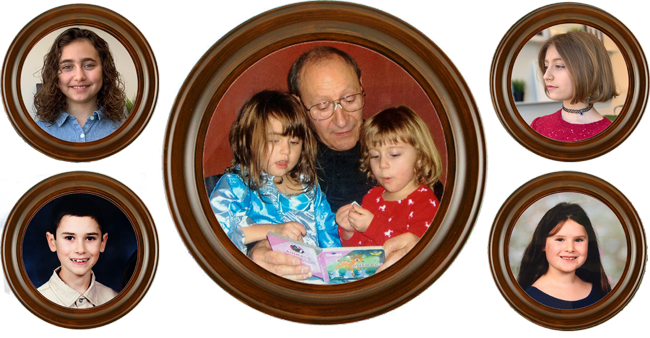
Nonno's legacy to
Sofia, Violet, Nicholas, and Kaitlyn

Why?
Well, Nonno has now passed the fourscore age (80) and, before he becomes senile and forgets all his memories, all he has learned, done, experienced in his life, now wishes to hand down to you, his grandchildren, the wealth of knowledge he has accumulated in these 80 years; knowledge which would otherwise dissolve like morning fog into nothingness; knowledge which you will need or wish to acquire laboriously, and perhaps painfully, throughout your life.
I came across these Precepts for the first time when we (Nonna, Frank, Mark, and I) went on a tour of Europe in 1992. They were engraved in large characters on the frieze of an impressive courthouse in Belgium.
Let's look at these Golden Precepts, at what they mean, and at how will they make the whole life ahead of you more fruitful, more fulfilling, more dignified, and make you proud of yourself, of your parents, and of Nonno and, perhaps, when you reach my age, you will take the time to gather and pass on to your grandchildren this wealth of knowledge, expanded by your own experiences and efforts.
While reading through what follows, you will find several links written in this form: (Link) which, by clicking on them, will open to you a wealth of additional information.
⦑ 2 ⦒
Neminem laedere, suum cuique tribuere, honeste vivere
These Precepts are credited by some historians to Gnaeus Domitius Annius Ulpianus (Ulpian), a Roman jurist born in Tyre around 1800 years ago and was considered one of the great legal authorities of his time. The wording of these precepts and their order differ in some ways from historian to historian; I give them to you in order of importance, as I deem them to be such.
1) Neminem laedere
Neminem means to no one, nobody, and laedere means to hurt, to cause injury, damage, loss, pain to somebody's feelings, dignity, reputation, or property. To steal or to take without consent or permission something from somebody is laedere; to damage or deface in any way somebody's property — even accidentally — like a toy or book or bike or car or a piece of clothing is laedere; to bad-mouth, belittle, denigrate, derogate, disparage, put down, taunt or jeer somebody is laedere; to physically assault somebody in a moment of rage, to punch him in the face or any other part of the body is laedere — and it is not the behavior of a just and upright person. If you ever have in mind to do any of the laedere we have just talked about, before you do it, ask yourself whether you would like it to be done to you, or not. If your answer is no, then do not do it to others. By just, I mean one who treats everyone fairly, in a courteous manner. By upright I mean to conduct yourself in a marked and strong moral rectitude (we will talk about moral rectitude further down). The upright person walks erect, his head high, his gaze firm and calm, unlike the sly felon, who acts in a quiet and secretive way to avoid being noticed.
2) Suum cuique tribuere
Suum means his/hers/theirs; cuique means to each; tribuere means to give. In other words: Give to each what is due to him, what belongs to him. Let us say you find something somewhere and you know it is not yours, what then? finders keepers (losers weepers) Not a chance, — never! What you have found may be worthy or worthless to you but, unless you can with certainty believe it is a Res nullius, a nobody's thing, you will know for sure that it is not yours: it is a somebody else's suum, it belongs and it is due and it should be given back to the one who has lost it. So, what to do? This is a difficult question to answer, it depends on many things, and first of all, on what you believe your duty towards others is:
Are you or should you be your brother's keeper?
By brother's keeper is meant being responsible for what someone else
— any one of your fellow men, kindred human beings —
does, or being responsible for what happens to him.
We'll come back to this topic, but let us expand and try to clarify what you should do with what you have found lying around:
- An crumpled brown paper bag with some trash inside it
- a book you wanted for a long time to have
- a two-dollar coin or other coins
- a 50-dollar bill
- a wallet or purse
- a piece of jewelry
- a nice piece of clothing, … all things that you know they are not res nullius but they are a somebody's suum.
The first thing you must keep in mind is that, if you pick it up, you become responsible for it, you take upon yourself the duty to keep it safe and to return it to the person it belonged; — or leave it be and go on about your business.
The crumpled brown bag presents the easiest way to deal with: leave it there, or pick it up and deposit it in the garbage bin. — This will satisfy your sense of duty towards the society you live in and towards the environment. We will talk more about civil duties further down.
The book. You like books, you wish you had it, to add it to your stash of books you cherish … so what are your choices?
1) leave it be and move on or,
2) pick it up and spend the necessary time and effort to trace its rightful owner, so you can return it to him, because it is suum.
The two-dollar coin (or coins) or the 50-dollar bill presents a bigger challenge: again, you can leave them be or, if other people are around, you can loudly ask if any of them has lost them. If one claims them, then you gracefully return them to him and your conscience is at peace but, … here greed may enter the picture: two or more claim they are theirs (suos) … and you realize that some or all of them are lying. What then? Ask them to prove it and give the coins or bill to the one you believe is trustworthy and sincere. If no one is around that could be identified as the owner, then pick them up and make good use of them. But, what if what you found is a bag full of money, a lot of money … Since we are now dealing with a lot of money, in a bag, there is no doubt the find is not a res nullius: both the bag and the money is a somebody's suum. Now you have a moral duty to try to return the find to its rightful owner. How do you do that? Simply bring it to the civil authorities for them to find the rightful owner — and your conscience is at peace.
The same goes for the wallet or purse (chances are that in the wallet or purse may be found some identification of the person who lost it); as for the piece of jewelry, the rightful owners identification may not be possible, but you know it is not yours; it is somebody else's suum. So, what are you to do with it? Pick it up for safekeeping and let those in your community know of the find — without giving details of the jewel (there are many dishonest people in the world who would falsely claim the jewel is theirs), but only of the place and time it was found, and ask them to describe the jewel, before giving it to the claimant.
The piece of clothing is the easiest thing to deal with: the place where you found it has probably a "lost and found" office or desk. Bring the garment there and go about your business in peace and with a clear conscience. I grant you: not to pocket what you find and spend the time and effort to return it to its rightful owner is a burden. But, if you were the one who lost it, would you not be comforted by the maxim: "Do unto others as you would have them do unto you?"
There are many other and more subtle, and important aspects of the precept Suum cuique tribuere; let us look at them.
The Promise
When you promise something to someone, that "something" changes hands: before the promise it was a suum belonging to you; with your promise, it become a suum belonging to the person you have promised it to. For example, if you promise someone to meet him at 12:00 o'clock somewhere to help him do something until 3:00 pm, you are no longer the master of that slot of time: that time now belong to him, it is his suum, and you are obliged to tribuere (give it) to him.
This is just an example. It applies to every single thing you may be asked, or want, to promise. Therefore, be very cautious in giving promises; consider the possibility you might encounter some difficulties and become unable to fulfil your promise; or put conditions to the promise, such as: "I'll be there to help you from 12:00 to 3:00 o'clock," unless something prevents me to be there in time or at all.
Now I will give an example of a very serious — the most serious — and demanding promise you may consider making in your life:
"I promise to be true to you in good times and in bad,
in sickness and in health,
to love and to cherish,
till death do us part."
With this promise, you are giving to the person you make this promise all that is or will be a suum to you for the rest of your life. That is: your loyalty, your love and affection, your joyful and sad moments, your time, your successes, and failures — Everything. This is why you must be cautious before making this promise, before letting the euphoria of the moment blind your intellect, your judgement. Is the person you are making this promise to worthy of your sacrifice? Giving all that is suum to you to another person, thus becoming his suum, is the biggest sacrifice and gift one can make.
As you grow up and become an adult you will come across many instances — too many — where this promise is broken, sometimes after a rash decision, sometimes after hard reflection, and often with painful consequences (laedere) to the innocents affected by this broken promise. These innocents are the children. Their suum, to be given (tribuere) to them, which is due to them, is the peaceful and harmonious, just (moral) and righteous education and example their parents must maintain in the household where they grow to adulthood. You, as a just and upright person, when your time comes, must be prudent in making someone such a promise and, if you make it, you must do all you can to avoid breaking it.
As you grow to adulthood, and then, as an adult, you may come across someone who asks you to swear an oath, often ending with the words "so help me God." To "swear an oath" means to make a solemn promise, sometimes made in front of a witness, or a vow in a court of law that you will tell the absolute truth (sometimes worded: the truth, the whole truth, and nothing but the truth). Now, as a just and upright person, you don't need anybody's Help to tell the truth: the truth, … only but the truth is the only thing that you tell, always. As for the missing part in that wording, the whole truth, there may be in it something which you may wish to keep to yourself, and not disclose. It is your moral right to withhold it, it is a suum belonging to you. Our American neighbors refer this right to the Fifth amendment of their Constitution; we Canadian do not have it, but we have the right to remain silent, guaranteed by section 7 of the Canadian Charter of Rights and Freedoms. To sum it up: tell truthfully (as you are a just and upright person) all you want to tell — without nobody's help, which you don't need, period. — Nooshe-and-crooshe (what?)
Nooshe-and-crooshe (Nuce e Cruce) is a symbolic expression and gesture handed down to us by Nonna's mother (may she R I P), who got it from time immemorial from her ancestors, suspected descendants of the Assyro-Babylonians forefather's. This symbolic gesture is performed by clapping the right hand over the left hand while saying the first word, Nooshe (Nuce), and then clapping the left hand over the right one while saying the second word, Crooshe (Cruce). The meaning of this symbol is: That's it, no more, like it or not, get lost!
⦑ 3 ⦒
3) Honeste vivere
To live honestly means to be truthful and sincere in your actions, words, and thoughts; it is a way of being, a way of life. Honesty means saying what you mean, meaning what you say, and thinking about the consequences of your actions before you act on them — whether they are good or bad. It also means doing the right thing even when no one is looking or paying attention. This kind of behavior isn't always easy to maintain — especially when it might hurt someone else's feelings or make someone angry or sad — but it's worth it in the long run because it protects you from regret! If you are honest with yourself and others (even if it's hard), people will trust that they can rely on your word.
There! This is all you need to know about the Golden Precepts: Cause harm to no one, give to each his due, live honestly (Neminem laedere, suum cuique tribuere, honeste vivere). Apply them to your daily life, to all your actions and thoughts, not only in dealing with others, but especially when judging yourself.
Introspection
Introspection, or Self-reflection, or "Know thyself", "is the process of paying close attention to — and examining — your behaviors, emotions, decisions, and thoughts, and using those reflections to guide your future decisions. Self-reflection not only helps increase awareness of one's core values, it can also help individuals become more confident in setting boundaries and improve their understanding of how they impact others." At the end of the day, before going to sleep, review in your mind what you have done that day; ask yourself whether you have followed these precepts satisfactorily to your own conscience and, if so, you can peacefully close your eyes and rest, knowing that your inner Self approves your conduct. — In fact, your emotional and spiritual part, — your "Self" — is the ultimate and most trustworthy judge of your actions. (Read here about the "Self"))
⦑ 4 ⦒
Moral rectitude
Moral rectitude is a quality or attitude that is shown by people who behave honestly and morally according to accepted standards. An example: In a purposeful act of moral rectitude, a young boy turned in the wallet full of money that he had found on the road to the police station. Keeping the money might have been fun at first, but the boy's inner rectitude or moral goodness would not allow him to keep something that was not his. The police sergeant praised the young fellow for his honest behavior and rectitude. This boy, with his action, has perfectly exemplified a life conducted according to the three Golden Precepts discussed above: Cause harm to no one, give to each his due, live honestly. But there is more to moral rectitude.
- As a student, you have moral rectitude if you refuse to be involved with a plan that some kids in your class have to cheat on a test; or to bully or slander or shame another student; or to steal from a store, or from anybody.
- As an adult, you will not get involved with or condone others in cheating either persons or institutions, be it for gain or for fun.
- As a just and upright person, you will never cheat on your friends, or siblings, or acquaintances, or even strangers; or defraud them. The Golden Precepts (Neminem laedere, suum cuique tribuere, honeste vivere) should be imprinted in your mind and your heart, they should guide your arms and your feet, your conduct, and your life at all times.
You could say: "but many, most people around us bully, slander, shame, cheat, or steal from others and are held in high regard and are well-off and respected and appear to be happy in doing all those reproachable acts." Yes, for sure. But that is not your problem; it is theirs. Your concern and guidance are the moment you go to bed and ask your conscience, your Self, to judge your actions that day, so you can have a peaceful and rewarding rest, being proud of yourself. Believe me, you will be held in high regard and become prosperous and happy by living your life with moral rectitude, as your Nonno has done.
The brother's keeper
The phrase "Am I my brother's keeper?" is traditionally referred to the story of Cain and Abel told in Genesis 4:1-9. We will talk about God and religion further down, for now, let us look at the wider meaning of being a Brother's Keeper. By Brother is meant a fellow man (or woman), and by extension all human beings around us. By Keeper is meant to accept responsibility for the welfare of our fellowmen, to be their protector and overseer caring for their safety as well-being. This is a tall and very burdensome task — are we to accept it and be burdened by it? Is the observation of the Golden Precepts discussed above not a sufficient discharge of our duty to yourself and to society? Do we bear any responsibility for those around us? Are we to be responsible for their actions, behavior; should we care?
These are very difficult questions to answer. I will give you my experience, some episodes which have shaped my life conduct. Take them as a guide, and then make your decisions. But first, you should know the circumstances in which these events took place.
⦑ 5 ⦒
The youngest of seven children, your Nonno was born toward the end of the second world war in a well-off family living for generations in Borgetto (near Palermo) in the Italian island of Sicily. My father, Angelo, was a successful shoemaker employing five or six other men of his profession. With his business activities he was able to buy a few houses he rented out, and a beautiful parcel of land with another house on it at the outskirts of town, which he cultivated with the assistance of a couple of farmhands, so I was told. My mother, your great-grandmother Maria Rosa, was also the youngest of seven children of a prosperous entrepreneurial family, owners of a restaurant, several houses, and a quarry, all managed by your great-great-grandmother, Antonietta Gambino (Gambino? - Yes she was first cousin to the famous New York mafia boss, "Don" Carlo Gambino). It is perhaps because of this relation to that mafia boss that this family never had any problems with the Sicilian Mafia or other bandits infesting the island in those turbulent times, but this is another story.
Your great-grandmother Maria Rosa received the highest school education available to a woman in those days in that town — the sixth grade. She had an unrelented passion for reading, which she kept all her life. With her marriage to Angelo, Maria Rosa became the homemaker and, together with her duties of a wife and mother, she found the time to organize and direct the local Chapter of "Dame di Carità" (Ladies of Charity — dedicated to assisting the poor and, mostly, abandoned sick people, and all kinds of aid to the needy), and to serve as the town deputy-Mayor. I was told by my late older sister that, toward the end of the war, during the American invasion of Sicily against the German army then occupying the island, my mother rescued and gave asylum to a teenage German soldier on the run, hiding and keeping him safe and fed on that parcel of land at the outskirt of town I mentioned before.
Our idyllic family paradise came abruptly to an end with the death of my father in October 1947: Sicily was liberated, the war was over, the American administered the area, my father's Appendicitis turned into Peritonitis, through relatives in the American army we sought to get hold of some penicillin that would have saved his life. The penicillin was delivered to us two days after my father's death. The paradise turned into hell. Your Nonno was three and a half years old.
Your great-grandmother was left widowed, with no source of income or prospects of gainful employment, with a little cash to feed seven children, and a ledger, where were recorded the names and the amounts a lot of people in town owed to my father. All goods and supplies and tools in my father's shop were taken over (stolen) by one of his brothers (that means by my uncle). My mother tried to collect the money owed to my father … but in those days, in that town, none of those ignorant people had never heard of the Golden Precepts "Neminem laedere, suum cuique tribuere, honeste vivere" … and my mother, hopelessly exhausted of begging for what was rightful hers, burned the accounts receivable ledger and, in order to feed and clothe her children, sold the rented out houses at fire-sale price (for a bowl of Lentil Soup you might say), as the renters no longer felt compelled to pay rent to her, and those ignorant buyers took advantage of my mother's desperate conditions. That went on perhaps for less than two years, and with all sources of income exhausted, your great-grandmother faced abject misery, like standing desperate on the edge of an abyss. Of all our family possessions now remained only the family home and the parcel of land at the outskirts of town, (which nobody wanted for a fair price), and no source of income.
You might be wondering, and you want to ask why our relatives, on both my father's and mother's side, did not come to our rescue, why did they not help us? Where they not bound by the precept "suum cuique tribuere" and give us their support and affection due to us (our suum) as their kins? Were they not the "Brother's keepers" to us? I don't have the answers. Perhaps the times were difficult for them too.
I told you already about that vile uncle who stole from us all the goods, utensils and machinery in my father's shop immediately upon his death, and I don't know anything else about my father's side stirp, and I never wanted to know more (with an exception of an episode I will tell you later).
However, I was told recently that a very rich Mafioso of the "Gambino/Seidita" connections came to her rescue. … He proposed to her to set up in partnership a garment manufacture in the Florence area, where he owned several buildings and lands. The "Plan" was to find temporary accommodation for her children, while my mother and sister Antonietta would move with me in tow to Florence, in one of his houses he then rented out and, once the business was established, to reunite the family.
With no other feasible options available, your great-grandmother scrambled to find a temporary accommodation for the other children. My older sister (Concettina) was at that time already a nun in a convent, going by the nuns name "Sister Maria Rosa". Through her clerical connections, your great-grandmother was able to put my oldest brother, Salvatore, in a Seminary in Southern Italy, and my second-older brother, Nicola, in an orphanage in San Martino della Scala, near Palermo (Sicily). With the help of an older nun (Sister Valeriana) then residing in the same convent as my sister Concettina (Sr. Maria Rosa), my sister Giovanna (two years my senior) was put in an orphanage in Sesto Fiorentino (more than a thousand kilometers away); and my sister Francesca (5 years my senior) was sent to an orphanage in Calatafimi, halfway between Palermo and Trapani, where my aunt Pietrina Bellicoso (born Seidita) lived with her family. Thus, all the dispersed children would be fed and clothed.
As for my legacy to you, my precious grandchildren, there are two episodes I remember of those days, one vague, and one vividly impressed in my mind, both of which consciously and unconsciously shaped my life conduct:
• When my father died I was, as I said before, three and a half years old. Of that event I only remember, as in a dream, entering a large room where his corpse was laid in his coffin, and many people dressed in black around the coffin. That is and was called the wake, a watch held over the body of a dead person prior to burial (there were no funeral homes in those days). Of this dream-like vision, I remember only two things: the coffin, and the darkness. I was then quickly led out of the room.
• After my father's death, and before what remained in town of the scattered family moved to Tuscany, there was a festival held in town, with vendors and music and merriment. It was at night, and I don't know how or why I, as a 4- or five-years old child, was wandering unaccompanied among that crowd. Here is now the second event of those dark days that has remained vividly imprinted in my memory: I came upon a confectioner's stand. The confectioner was cutting into portions a large slab of torrone he had just cooked on a wood stove beside his stall. There were on the table, around the chopping board, some small torrone crumbs, white in the sticky paste sprinkle with brown almonds and green pistachio nuts, smelling delicious … I innocently reached out with my arm extended above my shoulder to take one of those crumbs (keep in mind, my dearest grandchildren, that in all my life up to my father's death, the whole three or four years of it, I never lacked a thing or a candy, but then, after my father's death and up to that moment, perhaps, no candies were available in my impoverished mother's home). My small fingers were about to reach the torrone crumb, when the confectioner struck a loud blow with his enormous knife just ahead of my fingertips. I raised my head up and looked at him in the eyes; he was looking at me without anger, impassive; I felt no fear; I felt the confectioner was teaching me a lesson.
The lessons from this short period of my life are:
1) Coffins and darkness (misfortunes) are to be ever present in your plans. One never knows what the morning will bring. Be mentally prepared to confront adversities with courage and determination; never give up.
2) That torrone crumb was a suum to which I had no rightful claim, even as a 5-year-old child. What is suum to others it is not yours for the taking, — one has to earn it, or buy it, with ones own efforts. That memory and that lesson has remained vividly imprinted in my mind and guided my life conduct to this day (with two exceptions, which I will tell you later).
⦑ 6 ⦒
So, we boarded the train for Florence (my mother, my sister Antonietta, and I) and, after a 2-days train-ride, we arrived in Sesto Fiorentino and made our way to the Mafioso's mansion, located in a suburb up the hills, called Valiversi. Wait a minute! were we not supposed to go to one of the Mafioso's houses in Florence to set up the garment manufacturing business for my mother? Well, that "plan" was (by negligence or intent) flawed from the beginning: the house in Florence was occupied by renters (thus unavailable to us) and, consequently, we became "guests" in the Mafioso's mansion in Valiversi, near Sesto Fiorentino.(*) I vaguely remember the villa-type house, where the Mafioso and his childless wife resided; we were housed in the basement, and my mother and sister became their cook and maid servant respectively. Not far from the villa, there was the farmhouse, where the Mezzadri (sharecroppers) family Buzzigoli lived. I will tell you later about how our relationship with the Buzzigolis unfolded. — The "Garment Manufacture" never saw the light of day and was soon forgotten; my mother's meager savings were almost exhausted; the Mafioso's real "plan" became manifest with his attempts, tacitly approved by his wife, to molest my sister Antonietta (then barely 17-years old). The situation had become more and more desperate, we had to run away from that villa.

(*) The town got its name "Sesto Fiorentino" due to its location: at the 6th mile, marked by a milestone, on the Cassia military Roman road from Florence (Florentia) to Pistoia (Pistoriae). Going toward Florence are the villages "Quinto" and "Guardo" respectively at the 5th and 4th milestones, and going toward Pistoia, is the town "Settimello" at the 7th milestone. The Roman mile (mille passum) was measured by 1,000 paces with each pace being five Roman feet. Therefore, one Roman mile would equal 5,000 feet or about 1, 480 meters/4,850 ft. in todays measurements. Now that stretch of road in Sesto Fiorentino is called Via Gramsci.
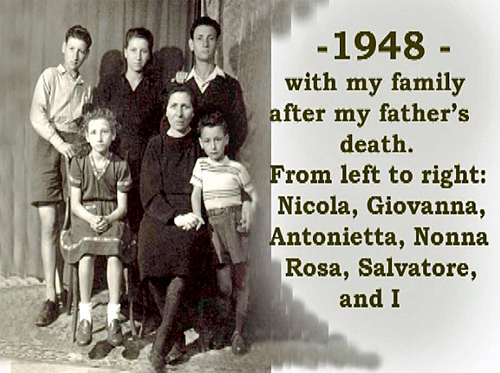 Your great-grandmother, as dire her situation was, did not gave up, she fought her fate.
She summoned my older brother Salvatore (then in the Seminary in Southern Italy) to join my sister Antonietta, soon to move to safety in Borgo San Lorenzo, where she had found accommodation near a relative leaving there, and, as her senior and now "the man" of the family, to protect her. Also, your great-grandmother, having run out of money, found employment as a sub-cook in the palace of the nobles Martini Bernardi in Florence. I was too young to follow and be a burden to my siblings (Antonietta and Salvatore) in yet another unknown land (Borgo San Lorenzo), and my mother was not permitted to keep me with her in her place of work and residence (the Palace). With a broken heart, I am sure, she placed me in an orphanage for boys in Florence, where she could at least visit me often.
* That was the most horrifying experience of my entire life. It is still vivid in my mind the night my mother took me to that orphanage. We entered a large semi-dark hall; a nun came to us and took me away from my mother, leading me by my hand toward the door at the other end of the hall; while walking with that nun, reluctantly, I kept my head turned toward my mother, who was visibly distraught, slowly disappearing into the obscurity, with a gaze that I can today express with the words: Mutti, Mutti, warum hast du mich verlassen? (I translate them for you: Mommy, mommy, why have you abandoned me?) I wasn't crying — we do not cry in our family. I was terrified, as I never had been in my short young life, and as never will I be again for the rest of my life.
I was led into a room with rows and rows of cots where other small boys were sleeping, by the light of a dim lamp in the middle of the ceiling I saw a chamber pot right underneath it on the floor. I was told to climb on one of the cots, but I did not understand what I was told: in Florence people spoke the Italian language, a foreign language to me; I only spoke and understood the Sicilian language, unknown to them. The nun lifted me up and put me to bed on that cot, she tucked me in gently, looking at me, I don't know, if annoyed, or compassionately. I didn't sleep that night; I felt like an abandoned drenched small kitten, trembling and fearful to give off the smallest sound, or a meow. Unconsciously, and I now realize it, that experience must have been the reason I have been keen and capable all my life to learn other languages, starting with the Italian one; or, perhaps, this skill is innate in me, as many other skills of mine.
I don't remember much of the time I spent in the orphanage, which lasted perhaps four or five months, except one episode imprinted in my mind and ever-present all my life: I was sitting in a classroom, somber and lonesome in a corner, it must have been a first-grade class. A young girl, well-dressed and well-mannered, perhaps two or three years older than me, was leaning toward me, her arm around my shoulder, trying to cheer me up. I did not understand her words (I did not understand Italian at that time), but I felt her pure intention and her comforting, almost maternal-like warmth, which I missed since that night when my mother left me in the care of that nun. I don't remember her face or her name, but that warmth has remained in my mind, and has inspired and shaped my actions and life conduct, I am sure.
What was that caring young girl doing in an orphanage for boys classroom? Let me explain. It was fashionable at that time for nobles and patricians to patronize and lend financial support to charitable organizations such as orphanages. Orphanages gave shelter to destitute orphans, but also schooling, therefore, they had schools, often staffed by better-trained teachers, members of the upper classes, who worked in these schools for no pay (they didn't need it), volunteering as part of their charitable endeavor. It was also fashionable for those Patricians to send their children to these schools, regarded as of superior quality than the public schools.
Were those patricians moved in these endeavors by a "Brother's keeper" sentiment? Was that young girl giving me warmth and consolation moved unconsciously by this sentiment?
The lessons from this time in my life are:
1) Never associate with or put your trust in a criminal, ruthless amoral person (the definition of a Mafioso). There is a saying I learned soon in my life: "meglio solo che male accompagnato" which means: better alone than in bad company.
2) If you come across in your life an abandoned drenched small kitten or a child, or even a grown up, and it is in your power to help him, or soothe his afflictions, don't rush, but ask yourself, in your heart: should I? You don't have to, but, "Do unto others as you would have them do unto you" should be your guide.
⦑ 7 ⦒
Meanwhile, in Borgo San Lorenzo, my sister Antonietta found employment in a glove manufacturing factory, and my older brother, Salvatore, found work as a part-time truck delivery driver. The Martini Bermardi family had many estates in Tuscany, and several vacation villas in Italy, one of which was in Cortina d'Ampezzo where they would go for months at a time, bringing along the whole servants crew. Thus, only a few weeks after she had left me in the care of the orphanage nuns, my mother was taken to Cortina, 500 kilometers away, and she could no longer visit me at the orphanage. … Fortunately, my brother Salvatore was able to visit me every time his work brought him to Florence. I am told by my sister Antonietta that those visits were very painful to bear, and she and Salvatore decided to convince my mother to quit her job with the nobles Martini Bernardi and move, with me, to Borgo San Lorenzo. That took place, and my mother found gainful employment at a monks' convent nearby, were she worked full time as a seamstress. I was enrolled midterm at a public school in Borgo San Lorenzo, two or three kilometers from the house where we lived at that time, skipping one grade.
Our living quarters were then one room and a shared kitchen. We needed more space. Pulling together their finances, my mother and siblings rented a small apartment in "La Soterna," a row of small dwellings that used to be the garrison of a German battalion during the war, located on the outskirts of Borgo San Lorenzo, midway from the town and the convent where my mother had found work. Our living expenses had now substantially increased. More income was needed. My sister asked her boss to lend her a glove-weaving machine, so she could work at night, after her regular shift at the factory. She was held by her boss as a well-skilled and trustworthy young person; he consented, and my brother Salvatore, trained by Antonietta, would weave gloves at home when not driving while my sister was at the factory, and my sister would weave three or four hours at night. At work, she was paid an hourly wage, the work at home was paid piecework. Somehow, I found a part time job (I was six or seven years old) at a shoemakers shop, cleaning up the shop after my school day, and doing some easy tasks, such as punching holes and fitting eyelets, for a few cents a week, — every penny counted.
Your great-grandmother, now working as a seamstress at the monks' convent nearby, received for renumeration some weekly wages, and a daily lunch. I happened to be there one day, and I saw her eat half of that lunch, and put away in her purse the other half. She brought it home and shared it with us that evening. You must know that in Italy it is customary to have a light breakfast, an abundant lunch (the main meal of the day), and a light supper, called "cena." The event I witnessed that day was not an unusual occurrence: I realized then that the special nutritious food we had for supper on her working days was a portion of her lunch, supplementing our own food scarcity. Now that you know of this amazing, extraordinarily courageous, self-sacrificing woman and exceptional human being, which your great-grandmother was all her life, don't you think an imperishable monument should be erected in our hearts in her honor?
As you can imagine by now, in those days and due to our poverty, toys were a luxury we could not afford. I don't remember having any toys since my father's death. — I had to make mine. Vivid in my mind are the laborious crafting of a bow and arrows out of sticks and a river cane, chicken feathers, and a string. With the river canes I also made spears and fishing rods and, with the different sections of large canes, I made water guns and all kinds of toys. I also made myself a slingshot from a forked tree branch and some discarded rubber bands. But the most intricate toy I made then, at the age of six or seven, was a scooter, out of discarded pieces of lumber and two ball-bearings I found in that dump, which the "Soterna" was. Remember? the Soterna had been a garrison; all kinds of things were left behind and buried by debris, when the German had fled. Among other things, under these debris, the other kids of the tenement and I found hundreds and hundreds of cartridges, with their brightly shining brass casing. From the older boys I learned how to remove the bullet, by banging it sideways against a stone, and we used the cordite in the casing to make petards … It was a lot of fun … and that is how I learned to play with fire.
And climbing trees. The river Sieve, where I used to go fishing, runs a few hundred yards from the house, and its banks were dotted with many white mulberry trees, where I collected the berries to fill my stomach and to bring to the table at home. On one of my climbs, I lost my grip and fell on my back to the ground. I was breathless for a while, but I survived — much wiser.
And telling stories. By this time I had learned Italian; I was now bi-lingual (Sicilian and Tuscan), though not quite fluently in the Italian language, yet. One day, at school (it must have been the 3rd grade), the teacher called me up to the dais to test my knowledge on a subject learned in class the previous days. This is called in the Italian school curriculum Interrogazione (Interrogation); I was supposed to know the subject and to explain it to the entire class loudly in my own words. So, she asked me the question, and I looked at her, then at my fellow-students, totally lost. I didn't have a clou about the subject. I had two choices: shut up and get an F-minus and be ridiculed by the entire class, or say something, hoping for the best. I made it up. In my not-yet-perfect Italian a river of words came out of my mouth, convincingly, almost eruditely, while the teacher was looking at me with a smile in her face, fully aware I didn't know a thing about the subject, but admiringly for my courage, inventiveness, and determination, — she gave me a B+.
The unexpected help from strangers
Your great-grandmother would walk daily from the house we were renting to the Convent up the hill where she worked as a seamstress. Halfway that country road was a farm owned by a family named Fredducci. The word Fredduccio (singular, Fredducci, plural) in Italian means somewhat cold-hearted, which is quite the opposite the kindness displayed by this family toward the members of my family while living in Borgo San Lorenzo: somehow they learned of our misery, and often they would bring to our house fresh fruits, eggs, and vegetables, and, so not to offend our pride, they would claim their harvest had been too plentiful, their hens too productive, and their bounty would otherwise go to waste; like we would do them a favor to relieve them from this overproduction. Another memory of this family is now vivid in my mind: in the summer I would go with my home-made fishing rod to the river; and one time I found there the Fredduccis head of the family fishing — but without a fishing rod … he would wade near the riverbank and catch with his bare hands some large fish hiding in the recesses of the riverbank, then throwing them far on the bank, while I watched him in awe. When he came out of the river to gather his catch, he told me he had caught too many, and begged me to take some home. The Fredduccis are still present in Borgo San Lorenzo; but the descendants of our good benefactor no longer farm; they developed their farmland into an industrial park and established several businesses and are well-respected in the town.
We too helped strangers, even less fortunate than us
One time, at Easter, we were having our holyday lunch when a beggar knocked at our door. My mother invited the beggar to our table, and we shared what with had with him. After lunch, she gave him a bag of leftovers, so he could also have something to eat for supper.
None of us was ever idle, every moment was dedicated to the survival and wellbeing of the family... We had no toys, as I said, not even a radio, and Television was not yet available (it became available in Italy in the 1970s); we couldn't afford one anyway. My brother Salvatore, a frugal and inventive type, made his own portable radio, out of a galena crystal and a long cane mounted on the frame in the back of his bicycle holding up an electrical wire as an antenna, powering his receiver and headsets with the bicycle dynamo. He would ride his bike up and down the road happy as a clam. And we read a lot, all of us, using the free access to books at the public library of Borgo San Lorenzo.
The events of the time we spent in Borgo San Lorenzo contributed enormously in shaping my life conduct:
• The scarcity of food and the consequent imperative not to waste any of it,
• The total absence of non-indispensable possessions, such as toys; whereby I learned to make mine,
• To go close to the limits of safety, in order to enjoy life the most, under the circumstances,
• The unexpected help received from strangers,
• To dare to be daring, to be creative, when inaction would render a worse outcome.
⦑ 8 ⦒
The Buzzigolis
The Buzzigoli, the mezzadri (sharecroppers) family living on the Mafioso's property in VALIVERSI near Sesto Fiorentino, where we stayed for a short while after leaving Sicily, was a family of six: the father, Fausto, called Faustino (little Fausto due to his small size); the mother, Emma (known as the Massaia = household boss); three sons: Beppe (Giuseppe), Bruno, Gino, and a daughter, Lina.
Noteworthy about this family is the trek experienced by Beppe: drafted in the army and sent to Russia with the 8th Italian Army to fight for the Fascists of Benito Mussolini, allied with Hitlers Nazis in their Operation Barbarossa, against the Russians. At the end of the war (WWII), Beppe WALKED all the way back home from Ukraine, over 2000 kms!!! When he arrived home, starved, stinky like a skunk (he had not bathed for 2 years!), emaciated and clothed in rags, la Massaia (his mother Emma) was feeding the chickens in the courtyard … she did not recognized her son, thinking by his aspect to be a brigand; scared, she grabbed a pitchfork and menacing started to chase him away. Beppe defended himself saying: "O Massaia, e sono i' tu' figliolo Beppe" (Mother, I am your son Beppe). The incredible trek thus ended, Beppe took a long bath, after eating all the food la Massaia put in front of him, his life returned to normal, and later he got married. Gino, during the war deployed in Yugoslavia, was a Jack of all trades, a farmer, a combine harvester operator, a bricklayer.
I must clarify here that the Buzzigolis were not originally from Valiversi: They had lived for generations in a small farm in the hills of Vaglia. Right after the war they were hired by the Mafioso (mentioned above) to farm his lands located in Padule as sharecroppers, and moved to Valiversi, where we met them.
During the short time we were staying in Valiversi, Gino took a liking to my sister Antonietta. After we escaped the Mafioso to Borgo San Lorenzo, Gino would visit us often, and finally proposed to Antonietta, and they got officially engaged to be married. The distance from Borgo to Valiversi (Sesto Fiorentino) was hard to travel and time-consuming. Also, by this time, our family life was beginning to normalize, and my mother studied the way to reunite the dispersed family under one roof. Gino then found us an apartment for rent in Padule, on the outskirts of Sesto Fiorentino. The apartment was large enough to accommodate all of us. So, my siblings, Francesca and Nicola, joined us from Sicily, and my sister Giovanna, having graduated, left the orphanage in Sesto, and the family was thus reunited in Padule.
Padule is a 20-minute walk from the center of Sesto Fiorentino. We all found employment: My mother worked as a self-employed seamstress with many clients in the area; Salvatore found work as a delivery trck driver in Florence; Antonietta continued weaving gloves piece-work for the Borgo San Lorenzo factory, they trusted her highly and gave her the weaving machine, coming to Padule twice a month to collect the gloves and pay her for her work; Nicola found work in Sesto as a shoemaker; Francesca found work as a saleswoman at the Mercato Centrale in Florence; she would walk to the center of Sesto, take the bus to Florence, and come back home late at night. Giovanna found work at the Corallos, a small family-owned artisan ceramic factory in Sesto; she bought a second-hand bicycle, and she would ride it to work. I was in grade 4 or 5 at that time and I found part-time work at another ceramic factory in Padule owned by Nello, our next-door neighbor, doing odd jobs after school.
The shoemakers shop where Nicola had found work closed soon after, and he found a job in Prato, making saddles and other riding accessories. This shop also closed, and Nicola was unemployed for quite some time. In those times after the war work opportunities were scarce. He was finally hired as a manovale (unskilled laborer) by the Sesto Fiorentino Municipality then building a road through Monte Morello from Sesto to Montorsoli. He would get up early in the morning, walk 2 hours to the building site up the mountain, and walk back at night. Of all the siblings, Nicola had the worst fate. No wonder he was a pessimist all his life. Fortunately (perhaps), some friends he had made when in the orphanage in San Martino della Scala, near Palermo (Sicily), who had moved to Germany for work, encouraged him to join them in Germany. So, he did. He moved to Munich and found work at a German saddlery in Munich. His time in Germany was the best time of his life; and when, several years later, he came back home, he would tell us of his good times in Germany, speaking to us half German and half Italian (to show off).
My sister Antonietta was engaged to be married to Gino, as I said. She would save all the money she could to put together a dowry, preparing for her wedding. Every time she went to Sesto, she would pass by a clothing shop where a beautiful dress was displayed in the shop window; she loved that dress, she wanted to buy it before her wedding day. The wedding day was approaching, she had saved the money for it, and winter was coming - - - I had no winter coat. Antonietta had been to me like a foster mother all my life: in better times, before my father's death, when my mother was active in public life as a deputy-mayor and head of the Dames di Caritas, and in worse times, after we had moved to Tuscany. So, instead of buying herself that beautiful dress she had wanted for so long, she bought me a warm winter coat for me to wear at her wedding, and the beautiful dress remained in that shop window, waiting for a better time. Antonietta is a shining example of one being her brother's keeper, literally.
Antonietta got married and she moved to Valiversi, living as a newlywed bride with the Buzzigolis, now a large family of 9, including two siters-in-law — and a Mother-in-Law, the famous Massaia, who was a special character herself. It wasn't easy, but Gino had a good job as a bricklayer and Antonietta still worked piecework making gloves. The young couple decided to move on their own and rented an apartment in La Zambra, a neighborhood between Sesto and Peretola.
One event of the time we spent in Padule contributed enormously in shaping my life conduct:
- One summer, in the middle of the afternoon, while playing with some school friends near the school we attended, we saw a large cherry tree laden with ripe red cherries on the other side of the fenced schoolgrounds. That was the backyard orchard of my neighbor. Not by my initiative, but that of one of the older boys in the group, we scaled the fence and helped ourselves to those juicy cherries. My neighbors wife saw us in the act and yelled from her window: che ce l'avete messe? (did you put those cherries on that tree?) — That is an example of the Tuscan sardonic humor —; of course, we had not put the cherries on her tree, hence, those cherries were a suum belonging to her, and we were causing her some laedere (harm) by taking them, dishonestly. We ran away, but she did recognize me in the band of thieves, and she told my mother. When I later came home, my mother took me to my neighbor and asked me in front of the lady whether I had stolen her cherries. Looking down to the ground, I hesitated, then I said: it wasn't me — and bang! My mother slapped me hard in the face. — That was the first and only time I remember my mother ever using corporeal punishment on me. The slap in the face was not for the cherries — but for not telling the truth. I learned the lesson; and to my recollection, after that incident I never took anybody's property (without authorization) or ever again lied in my life. To be more precise: I learned not to say anything that I knew was untrue; but, also to be totally honest in my answers, when questioned. So that, if one had asked me after that incident if I knew how to play the piano, I would answer: nu lu sacciu (I don't know). - - - Seriously - - - you might say, surely you know whether you can or cannot play the pianoforte. Not quite so: I am not playing Omertà here: at that time I had not had an opportunity to try playing the piano, consequently, I could not say truthfully whether I could play the piano, or not.
Strangely, the more things I learned, the more I realized how many more things I didn't know. And it gets even more puzzling. The manner in which other people think of the things you think you know is not constant and permanent: it changes all the time, with the changes of the knowledge they acquire as they get older. I'll give an example: Your father, and also his brother were impressed by the amount of things I knew while they were in elementary school, and even in their early teenage years, as I used to help them out with their homework. They would look at me in awe, saying: dad, you know everything! But as they grew older and knew more things, in any discussion in which they disagreed with me, or they did not like my opinion, they would say: dad, you don't know anything. … go figure. Even with Nonna, still now, I have some difficulties from time to time, - - - when she asks me things and I try to enlighten her the best I can, and her questions are either absurd, or silly, - - - for instance, we are in a mall and she ask me "who are all these people?" and I would answer her truthfully: I don't know (nu lu sacciu) — and she gets mad at me.
But lets go back to Padule.
So, Antonietta, my sister, moved with Gino (now her husband) to La Zambra in a 4-apartments building, renting one of the two ground floor apartments. The other ground floor apartment was rented to an ortolano ambulante (vegetables vendor selling his wares from street to street with a cart with bells and whistles to attract clients). One of the top floor apartment was rented to a small beautiful lady by the finest, noble, and most delicate features, called Mercede, and her family, consisting of her husband, Giuseppe, and two sons, Dino and Franco. Dino was married to Liliana, a friendly young lady by the most beautiful doll face and goldilocks; they had no children. Franco, much younger than Dino, was a recluse shy young man, who killed himself by drinking a full bottle of muriatic acid, a cleaning solution found in every household at that time. His death compelled me in 1966, when I was 23 years old, to write a book about Life, a copy of which I gave to all my friends. Dino and Franco had an older sister, Lina, but I never met her. Notable of this minute lady is her history: she was born out of wedlock to unknown parents and given away right at birth to the Ospedale degli Innocenti; there she was given the name "Mercede" (Mercy).*
 At a very young age she was adopted by a childless farmer couple living in a village near Sesto Fiorentino called Borgo di Morello. When she became of age, she was given in marriage to Giuseppe, also born out of wedlock and adopted by another family of farmers also living at Borgo di Morello. Together with the apartment, Mercede secured for her family the permission from the landlord to cultivate the lands surrounding the building; thus, under her stewardship, her husband farmed this plot of land and she built a retailing vegetable business supplying the neighborhood and other local vendors, including the ortolano ambulante living in the same building. Her older son, Dino, worked at the Faini "Polveriera" (gun powder manufacture) near Borgo di Morello; when the Faini Manufacture established a gun and ammunition store in Florence, the family moved to La Zambra, much closer to Florence, where Dino also worked as a sales clerck. Dino was also a hunter-gatherer, and he would take me along in his hunts through Monte Morello, gathering mushrooms when no prey was to be found. On one of those hunts, I found a dead small pine tree lying on the ground. I cut out its branches and brought it home, where I carved it into a cudgel. On another hunting trip, I found the decomposed remains of a dog. In awe at the sight of the structure of its skull, I brought the skull home, washed out all remaining pieces of skin and flesh, and I immersed it into a solution of Formalin for a month, until the skull was no longer contaminated a smell-free.
 The cudgel now stands in a corner of the entrance to my house, near the garage door; the skull rests on my computer desk, behind the monitors, to remind me of the frailty of life.
The fourth apartment on the second floor was vacant, and Antonietta asked us to move there, so my mother could help her taking care of Marilena, her first daughter, soon to be born. The location was convenient for all in my family with a full-time job: for Giovanna, working at the Corallo factory in the center of Sesto Fiorentino; and much closer to the Bus Stop to Florence, where Salvatore and Francesca worked. My mother joined Antonietta knitting gloves and doing seamstress work as it became available. I was the beginning of summer; I had completed my elementary schooling (grade 5), and with the move I lost my part-time job at Nello's factory in Padule.
⦑ 9 ⦒
A brief history of the Ospedale degli Innocenti.
Since its creation in 1419, established to give refuge to unwanted newborn babies, this Hospital, or Spedale (hospice) as it was called, had many peculiar features. One of these was the wheel of the Innocents which is, or rather was, in the eastern portico of the Ospedale degli Innocenti, in Piazza Santissima Annunziata. Today, in place of the wheel, there is an iron window and a plaque that recalls the essence of that place. The hospital was in fact established in 1419 to welcome children who were abandoned by families who had had unwanted pregnancies or by families too poor to be able to raise them. The wheel was a wooden cylinder, connected to a cord with a bell, which warned of the abandonment of the newborn, preventing him from staying too long outdoors. It was located to the left of the hospital entrance, today it has been removed, but a plaque placed here recalls its prolonged service. The wheel was installed on February 5, 1445, the date on which the hospital began to welcome abandoned babies, the so-called "Nocentini" (tiny innocent creatures). The children who were then welcomed did not remain in the orphanage, but were esposti (exhibited, displayed, shown; hence the very common Italian surname "Esposito") like in flea market stands at bargain price, or given away for free in Piazza del Duomo, looking for a new family for them, or to be taken back by parents who changed their minds. The wheel remained in service until the 30th of June 1875. The curiosity lies in the fact that on the last evening two children were left on the wheel, a girl and a boy, who were given the names, respectively, of Laudata Chiusuri (the praised one on closing) and, appropriately, Ultimo dei Lasciati (the Last one of those abandoned). After that day the wheel was closed but the Hospital continued its service with the anonymous abandonment replaced by a delivery counter, here newborns were accepted only if born to single mothers or if they had serious family situations. Today the commemorative plaque reads: "This was for four centuries until 1875 the wheel of the Innocents, a secret refuge of miseries and guilts, which that charity that does not lock doors perpetually assists."
Much is to be learned from the history of the Ospedale degli Innocenti:
1) "Innocente" means innocent, blameless, not guilty, faultless. It was not by any fault of these innocent babies to having been born into this world — their parents were the only ones responsible for their birth, be it by accident, or negligence, or violence (incest or rape). By having caused these babies to be born, the parents had the duty to be their "Brother's keepers"; in this case, their babies' keepers. Being somebody's keeper means to provide care and affection, love, the necessities of life, education and guidance, until it becomes a child, and then a self-sustaining adult and a productive member of society.
2) By abandoning their baby at birth on the wheel of the Innocents, the parents violated the first tenet of the Golden Precepts: "Neminem laedere" (Cause harm to no one). The newborn is greatly, irreversibly, mentally, and physically harmed by being separated from the mother's chest. (Read this.) And what is worse, most terrifying, is that the baby cannot yet speak, and say: Mutti, Mutti, warum hast du mich verlassen? and, unlike the abandoned and drenched small kitten, trembling and fearful to give off the smallest sound, or a meow I represented in my earliest age, the newborn baby would cry and cry without end.
3) Care and affection, love, giving the necessities of life, education and guidance, become the irreversible and unrefusable "suum" to be given ("tribuere") to the baby (cuique) from the moment the baby is conceived. By taking away the baby from the mother's chest to be put on the wheel of the Innocents out of shame or necessity is the ugliest and most terrible violation of the second tenets of the Golden Precepts: "suum cuique tribuere."
4) The third tenet of the Golden Precepts commands to live honestly. To conceive a baby by lust, or violence, or by negligence, ignoring or not caring about what his/her destiny or fate will be after birth is the most irresponsible, reprehensible, dishonest, and ignoble behavior, contrary to the third tenet of the Golden Precepts: "honeste vivere" (to live honestly).
⦑ 10 ⦒
Now in La Zambra, renting the second floor apartment in Via Renato Bruschi, 80 (See Google Earth 43°4933"N 11°1213"E, the building with a white pickup truck at the door) with the whole summer before me, I started acting my age, as a young boy. At that time La Zambra was a small neighborhood surrounded by farmer fields, run through by a small river (called Torrente Zambra) lined with canneti (cane thickets) to be explored. I made friends with the ortolano ambulante's son of about my age, and together with spent our days roaming those fields and river under the summer sun foraging pine cones and breaking them apart with a stone, to get to the seed (pine nuts), and then braking the hard shell of the seed to harvest the delicious nuts. We would also made spears, blowguns, and other weapons out of those canes.
Once, from the bark of a pine tree, I remember making a steam boat … about six inches long. The pine tree bark is very soft and easy to carve, even with a boy's pocket knife. I shaped it and provided it with a groove at the stern deep enough to sit under water when immersed. Then I mounted a tripod on the deck, to hold the boiler, leaving a small space underneath for a shallow candle, to boil the water and generate steam. I made the boiler out of a small metal bottle fitted with a cork, to which I attached, at the top, a small tube held by a frame so to bend it down and backwards so to have the bottom end of the tube resting in the groove carved in the bark. I filled the bottle halfway with water, fit the cork and tube tight, lit the candle and placed the boat in the water … after several minutes, bubbles started coming out of the tube under water, then a steady stream, and the boat sped away upstream, veering starboard side, and crashing on the bank. Well, it wasn't a complete failure: the principle had proven sound; I just needed more precise tools, to which I had no access at that time.
Out of the same bark I also made sailing boats, fitting a thin piece of cane as masts and sails made out of notebook pages, held in place by pieces of treads taken from my mother spools. I even made miniature sailboats out of walnut shells: fitting in it a toothpick as mast, a few small pebbles as ballast, and a piece of paper as sail. They sailed beautifully in calm waters, but the mast/toothpick was not stable: it would fall here and there. So, I experimented with molten lead, cast in the shell with the toothpick in place. By trial and error, I would find the right amount of lead to serve as ballast in proportion to the size of the shell, so not to sink outright, following intuitively the Archimedes principle of displacement, of which I didn't know anything about at that time. At that time it was easy to get lead, even for a boy. I got my lead from the pellets used in shotgun shells, and Dino, my neighbor, had plenty available. I would melt the lead in a tin can over a fire, and then pour it in the walnut shell holding the toothpick in the middle, while the molten lead cooled off and solidified.
But the most challenging and rewarding project that summer was a riding cart I built out of scrap pieces of lumber and three discarded large ball bearings. I made a triangular frame with a raised seat about 10 inches from the ground; with some bolts I fixed a wooden axel with two of the bearing in the back and underneath the frame, and a moveable axel with one of bearings in front, bolted to the frame on one side, and extending from the frame on the other side, for steering with my left hand. I would lay on the cart on my left leg bent, holding the steering axel with my left and, a pushing the cart with my right leg. It worked beautifully, speeding up and down the sidewalk like I was on a racing car.
Four events of those times in La Zambra have remained vivid in my mind: I learned to swim, I witnessed the most ridiculous religious spectacle, I was fooled in the best Tuscan style, I gambled.
Swimming
You, my dearest grandchildren, have had the good fortune of having your father to teach you how to swim. I didn't have that fortune: my father died when I was 3 or 4 years old, as we have said. Now then, perhaps a mile upstream from La Zambra there was a large water pool where older boys and young men would go swimming and playing in the water in the hot days of summer. I would watch then from the riverbank noting in my mind the movements of their arms and feet, wishing I could swim. A short distance upstream from that pool of water there was a smaller pool, but also deep and with a stronger current. One day I decided I had to learn how to swim, and I went there, alone. I stood on the bank mentally calculating the thrust I would need in plunging into the water to reach the other bank, some 15 or 20 feet away, and also by moving my arms and feet as I saw the older boys do in the larger pool so many times. In those days there were no inflatable swim arm bands or readily available life jackets to be had by a boy my age and financial conditions; so, after some hesitation, I gather my courage, run as fast as I could the width of the riverbank, and took the plunge … I made it to the other side, and I was ecstatic. The water was refreshing, no longer scary; the current was not too violent, I kept swimming with my arms and flapping my feet close to that bank, so I could touch the bottom, just in case. I don't remember if I was in the water for 10 minutes or two hours, then the time came to go home, and my clothes and shoes were on the opposite bank, where the whole exercise had started. I was more confident, but the width of the pool was still a challenge. I reviewed in my mind how to move in the water and how to float, and I swam to the other bank safely. Back at home, I did not tell my mother I had learned to swim, fearing she would forbid me to attempt such adventures when alone, or make her worry when out of her sight.
The religious spectacle
That summer must have been exceptionally hot; it had not rained since early spring, and the crops in the fields were droopy. One hot morning, it must have been 10 or eleven before noon, I was playing with my cart in front of the house when I heard a crowd walking the farm paths chanting. The procession was headed by 3 or four altar boys in their cassocks and surplices, one holding up high a crucifix on a pole, the "Pievano" (Parish Priest) Monsignor Andrea Cassulo (second from right in the picture) following, flanked by another two altar boys swinging their censers, and a long line of "believers" mostly women, walking in pairs behind. I didn't catch the words of the chant they were chanting, but it reminded me of a similar spectacle I had witnessed in my native town, when the priest there and the populace went around the fields praying the Almighty to unleash the rain. It is my guess now the wording of their chant must have been equivalent to the chant sung in my native land:
So, those fools, headed by the Priest like the Blind Leading the Blindmen, were quite picky in their request: a custom-made rainfall, abundant, but with no scary and dangerous thunderbolts … They would alternate their chant with the recitation of Hail Marys, Our Fathers, Psalms, and the only moisture the fields would get was the copious sweat dripping down from their faces, due to the summer heat combined with the pace of the procession, proceeding at the "Tempo" of the chant, which I guessed was 120 beats per minute.
Fooled, Tuscan style
One day, at the end of summer, the ortolano ambulante's son and I were lazing around with nothing better to do. An adult Smart Alec living nearby told us that the Farmacia Ragionieri would pay good money for any quantity of cicadas they used in the manufacture of their drugs, and likewise the Florence Military Pharmaceutical Chemical Institute would pay even more for these large insects. That summer the infestation of cicadas had been exceptional, they would fly everywhere and chew on the droopy crops in the fields — The religious procession and all the chanting and incantations had yielded no rain at all, and the crops were dying of thirst. — We took a large empty potato sack and rushed into the fields catching cicadas (a kind of grasshopper). In less than an hour we had the sack full of grasshoppers to the brim, and we rushed to the Farmacia Ragionieri to get our reward … There, the pharmacist told us that that season had been very plentiful and many other kids and adults alike had brought him cicadas: he had more than enough of them for his drugs production for years. However, the Military Pharmaceutical Chemical Institute in Florence might be interested in our bounty, he told us. What a shameless smart Alec, he too. Of course, Florence was far beyond our territory, we couldn't go there; and by this time we started realizing that we had been fooled, Tuscan style.(*) However, the whole adventure had been a lot of fun, sharpening our hunting skills; and the joke played on us, credulous boys, taught us not to readily believe what appeared to be too good to be true.
Gambling
Every year, before the starting of the schoolyear at the beginning of September, a Fiera d'Agosto, an event very similar to the CNE held in Toronto, was (and still is) held in Sesto Fiorentino to mark the end of summer; an event that no boy would want to miss. The Fiera d'Agosto also marked the time of the last outdoor movie of the season. The only outdoor movie venue in Sesto at that time was in Via Antonio Gramsci (the ancient Roman Via Cassia) a few yards west of the Farmacia Ragionieri, where the Recreation Club of the Partito Socialista Italiano (PSI) [Italian Socialist Party] was located; an ancient palace with a vast backyard transformed into a movie theatre. You must know that in those trying times there were 15 or eighteen political parties in Italy, and each had their own recreational facilities in every town, to attract new members and keep the members they already had. Famous was also in Sesto the Communist (PCI) "Club La Pergola," a newer building with a fair size garden, where the Communists would hold dances with live music all summer. Also well frequented were the CAI (Club Alpino Italiano), and the CTG (Centro Turistico Giovanile), which I joined a few years later.
So, the Fiera was in town and the last outdoor movie showing was approaching. I had never attended a movie in my life. Both events were very appealing to me, but I had not had any income opportunities that summer (I was last gainfully employed part-time at Nello's factory in Padule) — and the "cicadas" adventure had not produced any income. The family finances were not too bad at this time, and I asked my mother, your Great-Grand Mother (God bless her memory), for the money to go see the movie and she gave it to me. I don't remember how much a movie ticket would cost in those days, but it could have been maybe 20 or 30 liras (5 or ten cents in dollars). So, I put on my best clothes — in those days one would go to the movies dressed like going to church — and made my way on foot to the movie house, perhaps a ten-minute walk. The shortest path to the movie house was to cut through the Piazza del Mercato and up Via Giuseppe Verdi to Via Gramsci. The Fiera was held in Piazza del Mercato; it was dusk, and the movie would start as soon as the night sky was dark. So, I strolled along Piazza del Mercato captivated by the music and lights of the various rides and the loud noises of the vendors inviting the crowd to their wares. There were hundreds of stalls selling all kinds of things, and sweets — I steered away from the stall where the vendor was selling Torrone (an old memory of my childhood) — and came upon a stall where a trickster playing the shell game offered to give me three times my bet if I guessed where the pea was at the end of the game. I was confident my sharp eyes would beat the fraudster. One needs sharp eyes to catch so many cicadas in one afternoon … I could triple my money, go to the movies, and give back to my mother twice the amount she took out of our family budget for me to experience the wonders of movies. So, I gambled; and lost the movie ticket money. Devasted and somber, I made my way back home, appearing with a long face before my surprised mother. She too had experienced the cruelty of tricksters (the Mafioso) and robbers (my uncle and those who owed money to my father and reneged on their debt). She reached inside her purse and gave me the money for the movie again, enjoining me to hurry up, as it was getting dark, and the movie would soon start.
(*) The people of Tuscany have a way of making fun of others, and of themselves, in a benevolent, sometime ironic, humorous manner, which is peculiar to their race: their humor is not meant to ridicule or hurt the feeling of other persons, but to teach them lessons, to make them wiser, to question appearances, and by this questioning realizing the truth.
The lessons I unconsciously learned from this wonderful summer in La Zambra are:
• To put into practice what the mind perceives as possible. The heat of the candle transforming the water into steam would by expansion propel the boat-shaped bark; only imagination and perseverance was needed, and dexterity with a pocketknife.
• Any skill can be leaned, by careful preparation and daring; but also:
• To jump into the water, or to climb a tree — alone, — is reckless; it is dangerous, and could have fatal consequences. To never attempt such activities without having somebody present, and capable, to come to the rescue, if needed. I am very serious about this. Let me tell you of an episode that took place that summer:
— To go from my house in Via Renato Bruschi to the center of Sesto, one had to walk West to the beginning of that road; then cross the railroad tracks into Via Mozza and turn left. Via "Mozza" is called thus because it was interrupted — cut off, "mozza" — when the railroad was built there in the 19th century. In my days, there were a railroad crossing, with the barriers activated remotely from the Sesto Fiorentino railroad Station, half a mile away. People would stop at the barriers (if they were down, meaning a train was coming), look left and right, and, if no train was in sight, they would walk fast to the other side. Well, one day I got to the barriers and saw an old lady petrified in the middle of the tracks: she was motionless and unable to react, frozen by fear: a train was rolling on that tracks with its horns blaring ominously, perhaps only 150 feet away; I rushed under the barrier looking at the towering approaching train, now 50 or 60 feet away, and at the train driver up in his cabin gesturing to us with his arm to move away from the tracks and blowing his horn, himself in panic, and I grabbed the old lady by her waist and dragged her past the track to safety on the other side of the railroad crossing. That was reckless on my part; I could have been killed. But the old lady was very lucky that day: she was not alone when attempting a dangerous act. That railroad crossing is no longer there: a high concrete wall now separates the road from the railroad tracks on both sides, and a narrow underground passage allows pedestrians to cross from Via R. Bruschi to Via Mozza.
• Expect Nature to take its course, and no matter how credulously stupid people would believe, or led to believe by fraudulent leaders or priests, or shamans, that chanting and dancing would change the natural course of Nature, it is foolish, it is a belief that belongs to the ignorant populace of the dark ages, of the prehistoric man. The baby Jesus had no power whatsoever to send down the needed rain, with or without thunderbolts; their chanting and sweat served only to strengthen their ignorant servitude to priests and church. It is an affront to the nobility and intellect of Homo sapiens, the modern man.
• Gambling, for fun and occasionally, lets say every second blue moon, and for an insignificant bet (an amount of money which is a small fraction of your wealth, lets say 1%), will not prove disastrous; but in doing it more often than every second Blue Moon, there is a chance you will get addicted and risk all your wealth, which would be reckless. Far better and more prudent would be to set aside (in a piggy bank or saving account with a bank, or other forms of guaranteed investment) that 1% you can do without, and after some time it may become a fortune. That movie ticket money I gambled was 100% of my wealth at that moment; my bet was a gamble, irresponsible and reckless. I never gambled again after that warm August night.
⦑ 11 ⦒
A few days after that movie, I started my first year at the Liceo Artistico in Sesto Fiorentino, in those days it was called "Istituto Statale d'Arte per la Porcellana" (National Porcelain Art Institute). Now that the family financial situation was more stable (all members were gainfully employed, except me), my mother thought of providing me with a better future by attaining a higher education. The aim was to graduate with a "Master" degree in Ceramic Art, and find a good job in Sesto, where there were hundreds of ceramic factories, sprung from the Manifattura Richard Ginori, established in Sesto in 1737. There I made new friends, and I found a part-time job with the ceramic factory Ar-De (Arte Decorativa, owned jointly by Romano and by Delfo Baldi, later to become my brother-in-law), not far from the school, and with my earnings I bought my first bicycle, a brand-new yellowish-green colored sporty bike. I would ride the bike to school and to work, and everywhere when not working or studying. Through my new acquired friends, I met Don Alberto Cortesi, [the tallest one in the middle,] the parish priest of Querceto (a village/neighborhood on the outskirts of Sesto), who introduced me to the Florentine A.S.C.I. (Boy Scouts) headed by Silvano Marliani, [the one in the background], where I would go riding my bike to attend the meetings.
Those were very interesting times in my life; I was happily engaged in all sorts of activities every day: school, work, and Scouting, providing me with new perspectives and experiences; I was never idle.
At school, I excelled in math, science, history, grammar, drafting, and sculpture; I was less successful in painting and drawing, perhaps due to my dislike for the instructor: Prof. Fernando Farulli, who was full of himself and less interested in teaching his pupils.
At work, in my part time job, I was exposed to several new techniques: decorating ceramic objects with brushes and decals, mold casting, ceramic firing; and I was fooled once more: The head of the pottery section, a jolly fellow loved by all for his good nature and friendliness, sent me one day on a mission to retrieve the "rubber mallet" (allegedly) used for straighten up vases not perfectly straight he had lent to someone in another section of the factory. That someone, another Smart Alec, aware of the nonsensical rubber mallet joke, told me he had lent it to the butcher across the square. So, I went to the butcher telling him the reason for my visit, asking for the vase-straightening rubber mallet he had borrowed from the ceramic factory across the square, where I worked part-time. This fellow could have sent me yet to someone else to continue the ruse, but he had pity for this credulous young boy, and he told me I had been fooled. I went back to the factory, half enraged, and half amused, and with a straight face told the Jolly fellow that the rubber mallet had fallen apart while the butcher was straightening some pork ribs, but I would be glad to go to the hardware store up Via Giusti, to buy a new one, if he gave me the money for it. We all laughed.
Scouting gave me the opportunity to learn all kinds of skills: teamwork, camping, woodcraft, aquatics, hiking, backpacking, sports, map-reading, Morse code, Flag semaphore, and getting around in the wild by the use of a compass. Memorable of those times are the summer camps I attended: one year in the Alder tree forest near Pian degli Ontani (between Pistoia and Abetone); another on the slopes of Monte Falterona; and a winter camping in Val di Luce, North-East of Abetone during the winter break, which we reached on skis one rainy afternoon, soaked, setting up our tents in the middle of the night.
Memorable is also the trip we made as Boy Scouts to Lourdes, assisting in the moving around sick and handicapped pilgrims. During the long train ride from Florence to Lourdes we sang and told stories; I was captivated by the changing scenery as the train made its way through valleys and mountains. Once in Lourdes, I did my part in pushing the wheelchairs of the disabled pilgrims, skeptical about their impossible dream of having new healthy limbs grow from their stumps, or their blindness cured by the fountain water, advertised as miraculous, distributed by the Lourdes Sanctuary 320 employees, — a big business, indeed.
The Boy Scout groups were divided in those days into "squadriglie" (squadrons) of 10 or 12 boys, lead by a Caposquadriglia (Squadron Leader), usually an older and more experienced boy. Each squadriglia had a pennant with the representation of a bird or animal embroidered on it, thus giving the squadron its name. Mine had a falcon, and we were known as the "Falchi" (the falcons).
One of the activities at the summer camp on the slopes of Monte Falterona was a one-day long trek through the wildness to a designated location given by coordinates (latitude and longitude) to be reached by means of a military topographic map of the area and a compass, and to map the location with reference to the prominent features around it, when reached. So, we went on our way, with the pennant flying high on the alpenstock of the squadrons standard bearer.
In those days each boy scout was equipped with a scout hat, a scarf with the Troup colors, a belt with a ring at each side to hang accessories by means of snap hooks, such as a hunting knife or canteen (I still have both), and a scout buckle (my son Frank now has it), and an Alpenstock, which I made from a branch of a hazelnut three, similar to the one I made for my son Mark when we last time travelled to Italy together (I still have it behind the door of my computer room). The alpenstock was then used also for aiming the direction of travel in the wild according to the reading of the compass.
After a four-hour climb up and down through the Monte Falterona forests, supposedly guided by the given coordinates, we weren't anywhere near the destination. The Caposquadriglia (Squadron Leader) didn't know where we were and where to go; we were lost. I took hold of the map and compass, identified on the map the bends of the river Arno far away in the valley and some mountains picks around us and, by triangulation (which I had recently learn at school) I found our location on the map. We were about three hours off and away from the assigned destination; there was no time to go there and then return to camp in the daylight. I spotted on the map a farmhouse, perhaps 30 minutes away and at a lower altitude from where we were, and from there some mountain paths we could use to go back to camp. I suggested we took that route, and we did, getting back to the camp in time to cook supper. By the way, in those days each squadron had one or two designated cooks who would prepare the meals for the entire squadron on a campfire. The necessary groceries were delivered to the camp each day by a local Grocer according to a shopping list pre-arranged by the squadron's cooks and coordinated by Silvano Marliani, the Group Chief.
Four personages helped shaping my life conduct in hose early years of my fatherless boyhood (as I told you, my father died when I was too young a child): Fernando Farulli, Don Alberto Cortesi, Silvano Marliani, and Delfo Baldi.
• Fernando Farulli, my art teacher, was all I could dislike in a human being: presumptous, braggadocio, a self-centered S.o.B. — Right then and there I decided never to act like him. And I never liked his art.
• Don Alberto Cortesi, an ordained priest, served in the Italian army as a military chaplain at the very beginning of WWII; he was taken prisoner by the British army and was sent to a Canadian Prisoner of War (POW) camp in Lethbridge, Alberta. After the war had ended, he was returned to Italy and continued his priesthood as the well-loved and respected parrish priest of Querceto untill his death in 2001.
• Silvano Marliani, "Capo Reparto" (Head) of the Boy Scout Group I joined in Florence on the recommendation of Don Alberto Cortesi, was during the war a "Partigiano" (Partisan) in the Italian resistance movement and fought as a young man the occupying forces of Nazi Germany and the fascist collaborationists in the battle for the liberation of Florence. After the war, he organized the first Boy Scout Group ASCI in Florence and dedicated his life to the practical education of boys in the Scout method until his death in 1999. After his death, the Florentine Boy Scout Group was renamed after him. *
• Delfo Baldi, a.k.a. "Delfo di Budino" (son of Budino the butcher) was too young during WW2 to be drafted into the army or to join the Partisans, but old enough to volunteer with the Misericordia di Sesto Fiorentino, the all-volunteers ambulance emergency and ambulatory services, very busy during the Liberation of Sesto Fiorentino (Delfo Baldi is the second from the right in the picture) rescuing wounded or killed combatants in the battles of liberation waged by the Partisans against the German strongholds around Sesto Fiorentino, Qerceto, Colonnata, and Monte Morello, then raging before the arrival of the Allied army. After the war had ended, Delfo was one of the founders of the Centro Turistico Giovanile (CTG) in Sesto Fiorentino, and also the promoter and head of the Carnevale di Sesto for many years. The office of President of the CTG was in recent years held by his son (and my nephew) Alessandro Baldi,
The wartime experiences of Don Alberto Cortesi, Silvano Marliani, and Delfo Baldi shows some common traits:
• The unselfish dedication to the well-being of their community, even risking their own lives to help their fellowmen and neighborhoods survive the horrors of war, — to be brother's keepers.
• Their unconscious embodiment of the Golden Precepts — Neminem laedere, suum cuique tribuere, honeste vivere. Their actions were not motivated by hatred per se, against the Nazi invaders and their Fascist associates, but by the necessity to give (tribuere) to those afflicted (cuique) by the atrocities of those Nazis and Fascists that help and assistance (the suum) they felt they owed to their fellowmen. And after the war had ended, to give (tribuere) to the young generation, devastated by the horror of the war, an opportunity to live their young age unafraid, in hope for a better future, merrily, and honestly, as exemplified by the just and upright character of these extraordinary men.
• A no-nonsense, practical and serene approach to life; and only interested in doing what is necessary for achieving what is intended, without silly ideas or excuses. To them, life was good; and any inconvenience could have been overcome by determination and patience.
⦑ 12 ⦒
When I was midway in my Art education, and strong in the skills I had acquired by actually working in ceramics, I saw nothing to be gained in continuing attending the "Liceo Artistico." As I did not register for the upcoming school year, the Headmaster summoned me to his office, where I explained myself. He was in a bind: for the last two senior courses he had only four students registered; to show the success of his administration, he needed to create more Masters of Art. So, he offered me to waive the registration fees and skip one year. Consequently, I went to school for another year and received my License Certificate in the 2nd Degree in 1958, at age 15 — not yet a Maestro d'Arte …. Again, the Headmaster needed to show off, and let me skip another year waiving the registration fees, and I was able to undergo the Legal State Exam on October 26, 1959, attaining the Diploma of Maestro d'Arte (Art Teacher), numbered 1480, at age 16. I was, of course, too young to be hired by any school as a teacher, and I continued working for Ar-De full time.
With my earnings and savings, I was able to buy a brand-new, shining, red Laverda 98 cc. motorbike. And the world became wide open to my explorations.
And I joined the CTG, making more than a dozen new friends, teenage boys and girls of all walks of life, collectively becoming a gang, like the Paul Street Boys of Ferenc Molnar book, famous in those days. We would have picnics and outings or excursions at every opportunity (weekends or holidays), all year round, to Monte Morello, to medieval town and castles, to the Etruscan necropolis in Fiesole and in Maremma (Etruria), to hikes and Rock climbing in the Dolomites in the summer and skiing there in winter, more often skiing on Mount Abetone, attending fairs and art exhibitions, and concerts. It is at this time that I became acquainted with the works of Beethoven, Vivaldi, Mozart, Bach, Chopin, and of the then in vogue Louis Armstrong and others Jazz and Spirituals music. [Listen also to this, and this, and this.]
Meanwhile:
My sister Francesca, tired of working in the cold at the Florence open market San Lorenzo at the stall of retired army colonel San Germano, found work in a dry-cleaning shop in Prato — falling from the frying pan into the fire, due to the insalubrious fumes of the cleaning compounds used there; then she found piecework work in a ceramic factory in Settimello hand-making ceramic flowers for the decoration of vases and pots. There she met Franco Franchi, a delivery truck driver working there, and they got engaged. Francesca was extraordinarily fast and precise in her work, making a lot of money; so much so that in a few years they got married, rented a house in Settimello and, together with Franco, in a short time saved enough money and bought a new house in Barberino del Mugello. There, she continued making flowers for that ceramic factory and each day Franco would bring them to the factory, and soon the house was paid off.
My brother Salvatore found full-time work as a driver with the fashion firm Ferragamo in Florence; in his spare time he volunteered as an ambulance driver with the Sesto Fiorentinos Misericordia, also as a driver instructor at a local driving school, and a part-time jack of all trades with Ar-De. He then found his "Posto al Sole" (a place in the sun: a life-long paid vacation!) with the Italian National Railways as a railroad crossing operator near Sesto, post which he held until retirement. In those days he got engaged and then married Anna Buti, a girl he had met when living in La Soterna near Borgo San Lorenzo (Anna used to live in the town of La Torre, a few kilometers west of la Soterna). Salvatore was never idle, all his life.
My sister Giovanna, while working at the Corallo ceramic factory, joined the CTG and met Delfo there. They got engaged, and married in 1960, moving next door to my mother's place in Piazza della Chiesa, in a brand-new third-floor apartment they had built for the occasion.
In 1965 I took part in a cross-country race organized by the CTG, from Colonnata to Fonte del Vecciolino, a six kilometers run up Monte Morello, from 110m to 510m elevation; I came second, right behind an Olympian runner, and received the silver medal (now among my trophies in the central drawer of my desk in the basement).
I have maintained correspondence with only a few of the many friends I made in those days, but memorable were my interaction with Ettore, and Bruno, Mariuccia, and Catherine.
Ettore, the son of a taxidermist at the Florence Museum of Zoology and Natural History, had worked as an assistant/apprentice with his father, and took his place when the father retired. His first adventure was a trip to Africa, organized by the Museum to hunt (by others) and collect some animal species lacking in the museum. While there, he bought me a present: an African hunting knife with its engraved leather sheath (very stinking then), which I still have on my desk, among other knives trophies. He also professionally cleaned and whiten with highly concentrated hydrogen peroxide the dog skull I had found during my hikes through Monte Morello. This skull has been my companion all these years since, to remind me that life and death are the natural occurrences after birth; that greed, the struggles for the accumulation of fortunes, of titles, of medals will prove futile when we reach the stage of that skull, now set in its portentous and peaceful stillness in front of me, under my computer monitors. The struggle to accumulate fortunes and recognition, motivated by greed or vanity, becomes futile and unworthy of the noble, just, and upright man only when he has freed himself from the burden of need. This freedom is the first goal a man must set for himself at the beginning of his working life, to provide for his own financial needs and that of his dependents for the rest of his life. Once that goal is reached, his next goal should be the pursuit of virtue(*) and knowledge. This pursuit is what Dante brilliantly expressed in his Divina Commedia (Divine Comedy, Inferno XXVI, vv. 118-120):
"Considerate la vostra semenza:Consider your ancestry:
Fatti non foste a viver come bruti,You were not born to live like brutes,
Ma per seguir virtute e conoscenza.But to pursue virtue and knowledge."
(*) By "Virtue,"" is meant highly skilled, expert, to be outstandingly good or proficient in one's endeavors, like a virtuoso. The word "Virtue" we find in this passage of the Divine Comedy, means to conform and excel in morality, possessing beneficial strength and capacity to act, having valor and a conduct deserving reward, honor, and esteem in one's social life and profession; that is: the qualities of a just and upright person.
Bruno, also a fatherless young man (his father having abandoned him and his mother at an early age) shared with me the burning desire to travel, to explore, to pursue knowledge. One summer, we decided to go on a camping trip around Europe, travelling from place to place on a motorbike. My Laverda 98cc. was not suitable for such a trip, so I borrowed my brother-in-law Franco Franchi's vintage motorcycle Guzzi 500cc. We packed a small tent, few changes of clothes, maps and tourist information and we made our way, our backpack on our shoulders, biking up to the Brenner Pass on the ancient Roman road (skip the adds) before the modern motorway A22/E45 was built, stopping at Verona and Trento to visit the main tourist attractions there, then riding straight through the Brenner Pass down to Innsbruck. From Innsbruck to Munich through Garmisch-Partenkirken, then to Stuttgart and Karlsruhe, along the Rhine down to Basel, to Schaffhausen to see the falls, then to Bern and Geneva, crossing into France to Lyon, then to Grenoble, Marseille and Nice, and back to Italy through Genoa, La Spezia, Lucca, and Pistoia. In every city we visited churches, castles, and museums, we were exposed to foreign languages and customs. At every campsite we attracted crowds admiring the Guzzi 500, which was, indeed, a masterpiece of engineering. Our desire to travel, to explore, to pursue knowledge was well rewarded.
Mariuccia, a beautiful and very intelligent young girl, but her beauty was something more intense, it was her personality: friendly with everyone, courageous, of a no-nonsense attitude, easy-going, compassionate, though nobody's fool. She was the only child of a warm-hearted family, her father, a small entrepreneur, her mother, a wise housewife. All Mariuccia's friends were always warmly welcomed in their home. We met and welcomed Bruno into our gang through Mariuccia, and likewise Catherine, a young French girl living in Caen, Normandy, who had been Mariuccia's pen-pal for some time.
Catherine had come on vacation to Sesto, guest of Mariuccia, together with one of her school friends, Marie-Claire. There was nothing special about Marie-Claire (she was kind of shy, plain, but well-mannered); Catherine, however, was special, at least to me, because she shared with me two amazing facts: she too was fatherless (her father had abandoned her mother and sister a few years before and moved with his new girlfriend to Saint Pierre and Miquelon in the Gulf of St. Lawrence), and she was born on the same day as I was, April the 4th. We became good friends, and she gave me an open invitation to visit her in Normandy, guest of her mother. We kept in touch by correspondence, and she sent me many interesting books on French literature over the years, which I still have in my bookcase in the TV room. Among these, I was impressed and moved by a collection of poems by Arthur Rimbaud, "Poesies completes," especially by the first poem of the collection titled "Les Etrennes des orphelins" (The Orphans' New Year's Gift) with deeply resonated with both Catherine and me, for the loss of our fathers. I give it to you in full: *
Les étrennes des orphelinsThe Little Orphans New Years Gifts
I
La chambre est pleine dombre; on entend vaguementThe room is full of shadow; one hears vaguely
De deux enfants le triste et doux chuchotement.The sad and sweet whispering of two children.
Leur front se penche, encore alourdi par le rêve,Their foreheads lean, still weighed down by the dream,
Sous le long rideau blanc qui tremble et se soulève…Under the long white bedcurtain that quivers and rises…
- Au dehors les oiseaux se rapprochent frileux;- Outside, the birds huddle together, chilled;
Leur aile sengourdit sous le ton gris des cieux;Their wing benumbed under the grey hue of the skies;
Et la nouvelle Année, à la suite brumeuse,And the new Year, with its misty train,
Laissant traîner les plis de sa robe neigeuse,Letting the folds of its snowy robe trail,
Sourit avec des pleurs, et chante en grelottant…Smiles with tears, and while shivering sings…
II
Or les petits enfants, sous le rideau flottant,Now the little children, under the swaying curtain,
Parlent bas comme on fait dans une nuit obscure.Talk in low voices as one does on a dark night.
Ils écoutent, pensifs, comme un lointain murmure…They listen, pensive, like to a distant muttering…
Ils tressaillent souvent à la claire voix dorThey often wince at the clear golden voice
Du timbre matinal, qui frappe et frappe encorOf the morning-bell, which strikes and strikes again
Son refrain métallique en son globe de verre…Its metallic refrain inside its glassy dome…
- Puis, la chambre est glacée… on voit traîner à terre,- Then, the room is frozen… one sees lying on the floor,
Épars autour des lits, des vêtements de deuil:Scattered around the beds, some mourning clothes:
Lâpre bise dhiver qui se lamente au seuilThe harsh winter breeze wailing at the threshold
Souffle dans le logis son haleine morose!Breathes its morose breath into the house!
On sent, dans tout cela, quil manque quelque chose…One feels, in all this, that there is something missing…
- Il nest donc point de mère à ces petits enfants,Is there then no mother to these little children?
De mère au frais sourire, aux regards triomphants?A mother with a bright smile, with triumphant gazes?
Elle a donc oublié, le soir, seule et penchée,Did she then forgot, last night, alone and hunched,
Dexciter une flamme à la cendre arrachée,To rekindle a flame from the dying embers,
Damonceler sur eux la laine et lédredonTo tuck around them the wools and quilts
Avant de les quitter en leur criant: pardon.Before leaving them, crying out to them: "I am sorry."
Elle na point prévu la froideur matinale,Did she not foresee the coldness of the morning,
Ni bien fermé le seuil à la bise hivernale?…Nor close the threshold well to the winter breeze?…
- Le rêve maternel, cest le tiède tapis,- Dreaming of their mother is the warm coverlet,
Cest le nid cotonneux où les enfants tapis,Its the fluffy nest where children sleep,
Comme de beaux oiseaux que balancent les branches,Like that of beautiful birds swaying on thin branches,
Dorment leur doux sommeil plein de visions blanches!…Sleep their sweet sleep full of happy visions!…
- Et là, - cest comme un nid sans plumes, sans chaleur,- This, - its like a nest with no feathers, no warmth,
Où les petits ont froid, ne dorment pas, ont peur;Where the little ones are cold, awake, are afraid;
Un nid que doit avoir glacé la bise amère…A nest that the bitter breeze must have frozen…
III
Votre coeur la compris: - ces enfants sont sans mère.You feel it in your heart: - these children have no mother.
Plus de mère au logis! — et la père est bien loin!…No mother at home!- and the father is far away!…
- Une vieille servante, alors, en a pris soin.- An old servant, then, has taken the care of them.
Les petits sont tout seuls en la maison glacée;The little ones are all alone in the frozen house;
Orphelins de quatre ans, voilà quen leur penséeFour-year-old little orphans, now in their thoughts
Séveille, par degrés, un souvenir riant…Awakens, bit by bit, a cheerful memory…
Cest comme un chapelet qu'on égrène en priant:Its like working a rosary, bead by bead while praying:
- Ah! quel beau matin, que ce matin des étrennes!-Ah! What a beautiful morning, the New Years gifts!
Chacun, pendant la nuit, avait rêvé des siennesEach, during the night, had dreamed of his
Dans quelque songe étrange où lon voyait joujoux,In some strange dream in which one saw toys,
Bonbons habillés dor, étincelants bijoux,Candies dressed in gold, glittering jewels,
Tourbillonner, danser une danse sonore,Swirling, dancing a sonorous dance,
Puis fuir sous les rideaux, puis reparaître encore!Then flee under the curtains, then reappear again!
On séveillait matin, on se levait joyeux,Waking up in the morning, getting up joyfully,
La lèvre affriandée, en se frottant les yeux…half-closed lips yawning, while rubbing their eyes…
On allait, les cheveux emmêlés sur la tête,They were going, the hairs tangled on the head,
Les yeux tout rayonnants, comme aux grands jours de fête,The eyes radiant, as on the great feast days,
Et les petits pieds nus effleurant le plancher,And the little bare feet brushing the floor,
Aux portes des parents tout doucement toucher…To gently knock at their parents bedroom door…
On entrait!… Puis alors les souhaits… en chemise,They would enter!… Then the wishes… in their pajamas,
Les baisers répétés, et la gaîté permise!The repeated kisses, and the permitted gaiety!
IV
Ah! cétait si charmant, ces mots dits tant de fois!Ah! it was so charming, those words said so many times!
- Mais comme il est changé, le logis dautrefois:- But how has it changed, the home of former times:
Un grand feu pétillait, clair, dans la cheminée,A great fire used to crackle, bright, in the fireplace,
Toute la vieille chambre était illuminée;The whole old room was illuminated;
Et les reflets vermeils, sortis du grand foyer,And the vermilion reflections, cast from the fireplace,
Sur les meubles vernis aimaient à tournoyer…Loved to whirl on the varnished furniture…
- Larmoire était sans clefs!… sans clefs, la grande armoire! - The armoire had no keys! … no keys, the big armoire!
On regardait souvent sa porte brune et noire…They would look so often, at its brown and black doors…
Sans clefs!… cétait étrange!… on rêvait bien des fois Without keys!… it was strange!… they many times dreamed
Aux mystères dormant entre ses flancs de bois,About the mysteries sleeping between its wooden sides,
Et lon croyait ouïr, au fond de la serrureAnd they thought hearing, deep beyond the lock
Béante, un bruit lointain, vague et joyeux murmure…Gaping, a distant noise, a vague and joyful whisper…
- La chambre des parents est bien vide, aujourdhui- The parents room is quite empty now.
Aucun reflet vermeil sous la porte na lui;No vermilion reflection under the door now shines;
Il nest point de parents, de foyer, de clefs prises:There are no parents, no fireplace, no keys to take:
Partant, point de baisers, point de douces surprises!Therefore, no kisses, no sweet surprises!
Oh! que le jour de lan sera triste pour eux!Oh! what a sad New Years Day will be for them!
- Et, tout pensifs, tandis que de leurs grands yeux bleus,- And, all pensive, while from their big blue eyes,
Silencieusement tombe une larme amère,Silently drops a bitter tear,
Ils murmurent: "Quand donc reviendra notre mère?"They whisper: "When, then, will our mother come back?"
V
Maintenant, les petits sommeillent tristement:Now the little ones are sleeping sadly:
Vous diriez, à les voir, quils pleurent en dormant,You would say, seeing them, that they cry in their sleep,
Tant leurs yeux sont gonflés et leur souffle pénible!So swollen are their eyes and painful their breathing!
Les tout petits enfants ont le coeur si sensible!The very small children have such sensitive hearts!
- Mais lange des berceaux vient essuyer leurs yeux,-But the Angel of Cradles comes to wipe their eyes,
Et dans ce lourd sommeil met un rêve joyeux,And in this heavy slumber puts a joyful dream,
Un rêve si joyeux, que leur lèvre mi-close,A dream so joyous, that their half-closed lips,
Souriante, semblait murmurer quelque chose…Smiling, seemed to whisper something…
- Ils rêvent que, penchés sur leur petit bras rond,- They dream that, leaning on their small round arm,
Doux geste du réveil, ils avancent le front,A sweet gesture of awakening, of lifting up their heads,
Et leur vague regard tout autour deux se pose…And gazing meekly around the room…
Ils se croient endormis dans un paradis rose…They believe they are asleep in a rosy paradise…
Au foyer plein déclairs chante gaîment le feu…In the fireplace full of flashes, the fire crackles cheerfully…
Par la fenêtre on voit là-bas un beau ciel bleu;Through the window is seen a beautiful blue sky;
La nature séveille et de rayons senivre…Nature awakens and becomes intoxicated with rays…
La terre, demi-nue, heureuse de revivre,The earth, half-bare, happy to live again,
A des frissons de joie aux baisers du soleil…Has shivers of joy beneath the kisses of the sun…
Et dans le vieux logis tout est tiède et vermeilAnd in the old house everything is warm and ruby
Les sombres vêtements ne jonchent plus la terre,The dark garments no longer litter the floor,
La bise sous le seuil a fini par se taire …The breeze under the threshold has finally quieted…
On dirait quune fée a passé dans cela! …It looks like a fairy has passed through there!…
- Les enfants, tout joyeux, ont jeté deux cris… Là,- The children, very happy, uttered two cries… There,
Près du lit maternel, sous un beau rayon rose,Near the maternal bed, under a beautiful pink ray,
Là, sur le grand tapis, resplendit quelque chose…There, on the big carpet, something glimmers…
Ce sont des médaillons argentés, noirs et blancs,They are silver, black and white medallions,
De la nacre et du jais aux reflets scintillants;Mother-of-pearl and jet with sparkling reflections;
Des petits cadres noirs, des couronnes de verre,Some little black frames, some glass crowns,
Ayant trois mots gravés en or: " A Notre Mère! "Having three words engraved in gold: " To Our Mother!"
⦑ 13 ⦒
I don't remember how, I learned that the Istituto Nazionale di Ottica (National Institute of Optics) was hiring an assistant lab technician. I considered that opportunity, since I then realized that I had already learned, at Nellos in Padule and at Ar-De in Sesto, all I had to know about the ceramic art, and that, due to my age (then about 17), there were no chances I would find employment as an art teacher. In those days, having a "posto statale" (a government job) was considered to be the best of luck: life-long employment security, well-paid, with all kinds of benefits, good pension upon retirement, with nobody pushing you for, or expecting, productivity. People would bribe for a "raccomandazione" (*) (recommendation, nepotism), and securing such a job was considered to have attained a "posto al sole" (a place in the sun: a life-long paid vacation!)
(*) Recommending someone to whoever is believed to be able and has the power to facilitate the achievement of a practical purpose, difficult to achieve in ordinary ways, as obtaining such a good job.
So, I put on my best clothes, mounted the Laverda 98 cc. motorcycle, and went up to Arcetri (a thirty minutes ride) and met Egidio, the senior Lab technician. Egidio was a true Tuscan of the San Frediano neighborhood of Florence kind. It was a long interview; prying into my family background, my education, work experiences and skills. He gave me a tour of the lab, showing me the devices, including gadgets, gizmos, widgets, and contraptions the lab made for the researchers at Arcetri. I was hired. I worked under his supervision for a while, then more independently, but most of the time as a lab rat for the scientific experiments of Prof. Adriana Fiorentini and Prof. Lucia Ronchi Rositani, the daughter of Prof. Vasco Ronchi, the founder and head of the Institute.
In those days, the Arcetri Istituto Nazionale di Ottica was the only State-sanctioned school in Italy offering courses in Optometry to attain the optician qualification license, a profession extremely well-paid in those days in Italy. Encouraged by Lucia, I registered for the course, with permission from Egidio and Prof. Ronchi to do my work as a lab assistant early in the morning and late in the afternoon, so to be able to attend classes while I was employed by the Institute. I was the youngest student in those courses.
While working and studying at the Institute, I befriended Iwao Adachi, a Japanese researcher in Optics then collaborating with the Italian team at Arcetri. Iwao Adachi had been trained in the last days of World War II in the Japanese air force as a Kamikaze pilot, but, as Japan was defeated before his deployment, he didn't have the chance to pilot a plane and go down with it, shouting his last "Banzai!"
To help him out financially, he was given a room on the upper floor of the Institute to use as his sleeping quarters, but with no shower or bathtub, so, each weekend he would come to my house for supper and to get a relaxing bath. I would take him along in my CTG outings (there are pictures of him in my Family Collection, see DVD #A1-B), and he contributed to the Sesto Fiorentino Carnival Parade, run by Delfo and the CTG, with the design of a carnival carriage depicting a Japanese monster adorned with ribbons and flags inscribed with Japanese writings, which nobody but him understood, but exotic enough for the occasion. He got for me directly from Japan my first photographic camera, the Olympus Pen S 35mm half frame film camera, which I used extensively for many years to take pictures and slides; (now this camera rests with several other vintage cameras in a drawer in the Blue Room upstairs). Under his guidance, I made myself a reflector telescope: manually grinding in a circular motion a 15cm. diameter block of optical glass with progressively finer abrasives, and then by applying the mirror coating under vacuum (in our lab), then making the wooden frame and mounting together the components. It worked beautifully, and I kept it all my life; mounting it on the roof deck of the house we lived in Richmond Hill, for my sons to explore the marvels of the night sky.
His term as a researcher with the Istituto Nazionale di Ottica having ended, Adachi moved back to Japan, and later moved to California, as a researcher, teacher, and Inventor at the UC Berkeley. We kept in touch all this time, and one day, passing through Toronto on his way to a conference in England, we had him and his wife for dinner, reminiscing on our old times in Florence and the mountain outings we did together.
Back to the Istituto Nazionale di Ottica; on July 10, 1962, I took the necessary exams and I received the "Licenza di Abilitazione all'esercizio dell'Arte di Ottico" (License of Qualification to practice the Art of Optician). I was then 19, and I could not practice that profession, because, by law, an Optician had to be an adult, Sui iuris (at least 21 years of age). Lucia, again, came to the rescue: her husband, Rositani, was a prominent lawyer in Florence and, through him, I applied to the Courts for Emancipation, which was granted. For all intents and purposes, I was now an adult under the law, and with that came another bonus: I didn't have to serve in the army (in those days all teenaged men had to serve two years in the army (19 to 21); as I was deemed by the law 21 years old. Three months later, on October 31, 1962, I received a formal "military discharge" releasing me from the obligation to serve in the army.
One event that took place during my time at the National Institute of Optics was material in shaping my principles and life conduct:
- While working with Lucia, an American researcher, Dr Avraham Rosenberg, came to the Institute to conduct some experiments he had devised. I was assigned to set up the devices for his experiments, and to be his lab rat. I was to react to the light impulses generated by the devices by reporting what I saw, so he could register my answers, thus forming a path or curve to scientifically prove his theory. However, often, when my answers did not fit his predetermined or desired curve or path, he would say it was a fluke, and he would whimsically adjust the value up or down to fit nicely his theory. … Now, my job was to tell what I saw, period. However, even at that young age, and as a credulous young man, I knew what Avraham was doing was unethical, — and scientifically dishonest. Whatever glory he got from his experiment was based on B.S., on science-fiction. Avraham, if he were an honest researcher, would have questioned the "flukes" as anomalies, and research their causes, thus reaching more solid and honest conclusions. Being honest and unbiased, first with oneself, and, more importantly, with others, is a duty that every just and upright man cannot waive, not for glory, not for profit. Honesty is a "suum" one owes (to "tribuere") to his fellowmen — and to himself.
⦑ 14 ⦒
Now emancipated to adulthood, and thus able to work in the optician profession, I looked through the postings for Opticians published on a bulletin board at the Institute. In those days, businesses and stores looking for opticians would make it known through this bulletin board at the Istituto Nazionale di Ottica. Two postings caught my attention: one for an optical store in Florence, the other on a three-month contract in La Spezia. I first went to apply to the store in Florence, unsuccessfully. (The store owner wore a weird small round cap on his head and asked me some weird questions I could not answer). Perhaps my young age was instrumental in not getting the job. I then took the train to La Spezia and met with the store owner, a jolly good fellow, owner of several (not optical) stores in the city. He explained the job was for three months, since I would take the place of his Optician, a lady, on maternal leave. I got the job, and I went back to Sesto to pack my suitcase. The following Sunday I took the train back to La Spezia and the following Monday I started my carrier as an optician. La Spezia is a three-hour train ride from Sesto, changing trains twice, a trip I couldn't do back and forth each day. Therefore, I found accommodation in a room-and-board establishment near the store. There I made friend with Jerome, a young French Pieds-Noir then studying in La Spezia. I also got acquainted with the Pesto Genovese, artfully prepared by the landlady, a skinny middle-aged widow, where I stayed at room and board. Jerome and I would go swimming at the Spezia beaches, to bars in town, and do what young men of our age would do in that beautiful city, famous for its Military Naval Base. One peculiar tradition the Navy had in those days was the Naval Band marching through town every night from 10:30 to 11 o'clock to summons the sailors back to their ships; the sailors on leave would rush to join the parade on its way back to port, and the public would applaud the band, some for the music, others relieved from the nuisance of drunken sailors, rounded up by the Navy's military police.
I would take the train back home every 2 - 3 weekends, to join my CTG friends' outings. With my rich earnings I bought a second-hand beige FIAT 600, but I would still use the train to go to work at La Spezia (it was faster). On one of these train rides, I met a young French lady from Nice, Suzanne, married to a Yoga Guru, on her way to Florence. We struck a conversation in broken French, which I had learned from Jerome, and broken Italian, which she attempted with the aid of a pocket dictionary. We were nonetheless able to communicate and exchange ideas, and I learned from her the Principles of Yoga. It was fascinating, and I bought a book on Yoga, (which I still have in my bookcase in the TV room), together with hundreds of other books on every subject I bought in those days to read during my train rides.) After the encounter, we kept in touch by correspondence, to learn each others language, and I even visited her in Nice with Nonna, many years later.
With my three-month contract in La Spezia coming soon to an end, I went to the Istituto Nazionale d'Ottica in Arcetri looking for job opportunities posted on the bulletin board there, and I also visited Egidio, Lucia, and Adriana (Adachi had already returned to Japan). There was an opening for an Optician in Pisa, a 50-minutes train ride from Sesto, at the Ivan Foto Ottica store. On my way to La Spezia, I stopped in Pisa and went to meet Ivano Colledani and his wife Miriana, owners of that store, located a five-minute walk from the train station. They liked my qualifications and personality, as I did theirs, and we agreed on the salary (very rich) and that I would start working with them after completing my work term in La Spezia, and a short ski vacation with my CTG friends in the Dolomites.
I started my work in Pisa in the middle of January, 1963 (not yet 20 year old). Here, I immediately proved myself in my profession and Ivano, the store owner, became a friend, and he taught me the skills of his profession: taking pictures, light effects, working in the darkroom. He was a renown photographer, doing portraits, work for newspapers and private gatherings, such as weddings and other ceremonies. Through him, I got to know personally two famous painters, native of Pisa: Piero Bernardini, and Alessandro Volpi (on the left in the picture). Bernardini had a fixation of making nuns the focal point of his paintings (I have one of his best works in the TV room); and Volpi's works were generally delicate, and soft, inspiring peaceful relaxation (I have two large paintings and two sketches of his in the hallway and TV room). I measured his vision and made his first pair of glasses: he was horrified — to see the details of his brushwork on the canvass, he wanted them to be softer and delicate.
At times, when not busy in my optician work, Ivano would take me along in his searches for art works (he was an art collector). On one occasion, on a trip near Lucca, we stopped at a gas station to refuel. Ivano went to pay his bill and I exited the car to stretch my legs. Next to our car was another car, a FIAT 600 like mine, with a small child in it, who was playing with the car key left by his father in the ignition while he had gone to pay his bill. In those days, in Italy, most cars had a manual transmission (stick shift), and it was common practice to put the stick on first gear, turn off the engine, and pull the hand brake for safety, when stopping to refuel. It was also good practice (and still is), to remove the car key from the ignition, when leaving the car in order to go and pay for the fuel. It was also not uncommon to leave a child in the car parked for refueling for a few minutes when going to pay for the fuel, … but RECKLESS AND CRIMINAL to leave the key in the ignition, without pulling the hand brake: a child could be tempted to play with the ignition key, unknowingly starting the engine, causing the car to drive away unattended toward disaster. That is what had happened with that car and that child in it: the car engine started and the car began rolling toward the busy highway, past which was a cliff into the river. I ran after the car, opened the driver side door, jumped in, and stopped the car just before it had reached the highway. I don't remember what words I used to reproach this child's father for his reckless negligence; but the incident taught me to think ahead, to consider what could happen from an apparently innocent mistake, especially when children are around.
While working in Pisa, on one summer vacation, I went to France to attend a French language course held that summer at the Université d'été de Boulogne-Sur-Mer campus of the University of the Littoral Opal Coast in the north-east of France, in which I had enrolled on the recommendation of Catherine's mother, Madame André, then a high school principal in Caen. There I met and befriended several young people of many nationalities (Spanish, Dutch, Belgian, German, Hungarian) who, like me, wanted to improve the practice and knowledge of the French language and culture.
Memorable of this time in my life are:
• The foreign students were encouraged to participate in the cultural activities held in town, such as working on the preparation and decoration of carts for the Flower Festival, held there annually. We would decorate the carts not with paint, but using flowers of different colors, like is done in Holland.
• At the end of the courses, the students were encouraged to give a performance of their national folklore in the auditorium of the university, attended by the local people and faculty staff. I teamed up with a Spanish student, who must have been in Spain a member of a student "Tuna", singing with him Clavelitos, while he was playing the guitar, and I the tambourine. Then I sang the Song of Portolongone, accompanied by the sound of my Spanish friend's guitar and, at the last verses of my song, I asked the audience to make the sound of the bell — bong, bong, bong, — rhythmically with me while I was singing:
Sona sona la campana, la campana — Tolling is the bell, the bell
(audience: bong, bong, bong)
la campana di Portolongone, — the bell of Portolongone,
(audience: bong, bong, bong)
la campana della reclusione; — the bell of reclusion;
(audience: bong, bong, bong)
in prigione mi voglion portar. — they want to take me to prison.
(audience: bong, bong, bong, bong, bong, bong) … Bringing down the house.
• I then proceeded to Caen, to Catherine's home, where Madame André welcomed me warmly. I spent a week there, visiting with Catherine and Marie-Claire the monuments in town, going to the beach and swimming, harvesting the "crevettes" (shrimps) washed ashore by the tides, and, driven by Madame André, visiting the war cemeteries in the Normandy coast, and the Mont-Saint-Michel. Madame André, as the strict schoolmistress that she was, would correct me any time I erred in my grammar and pronunciation; and I owe her much in my acquired mastery of the French language.
That wonderful and instructive vacation came soon to an end. I treated my gracious hosts to a parting dinner in a restaurant on the beach and I packed my bags, to return to Sesto.
⦑ 15 ⦒
I worked in Pisa three and a half years, earning about 4 times the average salary of a state employee. All my siblings, except Nicola and I, had gotten married and moved in their own houses; the house in La Zambra had become too large for me and my mother; we moved to a smaller house in Piazza della Chiesa, the Centre of Sesto. There I bought my mother a TV set (a rare possession in those days), some furniture, and I designed and made a wall coat rack for the entrance, out of walnut wood. I bought hundreds of books in various languages and subjects, which I read on my train rides to and back from Pisa. I still have some of those books, in the bookcase in the TV room.
It was at that time that Franco, Mercedes younger son, had committed suicide. This event gave me pause to think, to ponder. My "Posto al Sole" was very bright; blinding my innermost desire to pursue "virtude e conoscenza" (virtue and knowledge); I had to give meaning to Life. I started penning my book "Considerazioni e poesie su i fatti della vita" (Thoughts and poems on the facts of life). That winter, between Christmas and New Year, I went to the Rifugio del Montanaro (in those days half the size and without the solar panels and internet dish) on the border between Tuscany and Emilia Romagna (then closed for the winter). I got the keys to the Rifugio from the Club Alpino Italiano office in Sesto (they owned it and were pleased I would go there and make sure all was in good order). So, I drove to Maresca, and from there I made my way on ski up the mountain to the Rifugio, carrying a 80-pound backpack holding food, clothes, and sleeping bag — a two-hour climb. I settled in and dug my way to the fountain buried under a mountain of snow to get water. I spent that week working on my book, skiing, recklessly all alone, as no person of a sane mind should do such things in such a remote place, ever, especially in the winter, with or without a cellphone (non-existent in those days).
My brother Nicola had been in Germany (Bavaria) for quite some time. He had bought himself a Ford model P5 (Taunus), proudly showing it off in the rare occasions he came home. He would tell me stories about the German way of life, about the technical progress the Germans had accomplished in a short time after their defeat of WWII, about the landscapes in Bavaria, its forests and lakes, cities, museums, parades, and beer houses.
I was captivated. My life in Sesto and Pisa had become comfortable, and boring. The fascination with the unknown to be explored, new customs, new people and languages, new challenges, was growing in me. I talked to Ivano about it. He was not happy about losing me, but he did not dissuade me from trying new ventures; he only asked me to wait until he could find someone good to replace me. I help him in that: through my contacts in the Optical Institute, I found him a mature man who had just graduated from the Institute, and lived in Lucca, not far from Pisa. He was hired on trial, and I supervised him for two weeks. Satisfied with his abilities, I recommended to Ivano to hire him, and I took my leave from Pisa, in very friendly terms, on July 30, 1966, as expressed in his letter of reference he sent me on August 8 of that year.
I spend a week arranging my affairs, said goodbye to my friend, and prepared for my adventures in Germany.
At home, my mother was not thrilled by my decision to go to Germany and leave behind a good-paying job and e secure position, to go into the unknown, after all the struggles she and her children had suffered since my father's death 20 years earlier. And I felt somewhat guilty by leaving her all alone in Sesto. However, all her married children were close by: Giovanna next door, Salvatore 5 minutes away, Francesca in Settimello (in antiquity, at the seventh mile on the Roman road — one roman mile away from Sesto). But, most importantly, she would never interfere with her childrens decision or desires, as we all had proven mature and capable of taking care of ourselves. So, I packed my bags, and with her blessings, I made my way to Munich, in Bavaria, joining my brother Nicola there.
⦑ 16 ⦒
Arrived in Munich, I took lodgings with an elderly Bavarian couple (the Wagners, both retired) renting a room in their apartment on Erhardtstraße, East of Isartorplatz, on the West bank of the river Isar. Herr Wagner (Mr. Wagner) loved playing cards, and I learned from him some picturesque Bavarian expressions while playing cards with him. Frau Wagner (Mrs.Wagner), perhaps the ugliest lady in Munich at that time, had the warmest of hearts, treating me almost like a son, giving me advice and teaching me the language.
I immediately applied for a position as an Optician with the well-known company Rodenstock on Elsenheimerstraße. I produced my Optician qualifications from the Istituto Nazionale di Ottica and the letter of reference from Ivan Foto Ottica; my knowledge of the German language was at that time less than poor; therefore, they could not hire me for the front office, dealing with customers. They offered me a position in the lab, making the glasses according to the specifications prescribed by the German-speaking Opticians in the front office.
I started working for Rodenstock on August 1, 1966, and, at the same time, I started my night courses for the German as a second language at a private schools nearby. My work as a lab technician was boring: in the lab there were a dozen technicians working day-in and day-out shaping lenses manually (there was no computerized equipment in those days) and mounting them on frames, in silence. I missed the interaction with customers in need of my expertise to solve their vision needs. My two-month night course learning the German language was coming to an end; I could now speak and understand it, but I saw no future with Rodenstock. So, I started looking for other opportunities and challenges in this beautiful and intriguing country.
A friend of my brother Nicola worked at a 5-star hotel front desk in Munich; he was originally from Naples, Italy, and had also an importing business on the side. He would import Capodimonte-style ceramics from Naples and sell them in stores in and around Munich. He offered me the job of driving his van to Italy to pick up the goods and transport them to Munich. There I would deliver the goods to his customers and seek new customers all around Bavaria. The pay was good. I gave notice, quitting my job at Rodenstock on September 30, 1966. The first trip to Naples took place at the beginning of November. The weather was terrible, with heavy snow in the mountains and torrential rains in the plains. The drive from Munich to the Brenner Pass was easy, the road was cleared; on the Italian side the snowfall had been heavy, the road had not been cleared, and it was still snowing. It took me four hours to drive from the Brenner Pass to Vipiteno, less than 19 kilometers away on the ancient Roman road, arriving in Vipiteno at 8 o'clock at night, under heavy snow. The divided Highway A22 (Autostrada del Brennero - Brennerautobahn), designed in 1949, was not yet built (it was open to the traffic in 1971). I stopped at a restaurant to eat some food and waited for the road to Trento and Bolzano to be cleared. That was November 4, 1966; in Florence the river Arno had breached the banks and flooded the city. Early in the morning of November 5, the road to Trento, and Bolzano having been snowplowed, I made my way down to Sesto Fiorentino, stopping at my mother's house for the night. The following morning, I made my way to Naples, collected the goods, and made my way back to Munich. That was a lot more fun than assembling eyeglasses at Rodenstock …
At about this time, I met Egon Schoenewolf, a professional Baker, a few years my senior, who told me he was going to emigrate to Canada as soon as he got the immigration visa from the Canadian consulate in Munich. That news opened to me the dream of new ventures and opportunities, such as those illustrated in The Call of the Wild, a book I had read on the train from Sesto to Pisa. I figured in my head discovering the feathered Indians, the Eskimos, the Prairies, the Rocky Mountains, the Pacific Ocean, and beyond: Hawaii, Japan, India, China, … learning new languages, new customs. I couldn't resist. I went to the Canadian Consulate in Munich to apply for an immigration Visa, but I was told I had to apply in my own country. So, on my next trip to Italy, I went to the Canadian Consulate in Florence (at that time housed in the British consulate) and applied for the Immigration Visa, which was granted a short time thereafter, due to the fact that I had a specialization (licensed Optician), and spoke one of the two Canadian official languages, (French). Now it was a matter of deciding whether to fly to Toronto or to cross the Atlantic on a ship. I had never been on a airplane, nor on a transatlantic ship before, both option were appealing, but the ship voyage lasting 10 or 12 days, visiting the shores of the Mediterranean sea, Gibraltar, the Azores, and New York was more alluring. So, I bought a one-way ticket on the Atlantic Liner Michelangelo, scheduled to sail from Naples to New York on the 10th of July 1967.
I made my way down to Florence, stopping in Innsbruck (Austria), where I met two of my Sesto friends, and together we drove to Bratislava, we spent 3 days there, visiting this beautiful city and its monuments and parks; then we drove back to Sesto overnight (almost 1000 Kms, 12 hours), I did all the driving while my friends were snoring in the back seats, as they were too drunk to drive for all the Slivovitz, (a very tasty plum brandy, indeed), they had consumed.
A few days later, I packed my bags, taking with me the French books Catherine had given me, the German books I had bought in Munich, the stereo tape recorder I had bought in Germany, and on which I had recorded my favoured music, and I went to say goodbye to my siblings and friend.
My mother was not too worried about this new adventure, as my destination was Toronto, where one of her siters, Pietrina, and her grown-up children, Mattia, Nicola, and Angelo lived: I would be with family. We hugged, promising I would write to her often, and she gave me her blessings. I took the train to Naples and boarded the ship.
After settling in my cabin, I went up to the top deck on the stern of the ship, looking down on the pier, where many people were waving goodbye to their beloved on board; the ship weighed anchor that late afternoon, sailing faster and faster while moving away from the pier and the shore. The people on the pier appeared ever smaller, and soon Naples and Italy were disappearing in the summer dusk. I couldn't help but reflect upon my decision, on my actions. Did I make a big mistake by quitting my very good job in Pisa? leaving behind my Mother, my siblings, and my friends, the comforts of my Heimat? A song in vogue in those days in Germany came to my mind: "Aloha Oe" ("Farewell to Thee"), as I mentally was waving goodbye. [N.B. Open the link "Aloha Oe" in another window, so you can follow the song playing and understand the words below]:
Schau mich an und reich mir deine HandLook at me and give, give me your hand
Es war schön, so schön mit dir an LandIt was nice, so nice with you on land
Weine nicht beim auseinandergehndon't cry when parting away
Denn ein Seemann will Tränen nicht sehn.Because a sailor doesnt want to see tears.
Aloa Ohe, Aloa OheAloha Oe, Aloha Oe
Wer weiß wann ich dich einmal wieder seh,Who knows when I will see you again,
Aloa Ohe, Aloa OheAloha Oe, Aloha Oe
Die Heimat der Matrosen ist die See.The homeland of the sailors is the sea.
MusikMusic
Heute Nacht muss ich zurück an BordTonight I must get back on board
Denn mein Schiff, fährt ohne mich nicht fort,Because my ship wont sail without me,
Lebe wohl der Abschied fällt mir schwerFarewell, saying goodbye is difficult for me
Doch ein Seemann gehört auf das Meer.But a sailors place is on the sea.
Aloa Ohe, Aloa OheAloha Oe, Aloha Oe
Wer weiß wann ich dich einmal wieder sehWho knows when I swill see you again
Aloa Ohe, Aloa OheAloha Oe, Aloha Oe
Die Heimat der Matrosen ist die See.The Heimat of the sailors is the sea.
This song was written by Queen Liliuokalani (the last Hawaiian monarch) in 1878. See here for more information. For the original Hawaiian lyrics, see here.
Now on the open sea, I went down to the dining hall for supper, then to my cabin to get my windbreaker, and up again to the top deck, this time on the bow of the ship. It was pitch dark, far on the starboard side I could see the dim lights of the Cagliari harbor on the South of Sardinia fast slipping away; on the port side in succession Bizerte, Algiers, Oran, and Ceuta; Malaga and Gibraltar on the right; finally, Tarifa with Jebel Musa on the starboard side, and the open ocean on the left. While the ship was Plowing through the waters, the same waters Odysseus' (Ulysses) puny ship had plowed in his peregrinations after the war against Troy, it came to my mind Dantes words in his Inferno (Canto XXVI, verses 90- 142):
(91) "Quando mi dipartì da Circe, che sottrasse"When I had departed from Circe, who had kept me
(92) me più d'un anno là presso a Gaeta,for more than a year there near Gaeta,
(93) prima che sì Enea la nomasse,before Aeneas named it so,
(94) né dolcezza di figlio, né la piètaneither the fondness for my son, nor the reverence
(95) del vecchio padre, né il debito amorefor my old father, nor the due affection
(96) lo qual dovea Penelope far lieta,which joyous should have made Penelope,
(97) vincer potero dentro a me l'ardorecould overcome within me the desire
(98) ch'i' ebbi a divenir del mondo esperto,I had to become well-informed of the world,
(99) e delli vizi umani e del valore;and of the vices and virtues of mankind;
(100) ma misi me per l'alto mare apertobut I put forth on the high open sea
(101) sol con un legno e con quella compagnawith only one ship, and that small company
(102) picciola dalla qual non fui diserto.by which I hadn't been deserted.
(103) L'un lito e l'altro vidi infin la Spagna,I saw one shore and the other as far as Spain,
(104) fin nel Morrocco, e l'isola de' Sardi,as far as Morrocco, and the Sardinians island,
(105) e l'altre che quel mare intorno bagna.and the others, which that sea surrounds.
(106) Io e i compagni eravam vecchi e tardiMy mates and I were old and slow
(107) quando venimmo a quella foce strettawhen we came to that narrow mouth
(108) dov'Ercole segnò li suoi riguardi,where Hercules marked his territorial bounds,
(109) a cciò che l'uom più oltre non si metta:so that no man would dare go further:
(110) da la man destra mi lasciai Sibilia,on the right hand I left behind Seville,
(111) da l'altra già m'avea lasciata Setta.on the other, I had already left Ceuta.
(112) "O frati," dissi "che per centomilia"O brothers," I said, "as amid a hundred thousand
(113) perigli siete giunti all'occidente,perils you have reached the west
(114) a questa tanto picciola vigiliato this so inconsiderable eve
(115) de' nostri sensi ch'è del rimanente,of what still remains of our senses,
(116) non vogliate negar l'esperienza,be unwilling to deny yourselves the knowledge
(117) diretro al sol, del mondo sanza gente.in following the sun, of the unpeopled world.
(118) Considerate la vostra semenza:Consider your ancestry:
(119) fatti non foste a viver come bruti,you were not born to live like brutes,
(120) ma per seguir virtute e conoscenza."but to pursue virtue and knowledge."
(121) Li miei compagni fec'io sì aguti,So eager did I made my mates,
(122) con questa orazion picciola, al cammino,with this brief exhortation, for the voyage,
(123) che a pena poscia li avrei ritenuti;that then I hardly could have held them back;
(124) e volta nostra poppa nel mattino,and having turned our stern unto the morning,
(125) de' remi facemmo ali al folle volo,of the oars we made wings for our crazy flight,
(126) sempre acquistando dal lato mancino.evermore gaining on the larboard side.
(127) Tutte le stelle già de l'altro poloAlready all the stars of the other pole
(128) vedea la notte e il nostro tanto basso,the night beheld, and ours so very low,
(129) che non surgea fuor del marin suolo.did not rise above the ocean floor.
(130) Cinque volte racceso e tante cassoFive times rekindled and as many quenched
(131) lo lume era di sotto da la luna,had been the light underneath the moon,
(132) poi ch'entrati eravam ne l'alto passo,since we had entered into the portentous decision,
(133) quando n'apparve una montagna, brunawhen there appeared to us a mountain, dim
(134) per la distanza, e parvemi alta tantofor the distance, and it seemed to me so high
(135) quanto veduta non n'avea alcuna.such as I had never beheld any one before.
(136) Noi ci allegrammo, e tosto tornò in pianto,We rejoiced, and soon it turned into lament;
(137) ché della nova terra un turbo nacque,for out of the new land a whirlwind rose,
(138) e percosse del legno il primo canto.and smote upon the fore part of the ship.
(139) Tre volte il fé girar con tutte lacque;Three times it made the ship whirl with all the waters,
(140) a la quarta levar la poppa in susoat the fourth time it lifted the stern up,
(141) e la prora ire in giù, com'altrui piacque,and made the prow sink, as it pleased Another,(*)
(142) infin che il mar fu sovra noi richiuso".until the sea closed upon us."
(*) This "Another" is the Higher Power: Jupiter or Neptune for Odysseus, the Father in the Trinity for Dante.
⦑ 17 ⦒
The night was clear. I gazed in awe at the uncountable stars and luminous bodies cluttering the vaulted firmament above the Northern Hemisphere [click on the image to enlarge it to full screen] and suspected the same infinite number would be seen in the Southern one. In comparison, I was less than a speck of dust, a nullity, underneath it. Even the ship, with its majestic size (906 ft long), was just a slightly larger nullity. Though, deep down, at an atomic level, I and the ship were similar in elemental structure to the immense, infinite Universe, to the whole Nature, in each moment in time. By the knowledge I had acquired in my Boy Scout days, I could make out Ursa Major (the Big Dipper), and by mentally extending five times the distance of its two stars, Merak and Dubhe, I found the North Star (Polaris), the first star of Ursa Minor (Little Dipper) handle; also, low near the horizon, I could see the constellations Capricornus, Aquarius, Pisces, Aries, Taurus, Gemini, Cancer, Leo, Virgo, Libra, Scorpius, Sagittarius, and Ophiuchus, and the very bright star clusters Pleiades, Bootes, and many other clusters I couldn't name.
Here Ulysses path and mine parted: he sailed west-south-west to his perdition, the ship was taking me straight West, by my volition.
I had left my Heimat (Borgetto, Italy) 20 years earlier, when the misfortunes in life had brought me to Tuscany. Now, in the middle of the ocean, under that sky, I realized to be a Heimatlos (without a homeland), an Apolide, Άπάτριδα (without city, state, or country), as Ulysses would have said. Another German song came to my mind, Heimatlos [N.B. Open the link "Heimatlos" in another window, so you can follow the song playing and understand the words below]:
Heimatlos sind viele auf der Welt,Homeland-less are many in the world,
heimatlos und einsam wie ich.homelandless and alone like me.
Überall verdiene ich mein Geld,Everywhere I earn my money well
doch es wartet keiner auf mich.but no one is there waiting for me.
((Keine Freunde, keine Liebe))((Not a friend, no one loving me))
((keiner denkt an mich das ganze Jahr))((No one thinks of me all year round))
Keine Freunde, keine Liebe,No friends, no one loving me
wie es früher, früher einmal war.like before, like it was once before.
Hoffnungslos ist keiner auf der Welt.Hopeless, is no one in the world,
Einmal kommt für jeden die Zeit.There comes a time for everyone.
Und ich weiß, ich weiß das Schicksal hältAnd I know, I know that fate still holds
auch für mich noch einmal bereit:such a time also for me, ready again:
((Ein paar Freunde, eine Liebe))((A few friends, one who loves me))
daran denke ich das ganze Jahr.I think of that all year round.
Ein paar Freunde, eine Liebe,A couple of friends, one loving me
wie es früher, früher einmal war.like it was before, like it once was.
Ein paar Freunde, eine Liebe,A few friends, being loved,
ein Zuhause, ein Glück.being home, happy.
END OF PART I

⦑ 18 ⦒
Early next morning, right after breakfast, all passengers were summoned to attend the muster drill (a safety drill to familiarize the passengers with their assembly station, where they would gather in case of an emergency. Each passenger was assigned a station based on where their cabin was located, and each station had its own corresponding lifeboat. This drill was spectacular, all wearing bright orange life jackets. I looked at the huge lifeboat and its mechanism that would lower it onto the waters some 70 feet below the assembly station, where we were standing, in case we had to abandon ship. There I made a few friends about my age, and with them for the next three days I went swimming in one of the three swimming pools on the ships decks, played cards, and told stories. Two of them were tourists visiting New York; the other three were emigrant, like me, leaving behind their Heimat, in the hope of making a better life in the U.S.A. None of them was going to Canada.
Five days later, the ship medical officer summoned me to his office: I had to be vaccinated (I don't remember what vaccine) to enter the North American lands. I got the vaccine and the same evening my upper arm was swollen and red, a high fever set in. I barely made it to the dining hall and went to bed. There I stayed for the next two days, leaving the cabin only to get some food. I spent the rest of the voyage feverish, laying during the day on a lounge chair near the pool, or walking on deck to distract myself from my pain.
Early in the morning of the last day at sea, we could see land again: Long Beach on the right, and New Jersey to the left. The ship passed under the magnificent Verrazzano Bridge, which had opened just 3 years earlier, then the Statue of Liberty and Ellis Island on the left. Finally, we docked in the new York Harbor, in Manhattan.
That was June 22, 1967. My fever had not subsided; my left arm was still painful. I had the visitor visa to enter the U.S. and I could spend some time with my cousins living in New Jersey, who had come to meet me at the harbor; but I had bought the passage from Naples to Toronto, and the ship authorities did not allow me to stop in American soil. So, I was shepherded with some other passengers going to Toronto to the Grand Central Terminal and we took the train to Toronto, stopping in Fort Erie, to be processed by Canada Immigration.
What a disappointment! Not only for being unable to visit with my American cousins, but the train: a far cry from the comfortable and luxurious trains seats I used rest on in my fast rides from Sesto to Pisa or La Spezia: wagons without compartments, hard wooden benches, an unbelievable slow-moving train. It took a full day to reach Fort Erie, a couple of hours to be processed by Immigration, and we reached Toronto at noon of June 23, 1967. There I was welcomed by my cousin Nicola Vivona, together with two of my cousin Mattia's children, and we drove to their home on Norton Ave, (St. Clair and Dufferin, already at that time called "Little Italy"), where I was welcomed very warmly by the rest of her seven children and by my aunt Pietrina, then living with them.
I spent a week with them, speaking Sicilian, my mother's language, as none of them understood Italian, and I knew very little (almost nothing) of the English language. Mattia's children called me "Uncle Enzo," and her older children, Vito, Sam, Anthony, and Jack (Giacomino), took me around that weekend exploring the neighborhood, their school, and the community center, where we went swimming. I owe to them my first rudiments of the English language, which I had to learn at a very fast pace if I were to succeed in this new land.
Meanwhile, my cousin Nicola and his wife, Antonietta, (also a cousin of mine, as she was a daughter of my aunt Concetta, my mother's sister), were preparing for me a room in their house in Downsview, as Mattia's house was very crowded with 11 people living there: Mattia and her husband Gino, seven children, my aunt Pietrina, and her son (my cousin) Angelo, a licensed electrician. So, the following week I moved to Dombey Street, in Downsview, near Jane and Sheppard. There I immediately registered for an three-month English as a second language course at the local community center and I started looking for a job as an optician. There was an opening for such a position in a store on Eglington Avenue, near Mattia's home, and I went there to apply for the job, bringing along the letters of references from Ivan Foto Ottica and Rodenstock. Here too the owner wore a weird small round cap on his head, and likewise did all the men employed in the store lab. I wasn't hired, perhaps because of my poor English, or because I did not wear that weird round cap (I found out later that this cap, called kippah or yarmulke, is a head covering worn by religiously observant Jews, and I was not one of them). What struck me most, however, was that all the men working there appeared to be of the same religion or ethnicity; a fact that I encountered again and again in this new land, regarding other ethnicities and religious affiliations.
Determined to "earn my money everywhere" (Überall verdiene ich mein Geld, says the song), I looked for other jobs, and perhaps acquire new skills. My cousin Nicola introduced me to one of his friends, Peter Accardi, a self-employed and very skilled and sought-after cabinet maker living in Downsview, very busy at that time. His clients were chiefly of the kippah-wearing religion ethnicity living in the prestigious Forest Hill neighborhood. I was hired. That was my first Saturday in Downsview; the following Monday, Peter picked me up and we drove down to Forest Hill, to the opulent mansion of a kippah-wearing Peter Silverman, where Peter Accardi, (now my employer) had a furniture renovation contract that lasted six months.
There I learned stripping furniture paint and finishes using chemicals paint strippers, very noxious and dangerous compounds; then hand-sanding the exposed wood with sandpapers of various grits and make them ready for the new finishes. Here Peter taught me a very important detail about wood finishing: never to sand across the vein of the wood, but along it, so not to leave scratch marks that will be magnified by the new finishes. I learned how to clean paint brushes, how to apply wood stains, and fine-tuning spray gun nozzle for the best spraying results. By the end of the first week of my wood finishing work my fingertips were painful and raw, both hands; but my pains were rewarded by Peter handing me a brand new $100 bill that Friday evening on our drive back to Downsview, as pay for my first week on the job, and, due to the religious beliefs of Peter's client, we didn't have to work on Saturdays. That was a lot of money for a five-day work in those days. I sat in silence for a while, thinking of my days and earnings back in Pisa, but without regrets: I was learning new skills, another language, in a new land, in the company of an extraordinary man, such as Peter was. Peter Accardi was small in stature, and as thin as a rake, but a giant in his uprightness and demeanor, a true example of a man who believed and practiced the Golden Precepts: Neminem laedere, suum cuique tribuere, honeste vivere. During our car drives to and from work, and at lunch break, he would engage me in conversations about morals and duties, about right and wrong, sincerely interested in my opinion and knowledge. He was inquisitive about what I had accomplished in my life, not to pry into my privacy, but to follow Ulyssess quest: to pursue virtue and knowledge in matters relating to tribulations and accomplishments of other human beings. Soon we were no more employer and employee, we became friends; a friendship that lasted for many years after we parted as co-workers. With a 5-day working week, attending the evening English course after work, I kept busy in my weekends by carving pieces of discarded wood into symbolical figurines and painting art works with oil on canvass, some of which I gave away, others which I still have in my possession to this day.
In late September that year, I was invited by my cousin, Angelo Vivona, to join him on a camping trip to Montreal, where the 1967 International and Universal Exposition was being held. Angelo had a car and did all the driving (I didn't yet have a valid Canadian driving license), but I was very versed in the camping art, heritage of my days in the Italian Scout Movement. There we visited the World Fair and many monuments and old churches in that city. Memorable of that long weekend, is the strange polluted French language the people of Quebec spoke: it was like the French spoken by a drunken French sailor, drawled and using hybrid words, like "patate" (potato) for Pomme de terre, I am sure corrupted by the influence of the language spoken by the Irish immigrants to the area. I found this drawled and corrupted French a far cry from the elegant and harmonious language I had learned in Boulogne-Sur-Mer, Caen, and Nice, and which I spoke fluently by this time, and I wondered how such a corruption would have taken place. I worked out a theory, which I still hold to this day: The colonists brought to Quebec from France by Jaques Cartier, by Samuel de Champlain, and others, were principally poor farmers, who had a very hard time surviving the harsh winters of the region. To keep themselves warm, and allegedly for medical purposes, they would drink their home-made eau de vie ("water for life," a brandy distilled from any fermented fruit of berry) all day long, thus being somewhat or fully drunk all their lives, drawling their words in their slurred speech. Their children, naturally, would learn their Mother tongue by listening day-in and day-out to their drunken parents and neighbours — and thus was formed, over the centuries, the French language, with its corruptions and intonation, now spoken in Quebec, even by its sober inhabitants.
The influence of the environment on the manner of speaking of any people is a constant and ongoing factor in the development of every language. Taking the language spoken by the people of India, for example: one notice in their intonation a constant remonstration, a complaint, rooted probably in the Magna Carta trumpeted far and wide for centuries by their British colonial masters. They (these masters), in turn, betray in the intonation of their speech a perceived condescending intellectual superiority, due, probably, to their colonial successes for centuries. The intonation in the speech spoken by the Russians is quite different: it is like a constant apologizing, a plead for mercy; the result of centuries of abject serfhood, first under their lords, now under their political autocrats. This connection, this cause and effect we have seen in the examples given above, holds true for every language and people.
Anyhow, this trip to Montreal was a rewarding experience, full of discoveries for an enquiring mind, for a modern Ulysses firmly committed to pursue virtue and knowledge (virtude e canoscenza), as Dante exhorted us in Canto XXVI of his Inferno.
⦑ 19 ⦒
Back in Downsview, I continued working with Peter Accardi restoring furniture for a while, but the novelty was wearing out; I had learned all the wood finishing skills, and I was yearning for new challenges, new discoveries. My mastery of the English language was now good enough to ace out the exam for the Real Estate Agent License, necessary to get a job with a real estate development company, selling condominium apartments in Downsview, on the West side of Keele Street, just North of Sheppard. My earnings were good; I took the driver license exam and got my Canadian Driver License, and I bought a used car. By this time, I realized that my stay at my cousin Nicola home as a guest had to end. So, I moved into an apartment with Egon Schoenewolf, the German friend I had made in Munich and who had kindled in me the desire to discover Canada, and with whom I had kept friendly relations.
The used car failed miserably in a short time. So, I bought myself a brand-new dark green Triumph GT6. Selling condominiums was rewarding, both economically and socially; meeting peoples, thus practicing my new language, and I was appreciated by my employers for my successes in sales.
A prospective customer, Molly Connor, a young lady of Indian features and intonation, came one day to the sales office wanting to buy an apartment, and I took her around the building explaining the options and prices. The weird thing is that she was more interested in my person than in the apartments I was showing her, and she asked me to meet a girlfriend of hers. Well, the whole thing didn't make any sense, in fact, I was kind of annoyed but, without showing it (I was not for sale: I was selling apartments), I consented to the meeting, if that were to get me another sale. It turned out that that girlfriend of hers was a young lady working with her at De Havilland Aircraft, across the street from the apartments I was selling, and who had recently broken her engagement with someone living in the United States, but I didn't know that yet. Anyhow, that weekend I went in my Triumph GT6 to meet her mystery friend, not far from the apartment buildings I was selling — and this is how I met your Nonna. That was August 9, 1970.
We liked each others company, and we spent time together, taking walks in the nearby Downsview Dells Park (stretching from Keele and Sheppard to Jane street), or relaxing after work on her parents porch on Camborne Avenue, in the company of her brother Renato (your uncle Ron) who was, and still is, a very decent person. Not long after that, we decided to get married, we announced our intentions to our relatives, and I set out to design and build with my own hand our bedroom set with a round bed in the Italian Renaissance style, in solid oak, which we still have and will last for another 500 years to whomever inherits it. I presented the drawings to my cousin Nicola, who had a furniture manufacturing factory nearby, we chose the material, and I personally built the set, in my spare time, utilizing the skills I had learned when working with Peter Accardi.
While this was going on, an incident at work changed the peaceful and comfortable life I was conducting, and threatened our wedding preparations. The office manager, a Jew, and a partner in the Israeli development company for which I was selling the apartments, lost the deposit cheque I had given him together with the sale contract for an apartment I had sold that morning; and he accused me in front of the office staff of stealing the cheque, threatening to fire me and to bring me to Justice. He was a kippah-wearing middle-aged man, not very bright at that, and a shame to his religion and kins. While I was trying to explain to him the absurdity of is accusation and the simple fact that I could never have cashed that cheque, being made out to the Development Company, his secretary, a sheitel-wearing young lady, found the cheque behind that stupid manager's desk…
Here I want you, my dearest grandchildren, to reflect on the horrible sin this stupid, arrogant, and sacrilegious man had committed against another human being (your Nonno), compelled by greed, by ignorance, by blindness, by misplaced self-righteousness, in his conviction, as a member of Orthodox Judaism, to be morally superior to all other human beings, and more righteous, — his stirpe (lineage) having being "Chosen" by the Creator among all other lineages and creatures … so they think and proclaim.
There is a Law, a Moral Imperative, a set of Golden Precepts, that overrides all laws, all religious convictions, all social rules, or artificial constructs:
Neminem laedere, suum cuique tribuere, honeste vivere
(Cause harm to no one, give to each his due, live honestly)
The benefit of the doubt is, first of all, one of the 613 commandments of the Torah. And it can also be considered as one of the most important elements of Jewish morality. The action of this ignorant man is a betrayal of all that is sacred to his "Chosen" people.
The action of this ignorant man is also a violation of the Golden Precepts, which have preserved since antiquity the dignity of all human beings, including this ignorant man's "Chosen" people. The "benefit of the doubt" is a suum that this sinner owed and was due to your Nonno; furthermore, by accusing him of theft, this stupid man committed the greatest violation of the first Golden Precept: cause harm to no one. His accusation, fortunately disproved by the sheitel-wearing young lady finding the missed cheque, harmed your Nonno's reputation, his feelings, his pride; and this man, of a misplaced self-righteousness, was dishonest, by blaming another for his own mistake — he had lost the cheque. I tried, in my justness, to give him the benefit of the doubt; perhaps something in my behavior, in my actions had given him cause to doubt my honesty and my denial of having taken that cheque for unlawful purposes but, no matter how hard I tried to justify his behavior, I couldn't find a shred of an excuse to forgive him. Moreover, I could no longer associate with such a disgusting bottom-of-the-barrel shameful example of the human race — and I quit, advising him that I would come by his office in a week time to pick up all the unpaid commissions I was owed for the apartments I had sold to that day.
And I drove down the street, to Keele and Wilson Avenue, where Karl Fox had a real estate office. Karl was a German immigrant and a licensed real estate realtor. His German name was Fuchs (pronounced fooks in German, meaning fox) but prone to misunderstanding when pronounced in English; so, he changed his name to Fox. I had met Karl early that year when I started selling the apartments and he had come to see if he could make some deals, and he gave me his business card. I went to see him, as I was saying, and he hired me as a real estate agent in his office, securing, in a short time, several listings of houses for sale in the area.
The lesson to be learned from this is: give others the benefit of doubt. Somebody you know or newly meet and have relations with may one day appear to betray your trust. In that case, be patient, consider whether you have involuntarily given ground for that betrayal and, if you can prove to yourself that you have done nothing wrong, then shut your door to that person, undeserving of your attention, and follow Virgil words spoken to Dante in his Inferno, canto III:*
(51) Non ti curar di lor, ma guarda e passa(Do not waste your time with them, just look and move on)
I'll give you the full text of the Third Canto, dealing with the gate and the entrance to hell and the river Acheron, with the punishment of those who lived without deeds of worthy fame, and how the devil Caron draws them into his ship and how he spoke to Dante.
(1) "Per me si va ne la città dolente,"Through me one goes into the city of woe,
per me si va ne l'etterno dolore,through me one goes into eternal pain,
per me si va tra la perduta gente.through me one goes among those forever lost.
(4) Giustizia mosse il mio alto fattore;Justice inspired my mighty maker;
fecemi la divina podestate,the divine power made me,
la somma sapïenza e 'l primo amore. the supreme wisdom, and the primeval love.
(7) Dinanzi a me non fuor cose createBefore me, no things were created
se non etterne, e io etterno duro.if not eternal, and I eternal endure.
Lasciate ogne speranza, voi ch'intrate". Abandon all hope, ye who enter here."
(10) Queste parole di colore oscuroThese words of gloomy meaning
vid'ïo scritte al sommo d'una porta;I saw written on the top of a gate;
per ch'io: "Maestro, il senso lor m'è duro". wherefore I said: "Master, their import troubles me."
(13) Ed elli a me, come persona accorta:And he to me, as a shrewd person:
"Qui si convien lasciare ogne sospetto;"Here one must leave behind all suspicion;
ogne viltà convien che qui sia morta.every cowardice must be extinguished here.
(16) Noi siam venuti al loco ov' i' t'ho dettoWe have come to the place where I told you
che tu vedrai le genti dolorosethat you will see the people in pain
c'hanno perduto il ben de l'intelletto". who have lost intellectual goodness".
(19) E poi che la sua mano a la mia puoseThen, after he had placed his hand in mine
con lieto volto, ond'io mi confortai,with cheerful face, whence I was comforted,
mi mise dentro a le segrete cose. he led me inside the hidden things.
(22) Quivi sospiri, pianti e alti guaiHere sighs and wails, and piercing cries of woe
risonavan per l'aere sanza stelle,reverberated through the starless air;
per ch'io al cominciar ne lagrimai. hence I, at first, shed tears of sympathy.
(25) Diverse lingue, orribili favelle,Different tongues, frightful forms of speech,
parole di dolore, accenti d'ira,words of pain, accents of anger,
voci alte e fioche, e suon di man con elle voices loud and faint, and smiting hands withal,
(28) facevano un tumulto, il qual s'aggiraa mighty tumult made, which sweeps around
sempre in quell'aura sanza tempo tinta,forever in that timelessly dark air,
come la rena quando turbo spira. like sand, when a whirlwind blows.
(31) E io ch'avea d'orror la testa cinta,And I, who had the head gird in horror,
dissi: "Maestro, che è quel ch'i' odo?said: "Master, what is this I hear?
e che gent'è che par nel duol sì vinta?" and what folk is this, that seems so won by woe?"
(34) Ed elli a me: "Questo misero modoAnd he to me: "This wretched attitude
tegnon l'anime triste di colorohave the miserable soul of those
che visser sanza 'nfamia e sanza lodo.who lived without infamy and without praise.
(37) Mischiate sono a quel cattivo coroCommingled are they with that disreputable choir
de li angeli che non furon ribelliof the angels who were not rebels
né fur fedeli a Dio, ma per sé fuoro. nor were they faithful to God, but sided with themselves.
(40) Caccianli i ciel per non esser men belli,Cast out from heaven for not being less fair,
né lo profondo inferno li riceve,nor the nether Hell receives them,
ch'alcuna gloria i rei avrebber d'elli". for the criminals would get some glory thence."
(43) E io: "Maestro, che è tanto greveAnd I: "Master, what is so heavy
a lor che lamentar li fa sì forte?".to them that makes them so loudly grieve?"
Rispuose: "Dicerolti molto breve". He replied: "I will tell you very briefly."
(46) "Questi non hanno speranza di morte,"These have no hope of death,
e la lor cieca vita è tanto bassa,and their blind life is so low,
che 'nvidïosi son dogne altra sorte. that they are envious of every other fate.
(49) Fama di loro il mondo esser non lassa;The world allows them no fame;
misericordia e giustizia li sdegna:mercy and justice hold them in contempt:
non ragioniam di lor, ma guarda e passa". let's not talk of them, but look and move on."
… continues here
⦑ 20 ⦒
As the wedding day approached, I spent less time at the office, not worrying about money, as it would come to me as my share of the sales commission due to me as the listing agent. I looked for a house to rent in the area, suitable for Nonna and me, and large enough to host my mother and my brother Nicola, who would come from Italy to the wedding. Having found it, I moved in with the bedroom set I had made and bought the other necessary furnishing. Together with Nonna, we planned all aspects of the wedding and honeymoon: Bride gown, tailor made Groom attire (you can see them in the picture hanging in the dining room) church ceremony, reception and dinner, dance, and going away.
The big day, December 5, 1970, had arrived. It had been snowing all night. The wedding ceremony was supposed to start at 10:00 at the St. Wilfrids Catholic Church on Finch and Sentinel. I got up that morning, looked out of the window and saw my Triumph covered in snow. Nonna and I had planned to leave the church after the wedding in my car. So, I went out to clear the snow off the car, but it needed a wash. I got the hose and soap and washed it; then I showered, got dressed in my groom attire, and rushed to the church, arriving at 10:15 — 15 minutes late, while Nonna and her family were waiting at the churchs entrance wondering whether I had opted out of the marriage commitment… Smiling again, Nonna and I walked down the aisle to the altar at the sound of the Wagner Wedding March played live by a quartet of musicians hired for the occasion. You might wonder why Nonna and I had walked down the aisle together, when it is customary for the groom to wait at the altar for the bride to join him, after walking with her father down the aisle to symbolically give his daughter to the groom like a chattel … Well, Nonna's father never did really like me, so, I took her from him outside the church entrance, and triumphantly walked down the aisle with her, this is why.
The ceremony went well and was impressing, with a glitch: The priest, Father Buffon, uncertain of my beliefs, didn't give me communion …
After all was said and done, Nonna and I walked back up the aisle as Husband and Wife at the sound of music and cheers, and rice falling over our heads; we got in the sparkling-clean Triumph and drove away with the clattering sound of empty cans someone had tied at the rear of my car, followed by the bridal party honking their car horns, and we drove in cortege down Bayview Avenue, Post Road, and the Bridal Path to the Edwards Gardens, where the hired professional photographer took hundreds of pictures of us all.
After a light lunch and a brief peaceful rest, we made our way to the Old Mill, where Nonna and her family had organized a medieval-style dinner, with roasted pigs with an apple in their mouths, for the almost one hundred guests. After the speeches, toasts, and dances, Nonna threw her bridal bouquet backwards, caught by Johanne, her bridesmaid; we changed into our travelling clothes, and we said goodbye to the festive assembly, making our way to the Pinestone Resort and Conference Centre near Minden, where we had booked our stay for the honeymoon. Due to the time of the year, we were the only guests at the resort, with full access to almost all the amenities the resort offered. We spent a week there, and one day we visited the town of Minden, where we met a small Labrador puppy on a leash held by a forest ranger. We immediately fell in love with the puppy, and the ranger sold it to us for the cost of its vaccinations. We named the puppy "Florence" and, the honeymoon week having ended, we took her home, where my mother and my brother Nicola welcomed us.
⦑ 21 ⦒
Nonna resumed her work at De Havilland, I went back to my work with Karl Fox, my brother expressed his desire to emigrate to Canada, and I found him a job with a saddlery located on Hwy 7 and Bathurst, but, the Canadian cold climate made him rethink his desire, and he went back to Italy with my mother.
Meanwhile, Karl Fox had joined, as a side business, IOS (Investors Overseas Services ) founded by Bernard "Bernie" Cornfeld, a Ponzi scheme appearing legitimate and successful at that time, selling mutual funds door-to-door, and he lured me to join it too. I took the required Canadian Investment Funds Course (CIFC) exam, and I sold a few mutual funds to friends and relatives, making Karl and Bernie richer. IOS was planning to expand into Italy, and I was invited by the two managers of the Canadian operation (like Cornfeld, also "Chosen People") to move to Milan, Italy, and start the Pyramid there, at the very top.
Due to the lack of paternal guidance I had experienced since the death of my father when I was four years old, recklessness had been my approach to doing things. I was reckless when I left my comfortable position in Pisa for new adventures in Germany; I was reckless when I embarked on the ship Michelangelo in Naples for an unknown future in Canada: my unguided frame of mind was the concept that I had nothing to lose: at worse, I would go back to the position I was after my father's death: penniless and alone. But now I was no longer alone: I had a wife, someone I had promised to take care of — I owed her a suum, a comfortable life — not an unknown. I could have pursued my career in real estate, and, as I had been successful in all my endeavors before, most likely succeed and provide Nonna with that comfort I had promised her.
You, my dearest grandchildren, have the good fortune to have both parents, successful in their professions, and rich in their life experiences. As you grow up to adulthood, you will come to many crossroads, when you must decide whether to go left or right. Those will be the moments you should seek your parents advice, and not act recklessly, as your Nonno had done many times, even if, at the end, he had overcome all difficulties and succeeded, at the cost of many sacrifices.
I discussed with Nonna the proposal those "Chosen" at IOS had made me. She trusted me but, more importantly, she wanted to go away from her parents and, especially from Uncle Mimi, who had all been a terror to her all her life.
Ālea iacta fuit ("The die was cast"). In March 1971, we packed our belonging, including our bedroom set, into a shipping container bound for Italy, leaving "Florence" in the care of Nonna's family. I flew to Milan to start the new adventure; after several days of organizational meeting, I moved to my mother's house in Sesto, where I was to sell mutual funds in the entire Tuscany area; Nonna came by ship together with the Triumph; I picked her up in Napoli and we drove back to Sesto; we stayed with my mother while looking for an apartment in Florence; while in Florence, Nonna found a job at the American Consulate, as receptionist; The container arrived, and we settled in the Florence apartment, in Via Magenta, a five minutes' walk from the Consulate. Meanwhile …
Meanwhile, Cornfelds empire collapsed like a house of cards when the financial markets turned around. All the ingredients of a good financial scandal were present in this affair: an offshore company that slipped away in the middle of the night, passing without batting an eyelid from Geneva to Panama after being banned from operating in the United States and France. An opaque accounting system and an impenetrable structure of dozens of subsidiaries, banks, insurance companies and investment funds, located in the most diverse tax havens, completed the picture. By that time, I had already sold these mutual funds to a couple of my childhood friends in Sesto. Considering it my fault for not having more deeply investigated the company I was selling for, I refunded my friends, with interests, the money they had invested and now lost, and I looked for another job. An opportunity arose when "Lampadari Gallo" of Calenzano, near Sesto, offered me to sell its products in Europe on a commission basis. I took the job and, speaking the four principal European languages, I was the chief salesperson at the Milan annual trade fairs attended by Lampadari Gallo, expanding its business throughout Europe, and catching the attention of other major light fixture exhibitors, such as Artigianvetro and Stilkronen of Cerreto Guidi, near Florence, who hired me on a commission basis as their sales representative for Europe. In a short time, I introduced them all to Quelle, the largest department store chain in Germany at that time, and I taught the workers at Artigianvetro/Stilkronen (both owned jointly by Ferdinando Lupi and Piero Vestri) how to wire the light fixtures to German standards.
Things went from good to better; both Nonna and I were making very good money; we regularly joined my old CTG friends (now all married) on outings and vacations; old friends I had made in France during my early adulthood years visited us in Florence, and we join them on seaside vacations in France and Italy; I bought another car (a brand-new FIAT 124 Berlina) more spacious and comfortable for my work, while I parked the Triumph in a garage near Via Magenta, driving it only for leisure; we bought new furniture, I started collecting firearms, going hunting and target practicing with clients. At the Consulate, Nonna met Luisa and Daniel (Danny) Dovidio, a young American couple from Rochester, NY, who had moved to Florence on a bursary for Danny to study music, looking for a place to rent while in Florence; we became friends and took them with us in our excursions. Our friendship with them continues to this day, visiting each other regularly. One day just before this time, on her way home from the Consulate, Nonna was followed by a young English Pointer; she tried to send him away, but he continued to follow Nonna home, up the stairs, to our apartment. She gave him some water and some of our food, then we made enquiries in the neighborhood, but nobody knew of this dog, and he had no dog tag. After three days, we took the dog to a veterinary and he was found in perfect health; we had him inoculated with the usual vaccines and we adopted him, calling him Doggy. From then on, I took him with me hunting and everywhere I went for my work locally, admired by all for his beauty and friendliness.
One day, while driving to Barberino di Mugello to visit my sister Francesca, after exiting the Autostrada del Sole (HWY A1) we saw a For Sale sign at a new subdivision on a hill with three Villas on it, and the sale office was right across the road we were on. We went inside to enquire, and the salesman/owner took us up the hill to show us the properties. The first villa was sold and already inhabited, the second was also sold, and the third, at the top of the hill, was almost completed. We spent a good hour inspecting the property, its foundations, the materials used in its construction, the layout, the large kitchen, the four bedrooms and baths, the triple garage, and the surrounding land. The location was very convenient for my travel, close to the Autostrada del Sole, and 10 to 20 minutes' drive from all my relatives; the price was quite reasonable for such a property, and we made the irrevocable offer to buy, giving a large deposit. The Closing was established for the end of September 1974 (six months away).
Several important events occurred that year:
• The villa we had bought in Barberino was sold two weeks later to another buyer for more money… We sued the owner for breach of contract and gave the matter to Avvocato Bandini (our lawyer) to deal with it. Court cases in Italy, even simple ones like a breach of contract, in those days were never quickly resolved; the lawyer told us to expect a resolution in five to ten years, but we would win, either by taking possession of the villa, or by being awarded the difference between the price we had agreed and that paid by the other buyer, in addition to our cash deposit.
• Unstable Italian political situation — danger of communism
Nonna was expecting our first son, Francesco (Frank). We decided to have him born in Canada and have Canadian citizenship, so he would not be subject in his adulthood to military service, obligatory in those days in Italy. She took a maternity leave from the Consulate, and we flew to Toronto the last week of May (1974), staying with her family in Downsview. After Frank was born right on time on June 4, 1974, we stayed with Nonna's family until the baby was baptized (June 19) in the Church of St. Philip Neri, Aunt Vera and Uncle Peter being his godparents, and we deemed it safe for him and Nonna to fly back to Florence. During this time, it grew in me the idea of setting up an assembly and distribution factory in partnership with the Italian companies I represented, and I looked for suitable industrial spaces in the area, studied the market demand (both Canada and USA), the required legal steps to take, product certification, etc.
Back in Florence, Ferdinando Lupi, co-owner of Artigianvetro and Stilkronen, asked me to join him on a two-week trip to Moscow and Petersburg organized by a travel agency. His intent was to explore the possibility of establishing a subsidiary in the Soviet Union. I drove Nonna and baby Frank down to Calabria, for them to stay with her grandparents while I went to Russia, and then I flew to Venice, where I met Lupi, and we flew to Moscow. Landing in Moscow, I was astonished by the brutality of Russian manners: while going through Customs, I was asked how much money I had with me … while I was counting the bills in my wallet, the custom officer grabbed my wallet from my hands and did his own counting …; driving from the airport to the hotel we were to stay in the city, I saw crews of women doing back-breaking repair work to the roads, while men smoking their papirossis supervised them …; most of the few cars on the road and parked had no wiper blades … I enquired at the hotel why? Very simply, everybody in Russia stole whatever one could put their hands on, and windshield wiper blades were very much sought after for making easy money on the black market. That reminded of a conversion I had with a fellow passenger on the plane who had been to Russia before: he had brought with him a stash of wiper blades he intended to sell on the black market, as he had done before, thus paying for his entire trip and have money left over … Also, from arrival to departure, we were accompanied 24/7, on the tour buses, restaurants, and hotels, by two of KGB police-looking men who never engaged in conversation with us tourist. While visiting the city landmarks, I was approached repeatedly by locals who offered to sell me ancient art objects, but discreetly, at night, in private houses. I took up the offer of one educated young man from Georgia. I met him one night in somebody else's private home, and was shown hundreds of ancient icons, bronze crucifixes, and other religious objects, and I bought several pieces I still have at home.
As for Lupi's idea to establish a subsidiary in the Soviet Union, I made some enquiries in Moscow, but we soon gave up on the idea, as we learned that it would have been almost impossible in those days, requiring expensive bribes and many years of negotiations. I proposed to Lupi my idea of establishing, in partnership with me, the assembling and distribution company in Canada, servicing the whole north American market. He liked the idea, and he would talk about it with his partner, Vestri, and let me know.
We then went by train from Moscow to Saint Petersburg, where we visited the main tourist attractions, and where I bought a balalaika (now with Mark) and other trinkets before boarding the airplane for our return to Venice. Back in Venice, I flew down to Calabria to join Nonna and baby Francesco, and, after a few days, we drove back to Florence.
• Back at work, I went to Cerreto Guidi to see Fernando Lupi and talk about my proposal for North America. Piero Vestri, his partner, and chief administrator for both Artigianvetro and Stilkronen, joined us. They were in favor of the venture, with some conditions:
1) Giuseppe Borghisani, their major supplier, would be a partner in the venture (NewCo) with a 33% share, paid for in goods (light fixture components) at cost, and bear the shipping cost of such components to Canada,
2) Lupi and Vestri, jointly, would also hold 33%, paid for in goods (light fixture components) at cost, plus shipping costs,
3) I would hold 34%, contributing the cash, and assume all administrative powers and functions in the NewCo to be set up, and
4) Artigianvetro, Stilkronen, and Borghisani will afterward sell to the NewCo their unassembled new products at cost.
I knew Borghisani and his products to be reliable; I knew they wanted to have control over NewCo with their combined 66%; I was also aware that I was the one risking the most, with my hard cash, but I would be receiving a salary of my choice. So, we all agreed, and I set out to organize and execute the project. I made a timetable and a list of the items and quantities my partners were to supply, including the necessary modifications necessary to comply with the American and Canadian standards, somewhat different from the European ones. These modifications and production would take some time to carry out, extending into the first quarter of 1975. At the end of March that year, I packed all our belongings, including the triumph and the bedroom set, into a shipping container, sold the Fiat 124, we said goodbye to our friends and family, and we flew to Toronto, taking Doggy along, who was quarantined in a kennel near the airport for 21 days.
While waiting for the container to arrive, we stayed with Nonna's parents; we looked for and found a house for rent on Grandravine Drive (near Keele St). I incorporated DECORLIGHTING LIMITED (304500) and looked for a suitable industrial space where to set up the factory and showroom; and I found a 10,000 square feet unit in a brand-new building with large windows, facing the street, at 8201 Keele St, in Concord, a 10 minutes' drive from Grandravine. I signed a 5-year lease, and by the end of April that year I hired 2 workers, one welder and an unskilled worker: Eduardo and Joseph. Eduardo, an Argentinian immigrant about my age; Joseph, a First Nation young man, a few years my senior. I divided the space into five sections: the front, a 7,000 square feet showroom; the back, with a small space for welding and polishing; a large assembly/shipping workshop; a secured area (called Bonded Warehouse) in which my partners merchandise was to be stored, before being assembled, without payment of duty for up to 5 years from the date of importation, unless released for assembly; and a one-room office with two desks; all divided by 8-foot high partitions made with 2 x 4 lumber and covered with 4 x 8 wood paneling boards.
The container with our belongings arrived, and we settled in the rented house. At the factory, the partitions having been completed, I designed, and with Eduardo and Joseph fabricated, the framework for hanging the light fixture in a very simple, cost-effective, strong, modern, and durable manner, composed of a series of arc welded 6 x 6 ft square frames made from steel angle bars covering the entire showroom area; each frame containing a 3/16 wire mesh panel from which to hang the fixtures, and at each corner a Quadruplex Receptacle box to power the fixtures. We hung the frames from the roof trusses by steel link chains, to which we anchored the electrical armored cables to power the electrical boxes. We also ran electrical armored cables to the entire perimeter of the showroom to power the electrical boxes for the wall sconces and table lamps, to the office, to the workshop, and I had my cousin Angelo, an electrician, to inspect the whole work and connect it the electrical panel. With the same 2 x 4 lumber and wood panels we built several display tables for the showroom and work benches for the workshop, these with the top covered by felt to prevent scratching the fixtures while being assembled. This colossal undertaking was carried out efficiently and cost effectively, thanks to the dedication of my co-workers, Eduardo and Joseph, and to my shrewd planning. While waiting for my partners' products to arrive, I looked for and found the sources of electrical supplies (wire and sockets, cords,) packaging, tools, etc. I designed and had printed Decorlighting's letterhead, invoice, and purchase order forms, I set up payroll, accounts payable and receivable ledgers, and most importantly, I studied the requirements for the submission to CSA (Canadian Standards Association) for certification of the products, without which I could not legally sell it in Canada and the US.
The partners' products having arrived, the whole shipment was put inside the Bonded Area, except for the necessary quantity of samples to be assembled and displayed in the showroom, for which I remitted the FST & Excise Tax to Revenue Canada. The samples for CSA approval and for the showroom were quickly assembled and the showroom filled and kept lit at night, to attract public attention. The door was open to the public; sales took off immediately; the word spread and soon, due to the novelty and styles of our products, many retailers came knocking at the door. I and the two workers could not keep up with the unexpected demand, so, I hired more staff for the workshop, all immigrants: Fani, from Jamaican, Isabela, who had recently immigrated with her husband to Canada from Argentina, Kim Chi, a young Vietnamese immigrant, Rose from Chile, and Linda, a Canadian, as receptionist/bookkeeper and in charge of showroom sales in my absence. I took pictures of each light fixture and lamp so assembled, and made a catalogue, with price lists and discounts for retailers. In early 1976 I rented a booth at the Trade Show held at THE INTERNATIONAL CENTRE in Mississauga to exhibit Decorlighting products, and several independent sales reps offered to represent Decorlighting in their region. I hired on a commission basis one lady for the Montreal region, a man for the rest of Quebec and the Maritimes, another for Ontario, one for the Prairies (all of them of the "Chosen" race), and a regular Canadian for British Columbia. The show was a great success, and Decorlighting prospered incrementally for the next three years, participating in trades shows in Mississauga and Montreal.
One occurrence of that time has remained vivid in my mind to this day:
The buyer employed by a large Canadian lighting store chain, Singer Lighting, came to the factory and introduced himself and, without even asking for the price list, offered to stock all Singers stores, coast to coast, with Decorlighting's product. That was an appealing proposition, and I offered him a further discount based on volume. Then the true nature of this scum of the earth individual became clear: he did not want the extra discount to be applied to Singer, but instead that discount and a cut (percentage of the sales) be paid to him under the table (secretly and in cash) for pushing my goods … I was embarrassed, and offended, this scammer would think I would go along with his such a dishonest proposition. Since I noticed an Italian accent in his speech, I asked him where he was from: from Calabria, and proudly stated he had been employed by Singer Lighting for many years, and he was the only person through whom I could sell my goods to Singer. I asked him whether Singer paid him well: oh yes! He replied candidly, (he was also getting all kinds of benefits, insurance, bonuses, vacations, and a company car …) Why then, I asked him, do you steal from your employer? His answer was "business is business" (cheat and scamming is necessary, according to him, in order to be successful …) I told him curtly that that was in my opinion greed, pure and simple, and, as I never made such deals, I showed him the door, and I told him to come back only when he was ready and willing to deal honestly, toward his employer.
You see, my dearest grandchildren, this scum of a man wanted to deprive his employer of a suum (extra discount) due to Singer Lighting by virtue of volume; by depriving his employer of this discount, his action was a laedere (damaging) the profitability of his employer; and his action and behavior was the opposite of honeste vivere (to live honestly). — But he was not the only dishonest scammer I had to deal with in those days …
⦑ 22 ⦒
Decorlighting's business now being stable and prosperous in Canada, it was time to expand into the American market, the primary goal for the formation of Decorlighting in partnership with Lupi, Vestri, and Borghisani. So, I went down to New York, and visited one of Borghisani/Artigianvetro/Stilkronen American clients, a wholesaler, like Decorlighting. That was toward the end of 1978.
Surprise, surprise … after deducting the wiring, assembling, and shipping cost and labor, and the operating profit built in my price list, it turned out that this American client was currently buying the same product from my partners for 30% less than the value my partners had attributed to the goods they had contributed into the partnership. That is to say: I had put up my share in hard cash; cash necessary for setting up the company in Canada and pay for the ongoing labor and all other expenses incurred by Decorlighting since its inception, — while their contribution in goods for their share in our enterprise, which was supposed to be "at cost," had been inflated by 43%. I had been scammed, by my own partners, and I realized that there was no chance for Decorlighting to compete in the United States with my partners' American client buying directly from them the same goods for 30% less. Oh well, live and learn. Cutting short my sales blitz in the USA, a returned to Canada, to take stock of the situation and plan for the future, and I informed my Italian partners in writing of what I had learned in New York. They did not reply.
As I could no longer trust my partners, I set out to design a totally new line of light fixtures and lamps, and, on February 8, 1979, on my own and with my own capital, I incorporated a new company, D-Lite Custom Metal Fabricating Ltd. (407897).
This new line of light fixtures and lamps was not only considerably less expensive than my partners' product, but was also more appealing to the public, for its harmonious simplicity, inspiring calm and relaxation. Some of my arc lamps for living room were a novelty in this country, and one of them was daring, defying gravity, extending 14 feet from its base. Some of my designs were later copied by others and are still popular to this day — 40 years later. While I was able to source the components of my designs locally, I found no one able to form the arcs to my satisfaction. Therefore, I designed a machine that would bend the metal tubes of various sizes into any possible arc, without collapsing the tube, by means of rollers gradually adjusted to obtain the desired arc. I had the machine built by a local machine shop, and I trained Joseph and Eduardo to produce the arcs. I learned silver brazing, to attach swivels and electrical sockets to the arcs and lamps body. I hired, for D-Lite, a metal polisher, Bill, an immigrated Englishman, to pre-polish the tubes before bending them into arcs, and to polish the connected parts, after brazing, before being plated in chrome or brass by a plating shop nearby.
The sales of this new line of light fixtures and lamps, sold by D-Lite, soon exceeded the sales volume of my partners' products, sold by Decorlighting, gaining the favor of furniture retailers' chains and interior designers. My sales agent for the GTA (Greater Toronto Area), bypassing that scammer of a buying agent, sold the entire line to Singer Lighting, Canada-wide.
By this time, I had dismissed the whole Decorlighting's staff and rehired them in D-lite, so that I alone remained employed in Decorlighting as caretaker. And I called a shareholders meeting, inviting my Italian partners to come to Toronto to discuss the future of Decorlighting. By this time, Giuseppe Borghisani had succumbed to cancer, and his widowed wife came representing his company, together with her Firm's comptroller. Artigianvetro and Stilkronen were represented by Piero, Vestri's son.
At first, they complained to me about having formed D-Lite, in competition, according to them, with Decorlighting. Having explained to them what I had learned in New York about their overpriced contribution in "goods, allegedly at cost" for their shares in Decorlighting, in real value equivalent to 57% of my contribution of hard cash for the same shares in the company, they quieted down and asked what I had to propose. I asked each of them to put into the company the remaining 43% — in cash — and with that cash Decorlighting would buy D-Lite from me, thus becoming a subsidiary of Decorlighting, just as Stilkronen was a subsidiary of Artigianvetro. Furthermore, they were at liberty to sell their product to their American clients, but any future supply of their product to Decorlighting would be at their "Real Cost," meaning that Decorlighting would pay for it with a 43% discount on the price they charged their American clients. Only in this way would the original intent in forming Decorlighting be accomplished. Borghisani's widow offered to manufacture the parts D-Lite was sourcing locally, and I gave her the drawings and specifications, so she could come up with a competitive price. As for the cash infusion to make up for the overpriced original investment, they claimed they had to discuss it with their principals and accountants, and nothing was resolved.
Meanwhile, an American furniture retailer came to the factory proposing to fill the large showroom floor with his furniture, paying Decorlighting a monthly rent, and manning the showroom with a furniture salesman employed by him. The proposal made sense: the furniture would attract more public, which would be exposed to Decorlighting light fixtures and lamps, thus generating more retail sales, and the rent paid by the American would lessen the rental cost to Decorlighting. The deal was struck, and a few weeks later the furniture arrived from the US and was nicely displayed in my showroom. It was the ugliest, most gaudy furniture I had ever seen, reflecting the poor taste found only in the American South, where it was produced, in sharp contrast with the simple harmonious beauty of my light fixtures and arc lamps. But it was selling, and with it also increased the retail sales of my products.
The traffic generated by the American furniture now included several Interior Decorators and Architects. One of them, in charge of developing a large apartment building in the Yorkville district of downtown Toronto, invited me to submit drawings and prices of light fixtures suitable for the lobby, corridors, and apartments in that building, but richer looking than the simplicity of D-Lite products. I designed four large lobby light fixtures, sconces and ceiling lights including in them Murano glass components, in vogue in those days. I got the job, and I flew to Murano, Italy, to source the material. While there, I visited a factory specialized in wrought iron lighting fixtures and I placed with them an order for several pieces to be shipped to D-Lite. I then proceeded to Calenzano, to visit Lampadari Gallo, whose uniquely beautiful products I had sold for them as sales agent before getting involved with my Italian partners in Decorlighting, and I placed with them, for D-Lite, a substantial order of light fixtures and lamps, some samples of which I still treasure in my dining room and throughout the house. As I had not heard a word from my partners regarding their infusion of cash (43% of the original investment) into Decorlighting to make up for their deception, I did not visit them while in Italy.
The success of the design of the light fixtures for the Yorkville building attracted the attention of other architects and interior decorators, and D-Lite won the bid for the supply of custom-designed light fixtures and sconces to Banquet Halls and large mansions in Toronto and London, Ontario.
While I was working on the installation of my light fixtures in the London (Ontario) banquet hall, Nonna came across a house for sale on Westwood Lane (Richmond Hill, Ontario) and, unable to get in touch with me in time, she hurriedly put on offer on the house, as several other buyers were interested, and the house would likely be sold that day. On my return to Toronto, Nonna took me to see the house she had bought, and I was very happy about her decision. The house was a small old cottage-type structure on almost two acres of land bordering the Little Don River at the end of Westwood Lane; the terrain sloped gently from the road to the river, known for the yearly salmon run to the spawning ground up the river. Once the purchase was finalized, the four of us (Nonna, Frank, Mark, and I) moved there, and for the first time in my life, I put my hands into the dirt newly tilled for a large vegetable garden I built there, midway between the house and the river, cultivating artichokes, lettuce, Swiss chard, cavolo nero, cucumbers, green beans, and the most beautiful and tasty tomatoes, whose seeds were given to me by Old Man Zucchi, a builder originally from Friuli (Italy), who had developed and built the whole Cividale Court in Richmond Hill, and lived at the end of the Court, about a mile up the river from our house. Jacopo (Jacum) Zucchi had been a client of mine, and we had become friends, enjoying each other's company and philosophical conversations, but I was the one most profiting from his wisdom. He had named the street after the village he was born in Italy: "Cividale." In winter weekends, after a snowfall, Frank and I used to cross-country ski up the river to Zucchi's house, where we would warm up by the fire of an enormous fireplace Zucchi had built in the old traditional Friulian-style. Zucchi also had a greenhouse attached to his house, with an enormous fig tree in it. Inspired by his example, I started drafting ideas about the project to add several rooms to the old cottage, including a very large greenhouse with a lap pool in it, and an observatory deck above a new dining room, where to install the reflecting telescope I had built back in my days at Arcetri; a double garage, and a new master bedroom. These additions and renovations would prove disastrous in their execution due to the careless supervision of the architect, and the dishonest conduct of the builders I had hired, as I will explain later.
Also in those days, referred by Singer Lighting, I was visited by a high-ranking officer of Dylex, one of Canada's largest retailers during the 1970s and 1980s. The purpose of his visit was to have D-lite manufacture the store fixtures and racks for several Dylex specialty retail stores, including women's wear, men's wear, and family stores, like Tip Top Tailors, Harry Rosen Inc., and others. By this time, the staff I had trained in D-Lite had become very skilled in all aspects of metal fabrication, and the manufacturing of these store fixtures would be for them a walk in the park. We started with some simple fixtures, and soon we expanded so much that D-Lite sales to Dylex surpassed the sales volume of the light fixtures and lamps to retailers and public. I hired and trained more workers, and soon the workshop space needed to be increased.
By this time, the 5-year term for the bonded warehouse (the space where I had stored my partners' product duty and taxes-free until released for assembly) was coming to an end. I needed that space, and there was only one practical option: destroy that product in order not to pay duty and taxes, and clear the space. That overpriced product was useless to me (Decorlighting and D-Lite), its original intent (destined for the American market) was thwarted by my partners' greed. So, under Canada Customs supervision, all the contents of the Bonded Warehouse were loaded onto trucks and dumped at the local dump on Hwy 7 and Keele. I sold off at a huge discount what remained of Artigianvetro/Stilkronen/Borghisani lamps and light fixtures in the showroom, and removed them from our catalogue and price list, thus letting Decorlighting die, and D-Lite prosper.
Lessons to be learned from these events:
Trust is a very valuable commodity. The person who lives the Golden Precepts: Neminem laedere, suum cuique tribuere, honeste vivere (Cause harm to no one, give to each his due, live honestly) is trusted and respected by all those who knows him/her, or are aware of his/her reputation. My partners had betrayed my trust: there was no longer any Suum I had to give them.
And they were not the only ones who proved to be untrustworthy.
⦑ 23 ⦒
Bill, the English metal polisher who had been working for me for some time, as I was hiring more workers for D-Lite, asked me to hire his son, a young man in his early twenties, as an unskilled worker, and train him. The son also had a driver license and could relieve me driving the company's van. I hired him, and soon I regretted it: initially, his driving when out on delivery was fast, but soon his driving time to the same places became longer and longer, as if he was using the company's van for his own business, whatever it was, while being paid by me. Moreover, he made friend with another newly hired worker, a young Caribbean man afflicted by asthma, whom I caught one day stealing lamps and accessories from the company. Confronted, he told me he had done that before at the request of Bill' son, sharing the profits of their thefts. Bill's son was at that time on a delivery which had started at 8:30 in the morning, and by 2:00 in the afternoon had not yet come back… That delivery should have taken one hour. When he finally came back to the factory, I called them both to my office, and I fired them, telling them to come to the office at the end of the week to pick up whatever wages were owed to them up to that moment. The Caribbean young man never came to pick up his wages: I later learned he had died of an asthma attack while riding the subway downtown; Bill's son sued the company for wrongful dismissal. I attended the meeting at the labor board to defend the company, and that son of a b----'s claim was dismissed. That's not all: I had given Bill, his father, the key to the factory, so he could start working earlier, when needed. One Monday morning, after the episode with his son, on opening the door to the factory, I found Bill sleeping in a sleeping bag on a sofa he had moved from the showroom to the office … Half awaken, he told me he had slept there since that past Friday, as his wife had kicked him out of his house. As to why he did not disclose to me his living furtively in my factory, he claimed that, having the key to the factory, somehow it was his right to use the factory and its contents as it pleased him. It failed me to understand his British Superiority logic and, after the experience I had with his son, I instructed my secretary to calculate what was owed to him to that point in wages, vacation pay and benefits, and to add to it 2 weeks' notice (pay), to cut him a cheque, and I dismissed him on the spot. Had he told me about his need for a place to sleep, I would have hosted him in my house until he could have resolved his problem with his wife; but he had chosen to take advantage of my trust, as his son had done with my van and goods: I no longer owed him any Suum.

My sketches for the project to add a double-car garage and several rooms to the old cottage, including a very large greenhouse with a lap pool in it, and an observatory deck above a new dining room having been completed, I gave the sketches to Venchiarutti Architects for preparing the proper drawings needed to apply for the building permit and construction. I got the permit and invited three local builders to bid on the project. These builders were: a Canadian old man, a younger Italian man, and a large building company. The Canadian's bid was the lowest, but the execution time was the farthest; the large building company's bid was almost double that of the Canadian man; the Italian would start and finish the works the earliest.
I asked for references and gave the job to the Italian man — and that was the costlier mistake in my life: the firm that that Italian man (a charlatan, as it turned out to be) represented was not a building company, but a drywalling company, and the references given to me were fake, people in cahoots with the young Italian charlatan.
They started the work eagerly, and soon there was excavation and construction all around the cottage, never cleaning up after their mess. I thought it was normal on construction sites, and the architect did not appear concerned. Then there would not be any work done for weeks at a time, while they continued to submit to the architect frequent draws for payment, which the architect approved without inspecting the work allegedly done. The winter was approaching, and the work was far from completion, while the amounts drawn amounted very close to the contract full price. On the last draw submitted, I summoned the architect to inspect the work and list all the deficiencies in the work done so far. He came after spending the day golfing nearby, … and the list of deficiencies, structural and of workmanship he compiled, was six pages long. I refused to pay for that draw until the deficiencies were corrected and the work completed as contracted. — They put a Construction Lien on my property, and they never came back to fix the deficiencies and complete the work contracted.
With the site in shamble and the house exposed to the weather, I was fortunate to find another contractor willing to promptly fix the deficiencies and complete the works, costing me $130,000 more than the original price contracted by that charlatan. At the same time, I countersue them for breach of contract and damages.
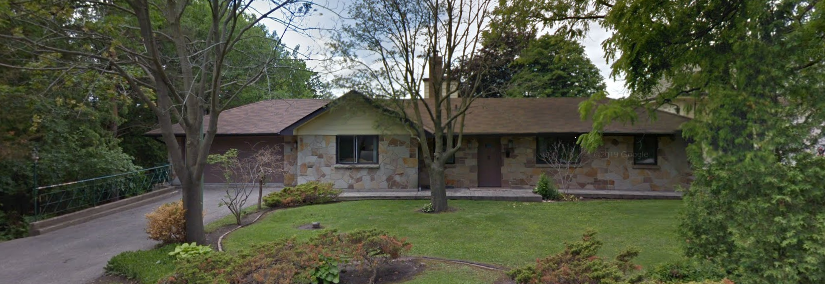
The following spring, I built with my own hands the deck, stairs, and retaining walls at the back of the house. (See here.)
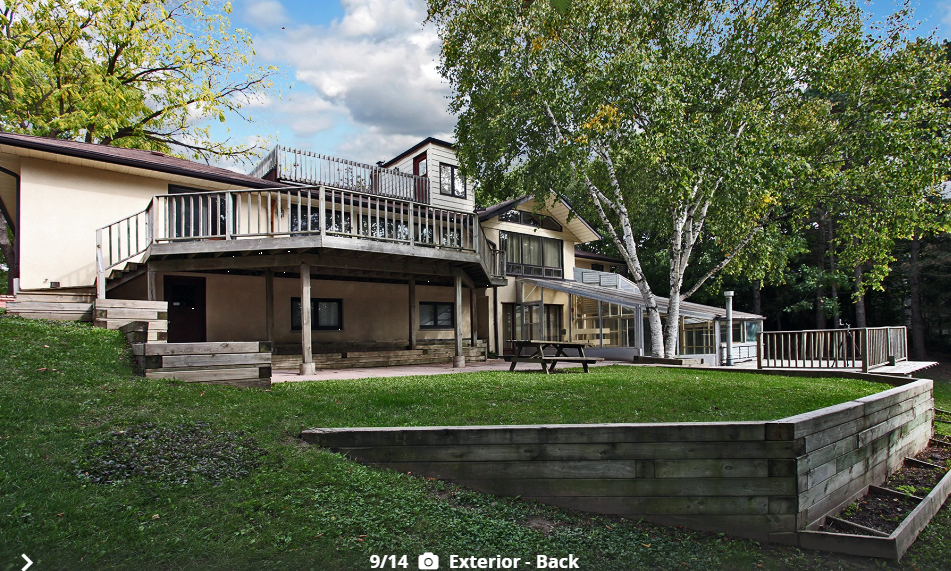
The Lien litigation and the Counterclaim was first fought by a young lawyer in a reputable Firm, but he soon became involved with a much larger litigation of another client and neglected my case. I was going nowhere. I hired another lawyer (of the "Chosen" kind) who claimed to be experienced in similar cases and appeals. He directed me to hire experts to investigate the deficiencies and issue reports; to take hundreds of photographs for each deficiency and put them into catalogues describing the deficiencies and findings; discoveries, addendums, and new filings, 23 boxes of documents in all; babbling for hours in court and putting everybody to sleep, including the judge. To make it short, after $600,000 of litigation and 18 years of my life, taking no vacations and spending little time with my children, I won the case and got nothing: the charlatan company had been dissolved and its principals were insolvent.
There are many lessons to be learned from my mistakes:
1) When undertaking a large expenditure such as the addition to the Cottage, as I did, do not pay anything until the work is completed, inspected, and certified.
2) When hiring a contractor to do a work, verify closely any reference you are given, as I did not do it, so busy I was with my factory and clients.
3) Never engage in legal litigations: lawyers are mercenaries paid by the hours, and the longer they can drag your case, the richer they become, — win, or lose. When wronged, assess if a prompt resolution, a compromise is possible, otherwise, take your losses and move on, you'll come ahead in the end.
After firing Bill, I hired another metal polisher (a middle-aged Italian fellow) and a young man, Jonny, recently immigrated from Vietnam, as an apprentice polisher; Fani brought in Ziggy, a young Jamaican man, whom I hired as a driver; and Joseph, who by now I fully trusted, brought in four of his First-Nation relatives. D-Lite workforce was now 20-workers strong, very dedicated, and loyal. Sales, both of light fixtures and store fixtures, were steadily increasing, net profits were very good. Unprecedented at that time in Canada, and by my own volition, I instituted a Profit-Sharing Program, by which I distributed to my workers, every quarter, 30% of D-Lite's net profit for that quarter, paid to the workers equally. No law required me to do it, but moral law moved me to do it, as those profits had been achieved through their good work and dedication.
I had their respect and affection; we treated each other as equals, as co-workers; they came to me for advice in their private difficulties. Fani got engaged to be married to Ziggy, and having none of her family in Canada, she asked me to give her away at the altar on her wedding day. Sometime later, Jonny and Kim Chi decided to get married, and again, I gave away the bride. With the money distributed under the Profit-Sharing Program, Rose went on vacation to Chile to visit her family living there and, on her return to work, she brought me a beautifully decorated gourd, and an inlaid wooden plate; little things, but very valuable to me as tokens of her friendship. I still treasure them, the gourd displayed on the bench in the entrance of my home, and the plate hanging over the kitchen table.
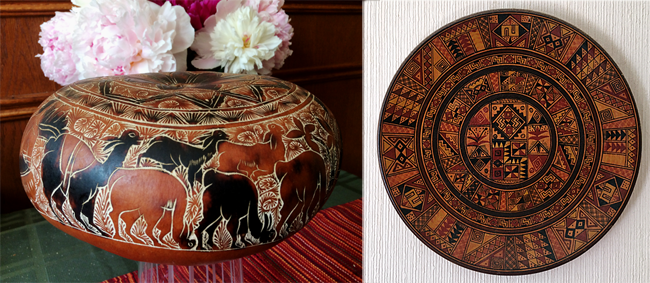
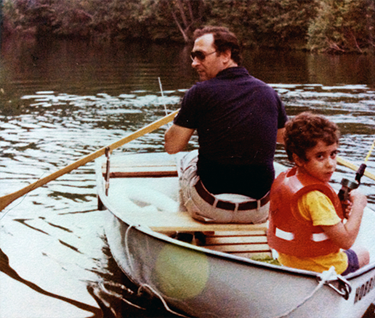 The court case did not take much of my time; it was just a nuisance (costly in time and money) every time I had to meet with the lawyers for discoveries or planning sessions. D-Lite business was good, my personal income comfortable. I bought my first Volvo station wagon (the first of many up to this day), a 16-foot canoe, and a dinghy boat for going fishing in the lakes every weekend with Frank and Nonna.
 But, because of my work's demands, we had not taken a real vacation as a family since the time the three of us (Mark was not yet born) went to Jamaica, where Frank got a crash course in swimming, where I bought two beautiful large wooden sculptures now displayed in the greenhouse, and where we visited Fani's family, before she got married to Ziggy.
At the beginning of 1981 Dylex proposed to me to buy Manro Plating, an electroplating shop then for sale in Markham, to secure and control our plating needs; D-Lite and Dylex would be equal partners in this venture, and I would manage the shop. The proposal made sense, considering the amount of plating D-Lite was sourcing out, and the possibility of adding new finishes to both the store fixtures and lighting fixtures. The purchase was finalized in July of that year, and together we incorporated, on July 28, MANRO PLATING (1981) LIMITED (487273).
Initially, I retained the entire workforce and both the previous owners, MANfred and RObert (two Austrian men in their 40's) as shop manager and maintenance head respectively, but their shortcomings in business administration skills, which had caused the failure of their company, persisted, and I was now spending more time at MANRO than at D-Lite, driving back and forth from Concord to Markham almost every day. Shortly after, the industrial unit next to Manro Plating became available, and that was an opportunity to consolidate the two factories in the same location. That meant moving D-Lite from Concord to Markham. By now, D-Lite did no longer rely on the sales to the public generated by the showroom; the metal fabrication and the sales to retailers Canada-wide were the bulk of the business. I negotiated with the landlord of the Concord location the termination of the lease there, and I moved D-Lite, equipment and staff, to Markham. There, with the verbal consent of the landlord, — a senior and honorable orthodox Jew, — I made a large opening in the wall separating the plating shop from the now D-Lite shop, permitting the easy transfer of goods from fabrication to plating and back, for packaging and shipping. After a while, Manfred and Robert, the original owners of Manro Plating, felt uncomfortable being supervised by the new owner in front of their workers, and they quit. I hired the son of an Irish immigrant to head the plating line, assisted by a young Indian man, Darshan, immigrated from India, and some more workers, among which a very young Lebanese immigrant, thin as a rake, and most loyal and dedicated, to take care of the spraying room. I also extended the Profit-Sharing Program to Manro's employees. Gradually, I added brass, pewter, and gun finishes to the plating line, thus increasing the sales volume to both Manro and D-Lite.
Assisted by Joseph and another worker, I devised a jig for speeding up the silver brazing of small components of store fixtures, consisting of a 5-foot diameter wheel with seven jigs placed at equal distance, where the components were placed to be joined. Joseph would apply flux to the components and load them on the jigs, in sequence, so that one loaded jig would come under an exactly placed oxyacetylene flame pre-heating the assembly, while I was applying the silver, also under another exactly placed oxyacetylene flame, to the assembly in the jig preceding it, and then move the wheel on its axis one step forward for the brazed assembly to cool down while I was brazing the next assembly, and another step forward, to be picked up by the other worker and immersed in a cleansing solution. By this method, after calibrating the oxyacetylene flames, the three of us would braze one assembly every two seconds, whereas, done individually, this entire process would take at least five minutes for each assembly. Guided by logic and ingenuity, I also instituted new methods and procedures in the plating shop, achieving efficiency and a profit never dreamed of by the previous owners.
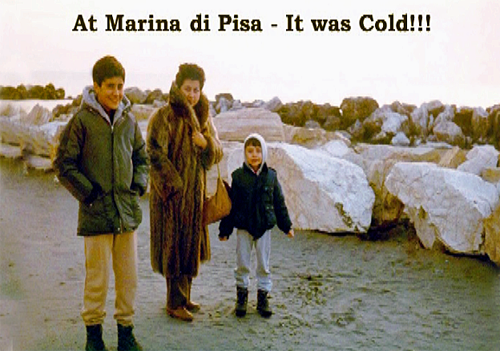 By 1985, the money invested in Manro by D-Lite and Dylex was returned to them in yearly dividend distributions; the combined workforce of Manro and D-Lite amounted to 65 workers and two secretaries; at yearend I gave the workers a two-week paid vacation; and I took the family, the four of us, for a winter vacation to Italy, where Frank and Mark met their grandmother (their Nonna Rosa), uncles and aunts, and cousins for the first time. We visited the places in Florence, Borgo San Lorenzo, Valiversi, La Zambra and Padule, where I, as frail small child after my father's death, had lived and grown to an independent strong-willed young man; I brought them to Arcetri, where I had refined my education and attained a respectable lucrative profession; then to the Ligurian coast and La Spezia, where not yet an adult I started earning big money as an optician; finally we visited Pisa, and the Ivan Ottica store, where they met Miriam, the widow of Ivano Colledani, my former boss and friend. We even went on those winter days to Marina di Pisa beach, near the Arno river mouth, where I used to go swimming and scuba diving in the summer, during my lunch breaks (1:00pm to 4:00) when working in Pisa.
⦑ 24 ⦒
Things were good; the court case proceeded at a slow pace and did not matter a great deal. I started collecting duck decoys of every kind and value, still in my possession throughout the house and under some tables. We hosted in Westwood Lane several of my relatives visiting from Italy and friends visiting from the US: Zia Giovanna with Alessandro and Donatella, Giacomo's daughter, your cousin Viviana, Giacomo and Hanna on another occasion, Zia Francesca and her family, my nephew Riccardo and his family, Nonna Rosa a couple of times more, Carlo's daughter another time, Benedetta, (Alessandro daughter) most recently, and every time we took them around Ontario and the US, thus taking vacations ourselves.
Then, in 1991, the economy took a downturn and some D-Lite customers fell behind in paying for their purchases, others didn't pay at all, and suing them would amount to throwing good money after bad; many went out of business. To a lesser extent, the same happened with Manro's customers, who were also suffering from the economic downturn, falling behind in their payments. After a while, the cashflow worsened to the point that an injection of fresh money became necessary, and I informed my partner, Dylex, of this necessity. Dylex, having their own financial problems, did not want to participate in the rescue. To save the company and my workers' jobs, I then "lent" Manro all the cash I could raise, from my own savings and by cashing in all the money I had put into my RRSP (Registered Retirement Saving Plan), paying a large amount of taxes in doing so, and I reduced my salary. The financial situation was thus stabilized, the jobs saved, but another storm was brewing on the horizon.
At the beginning of 1992, newer and stricter environmental regulations were enacted for the treatment of industrial wastewater discharges. To comply with the new rules, Manro had to put in place a wastewater treatment system costing, at that time, almost two million dollars. Also, the Landlord had died and his heir, an eco-fanatic woman living in the US, wanted Manro out of the industrial complex she had inherited. Manro's lease of that industrial space had expired, and, to accomplish her desires, she refused to renew or extend the lease: Manro had to move to other premises, or close. In those uncertain economic times, it was not feasible nor prudent to move Manro to other premises: the move would cost at least half a million dollar, in addition to the wastewater treatment system then required, and Dylex, my partner, having already recuperated their original investment through dividend distributions, would not get involved.
Also, one event that occurred in those difficult times, effecting the "high regard" I held for the members of those "Chosen Tribes" and the future of my companies, was the visit I received from the two Jewish principals of an established store fixture company located in Weston, Ontario. Out of the blue, they came to my office proposing to me to manufacture and chrome plate for them a large amount of store fixture parts destined for the US, at a very good price, but time was of the essence, and all had to be done in 10 days … they would supply the components. Blinded by need, as the job would infuse badly needed cash flow in both D-Lite and Manro, I took the job, without making inquiries as to why this large established company would come to me for the first time, and not to its regular suppliers.
Joseph, Eduardo, another worker, and I worked literally 24 hours a day for eight days to produce the entire order, taking short breaks to sleep in sleeping bags and eat, without going home. The goods were plated by Manro during the day, and we delivered the entire order on time, as contracted, with the proper invoice, which was supposed to be paid in 30 days. It WAS NEVER PAID. A few weeks later, I went to Weston intending to get my payment, but the doors to that factory were locked; a sign at the door informed the visitors that the company had closed.(*)
Unsure about the economic prospects, and not comfortable in borrowing such a large sum needed to relocate and modernize Manro, I decided to close both Manro and D-Lite, selling all the saleable equipment, and, with the proceeds of that sale, I paid off all Manro outstanding debts and returned to myself the money I had lent Manro. I found employment for all my workers elsewhere; and, as a token of my retribution to her for destroying my last 17 years of hard work, I returned the keys to the new eco-fanatic landlady — whishing her good luck in disposing of the unsold equipment I left in her industrial space, and in cleaning up that space according to environmental guidelines.
To celebrate this milestone in my life, I booked a 2-month vacation for the four of us (Nonna Frank, Mark and I), touring Europe. Frank was 17, Mark was 12 years old.
(*) Many years later, when I was undergoing some blood tests, chatting with the nurse taking my blood, she recognized me and told me she had worked in the accounting department of that Store Fixtures company until it had closed overnight, cheating all suppliers and all employees out of their pay, without recourse, as the two "Chosen" principals, after getting paid by their American clients, for the goods D-Lite and Manro had produced, had fled the country.
⦑ 25 ⦒
At the end of that school year, we flew to Amsterdam, where I picked up the car I had ordered online, and we spent ten days in Holland exploring Amsterdam and took a canal cruise; we then drove to Volendam; to Zaanse Schans to see the windmills; we visited Haarlem and the Cruquius Pumping Station Museum nearby. Then we visited the Flower-Bulb Region; The Hague and the miniature city of Madurodam. We then went to Delft, home of the beautiful Delft pottery (where I bought several ceramic pieces I still treasure around the house), and to Gouda to sample the cheese, and to Utrecht. We stopped in the large port city of Rotterdam and the vibrant city of Eindhoven, and visited Maastricht, before driving to Belgium, where we found the impressive courthouse with the words Neminem laedere, suum cuique tribuere, honeste vivere carved il large characters on the frieze of that building.
After visiting Brussels and its Manneken Pis we drove to Paris, and visited the Eiffel Tower, the Louvre Museum, Notre-Dame Cathedral, and the Versailles Palace, and we took a river cruise on the Seine River. We then drove to Normandy, visiting the D-Day Landing Beaches with the remains of German fortifications, and War Cemeteries, stopping in Caen, where we visited Madame Andrée, my friend Catherine's mother, who had hosted me thirty years earlier, and we spent two days in Caen, visiting the Abbaye-aux-Hommes and the Caen Castle. We then drove to Bayeux and visited the Tapestry Museum, where I bought a miniature copy of the Tapestry, which I framed and mounted on the kitchen walls of our house in Westwood Lane, now rolled up in my study, to be inherited by whoever of my grandchildren wants it. From there we went to see Mont-Saint-Michel, and then we made our way to Nantes, visiting the town and church the following day, before making our way up the Loire Valley, stopping at Angers to visit the town and castle and its Apocalypse Tapestry. The following day we visited the castles of Chenonceau and that of Loches, ending the day at Limoges on July 9, 1992. The following day we visited the Porcelain Musée national Adrien-Dubouché, and then we made our way to the town of Brive-la-Gaillarde, with its umbrellas hanging from cables, covering the streets. Then we made our way to the Lascaux Cave near the village of Montignac, and to the Cro-Magnon rock shelter in Les Eyzies-de-Tayac, and to the Roque Saint Christophe, located in Peyzac-le-Moustier.
The following morning, we drove to Rocamadour, to see the Gouffre de Padirac (Padirac Chasm), located 8 Kms from the town. Then we drove to Gardon briefly visiting the place and we stopped for lunch, having the most delicious ground raw meat, with flies flying all around, and proceeded to Cahors, Saint-Cirq-Lapopie, and to the Gorges du Tarn, ending the day at Millau. The following morning, we took Autoroute A75, crossing the gorge valley of the Tarn on the beautiful Millau Viaduct on our way to La Couvertoirade, a fortified medieval village founded by the Knight s Templar in the 12th century. Then we drove to the Grotte des Demoiselles, a 394-ft.-long network of limestone caves with stalactites & stalagmites, accessed by a funicular. Then we made our way to Nîmes, where the cloth Denim was first produced, spending the night there.
In the morning, we made our way to meet our friend Catherine in Avignon, at the Clock Tower Square, under the clock, as we had agreed by phone when I had called her from Madame Andrée house in Caen. We had brunch together, reminiscing about our long past youth adventures with our common friends, and she guided us on a brief tour of the city, as we were in a rush to drive down to Antibes, where we had a hotel reservation for that night. On leaving Avignon, we had a quick look at the famous Pont, then we took the autoroute to Toulon, and from there to Antibes, where we visited, the following morning, the Picasso Museum and the town.
Here we experienced the only ugly event in this monumental Tour de France: when visiting the museum, we had parked the car in the parking space near the entrance. On returning to the car, we realized that it had be broken in. Fortunately, there were no damages to the car, and all that was stolen were four bottles of French wine we had bought in Millau. The thieves had missed the bottle of Calvados I had bought in Normandy.
We continued on our way to Nice, visiting there the Cours Saleya Markets, we then drove to Montecarlo, taking a quick panoramic tour of the Principality of Monaco, and we made our way to Sesto Fiorentino, travelling through Lucca and Pisa, both of which Frank and Mark had visited seven years earlier. Finally, after five weeks on the road, travelling thousands of miles on our discoveries of modern, ancient, and prehistoric civilizations, customs, and places, we put a warm smile on Nonna Rosa's (your Great-Grandmother) face, who was patiently waiting for us outside the door of her house. Waiting also for us in the house were my sisters Antonietta and Maria Rosa (the Nun), my brother Salvatore, and several nephews and Nieces, including Donatella with tears of joy.
⦑ 26 ⦒
We spent a week with my mother in Sesto, making short trips to Florence and surroundings, visiting San Miniato al Monte, Piazzale Michelangelo, Forte Belvedere, Fiesole, with its Etruscan ruins and museum, were I bought the bronze sculptures now displayed on the living room windowsill, Montesenario (where I bought several bottles of Gemma d'Abeto, a liquor brewed by the monks there since the Middle Ages, for for medicinal purposes, so they say), Cafaggiolo, San Giminiano, and a day excursion to Volterra and the Etruscan Museum. Every evening my brothers and sisters took turn in hosting us for dinner, and thus Frank and Mark got acquainted with their Italian cousins. We spent that long weekend at the seaside, at Viareggio, guests of my friend Giacomo, who had an apartment near the sea; and, on the last day, we went for dinner with all my teenagerhood friends, assembled by Giacomo there for that very purpose.
The time passed quickly, and it was now time to make our way back to Amsterdam, for our flight back to Toronto.
On a hot muggy morning, we loaded our luggage in the car, hugged and said goodbye to my siblings and their children, and to Nonna Rosa, on whose eyes I could see a sad question: Are we going to see each other again? (I did visit her again, a few years later, when she was on her deathbed in the hospice at Lastra a Signa near Florence run by the Order of Passionist Nuns, of which my sister Concetta had been a member since she was 16, going by the name Sister Maria Rosa.) And we made our way to Ravenna, to visit the ancient Byzantine monuments there: Sant' Apollinare in Classe, San Vitale and the Mausoleum of Galla Placidia. We then made our way to San Marino, the third smallest country and the world oldest constitutional republic, founded in AD 301. We then went to visit Venice, and the next day we made our way to the Dolomites, starting at Auer (Ora) in South Tyrol, and climbing our way to the Val di Fassa, where we spent the night. Next day we took the cable car to the Rosengarten group (Catinaccio), and to the Col Rodella, a favored place for daredevils hang gliding. We visited Passo Sella, Passo Pordoi, Passo Fedaia; we took the cable car up to the Marmolada Glacier and we visited the Marmolada WW1 Museum. We then drove through Giau Pass on our way to Cortina d'Ampezzo where we spent the night. The following morning we visited Lake Misurina on our way to the Brenner Pass, entering Austria, and visiting Innsbruck.
The following day we took the scenic route to Munich (Germany), passing through Garmisch-Partenkirchen to get to the Hohenschwangau Castle, and then to Oberammergau, where we visited the Woodcarving School and Museum, where I bought the angel hung above Sofia's picture in the entrance, and the miniature goat displayed in the Display Case in the living room of my house.
We then made our way to Munich, to the Hotel Torbräu on Isartorplatz, just beside the Isartor (Isar Gate), and a five-minutes' walk to Erhardtstrasse on the Isar River (where I used to live in my youth as a renter of Frau Wagner), and a short walking distance to all the major tourist attractions in Munich.
That evening we strolled around the old city center, witnessing Munich nightlife: a family band (father, son, and daughter) in traditional costumes playing their tunes for coins; a drunken old man, with a carton of cheap wine in his hand, singing opera out of tune and drinking more than he sung, also for coins; several outdoor cafes were dignified Germans enjoyed the fresh evening air and the joyous noise; particular shocking was the fistfight erupted outside the Augustiner Klosterwirt between two drunken men, stopped by the quick arrival of the city police. Witnessing all this, we decide to visit the oldest beer hall in Munich: The Hofbräuhaus, were we enjoyed the Oompah music, a delicious beer in two-liter mugs, and the sight of a young German man, who had drunk perhaps one too many jugs of beer, climbing on the stage where the band was playing, trying his best to stay erect and direct the performing Musiker (musicians) by moving his arms out of step, under the benign smiles of the musicians and the laughs and applauses of the crowd, the whole scene revealing German camaraderie at its best. The following morning, we visited St. Michael's Church, then the Frauenkirche, and we then rushed to the New City Hall on Marienplatz to watch the Glockenspiel playing at noon on the dot every day. In the afternoon we visited the Deutsches Museum; and we then made our way to Dachau.
In the morning we visited the Dachau Concentration Camp Memorial Site, saddened upon reading and seeing the results of diabolic political genocide perpetrated indiscriminately against fellow human beings, by hate and greed, once thought possible only by evil religious men of the Middle Ages, but still carried out in our modern age and days, all over the world. And even as I write, Russia continues to cast a blanket of death and destruction upon Ukraine, while the country of the people "Chosen by God" is doing just the same, or worse, to the Palestinians of Gaza and the West Bank displaced by these "Chosen" with the connivence of the arrogant Britain; while the Lady carrying the Torch of Liberty standing at the entrance of New York Harbor has turned her head away from the afflicted Palestinians, betraying the meaning of hope represented by her older sister, the Lady of Justice. The Golden Precepts, Neminem laedere, suum cuique tribuere, honeste vivere, have been the guiding Star to all just and upright men (and women) and civilizations for the past 2000 years; but, from time to time, and too often, some leaders of peoples and nations have chosen to ignore them, bringing misery, death, and destruction upon their fellowmen, upon innocent women and children, upon the vulnerable elderly and sick.
I have been reluctant to tell you these things now, for fear of bringing fear and desperation into your young lives, a kind of fear and desperation I felt at age 5, when I was taken by the hand by a nun, leading me away from my desperate widowed mother in that somber and enormous orphanage hall. But fear not, my dearest grandchildren: unlike me, you have the good fortune of being born to and live with just and upright parents, who will guide you in finding the answers to the trying questions you might have the more you learn about these atrocious matters. Also, you live in perhaps the most just and free country, far from the horrors now being forced upon the children of Ukraine and Palestine. While growing up in this peaceful country and family, you will have the freedom to choose your education, your profession, your friends, your hobbies and, as long as you always adhere to and practice the Golden Precepts, you will be able to mentally examine every night, before falling asleep, what you have done that day and plan to do it better the following day.
We then made our way to Nuremberg, to visit the Imperial Castle and briefly the city, and proceeded to Rothenburg, a medieval old town that still has completely intact city walls, walking on which Mark got lost. We looked everywhere for him, and so worried that we were about to call the Police, when he appeared on the main square, a little scared himself. After lunch and ice cream, we made our way to Rüdesheim on the Rhine River, stopping at Wiesbaden for a short visit of the main attractions there. The following morning we visited the Siegfried's Mechanical Music Museum in Rüdesheim, and we then made our way along the Rhine River to Bonn, where we visited the Beethoven Haus Museum, where Ludwig van Beethoven was born. We then drove to Cologne, to visit the St Peter Cathedral Church (Kölner Dom), whose construction began in 1248, and completed in 1880. Amazing was the traffic light synchronization along the main road traversing the city along the Rhine River: a 20-kilometre stretch that we covered in those days in 20 minutes, thanks to the German ingenuity of installing overhead signals showing the speed to travel in order to get a green light at the next traffic light. These speeds prompts varied automatically, depending on the distance to travel to next traffic light, from 30Kms/hour to 160Kms/hour… Amazing! Forty years later, in Toronto where we live, the city engineers, with modern computer technology, have not yet figured out what the Germans did in 1992; and today, it takes over an hour to travel 20 Kms on a main city road, at a stop-and-go flow, regulated by haphazardly timed traffic lights. …
We then rushed toward the town of Kleve in the Lower Rhine region of northwestern Germany near the Dutch border and the River Rhine, crossed into Holland at Nijmegen, and straight to Amsterdam, were we returned the rental car. The following morning, we took a train to the Schiphol Airport for our return flight to Toronto.
While waiting to board the airplane, a plain-clothed airport security guard approached Mark holding the hazelnut stick I had carved for him out of a hazelnut branch during a picnic we had with my family in a forest near Sesto. The security officer examined the stick, and smiling gave it back to Mark. Now that stick rest behind the door of my computer room, as a memento of our amazing family vacation of 1992, lived in the true Odyssean spirit: pursuing wisdom and knowledge.

END OF PART II
⦑ 27 ⦒
Leaving Europe behind, new challenges awaited us on our return home: new schools and a new school year for both Frank and Mark, a new career for Nonna at the Toronto Montessori Schools, and finding a gainful occupation for myself, as I was only 50 years old, with a mortgage, a court case not yet resolved, and not wealthy enough to retire. Frank moved to London (Ontario) to attend Fanshawe College; Mark went from St. Charles Garnier Catholic School to Alexander Mackenzie High School in Richmond Hill (Ontario).
With a few short exceptions, I had been all my life a successful freelance or self-employed professional (optician, salesman, businessman). That eco-fanatic woman (of the "Chosen" kind) living in the US, who had inherited the industrial building where Manro and D-Lite operated, had destroyed by her whim all I had built in fifty years from nothing.
Having the money available, I went looking for a metal fabrication company to buy out entirely, or to become a partner with the existing owner(s), starting with some small companies which had been Manro's clients. The first was a small company owned by an elderly man original from Pola, a city in Northeast Italy, south of Trieste, with its population being neither Italians nor Slavs, nor Croats. He managed a small staff of 4, all of them of the same lineage, including his daughter, who acted as receptionist/secretary/bookkeeper. I proposed to buy him out completely and to keep his whole staff employed. After several days of negotiations and thinking over, we agreed on the price and conditions, we shook hands, and we were to finalize the deal by the end of the month, or as soon as his lawyer had given my lawyer the legal agreement of purchase and sale for his review and approval, and for my signature and disbursement to him of the agreed price, sealing the transaction.
A handshake among just and upright men, is an unreversible commitment, as good as gold … but, apparently not so for people of that bastard's lineage: while I was waiting for his lawyer to give my lawyer the formal agreement, he sold the company to another individual, who had been a competitor of D-Lite, for $20,000 above our agreed price! There, at the age of 50, with all the experience and knowledge I had acquired with my hard work, I learned another lesson: Handshake Deals Can't Always be Trusted.
I then hired a Business Brokerage firm to find for me was I was looking for. They proposed me another metal fabrication shop, owned by a Russian immigrant, and staffed entirely by Russians, but I didn't feel comfortable running it, as I didn't speak a word of Russian. Shortly after, they directed me to another small metal fabrication company, owned by two Slovenian men, with no staff, a few pieces of equipment, and renting a large industrial unit kept dark when I visited them. I gave it a pass. Finally, they introduced to a machine shop in Mississauga, whose sole owner (a Serbian, and Serbian all his staff, except one very skilled Polish machinist) was looking for a partner to look after sales and administration while he managed the shop, and to bring new needed money into the company. The shop was well-run, and the owner was a prudent man: he proposed to hire me for a six-months trial period, paying me a salary, to ascertain we got along well eventually as partners, and to assess my abilities. I concurred with his prudence, and I started working there. In the first three months I acquainted myself with the skills, strengths, and weaknesses of the company, while securing with that knowledge three big new clients: a Cold forming - Screw Manufacturing company in Scarborough, a similar one in Western Ontario, and De Havilland Canada in Downsview. These new clients first gave us sample orders, then larger and larger ones, so much so that my prospected partners no longer had need of my cash infusion or new sales and, moreover, his only son, an elementary school teacher, had been dismissed by the school board for some kind of unprofessional behavior, and was hired by his father to work in the office. My "employment" continued for another three months, uncomfortable for both of us, as I had become redundant. We both realized that, and we parted in good terms. A few years later I learned that the son had made a mess of the administration (accounting irregularities), and the father had sold the company to one of the clients I had found him.
Unemployed again, in need of earning an income, and disillusioned by my recent experiences, I no longer felt inclined to buy somebody else's business. Having acquired many skills, I could have sought employment as a regular worker, as an employee, exposed to the whims and fortunes of others, but, having been a boss most of my life, and my age, put me at a disadvantage: employers would rather hire younger people to train for long-term service and obedience. It was time to try new ventures, as I had done before in my life.
I studied the stock market and learned day-trading. I started with a small amount, growing the initial investment by not withdrawing the gains made daily. Day trading is a very risky activity, buying and selling a batch of securities within a day, or even within seconds, based on stock price swings, sometimes predictable, but generally not fully knowable and expected, requiring hard work in research, and restraint in buying under the euphory of the moment; … and very time consuming: I would be online doing my research from sunrise to 9:30 am, when the stock market opened, glued to the screen past the market close (4:00 pm), planning strategies for the following day. After a while, the initial investment had grown to a considerable amount, and I began withdrawing any gain above that amount, thus providing for the family needs.
Gradually our family finances stabilized, and it became our custom to host most of the extended family events in our house at Westwood Lane: Birthdays, Anniversaries, Christmas dinners, Picnics and Reunions, visiting friends and relatives from the USA and from Italy. We even found the time and the means to take some winter and summer vacations in Mexico and Cuba.
In April 1996, upon graduating from Fanshawe, Frank moved to Winnipeg, to extend his knowledge of the world westwards, and took several courses to reach the IT Certification. As a pastime, he learned Eskimo architecture and spent some time with his friends living it. In the summer of the following year, Nonna, Mark, and I visited him there, meeting his friends, and touring the region together. Sometime later, Nonna and I went back to Winnipeg to meet Walter and Jean Toews, Stacey's parents, to reassure them, as Frank had expressed his desire to marry her, but they were hesitant to grant him their blessing. Shortly after, both moved back to Ontario, living with us for a while on Westwood Lane, until they stood on their feet and moved to an apartment in Toronto. Frank worked hard to establish for himself a productive career in the IT field, starting his own consulting business, and Stacey found employment at the Michael Garron Hospital, as a registered dietitian. After a while, they rented a house near the hospital, and soon after that, they bought their first house on Sammon Avenue, a walking distance from the hospital.
 Graduating from St. Charles Garnier, — as Valedictorian, — and doing his high school at Alexander Mackenzie, Mark distinguished himself as one of the best students there, receiving at graduation, in 1998, six Honor Graduation Awards in six Ontario Academic Courses, and was declared the Ontario Scholar for 1997 - 1998 — earning a Bursary from the school and the Governor's General Academic Medal for that year, and another bursary with it. He was immortalized in the school gym's Wall of Fame, and he was also the leading actor in the school play performed before graduation. To celebrate the end of High School, Mark hosted an overnight camping for two dozen of his school friends in our backyard on Westwood Lane, and then he went with some of them on vacation to Porto Vallarta (Mexico). The summer over, Nonna and I drove Mark to Waterloo (Ontario), where he was to attend university on a 5-year Co-Op (paid internship) program, majoring in Mathematics and Actuarial Science. On the way to Waterloo, we were caught in a thunderstorm so severe that we could hardly see 10 feet ahead of our windshield. Finally, we arrived at the Waterloo campus, we said goodbye, and Mark took his matters and fortunes aptly in his hands, working hard in his studies and apprenticeship, making good money while studying, and at the end of his university years having a very good job waiting for him at Munich Re, where he had apprenticed for three years. All in all, with the bursaries he had earned in high school and his co-op work, Mark's university did not cost us, his parents, a penny — on the contrary, when in need (due to the court cases), he was able to lend me a substantial sum of money! After five years of university, tired of studying and working, he skipped the Graduation Ceremony and went on a three-month vacation, visiting our relatives in Florence, then to Malaysia and Australia, visiting the friends he had made in Waterloo.
Frank and Mark, Stacey, and Deborah as well, worked very hard to refine their skills and built very successful careers. The time will soon come when you, my dearest grandchildren, will have to choose the direction of your studies for your future profession and life. You have your parents as road models: they had faced difficulties, made mistakes, but succeeded, due to their unwavering determination and hard work. When the time will come for you to make these decisions, ask them for guidance, and persevere in the choices you will make.
Graduating from St. Charles Garnier, — as Valedictorian, — and doing his high school at Alexander Mackenzie, Mark distinguished himself as one of the best students there, receiving at graduation, in 1998, six Honor Graduation Awards in six Ontario Academic Courses, and was declared the Ontario Scholar for 1997 - 1998 — earning a Bursary from the school and the Governor's General Academic Medal for that year, and another bursary with it. He was immortalized in the school gym's Wall of Fame, and he was also the leading actor in the school play performed before graduation. To celebrate the end of High School, Mark hosted an overnight camping for two dozen of his school friends in our backyard on Westwood Lane, and then he went with some of them on vacation to Porto Vallarta (Mexico). The summer over, Nonna and I drove Mark to Waterloo (Ontario), where he was to attend university on a 5-year Co-Op (paid internship) program, majoring in Mathematics and Actuarial Science. On the way to Waterloo, we were caught in a thunderstorm so severe that we could hardly see 10 feet ahead of our windshield. Finally, we arrived at the Waterloo campus, we said goodbye, and Mark took his matters and fortunes aptly in his hands, working hard in his studies and apprenticeship, making good money while studying, and at the end of his university years having a very good job waiting for him at Munich Re, where he had apprenticed for three years. All in all, with the bursaries he had earned in high school and his co-op work, Mark's university did not cost us, his parents, a penny — on the contrary, when in need (due to the court cases), he was able to lend me a substantial sum of money! After five years of university, tired of studying and working, he skipped the Graduation Ceremony and went on a three-month vacation, visiting our relatives in Florence, then to Malaysia and Australia, visiting the friends he had made in Waterloo.
Frank and Mark, Stacey, and Deborah as well, worked very hard to refine their skills and built very successful careers. The time will soon come when you, my dearest grandchildren, will have to choose the direction of your studies for your future profession and life. You have your parents as road models: they had faced difficulties, made mistakes, but succeeded, due to their unwavering determination and hard work. When the time will come for you to make these decisions, ask them for guidance, and persevere in the choices you will make.

⦑ 28 ⦒
Once established in their professions, Frank and Stacey wed on September 16, 2005, in a beautiful ceremony attended by many members of their families and friends who came to Toronto from Manitoba, the US, and even attended by Donatella, Riccardo and his family, who came from Italy for the wedding. Two years later, on September 29, 2007, Mark and Deborah did the same and, from then on, our family was blessed by auspicious events continuing to this day:
 • The fig tree I had planted in the greenhouse had grown so large and was now producing so many figs that we, after consuming figs at breakfast, lunch, and supper, and giving baskets of figs to our neighbors, we had so many left over, that we had to make fig jam for the winter.
• After Frank and Mark had married and bought their own houses, our house on Westwood Lane, with its 17 rooms, had become far too big for Nonna and me; the market was good, and we sold it in 2008 for 13 times the money we had paid for it, enabling us to pay off all debts and buy a smaller house on Bay Thorn Drive, where we now live. We had a lot of money left over, and we invested it in various income-producing instruments, allowing us to retire in comfort. Before moving to Bay Thorn Drive at the end of that year, from cuttings of the old one, I made three new fig trees, which I stored in the garage, waiting for the following spring to build a new greenhouse, where to plant them, and since then we harvest the most delicious and abundant figs every year.
 • On September 15, 2008, the first Bundle of Joy, Sofia, came to our family and we knew, from the start, that she was going to be a handful … But also, she has made us proud in all her endeavors, excelling academically and in all extra-curriculum activities and sports to this day. She has been an avid reader since a very young age, pursuing knowledge in many fields of study, and lately she has expressed her desire to pursue a career in science, in which she will also excel, I am sure.
 • The second Bundle of Joy, Violet, came to us on July 16, 2010, born with a scoundrel slant (look at her eyes …). She has been fearless all her life, all thirteen years of it, and daring, unafraid to climb trees or ride an ATV like a daredevil. Another characteristic is peculiar to Violet: her loving attitude toward children her junior, as one can see when she interacts with her little cousin, Kaitlyn. One episode at a very young age could have shaped Violet's character: Still a toddler, she got a very high fever that caused her to pass out, repeatedly. I happened to be there, and I ran with her in my arms to the hospital emergency nearby, followed by Stacey. She was promptly admitted into a separate room for fear of infection. After a while, while Violet was resting, Stacey went down to the cafeteria, and I kept watch over Violet. Suddenly, Violet started to shake violently, rolling her eyes as passing out again; I rang and rang for the doctor, who finally entered the room and gave her another medication, but Violet didn't want to be laid down on the bed; she hung on to my neck in my arms. When Stacey returned to the room, she motioned to take Violet from my arms, but Violet didn't want to let go of me … This is why, I believe, Violet has grown up to be a daredevil, having experienced near death as an infant and, also, why she has a special place in my heart, though I love all my grandchildren equally. It is too early to guess what profession Violet will pursue; perhaps she'll become a teacher, an educator, and I am sure she will excel in her pursuits.
• On January 11, 2013, our family was blessed by the birth of Nicholas, as the standard bearer, according to traditions, of our name to future generations. This Bundle of Joy proved himself immediately by the loudness of his voice, which remains unabated to this day, and by the many talents he exhibited as soon as he was able to speak and walk: a strong desire to know and learn, dexterity in puzzle-solving, in laying down tracks for model trains, building things with Lego blocks, playing the piano, able to be heard without a loudspeaker. It is too early to guess what profession he might pursue once an adult, but I have no doubts of his success in any field he might chose, under his parents' guidance.

• The next Bundle of Joy, Kaitlyn, was born to our family on December 16, 2015, as a wonderful Christmas present. Even before she could walk, Katlyn displayed independence; once having learned a skill, she would do everything by herself. And another amazing talent is peculiar to her: Determination, (which is not pigheadedness); once she sets in her mind to do something, she doesn't give up, and brings all her projects to completion. Her talents and wit are amazing; I am sure she will succeed in all her future endeavors, and make her parents and family proud.
And so will Sofia, Violet, and Nicholas, — that is, make their parents and family proud, — always supported by the three Great Pillars: Wisdom, Strength, and Beauty; inspired by the Three Graces: Radiance, Joy, and Abundance; and cheered by the whole extended family, as depicted below.
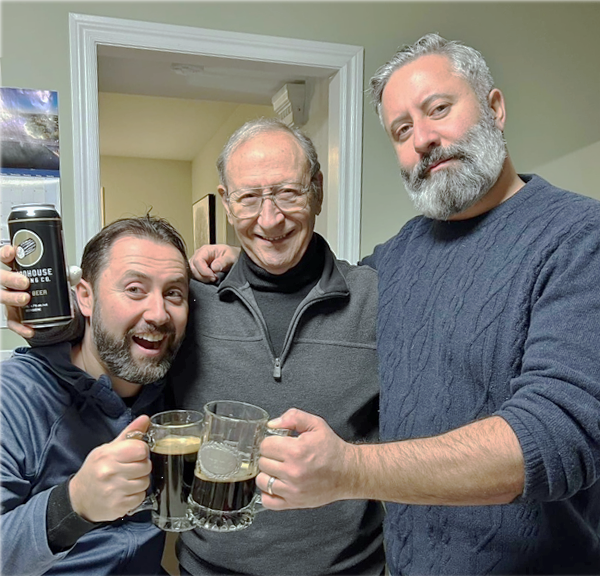
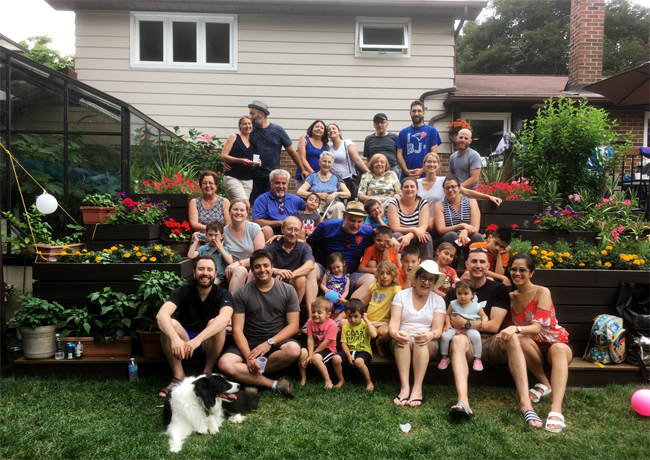
END OF PART III
⦑ 29 ⦒
From a tragic beginning to this day, I have worked assiduously to attain prosperity and comfort; I now have everything I ever wanted, and, at age 80, only remains one thing in my Bucket List: to see all my grandchildren graduate from university and start their adult life totally imbued with the Golden Precepts.
As the actuaries in our family will tell you, the odds of this happening are slim; but the historical longevity of the Seiditas and of the Lombardos may make this happen.
Let's now explore some difficult questions you will need to deal with while growing into adulthood, and beyond.
Civil duties
The adjective "civil" comes directly from the Latin noun "civis" meaning "citizen" in his relation to the commonwealth "Civitas" or to fellow citizens, "cives." The word "Duty" means a moral obligation.
If you were the only person in the world, you would not be subject to any civil duty: you would be completely free to do whatever you want, and the Golden Precepts, Neminem laedere, suum cuique tribuere, honeste vivere, would not oblige you, since there would be no one (neminem) to harm (laedere), and whom to give (tribuere) a suum (a duty due to him/her/it) — except for the duties you owe to yourself and to all living things on earth. (We will talk about these duties later).
Consequently, as there are several billions of people, near and far around you, your freedom to do whatever you want stops where the freedom of others begins. To avoid chaos and conflict, communities (Civitates) have developed throughout the centuries and millennia certain rules, customs, regulations, and laws governing the interaction between the members of a society, (of cives, citizens), which you, as a member of that society or community, have the duty, the obligation, to observe, always. Together with the duties, every society affords its citizens several rights or privileges, and some of them are both rights and civil duties at the same time. You can find the Canadian Rights and Responsibilities (duties) here.
I want to draw your attention to one such right, which is also a civil duty: The right to vote. You will not be called to exercise this right/duty until you reach the age of 18, but when you reach this maturity, it will be your duty to inform yourself thoroughly about the persons (politicians) who are running for office seeking your vote, be it municipal, provincial, or federal, so you can give your vote to the person who might serve you and your community best, being a successful and exceptionally just and upright person, dedicated to a political life not for greed or vanity, but to serve the community for a better future. All too often, persons seeking political office are mediocre, or failures in their profession, using their power of speech and eloquence to dupe their constituents with false claims, and once elected, to abuse their position and privileges for greed or vanity, or both. I give you an example of each: Hazel McCallion, and George Santos (click on their name to read about Hazel's accomplishments, and George's shortcomings). If you do not exercise your right/duty to vote, as many often do, you will have no right to complain about the shortcomings on the part of the political leadership in your community or country; better still: if you think you have the talents and inclination to match or surpass Hazel McCallion's life-service and dedication to her community, go into politics, and work hard to make your community better.
The duties you owe to yourself and to all living things
The human body is a wonderful organism, and so are all living beings, of whatever Biological Kingdom they belong to. The duty you owe to yourself is to keep your body and mind healthy, clean, and fit, avoiding excesses (overeating, dandyism, and vanity), and taking all precautions to protect it from injury. Tree-climbing can be a lot of fun, but it can also be very dangerous. Therefore, if you decide to climb a tree, get yourself a Safety Belt, before attempting to emulate the monkeys. Also, sooner or later you will be qualified to drive a car; it is the law in our country, and your duty to your body is to wear a seat belt to protect it from injury in case of an accident, which, no matter how remotely possible, could happen at any time; also, when driving, no matter how fast or slow your car is moving, KEEP YOUR EYES ON THE ROAD ahead of you at all times; do not be distracted by what is happening around you inside the car, not even for a second, because, during that second you are not looking ahead, at a highway speed of 100 km/hr (kilometer per hour), you will have travelled 30 meters (100 feet), which is more than the safe distance from the car ahead of you, causing a traffic accident, serious at that speed, possibly maiming your body, and that of others. In your teenage years, you may be urged to try some drugs, and the peer-pressure may be difficult to fight and overcome, however, it is better to be laughed at than to jeopardize your good judgement and the sanctity of your body in your care, which is the duty you owe to yourself. As for the duty you owe to all living beings on earth, keep in mind that, like yourself, they are all part of nature, and deserve the same respect and care as your body does. Except when any of these lifeforms present a danger to your body, like a mosquito, a tick, a black fly, a snake, and the likes; then it is your right and duty to defend your body, by kill them, if necessary.
I'll tell you further down (in Chapter 30) about your relation to all living (and not-living) organisms in Nature.
Of God and Religions
The concept of God(s), as the Creator of all existence, is almost as old as Mankind. At the end of the Prehistoric Age, some 100,000 years ago, Homo sapiens sapiens, the modern man, puzzled and terrified by the wonderous manifestations of Nature, in order to make some sense of the inexplicable phenomena occurring around him, created (imagined), in his own mind and in his own image, a creator God, a superior being, of a much larger stature and abilities, infinitely beneficent and compassionate, but also irritable and vengeful, everlasting, omnipresent (present everywhere at the same time), omnipotent (having unlimited power; able to do anything), and omniscient (knowing everything), who could — and had to be — bribed and ingratiated with chants, prayers, offerings and burnt sacrifices to do the bidding of the miserable and insignificant Homo Sapiens Sapiens. These offerings and burnt sacrifices gave rise to organized religions, promoted, and directed by priests, shamans, rabbis, ministers, mullahs, Imams, prophets, or whatever else, depending on the place, time, and culture.
Little is known of Prehistoric religions, and the study of them is difficult due to the lack of written records describing the details of their practices and beliefs. A Timeline of religion shows this difficulty, and the progressive control those shamans, priests, rabbis, imams etc. have held throughout the millennia over the minds and actions of Homo sapiens sapiens (wise, wise man), who, despite the scientific discoveries and knowledge achieved throughout the ages and in modern times, appears to have become all the more stupid and stupider to this day, blindly participating in the propitiation ceremonies and religious wars promoted by those shamans, priests, popes, rabbis, imams etc. in their lust for power and greed. This God Creator of the universe was given different characteristics, names, and abilities by different Homines sapiens (wise men) in different places and times.
Let us look at these Creators Gods, and their attributes, as described by the different religions.
Sumerian and Babylonian. The Babylonians dated their creation 400,000-200,000 years before their own time (4000-2500 BCE). "Babylonian poets, like their Sumerian counterparts, had no single explanation for creation. Diverse stories regarding creation were incorporated into other types of texts. Most prominently, the Babylonian creation story Enuma Elish is a theological legitimization of the rise of Marduk as the supreme god in Babylon, replacing Enlil, the former head of the Pantheon. The poem was most likely compiled during the reign of Nebuchadnezzar I in the later twelfth century BCE, or possibly a short time afterward. At this time, Babylon, after many centuries of rule by the foreign Kassite dynasty, achieved political and cultural independence. The poem celebrates the ascendancy of the city and acts as a political tractate explaining how Babylon came to succeed the older city of Nippur as the center of religious festivals."
The Egyptian date of Creation is around 39,670 or 49,219 BCE, depending on the historian reporting. The principal creator god in Ancient Egyptian religion is the sun-god Ra, (the Egyptian word for sun is Ra), and this was one name for the sun-god, but he was also regularly called Atum, from the word tm 'complete'. The name Atum seems intended to evoke all matter as concentrated in the creator before creation emerged. Creation is a process of unfurling, with the undivided All gradually fissioning into separable entities.
Zoroastrianism's Cosmogony (the branch of science that deals with the origin of the universe) is based on a 12,000-year chronology, often divided into four ages as outlined in the Bundahishn. The first age lasted for 3,000 years and included the spiritual creation by Ahura Mazda, followed by the physical creation of 3,000 years when evil entered the world (see Angra Mainyu). During the 6,000th year, was created Zoroaster's concept of Fravashi, followed by the prophet Zoroaster himself at the end of the 9th millennium. The 9,000th year marked the start of the fourth and last age. Modern Zoroastrians believe they are living currently in the final age. Since evil first entered the physical creation after the spiritual creation was complete, Zoroastrians maintain that for 9,000 years the world continues to be a battlefield between Ahura Mazda and Angra Mainyu, which will end during the 12,000th year, when the Saoshyants brings about the final renovation of the world to defeat evil. Historically, the unique features of Zoroastrianism, such as its monotheism, messianism, belief in free will and judgement after death, conception of heaven, hell, angels, and demons, among other concepts, may have influenced other religious and philosophical systems, including the Abrahamic religions and Gnosticism, Northern Buddhism, and Greek philosophy.
The Abrahamic religions are a group of religions centered around the worship of the God of Abraham. Abraham, a Hebrew patriarch, is extensively mentioned throughout the Abrahamic religious scriptures of the Quran, and the Hebrew and Christian Bibles. The concept of God in Abrahamic religions is centered on monotheism. The three major monotheistic religions of Judaism, Christianity, and Islam, alongside the Bahá'í Faith, Samaritanism, Druze, and Rastafari, are all regarded as Abrahamic religions due to their shared worship of the God (referred to as Yahweh in Hebrew and as Allāh in Arabic) that these traditions claim revealed himself to Abraham. Abrahamic religions share the same distinguishing features:
• All of their theological traditions are to some extent influenced by the depiction of the God of Israel in the Hebrew Bible,
• All of them trace their roots to Abraham as a common patriarch.
Judaism. "The origins of Judaism lie in the Bronze Age amidst polytheistic ancient Semitic religions, specifically evolving out of the polytheistic ancient Canaanite religion, then co-existing with Babylonian religion, and syncretizing elements of Babylonian belief into the worship of Yahweh (YHWH, meaning Yod, Heh, Waw, and Heh, or Yahweh-Asher-Yahweh = "He Brings into Existence Whatever Exists"), as reflected in the early prophetic books of the Hebrew Bible. During the Iron Age, the Israelite religion became distinct from the Canaanite polytheism out of which it evolved. This process began with the development of Yahwism, the monolatristic worship of Yahweh, one of the Canaanite gods, that gave acknowledgment to the existence of the other Canaanite gods, but suppressed their worship. Later, this monolatristic belief cemented into a strict monotheistic belief and worship alone, with the rejection of the existence of all other gods, whether Canaanite or foreign."
Christianity is an Abrahamic monotheistic religion based on the life and teachings of Jesus of Nazareth. It began in the 1st century CE (or AD, meaning Anno Domini) as a Judaic sect with Hellenistic influence, in the Roman province of Judea. The disciples of Jesus spread their faith around the Eastern Mediterranean area, despite significant persecution. The inclusion of Gentiles led Christianity to slowly separate from Judaism (2nd century). Emperor Constantine the Great decriminalized Christianity in the Roman Empire by the Edict of Milan (313 CE), later convening the Council of Nicaea (325 CE) where Early Christianity was consolidated into what would become the State church of the Roman Empire (380 CE). The Church of the East and Oriental Orthodoxy both split over differences in Christology (5th century), while the Eastern Orthodox Church and the Catholic Church separated in the East-West Schism (1054 CE). Protestantism split into numerous denominations from the Catholic Church in the Reformation era (16th century). Following the Age of Discovery (15th-17th century), Christianity expanded throughout the world via missionary work, extensive trade, and colonialism. Christianity played a prominent role in the development of Western civilization, particularly in Europe from late antiquity and the Middle Ages. Peculiar to this monotheistic religion is the Christian doctrine of the Trinity concerning the nature of God: God the Father, God the Son (Jesus Christ), and God the Holy Spirit.
In Islam, God (Allāh), is seen as the creator and sustainer of the universe, who lives eternally and will eventually resurrect all humans. God is conceived as a perfect, one and only, deity, immortal, omnipotent, omniscient, most-merciful, and completely infinite in all of its attributes. Its worshippers also say that It is "the Greatest" (Allāhu 'akbar), leading to the conclusion that Islam's God Creator may not be the one and only Creator, but the greatest of all others (Creators). This is, of course, nonsense, as it contradicts the previous assertion: that it is "the one and only deity". Islam is very similar in concept and attributes, — and contradictions — to the other Abrahamic religions: Christianity and Judaism, its precursors. The former began in the first century CE (Current Era), the latter in the year 1280 BCE (before the Current Era) during the Exodus of the Jews from Egypt, when Moses presented the Israelites with the Ten Commandments that he received from God (Yahweh) on Mt. Sinai and formed a new covenant with God. The start of the religion of Islam is marked in the year 610 CE, following the first revelation to the prophet Muhammad.
Gnosticism "is a collection of religious ideas and systems that coalesced in the late 1st century CE among Jewish and early Christian sects. These various groups emphasized personal spiritual knowledge (gnosis) above the proto-orthodox teachings, traditions, and authority of religious institutions. Gnostic cosmogony generally presents a distinction between a supreme, hidden God and a malevolent lesser divinity (sometimes associated with the God of the Hebrew Bible), who is responsible for creating the material universe. Consequently, Gnostics considered material existence flawed or evil, and held the principal element of salvation to be direct knowledge of the hidden divinity, attained via mystical or esoteric insight. Many Gnostic texts deal not in concepts of sin and repentance, but with illusion and enlightenment."
Northern Buddhism, "sometimes refers to Buddhism as practiced in East Asia and the Tibetan region — particularly China, Japan, Korea, Mongolia, Nepal, Taiwan, Tibet, and Vietnam, and formerly in India before the decline of Buddhism there. It is often held to be synonymous with Mahayana. However, the term Northern Buddhism is also sometimes used to refer specifically to Tibetan Buddhism. In this terminology, the Buddhism of China, Japan etc. is called Eastern Buddhism."
Among the ancient Greek and Roman philosophers there were different opinions and traditions pertaining to the date of creation. Some philosophers believed the Universe was eternal and had no date of creation. In the Orphic cosmogony, Phanes was the primordial god (protogenos) of creation. He was the generator of life, — the driving force behind reproduction in the early cosmos. Phanes was hatched from the world-egg, a primordial mix of elements split into its constituent parts by Khronos (Chronos, Time) and Ananke (Inevitability). The origin of the universe, according to the romans and its mythology, began with the creation of three fundamental elements: the Earth, the Sky and the Sea, which when combined were called Chaos. This genesis is associated with the main characters and gods of the Roman myth, ensuring that they were responsible for the formation of the universe. Legend has it that Uranus (the personification of heaven), by marrying Gaia (goddess of the earth), assigned himself the task of Heaven to keep the cosmos safe. Later, the two elements or gods became parents, with Saturn being the eldest son of the marriage. Eager for power, the eldest son faced and defeated Uranus to crown himself as god of the gods.
Hinduism "is a diverse system of thought marked by a range of philosophies and shared concepts, rituals, cosmological systems, pilgrimage sites, and shared textual sources that discuss theology, metaphysics, mythology, Vedic rituals, and temple building, among other topics. Prominent themes in Hindu beliefs include the four Puruşārthas, the proper goals or aims of human life; namely, dharma (ethics/duties), artha (prosperity/work), kama (desires/passions) and moksha (liberation/freedom from the passions and the cycle of death and rebirth), as well as karma (action, intent, and consequences) and saşāra (cycle of death and rebirth). Hinduism prescribes the eternal duties, such as honesty, refraining from injuring living beings, patience, forbearance, self-restraint, virtue, and compassion, among others. Hindu practices include worship (puja), fire rituals (homa/havan), devotion (bhakti), fasting (vrata), chanting (japa), meditation (dhyāna), sacrifice (yajña), charity (dāna), selfless service (sevā), learning and knowledge (jñāna), recitation and exposition of scriptures (pravacana), homage to one's ancestors (sraddha), family-oriented rites of passage, annual festivals, and occasional pilgrimages (yatra). Along with the various practices associated with yoga, some Hindus leave their social world and material possessions and engage in lifelong Sannyasa (monasticism) in order to achieve moksha." So far so good … however, its believers immediately fall into the everlasting stupidity of Homo sapiens sapiens (wise wise man), when these modern men assign to their creator God, Brahma, two more personalities: Vishnu, and Shiva, forming their Trimurti, just like the Christians, with their Father, Son, and Holy Spirit forming the Trinity. This stupidity gets even worse when this creator God and its affiliates are each given a consort: Saraswati (Brahma's consort), Lakshmi (Vishnu's consort), Parvati (Shiva's consort), these three ladies forming the Hindu Tridevi (three Goddesses).
By the way, all the religions thus far examined have one thing in common: A Creator, an all-powerful God (or gods), imagined and described in different times and places by Homo sapiens sapiens, — the modern man, — in his own image. That primitive man, terrified or in awe of the natural events taking place around him, and unable in his primitive ignorance to explain them rationally, let alone scientifically, inspired by fear or awe, imagined those events being the works of a superman/creator, modeled after the most powerful, wise, benevolent, vengeful person in his own community in real life or from myth — and infinitely so, — in stature, age, and abilities. We have examples of this superman/creator in the figures of the Sumerian/Babylonian Marduk, the Egyptian Ra, Ahura Mazda in Zoroastrianism, the Judean Yahveh, the Muslim Allah, the God the Father in Christianity (who wasn't that perfect and omniscient after all), forced to assume one other personality, the Holy Spirit, in order to miraculously impregnate a young virgin woman, Mary of Nazareth, the wife of Joseph the carpenter, so to give birth to Jesus the Savior, (the third personality in the Christian Trinity), and save mankind from destruction for all the mistakes the God Father had made when He created Adam and his descendants, with all their faults and weaknesses. Unfortunately, there are no human remains of Jesus and of Joseph (the body of the former was miraculously "ascended" to the Heavens to join the Holy Spirit and God the Father into the Trinity, of the latter there is not known resting place) from which remains to conduct a scientifically paternity DNA test and confirm Jesus' true paternity. This Christian fantastic childish tale is not unique in the history of mankind: many other Miraculous births have been told by and to the stupid Homo sapiens sapiens to this day.
"Confucianism, Taoism, and Buddhism are considered the "three pillars" of ancient Chinese society. As philosophies and religions, they not only influenced spirituality, but also government, science, the arts, and social structure. Though their specific beliefs and teachings have occasionally been at odds with each other, there has been much room for overlap. Instead of one tradition taking over and pushing the others out, the three philosophies have influenced society alongside each other, changed each other, and at times blended together. Understanding the unique interplay between these three traditions gives great insight into ancient Chinese society, as well as modern times." (Read further here.)
Native American creation myths and deities are, perhaps, the most childish and foolish tales ever imagined by Homo sapiens living in that part of the world.
It is hard, if not impossible, to reconcile the belief that an omnipotent, omniscient, omnipresent, and infinitely beneficent and compassionate Creator God would make so many mistakes in His creation and create so many imperfect and frail wicked creatures (Homines sapiens) who kill each other for His glory; that He would create an imperfect earth with all its volcanoes and tsunamis causing death and destruction upon His creatures, innocent babies and children included; or sending down a colossal flood to kill all the creatures He had created because of their wickedness — except Noah's family — whose descendants would later be "Chosen" by this biased God over all other races (also His creation …). Could it not, this all-powerful, omniscient, omnipresent, and infinitely beneficent and compassionate Creator God, have made all His creatures angel-like good and perfect, and the earth an extension of the Garden of Eden? Being omniscient (having infinite awareness, understanding, and insight) He must have known from the beginning His creatures (except Noah's family) would become wicked; being omnipotent (having unlimited power; able to do anything), and compassionate (feeling sympathy and concern for others), He could have made the earth stable, without volcanoes, earthquakes, forest fires, tsunamis, and deluges; being omnipresent (being present everywhere at the same time), He must have seen, sees, and foresees the nefarious results caused by His mistakes, and do something about to prevent them, — unless, — bored in His eternity, sitting on His throne up high in the heavens, He did those mistakes on purpose, in order to have fun and entertain Himself by the spectacles, while His stupid credulous creatures (Homines sapiens) encouraged and prompted by priests, shamans, rabbis, ministers, mullahs, Imams, prophets, or whatever else, look up to the sky with their mouth open in awe, beating their breasts with their fists chanting "mea culpa, mea culpa, mea máxima culpa, or flagellating themselves with a whip, asking for pardon and mercy, or give those priests, shamans, rabbis, ministers, mullahs, Imams, prophets, or whatever else, money and possessions for a less traumatic redemption (indulgences), … And there is even a better and cheaper way to redemption: repent just before death and you'll get a free pass to Heaven or Paradise at no cost.
Enough of this nonsense!
As to when the Creator made Its creation, we have different dates, according to the different Religions:
• In Judaism, the stories of the creation of the world are found in the first two chapters of the Book of Genesis in the Torah. The Jewish calendar starts with the year 1 being the date ascribed to the creation of the world, which is equivalent to Monday, October 7, 3761 BCE (presumably at 00:01 AM … 😉)
• In Christianity, according to James Ussher (1581-1656), the famous and respected Archbishop of Ireland, after long years of research and calculations, declared that the world was created at 9:00AM (UTC ? … 😉) on October 23, 4004 BCE. The early Syrian Christians put the date of creation in the year 5490 BCE, while the Eastern Orthodox Church set the date of creation at 5508 BCE.
• The date of Creation, as reckoned by Mayan calendars in the Western Hemisphere, is February 10, 3641BCE. The Egyptians set the date of creation to around 49,219 BCE, or 39,670 BCE, or 28,000 BCE, or 17,680 BCE, depending on which historian to believe. Apollonius, an Egyptian pagan priest in the 2nd century AD (CE), calculated the cosmos to be 153,075 years old as reported by Theophilus of Antioch. Zoroastrianism sets the date of creation around 9600 - 9500 BCE. The Babylonians date creation 400,000-200,000 years before their own time (1894 - 1155 BCE).
• The Greek version of creation is the most fantastic: "In the beginning, there was only Chaos, the gaping emptiness. Then, either all by themselves or out of the formless void, sprang forth three more primordial deities: Gaea (Earth), Tartarus (the Underworld), and Eros (Love). Once Love was there, Gaea and Chaos — two female deities — were able to procreate and shape everything known and unknown in the universe." (Read more about it here.) however, Among the ancient Greek and Roman philosophers there were different opinions and traditions pertaining to the date of the creation. Some philosophers believed the Universe was eternal, therefore, had no date of creation.
• The ancient Chinese historian Xu Zheng (fl. 220-265 AD) in his Three Five Historic Records dated the creation of the world by Pangu at 36,000 years (2 x 18,000) before the reign of the legendary Three Sovereigns and Five Emperors. The date of the Three sovereigns is fixed at 3000-2700 BCE and therefore dates the creation to about 39,000 BCE.
• Islam's Creation Story is quite different from all other religious and mythical theories, and surprisingly close to both Hindu cosmology and the Big Bang Theory. The Hindu cosmology sets the age of creation at 311.04 trillion years, the Big Bang at 13.787 billion years.
All these religious nonsenses about creator-Gods and willed creation, — and God's attributes — discredit all of them, and can be put to rest by the well-educated, clear-thinking, and logic-guided modern Homo sapiens sapiens (today's wise man), if all the supermen/creators fantasied and promoted by the disparate religions are substituted by the real proven Creator: Nature. And Homo sapiens' duty is to learn about the cycles of life, death, and transformation in Nature, according to scientific explanations, and to discard all childish tales promoted by the various religions and religious interests. The concept of Nature requires no timeframe, no chants, prayers or burnt sacrifices, no ten-commandments, no divine interventions and, above all, no priests, popes, shamans, rabbis, ministers, mullahs, imams, prophets, or whatever else, to brainwash the modern Homo sapiens and keep him submissive in the dark — rather — are needed enlightened and unbiased scientists and educators, who can raise the modern man from his ignorance to the knowledge of the sacredness of Nature, of which he is an integral part. Nature is all that there is, was, and will be in the universe. --- The Golden Precepts (Neminem laedere, suum cuique tribuere, honeste vivere) are all that is needed for all thinking beings to live together in harmony among themselves, and with Nature.
The age of the universe
In physical cosmology, "the age of the universe is the time elapsed since the Big Bang. Astronomers have derived two different measurements of the age of the universe: a measurement based on direct observations of an early state of the universe, which indicate an age of 13.787±0.020 billion years as interpreted with the Lambda-CDM concordance model as of 2021; and a measurement based on the observations of the local, modern universe, which suggest a younger age. The uncertainty of the first kind of measurement has been narrowed down to 20 million years, based on several studies showing similar figures for the age. These studies include several researches of the microwave background radiation by the Planck spacecraft, the Wilkinson Microwave Anisotropy Probe and other space probes. Measurements of the cosmic background radiation give the cooling time of the universe since the Big Bang, and measurements of the expansion rate of the universe can be used to calculate its approximate age by extrapolating backwards in time. The range of the estimate is also within the range of the estimate for the oldest observed star in the universe." (See also Timeline of natural history, and Chronology of the universe.)
⦑ 30 ⦒
Origins of Life
"Today we take for granted that we live among diverse communities of animals that feed on each other. Our ecosystems are structured by feeding relationships like killer whales eating seals, which eat squid, which feed on krill. These and other animals require oxygen to extract energy from their food. But that's not how life on Earth used to be" (read further here). The earliest life forms we know of were microscopic organisms (microbes) that left signals of their presence in rocks about 3.7 billion years old. "Cyanobacteria, also known as blue-green algae, started out on Earth quite a while ago. Possible fossil examples have been found in rocks that are around 3500 million years old, in Western Australia. Although commonly referred to as blue-green algae, cyanobacteria are not actually algae. Cyanobacteria, and bacteria in general, are prokaryotic life forms. This basically means that their cells don't have organelles (tiny structures inside cells that carry out specific functions) and do not have distinct nuclei: —their genetic material mixes in with the rest of the cell. This characteristic is distinctive of bacteria and archaea; all other life forms on Earth, including real algae, consist of eukaryotic cells with organelles and with genetic material contained in one place, the nucleus. (Read further here.)
Nothing can be created or destroyed, only transformed, or
The atomic/molecular nature of all existence. (See Atomic theory.) "What is your body made of? Your first thought might be that it is made up of different organs — such as your heart, lungs, stomach, blood, flesh, bones, and skin — that work together to keep your body going. Or you might zoom in a level and say that your body is made up of many different types of cells. However, at the most basic (microscopic/atomic) level, your body — in fact, all living and nonliving things as well — are made up of atoms, often organized into larger structures called molecules, cells, and organisms." (Read further here.)
"Matter makes up everything visible in the known universe, from the smallest organisms to supernovas. And because matter is never created or destroyed, it cycles through our world. Atoms that were in a dinosaur millions of years ago — and in a star billions of years before that — may be inside you today."
The so-called atoms have an underlying structure of their own. Particles which are truly indivisible are now referred to as "elementary particles". "Matter can change form through physical and chemical changes, but through any of these changes matter is conserved. The same amount of matter exists before and after the change — none is created or destroyed. This concept is called the Law of Conservation of Mass ." (Read further here.)
Consequently, everything that has existed, exists, and will exist in Nature, microscopically small or astronomically large, living such as plants, animals (including Homo sapiens or the modern man), fungi, protists, archaea, and bacteria, or non-living, such as rocks, water, weather, climate, and natural events such as rockfalls or earthquakes, are made up of the same and only matter and energy, the building blocks of all existence.
"If we took a sample of all living matter, put it in a blender, and further broke it down into its simplest parts we would have the elements. Currently 94 elements have been identified on earth. All matter that we know of is made up of one or more of these elements. You may have seen these elements listed in a periodic table … (note the table has 118 elements — those past number 94 have been made by researchers and may or may not exist in nature)." (Read further here.)
"Living things are highly organized and structured, following a hierarchy that can be examined on a scale from small to large. The atom is the smallest and most fundamental unit of matter. It consists of a nucleus surrounded by electrons. Atoms form molecules which are chemical structures consisting of at least two atoms held together by one or more chemical bonds. Many molecules that are biologically important are macromolecules, large molecules that are typically formed by polymerization (a polymer is a large molecule that is made by combining smaller units called monomers, which are simpler than macromolecules). An example of a macromolecule is deoxyribonucleic acid (DNA), which contains the instructions for the structure and functioning of all living organisms." (Read further here.)
The timeline of human evolution is a fascinating story, outlining the major events in the evolutionary lineage of the modern human species, Homo sapiens, throughout the history of life, beginning some 4 billion years ago down to recent evolution within H. sapiens during and since the Last Glacial Period. (Read also Human evolution.)
You, my dearest grandchildren, your parents and their parents and their ancestors, and your friends and teachers, and everybody else in the world, and everything in the universe, are made of these "building blocks" together comprising the whole of Nature — are integral part of Nature, and share with Nature its sacredness. As such, you owe to afford the "Golden Precepts" to yourselves and to the rest of Nature with equal respect and reverence.
Respect and reverence even toward falling rocks, erupting volcanoes, or approaching tsunamis, poisonous plants, rapacious or venomous animals or malicious insects, and wicked people? No, just stay away from them.
Resurrection (or Reincarnation).
Since Homo sapiens started wondering about what would happen to his ego, self, body, mind, and his experiences and acquired knowledge after death, his shamans, priests, rabbis, ministers, mullahs, imams, prophets, or whatever else, convinced him that an afterlife would await him, beautiful or horrific, depending on his past actions, or on the money, possessions (Christian indulgences), or sacrifices he was willing and able to dish out for it. Islam even promised him an eternal afterlife of luxurious and sensual comfort in the company of 72 virgin houris (not whores) if he had died defending Islam. In a blatant show of shameful male chauvinism, those imams (all males) did not extend an equivalent reward to women who die defending Islam …
Less preposterous, and closer to the scientific "Law of Conservation of Mass" is the concept of rebirth (Reincarnation) expounded by Hinduism, where the dead is reborn (reincarnated or transformed) into another living or non-living organism again and again for eternity — perhaps an allegoric tale told by their priests, so the credulous homo sapiens of that religion could understand the law of conservation of mass.
Even the bible, and all the Abrahamic religions, betray their fantastic tales about afterlife, paradise, and hell, when they declare upon the body to be interred: "ashes to ashes, dust to dust," in agreement with the Law of Conservation of Mass and the atomic nature of man: atoms, indestructible, and eternal as Nature itself, of which man is an integral part. All those atoms (forming those "ashes and dust"), with the passing of time (millennia), will eventually transform naturally into other organisms (bodies), again and again. This transformation is drastically accelerated if the body is cremated and the "ashes" disposed of according to the deceased's desires and instructions. Let's say he wanted his ashes dispersed at sea or in a river, or in his vegetable garden … those ashes will naturally be absorbed by and transformed into plants or algae or fishes and eventually or by chance eaten by his heirs, thus becoming integral part of their bodies, and so on. There is nothing macabre or to be feared in all this: it is the wondrous natural process of transformation in Nature. All the intangibles the deceased had achieved in his life, (deeds, reputation, works), will remain cherished memories to his heirs and friends for as long as they are living, and then be forgotten. — Unless, these deeds, reputation, and works were recorded in some form and made available to future generations, such as were the works of the ancient Hindus, Sumerians, Egyptians, Greeks, Etruscans, Romans, etc., carved in stone, written on papyrus, or recorded in printed books. (Read further here.)
Sentience, Intellect, Freewill
"A reductionistic, bottom-up, cellular-based concept of the origins of sentience and consciousness has been put forward. Because all life is based on cells, any evolutionary theory of the emergence of sentience and consciousness must be grounded in mechanisms that take place in prokaryotes, the simplest unicellular species. It has been posited that subjective awareness is a fundamental property of cellular life. It emerges as an inherent feature of, and contemporaneously with, the very first life-forms. All other varieties of mentation (mental activity) are the result of evolutionary mechanisms based on this singular event. Therefore, all forms of sentience and consciousness evolve from this original instantiation in prokaryotes. It has also been identified that three cellular structures and mechanisms that likely play critical roles here are excitable membranes, oscillating cytoskeletal polymers, and structurally flexible proteins. Finally, basic biophysical principles are proposed to guide those processes that underly the emergence of supracellular sentience from cellular sentience in multicellular organisms." (Read similar articles here, and here .)
Intellect. "A person's intellectual understanding of reality derives from a conceptual model of reality based upon the perception and the cognition of the material world of reality. The conceptual model of mind is composed of the mental and emotional processes by which a person seeks, finds, and applies logical solutions to the problems of life. The full potential of the intellect is achieved when a person acquires a factually accurate understanding of the real world, which is mirrored in the mind. The mature intellect is identified by the person's possessing the capability of emotional self-management, wherein he can encounter, face, and resolve problems of life without being overwhelmed by emotion. Real-world experience is necessary to and for the development of a person's intellect, because, in resolving the problems of life, a person can intellectually comprehend a social circumstance (a time and a place) and so adjust his social behavior in order to act appropriately in the society of other people. Intellect develops when a person seeks an emotionally satisfactory solution to a problem; mental development occurs from the person's search for satisfactory solutions to the problems of life. Only experience of the real world can provide understanding of reality, which contributes to the person's intellectual development." (See also Evolution of human intelligence. )
Free will, is the capacity to choose and control a course of action, at a particular time, under particular circumstances, with no external impediments, interference, or coercion, such as the mandates and pronouncements of those priests, shamans, rabbis, ministers, mullahs, Imams, prophets, or whatever else, who want only to control and brainwash your mind. Even if, later, always guided by the Golden Precepts, you come to the realization that the choice you had made was the wrong one … do not shed any tears about it: you made that choice by your best judgement at that time and under those circumstances. Many in this world (still) believe in Fate and Destiny, in preordained, inevitable Fatalism outside one own's control. This is what those priests, shamans, rabbis, etc., want you to believe, but you should know better: Nature, and you are an integral part of it, is in constant change, occurring by action/reaction, even at a minor scale . One thing you should learn from the "Butterfly effect": try your best not to disturb the natural amazing beauty of Nature; your free-willed actions are not inconsequential. (See Climate change.)
Self, Persona, Shadow, Anima/Animus
"The self, considered in the context of consciousness as the self "I" (as a subject of experience) and the self as "Me" (as an object of experience), is a complex system operating at four different levels. To explain the phenomena about the self, we need to look at several mechanisms (interacting parts) working in tandem: molecular, neural, psychological, and social. Most familiar is the psychological level, where we can talk about self-concepts that people apply to themselves — for example, thinking of themselves as being extroverted or introverted, conscientious, or irresponsible, and the like. Self-concepts also include other dimensions such as gender, ethnicity, and nationality. The psychological level is important, but a deeper understanding requires us to also consider both the neural and the molecular levels. At the neural level, we can think of each of these psychological concepts as patterns of firing occurring within groups of neurons. A sufficiently complex account of neural representations can explain how it is that people apply concepts to themselves and others and, als, use them for explanatory purposes. Moving down another level, we can look at the relevance of molecular mechanisms to understand what makes people who they are. Personality and physical makeup are affected by genetics as well as epigenetics, or changes to inherited genes that are mediated by chemical attachments that can go back one or more generations. Evidence is mounting that both epigenetics and genetics are important for explaining various aspects of personality. Finally, at the molecular level, understanding why people are who they are requires looking at ways in which neural operations depend on molecular processes, such as the operations of neurotransmitters and hormones." (Read further here.)
Can all this (Self, Persona, Shadow, Anima/Animus) also be true for all animals (other than humans) — and plants? You have had personal interaction with all kinds of pets (dogs, cats, hamsters, birds, and others) and you have seen documentaries about the behavior of other animals in the wild. Your pets know their names and respond when you call them; they show affection among themselves and toward you; they show happiness, sorrow, and fear; they understand what you command them to do (get the ball! come here! sit! lie down!) and respond differently according to your tone of voice, be it affectionate, or harshly commanding. And they know how to express themselves, when asking for something, or when they don't like to do what you want them to do. (Read here: Animal cognition, and Animal consciousness.)
How about plants? Do they have feelings? Self-awareness? A mind?
Some examples:
• The amaryllis flowering bulb bends its flower stem and leaves toward the light at an amazing speed. Every morning, I inspect the potted amaryllis on the windowsill and find their stems and leaves considerably (4 to 6 inches) bent toward the outside light; so, I turn the pots around by 180 degrees and, by the afternoon, both leaves and stems are perfectly straight, but, by the following morning, stems and leaves have bent toward the window again, and I repeat the routine, to make them grow straight. (Read further about Tropism.)
• Three years ago, the big red maple tree in the front yard got a disease and was dying; when cutting it down I noticed the branches facing our neighbor's trees (some 12 feet away), also infected, had grown bent in the opposite direction, as if to avoid the branches of our neighbor's trees and find clear space to grow in. Now the amazing thing: I replaced the dead red maple tree with a young Japanese lilac tree about 12 feet tall, taking good care of planting it perfectly perpendicular, by tying it to three stakes around it, to keep it straight while it was establishing its roots in the ground. Well, three years later, despite the stakes, the trunk of this tree, now about 20 feet tall, is leaning away from the neighbor's trees by about 4 inches, and the branches facing the neighbor's trees, yet some 10 feet away, appear to grow away from them, as if to avoid ending up under their shade. — Does this creature of the vegetable domain know how to foretell where its branches are going to end up when fully grown and take measures to avoid other plants shade? Can this plant assess spatial distances and heights? (Watch this.)
• Still more astonishing is the way bushes and trees adapt their growth orientation to avoid being damaged by wind gusts by growing slanted, and the intricacy of other defenses they adopt to fend off other dangers. (See Auxins , and read this, and this.)
• No matter which way a seed is put in the soil, amazingly it will always send its roots down and its shoots up. How do plants know which way is up and which way is down? (Read this, and this, and this. And this as well.)
• "In 1973, a book claiming that plants were sentient beings that feel emotions, prefer classical music to rock and roll, and can respond to the unspoken thoughts of humans hundreds of miles away landed on the New York Times best-seller list for nonfiction. "The Secret Life of Plants," by Peter Tompkins and Christopher Bird, presented a beguiling mashup of legitimate plant science, quack experiments, and mystical nature worship that captured the public imagination at a time when New Age thinking was seeping into the mainstream. The most memorable passages described the experiments of a former C.I.A. polygraph expert named Cleve Backster, who, in 1966, on a whim, hooked up a galvanometer to the leaf of a dracaena, a houseplant that he kept in his office. To his astonishment, Backster found that simply by imagining the dracaena being set on fire he could make it rouse the needle of the polygraph machine, registering a surge of electrical activity suggesting that the plant felt stress." (Read further here.)
• "Some might balk at the idea that plants made of roots, stems and leaves could have intelligence or consciousness. But scientists have actually been hotly debating this idea for decades." Here is the full article: Can plants think?
Some, or many, of the concepts and explanations I have given you here may be too difficult for you to understand now, in your young age. As you grow into adulthood and maturity, you will want to explore and understand them. If you will be inclined to do so, I enjoin you to read Jungian Archetypes: Self, Persona, Shadow, Anima/Animus, and What Is the Self?
Until that time, follow the Golden Precepts, examine as a strict judge your actions at the end of the day, and plan to do better the following day and the days after that. By doing so, you will be able, and have the right, to walk with your head erect, with a firm and noble gaze, proud and unperturbed by the opinions of others. In your voyage through live, which you have just started, make it a habit to set aside every day a little time to satisfy your curiosity, to acquire knowledge. Dante's words in his Divina Commedia should be your guide:
"Considerate la vostra semenza:Consider your ancestry:
Fatti non foste a viver come bruti,You were not born to live like brutes,
Ma per seguir virtute e conoscenza.But to pursue virtue and knowledge."
Bon voyage!
END OF PART IV
⦑ 31 ⦒
As we have seen in the previous chapter, "life is a quality that distinguishes matter that has biological processes, such as signaling and self-sustaining processes, from matter that does not, and is defined by the capacity for growth, reaction to stimuli, metabolism, energy transformation, and reproduction. Various forms of life exist, such as plants, animals, fungi, protists, archaea, and bacteria." (Read further here.)
Evolving from the Last Universal Common Ancestor (LUCA) into Microbial life, and from single-celled to multicellular organisms, which then organized together in structures called cells that could reproduce copies of themselves, and finally into multicellular organisms that coordinate different cell types creating new animals with similar DNA, the evolution of mammals began between 320 and 315 million years ago. (Read further here.)
"Primates diverged from other mammals about 85 million years ago (mya) in the Late Cretaceous period, with their earliest fossils appearing over 55 mya, during the Paleocene. Primates produced successive group of organisms leading to the ape superfamily, which gave rise to the hominid and the gibbon families; these diverged some 15-20 mya. African and Asian hominids (including orangutans) diverged about 14 mya. Hominins (including the Australopithecine and Panina subtribes) parted from the Gorillini tribe (gorillas) between 8-9 mya; Australopithecine (including the extinct biped ancestors of humans) separated from the Pan genus (containing chimpanzees and bonobos) 4-7 mya. The Homo genus is evidenced by the appearance of Homo habilis over 2 mya, while anatomically modern humans emerged in Africa approximately 300,000 years ago." (Read further here, and here.)
The pursuit of virtue and knowledge is what distinguish man from all other living organisms in Nature. This pursuit started 6 million years ago and continues at an accelerated pace to this day, (read further here), making possible the Greatest achievements of human history. Among these, I want to draw your attention to the Fine Arts" (painting, sculpture, architecture, music, literature and poetry), including literature in various languages, the study of which made and makes the life of modern man richer and enjoyable.
In your journey through life, you will encounter people who speak a language different from yours, or their works written in a language you don't understand. Your inability to understand their language will curtail the amount of knowledge you could otherwise acquire or benefit from if you knew their language. You could use translation, of course, but every translation may be contaminated by the opinions or shortcomings of their translator, and the full meaning and beauty of the original is often lost in translation. If you find yourself curious about other languages, as your Nonno did, find the time to learn them, and your life experience will be richer.
Poetry
This is more so in poetry, where the words and their sounds, intended to arouse intense feeling, are lost to those who do not know the original language, its pronunciation, aphorisms, and sayings peculiar to it. I'll give you two examples:
Gabriele D'Annunzio's La pioggia nel pineto (The Rain in the Pinewood)
Taci. Su le soglieHush. At the edge
del bosco non odoof the forest I hear not
parole che diciwords which you call
umane; ma odohuman; but I hear
parole più nuovenewer words
che parlano gocciole e fogliespoken by droplets and leaves
lontane.far away.
Ascolta. PioveListen. It rains
dalle nuvole sparse.from the scattered clouds.
Piove su le tamericiIt rains on the tamarisks
salmastre ed arse,briny and parched,
piove su i piniit rains on the pines
scagliosi ed irti,scaly and bristling,
piove su i mirtiit rains on the myrtles
divini,divine,
su le ginestre fulgention the genistae fulgent
di fiori accolti,with clustered flowers,
su i ginepri foltion the junipers thick
di coccole aulenti,with fragrant berries,
piove su i nostri voltiit rains on our sylvan
silvani,faces,
piove su le nostre maniit rains on our hands
ignude,bare,
su i nostri vestimention our light
leggieri,garments,
su i freschi pensierion the fresh thoughts
che l'anima schiudethat the soul reveals
novella,anew,
su la favola bellaon the beautiful fairy tale
che ierithat yesterday
t'illuse, che oggi m'illude,beguiled you, beguiles me today,
o Ermione.o Hermione.
Odi? La pioggia cadeDo you hear? The rain is falling
su la solitariaon the solitary
verduravegetation
con un crepitío che durawith a crackling that goes on
e varia nell'ariaand varies in the air
secondo le frondeaccording to the fronds
più rade, men rade.more sparse, less sparse.
Ascolta. RispondeListen. Responds
al pianto il cantoto the weeping the singing
delle cicaleof the cicadas
che il pianto australewhich the austral weeping
non impaura,doesn't frighten,
nè il ciel cinerino.nor the ashen sky.
E il pinoAnd the pine
ha un suono, e il mirtohas one sound, and the myrtle
altro suono, e il gineproanother sound, and the juniper
altro ancóra, stromentiyet another, instruments
diversiof various kind
sotto innumerevoli dita.under countless fingers.
E immersiAnd immersed
noi siam nello spirtowe are in the spirit
silvestre,of the wilderness,
d'arborea vita viventi;alive with arboreal life;
e il tuo volto ebroand your ecstatic face
è molle di pioggiais wet from the rain
come una foglia,like a leaf,
e le tue chiomeand your tresses
auliscono comeare scented like
le chiare ginestre,the dazzling genistae,
o creatura terrestreo earthly creature
che hai nomegoing by the name
Ermione.Hermione.
Ascolta, ascolta. L'accordoListen, listen. The chorus
delle aeree cicaleof the aerial cicadas
a poco a pocolittle by little
più sordomore subtle
si fa sotto il piantobecomes beneath the weeping
che cresce;that grows stronger;
ma un canto vi si mescebut a song mingles with it
più rocomore raucous
che di laggiù sale,which rises from there,
dall'umida ombra remota.from the damp remote shade.
Più sordo e più fiocofainter and weaker
s'allenta, si spegne.it slackens, fades away.
Sola una notaOnly one note
ancor trema, si spegne,still trembles, fades away,
risorge, trema, si spegne.rises again, trembles, fades away.
Non s'ode voce del mare.No sound of the sea is heard.
Or s'ode su tutta la frondaNow it's heard on all the fronds
crosciarepelting
l'argentea pioggiathe silver rain
che monda,that cleanses,
il croscio che variathe pelting that varies
secondo la frondaaccording to the foliage,
più folta, men folta.more sparse, less sparse.
Ascolta.Listen.
La figlia dell'ariaThe daughter of the air
è muta; ma la figliais mute; but the daughter
del limo lontana,of the distant silt,
la rana,the frog,
canta nell'ombra più fonda,sings in the deepest shade,
chi sa dove, chi sa dove!who knows where, where!?
E piove su le tue ciglia,And it rains on your eyelashes,
Ermione.Hermione.
Piove su le tue ciglia nereIt rains on your black eyelashes
sìche par tu piangaso that you seem to weep
ma di piacere; non biancabut with joy; not pale
ma quasi fatta virente,but almost verdant,
par da scorza tu esca.like coming out from bark.
E tutta la vita è in noi frescaAnd the whole life is in us freshly
aulente,fragrant,
il cuor nel petto è come pescathe heart in the chest is like
intatta,a peach intact,
tra le pàlpebre gli occhibetween the eyelids the eyes
son come polle tra l'erbe,are like springs among the grasses,
i denti negli alvèolithe teeth in their alveoli
son come mandorle acerbe.are like unripe almonds.
E andiam di fratta in fratta,And we go from thicket to thicket,
or congiunti or discioltinow together now apart
(e il verde vigor rude(and the verdant feral vigour
ci allaccia i mallèolienlaces our ankles,
c'intrica i ginocchi)entangles our knees)
chi sa dove, chi sa dove!who knows where, where to!
E piove su i nostri vóltiAnd it rains on our sylvan
silvani,faces,
piove su le nostre maniit rains on our hands
ignude,bare,
su i nostri vestimention our light
leggieri,garments,
su i freschi pensierion the fresh thoughts
che l'anima schiudethat the soul opens
novella,anew,
su la favola bellaon the beautiful fairy tale
che ierithat yesterday
m'illuse, che oggi t'illude,beguiled me, beguiles you today,
o Ermione.o Hermione.
In this poem, Gabriele D'Annunzio structured his verses and punctuation in such a way as to imitate the sound and rhythm of the raindrops falling on the vegetation from scattered clouds on a summer day like a symphony. Even if you don't know the language, by reading aloud or in your mind the best you can the Italian version of the poem, faithfully observing the punctuation, you will mimic the sound of the rain falling on the vegetation, now a few drops here and there, now the downpour, in a sort of a symphonic composition. The harmony is created by alternating rhyme, assonance and consonance, and the syntax is made of simple, short sentences. The English version may give you a sense of the poetic tales told, but no translation will ever give the full beauty of the original. This holds true for all the other poems I talked to you about before, and for the thousands of poems in many languages you will find in the many books now saved in my bookcase in the TV room, which are yours for the asking, any time.
Mario Benedetti, Cómo hacerte saber (How to make you know)
¿Cómo hacerte saber, que siempre hay tiempo?How can I make you know that there is always enough time?
Que uno solo tiene que buscarlo y dárselo,That one just has to look for it and use it,
Que nadie establece normas salvo la vida,that no one establishes rules, but life,
Que la vida sin ciertas normas pierde forma.that life without certain rules becomes formless.
Que la forma no se pierde con abrirnos,That the form is not lost by opening ourselves up,
Que abrirnos no es amar indiscriminadamente,that opening ourselves up is not to love indiscriminately,
Que no está prohibido amar,that it is not forbidden to love,
Que también se puede odiar.that one can also hate.
Que el odio y el amor son afectos,That hate and love are affections,
Que la agresión porque si, hiere mucho,that gratuitous aggression hurts a lot,
Que las heridas se cierran,that the wounds will heal (close),
Que las puertas no deben cerrarse.that the doors should not be closed.
Que la mayor puerta es el afecto,That the greatest of all doors is our affection,
Que los afectos nos definen,that affections define us,
Que definirse no es remar contra la corriente,that defining oneself is not rowing against the current,
Que no cuanto más fuerte se hace el trazo más se dibuja.that the stronger the stroke, not necessarily the draw is greater.
Que buscar un equilibrio no implica ser tibio,That seeking balance does not imply being halfhearted,
Que negar palabras implica abrir distancias,that denying speech implies opening distances,
Que encontrarse es muy hermoso,that reaching agreement is very beautiful,
Que el sexo forma parte de lo hermoso de la vida.that sex is part of the beauty of life.
Que la vida parte del sexo,That life starts from sex,
Que el porqué de los niños tiene un por qué,that the "why" of children has a reason,
Que querer saber de alguien no solo es curiosidad,that wanting to know about someone is not just curiosity,
Que querer saber todo de todos es curiosidad malsana.that wanting to know everything about everyone is unhealthy curiosity.
Que nunca esta de más agradecer,That it never hurts to be grateful,
Que la autodeterminación no es hacer las cosas solo,that self-determination is not doing things alone,
Que nadie quiere estar solo,that nobody wants to be alone,
Que para no estar solo hay que dar.that in order not to be alone one has to give.
Que para dar debimos recibir antes,That in order to give one must first receive,
Que para que nos den también hay que saber como pedir,that in order to be given one also has to know how to ask,
Que saber pedir no es regalarse,that knowing how to ask is not giving oneself away,
Que regalarse es en definitiva no quererse.that giving oneself away is ultimately not being self-centered.
Que para que nos quieran debemos mostrar quienes somos,That in order to be loved we must show who we are,
Que para que alguien sea hay que ayudarlo,that for someone to be, he must be helped,
Que ayudar es poder alentar y apoyar,that helping means being able to encourage and support,
Que adular no es ayudar.that flattering is not helping.
Que adular es tan pernicioso como dar vuelta la cara,That flattery is as pernicious as turning one's face away,
Que las cosas cara a cara son honestas,that face-to-face interactions are honest,
Que nadie es honesto porque no roba,that no one is honest because he doesn't steal,
Que el que roba no es ladrón por placer.that he who steals is not a thief for pleasure.
Que cuando no hay placer en hacer las cosas, no se está viviendo, That when there is no pleasure in doing things, one is not living,
Que para sentir la vida no hay que olvidarse que existe la muerte,that in order to feel life one must not forget that death exists,
Que se puede estar muerto en vida,that one can be dead while alive,
Que se siente con el cuerpo y la mente.that things are felt with the body and the mind.
Que con los oídos se escuchaThat one listens with the ears,
Que cuesta ser sensible y no herirsethat it's hard to be sensitive and not get hurt,
Que herirse no es desangrarsethat getting hurt is not bleeding,
Que para no ser heridos levantamos murosthat in order not to be hurt we build walls.
Que quien siembra muros no recoge nadaThat whoever sows walls will reap nothing,
Que casi todos somos albañiles de murosthat almost all of us are wall builders,
Que sería mucho mejor construir puentesthat it would be much better to build bridges,
Que sobre ellos se va a la otra orilla y también se vuelveso that on them one can go to the other side and also return.
Que volver no implica retrocederThat returning does not imply going backwards,
Que retroceder puede ser también avanzarthat going back can also be going forward,
Que no por mucho avanzar se amanece mas cerca del solthat not by advancing a lot one gets closer to the sun.
Como hacerte saber, que nadie establece normas, salvo la vida…How can I make you know that no one sets rules, except life…
In this poem, every verse is an aphoristic expression having substance and a convincing moral. The sound of the spoken words arouses intense feelings and calm reflection.
Literature
The art of written words, especially those works of literature considered of superior or lasting artistic merit, have shaped human thought from antiquity to this days. There is much to learn from the knowledge handed down to us from our ancestors in their books. "For many centuries, books have been one of the central forms of entertainment for mankind. Readers around the world invest countless hours escaping into new and unique worlds, losing themselves in the words and pages of books from various genres. While all books affect readers in different ways, history has shown that some books have a way of reaching and impacting large groups of people so that they are forever changed. These books can share knowledge, inspiration, and discoveries in various fields. They teach, influence, and alter the way we think. Sometimes these books are so important and enlightening that they help the world, and its people evolve. The following books have done just that. By educating and informing readers in the areas of politics and government, creating new standards in literature, challenging societal norms, and advancing academic thought in the schools of science and religion, these are [the] top 50 books that changed the world." (Read further here.)
Some very gifted authors were able to express their thoughts and feelings in a concise, terse, and verbal efficiency, not wasting ink and paper in lengthy and useless long-winded elaborations. Some languages need more words than other to express the same thought. For example: Veni, vidi, vici (3 words, Latin); I came, I saw, I conquered (6 words, English). Some authors, intentionally or by their own innate talents produced texts that sound like poetry. For example, Friedrich Nietzsche in his book "Also sprach Zarathustra" (Thus spoke Zarathustra) says in his prologue:
"When Zarathustra was thirty years old, he left his home and the lake of his home, and went into the mountains.
There he enjoyed his spirit and solitude, and for ten years did not weary of it.
But at last his heart changed, — and rising one morning with the rosy dawn,
he went before the sun, and spoke thus unto it:
"Thou great star! What would be thy happiness if thou hadst not those for whom thou shinest!
For ten years hast thou climbed hither unto my cave:
thou wouldst have wearied of thy light and of the journey,
had it not been for me, mine eagle, and my serpent.
But we awaited thee every morning, took from thee thine overflow and blessed thee for it.
"Siehe! Ich bin meiner Weisheit überdrüssig, wie die Biene,Behold! I am overtired of my wisdom, like the bee
die des Honigs zuviel gesammelt hat,that has gathered too much honey;
ich bedarf der Hände, die sich ausstrecken.I need hands outstretched [to take it].
Ich möchte verschenken und austeilen,I would like to give it away and distribute it,
bis die Weisen unter den Menschenuntil the wise among men
wieder einmal ihrer Torheit und die Armenonce again in their folly and the poor
wieder einmal ihres Reichtums froh gewordenhave once again become happy of their wealth.
sind."
I have purposely divided Nietzsche's prose into verses to show his poetic style. From it, can also be seen that the German language requires more words than the Englis one to express the same thought. I have two copies of Nietzsche's Zarathustra on the bookshelf in my study; one in the original German, the other translated into English; and many others of Nietzsche's works, among which his best: "Beyond Good and Evil," which I recommend you read, when you are a little older. By the way, you can read Zarathustra online, here. (Scroll down to page 121.)
Fables
"The Fable is a literary genre defined as a succinct fictional story, in prose or verse, that features animals, legendary creatures, plants, inanimate objects, or forces of nature that are anthropomorphized, and that illustrates or leads to a particular moral lesson (a "moral"), which may at the end be added explicitly as a concise maxim or saying. … The fable is one of the most enduring forms of folk literature, that can be found in the literature of almost every country." My favored "Fabulist" is Phaedrus, who versified most of Aesop's Fables into Latin. One of the most famous of these fables, both by Phaedrus, and by Aesop, is The wolf and the lamb. It goes like this:
Ad rivum eundem lupus et agnus veněrantThe wolf and the lamb had come to the a stream
siti compulsi; superior stabat lupusdriven by thirst; the wolf stood upstream
longēque inferior agnus. Tunc fauce imprŏbaand far below stood the lamb. Then the dishonest throat
latro incitatus iurgii causam intŭlit.of the raider brought forward a pretext.
«Cur», inquit, «turbulentam fecisti mihi"Why," said he, "have you muddied the water
acquam bibenti?» Lanĭger contra timens: I am drinking?" The woolly one replied frightened
«Qui possum, quaeso facĕre, quo querĕris, lupe?"How, pray tell, can I do what are you complaining about,
A te decurrit ad meos haustus liquor.»wolf? From thee runs down to me the limpid water."
Repulsus ille veritatis viribus:Defeated by the power of truth:
«Ante hos sex menses male», ait «dixisti mihi»."Six months ago," said he, "you slandered me."
Respondit agnus: «Equĭdem natus non eram».The lamb replied: "Indeed, I was not even born then."
«Pater hercle tuus» ille inquit «male dixit mihi»."Goddamnit," he said, "then your father slandered me."
Atque ita correptum lacĕrat injusta nece.And so, grabbing him, he tears him to pieces, unjustly.
The moral of the fable is: The unjust (man) will not listen to the reasoning of the innocent, and the tyrant can always find an excuse for his tyranny. Notably: the fable told in Latin contains 79 words; the English version 114. — 50% more words to tell the same story. You will find both Phaedrus and Aesop's books on the bookshelf in my study, (or Aesop online, here).
Music
Distinguishing sound from noise, "Music is generally defined as the art of arranging sound to create some combination of form, harmony, melody, rhythm, or otherwise expressive content. Definitions of music vary depending on culture, though it is an aspect of all human societies or institution that is common to all known human cultures worldwide." Music may be performed or improvised using a vast range of instruments, including the human voice. Most cultures have their own mythical origins concerning the invention of music, generally rooted in their respective mythological, religious or philosophical beliefs. "The music of prehistoric cultures is first firmly dated to c. 40,000 BCE of the Upper Paleolithic by evidence of bone flutes, though it remains unclear whether or not the actual origins lie in the earlier Middle Paleolithic period (300,000 to 50,000 BCE)." (Read further here.) "There are few things that stimulate the brain the way music does. If you want to keep your brain engaged throughout the aging process, listening to, or playing music is a great tool. It provides a total brain workout." (Read further here.) "It has been argued that nursery rhymes set to music aid in a child's development. In the German Kniereitvers, the child is put in mock peril, but the experience is a pleasurable one of care and support, which over time the child comes to command for itself. Research also supports the assertion that music and rhyme increase a child's ability in spatial reasoning, which aid mathematics skills." Every child has been exposed to lullabies and nursery rhymes. Famous among the Lullabies is the Brahms' Cradle Song (listen also to this performance).
As in all human endeavors and skill developments, the primitive man took inspiration from Nature and, in the case of music, from the harmonious sounds occurring in nature, imitating them: thunder, whistling wind, birds chirping, rain dropping on foliage, etc., and replicated them with musical instruments he made, first rudimentary (flutes from animal bones and horns, gemshorns, ocarinas, conches), lyres, drums, xylophones, and other percussion instruments, then progressively more and more sophisticated to this day.
From the simple chants sung by the primitive man to propitiate favors from his gods, he gradually developed songs and dances for entertainment and celebrations still in use in the folklore of many indigenous peoples in every culture to this day. For example:
Canada Far North Inuit throat-singing, this, and this
Native American Indians Pow-Wow Dances and competitions, Canoe Lake Pow Wow 2023, song and dance of the Blackfeet Reservation, Red Deer Pow Wow 2022
Central and South America
Aztecs, Baby Aztec dance, the Danza del Machete, the Barcelonnette in Mexico; the Wuauquikuna, and El tren que nos separa in Ecuador; the Arunguita and Chacarera in Argentina; the Rapanui folk dances and Native tribal dances in Brazil; and the Llajtaymanta in Bolivia; Harp music of Paraguay (listen also to this).
New Zealand's Maori
The Haka dance, which they perform even today before every sport competition. But they have also the most beautiful tribal song and dances: Te Iti Kahurangi Kapa Haka, "Poi e", and "Te Iwi E", to cite a few.
Ancient Greece
Ancient songs, classical, and popular dances.
Ukraine and Russia
National Folk Dance, the Hardest Dance in the World, the Russian floating dance, and the Caucasus Wedding Dance
Netherlands
Clog Dance
Others
Rosamunda, Mozart's Turkish March in Bamboo, The Sound Of Silence, Last of the Mohicans, Ravel's BOLERO, Austrian Amazing Grace, and many, many more.
As in all accomplishments of human evolution, newer generations building on the experiences of past ones, we arrive at the Medieval music, which "encompasses the sacred and secular music of Western Europe during the Middle Ages, from approximately the 6th to 15th centuries. It is the first and longest major era of Western classical music and followed by the Renaissance music; the two eras comprise what musicologists generally term as early music, preceding the common practice period. Following the traditional division of the Middle Ages, medieval music can be divided into Early (500-1150), High (1000-1300), and Late (1300-1400) medieval music." (Read further here.) Here are a few examples with flutes, bagpipes, lutes, hurdy gurdy, Le Banquet du Roy, Saltarello, Chapelloise, and more … .
Musical instruments were used by military establishments as far back as the time of the Etruscans 3000 years ago, followed by the Romans. The oldest known military marching band is reputed to be the Ottoman Mehter, and famous is also the German Alte Kameraden (Old comrades). My son Frank's favorite march is A la matin bonora (Early in the morning); Mark's favorite song is Mi scappa la pipi papa.
Throughout the centuries, the fascinating military band performances gave rise to community's Musikkapelle, and every village and community had their own, with peculiar characteristics, costumes, and festivals. Peculiar to Switzerland, is the alphorn , meant to be heard across mountains and valleys. The largest Alphorn recorded is almost 87 feet long. Alphorn festivals are held every summer, with the most famous that of Gornergrat ridge overlooking the Gorner Glacier south-east of Zermatt in Switzerland. Also peculiar to Switzerland (and Austria, and southern Germany) is a form of singing called Yodeling, historically used in the Central Alps by herders calling their flocks or to communicate between Alpine villages, now perfected to a captivating and respected musical art. Listen also to this, and this, and this. By opening the last link in another window, you can follow here the lyrics (approximately) sung by each singer:
Angela Wiedl
Wo i' geh' und steh'Wherever I go and stand
Tut mir mei' Herz so wehMy heart aches so much
Um mei Steiermark, ja, glaubt's ma's gwissFor my Steiermark, indeed, without a doubt
Wo das Büchserl knalltWhere the rifle goes off
Und der Gamsbock falltAnd the chamois falls
Wo mei' liaba Herzog Johann is'Where my dear Duke Johann is.
Holaredlduliri, diridldulio, diridldulio, diridldulio.
Holaredlduliri, holaredlduliri, ridirididuliridi redlduliri,
di redlduliri, di rijodirijoi ri.
Melanie Oesch
Wer die Gegend kenntWhoever knows the area
Wo ma's Eisen brenntWhere the iron is fired
Wo die Enns daherrausch unt'n im TalWhere the Enns flows down in the valley
Und vor lauter LustAnd in pure joy
Schlogt oan da die BrustOne beats his chest there
Wo so lusti alles überallWhere everything is so lively everywhere.
Holaredlduliri, diridldulio, diridldulio, diridldulio.
Holaredlduliri, holaredlduliri, ridirididuliridi redlduliri,
di redlduliri, di rijodirijoi ri.
Herlinde Lindner
In sein Steirerg'wand auf der Felsenwand,In his Styrian robe on the rock face,
schauts: Erzherzog Johann steht noch dort.Look: Archduke Johann is still standing there.
'S hoaßt, er war schon tot- o du liawa Gott!I thought he was already dead - oh dear God!
Für uns Steirer lebt er fort und fort.For us Styrians he lives on and on.
Holaredlduliri, diridldulio, diridldulio, diridldulio.
Holaredlduliri, holaredlduliri, ridirididuliridi redlduliri,
di redlduliri, di rijodirijoi ri.
Not much improvement occurred to music until the baroque period (1600 to 1750), when some serious and beautiful music arose with Vivaldi's Four Seasons and other works; with Johann Sebastian Bach's Brandenburg Concertos; and other key composers; followed by the Classical period (1750-1820), with a long list of very talented composers:
Joseph Haydn, Wolfgang Amadeus Mozart, Ludwig van Beethoven, and Franz Schubert; other names in this period include: Carl Philipp Emanuel Bach, Johann Christian Bach, Luigi Boccherini, Domenico Cimarosa, Joseph Martin Kraus, Muzio Clementi, Christoph Willibald Gluck, Carl Ditters von Dittersdorf, André Grétry, Pierre-Alexandre Monsigny, Leopold Mozart, Michael Haydn, Giovanni Paisiello, Johann Baptist Wanhal, François-André Danican Philidor, Niccolò Piccinni, Antonio Salieri, Etienne Nicolas Mehul, Georg Christoph Wagenseil, Georg Matthias Monn, Johann Gottlieb Graun, Carl Heinrich Graun, Franz Benda, Georg Anton Benda, Johann Georg Albrechtsberger, Mauro Giuliani, Christian Cannabich and the Chevalier de Saint-Georges. Beethoven is regarded either as a Romantic composer or a Classical period composer who was part of the transition to the Romantic era. Schubert is also a transitional figure, as were Johann Nepomuk Hummel, Luigi Cherubini, Gaspare Spontini, Gioachino Rossini, Carl Maria von Weber, John Field, Jan Ladislav Dussek and Niccolò Paganini. The period is sometimes referred to as the era of Viennese Classicism (German: Wiener Klassik), since Gluck, Haydn, Salieri, Mozart, Beethoven, and Schubert all worked in Vienna.
This is a long list of composers and thousands of pieces or musical works. Even if you are not inclined to pursue a musical career and spend years and years in exploring and learn from these composers and virtuoso performers, just listen here and enjoy a few chosen pieces:
Francisco Tarrega, Recuerdos de la Alhambra (Memories of the Alhambra)
Joaquín Rodrigo, Concierto de Aranjuez, and Concierto Andaluz
Manitas de Plata, Beautiful Rumba, Por el camino de Ronda (Along the Ronda path)
Mozart, Zauberflöte (the Magic Flute), and Twinkle Twinkle Little Star
Luigi Boccherini, La musica nocturna de Madrid, Ritirata notturna di Madrid
Grupo Talía, Jota de La Dolores (or this Version)
Franz Schubert, Trout quintet
Ludwig van Beethoven, perhaps the greatest of all composers:
Moonlight Sonata, Piano Concerto No 1, Symphony No. 6 "Pastoral", "Choral Fantasy" op. 80, and his 9th Symphony, but particularly its 4th movement with the Ode to Joy. Also impressive is that performed by a choir of 10.000 voices under the direction of Yutaka Sado. The linked video shows the preparation of the choir and the performance at the end. Here are the lyrics:
O Freunde, nicht diese Töne!Oh friends, no more of these tunes!
Sondern lasst uns angenehmere anstimmenBut let us sing more cheerful songs
Und freudenvollere!and more joyful!
Freude (Freude)Joy (joy)
Freude (Freude)Joy (joy)
Freude, schöner GötterfunkenJoy, thou most beautiful divine spark,
Tochter aus Elysium,daughter of Elysium,
Wir betreten feuertrunken,we approach, intoxicated and trembling,
Himmlische, dein Heiligtum!o heavenly one, thy shrine!
Deine Zauber binden wiederYour magic will bring together
Was die Mode streng geteilt;what stern customs have kept apart;
Alle Menschen werden Brüder,all men will become brothers
Wo dein sanfter Flügel weilt.where your gentle wings abide.
Wem der grosse Wurf gelungenLet the man who has had the good fortune
Eines Freundes Freund zu seinto be a friend's friend;
Wer ein holdes Weib errungenand the man who has won a devoted wife,
Mische seinen Jubel ein!join in our chorus of jubilation!
Ja, wer auch nur eine SeeleYes, even if he holds but one soul
Sein nennt auf dem Erdenrund!as his own in all the world!
Und wer's nie gekonnt, der stehleBut let the man who knows nothing of this
Weinend sich aus diesem Bund!weeping, steal away from this alliance!
Freude trinken alle WesenAll beings drink joy
An den Brüsten der Natur;at nature's breasts;
Alle Guten, alle Bösenall men, both good and evil,
Folgen ihrer Rosenspur.follow in her rosy trail.
Küsse gab sie uns und Reben,She gave us kisses and wine,
Einen Freund, geprüft im Tod;and a friend, tried in death;
Wollust ward dem Wurm gegebenShe gave the joy of life to the lowliest,
und der Cherub steht vor Gott.and to the cherub standing before God.
Froh, wie seine Sonnen fliegenJoyous, like His suns speeding
Durch des Himmels prächt'gen Planthrough heaven's magnificent plan,
Laufet, Brüder, eure Bahn,run, brothers, on your path,
Freudig, wie ein Held zum Siegen.joyfully, like a hero to victory.
Seid umschlungen, Millionen!Be embraced, all ye millions!
Diesen Kuß der ganzen Welt!This kiss is for the whole world!
Brüder, über'm SternenzeltBrothers, above the starry vaults
Muß ein lieber Vater wohnen.must a loving father dwell.
Ihr stürzt nieder, Millionen?Do you kneel before Him, oh millions?
Ahnest du den Schöpfer, Welt?Do you sense the Creator, world?
Such' ihn über'm Sternenzelt!Seek him beyond the starry vaults!
Über Sternen muß er wohnen!Beyond the stars must He dwell!
Many interesting works of popular Protest and Revolutionary songs and marches have spontaneously emerged in every society during and after some momentous events. Among these, famous are La Marseillaise with reference to the French Revolution, (read here about the history and Text of the song); the Chorus of the Hebrew Slaves in Verdi's opera Nabucco which fired up the nationalistic fervor of the Lombards then oppressed by the Austrian rulers, (see the original Italian and English translation of the text here); The Communist Internationale (listen to it here); Woody Guthrie's This Land Is Your Land (read the lyrics here); and hundreds more that you can research if you like it. Most notable in recent times are the songs sprung during the Spanish Civil War, of both Republican and Nationalist sides (here is a link to a historical archive, and another one here). One song I particularly like is Dimme donde was Morena. (Open the link in another window and follow the lyrics below):
Dime dónde vas, morenaTell me where you are going, brunette
Dime dónde vas, saladaTell me where you are going, so resolute
Dime dónde vas, morenaTell me where you are going, brunette
A las tres de la mañanaAt three o'clock in the morning
Voy a la cárcel de OviedoI'm going to Oviedo prison
A ver a los pacifistasTo see the pacifists
Que los tienen prisionerosThat are held prisoners
Esa canalla fascistaBy those fascist scoundrels
Si te quieres casarIf you want to get married
Con la chica de aquíWith a girl from here
Tienes que ir a MadridYou must go to Madrid
A empuñar un fusilTo take up a rifle
Si te quieres casarIf you want to get married
Con la chica de aquí (dime, morena)With a girl from here (tell me, brunette)
Tienes que ir a MadridYou must go to Madrid
A empuñar un fusil (dime, salada)To take up a rifle (tell me, resolute)
Dime por qué vas llorandoTell me why are you crying
Cuando recién te levantasWhen you just wake up
Dime por qué vas llorandoTell me why are you crying
Dime por qué ya no cantasTell me why you don't sing anymore
Yo lloro por mis hermanosI cry for my brothers
Yo lloro por mis valientesI cry for my brave ones
Que los tienen prisionerosThat are held prisoners
En jaulas de fierro ardienteIn burning iron cages
Si te quieres casarIf you want to get married
Con la chica de aquíWith a girl from here
Tienes que ir a MadridYou must go to Madrid
A empuñar un fusilTo take up a rifle
Si te quieres casarIf you want to get married
Con la chica de aquí (dime, morena)With a girl from here (tell me, brunette)
Tienes que ir a MadridYou must go to Madrid
A empuñar un fusil (dime, salada)To take up a rifle (tell me, resolute)
Dime qué llevas, morenaTell me what you're carrying, brunette
En esa jarra cerradaIn that closed jar
Dime qué llevas, morenaTell me what you're carrying, brunette
A las tres de la mañanaAt three o'clock in the morning
Llevo la sangre que correI carry the blood that runs
Por las llanuras de SoriaThrough the plains of Soria
Pa' tirarla a los fascistasTo throw it at the fascists
Para que tengan memoriaSo that they will not forget
Si te quieres casarIf you want to get married
Con la chica de aquíWith a girl from here
Tienes que ir a MadridYou must go to Madrid
A empuñar un fusilTo take up a rifle
Si te quieres casarIf you want to get married
Con la chica de aquí (dime, morena)With a girl from here (tell me, brunette)
Tienes que ir a MadridYou must go to Madrid
A empuñar un fusil (dime, salada)To take up a rifle (tell me, resolute)
After 2 years, 8 months, 2 weeks and 1 day of death and destruction, the civil war ended on April 1st, 1939, with the defeat of the Republican side (the pacifists, the brethren, the heroes of our young and resolute brunette). The victorious fascists (those scoundrels our Brunette had thrown to the blood then running through the plains of Soria), headed by Francisco Franco instituted a reign of terror and social darkness upon the whole of Spain. From that day on, the revolutionary songs were no longer permitted by the fascist regime, and many, suspected of singing them, or humming them in secret, were brutally killed. I had a Spanish friend whose father was thrown out of a high-rise apartment window to his death by Francisco Franco's fascists for having done so. The defeated Republicans, unable to sing their songs, adopted the 'Spanish Romance' (a late 19th century guitar classical piece) as their hymn, evoking sadness, and hope. Sadness for the lost cause, and the hope for Franco's dictatorial brutal repression to end soon. Listen to this Romance
Architecture
"Architecture is one of the classical forms of fine art and has always had a strong association with the art world. Creating a beautiful structure, from the design phase, developing and building structures or other buildings combine into what we know as architecture." In structures, architectural works are frequently regarded as cultural emblems and works of art. Many classical buildings encompass other artistic elements such as relief artworks, murals, or sculptures.
"The history of architecture traces the changes in architecture through various traditions, regions, overarching stylistic trends, and dates. The beginnings of all these traditions are thought to be humans satisfying the very basic need of shelter and protection. The term 'architecture' generally refers to buildings, but in its essence is much broader, including fields we now consider specialized forms of practice, such as urbanism, civil engineering, naval, military, and landscape architecture." (Read further here.)
The prehistoric man sought shelter in caves and trees, and built stilt houses to protect himself from the elements and predators. When not wandering in the open for gathering and hunting, he spent his time decorating his dwellings and telling tales. Some uncivilized tribes in remote areas of the world continue this practice to a certain degree today. The hunter-gatherer and the nomad needed a shelter that could be easily set up and break down quickly, such as a tepee or a yurt . The Agricultural man or farmer needed a kind of housing that would fit his lifestyle and his climate.
"Historically speaking, architecture has a lengthy and complicated history that rivals the complexity of human history itself. The Neolithic period, with the development of agriculture, roughly 10,000 years ago, could be considered the beginning of architecture, or it could just be the point in time when people stopped living in caves and began designing their homes. It is easy to think of architecture in terms of its visual attractiveness, yet this desire to construct an architectural artefact was fueled by more than just the need for beauty. One of the most intriguing features of architecture is its ability to mirror the spirit of time in a way that may be even more significant than how we see it happen with art. Architecture has proven to be many things: comfortable, elegant, modern, brutal, indexical, vernacular. In order to justify the parallelism between architectural history and human history, there is no better physical evidence of society change than architecture. It is possible to learn about the history of architecture by simply looking at the structures that were built in different locations at different times. Human actions were reflected in architecture, and this was made clearer by the constant effort to preserve some of the constructed history, while deciding to let the rest fade and ruin." (Read further here.)
"Humans have long sought inspiration from the natural environment. By observing and learning from different creatures, we have achieved many feats beyond the capabilities of nature. In nature, a variety of simple insects can build complex and dynamic structures, and the mechanisms behind these structures have become a hot topic for researchers. Scientists and engineers are hopeful that they might use their understanding of these intricate and coordinated behaviors, from the construction of social insect nests to the relationships between individual insects in insect collectives, to solve human-related issues."
"Ants are excellent architects in the animal kingdom. The activities of "design," "material selection" and "construction" of their nests are full of magical secrets. After hundreds of millions of years of survival of the fittest, the nests of each species of ant are generally characterized by reasonable structure and good mechanical performance, and also reflect the law of "obtaining large and solid living space with the least amount of material." The complex underground ant colony nest system is large in scale, stable in internal environmental characteristics, has excellent ventilation, appropriate humidity and temperature, and makes use of natural barriers, such as thin grasses, trees, sand and stone, around entrances and exits, as well as having good physical structure, resistant to pressure, water, heat and moisture." (Read more here, and here)
"The honey bee hive is an incredible feat of engineering and has served as a source of inspiration for humans for many years." (read more here and here.) The same can be said of the Bald Eagle Nest, of the many different types of Bird Nests, and even of the Squirrel Nests.
"The construction of the past has shaped and molded the world we live in today." Read further about the fascinating history of architecture:
• 5 Oldest Buildings from Around the Worl
• Architecture of Egypt
• Etruscan architecture
• Ancient Roman architecture
• Most Beautiful Buildings In The World
• The 31 Most Beautiful Buildings In The World
• 50 Iconic Buildings Around the World
• The World's Most Beautiful Buildings, According to Science
• The Golden Ratio
Painting
"The history of painting reaches back in time to artifacts and artwork created by pre-historic artists, and spans all cultures. It represents a continuous, though periodically disrupted, tradition from Antiquity. Across cultures, continents, and millennia, the history of painting consists of an ongoing river of creativity that continues into the 21st century. Until the early 20th century it relied primarily on representational, religious and classical motifs, after which time more purely abstract and conceptual approaches gained favor." (See also here, and the 101 famous painters.) You will find in my bookcase in the TV room, a series of large color brochures on the life, work, style and technique of half of these 101 most famous painters under the ancient black portable wind-up gramophone, on the bottom left shelf; the classic 78 rpm shellac and vinyl records collection, some of Enrico Caruso dating back to 1910, is on the bottom right shelf. You are welcome to explore and enjoy them all, anytime.
Shown above are three paintings Nonno painted in his youth, when relaxing from working hard to free himself from the burden of need. The first on the left depicts your cousin Rosanna at about your age. Unlike the good fortune of a healthy body the four of you received at birth, her "lot in life" had been very grim: although with a sharp mind, she was born with a genetic disorder causing her bones to break at the slightest impact, and she has spent her youth unable to play and run, as all kids do. She has undergone several surgeries to fix her broken bones and she has spent most of her life in a wheelchair. Looking at the painting, one feels sadness, the sun is not shining, flowers and petals strewn inert on the floor. She sits immobile looking out onto the world; the brushstrokes and dull colors inspire no fury or resentment, but somber resignation and melancholy. The one in the center depicts a tragedy at sea, represented by the unmanned disheveled sailing boat nearing the shore adrift, and the coffins of the dead sailors are pushed ashore by the waves. The relatives of the departed watch from the shore the dark horizon, hopelessly, while the vultures fight the gales in the turbulent air. The one on the right represents the procession of 240 Roman Catholic cardinals, leading Mankind from the natural light into the darkness of superstition.
Sculpture, carving, and engraving
 "Sculpture is the branch of the visual arts that operates in three dimensions. Sculpture is the three-dimensional art work which is physically presented in the dimensions of height, width and depth. It is one of the plastic arts. Durable sculptural processes originally used carving (the removal of material) and modelling (the addition of material, as clay), in stone, metal, ceramics, wood and other materials but, since Modernism, there has been almost complete freedom of materials and process." (Read further here.)
Since his childhood, when carving pine tree bark into toys and tree trunk into weapons, your Nonno has had a penchant for all forms of art, giving shape and life to inanimate objects, such as a discarded piece of wood.
The sculpture of the Tall Man (figured on the left) represents the ideal mature human being who had lived and intends to live life, with its ups and downs, as a just and upright person. Made from a discarded 4-foot-long broomstick, its composure inspires calm and ponderance; the long pipe in its mouth represents reflection and deep thought; the face shows calm and unperturbed determination; the eyes are purposely carved deep into the orbits (see the detail on the right) to represent experience, the experience that shield the accomplished human being from anything and everything that may occur near or afar. The extreme tallness represents nobility, standing exalted above all common men, firmly on one foot, whereas the common man would need to stand on both feet in order not to fall. This sculpture stands behind my right monitor in the computer room, its bald head adorned by an animal bone, representing our final destination.
The sculpture of the Life Partners, (first on the left, below) represents the idealization of human lifelong partnership of a man and a woman. The man stands firmly on one foot holding a shield, symbolic of his role as the noble protector of the union; the woman stands on a pedestal, symbolizing the respect and veneration due to her for her life-giving and caring role in the family.
 Next from left, are two tablets Nonno carved out of a discarded piece of molding found at a construction site, representing, with a few symbolic bas relief lines, two stylized women figures, the Mother & Daughter interaction, the latter looking up to the former attentively. The next sculpture (Nonno bought in Cuba) represents a finely carved Cuban gentleman with the Cuban cigar in his mouth, carrying his machete and a live chicken in his hands. Next to the right is also a sculpture Nonno bought in Cuba, representing Old Age, a skinny old man with a walking stick. The last on the right is an Eskimo soapstone, representing a Pensive old man. I have reproduced here only a few pieces of art you will find in my house if you look for them. There are many other Eskimo soapstone and sculptured bones, Indian carvings, Russian icons (some e few hundred years old), engravings, and many other art pieces. See here the Top 100 Sculptures in History.
END OF PART V
⦑ 32 ⦒
Fraternities (and Sororities)
Most animals — including humans — have always banded together, driven by a common interest or for mutual protection. This social behavior (Sociality) consists of a set of interactions among individuals of the same species for a common interest. Examples of social groups include packs of wolves, schools of fish, flocks of birds, gaggles of geese, prides of lions, — and fraternities among humans.
A fraternity or sorority (Latin: fraternitas and sororitas, 'brotherhood' and 'sisterhood') is the formal association of a group of people sharing a common profession or interests. Known under different names, such as Guild, collegium (college) or corpus (corporation), or Sodalitas, these associations or congregations or Mystery cults have existed since antiquity, with the earliest recorded one dating back to the Akkadian Empire (c. 2254-2218 BC), and perpetuated in various forms throughout the centuries to this day. Some, less known, have disappeared into the fog of antiquity (read here).
Some of the ancient "Mystery cults," have transformed and adapted to modern times and, some in their weirdest forms, are still followed by many modern men. Among these: the Modern Druids, the Independent Order of Foresters, Freemasonry (with several appendant bodies), the Orange Order, the Odd Fellows, the Ancient and Mystical Order Rosæ Crucis, B'nai B'rith International, Kiwanis, the Knights of Columbus, the Lions Clubs International, the Loyal Order of Moose, Rotary International, and Beta Sigma Phi International (ΒΣΦ) (a non-academic sorority), Fraternities and sororities in Canada, and many more.
Unless you are captivated by this field of human behavior, and engage in the study of its history, it is unlikely you will come across any Guilds or Fraternities (secret or social), or Cults, in your life. However, as you progress in your schooling and go to college or university, and then in your professional life, you will likely come across one or more academic or professional fraternities/sororities, and you may be invited (or want) to join them. Read more here, here, and Pros and Cons of living in a Fraternity or Sorority; also here, here, and here.
Most associations, whatever their style, have initiation ceremonies (to become a member), annual dues (fees), rules, pledges of loyalty and obedience, and some also secrets.
Secrecy or Confidentiality may be justified in the case of a professional or trade association or body, where the shared knowledge needs, justifiably, to be protected (hidden) from nonmembers. However, if the academic fraternity/sorority you are invited (or you wish) to join requires of you to keep secret its activities — think twice before joining, as this pledge of secrecy is either a fake pretense of elitism, or an attempt to hide shameful practices, such as orgies, alcohol abuse, and Hazing. Whatever benefits you may gain by becoming a member of such a fraternity/sorority are not worth surrendering your moral principles, especially your commitment to the observation of THE GOLDEN PRECEPTS. Beware also of the potential "Mob Mentality" that can be found in some fraternity/sorority, in which you, as a just and upright person, would certainly not want to take part.
A pledge of loyalty to an association you are invited (or want) to join, and obedience to its rules and its leaders' commands become a duty to you, — as long as its aims, practices, and commands are not contrary to your moral principles and your commitment to the Golden Precepts. Before pledging loyalty and obedience to anyone or to a group, take good care to inform yourself thoroughly about the aims, practices, and rules of that group. Remember: your loyalty should be first to yourself and your principles, then to your parents and siblings, to your community, and to your employer.
Every association, or fraternity/sorority, whether academic or professional, has a set of rules which you, on becoming a member, are bound to observe. If the body you are about to join does not disclose to you its rules, — before you consent to be bound by them, — stop right there and go home: this failure, by this association, or fraternity/sorority, whether academic, or professional, or social, to reveal or disclose its rules beforehand, is unethical; and you, as a just and upright person, would certainly not want to be part of it.
The annual dues (membership fees) need not be considered here: if membership in the association you are invited (or you wish) to join provides you with benefits you would not otherwise have, and you can afford them, — and its demand of confidentiality, loyalty, and obedience to its rules are not unethical, — go for it!
The Initiation is a rite of passage that a person undergoes to become a member of a certain group. Often, a group will require that person to participate in some kind of tradition or ceremony that marks his/her commitment to and acceptance by the group. This practice, in various forms, goes back to antiquity (more than 315,000 years ago) when the modern human Homo sapiens (wise man) was not yet very wise, but ignorant and credulous. Enchanted by the incantations and staging of the initiators (often priests), the primitive Homo sapiens often submitted himself to physical or mental abuse to gain membership and rewards. Read further here, and here. The oldest known initiation rite, dated ca. 2000 BCE, is that of the Eleusinian Mysteries, where the reward was intended "to elevate man above the human sphere into the divine and to assure his redemption by making him a god and so conferring immortality upon him." Well, things didn't turn out as promised, and all those who had joined the Mysteries of Eleusis have been dead for a long time.
315,000 years later, after having gone through all the Ages, Homo sapiens is much better educated and knowledgeable, but still falls for the trappings of secret societies and clubs, promising him elitism and rewards, and submits himself to initiations and rites which, thanks to the Age of Reason, are now symbolic, except for some nasty ones in college fraternities and sororities.
END OF PART VI
⦑ 33 ⦒
Fate, Destiny, Fortune, Predestination, Providence,
and the
Moirai
Despite all the advancements in knowledge achieved by mankind since the "Age of Reason," many Homines sapientes (wise men/women) of our time still believe in all kinds of forms of a higher or divine power constantly in control of all cosmical and terrestrial events shaping and effecting the life of every single living thing at every moment in time. And they go even further: they believe these inescapable cosmical and terrestrial events were orchestrated and prepared, or pre-ordained, by that higher or divine power well in advance, since time immemorial, to take place at the right time, at the exact moment and place, thus explaining what they call Fate, Destiny, Fortune, Predestination, Providence, and other nonsensical B.S..
By Fate, these not-too-wise, credulous wise men/women mean the inevitable development of events beyond a person's control, and regarded them as predetermined by a supernatural power.
By Destiny, they mean a predetermined course of events; something to which a person or thing is destined inevitably to suffer.
By Fortune, they mean chance or luck as an external, arbitrary force affecting human affairs.
By Predestination, they mean the belief that events in life are decided in advance by God or by fate and cannot be changed.
By (divine) Providence, they mean some things God ordains to come to pass only because people pray (Him) for them.
These credulous beliefs were universally accepted by our Homo sapiens (wise man) of all ages before the Age of Reason: he didn't know any better. These beliefs no longer hold credibility for the enlightened modern man, though he is still fascinated by the mythical tales told on this subject by our ancient Egyptian, Greek, and Roman ancestors:
The Moirai of Greek mythology, often known in English as the Fates, and the Parcae by the Romans, were the female personifications of destiny who directed the lives (and deaths) of humans and gods. These were three sisters: Clotho (the spinner), Lachesis (the allotter), and Atropos (the inevitable, a metaphor for death), daughters of Nyx. (See the fascinating Genealogy of these goddesses here).
The enlightened modern man regards all events and circumstances as natural consequences of action and reaction in Nature. For him, Nature, as the Whole of everything, has no interest on the affairs of humans or other living and non-living things. Nature is impartial, does not predetermine, ordain, or decide in advance, and cannot be bribed with prayers and offerings and incantations. It is in perfect balance at every zeptosecond in time, in perfect accord with the Laws of Nature.
It Is What It Is
It is what it is acknowledgment doesn't mean to passively accept the circumstances and do nothing (or pray…). On the contrary, the enlightened modern man knows he has the power — and duty — to (try to) change things for his own wellbeing and that of the people he cares for, and of society. This doesn't mean going against Nature, but, rather, working with Nature, of which man is an integral part. You may think that it is futile for an insignificant little thing — such as man is within the immeasurable Whole Nature — to try to change things, but it is not so: let's look at the Butterfly effect.
The butterfly effect is derived from the metaphorical example of the details of a tornado (the exact time of formation, the exact path taken) being influenced by minor perturbations such as a distant butterfly flapping its wings several weeks earlier.
If a puny butterfly can influence the formation and development of a tornado, can you imagine what a (wise, educated modern) Homo sapiens can do when faced with any of those "it is what it is?" If it's raining, or snowing, or freezing cold, or sweltering hot, one may throw up his hands in surrender and conclude — it is what it is — and go sulking in his room resentfully mad at the weather. But you can change or take advantage of that which is what it is: if it's raining, put on a raincoat, or get an umbrella; if it's snowing and freezing cold, put on your warm parka, booths, tuque, and mittens; if it's sweltering hot, you have air conditioning, and a pool to jump in, and have fun. So, enjoy the weather, whatever it is, and go about your business the best you can.
Is the glass half empty or half full?
It depends. If you are not thirsty, it doesn't matter to you if it's half empty. But if you are thirsty, you will rejoice finding a glass half full, and drinking it, to quench your thirst the best your circumstances permit, and move on. After all:
Is it better than nothing?
To look at circumstances with the attitude that "something is better than nothing" is a good approach to the difficulties or disappointments you may encounter in your life. However, "better than nothing" should not be the end of it and do nothing. The duty to yourself is to make that "better" much better, and even excellent. If you get a C or a D in your assignment, it is certainly "better than an F," but you ought not stop there, rather, you should analyze what caused these poor grades, and work hard to make them better next time, aiming at an A+. This approach to excellence is not limited to your schooling carrier, it is valid for everything you will endeavor to do in your life.
Earlier on I said that the noble, just, and upright person's first duty is to free himself from the burden of need, so that he can dedicate as much as possible time to the pursuit of virtue and knowledge. This burden is the work one must do to provide for the "basic necessities of life" (food, water, shelter, clothing, and health care) for himself and for his/her dependents. But, there is much more to living a good life than just being able to afford those "basic necessities," such as comfort, some degree of luxury, owing a house and a car (or more than one), being able to travel, to take vacations and sabbaticals, having an emergency fund, and sufficient investments providing the income to pay for the costs of this good life, thus achieving true (financial) freedom.
You, my dearest grandchildren, have the good fortune (circumstances — not fate) to have exceptional parents, who have worked hard to provide you with everything that a good life entails, even to excesses. Unless a disaster happens, you will not experience the "burden of need" until you reach adulthood and start your working career.
All of you are far too smart to get failing grades (F), even if you try; and the examples of your parents and of your siblings should suffice to encourage you to put the necessary efforts to excel in school and ace your assignments.
At the end of your schooling, whatever your choice of field of study may be, you will have become an adult, and it is then the time for you to start your work or professional career. The person who aced his school assignments by working hard and diligently will have plenty of employment opportunities to choose from, as employers will go to great lengths to hire him, offering a very good pay, perks (perquisites) and benefits; whereas the person who slacked at school and barely made with grades above F, will have fewer choices, ending up working for minimum wages and uncertain employment, for the rest of his life burdened by need and barely able to afford the Minimum Cost of Living. He will never achieve financial independence or set aside money into an emergency fund, he will hate his job, live miserably, forever regretting not having worked hard to get better grades.
Planning
Planning "is the process of thinking regarding the activities required to achieve a desired goal. Planning is based on foresight, the fundamental capacity for mental time travel. Some researchers regard the evolution of forethought — the capacity to think ahead — as a prime mover in human evolution. Planning is a fundamental property of intelligent behavior. It involves the use of logic and imagination to visualize not only a desired result, but the steps necessary to achieve that result."
From the time you were born to your teenage years, this planning has been done for you by your parents, increasingly letting you participate in the decision-making process, considering your preferences and desires as you have grown older.
Before your high school education is about to conclude, it will be the time for you to plan your future career, to make a Career Plan, to choose the academic courses and training you are to take in order to best prepare yourself to succeed in that career, be it a type of work or profession, doing things you enjoy doing, so that your job is not an unavoidable burden but a source of enjoyment, earning you a good income, on top of being pleasurable, like a hobby. And you can have your parents' help in the drafting of your Plan, as they have been there before, have a lot of experience, and have been very successful.
Also, your Plan should not be considered carved in stone: circumstances, opportunities, disappointments may arise; that "It is what it is" will stare at you in the mirror — but you know what to do.
Social Norms
"Social norms are rules of behavior that govern interactions with others. They are the unwritten codes and informal understandings that define what we expect of other people and what they expect of us. Norms establish standards of dress and decorum, obligations to family members, property rights, contractual relationships, conceptions of right and wrong, notions of fairness, the meanings of words. They are the building blocks of social order. Despite their importance, however, they are so embedded in our ways of thinking and acting that we often follow them unconsciously and without deliberation, hence we are sometimes unaware of how crucial they are to navigating social and economic relationships." (Read further here.)
Social norms have constantly evolved (changed) throughout history. (Read further here.) When Nonno was about your age (some 65 or 70 years ago), Mankind was emerging from the horrors and destruction of WWII (read further here, and here, and here.) The peoples of the Western world yearned for a better future, for a peaceful life, and unconsciously found a path to the solution to their yearning in the Golden Precepts: cause harm to no one, give to each his due, live honestly. With a few exceptions of pickpockets, swindlers, ladri di biciclette (Bicycle Thieves), and corrupt politicians, the general population and the ruling class abided by the Golden Precepts and worked harmoniously toward that peaceful life and prosperity. The individual saw himself as the center(*) of his universe, as his Self, actively working for that better future, as the maker of his own fortune, as a participant in the common effort toward the common good. He had very few distractions, (television, internet, iPhone, Facebook, Instagram, Pinterest, LinkedIn, Reddit, Twitter, YouTube, WhatsApp, and the likes were not yet thought of); he had plenty of time to pursue Virtue and Knowledge through books available to him in public libraries, his interaction with his fellowmen was predominantly in person, — face to face. Automobiles were a luxury available only to the affluents, bicycle and Lambretta, or Vespa, or VéloSoleX were affordable to the masses. The masses were happy with it, and had plenty of time left for Introspection.
(*) Center intendent as the Self, pursuing Virtue and Knowledge through Introspection and Self-reflection, leading to the sacredness that the individual shares with Nature, of which he is an integral part.
The next 30 years saw an explosion of material progress leading to food security, prosperity, and comfortable living. That wellbeing and comfortable life then lead to frivolities, exuberance, and inanities; to dreaming of La dolce vita ("the sweet life").
With the latest technical advances, (television, internet, iPhone, Facebook, Instagram, Pinterest, LinkedIn, Reddit, Twitter, YouTube, WhatsApp, and the likes) the individual has gradually regressed from being an active participant (in the center) to becoming a passive spectator, far from the Center (in the audience). He no longer pursues Virtue and Knowledge (he doesn't even know what that is anymore), and he has no time for it, because his eyes are now glued to the television screen or his iPhone from morning 'till night. The traditional family gathering around the kitchen table for meals and conversation now hardly exists; he, his siblings, and even his parents sit silently, their iPhone next to the spoon, waiting for the next ringtone.
Cultural Evolution
Cultural evolution is an evolutionary theory of social change. It follows from the definition of culture as "information capable of affecting individuals' behavior that they acquire from other members of their species through teaching, imitation and other forms of social transmission." Culture is a concept that encompasses the social behaviors, institutions, and norms found in human societies, as well as the knowledge, beliefs, arts, laws, customs, capabilities, and habits of the individuals in these groups. Culture is often originated from or attributed to a specific region or location.
The cultures (social behavior, institutions, and norms) of the times and places in which Nonno was born, grew up, and then matured (Sicily, Tuscany, Canada) have also evolved, dramatically. I cannot say — and it is irrelevant, since the past cannot be changed — whether my times and cultures were easier to navigate than the present ones, in which you, my grandchildren, have been born, are growing, and will mature. My 'Gut Feeling' tells me that: were that poor and abandoned fatherless child, feeling like a drenched small kitten, to grow in your time, place, and culture, he would have been not only trembling and fearful, but also discouraged; for today's culture is slave to far too many distractions (social media) preventing the individual from "thinking" and introspection, — from being the "Center." Today's culture has made the individual a passive "Spectator" sitting outside the circumference day after day looking at some "Actors" in the center, and it does not offer the opportunities I had in my times and cultures: the time for Introspection and for the Odyssean pursuit of virtue and knowledge.
The hopeful dream of peace and harmony among all peoples expressed in the poem "An die Freude" (Ode to Joy) written by Friedrich Schiller in 1785, and then put to music by Beethoven in the final (fourth) movement of his Ninth Symphony composed in 1824, was rekindled in the Western world at the end of the crazed and horrific World War II, when Nonno was only two and a half years old. Regular people were sick and tired of it, starving, many were homeless. They started to dream again of peace and harmony among all peoples; they hoped for all human beings to become brothers. And they worked assiduously to realize this dream: the United Nations (UN) was formed, families put aside their differences for the greater good; neighbors helped their neighbors in time of need; travelling foreigners were welcome with open arms and interacted with improvised broken words and gestures to reach a reciprocal understanding of each other's stories and experiences; stranded tourists (or anyone for that matter) were promptly assisted by ordinary passersby. Pen Pal friendship became the trend, corresponding by snail mail to acquire knowledge of each other's intellectual richness, hopes, and dreams, and to build new friendships. "Town Twinning" also became the trend and considered such an important concept that the European Union (EU) allocates about 12 million Euros a year to promote it. This often leads to cultural collaborations and economic trades, as well as frequent student exchanges. This cultural evolution following WW2 made come true Karl Christian Friedrich Krause's dream expressed at lengths a century earlier in his book Das Urbild der Menschheit (The Ideal of Mankind).
Unfortunately, this dream only lasted three or four decades: peace and the ensuing prosperity, aided by technical innovation, brought about abundance, greed, indifference, a little time available for the pursuit of humane endeavors. Neighbors no longer feel compelled to help their neighbors in time of need — we are no longer our brother's keepers, and, incidentally, more so often one doesn't even know his neighbor across the street or next door to his apartment — we don't want to intrude in their privacy; we steer clear of foreigners — we don't have time for their stories and experiences; stranded tourists (or anyone stuck on the side of the road) are none of our concerns — they can call roadside assistance or CAA (and probably they have already done so). Besides, fear quench any remote impulse of humaneness we are left with: that car stuck on the side of the road could be a trap, and those in it may steal our wallets and even our vehicle … In many large cities are found a great number of homeless people lying on sidewalks and begging for coins — we rush past them shamelessly as they were ugly parts of the streetscape, or fearing of being mugged or infected by their pestilences; after all, they are not our problem: it is Godwill; it is what it is. The whirlwind of technical innovation has given us the internet and iPhones, with all those plentiful and wonderful apps available out there, to be used as tools in "our pursuit of Virtue and Knowledge" — not as a filler of an idle life. But often we are captivated by it, enslaved to their vacuous and inane content every free moment of our life, driving our intellect and human aspirations of yore to lemminglike stupidity by the hour. The Face-to-Face discourse that was once the source of intellectual enrichment has been taken over by Facebook and the likes, driving the superior intellectual characteristic of Homo Sapiens to a simian-like intellect. And the horrific mistakes of the past in waging wars for greed or supremacy have been so soon forgotten: - Israel landgrabs in the Middle East, Russia incursion into Ukraine, the many horrific wars in Africa and in other parts of the world have brought about destruction, famine and sickness, and the loss of life to many — far too many — innocent bystanders, often children, mothers, not-combatant women and men, and old people, proving the utter stupidity of some Homines sapientes in our present mankind.
Fortunately, you, my grandchildren, live comfortably and have exceptionally capable parents, who will guide and assist you in your journey through life. And should by your efforts and inclination attain a position of power in society, I am sure and I hope you will use that power to right any wrong you find in the mankind of your time and place.
Finally
Be prepared to encounter persons (friends or colleagues, or neighbors) who do not follow your pure and noble principles, who may be jealous of your successes and skills, and, for cowardice or greed, try to undermine your reputation and standing, for their gain. Should that happen, remember Virgil's words to Dante (Inferno, Canto III): Non ti curar di lor, ma guarda e passa.
Your actions, in good or bad times, should always be guided by the practice of the Golden Precepts:
Neminem laedere, suum cuique tribuere, honeste vivere
Which will act upon you as a Teflon coat, whereon no rain or mud or slick will stick; making you a shining role model in your community, the pride of your family and descendants, and rightly proud of yourself. Then, when you have reached complete financial freedom and no longer need to work, gather all the knowledge and valuable experiences you have acquired into a story, or a book, to pass down to your grandchildren as an heirloom, so that, on your example, they may do the same for their grandchildren. In doing so, you will be paying homage to all those in the preceding millennia who made available their knowledge to mankind, and to you, drawing enjoyment and profit from their work. And, before I forget: don't be discouraged if you stumble, for the righteous falls seven times and rises again. (Proverbs 24:16)
Harmony in Life
To have harmony in life means having the ability to handle life's different areas (career, health, relationships) in a harmonious manner, to apportion to each area an adequate amount of time and make them work for your progress. But progress doesn't necessarily equate with material success. Progress simply means having the ability to arrange things in such a way as to find meaning and attain contentment in your life, enabling you to feel free, to be yourself, and thus achieving your aims and purpose in life.
The harmonies of our lives sound pleasingly sweet and lovely,
and flowers arise from the sense of beauty, blooming forever.
[Open this link in another window, and follow the lyrics below.]
Schmeichelnd hold
Schmeichelnd hold
Schmeichelnd hold und lieblich klingenGracefully charming and sweet is the sound
unsres Lebens Harmonien,of our life's harmonies,
und dem Schönheitssinn entschwingenand from the sense of beauty arise
Blumen sich, die ewig blühn.flowers that bloom forever.
Fried und Freude gleiten freundlichPeace and joy flow delightfully
wie der Wellen Wechselspiel.like the alternating play of waves.
Was sich drängte rauh und feindlich,All that was harsh and hostile,
ordnet sich zu Hochgefühl.has turned into sublime delight.
Wenn der Töne Zauber walten When the magic of sounds hold sway
und des Wortes Weihe spricht,and speaks of the sacred word,
muss sich Herrliches gestalten,Magnificence must take shape,
Nacht und Stürme werden Licht.darkness and turmoil light become.
Äuß're Ruhe, inn're WonneOuter peace and inner bliss
herrschen für den Glücklichen.prevail for the lucky ones.
Doch der Künste FrühlingssonneIndeed, the springtime sun of the arts
lässt aus beiden Licht entstehn.lets light emanate from both.
Großes, das ins Herz gedrungen,Greatness, once has penetrated the heart
blüht dann neu und schön empor.then blooms forth anew in all its beauty.
Hat ein Geist sich aufgeschwungen,Once one's spirit has arisen,
hallt ihm stets ein Geisterchor.A choir of spirits echoes to it.
Nehmt denn hin, ihr schönen Seelen,Accept then, you beautiful souls,
froh die Gaben schöner Kunst.gladly the gifts of beauteous art.
Wenn sich Lieb und Kraft vermählen,When love and strength unite,
lohnt den Menschen Göttergunst.Divine grace is bestowed upon Man.
Lovingly
to my grandchildren


.png)


Nonno (81)
April 4, 2024
Thornhill, Ontario